Category: Ancient Civilizations

  • NASA’s Asteroid Impact Preparedness: Are We Ready for Apophis?

    NASA’s Asteroid Impact Preparedness: Are We Ready for Apophis?

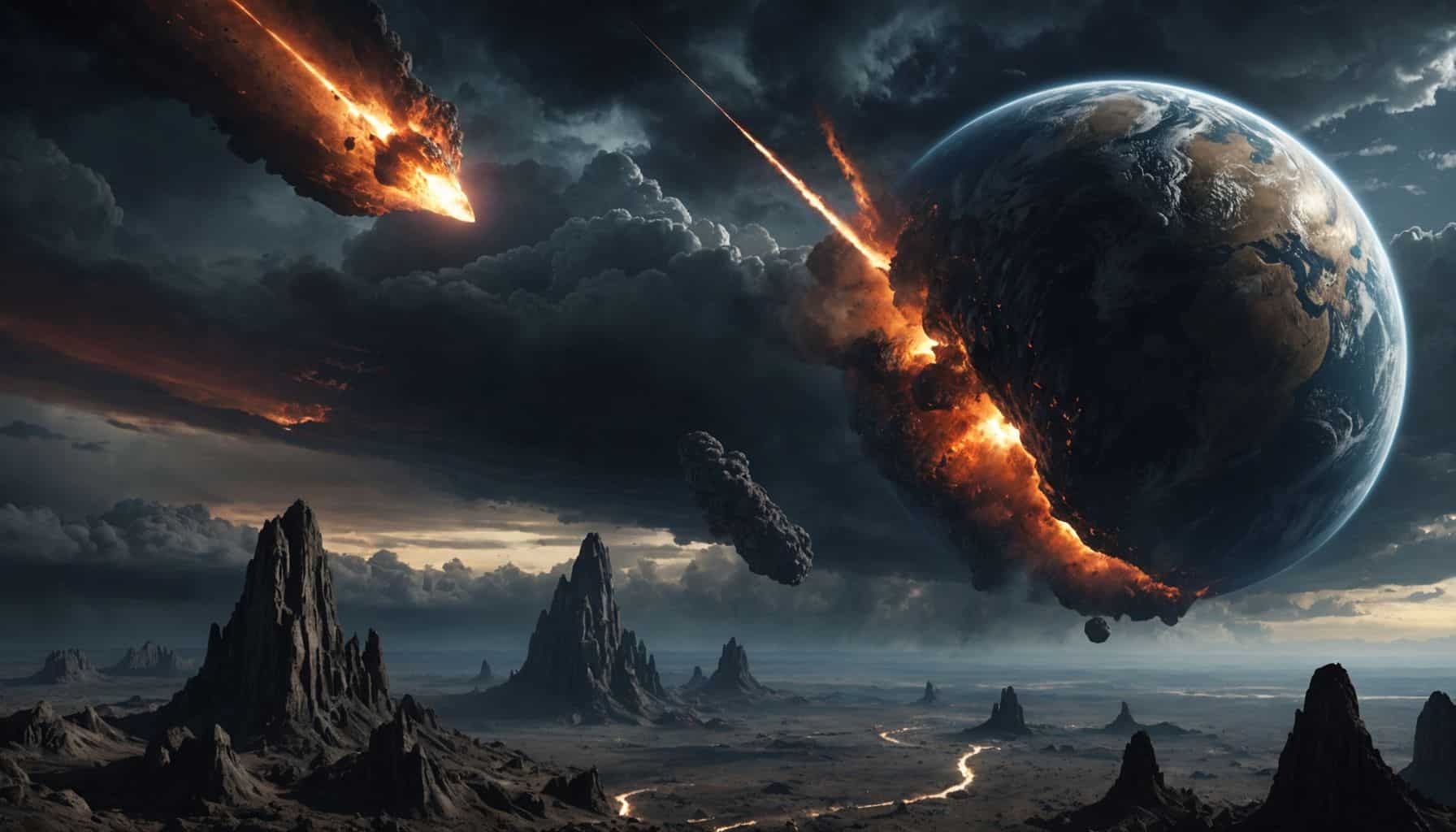
    An asteroid hurtling towards Earth is a scenario that NASA scientists are taking seriously. With the asteroid Apophis set to make a close approach in the coming years, preparations are underway to ensure we are ready for any potential impact.

    Key Takeaways

    • Apophis is a large asteroid, measuring about 370 meters in diameter.
    • It will make a close approach to Earth on April 13, 2029, coming within 310,000 kilometers.
    • NASA is conducting exercises to prepare for potential asteroid impacts, highlighting the need for global collaboration.
    • Recent simulations indicate that humanity is currently ill-equipped to prevent a significant asteroid disaster.

    Understanding Apophis

    Apophis was discovered on June 19, 2004, and is one of the most well-known near-Earth objects. Its size is comparable to three football fields, making it a significant threat if it were to collide with Earth. The asteroid is expected to pass closer to Earth than many satellites in 2029, providing a unique opportunity for scientists to study it up close.

    The Close Approach in 2029

    On April 13, 2029, Apophis will come within approximately 310,000 kilometers of Earth’s surface. This distance is about one-tenth of the distance between Earth and the Moon. During this close encounter, Apophis will be visible to the naked eye in some regions, appearing as a fast-moving point of light.

    Monitoring and Tracking

    NASA and other space agencies continuously track Apophis’s position using powerful telescopes and radar observations. Initial concerns about a potential impact in 2029 have been ruled out, but scientists remain vigilant. The close approach could alter Apophis’s orbit due to Earth’s gravitational influence, raising concerns for future encounters, particularly on April 13, 2036.

    Preparing for Potential Impacts

    NASA recently conducted a hypothetical exercise to assess global preparedness for an asteroid impact. The scenario involved an undetected asteroid on a collision course with Earth, estimated to be between 60 and 800 meters across, with a 72% chance of hitting Earth in 2038. Despite having 14 years of warning, the exercise revealed significant gaps in our preparedness.

    Key Challenges Identified

    1. Limited Detection Capabilities: Initial observations were insufficient to determine the asteroid’s size, composition, or trajectory.
    2. Short Notice Deflection: Current technologies for deflecting or disrupting asteroids require years of development.
    3. International Coordination: A global response is crucial, as the impact of an asteroid would affect all nations.

    Lessons from Past Events

    The Chelyabinsk meteor incident in 2013 serves as a stark reminder of the potential dangers posed by asteroids. This small asteroid exploded over Russia, causing injuries and damage. The event highlighted the importance of monitoring smaller bodies in space that could threaten Earth.

    Recent Successes in Tracking

    NASA’s Scout impact hazard assessment system successfully tracked a small asteroid, 2024 BX1, which disintegrated harmlessly in Earth’s atmosphere. This incident demonstrated NASA’s capability to monitor and predict asteroid impacts effectively.

    The Path Forward

    The recent planetary defense exercise underscores the need for more information about asteroids. As NASA’s planetary defense officer Emeritus Lindley Johnson stated, understanding an asteroid’s size and trajectory is crucial to avoid practical problems created by uncertainty.

    In conclusion, while we have made strides in monitoring and preparing for asteroid impacts, the recent exercises reveal that there is still much work to be done. The threat of an asteroid impact, though infrequent, is real and requires proactive measures to ensure the safety of our planet.

  • Children With Memories of Deceased Pilots & Air Crew

    Children With Memories of Deceased Pilots & Air Crew

    In a world filled with mysteries, the phenomenon of children recalling past lives, particularly those of deceased pilots and air crew, captivates many. This article delves into remarkable stories that challenge our understanding of life, death, and the possibility of reincarnation.

    Key Takeaways

    • Children can exhibit vivid memories of past lives, often detailing experiences they should not know.
    • Stories of James Lininger and Jasmine highlight the phenomenon of reincarnation.
    • Skeptics question the authenticity of these memories, attributing them to imagination or external influences.

    The Concept Of Reincarnation

    The idea of reincarnation suggests that the soul is eternal, cycling through different lives. This belief is prevalent in various cultures and religions. While some view it as a comforting notion, others dismiss it as mere fantasy. Yet, the stories of children who remember past lives add a layer of intrigue to this age-old debate.

    James Lininger: A Pilot’s Memories

    James Lininger, born in 1998, began experiencing vivid nightmares at a young age. His dreams were filled with images of plane crashes and burning aircraft. His parents, Bruce and Andrea, were alarmed when James identified himself as a pilot who had died in a plane crash.

    • Key Details from James’s Memories:
      • He claimed to have flown an F4U Corsair.
      • He remembered a ship named "Noma" and a friend named Jack Larson.
      • His drawings depicted naval battles and aircraft, despite having no prior exposure to such topics.

    After researching, Bruce discovered that James Huston Jr., a pilot who died in 1945, had indeed flown from the USS Natoma Bay, the ship James had mentioned. This revelation left the family questioning the nature of James’s memories.

    Jasmine: A Young Girl’s Recollections

    Another compelling story is that of Jasmine, a three-year-old girl who exhibited knowledge of World War I pilots. Her teacher documented Jasmine’s memories, which included:

    • Descriptions of flight gear from the Great War.
    • Singing British marching songs, despite no exposure to them in school.
    • Drawing a Sopwith Camel, a famous British fighter plane.

    Jasmine’s memories were eerily accurate, leading her teacher to investigate further. The details she provided matched those of a real pilot who had died in combat, raising questions about how a child could possess such knowledge.

    The Skeptics’ Perspective

    While these stories are fascinating, skeptics argue that they can be explained by:

    • Imagination: Children have vivid imaginations, and their memories may be fabrications.
    • External Influences: Exposure to media, museums, or conversations could lead to these recollections.
    • False Memories: Psychological phenomena can create memories that feel real but are not.

    The Unexplained Phenomenon

    Despite skepticism, the accounts of James and Jasmine remain compelling. They challenge our understanding of consciousness and the afterlife. The possibility that memories can transcend time and space is a thought-provoking concept.

    Conclusion

    The stories of children recalling past lives, especially those of deceased pilots, invite us to ponder the mysteries of existence. Whether one believes in reincarnation or not, these accounts serve as a reminder of the complexities of life and death. As we explore these narratives, we are left with more questions than answers, urging us to delve deeper into the unknown.

  • Inside America’s Most Mysterious Zone – The Bridgewater Triangle

    Inside America’s Most Mysterious Zone – The Bridgewater Triangle

    In the heart of southeastern Massachusetts lies a strange region steeped in mystery. Known for its odd sightings and dark true crime tales, this area has earned a reputation synonymous with unexplained events. Welcome to the Bridgewater Triangle, a place where the bizarre and the eerie intertwine.

    Key Takeaways

    • The Bridgewater Triangle spans roughly 200 square miles.
    • It is home to a variety of unexplained phenomena, including UFO sightings and ghostly encounters.
    • The area has a dark history, including the bloodiest battle per capita in U.S. history.
    • Local legends include creatures like the Puckwudgie and the Beast of the Swamp.
    • The Triangle has been a site for dark rituals and cult activities.

    The Geography Of The Triangle

    The Bridgewater Triangle is defined by three towns: Abington, Rehoboth, and Freetown. Within this triangular area lie several communities, including Taunton, Brockton, and Easton. While the exact boundaries are fluid, the region is notorious for its high concentration of strange occurrences.

    A Dark History

    The history of the Bridgewater Triangle is as unsettling as its legends. It is the site of King Philip’s War, the bloodiest battle per capita in U.S. history, where a staggering 70-80% of Native American combatants were killed. This brutal history has left many to believe that the land carries a dark stain, a lingering energy from the past.

    The Legends And Lore

    According to local expert Chris Bano, the Triangle is a Pandora’s Box of supernatural phenomena. Here are some of the most notable legends:

    • Puckwudgies: Small, troll-like creatures said to be shape-shifters. They were once friendly but turned malevolent, luring people to their deaths.
    • The Beast of the Swamp: A large, hairy, man-like figure that has been spotted by numerous witnesses.
    • The Red-Headed Hitchhiker: A ghostly figure seen along Route 44, who mysteriously disappears from vehicles.

    Modern Mysteries

    In more recent times, the Triangle has been linked to Satanic rituals and cult activities. Makeshift structures have been discovered in the woods, often adorned with symbols of the dark arts, such as pentagrams and upside-down crosses. Disturbingly, animal sacrifices have also been reported, with carcasses found drained of blood.

    UFO Sightings

    The skies above the Bridgewater Triangle are equally mysterious. Witnesses have reported seeing orbs of light and UFOs that defy the laws of physics. One of the most famous sightings occurred in 1976 when two police officers observed a brightly lit object hovering before it shot straight up into the sky.

    Haunted Locations

    The Triangle is dotted with haunted sites, each with its own ghostly tales. The area’s tragic history has led to numerous reports of apparitions and eerie encounters. Many believe that the land itself is a conduit for the supernatural, where the veil between worlds is thin.

    A Global Phenomenon

    Some researchers suggest that the Bridgewater Triangle is part of a larger global pattern of mysterious zones. Similar areas, like the Bermuda Triangle and the Dragon’s Triangle, may share a connection, forming a network of strange occurrences around the world.

    Conclusion

    Despite countless investigations, the Bridgewater Triangle remains one of America’s most enigmatic locations. The blend of known history and unknown phenomena continues to draw curiosity and intrigue. As you travel through southeastern Massachusetts, keep your eyes peeled; you never know what might be lurking just beyond the tree line. The Bridgewater Triangle is more than just a place on a map—it’s a captivating mystery that may never be solved.

  • The Ant Walkers Of Hiroshima

    The Ant Walkers Of Hiroshima

    On August 6, 1945, the United States dropped the atomic bomb known as "Little Boy" on Hiroshima, Japan. This catastrophic event marked a turning point in history, resulting in immediate devastation and long-lasting consequences for the survivors. While over 78,000 people perished instantly, many survivors faced unimaginable horrors in the aftermath.

    Key Takeaways

    • The atomic bomb caused immediate and catastrophic destruction.
    • Survivors experienced severe physical and psychological trauma.
    • The long-term effects of radiation exposure were devastating.

    The Immediate Aftermath

    The bomb detonated just before reaching the ground, unleashing a force equivalent to 20,000 tons of TNT. The initial explosion obliterated the city, leaving behind a landscape of chaos and despair. Survivors like Akiko Takakura and her friend Asami were inside a bank when the bomb struck. They felt the shock wave and struggled to comprehend the devastation around them.

    • Akiko’s Experience: After the explosion, Akiko felt a painful squeezing in her lungs and struggled with an overwhelming thirst. The bomb had evaporated all moisture within a two-kilometer radius, leaving survivors desperate for water.

    The Horrors of Black Rain

    As Akiko and Asami stepped outside, they were met with a hellish scene. The sun was obscured, and the landscape was bathed in a red glow from the fires consuming the city. They witnessed the charred remains of people, some reduced to mere shadows of their former selves.

    • Black Rain: The rain that fell was toxic, filled with radioactive particles. Despite its foul taste, Akiko and Asami drank it, driven by their insatiable thirst. Asami would later succumb to radiation sickness, highlighting the grim reality of survival.

    The Perspective of Children

    Hiroshi Eto, a schoolboy, emerged from the rubble to find his classmates severely burned. The sight of dying schoolgirls at the swimming pool haunted him. He described the eerie silence of the burned children, moving like automatons, resigned to their fate.

    • Yoshikata’s Escape: Another survivor, Yoshikata, found himself surrounded by dying children, their hands reaching out for help. The trauma of witnessing such suffering left an indelible mark on him.

    The Ant Walkers

    Many survivors were referred to as "ant walkers" due to their mechanical movements and burned appearances. They wandered through the wreckage, murmuring for water, resembling the mindless movements of ants.

    • Father Matias’s Encounter: Father Matias witnessed the aftermath and became one of the ant walkers himself. He saw horrific sights, including a woman carrying her dead child, and was overwhelmed by guilt and despair.

    The Long-Term Consequences

    The aftermath of the bomb was not just physical destruction but also psychological trauma. Survivors faced acute radiation sickness, infections, and long-term health issues. The cleanup process was grim, with rescue workers encountering unimaginable horrors.

    • Psychological Toll: Many rescuers and survivors struggled with haunting memories of the dead and dying. The emotional scars of that day remain, even decades later.

    Conclusion

    The stories of Hiroshima’s survivors reveal a harrowing reality that goes beyond the immediate destruction of the atomic bomb. The experiences of those who lived through it serve as a reminder of the profound impact of war and the resilience of the human spirit. The legacy of Hiroshima continues to resonate, urging us to remember and learn from the past.

  • Mammoth Cave National Park – Mysteries And Legends

    Mammoth Cave National Park – Mysteries And Legends

    Mammoth Cave National Park in Kentucky is a captivating natural wonder that has intrigued visitors for centuries. With its intricate tunnels and grand chambers, the cave offers a unique glimpse into the Earth’s geological history and a chance to explore its many mysteries and legends.

    Key Takeaways

    • Mammoth Cave is the longest cave system known to humankind.
    • The cave features stunning geological formations and a unique ecosystem.
    • It has a rich history, including Native American presence and paranormal legends.
    • Visitors can explore various tours while adhering to safety guidelines.

    The Geological Marvel

    Mammoth Cave’s rock beds date back to the Mississippian period, approximately 320 to 360 million years ago. However, the cave’s passages began forming only about 10 to 15 million years ago during the Miocene epoch. This process involved water seeping into the limestone through small cracks, gradually creating the extensive cave system we see today.

    • Key Geological Features:
      • Stalactites and Stalagmites: Formed from minerals like calcium carbonate accumulating over time.
      • The Rotunda: A vast chamber with an enormous ceiling.
      • Gothic Avenue: Tall, narrow passageways resembling the spokes of a wheel.
      • Frozen Niagara: A stunning formation that looks like a frozen waterfall.
      • Crystal Lake: A shallow pool of turquoise water reflecting the cave’s beauty.

    A Unique Ecosystem

    Mammoth Cave is home to a fragile ecosystem with species unique to this environment. Visitors may encounter:

    • Bats: Hanging from the ceilings, resting with their wings folded.
    • Blind Cave Fish: Swimming in underground rivers, their white bodies glowing in the dark.

    The cave’s delicate ecosystem requires visitors to take special precautions to avoid damage.

    Historical Significance

    The history of human presence in Mammoth Cave extends back at least 6,000 years. Artifacts and remains found in the cave provide evidence of Native American use, but the reasons for the lack of usage after the Archaic Period remain a mystery.

    • Notable Historical Events:
      • Discovery: Legend has it that Mammoth Cave was discovered in 1797 by John Houston or his brother Francis.
      • Saltpeter Mining: During the War of 1812, the cave’s saltpeter reserves became crucial for gunpowder production.
      • Tuberculosis Treatment: In the 1840s, Dr. John Croghan established a cave hospital for tuberculosis patients, although the experiment ultimately failed.

    Paranormal Encounters

    Mammoth Cave is often regarded as one of the most haunted natural wonders in the world, with over 150 documented paranormal events. Some eerie tales include:

    • Ghostly Apparitions: Visitors have reported seeing unexplained figures and hearing strange noises.
    • Floyd Collins: The celebrated cave explorer who tragically died in 1925; his ghost is said to roam the cave.
    • Melissa’s Spirit: A vengeful spirit of a woman who left her lover stranded in the cave.

    Visiting Mammoth Cave

    For those planning a visit, Mammoth Cave National Park offers various tours catering to different interests and abilities. Here are some essential tips:

    • Wear Sturdy Shoes: The cave floor can be slippery and uneven.
    • Dress Appropriately: The cave maintains a constant temperature of 54°F.
    • Follow Safety Guidelines: Stay on designated trails and avoid touching rock formations.

    Conclusion

    Mammoth Cave National Park is not just a geological wonder; it is a site rich in history, culture, and mystery. Whether you’re exploring its stunning formations or delving into its legends, a visit to Mammoth Cave promises an unforgettable experience. With ongoing preservation efforts, future generations will continue to marvel at this extraordinary subterranean realm.

  • The Golden Age of Saturn: A Journey Through Myth and Literature

    The Golden Age of Saturn: A Journey Through Myth and Literature

    The concept of the Golden Age of Saturn symbolizes a time of peace, prosperity, and harmony before the advent of agriculture, war, and civilization. This era, often depicted in ancient Greek and Roman literature, reflects humanity’s longing for a simpler, more harmonious existence.

    Key Takeaways

    • The Golden Age represents an idealized past of peace and abundance.
    • Hesiod and Virgil are key figures in the exploration of this theme.
    • The narrative of decline from this golden era resonates through various literary works.

    The Origins of the Golden Age

    The Golden Age of Saturn is rooted in ancient mythology. It is said that during this time, men were made of gold, living in harmony without the burdens of toil and suffering. This idyllic period is often contrasted with the subsequent ages of silver, bronze, and iron, each representing a decline in human virtue and happiness.

    Hesiod’s Vision

    Hesiod, one of the most esteemed poets of Ancient Greece, provides our earliest and most vivid depictions of the Golden Age in his works, particularly in "Works and Days". He describes a time when:

    • Mortal men lived like gods without sorrow or toil.
    • The earth produced abundantly without cultivation.
    • This generation was honored as pure spirits after death, serving as guardians of humanity.

    Hesiod’s portrayal reflects the values of ancient Greek society, emphasizing harmony and a connection with nature. His narrative sets the stage for the exploration of this theme in later literature.

    Virgil’s Pastoral Poetry

    Fast forward to the Augustan age, where Virgil, in his Fourth Eclogue, offers a vision of cyclical time and the promise of a restored Golden Age. He writes:

    • A divine child will reign, bringing an end to the iron race and restoring peace.
    • Nature will flourish, producing abundant crops and flowers without cultivation.
    • The world will be free from alarm, and harmony will reign once more.

    Virgil’s work can be seen as both a reflection of his time and a prophetic vision, aligning with Emperor Augustus’ efforts to promote a new era of peace and prosperity.

    The Decline of Virtue

    The narrative of the Golden Age often includes a lamentation of humanity’s decline. As Hesiod describes, each subsequent generation becomes less noble:

    1. Silver Age: Characterized by foolishness and a lack of reverence for the gods.
    2. Bronze Age: Marked by violence and a love for war.
    3. Heroic Age: A noble but tragic era, where heroes meet their demise in battle.
    4. Iron Age: The current age, filled with strife, dishonor, and moral decay.

    This decline resonates deeply in classical literature, reflecting a collective yearning for a return to the simplicity and virtue of the Golden Age.

    The Utopian Vision

    The Golden Age is not merely a nostalgic longing; it embodies ideals of equality and communal ownership. Authors like Ovid and Pompeius Trogus echo this sentiment:

    • Ovid describes a time when men acted righteously without laws or punishment.
    • Trogus portrays Saturn as a just ruler, where no one was a servant, and all possessions were shared.

    These visions highlight a Roman admiration for justice and harmony, contrasting sharply with the complexities of their own society.

    The Astrological Perspective

    In the Middle Ages, the concept of the Golden Age evolved. Firmicus Maternus‘s Thema Mundi presents a structured astrological narrative, attributing the rise and fall of civilizations to planetary influences. This perspective emphasizes:

    • The rulership of Saturn during uncivilized times.
    • The transition to Jupiter for a more cultivated existence.
    • The eventual decline into chaos under Mercury.

    This astrological framework offers a rational approach to understanding human development, moving away from purely mythological narratives.

    The Christian Reinterpretation

    The Golden Age of Saturn also found new meaning in Christian thought. The narrative of a lost paradise parallels the Biblical story of Eden. The journey from innocence to a prophesied future of peace reflects a thematic continuum:

    • Paradise Lost: The ideal state of harmony and abundance.
    • Paradise Regained: The anticipated return to a state of grace and peace.

    This connection underscores the enduring relevance of the Golden Age motif across cultures and epochs.

    Conclusion

    The Golden Age of Saturn serves as a powerful symbol of humanity’s longing for a simpler, more harmonious existence. Through the works of Hesiod, Virgil, and others, we see a rich tapestry of ideals that reflect our deepest values and aspirations. Whether viewed through the lens of mythology, literature, or astrology, the Golden Age remains a poignant reminder of what once was and what could be again.

  • Anonymous Just Leaked The US Sent An Email Asking For The Resurrection Chamber Of Gilgamesh

    Anonymous Just Leaked The US Sent An Email Asking For The Resurrection Chamber Of Gilgamesh

    On December 13, 2018, the hacking group Anonymous made headlines once again with a shocking leak that stirred discussions across the internet. This time, the focus was on a set of emails allegedly obtained from a Freedom of Information Act request directed at the U.S. State Department. The emails contained a bizarre request for information regarding the resurrection chamber of Gilgamesh, the ancient Sumerian king, along with details about his body and the burial sites of the Nephilim, beings described in the Bible as giants or fallen angels.

    Key Takeaways

    • Anonymous leaked emails from the U.S. State Department.
    • The emails requested information about Gilgamesh’s resurrection chamber.
    • Speculation arose about government knowledge of ancient artifacts.
    • The Nephilim were also mentioned, adding to the intrigue.

    The leaked information quickly captured the imagination of people worldwide. It reignited old myths and led to speculation that the U.S. government might be aware of long-lost knowledge or artifacts that could reshape human history. The idea that the government could possess information about Gilgamesh and the Nephilim has proven too tantalizing for many to ignore.

    Anonymous, known for its decentralized structure and activist activities, has historically focused on exposing government and corporate secrets. However, this leak was unusual, even by their standards. It wasn’t just a release of classified emails related to political affairs or corporate misconduct; it delved into ancient mysteries and mythology, realms not typically associated with governmental transparency.

    The leaked email allegedly detailed a request from an unnamed individual or group for documents about a resurrection chamber supposedly linked to Gilgamesh. According to ancient Sumerian mythology, Gilgamesh was a demigod king whose epic tale is one of the oldest surviving pieces of literature. His exploits involve numerous feats of heroism, encounters with gods, and a quest for immortality.

    The Resurrection Chamber

    • Gilgamesh’s Legacy: Gilgamesh was 2/3 god and 1/3 man, and his story is a cornerstone of ancient literature.
    • No Known References: There is no known reference in Sumerian or Babylonian mythology to a resurrection chamber.
    • Speculative Theories: The idea intrigues those who believe ancient civilizations possessed knowledge or technologies beyond current understanding.

    The mention of the Nephilim in the leaked email only added to the intrigue. These beings are often described in biblical texts as a hybrid race, half divine and half human, existing before the great flood. Some theories suggest that the Nephilim were involved in constructing ancient megalithic structures using advanced technology or knowledge that has since been lost.

    For many, the leak seemed to validate long-standing beliefs that governments and powerful organizations are privy to knowledge about ancient civilizations and extraterrestrial beings that they deliberately withhold from the public. The reference to Gilgamesh raised eyebrows, as he was the king of Uruk, a city-state in ancient Mesopotamia, and his exploits are recounted in the Epic of Gilgamesh, dating back to the third millennium BCE.

    The Nephilim Connection

    • Biblical Origins: The Nephilim are mentioned in the Book of Genesis as the offspring of the sons of God and the daughters of men.
    • Hybrid Race: They are often interpreted as giants or fallen angels, fascinating theologians and historians alike.
    • Lost Knowledge: The idea that the U.S. government might possess information about their burial sites is both shocking and affirming for conspiracy theorists.

    The question of why the U.S. State Department would be involved in such a search adds another layer of mystery. Some speculate that the email may have been part of a secret project or investigation into ancient artifacts and beings, while others suggest it could be linked to ongoing efforts to uncover ancient technologies or knowledge that could profoundly impact modern science and politics.

    The Freedom of Information Act request, if genuine, suggests that certain factions within the government may indeed be exploring topics that many are unaware of. The idea that the U.S. government would be interested in Gilgamesh’s resurrection chamber or the burial sites of the Nephilim implies a broader investigation into humanity’s ancient past and the potential existence of lost knowledge or artifacts.

    Cultural Heritage and Repatriation

    • Return of Artifacts: In recent years, U.S. officials have made significant efforts to return stolen antiquities looted from Iraq during conflicts.
    • Cultural Significance: The return of these artifacts highlights the importance of preserving cultural heritage and the devastating impact of looting.
    • Diplomatic Gesture: The repatriation of items like cylinder seals and clay tablets symbolizes accountability and cooperation between nations.

    The looting of Iraq’s antiquities became widespread during and after the 2003 U.S.-led invasions. Thousands of priceless artifacts documenting the earliest developments of human civilization were stolen, destroyed, or sold on the black market. Recognizing the magnitude of the loss, U.S. authorities have played a role in repatriating looted Iraqi antiquities, working closely with Iraqi officials.

    One significant return occurred in 2021 when the U.S. government repatriated over 17,000 artifacts to Iraq, marking one of the largest returns of looted cultural property in history. These efforts not only help restore Iraq’s historical narrative but also bring some measure of justice for the destruction caused by war and looting.

    Conclusion

    The leak by Anonymous regarding the U.S. government’s interest in the resurrection chamber of Gilgamesh and the burial sites of the Nephilim has sparked a whirlwind of speculation and intrigue. While skeptics may dismiss such claims as baseless, the idea that powerful institutions have been hiding information about humanity’s origins and advanced ancient technologies resonates with many. As we continue to explore our past, the intersection of mythology, history, and modern governance remains a captivating subject worthy of further investigation.

  • What’s Hidden Inside The Deepest Hole On Earth?

    What’s Hidden Inside The Deepest Hole On Earth?

    The Kola Superdeep Borehole remains one of the most fascinating scientific endeavors in history. Initiated by the Soviet Union in the 1970s, this ambitious project aimed to drill as deep as possible into the Earth’s crust, uncovering secrets that lie beneath our feet. What they found was both astonishing and perplexing, leading to a mix of scientific discovery and urban legend.

    Key Takeaways

    • The Kola Superdeep Borehole is deeper than Mount Everest and the Mariana Trench.
    • Unexpected geological findings challenged existing scientific theories.
    • Urban legends emerged, claiming the discovery of hellish sounds and entities.

    The Ambitious Beginning

    In 1958, the United States launched Project Mohole, aiming to sample the Earth’s mantle by drilling into the ocean floor. However, funding issues halted the project in 1966. Inspired by American efforts, the Soviets initiated their own drilling project in 1970, known as the Kola Superdeep Borehole, located in Murmansk, Russia.

    The Drilling Process

    The Kola project aimed to reach a depth of 15 kilometers. The drilling rig was designed to extract core samples along the entire length of the drill shaft, allowing scientists to analyze the Earth’s composition in real-time. Initial drilling went smoothly, but as they reached deeper layers, challenges arose:

    1. Increased Density: At around 6.9 kilometers, the rock became denser, causing drill bits to break.
    2. High Temperatures: Scientists expected temperatures to reach about 100°C, but they encountered temperatures of 180°C at 12 kilometers, which was far beyond their predictions.
    3. Unexpected Findings: Instead of the anticipated basalt layers, they found granite deeper than expected, along with a surprising discovery of water at depths of 3 to 6 kilometers.

    The Mysteries Unveiled

    As drilling continued, the team faced numerous accidents and setbacks. One of the most significant incidents occurred in 1984 when a section of the borehole collapsed, erasing five years of work. Despite these challenges, the discoveries made were groundbreaking:

    • Porous Rock: The rock became more plastic-like at high temperatures, complicating drilling efforts.
    • Ancient Life: Tiny remains of plankton were found, dating back 2 billion years, indicating life existed at those depths.

    The Urban Legends

    The Kola Superdeep Borehole is not just a scientific marvel; it has also become the center of urban legends. One of the most notorious claims is that scientists recorded sounds from hell when they lowered a microphone into the borehole. According to the legend, the audio captured the screams of the damned, leading to widespread fear and fascination.

    The Truth Behind the Legend

    While the story of hellish sounds captivated many, investigations revealed that the audio was actually from a horror movie, not a scientific recording. The tale was further fueled by a Finnish newspaper article that misrepresented the events at the drilling site, leading to sensationalized reports.

    Conclusion: The Depths of Mystery

    The Kola Superdeep Borehole remains a testament to human curiosity and the quest for knowledge. Despite reaching only 0.2% of the Earth’s depth, the project yielded invaluable insights into our planet’s geology. While the urban legends surrounding the borehole may be exaggerated, the scientific discoveries continue to intrigue researchers and enthusiasts alike. The mysteries of the Earth’s depths may never be fully unraveled, but the Kola Superdeep Borehole will forever be a symbol of exploration and the unknown.

  • Unveiling The Mysteries: A Deep Dive Into The History Of Occultism

    Unveiling The Mysteries: A Deep Dive Into The History Of Occultism

    Occultism often conjures images of dark rituals and mysterious figures, shaped largely by Hollywood’s portrayal. However, the reality is far more complex and rich. This article explores the origins, evolution, and contemporary relevance of occultism, shedding light on its profound impact on society.

    Key Takeaways

    • Occultism originates from ancient religious thought and has evolved over centuries.
    • Key figures like Helena Blavatsky and Rudolf Steiner shaped modern occult practices.
    • The relationship between occultism and historical events, including its ties to Nazi ideology, is intricate and often misunderstood.
    • Today, occultism is intertwined with psychology and personal development, reflecting modern individualistic values.

    What Is Occultism?

    The term occultism derives from the Latin word occultus, meaning hidden or concealed. It refers to the knowledge of what is hidden, encompassing various mystical and esoteric traditions. Historically, occultism has been misunderstood, often labeled as sinful or forbidden. This misunderstanding stems from its portrayal in media, which tends to exaggerate and sensationalize its practices.

    The Origins Of Occultism

    European occultism has roots in ancient religious thought, often categorized as Western esotericism. Its sources include:

    • Gnosticism
    • Hermetic texts on alchemy and magic
    • Neoplatonism
    • Kabbalah

    A pivotal figure in this tradition is Hermes Trismegistus, a legendary figure whose teachings laid the groundwork for many esoteric practices. His influence can be seen in various occult orders that emerged throughout history, such as the Rosicrucians and the Order of the Golden Dawn.

    The Renaissance Era

    The Renaissance marked a significant resurgence in occultism. Secret societies flourished, attracting wealthy and educated individuals. Many members sought to advance socially, engaging in what could be likened to occult networking. This period saw a blending of natural sciences with spiritual beliefs, as practitioners sought to reconcile scientific discoveries with mystical insights.

    The 19th And 20th Centuries

    The late 19th and early 20th centuries witnessed another wave of interest in occultism, fueled by:

    • The rise of spiritualism in America
    • The influence of Helena Blavatsky and the Theosophical Society

    Blavatsky’s works introduced Western audiences to Eastern philosophies, igniting a fascination with spiritual practices previously unknown in the West. This era also saw the emergence of Rudolf Steiner, who founded Anthroposophy, integrating spiritual knowledge with practical applications in education and agriculture.

    Occultism And National Socialism

    The relationship between occultism and Nazi ideology is complex. While some Nazi leaders were drawn to occult symbols and practices, the regime also persecuted many practitioners. Hitler’s regime utilized propaganda to manipulate public perception, but it is crucial to understand that the atrocities committed were rooted in a diseased mindset rather than a direct influence of occult beliefs.

    The New Age Movement

    The 1960s brought about the New Age movement, which sought to explore beyond conventional understanding. This period saw a rise in interest in:

    • Shamanism
    • Transpersonal psychology
    • Psychoanalysis

    Figures like Carl Jung integrated psychological concepts with occult teachings, emphasizing the importance of individuation and self-discovery.

    Occultism Today

    In contemporary society, occultism has become more mainstream. Astrological forecasts and occult literature are widely available, reflecting a shift towards utilitarianism in spiritual practices. Knowledge is often valued for its practical applications, with a focus on personal development and social success.

    Conclusion

    Occultism is a unique phenomenon that seeks to reconcile the findings of natural sciences with spiritual knowledge. While its methods may not always align with scientific rigor, the influence of occult thought on literature, philosophy, and even scientific discovery is undeniable. As we continue to explore the mysteries of the subconscious and the unknown, the relevance of occultism remains significant in our quest for understanding.

  • The Strange Fate of Steel From 9/11

    The Strange Fate of Steel From 9/11

    The steel from the Twin Towers, once a symbol of architectural achievement, now serves as a poignant reminder of the tragic events of September 11, 2001. Over 2,200 fragments of this steel have been transformed into memorials across the globe, each piece telling a story of resilience, loss, and remembrance.

    Key Takeaways

    • The steel from the Twin Towers is less than 1% of the total 200,000 tons recovered.
    • It served both forensic and financial purposes after the tragedy.
    • Many fragments have been repurposed into memorials and significant artifacts.

    The Journey of the Steel

    After the collapse of the Twin Towers, the steel became a crucial element in understanding the events of that day. It was not only valuable as a material but also as forensic evidence. The deformed and severed pieces provided insights into the structural failures that occurred during the attacks.

    • Forensic Value: The steel helped reconstruct the details of the collapse with incredible accuracy.
    • Financial Value: It was the easiest material to sell for scrap, making it a financially valuable asset.

    The Recovery Process

    The recovery of the steel was a meticulous process. Every pound was accounted for, contrasting sharply with the narratives presented by memorials. The steel from the North Tower, for instance, was part of a core structure that stood for over 30 years before its tragic end.

    • Topping Out Ceremony: This ceremony marked the completion of the steel construction in the 1970s, symbolizing good luck for the building.
    • Collapse: On September 11, 2001, the North Tower collapsed in just 11 seconds, creating a massive heap of debris.

    The Aftermath

    In the days following the attacks, private construction companies mobilized to clear the debris. The steel was quickly transported to Fresh Kills landfill, where it faced challenges due to its weight.

    • Debris Management: Initially, all materials were piled together, but soon the steel was separated for its scrap value.
    • Scrap Market: Most of the steel ended up in international markets, primarily in India, China, and Turkey.

    Preserving History

    While much of the steel was sold for scrap, a significant portion was preserved for its historical value. An archive committee was formed to determine which pieces should be saved.

    • Selection Process: Architect Bartholomew Vanger led the effort to identify pieces that told the story of the World Trade Center.
    • Storage: The selected pieces were stored in Hangar 17 at JFK Airport, treated as archaeological artifacts rather than scrap.

    Transformation into Memorials

    The steel fragments have found new life as memorials across the United States and beyond. Each piece carries a story, often marked by ceremonies that reflect their significance.

    • USS New York: Some steel was melted down to create the USS New York, symbolizing strength forged through sacrifice.
    • Local Memorials: Fragments have been displayed in various towns, often accompanied by ceremonies that evoke a sense of connection to the events of 9/11.

    The Role of Memorials

    These memorials serve as a reminder of the events of 9/11, but they also raise questions about their placement and significance.

    • Criticism: Some argue that distributing memorials dilutes the impact of centralized sites like the 9/11 Memorial Museum.
    • Cultural Significance: The steel fragments have become relics, representing the collective memory of a nation.

    Conclusion

    The journey of the steel from the Twin Towers is a complex narrative of loss, resilience, and remembrance. Each fragment tells a story, connecting us to the past while reminding us of the importance of memorializing such significant events. As we reflect on these pieces, we honor the memories of those lost and the resilience of those who continue to remember.