Category: Ancient Civilizations

  • The Cannibal Train Incident & More: Unraveling Mexican Urban Legends

    The Cannibal Train Incident & More: Unraveling Mexican Urban Legends

    In the heart of Mexico City lies a Metro system steeped in mystery and urban legends. From eerie disappearances to strange sightings, the tales surrounding this underground network captivate and terrify. Today, we delve into some of the most chilling stories that have emerged from the depths of the Metro.

    Key Takeaways

    • The haunting tale of Rosa Sanchez and the Cannibal Incident.
    • Urban legends involving rats and ghostly apparitions.
    • The Metro’s dark history of tragic events and conspiracy theories.

    The Cannibal Incident: A Chilling Tale

    In the 1970s, a mother and her 8-year-old daughter, Rosa Sanchez, navigated the bustling Tako Bayas station. Amidst the crowd, Rosa lost sight of her mother. In a panic, she tried to find her but became overwhelmed and decided to hide in the unoccupied tunnels.

    Days passed without a trace of Rosa. Her mother reported her missing, and a search ensued, but the Metro continued its operations as usual. After several days, a body was discovered, but it was not Rosa’s. Instead, it was a man, partially devoured by rats, raising concerns about the dangers lurking in the tunnels.

    Finally, on September 22nd, Rosa was found alive. However, her condition was shocking. Covered in blood and smelling foul, she recounted a harrowing tale of survival. After hiding from the crowd, she had witnessed the rats feasting on the deceased man and, driven by hunger, had joined them.

    Rosa was placed in a psychiatric ward for recovery but tragically passed away in 2010. This incident gave rise to the urban legend known as La Cannibal, a story that continues to haunt the Metro.

    Urban Legends and Conspiracy Theories

    The Metro is not just known for its eerie tales but also for conspiracy theories. Many believe that secret tunnels lead to hidden government facilities. The unsettling atmosphere is compounded by the tragic history of the Metro, where from 2009 to 2018, 306 deaths were reported, many involving suicides.

    Notable Incidents Include:

    • Accidental Deaths: Various tragic accidents have marred the Metro’s history.
    • Paranormal Sightings: Reports of ghostly apparitions and strange noises have circulated among workers and passengers alike.

    Strange Facts About the Metro

    The Metro is home to some bizarre facts and legends:

    • Mammoth Bones: During construction in the 1970s, workers discovered mammoth bones, some of which are displayed in the Metro.
    • Graveyard Station: The Panon station is located near several graveyards, adding to the eerie vibe.
    • Ghostly Encounters: Subway workers have reported hearing distant screams and knocks in the tunnels.

    The Smiling Woman: A Haunting Presence

    One of the most unsettling urban legends is that of The Smiling Woman. Passengers traveling through Line 1 at night have reported encountering a woman with an unnaturally wide smile. She seems to follow individuals, her gaze locked onto them, creating an overwhelming sense of dread.

    Her movements are peculiar, almost as if she floats rather than walks. While she has never harmed anyone, her presence leaves passengers feeling anxious and paranoid. The laughter that echoes through empty tunnels only adds to the fear surrounding her.

    Conclusion

    The tales of the Mexico City Metro are a blend of horror, mystery, and urban legend. From the tragic story of Rosa Sanchez to the eerie presence of The Smiling Woman, these narratives reflect the darker side of urban life. Whether you believe in the supernatural or not, the legends surrounding the Metro continue to intrigue and terrify those who dare to ride its trains.

    As we explore these urban legends, we invite you to share your thoughts and any other folklore from Latin America that you’d like to hear about next!

  • As ‘Hazardous Object’ Approaches The Earth The Asteroid Apophis Threat to Our Planet is Underscored!

    As ‘Hazardous Object’ Approaches The Earth The Asteroid Apophis Threat to Our Planet is Underscored!

    In recent discussions about space threats, the asteroid Apophis has emerged as a significant concern. Scheduled to make a close approach to Earth on April 13, 2029, this massive object has sparked interest and anxiety among scientists and the public alike.

    Key Takeaways

    • Asteroid Apophis is set to approach Earth within 18,500 miles in 2029.
    • Various space agencies are mobilizing to prepare for potential threats.
    • The asteroid’s size and proximity raise serious concerns about planetary defense.

    The Close Encounter of Apophis

    On April 13, 2029, the asteroid Apophis, measuring approximately 450 meters in diameter, will come alarmingly close to our planet. This distance is less than that of many geosynchronous satellites, making it a potentially hazardous asteroid. The implications of such a close encounter are profound, as even a small change in trajectory could lead to catastrophic consequences.

    Understanding the Threat

    NASA classifies any object within 120 million miles of Earth as a near-Earth object (NEO). Those within 4.65 million miles are deemed potentially hazardous. Apophis falls into this category due to its size and the proximity of its closest approach.

    Potential Consequences of a Collision

    While the probability of a collision remains low, the potential consequences are severe:

    • Continental-scale devastation
    • Global disruption
    • Possible effects similar to a nuclear winter if it were to impact a densely populated area.

    Global Response and Preparedness

    In light of these threats, space agencies worldwide are ramping up their efforts:

    1. NASA has successfully altered the orbit of a non-hazardous asteroid, marking a significant step in planetary defense.
    2. China is planning a mission involving 23 Long March 5 rockets to target the asteroid Bennu, which is expected to approach Earth in the coming centuries.
    3. India, Saudi Arabia, Russia, and the European Union are also developing countermeasures to address potential asteroid threats.

    The Role of International Cooperation

    The warnings issued by the Indian Space Research Organization (ISRO) emphasize the need for vigilant monitoring and preparedness. The potential for Apophis to be perturbed onto a collision course due to gravitational interactions or minor collisions with space debris is a serious concern.

    Mitigation Strategies

    To prevent a potential collision, several strategies are being proposed:

    • Early detection and monitoring of NEOs.
    • Deflection missions to alter the trajectory of hazardous asteroids.
    • International collaboration to share data and resources for planetary defense.

    Conclusion

    The asteroid Apophis serves as a stark reminder of the vulnerabilities we face from space. While the probability of a collision is low, the potential consequences are too severe to ignore. Continued research and international cooperation are essential to ensure that humanity is prepared for any potential impact event. What are your thoughts on this? Share your comments below!

  • The Mysterious History Of Magic: What The Ancients Knew & We Lost

    The Mysterious History Of Magic: What The Ancients Knew & We Lost

    Magic has captivated humanity for millennia, intertwining with our spiritual practices and cultural narratives. In this exploration, we delve into the ancient origins of magic, its evolution through civilizations, and the secret societies that have preserved its legacy.

    Key Takeaways

    • Magic has ancient roots, serving as a vital aspect of survival and spirituality.
    • Early practices involved shamans and rituals to connect with nature and the divine.
    • The evolution of magic saw a shift from primal practices to sophisticated systems in ancient civilizations.
    • Cultural and religious shifts led to the decline of magic in the Western world.
    • Secret societies have preserved magical knowledge, waiting to be rediscovered.

    The Ancient Roots Of Magic

    Long before written language, magic was at the core of human existence. In prehistoric times, it was not merely an art but a means of survival. Early humans sought to interact with the forces of nature, appealing to spirits for guidance and protection.

    • Shamans and Healers: These figures acted as mediators between the physical and spiritual realms, using rituals, chants, and dances to invoke spirits and heal the sick.
    • Cave Paintings: Early expressions of magic are found in cave art, depicting hunting scenes and figures merging human and animal traits. These images served as invocations for success and protection.

    The Evolution Of Magic In Civilizations

    As humanity progressed, magic evolved from its primal roots into more sophisticated systems. In ancient Mesopotamia, magic was integral to religious beliefs.

    • Incantations and Rituals: Known as asipu and maasu, these practices aimed to fend off malevolent spirits and maintain cosmic balance.
    • Priestly Roles: Figures like the asipu served as healers and advisors, wielding knowledge of the arcane to protect their communities.

    In ancient Egypt, magic reached its zenith, deeply embedded in daily life and spirituality.

    • Heka: The god of magic, Heka, represented the transformative power of words. Egyptians believed that spoken words and specific gestures could manipulate supernatural forces.
    • Thoth: The god of wisdom and writing, Thoth, was crucial in formulating spells, using hieroglyphs as potent magical symbols.

    The Decline Of Magical Practices

    The decline of magic in the Western world can be traced through cultural and religious shifts, particularly influenced by the Greeks, Romans, and early Christians.

    1. Negative Perceptions: The term magia emerged in Greek culture, initially describing practices seen as fraudulent or dangerous.
    2. Cultural Conflicts: Greek city-states encountered diverse religious practices, leading to a broader negative connotation of magic.
    3. Christian Influence: Early Christians adopted these negative views, associating magic with demons and heresy.

    This transformation led to tragic events like the witch hunts in medieval Europe, where fear and misunderstanding marginalized magical practices.

    The Legacy Of Secret Societies

    Despite the decline, fragments of magical knowledge have been preserved by secret societies throughout history. Groups like the Freemasons and the Hermetic Order of the Golden Dawn have kept ancient teachings alive, often hidden behind allegories and symbols.

    • Alchemical Symbols: These societies used complex symbols to encode their knowledge, waiting for seekers of truth to uncover them.
    • Modern Resurgence: Today, there is a renewed interest in magic, spurred by popular culture and a curiosity about alternative spiritualities.

    Conclusion: The Future Of Magic

    The journey through the history of magic reveals a rich legacy of human engagement with the supernatural. From prehistoric rituals to modern interpretations in literature and media, magic continues to inspire and mystify.

    • Cultural Reflections: Modern media, like the Harry Potter series, echoes ancient traditions, showcasing the enduring fascination with magic.
    • Evolving Practices: As we explore the complexities of our universe, the lines between science and magic may blur, offering new ways to understand and influence our world.

    Magic, deeply woven into the fabric of human history, remains a source of inspiration and guidance, just as it did for our ancestors. The time has come to rediscover and embrace the ancient arts of magic, unlocking the true history of mankind.

  • The Black Sun: Germany’s Sinister Hunt For Lost Relics and The Djinn King

    The Black Sun: Germany’s Sinister Hunt For Lost Relics and The Djinn King

    In the heart of Germany lies Wewelsburg Castle, a site shrouded in mystery and dark history. Once repurposed in the late 1930s, it became the occult headquarters for the Nazis, who sought to unlock ancient secrets and artifacts to create a new pagan world order. This article delves into the castle’s sinister past and the relics that fueled Germany’s ambitions.

    Key Takeaways

    • Wewelsburg Castle was redesigned for occult practices.
    • Heinrich Himmler’s obsession with ancient artifacts.
    • The search for powerful relics like the Ark of the Covenant and the Holy Grail.
    • The connection between the Black Sun symbol and ancient demons.

    The Dark History of Wewelsburg Castle

    Wewelsburg Castle, originally a 12th-century fortress, was transformed into a hub for occult activities. Historians debate the extent of its dark past, but its redesign reflects a clear occult aesthetic. The main hall features a large Black Sun, a symbol that raises questions about its connection to ancient Middle Eastern demons.

    In 2003, documentarian Elizebeth Wieskerstach interviewed survivors who participated in rituals aimed at communing with mystical powers. These ceremonies were rumored to be conducted by the Protection Squadron, a unit infamous for its dark practices.

    The Occult Obsession of Heinrich Himmler

    Heinrich Himmler, a key figure in the Nazi regime, was deeply fascinated by the occult. Between 1935 and 1944, he established the Hexen Sonderauftrag (Witch Special Order), collecting nearly 30,000 documents on paganism and the supernatural. His goal was to understand how Germany’s pagan roots were replaced by Abrahamic religions.

    Himmler believed that accessing ancient powers and artifacts was essential for Germany’s victory. He commissioned expeditions across Europe and the Middle East to locate relics with supernatural abilities.

    The Quest for Powerful Artifacts

    The Nazis sought several powerful artifacts, including:

    1. The Ark of the Covenant: Believed to have the power to level mountains and dry up seas.
    2. The Holy Grail: Said to grant eternal youth and healing.
    3. The Spear of Destiny: Allegedly used to pierce Jesus’ side, believed to confer world domination.
    4. Red Mercury: An alchemical substance thought to bridge our world with the realm of the Jinn.

    These artifacts were not just relics; they were seen as keys to ultimate power. The Nazis believed that possessing them would allow them to reshape the world.

    The Search for Atlantis

    Himmler’s obsession extended to the mythical lost city of Atlantis. He believed that the answers to Germany’s racial and supernatural questions lay within its ruins. Expeditions were launched to find Atlantis, which was thought to be located in the North Atlantic, near the Azores.

    In modern times, some researchers link Atlantis to Mauritania, where geological anomalies match Plato’s descriptions. The Nazis believed that survivors of Atlantis migrated to Europe and the Middle East, influencing ancient civilizations.

    The Black Sun and Its Dark Symbolism

    The Black Sun symbol at Wewelsburg Castle is a focal point of intrigue. Some interpretations suggest it represents a hidden sun, a source of immense power. In alchemical terms, it symbolizes transformation and rebirth, aligning with Himmler’s ambition to replace monotheism with a new pagan order.

    The Black Sun is also linked to Saturn, a planet associated with ancient rituals. In Islamic lore, Saturn is connected to a powerful Jinn king named Maimun, who embodies hidden knowledge and wealth. This connection raises questions about the rituals conducted at Wewelsburg and the sacrifices made in the name of ancient powers.

    Conclusion: The Intersection of Delusion and Reality

    Himmler’s delusions were as dangerous as they were fascinating. His occult research served to support Germany’s imperialistic ambitions, twisting historical facts and beliefs to fit his dark worldview. The legacy of Wewelsburg Castle remains a chilling reminder of how the pursuit of power can lead to the darkest corners of human history.

    As we reflect on this dark chapter, we are left to ponder: where did Himmler’s delusions end, and reality begin?

  • Unveiling the Secrets of Mysterious Artifacts: A Journey Through Time

    Unveiling the Secrets of Mysterious Artifacts: A Journey Through Time

    Have you ever wondered about the secrets hidden in ancient artifacts? These mysterious objects tell us stories from long ago, helping us understand the lives and cultures of people who lived thousands of years before us. Through this article, we’ll explore the origins, discoveries, and significance of these artifacts, and how modern techniques help us uncover their secrets.

    Key Takeaways

    • Ancient artifacts offer a window into the lives and cultures of early civilizations.
    • Modern science and technology play a crucial role in unraveling the mysteries of these artifacts.
    • Iconic discoveries like the Rosetta Stone and Tutankhamun’s Tomb have significantly shaped our understanding of history.
    • Artifacts like the Voynich Manuscript and the Baghdad Battery remain unsolved puzzles that intrigue researchers.
    • The future of archaeology promises exciting advancements with emerging technologies and the involvement of citizen scientists.

    The Enigmatic Origins of Mysterious Artifacts

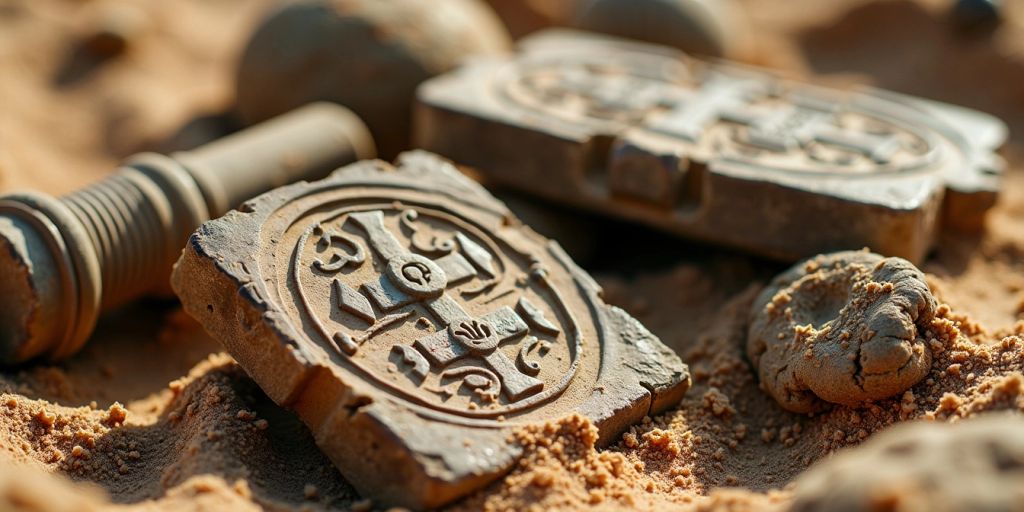
    Ancient artifacts in sand

    Ancient Civilizations and Their Creations

    Ancient civilizations like the Egyptians, Greeks, and Mayans left behind incredible artifacts that continue to baffle us today. These objects, ranging from simple tools to complex machinery, offer a glimpse into the ingenuity and creativity of our ancestors. The creation myths in these ancient religions are insane, often reflecting the transition from chaos to order and the influence of divine beings.

    The Role of Myth and Legend

    Myths and legends have always played a crucial role in explaining the origins of mysterious artifacts. These stories often blend fact and fiction, making it challenging to separate the two. For instance, the legend of Atlantis has inspired countless searches for lost civilizations and their treasures.

    Unraveling the Mysteries Through Modern Science

    Modern science has provided us with tools to unravel the mysteries of ancient artifacts. Techniques like radiocarbon dating and DNA analysis help us understand the age and origin of these objects. Advanced imaging technologies allow us to see inside artifacts without damaging them, revealing hidden details and secrets.

    The journey to uncover the secrets of mysterious artifacts is a fascinating blend of history, science, and imagination. Each discovery brings us closer to understanding our past and the incredible civilizations that came before us.

    Iconic Discoveries That Shaped Our Understanding

    The Rosetta Stone: Deciphering Ancient Languages

    The Rosetta Stone was perhaps the most groundbreaking discovery that revolutionized our understanding of ancient Egyptian history and culture. This artifact, found in 1799, had inscriptions in three scripts: Greek, Demotic, and hieroglyphic. By comparing these texts, scholars were able to decipher Egyptian hieroglyphs, unlocking the secrets of a long-lost language.

    Tutankhamun’s Tomb: A Glimpse into Ancient Egypt

    In 1922, Howard Carter unearthed the tomb of Tutankhamun, a young pharaoh of Egypt. The tomb was filled with treasures, including the famous golden mask. This discovery provided a wealth of information about Egyptian burial practices and the opulence of the pharaohs. It also sparked a renewed interest in ancient Egypt worldwide.

    The Antikythera Mechanism: An Ancient Greek Computer

    Discovered in a shipwreck off the coast of Greece in 1901, the Antikythera Mechanism is often referred to as the world’s first analog computer. This complex device, dating back to around 100 BCE, was used to predict astronomical positions and eclipses. Its intricate design and advanced technology continue to amaze scientists and historians alike.

    These iconic discoveries have not only enriched our knowledge of ancient civilizations but also highlighted the ingenuity and sophistication of our ancestors.

    The Most Puzzling Ancient Artifacts

    The Voynich Manuscript: An Unsolved Enigma

    The Voynich Manuscript is one of the most mysterious books ever discovered. Written in an unknown script and filled with strange illustrations, it has baffled experts for centuries. Despite numerous attempts, no one has been able to decipher its contents. Its origins and purpose remain a mystery, making it a fascinating subject for both historians and cryptographers.

    The Baghdad Battery: Ancient Electricity?

    The Baghdad Battery is a set of three artifacts found in Iraq, believed to date back to the Parthian or Sassanid periods. These artifacts resemble modern-day batteries, leading some to speculate that ancient civilizations might have had knowledge of electricity. However, this theory is still debated among scholars. The true purpose of the Baghdad Battery remains unknown, adding to its allure as an archaeological mystery.

    The Piri Reis Map: Evidence of Prehistoric Exploration

    The Piri Reis Map, created in 1513 by the Ottoman admiral and cartographer Piri Reis, is another puzzling artifact. The map shows parts of the world that were supposedly unknown at the time, including a detailed depiction of the coast of Antarctica. This has led some to believe that ancient civilizations had advanced geographical knowledge. The accuracy and origins of the Piri Reis Map continue to intrigue researchers and historians.

    The discovery of these artifacts challenges our understanding of ancient civilizations and their capabilities. They remind us that there is still much to learn about our past, and that history is full of surprises.

    Techniques and Tools in Uncovering Secrets

    Archaeological Excavation Methods

    Archaeologists use different methods to dig up artifacts. Careful digging helps them find items without breaking them. They use tools like trowels, brushes, and sieves. Sometimes, they even use big machines to move dirt.

    Radiocarbon Dating and Its Importance

    Radiocarbon dating helps scientists figure out how old something is. They measure the amount of carbon-14 in an object. This method is very important because it helps us understand when ancient people lived.

    The Use of Technology in Modern Archaeology

    Modern technology makes it easier to find and study artifacts. Tools like ground-penetrating radar and drones help archaeologists see what’s underground without digging. Computers also help them keep track of their findings and make 3D models of ancient sites.

    The dian rock and similar ancient artifacts challenge conventional historical narratives, suggesting the existence of lost civilizations. As investigations continue, these mysteries may reshape our understanding of human history.

    Cultural Significance and Impact of Artifacts

    Artifacts as Symbols of Power and Religion

    Artifacts often serve as symbols of power and religion. For example, ancient civilizations used items like crowns, scepters, and religious icons to represent authority and divine connection. These objects were not just decorative; they played a crucial role in rituals and governance.

    The Influence of Artifacts on Modern Culture

    Artifacts from the past continue to influence modern culture. Many contemporary designs, art forms, and even technologies draw inspiration from ancient artifacts. This connection to the past helps us understand our cultural roots and appreciate the ingenuity of our ancestors.

    Preservation and Ethical Considerations

    Preserving artifacts is essential for maintaining our cultural heritage. However, it raises ethical questions about ownership and the right to display these items. Museums and archaeologists must navigate these issues carefully to respect the cultures from which these artifacts originate.

    The architectural complexity and ritual practices of sites like Tell ‘Abr 3 reflect the community’s beliefs and cultural sophistication, highlighting the importance of preserving such significant archaeological finds.

    The Future of Archaeology and Artifact Discovery

    Ancient artifacts on a wooden table.

    Emerging Technologies in Archaeology

    The future of archaeology is being reshaped by emerging technologies. Tools like AI are identifying overlooked sites through satellite image analysis. Technologies such as digital twins and laser radar are providing new ways to explore and document ancient sites.

    The Role of Citizen Scientists

    Citizen scientists are playing an increasingly important role in archaeological discoveries. With the help of mobile apps and online platforms, enthusiasts can contribute to research by documenting finds and sharing data. This collaborative approach is expanding the reach and impact of archaeological research.

    Challenges and Opportunities in the Field

    The field of archaeology faces several challenges, including funding limitations and the need for ethical considerations in artifact handling. However, these challenges also present opportunities for innovation and collaboration. By addressing these issues, the field can continue to grow and evolve, uncovering new secrets of our past.

    The future of archaeology and artifact discovery is bright and full of potential. As technology advances, new methods and tools are making it easier to uncover hidden treasures from the past. If you’re passionate about exploring these fascinating developments, visit our website to dive deeper into the world of archaeology. Join us and be part of a community that values knowledge and discovery.

    Conclusion

    In our journey through time, we’ve uncovered the secrets of mysterious artifacts that have puzzled and fascinated us for centuries. These artifacts are not just objects; they are storytellers, revealing the lives, beliefs, and cultures of ancient civilizations. By studying them, we gain a deeper understanding of our shared history and the incredible achievements of those who came before us. As we continue to explore and discover, we are reminded of the endless mysteries that the past holds, waiting to be unveiled. So, let’s keep digging, learning, and marveling at the wonders of history.

    Frequently Asked Questions

    What are mysterious artifacts?

    Mysterious artifacts are objects from the past that we don’t fully understand yet. They can be tools, writings, or even pieces of art that hold secrets about ancient civilizations.

    How do scientists study ancient artifacts?

    Scientists use many methods to study artifacts, like digging them up carefully, using carbon dating to find out how old they are, and using technology to look inside them without breaking them.

    Why are artifacts important?

    Artifacts are important because they help us learn about people who lived a long time ago. They can tell us about their daily lives, beliefs, and technologies.

    What is the Rosetta Stone?

    The Rosetta Stone is a big rock with writing on it in three different languages. It helped scientists figure out how to read ancient Egyptian hieroglyphs.

    Can anyone find an ancient artifact?

    Sometimes regular people find artifacts by accident, but scientists called archaeologists usually find them during planned digs. It’s important to report any finds to experts so they can be studied properly.

    What happens to artifacts after they are found?

    After artifacts are found, they are usually cleaned, studied, and sometimes put in museums so everyone can learn from them. It’s important to take care of them so they don’t get damaged.

  • Exploring the Mysteries of Ghost Sightings: True Stories and Legends

    Exploring the Mysteries of Ghost Sightings: True Stories and Legends

    Ghost sightings have fascinated people for centuries, sparking curiosity and fear. From eerie battlefields to haunted castles, these stories weave a tapestry of mystery and the unknown. This article delves into famous ghost sightings, chilling encounters in American history, haunted spots in Indiana, personal ghost stories, eerie institutions, and the science behind these phenomena. Join us as we explore the spine-chilling world of ghosts.

    Key Takeaways

    • Ghost stories are a part of human history and culture, spanning across different eras and regions.
    • Many famous ghost sightings are tied to historical events, such as wars and ancient ruins.
    • Indiana has its own share of haunted locations, with tales that add to the state’s mysterious charm.
    • Personal accounts and paranormal investigations provide a modern perspective on ghost sightings.
    • Scientific explanations and skepticism offer a balanced view on the existence of ghosts and hauntings.

    Historical Ghost Sightings Around the World

    Famous Haunted Battlefields

    Battlefields have long been associated with ghostly apparitions. Many believe that the spirits of soldiers who died in battle still roam these sites. For instance, the fields of Gettysburg are said to be haunted by the ghosts of Civil War soldiers. Visitors often report hearing the sounds of battle, even when the area is quiet.

    Ghosts of Ancient Ruins

    Ancient ruins are another hotspot for paranormal activity. The Colosseum in Rome, for example, is rumored to be haunted by the spirits of gladiators and spectators. Similarly, the ruins of Pompeii are said to be visited by the ghosts of those who perished in the volcanic eruption.

    Haunted Castles and Palaces

    Castles and palaces, with their long histories and often violent pasts, are prime locations for ghost sightings. The Tower of London is one of the most famous haunted sites, with reports of ghostly figures like Anne Boleyn. In Scotland, Edinburgh Castle is known for its numerous ghost stories, including sightings of a headless drummer.

    Chilling Encounters in American History

    Ghosts of the Revolutionary War

    The Revolutionary War has left behind more than just historical records; it has also sparked legends and ghost stories. From haunted battlefields to eerie old buildings, the spirits of soldiers are said to still roam. In places like Valley Forge and Yorktown, visitors have reported seeing apparitions of soldiers in uniform, hearing phantom drumbeats, and feeling sudden chills.

    Haunted Civil War Sites

    The Civil War was one of the bloodiest conflicts in American history, and its battlefields are now some of the most haunted places in the country. Gettysburg, in particular, is famous for its ghostly encounters. People have seen ghostly soldiers, heard the sounds of battle, and even smelled gunpowder in the air. Other haunted sites include Antietam and Shiloh, where the spirits of fallen soldiers are said to linger.

    Spirits of the Wild West

    The Wild West was a time of outlaws, gunfights, and untamed lands. It’s no surprise that many ghost stories come from this era. Towns like Tombstone, Arizona, and Deadwood, South Dakota, are known for their haunted saloons and hotels. Visitors have reported seeing the ghosts of famous outlaws and hearing the sounds of old-timey piano music playing in empty rooms.

    Though Salem, Massachusetts is best known for its infamous witch trials, there have been plenty of other chilling stories throughout its 400-year history.

    Haunted Locations in Indiana

    Ghosts of Indiana’s South Shore

    Indiana’s South Shore is known for its eerie tales and ghostly legends. One of the most famous haunted spots is the home of the pop legend Michael Jackson in Gary. Visitors have reported strange occurrences and unexplained phenomena. Another spooky location is the Washington Park Zoo, where some claim to have seen the ghost of a chimpanzee playing among the walkways and cages. The South Shore lights, which blaze through the night, are said to ward off restless spirits that slink among the shadows.

    The Haunting of Gary

    Gary, Indiana, is a hotspot for paranormal activity. The story of Gary’s "Demon House" shocked the world in 2014, drawing millions into the terrifying tale of a contemporary exorcism. For many residents, however, ghosts are just part of the community. Local legends include the haunting of the Jackson Five and the ghost ship Flying Cloud. Ghostly echoes may linger from a fiery 1918 train wreck that claimed the lives of eighty-six circus performers. There’s also a tale of a young murderess who reportedly haunts the Cline Avenue freeway after drowning her children in the Little Calumet River.

    Legends of LaPorte

    LaPorte is home to some of Indiana’s most chilling legends. One of the most infamous stories is that of Belle Gunness, a woman who murdered over 40 people at her farmhouse. Her victims’ shrieks are said to still emanate from the area. Another eerie tale involves the ghost of a girl who hangs from the bell tower at St. Mary’s College. The Inn at Aberdeen is also known for its paranormal activity, where guests have reported encounters with the spirit of a playful little girl.

    Indiana is perched on the disquieting frontier between the banal and the bizarre, with haunted hollows and baleful abodes that tell tales of the Hoosier state’s most dreadful locales.

    Personal Accounts of Ghost Sightings

    Eyewitness Testimonies

    Many people have shared their chilling experiences with ghosts. These stories often come from ordinary folks who never expected to encounter the supernatural. Some describe seeing shadowy figures, while others hear unexplained noises or feel sudden drops in temperature. These personal accounts add a human touch to the mysterious world of ghost sightings.

    Paranormal Investigations

    Paranormal investigators play a crucial role in exploring ghost sightings. They use various tools and techniques to detect and document paranormal activity. From EMF meters to thermal cameras, these gadgets help investigators gather evidence. Their findings often spark debates and discussions, blending fear and curiosity surrounding the unknown.

    Modern-Day Hauntings

    Even today, ghost sightings continue to intrigue and frighten people. Modern-day hauntings are reported in homes, workplaces, and public spaces. These stories are shared widely, thanks to social media and online platforms. Whether you believe in ghosts or not, these accounts keep the fascination with the paranormal alive.

    Exploring Haunted Institutions

    Dimly lit corridor of an abandoned asylum

    Haunted Asylums and Prisons

    Many believe that asylums and prisons are some of the most haunted places on Earth. These institutions often have dark histories filled with suffering and despair. For example, the Eastern State Penitentiary in Philadelphia is famous for its ghostly sightings. Visitors have reported hearing eerie whispers and seeing shadowy figures in the hallways.

    Ghosts in Abandoned Hospitals

    Abandoned hospitals are another hotspot for paranormal activity. The Waverly Hills Sanatorium in Kentucky is one such place. Originally a tuberculosis hospital, it is now known for its ghostly residents. People claim to hear footsteps and see apparitions in the old, decaying rooms.

    Spooky Schools and Universities

    Even schools and universities are not free from hauntings. Some campuses have their own ghost stories that have been passed down through generations. For instance, Indiana University is said to be haunted by the ghost of a faceless nun who glides silently through the halls. Students and faculty alike have reported strange occurrences, making it a place of intrigue and fear.

    The psychology behind belief in unexplained phenomena is complex, often influenced by the dark and eerie histories of these haunted institutions.

    The Science and Skepticism of Ghost Sightings

    Misty forest with ghostly figure

    Scientific Explanations

    Scientists have long tried to explain ghost sightings using rational theories. Some common explanations include:

    • Electromagnetic fields (EMF): High EMF levels can cause feelings of unease and hallucinations.
    • Infrasound: Low-frequency sounds can create sensations of fear and anxiety.
    • Sleep paralysis: This condition can make people feel like they are seeing ghosts when they are actually in a state between sleep and wakefulness.

    Debunking Myths

    Many ghost stories are based on myths that can be debunked with simple logic. For example:

    • Orbs in photos: Often, these are just dust particles or insects close to the camera lens.
    • Cold spots: These can be caused by drafts or poor insulation in old buildings.
    • Mysterious noises: Usually, these are just the sounds of a house settling or animals moving around.

    Psychological Perspectives

    Psychologists suggest that the human mind can play tricks, especially in stressful situations. Some key points include:

    • Confirmation bias: People tend to see what they expect to see, especially if they already believe in ghosts.
    • Groupthink: In a group, people are more likely to believe in ghost sightings if others do.
    • Memory distortion: Over time, memories can change, making ghost stories seem more real than they actually were.

    Balancing belief and skepticism is crucial when exploring the paranormal. It’s important to question what we see and consider all possible explanations.

    Ever wondered if ghost sightings are real or just tricks of the mind? Dive into the science and skepticism behind these mysterious events. Our experts break down the facts and myths, giving you a clear picture. Curious to learn more? Visit our website for exclusive content and in-depth research.

    Conclusion

    Ghost stories and legends have always fascinated people, blending the line between reality and the unknown. From haunted houses to eerie battlefields, these tales offer a glimpse into the mysteries that surround us. Whether you believe in ghosts or not, the stories shared in this article highlight the rich tapestry of folklore and the human desire to understand the unexplainable. As we explore these spine-chilling accounts, we are reminded of the power of storytelling and the enduring allure of the supernatural. So, the next time you hear a bump in the night or feel a chill down your spine, remember the tales you’ve read here and let your imagination wander.

    Frequently Asked Questions

    What is a ghost?

    A ghost is believed to be the spirit or soul of a person who has died. People say ghosts can appear in different forms, like shadows, orbs, or even full human shapes.

    Do ghosts only appear at night?

    No, ghosts can appear at any time of the day. But many ghost sightings happen at night because it’s quieter and darker, making it easier to notice unusual things.

    Are haunted places always scary?

    Not always. Some people find haunted places fascinating and exciting. However, others might feel scared or uneasy because of the spooky stories and strange events that happen there.

    Can animals see ghosts?

    Many people believe that animals, especially cats and dogs, can sense or see ghosts. They might act strangely, like staring at something invisible or barking at nothing.

    What should I do if I see a ghost?

    If you see a ghost, try to stay calm. Some people suggest talking to the ghost kindly or simply ignoring it. If you feel scared, it’s okay to leave the place and tell someone about your experience.

    Are all ghost stories true?

    Not all ghost stories are true. Some are based on real experiences, while others are made up or exaggerated. It’s important to be curious but also skeptical when hearing ghost stories.

  • Exploring Time Travel Theories: What Science Says About Journeying Through Time

    Exploring Time Travel Theories: What Science Says About Journeying Through Time

    Time travel has always fascinated people, from the pages of old books to the screens of modern movies. But what does science really say about the possibility of journeying through time? In this article, we will explore various theories and concepts related to time travel, including Einstein’s theory of relativity, the grandfather paradox, wormholes, and quantum mechanics. We will also look at how time travel is portrayed in popular culture and what the future might hold for this intriguing idea.

    Key Takeaways

    • Einstein’s theory of relativity suggests that time is not absolute and can be affected by speed and gravity.
    • The grandfather paradox presents a major challenge to the concept of time travel, questioning the consistency of cause and effect.
    • Wormholes are theoretical passages through space-time that could potentially allow for time travel, but their existence remains speculative.
    • Quantum mechanics introduces new possibilities for time travel, but it also adds complexity to our understanding of time.
    • Popular culture often takes liberties with scientific principles, but it also inspires real scientific research into the possibilities of time travel.

    The Foundations of Time Travel Theories

    Einstein’s Theory of Relativity

    Time travel theories often start with Einstein’s theory of relativity. This theory suggests that time is not fixed but can change depending on how fast you are moving. For example, if you travel very fast, time will slow down for you. This idea is called time dilation.

    Time Dilation and Its Implications

    Time dilation means that if you travel close to the speed of light, you could age much slower than people who stay on Earth. This has been tested with atomic clocks on airplanes and satellites, showing that time can indeed be stretched.

    Experimental Evidence Supporting Time Travel

    Scientists have found some proof that time travel might be possible. For instance, atomic clocks on fast-moving planes show different times than those on the ground. This supports the idea that time can be bent or stretched, making time travel a fascinating topic in science.

    The Grandfather Paradox and Causality

    Understanding the Grandfather Paradox

    The Grandfather Paradox is a famous thought experiment in time travel. It asks: What happens if you go back in time and accidentally kill your grandfather before your parent is born? This would mean you were never born, so you couldn’t have traveled back in time to commit the act. This paradox challenges our understanding of reality and causality.

    Causality and Its Challenges

    Causality is the principle that cause comes before effect. Time travel complicates this because actions in the past could change the future. For example, if you prevent a major event, it could create a ripple effect, altering everything that follows. This makes it hard to predict outcomes and maintain a consistent timeline.

    Potential Resolutions to Time Travel Paradoxes

    Scientists have proposed several solutions to the Grandfather Paradox:

    1. Multiple Timelines: One idea is that traveling back in time creates a new, separate timeline. In this new timeline, your actions don’t affect the original timeline you came from.
    2. Chronology Protection Conjecture: Another theory suggests that the laws of physics prevent paradoxes from happening. This means backward time travel might be impossible.
    3. Self-Consistency Principle: This principle states that any actions taken by a time traveler were always part of history, so paradoxes can’t occur. For example, if you try to kill your grandfather, something will always stop you.

    The Grandfather Paradox and the broader concept of time travel continue to challenge our understanding of reality, causality, and existence. As we venture into these complex ideas, we must consider both scientific theories and philosophical implications.

    Wormholes: Gateways Through Time?

    Futuristic city with glowing wormhole in sky

    Theoretical Basis for Wormholes

    Wormholes, also known as Einstein-Rosen bridges, are fascinating theoretical constructs in physics. They are imagined as tunnels connecting two separate points in spacetime. This concept was first proposed by Einstein and his student Nathan Rosen in the 1930s. The idea is often visualized by folding a two-dimensional sheet of paper to bring two distant points together. If wormholes exist, they could potentially allow for instantaneous travel between these points, making them a key concept in time travel theories.

    Challenges in Creating Wormholes

    Creating a traversable wormhole is no small feat. It would require exotic matter with negative energy, something that has not been proven to exist. Even if such matter were found, maintaining a stable wormhole would be incredibly difficult due to extreme tidal forces and time dilation effects. These forces could easily destroy any matter attempting to pass through. Additionally, the creation of a wormhole would likely involve manipulating black holes and white holes, adding another layer of complexity.

    Potential Applications of Wormholes in Time Travel

    If we could overcome these challenges, wormholes could revolutionize our understanding of time and space. They could allow for instantaneous travel across vast distances, and potentially even time travel. For example, an astronaut entering a wormhole in one galaxy could emerge in another galaxy, possibly even in a different time period. However, this remains highly speculative and is far from being a practical reality.

    Quantum Mechanics and Time Travel

    Futuristic cityscape with vortex and spinning clock

    Quantum Entanglement and Time Travel

    Quantum entanglement is a phenomenon where particles become interconnected, such that the state of one particle instantly influences the state of another, no matter the distance between them. This has led some scientists to speculate about its potential for time travel. Could entanglement allow information to be sent back in time? While this idea is still theoretical, it opens up fascinating possibilities for future research.

    The Role of Quantum Gravity

    Quantum gravity aims to unify general relativity and quantum mechanics, two pillars of modern physics that currently don’t align. Some researchers believe that understanding quantum gravity could unlock the secrets of time travel. This field is still in its infancy, but it holds promise for revealing how time might be manipulated at the quantum level.

    Current Research in Quantum Time Travel

    Scientists are actively exploring the intersection of quantum mechanics and time travel. Experiments are being conducted to test the limits of quantum entanglement and other quantum phenomena. While we’re far from building a time machine, these studies are crucial for understanding the fundamental nature of time and space.

    The intersection of technology and paranormal research highlights the role of AI and multiverse theories in understanding unexplained phenomena. This emphasizes the importance of debunking myths and understanding the psychological and environmental factors that contribute to paranormal experiences.

    Time Travel in Popular Culture

    Movies and TV Shows Featuring Time Travel

    Time travel has been a staple of science fiction for decades. From the iconic DeLorean in Back to the Future to the magical time turner in Harry Potter, these stories captivate audiences with the idea of altering the past or exploring the future. Other notable mentions include Groundhog Day, where the protagonist experiences countless time loops, and 12 Monkeys, which explores the concept of a single timeline despite multiple journeys through time.

    Scientific Accuracy in Fictional Time Travel

    While these stories are entertaining, they often take liberties with scientific facts. For instance, Einstein’s theory of relativity suggests that time travel might be possible, but the energy required is enormous. Additionally, the concept of causality presents significant challenges, as seen in the famous Grandfather Paradox. Despite these hurdles, the portrayal of time travel in media continues to inspire curiosity and debate.

    Impact of Popular Culture on Scientific Research

    Popular culture plays a crucial role in shaping public interest in scientific concepts. The fascination with time travel in movies, television, and literature often leads to increased interest in the underlying science. This interplay between fiction and reality creates a continuous cycle of interest in the unknown, driving both personal fascination and scientific inquiry.

    Future Prospects of Time Travel

    Technological Advances Needed

    For time travel to become a reality, significant technological advances are required. Current technology is far from achieving the energy levels needed to manipulate time. Scientists believe that breakthroughs in quantum mechanics and general relativity could pave the way for future developments.

    Ethical and Philosophical Considerations

    Time travel raises numerous ethical and philosophical questions. For instance, if we could travel back in time, how would we handle the potential to alter past events? This could lead to unforeseen consequences, making it essential to establish guidelines for responsible engagement.

    The Role of Interdisciplinary Research

    Interdisciplinary research is crucial for advancing our understanding of time travel. Combining insights from physics, philosophy, and even popular culture can help us explore the possibilities and limitations of journeying through time. This collaborative approach could lead to innovative solutions and new perspectives on this fascinating topic.

    The future of time travel holds endless possibilities, from exploring ancient civilizations to witnessing future events firsthand. Imagine the knowledge and experiences waiting to be uncovered! To dive deeper into the fascinating world of time travel and other intriguing topics, visit our website. Join us on this exciting journey and unlock a world of insights and discoveries.

    Conclusion

    Time travel remains one of the most captivating ideas in both science and fiction. While Einstein’s theories suggest that time travel might be possible, the practical challenges are immense. We don’t yet have the technology or understanding to make it a reality. However, the concept continues to inspire scientists and storytellers alike. As we learn more about the universe, who knows what possibilities the future might hold? For now, time travel remains a fascinating topic that fuels our imagination and curiosity.

    Frequently Asked Questions

    What is time travel?

    Time travel is the idea of moving between different points in time, much like we move through space.

    Is time travel possible according to science?

    Scientists think time travel might be possible, especially with theories like Einstein’s relativity, but we don’t have the technology yet.

    What is the Grandfather Paradox?

    The Grandfather Paradox is a time travel puzzle where if you go back in time and stop your grandfather from having kids, you wouldn’t exist to go back in time.

    What are wormholes?

    Wormholes are theoretical tunnels in space-time that could connect different times and places, like shortcuts through the universe.

    How does popular culture depict time travel?

    Movies and TV shows often show time travel with cool gadgets and dramatic changes in history, but they take a lot of liberties with the science.

    What are the future prospects of time travel?

    Future time travel depends on new technology and better understanding of physics, but it also raises big ethical and philosophical questions.

  • Unveiling the Secrets of Mystery Cults: A Journey into Ancient Beliefs

    Unveiling the Secrets of Mystery Cults: A Journey into Ancient Beliefs

    Mystery cults were secret religious groups that existed in ancient Greek and Roman times. They offered followers a chance to connect deeply with the divine and uncover hidden truths about life and the universe. Unlike regular religions, these cults had secret rituals and ceremonies that only initiates could participate in. As we explore the origins, rituals, and lasting impacts of these mystery cults, we uncover a world that sought to answer life’s biggest questions through hidden and sacred practices.

    Key Takeaways

    • Mystery cults began in ancient Greece and evolved significantly during the Roman Empire.
    • These cults incorporated secret initiation rites that were crucial for membership.
    • Prominent mystery cults included the Eleusinian Mysteries, the Cult of Dionysus, and the Mithraic Mysteries.
    • Mystery cults influenced art, literature, and even early Christian practices.
    • Various factors, including the rise of Christianity, led to the decline of these ancient cults.

    Origins and Evolution of Mystery Cults

    Early Beginnings in Ancient Greece

    Mystery cults began in Ancient Greece. They were secretive groups that performed special rituals. These cults were different from the public religion. They focused on personal experiences and hidden knowledge. People joined these cults to feel closer to the gods and to find answers to life’s big questions.

    Influence of Eastern Religions

    As time went on, mystery cults were influenced by religions from the East. For example, the worship of the Egyptian goddess Isis became popular. These new ideas mixed with Greek traditions, creating unique practices. This blending of cultures made the cults even more mysterious and appealing.

    Transformation During the Roman Empire

    During the Roman Empire, mystery cults changed a lot. They became more organized and widespread. The Romans adopted many gods from other cultures, like the Persian god Mithras. These cults offered a sense of community and belonging. People from all walks of life could join, making the cults very inclusive. However, the secrecy of their rituals often led to skepticism and criticism.

    Rituals and Ceremonies of Mystery Cults

    Ancient worshippers performing a ritual in a cave.

    Initiation Rites and Their Significance

    Initiation rites were the cornerstone of mystery cults. These ceremonies marked the beginning of a new spiritual journey for the initiates. The name ioulo (from ioulos, “grain sheaf”) has been regarded as identifying her with the sheaf and as proving that the cult of Demeter originated in the agricultural cycle. The rites often involved symbolic acts of death and rebirth, representing the cycle of life and the promise of a new beginning.

    Symbolism in Ritual Practices

    Symbolism played a crucial role in the rituals of mystery cults. Objects, gestures, and words were imbued with deep meanings, often related to nature, life, and death. For instance, the grain sheaf in the Eleusinian Mysteries symbolized the agricultural cycle and the renewal of life. These symbols helped initiates connect with the divine and understand the deeper truths of existence.

    Role of Music and Dance

    Music and dance were integral to the ceremonies of mystery cults. They were not just forms of entertainment but were believed to have spiritual significance. The rhythms and melodies were thought to facilitate a connection with the divine, while the dances often mimicked cosmic movements, symbolizing the harmony of the universe. The combination of music and dance created an immersive experience that helped initiates transcend the mundane and enter a state of spiritual ecstasy.

    Prominent Mystery Cults of the Ancient World

    The Eleusinian Mysteries

    The Eleusinian Mysteries were among the earliest and most famous mystery cults, dedicated to the goddesses Demeter and Persephone. Held at Eleusis near Athens, these rituals captivated many followers. The central theme was the cycle of nature, symbolized by Demeter’s grief for her daughter Persephone, representing the changing seasons and the cycle of life and death.

    The Cult of Dionysus

    The Cult of Dionysus, also known as the Dionysian Mysteries, focused on the god of wine, fertility, and theater. This cult’s rituals often involved ecstatic celebrations, symbolizing the god’s dual role as a deity of life and rebirth. The origins of this cult are believed to predate Greece, possibly originating from Crete or North Africa.

    The Mithraic Mysteries

    The Mithraic Mysteries revolved around the worship of Mithras, a deity of Persian origin. This cult was particularly popular among Roman soldiers. The rituals were conducted in secretive underground temples called Mithraea. Initiates underwent a series of seven grades of initiation, each with its own specific rites and symbols. The central myth involved Mithras slaying a sacred bull, symbolizing the struggle between good and evil.

    Social and Cultural Impact of Mystery Cults

    Inclusivity Across Social Strata

    Mystery cults were unique in their ability to unite people from all walks of life. Unlike other religious groups, these cults welcomed everyone, from lowly laborers to esteemed statesmen. This inclusivity fostered a sense of community and belonging among their followers. Members formed strong bonds, sharing experiences and insights that extended beyond the secret rituals.

    Influence on Art and Literature

    The rich symbolism and rituals of mystery cults left a lasting mark on ancient art and literature. Artists and writers drew inspiration from the mystical practices, creating works that reflected the profound spiritual experiences of the initiates. This influence can be seen in various forms of art, from intricate pottery designs to epic poems.

    Philosophical Contributions

    Mystery cults also contributed to the philosophical landscape of the ancient world. Their teachings on life after death, purification of the soul, and communion with the divine offered a sense of purpose and direction. These ideas resonated with many philosophers, who incorporated them into their own works, further enriching the intellectual fabric of the time.

    The enduring appeal of mystery cults lies in their capacity to address fundamental human concerns and desires. In a world fraught with uncertainty, these mystical practices offered solace and hope.

    Despite their popularity, mystery cults faced skepticism and criticism. The secrecy surrounding their practices often led to accusations of heresy and impiety. Early Christian writers viewed these cults as competitors to their own burgeoning faith and sought to undermine them. However, the allure of mystery cults endures, beckoning us to delve into their depths, seeking meaning and transcendence.

    Mystery Cults and Early Christianity

    Ancient temple with torches and stone statues

    Comparative Analysis of Rituals

    Early Christianity and mystery cults shared some similarities in their rituals. For instance, both had initiation rites, with baptism being a key ritual in Christianity. In contrast, in mystery religions like those of Isis or Mithras, baptism often served as a purification rite or initiation into the cult, without the same theological implications. This has led to debates about whether Christianity borrowed elements from these older traditions.

    Controversies and Debates

    The relationship between Christianity and mystery cults has been a topic of controversy for centuries. Early Christian writers often viewed these cults as competitors and sought to discredit them. Justin Martyr, a 2nd-century Christian apologist, referred to them as "demonic imitations" of the true faith. Despite these criticisms, some scholars argue that the secrecy and initiation rites of mystery cults influenced early Christian practices.

    Legacy in Christian Practices

    Some elements of mystery cults may have found their way into Christian practices. For example, the term mysterion, used in early Christianity to describe sacraments like baptism, was also a term for mystery rites. This suggests that early Christians adopted some of the aura of secrecy that surrounded mystery cults. While the exact influence remains debated, the similarities are hard to ignore.

    The Decline and Legacy of Mystery Cults

    Factors Leading to Their Decline

    Mystery cults, once thriving, began to wane due to several factors. One major reason was the rise of Christianity, which offered a more accessible and organized belief system. Early Christian writers often viewed these cults as competitors and sought to undermine them. Additionally, the secrecy surrounding their practices led to accusations of heresy and impiety, further diminishing their appeal.

    Surviving Elements in Modern Religions

    Despite their decline, some elements of mystery cults have survived in modern religions. For instance, the Christian sacrament of baptism shares similarities with initiation rites of ancient cults. The term mysterion, used by early Christians, reflects this connection. These surviving elements highlight the enduring influence of mystery cults on contemporary religious practices.

    Cultural and Historical Significance

    Mystery cults hold a significant place in history due to their unique approach to spirituality. They addressed fundamental human concerns, offering solace and hope in uncertain times. Their teachings on life after death and purification of the soul provided a sense of purpose. The allure of these cults endures, inviting us to explore their depths and seek meaning in their ancient practices.

    The enduring appeal of mystery cults lies in their capacity to address fundamental human concerns and desires. In a world fraught with uncertainty, these mystical practices offered solace and hope.

    Mystery cults, once vibrant and influential, have seen a significant decline over the centuries. Their legacy, however, continues to intrigue scholars and enthusiasts alike. If you’re fascinated by the hidden histories and want to dive deeper, visit our website for exclusive content and resources. Join us on this journey of discovery and uncover the secrets that history has left behind.

    Conclusion

    In wrapping up our journey into the ancient Mystery Cults, we uncover a world where secrets and rituals intertwined to offer a sense of belonging and deeper understanding. These cults welcomed everyone, regardless of their social status, and provided a space for spiritual growth and community. Despite facing criticism and skepticism, their teachings on life, death, and the divine continue to resonate. The allure of these ancient practices lies in their promise of enlightenment and the timeless human quest for meaning. As we look back, we see that the search for truth and connection is a journey that transcends time, reminding us of our shared human experience.

    Frequently Asked Questions

    What are mystery cults?

    Mystery cults were ancient religious groups with secret rituals and teachings. They promised special knowledge and a deeper connection to the divine for their members.

    Where did mystery cults originate?

    Mystery cults began in ancient Greece and later spread to the Roman Empire. They were influenced by various Eastern religions and local traditions.

    What kind of rituals did mystery cults perform?

    Mystery cults had secret initiation rites, symbolic ceremonies, and often included music and dance. These rituals aimed to purify and enlighten the participants.

    Who could join a mystery cult?

    Anyone could join a mystery cult, regardless of their social status. These groups were inclusive and welcomed people from all walks of life.

    How did mystery cults influence early Christianity?

    Mystery cults influenced early Christianity in various ways, including similar rituals and the idea of secret knowledge. However, there were also significant differences and debates between them.

    Why did mystery cults decline?

    Mystery cults declined due to several factors, including the rise of Christianity, changing social and political conditions, and the loss of interest in their secretive practices.

  • Unveiling the Truth: A Deep Dive into CIA Secrets

    Unveiling the Truth: A Deep Dive into CIA Secrets

    The Central Intelligence Agency, or CIA, has always been surrounded by an air of mystery and intrigue. From its early days during the Cold War to its current role in global intelligence, the CIA has been involved in numerous covert operations and has faced many controversies. This article takes a closer look at the agency’s history, its secret missions, ethical dilemmas, and its impact on world politics.

    Key Takeaways

    • The CIA was formed during the Cold War and has evolved significantly over the decades.
    • Covert operations and espionage tactics have been a cornerstone of the CIA’s activities.
    • The agency has faced numerous controversies, including accusations of torture and privacy violations.
    • The CIA has played a significant role in global politics, often intervening in foreign governments.
    • Technological advancements continue to shape the future of the CIA’s intelligence operations.

    The Origins and Evolution of the CIA

    Formation and Early Years

    The CIA was established in 1947, following the end of World War II. Its creation was part of the National Security Act, which aimed to reorganize the U.S. military and intelligence services. The agency’s primary goal was to gather and analyze foreign intelligence to assist in national security. Initially, the CIA focused on countering Soviet influence during the early stages of the Cold War.

    Cold War Expansion

    During the Cold War, the CIA expanded its operations significantly. The agency engaged in various covert missions to counter Soviet activities worldwide. This period saw the development of advanced espionage techniques and the use of technological innovations like the U-2 spy plane. The CIA’s role in political warfare, influenced by figures like George F. Kennan, became crucial in the global struggle against communism.

    Post-9/11 Transformations

    The events of September 11, 2001, marked a significant turning point for the CIA. The agency underwent major transformations to address the new threat of terrorism. This included the establishment of new counterterrorism units and the adoption of enhanced interrogation techniques. The CIA’s focus shifted towards preventing future terrorist attacks, leading to increased surveillance and intelligence-gathering efforts.

    The CIA’s evolution reflects the changing landscape of global politics and security. From its early days of countering Soviet influence to its current role in combating terrorism, the agency has continually adapted to meet new challenges.

    Covert Operations and Espionage Tactics

    Notable Covert Missions

    The CIA has been involved in numerous covert missions that have shaped global events. One such mission was the defection of a disillusioned Soviet colonel, which provided the CIA with invaluable intelligence. Another dramatic operation involved the exfiltration of Stalin’s daughter from India, showcasing the agency’s ability to execute complex rescues.

    Espionage Techniques

    Espionage techniques used by the CIA are diverse and sophisticated. They include the use of "dangles," where false information is intentionally leaked to track its movement. This method helps in identifying potential spies. Additionally, the CIA employs counterintelligence tactics to protect national secrets from unauthorized release or foreign espionage. These tactics can be defensive, offensive, passive, or active.

    Technological Innovations in Intelligence

    Technological advancements have significantly enhanced the CIA’s intelligence capabilities. The development of high-altitude spy planes like the SR-71 Blackbird, once a closely guarded secret, is a prime example. Today, cyber intelligence and cybersecurity are at the forefront of the agency’s efforts to stay ahead of potential threats. The integration of artificial intelligence in espionage is also opening new avenues for gathering and analyzing data.

    The world of espionage is a complex and shadowy realm, where truth is often stranger than fiction. The CIA’s covert operations and espionage tactics reveal a side of history that is rarely seen but profoundly impactful.

    Controversial Practices and Ethical Dilemmas

    Use of Torture and Enhanced Interrogation

    The CIA has faced significant criticism for its use of enhanced interrogation techniques. These methods, including waterboarding, have been widely condemned as forms of torture. The agency has admitted that Abu Zubaydah and two other prisoners were subjected to waterboarding, a practice where water is poured over the nose and mouth to create the sensation of drowning. This has sparked intense debates about human rights violations and the ethical boundaries of intelligence gathering.

    Surveillance and Privacy Concerns

    The CIA’s surveillance activities have raised serious privacy concerns. Programs like PRISM have allowed the agency to collect vast amounts of data from American citizens without their knowledge. This has led to a public outcry over the balance between national security and individual privacy. Critics argue that such surveillance practices infringe on civil liberties and lack adequate oversight.

    Alleged Misconduct and Scandals

    Over the years, the CIA has been embroiled in numerous scandals. Allegations of misconduct range from involvement in drug trafficking to unauthorized operations. These incidents have tarnished the agency’s reputation and led to calls for greater transparency and accountability. The public remains divided on whether the CIA’s actions are justified in the name of national security or if they represent a misuse of power.

    The ethical dilemmas faced by the CIA highlight the complex interplay between national security and human rights. Balancing these concerns remains a contentious issue that continues to evolve.

    Influence on Global Politics and Conflicts

    Shadowy figure in front of a world map

    Interventions in Foreign Governments

    The CIA has a long history of intervening in foreign governments. These interventions often aim to promote U.S. interests abroad. For example, the CIA played a crucial role in the 1953 coup in Iran, which led to the overthrow of Prime Minister Mohammad Mossadegh. Similarly, the agency was involved in the 1973 coup in Chile that ousted President Salvador Allende. These actions have had lasting impacts on the political landscapes of these countries.

    Role in Counterterrorism

    After the 9/11 attacks, the CIA’s focus shifted significantly towards counterterrorism. The agency has been instrumental in tracking and eliminating key terrorist figures. Operations like the raid that killed Osama bin Laden in 2011 highlight the CIA’s critical role in global counterterrorism efforts. The agency’s work in this area has been both praised for its effectiveness and criticized for its methods.

    Impact on International Relations

    The CIA’s activities have far-reaching effects on international relations. Covert operations and intelligence gathering can either strengthen or strain diplomatic ties. For instance, the revelation of CIA surveillance programs has led to tensions between the U.S. and its allies. On the other hand, successful intelligence sharing has bolstered alliances and improved global security.

    The CIA’s influence on global politics is profound, shaping the course of history through its covert and overt actions. Its role in international conflicts and political dynamics cannot be understated.

    Insider Perspectives and Whistleblower Accounts

    Shadowy figure with classified documents

    Testimonies from Former Agents

    Former CIA agents often provide unique insights into the agency’s inner workings. These testimonies can reveal the challenges and ethical dilemmas faced by those in the field. For instance, a memoir offers an insider’s perspective into the complexities of covert operations and the personal toll it takes on agents.

    Whistleblower Revelations

    Whistleblowers have played a crucial role in exposing controversial practices within the CIA. Their revelations have brought to light issues such as the use of enhanced interrogation techniques and unauthorized surveillance programs. These disclosures often lead to public outcry and demands for accountability.

    Impact of Insider Information on Public Perception

    The information shared by insiders and whistleblowers significantly impacts public perception of the CIA. While some view these revelations as necessary for transparency, others believe they compromise national security. The debate continues as more insiders come forward with their stories.

    The courage of whistleblowers and former agents in sharing their experiences helps the public understand the often hidden world of intelligence operations.

    The CIA in Popular Media and Culture

    Depictions in Films and TV Shows

    The CIA has been a popular subject in films and TV shows for decades. These portrayals range from action-packed thrillers to more nuanced dramas. Bold characters and high-stakes missions often dominate the screen, capturing the public’s imagination. Movies like "Argo" and TV series like "Homeland" offer a mix of fact and fiction, providing a glimpse into the agency’s operations while also entertaining audiences.

    Documentaries and Books

    Documentaries about the CIA offer viewers a rare glimpse into the clandestine operations and inner workings of one of the world’s most secretive organizations. Films like "Wormwood" and "Spymasters: CIA in the Crosshairs" provide deeper dives into specific cases and broader agency practices. These documentaries often feature interviews with former agents and experts, shedding light on the agency’s complex history and controversial methods. Books, too, have played a significant role in shaping public perception, with titles like "The Agency: A History of the CIA" offering detailed accounts of the agency’s evolution.

    Public Perception and Myths

    Public perception of the CIA is a mix of admiration, skepticism, and intrigue. The agency’s secretive nature fuels numerous myths and conspiracy theories. While some view the CIA as a necessary force for national security, others criticize its methods and ethical dilemmas. The media plays a crucial role in shaping these perceptions, often highlighting the agency’s successes and failures. The relationship between the media and the CIA has been a subject of debate, with some alleging collusion and others emphasizing journalistic integrity.

    The CIA’s portrayal in popular media reflects its complex role in global politics and national security. Whether through thrilling movies, insightful documentaries, or detailed books, the agency continues to captivate and provoke thought among audiences worldwide.

    Technological Advancements and Future Directions

    Cyber Intelligence and Cybersecurity

    The CIA has been at the forefront of cyber intelligence and cybersecurity. They have developed advanced methods to protect national security from cyber threats. These methods include monitoring and countering cyber-attacks from hostile nations and groups. The agency’s focus on cybersecurity ensures that sensitive information remains protected from unauthorized access.

    Artificial Intelligence in Espionage

    Artificial Intelligence (AI) is transforming the way the CIA conducts espionage. AI helps in analyzing vast amounts of data quickly, identifying patterns, and predicting potential threats. This technology is crucial for modernizing defense and enhancing homeland security. The use of AI in espionage allows the CIA to stay ahead of adversaries by providing timely and accurate intelligence.

    Future Challenges and Opportunities

    Looking ahead, the CIA faces several challenges and opportunities. One major challenge is keeping up with rapid technological advancements. As new technologies emerge, the agency must adapt and integrate these innovations into their operations. Opportunities include leveraging AI and other technologies to improve intelligence gathering and analysis. The future of the CIA will depend on its ability to embrace and utilize these technological advancements effectively.

    The path to 2050 will require the CIA to continuously evolve and innovate to ensure the health and security of the nation.

    Technology is moving fast, and the future looks even more exciting. From smart gadgets to advanced AI, the possibilities are endless. Want to stay ahead of the curve? Visit our website to explore more about the latest tech trends and what’s coming next. Don’t miss out on the future!

    Conclusion

    In conclusion, the world of the CIA is filled with secrets, mysteries, and complex stories that have shaped history. Through various documentaries, we get a rare look into the agency’s covert operations, ethical dilemmas, and significant impacts on global politics. These films help us understand the delicate balance between national security and transparency. They also remind us of the importance of questioning and critically analyzing the actions of powerful institutions. As we continue to uncover more about the CIA, it’s clear that its influence and operations will remain a topic of fascination and debate for years to come.

    Frequently Asked Questions

    When was the CIA formed?

    The CIA was created in 1947 after World War II to handle foreign intelligence and counterintelligence activities.

    What are some famous covert operations by the CIA?

    Some well-known covert missions include the Bay of Pigs invasion, Operation Ajax in Iran, and the hunt for Osama bin Laden.

    Has the CIA been involved in any controversies?

    Yes, the CIA has faced many controversies, including allegations of torture, surveillance without warrants, and involvement in coups.

    How does the CIA gather intelligence?

    The CIA uses various methods to gather intelligence, such as human spies, electronic surveillance, and satellite imagery.

    What role does the CIA play in counterterrorism?

    The CIA plays a key role in counterterrorism by gathering intelligence on terrorist groups and helping to plan operations against them.

    How is the CIA portrayed in movies and TV shows?

    The CIA is often depicted in films and TV shows as a secretive and powerful organization, sometimes heroically, and other times as morally ambiguous.

  • Unveiling the Secrets: Illuminati Exposed and What It Means for the Modern World

    Unveiling the Secrets: Illuminati Exposed and What It Means for the Modern World

    The Illuminati has long been a subject of intrigue and speculation. From their mysterious origins to their alleged influence on historical events and modern culture, the secret society has captivated the imagination of many. This article delves into the history, symbols, and impact of the Illuminati, separating fact from fiction and exploring what their legacy means for today’s world.

    Key Takeaways

    • The Illuminati was founded by Adam Weishaupt in 1776 with the goal of promoting Enlightenment ideals such as reason and science.
    • Illuminati symbols like the All-Seeing Eye and the Pyramid have become iconic, often appearing in popular culture and conspiracy theories.
    • The Illuminati played a significant role during the Enlightenment, influencing thinkers and promoting scientific inquiry, but also clashing with religious authorities.
    • Modern conspiracy theories about the Illuminati often claim that they seek world domination, but many of these theories lack credible evidence.
    • Despite being disbanded in the late 18th century, the Illuminati continues to fascinate people, influencing literature, music, and modern secret societies.

    The Origins of the Illuminati

    Adam Weishaupt: The Visionary Behind the Order

    The Illuminati Order was founded in 1776 by Adam Weishaupt. Born in Ingolstadt, Bavaria, on February 6, 1748, Weishaupt was raised in a strict religious environment. Despite this, he developed an early interest in Enlightenment ideas and began to question traditional authority. Weishaupt’s vision was to create a society that promoted reason, knowledge, and social progress.

    The Birth of a Secret Society

    The Illuminati started as a small group of like-minded individuals who shared Weishaupt’s ideals. They aimed to promote Enlightenment values and challenge the established norms of society. The group operated in secrecy to avoid persecution from religious and political authorities. Their meetings were held in secret locations, and members used code names to protect their identities.

    Early Goals and Ideals

    The primary goals of the Illuminati were to promote reason, challenge superstition, and advocate for social reform. They believed in the power of education and knowledge to transform society. The group also sought to influence political decisions and promote the separation of church and state. Their ideals were rooted in the Enlightenment principles of liberty, equality, and fraternity.

    The Illuminati’s early efforts were focused on spreading Enlightenment ideas and challenging the status quo. They believed that through education and reason, they could create a better world.

    The origins of the Illuminati are a fascinating glimpse into the world of secret societies and their impact on history. From Weishaupt’s vision to the group’s early goals, the Illuminati sought to bring about significant social and political change.

    Illuminati Symbols and Their Meanings

    The All-Seeing Eye

    The All-Seeing Eye is one of the most famous symbols linked to the Illuminati. It is often shown as an eye inside a triangle, sometimes with rays of light. This symbol is said to represent knowledge and awareness. Some people believe it shows the Illuminati’s ability to see and control everything. You can even find it on the back of the U.S. dollar bill, which adds to the mystery.

    The Pyramid and Its Significance

    The pyramid is another key symbol. It usually has the All-Seeing Eye at the top. The pyramid can stand for strength and endurance. Some think it shows the Illuminati’s power structure, with the leaders at the top and the general public at the bottom. This idea ties into many conspiracy theories about world control.

    Other Esoteric Symbols

    The Illuminati also use other secret symbols. These can include owls, which are thought to represent wisdom, and the number 13, which is often linked to bad luck but has special meaning in masonic numerology. These symbols are said to be hidden in plain sight, in art, buildings, and even in movies and music videos.

    The use of these symbols adds to the mystery and intrigue surrounding the Illuminati. They make people wonder if there is a hidden message or secret plan behind everyday things.

    The Illuminati and the Enlightenment

    Influence on Enlightenment Thinkers

    The Illuminati had a significant impact on many thinkers during the Enlightenment. They promoted ideas of reason, science, and knowledge, which were central to the era. Their focus on enlightenment ideals helped shape the intellectual landscape of the time. Members of the Illuminati were often well-educated and influential in their communities, spreading these progressive ideas further.

    Role in Promoting Reason and Science

    The Illuminati were strong advocates for reason and science. They believed that through knowledge and rational thought, society could progress and improve. This belief was in line with the broader Enlightenment movement, which sought to challenge traditional authority and promote intellectual freedom. The Illuminati’s support for scientific inquiry and education played a crucial role in advancing these goals.

    Conflicts with Religious Authorities

    Despite their positive contributions, the Illuminati faced significant opposition from religious authorities. Their emphasis on reason and science often put them at odds with the Church, which saw these ideas as a threat to its power. This conflict was a major challenge for the Illuminati, as they sought to promote their ideals in a society that was still heavily influenced by religious beliefs.

    The Illuminati’s efforts to promote enlightenment ideals were not without challenges. They faced opposition from powerful religious institutions, but their commitment to reason and science left a lasting impact on the intellectual landscape of the time.

    Modern Conspiracy Theories About the Illuminati

    Mysterious cloaked figure in dim light

    Theories of World Domination

    One of the most popular conspiracy theories about the Illuminati is that they seek to control the world. This idea suggests that a secret group of powerful individuals is pulling the strings behind major global events. Many believe that the Illuminati are responsible for wars, economic crises, and even natural disasters. These theories often point to symbols on currency or in popular media as evidence of their influence.

    Influence on Popular Culture

    The Illuminati have also made their way into popular culture. Celebrities like Jay-Z and Beyoncé have been linked to the group, often seen making the Illuminati triangle symbol at concerts. Movies, books, and even video games have featured the Illuminati as shadowy puppet masters. This has helped to keep the myth alive and well in the public imagination.

    Debunking Common Myths

    Despite the widespread belief in these theories, there is little to no evidence to support them. Historians and experts argue that the Illuminati, as described in these theories, never existed. They point out that many of these ideas are based on unconfirmed or distorted information. It’s important to approach these theories with a critical mind and to seek out reliable sources of information.

    The fascination with the Illuminati shows how people often look for simple explanations for complex events. This tendency can lead to the spread of misinformation and unfounded theories.

    The Illuminati’s Alleged Influence on Historical Events

    The French Revolution

    The French Revolution is often cited as a key event influenced by the Illuminati. Some believe that the Illuminati’s ideals of liberty, equality, and fraternity helped spark the revolution. These ideas aligned with the Enlightenment principles that were gaining popularity in France at the time. However, there is no concrete evidence to support the claim that the Illuminati directly orchestrated the revolution.

    The American Revolution

    Similar to the French Revolution, the American Revolution is also linked to the Illuminati by some conspiracy theorists. They argue that several Founding Fathers, who were Freemasons, were influenced by Illuminati principles. The push for independence and the creation of a new democratic nation are seen as outcomes of these ideals. Yet, like with the French Revolution, there is no solid proof that the Illuminati played a direct role.

    Other Key Historical Moments

    Beyond these two major revolutions, the Illuminati are also rumored to have had a hand in various other historical events. These include the rise of certain political movements and the spread of Enlightenment ideas across Europe. While the Illuminati did promote reason and science, their actual influence on these events remains a topic of debate.

    The fascination with the Illuminati’s alleged influence on historical events highlights our ongoing interest in uncovering hidden truths and understanding the forces that shape our world.

    The Illuminati in Popular Culture

    Mysterious figure in front of ancient structure

    Depictions in Literature and Film

    The Illuminati has been a popular subject in books and movies for decades. One of the most famous examples is Dan Brown’s novel Angels and Demons, which brought the concept of the Illuminati into the public eye. The book was later turned into a movie, further spreading the idea. Another notable mention is The Illuminatus! Trilogy by Robert Anton Wilson and Robert Shea, which mixes real historical events with fiction, creating a complex narrative around the secret society.

    Influence on Music and Art

    In the world of music, many artists have been linked to the Illuminati, either through their lyrics or symbols used in their performances. Jay-Z and Beyoncé are often cited as examples, with fans pointing to their use of the triangle hand sign as evidence. The influence extends to visual arts as well, where symbols like the All-Seeing Eye and the Pyramid frequently appear.

    Public Perception and Misconceptions

    Public perception of the Illuminati is often shaped by conspiracy theories and sensational stories. Many people believe that the Illuminati controls world events from behind the scenes, despite a lack of evidence. This has led to numerous misconceptions, such as the idea that the Illuminati is responsible for major historical events or that it seeks world domination. These beliefs are often fueled by the internet, where rumors and theories can spread quickly.

    The fascination with the Illuminati reveals a lot about human nature and our desire to find simple explanations for complex events. While the real Illuminati was a short-lived secret society with Enlightenment ideals, the myth has taken on a life of its own in popular culture.

    The Real Impact of the Illuminati on Today’s World

    Legacy in Modern Secret Societies

    The Illuminati’s influence can be seen in many modern secret societies. Groups like the Freemasons and the Skull and Bones have adopted some of their ideas. These societies often focus on knowledge, reason, and progress, much like the original Illuminati.

    Influence on Contemporary Thought

    The ideas of the Illuminati still affect how people think today. Their focus on enlightenment and science has inspired many. Some believe that their ideas helped shape modern democracy and human rights.

    The Continuing Fascination with the Illuminati

    People are still very interested in the Illuminati. This is partly because of the many conspiracy theories about them. These theories often claim that the Illuminati control the world. While these ideas are not proven, they keep the Illuminati in the public eye.

    The fascination with the Illuminati shows how much people love a good mystery. Even though the real Illuminati was a small group, the stories about them have grown much bigger.

    Aspect Influence
    Modern Secret Societies Adopted Illuminati ideas
    Contemporary Thought Inspired by Enlightenment and science
    Public Fascination Fueled by conspiracy theories

    The fascination with the Illuminati conspiracy continues to grow, showing that people are always curious about secret societies and their possible influence on the world.

    Ever wondered about the true influence of the Illuminati in our modern world? Dive into our comprehensive research and uncover the secrets that shape our reality. Don’t miss out on exclusive insights and in-depth analysis. Visit our website to explore more!

    Conclusion

    In the end, the story of the Illuminati is a mix of fact and fiction, history and myth. While the original Illuminati was a real group with specific goals, much of what we hear today is based on conspiracy theories and misunderstandings. It’s important to look at the evidence and separate what is true from what is made up. By doing this, we can better understand the real impact of secret societies on our world. Whether you believe in the modern myths or not, the tale of the Illuminati reminds us to always question what we hear and seek the truth.

    Frequently Asked Questions

    What is the Illuminati?

    The Illuminati was a secret society founded in 1776 by Adam Weishaupt in Bavaria. Its main goals were to promote Enlightenment ideals such as reason, knowledge, and social progress.

    Are the Illuminati still active today?

    There is no verified evidence that the original Illuminati society is still active. Many modern conspiracy theories claim they are, but these are not supported by historical facts.

    What are some common symbols associated with the Illuminati?

    Common symbols include the All-Seeing Eye, the pyramid, and various esoteric icons. These symbols are often linked to the Illuminati in popular culture and conspiracy theories.

    Did the Illuminati influence historical events like the French and American Revolutions?

    Some theories suggest that the Illuminati had an impact on these revolutions, but there is no concrete evidence to support these claims. Most historians agree that their influence was minimal or non-existent.

    Why do people believe in Illuminati conspiracy theories?

    People often believe in these theories due to a mix of distrust in authorities, sensationalism, and the appeal of having simple explanations for complex events. These theories are usually not based on verified facts.

    How has the Illuminati been portrayed in popular culture?

    The Illuminati has been depicted in books, movies, music, and art as a powerful secret organization. These portrayals are mostly fictional and have contributed to the myths and misconceptions surrounding the group.