Category: Articles

  • Rome’s Porta Magica: The Alchemical Door That Still Stands

    Rome’s Porta Magica: The Alchemical Door That Still Stands

    Rome’s Porta Magica is real. You can point to it, photograph it, and study the inscriptions carved into its stone. What is less certain is the larger legend that has grown around it: that this doorway preserves the secret of alchemical transmutation, or that it was created after a mysterious adept vanished from a Roman villa leaving behind gold and a coded manuscript.

    That mixture of hard fact and unstable story is exactly why people keep returning to it. Right now the Porta Magica is circulating again through occult-focused Reddit posts and the wider social-media ecosystem that loves objects balancing history, secrecy, and visual strangeness. The doorway offers all three at once. It is not an invented internet myth. It is a surviving 17th-century monument. But the strongest claims attached to it remain disputed, symbolic, or impossible to verify cleanly from the historical record.

    For related context, see Antoine’s Restaurant Ghost Photo: What the Viral New Orleans Images Really Show and Ancient Demon Traps in Mesopotamia? The Bowls Buried Beneath the House.

    What the evidence shows is compelling enough on its own: the Porta Magica, also called the Magic Portal or Alchemical Door, is the best-known surviving remnant of the Villa Palombara in Rome, a property associated with the nobleman Massimiliano Palombara and with the serious alchemical culture of baroque Europe. Its inscriptions are real. Its symbolism is deliberate. Its reputation as a threshold to hidden knowledge is historical. Whether it ever encoded a practical secret for making gold is another matter entirely.

    What exactly is the Porta Magica?

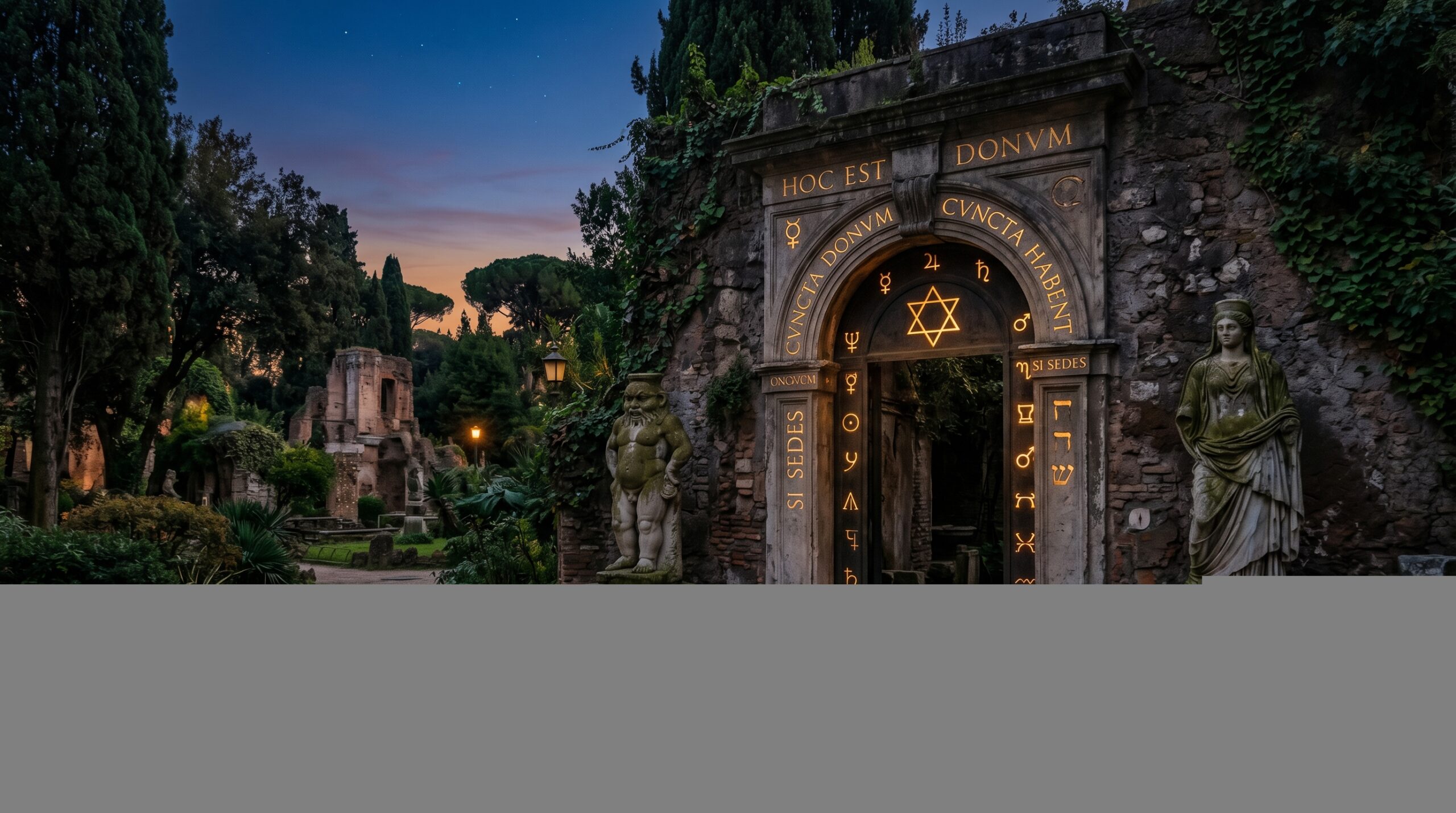
    The Porta Magica is a stone doorway from the former Villa Palombara, once located on Rome’s Esquiline Hill. The villa itself is gone. The portal survived, was preserved, and today stands as one of the strangest small monuments in the city: not a grand church façade or triumphal arch, but a single doorframe covered with inscriptions, symbols, and the lingering suggestion that it once guarded more than a garden wall.

    That matters because modern retellings often make the object sound older, vaguer, or more fantastical than it really is. The Porta Magica is not an ancient Roman ruin from imperial antiquity, and it is not some unexplained monolith of unknown origin. It belongs to the late 17th century, usually dated to around 1680, and to a very specific intellectual world: one in which aristocrats, experimenters, mystics, and learned eccentrics could pursue alchemy as a serious mix of natural philosophy, spiritual metaphor, and elite obsession.

    Even without the legend, the portal is unusual. A doorway is normally one of the most functional things in architecture. This one seems designed to advertise secrecy. Its surface is dense with inscriptions and esoteric signs. It looks less like a decorative feature than like a statement: entry here is not merely physical. Something about this threshold concerns transformation.

    Why people are talking about it again now

    The Porta Magica has the exact shape of a modern viral mystery. It is visually striking, easy to summarize in a sentence, and attached to a promise of hidden knowledge. Recent attention has been driven by strong engagement in occult-focused online spaces, including Reddit discussion that treated the “Magic Portal” as one of those rare cases where the eerie object in the image is not fictional but undeniably there.

    The broader social context helps too. Occult imagery travels easily now, especially when it crosses over with historical travel imagery and short-form video culture. A ruined abbey can feel atmospheric. A skull-lined church can feel macabre. But a real Roman doorway allegedly tied to alchemists and secret formulas has a sharper hook. It invites viewers to imagine that the code is still waiting in plain sight.

    That does not mean anything new has been discovered. The current wave is better understood as renewed attention, not new evidence. The monument is old. The fascination is contemporary.

    Who built it, and why?

    The portal is tied to Massimiliano Palombara, Marquis of Pietraforte, the owner of Villa Palombara. He is the central historical figure behind the site’s reputation. Palombara is generally remembered not simply as a Roman nobleman, but as one with serious interests in alchemy and related esoteric ideas. In other words, the alchemical association is not a modern fantasy pasted onto an ordinary building after the fact. It belongs to the monument’s historical setting.

    That said, historians are firmer on some points than others. Palombara’s interest in alchemical thought is well established in broad terms. The exact motive behind the portal’s inscriptions is less certain. Was it a personal statement of belief? A monument to a particular alchemical event or text? A kind of encoded philosophical program? Possibly some combination of all three.

    The broader context matters here. In the 17th century, alchemy was not merely the laughable pursuit that later caricatures make it seem. It sat at the edge of several serious pursuits at once: chemistry before modern chemistry, spiritual speculation before modern psychology, and elite intellectual networking before scientific disciplines hardened into their present forms. An educated nobleman could take alchemical symbolism seriously without imagining himself to be living in pure fantasy.

    That is one reason the portal still resonates. It comes from a period when matter and meaning had not yet fully split apart. To study metals, planets, sacred names, and hidden correspondences could still feel like part of the same search.

    The vanished alchemist legend

    The most famous story attached to the Porta Magica is also the hardest to verify. In later retellings, a mysterious alchemist or adept came to Villa Palombara, often described as a stranger with unusual knowledge. He wandered the grounds in search of a special herb or substance, succeeded in performing some kind of transmutation, and then vanished—sometimes overnight, sometimes under suspiciously miraculous circumstances. What he left behind, according to the legend, was a trace of gold and a cryptic set of notes or formulas. Those formulas, unable to be fully understood, were carved into the portal.

    It is an almost perfect legend because it solves several emotional needs at once. It explains why the inscriptions exist. It flatters the idea that the secret was once genuinely within reach. And it preserves the mystery by ensuring the final key is missing.

    Some later traditions identify the mysterious figure with Francesco Giuseppe Borri, an adventurer, healer, and occult claimant whose life was dramatic enough to attract legend on its own. Borri is often drawn into discussions of the portal because he fits the role so well: learned, controversial, mobile, and immersed in the same world of alchemical aspiration. But “fits the role” is not the same thing as “historically proven.” The connection is widely repeated, not equally secure in every detail.

    This is the point where many modern tellings stop being careful. The legend may preserve echoes of real relationships, real conversations, or real texts circulating in Palombara’s milieu. It may also have been expanded and polished by later writers who understood exactly how irresistible the story was. Historians can describe the tradition. They cannot simply certify the vanished alchemist episode as straightforward fact.

    What historians can actually verify

    Several things about the Porta Magica are solid.

    First, the monument itself is genuine. There is no question that the doorway exists, belongs to the late 17th century, and is tied to the former Villa Palombara.

    Second, its association with alchemical culture is real. This is not an arbitrary modern label based on a spooky appearance. The inscriptions and symbols are part of a recognizable esoteric and alchemical vocabulary.

    Third, Massimiliano Palombara’s interest in these matters is historically plausible and central, not incidental. The site makes sense within his known intellectual reputation.

    Beyond that, certainty begins to thin out. Historians cannot verify that anyone at the villa successfully made gold. They cannot prove that the portal records a single dramatic night of revelation. They cannot offer one universally accepted translation that unlocks the doorway like a solved puzzle box.

    That is frustrating if you want a clean verdict. It is also what makes the object unusually honest as a historical mystery. There is enough evidence to anchor the story firmly in reality, but not enough to flatten every symbol into certainty.

    For outside reporting and background, start with Wanted in Rome on the Magic Door of Piazza Vittorio and Wikipedia overview of Porta Alchemica.

    What the symbols are believed to say

    The portal’s inscriptions are one reason it has never faded into being merely a curious old doorway. They invite reading, but not easy reading. Scholars and enthusiasts have long linked them to alchemical formulas, hermetic thought, and the symbolic language of transformation. The monument includes esoteric phrases and signs that seem to point toward the purification of matter, the union of opposites, and the progression through the classic alchemical stages or correspondences.

    One frequently noted feature is the use of symbols associated with the seven planetary metals: the old system that linked metals, planets, and cosmic order in a single symbolic framework. That alone places the doorway inside a worldview where matter was not inert stuff but part of a larger web of correspondences. Lead, gold, Mercury, Saturn, the sun, the moon: these were not isolated categories. They were pieces of a meaningful pattern.

    Another commonly mentioned feature is the presence of Hebrew elements and cryptic formulas, which lend the portal part of its charged atmosphere. To a modern viewer, this can look like random occult decoration. It is more accurate to say the monument appears to gather several respected languages of hidden wisdom into one stone surface: Latinized maxims, alchemical ciphers, planetary signs, and sacred-script prestige.

    But caution matters. The internet loves monuments that can be presented as “still undeciphered,” as if experts have no idea what they are looking at. That is too simple. Parts of the portal’s symbolism are interpretable. Its broad alchemical context is well understood. What remains difficult is not whether the symbols mean anything, but whether they amount to one practical recipe, one philosophical statement, one commemorative gesture, or several layers at once.

    In other words, the portal is not unreadable. It is overread.

    Why alchemy matters here

    To understand why the Porta Magica still feels powerful, it helps to set aside the cartoon version of alchemy. Yes, alchemists sought transmutation. Yes, the dream of turning lesser metals into gold was part of the tradition. But alchemy was also a language for purification, perfection, hidden order, and the possibility that nature concealed processes not yet understood.

    That makes a doorway an almost ideal alchemical monument. A threshold is where one state becomes another: outside to inside, ignorance to knowledge, impurity to refinement, seeker to initiate. The portal does not merely display alchemical ideas. It performs them architecturally. It asks the viewer to stand before a boundary and imagine that crossing it might alter what one is.

    This is part of what separates the Porta Magica from many other occult-adjacent artifacts. It is not just inscribed. It is a threshold. The symbolism does not float abstractly. It is attached to the physical act of passage.

    Whether Palombara intended that effect in a philosophical sense, a ritual one, or simply as a cultivated expression of elite esoteric identity, the result is the same: the monument feels like condensed alchemy, a whole worldview narrowed into a frame of stone.

    Why the doorway still feels uncanny

    The Porta Magica remains uncanny because it resists two flattening moves at once.

    The first is skepticism’s easy move: to dismiss it as nothing more than decorative eccentricity. That does not work, because the monument is too specific, too intentional, and too rooted in a real culture of alchemical thought.

    The second is credulity’s easy move: to declare it proof that a secret order cracked the code of nature and left the answer in public view. That does not work either, because the historical record is too fragmentary and the symbolism too layered for such certainty.

    So the portal lives in a narrow, durable space between those extremes. It is not fake. It is not solved. It is not an ordinary ruin. It is not evidence of supernatural power. It is a real artifact from a moment in history when people of status and education could dedicate serious attention to hidden correspondences in matter, language, and the cosmos.

    It also carries the melancholy of survival. The villa is gone. The world that produced the door has largely vanished with it. What remains is a stone threshold detached from its original setting, still dense with signs that imply a system larger than what we can now reconstruct. There is something inherently eerie about an object that survives more completely than the worldview required to read it.

    Are modern retellings exaggerating the story?

    Often, yes. The most common exaggerations are familiar.

    One is to describe the Porta Magica as if it were an ancient Roman portal from classical antiquity. It is not. Its strangeness belongs to baroque Rome, not imperial Rome.

    Another is to present the vanished-alchemist story as cleanly documented fact. It is not. It is best understood as a persistent legend attached to a historical site and a historically plausible alchemical circle.

    A third is to imply that the doorway proves alchemists succeeded in producing gold. That goes well beyond the evidence.

    And yet reducing the portal to “just a legend” misses the point too. The monument matters precisely because it shows that alchemy was not a fringe fantasy happening nowhere. It left marks in stone. It shaped patronage, architecture, symbolism, and reputation. The object is evidence of belief, ambition, and intellectual seriousness, even if it is not evidence that lead ever became gold.

    The real threshold

    The Porta Magica does not need to be a supernatural portal to be one of the most suggestive unexplained monuments in Rome. Its mystery is stronger than that. It stands at the threshold between what history can document and what human beings are always tempted to imagine beyond the document: the missing recipe, the vanished teacher, the night when the experiment worked.

    A third useful reference is NanoInnovation feature on Porta Magica’s alchemical history.

    The safest conclusion is also the most interesting one. Rome’s Alchemical Door is a real 17th-century monument, almost certainly created within a serious culture of alchemical and hermetic thought. The legend of the stranger who left behind gold and coded wisdom may preserve something of that world, but it cannot be verified in the dramatic form now repeated online. The inscriptions are meaningful, though not neatly reducible to a single solved message.

    Readers who want to continue can also explore Do Ancient Stone Chambers in the British Isles Really Resonate at 110 Hz?.

    That is why the monument still exerts such force. It offers a physical object where modern people expect only rumor. A real doorway survives. Real symbols remain on its surface. The promise attached to it—that nature has a hidden grammar, that transformation has a key, that a threshold can still separate the initiated from everyone else—has never entirely disappeared. The Porta Magica keeps that promise suspended in stone: visible, historical, and just out of reach.

  • Antoine’s Restaurant Ghost Photo: What the Viral New Orleans Images Really Show

    Antoine’s Restaurant Ghost Photo: What the Viral New Orleans Images Really Show

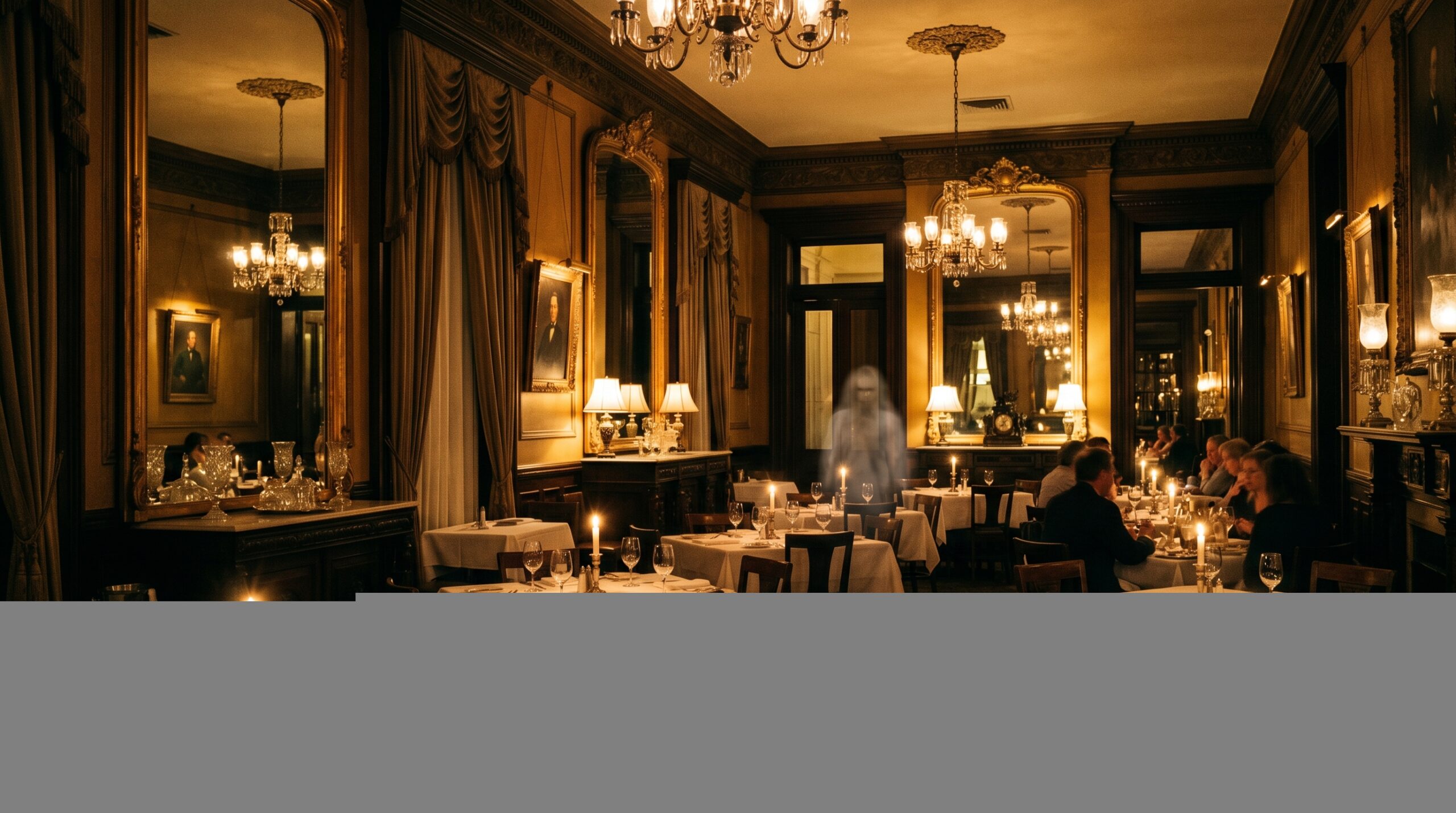
    Antoine’s Restaurant is the kind of place that seems built to attract a ghost story even before anyone lifts a camera. It is one of New Orleans’ most famous old dining rooms, wrapped in the French Quarter’s atmosphere of age, ritual, and rumor. Now it has become the setting for a viral image sequence after a Reddit post shared three photos reportedly taken in succession at Antoine’s and asked whether one of them captured a ghostly figure.

    The honest answer is more restrained than the comment sections. The photo sequence is real in the basic sense that people are sharing an actual set of images from a recognizable place, and the middle of the claim is easy to understand: in one frame, some viewers believe they can make out a faint person-shaped form that seems absent, or at least far less obvious, in the others. But as evidence of an apparition, the case is disputed and weak. What the public version shows is an ambiguous visual anomaly in a dim historic interior, not proof that a spirit stepped into the room.

    People are talking about it now for obvious reasons. The Reddit thread gained strong traction, New Orleans already carries a global reputation for hauntings, and Antoine’s has exactly the right blend of elegance and age to make a strange image feel culturally preloaded. The available evidence, though, points in a more familiar direction. A human-like shape appears to emerge in one photo of a short sequence, and that is precisely the kind of circumstance where reflections, brief movement, low-light rendering, and plain old pattern recognition can do persuasive work.

    What is the Antoine’s ghost photo people are sharing?

    The viral claim centers on a short sequence of three photographs said to have been taken one after another inside Antoine’s Restaurant in New Orleans. In the online telling, two of the images appear ordinary while one seems to contain an extra figure or pale form standing in the scene. That is enough to trigger the classic ghost-photo reaction: zooming in, circling shadows, comparing frames, arguing over posture, clothing, and whether the “person” looks transparent.

    A sequence like that always gives a case a little extra dramatic force. One image can be dismissed as a blur or a trick of lighting. Three images, especially when presented as consecutive shots, suggest a before-and-after puzzle. If the figure only appears once, viewers naturally start asking what entered the frame and then vanished.

    But that same detail cuts both ways. A one-frame appearance is not what only a ghost would do. It is also what reflections do. It is what a passing diner or server can do in low light. It is what a phone camera can do when exposure shifts from one shot to the next. A sequence can make an image more interesting without making it much more conclusive.

    That is where this case seems to live. The appeal is immediate. The evidentiary value is limited.

    Why Antoine’s carries so much haunted weight

    To understand why this image spread so quickly, it helps to understand the setting. Antoine’s is not just a restaurant; it is one of those New Orleans institutions that feels stitched into the city’s self-mythology. Historic restaurants in the French Quarter are never just places to eat. They are memory theaters: rooms full of old mirrors, heavy drapery, polished surfaces, family history, formal service, and the sense that many lives have passed through before yours.

    New Orleans has spent generations turning that atmosphere into cultural language. Ghost tours, haunted-hotel lore, stories of old residences and courtyards, whispered accounts tied to bars and dining rooms—these are not fringe additions to the city’s image. They are part of how visitors and even many locals are taught to read the place. In New Orleans, a strange sound in a new building might be a plumbing issue. In an old French Quarter room, it arrives already dressed as a story.

    Restaurants carry a particular kind of supernatural charge because they are intimate public spaces. People linger in them. They celebrate in them. They return year after year. Staff and patrons build up layers of anecdote. Candlelight, mirrors, glassware, framed portraits, and low interior light all contribute to the sense that a room has depth beyond what the camera catches cleanly. Even without believing in ghosts, most people understand why a historic restaurant would feel more haunted than, say, a chain store parking lot.

    That matters here. Antoine’s did not become viral only because of what appears in the image. It became viral because of where the image was taken.

    What does the three-photo sequence actually show?

    Publicly, the claim is not especially complicated. Viewers compare the three shots and focus on a section of the room where one image seems to contain a human-shaped form. Depending on how the image is cropped, compressed, or brightened, the shape can read as a person in old-fashioned attire, a pale torso, someone standing half out of frame, or simply a patch of contrast that begins to resemble a body once the viewer is told what to look for.

    That last point is crucial. Human beings are astonishingly quick to identify bodies, faces, and posture. It is one of the brain’s great survival shortcuts. We do not wait for complete information if a scene offers even partial cues—a shoulder-like slope, the suggestion of a head, the contour of arms, a patch of darkness where legs should be. We assemble the rest almost instantly.

    This tendency, often discussed under the broad umbrella of pareidolia, does not mean people are foolish. It means people are normal. The same mental habit that lets us recognize a friend across a room from almost no detail can also convince us that random visual noise forms a person. In a haunted setting, with a caption already framing the image as possible evidence, that tendency becomes even stronger.

    So what does the sequence prove? Very little. It shows that one frame in a set looks odd enough to invite comparison. It does not show that the “figure” was an independent being in the room.

    Could a camera artifact create a ghostly person?

    Yes, and that is probably the most important thing to keep in mind.

    Historic restaurant interiors are unusually good at producing deceptive images. They tend to contain reflective surfaces, layered lighting, low ambient illumination, moving people, polished wood, glass, mirrors, metallic decor, and deep shadows. Modern phone cameras are powerful, but in exactly these conditions they also make interpretive choices on the fly—blending exposures, brightening darker regions, sharpening edges, suppressing noise, and sometimes turning a fleeting visual event into something stranger than the eye itself perceived.

    Several ordinary mechanisms could produce a one-frame “ghost” effect:

    • A person briefly crossing part of the scene. If someone moved just outside the photographer’s main awareness, the camera might capture only part of that body, softened by motion or dim light.
    • A reflection from glass or a mirror. Historic dining rooms often contain surfaces that bounce fragments of the room back into the image from angles the photographer is not consciously tracking.
    • Exposure differences between successive shots. In low light, small changes in camera settings can cause a shadowed area to open up or flatten, making a shape appear and disappear.
    • Image stacking and computational processing. Phone cameras often combine information rapidly, and those decisions are not always intuitive when people or reflective highlights are involved.
    • Compression and reposting artifacts. Once an image moves through social platforms, details can harden, smear, or block up in ways that make ambiguous forms look more distinct than they were in the original.

    None of these explanations is glamorous, but all of them are common. More importantly, they are common in exactly the kind of scene Antoine’s appears to provide.

    Why one strange frame can feel more persuasive than it is

    A ghost image only has to do one thing well: suggest a person without fully resolving into one. If it is too vague, it gets ignored. If it is too sharp, people start looking for signs of editing or staging. The most durable paranormal photos usually occupy the middle ground, where the shape is clear enough to feel intentional and unclear enough to resist being settled.

    For outside reporting and background, start with The Reddit thread sharing the Antoine’s photo sequence and NOLA.com on the city’s haunted restaurants.

    That is why sequences like this spread so effectively. They invite the viewer to become a detective. You compare the photos. You look for what changed. You start treating the anomaly as a clue rather than as a flaw in the image. And once that process begins, the room’s atmosphere does the rest.

    New Orleans gives such images an extra charge because the city is already culturally legible as haunted. A similar anomaly in a convention-center lobby might get shrugged off. At Antoine’s, it feels like confirmation of something the setting has been hinting all along. The location does narrative work before the evidence does factual work.

    This is also why haunted-venue images so often outlive stronger but duller explanations. People do not remember the histogram or the shutter behavior. They remember that it happened in New Orleans, in an old restaurant, in a room that looked like it had seen a century of toasts and farewells.

    Does Antoine’s history make the ghost claim stronger?

    Only in the loosest cultural sense.

    Antoine’s long history and New Orleans’ wider haunted reputation absolutely help explain why the images resonated. They provide context, mood, and symbolic weight. They also mean many viewers come to the photo already primed to accept the possibility that the room contains more than the living.

    But a location’s reputation does not authenticate a specific image. A building can have decades of ghost stories attached to it and still produce a completely mundane photograph. In fact, famous haunted locations often generate weaker evidence rather than stronger evidence because expectation shapes interpretation so aggressively. People notice every creak, every reflection, every odd shadow. Once a place is known for hauntings, ordinary anomalies stop arriving as ordinary anomalies.

    That does not make the lore irrelevant. The lore is part of the story. New Orleans’ haunted-restaurant culture has real cultural force. It affects tourism, memory, storytelling, and how people inhabit historic spaces. But it should be treated as context, not as proof.

    What would make this case more convincing?

    If someone wanted to move this from viral curiosity to something more substantial, the next steps would be technical, not mystical.

    The strongest upgrades would include the original image files, not screenshots or compressed reposts; metadata showing exact timestamps and device details; a clear reconstruction of where the photographer stood for each shot; documentation of mirrors, windows, reflective frames, or glass in the room; and testimony from anyone else present about whether another diner or server briefly entered the scene.

    It would also help to know whether the figure-like shape appears only in one compressed version or also in the highest-quality original. Sometimes an anomaly grows more convincing as a picture degrades, which is the opposite of what you would want from real evidence.

    Without those details, outside viewers are left doing what internet viewers always do: interpreting from the copy of the copy. That can sustain fascination, but it cannot support much confidence.

    Why people keep staring at the image anyway

    Because it lands in the exact sweet spot where a ghost story becomes pleasurable to think about.

    The sequence does not look absurd. It does not collapse instantly into an obvious prank. It offers just enough shape, just enough place-specific mood, and just enough uncertainty to keep the mind circling. If you are inclined to believe, it feels like a fleeting capture of something that should not be there. If you are skeptical, it still presents a satisfying visual puzzle.

    And beneath both reactions is something older than internet virality. People have always been drawn to the idea that certain places store emotion, memory, or residue. Restaurants like Antoine’s intensify that intuition because they are built around repetition: the same rooms, the same rituals, generations of arrivals and departures. Even people who do not believe in spirits often speak as if old rooms absorb human presence.

    A photo like this hooks us because it seems to offer a tiny rupture in the ordinary record. The camera, that supposedly indifferent witness, appears to have caught more than the eye meant to. Whether the cause is paranormal or photographic, the emotional effect is the same for a moment: the room looks less empty than it should.

    So is it a ghost?

    Probably not in any evidentiary sense that would satisfy a careful observer.

    The most responsible conclusion is that the Antoine’s Restaurant sequence is an intriguing but unverified set of images from a location already famous for haunting lore. The “figure” could be a reflection, a transient person-shaped blur, a low-light artifact, or a case of viewers assembling a body out of incomplete visual information. Nothing publicly available rules those explanations out, and nothing publicly available pushes the image beyond them.

    A third useful reference is Antoine’s official history page.

    That is less dramatic than declaring the case solved either way. It is also more honest. The picture sequence is not worthless; it tells us something real about how haunted imagery works, why New Orleans remains such fertile ground for supernatural stories, and how quickly a single odd frame can become a collective experience online. What it does not tell us, at least not yet, is that a ghost at Antoine’s has been photographed.

    Readers who want to continue can also explore Heaven’s Gate Website Still Online? The 1997 Cult Site That Never Went Away.

    If the image endures, that will likely be the reason. Not because it proves the impossible, but because it captures the much more familiar moment when atmosphere, expectation, and ambiguity lock together perfectly. In a city like New Orleans, sometimes that is all a ghost story needs.

  • Northwest Territories Drillers UFO Sighting: What the Video Shows and What It Doesn’t

    Northwest Territories Drillers UFO Sighting: What the Video Shows and What It Doesn’t

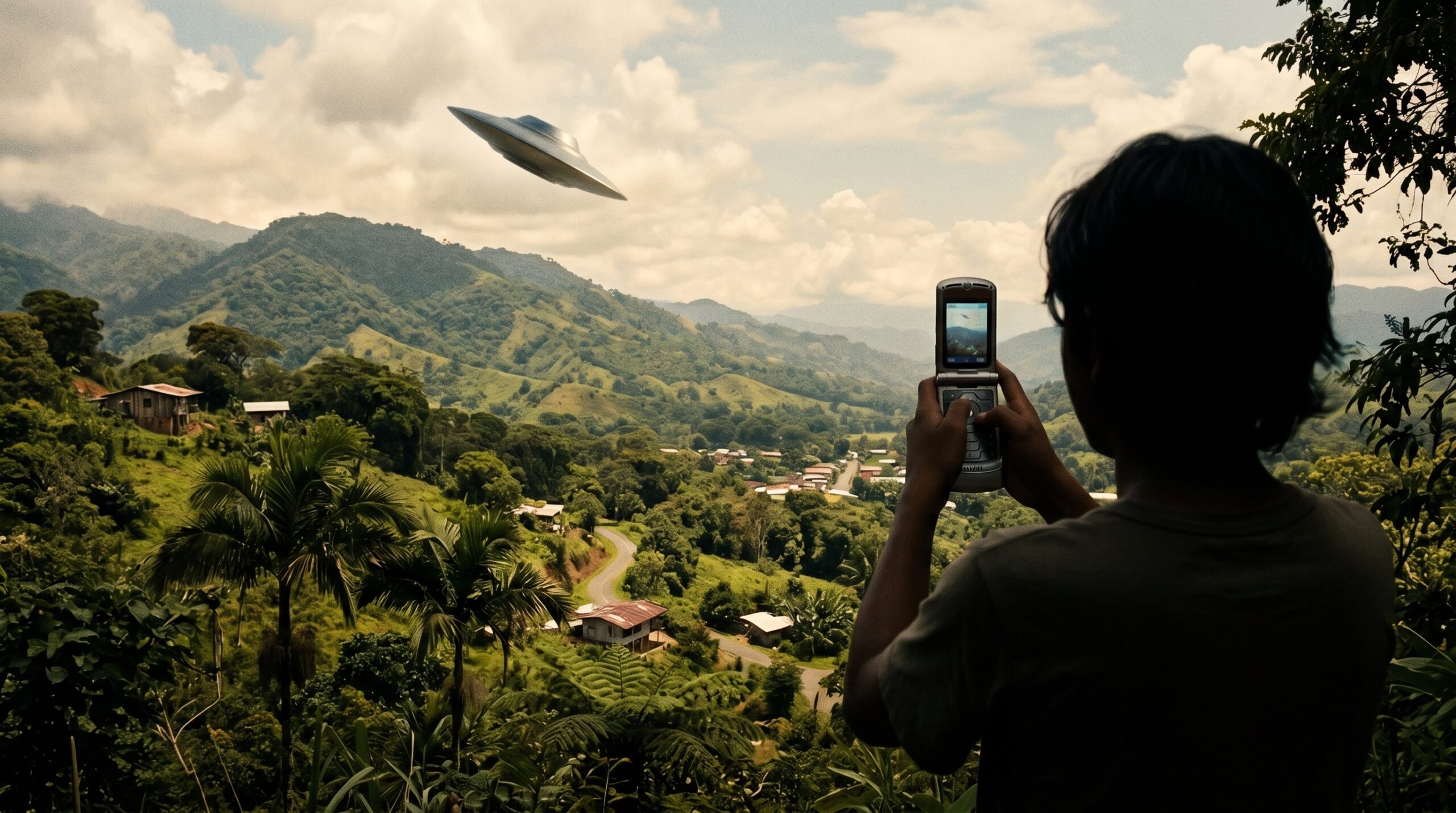
    A video said to show drillers in Canada’s Northwest Territories watching a strange bright object over a remote site has become one of the week’s most discussed UFO clips. The basic claim is easy to understand: on April 6, 2026, workers at a northern drilling location reportedly filmed a bright light hovering silently in the night sky. That is the story people are sharing. What the evidence supports, at least for now, is narrower. There appears to be a real circulating clip tied to a real reported sighting. What it does not provide on its own is proof of an extraordinary craft, let alone anything extraterrestrial.

    That distinction matters because this is exactly the kind of video that thrives online. It has a remote setting, a group of seemingly matter-of-fact witnesses, a dark open sky, and a single visual element bright enough to feel dramatic while remaining vague enough to invite projection. People are talking about it now partly because it surged on Reddit, where a post in r/UFOs rose to the top of the week with more than 6,500 upvotes, and partly because short-form social media is already saturated with “orb,” “light,” and “skywatch” clips. In that environment, a video does not need to be conclusive to become culturally large. It only needs to feel like it might be.

    So what does the evidence actually show? In public, the case still looks like a reported sighting built around a short video of a bright light in a remote night sky. That can be genuinely interesting. It can also be consistent with more ordinary explanations. Without a precise location, exact time, original file, metadata, and checks against aircraft, drones, satellites, and visible celestial objects, the honest conclusion is simple: this is a compelling sighting, not a solved mystery.

    What reportedly happened at the drill site?

    The version of the story spreading online is broadly consistent across reposts. Workers at a drill site in the Northwest Territories, far from major city light pollution, noticed an unusually bright object in the sky and began filming. The object is described as hovering or holding position over the landscape, and viewers have seized on the claim that it appeared silent.

    Those details are enough to make the clip memorable, but they are also exactly the kind of details that need careful handling. “Hovering,” for example, may describe what the object seemed to do from the witnesses’ point of view. It does not necessarily mean the object was literally fixed in space. Distant aircraft seen head-on can appear motionless for surprising stretches of time. A bright star or planet low in the sky can seem strangely planted in place, especially when there are few nearby visual references. Even a drone, depending on distance and wind, can hold position in a way that looks uncannily deliberate.

    The same goes for silence. A phone video often records less environmental sound than people assume. Distance swallows audio. Wind noise and automatic phone processing flatten what is actually there. A viewer may come away with the impression that the object made no sound at all when the truth is simply that the microphone captured almost nothing useful.

    At this stage, the public case appears to rest on a short clip, social retellings, and the credibility people assign to the setting and the workers involved. That is enough to discuss seriously. It is not enough to identify the object with confidence.

    Why this clip spread so fast

    A sighting like this lands in a media ecosystem designed to reward ambiguity. One reason the Northwest Territories video took off is that it hit a particularly receptive audience at the right moment. On Reddit, especially in r/UFOs, the clip had all the ingredients of a high-engagement post: fresh footage, a remote location, blue-collar witnesses, and no immediate clean explanation attached to it. Once a post breaks out there, it often moves quickly into YouTube reaction videos, recap channels, and stitched commentary.

    That second layer matters. YouTube explainers are not just repeating the sighting; they are converting it into a narrative. A short uncertain clip becomes a “case.” Viewers are offered freeze-frames, zoom-ins, and speculation about what the object “seems” to be doing. Sometimes that process surfaces useful questions. Just as often, it gives weak evidence a stronger aura than it deserves.

    Then there is the wider visual culture around UFO content. Instagram and short-form video platforms already host enormous amounts of material tagged with terms like #ufo, #ufosighting, and #skywatch. The result is not just demand for new sightings but a familiar way of seeing them. Many viewers now encounter bright lights in the sky through a ready-made interpretive frame: this could be an orb, a silent craft, an unexplained watcher over the landscape. By the time a new clip reaches them, the story template is already in place.

    None of this means the Northwest Territories sighting is false or manufactured. It means virality explains popularity, not accuracy. A video can become one of the week’s most talked-about UFO clips long before anyone knows what it shows.

    What is actually visible in the footage?

    The most useful question is also the least glamorous one: what can a careful viewer honestly say is on screen?

    Based on the descriptions circulating publicly, the clip shows a bright object or light against a dark sky over a remote northern location. It appears luminous enough to stand out sharply from the background. It is said to remain in roughly the same area of the sky long enough for the witnesses to comment on it and for the moment to feel unusual.

    That is already more limited than many viral captions suggest. A bright light is not the same thing as a visible structured craft. Unless the video clearly shows shape, edges, surface detail, or movement inconsistent with conventional objects, a viewer is mostly interpreting brightness, position, and apparent steadiness. Night footage is especially poor at resolving distance and form. Exposure settings can enlarge light sources, wash out detail, and create the impression that a simple point of light has mass or contour.

    There are other missing pieces too. We do not know the full unedited duration of the event. We do not know the zoom level used by the camera, which matters because digital zoom can distort how stable or intense an object appears. We do not know the witnesses’ exact viewing direction, the elevation angle of the object, the local weather conditions, or whether the object later moved in a way the public clip does not include.

    Those absences do not make the sighting meaningless. They simply set limits. What is visible may be unusual. What is provable from the circulated footage is still modest.

    Why the Northwest Territories setting matters

    The location is a major part of why the clip feels persuasive. A drill site in Canada’s Northwest Territories evokes remoteness, hard weather, open space, and a sky with far less urban light pollution than most people ever experience. To many viewers, that setting implies a cleaner look at whatever was there. If workers in a place like that say a light looked wrong, people are inclined to take the reaction seriously.

    There is some logic to that. Darker skies can reveal objects that would be lost over a city. Workers in remote industrial settings may spend long periods outdoors at night and may be familiar with local aircraft patterns, weather, and the ordinary look of the sky around them. That can make a report more interesting.

    But remoteness cuts both ways. The fewer visual reference points a viewer has, the harder it becomes to judge scale, speed, altitude, and distance. A light that seems low may be high. A light that seems close may be very far away. A light that appears to hover over a site may actually sit along a distant line of sight with little visible motion relative to the observer.

    Northern conditions add another layer. Cold air, haze, ice crystals, and other atmospheric factors can affect how lights behave visually. Bright celestial objects near the horizon may shimmer, flare, or seem enlarged. Aircraft lights can look stranger than they would over a city where context is easier to read. In other words, the setting strengthens the clip’s mood while also making interpretation harder.

    What ordinary explanations might fit a remote-night-sky sighting?

    There is no single ordinary explanation that can be confirmed from the public record so far. But several familiar possibilities fit the broad outline better than many viewers may realize.

    For outside reporting and background, start with The original Reddit discussion about the NWT drillers sighting and A recap video discussing the NWT sighting.

    One is an aircraft seen at an unusual angle. A plane approaching from a distance, especially at night, can appear nearly stationary while its forward-facing lights remain bright. Helicopters can also seem to hang in place from some vantage points, particularly if the observer lacks nearby references for motion or altitude.

    Another possibility is a drone. People often associate drones with cities, events, or hobby use, but they can appear in remote areas too. Industrial work sites, nearby camps, contractors, or recreational users can all introduce drone activity. Depending on the model, distance, and wind, a drone can present exactly the qualities that spark UFO interpretations: a bright concentrated light, strange hovering behavior, and uncertain scale.

    A third possibility is a bright celestial object, especially if local atmospheric conditions distorted its appearance. Planets and stars do not usually satisfy witnesses once an event feels dramatic, but they account for more reports than many people like to admit. Under the right conditions, a bright object low in the sky can look startlingly anomalous, particularly on a phone camera that overexposes the point of light.

    Then there are atmospheric and optical effects. Ice crystals, haze, phone-camera exposure, digital zoom, and compression artifacts can all make a light look larger, more active, or more mysterious than it did in person. None of those explanations are as emotionally satisfying as a true unknown. They are still important because they happen often.

    To be clear, “ordinary explanation” is not the same as “case closed.” It simply means there are plausible conventional options on the table, and the public evidence is not strong enough to rule them out.

    How sightings like this are usually evaluated

    One useful corrective comes from the way serious investigators, journalists, and even mainstream reporting on UFO/UAP cases tend to approach these incidents. The process is usually less cinematic than people expect.

    The first questions are basic: How many witnesses were there? Did they describe the event independently? What was the exact time? Where exactly were they standing? In which direction were they looking? Was the original video preserved, or are analysts working from reposted copies? Can metadata be checked? Are there flight records, known helicopter routes, satellite passes, drone restrictions, or astronomy data that line up with the sighting?

    That is the unromantic core of UFO evaluation. It is also why so many cases remain unresolved in the weak sense rather than the strong one. “Unresolved” often means not that the object displayed impossible behavior, but that the available evidence is too thin to identify it conclusively.

    Broad public discussions of UFO reports increasingly emphasize this same point. A sighting becomes more persuasive when multiple independent witnesses agree on key details, when the original media file is available, when the timeline is precise, and when ordinary explanations have been checked against actual conditions rather than just dismissed in the abstract. A short viral clip usually fails several of those tests at once.

    That does not make the witnesses foolish or dishonest. It means the standards for turning a strange moment into a durable case are higher than social media usually allows.

    Why online audiences treat clips like this as stronger evidence than they are

    Part of the appeal is social, not just visual. A remote drill crew feels like a credible set of witnesses because viewers imagine practical people with little reason to invent a spectacle. That impression may be fair. It may also be doing too much work. Sincere witnesses can still misread what they are seeing, especially at night and at distance.

    Night footage itself also changes how people think. Darkness removes clutter and therefore removes explanation. A bright isolated object on a black background looks cleaner, more deliberate, and more uncanny than it might in daylight. Silence intensifies that reaction, even though silence in a clip may tell us more about the recording device than the object.

    Then the crowd steps in. Once thousands of viewers begin repeating that the object “hovered over the rig” or “made no sound,” those phrases harden into facts whether or not the clip alone proves them. Internet audiences do not just watch footage. They co-author its meaning. The story becomes a shared act of interpretation, and shared interpretation can feel a lot like confirmation.

    That is one reason these videos are so difficult to discuss well. By the time careful questions arrive, the cultural version of the sighting is already bigger than the raw evidence.

    What remains unknown

    The most important facts are still missing. We do not have a complete public accounting of the exact location, orientation, duration, weather conditions, or camera settings. We do not know whether multiple workers provided detailed matching statements beyond the immediate excitement of the moment. We do not know whether the original file is available for review or whether most people are analyzing copies of copies.

    We also do not know whether anyone has checked the sighting systematically against flight activity, local helicopter traffic, drone possibilities, satellite visibility, or bright celestial objects present at that date and time. And crucially, we do not know whether the object did anything in the full event that would clearly separate it from those ordinary possibilities—rapid acceleration, abrupt directional changes, impossible maneuvering, or behavior preserved in a way others can verify.

    Without that information, the case remains in a familiar middle category: interesting, possibly unusual, but fundamentally underdocumented.

    The bottom line

    The Northwest Territories drillers UFO sighting is worth paying attention to for one reason above all: it captures how modern UFO stories actually work. A real reported event, a visually striking but limited clip, a remote setting that feels inherently credible, and an online audience ready to turn ambiguity into momentum.

    A third useful reference is DW on how UFO reports are usually evaluated.

    The balanced reading is not that nothing happened. Something clearly prompted witnesses to film and react. Nor is the balanced reading that the video proves a genuine anomaly beyond known technology or ordinary misidentification. The evidence in public does not support that leap.

    Readers who want to continue can also explore Immaculate Constellation UFO Leak: What the Claim Is and Why People Are Arguing About It.

    For now, the strongest conclusion is the least dramatic one. A group of workers in a remote part of northern Canada appears to have seen a bright object they found unusual. The clip is compelling because it preserves that moment of uncertainty. But uncertainty is exactly what it preserves. Until stronger context appears, this should be treated as a reported sighting—intriguing, unresolved, and much less definitive than the internet version of the story makes it seem.

  • Why Every Generation Reopens the Door to the Ouija Board

    Why Every Generation Reopens the Door to the Ouija Board

    The Ouija board has spent more than a century doing something almost no other occult object has managed to do. It moves effortlessly between worlds. One moment it is sold as a game, a novelty, a curiosity, something to pass around at a sleepover or pull off a shelf at Halloween. The next, it is treated as a threshold object, a ritual device, a portal, a mistake waiting to happen. Few tools in modern folk occultism carry that much contradictory power. Fewer still keep surviving each new wave of skepticism, parody, and pop-cultural overexposure without losing their charge.

    That is exactly why the Ouija board keeps coming back, and why it never stays dead for long in the public imagination. It is trending again in 2026 for a reason. Younger audiences rediscover it through paranormal podcasts, short-form horror clips, reactivated urban legends, and retellings of old possession or haunting cases. Each generation believes it is encountering the board fresh. In reality, it is inheriting a ritual object already loaded with stories, warnings, dare culture, religious panic, and the seductive possibility that ordinary people might be able to contact something just beyond the visible world.

    This is what makes the Ouija board more than an evergreen spooky topic. It is one of the clearest examples of how an occult object can function as a cultural mirror. The board reflects what an era fears, what it wants to believe, and how it negotiates the line between play and danger. Readers who have followed the deeper history of occult practice or watched how stories like the Witch Farm case continue to shape modern haunting culture will recognize the pattern immediately. The Ouija board is not powerful because everyone agrees on what it is. It is powerful because nobody agrees, and that uncertainty itself becomes part of the ritual.

    The Ouija board lives in the unstable space between toy, ritual, and taboo

    The most important thing to understand about the Ouija board is that its power is inseparable from its ambiguity. A tarot deck usually enters the room as a divination tool. A grimoire arrives carrying the weight of hidden knowledge. A Ouija board can arrive in a shopping bag, a closet, a thrift store haul, or a joke gift, and still change the emotional temperature of a room immediately. That instability is part of its enduring force. People do not only react to what the board is supposed to do. They react to what it should never have been allowed to become.

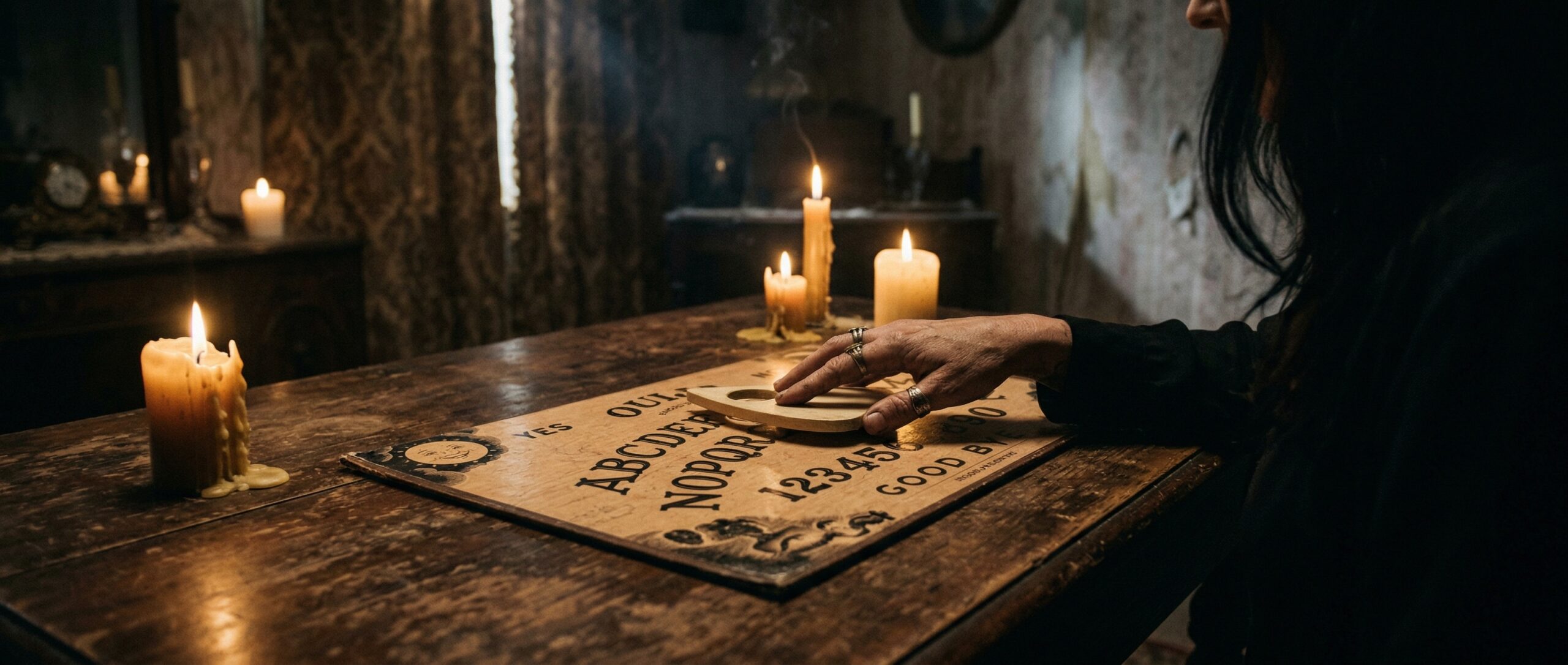
    At a basic level, the board is simple: letters, numbers, yes, no, goodbye, and a planchette that appears to move beneath participants’ fingers. But culturally it is anything but simple. It sits at the point where entertainment, ritual, folk belief, spiritual experimentation, and dare culture all overlap. That is why it unsettles people who do not believe in it and fascinates people who do. It asks a dangerous-seeming question in the easiest possible form: what if communication with the unseen required almost no expertise at all?

    This is also why the board feels different from many other occult tools. It democratizes contact. It does not ask for years of ceremonial study, rare texts, or complex symbolic systems. It invites beginners. It invites mockery. It invites bad faith. And then, because it is associated with movement that appears to happen under the users’ own hands, it turns even skepticism into participation. The board does not merely get used. It stages an experience, and that experience is what people carry away.

    The board emerged from nineteenth-century spiritualism, not ancient occult tradition

    For all its reputation as an ancient or timeless forbidden device, the Ouija board is a relatively modern product. Its roots lie in the spiritualist movement of the nineteenth century, when séances, spirit communication, automatic writing, table-turning, and mediumship became wildly popular in the United States and Europe. The board emerged from that same environment: a moment when mass grief, religious uncertainty, pseudoscientific curiosity, and fascination with unseen intelligence were all feeding into new forms of ritual contact.

    Historians of occultism have long noted that spiritualism was revolutionary partly because it made the supernatural feel procedural. Contact was no longer reserved for saints, magicians, prophets, or village cunning folk. It could be attempted in parlors by ordinary middle-class participants. The Ouija board fit perfectly into that democratized landscape. As Smithsonian Magazine has documented, the board’s commercial history is tied to both spiritualist culture and patent-era entrepreneurship, which means it was never only a sacred instrument. It was also a commodity.

    That strange dual identity never went away. The board was born at the intersection of belief and marketing, sincerity and performance. That is one reason it remains so hard to pin down. Unlike older ritual tools whose authority comes from antiquity, the Ouija board derives authority from modern repetition. It becomes powerful because generation after generation keeps reenchanting it.

    Every generation rediscovers the Ouija board because it offers danger without complexity

    There are many occult tools more elaborate than the Ouija board and many traditions more intellectually rich. Yet few have the same recurring mass appeal. That is because the board solves a cultural problem elegantly. It gives people an immediate, participatory brush with forbidden possibility without requiring much study. No initiatory structure, no memorized correspondences, no difficult ritual language. Just a board, a question, and the suggestion that something might answer back.

    That simplicity makes the board unusually adaptable. Teenagers can approach it as a dare. Horror fans can approach it as a genre artifact. occult-curious audiences can approach it as a beginner’s ritual technology. Skeptics can approach it as a test of whether anything unusual really happens. The same object serves all of them. That flexibility helps explain why the board keeps reviving across media cycles. It is endlessly reusable because it can absorb whatever a generation already fears.

    In 2026, the board’s revival fits especially neatly into platform culture. It performs well in short clips. It produces stories quickly. It invites reenactment. It turns uncertainty into narrative immediately. Whether a session is presented as real spirit contact, ironic experimentation, or post-midnight horror content almost does not matter. The board’s structure does the work. It gives any recording or retelling a built-in arc: question, movement, dread, interpretation.

    The board became a fear object because stories gave it a personality of its own

    The Ouija board did not become feared only because people used it. It became feared because stories gathered around it faster than around most other occult devices. Tales of the board rarely remain procedural. They become narrative almost at once. Someone asked the wrong question. Something followed them home. The planchette sped up. A name appeared that should not have appeared. The goodbye was ignored. A participant changed afterward. Even when these stories are secondhand, embellished, or impossible to verify, they create the sense that the board has preferences, moods, and consequences.

    That is a key part of the board’s folkloric power. It stops behaving like an instrument and starts behaving like a character. People speak of it as though it can invite, mislead, deceive, or punish. That narrative shift changes how users approach it. The board becomes less like a neutral device and more like a threshold with agency. Folklore scholars have often shown that objects gain cultural force when they are embedded in cautionary storytelling, and the Ouija board may be one of the clearest modern examples of that rule.

    Once that happens, every use session becomes haunted by prior stories. Participants do not begin from zero. They begin from layers of warning. That is why even a motionless session can feel charged. The board carries its archive into the room with it.

    Religious warning culture helped turn the board into a forbidden threshold

    No account of the Ouija board’s modern reputation would be complete without acknowledging the role of religious panic and moral warning culture. Across multiple Christian traditions, especially in the twentieth century, the board was treated not as harmless superstition but as an active invitation to deception, oppression, or demonic influence. Parents, pastors, and religious pamphleteers did not merely say the board was silly. They often said it was spiritually dangerous.

    That distinction mattered enormously. Once religious authority framed the board as forbidden, the board’s cultural charge intensified. A thing condemned so strongly acquires mystique automatically. The warning itself becomes advertisement. This is one reason the Ouija board has remained more potent in popular imagination than many other mass-market occult objects. It was repeatedly named as the one object that could open the wrong door in an ordinary home.

    That language still lingers even among people who no longer belong to the religious environments that spread it. Many modern users approach the board with inherited rules they cannot fully source: never use it alone, never mock it, never forget to say goodbye, never ask who will die, never burn it casually, never trust what comes through. These rules may vary, but together they form a shadow liturgy around the board. The object survives partly because the taboo does.

    Psychology offers one explanation, but it does not dissolve the experience for participants

    The most widely cited skeptical explanation for Ouija movement is the ideomotor effect, the phenomenon in which people make small physical movements unconsciously while sincerely feeling that they are not controlling them. Psychological research has long used this concept to explain dowsing, facilitated movement, and spirit-board sessions. From that perspective, the planchette moves because participants move it without consciously deciding to do so. The board becomes a mirror for expectation, suggestion, group dynamics, and hidden intention.

    That explanation is persuasive, and for many cases it is likely sufficient. But it does not fully erase the board’s power at the level where most people actually experience it. If anything, it complicates it. The unsettling part is not only the possibility that spirits are real. It is the possibility that people can reveal things to themselves without realizing they are doing it. The board remains eerie under either reading. It either mediates something beyond the self, or it stages the return of something buried within the self. For many users, neither option feels especially safe.

    This is why skeptical explanations often fail to end the fascination. They answer mechanism, but not meaning. They explain movement, but not why the room felt different, why certain answers landed so hard, or why the session seemed to expose hidden emotional currents in everyone touching the planchette. The board survives skepticism because skepticism does not entirely flatten what the experience feels like to the people inside it.

    Horror media kept the Ouija board culturally alive even when belief changed

    Even when direct belief in spirit communication became less common, the Ouija board never really left the cultural bloodstream. Horror cinema, paperback occult sensationalism, television hauntings, creepypasta logic, and later internet folklore all kept feeding the board new life. It became one of the few ritual objects that could be recognized instantly across generations, whether as a sincere danger, a camp icon, or a horror shortcut that needed almost no explanation.

    That media afterlife matters because it means many people meet the board first through narrative before they ever encounter the object physically. They know what it signifies before they know its history. It means haunted contact, opened doors, and consequences that outlast the session. That symbolic condensation is incredibly efficient. Very few occult objects carry such a complete emotional script in public culture.

    The board also adapts unusually well to retelling. A séance with layered ceremonial symbolism is harder to compress into a viral story. A spirit board session that spells out a name and ends badly can travel anywhere. It works in horror films, podcast episodes, TikTok reenactments, and whispered personal testimony. That portability has helped the Ouija board outlast changing belief systems and changing media forms alike.

    Younger audiences keep returning because the board feels participatory and dangerously simple

    The current revival makes sense partly because younger paranormal audiences are drawn to experiences that are interactive, aesthetic, and socially performable. The Ouija board does all three. It is visual. It is tactile. It can be staged easily. It produces suspense without special effects. Most importantly, it lets participants become part of the story immediately. In a culture saturated with spectatorship, that is a powerful selling point.

    The board also fits the broader return of folk ritual aesthetics. Many younger audiences are interested in candles, divination, haunted objects, ancestral practices, liminal spaces, and atmospheric tools that feel old even when their current usage is highly mediated through the internet. The Ouija board sits comfortably in that ecosystem, especially because it already carries a reputation for danger. It allows users to flirt with the occult while feeling that they are not merely performing a lifestyle trend. They are risking something.

    That risk may be symbolic, psychological, or theatrical, but it feels real enough to matter. The board survives because it makes the unseen feel participatory. It turns haunting into a format people can touch.

    The board still matters because it dramatizes the human desire to test the unseen

    Strip away the toy branding, the horror clichés, the demonic warnings, and the skeptical rebuttals, and the Ouija board still returns us to a very old human impulse. We want to know whether the boundary is permeable. We want to know whether the dead answer, whether hidden intelligences notice us, whether ordinary rooms can become charged, whether meaning can arrive through simple material forms. The board does not create that desire. It concentrates it.

    That is why the object endures. It stages one of the oldest religious and paranormal questions in an almost offensively accessible way. It says: sit down, ask, wait, see what moves. That is both ridiculous and profound. It is ridiculous because the format is so commercially ordinary. It is profound because the emotional stakes people attach to the answer remain enormous.

    In that sense, the Ouija board is not just a spooky artifact. It is a recurring machine for producing uncertainty. That uncertainty can be dismissed, feared, ritualized, or aestheticized, but it rarely stays inert. The board continues to matter because it turns invisible questions into visible motion.

    The Ouija revival fits a wider return to ritual objects, haunted folklore, and intimate occult fear

    Seen in a wider context, the 2026 return of Ouija conversation is part of a larger cultural pattern. Old ritual tools keep resurfacing because they promise intimacy with the forbidden. Not abstract conspiracy, not distant mythology, but something close enough to hold in your hands. That is also why audiences continue to respond to haunted-location narratives, witchcraft revivals, spirit-communication stories, and classic possession lore. The scale is domestic. The risk is personal. The danger comes into the room.

    This is where the board connects to unexplained.co’s wider territory. It belongs alongside investigations into occult history, haunted houses, folk ritual, and the repeated ways modern audiences reinvent old fears in new media environments. It also helps explain why some objects outlive debunking. They are too symbolically useful to disappear. The Ouija board remains one of the purest examples of that survival mechanism in modern occult culture.

    The board was never just a board. It was a script, a dare, a threshold, a market product, a séance machine, a warning label, and a portable haunting myth. That is why every generation eventually picks it up again. Not because the mystery was solved, but because it never really stopped asking to be touched.

    Frequently Asked Questions

    Why does the Ouija board still scare people so much?

    Because it sits between game, ritual, and taboo, and because generations of ghost stories, religious warnings, and horror media have taught people to see it as a tool that might open the wrong kind of door.

    Was the Ouija board originally an occult object?

    It emerged from nineteenth-century spiritualist culture rather than ancient occult tradition, which means it has always carried a mixed identity as both commercial product and spirit-contact device.

    What is the skeptical explanation for Ouija board movement?

    The most common explanation is the ideomotor effect, in which people move the planchette unconsciously while sincerely feeling that they are not controlling it.

    Why does the Ouija board keep returning in pop culture?

    Because it is visually recognizable, easy to dramatize, and perfectly suited to stories about haunting, possession, forbidden contact, and private fear.

    Why are younger audiences interested in the Ouija board again?

    It feels interactive, aesthetic, and risky in a way that fits modern paranormal media culture, especially for audiences drawn to ritual objects, haunted folklore, and participatory occult experiences.

    This article was created using Media Blaster – Your content production specialist. Visit www.mediablaster.io for more information.

  • The Dyatlov Pass Mystery: Nine Hikers, One Impossible Night

    The Dyatlov Pass Mystery: Nine Hikers, One Impossible Night

    The dyatlov pass mystery remains one of the most chilling unsolved cases of the twentieth century: in February 1959, nine experienced Soviet ski hikers died in the Ural Mountains under circumstances so bizarre that official investigators could only conclude a “compelling natural force” was responsible. Decades later, declassified documents, competing theories, and a persistent cryptid hypothesis keep this case alive for a new generation of researchers.

    What happened on the slopes of Kholat Syakhl — a name that translates roughly to “Dead Mountain” in the local Mansi language — has never been fully explained. The Dyatlov Pass incident sits at the intersection of Cold War secrecy, wilderness horror, and the kind of evidence that refuses to fit any single explanation. That’s exactly why it won’t go away.

    What This Story Actually Says About the Dyatlov Pass Mystery

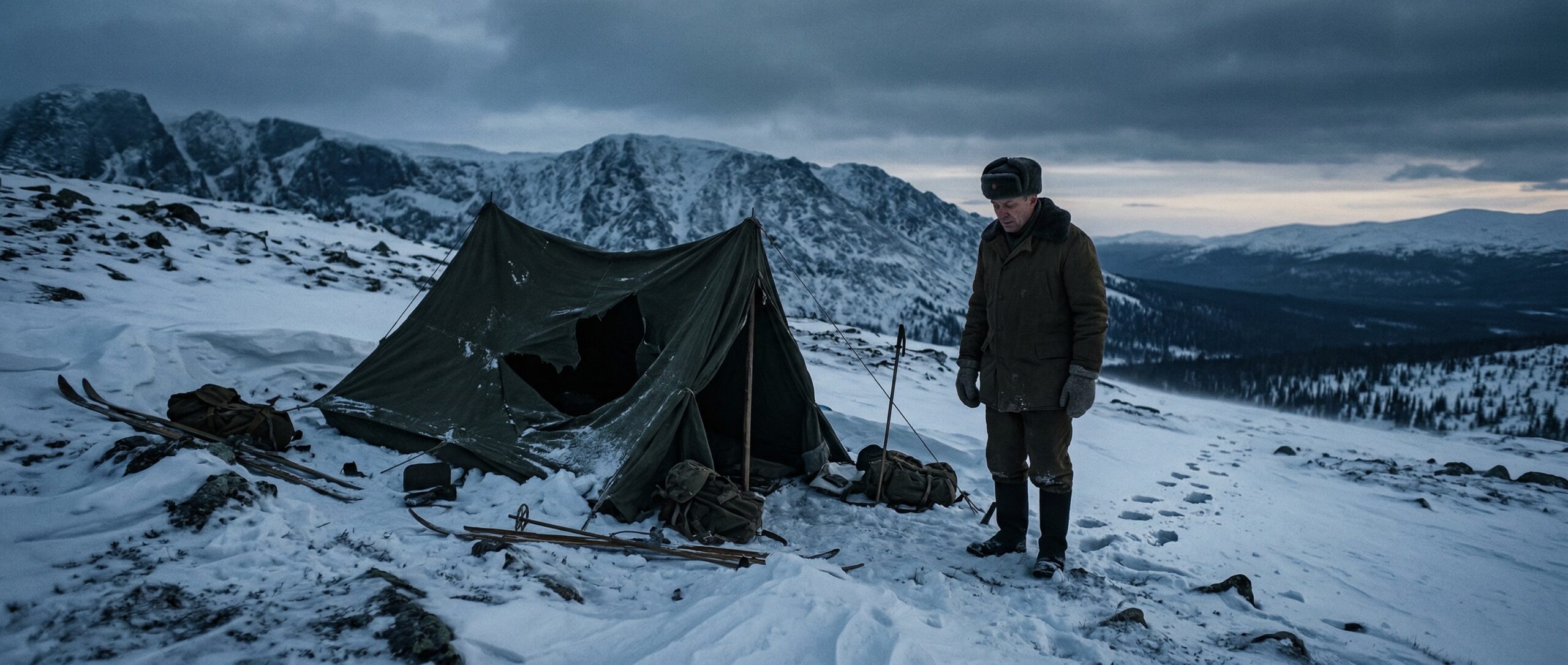
    On the night of February 1–2, 1959, the nine hikers — led by Igor Dyatlov, all experienced mountaineers — abandoned their tent in temperatures reaching -30°C. They were barefoot or wearing only socks. The tent had been cut open from the inside, suggesting something drove them out in a frantic rush.

    Their bodies were found scattered across the slope over the following weeks. Some showed signs of extreme trauma: crushed ribs, a fractured skull, one victim missing her tongue. Yet there were no external wounds consistent with a physical assault. Two bodies showed radiation traces. Soviet investigators closed the case with a verdict of “unknown natural forces” — a phrase that has haunted researchers ever since.

    In 2019, declassified documents revealed that investigator Lev Ivanov had observed luminous spheres in the sky above the pass on the night in question — information suppressed at the time. His private notes described these orbs with visible unease. The full Wikipedia overview of the Dyatlov Pass incident documents the timeline in detail, though it cannot resolve the central mystery.

    Why This Topic Spreads So Easily

    The Dyatlov Pass mystery has every element that makes a story go viral before “going viral” was even a concept. It involves real people with names and faces. It happened behind the Iron Curtain, where secrecy was default and truth was rationed. The physical evidence is genuinely strange — the injuries, the radiation, the missing tongue, the luminous spheres. And crucially, every mainstream explanation leaves something unexplained.

    When an avalanche theory feels insufficient, people reach for infrasound. When infrasound doesn’t explain the radiation, the military weapons theory steps in. When no theory fits perfectly, the human mind does what it always does: it looks for an agent. Something with intent. Something watching from the dark. That’s where the cryptid theory enters.

    What the Evidence Actually Supports

    The cryptid theory — specifically, the idea that a Russian Yeti or Menk encountered the group — is popular but faces a fundamental problem: no animal tracks were found near the tent or the bodies. The Soviet investigators, whatever they were hiding, did conduct a physical search of the area. According to dyatlovpass.com, the most comprehensive English-language archive on the case, no evidence of large animal activity was recorded.

    What the evidence does support: the tent was cut from inside, not outside. The hikers fled deliberately rather than stumbling out in confusion. The fatal injuries on some victims were consistent with extreme compression — the kind produced by mechanical force or an explosion at distance — not with animal attack. The radiation traces on two items of clothing remain unexplained.

    The 2019 Russian reinvestigation concluded avalanche was the most likely cause, but acknowledged it could not account for all the anomalies. Researchers affiliated with the United States Holocaust Memorial Museum’s work on Soviet-era secrecy have noted that the systematic suppression of inconvenient evidence was standard practice — meaning what the official record says and what happened may diverge significantly.

    What Skeptics or Mainstream Experts Would Say

    The dominant scientific position is that an avalanche or slab of wind-compacted snow struck the tent, causing the group to flee in panic. The unusual injuries could result from being struck by dense snow while sheltering in a ravine. The radiation, in this view, may be a red herring — some of the hikers worked in facilities where low-level radiation exposure was common.

    The luminous spheres reported by Ivanov? Skeptics point to military flares, rocket tests from the Kapustin Yar facility, or even natural atmospheric phenomena like plasma vortices. The suppression of Ivanov’s notes is explained as standard Soviet-era censorship of anything that might raise uncomfortable questions about military activity — not evidence of a paranormal cover-up.

    Why This Story Still Matters

    The Dyatlov Pass mystery matters because it is, at its core, a story about the limits of institutional honesty. The Soviet government knew something it didn’t tell the families. Whether that something was a weapons test, a classified aerial program, or something stranger, the deliberate opacity transformed a tragedy into a mystery that has now outlasted the government responsible for the cover-up.

    It also matters because the nine hikers were real. Lyudmila Dubinina. Semyon Zolotaryov. Yuri Doroshenko. The tendency to treat this case as a puzzle can obscure the fact that nine young people died in terrible circumstances, and their families never received a satisfactory answer.

    The Bigger Unexplained Pattern

    Dyatlov Pass sits within a long tradition of wilderness encounters that defy easy explanation — from the Bennington Triangle disappearances in Vermont to the mysterious deaths in the forests of Japan’s Aokigahara. What unites these cases is not necessarily the paranormal, but the consistent failure of official investigation to fully account for the evidence. The cryptid angle is the loudest part of the Dyatlov story, but the deeper mystery is institutional: what did the Soviet government know, and why did it matter enough to suppress?

    Final Assessment

    The Dyatlov Pass mystery is unlikely to be solved definitively. Too much time has passed, too many documents remain classified or destroyed, and the physical site has changed. What we can say is that the cryptid theory, while compelling as narrative, lacks the physical evidence to be considered seriously alongside the military, infrasound, and avalanche hypotheses. The luminous spheres reported by Lev Ivanov are the most genuinely unexplained element — and they point not toward a creature in the snow, but toward something in the sky above it. Whatever it was, nine people paid for the encounter with their lives, and Russia has never fully explained why.

    Frequently Asked Questions

    Was the Dyatlov Pass mystery ever officially solved?

    No. A 2019 Russian reinvestigation concluded that an avalanche was the most likely explanation, but acknowledged it could not account for all the physical evidence — including the radiation traces, the unusual injuries, and the luminous spheres reported by investigator Lev Ivanov.

    Is the Russian Yeti theory taken seriously by researchers?

    Mainstream researchers consider it unlikely. The absence of animal tracks near the tent or bodies is a significant problem for the cryptid hypothesis. Most serious researchers focus on military, atmospheric, or geological explanations.

    What were the luminous spheres seen at Dyatlov Pass?

    Investigator Lev Ivanov reported seeing glowing orbs in the sky over the pass on the night of the deaths. His notes were classified and only released in 2019. Explanations range from military flares and rocket tests to natural plasma phenomena — none has been confirmed.

    Why was the Soviet investigation kept secret?

    Historians believe the secrecy was connected to nearby military testing programs. The Kapustin Yar rocket facility was active in the region, and Soviet policy routinely suppressed information that might draw attention to classified military activity.

    Related Articles

    This article was created using Media Blaster – Your content production specialist. Visit www.mediablaster.io for more information.

  • The Westall UFO Mystery: Why Australia’s Most Famous Mass Sighting Still Casts a Long Shadow

    The Westall UFO Mystery: Why Australia’s Most Famous Mass Sighting Still Casts a Long Shadow

    The mystery of flying saucers at Westall High School is a compelling real-world example of how UFO events can become deeply embedded in local culture, generating decades of witness testimony, official silence, media confusion, and the persistent feeling that something extraordinary happened — even if no definitive proof ever arrives. The Westall UFO mystery isn’t just an isolated incident; it’s a foundational touchstone in Australian UFO lore, shaping how generations understand government secrecy and the possibility of non-human intelligence visiting Earth.

    Here is the clearest answer: the Westall UFO mystery refers to a widely reported mass UFO sighting by students and teachers at Westall High School (now Westall Secondary College) in Melbourne, Australia, in April 1966. While no official explanation has ever fully satisfied the witnesses, the event remains one of the most famous and compelling unsolved UFO cases globally. This article explores the details of the incident, the claims made by witnesses, the ongoing mystery, and its lasting impact on UFO disclosure culture in Australia and beyond.

    What Was the Westall UFO Mystery?

    The Westall UFO mystery occurred on April 6, 1966, when a large number of students, teachers, and other witnesses at Westall High School in Clayton South, Melbourne, Australia, reportedly observed a metallic, saucer-shaped object descend and then rise rapidly from a nearby paddock. The object was described by various witnesses as shiny, grey, or silver, and approximately 12 to 15 feet in diameter. It was said to have been accompanied by smaller craft and maneuvered with incredible speed and silence.

    Witnesses described seeing the object hovering, landing, and then taking off again at high velocity. The incident created a stir at the school, with many students reportedly running to get a closer look. What happened next only deepened the mystery: alleged military involvement, a quick removal of evidence from the site, and a swift attempt to silence witnesses.

    That sequence of events is why Westall continues to resonate. It involved multiple credible witnesses, a clear physical description of an unknown object, and a classic cover-up narrative that aligns perfectly with wider UFO conspiracy theories. As reports from The Age and extensive community research show, the incident left a lasting impression on those who saw it and became a fixture in the public imagination.

    The Witness Accounts and What They Claimed

    The strength of the Westall UFO case lies in the sheer number and consistency of the witness accounts. Dozens of students and teachers independently reported seeing the object, and many of their descriptions—despite slight variations—converged on a similar metallic, saucer-shaped craft and highly unusual flight characteristics.

    Key details from witness accounts include:

    • The object was shiny and grey/silver, estimated to be between 12-15 feet wide.
    • It seemed to interact with the environment, moving rapidly and then hovering silently.
    • Some witnesses described smaller objects accompanying the main craft.
    • After the object departed, there were reports of burnt grass in the paddock where it was seen to land.
    • Military personnel allegedly arrived quickly, confiscated cameras, and warned witnesses not to speak about what they had seen.

    These consistent claims, made by multiple independent observers, are what elevate Westall above many other single-witness UFO sightings. They suggest a shared experience of something genuinely anomalous.

    Allegations of Cover-Up and Official Silence

    Perhaps the most enduring aspect of the Westall UFO mystery is the strong allegation of an official cover-up. Witnesses described military or government personnel arriving at the scene, cordoning off the area, interrogating students and teachers, and allegedly confiscating photographs and drawings. Some witnesses also claimed they were threatened or warned into silence.

    That narrative reinforcement—the official response itself—transforms the incident from a mere sighting into a core piece of disclosure lore. If authorities went to such lengths to control the narrative, it implies they had something substantial to hide. This belief is what fuels the lasting public interest, even in the absence of an official, verifiable explanation. This pattern of alleged suppression is a recurring theme in global UFO investigations, echoing cases seen in The Mellon Leak and discussions around classified UAP sightings.

    The Lasting Impact on Australian UFO Lore

    The Westall incident became a foundational event in Australian UFO history. It proved that mass sightings could happen, that witness memory could persist for decades, and that the interaction between the public and alleged official secrecy was a powerful force in shaping how UFO phenomena are understood nationally.

    For many Australians, the Westall UFO mystery is not just a historical case. It is a living memory—a reminder that some extraordinary events simply refuse to be explained away. The enduring public interest is fueled by reunions, documentaries, journalistic investigations, and online communities that continue to gather testimony and press for answers.

    That cultural persistence is a crucial part of the story. Even those who lean towards skeptical explanations often acknowledge that the Westall incident, whatever its true nature, left a deep and unresolved mark on community memory.

    Why the Westall UFO Mystery Still Matters Today

    In 2026, the Westall UFO mystery continues to resonate because it touches on evergreen themes that modern audiences still care about:

    • Government secrecy and lack of transparency: The alleged cover-up still frustrates many.
    • The credibility of eyewitness testimony: Dozens of witnesses still stand by their accounts.
    • The possibility of non-human intelligence: The classic saucer shape and impossible maneuvers still suggest something beyond conventional craft.
    • The blurring of science, media, and folklore: Westall is a case study in how all three interact.

    This is why stories like Westall contribute to the broader global disclosure movement. They are not just about one event in one place. They are about a persistent pattern: extraordinary claims, official silence, enduring witness conviction, and the enduring human fascination with the unknown.

    What Skeptics Would Offer as Explanations

    Skeptical explanations for the Westall UFO mystery typically focus on a few key areas:

    • Misidentification: The object could have been an experimental aircraft, a weather balloon, or another conventional object misinterpreted under unusual circumstances.
    • Mass hysteria or suggestion: While many witnesses saw something, the collective excitement of a school setting could have led to a shared misinterpretation or exaggeration of details.
    • Media amplification: Early media coverage, even if cautious, could have reinforced and spread certain narrative elements that became harder to dislodge.
    • Folklore hardening: Over decades, the story itself could have become more polished and consistent in memory, even if initial details were more varied.

    While these explanations exist, none have fully satisfied all witnesses or entirely removed the enduring sense of mystery around the Westall incident. The sheer number of consistent reports by multiple observers makes it a particularly challenging case to dismiss outright.

    Final Assessment: The Westall UFO Mystery’s Enduring Legacy

    The Westall UFO mystery remains one of the most significant and compelling unsolved UFO cases because it combines multiple independent witness reports with a strong narrative of official suppression. It is a powerful example of how a singular event can become a cultural touchstone, shaping public perception of UFOs and reinforcing the idea that some truths are deliberately hidden.

    Decades later, the questions persist: What truly happened at Westall High School in 1966? And why has that memory refused to fade?

    Frequently Asked Questions

    What was the Westall UFO incident?

    The Westall UFO incident refers to a mass UFO sighting by students and teachers at Westall High School in Melbourne, Australia, on April 6, 1966, where they observed a metallic saucer-shaped object and alleged military intervention.

    Was the Westall UFO sighting ever officially explained?

    No definitive official explanation has ever satisfied all witnesses. The event remains an open mystery, with ongoing speculation about military involvement and suppression.

    Why is the Westall case so important in UFO lore?

    Because it involved multiple credible witnesses, a detailed description of an anomalous object, and strong allegations of a cover-up, making it a foundational case in UFO history.

    What do skeptics suggest happened at Westall?

    Skeptical explanations range from misidentification of conventional aircraft or weather balloons to mass hysteria or shared misinterpretation amplified by news reports.

    Related Articles:

    This article was created using Media Blaster – Your content production specialist. Visit www.mediablaster.io for more information.

  • TikTok Deepfake Ghost Videos Are Getting Harder to Spot: Why Paranormal Footage Faces a New Credibility Crisis

    TikTok Deepfake Ghost Videos Are Getting Harder to Spot: Why Paranormal Footage Faces a New Credibility Crisis

    TikTok’s deepfake ghost trend matters because it attacks the weakest point in paranormal media at exactly the wrong time: trust in visual evidence. Once AI tools can produce convincing hauntings on demand, the old social contract around “caught on camera” footage begins to collapse. That does not just create better hoaxes. It changes how every future ghost clip will be judged.

    The direct answer is this: the current wave of TikTok ghost videos is being fueled by AI-assisted visual tools that can convincingly fabricate paranormal-looking footage. These clips are not simply cheap filter jokes. In many cases, they are sophisticated enough to blur the line between performance, deception, and viral storytelling.

    That makes the trend bigger than a platform fad. It signals a new phase in paranormal culture where the burden of proof around ghost footage becomes dramatically higher, and where audiences may start distrusting even sincere submissions because fabricated clips are now easier to make, harder to spot, and more algorithmically rewarding. That broader credibility problem connects directly to ongoing work around AI-generated content standards at NIST and provenance efforts such as the Content Authenticity Initiative.

    What This Story Actually Says

    Over late March and early April 2026, creators began circulating a new class of ghost-themed TikTok content built around advanced AI filters, face tracking, motion overlays, and deepfake-style compositing. Instead of obviously cartoonish effects, many of these tools can produce photorealistic apparitions integrated into a real environment.

    That shift matters. Older ghost filters were usually visible as novelty effects. The new generation aims for plausibility. A translucent figure in the background, a movement at the end of a hallway, or a spectral face captured through a phone camera can now be generated with enough realism to trigger genuine uncertainty among viewers.

    This is why the issue has moved beyond prank culture. Once the tools become good enough, the distinction between entertainment and evidentiary contamination starts to break down.

    Why This Trend Is Spreading So Quickly

    Paranormal content already performs well because it offers fear, ambiguity, and shareability in a compact visual form. AI tools supercharge that formula by lowering the skill barrier. A creator no longer needs advanced editing knowledge to produce something eerie and convincing enough to go viral.

    Platforms reward this kind of content because it generates comments, dueling interpretations, and repeat viewing. “Is this real?” is one of the most engagement-rich questions a clip can provoke. Deepfake ghost footage is built to trigger exactly that response.

    There is also a cultural timing issue. Audiences are already primed for anxiety about AI deception. So when a ghost video looks just plausible enough, it enters a space where viewers are suspicious, fascinated, and emotionally available all at once. That combination helps the content spread faster than clear debunks can keep up.

    What the Evidence Actually Supports

    The strongest evidence supports the claim that AI-generated and AI-enhanced ghost footage is becoming a serious authenticity problem. It does not support the claim that the current trend has revealed genuine paranormal proof. What has been demonstrated is the capability to fabricate compelling visual experiences at scale.

    That is especially significant in the paranormal niche because witness footage has long been one of its most persuasive currencies. Once AI contamination becomes common, every clip inherits a new default question: was this captured, or was this manufactured?

    For investigators and audiences alike, provenance now matters as much as the image itself. Original file access, metadata, recording context, device history, and corroboration all become more important when the visual alone can no longer carry the claim. Readers interested in the bigger verification fight should also look at guidance from CISA and media-literacy work around synthetic content published by the Anti-Defamation League.

    What Skeptics and Digital Forensics Experts Would Say

    Skeptics would say the trend proves a point they have been making for years: visual evidence without chain of custody is weak evidence. Digital forensics researchers would add that the issue is not just detecting obvious fakes, but dealing with increasingly polished synthetic media that may leave few visible clues to casual viewers.

    Experts focused on provenance and watermarking would likely argue that this is exactly why platforms need better standards for AI-generated media. Without clear labeling, users are left navigating a space where the most emotionally effective deception often wins before correction catches up.

    And in the paranormal context, that can create a particularly corrosive effect. Communities built around testimonies and footage may become harder to trust even when contributors are acting in good faith.

    Why This Story Still Matters

    This trend matters because it changes the conditions under which future paranormal stories will be interpreted. The issue is no longer just whether a given clip is real. It is whether audiences can maintain any shared standard of authenticity once visually convincing fabrications become commonplace.

    It also matters because ghost content is only the low-stakes frontier of a broader synthetic media problem. If creators can make believable hauntings for engagement, the same techniques can be used in political, social, and crisis-driven contexts with much higher stakes.

    In that sense, the deepfake ghost trend is a cultural rehearsal. It teaches audiences what synthetic uncertainty feels like before the same tools are turned more aggressively toward truth-sensitive domains.

    The Bigger Pattern Behind the Deepfake Ghost Boom

    The bigger pattern is that paranormal media has become an early test bed for AI ambiguity. Ghost clips are ideal because they are supposed to be unclear, fleeting, and emotionally loaded. That makes them one of the easiest genres in which synthetic media can flourish without immediate collapse.

    As a result, paranormal communities may be among the first to feel the full credibility shock of generative media. Not because they are uniquely gullible, but because their evidence style was already built around ambiguity. AI simply industrializes that ambiguity.

    Final Assessment

    TikTok’s deepfake ghost wave is not just another social-media gimmick. It is a warning shot for paranormal media as a whole. The more realistic synthetic hauntings become, the less any single clip can stand on its own. The real story is not that AI has proven ghosts fake. It is that AI may force the entire paranormal ecosystem to rebuild how it thinks about evidence, authenticity, and belief.

    Frequently Asked Questions

    Are TikTok ghost videos now being made with AI?

    Yes. Many recent clips use AI-assisted tools, filters, and compositing techniques that can create far more convincing ghost imagery than older novelty effects.

    Why is this a problem for paranormal investigations?

    Because visual evidence becomes much harder to trust when believable fabrications can be created quickly and widely shared without clear provenance.

    Can viewers still tell what is fake?

    Sometimes, but not reliably. That is why metadata, source files, context, and digital forensics matter more than ever.

    Why does this matter beyond ghost videos?

    Because the same synthetic media techniques can be applied far beyond paranormal content, making this trend a preview of wider trust problems online.

    Related Articles

    This article was created using Media Blaster – Your content production specialist. Visit www.mediablaster.io for more information.

  • Dead Horse Point: America Most Haunted Remote Location

    Dead Horse Point: America Most Haunted Remote Location

    Deep in the American West, where red rock canyons meet endless sky, lies Dead Horse Pointa remote mesa in Utah that has become one of the country most talked-about haunted locations. The name itself hints at tragedy: according to legend, this isolated plateau was once used as a natural trap for mustangs, which were corralled here and left to die.

    Today, the point offers stunning views of the Colorado River 2,000 feet below, attracting photographers and tourists by day. But when darkness falls, some visitors report something far more disturbing: sounds, shadows, and sensations that suggest the location is far from empty.

    The Tragic Legend

    The legend of Dead Horse Point centers on a dark past. According to local folklore, 19th-century cowboys used this high mesa as a natural corral, driving wild mustangs onto the narrow neck of the land and fencing them off with makeshift barriers.

    As Moab Adventure Center reports, one tragic day, a group of horses was left behind and perished in the heat. The animals, able to see the Colorado River far below them but unable to reach it, died of thirst.

    As KSL.com reports, their spirits are said to roam the rim in search of escape.

    Modern Paranormal Reports

    Visitors and paranormal investigators have reported a range of unexplained phenomena:

    • Sounds of horses galloping when no animals are present
    • The sensation of being watched from the canyon edges
    • Cold spots in otherwise warm conditions
    • Shadows moving at the edge of vision
    • Unexplained photographs with orbs or mists
    • Emotional feelings of sadness or dread

    As Only In Your State reports, Dead Horse Point State Park has become known as Utah most haunted campground, with many visitors claiming to experience the lingering presence of the horses that died there.

    The Tourism Factor

    Despiteor perhaps because ofits haunted reputation, Dead Horse Point has become a destination for paranormal enthusiasts. Night tours, ghost hunts, and paranormal investigations are regularly conducted at the location.

    The park receives hundreds of thousands of visitors annually, many specifically seeking the thrill of experiencing one of America most remote and mysterious locations after dark.

    Why It Matters

    Western Gothic: Dead Horse Point represents a unique blend of Western history and Gothic horrorthe rugged American landscape as a site of tragedy and lingering spirits.

    Folklore Preservation: The legend maintains a connection to the harsh realities of frontier life, where horses were often treated as disposable resources.

    Paranormal Tourism: The site haunted reputation drives a specific type of adventure tourism, with visitors seeking thrills beyond natural beauty.

    Urban Legend Evolution: The story has grown and adapted over time, incorporating elements from other haunted locations while maintaining its unique Western character.

    Whether you believe the spirits of dead horses truly haunt this remote mesa or prefer a more skeptical explanation, Dead Horse Point remains one of America most atmospheric and haunting locationsa place where natural beauty and dark legend intertwine.

    Plan your visit to Dead Horse Point State Park and experience the stunning views for yourself.

    Related Articles:

    This article was created using Media Blaster – Your content production specialist. Visit www.mediablaster.io for more information.

  • Gettysburg: Where America’s Bloodiest Battle Meets Its Most Famous Hauntings

    Gettysburg: Where America’s Bloodiest Battle Meets Its Most Famous Hauntings

    Gettysburg, Pennsylvania — the site of the bloodiest battle in American history — is also one of the most haunted places in America. Civil War-era houses and buildings are going viral for capturing paranormal activity on camera.

    Gettysburg, Pennsylvania is renowned for one of the most pivotal moments in American history — the three-day battle in July 1863 that turned the tide of the Civil War. But for nearly two centuries, visitors have reported something else wandering the hallowed grounds: the ghosts of soldiers who never left.

    The History That Lingers

    The Battle of Gettysburg produced 51,000 casualties in just three days — July 1-3, 1863. The battle was so violently intense that the dead weren’t all recovered for months. As History.com reports, people claim to hear phantom footsteps, ghostly drumbeats, and echoes of musket fire and cannon blasts. Many believe these encounters are the restless souls of soldiers reliving their final moments of violence and fear.

    What makes Gettysburg unique is the combination of history, architecture, and accessibility. Many 19th-century buildings survived — houses, barns, and hotels where soldiers fought and died. Visitors can explore these locations, take ghost tours, and even stay overnight in haunted inns.

    What’s Being Captured

    Recent viral content shows a range of phenomena:

    Visual phenomena:

    • Mist-like figures walking through rooms
    • Orbs and light anomalies in photos
    • Shadows moving in empty hallways
    • Full apparitions seen by multiple witnesses

    Audio phenomena (EVP):

    • Voices captured on recorders that weren’t heard live
    • Whispered conversations in period-appropriate language
    • Sounds of marching, gunfire, and cannons when there’s no one there

    Physical phenomena:

    • Doors opening and closing on their own
    • Objects moving
    • Temperature drops in specific rooms
    • Feeling of being touched or watched

    The Explanations

    The paranormal explanation: Violent deaths create “imprints” in the environment. The energy can’t move on. Gettysburg is essentially a “recording” that plays back.

    The skeptical explanation: Electromagnetic fields from old wiring can cause hallucinations. Infrasound creates feelings of presence. Psychological expectation combined with dark environments leads to “seeing things.” Carbon monoxide poisoning in old buildings is also a documented phenomenon.

    The middle ground: Something is happening — multiple people experience it. The cause might not be “ghosts” in the traditional sense. It could be environmental, psychological, or genuinely unexplained.

    Why It’s Going Viral Now

    The “Civil War houses caught on camera” angle is trending because:

    • “Caught on camera” adds credibility — it’s not just “I felt something”
    • TikTok/YouTube algorithms favor spooky content
    • The history angle appeals to both history buffs and paranormal fans
    • Halloween-adjacent content performs well in certain months

    Ghost hunters have been documenting activity for decades with EMF meters, EVP recorders, and cameras. Now, social media is amplifying their findings.

    The Cultural Significance

    Gettysburg’s ghosts represent something deeper:

    • Unresolved trauma: A nation still processing the Civil War
    • The price of freedom: Visitors often report feeling the weight of all that death
    • Historical connection: It’s a way to “touch” the past

    Whether you believe in ghosts or not, Gettysburg remains a place where rational explanations don’t always suffice. As one paranormal investigator put it: “I once did an overnight ghost hunting trip in Gettysburg and got to witness a ghost smoke a cigarette. One of the coolest, most unexplainable paranormal things I’ve ever experienced.”

    The battlefield that defined a nation continues to captivate visitors — both living and, it seems, not quite living.

    Learn more about Gettysburg ghost tours.

  • Unmasking the Sea Peoples: The 1177 BCE Apocalypse and the Collapse of Bronze Age Empires

    Unmasking the Sea Peoples: The 1177 BCE Apocalypse and the Collapse of Bronze Age Empires

    When the Bronze Age came crashing down, it wasn’t a quiet decline but a catastrophe so profound that historians sometimes describe it as an apocalypse. Around 1177 BCE, the interconnected world of palaces, scribes and merchants stretching from Greece and Anatolia to Egypt disintegrated. Cities burned, trade routes vanished and writing systems vanished. In modern popular culture this calamity is often blamed on enigmatic raiders called the Sea Peoples. Conspiracy theorists weave tales of lost civilizations, alien weapons or Atlantean refugees, while archaeologists struggle with fragmentary evidence. This article explores what we actually know about the Sea Peoples, why the Bronze Age world collapsed, and how the mystery has become a magnet for speculation.

    The Bronze Age World and the Stage for Collapse

    To appreciate the shock of 1177 BCE, it helps to picture the Late Bronze Age as a “globalized” network of powerful kingdoms. From c. 1500 to 1200 BCE, empires like Egypt, the Hittites and Mycenaean Greece maintained diplomatic alliances, exchanged letters and arranged royal marriages. Their economies depended on long‑distance trade: copper from Cyprus mixed with tin from as far away as Afghanistan to make bronze, while luxury goods and ideas flowed along sea lanes. This prosperity fostered monumental architecture, sophisticated writing systems and cosmopolitan port cities.

    Yet this network was fragile. Scholars investigating the Bronze Age collapse note that between c. 1250 and 1150 BCE major cities were destroyed and writing systems disappeared, ushering in a “dark age” in which iron replaced bronze and trade relations were disrupted. Proposed causes range from natural catastrophes (earthquakes), climate change–induced drought and famine, internal rebellions and invasions, to a domino‑like systems collapse when trade routes failed. The Sea Peoples were once regarded as the primary culprits, but modern scholarship sees them as one piece of a larger puzzle.

    Who Were the Sea Peoples?

    The term “Sea Peoples” is not found in ancient texts; it was coined by 19th‑century Egyptologist Gaston Maspero to describe a confederacy of seaborne raiders mentioned in Egyptian inscriptions. Ancient records never identify them collectively, only listing individual groups. Egyptian sources describe a confederacy of tribes—Sherden, Shekelesh, Lukka, Tursha, Akawasha and others—who attacked coastal towns across the Mediterranean between roughly 1276 and 1178 BCE. These groups are known chiefly through battle narratives carved on Egyptian monuments: steles and temple reliefs speak of foes who “came from the sea in their war ships and none could stand against them.” The nationality of the Sea Peoples remains a mystery; scholars have proposed connections to Etruscans, Philistines, Mycenaeans, Sardinians or Minoans, but no ancient inscription explains their origins.

    Nine Groups and Two Battles

    Our main evidence comes from two Egyptian pharaohs. Merneptah (r. 1213 – 1203 BCE) recorded that in his fifth regnal year (around 1207 BCE) he fought invaders identified as the Shardana, Shekelesh, Lukka, Teresh and Ekwesh. Ramesses III (r. 1186 – 1155 BCE) later claimed to have defeated a coalition that included the Shardana, Shekelesh, Tjekker, Denyen, Weshesh and Peleset. Together these inscriptions list nine distinct groups, two of which appear in both lists. Ramesses III’s temple at Medinet Habu preserves reliefs showing naval battles: ships with high prows, feathered‑helmeted warriors and Egyptian soldiers firing arrows from the shore. An inscription there boasts that “the foreign countries made a conspiracy in their islands” and that no land could withstand their arms.

    These records are often interpreted as two waves of attacks—one circa 1207 BCE, another around 1177 BCE—that battered Egypt and neighboring states. The first may correspond to an invasion allied with Libyans; the second, recorded in year eight of Ramesses III, depicts a massive sea battle in which Egypt repelled the attackers. The Egyptians claimed victory, but other civilizations were less fortunate: archaeological evidence shows that cities like Hattusa (capital of the Hittite empire) and Megiddo in Canaan were destroyed.

    Migrants, Mercenaries or Pirates?

    Because the Sea Peoples vanish from history as suddenly as they appear, scholars debate who they were and why they attacked. Egyptian texts sometimes depict them with families in tow, suggesting they were not just raiders but migrants or refugees. One theory holds that they originated in the western Mediterranean—perhaps the Aegean, Sardinia or even the Iberian Peninsula—and were driven eastward by drought and climate change. Linguistic hints link the Lukka to Lycia in southwestern Turkey and the Sherden to Sardinia, while the Peleset are usually identified with the Philistines. Scholars such as Eric Cline emphasize that there is no consensus; the confederacy may have comprised displaced peoples from multiple regions who banded together as they moved along the eastern Mediterranean.

    Others see the Sea Peoples as mercenaries. Ramesses II’s inscriptions mention them serving both with and against Egypt. They may have been skilled seafarers hired by rival powers, switching loyalties as opportunities arose. The discovery of a letter from the king of Ugarit pleading for help against unknown attackers indicates that coastal states faced maritime threats they could not identify. In this reading, the Sea Peoples were part of a broader wave of upheaval rather than its root cause.

    Multiple Stressors: Drought, Earthquakes and Systems Collapse

    Even if seaborne raiders contributed to the violence, modern research suggests that the Bronze Age collapse resulted from a “perfect storm” of disasters. A megadrought between roughly 1250 and 1100 BCE left the eastern Mediterranean parched, as shown by sediment cores from the Sea of Galilee. Famine years correspond to the period when Egyptian texts record invasions; Cline argues that desperate climate refugees might have been among the Sea Peoples. A rapid‑fire series of earthquakes between 1225 and 1175 BCE shook the region. When combined with epidemics, internal rebellions and the loss of trade networks that supplied bronze‑making materials, these crises overwhelmed Bronze Age systems.

    This broader context matters. The American Society of Overseas Research notes that the Sea Peoples are known primarily from two Egyptian inscriptions and that archaeologists have long overemphasized their role. Eric Cline, author of 1177 BC: The Year Civilization Collapsed, argues that they became scapegoats; he doubts they were responsible for all the destructions attributed to them. Instead, the fall of empires likely resulted from interconnected failures—natural, economic and social—that created cascading collapses. In this sense, the Sea Peoples were as much victims of the Bronze Age collapse as they were agents of it.

    Conspiracy Theories and Speculative Connections

    The mystery surrounding the Sea Peoples has fueled a cottage industry of conspiracies. Because they appeared suddenly, left no written records and seem to have brought down civilizations, fringe theorists see them as evidence of lost technologies or aliens. Some claim the Sea Peoples were survivors of Atlantis, citing Plato’s tale of a seafaring civilization that sank beneath the waves. Others draw on modern television shows about “ancient aliens,” suggesting advanced beings equipped the Sea Peoples with otherworldly weapons. A few point to the absence of graves and propose that they were time travellers or interdimensional beings.

    While entertaining, these theories lack evidence. The term “Sea Peoples” is itself a modern construct; ancient Egyptians merely described unknown groups who came by sea. The reliefs at Medinet Habu show ordinary warships, not anti‑gravity craft. There are no inscriptions about alien interventions. Archaeologists find that Bronze Age collapses can be explained through familiar factors: climate change, earthquakes and human migration. Even the dramatic rumours of mysterious fields or energy weapons (inspired by modern podcasts) can be traced to misreadings of battle scenes where swirling smoke and churning waves create visual confusion. Conspiracy‑minded readers may also encounter long‑tail keyword searches like “Sea Peoples aliens,” “Sea Peoples Atlantis,” “ancient apocalypse 1177 BC,” or “Bronze Age collapse conspiracy theory.” Exploring these ideas can be fun, but they should be distinguished from what the archaeological record actually supports.

    Aftermath and Legacy

    Despite the devastation, the collapse did not spell the end of civilization. In the centuries following 1177 BCE, new cultures emerged. The so‑called Greek Dark Age saw the rise of oral traditions that later inspired Homeric epics. The Iron Age ushered in cheaper and stronger tools and weapons; once copper and tin trade collapsed, iron production expanded. The Philistines, often identified with the Peleset group of Sea Peoples, established cities in what is now Israel; Egyptian texts suggest Ramesses III settled captured Sea Peoples in fortresses and strongholds. While the Hittite empire vanished and Mycenaean palaces fell, Egypt survived and Assyria eventually rose to dominance.

    The Sea Peoples’ mystery endures because it embodies the fragility of complex societies. As modern scholars note, the Bronze Age world’s interdependence made it vulnerable to cascading failures. For readers confronting climate change, pandemics and geopolitical upheaval today, the story resonates as a warning: no civilization is immune to systemic shocks. At the same time, the collapse set the stage for renewal; the rediscovery of iron, the spread of alphabetic writing and the birth of classical Greek culture all emerged from the ashes.

    Explore Further

    Interested readers can dive deeper into this mystery through the Unexplained History podcast and articles. The episode “Apocalypse 1177 BC – The Mystery of the Sea Peoples” on Unexplained History introduces listeners to the catastrophe, suspects and theories of the collapse, highlighting how the Hittite empire burned, Mycenaean palaces crumbled and Egypt fought for its life. For scholarly context, Joshua J. Mark’s essay in the World History Encyclopedia provides a balanced overview of the Sea Peoples and notes that the term is modern, the tribes’ origins remain unknown and the pharaohs Ramesses II, Merneptah and Ramesses III recorded battles against them. The American Society of Overseas Research offers a nuanced perspective, cautioning that the Sea Peoples were likely scapegoats and that multiple stressors—including drought, famine and earthquakes—contributed to the collapse. Finally, the history.com article “What Caused the Bronze Age Collapse?” summarizes current research on megadroughts and earthquake storms and reminds readers that the Sea Peoples were probably both raiders and refugees. If you want an overview of the wider Bronze Age collapse, the World History Encyclopedia article explains the broader context of drought, earthquakes and systems collapse.

    The mystery is unlikely to be solved completely, but that is part of its appeal. Between factual analysis and imaginative speculation lies a story that continues to inspire scholars, storytellers and conspiracy theorists alike. Whether you search for “Sea Peoples origin theories,” “Bronze Age collapse causes,” or even “Sea Peoples aliens,” remember that the truth is probably both simpler and more complex than any single explanation. The collapse of 1177 BCE reminds us that civilizations rise and fall on the tides of history—and that understanding the past can help us navigate the uncertainties of the present.