Category: Conspiracy Theories

  • The Sandia Quantum Scientist Who Vanished: Ingrid Lane’s Double Life and the Mystery No One Solves

    The Sandia Quantum Scientist Who Vanished: Ingrid Lane’s Double Life and the Mystery No One Solves

    On the surface, she was a musician — brilliant, intense, carrying a diagnosis that made the people around her shake their heads whenever her name came up. Bipolar. Erratic. Unraveling. That was the story her friends, family, and acquaintances knew. But Ingrid Lane had a second identity that almost none of them could have imagined: she was a scientist at Sandia National Laboratories, working on quantum computing systems at one of the most heavily secured research installations in the United States. Then she vanished. No body. No clear trail. Just two completely different versions of the same person, both erased at once.

    The story first surfaced in long-form pieces on high-strangeness platforms, where it quickly became the kind of case that refuses to stop circulating. A quantum researcher at one of America’s most classified facilities — a woman living what appeared to be a double life — disappears under circumstances that don’t resolve into a neat narrative. Was she ill? Did she choose to leave? Was something else happening beneath the surface of both identities she carried? The questions multiply the longer you look.

    Two Lives, One Person

    The gap between the public persona and the classified reality is what makes the case feel like a piece of fiction that someone forgot to label as such. On one side, there was the musician — the person who performed, who struggled publicly with mental health, who lived in plain sight and was seen as someone whose life was spiraling in ways everyone around her understood, or thought they understood. On the other side was the quantum computing scientist, an identity that required the highest levels of security clearance, daily access to restricted facilities, and technical expertise that places her among a very small population of people in the world.

    These two versions of Ingrid Lane do not naturally overlap. The people in her music community had no idea she worked at Sandia. The people at Sandia may not have fully understood the intensity of her public-facing life. In between those two circles sat a woman who navigated both, and the question that the case poses is whether that navigation itself was meaningful — or whether she simply found two outlets for the same restless mind and kept them separated for the same reason most people keep their professional and personal lives apart.

    The fact that the case has become a fixation in high-strangeness communities says something about the era we are living in. After years of disappearing UAP insiders, whistleblowers who died under suspicious circumstances, and astronomers whose deaths became investigations, the pattern of scientists connected to sensitive work vanishing or dying has become something that people actively watch for. Whether Lane’s case fits that pattern or whether it is simply a tragic personal story that happened to occur at the intersection of quantum research and public mental health is the unresolved tension at the center of everything written about her.

    The Fear and Wine Breakdown

    The most thorough account of Lane’s case came from Fear and Wine, a platform that has built a reputation for deep-dive investigations into high-strangeness cases. The piece documents the contradiction at the heart of the story: a quantum computing researcher with clearance at Sandia National Laboratories, a woman whose technical credentials suggest someone operating at the highest levels of American scientific infrastructure, was simultaneously living a public life that was marked by mental health struggles and instability.

    What makes the breakdown difficult to resolve is that neither version of the story contradicts the other. A person can be a brilliant scientist and also struggle with bipolar disorder. A person can hold a security clearance at a classified facility and also maintain a creative outlet that looks nothing like their day job. The case becomes strange not because any individual claim is impossible but because the totality — both lives, the disappearance, the silence — creates a picture that no single explanation satisfies.

    The Government Connection That Makes People Nervous

    Sandia National Laboratories is not just another research institution. It is a Department of Energy facility, managed primarily through contracts with the federal government, with a research portfolio that includes nuclear weapons systems, national security technologies, and — increasingly — quantum computing applications that have direct implications for cryptography, surveillance, and intelligence. A person who works at Sandia in quantum computing, with the associated clearances, has access to information that most citizens will never encounter.

    This is where the case crosses from personal mystery into the territory that high-strangeness communities monitor closely. Congress has recently been asking questions about missing scientists at national laboratories. The disappearance of a quantum researcher at a DOE facility, regardless of the circumstances, feeds into a broader narrative that has been building for months: that the people closest to the technologies that matter most to national security are finding themselves in situations that ordinary news cycles don’t explain away easily.

    None of this means Ingrid Lane’s case is connected to anything classified or conspiratorial. It means the context in which her disappearance occurred makes a simple explanation feel insufficient, and that insufficiency is what keeps the story alive.

    What Could Explain This Entirely Without Conspiracy

    The skeptical reading is straightforward and humane. Ingrid Lane was a person dealing with a serious mental health condition while operating under the demands of one of the most pressure-intensive jobs that exists in science. The combination of bipolar disorder and the cognitive demands of quantum research is not something anyone outside that intersection should claim to understand. People in crisis make decisions that their colleagues and families cannot predict. The disappearance may have nothing to do with her professional work at all — it may simply be the kind of vanishing that happens when a brilliant, struggling person reaches a breaking point that no one saw coming.

    That explanation is emotionally coherent and does not require any classified narrative. It is also, frustratingly for everyone who has followed the case, impossible to confirm or refute without information that has not been made public.

    The Pattern People See Anyway

    What keeps this case circulating is its resonance with a pattern that has grown louder over the past year. Scientists connected to sensitive programs, insiders who vanish, whistleblowers whose deaths arrive at inconvenient times — each case is different, each explanation is different, but the aggregate of them creates a feeling that people who work at the intersection of frontier technology and national secrecy are living in a world that the rest of us cannot fully see.

    Ingrid Lane’s case may be a personal tragedy that happened to intersect with that world. Or it may be another thread in something larger. The only honest answer is that nobody outside the people who knew her, who worked with her, or who hold whatever information Sandia and the DOE have kept to themselves will ever know for certain. And that absence of certainty is why the story keeps returning to feeds that cover the strange, the classified, and the unresolved.

    Because when a quantum researcher at one of America’s most classified facilities drops out of sight, and the two lives she was living were as separated as an open-mic stage from a Sandia security gate, the question isn’t whether something strange is going on. The question is whether the strangeness is something we are invited to understand.
  • Japan Just Confirmed It Has UAP Footage, and Is Analyzing Pentagon Files Near Its Borders

    Japan Just Confirmed It Has UAP Footage, and Is Analyzing Pentagon Files Near Its Borders

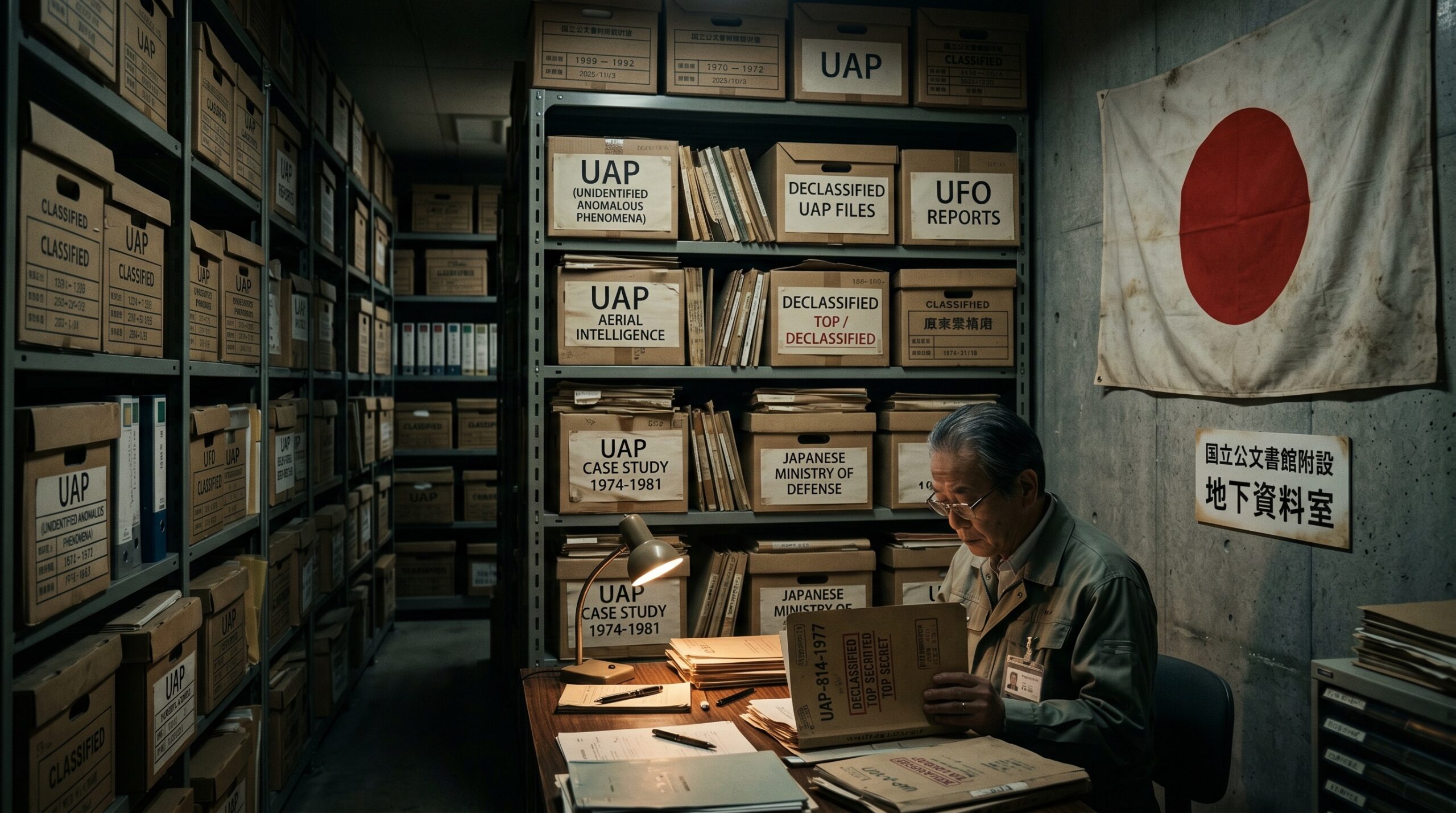
    In the middle of this week’s Pentagon file release — a wave of declassified UAP documents from multiple federal agencies that has been dominating every disclosure feed — a quieter story emerged from across the Pacific. Japan confirmed, through its own channels, that it has reviewed Pentagon UAP footage containing events near Japanese territory and that the Japanese government possesses its own UAP recordings that are now being assessed. It’s the kind of confirmation that sounds bureaucratic until you understand what it signals: a second major government, an ally of the United States, is now independently acknowledging that unexplained aerial phenomena in its airspace warrant official review.

    This is not a rumor. The Japan Times reported that Tokyo is analyzing the Pentagon’s UAP file trove specifically for encounters documented near Japanese sovereign airspace and territorial waters. That confirmation came from sources briefed on the review, and it was paired with the acknowledgment that Japanese defense officials have footage of their own — recordings that have not yet been made public but are now under formal assessment. For a country whose defense posture has been tightening around UAP transparency alongside the Americans and the British, this is a significant institutional step.

    Why Japan’s Move Changes the Disclosure Equation

    Until now, the public UAP conversation has been dominated by three players: the United States (through AARO, congressional hearings, and the latest War.gov file releases), the United Kingdom (which has declassified batches of historic UFO documents), and a handful of independent journalist-investigators like Jeremy Corbell, whose documentaries have pushed classified claims into mainstream view. Japan’s entry as an institutional actor changes the geometry of the entire conversation.

    The country’s geographic position is not incidental. Japanese airspace and maritime approaches have been the scene of encounters with unidentified aerial objects for years — encounters documented by both civilian pilots and military radar. When Japan begins formally reviewing these cases in parallel with the Pentagon’s disclosures, the resulting data set no longer belongs to a single government’s classification decisions. It becomes a cross-referenced, multinational record, and that makes it much harder to dismiss or bury.

    The Japan Times coverage of the review process suggests that Tokyo is approaching the Pentagon files methodically — mapping individual encounter reports against known Japanese airspace incidents, looking for correlations, and cross-checking timelines. If that work yields results that connect U.S.-documented events to Japanese-observed phenomena, it would represent the strongest form of evidence that the UAP research community has been demanding: independent, multi-source corroboration.

    The Pentagon File Release That Triggered This

    Japan’s review was catalyzed by the largest single release of UAP documents to date from the U.S. government. The trove, published through the War.gov portal, includes decades of encounter reports, photographic evidence, and internal assessments from agencies that have not previously made their UAP records public. The release was described by multiple outlets as “highly anticipated” and represents what disclosure advocates have pushed for since at least 2017.

    What makes the files significant is not just their volume but their variety. Previous releases tended to focus on a single agency or a specific time period. This collection spans multiple departments and covers encounters from different eras, which means that any pattern-matching work — the kind that disclosure watchers have already begun — can operate on a much broader canvas. If an object documented by a U.S. military sensor in 1994 appears in a similar form over Japanese waters in the same era, that is a data point no single classification system can erase.

    What the Skeptical Reading Looks Like

    The cautious interpretation is that Japan’s confirmation amounts to a routine administrative procedure — the kind of document review that any defense ministry would conduct when another country declassifies files relevant to its own airspace. “Reviewing” is not “confirming existence.” “Possessing footage” is not “going public with footage.” Japan may be conducting an entirely internal assessment that produces no external disclosure whatsoever.

    That is a valid concern. Governments routinely review foreign intelligence material and choose to keep their own conclusions classified. Japan’s strategic position in the Pacific, its complex relationship with Beijing, and its security partnership with Washington all create reasons for Tokyo to be very careful about what it says publicly about unexplained aerial objects. Prudence would suggest that this confirmation, while real, may not lead to the kind of open disclosure that UAP researchers are hoping for.

    But the fact that the review was acknowledged at all — rather than conducted entirely in silence — suggests a different kind of institutional posture than we have seen from Japan before. The mere existence of an official acknowledgment creates a paper trail, and paper trails have a way of eventually producing results.

    The International Domino Effect

    Japan’s move points toward a broader pattern that is easy to miss if the conversation stays focused only on American disclosures. Congressional testimony on non-human craft recovery, the historic Rendlesham encounters that the UK has gradually declassified, and now Japan’s own review process — these are not isolated events. They are individual governments, operating independently, reaching toward the same set of phenomena from different angles at roughly the same time.

    If the Japanese review produces findings that connect U.S.-documented UAP encounters to events over Japanese territory, it would represent a new category of evidence: multinational, cross-referenced, and impossible to attribute to a single nation’s sensor malfunction or classified program. Whether that happens depends on what is actually in the Japanese footage — and whether Japan ever chooses to show it to the public.

    For now, the confirmation itself is the signal. The files are being reviewed. The footage exists. And once a government acknowledges that something needs looking at, the pressure to show what it found builds slowly, relentlessly, and usually outlasts the people who wanted it kept quiet.

  • Ukrainian Defense Ministry Advisor Posts Star-Shaped UAP Video — and the Close-Ups Look Nothing Like a Drone

    Ukrainian Defense Ministry Advisor Posts Star-Shaped UAP Video — and the Close-Ups Look Nothing Like a Drone

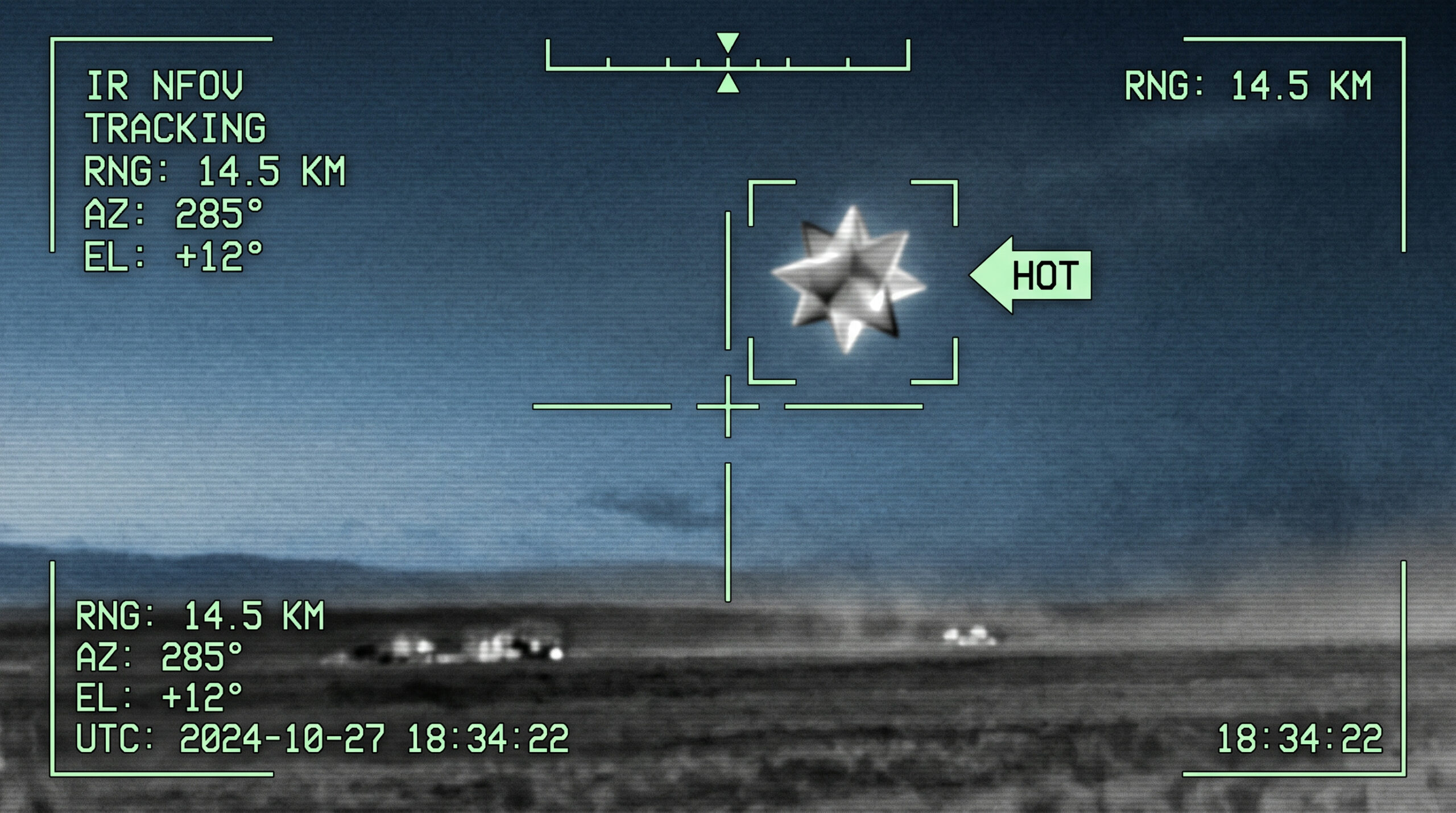
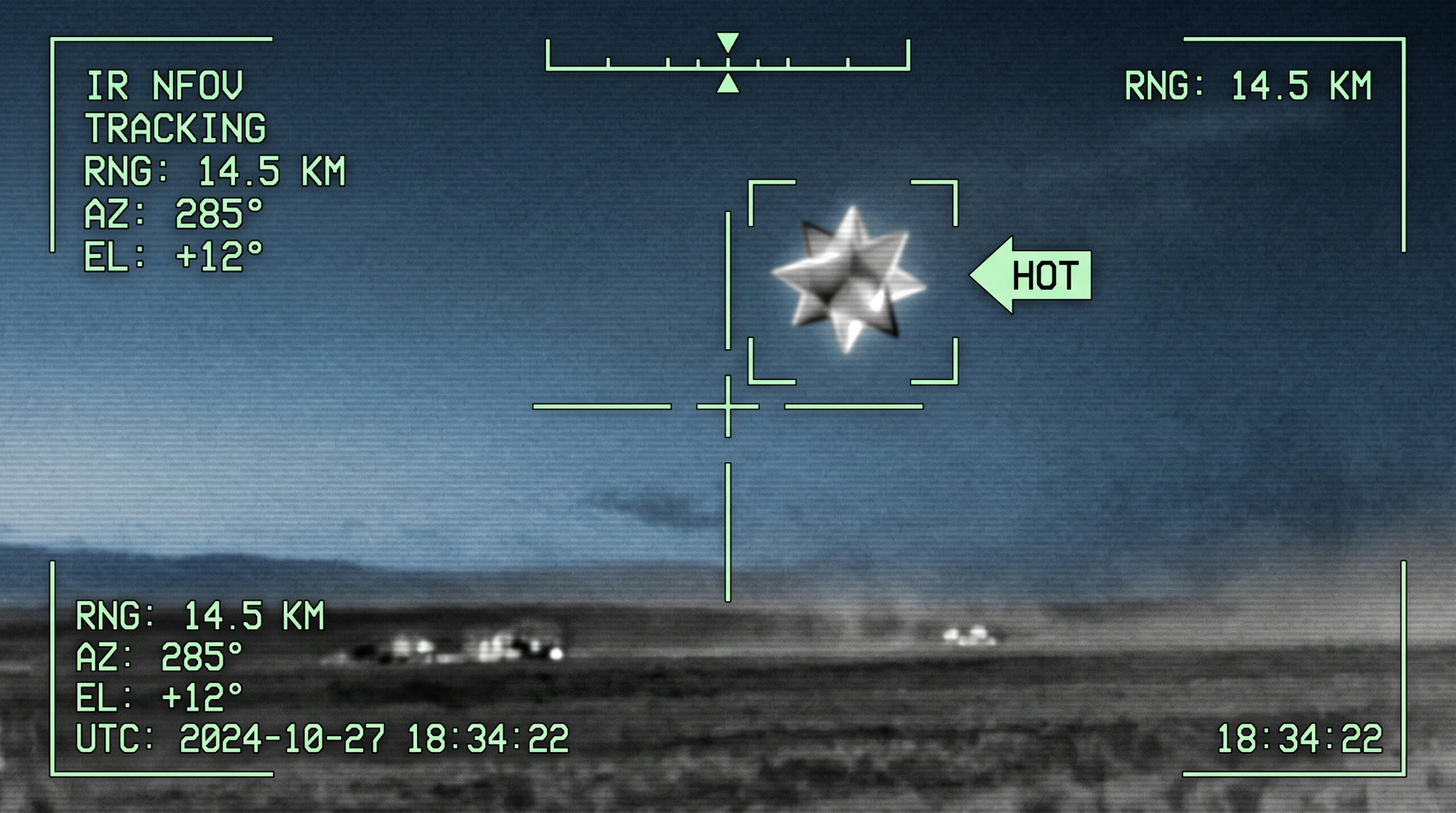
    A five-minute clip surfaced on Telegram last week that sent the entire UAP research community into overdrive, and it didn’t come from a fringe conspiracy channel. It was posted by Serhii “Flash” Beskrestnov — an advisor to the Ukrainian Defense Ministry, a senior official, someone with a public role in one of the most heavily monitored conflicts on the planet. The video shows a bright, star-shaped object hovering high above a flat expanse of terrain. Within hours, the same post had been amplified across Reddit’s UAP forums and racked up more than 8,000 upvotes on r/UFOs alone. What made it go viral was not just the source — it was what people began noticing when they zoomed in.

    The object sits motionless for long stretches, then appears to shift its orientation in ways that don’t match the wobble of a balloon or the drift of a weather platform. Enhanced frames pulled from the original clip, shared by independent analysts, reveal what looks like a structured, multi-pointed geometry — roughly symmetrical, with what some are calling “edges” that catch light asymmetrically as the object rotates. If that analysis holds, the shape is inconsistent with the known drone platforms operating in the theater.

    Why This Footage Has UAP Researchers on Edge

    What separates this from the hundreds of combat-zone UAP clips shared weekly is the combination of provenance and detail. Beskrestnov is not an anonymous uploader. He holds an official advisory position with Ukraine’s military apparatus, meaning the footage entered the public record through someone whose identity and reputation are attached to it. That distinction matters intensely in a landscape where most UAP evidence comes from civilians with dashcams, backyard security cameras, or anonymous Telegram channels.

    The video has already been stabilized, sharpened, and frame-by-frame analyzed by multiple independent researchers. The stabilized version circulated even faster than the original. In at least one frame, observers point to what appears to be a central dark region — described by some as a “pupil” or “eye” — that opens and closes as the craft seemingly rotates. Whether that pareidolia or something more intentional depends on who you ask, but the fact that trained analysts are pulling those frames out and sharing them publicly is itself notable.

    This is not happening in a vacuum. The clip arrived the same week the Department of War began releasing decades of previously classified UAP files from multiple federal agencies — a wave of transparency that has disclosure watchers comparing every new sighting against what the government is finally choosing to unseal.

    What the Pentagon Would Say About This

    The Pentagon’s All-domain Anomaly Resolution Office, or AARO, has spent years building a framework for categorizing UAP reports into identifiable phenomena — drones, balloons, sensor artifacts, and a small residual bucket of cases that resist classification. If this Ukrainian footage were submitted through official channels, AARO would likely begin by checking it against the known inventory of Ukrainian and Russian drone platforms, commercial quadcopters, and atmospheric phenomena common to the region’s altitude bands.

    That is the standard investigative pathway, and it is the right one. Most structured-looking objects in combat footage do resolve into mundane explanations once you have access to the flight logs, radar corroboration, and technical specifications of the equipment involved. The AARO investigation framework was specifically designed to separate the genuinely anomalous from the simply misidentified.

    But here is the gap: AARO does not have jurisdiction over footage collected and released by a foreign ally’s defense ministry during an active conflict. Unless Kiev chooses to route this through official military-to-military channels — which, given the sensitivity of the ongoing war, seems unlikely — the analysis falls to independent researchers, academic UAP groups, and the court of public opinion.

    What Believers Are Arguing

    For the disclosure community, the Ukrainian star-shaped UAP is another piece in an accumulating pattern that goes back several years. Believers point to Jeremy Corbell’s documentary work on classified UAP recovery claims, the UAP photographic plate analysis that surfaced through physicist Sabine Hossenfelder’s platforms, and Eric Davis’s testimony about dozens of craft recovered from the world’s oceans. Each of these threads, taken individually, can be explained away. Taken together, believers argue, they form a picture of a phenomenon that the government has been compartmentalizing for decades and is only now beginning to — reluctantly — let slip into public view.

    The Ukrainian footage, in this reading, is not just another video. It is footage of a craft with a shape that does not match known technology, posted by a high-level defense official, appearing during a period when multiple governments are simultaneously acknowledging UAP programs. Whether that is coincidence or convergence is the debate.

    The Genuine Gaps in the Story

    The honest uncertainty begins with the video quality itself. The footage was shot at distance, through atmospheric haze, by a camera that was almost certainly not designed for precision optical analysis. The “structured” appearance could be an artifact of digital compression, lens distortion, or the interaction between the camera’s sensor and a bright light source at a specific altitude. Every claim about the object’s shape needs to survive contact with those technical caveats.

    There is also the possibility that the object is a classified platform belonging to one of the parties in the conflict — something real, but human-made, and therefore not a UAP in the anomalous sense at all. That would be the most mundane explanation that still accounts for the strange geometry and the silence from both sides of the front line.

    For now, the frames are out there. The close-ups are being sharpened by people who have the time and the training to look closely. Whether this video becomes the clearest piece of structured-craft evidence to emerge from a war zone — or another case of a known object caught at the wrong angle through the wrong lens — depends on what the next set of analysts finds in the pixels. And on whether Kiev, Washington, or anyone with better data decides to say what they know.

  • Japan Just Confirmed It Has UAP Footage — and Is Analyzing Pentagon Files Near Its Borders

    Japan Just Confirmed It Has UAP Footage — and Is Analyzing Pentagon Files Near Its Borders

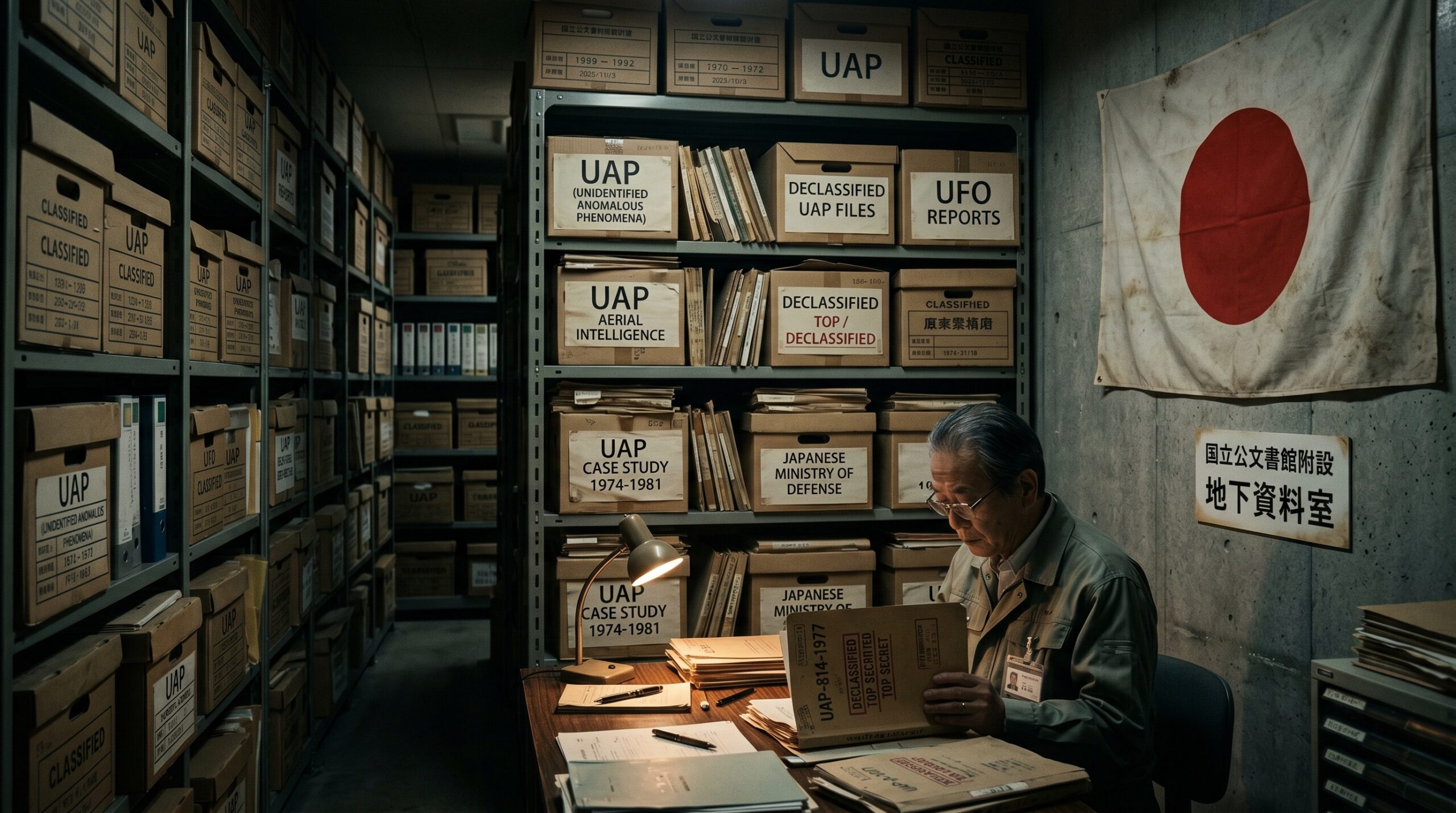
    In the middle of this week’s Pentagon file release — a wave of declassified UAP documents from multiple federal agencies that has been dominating every disclosure feed — a quieter story emerged from across the Pacific. Japan confirmed, through its own channels, that it has reviewed Pentagon UAP footage containing events near Japanese territory and that the Japanese government possesses its own UAP recordings that are now being assessed. It’s the kind of confirmation that sounds bureaucratic until you understand what it signals: a second major government, an ally of the United States, is now independently acknowledging that unexplained aerial phenomena in its airspace warrant official review.

    This is not a rumor. The Japan Times reported that Tokyo is analyzing the Pentagon’s UAP file trove specifically for encounters documented near Japanese sovereign airspace and territorial waters. That confirmation came from sources briefed on the review, and it was paired with the acknowledgment that Japanese defense officials have footage of their own — recordings that have not yet been made public but are now under formal assessment. For a country whose defense posture has been tightening around UAP transparency alongside the Americans and the British, this is a significant institutional step.

    Why Japan’s Move Changes the Disclosure Equation

    Until now, the public UAP conversation has been dominated by three players: the United States (through AARO, congressional hearings, and the latest War.gov file releases), the United Kingdom (which has declassified batches of historic UFO documents), and a handful of independent journalist-investigators like Jeremy Corbell, whose documentaries have pushed classified claims into mainstream view. Japan’s entry as an institutional actor changes the geometry of the entire conversation.

    The country’s geographic position is not incidental. Japanese airspace and maritime approaches have been the scene of encounters with unidentified aerial objects for years — encounters documented by both civilian pilots and military radar. When Japan begins formally reviewing these cases in parallel with the Pentagon’s disclosures, the resulting data set no longer belongs to a single government’s classification decisions. It becomes a cross-referenced, multinational record, and that makes it much harder to dismiss or bury.

    The Japan Times coverage of the review process suggests that Tokyo is approaching the Pentagon files methodically — mapping individual encounter reports against known Japanese airspace incidents, looking for correlations, and cross-checking timelines. If that work yields results that connect U.S.-documented events to Japanese-observed phenomena, it would represent the strongest form of evidence that the UAP research community has been demanding: independent, multi-source corroboration.

    The Pentagon File Release That Triggered This

    Japan’s review was catalyzed by the largest single release of UAP documents to date from the U.S. government. The trove, published through the War.gov portal, includes decades of encounter reports, photographic evidence, and internal assessments from agencies that have not previously made their UAP records public. The release was described by multiple outlets as “highly anticipated” and represents what disclosure advocates have pushed for since at least 2017.

    What makes the files significant is not just their volume but their variety. Previous releases tended to focus on a single agency or a specific time period. This collection spans multiple departments and covers encounters from different eras, which means that any pattern-matching work — the kind that disclosure watchers have already begun — can operate on a much broader canvas. If an object documented by a U.S. military sensor in 1994 appears in a similar form over Japanese waters in the same era, that is a data point no single classification system can erase.

    What the Skeptical Reading Looks Like

    The cautious interpretation is that Japan’s confirmation amounts to a routine administrative procedure — the kind of document review that any defense ministry would conduct when another country declassifies files relevant to its own airspace. “Reviewing” is not “confirming existence.” “Possessing footage” is not “going public with footage.” Japan may be conducting an entirely internal assessment that produces no external disclosure whatsoever.

    That is a valid concern. Governments routinely review foreign intelligence material and choose to keep their own conclusions classified. Japan’s strategic position in the Pacific, its complex relationship with Beijing, and its security partnership with Washington all create reasons for Tokyo to be very careful about what it says publicly about unexplained aerial objects. Prudence would suggest that this confirmation, while real, may not lead to the kind of open disclosure that UAP researchers are hoping for.

    But the fact that the review was acknowledged at all — rather than conducted entirely in silence — suggests a different kind of institutional posture than we have seen from Japan before. The mere existence of an official acknowledgment creates a paper trail, and paper trails have a way of eventually producing results.

    The International Domino Effect

    Japan’s move points toward a broader pattern that is easy to miss if the conversation stays focused only on American disclosures. Congressional testimony on non-human craft recovery, the historic Rendlesham encounters that the UK has gradually declassified, and now Japan’s own review process — these are not isolated events. They are individual governments, operating independently, reaching toward the same set of phenomena from different angles at roughly the same time.

    If the Japanese review produces findings that connect U.S.-documented UAP encounters to events over Japanese territory, it would represent a new category of evidence: multinational, cross-referenced, and impossible to attribute to a single nation’s sensor malfunction or classified program. Whether that happens depends on what is actually in the Japanese footage — and whether Japan ever chooses to show it to the public.

    For now, the confirmation itself is the signal. The files are being reviewed. The footage exists. And once a government acknowledges that something needs looking at, the pressure to show what it found builds slowly, relentlessly, and usually outlasts the people who wanted it kept quiet.

  • The Sandia Quantum Scientist Who Vanished: Ingrid Lane’s Double Life and the Mystery No One Solves

    The Sandia Quantum Scientist Who Vanished: Ingrid Lane’s Double Life and the Mystery No One Solves

    On the surface, she was a musician — brilliant, intense, carrying a diagnosis that made the people around her shake their heads whenever her name came up. Bipolar. Erratic. Unraveling. That was the story her friends, family, and acquaintances knew. But Ingrid Lane had a second identity that almost none of them could have imagined: she was a scientist at Sandia National Laboratories, working on quantum computing systems at one of the most heavily secured research installations in the United States. Then she vanished. No body. No clear trail. Just two completely different versions of the same person, both erased at once.

    The story first surfaced in long-form pieces on high-strangeness platforms, where it quickly became the kind of case that refuses to stop circulating. A quantum researcher at one of America’s most classified facilities — a woman living what appeared to be a double life — disappears under circumstances that don’t resolve into a neat narrative. Was she ill? Did she choose to leave? Was something else happening beneath the surface of both identities she carried? The questions multiply the longer you look.

    Two Lives, One Person

    The gap between the public persona and the classified reality is what makes the case feel like a piece of fiction that someone forgot to label as such. On one side, there was the musician — the person who performed, who struggled publicly with mental health, who lived in plain sight and was seen as someone whose life was spiraling in ways everyone around her understood, or thought they understood. On the other side was the quantum computing scientist, an identity that required the highest levels of security clearance, daily access to restricted facilities, and technical expertise that places her among a very small population of people in the world.

    These two versions of Ingrid Lane do not naturally overlap. The people in her music community had no idea she worked at Sandia. The people at Sandia may not have fully understood the intensity of her public-facing life. In between those two circles sat a woman who navigated both, and the question that the case poses is whether that navigation itself was meaningful — or whether she simply found two outlets for the same restless mind and kept them separated for the same reason most people keep their professional and personal lives apart.

    The fact that the case has become a fixation in high-strangeness communities says something about the era we are living in. After years of disappearing UAP insiders, whistleblowers who died under suspicious circumstances, and astronomers whose deaths became investigations, the pattern of scientists connected to sensitive work vanishing or dying has become something that people actively watch for. Whether Lane’s case fits that pattern or whether it is simply a tragic personal story that happened to occur at the intersection of quantum research and public mental health is the unresolved tension at the center of everything written about her.

    The Fear and Wine Breakdown

    The most thorough account of Lane’s case came from Fear and Wine, a platform that has built a reputation for deep-dive investigations into high-strangeness cases. The piece documents the contradiction at the heart of the story: a quantum computing researcher with clearance at Sandia National Laboratories, a woman whose technical credentials suggest someone operating at the highest levels of American scientific infrastructure, was simultaneously living a public life that was marked by mental health struggles and instability.

    What makes the breakdown difficult to resolve is that neither version of the story contradicts the other. A person can be a brilliant scientist and also struggle with bipolar disorder. A person can hold a security clearance at a classified facility and also maintain a creative outlet that looks nothing like their day job. The case becomes strange not because any individual claim is impossible but because the totality — both lives, the disappearance, the silence — creates a picture that no single explanation satisfies.

    The Government Connection That Makes People Nervous

    Sandia National Laboratories is not just another research institution. It is a Department of Energy facility, managed primarily through contracts with the federal government, with a research portfolio that includes nuclear weapons systems, national security technologies, and — increasingly — quantum computing applications that have direct implications for cryptography, surveillance, and intelligence. A person who works at Sandia in quantum computing, with the associated clearances, has access to information that most citizens will never encounter.

    This is where the case crosses from personal mystery into the territory that high-strangeness communities monitor closely. Congress has recently been asking questions about missing scientists at national laboratories. The disappearance of a quantum researcher at a DOE facility, regardless of the circumstances, feeds into a broader narrative that has been building for months: that the people closest to the technologies that matter most to national security are finding themselves in situations that ordinary news cycles don’t explain away easily.

    None of this means Ingrid Lane’s case is connected to anything classified or conspiratorial. It means the context in which her disappearance occurred makes a simple explanation feel insufficient, and that insufficiency is what keeps the story alive.

    What Could Explain This Entirely Without Conspiracy

    The skeptical reading is straightforward and humane. Ingrid Lane was a person dealing with a serious mental health condition while operating under the demands of one of the most pressure-intensive jobs that exists in science. The combination of bipolar disorder and the cognitive demands of quantum research is not something anyone outside that intersection should claim to understand. People in crisis make decisions that their colleagues and families cannot predict. The disappearance may have nothing to do with her professional work at all — it may simply be the kind of vanishing that happens when a brilliant, struggling person reaches a breaking point that no one saw coming.

    That explanation is emotionally coherent and does not require any classified narrative. It is also, frustratingly for everyone who has followed the case, impossible to confirm or refute without information that has not been made public.

    The Pattern People See Anyway

    What keeps this case circulating is its resonance with a pattern that has grown louder over the past year. Scientists connected to sensitive programs, insiders who vanish, whistleblowers whose deaths arrive at inconvenient times — each case is different, each explanation is different, but the aggregate of them creates a feeling that people who work at the intersection of frontier technology and national secrecy are living in a world that the rest of us cannot fully see.

    Ingrid Lane’s case may be a personal tragedy that happened to intersect with that world. Or it may be another thread in something larger. The only honest answer is that nobody outside the people who knew her, who worked with her, or who hold whatever information Sandia and the DOE have kept to themselves will ever know for certain. And that absence of certainty is why the story keeps returning to feeds that cover the strange, the classified, and the unresolved.

    Because when a quantum researcher at one of America’s most classified facilities drops out of sight, and the two lives she was living were as separated as an open-mic stage from a Sandia security gate, the question isn’t whether something strange is going on. The question is whether the strangeness is something we are invited to understand.
  • Ukrainian Defense Ministry Advisor Posts Star-Shaped UAP Video — and the Close-Ups Look Nothing Like a Drone

    Ukrainian Defense Ministry Advisor Posts Star-Shaped UAP Video — and the Close-Ups Look Nothing Like a Drone

    A five-minute clip surfaced on Telegram last week that sent the entire UAP research community into overdrive, and it didn’t come from a fringe conspiracy channel. It was posted by Serhii “Flash” Beskrestnov — an advisor to the Ukrainian Defense Ministry, a senior official, someone with a public role in one of the most heavily monitored conflicts on the planet. The video shows a bright, star-shaped object hovering high above a flat expanse of terrain. Within hours, the same post had been amplified across Reddit’s UAP forums and racked up more than 8,000 upvotes on r/UFOs alone. What made it go viral was not just the source — it was what people began noticing when they zoomed in.

    The object sits motionless for long stretches, then appears to shift its orientation in ways that don’t match the wobble of a balloon or the drift of a weather platform. Enhanced frames pulled from the original clip, shared by independent analysts, reveal what looks like a structured, multi-pointed geometry — roughly symmetrical, with what some are calling “edges” that catch light asymmetrically as the object rotates. If that analysis holds, the shape is inconsistent with the known drone platforms operating in the theater.

    Why This Footage Has UAP Researchers on Edge

    What separates this from the hundreds of combat-zone UAP clips shared weekly is the combination of provenance and detail. Beskrestnov is not an anonymous uploader. He holds an official advisory position with Ukraine’s military apparatus, meaning the footage entered the public record through someone whose identity and reputation are attached to it. That distinction matters intensely in a landscape where most UAP evidence comes from civilians with dashcams, backyard security cameras, or anonymous Telegram channels.

    The video has already been stabilized, sharpened, and frame-by-frame analyzed by multiple independent researchers. The stabilized version circulated even faster than the original. In at least one frame, observers point to what appears to be a central dark region — described by some as a “pupil” or “eye” — that opens and closes as the craft seemingly rotates. Whether that pareidolia or something more intentional depends on who you ask, but the fact that trained analysts are pulling those frames out and sharing them publicly is itself notable.

    This is not happening in a vacuum. The clip arrived the same week the Department of War began releasing decades of previously classified UAP files from multiple federal agencies — a wave of transparency that has disclosure watchers comparing every new sighting against what the government is finally choosing to unseal.

    What the Pentagon Would Say About This

    The Pentagon’s All-domain Anomaly Resolution Office, or AARO, has spent years building a framework for categorizing UAP reports into identifiable phenomena — drones, balloons, sensor artifacts, and a small residual bucket of cases that resist classification. If this Ukrainian footage were submitted through official channels, AARO would likely begin by checking it against the known inventory of Ukrainian and Russian drone platforms, commercial quadcopters, and atmospheric phenomena common to the region’s altitude bands.

    That is the standard investigative pathway, and it is the right one. Most structured-looking objects in combat footage do resolve into mundane explanations once you have access to the flight logs, radar corroboration, and technical specifications of the equipment involved. The AARO investigation framework was specifically designed to separate the genuinely anomalous from the simply misidentified.

    But here is the gap: AARO does not have jurisdiction over footage collected and released by a foreign ally’s defense ministry during an active conflict. Unless Kiev chooses to route this through official military-to-military channels — which, given the sensitivity of the ongoing war, seems unlikely — the analysis falls to independent researchers, academic UAP groups, and the court of public opinion.

    What Believers Are Arguing

    For the disclosure community, the Ukrainian star-shaped UAP is another piece in an accumulating pattern that goes back several years. Believers point to Jeremy Corbell’s documentary work on classified UAP recovery claims, the UAP photographic plate analysis that surfaced through physicist Sabine Hossenfelder’s platforms, and Eric Davis’s testimony about dozens of craft recovered from the world’s oceans. Each of these threads, taken individually, can be explained away. Taken together, believers argue, they form a picture of a phenomenon that the government has been compartmentalizing for decades and is only now beginning to — reluctantly — let slip into public view.

    The Ukrainian footage, in this reading, is not just another video. It is footage of a craft with a shape that does not match known technology, posted by a high-level defense official, appearing during a period when multiple governments are simultaneously acknowledging UAP programs. Whether that is coincidence or convergence is the debate.

    The Genuine Gaps in the Story

    The honest uncertainty begins with the video quality itself. The footage was shot at distance, through atmospheric haze, by a camera that was almost certainly not designed for precision optical analysis. The “structured” appearance could be an artifact of digital compression, lens distortion, or the interaction between the camera’s sensor and a bright light source at a specific altitude. Every claim about the object’s shape needs to survive contact with those technical caveats.

    There is also the possibility that the object is a classified platform belonging to one of the parties in the conflict — something real, but human-made, and therefore not a UAP in the anomalous sense at all. That would be the most mundane explanation that still accounts for the strange geometry and the silence from both sides of the front line.

    For now, the frames are out there. The close-ups are being sharpened by people who have the time and the training to look closely. Whether this video becomes the clearest piece of structured-craft evidence to emerge from a war zone — or another case of a known object caught at the wrong angle through the wrong lens — depends on what the next set of analysts finds in the pixels. And on whether Kiev, Washington, or anyone with better data decides to say what they know.

  • Obama Says UFO Disclosure Won’t Happen — ‘Government Is Terrible at Keeping Secrets’

    Obama Says UFO Disclosure Won’t Happen — ‘Government Is Terrible at Keeping Secrets’

    Former President Barack Obama did not set out to talk about UFOs when he took the stage. But a throwaway line — “the government is terrible at keeping secrets” — has become one of the most discussed quotes in the disclosure community overnight. The 2,100-plus upvote post on r/UFOs is not just amplifying a funny moment. It is treating the remark as a window into something bigger: if the government really had evidence of non-human intelligence, Obama’s logic suggests, we would already know. The fact that he framed it this way, in public, has believers parsing every syllable.

    The Quote and Where It Came From

    Speaking at an event in early May 2026, Obama touched on the growing push for UFO transparency from Congress and the Pentagon’s All-domain Anomaly Resolution Office. When asked about the possibility of a full disclosure, he responded with something along the lines of: “Disclosure won’t happen because the government is terrible at keeping secrets.” The audience laughed. The clip went viral. And the UAP community immediately began treating it as more than a punchline. You can see the full discussion thread that grew to over 2,100 upvotes on Reddit, and the Hollywood Reporter’s coverage of Obama’s comments on government secrecy.

    The reasoning is straightforward. Obama served as president from 2009 to 2017. He was briefed on classified defense programs, intelligence operations, and military activities that remain classified to this day. If he is saying the government cannot keep secrets, he is implicitly saying there is no secret worth keeping about UFOs — or he is saying there is a secret, and it is slipping.

    Obama’s History with UFOs

    This is not Obama’s first brush with the UFO question. During his presidency, he made a few notable, if vague, remarks. In a 2010 appearance on The Late Show with David Letterman, when asked about UFOs, Obama said he had not seen them but that “there is a lot of evidence that people see things in the sky.” He also referenced the Pentagon’s 2017 revelation of the Advanced Aerospace Threat Identification Program (AATIP) during the Obama years, a program that the Defense Department only confirmed after he had left office.

    The question that disclosure advocates keep coming back to is this: what was briefed to him behind closed doors? The president receives the most classified intelligence the government produces. If Obama’s public posture — that the government cannot keep secrets, and that disclosure is unlikely — was informed by anything beyond political convenience, it would carry a lot of weight.

    Why Believers Think This Is a Signal

    For people who have followed the UAP disclosure movement for years, a former president casually acknowledging both that (a) there is something worth disclosing and (b) the government cannot contain information indefinitely is exactly the kind of pre-signal they have been looking for. The argument is not that Obama is confirming anything. The argument is that he is hinting at the shape of what is coming — messy, incomplete, and already leaking.

    There is also the matter of timing. Obama made the remark in the context of an active congressional push for UFO transparency. Representative Tim Burchett has gone public with claims that he has been briefed on recovered non-human bodies. Burchett’s sworn testimony about what he has and cannot say has been the single most discussed topic in UAP circles this month. Multiple pastors, including Perry Stone, Greg Locke, and Tony Merkel, have said they were privately informed by military intelligence that “disclosure is coming” — a claim that has spread through both religious and conspiracy channels simultaneously.

    In that ecosystem, Obama’s comment lands differently than it would if he had said it in isolation. It reads like a former insider confirming a pattern: the wall is cracking, and it is going to come through in pieces.

    The Skeptical View

    The counter-argument is that Obama’s remark was political comedy, not insider disclosure. “The government is terrible at keeping secrets” is a well-worn joke that politicians have used for decades. It was delivered for laughs. The fact that it got 2,100 upvotes on r/UFOs tells you more about the audience’s appetite for confirmation than it does about Obama’s state of classified knowledge.

    Skeptics also point out that if you are a former president and your goal is to stay out of classified territory, making a vague joke is the safest possible path. It lets you engage with the topic without confirming or denying anything at all.

    What Remains Open

    Here is what we know for sure: Obama acknowledged UFO disclosure, framed it in terms of government incompetence rather than government secrecy, and did so in front of an audience that will replay the clip a thousand times. What we do not know is whether his framing was casual humor or a carefully chosen formulation from someone who knows what was classified during his time in the Situation Room. What the disclosure community decides, as always, is what sounds most convincing.

    FAQ

    What did Obama say about UFO disclosure in 2026? Obama stated that full government disclosure of UFO evidence is unlikely because “the government is terrible at keeping secrets.” The remark came in response to growing congressional pressure for transparency.

    Did Obama know about classified UFO programs as president? The Pentagon’s AATIP program operated during Obama’s presidency and was only confirmed after he left office. Whether he was personally briefed on it remains unconfirmed.

  • Silent Disc-Shaped Craft Over Germany: May 2026 Mass Sighting Has UAP Watchers Locked In

    Silent Disc-Shaped Craft Over Germany: May 2026 Mass Sighting Has UAP Watchers Locked In

    Dash-cam footage and handheld phone videos captured within minutes of each other are circulating across UAP forums, and they all appear to show the same thing — a flat, metallic object hovering over the tree line in southern Germany, then moving away at a speed that makes no sense for anything conventional. The first upload hit Reddit’s r/UFOs on May 8, 2026 and racked up over 2,300 upvotes in hours. But the engagement numbers are barely the most interesting part. What has people arguing is that the second video, uploaded to a completely different platform, was filmed from a town roughly 30 kilometers away — and shows the exact same object at the exact same timestamp.

    What the Footage Shows

    The original clip was recorded from a parked car on a two-lane road in Bavaria and was uploaded to Reddit’s r/UFOs where it drew more than 2,300 upvotes. In it, you can see the object suspended above the treeline on the left side of the frame. It is flat on the bottom, slightly domed on top, and it does not appear to have any visible propulsion system — no exhaust, no rotor wash, no sound picked up by the phone’s microphone. After holding position for roughly ten seconds, the object accelerates to the right and disappears from frame so fast that the camera operator’s arm doesn’t even track it in time.

    The second video, filmed from a residential neighborhood, captures the object from a different angle and confirms the timeline. The uploader stated the recording was timestamped at 4:42 PM local time, which matches the dash-cam metadata of the first clip. Both videos show a grey, disc-shaped silhouette against an overcast sky.

    Converging Witness Reports

    What elevates this from a single ambiguous clip to something harder to dismiss outright is the number of people who posted about seeing the same object around the same time. At least four separate social media posts from different southern German locations — including Augsburg, Stuttgart, and Ulm — reference an unusual aerial object visible in the mid-afternoon sky. None of these posts appear to be coordinated. They came from different accounts, different platforms, and different angles.

    Several of the witnesses described the same details independently: the object was silent, it did not move like an airplane, and it appeared to be metallic rather than reflective like a balloon or satellite.

    Why This One Stands Out

    Germany is a crowded airspace. It hosts multiple NATO military installations, civilian airports, and the kind of routine commercial traffic you would expect from a central European hub. Most aerial anomalies photographed over Germany resolve into drones, weather balloons, or military exercises with a paper trail. But in this case, no German aviation authority has issued a NOTAM covering the area and time window in question. No commercial flight paths pass through the coordinates at that altitude. And the movement profile — hovering, then snapping away — does not match the signature of any known fixed-wing or rotary aircraft.

    Believers in the UAP disclosure movement have already pointed out that this is exactly the kind of sighting the Pentagon’s disclosure push under Rep. Tim Burchett was meant to address — a well-documented, multi-witness event with timestamped video evidence from multiple angles. Others note the parallels to the UAP evidence Sabine Hossenfelder reported finding in old photographic plates: credible professionals documenting things they cannot easily identify.

    What Comes Next

    What comes next depends on what the German military chooses to say — or not say. The Bundeswehr operates several airbases in Bavaria and has a clear interest in explaining what moved through its airspace unnoticed. If the object turns out to be one of theirs, an explanation should follow. If it does not, the gap between what the kind of anomalous objects tracked by AARO in the United States and what NATO allies are experiencing becomes harder to explain away.

    FAQ

    What was the Germany UFO sighting in May 2026? Multiple witnesses across southern Germany captured footage of a silent, disc-shaped object hovering above the tree line. Timestamps from separate videos confirm they were filmed simultaneously from different locations.

    Has the German military responded? As of publication, neither the Bundeswehr nor German aviation authorities have issued a statement identifying the object.

    Is there verified footage of the Germany craft? Several videos are circulating online, including dash-cam and phone footage. Independent verification is ongoing.

  • Tim Burchett’s Sworn Testimony About Recovered Non-Human Bodies: What the Congressman Claims He Was Told

    Tim Burchett’s Sworn Testimony About Recovered Non-Human Bodies: What the Congressman Claims He Was Told

    Congressman Tim Burchett of Tennessee has been one of the most vocal members of Congress on the question of non-human intelligence. He has said he has seen too much in his government UAP briefings to dismiss the possibility of alien life. He has told interviewers that if the public could see what he has seen, they would not sleep at night. And in recent appearances, Burchett has gone further: he has suggested that he has been informed about recovered non-human bodies, based on sworn testimony from military and intelligence personnel. He will not share the details publicly — he says the people who told him explicitly asked that the information not be released — but the fact that a sitting member of Congress is willing to say even this much has electrified the UAP disclosure community. For people who have spent years demanding that the government acknowledge what it knows, Burchett’s comments read as the closest thing to a confirmation that they have ever heard from someone inside the system.

    What Burchett Has Actually Said

    Burchett’s claims have emerged across multiple interviews and platforms rather than in a single definitive statement. He has told Piers Morgan that he is convinced alien life exists, pointing to government briefings, pilot testimony, and video evidence that has been shown to classified audiences. He has discussed the topic with NewsNation, emphasizing that the evidence he has seen is not something that can be publicly shared under current classification rules but that it would keep an ordinary person awake at night.

    On Psicoactivo, a Spanish-language analysis program, Burchett’s comments about sworn testimony describing recovered alien bodies were featured and dissected. The framing is careful: Burchett is not claiming personal knowledge of the bodies. He is saying that people who have provided sworn testimony to congressional committees have told him about recovered non-human materials and remains. That distinction matters, but it does not diminish the impact of the claim coming from a congressman who sits on the oversight committees.

    Why Burchett’s Account Carries Weight

    Burchett’s position matters because of it. He is not a journalist or a podcaster. He is a member of Congress sitting on committees with direct oversight over the intelligence community and the Department of Defense. When a person in that position says he has been briefed on recovered non-human bodies, the claim carries an entirely different weight than the same statement from someone outside the system.

    Burchett has also been consistent across multiple appearances. He does not sensationalize the claim with specific details about where the bodies were recovered or what they looked like. He sticks to a broader framing: he has been briefed, the briefings have been disturbing, and the people who told him asked that he not share specifics. That restraint is exactly the kind of thing that makes the claim harder to dismiss as attention-seeking.

    The pattern of UFO whistleblowers being silenced has been one of the most persistent narratives in the disclosure community, and Burchett’s willingness to speak at all — even in these careful terms — stands in contrast to that pattern. He is using his congressional platform to amplify the issue without crossing the line into classified disclosure.

    What the Sworn Testimony Allegedly Covers

    According to accounts that have circulated in UAP communities, the sworn testimony Burchett referenced includes descriptions of recovered non-human materials and biological remains. The details are consistent with what David Grusch and other whistleblowers have alleged in congressional testimony: that the U.S. government has recovered non-human spacecraft and bodies from crash sites over the course of decades.

    The David Grusch’s reported advisory role with the Trump administration on UFO disclosure has given new life to these claims, and Burchett’s comments arrive in the same environment where the government’s own insiders are pushing for declassification from the inside.

    Another congressman, Eric Burlison, has made claims about mass-witness UAP encounters documented by military personnel, adding to the body of congressional-level reporting on the topic. The convergence of Burchett, Burlison, Grusch, and other sources pointing toward the same conclusion — that the government has recovered more than it has acknowledged — is what makes this moment in the disclosure debate feel different from past ones.

    What Cannot Yet Be Verified

    Burchett has not released the names of the witnesses who provided the sworn testimony, nor has he shared the content of those statements. The claims about recovered bodies remain at the level of reported congressional briefing rather than publicly documented fact. The Department of Defense has not confirmed the existence of recovered non-human bodies or materials. The testimony Burchett described has not been independently corroborated by other members of Congress or by publicly released documents.

    Until those details are released or confirmed, the claims remain in the same category as the broader UAP whistleblower allegations: too consistent to dismiss outright, too classified to verify.

    What Remains

    Tim Burchett’s comments are significant because of who he is, not because of what he has specifically revealed. He is a sitting member of Congress saying that he has been briefed on non-human bodies based on sworn testimony from military personnel. That claim alone is enough to shift the disclosure debate. It means the question is no longer whether anyone inside the government believes these things happened. It means someone with oversight authority has heard the testimony and decided that the public needs to know that it exists, even if he cannot share the details. The fact that he is choosing to speak at all — carefully, without naming names — suggests he believes the truth is closer to public acknowledgment than it ever has been.

  • NASA Project Anchor: The Viral Conspiracy Claiming Earth Will Lose Gravity in August 2026

    NASA Project Anchor: The Viral Conspiracy Claiming Earth Will Lose Gravity in August 2026

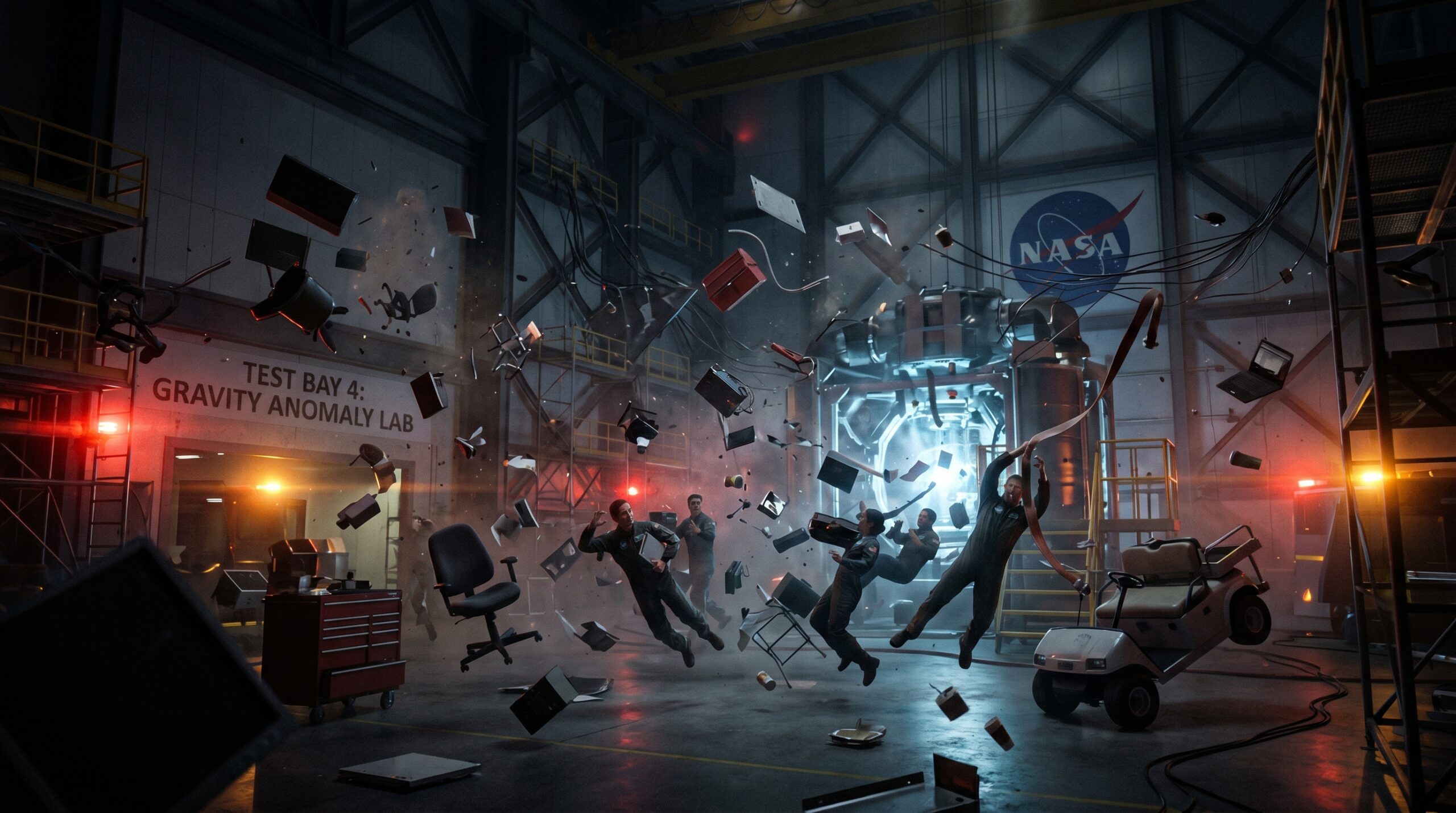
    A viral claim has been spreading across TikTok, Telegram, and conspiracy forums with a simple, terrifying premise: on August 12, 2026, Earth will lose its gravity for seven seconds, causing catastrophic damage that could kill millions. The theory goes further than a simple doomsday prediction — it names a specific, supposedly secret NASA program called “Project Anchor” that is allegedly preparing for the event. The claimant says they have seen proof of an $89 million budget allocation to the project, suggesting NASA already knows the event is coming and is working behind closed doors to prepare. The post has racked up over 4,700 points on r/conspiracy alone. It has been picked up by the Daily Express, IBTimes, and OregonLive. NASA has publicly responded that the claim is not true. But the fact that NASA felt compelled to address a TikTok conspiracy at all only deepened one of the core anxieties driving the theory in the first place: that something is actually happening, and the official response is designed to make people feel safe rather than to tell the truth.

    What the Theory Claims

    The central claim is that Earth will experience a temporary but catastrophic loss of gravitational force on August 12, 2026. For seven seconds, gravity will effectively switch off. During that window, the theory goes, the atmosphere, bodies of water, and anything not physically secured will be pulled into space, while the Earth itself could undergo violent tectonic and atmospheric disruption. Some versions of the claim raise this to 60 million deaths.

    The theory gets its name from “Project Anchor,” a supposed NASA initiative designed to mitigate or prepare for the gravity-loss event. The claimant asserts that they have seen evidence of an $89 million budget line linked to the project, suggesting that money is being spent behind closed doors to address a phenomenon that NASA publicly denies exists.

    Why This Went Viral Now

    The theory has spread at an alarming rate because it combines three elements that accelerate conspiratorial content online: a specific date, a named government program, and an institutional response that sounds too categorical to be reassuring. When NASA responded with denials, the conspiracy community did not see confirmation that the claim was baseless. It saw an institution responding to a specific allegation with the same kind of language used to dismiss other classified information that later turned out to be true.

    The viral Facebook photo deletion conspiracy that swept through Messenger in 2026 followed the same pattern: a specific claim about institutional action, official denial, and the community deciding that denial was itself evidence that something was being concealed.

    NASA’s own social media presence has contributed to the acceleration. Multiple posts described by conspiracy observers as “trolling” have included cryptic references to gravitational anomalies and unexplained phenomena that the agency has documented but not fully explained. When an agency responsible for studying the physical universe begins posting content that can be read as hinting at the very things it officially denies, the boundary between disclosure and concealment starts to blur.

    The Physics of the Claim

    The physics involved in a seven-second gravity loss are, to put it plainly, catastrophic. Gravity is not a switch that can be turned off and on. It is the result of Earth’s mass curving spacetime. If gravity somehow paused, the atmosphere would drift. The oceans would destabilize. Every structure on the surface would be affected. The idea that an $89 million NASA program could meaningfully prepare for such an event is inconsistent with the scale of what the claim describes.

    But the physics argument does not address the real reason the theory is spreading. The gravity-loss claim is not actually about physics — it is about power, institutional access, and the growing belief among conspiracy communities that NASA is withholding information about anomalies that it monitors routinely.

    The Broader Pattern of NASA Anomaly Theories

    The Project Anchor theory sits within a larger family of claims alleging that NASA monitors unusual physical phenomena and does not share those observations with the public. The agency’s own social media behavior has been read by conspiracy communities as tacit acknowledgment of phenomena the agency’s official communications will not address directly.

    In the same window where the gravity-loss theory spread, multiple government insiders have begun framing UAP disclosure in spiritual terms, suggesting that the institutions responsible for monitoring the sky may be dealing with phenomena that defy conventional physical explanation altogether. When a gravity-loss theory and a UFO disclosure theory start circulating in the same communities at the same time, they reinforce each other.

    What Cannot Be Verified

    There is no independent verification of the Project Anchor claim. The $89 million budget line cited by the original poster has not been confirmed through any publicly accessible government financial database. NASA has denied the claim entirely. The August 12, 2026 date has no scientific basis — no astronomical or physical model predicts a gravity-loss event on any date, and the mechanism by which such a thing could occur is not described by any recognized framework in physics.

    What Remains

    The NASA Project Anchor theory will not convince anyone who trusts official statements and established science. But it has already convinced the people who do not, and the pattern of institutional response — rapid denial, continued social media posts that fuel the theory, and the inability of official language to reach communities that no longer trust the speaker — mirrors the same dynamic that drives the UFO disclosure debate. Whether Earth loses gravity on August 12, 2026, is a claim that will be answered by the date itself. But the social and institutional conditions that allowed this theory to spread so fast in the first place will not disappear when the date passes.