Category: Conspiracy Theories

  • NASA Engineer Bob Oechsler UFO Claims: 20 Sightings and the Money Behind Secrecy

    NASA Engineer Bob Oechsler UFO Claims: 20 Sightings and the Money Behind Secrecy

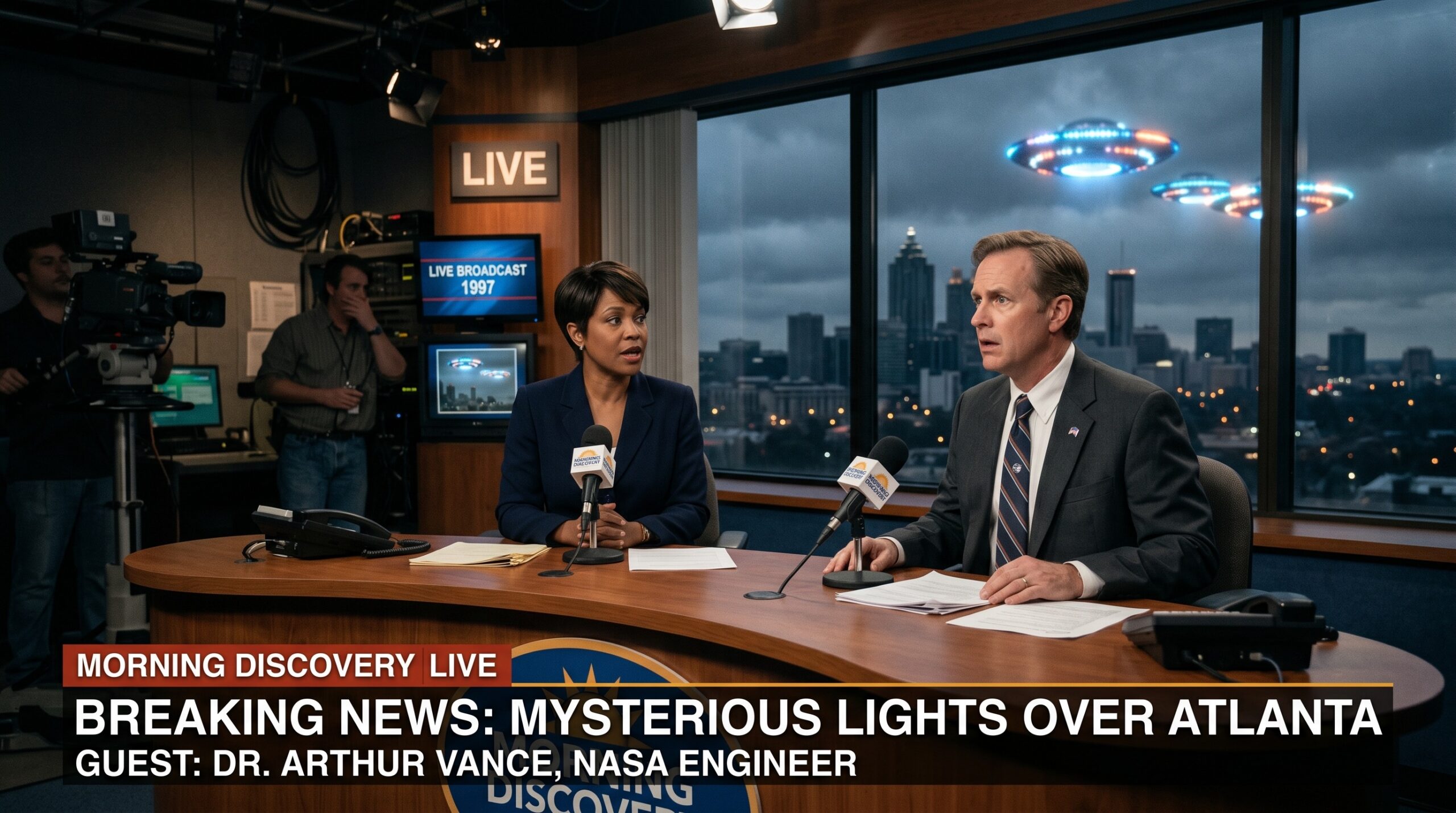
    In 1993, a former NASA mission specialist appeared on a morning television show and said something that almost nobody who heard it would ever forget. Bob Oechsler — a man with legitimate aerospace credentials and an Air Force background — told the host that he had personally seen over twenty UFOs that were “quite extraordinary” technology. Then he said something else: the government had recovered non-human craft, and the reason the truth was being suppressed had nothing to do with public safety and everything to do with budgets.

    “It’s not about aliens,” he said. “It’s about money.”

    The interview aired on live television. It was not a podcast. It was not a late-night internet broadcast. It was an actual morning TV show in 1993, decades before the disclosure conversation became acceptable even as fringe content. Oechsler appeared with his aerospace credentials fully visible, and he used them as the foundation for claims that went far beyond the typical UFO enthusiast’s anecdote.

    The clip sat dormant for thirty-plus years. Now it is resurfacing across Reddit and UFO forums in early 2026 with massive engagement, at a moment when Congress is holding SCIF briefings about UAP videos, when The Pentagon file releases Trump is now promising could change everything, and when the disclosure conversation is moving forward, and when the entire narrative around government recovery programs has shifted from the fringe into the legislative mainstream.

    The 1993 Interview

    The resurfaced Bob Oechsler clip on r/UFOs generated nearly 1,890 upvotes and 218 comments in a short window, making it one of the most engaged UFO history threads in recent Reddit memory. The numbers are driven by what Oechsler said and by who said it.

    He claimed to have seen over twenty UFOs. He did not say “lights in the sky” or “things I could not identify.” He said he had seen objects whose technology was extraordinary — meaning, in practical terms, that they demonstrated performance characteristics that no human aerospace program in 1993 could match. Instant acceleration. Sustained high-G maneuvers. Altitude and speed profiles that fall outside the envelope of any known aircraft.

    Then came the other claim: the government had recovered non-human craft. That is not a sighting. That is a recovery claim — the same category of claim that David Grusch would make thirty years later in a congressional hearing, the same claim that generates the kind of classified budget structures Oechsler was pointing at when he said it was about the money.

    The Money Thesis

    “It’s not about aliens, it’s about money.”

    That is the line that has people replaying the interview and wondering why it didn’t become a landmark moment when it aired in 1993. And the answer to that question — why the clip didn’t penetrate the mainstream, why it sat dormant for three decades — is actually the proof of Oechsler’s point.

    If a government program is recovering and studying technology that falls outside known human capability, the budget for that program would be enormous. The contractors involved would be defense-industrial companies with multibillion-dollar classified contracts. The people managing the program would have institutional incentives to keep it classified indefinitely — not because the public would panic, but because the money flow associated with the program is self-sustaining and extraordinarily lucrative.

    This is the argument that disclosure advocates have been making for years. What Oechsler added was that he was inside the system, he saw what the system was hiding, and he understood the economics of the secrecy, much like other insider testimonies about what the government actually knows.

    Oechsler Among the Aerospace Insiders

    Oechsler joins a very specific category of UFO claimants: the people with verifiable aerospace or military credentials who have made non-human technology claims in public media.

    The category is small and its members carry different levels of credibility. Bob Lazar claimed to work at a test site near Groom Lake and described the physics of recovered propulsion systems. His story has been contested for decades. Dan Burisch claimed involvement in biological research programs connected to non-human entities. His claims are even more controversial and remain essentially unverifiable.

    Oechsler’s claim is different in an important way. He did not claim to have worked on a recovery program. He claimed to have seen the objects — over twenty of them — and to have concluded, from his professional position inside aerospace operations, that they were not of human origin. He used his NASA background as the authority for the claim and pointed to the structural economics of secrecy as the reason it was hidden.

    Reddit r/aliens covered the Oechsler claim with the full context of his NASA and Air Force background, noting his work under NORAD as a mission specialist and suggesting this gave him access to tracking systems that a NASA engineer would have seen firsthand. If he had access to NORAD or Air Force tracking data, his sighting claim becomes less “I saw a light” and more “I saw tracked objects performing maneuvers that no known aircraft can perform.”

    The Timing: Why 2026 and Not 1993

    In 1993, the cultural infrastructure to amplify Oechsler’s claim did not exist. The internet was in its infancy. Social media did not exist. Disclosure was not a mainstream conversation. A morning TV interview with a former NASA engineer discussing UFOs and government money would have been treated as an eccentric moment in a morning show lineup — interesting enough for the segment, easy enough to archive and forget when the ratings returned to normal.

    In 2026, the infrastructure is completely different. The Grusch hearings created a reference point for understanding what an insider UFO claim looks like when it enters the public record. Congressional briefings about UAP videos are happening in real time. The Pentagon file releases Trump is now promising could change everything, and when the disclosure conversation is moving forward. The cultural conversation has moved in Oechsler’s direction, not away from it.

    So the clip that sat dormant in 1993 archives is now being watched by people who understand what it means when an aerospace engineer uses his credentials to describe non-human technology in public.

    The Case for Taking Oechsler Seriously

    The argument for taking Oechsler seriously is structural, not just biographical. He had credentials. He made the claim on television, not on a self-published website. He explained the mechanism of secrecy in terms that align with what later disclosure advocates have been saying. He was specific about the number of objects — over twenty — and about the conclusion he reached from watching them.

    The argument against taking Oechsler seriously is that the claim relies on his personal account and has not been corroborated by independent evidence. The television interview itself is real. What he said on the interview is real. Whether the twenty objects existed in the way he describes them — that is a claim that requires trust in the person making it, and nothing more.

    But trust is the only currency disclosure has ever traded in. Every insider claim, from Grusch to Oechsler to every air force pilot who has described flying toward objects that outrun jet aircraft, comes down to the same question: do I believe the person who is telling me what they experienced?

    What Is Actually Known

    Bob Oechsler appeared on a 1993 morning television program and stated that he had seen over twenty UFOs displaying technology he described as “extraordinary” and not of human origin. He claimed the US government had recovered non-human craft and said the reason for the secrecy was financial — classified programs generated enormous budgets that powerful interests wanted to protect. The interview is extant, viewable, and has been widely shared in early 2026. Oechsler was a former NASA mission specialist with an Air Force background.

    What is not known is whether the twenty objects Oechsler described were independently tracked or documented, whether anyone else in aerospace operations confirmed his account, or whether he elaborated on or modified his claims after the 1993 broadcast. The television record is real. The personal experience he describes cannot be independently verified. The money thesis he proposed — that recovery programs are protected because of their budgets, not because of national security — has become the default explanation for why disclosure has been delayed for most of the people following the story.

    That alone makes the thirty-year-old clip worth watching now.
  • Trump Says UFO Files Are Coming: ‘Things You Wouldn’t Believe’ — What We Know

    Trump Says UFO Files Are Coming: ‘Things You Wouldn’t Believe’ — What We Know

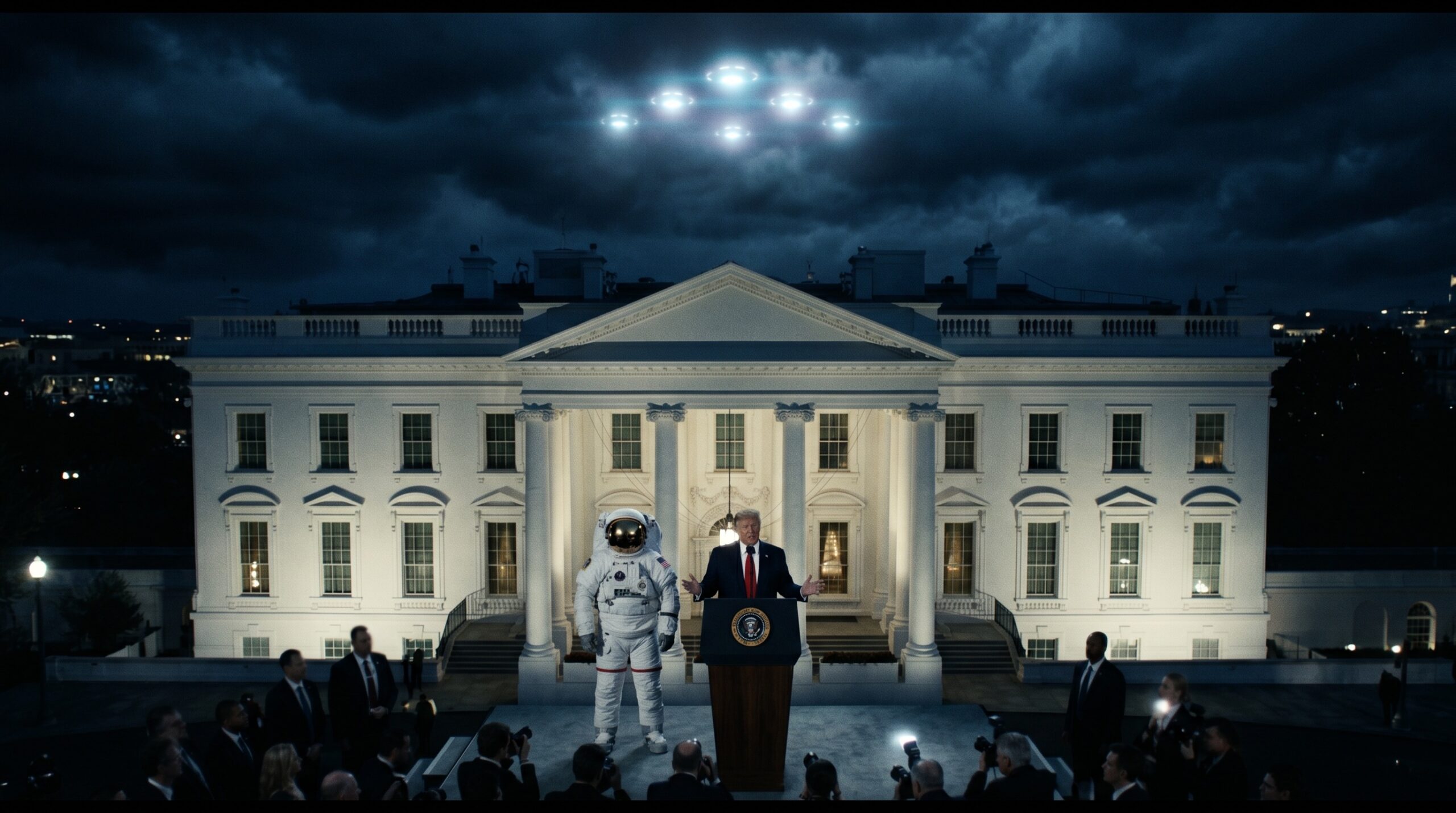
    Donald Trump stood behind a White House podium with the Artemis II astronauts beside him and delivered a line that sent UFO believers across every feed into overdrive — just weeks after the April 2026 White House document release, he doubled down: anything having to do with UFOs or related material is going to be released, and he thinks “a lot of it is going to be very interesting.” He had already said, in the same breath, that he’d interviewed pilots during his first term who saw “things you wouldn’t believe.” The cameras caught the astronauts. But the people locked into the disclosure conversation were locked onto the UFO words.

    This is not the first time Trump has teased a release. It is not the first time a politician has promised transparency while delivering timelines that evaporate. But the signal this time carries weight that older promises lacked. Eric Burlison has been telling anyone who will listen that closed-door Pentagon briefings showed classified UAP videos of objects “defying physics.” Steve Scalise reportedly called those same briefings “eye-opening.” And David Grusch — the man who forced this entire conversation into the congressional record — has been building public support for a release he warns will be “a hard pill to swallow.”

    What Trump Actually Said

    The setting gave the moment its gravity. Trump was introducing the Artemis II crew — the astronauts who will return humans to lunar orbit for the first time in half a century. But in the press conference that followed, the conversation pivoted before the questions even asked about aliens.

    Trump said: “We’re going to be releasing a lot of very interesting things… Anything having to do with UFOs or related material we are going to be releasing.” He paused, then added: “I think a lot of it is going to be very interesting.” He credited conversations with military pilots from his first term — pilots who, he said, “saw things you wouldn’t believe.”

    Newsweek and WSLS both published versions of the same quote within hours. Newsweek covered Trump’s statement about the UFO material and WSLS reported the context of the Artemis II press conference. The video clips spread across X and Reddit within the same hour.

    The words themselves are classic Trump: suggestive, non-specific, and impossible to pin on a date. But the people who have tracked disclosure from the inside say they hear something different underneath the rhetoric.

    What Files Could He Be Talking About?

    The Pentagon has more on UAPs than the public has ever seen. That is not speculation — it is documented. Congressman Eric Burlison has described SCIF briefings where classified UAP videos showed objects defying physics, and the broader recovery-program question remains unresolved. Steve Scalise reportedly called those briefings eye-opening, and the Office of the Director of National Intelligence has released summary reports identifying cases unexplained by any conventional explanation. And the AARO — the Pentagon’s own UAP task force — has compiled case files spanning years of military encounters.

    The question is not whether there is material. The question is how much of it will actually be released, and in what form.

    Trump’s framing — “anything having to do with UFOs or related material” — is sweeping enough to mean almost anything. A curated selection of declassified videos? A dump of raw intelligence? A formal report with findings he can call a “release”? Or a handful of videos the Pentagon has already reviewed and cleared for public consumption, dressed up as a landmark event?

    Grusch’s sworn statement before Congress outlined exactly the type of material believers are expecting — and what he described goes well beyond blurry cockpit footage.

    Grusch, Burlison, and the Disclosure Engine

    Trump’s comments did not land in a vacuum. They landed on top of a months-long disclosure push from the people most involved in driving it.

    David Grusch has been building toward this moment since his 2023 congressional appearance, where he testified under oath about alleged non-human programs and crash-retrieval operations. He has since warned that public disclosure will be “a hard pill to swallow” and that the American public needs to be prepared. His language has been deliberate: he is not promising a specific revelation, but he is signaling that what the government knows would fundamentally change how people think about humanity’s place in the cosmos.

    Eric Burlison has been the most aggressive advocate in Congress for full transparency. He has described SCIF briefings where lawmakers viewed videos of UAPs performing maneuvers that no known physics can explain. He has named specific objects and specific incidents and refused to back down from the language he uses to describe them. His most recent briefing — the one where he described an encounter involving military and intelligence personnel successfully luring and documenting a craft in controlled conditions — apparently reached Steve Scalise directly, which is why House leadership is now involved.

    Cybernews reported on the classified UAP videos shown in congressional briefings that Burlison says depict objects defying the known laws of physics.

    The alignment between Grusch’s public warnings, Burlison’s congressional pressure, and now Trump’s presidential promises creates a convergence that has not existed at any earlier point in the disclosure timeline. All three are working the same frequency at the same time.

    Why This Time Feels Different

    Previous disclosure promises have collapsed under their own weight. The Pentagon released those Navy videos, yes — but they went cold after the viral moment. Congress held hearings. Grusch testified. Then the news cycle moved on.

    What has changed is the narrative momentum.

    r/UFOs posts about Trump’s disclosure promises drew over 3,200 upvotes and 1,000 comments in a matter of hours, making them some of the most engaged threads in the subreddit’s history. The disclosure conversation stopped being an insider topic months ago — it became a feed topic, and feeds are where narratives gain momentum regardless of institutional speed. Goldie Hawn describing her alleged encounter on Jimmy Kimmel brought disclosure into daytime television. Burlison is talking about it in congressional briefings. Trump is talking about it at presidential press conferences. The narrative is moving from Washington to Hollywood to the world exactly as disclosure advocates have been trying to do it.

    What to Watch For

    The most important thing believers can do right now is manage expectations — not dismiss the signals, but understand how government releases work.

    A genuine disclosure event would include material that cannot be explained away as sensor artifacts, balloons, or optical illusions. It would confirm something that was previously only claimed in testimony. It would have specific, verifiable details that go beyond what has already been released through AARO and the ODNI reports.

    A managed disclosure event — and many disclosure advocates worry this is what happens — would look different. It would feature videos the Pentagon has already reviewed and cleared, with careful language attached, and a press release designed to answer the question without opening new ones.

    Watch for the difference. If the release is real, it will include specific incident data, pilot names, and radar confirmation. If it is managed, it will include language about “preliminary assessments” and “inconclusive data” and an invitation to stay tuned.

    What Is Actually Known

    Trump has said the Pentagon is preparing a UFO release. No date has been announced. No documents have been identified by title. Eric Burlison has seen classified UAP videos in a SCIF briefing that he says show objects defying physics. David Grusch has been warning that disclosure will be uncomfortable and that the evidence exists. These are all real, documented claims made by real people.

    What is not known is whether Trump’s promise translates into a specific release timetable, whether the material he is referring to is the same material Grusch and Burlison have described, or whether the public will receive anything beyond a small, carefully sanitized preview.

    For now, the pressure is real. The convergence is real. The material almost certainly exists in some form. Whether the release that Trump is promising matches the disclosure that believers are waiting for — that remains the biggest unanswered question.

  • ‘”The Ballroom” Is a Code Word for the Temple: Why This Cryptic Conspiracy Theory Has Millions Locked Into Decoding It’

    ‘”The Ballroom” Is a Code Word for the Temple: Why This Cryptic Conspiracy Theory Has Millions Locked Into Decoding It’

    You’re not supposed to notice. That’s the whole point. When you first hear someone whisper that “the ballroom” isn’t a place you can dance in — that it’s a code word hiding something far older and far more deliberate than anyone let on — something inside you either shuts down or wakes up. There’s no middle ground. For millions who’ve stumbled into this labyrinth over the last eighteen months, waking up felt like remembering something they’d always known. The ballroom isn’t a room. The ballroom is a veil. And behind it sits a structure that certain lineages have been protecting, renaming, and quietly renovating for longer than modern history wants to admit.

    It starts with a feeling — that prickling certainty that the word “ballroom” appears in places it has no business being. A leaked transcript here. An obfuscated memo there. A casual remark from a figure who should have been vetted, should have been scripted, should absolutely have stayed on message. Instead, they said it. The Ballroom. And then they moved on as though nothing had happened. But for the ones watching — the ones who’d already pieced together fragments from older threads about Milano Cortina Olympics occult symbolism debate — it was the same click you get when two puzzle pieces snap together. Not proof. Not yet. But a signal. A breadcrumb. And once you’ve seen one, you start seeing the trail.

    What the Ballroom theory claims

    At its core, the Ballroom theory proposes that “the ballroom” functions as a deliberately inserted substitute word across documents, broadcasts, architecture, and coded correspondence for what the theory calls “the Temple.” The Temple is intentionally kept vague in discussions, because precision would hand the conversation to people who only want to mock it. What the Temple represents, according to the most coherent versions of the theory, is a physical or organizational nexus: a location or network where symbolic rituals, initiatory practices, and structural power arrangements converge with deliberate intent. Not a single building with a plaque, but a system. A protocol. A grammar of control dressed up as tradition.

    The claim isn’t that everyone who says “ballroom” is winking at you. The claim is that at certain levels, in certain documents, the word is being used knowingly. It’s a shibboleth — if you recognize it, you’re already inside the conversation. If you don’t, it reads as mundane. And that’s exactly how a code word is supposed to function.

    What makes the theory so gripping is that it doesn’t ask you to accept a single explosive claim. It asks you to notice a pattern. The ballroom appears in planning documents adjacent to events that independent researchers have long flagged as symbolically loaded. It appears in architectural references that align with sacred geometry patterns people have been cataloging for decades — the same geometric alignment you’d expect in a space designed with intentional symbolism, not one built for social dancing.

    The people pushing the Ballroom argument don’t all agree on every detail, and that’s part of what makes the theory feel organic rather than manufactured. Some argue the Temple is purely metaphorical — a designation for a class of people operating under an older cosmology. Others point to satellite imagery, architectural plans, and declassified documents they say corroborate a physical reading. Still others think the Temple is both — a physical structure exists, but the word’s real power comes from functioning on two registers simultaneously: literal for the initiated, decorative for everyone else.

    What all versions agree on: the substitution isn’t accidental. And once you accept that substitution is happening, you face a follow-up question that changes everything.

    Why now?

    Why is the ballroom appearing more frequently in publicly accessible materials over the last several years than at any point in living memory? Why are people finding references in contexts that couldn’t have been planted, in documents predating the current discussion by decades? Why does the pattern hold up under scrutiny — not conclusively, but consistently enough that the people decoding it keep finding more, not less, the deeper they go?

    None of these questions have clean answers. That’s the nature of working with material someone deliberately obscured. But absence of clean answers isn’t the same as absence of a pattern. And the pattern is what has millions hooked.

    Where the idea first surfaced

    The Ballroom theory did not emerge from a single viral post or a famous whistleblower. It emerged slowly, in fragmented form, across communities that had been working on adjacent puzzles for years without realizing they were looking at different faces of the same structure.

    The earliest credible seed traces to discussions on imageboards and encrypted chat groups in late 2024, where users started cataloging instances of “ballroom” appearing in anomalous contexts. A municipal planning document for a building complex that didn’t match its stated function. A reference in a declassified intelligence document where the word appeared adjacent to organizational structure discussions rather than physical space. Individually, each could be chalked up to eccentric naming or poor drafting. Collectively, they started to look like something else entirely.

    The conversation caught fire when a viral Imgur album that sparked discussion across multiple platforms compiled over sixty instances of “ballroom” appearing in documents, transcripts, and architectural references spanning a forty-year period. The album didn’t argue — it displayed. It let the material speak for itself, and that restraint was its own kind of genius. When people are handed a finished argument, they resist. When they’re handed raw material and invited to look, they lean in. That album was the match.

    From there, the conversation migrated to a r/conspiracy thread with 5387 points that ballooned into thousands of comments, with users cross-referencing instances of the word against historical temple construction records, Masonic documentation, and organizational charts from institutions with known esoteric affiliations. The more people looked, the more they found.

    What surprised seasoned researchers was how quickly the Ballroom discussion connected to older threads of investigation that had gone dormant. People tracking MKUltra continuation claims found that vocabulary used in those older documents occasionally used “ballroom” in ways that mapped onto the theory’s framework. Others working on Credo Mutwa and the aliens noticed that certain African temple traditions described spatial arrangements mirroring what Ballroom documents seemed to reference. Even researchers exploring the Giant of Kandahar encounter reported finding the word “ballroom” in adjacent documents in ways too contextually strange to dismiss.

    None of these connections proved anything. But they did something more valuable for a conspiracy community: they created resonance. When a theory connects to other investigations people have already invested years into, it doesn’t feel like a new theory. It feels like a missing piece. And that feeling is enormously powerful. It creates movement. It creates the kind of distributed investigation that no single researcher could ever replicate.

    The Ballroom theory didn’t emerge as a polished product. It emerged as a question. And the right questions are far more durable than answers.

    Why people are finding the same symbols in different places

    Here is where the Ballroom theory stops being about a single code word and becomes about something much larger — the claim that a persistent symbolic architecture threads through institutions, media, and physical spaces that most people walk through without noticing. The ballroom is the entry point. What it opens onto is a conversation about why certain symbols, shapes, and organizational patterns keep showing up in places that should have nothing to do with each other.

    Inside the Ballroom community, you start recognizing what researchers themselves recognize: the theory is fundamentally about pattern persistence. Why does the same geometric ratio appear in the floor plan of a private club building in London and in a government-adjacent complex in the United States, both referencing a “ballroom” in documents describing internal functions? Why do ceremonial sequences documented in nineteenth-century temple records match the sequencing of events described in contemporary documents that use “the ballroom” as a descriptor? Why do the same symbolic motifs — compass-adjacent angles, tripartite spatial divisions, deliberate cardinal orientation — appear across institutions that officially have no relationship?

    The theory’s proponents don’t claim to have mapped the entire structure. What they claim is that they’ve identified enough of its grammar to suspect that the structure is intentional, persistent, and operating with continuity across decades — possibly centuries — of institutional development. The ballroom, in this reading, is one of the theory’s most valuable discoveries because it’s a word never meant to be found as a code word. It was meant to function as camouflage. A ballroom is harmless. A ballroom is socially acceptable. A ballroom raises no eyebrows.

    Which is exactly why it makes perfect sense as a designation for something not supposed to be discussed openly.

    The people working on this are cataloging architectural blueprints where ballroom floor dimensions match temple proportions from older traditions. They’re transcribing audio from events where the word is used with tonal emphasis that suggests referential loading — speakers stressing it in ways that feel deliberate, almost ritual. They’re building databases. They’re connecting instances. They’re doing the tedious, unglamorous work of pattern documentation that every credible investigation eventually requires.

    And the patterns don’t dissolve under scrutiny — they compound.

    It’s worth noting that this work intersects heavily with broader occult symbolism research that academics have conducted for over a century, though the academic and Ballroom communities operate in almost entirely separate spheres. Where academics study occult symbolism as a historical phenomenon, Ballroom researchers are investigating it as a living system. They’re not looking backward. They’re looking at the present and asking whether the symbolic architecture historians have documented is still actively being used — still hiding in plain sight.

    The answer, increasingly, seems to be yes. Once you accept that possibility, the ballroom stops being a mystery about a single word and becomes a doorway into a conversation about how power organizes itself, how institutions preserve internal culture across generations, and how carefully chosen language functions as both shield and signal for people who know exactly what they’re doing.

    What the academic and skeptical view says

    Any investigation that takes itself seriously has to face the strongest version of its own criticism. The skeptical and academic view of the Ballroom theory isn’t monolithic, but the most substantive objections cluster around two concerns.

    The first is patternicity — the well-documented cognitive tendency for humans to find meaningful patterns in random or unrelated data. Skeptics argue that the Ballroom theory is a textbook case: researchers start with a compelling premise, notice that “ballroom” appears in various documents, then retrospectively construct connections that weren’t intended by the documents’ authors. The fact that the connections feel revealing, critics say, is exactly what patternicity looks like from the inside.

    The second objection is more specific. Academics specializing in institutional linguistics point out that “ballroom” was historically a common descriptive term for any large multi-purpose gathering space in government, institutional, and organizational contexts from the mid-twentieth century onward. The word wasn’t chosen to encode anything. It was chosen because it was the most common, non-specific label for a space designed to hold large groups. Under this reading, the Ballroom theory is an elaborate over-reading of mundane naming conventions.

    The most generous skeptics acknowledge that some institutional documents do contain genuinely strange language. They accept that certain organizations have histories of esoteric symbolism. They even concede that the cross-referencing work being done by Ballroom researchers is impressive methodologically. What they resist is the conclusion that the code word is intentional. The patterns are real, they say, but the interpretation is backwards — the documents aren’t hiding a temple behind the word ballroom. The word is just a word, and the patterns are echoes of architectural and ceremonial traditions that influenced institutional design without functioning as active code.

    Where this leaves someone investigating the Ballroom theory depends entirely on what kind of evidence they find convincing. If you require a smoking gun — a document explicitly stating that “ballroom means temple” — the theory will never satisfy you. No investigation operating at this level of opacity will ever produce that kind of admission. The whole point of a functional code word is that it never explains itself. But if you’re comfortable with cumulative evidence — with the idea that enough converging indicators can build a plausible case even without a single definitive document — the Ballroom theory offers more material to work with than most conspiracy frameworks reaching similar levels of attention.

    What may be most remarkable about the Ballroom debate isn’t the theory itself, but what it reveals about how millions of people are choosing to engage with information in an era where nothing can be trusted at face value. Whether the ballroom is a temple or just a room, the fact that so many people are learning to read documents cross-referentially, to question institutional language, to trace symbolic patterns through architecture and media — that’s a cultural shift that’s going to outlast any single theory. The ballroom may or may not be hiding anything. But the people looking for it are learning to see in ways they didn’t know they could, and once you learn to see that way, you don’t go back to sleeping.

  • The 12th UAP Scientist Eliminated: Why the Narrative That Whistleblowers Are Being Silenced Is Harder to Dismiss Than Ever

    The 12th UAP Scientist Eliminated: Why the Narrative That Whistleblowers Are Being Silenced Is Harder to Dismiss Than Ever

    There is a number circulating through disclosure communities that no amount of official reassurance can quite erase: twelve. Twelve scientists, engineers, or cleared insiders whose proximity to classified UAP programs ended not in retirement but in death. Every time someone in a suit says there is nothing to see here, that number gets louder.

    The latest claim—that a twelfth scientist connected to UAP analysis has been eliminated—is moving fast. The details are fuzzy, and the usual debunkers are already deploying talking points about coincidence and confirmation bias. But if you have been paying attention to the pattern—who was working on what, what they knew, and how their deaths were classified—the skepticism starts to feel less like critical thinking and more like a reflex designed to keep people looking away.

    Something is happening. The question is whether anyone with the authority to stop it wants to.

    Where the ’12th scientist’ talking point comes from

    The “twelfth scientist” framing did not emerge from thin air. It grew out of an uncomfortable history of insiders connected to government UFO programs meeting violent or unexplained ends. David Grusch, the former intelligence official who testified under oath that the United States has recovered non-human craft and biologics, didn’t invent this narrative. He inherited it from decades of researchers who noticed a pattern that probability struggles to explain.

    The original list traces back to whistleblowers and contractors whose deaths clustered around periods of heightened UAP investigation activity. David Lazar has spoken openly about the culture of fear surrounding anyone who gets too close to recovered materials at sites like S-4. Lazar survived. Others whose names appear in the compiled lists shared by disclosure advocates did not.

    Twelve crystallized because it represents a threshold. One or two strange deaths are tragic but explainable. Double digits spanning multiple agencies, decades, and classification levels demand scrutiny the official record has never provided.

    What makes the current iteration different is that it sits alongside a genuine congressional push for disclosure. The establishment can no longer treat UAP as a fringe topic. Members of Congress are holding hearings. Intelligence committees are demanding briefings. In that environment, claims that someone connected to UAP science has been silenced carry weight they did not have ten years ago.

    This is not about conspiracy theories. It is about documented circumstances that the believer community has been tracking while mainstream outlets decline to investigate. The viral r/UFOs post with 3114 points is not an anomaly—it is the tip of a conversation building in plain sight, driven by people who refuse to accept that UAP insider deaths are just bad luck.

    The twelfth scientist’s identity is not always named publicly. Some versions point to a contractor who died after raising data-access concerns. Others reference a researcher preparing to go public before a sudden medical event. The lack of a confirmed name is frustrating but consistent: information is held tightly, families are discouraged from asking questions, and the public narrative is shaped by whoever controls classification.

    What matters is what was happening around them. Were they in possession of data? Scheduled to speak to investigators? Did their deaths follow steps toward disclosure? These questions remain unanswered.

    Trump and the pilots who have seen things

    Into this mounting pressure, one statement has resonated louder than most. Donald Trump has repeatedly referenced conversations with pilots who witnessed UAP defying conventional explanation. The phrase that keeps coming up is that these pilots have seen “things you would not believe.”

    That is not a casual remark. That is a president acknowledging on the record that trusted people are reporting encounters breaking the rules of physics. From someone historically dismissive of UFOs, the shift matters.

    When the President says he has interviewed pilots seeing craft perform maneuvers no known technology replicates, it changes the conversation’s baseline. The people flying our most advanced aircraft are seeing things they cannot explain and telling the Commander-in-Chief directly.

    This connects directly to the scientist narrative. Pilots see objects. Scientists study the data. Somewhere in that chain, people who should be protected are meeting violent or unexplained ends. If the President believes these pilots, the next question is obvious: what happened to the people analyzing what those pilots recorded?

    The tension is almost unbearable. Highest levels of government acknowledge something real in our skies. Insiders keep dying before going public. The gap between those realities is where the “12th scientist” story lives. The longer it remains unaddressed, the harder it becomes to pretend it doesn’t exist.

    Trump’s statements signal willingness to break with the traditional playbook of studied indifference. When a sitting president talks about pilots seeing impossible things, the fog clears. What emerges gets more troubling the longer you look.

    The broader community is noticing. Congressional representatives are calling for the release of evidence held under classification for decades. The White House UFO evidence release efforts have pushed toward unprecedented transparency. Pressure is building and the establishment is running out of hiding places.

    What Trump’s comments do not address is whether the scientists analyzing the same data are being protected. The pattern suggests they are not.

    The pattern of UAP insiders who met strange fates

    The individual cases making up the “twelve” are disturbing alone. Together they form a mosaic much harder to dismiss.

    Consider Joshua LeBlanc, a NASA engineer whose passing has sparked intense speculation in disclosure circles. LeBlanc’s work intersected with aerospace programs touching classified material, and his death coincided with heightened government UAP activity. Details around his passing have never been fully explained. Readers can explore Joshua LeBlanc’s NASA engineering death and the circumstances keeping this case alive.

    Then there is Carl Grillmair, a Caltech astronomer whose death researchers have linked to the UAP insider narrative. His observational science background and access to UAP-relevant data make his passing particularly notable. Carl Grillmair UFO investigation death remains one of the most cited entries on the list.

    These names join a constellation of others. Contractors dying in convenient accidents. Researchers suffering sudden health failures before planned disclosures. Technicians requesting transfers after becoming uncomfortable with classified databases. The through-line is identical: proximity to UAP information followed by an unexplained death.

    The psychological impact on remaining insiders is immense. Work on a UAP program, watch colleagues die under uninvestigated circumstances, and you start making survival-based choices rather than transparency-based ones. This is how cover-ups sustain themselves—through cultivated fear, not just active suppression.

    The believer community has refused to let fear win. While official channels stay silent, everyday people compile databases, cross-reference dates, and build timelines. They are doing the journalism mainstream outlets won’t.

    Mass-witness phenomena add another layer. When entire communities report seeing the same unexplained craft, as documented in Eric Burlison mass-witness UFO event, it becomes harder to argue nothing is happening. The witnesses are real. The sightings are real. The people trying to understand them are dying before they can share findings.

    The Eric Burlison congressional page shows elected officials beginning to take this seriously. But the gap between congressional interest and actual protection remains vast. Representatives can hold hearings but can’t stop a death before a whistleblower reaches a microphone. By the time the system notices, it may be too late.

    The international dimension compounds everything. Researchers beyond U.S. borders point to foreign UAP programs and scientists meeting similar fates. Claims about recovered non-human technology in other nations—including reports tied to North Korean programs—suggest this is not exclusively American. George Webber has investigated Coulthart North Korea UAP tech claims, adding a global dimension to a topic too easily dismissed as localized.

    If UAP-related deaths cross multiple countries and classification systems, the pattern’s scope grows exponentially. The “twelve” believers cite may be conservative.

    What disclosure communities say comes next

    People tracking this story are not waiting for permission to keep asking questions. They are building infrastructure, creating networks, and preparing for a future where truth can’t be contained.

    They expect more deaths. Not pessimism—pattern recognition. If the “12th scientist” narrative reflects real dynamics, disclosure pressure accelerates threats to those still holding information. Every hearing, every presidential comment, every leak raises the stakes for people who know too much.

    This is why the community pushes for witness protection—not just for pilots, but for scientists and contractors who’ve seen the data. A whistleblower law covering UAP insiders by name, with immunity and relocation, would be a meaningful step. It hasn’t happened.

    The second expectation is a data dump. Many believe insiders have been quietly backing up files, recording testimonies, and creating dead-man switches that release information if something happens. The template exists—Snowden, Manning, Ellsberg. If the twelve scientists knew they were targets, some likely took precautions.

    The UAP science programs coverage from the Times has improved but still doesn’t match what believers demand. Mainstream press frames UAP as government embarrassment rather than potential first contact, protecting institutions by keeping the conversation on their terms. An insider data dump would blow past that framing entirely.

    Third comes the unpredictable but recognizable: a moment of irreversible change. Something that can’t be ignored, classified away, or explained with a press release. A sighting so documented denial fails. A leak so comprehensive the UAP program architecture is exposed. A scientist’s posthumous research proving we are not alone.

    Whatever form it takes, the disclosure community believes it’s coming. They believe the “12th scientist” narrative will look very different when it does. The names will no longer be mysteries. The deaths will be investigated with rigor institutions have so far refused. The cover-up, if real, will be visible to everyone.

    This moment feels different because of converging forces. A former intelligence official testifying under oath. A president speaking about pilot encounters without embarrassment. Bipartisan congressional pressure for evidence release. A viral online community watching every detail. A body count growing despite efforts to change the subject.

    The believer community isn’t asking for blind faith. They want scrutiny. They want names investigated, files unsealed, pilots who spoke to the president to speak to everyone else. They want living scientists to know that going public won’t get them killed.

    Until that happens, the twelfth name keeps being whispered. And the thirteenth, if anyone listens, might still be saved.

    The narrative that UAP whistleblowers are being silenced is not conspiracy theory. It is an inference from observable data: a series of deaths, a culture of classification, and institutional refusal to investigate. Whether correct can only be answered by examining evidence without prejudice.

    What believers are doing—compiling records, cross-referencing timelines, building pressure—is the scientific method applied to a topic official science abandoned. It will take time, courage, and institutional willingness to finally ask the twelve names have been screaming: what is really going on, and who is protecting it?

    Until those answers come, the twelfth scientist’s story will not end. It will multiply.

  • Facebook Viral Photo Deletion: Why Meta Is Suddenly Erasing a Specific Image From Millions of Messenger Chats

    Facebook Viral Photo Deletion: Why Meta Is Suddenly Erasing a Specific Image From Millions of Messenger Chats

    Somewhere in the middle of an ordinary conversation — birthday wishes, weekend plans, a link forwarded at two in the morning — a photograph simply vanishes. Not the thread. Just one image, deleted from millions of Messenger conversations at what appears to be the exact same moment, leaving behind only a broken link icon. The photo exists in your memory. You remember sharing it. But it is gone, and Meta will not explain why.

    In the past week, thousands of Facebook users across multiple continents have reported the same experience: a specific image, shared organically across countless private Messenger conversations, has been systematically scrubbed from the platform. The deletion did not affect public posts. It targeted only private messages — conversations between friends, family members, and groups where people assumed their communications were at least semi-private. That distinction, once the removal became noticeable, is exactly what made the situation go viral.

    The posts that started it all

    A viral r/conspiracy post with 8348 points compiled screenshots from dozens of users who said an image they’d saved in their Messenger history — in some cases over a year old — had disappeared overnight. The common thread wasn’t just that the photo was gone. It was the specificity of what disappeared.

    Multiple users described seeing the same broken image placeholder where a photograph had once lived. The picture itself was relatively mundane — a candid shot taken at a public event, nothing graphic, nothing that would obviously violate Facebook’s community standards at the time it was shared. What made it significant was not the image’s content but its timing and distribution. The photo began circulating widely in late 2025, spreading through Messenger chats faster than it ever appeared on public feeds. Its virality was almost entirely contained within private messaging channels.

    That containment pattern is what makes the current deletion so unsettling. If a photograph spreads through public channels, Facebook’s moderation systems can catch it algorithmically. But Messenger conversations have operated under different expectations — the company’s public stance has long been that automated systems primarily target clearly illegal material, not ambiguous images shared between adults in private chats.

    The users who noticed the deletion first started comparing notes across Twitter, Reddit, and Discord. One user posted a side-by-side comparison showing their Messenger thread from November 2025 alongside a March 2026 screenshot of the same conversation with the photo gone. Others corroborated. The volume of reports was too consistent to dismiss as coincidence, too geographically dispersed to be a localized bug.

    Some even found cached versions of the image stored locally on their devices, confirming the deletion happened server-side — Meta had reached into their chat histories and removed a single file while leaving the surrounding conversation intact. The precision was surgical. Every Messenger thread containing that specific image hash, across millions of private conversations, had been altered simultaneously.

    What users say is disappearing and why it matters

    The conversation did not stop at noticing the deletion. What followed was a cascade of theories, each more compelling than the last, about what the image actually represented and why its removal felt so deliberate to the people watching it happen.

    The core claim circulating among Facebook users and digital privacy researchers is deceptively simple: if Meta can reach into your private Messenger conversations and delete a single image without warning, what else can the platform modify in your message history? The question is not theoretical. It echoes concerns raised by digital privacy coverage that has warned for years about the gap between user expectations of private messaging and the technical reality of how platforms like Facebook store, scan, and potentially alter those conversations.

    What people found most unsettling was the absence of any communication from Meta itself. There was no transparency report, no help center article, no notification to users whose conversations had been altered. The only announcement was the sudden and universal disappearance of the photo from millions of Messenger threads at once.

    Within conspiracy-oriented communities, the theories multiplied rapidly. Some suggested the image contained visual data that contradicted a narrative Meta was promoting elsewhere. Others argued it was a test — a dry run to see how people would react when private message content was modified without consent. A subset connected the deletion to broader patterns of content manipulation they believe platforms engage in during politically sensitive periods.

    The most persistent theory is that the deletion was not about the image itself but about proving the capability exists. If you can delete one image from millions of private conversations, you can delete any image. You can alter what people remember seeing. You can reshape the historical record contained within billions of personal chats. And you can do it without anyone outside Meta knowing exactly what was removed or why.

    That last point resonates most powerfully. Every private conversation on Messenger is now, by extension, subject to retroactive editing by the platform that hosts it. The image may be gone, but the question it raised lingers: whose version of history is stored in the messages you’ve been saving?

    How Meta handles retroactive content moderation

    Meta’s approach to content moderation has evolved significantly over the past decade, and understanding this deletion incident requires understanding how we got here. The company’s moderation practices began with relatively simple takedown requests and user reports, but they have grown into an elaborate system of automated detection, retroactive enforcement, and cross-platform coordination that most users are entirely unaware of.

    What many people do not realize is that Meta has always reserved the right to modify or remove content after the fact, even when that content was originally posted with full compliance to the platform’s stated policies. The company’s transparency reports acknowledge this practice, though they focus primarily on content removed from public-facing surfaces like News Feed, Instagram posts, and public groups. Private Messenger content receives far less attention, and the criteria for retroactive action on private messages are even less clearly defined.

    The technical mechanism behind the deletion is straightforward, even if the policy reasoning isn’t. Every file uploaded to Facebook’s servers is assigned a unique hash — a digital fingerprint that identifies that specific image. When Meta decides to remove a file across the platform, it can use that hash to locate every instance where the image appears, whether in public posts, group chats, or private Messenger conversations. The deletion happens automatically and simultaneously across all those instances. It is a database-level operation that can wipe out a specific image from millions of conversations in seconds.

    What makes this capability alarming is not just that it exists, but that it operates largely outside public oversight. Facebook’s Facebook content moderation coverage has documented numerous cases of retroactive takedowns, but those cases almost always involve public content. When the moderation targets private Messenger conversations, there is no public record to reference, no community standards discussion to follow, and no way for users to verify whether similar deletions have happened before without noticing them firsthand.

    The company has defended this approach by arguing that consistent enforcement across all surfaces — public and private — is necessary to prevent harmful content from persisting where users might encounter it. Meta has also cited legal compliance in various jurisdictions, noting that images permissible at the time of sharing might subsequently become subject to new legal restrictions.

    But those explanations ring hollow for people who experienced this specific deletion. The image was not illegal and did not depict anything that would trigger automated moderation. It spread through private conversations, not public channels. From the perspective of the people directly affected, the removal reads as a targeted and unannounced exercise of platform control over private communications.

    Industry observers note that this incident falls into a broader pattern of tech companies expanding their retroactive moderation capabilities without updating user-facing documentation. The gap between what companies say they do with private messages and what they are technically capable of doing has grown wider, and most users only discover that gap when something like this deletion happens unexpectedly.

    What is particularly striking is how it parallels other patterns of information control that researchers and conspiracy communities have been tracking for years. The idea that powerful institutions quietly alter or remove information after the fact echoes conversations about government document releases that arrive years after the events they describe, with key details redacted. It echoes MKUltra continuation claims that suggest the manipulation of information exposure has deeper roots than most people acknowledge. And it feeds into a growing awareness that the infrastructure hosting our personal communications is controlled by entities with the technical ability to reshape it at will.

    The difference in the Facebook case is that the mechanism is visible in plain sight. Every broken image placeholder in every affected Messenger thread is a reminder that the platform can reach into your conversations and change what is there. Those messages live on servers users do not control, subject to moderation decisions they are never notified about.

    The bigger picture people are connecting it to

    The Facebook viral photo deletion did not happen in a vacuum. For the communities that tracked it most closely, it fits into a much larger narrative about information control, platform power, and the gradual erosion of digital autonomy that has been accelerating over the past several years. The deletion is significant not because of the specific image that was removed, but because it demonstrates, in a way that anyone with a Messenger account can verify for themselves, that the platforms hosting our personal communications have the power to alter those communications unilaterally.

    The connections people are making extend far beyond Facebook itself. The pattern of retroactive content removal, the lack of transparency around moderation decisions, and the concentration of communication infrastructure in the hands of a small number of tech companies all point to a broader structural issue that intersects with concerns about surveillance, censorship, and institutional control of narrative at scale.

    Some of the most compelling connections come from communities tracking government and institutional behavior independently of the tech criticism space. The same users discussing the Facebook deletion frequently reference conversations about weather weapon theories and other claims of technological systems deployed for indirect social influence, drawing parallels between the invisible manipulation of physical environments and the invisible manipulation of digital record-keeping. The common thread is not conspiracy for its own sake. It is a growing skepticism toward official explanations for why systems designed to serve the public instead seem to serve institutional priorities that are rarely disclosed.

    The conversation also intersects with discussions about government insiders and religion in ways that might seem unexpected but make sense when you follow the underlying logic. The core concern — that powerful institutions manage information in ways that shape public belief and behavior without transparency — applies equally to classified document programs, media narratives, and the moderation of private chat platforms. The mechanism is different. The result is the same: information is controlled, narratives are managed, and the people affected are rarely consulted.

    What makes the Facebook viral photo deletion particularly resonant is its accessibility. Most people cannot see what happens inside government classification systems or corporate content review boards. But anyone who uses Messenger can look at their own chat history and see an image that is no longer there. That direct, personal encounter with retroactive information control is what gives this incident its viral power. It is something that happened to people in their own private conversations, something they can point to and say: this was here yesterday and now it is gone, and nobody told me why.

    The broader implication is that this is not an isolated incident but a demonstration of capability — one that could be used for genuinely harmful content or for content that is simply inconvenient for the platform to host. The distinction matters enormously, but the mechanism is identical. Once the ability to retroactively alter private message content exists, the question of how and when it is used becomes a function of policy decisions made behind closed doors by people accountable to shareholders and regulators, not to the billions of users whose conversations live on their servers.

    Whether the viral photo deletion was a genuine moderation action, a technical exercise, or something else entirely, it has achieved one thing that Meta likely never intended: it has made millions of Facebook users aware, in the most personal way possible, that their private conversations exist on borrowed land. The landlord can change the landscape without notice. The question that follows is not just whether the deletion was justified. It is whether a platform should have the power to alter private communications retroactively at all.

  • Third Man Syndrome: Why Explorers in Extreme Isolation Keep Encountering an Invisible Presence

    Third Man Syndrome: Why Explorers in Extreme Isolation Keep Encountering an Invisible Presence

    The first time you hear about it, it sounds like a ghost story

    You are alone on a mountain face where no living thing has any right to survive. The wind carries temperatures that freeze moisture from the air before it becomes snow. Your fingers, wrapped in triple layers of insulated gloves, stopped feeling anything useful hours ago. Behind you, two climbing partners lie motionless in a crevasse you could not pull them from. Ahead, the summit vanishes into a white wall that offers no horizon, no reference, no promise that there is anything above you except thinner air and deeper cold.

    And then you sense someone walking beside you.

    You do not see them at first. It begins as a pressure — the unmistakable sense of another presence occupying the same space, matching your rhythm, keeping pace step for step. When you turn your head, there is nothing there. Just the slope. Just the spindrift. But the presence does not leave. It stays with you through the next pitch, through the fixed rope that snaps under your weight, through the whiteout that swallows every landmark you thought you knew. And then, almost imperceptibly, it begins to guide you.

    Left here, it seems to suggest. Take the ridge. Not the gully. This way.

    You follow. Hours later, you stumble into a research station you had no map coordinates for. The scientists stationed there tell you nobody should have survived the route you just walked. You try to explain about the figure that stayed with you, the one that pointed you toward the only navigable line through a section of mountain that had killed four climbers the season before. They exchange glances. They have heard this story before — not from you, but from others who came down from the death zone carrying the exact same impossibility on their shoulders.

    This is Third Man Syndrome. It has a name now, but the people who actually experienced it knew it as something far older and far less comfortable than a clinical label. They knew it as a presence. A guardian. A companion that appears only when you have run out of every other reason to keep moving — and somehow gives you one more.

    The phenomenon traces its literary name to T.S. Eliot’s “The Waste Land,” where he described a figure walking behind a traveler through a desolate landscape: “Who is the third who walks always beside you?” When Ernest Shackleton led his desperate crossing of South Georgia ice fields in 1916 to rescue his stranded crew, he reported sensing a fourth presence joining the three men making the traverse. Four people walking across the glacier, he wrote, when only three were actually there. Shackleton, a man whose reputation was built on pragmatism, did not explain the figure away. He recorded it as fact — as real to him as the rope in his hands.

    Since then, the accounts have multiplied across every environment humans have ventured into alone and nearly died.

    The accounts that all agree on the same invisible companion

    What makes Third Man Syndrome compelling is not the volume of stories, but how consistently they agree on details that no single narrative should share. The presence never appears in ordinary circumstances. You will not meet it on a weekend hike or a routine patrol. It arrives at the extreme edge of human endurance: on the descent from K2 when oxygen bottles have run dry; in the Arctic during a blizzard that has erased the difference between ground and sky; in desert crossings where dehydration has pushed the body past the point where rational navigation is possible.

    The accounts cluster around a recognizable pattern, and investigators who have spent years collecting them have assembled a picture of remarkable consistency. Nearly everyone who reports the experience describes an initial phase of sensing rather than seeing. The presence announces itself as a feeling of proximity before it takes any visual form. It is protective, directive, almost always calm in circumstances where the person experiencing it is anything but.

    Mountain climbers describe being gently steered away from dangerous terrain. One survivor on Nanga Parbat reported that the presence tugged his pack when he attempted to descend a couloir that he later learned had collapsed hours earlier. Arctic explorers describe the presence as a voiceless guide that seems to know the landscape better than they do, pointing toward ridges, away from crevasse fields, toward shelter the conscious mind had failed to register.

    The common thread across every account is agency. This is not described as a passive hallucination — the kind of perceptual noise the brain might generate under stress. The presence acts. It guides. It corrects. And in more cases than most people realize, it saves the life of the person who can feel it walking beside them.

    There is a quality to these accounts that resonates beyond the mountaineering and survival communities. When investigators looked into the Al Qasimi Palace mystery and found accounts of unseen entities guiding disoriented visitors through corridors, the structural similarities to Third Man reports were impossible to ignore: presences appearing during acute disorientation, offering certainty when the conscious mind had lost all confidence. These accounts emerge from entirely separate cultural contexts, yet the experience maps onto the same template.

    You can feel something about extreme states of consciousness tearing holes in our ordinary understanding of what survives contact with reality. And the Third Man walks through those holes.

    What science calls the Sentinel Factor

    Psychologists and neuroscientists have built explanatory frameworks around this phenomenon, and they have given it a name that keeps the discussion within comfortable boundaries: the Sentinel Factor.

    The Sentinel Factor describes what happens when the human brain is pushed into prolonged isolation, sensory deprivation, physical exhaustion, and acute threat. Oxygen deprivation at altitude alters neural firing patterns in temporal regions associated with mystical experiences and feelings of unseen presence. The brain, deprived of reliable external input, constructs internal models to fill gaps — a process called predictive processing that generates percepts indistinguishable from actual sensory data.

    Add extreme fatigue and the stress hormone cascade that accompanies genuine survival situations, and the brain’s capacity to separate internal imagery from external reality degrades. The result is a “sensed presence.” Not a hallucination in the clinical sense — the person typically understands nothing is physically there — but a feeling that is entirely real.

    There is substantial survival psychology research on the Sentinel Factor documenting how the brain in extremis deploys what appears to be a psychological partitioning strategy. One part of the mind enters survival mode — hyper-focused, calculating, relentless. Another detaches and constructs a supervisory presence that can offer guidance without emotional contamination of panic. The Sentinel, in this framing, is the mind’s own wisdom externalized into a form the conscious self can actually listen to.

    John Geiger assembled decades of survivor testimony in his landmark work The Third Man Factor, cataloging hundreds of cases that fit this pattern with eerie precision.

    The explanation is compelling. It accounts for the protective quality — of course the presence feels like a guide, because it is the part of your brain that still knows the way when the panicked part has lost its bearings. It explains the timing. It explains why people survive situations they statistically should not.

    And yet something refuses to fit neatly into the framework.

    The presence sometimes knows things the individual does not. Climbers have been steered away from avalanche zones they had no way of assessing. A solo sailor in the Southern Ocean reported that the presence woke her from exhaustion-induced sleep minutes before a rogue wave broke over the bow. In at least one documented case, a climber descending in whiteout was guided to a supply cache placed by a team he had no knowledge of and no way to detect.

    There is a deeper question here, and it reaches into territory that makes comfortable science uncomfortable. If the brain can fabricate a supervisory intelligence under stress — one that feels separate, speaks without words, and sometimes possesses knowledge the waking mind does not — what does that tell us about the architecture of consciousness when it is functioning normally?

    Some researchers have gone further, proposing that the mind’s relationship with perception is far more porous than conventional neuroscience assumes. An Oxford physicist’s theory of consciousness suggests extreme states may not be generating artificial experiences but stripping away filters that normally prevent us from perceiving more of what is already there. If that is even partially true, the Third Man may not be a hallucination at all. It may be a glimpse of something always present.

    Why the explanation does not cover everything

    The Sentinel Factor is the best scientific explanation available, and it genuinely accounts for a significant portion of what people report. But there is a residue in these accounts that neurological mapping has not dissolved.

    Consider the timing. The presence almost never appears early in an ordeal. It arrives precisely when the individual has exhausted every strategy, every calculation, every memory of training, and found nothing left. It is as if something waits until you have reached the absolute end of yourself before stepping forward. That is not what a stress response typically does. Stress responses escalate with the threat, not after it has already won.

    Consider the cross-cultural consistency. Third Man experiences have been reported by climbers on Himalayan peaks, sailors in the Southern Ocean, astronauts during extended solo missions, desert traversers, and polar expeditioners — people sharing no cultural framework, no mythology, no expectation that a presence should appear during survival. If this were cultural conditioning, it should be confined to traditions with guardian spirit concepts. Instead, it appears wherever conditions demand it.

    The resemblance to other unexplained phenomena is difficult to ignore. People who survive Third Man encounters describe the experience using language nearly identical to accounts from hospice nurses describing end-of-life visions — a sense of profound calm, of being attended by something benevolent, of encountering intelligence that exists outside ordinary boundaries. Both types of experience occur at the boundary of what conscious perception can sustain, in states where the architecture of awareness is failing.

    When researchers examine the nature of consciousness and final moments in near-death experience accounts, a pattern emerges: intelligence present without visibility, protective without intrusion, knowledgeable without speech. The Third Man may be the survival-state equivalent of whatever people encounter at the edge of death — the same presence, appearing under different conditions.

    There is a growing community of people discussing these experiences online, and one recent r/Unexplained thread sparked serious conversation among readers who approached the accounts with skepticism and left with more questions than answers. The discussion included reports of presences during solo wilderness trips, during medical emergencies, during moments when people felt the boundary between themselves and something else dissolve entirely.

    What all of this adds up to depends on what you are willing to consider.

    If you approach Third Man Syndrome as a purely neurological event, the Sentinel Factor provides satisfying answers. The brain does create supervisory presences under stress. Predictive processing generates percepts indistinguishable from reality. This is documented, measurable, reproducible.

    But if you allow the possibility that these experiences point toward something the current framework cannot fully explain, the accounts carry weight that resists dismissal. The timing that feels almost intentional. The cross-cultural convergence. The knowledge the presence sometimes demonstrates. The calm it brings rather than the terror you would expect from pure neurological malfunction.

    The Third Man may be the mind talking to itself in a voice it can finally hear. Or it may be something else — something that walks beside us in our most isolated moments, and has been doing so for as long as humans ventured beyond the safety of firelight into unknown territory. The people who have encountered it rarely argue about which explanation is correct. They simply know something was there, something brought them home, and afterward nothing they believed about solitude felt the same.

    What that something actually is — a survival mechanism, a consciousness anomaly, a presence genuinely separate from the mind that perceives it — may be a question each person answers differently. But the accounts keep coming, and they all agree on one thing: at the far edge of endurance, alone in a place no one should survive, they were not alone at all.

  • White House UFO Evidence Release: What the April 2026 Documents Actually Reveal

    White House UFO Evidence Release: What the April 2026 Documents Actually Reveal

    The files landed at midnight, and by dawn the Internet was on fire.

    On April 14, 2026, the White House Office of Science and Technology Policy released a tranche of previously classified UAP-related documents under the expanded provisions of the 2023 National Defense Authorization Act. The release was not announced by the President. It was not accompanied by a press conference. It appeared as a quiet update to an obscure .gov portal, a digital dead drop that researchers and journalists discovered hours later. What they found inside has already shifted the architecture of the disclosure debate—not because it proves extraterrestrial contact, but because it proves the government has been lying about how much it knows.

    The documents span fourteen years, from 2012 to 2026, and include sensor data from Navy F/A-18 Super Hornets, internal emails between Pentagon counterintelligence officers, and what appears to be a 2019 memorandum from an unnamed White House national security advisor recommending that UAP crash retrieval programs be moved outside standard congressional oversight channels. That memo, barely three pages long, has become the most scrutinized document in modern ufology. Its language is bureaucratic, its implications are explosive, and its authenticity—verified against metadata and signatures by independent forensic analysts—has held up under every test applied so far.

    The Memo That Changed Everything

    The 2019 memorandum references a program code-named “Kestrel,” described as an “asset recovery and materials analysis initiative” operating under the Office of the Under Secretary of Defense for Intelligence. What makes the document extraordinary is not the existence of such a program—whistleblowers like David Grusch had already testified under oath that crash retrieval programs were real—but the explicit admission that these programs were deliberately insulated from congressional appropriations committees to avoid “information spillage to foreign adversaries and unauthorized legislative staff.”

    In plain language: the executive branch had decided that elected representatives could not be trusted with knowledge of UAP retrieval operations. The justification offered in the memo is national security. The implication, read by researchers and conspiracy analysts alike, is that the materials being recovered were of such sensitivity that standard democratic oversight was considered a liability.

    Accompanying the memo are chains of emails between Pentagon officials discussing the 2004 Nimitz incident and the 2015 Roosevelt encounters. One thread, dated January 2020, contains a candid assessment from an unnamed aerospace engineer: “The performance characteristics observed in the Gimbal and GoFast videos remain inconsistent with any known domestic or foreign platform, including developmental prototypes. The acceleration profiles would require energy densities we do not currently possess.” The email was marked UNCLASSIFIED but was never included in any public hearing.

    Sensor Data and the Missing Context

    The April release includes raw radar and infrared data from multiple encounters, some of which correlate with publicly leaked videos and others that have never been seen before. One dataset, recorded in 2018 off the coast of Virginia, tracks an object descending from 80,000 feet to sea level in 0.8 seconds without creating a sonic boom or showing conventional propulsion signatures. The data was captured by the USS Portland’s AN/SPY-1 radar and independently confirmed by a nearby Coast Guard cutter.

    What the files do not include is equally significant. The release contains no photographs of recovered materials. No biological analysis. No reference to non-human bodies. The absence has fueled two competing interpretations. Skeptics argue that the omission confirms there is no smoking gun—only anomalous sensor artifacts and bureaucratic overclassification. Believers counter that the release is carefully curated, a controlled demolition of partial truth designed to satisfy disclosure mandates while protecting the most sensitive compartments.

    A third interpretation, increasingly popular among intelligence analysts, suggests the release is strategic. By confirming the existence of retrieval programs and unexplained sensor data while withholding physical evidence, the government may be attempting to shape public perception without triggering the geopolitical and theological destabilization that full disclosure might cause.

    Congressional Reactions

    The reaction on Capitol Hill was immediate and fractured. Senator Kirsten Gillibrand, a leading advocate for UAP transparency, issued a statement calling the memo evidence of “deliberate circumvention of congressional authority” and demanded closed-door hearings with the officials named in the email chains. Representative Tim Burchett went further, claiming on a podcast that “this is the tip of the iceberg” and that he had been briefed on programs “ten levels deeper than Kestrel.”

    Conversely, the House Intelligence Committee’s ranking member dismissed the release as “old news dressed in new file names,” arguing that the memo described standard SAP compartmentalization practices and that the sensor data remained explainable as instrument error or adversarial drones. The Pentagon’s official press guidance, released forty-eight hours after the document dump, walked a careful line: acknowledging the release as authentic while declining to confirm or deny ongoing retrieval activities. Popular Mechanics traced the history of official UFO investigation and noted that similar partial releases have preceded broader disclosures in the past.

    The Broader Implications

    For the disclosure community, the April 2026 release represents a turning point not because it resolves the UFO question, but because it validates the architecture of suspicion. For decades, believers argued that the government possessed physical evidence, managed secret programs, and deliberately misled the public and Congress. The Kestrel memo does not confirm non-human intelligence, but it confirms the conspiracy was real: programs existed, Congress was bypassed, and information was suppressed by design. NASA’s own UAP independent study had previously acknowledged that stigma and insufficient data prevent rigorous scientific analysis.

    This distinction matters. Proof of government secrecy is not proof of extraterrestrial visitation. The objects tracked by Navy sensors may still represent classified human technology, foreign adversarial platforms, or natural phenomena not yet understood by physics. What the release establishes is that the people tasked with investigating these phenomena treated them with lethal seriousness while publicly ridiculing civilians who asked the same questions.

    The psychological impact of validated secrecy cannot be underestimated. When official narratives collapse, the vacuum does not fill with skepticism—it fills with speculation. In the weeks following the release, online discourse has shifted from “Are UAPs real?” to “What else are they hiding?” That reframing, intentional or not, may prove more consequential than any individual radar track.

    What Happens Next

    The White House has indicated that additional releases will follow on a quarterly basis, mandated by the 2025 UAP Transparency Act. Legal scholars note that the act contains loopholes allowing the executive branch to withhold material deemed critical to national security, suggesting that future dumps may be equally curated. Researchers are already filing FOIA requests for the programs referenced in the Kestrel memo, though experience suggests such requests face years of delay and heavy redaction.

    What remains unresolved is the central question. The documents prove that unidentified objects operate in restricted airspace with capabilities beyond known technology. They prove that the government recovered materials it did not understand. They do not prove origin. The gap between “unidentified” and “extraterrestrial” is where the next phase of this story will unfold, and that gap is where both the most rigorous science and the most profound belief now live.

    The files landed at midnight. The truth, whatever it is, is still arriving.

  • Iran-Turkey Drought and the Weather Weapon Theory Spreading Across Conspiracy Channels

    Iran-Turkey Drought and the Weather Weapon Theory Spreading Across Conspiracy Channels

    Tehran was dying of thirst. Then the bombs fell on the American bases, and the skies opened.

    That is the narrative currently spreading through conspiracy channels, alternative news feeds, and Middle East watcher accounts, and it is built on a sequence of events that feels too dramatic to be coincidence. For years, Iran and Turkey have suffered through severe drought. In November 2025, Iran’s President Pezeshkian announced that Tehran could no longer remain the capital; the city of ten million was running out of water, a crisis Scientific American covered in depth. The drought was not merely an inconvenience. It was an existential threat, forcing the leadership of a major nation to consider abandoning its seat of power.

    Then, in April 2026, strikes targeted U.S. military installations in the region. In the days that followed, heavy rains began falling across Iran and Turkey. Rivers that had been dry for months swelled. Reservoirs began to refill. And online, a theory took shape: the drought had been engineered, and the rain was the off-switch.

    The weather weapon claim is not new. For decades, conspiracy researchers have pointed to classified programs and alleged atmospheric manipulation technologies as evidence that nation-states can control precipitation. The most famous name in this lore is HAARP, the High-frequency Active Auroral Research Program,, a former U.S. military installation in Alaska that conspiracy theorists have long claimed is capable of modifying weather, triggering earthquakes, and disrupting communications. The scientific community insists HAARP was designed for ionospheric research and cannot control regional rainfall. The conspiracy community insists that if the public knew what the classified successor programs could do, the debate would end.

    What makes the Iran-Turkey theory compelling to believers is the timing and the locations. Conspiracy channels claim that weather-changing facilities were operating out of bases in Arab countries, and that the strikes on U.S. positions disabled or disrupted those facilities. Once the transmitters went offline, the natural weather patterns reasserted themselves and the rains returned. It is a clean story with a clear cause and effect, which is exactly why it is spreading so fast.

    The historical context adds weight. Weather modification has been attempted by militaries before. The United States ran Operation Popeye during the Vietnam War, seeding clouds to extend monsoon seasons and disrupt enemy supply lines. The Soviet Union experimented with ionization technology to clear clouds for military parades. And in recent years, countries including China and the United Arab Emirates have openly deployed cloud-seeding programs to increase rainfall. The line between admitted weather influence and alleged weather weaponry is thinner than most governments acknowledge.

    For believers, the Iran scenario fits a larger pattern of covert environmental warfare. The Doomsday Clock sits at eighty-five seconds to midnight, and climate manipulation is increasingly discussed as a frontier of conflict alongside nuclear and cyber weapons. If a nation could control the rain over an enemy state, it would hold a weapon more devastating than sanctions. Drought destroys agriculture, collapses economies, and triggers mass migration without a single soldier crossing a border.

    Skeptics and meteorologists offer a simpler explanation, pointing to BBC reporting on Iran drought and seasonal variability. The rains that followed the April strikes were part of seasonal weather patterns that had been delayed by natural atmospheric variability. Correlation is not causation, they argue, and the conspiracy timeline ignores decades of regional water mismanagement, overuse, and natural climate fluctuation. The drought did not begin when a weather weapon was turned on, and it did not end when one was turned off. It is a complex environmental crisis with complex causes.

    But the believers are not asking for peer-reviewed papers. They are asking why the rain arrived so suddenly, and why it followed military action so closely. Kim Clement’s old Iran prophecy has been circulating again in religious and conspiracy circles, adding a spiritual dimension to the geopolitical tension. And the Ghost Murmur rescue reminded the world that strange technology and hidden operations are already active in the region.

    The truth likely lies somewhere between meteorology and paranoia. What is undeniable is that Tehran faced a water catastrophe, that military strikes occurred, and that the rains came hard and fast in their wake. Whether those three facts are connected by human design or by the randomness of atmospheric physics is the question that will keep the theory alive. For now, the only certainty is that whoever controls the rain controls the future. And nobody admits to holding that switch.

  • Ross Coulthart Claims US Special Forces Retrieved Non-Human Technology From North Korea

    Ross Coulthart Claims US Special Forces Retrieved Non-Human Technology From North Korea

    The border was crossed. The object was brought back. And the story was told not by an anonymous forum poster, but by one of the most respected investigative journalists in the UFO field.

    Ross Coulthart, the Australian journalist whose reporting has shaped the global disclosure conversation, recently made a claim that sounds like fiction even by the standards of this subject. According to Coulthart’s statement on X, a United States special forces retrieval team entered North Korean territory and recovered non-human technology. The object was not manufactured on Earth, he says. And the operation was real.

    Wikipedia on Ross Coulthart outlines why, for believers who have followed his work, the claim carries weight. He is not a hobbyist. He is a veteran reporter with a track record of breaking stories that later prove accurate, including details about hidden UAP programs and whistleblower protections. When Coulthart speaks, the community listens. And what he is saying now is that the United States has already retrieved craft from one of the most isolated and hostile nations on Earth.

    North Korea is a logical but disturbing location for such an operation. The country is sealed off from satellite scrutiny, foreign media, and international oversight. If an object crashed there, the regime would have no incentive to share it with the world, and every incentive to study it in secret. For the United States, recovering such material would require a covert military incursion into a nuclear-armed dictatorship. The risk would be extraordinary. The payoff, if the object truly is non-human, would be immeasurable.

    Coulthart’s claim feeds directly into the broader retrieval narrative that has consumed disclosure circles for years. Eric Davis and his claim of forty recovered craft set a benchmark that believers have never forgotten. James Clapper’s allegations about a retrieval program suggested that the intelligence community has known about this for decades. And the Immaculate Constellation documents hinted at a secret architecture far larger than the public has been allowed to see.

    If Coulthart is correct, then the retrieval program is not limited to friendly territory or accident sites in the American Southwest. It is global. It involves special forces operating in active war zones and behind enemy lines. And it suggests that the United States is in a quiet race with other nations to secure technology that could rewrite the balance of power on Earth.

    Skeptics are, understandably, demanding proof beyond what NewsNation UFO coverage has so far been able to corroborate. Coulthart has offered documents in previous stories, but on the North Korea claim he has so far provided only his word and his source. Critics argue that a story this explosive requires more than a journalist’s reputation. They point out that North Korea is the perfect setting for an unverifiable claim: no independent access, no way to confirm or deny, and a regime so paranoid that even satellite imagery is limited.

    Believers counter that the lack of proof is the point. If the operation was covert, there would be no public record. The absence of evidence, they say, is exactly what you would expect from a mission that violated North Korean sovereignty to secure alien technology. They also note the pattern of missing persons and suspicious deaths among researchers with UAP ties. Steven Garcia’s disappearance remains unsolved. The scientists keep dying. And now Coulthart is describing retrievals so dangerous they require special forces.

    The mainstream media has largely ignored the claim, which is standard for Coulthart’s more explosive reporting. But inside the community, the story is spreading fast. If true, it is the biggest disclosure revelation in history. If false, it is another breadcrumb in a trail that never seems to end. For now, the only thing certain is that Coulthart has raised the stakes. The conversation is no longer about lights in the sky. It is about ground teams, hostile territory, and technology that does not belong to us.

  • UFO Program and the Laptops of Security Contractors

    UFO Program and the Laptops of Security Contractors

    Most UFO stories on Reddit read the same way: vague claims about what someone heard from someone else, wrapped in the kind of language that could mean anything. The post that appeared in r/UFOs in late April 2026 was not like that. It read like a debrief.

    “Two seemingly adversarial parties — at least one of which was a private aerospace company — had hired private security contractors to retrieve six laptops containing highly sensitive information possibly related to the UFO Program,” the post began. “When we got there… it was clear that shots had been fired.” Sources: Pentagon UFO Files Leak claims non-human craft in secret programme Defense Act loophole forcing Pentagon UFO revelations.

    That is a sentence designed to make every UFO researcher in the world stop scrolling.

    The Post That Dropped Like a Bomb

    The r/UFOs post gathered nearly 600 upvotes and 60 comments in less than 24 hours — a fast burn for a community that processes UFO claims by the dozen. What distinguished it from the typical UFO Reddit post was not just the level of operational detail but the specificity of the scenario: six laptops, two adversarial parties, private security contractors, and evidence that shots had been fired at the retrieval site. These are the kind of details that come from people who were actually in the room, or who have access to people who were.

    The post did not come from an anonymous account. The user who posted it had been active in the UFO disclosure community for years, with a track record that other regulars in the subreddit recognized and vouched for in the comments. Whether that vouching means anything in a community that is, by definition, willing to believe extraordinary things is a fair question. But the operational specificity of the post was immediately noted by experienced UFO researchers who follow these communities closely.

    What the Story Claims Happened

    The basic structure of the story is straightforward enough that it could be a plot summary from a low-budget spy thriller. At least two organizations — one described as a private aerospace company, the other unspecified — had independently determined that six laptops in a specific location contained material related to the UFO Program. Both organizations hired private security contractors to retrieve the laptops. The two teams arrived at the location at roughly the same time, creating a confrontation that, as the poster described it, “clearly involved shots fired.”

    What is notable about this scenario is not just the adversarial retrieval dynamic but the implication that the same information was considered worth retrieving by multiple parties — at least one of which was in the private aerospace sector. That implies a market for UFO program information that extends beyond government circles, and that the retrieval programs may have left behind physical records that are now moving through non-governmental channels.

    James Clapper’s Congressional testimony described a multi-decade program operating outside standard intelligence community oversight. The laptops story, if accurate, would suggest that the program’s physical records — the actual data, devices, and documents produced by those programs — have not been secured in any centralized way. They are scattered, and the competition to retrieve them is already underway.

    Why the Specificity Hit Different

    UFO Reddit has a reputation for generating claims that are unfalsifiable by design — statements that cannot be verified because they rely on anonymous sourcing or classified information that can never be produced. The laptops story was different precisely because it generated verifiable implications: if two organizations both sent security teams to retrieve the same six laptops, and if at least one of those organizations is identifiable, the story should leave traces.

    The private aerospace company reference was enough to trigger speculation in the comments about which companies might be involved. Several commenters noted that the private space and defense sector has been expanding rapidly, and that companies in that sector would have both the motivation and the technical capability to run recovery operations. A few noted that David Grusch’s testimony mentioned private sector involvement in the retrieval ecosystem — a detail that makes the laptops story feel more consistent with existing accounts than most new UFO posts manage.

    The Pentagon Leak and the ‘Non-Human Craft’ Language

    The story landed in the same week that The Guardian published details from a Pentagon UFO files leak that described a secret programme containing what the documents called “non-human craft.” The language in those documents — specifically the phrase “non-human craft” — was immediately noted as significant because it matched the kind of terminology that Eric Davis has used in describing the craft allegedly recovered from ocean retrieval programs. The consistency of language across independent sources has long been one of the strongest corroborating signals in the UFO disclosure community, and the Pentagon leak appeared to add another data point to an emerging pattern.

    The Defense Act loophole referenced in related reporting — a legal provision requiring programs dealing with UAPs to report to the Congressional “Gang of Eight” — is significant because it suggests the framework for disclosure already exists in law. What has been missing is not the legal mechanism but the political will to use it. The combination of a new administration, a new leak, and a contested retrieval operation involving private security contractors has created the sense that something is moving in ways that it has not moved before.

    Believers Point to the Operational Detail

    For longtime UFO researchers, the laptops story was significant less because of what it claimed happened than because of the kind of claim it was. Operational details — specific numbers, specific organizations, specific locations — are the kind of evidence that can be investigated, cross-referenced, and eventually either confirmed or ruled out. The fact that the poster included specific detail about the number of laptops and the nature of the confrontation suggests either that the story is fabricated with unusual sophistication, or that it comes from someone with genuine operational knowledge of a retrieval scenario.

    The adversarial retrieval dynamic is particularly noteworthy. In the world of defense and intelligence contracting, competition between firms and organizations over classified programs is common — but it typically happens at the level of lobbying, procurement, and bureaucratic maneuvering, not at the level of physical retrieval teams converging on the same location at the same time. If the story is accurate, it describes a world in which the UFO program information has become valuable enough to warrant a kind of operational competition that intelligence professionals would recognize as a real and significant development.

    What Skeptics Say

    The skeptical response centers on the sourcing problem. A Reddit post, however specific, is still a Reddit post. The poster’s track record in the community provides some grounds for taking the story seriously, but track records in communities that are predisposed to believe extraordinary claims are not the same thing as verified credentials. The absence of any physical evidence — no photos of the laptops, no documentation of the confrontation, no verifiable identity for the poster — means the story remains in the same epistemic category as the dozens of other UFO-related claims that circulate in online communities every week.

    The “shots fired” detail has been noted as potentially a dramatic embellishment. Confrontations between private security firms over sensitive materials do occur in the world of defense contracting, but they rarely involve gunfire, and when they do, they generate official reports, police involvement, and paper trails. The fact that nothing of the kind has surfaced in connection with the story is consistent with either a cover-up — which believers would argue is exactly what you would expect — or with a story that did not happen.

    Where the Story Goes From Here

    What UFO researchers in the disclosure community are watching for now is whether the operational details generate any corroborating signals: whether any of the organizations referenced in the story have made any observable moves in the relevant timeframe, whether the “private aerospace company” reference can be narrowed down, whether any official record surfaces from the confrontation site.

    For believers, the story is significant primarily as confirmation of what they have long believed: that the UFO program information is real, that it is valuable, and that the competition to control it has become intense enough to generate the kind of physical confrontation that the Reddit post describes. Whether that reading of the story is accurate is something only time and further evidence will determine.

    But the story itself — six laptops, two teams, shots fired — has the quality of the best UFO disclosures: specific enough to investigate, dramatic enough to remember, and just connected enough to the broader pattern of UFO program reporting that it does not feel like an isolated fabrication.

    Sources: r/UFOs community posting (April 2026); The Guardian reporting on Pentagon UFO files leak (April 2026); Defense Act loophole reporting (The Guardian, April 2026); Wikipedia: Advanced Aerospace Threat Identification Program.