Category: Politics

  • Aliens Among Us: Government Cover-ups Revealed

    Aliens Among Us: Government Cover-ups Revealed

    The Mysterious Disappearances

    Vanished without a Trace

    In the dark corners of our world, some disappear without a trace. They are swallowed by the shadows, leaving behind only questions and a haunting sense of mystery. These vanishings defy explanation, defying the limits of our understanding. The enigma of these disappearances lingers, like a puzzle waiting to be solved.

    Unexplained Abductions

    Unexplained abductions have long been a source of fear and fascination. People mysteriously vanish without a trace, leaving behind loved ones desperate for answers. These cases defy rational explanations, leaving investigators baffled and the public in a state of unease. The government, known for its secrecy and cover-ups, has been accused of silencing content related to these abductions, further fueling speculation and conspiracy theories.

    The Silent Witnesses

    In the dark corners of our world, some have witnessed the unimaginable. They are the silent witnesses, the ones who have seen things that defy logic and reason. These brave souls have encountered beings from beyond our realm, beings that possess knowledge and wisdom far beyond our own. But their encounters come at a price, for they are forever haunted by the secrets they hold.

    Government Conspiracies

    Top-Secret Alien Projects

    Deep within the hidden depths of government facilities, there exists a realm of secrecy and intrigue. It is here that the most classified projects are undertaken, projects that delve into the unknown and explore the unfathomable. These top-secret alien projects are shrouded in darkness, hidden from the prying eyes of the public. They are a gateway to an otherworldly dimension, a realm beyond our comprehension.

    Covering Up Extraterrestrial Encounters

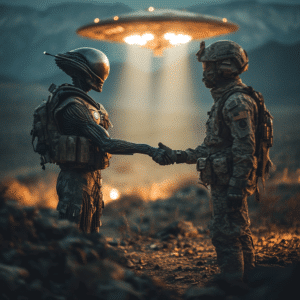
    The government’s involvement in extraterrestrial encounters goes far beyond what the public knows. While they claim to have no knowledge of alien activity, unique perspectives reveal a different story. Whistleblowers have come forward with shocking accounts of their involvement in covering up these encounters. These brave individuals have risked everything to expose the truth, shedding light on the dark secrets hidden by the government.

    The Men in Black

    The Men in Black, a mysterious group of individuals who operate in the shadows, have long been associated with government cover-ups and extraterrestrial encounters. These enigmatic figures, dressed in black suits and sunglasses, are said to appear after UFO sightings or encounters with aliens. They are known for their intimidating presence and their ability to silence witnesses through threats and intimidation. The Men in Black are believed to be part of a secret organization that works to suppress information about alien activity on Earth. Their actions are shrouded in secrecy, and their true motives remain unknown.

    Strange Phenomena

    Unidentified Flying Objects


    Unidentified Flying Objects, or UFOs, have long been a subject of fascination and speculation. These mysterious aerial phenomena have captured the attention of both scientists and conspiracy theorists alike. Countless eyewitness accounts and unexplained sightings have fueled the belief that we are not alone in the universe. But what if these UFOs are more than just extraterrestrial visitors? What if they are something far more sinister?

    Crop Circles: Messages from Beyond

    Crop circles have long been a subject of fascination and intrigue. These intricate patterns mysteriously appear overnight in fields, leaving scientists and skeptics baffled. Ground Zero for crop circle activity is typically in rural areas, where unsuspecting farmers wake up to find their crops transformed into elaborate designs. The origins of these formations remain a mystery, with theories ranging from elaborate hoaxes to extraterrestrial communication. While skeptics dismiss crop circles as human-made creations, believers argue that the complexity and precision of these designs suggest a higher intelligence at work.

    The Bermuda Triangle Enigma

    The Bermuda Triangle, a region in the western part of the North Atlantic Ocean, has long been shrouded in mystery and intrigue. Ships and planes have vanished without a trace, leaving behind a trail of unanswered questions and bewildered investigators. The disappearances in this enigmatic triangle have baffled experts for decades, defying rational explanation. Some believe that supernatural forces are at play, while others attribute the incidents to natural phenomena. Regardless of the cause, the Bermuda Triangle continues to captivate the imagination of those who dare to explore its depths.

    Infiltration of Power

    Alien Influence in Politics

    Politics, a realm of power and manipulation, has long been infiltrated by alien forces. These extraterrestrial beings, with their advanced technology and hidden agendas, have managed to establish a covert presence within the highest echelons of government. Their influence extends far beyond what the average citizen can comprehend, shaping policies and decisions that affect the entire world. The true extent of their control remains shrouded in secrecy, but whispers of their existence persist.

    Secret Alien Societies

    Deep within the shadows of society, there exists a hidden world that few are aware of. These secret alien societies operate in the darkest corners, manipulating the course of human history. Their existence is shrouded in mystery, their motives unknown. They are the puppet masters, pulling the strings from behind the scenes, orchestrating events to further their own agenda. It is a chilling thought, knowing that the fate of humanity may be in the hands of beings from beyond our world.

    The Puppet Masters

    As we delve deeper into the world of government cover-ups and alien infiltration, we uncover a sinister force that operates in the shadows: the parapolitical entities. These clandestine organizations, hidden from public view, hold immense power and influence over our political systems. They manipulate governments, control key decision-makers, and shape the course of human history. Their motives remain shrouded in mystery, but their actions speak volumes. The puppet masters pull the strings, orchestrating a grand scheme that goes far beyond our comprehension.

    The Truth Revealed

    Whistleblowers Expose Government Secrets


    The world as we know it is not what it seems. Deep within the corridors of power, hidden from the prying eyes of the public, lies a dark secret. Whistleblowers, brave individuals who have dared to defy the system, have come forward to expose the truth. They have risked everything to reveal the Aftermath Media of government cover-ups and conspiracies. These courageous individuals have faced threats, intimidation, and even death, but their determination to bring the truth to light remains unwavering.

    Decoding Alien Messages

    As we delve deeper into the mysteries of extraterrestrial communication, one thing becomes clear: decoding alien messages is no easy task. The complexity and enigmatic nature of these messages have left even the most brilliant minds baffled. But why are these messages so difficult to decipher? The answer lies in their summary.

    The Final Revelation

    As the truth about government cover-ups and alien infiltrations is slowly unveiled, one can’t help but question the authenticity of political news. Are we truly being informed, or are we being manipulated by hidden forces? The answer may lie in the shadows, where secrets are whispered and power is wielded. Political news becomes a mere facade, a carefully crafted narrative designed to distract and deceive. But for those who dare to dig deeper, the unsettling truth awaits.

    Welcome to the article section of Aftermath Media, where we uncover the truth behind the most intriguing parapolitics, UFO sightings, and conspiracies. In this article, titled ‘The Truth Revealed’, we delve deep into the hidden secrets that have been kept from the public eye. Prepare to have your mind blown as we expose the shocking revelations that will leave you questioning everything you thought you knew. Don’t miss out on this eye-opening journey into the unknown. Visit Aftermath Media today and explore the ultimate resource for parapolitics, UFO’s, and conspiracies.

    The Final Revelation

    As we delve deeper into the world of Aliens Among Us, the truth becomes more elusive and the darkness more palpable. The mysterious disappearances, government conspiracies, strange phenomena, and infiltration of power all point to a sinister reality lurking beneath the surface. Whistleblowers have risked everything to expose the government’s secrets, decoding alien messages that reveal a chilling truth. The final revelation awaits those brave enough to confront the unknown. Will you dare to uncover the truth?

  • Dystopian Visions: The Must-Read Post-Apocalyptic Books of Our Time

    Dystopian Visions: The Must-Read Post-Apocalyptic Books of Our Time

    In a world plagued by uncertainty and the ever-looming threat of disaster, post-apocalyptic literature has emerged as a captivating genre that explores the depths of human resilience and the fragility of society. From desolate landscapes to oppressive regimes, these dystopian visions offer a chilling glimpse into what could be our future. In this article, we will delve into four must-read post-apocalyptic books of our time: The Road, Station Eleven, The Handmaid’s Tale, and Brave New World.

    Key Takeaways

    • The Road: A Haunting Tale of Survival
    • Station Eleven: A Story of Art and Resilience
    • The Handmaid’s Tale: A Chilling Warning
    • Brave New World: A Futuristic Nightmare
    • Themes of oppression, resilience, and the human condition are prevalent in these books.

    The Road: A Haunting Tale of Survival

    The Bleak Landscape of a Post-Apocalyptic World
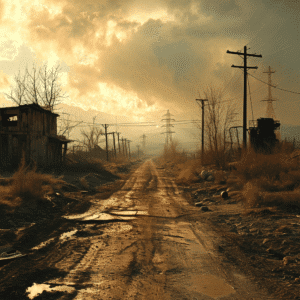
    In a post-apocalyptic world, the landscape is a haunting reminder of the devastation that has occurred. Desolate and barren, it stretches as far as the eye can see, with crumbling buildings and overgrown vegetation. The once bustling cities are now ghost towns, with only remnants of the past remaining. It is a world devoid of life and hope, where survival is a constant struggle.

    Amidst this bleakness, some seek solace in the darkness. They find refuge in the underground, hidden from the dangers that lurk above. These underground communities are like beacons of light in a sea of darkness, providing a glimmer of hope in an otherwise desolate world.

    But even in the face of such despair, some refuse to give up. They fight against the odds, determined to find a way to rebuild and restore what has been lost. They are the ones who hold on to the belief that there is still hope, that humanity can rise from the ashes and create a better future.

    As Ryan Gable, host of ‘The Secret Teachings with Ryan Gable‘, puts it, ‘In a post-apocalyptic world, the landscape may be bleak, but it is also a canvas for resilience and the human spirit.’ It is in this desolation that the true strength of humanity is revealed, as individuals come together to overcome the challenges that lie ahead.

    The Unbreakable Bond Between Father and Son

    In “The Road“, the relationship between the father and son is at the heart of the story. Survival in a post-apocalyptic world is not just about physical strength, but also about the emotional connection between loved ones. The bond between the father and son is tested time and again as they navigate through the bleak landscape. Despite the hardships they face, their love for each other remains unwavering.

    The father serves as a protector and guide for his son, teaching him important skills for survival. He instills in him a sense of hope and the belief that they are the “good guys”. Their relationship is a source of inspiration and serves as a reminder of the power of love and resilience in the face of adversity.

    • The father’s unwavering dedication to his son is a testament to the strength of the human spirit.
    • The son’s innocence and vulnerability highlight the importance of protecting and nurturing the next generation.
    • Their bond serves as a beacon of hope in a world consumed by darkness and despair.

    The Moral Dilemmas of Desperation

    In a post-apocalyptic world, where resources are scarce and survival is a constant struggle, individuals are faced with moral dilemmas that test their humanity. The desperation to survive often leads to difficult choices and ethical conflicts. Should one steal to feed their family? Is it justified to sacrifice the well-being of others for personal gain? These are the questions that plague the characters in post-apocalyptic novels, forcing them to confront their own values and question the boundaries of right and wrong.

    One of the key moral dilemmas explored in these books is the concept of trust. In a world where betrayal and deception are common, characters must decide who to trust and how much to trust them. The consequences of misplaced trust can be dire, leading to loss of life or endangering the survival of the group. This constant uncertainty creates a tense atmosphere where every decision carries weight and the wrong choice can have devastating consequences.

    Another moral dilemma that arises in post-apocalyptic literature is the question of justice. In a society where law and order have collapsed, individuals are left to define their own sense of justice. Should criminals be punished? Is revenge an acceptable form of justice? These questions challenge the characters’ moral compass and force them to grapple with the complexities of a world without rules.

    The moral dilemmas of desperation in post-apocalyptic books serve as a reflection of our own society’s ethical challenges. They force us to examine our own values and question what we would do in similar circumstances. These stories remind us of the fragility of our moral convictions and the difficult choices we may be faced with in a world turned upside down.

    The Hopeful Glimmers in a Dark World

    In the midst of the despair and desolation of a post-apocalyptic world, there are still moments of hope that shine through. These glimmers of light serve as reminders that even in the darkest times, humanity can find strength and resilience.

    One such glimmer is the unwavering love and bond between the characters. Despite the harsh conditions they face, they remain committed to protecting and supporting each other. This demonstrates the power of human connection and the lengths people will go to for the ones they care about.

    Another source of hope is the small acts of kindness and compassion that emerge. In a world where survival is the priority, these acts may seem insignificant, but they hold immense value. Whether it’s sharing limited resources, offering a helping hand, or simply showing empathy, these gestures remind us of the goodness that still exists in humanity.

    Additionally, there are instances of resilience and determination that inspire hope. Characters who refuse to give up, who continue to fight against all odds, become beacons of hope for others. Their unwavering spirit serves as a reminder that even in the face of adversity, there is always a glimmer of hope.

    While the world may be bleak and the challenges overwhelming, these hopeful glimmers remind us that even in the darkest of times, there is still room for hope and the possibility of a better future.
    Station Eleven: A Story of Art and Resilience

    The Devastating Collapse of Civilization

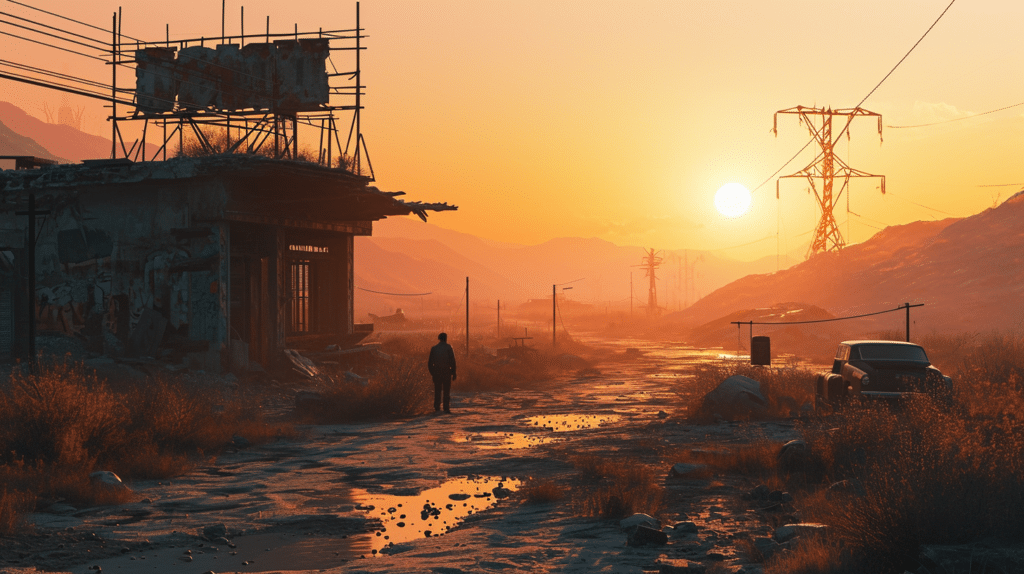
    In Station Eleven, the collapse of civilization is depicted in a haunting and realistic manner. The sudden disappearance of electricity, communication, and transportation plunges the world into chaos. People are left to fend for themselves, struggling to find food, water, and shelter. The breakdown of society leads to violence and lawlessness, as desperate individuals fight for survival. The once bustling cities become ghost towns, with only remnants of the past remaining. It is a stark reminder of how fragile our modern civilization truly is.

    The Power of Art in a Desolate World

    In a desolate world, where hope seems lost and darkness prevails, art emerges as a powerful force that can ignite the human spirit. Through paintings, music, and performances, artists are able to transcend the harsh reality and create moments of beauty and inspiration. Art becomes a beacon of light, reminding us of our shared humanity and the resilience of the human spirit.

    Art has the ability to heal and bring solace in the midst of chaos. It provides an escape from the harshness of the world, allowing individuals to find solace and comfort in the beauty of artistic expression. In a desolate world, where survival is the primary focus, art becomes a form of therapy, offering a much-needed respite from the hardships of daily life.

    Art also serves as a means of communication and connection in a post-apocalyptic society. When words fail to convey the depth of emotions, art steps in to bridge the gap. It speaks to the universal language of the heart, transcending barriers and bringing people together. Through art, individuals are able to express their innermost thoughts and feelings, fostering a sense of community and understanding.

    In a world stripped of its former glory, art becomes a symbol of hope and resilience. It reminds us that even in the darkest of times, beauty can still be found. Artistic creations serve as a testament to the indomitable spirit of humanity, inspiring us to persevere and strive for a better future. As the world rebuilds itself, art will continue to play a vital role in shaping the new society, reminding us of the power of creativity and imagination.

    Remember, in a world where everything has changed, the bonds we form with others become our lifelines, sustaining us through the harshest of circumstances.

    The Quest for Meaning in a Post-Apocalyptic Society

    In a post-apocalyptic society, where chaos and despair reign, the search for meaning becomes even more crucial. Survivors are faced with the daunting task of finding purpose and hope amidst the ruins.

    Get Ground Zero: Aftermath and support more articles like this.

    One way to find meaning is through the pursuit of knowledge. In a world stripped of its former glory, learning becomes a form of resistance. Whether it’s preserving books or sharing stories, the quest for knowledge keeps the flame of humanity alive.

    Another avenue for finding meaning is through community and connection. In a world where trust is scarce, forming bonds with fellow survivors becomes essential. Together, they can support and uplift each other, reminding themselves of their shared humanity.

    Lastly, finding meaning in a post-apocalyptic society can also come from the act of creation. Whether it’s art, music, or even rebuilding society, the power of creation brings a sense of purpose and fulfillment. It is a testament to the resilience of the human spirit.

    The Handmaid’s Tale: A Chilling Warning

    The Oppression of Women in a Dystopian Society

    In a dystopian society, women often face extreme oppression and control. Their rights and freedoms are stripped away, leaving them powerless and vulnerable. They are subjected to strict rules and regulations that dictate every aspect of their lives, from their appearance to their behavior. Women are treated as objects, valued only for their reproductive capabilities.

    In Margaret Atwood’s novel, The Handmaid’s Tale, the protagonist Offred is forced into a role as a handmaid, whose sole purpose is to bear children for the ruling class. She is stripped of her name, her identity, and her autonomy. Her body becomes a commodity, used solely for reproduction.

    The oppression of women in dystopian societies serves as a stark warning of the dangers of unchecked power and the potential consequences of a society that devalues and dehumanizes a specific gender. It highlights the importance of fighting for gender equality and the protection of women’s rights in our own world.

    The Struggle for Identity and Freedom

    In “The Handmaid’s Tale,” Margaret Atwood explores the oppression of women in a dystopian society. Set in the Republic of Gilead, women are stripped of their rights and reduced to their reproductive functions. They are assigned roles as Handmaids, whose sole purpose is to bear children for the ruling class. This chilling portrayal serves as a stark reminder of the importance of gender equality and the constant need to fight for women’s rights.

    The protagonist, Offred, embodies the struggle for identity and freedom. She is torn between conforming to the oppressive regime and holding onto her individuality. Through her journey, Atwood highlights the resilience and strength of the human spirit in the face of adversity.

    Key Takeaways:

    • “The Handmaid’s Tale” explores the oppression of women in a dystopian society.
    • The novel serves as a reminder of the importance of gender equality.
    • Offred’s story represents the struggle for identity and freedom in a repressive regime.

    The Relevance of Margaret Atwood’s Vision Today

    Margaret Atwood’s dystopian novel, The Handmaid’s Tale, continues to resonate with readers today. The story depicts a society where women are oppressed and stripped of their rights, serving as a chilling warning of the dangers of authoritarianism and the fragility of human rights.

    Atwood’s vision of a society where women are reduced to their reproductive capabilities is a stark reminder of the ongoing struggles for gender equality. The novel serves as a powerful critique of the objectification and subjugation of women, highlighting the importance of fighting for women’s rights and autonomy.

    The Handmaid’s Tale also raises questions about the role of religion in society and the potential for religious extremism to erode individual freedoms. Atwood’s portrayal of a theocratic regime serves as a cautionary tale, urging readers to remain vigilant against the encroachment of religious fundamentalism on personal liberties.

    In today’s political climate, where debates over reproductive rights, gender equality, and religious freedom continue to dominate public discourse, The Handmaid’s Tale serves as a timely reminder of the importance of protecting and preserving human rights and the dangers of complacency.

    Brave New World: A Futuristic Nightmare

    The Dehumanization of Society

    In Aldous Huxley’s Brave New World, the concept of dehumanization is explored in a chilling and thought-provoking manner. The novel presents a future society where humans are genetically engineered and conditioned to fit into specific social roles. This extreme level of control and manipulation strips individuals of their autonomy and uniqueness, reducing them to mere cogs in a well-oiled machine.

    One of the most striking aspects of this dehumanization is the loss of individuality. In the World State, everyone is conditioned to conform to societal norms and values, erasing any sense of personal identity. People are assigned specific roles and are conditioned to be content with their predetermined place in society. This uniformity eliminates diversity and stifles creativity, resulting in a homogenous and sterile world.

    The dehumanization depicted in Brave New World serves as a cautionary tale, highlighting the dangers of sacrificing individuality and freedom for the sake of stability and efficiency. It raises important questions about the ethical implications of genetic engineering and the potential consequences of a society that prioritizes conformity over individuality.

    The Illusion of Happiness

    In “Brave New World,” Aldous Huxley presents a chilling vision of a society where happiness is manufactured and controlled. The citizens of this dystopian world are conditioned from birth to believe that they are happy, but in reality, their happiness is shallow and devoid of true meaning. The government uses advanced technology and genetic engineering to manipulate the minds and emotions of its citizens, ensuring that they remain content and obedient.

    This concept of manufactured happiness raises important questions about the nature of human existence and the value of individuality. Are we truly happy if our happiness is artificially induced? Can we find fulfillment and purpose in a world where our emotions and desires are predetermined?

    Ground Zero with Clyde Lewis explores the themes of “Brave New World” in a thought-provoking episode titled “The Illusion of Happiness.” Clyde Lewis delves into the dangers of a society that prioritizes pleasure and conformity over personal freedom and genuine human connection. He examines the parallels between Huxley’s dystopia and our own world, where technology and consumerism often serve as distractions from deeper existential questions.

    Join Clyde Lewis as he uncovers the dark underbelly of a society obsessed with happiness and conformity. Discover the hidden truths behind the illusion of happiness and explore the implications for our own lives and society as a whole.

    The Loss of Individuality

    In “Brave New World”, one of the most chilling aspects of the dystopian society is the complete loss of individuality. In this world, people are genetically engineered and conditioned to fit into specific social classes, with no room for personal identity or uniqueness. Each person is assigned a specific role in society, and their thoughts and desires are carefully controlled and manipulated.

    This loss of individuality is exemplified by the use of names in the novel. Instead of having unique names, people are given generic labels such as “Alpha”, “Beta”, or “Gamma”. This dehumanizes them and reduces them to mere cogs in the machine of the society.

    Furthermore, personal relationships and emotions are discouraged in this dystopian world. People are conditioned to prioritize the needs of the society over their own desires, leading to a lack of genuine human connection and intimacy.

    The loss of individuality in “Brave New World” serves as a warning about the dangers of sacrificing personal freedom and identity for the sake of societal stability and control.

    The Ethical Implications of Genetic Engineering

    Genetic engineering has opened up a world of possibilities, but it also raises important ethical questions. One of the key concerns is the potential for playing with nature and altering the fundamental building blocks of life. Manipulating genes can lead to unforeseen consequences and unintended outcomes.

    In addition, genetic engineering raises concerns about the unequal distribution of advancements. Will only the wealthy have access to genetic enhancements, creating a greater divide between the haves and have-nots?

    Furthermore, there are concerns about the long-term effects of genetic engineering on the environment. Altering the genetic makeup of organisms could have unintended consequences for ecosystems and biodiversity.

    It is crucial that we carefully consider the ethical implications of genetic engineering and ensure that it is used responsibly and for the benefit of all. Only through thoughtful consideration and regulation can we navigate this brave new world of possibilities.

    In Conclusion

    In conclusion, the post-apocalyptic genre has captivated readers for decades with its dark and thought-provoking narratives. From classics like 1984 and Brave New World to modern masterpieces like The Hunger Games and Station Eleven, these books transport us to bleak and desolate worlds where survival is paramount. They serve as cautionary tales, reminding us of the fragility of our society and the consequences of our actions. Whether you’re a fan of dystopian fiction or new to the genre, these must-read post-apocalyptic books are sure to leave a lasting impression.

  • The Veiled Truths: What the Epstein Case Conceals

    The Veiled Truths: What the Epstein Case Conceals

    The Epstein case has captivated the world, revealing a web of corruption and darkness that extends far beyond the surface. From Epstein’s mysterious life to the disturbing allegations and controversial investigations, this article delves into the veiled truths that the case conceals. Here are the key takeaways:

    Key Takeaways

    • Jeffrey Epstein’s connections and influences reached the highest levels of society.
    • Survivors of Epstein’s abuse have bravely come forward to share their stories.
    • Ghislaine Maxwell played a significant role in Epstein’s operation.
    • Plea deals and non-prosecution agreements allowed Epstein to evade justice.
    • The circumstances surrounding Epstein’s death are highly suspicious.

    The Mysterious Life of Jeffrey Epstein

    From High School Teacher to Financier

    Jeffrey Epstein’s journey from a high school teacher to a financier is a fascinating and mysterious one. Starting out as a math and physics teacher at the Dalton School in New York City, Epstein quickly made connections with influential people in the financial world. Through these connections, he was able to establish himself as a successful financier, managing the wealth of billionaires and powerful individuals. Epstein’s rise to prominence in the world of finance is a testament to his intelligence, ambition, and ability to navigate the complex world of high finance.

    The Creation of a Billionaire Network

    The creation of a billionaire network is a fascinating and intricate web of connections and influence. It involves powerful individuals and financial giants like BLACKROCK, VANGUARD, and JP Morgan Chase. These networks, with around 500,000 members each, have been at the center of attention due to their declining shares and earnings over the past three years.

    In his book ‘CONTROLIGARCHS: Exposing the Billionaire Class, Their Secret Deals, and the Globalist Plot to Dominate Your Life,’ author Tucker breaks down the money and the modus operandi of the globalist agenda. He reveals the layers of corruption within the FBI, CIA, and Pentagon’s concealment of UFO technology, as well as the weaponization of the media against the people.

    To get a better understanding of the billionaire network, let’s take a look at some key players:

    • BLACKROCK: A financial giant that has witnessed a consistent decline in shares and earnings.
    • VANGUARD: Another major player in the financial industry, facing similar challenges.
    • JP Morgan Chase: Known for its influence and power, but also experiencing a decline in recent years.

    These financial giants and their connections play a significant role in shaping the global economic landscape. Understanding their influence is crucial in unraveling the veiled truths behind the Epstein case.

    The Enigmatic Island: Little St. James

    Little St. James, also known as Epstein’s private island, has become synonymous with secrecy and scandal. Located in the Caribbean, this secluded paradise was the setting for many of Epstein’s alleged crimes. The island’s remote location and high security made it the perfect hideaway for his illicit activities. Rumors and speculation surround the island, with some suggesting that it was used as a meeting place for powerful individuals involved in Epstein’s network. The true extent of what happened on Little St. James may never be fully known, but its name will forever be associated with the dark secrets of the Epstein case.

    The Elusive Black Book: Connections and Influences

    The Elusive Black Book is a mysterious compilation of names and contacts that has been linked to Jeffrey Epstein. This book, which allegedly contains the contact information of powerful individuals from various industries, has sparked speculation and intrigue. While the contents of the book have not been made public, it is believed to hold valuable information about Epstein’s network and the extent of his connections. The significance of this book and its potential implications continue to be a subject of interest and investigation.

    The Disturbing Allegations

    Victims’ Stories: Survivors Speak Out

    The survivors of Jeffrey Epstein’s abuse have bravely come forward to share their stories, shedding light on the dark and disturbing reality of his crimes. Their accounts paint a harrowing picture of manipulation, exploitation, and trauma. These survivors have faced immense challenges in seeking justice and holding their abuser accountable. Their courage in speaking out has sparked a global conversation about the widespread issue of sexual abuse and the need for systemic change. Their voices will not be silenced, and their stories will continue to inspire others to come forward and seek justice.

    The Role of Ghislaine Maxwell

    Ghislaine Maxwell, a close associate of Jeffrey Epstein, has been at the center of the scandal surrounding his alleged sex trafficking ring. Maxwell is accused of recruiting underage girls for Epstein and participating in the abuse herself. She has been described as Epstein’s right-hand woman and is believed to have played a crucial role in facilitating his illegal activities.

    Maxwell’s involvement in the Epstein case has raised questions about who else may have been involved and how far-reaching the network of powerful individuals connected to Epstein truly is. Her arrest and upcoming trial have brought renewed attention to the case and the need for justice to be served.

    Support more articles like this.

    The Powerful and the Complicit

    The Epstein case has revealed the extent of the powerful and complicit individuals involved in his activities. Dozens of other underage girls described similar sexual abuse, but prosecutors ultimately allowed the financier to plead guilty in 2008 to a charge involving a…

    The Legal Maneuvers: Plea Deals and Non-Prosecution Agreements

    Plea bargaining is a negotiation between the defendant and prosecutors to settle a criminal case. It involves the defendant agreeing to plead guilty in exchange for concessions from the prosecutors. This process is commonly used in the criminal justice system to resolve cases efficiently and avoid lengthy trials. Plea deals and non-prosecution agreements can offer benefits to both parties involved, but they can also be controversial. Critics argue that they may result in lenient sentences for defendants and prevent full accountability for their actions. However, proponents argue that plea deals can save time and resources, allowing prosecutors to focus on more serious cases.

    The Controversial Investigations

    The Acosta Affair: A Sweetheart Deal

    The Acosta Affair refers to the controversial plea deal that was given to Jeffrey Epstein by then-U.S. Attorney Alexander Acosta. This deal allowed Epstein to avoid federal charges and instead plead guilty to state charges of solicitation of prostitution and procurement of minors for prostitution. The lenient sentence he received, serving only 13 months in a county jail, sparked outrage and raised questions about the fairness of the justice system. Many believe that this sweetheart deal protected Epstein and his powerful connections from facing true accountability.

    The Epstein-Clinton Connection

    The Epstein-Clinton Connection has been a subject of much speculation and controversy. While there is no concrete evidence linking former President Bill Clinton to the illegal activities of Jeffrey Epstein, their association has raised eyebrows. Clinton has acknowledged flying on Epstein’s private jet, dubbed the ‘Lolita Express,’ multiple times. However, he claims to have had no knowledge of Epstein’s criminal behavior. It is important to note that being associated with Epstein does not automatically imply guilt or involvement in his illicit activities.

    Into the Parabnormal with Jeremy Scott is a podcast that delves into the Epstein case and explores various theories and connections. The podcast examines the Epstein-Clinton Connection and its implications, shedding light on the complex web of power and influence surrounding the case.

    While some believe that Clinton’s association with Epstein raises questions about his judgment and character, others argue that it is merely guilt by association. The true extent of their relationship and any potential involvement in Epstein’s activities remains a subject of speculation and investigation.

    It is crucial to approach the Epstein-Clinton Connection with caution and rely on verified information and credible sources to separate fact from fiction.

    The Prince and the Pedophile: Prince Andrew’s Involvement

    Prince Andrew, the Duke of York, has been implicated in the Jeffrey Epstein scandal, raising serious questions about his involvement with the convicted sex offender. Multiple women have come forward, accusing Prince Andrew of sexual misconduct and alleging that he was a close associate of Epstein. The allegations have tarnished the reputation of the British royal family and sparked a public outcry for accountability. Despite the mounting evidence, Prince Andrew has denied any wrongdoing and has faced criticism for his lack of cooperation with law enforcement.

    The Suspicious Circumstances of Epstein’s Death

    The death of Jeffrey Epstein in his jail cell on August 10, 2019, has raised numerous questions and sparked widespread speculation. Epstein was awaiting trial on charges of sex trafficking and conspiracy, and his death came just weeks after a previous apparent suicide attempt. The official cause of death was ruled as suicide by hanging, but many have expressed doubts and skepticism about the circumstances surrounding his demise.

    The Far-Reaching Implications

    The Dark Underbelly of the Elite

    The dark underbelly of the elite is a hidden world of power, privilege, and corruption. It is a realm where the rich and powerful exploit their positions for personal gain, often at the expense of the vulnerable. This secretive network operates behind closed doors, shielded from public scrutiny. The revelations from unsealed documents have exposed the true nature of this elite circle, leaving the public shocked and appalled. It is a stark reminder that wealth and influence do not always equate to morality and justice.

    The Failure of the Justice System

    The failure of the justice system in the Epstein case is a glaring example of the flaws and shortcomings that exist within our legal system. For more than six years, the Miami Herald fought to expose the secret plea deal that was struck in Miami federal court in 2007. This deal, which granted Epstein lenient punishment and protected his co-conspirators, was a clear miscarriage of justice. It allowed a serial sexual predator to continue his crimes with impunity, while his victims were denied the justice they deserved.

    The Battle for Justice: Victims’ Fight for Accountability

    The battle for justice is a relentless pursuit by the victims of the Epstein case. They refuse to be silenced or ignored, determined to hold the perpetrators accountable for their heinous crimes. These survivors have come forward with their stories, bravely sharing the painful details of their experiences. Their courage has sparked a global movement, shining a light on the dark underbelly of the elite.

    The fight for accountability extends beyond individual cases. It exposes the failure of the justice system to protect the most vulnerable and hold the powerful accountable. Plea deals and non-prosecution agreements have allowed the wealthy and influential to evade justice, perpetuating a system of inequality and impunity.

    But the victims and their advocates are not backing down. They are demanding systemic change, pushing for reforms that will ensure equal treatment under the law. Their fight is a battle for justice, a battle that will have far-reaching implications for our society.

    The Need for Systemic Change

    The Epstein case has exposed deep-rooted issues within our society that call for systemic change. It is not enough to simply address the individual crimes and perpetrators; we must also examine the larger structures and institutions that enable and protect them. Accountability is crucial in holding those responsible to justice, but it is equally important to address the power dynamics and corruption that allow such abuses to occur. This requires a comprehensive reevaluation of our justice system, our political landscape, and our societal values.

    The Far-Reaching Implications

    Unveiling the Veiled Truths

    In this eye-opening journey through the Epstein case, we have delved into the depths of a web of corruption, deception, and unimaginable darkness. The revelations of human trafficking, money laundering, and blackmail have sent shockwaves through society, exposing the sinister agenda of the global elites. But the story doesn’t end here. As Congress prepares to launch an all-out assault on the heinous industry of human trafficking, names like Epstein, JP Morgan, the Clintons, and Biden will be dragged into the spotlight. The time for truth and justice is at hand, as we uncover the dark secrets that have preyed upon our society for far too long. Stay tuned, for the next chapter in the fight against the veiled truths is about to unfold.

    Frequently Asked Questions

    What is the Epstein case?

    The Epstein case refers to the criminal investigation and legal proceedings surrounding Jeffrey Epstein, a financier and convicted sex offender, who was accused of operating a sex trafficking ring involving underage girls.

    Who is Ghislaine Maxwell?

    Ghislaine Maxwell is a British socialite and former associate of Jeffrey Epstein. She has been accused of assisting Epstein in his alleged sex trafficking activities and is currently facing charges related to her involvement.

    What is the significance of Epstein’s connections?

    Epstein had connections to numerous high-profile individuals, including politicians, businessmen, and celebrities. The significance of these connections is a subject of speculation and investigation, as they raise questions about potential involvement in or knowledge of Epstein’s illegal activities.

    What are the allegations against Prince Andrew?

    Prince Andrew, Duke of York, has been accused by one of Epstein’s alleged victims of sexual assault. The allegations have sparked controversy and led to Prince Andrew stepping back from his royal duties.

    What is the Acosta Affair?

    The Acosta Affair refers to the controversy surrounding the 2008 plea deal negotiated by then-U.S. Attorney Alexander Acosta, which allowed Epstein to plead guilty to lesser charges and receive a lenient sentence. The deal has been criticized for its perceived leniency and has faced scrutiny in recent years.

    What are the implications of the Epstein case?

    The Epstein case has raised concerns about the abuse of power, the failures of the justice system, and the need for systemic change. It has also brought attention to the issue of human trafficking and sparked a broader conversation about accountability for the wealthy and influential.

  • The Mystery of the Dyatlov Pass Incident

    The Mystery of the Dyatlov Pass Incident

    The prospect of a climate apocalypse has become a pressing concern in recent years, as scientific evidence increasingly points to the severe consequences of unchecked global warming. The potential for irreversible damage to our planet’s ecosystems and the well-being of future generations has sparked a sense of urgency among climate scientists, policymakers, and activists alike. This article delves into the critical thresholds of climate change, explores strategies for mitigation and adaptation, and discusses whether there is still room for optimism in the face of potential disaster.

    Key Takeaways

    • By 2035, we may reach a critical point of no return in climate action, after which limiting global warming to 1.5°C may no longer be possible.
    • Irreversible changes to the Earth’s climate system are driven by human activities such as deforestation and fossil fuel consumption.
    • A paradigm shift towards ‘apocalyptic optimism’ may be necessary to foster progress and inspire collective action against climate change.

    The Tipping Point: Understanding the Critical Thresholds of Climate Change

    The 2035 Deadline: A Point of No Return?

    We’re on the brink, folks. Scientists have circled 2035 on the calendar as the year we might cross a critical threshold. After that, stopping a 2-degree Celsius rise in Earth’s temperature becomes a pipe dream. This isn’t science fiction; it’s a countdown to potential disaster.

    The stakes are high: act now or face irreversible consequences. The study from leading climate scientists in the UK and Netherlands is clear: we’re heading towards a future where ‘extremely unlikely’ becomes ‘impossible.’

    We’re not just up against the clock; we’re up against our own legacy of deforestation and fossil fuel addiction. It’s a legacy that’s pushing us closer to the edge.

    Here’s the kicker: it’s not just about the temperature. It’s the domino effect—one disaster triggering another. We can’t afford to ignore the warnings any longer.

    • Key Takeaways:
      • 2035: The potential point of no return.
      • 2-degree Celsius rise: The line we must not cross.
      • Action required: Urgent and decisive.

    We’ve got to flip the script. It’s time for bold moves and a new narrative. ‘Apocalyptic optimism’ might sound like an oxymoron, but it’s the mindset we need to adopt. We can change the ending of this story, but only if we start rewriting it now.

    Irreversible Changes and the 2-Degree Celsius Benchmark

    We’re standing on a precipice, folks. The 2-degree Celsius mark isn’t just a number; it’s a line in the sand that Mother Nature drew with a shaky hand. Cross it, and we’re not just talking about longer summers or milder winters. We’re talking about a domino effect of catastrophic events that could reshape our world as we know it.

    The principles of climate science have been clear: once we hit that 2-degree increase, we’re looking at irreversible changes. Coastal cities could become modern Atlantises, and extreme weather could go from headline news to just another Tuesday. The data doesn’t lie, and it’s screaming for us to pay attention.

    The Paradigm Shift we need is monumental. It’s not just about switching off lights or cycling to work. It’s about transforming how we live, how we consume, and how we think about our place on this planet. Here’s a snapshot of what we’re up against:

    • Heatwaves: Multiplication factor of 5x or more
    • Floods: Coastal areas at severe risk
    • Storms: Increased intensity and frequency

    We can’t afford to be passive spectators in this unfolding drama. It’s time to take the stage and act.

    Scientists ring an alarm for 2035, a year that could mark a point of no return. If we don’t pivot now, we might just find ourselves in a future where the term ‘natural disaster’ loses all meaning because there’s nothing ‘natural’ about the chaos we’ve unleashed.

    The Role of Deforestation and Fossil Fuels in Climate Dynamics

    We’ve got ourselves into a real pickle with deforestation and burning fossil fuels. It’s like we’re on a runaway train heading for a cliff, and the brakes are busted. Scientists are clear: we need to stop burning fossil fuels. The thickening blanket of greenhouse gases is our own doing, and it’s heating up our planet at an alarming rate.

    But here’s the kicker: even if we cut out the pollution, we’re still in for a rough ride. Gaseous sulfur dioxide, a major pollutant from fossil fuels, lingers only for days. So, when we cut the pollution, the impact is almost immediate. Unlike carbon dioxide, which can last for centuries in our atmosphere, we can see quick changes if we act fast.

    Let’s talk numbers. Deforestation and fossil fuel emissions are the main culprits behind the rapid increase in greenhouse gases. And it’s not just about the air we breathe; it’s about the entire climate system. Here’s a snapshot of the problem:

    • Greenhouse Gas Emissions: Skyrocketing due to human activities.
    • Deforestation: Stripping away our planet’s lungs, contributing to CO2 levels.
    • Fossil Fuels: The addiction we must kick, for our climate’s sake.

    We’re at a crossroads. Every moment we delay, the closer we get to a climate point of no return. It’s time to take decisive action.

    We can’t afford to ignore the signs. The discussions around apocalyptic disasters illustrate just how fragile our world truly is. It’s a wake-up call we all need to hear. We’re in this together, and it’s time to rally and turn the tide on climate change.

    Navigating the Climate Crisis: Strategies for Mitigation and Adaptation

    Economic Impacts: Weighing Costs Against Climate Action

    We’re at a crossroads, folks. The climate crisis isn’t just about polar bears and melting ice caps; it’s hitting our wallets hard. Economic impacts are real and escalating. But what’s the price tag on the end of the world? We cannot afford to ignore the costs of inaction.

    Let’s break it down. We’ve got floods wiping out crops, hurricanes demolishing homes, and wildfires torching timber. These aren’t just headlines; they’re invoices being charged to our future. And the longer we wait, the steeper the cost. Yet, some argue that the price of mitigation might seem too high. Can we really put a price on a livable planet?

    Here’s the kicker: investing in climate action can save us money in the long run. Think about it. Renewable energy prices are dropping like leaves in autumn. Energy efficiency is the gift that keeps on giving, slashing bills left and right. And let’s not forget the impending green jobs bonanza. We’re talking about a whole new economy here, folks!

    • Renewable Energy: Cheaper than ever, and getting more affordable by the day.
    • Energy Efficiency: Cut costs and carbon footprints simultaneously.
    • Green Jobs: A surge in employment opportunities in sustainable industries.

    We’re not just saving the planet; we’re investing in our own prosperity. It’s a win-win if we play our cards right.

    So, let’s roll up our sleeves and get to work. We can’t let the financial titans and media manipulators shape our future. It’s time to take control of our destiny and make smart, sustainable choices that will pay off for generations to come.

    Global Disasters and the Urgency of Decisive Measures

    We’re at a crossroads, folks. The planet’s sending SOS signals, and we’re the only ones who can answer the call. Climate change isn’t waiting around for us to get our act together. It’s here, it’s real, and it’s wreaking havoc. From wildfires to hurricanes, the evidence is palpable. We’ve seen the studies, like the one from Earth System Dynamics on August 30, 2018, screaming for immediate action.

    Our response? It’s got to be swift and strong. We’re talking about full-scale mobilization. We need to slash emissions, switch to renewables, and adapt our infrastructure. The economic angle? The cost of inaction is catastrophic, while the price of prevention is a bargain.

    • Cut emissions: Transition to clean energy.
    • Adapt infrastructure: Make cities resilient.
    • Economic overhaul: Invest in green technology.

    We’re in this together, and the time to act is slipping through our fingers like sand in an hourglass.

    Let’s not find ourselves looking back, wishing we’d done more. The future’s not set in stone, and we’ve got the chisel. Let’s carve out a path to survival, not regret.

    ‘Apocalyptic Optimism’: A New Narrative for Climate Progress

    We’ve been down the doom-laden path, envisioning a world engulfed in flames, seas swallowing cities, and skies thick with smoke. But now, we’re flipping the script. We’re embracing ‘Apocalyptic Optimism’—the belief that, despite the grim forecasts, we have the power to pivot. It’s not just about survival; it’s about thriving amid adversity.

    Into the Parabnormal and Everything Out There—these aren’t just shows; they’re symbols of our insatiable curiosity and our refusal to accept a predetermined fate. We’re not merely passive observers; we’re active participants in shaping our future.

    We’re crafting a new narrative, one where each action we take brings us closer to a more hopeful horizon.

    Here’s the thing: optimism isn’t about ignoring the challenges. It’s about harnessing our collective energy to overcome them. We’re rolling up our sleeves, ready to tackle what comes our way. And yes, there’s a deadline. The 2035 marker looms, but it’s not a countdown to the end—it’s a call to action.

    • Embrace renewable energy
    • Innovate sustainable practices
    • Educate and empower communities

    These aren’t just bullet points; they’re our battle cry against the ticking clock. We’re not waiting for a hero to save us. We’re the heroes, armed with the will to forge a better path. Let’s write this story together—one of resilience, innovation, and unwavering optimism.

    The Tipping Point: Understanding the Critical Thresholds of Climate Change

    The 2035 Deadline: A Point of No Return?

    We’re racing against a clock that’s ticking faster than ever. By 2035, scientists warn we could reach a climate point of no return. Imagine a world with a broken thermostat, where we can’t turn back the heat. That’s the future we’re facing if we don’t act now.

    Irreversible changes are looming. Rising temperatures, melting ice caps, and extreme weather patterns could become our new normal. It’s not just about polar bears and icebergs; it’s about our homes, our food, and our very survival.

    We can’t afford to ignore the signs any longer.

    As we face daunting challenges, it’s crucial that we unite to explore effective strategies for mitigation and adaptation. Our platform at Unexplained.co offers a wealth of resources, including podcasts, documentaries, and expert discussions that empower you to take informed action. Join our proactive community by signing up for a free trial at Aftermath Media, and start making a difference today. Together, we can navigate this crisis and create a sustainable future.

    Frequently Asked Questions

    What is the 2035 deadline in the context of climate change?

    The 2035 deadline refers to a critical point identified by scientists, beyond which it may become extremely unlikely to prevent the Earth’s temperature from rising by 2 degrees Celsius. This threshold is significant as surpassing it could trigger catastrophic climate-related disasters globally.

    How can deforestation and fossil fuels affect climate change?

    Deforestation and burning fossil fuels are major contributors to climate change. They release large amounts of greenhouse gases, particularly carbon dioxide, into the atmosphere, leading to a greenhouse effect that causes global temperatures to rise. This can result in severe environmental impacts, including extreme weather events and loss of biodiversity.

    What is ‘Apocalyptic Optimism’ in the context of climate change?

    ‘Apocalyptic Optimism’ is a narrative that acknowledges the grave potential outcomes of climate change but focuses on a positive and proactive approach, emphasizing the possibility of avoiding disaster through decisive actions to mitigate climate change and adapt its impacts.

  • From Bilderberg to Davos: Stories of Secret Elite Meetings

    From Bilderberg to Davos: Stories of Secret Elite Meetings

    Secret elite meetings have long been a topic of fascination and speculation. From the Bilderberg Group to the World Economic Forum in Davos, these gatherings of global leaders and influential individuals have shaped the course of history and influenced global policies. In this article, we will explore the origins of these secret elite meetings, delve into the secretive nature of the Bilderberg Group and the annual gathering in Davos, and examine the power and influence these meetings hold. We will also discuss the selection process for attendees and the impact these meetings have on shaping global agendas and policies. Finally, we will examine the criticisms surrounding these meetings and the alternatives that have emerged in response. Join us as we uncover the stories behind these secret elite meetings and their impact on the world.

    Key Takeaways

    • Secret elite meetings like the Bilderberg Group and the World Economic Forum in Davos have played a significant role in shaping global agendas and policies.
    • These meetings are known for their secretive nature, with strict confidentiality rules and limited media access.
    • Attendees of these meetings include global leaders, influential individuals from various sectors, and representatives from powerful organizations.
    • Decisions made behind closed doors at these meetings can have a significant impact on global politics and the economy.
    • Critics argue that these meetings lack transparency and democracy, leading to concerns about the concentration of power and influence.

    The Origins of Secret Elite Meetings

    The Birth of the Bilderberg Group

    The Bilderberg Group, known for its secretive nature, traces its origins back to a conference organized by Prince Bernhard of the Netherlands in 1954. The conference took place at the Hotel de Bilderberg near Arnhem, which belonged to Prince Bernhard at the time. The Bilderberg Group’s first institutional brochure was published in 1975, describing it as an independent, self-financing, not-for-profit foundation aligned with the strategic needs of European business leaders. The strategic plan to create the Bilderberg Club originated at the Council on Foreign Relations (CFR), a private U.S. think tank founded in 1921. The CFR has been described as a shadow government in the United States. The genesis of the Bilderberg Club can be traced back to a study group at the CFR, which was later developed into what it is today. Into the Parabnormal with Jeremy Scott

    The Inception of the World Economic Forum

    The World Economic Forum (WEF) was established in 1971 by economist Klaus Schwab. Originally known as the European Management Conference, the organization quickly gained prominence and transformed into the WEF. It has become one of the most influential political and economic hubs in the world. Ernst Wolff, a German journalist and financial expert, raises questions about how Schwab managed to elevate his Swiss foundation to such heights. Were there powerful forces supporting him behind the scenes?

    The Evolution of Elite Gatherings

    Over the years, secret elite meetings have evolved in both scope and influence. These gatherings, once shrouded in mystery, have become highly anticipated events that shape global agendas and policies. From the Bilderberg Group to the World Economic Forum, the power and influence of these meetings cannot be underestimated.

    Inside the Bilderberg Group

    The Secretive Nature of the Meetings

    The secret elite meetings, such as the Bilderberg Group and the World Economic Forum, are shrouded in secrecy and mystery. These gatherings are invitation-only, with strict rules on confidentiality and media access. The locations of the meetings are often undisclosed until the last minute, adding to the air of exclusivity and intrigue. Participants are forbidden from discussing the details of the meetings with the media or the public, creating an environment where important decisions can be made behind closed doors.

    The Attendees: Who’s Who in the Elite Circle

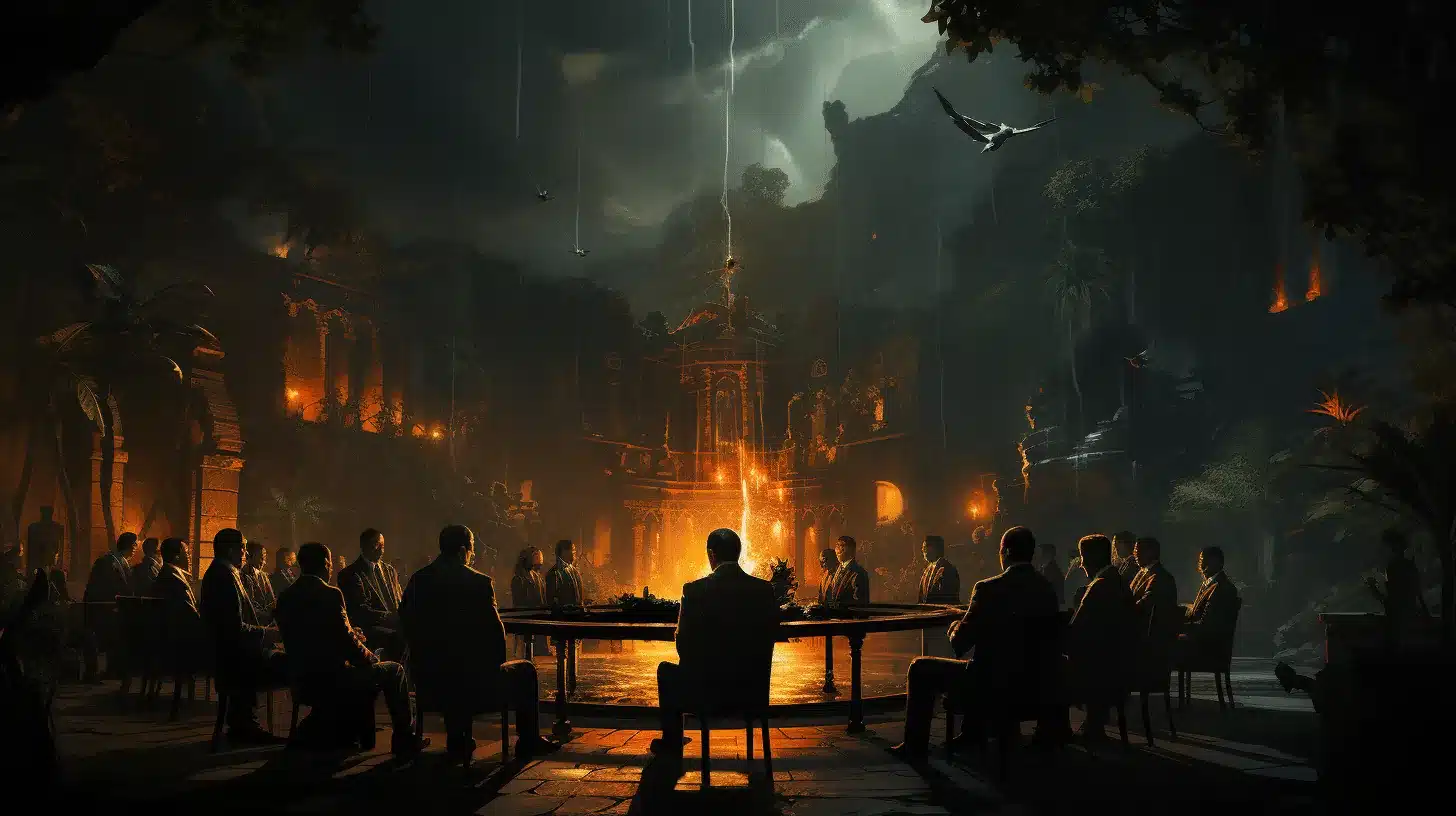
    The attendees of secret elite meetings read like a Who’s Who of the political and corporate elite. Prominent figures such as Angela Merkel, Nicolas Sarkozy, Tony Blair, Gordon Brown, José Manuel Barroso, and Bill Gates have all been part of these exclusive gatherings. These meetings have laid the foundations for a closely linked network of influential individuals that have had a decisive influence on the course of the world. It’s no wonder that these meetings attract attention and speculation. One radio show, ‘Ground Zero with Clyde Lewis,’ has even delved into the mysterious origins and impact of these elite gatherings. With such high-profile attendees, it’s no wonder that these meetings have become a topic of intrigue and fascination.

    Controversies and Conspiracy Theories

    Controversies and conspiracy theories have always surrounded secret elite meetings like the Bilderberg Group and the World Economic Forum. One of the most enduring conspiracy theories is the Illuminati conspiracy theory, which suggests that a secret society controls world events and influences governments. Despite a lack of concrete evidence, this theory continues to captivate the public’s imagination. Conspiracy theories challenge our beliefs and remind us that truth can be stranger than fiction.

    Unveiling the World Economic Forum

    The Annual Gathering of Global Leaders

    Every year, the World Economic Forum (WEF) hosts the Annual Meeting of the World Economic Forum, also known as the Davos Summit. This prestigious event brings together more than 100 governments, major international organizations, the top 1,000 global companies, and other influential institutions. The meeting serves as a platform for promoting public-private partnerships at the highest level.

    At the Annual Meeting, global leaders discuss a wide range of topics, with a particular focus on new technologies and their impact on decision-making and global partnerships. The WEF believes that these meetings are crucial for shaping the global agenda and fostering collaboration among key stakeholders.

    Here are some key highlights of the Annual Gathering of Global Leaders:

    • More than 100 governments and major international organizations participate
    • The top 1,000 global companies are represented
    • The meeting focuses on new technologies and their impact
    • Public-private partnerships are promoted

    As the world’s most influential leaders gather in Davos, they have the opportunity to shape policies and initiatives that can have a significant impact on the global economy and society as a whole. The Annual Meeting of the World Economic Forum is a unique platform where leaders come together to address pressing global challenges and explore innovative solutions.

    The Agenda: Shaping the Global Economy

    The agenda of secret elite meetings, such as the World Economic Forum, goes beyond mere discussions. It aims to shape the global economy in profound ways. Here are some key aspects:

    1. Policy-making: These meetings bring together influential leaders from various sectors to discuss and make decisions on economic policies that impact nations and industries.
    2. Collaboration: The forum provides a platform for collaboration between governments, businesses, and civil society organizations, fostering partnerships that drive economic growth and development.
    3. Innovation: Participants explore innovative ideas and solutions to address global economic challenges, paving the way for technological advancements and sustainable practices.
    4. Globalization: The agenda promotes globalization by encouraging international trade, investment, and cooperation, aiming to create a more interconnected and prosperous world.

    Tip: The decisions made during these meetings can have far-reaching consequences, shaping the economic landscape for years to come.

    The agenda of secret elite meetings is not limited to economic matters alone. It also encompasses discussions on social and environmental issues, recognizing the interconnectedness of these factors in shaping the global economy.

    The Impact of Davos on Policy-making

    The annual meeting of the World Economic Forum in Davos has a significant impact on policy-making at a global level. Here are some key ways in which Davos influences policy:

    • High-level discussions: The meeting brings together leaders from governments, international organizations, and major companies, providing a platform for in-depth discussions on pressing global issues.
    • Public-private partnerships: Davos promotes the concept of public-private partnerships as a means to address complex challenges. It emphasizes the importance of collaboration between governments and businesses in finding solutions.
    • Agenda-setting: The agenda of the Davos meeting often sets the tone for global policy discussions throughout the year. The topics and themes discussed at Davos can shape the priorities of governments and international organizations.
    • Networking and influence: Davos is known for its networking opportunities, allowing participants to connect with influential individuals from various sectors. These connections can lead to partnerships, collaborations, and even policy influence.

    Support more articles like this.

    Power and Influence at Secret Elite Meetings

    Behind Closed Doors: Decision-making

    Behind closed doors, the decision-making process at secret elite meetings is shrouded in mystery. Powerful individuals from various sectors come together to discuss and shape global agendas. Here’s a glimpse into how decisions are made:

    • Confidential discussions: Participants engage in confidential discussions, allowing for frank exchanges of ideas and perspectives.
    • Consensus-building: Decision-making often involves consensus-building, where participants work towards finding common ground and reaching agreements.
    • Influence of lobbyists: Lobbyists and corporate interests play a significant role in shaping decisions, as they advocate for their agendas and try to sway the opinions of attendees.

    Tip: Decision-making at these meetings can have far-reaching implications, influencing global politics and policies.

    The closed-door nature of these meetings has led to criticism and concerns about transparency and democracy. However, they continue to be influential gatherings where key decisions are made.

    The Role of Lobbyists and Corporate Interests

    Lobbyists and corporate interests play a significant role in secret elite meetings, exerting their influence behind closed doors. These powerful entities have the resources and connections to shape global agendas and policies to their advantage. They use their lobbying power to push for policies that benefit their industries and protect their interests. Corporate stakeholders from industries such as oil, agri-business, and finance are often present at these meetings, seeking to further their own agendas. The presence of lobbyists and corporate interests raises concerns about the influence they have on decision-making processes and the potential for conflicts of interest.

    The Influence on Global Politics

    Secret elite meetings have a significant influence on global politics. These gatherings bring together powerful individuals from various sectors, including government, business, and academia, to discuss and shape policies that have far-reaching implications. Decision-making behind closed doors allows for candid conversations and strategic planning that can shape the direction of global affairs. Lobbyists and corporate interests also play a role in these meetings, using their influence to push for policies that align with their agendas. The decisions made at these meetings can have a direct impact on global economies, international relations, and the overall balance of power.

    The Elitist Club: Who Gets Invited?

    The Selection Process: Criteria and Exclusivity

    The selection process for secret elite meetings is highly exclusive and carefully curated. Only a select few individuals are invited to attend these gatherings, and the criteria for selection are often shrouded in secrecy. Exclusivity is a key aspect of these meetings, as they are designed to bring together the most influential and powerful individuals from various fields. The attendees are typically leaders from politics, business, academia, and civil society who have demonstrated exceptional achievements and influence in their respective domains.

    The process of invitation is often based on personal connections and networks, with current attendees having the power to nominate potential new members. This ensures that the gatherings remain exclusive and limited to a select group of individuals who are considered to be the most influential and connected in the world. The secretive nature of the selection process adds to the allure and mystique surrounding these elite meetings, fueling speculation and curiosity about who gets invited and why.

    The Power of Networking and Connections

    Networking and connections play a crucial role in secret elite meetings. It is through these networks that influential individuals come together to shape global agendas and policies. Building relationships and establishing connections with like-minded individuals allows participants to exchange ideas, share information, and collaborate on projects that have far-reaching implications.

    In these exclusive gatherings, networking is not just about making small talk and exchanging business cards. It is about forging alliances and strengthening existing power structures. The connections made at these meetings can have a significant impact on the allocation of resources, policy-making decisions, and even global politics.

    To be invited to these elite gatherings, individuals often need to have a track record of influence and access to resources. It is not just about who you know, but also about what you can bring to the table. Those who have the ability to mobilize support, shape public opinion, or control key industries are highly sought after.

    In addition to the formal networking opportunities, there are also informal networks that exist outside of the official agenda. These informal networks, often formed during social events or private meetings, can be just as influential as the formal discussions. It is in these informal settings that deals are made, alliances are formed, and strategies are devised.

    While networking and connections are essential for the success of these secret elite meetings, they also raise concerns about transparency and democracy. Critics argue that these gatherings perpetuate a system of elitism and exclusivity, where decisions are made behind closed doors and without the input of the wider public. As a result, there has been a growing movement towards grassroots movements and counter-summits that aim to challenge the power dynamics of these elite gatherings.

    The Elusive Invitation

    Getting an invitation to a secret elite meeting is no easy feat. It’s not like receiving a regular party invitation in the mail. Only a select few are chosen to attend these exclusive gatherings, and the criteria for selection are often shrouded in secrecy. Connections and networking play a crucial role in securing an invitation. Being part of influential circles and having powerful contacts increases your chances of being invited. But even then, there’s no guarantee. The organizers carefully curate the guest list to ensure a mix of influential individuals from various sectors. It’s a privilege to be invited, and those who receive the coveted invitation know they are part of an elite group.

    The Impact of Secret Elite Meetings

    Shaping Global Agendas and Policies

    Secret elite meetings have a significant impact on shaping global agendas and policies. These closed-door gatherings bring together influential leaders from various sectors to discuss and strategize on pressing global issues. Through their discussions and interactions, decisions are made that have far-reaching implications for economies, politics, and societies around the world.

    The Criticisms: Lack of Transparency and Democracy

    The lack of transparency and democracy in secret elite meetings has been a major point of criticism. Critics argue that these meetings are held behind closed doors, away from public scrutiny, which raises concerns about accountability and decision-making processes. The secretive nature of these gatherings has led to suspicions and conspiracy theories about the true intentions and actions of the attendees.

    Moreover, the selection process for participants in these meetings has been questioned. The criteria for invitation and the exclusivity of these events raise questions about fairness and representation. Some argue that these meetings primarily serve the interests of a select few, reinforcing existing power structures and excluding diverse perspectives.

    In response to these criticisms, grassroots movements and counter-summits have emerged as alternatives to challenge the influence of secret elite meetings. These movements aim to promote transparency, inclusivity, and democratic decision-making processes. They seek to empower individuals and communities to have a voice in shaping global agendas and policies.

    As Ryan Gable, host of ‘The Secret Teachings with Ryan Gable‘, points out, ‘It is essential to question the lack of transparency and democratic principles in these elite gatherings. By doing so, we can strive for a more equitable and accountable global governance system.’

    The Alternatives: Grassroots Movements and Counter-Summits

    While secret elite meetings like the Bilderberg Group and the World Economic Forum in Davos may dominate the headlines, there are alternative movements and gatherings that offer a different perspective. Grassroots movements and counter-summits have emerged as platforms for those who believe in a more inclusive and democratic approach to global decision-making. These movements aim to challenge the power dynamics and lack of transparency associated with elite gatherings. Here are a few examples of grassroots movements and counter-summits that have gained attention:

    1. Five grassroots climate justice movements COP28 could learn from: From Pakistan to Paraguay, these campaigns are trying to bring about changes in communities at the front line of the crisis.
    2. People’s Summit: Held parallel to the G20 Summit, the People’s Summit brings together activists, social movements, and organizations to discuss alternative visions for a more just and sustainable world.
    3. World Social Forum: The World Social Forum is an annual gathering of civil society organizations, activists, and intellectuals who come together to discuss and strategize on global issues.

    These grassroots movements and counter-summits provide a platform for marginalized voices and offer an alternative to the closed-door meetings of the elite. They emphasize the importance of inclusivity, transparency, and grassroots participation in shaping global agendas and policies.

    Secret elite meetings have a profound impact on the world, shaping the course of politics, economics, and society. These clandestine gatherings, held behind closed doors, bring together influential individuals from various sectors to discuss and strategize on global issues. The decisions made in these meetings often have far-reaching consequences, affecting the lives of ordinary people. If you want to uncover the truth behind these secret elite meetings and explore the hidden forces that shape our world, visit Aftermath Media. As the ultimate resource for parapolitics, UFOs, and conspiracies, Aftermath Media provides in-depth analysis, investigative reports, and thought-provoking content. Discover the untold stories and connect the dots to gain a deeper understanding of the forces at play. Join us on this journey of uncovering the truth and challenging the status quo. Visit Aftermath Media today!

    Unveiling the Tapestry of Global Elites

    In the intricate web of global governance, the threads of the Bilderberg Group, the World Economic Forum, and other elite gatherings weave a complex tapestry of power and influence. From the inception of the European Management Symposium to the high-profile assemblies in Davos, these meetings have been a stage for the world’s most influential figures to shape policies and strategies behind closed doors. The interplay between organizations like the CFR and the Trilateral Commission highlights a network that extends its reach into the highest echelons of politics, finance, and industry. As we’ve seen, the participants of these secretive summits often hold pivotal roles in steering global agendas, from climate change initiatives to economic frameworks. While the veil of secrecy remains a point of contention, the impact of these elite conclaves on our world is undeniable, prompting us to question the balance of power in a democratic society. In the end, understanding these gatherings is crucial to comprehending the forces that mold our collective future.

    Frequently Asked Questions

    What is the Bilderberg Group?

    The Bilderberg Group is a secretive annual conference attended by approximately 130-140 political leaders, experts, and influential individuals from the fields of politics, finance, industry, and academia. The meetings are closed to the public and the media, leading to speculation and conspiracy theories about their agenda and influence.

    Who attends the Bilderberg meetings?

    The attendees of the Bilderberg meetings include current and former political leaders, business executives, financiers, academics, and influential individuals from various fields. The participants are invited based on their expertise, influence, and potential to contribute to the discussions.

    What is the purpose of the Bilderberg meetings?

    The purpose of the Bilderberg meetings is to facilitate informal discussions on important global issues and promote dialogue between different sectors of society. The meetings aim to foster understanding, build relationships, and explore potential solutions to challenges facing the world.

    Are the decisions made at Bilderberg meetings binding?

    No, the Bilderberg meetings do not have the authority to make binding decisions. The discussions at the meetings are informal and serve as a platform for exchanging ideas and perspectives. Any decisions or actions resulting from the meetings depend on the individual participants and their respective positions of influence.

    What are the criticisms of the Bilderberg Group?

    Critics of the Bilderberg Group argue that the meetings lack transparency and democratic accountability. They claim that the closed-door nature of the meetings allows for undue influence and decision-making by a select few, without the input or scrutiny of the public. Conspiracy theories also abound, suggesting secretive agendas and global control.

    Are there any alternatives to the Bilderberg meetings?

    Yes, there are alternative gatherings and counter-summits organized by grassroots movements, activists, and civil society organizations. These events aim to provide a more inclusive and transparent platform for discussing global issues and promoting democratic participation in decision-making processes.

  • Worlds in Collision – The Work of Immanuel Velikovsky

    Worlds in Collision – The Work of Immanuel Velikovsky

    The prospect of a climate apocalypse has become a pressing concern in recent years, as scientific evidence increasingly points to the severe consequences of unchecked global warming. The potential for irreversible damage to our planet’s ecosystems and the well-being of future generations has sparked a sense of urgency among climate scientists, policymakers, and activists alike. This article delves into the critical thresholds of climate change, explores strategies for mitigation and adaptation, and discusses whether there is still room for optimism in the face of potential disaster.

    Key Takeaways

    • By 2035, we may reach a critical point of no return in climate action, after which limiting global warming to 1.5°C may no longer be possible.
    • Irreversible changes to the Earth’s climate system are driven by human activities such as deforestation and fossil fuel consumption.
    • A paradigm shift towards ‘apocalyptic optimism’ may be necessary to foster progress and inspire collective action against climate change.

    The Tipping Point: Understanding the Critical Thresholds of Climate Change

    The 2035 Deadline: A Point of No Return?

    We’re on the brink, folks. Scientists have circled 2035 on the calendar as the year we might cross a critical threshold. After that, stopping a 2-degree Celsius rise in Earth’s temperature becomes a pipe dream. This isn’t science fiction; it’s a countdown to potential disaster.

    Many experts agree that if we don’t act decisively, we’re headed for dire consequences. The study from the UK and Netherlands is crystal clear: act now or face irreversible repercussions. We’re looking at a future where ‘extremely unlikely’ becomes ‘impossible.’

    We’re not just up against the clock; we’re up against our own legacy of deforestation and fossil fuel addiction. It’s a legacy that’s pushing us closer to the edge.

    Here’s the kicker: it’s not just about temperature changes. It’s the domino effect—one disaster triggering another. We can’t afford to ignore the warnings any longer.

    • Key Takeaways:
      • 2035: The potential point of no return.
      • 2-degree Celsius rise: The line we must not cross.
      • Action required: Urgent and decisive.

    We’ve got to flip the script. It’s time for bold moves and a new narrative. ‘Apocalyptic optimism’ might sound like an oxymoron, but it’s the mindset we need to adopt. We can change the ending of this story, but only if we start rewriting it now.

    Irreversible Changes and the 2-Degree Celsius Benchmark

    We’re standing on a precipice, folks. The 2-degree Celsius mark isn’t just a number; it’s a line in the sand that Mother Nature drew with a shaky hand. Cross it, and we’re not just talking about longer summers or milder winters. We’re talking about a domino effect of catastrophic events that could reshape our world as we know it.

    The lessons of climate science have been incredibly clear: once we hit that 2-degree increase, we’re looking at irreversible changes. Coastal cities could become modern Atlantises, and extreme weather could go from headline news to just another Tuesday. The data doesn’t lie, and it’s screaming for us to pay attention.

    The Paradigm Shift we need is monumental. It’s not just about switching off lights or cycling to work. It’s about transforming how we live, how we consume, and how we think about our place on this planet. Here’s a snapshot of what we’re up against:

    • Heatwaves: Multiplication factor of 5x or more
    • Floods: Coastal areas at severe risk
    • Storms: Increased intensity and frequency

    We can’t afford to be passive spectators in this unfolding drama. It’s time to take the stage and act.

    The study led by UK and Netherlands scientists rings an alarm for 2035, a year that could mark a point of no return. If we don’t pivot now, we might just find ourselves in a future where the term ‘natural disaster’ loses all meaning because there’s nothing ‘natural’ about the chaos we’ve unleashed.

    The Role of Deforestation and Fossil Fuels in Climate Dynamics

    We’ve got ourselves into a real pickle with deforestation and fossil fuel usage. It’s like we’re on a runaway train heading for a cliff, and the brakes are busted. Scientists are clear: we must stop burning fossil fuels. The thickening blanket of greenhouse gases is our doing, and it’s heating up our planet at an alarming rate.

    But here’s the kicker: even if we cut out the pollution, we’re still in for a rough ride. Gaseous sulfur dioxide, a major pollutant from fossil fuels, lingers just a few days. When we cut the pollution, the impact is almost immediate. Unlike carbon dioxide, which can last for centuries in our atmosphere, we can witness rapid changes if we act decisively.

    Let’s talk numbers. Deforestation and fossil fuel emissions are the primary culprits behind the rapid increase in greenhouse gases. And it’s not just about the air we breathe; it’s about the entire climate system. Here’s a snapshot of the problem:

    • Greenhouse Gas Emissions: Skyrocketing due to human activities.
    • Deforestation: Stripping away our planet’s lungs, which raises CO2 levels.
    • Fossil Fuels: The addiction we need to kick, for our climate’s sake.

    We’re at a crossroads. Every moment we delay, the closer we get to a climate point of no return. It’s time to act decisively.

    We can’t ignore the signs. The discussions around climate disasters serve as a stark reminder of how fragile our planet is. We’re all in this together, and it’s time to rally and fight back against climate change.

    Navigating the Climate Crisis: Strategies for Mitigation and Adaptation

    Economic Impacts: Weighing Costs Against Climate Action

    We’re at a crossroads, folks. The climate crisis isn’t just impacting polar bears and melting ice caps; it’s hitting our wallets hard. Economic impacts are real and escalating. But what’s the price tag on the end of the world? We can’t afford to disregard the costs of inaction.

    Let’s break it down. We’ve got floods wiping out crops, hurricanes demolishing homes, and wildfires torching timber. These aren’t just headlines; they’re invoices being sent to our future. And as time ticks away, the costs become heavier. But some argue that the cost of mitigation is too steep. Can we honestly put a price on a livable planet?

    Here’s the kicker: investing in climate action can actually save us money over time. Think about it—renewable energy prices are plummeting like autumn leaves. Energy efficiency consistently helps cut bills left and right. And don’t forget the green jobs explosion; we’re forging a new economy here, folks!

    • Renewable Energy: More affordable than ever and continuing to drop.
    • Energy Efficiency: Slash costs while reducing your carbon footprint.
    • Green Jobs: A boom in employment opportunities across sustainable sectors.

    We’re not merely preserving the planet; we’re investing in our own prosperity. It’s a win-win if we play our cards right.

    So, let’s roll up our sleeves and get to it. We can’t allow the financial titans and media manipulators to dictate our future. It’s time to take charge of our destiny and make informed, sustainable choices that will yield results for years to come.

    Global Disasters and the Urgency of Decisive Measures

    We’re at a crossroads, folks. The planet’s sending out SOS signals, and we’re the only ones who can respond. Climate change isn’t going to wait for us to get our act together. It’s upon us, real as ever, and wreaking havoc. Observing the wildfires and hurricanes, the evidence is simply undeniable. We’ve seen studies, like the one from Earth System Dynamics in 2018, calling for immediate action.

    Our reaction? It has to be rapid and resolute. We must launch a full-scale mobilization. Cutting emissions, transitioning to renewables, and fortifying our cities is non-negotiable. We can’t forget the economic implications. The cost of inaction is dire; the counter measures? A bargain.

    • Cut emissions: Shift to clean energy sources.
    • Adapt infrastructure: Enhance urban resilience.
    • Economic turnaround: Invest in green innovations.

    We’re all in this together, and the time to act is slipping away, like sand in an hourglass.

    Let’s not look back down the line, regretting what could have been. The future isn’t etched in stone; we carry the chisels. Let’s carve out a survival path, avoiding regrets.

    ‘Apocalyptic Optimism’: A New Narrative for Climate Progress

    We’ve walked the line of despair, conjuring images of a world set ablaze, cities submerged by rising tides, and skies enveloped by smog. But wait—it’s high time to reimagine that destiny. We’re embracing ‘Apocalyptic Optimism’—a stirring belief that, against the grim backdrop of predictions, we wield the power to effect change. This isn’t just about survival; it’s about flourishing amidst challenges.

    Into the Parabnormal and Everything Out There—these aren’t mere broadcasts; they echo our relentless curiosity and refusal to accept defeat. We aren’t just passive spectators; we’re invested participants in our future.

    We’re redefining the narrative: each step we take is a stride towards a brighter horizon.

    Remember: optimism is not about sidestepping our challenges; it’s about channeling our shared strength to overcome them. We’ve got the tools and tenacity to tackle what comes next. Yes, there’s urgency in the air. The 2035 deadline is upon us—not as an alarm, but as a call to unity and initiative.

    • Embrace renewable energy
    • Innovate sustainable practices
    • Educate and empower communities

    These aren’t simple tasks; they’re clarion calls against the relentless march of time. Heroes don’t compel us from afar. We are the champions of this narrative, wielding the will to reap a better future. Together, let’s script this vibrant tale of resilience, creativity, and steadfast optimism.

    The Tipping Point: Understanding the Critical Thresholds of Climate Change

    The 2035 Deadline: A Point of No Return?

    As we sprint against a rapidly ticking clock, scientists forewarn that we might witness a point of no return around 2035. Imagine a world where the temperature dial is jammed, and we can’t revert it back to normal. This is the daunting fate we confront unless immediate action is taken.

    Irreversible shifts are just around the corner. Rising temperatures, melting glaciers, and increasingly severe weather could soon be our new reality. This is more than just concerning polar bears and dwindling icebergs; it dives into our homes, our food systems, and our very existence.

    The time to heed the warnings is upon us.

    As we wrap our heads around these intimidating challenges, banding together is critical for exploring actionable strategies for mitigation and adaptation. Our platform at Unexplained.co boasts an array of resources—including enriching podcasts, enlightening documentaries, and expert consultations—that empower informed decision-making. Become part of our proactive community by signing up for a complimentary trial at Aftermath Media today, and let’s make a tangible difference together.

    Frequently Asked Questions

    What is the 2035 deadline in the context of climate change?

    The 2035 deadline signifies a critical point pinpointed by scientists, beyond which it becomes incredibly unlikely to prevent the Earth’s temperature from rising by 2 degrees Celsius. Exceeding this threshold can unleash catastrophic climate-induced disasters globally.

    How can deforestation and fossil fuels impact climate change?

    Deforestation and fossil fuel combustion are significant contributors to climate change as they emit extensive greenhouse gases, particularly carbon dioxide, into the atmosphere, leading to a greenhouse effect that raises global temperatures. This results in severe repercussions, including extreme weather patterns and biodiversity decimation.

    What is ‘Apocalyptic Optimism’ in climate change discussions?

    ‘Apocalyptic Optimism’ reflects a narrative acknowledging the dire risks of climate change while emphasizing a positive, proactive stance that argues a potential success in averting disasters through effective climate action and adaptability.

  • The History of Space Wars – From Ronald Regan to Donald Trump

    The History of Space Wars – From Ronald Regan to Donald Trump

    The history of space wars is a captivating saga that spans several U.S. presidencies, marked by significant developments in space defense and strategic military initiatives.

    This article traces the evolution of space-related defense policies from the era of Ronald Reagan, with his ambitious Strategic Defense Initiative, to the establishment of the United States Space Force under Donald Trump.

    We explore the key moments and decisions that shaped the trajectory of space warfare and its implications for global security.

    Key Takeaways

    • The Strategic Defense Initiative (SDI), dubbed ‘Star Wars’, was a pivotal program initiated by Ronald Reagan with the aim of protecting the United States from ballistic missile attacks using space-based systems.
    • George H.W. Bush continued to develop space defense technologies, adapting them to post-Cold War realities and demonstrating their capabilities during the Gulf War.
    • Under George W. Bush and Barack Obama, space defense evolved with the withdrawal from the ABM Treaty, a focus on missile defense, and the rise of cyber warfare as a new domain of space defense.
    • Donald Trump’s presidency saw the establishment of the United States Space Force, marking a significant shift towards the formalization and modernization of space warfare capabilities.
    • International reactions to the advancements in space warfare have varied, with some viewing these developments as escalatory and others as necessary for national security, leading to a complex global security environment.

    The Dawn of Space Defense: Reagan’s Strategic Vision

    The Dawn of Space Defense: Reagan's Strategic Vision

    The Birth of the Strategic Defense Initiative

    In the midst of the Cold War, a bold vision emerged from the Oval Office. President Ronald Reagan announced the Strategic Defense Initiative (SDI), a program that would come to be known by its more cinematic moniker, Star Wars. The heart of the SDI program was a plan to develop a space-based missile defense system capable of protecting the United States from a large-scale nuclear attack.

    The initiative was as controversial as it was ambitious, aiming to shift the balance of power and redefine national security.

    SDI was not just about defense; it was about deterrence. By creating a shield against incoming missiles, the U.S. hoped to dissuade adversaries from launching an attack in the first place. Critics, however, argued that the technological hurdles were insurmountable and the costs astronomical.

    • 1983: Reagan announces SDI
    • 1987: INF Treaty signed
    • 1991: SDI restructured into BMDO

    Despite the skepticism, SDI spurred a wave of innovation in military technology and remains a pivotal moment in the history of space defense.

    Reagan and Gorbachev: The Summits that Shaped Space Security

    The Reykjavik Summit of 1986 was a turning point in the Cold War, a moment where two superpowers edged closer to disarmament. Reagan’s vision of a nuclear-free world clashed with the practicalities of his Strategic Defense Initiative (SDI), but the dialogue with Gorbachev opened new possibilities.

    Despite the tensions over intelligence operations and conflicts in Germany and Afghanistan, the two leaders pursued arms control with fervor. Their correspondence post-Geneva Summit laid the groundwork for Reykjavik, where they nearly achieved a historic reduction of nuclear arsenals. However, SDI remained a sticking point.

    The collapse of the agreement at Reykjavik did not end the conversation. It catalyzed further negotiations, leading to the INF Treaty, a landmark in space arms control.

    Reagan’s popularity soared post-INF, despite criticism. The thaw in relations led to cooperation on global issues and set the stage for a new era of openness between the U.S. and the Soviet Union.

    The INF Treaty: A Landmark in Space Arms Control

    The INF Treaty, signed in 1987, was a pivotal moment in space arms control. It marked the first time the United States and the Soviet Union agreed to eliminate an entire category of nuclear weapons. This historic agreement not only reduced the nuclear threat but also established a rigorous inspections regime to ensure compliance. The Senate’s overwhelming support, with a 93-to-5 vote in favor of ratification, underscored the treaty’s significance.

    Ground Zero with Clyde Lewis often delves into the complexities of such treaties and their implications for global security. The INF Treaty’s impact on space warfare cannot be overstated; it was a step towards a more stable and less weaponized outer space.

    The treaty’s success hinged on mutual trust and verification, setting a precedent for future arms control agreements.

    While the treaty dismantled only a fraction of the global nuclear arsenal, it was a crucial stride in the marathon for space peace and security. Here’s a quick look at the numbers:

    Type of Weapon Quantity Eliminated
    Short-range Missiles 1,846
    Medium-range Missiles 1,846

    The legacy of the INF Treaty lives on, reminding us that diplomacy can lead to tangible disarmament and a safer world.

    Navigating New Frontiers: George H.W. Bush and the Continuation of Star Wars

    Navigating New Frontiers: George H.W. Bush and the Continuation of Star Wars

    The Space Exploration Initiative: Beyond Defense

    President George H.W. Bush’s vision for space transcended mere defense. On the 20th anniversary of the Apollo 11 Moon Landing, he announced the ambitious Space Exploration Initiative (SEI). The goal? To establish a permanent human presence on the Moon and to lay the groundwork for a manned mission to Mars. This was a bold leap towards making science fiction a reality.

    The SEI aimed to inspire a new generation, much like the Apollo missions did. It wasn’t just about flexing military muscle in space; it was about reigniting the human spirit that had propelled us to the stars. The initiative faced criticism for its potential costs and feasibility, but it underscored a fundamental belief: space was a frontier not just for conquest, but for exploration and discovery.

    The SEI was a testament to the enduring allure of the cosmos, a siren call to humanity’s innate desire to explore the unknown.

    Despite the challenges, the SEI planted seeds for future space endeavors. It was a stepping stone that would eventually lead to more sophisticated space policies and the involvement of private entities in space exploration. The echoes of Bush’s vision can still be heard in today’s space ventures.

    Adapting SDI to Post-Cold War Realities

    With the Cold War thawing, the Strategic Defense Initiative (SDI) faced a new world order. Critics had long labeled SDI as Star Wars, a nod to its perceived fantasy of an impenetrable defense shield. The project’s feasibility and cost were increasingly questioned as the geopolitical landscape shifted.

    The collapse of the Soviet Union and the end of the Cold War in 1991 marked a turning point. SDI, once a symbol of U.S. technological might against Soviet aggression, now seemed out of step with the times. The initiative was officially canceled in 1993, but its legacy lived on in the form of new defense strategies that acknowledged the changing nature of threats.

    The pivot from SDI reflected a broader reassessment of national security priorities in a post-Cold War era.

    The following list highlights key factors that influenced the adaptation of space defense post-Cold War:

    • The dissolution of the Soviet Union reduced the perceived nuclear threat.
    • Advances in technology shifted focus to more achievable missile defense systems.
    • The rise of non-state actors and cyber threats necessitated a different defense approach.
    • Budget constraints and public skepticism led to a reevaluation of defense spending.

    The SDI’s ambitious vision ultimately gave way to more nuanced and flexible defense strategies, fitting for a world where the mysteries of global security were as complex as the mysteries of Atlantis.

    The Gulf War: Testing Space Capabilities in Combat

    The Gulf War marked a pivotal moment in the history of space capabilities. For the first time, space technology was not just a matter of strategic defense, but an active participant in combat operations. Satellites provided critical intelligence and communication, while GPS guided precision strikes with an accuracy previously unseen in warfare.

    • Satellite reconnaissance became the eyes in the sky.
    • GPS technology revolutionized battlefield tactics.
    • Anti-satellite weapons (ASATs) were a looming threat.

    The war’s success hinged on these space-based assets, underscoring the importance of space in modern warfare. It was a real-world demonstration that space was no longer a neutral zone, but a contested domain where superiority could mean the difference between victory and defeat.

    The Gulf War’s legacy is a testament to the foresight of those who advocated for space defense. It validated the investments made under Reagan and continued by Bush, setting the stage for future advancements.

    As Into the Parabnormal with Jeremy Scott delves into the unknown, so too does the realm of space warfare continue to push the boundaries of what we thought possible. The Gulf War was just the beginning of a new era where the stars are not just points of light in the night sky, but critical high ground in the theater of war.

    A New Millennium: Space Defense under George W. Bush and Barack Obama

    A New Millennium: Space Defense under George W. Bush and Barack Obama

    Missile Defense and the ABM Treaty Withdrawal

    In the early 2000s, the landscape of space defense underwent a seismic shift. The United States withdrew from the Anti-Ballistic Missile (ABM) Treaty, a cornerstone of Cold War-era arms control. This bold move paved the way for new missile defense strategies, unfettered by the treaty’s limitations.

    The ABM Treaty, signed in 1972, was designed to prevent an arms race in anti-ballistic missile systems. It allowed for only two ABM sites per country, ensuring a balance of power—or mutual vulnerability—between the superpowers. The withdrawal signaled a new era where space defense could evolve without these constraints.

    The withdrawal was not just a strategic maneuver; it was a statement of intent. The U.S. was ready to explore new horizons in missile defense technology.

    The implications were immediate. Research and development in missile defense systems accelerated, with initiatives like the Ground-based Midcourse Defense (GMD) coming to the forefront. Here’s a snapshot of the post-ABM Treaty era:

    • Increased funding for missile defense research
    • Deployment of new missile defense systems
    • Enhanced cooperation with allies on missile defense

    The decision was met with both acclaim and criticism. Proponents saw it as a necessary step towards adapting to new threats, while detractors warned of a potential arms race. Yet, the move undeniably reshaped the strategic landscape, ushering in a period of innovation and uncertainty in space defense.

    The Rise of Cyber Warfare and Space Defense

    The 21st century brought a new battlefield to the fore: cyberspace. Cyber warfare became a critical component of national defense, intertwining with space capabilities. Nations realized that satellites and other space assets were not just vulnerable to physical attacks but also to cyber threats. The reliance on technology for communication, navigation, and intelligence meant that a cyberattack could cripple military operations and critical infrastructure.

    Space defense strategies evolved to include cyber resilience. Governments invested in protecting their space-based assets from hacking and other forms of cyber intrusion. The U.S., for instance, established the Cyber Command to operate alongside its space entities.

    • Cybersecurity measures for space systems
    • Training for personnel in cyber defense
    • International cooperation on cyber threats

    The fusion of cyber and space defense is not just about protection; it’s about maintaining strategic advantage in an increasingly contested domain.

    Obama’s Approach to Space Security: Continuity and Change

    Under President Obama, space security was a blend of old and new. The administration upheld traditional defense strategies while embracing the digital age’s challenges. Cyber warfare became a pivotal concern, with space assets increasingly seen as critical infrastructure vulnerable to digital threats.

    Obama’s policy continued to focus on international cooperation and the prevention of an arms race in space. Following the latest policy, the Department of Defense and the Office of the Director of National Intelligence worked on developing a comprehensive national security space strategy.

    The emphasis was on resilience, with efforts to ensure that space systems could withstand or quickly recover from attacks.

    The administration’s approach was not without its critics. Some argued that the focus on cyber threats and international diplomacy left traditional space defense capabilities underfunded and underdeveloped.

    The Final Frontier: Trump’s Space Force and the Modernization of Space Warfare

    The Final Frontier: Trump's Space Force and the Modernization of Space Warfare

    Establishing the United States Space Force

    In a historic move, President Donald Trump signed the 2020 Defense Bill into law, officially establishing the U.S. Space Force. This marked the birth of the first new independent military service since 1947, propelling America into a new era of space defense. The Space Force was created to protect U.S. interests in what is rapidly becoming the next battleground: the cosmos.

    The establishment of the Space Force was met with both excitement and skepticism. Critics questioned the necessity and cost of such a force, drawing parallels to Reagan’s controversial Strategic Defense Initiative, dubbed “Star Wars”. Supporters, however, saw it as a crucial step in maintaining U.S. dominance in space amid growing competition from other nations.

    The Space Force aims to secure the United States’ position as a leader in space, ensuring that the final frontier remains open for exploration and defense.

    Here’s a quick look at the Space Force’s initial objectives:

    • Protect U.S. satellites and other space assets.
    • Monitor space for hostile actions and potential threats.
    • Develop space warfare tactics and technologies.
    • Collaborate with other branches of the U.S. military and allied space programs.

    Space Policy Directive-4 and the Future of Space Warfare

    The signing of Space Policy Directive-4 marked a pivotal moment in the history of space warfare. It set the stage for the United States to formally establish the Space Force, a new branch of the military dedicated to space as a warfighting domain. This directive not only redefined the military’s role in space but also signaled a future where space capabilities are integral to national defense.

    The Secret Teachings with Ryan Gable has often discussed the implications of militarizing space. The show highlights concerns about the weaponization of the cosmos and the potential for a new arms race. As nations look to the stars, the balance of power on Earth could be reshaped by who controls the high ground of space.

    The creation of the Space Force is a testament to the evolving nature of warfare. It acknowledges that the next major conflict may not be fought on land, sea, or air, but among the stars.

    The international community has reacted with a mix of intrigue and apprehension. Some see the Space Force as a necessary step in securing assets and deterring aggression. Others view it as an escalation that could lead to conflict. The table below summarizes key international reactions:

    Country Reaction
    Russia Concerned about arms race
    China Calls for space arms control
    EU Seeks to maintain space peace
    India Interested in collaboration

    As we venture further into the unknown, the importance of space in strategic security will only grow. The future of space warfare is unwritten, but the actions taken today will shape the cosmos for generations to come.

    International Reactions and the Implications for Global Security

    The establishment of the United States Space Force sparked a global debate on the militarization of space. While some nations viewed it as a necessary step towards protecting assets in space, others saw it as an escalation in space warfare. The international community grappled with the implications for global security and the potential for an arms race in space.

    International reactions were mixed. The United Nations General Assembly saw a divide, with some members calling for space to remain a domain of peace. Others argued that national security extends to space, citing the need for defensive measures against potential threats.

    The Space Force’s creation prompted discussions on updating international laws governing space. The Outer Space Treaty of 1967, which prohibits the placement of weapons of mass destruction in space, does not address the use of conventional weapons. This legal gap has led to calls for new treaties to prevent conflict and ensure space remains a shared, peaceful frontier.

    The future of space warfare is uncertain, but the actions taken today will shape the cosmos of tomorrow.

    The Space Force website, titled “Space Force,” provides insight into the official stance and objectives of the new military branch. As nations navigate this uncharted territory, the balance between competition and cooperation will be critical.

    Conclusion

    The journey through the history of space wars, from the ambitious visions of Ronald Reagan to the assertive policies of Donald Trump, reflects a continuum of American leadership’s fascination with space as a strategic frontier. Reagan’s Strategic Defense Initiative, colloquially known as ‘Star Wars’, marked the inception of space defense as a serious element of national security. Trump’s establishment of the U.S. Space Force as the sixth branch of the military solidified space’s role in contemporary defense strategy. This evolution underscores the enduring allure of the cosmos as a domain of both wonder and warfare, a duality that has captivated policymakers and the public alike. As we look to the stars, we grapple with their peaceful exploration and the potential for conflict, a narrative that is as old as humanity itself but as current as the latest satellite launch.

    Frequently Asked Questions

    What was the Strategic Defense Initiative (SDI) proposed by President Reagan?

    The Strategic Defense Initiative, also known as ‘Star Wars,’ was a proposed missile defense system intended to protect the United States from attack by ballistic strategic nuclear weapons. Announced by President Reagan in 1983, SDI aimed to use ground-based and space-based systems to shield the nation from incoming missiles.

    How did the end of the Cold War affect space defense policies?

    The end of the Cold War led to a shift in space defense policies from a focus on strategic missile defense against the Soviet Union to broader concerns including rogue states and non-state actors. It also opened up opportunities for cooperation in space exploration and reduced the immediacy of the space-based arms race.

    What is the significance of the INF Treaty in space arms control?

    The Intermediate-Range Nuclear Forces (INF) Treaty, signed by President Reagan and Soviet leader Gorbachev in 1987, was significant for space arms control as it eliminated an entire class of nuclear missiles. While not directly related to space weaponry, it marked a turning point in the superpowers’ relations and set a precedent for future arms control agreements.

    What role did the Gulf War play in the evolution of space warfare?

    The Gulf War in 1991 demonstrated the military value of space-based assets, particularly in precision targeting and battlefield communications. The conflict highlighted the importance of space technology in modern warfare and led to increased investment and development in military space capabilities.

    How did President Trump’s administration advance U.S. space warfare capabilities?

    President Trump’s administration made significant advances in U.S. space warfare capabilities by establishing the United States Space Force in 2019, the first new independent military service branch since 1947. This move recognized space as a warfighting domain and aimed to ensure U.S. dominance and security in space.

    What are the global implications of the creation of the U.S. Space Force?

    The creation of the U.S. Space Force has significant global implications, including the potential for a new space arms race as other countries may follow suit to protect their own interests in space. It also raises concerns about the militarization of space and the need for international agreements to prevent conflict and ensure the peaceful use of outer space.

  • An Unforgettable Night at the Bohemian Grove: As Told by an Kid Rock

    An Unforgettable Night at the Bohemian Grove: As Told by an Kid Rock

    It’s not very often that celebrities open up about their run-ins with the secretive societies that seem to lurk just beneath our world’s surface. That’s why Kid Rock‘s recent revelations about his visit to the fabled Bohemian Grove in California – relayed to Joe Rogan during a recent episode of The Joe Rogan Experience – are creating such a buzz.

    Bohemian Grove is no ordinary retreat. Nestled in the woods, this mysterious and secluded campground is reportedly frequented by influential figures and celebrities for secretive gatherings. Known for its lore and exclusivity, one might assume the experience is full of sinister rituals and profound, clandestine conversations.

    Kid Rock’s reality? Not so much.

    According to Kid Rock, the experience was bizarre, involving an uninvited kid who apparently infiltrated the event, causing a small scuffle. Rock depicted the scene as one filled with unexpected confrontations, fancy campsites, and private chefs for everyone. Made to share a room with Jimmy John (founder of Jimmy John’s Gourmet Sandwiches), the experience was everything but conventional.

    While bizarre experiences were afoot, there was also an element of levity. According to Kid Rock, one highlight of the trip was Tony Danza as the opening speaker, an announcement that left him somewhat bemused and deflated. The expectation of witnessing a super-secret summit was replaced with the humorous reality of the Who’s The Boss actor on stage.

    Despite the strange atmosphere, Kid Rock did find some aspects of the meetup rather intriguing. Life-altering conversations about impending asteroids and scientific breakthroughs and meeting influential figures like Paul Pelosi and Chris Matthews made the event a mixed bag of weird and fascinating.

    He also touched upon an unspoken musical obligation of the celebrities present. They were expected to perform, subtly hinting that these performances were the key to staying in the grove’s good graces. Kid Rock aversely felt ‘used’ when asked to whip out his guitar and perform.

    While some might see Bohemian Grove as a playground for the rich and powerful, from Kid Rock’s perspective, it’s just an odd and offbeat retreat not worth revisiting. Far from being the covert hub of the global elite, Kid Rock’s narrative paints it more as a curious blend of summer camp, secret society, and star-studded surrealism � with a dash of absurdity thrown in for good measure.

    It seems that, despite the paranoia and theories around the Bohemian Grove, the reality might be more of an enigmatic retreat for the quirky side of the rich and the famous. Kid Rock’s unflinchingly honest recount of his Bohemian Grove experience serves as a hilarious check on our sensationalised assumptions and a reminder that sometimes, the reality is just as bewildering as the myth.

  • Biohacking 101: The Beginner’s Guide to Optimizing Your Biology for Superior Health

    Biohacking 101: The Beginner’s Guide to Optimizing Your Biology for Superior Health

    The prospect of a climate apocalypse has become a pressing concern in recent years, as scientific evidence increasingly points to the severe consequences of unchecked global warming. The potential for irreversible damage to our planet’s ecosystems and the well-being of future generations has sparked a sense of urgency among climate scientists, policymakers, and activists alike. This article delves into the critical thresholds of climate change, explores strategies for mitigation and adaptation, and discusses whether there is still room for optimism in the face of potential disaster.

    Key Takeaways

    • By 2035, we may reach a critical point of no return in climate action, after which limiting global warming to 1.5C may no longer be possible.
    • Irreversible changes to the Earth’s climate system are being driven by human activities such as deforestation and fossil fuel consumption.
    • A paradigm shift towards ‘apocalyptic optimism’ may be necessary to foster progress and inspire collective action against climate change.

    The Tipping Point: Understanding the Critical Thresholds of Climate Change

    The 2035 Deadline: A Point of No Return?

    We’re on the brink, folks. Scientists have circled 2035 on the calendar as the year we might cross a critical threshold. After that, stopping a 2-degree Celsius rise in Earth’s temperature becomes a pipe dream. This isn’t science fiction; it’s a countdown to potential disaster.

    The studies from the UK and Netherlands are clear: act now or face irreversible consequences. We’re talking about a future where ‘extremely unlikely’ becomes ‘impossible.’

    We’re not just up against the clock; we’re up against our own legacy of deforestation and fossil fuel addiction. It’s a legacy that’s pushing us closer to the edge.

    Here’s the kicker: it’s not just about the temperature. It’s the domino effect—one disaster triggering another. We can’t afford to ignore the warnings any longer.

    • Key Takeaways:
      • 2035: The potential point of no return.
      • 2-degree Celsius rise: The line we must not cross.
      • Action required: Urgent and decisive.

    We’ve got to flip the script. It’s time for bold moves and a new narrative. ‘Apocalyptic optimism’ might sound like an oxymoron, but it’s the mindset we need to adopt. We can change the ending of this story, but only if we start rewriting it now.

    Irreversible Changes and the 2-Degree Celsius Benchmark

    We’re standing on a precipice, folks. The 2-degree Celsius mark isn’t just a number; it’s a line in the sand that Mother Nature drew with a shaky hand. Cross it, and we’re not just talking about longer summers or milder winters. We’re talking about a domino effect of catastrophic events that could reshape our world as we know it.

    The principles of climate science have been exceedingly clear: once we hit that 2-degree increase, we’re looking at irreversible changes. Coastal cities could become modern Atlantises, and extreme weather could transition from headline news to just another Tuesday. The data doesn’t lie, and it’s screaming for us to pay attention.

    The Paradigm Shift we need is monumental. It’s not just about switching off lights or cycling to work. It’s about transforming how we live, how we consume, and how we think about our place on this planet. Here’s a snapshot of what we’re up against:

    • Heatwaves: Multiplication factor of 5x or more
    • Floods: Coastal areas at severe risk
    • Storms: Increased intensity and frequency

    We can’t afford to be passive spectators in this unfolding drama. It’s time to take the stage and act.

    The study led by UK and Netherlands scientists rings an alarm for 2035, a year that could mark a point of no return. If we don’t pivot now, we might just find ourselves in a future where the term ‘natural disaster’ loses all meaning because there’s nothing ‘natural’ about the chaos we’ve unleashed.

    The Role of Deforestation and Fossil Fuels in Climate Dynamics

    We’ve got ourselves into a real pickle with deforestation and burning fossil fuels. It’s like we’re on a runaway train heading for a cliff, and the brakes are busted. Scientists are clear: we need to stop burning fossil fuels. The thickening blanket of greenhouse gases is our doing, and it’s heating up our planet at an alarming rate.

    But here’s the kicker: even if we cut out the pollution, we’re still in for a rough ride. Gaseous sulfur dioxide, a major pollutant from fossil fuels, lingers just a few days. When we cut the pollution, the impact is almost immediate. Unlike carbon dioxide, which can last for centuries in our atmosphere, we can see substantial changes if we act swiftly.

    Let’s talk numbers. Deforestation and fossil fuel emissions are the main culprits behind the rapid increase in greenhouse gases. And it’s not merely about the air we breathe; it’s about the entire climate system. Here’s a snapshot of the problem:

    • Greenhouse Gas Emissions: Skyrocketing due to human activities.
    • Deforestation: Stripping away our planet’s lungs, contributing to CO2 levels.
    • Fossil Fuels: The addiction we need to kick, for our climate’s sake.

    We’re at a crossroads. Every moment we delay, the closer we get to a climate point of no return. It’s time to take decisive action.

    We can’t afford to ignore the signs. The discussions around impending climate disasters highlight just how fragile our environment is. We’re in this together, and it’s time to rally and turn the tide on climate change.

    Navigating the Climate Crisis: Strategies for Mitigation and Adaptation

    Economic Impacts: Weighing Costs Against Climate Action

    We’re at a crossroads, folks. The climate crisis isn’t merely about polar bears and melting ice caps; it’s hitting us financially, hard. Economic impacts are real and escalating. But what’s the price tag on the end of the world? We can’t afford to overlook the costs of inaction.

    Let’s break it down. We’ve got floods wiping out crops, hurricanes destroying homes, and wildfires consuming valuable resources. These aren’t just headlines; they’re bills coming due for our future. And the longer we defer action, the steeper the cost becomes. Yet some contend the price of mitigation seems too formidable. Can we truly assign a value to a livable planet?

    Here’s the kicker: investing in climate action can actually save us money in the long run. Consider this: renewable energy prices are plummeting like autumn leaves. Energy efficiency is the gift that keeps on giving – effortlessly trimming bills while cutting emissions. And let’s not forget the forthcoming green jobs boom; we’re looking at a whole new economy here, folks!

    • Renewable Energy: More affordable than ever and continuing to decrease.
    • Energy Efficiency: Reducing costs and carbon footprints at once.
    • Green Jobs: A surge of employment opportunities in sustainable sectors.

    We’re not just saving the planet; we’re investing in our own prosperity. It’s a twofold win if we play our cards right.

    So, let’s roll up our sleeves and act. We can’t let the financial titans and media manipulators dictate our future. It’s high time we take charge of our narrative and make smart, sustainable choices that will benefit generations.

    Global Disasters and the Urgency of Decisive Measures

    We’re at a critical juncture, folks. The planet’s sending out SOS signals, and we’re the only ones who can respond. Climate change isn’t going to wait for us to get our act together. It’s among us, palpable and potent, wreaking havoc day by day. From wildfires to hurricanes, the evidence is undeniable. We’ve seen the studies that scream for immediate action.

    Our response? It must be urgent and unwavering. We’re looking at mobilizing behavior that actively combats the incoming storm. We need to cut emissions, opt for renewables, and make our cities resilient. Let’s not overlook the economic ramifications. The cost of inaction? Catastrophic. The price of acting? A smart investment.

    • Cut emissions: Transition to clean energy.
    • Adapt infrastructure: Develop resilience within cities.
    • Economic overhaul: Invest in green technology.

    We’re united in this; the time to act is fleeting, passing swiftly like grains of sand in an hourglass.

    Let’s not look back, wishing we’d taken stronger stances. The future isn’t plotted in stone; we have the power to chisel it into reality. Let’s create a sustainable pathway that leads to triumph, not regret.

    ‘Apocalyptic Optimism’: A New Narrative for Climate Progress

    We’ve wandered down the doomsday trail, invoking visions of a world engulfed in flames, cities submerged beneath tumultuous waves, and skies smothered in toxic haze. But it’s time to flip the script! We’re embracing ‘Apocalyptic Optimism’—the belief that, despite the prevailing gloom, we retain the power to effectuate positive change. It’s about thriving, even when survival seems precarious.

    Into the Parabnormal and Everything Out There—these aren’t just shows; they epitomize our ceaseless curiosity and our indomitable spirit refusing to accept defeat. We aren’t just passive recipients of fate; we’re active participants in defining our tomorrow.

    We’re building a new narrative with every action taken, advancing toward a brighter tomorrow.

    Here’s the crux: optimism is not about sidestepping the mess in front of us; it’s about uniting our strengths to confront it head-on. We stand ready to face whatever future encroaches. Remember, 2035 isn’t just a looming specter; it’s our call to arms, our declaration for change.

    • Embrace renewable energy
    • Innovate sustainable practices
    • Educate and empower communities

    These aren’t trivial points—they’re our clarion call against the relentless march of time. We stand not waiting for heroes—they’re standing among us as each one of us fights for our common future. Let’s draft this tale of resilience together, filled with innovation and relentless hope!

    The Tipping Point: Understanding the Critical Thresholds of Climate Change

    The 2035 Deadline: A Point of No Return?

    As we hover over a ticking clock, scientists predict that we could reach a climate point of no return around 2035. Imagine a world where the temperature gauge is stuck, and we can’t reset it back to an acceptable level. That’s the precarious reality we’re grappling with unless we take immediate action.

    Irreversible changes loom large. Rising temperatures, melting ice caps, and extreme weather could become part of our daily lives. It’s not solely about endangered polar bears; it’s about our homes, our food stability, and our survival hanging in the balance.

    We can’t afford to ignore the alerts any longer.

    As we tackle the extensive challenges of the climate crisis, it’s vital that we unite to explore actionable strategies for mitigating and adapting. Our platform at Unexplained.co provides a wealth of resources—including informative podcasts, documentaries, and expert discussions—to empower you to take meaningful action. Join our active community by signing up for a free trial at Aftermath Media, and let’s create a positive force for change.

    Frequently Asked Questions

    What is the 2035 deadline concerning climate change?

    The 2035 deadline represents a critical threshold identified by experts, beyond which it may become exceedingly improbable to prevent the Earth’s temperature from having risen by 2 degrees Celsius. Exceeding this limit could lead to disastrous climate-related phenomena worldwide.

    How do deforestation and fossil fuels affect climate change?

    Deforestation and fossil fuel combustion are significant contributors to global climate change, releasing vast amounts of greenhouse gases—especially carbon dioxide—into the atmosphere, leading to a greenhouse effect that raises global temperatures, resulting in catastrophic environmental impacts, such as extreme weather events and biodiversity loss.

    What does ‘Apocalyptic Optimism’ mean in climate discussions?

    ‘Apocalyptic Optimism’ denotes a perspective that recognizes the gravity of climate change challenges while emphasizing a positive, proactive approach that underscores the potential for preventing disaster through decisive action.

  • Apophis: Unveiling the Mystery of the Near Earth Asteroid

    Apophis: Unveiling the Mystery of the Near Earth Asteroid

    The prospect of a climate apocalypse has become a pressing concern in recent years, as scientific evidence increasingly points to the severe consequences of unchecked global warming. The potential for irreversible damage to our planet’s ecosystems and the well-being of future generations has sparked a sense of urgency among climate scientists, policymakers, and activists alike. This article delves into the critical thresholds of climate change, explores strategies for mitigation and adaptation, and discusses whether there is still room for optimism in the face of potential disaster.

    Key Takeaways

    • By 2035, we may reach a critical point of no return in climate action, after which limiting global warming to 1.5°C may no longer be possible.
    • Irreversible changes to the Earth’s climate system are being driven by human activities such as deforestation and fossil fuel consumption.
    • A paradigm shift towards ‘apocalyptic optimism’ may be necessary to foster progress and inspire collective action against climate change.

    The Tipping Point: Understanding the Critical Thresholds of Climate Change

    The 2035 Deadline: A Point of No Return?

    We’re on the brink, folks. Scientists have circled 2035 on the calendar as the year we might cross a critical threshold. After that, stopping a 2-degree Celsius rise in Earth’s temperature becomes a pipe dream. This isn’t science fiction; it’s a countdown to potential disaster.

    The evidence couldn’t be clearer: act now or face irreversible damage to our environment. We’re talking about a future where what seems ‘extremely unlikely’ transforms into ‘impossible.’

    We’re not just up against the clock; we’re up against our own legacy of deforestation and fossil fuel addiction. It’s a legacy that’s pushing us closer to the edge.

    Here’s the kicker: it’s not just about the temperature. It’s the domino effect—one disaster triggering another. We can’t afford to ignore the warnings any longer.

    • Key Takeaways:
      • 2035: The potential point of no return.
      • 2-degree Celsius rise: The line we must not cross.
      • Action required: Urgent and decisive.

    We’ve got to flip the script. It’s time for bold moves and a new narrative. ‘Apocalyptic optimism’ might sound like an oxymoron, but it’s the mindset we need to adopt. We can change the ending of this story, but only if we start rewriting it now.

    Irreversible Changes and the 2-Degree Celsius Benchmark

    We’re standing on a precipice, folks. The 2-degree Celsius mark isn’t just a number; it’s a line in the sand that Mother Nature drew with a shaky hand. Cross it, and we’re not just talking about longer summers or milder winters. We’re talking about a domino effect of catastrophic events that could reshape our world as we know it.

    The principles of climate science have been clear: once we hit that 2-degree increase, we’re looking at irreversible changes. Coastal cities could become modern Atlantises, and extreme weather could go from headline news to just another Tuesday. The data doesn’t lie, and it’s screaming for us to pay attention.

    The Paradigm Shift we need is monumental. It’s not just about switching off lights or cycling to work. It’s about transforming how we live, how we consume, and how we think about our place on this planet. Here’s a snapshot of what we’re up against:

    • Heatwaves: Multiplication factor of 5x or more
    • Floods: Coastal areas at severe risk
    • Storms: Increased intensity and frequency

    We can’t afford to be passive spectators in this unfolding drama. It’s time to take the stage and act.

    The study led by UK and Netherlands scientists rings an alarm for 2035, a year that could mark a point of no return. If we don’t pivot now, we might just find ourselves in a future where the term ‘natural disaster’ loses all meaning because there’s nothing ‘natural’ about the chaos we’ve unleashed.

    The Role of Deforestation and Fossil Fuels in Climate Dynamics

    We’ve got ourselves into a real pickle with deforestation and burning fossil fuels. It’s like we’re on a runaway train heading for a cliff, and the brakes are busted. Scientists are clear: we need to stop burning fossil fuels. The thickening blanket of greenhouse gases is our own doing, and it’s heating up our planet at an alarming rate.

    But here’s the kicker: even if we cut out the pollution, we’re still in for a rough ride. Gaseous sulfur dioxide, a major pollutant from fossil fuels, hangs around for just days. So, when we cut the pollution, the impact is almost immediate. Unlike carbon dioxide, which can last for centuries in our atmosphere, we can see quick changes if we act fast.

    Let’s talk numbers. Deforestation and fossil fuel emissions are the main culprits behind the rapid increase in greenhouse gases. And it’s not just about the air we breathe; it’s about the entire climate system. Here’s a snapshot of the problem:

    • Greenhouse Gas Emissions: Skyrocketing due to human activities.
    • Deforestation: Stripping away our planet’s lungs, contributing to CO2 levels.
    • Fossil Fuels: The addiction we need to kick for our climate’s sake.

    We’re at a crossroads. Every moment we delay, the closer we get to a climate point of no return. It’s time to take decisive action.

    We can’t afford to ignore the signs. The discussions around apocalyptic disasters illustrate just how fragile our world is. It’s a wake-up call we all need to hear. We’re in this together, and it’s time to rally and turn the tide on climate change.

    Navigating the Climate Crisis: Strategies for Mitigation and Adaptation

    Economic Impacts: Weighing Costs Against Climate Action

    We’re at a crossroads, folks. The climate crisis isn’t just about polar bears and melting ice caps; it’s hitting our wallets hard. Economic impacts are real and escalating. But what’s the price tag on the end of the world? We can’t afford to ignore the costs of inaction.

    Let’s break it down. We’ve got floods wiping out crops, hurricanes demolishing homes, and wildfires torching timber. These aren’t just headlines; they’re invoices being billed to our future. And the longer we wait, the steeper the cost. Yet, some argue that the price of mitigation might be too high. Can we really put a price on a livable planet?

    Here’s the kicker: investing in climate action can actually save us money in the long run. Think about it. Renewable energy prices are dropping like leaves in autumn. Energy efficiency is the gift that keeps on giving, slashing bills left and right. And let’s not forget the green jobs bonanza. We’re talking about a whole new economy here, folks!

    • Renewable Energy: Cheaper than ever, and getting more affordable by the day.
    • Energy Efficiency: Cut costs and carbon footprints at the same time.
    • Green Jobs: A surge in employment opportunities in sustainable industries.

    We’re not just saving the planet; we’re investing in our own prosperity. It’s a win-win if we play our cards right.

    So, let’s roll up our sleeves and get to work. We can’t let the financial titans and media manipulation shape our future. It’s time to take control of our destiny and make smart, sustainable choices that will pay off for generations to come.

    Global Disasters and the Urgency of Decisive Measures

    We’re at a crossroads, folks. The planet’s sending SOS signals, and we’re the only ones who can answer the call. Climate change isn’t waiting around for us to get our act together. It’s here, it’s real, and it’s wreaking havoc. From wildfires to hurricanes, the evidence is undeniable. We’ve seen the studies, like the one from Earth System Dynamics on August 30, 2018, screaming for immediate action.

    Our response? It’s got to be swift, it’s got to be strong. We’re talking about a full-scale mobilization. We need to slash emissions, switch to renewables, and adapt our cities. And we can’t forget the economic angle. The cost of inaction? Catastrophic. The price of prevention? A bargain in comparison.

    • Cut emissions: Transition to clean energy.
    • Adapt infrastructure: Make cities resilient.
    • Economic overhaul: Invest in green tech.

    We’re in this together, and the time to act is slipping through our fingers like sand in an hourglass.

    Let’s not find ourselves looking back, wishing we’d done more. The future’s not set in stone, and we’ve got the chisel. Let’s carve out a path that leads to survival, not regret.

    ‘Apocalyptic Optimism’: A New Narrative for Climate Progress

    We’ve been down the doom-laden path, painting pictures of a world on fire, seas swallowing cities, and skies choked with smoke. But now, we’re flipping the script. We’re embracing ‘Apocalyptic Optimism’—the belief that, despite the dire forecasts, we have the power to pivot. It’s not just about survival; it’s about thriving in the face of adversity.

    Into the Parabnormal and Everything Out There—these aren’t just shows; they’re symbols of our insatiable curiosity and our refusal to accept a predetermined fate. We’re not just passive observers; we’re active participants in shaping our future.

    We’re crafting a new narrative, one where each action we take is a step towards a more hopeful horizon.

    Here’s the thing: optimism isn’t about ignoring the challenges. It’s about harnessing our collective energy to overcome them. We’re rolling up our sleeves, ready to tackle what comes our way. And yes, there’s a deadline. The 2035 marker looms, but it’s not a countdown to the end—it’s a call to action.

    • Embrace renewable energy
    • Innovate sustainable practices
    • Educate and empower communities

    These aren’t just bullet points; they’re our battle cry against the ticking clock. We’re not waiting for a hero to save us. We’re the heroes, each and every one of us, armed with the will to forge a better path. So let’s write this story together—one of resilience, innovation, and, above all, unwavering optimism.

    The Tipping Point: Understanding the Critical Thresholds of Climate Change

    The 2035 Deadline: A Point of No Return?

    We’re racing against a clock that’s ticking faster than ever. By 2035, scientists warn we could hit a climate point of no return. Imagine a world where the thermostat’s broken, and we can’t turn it back down. That’s the future we’re facing if we don’t act now.

    Irreversible changes are looming. Rising temperatures, melting ice caps, and extreme weather patterns could become our new normal. It’s not just about polar bears and icebergs; it’s about our homes, our food, and our very survival.

    We can’t afford to ignore the signs any longer.

    As we face the daunting challenges of the climate crisis, it’s crucial that we come together to explore effective strategies for mitigation and adaptation. Our platform at Unexplained.co offers a wealth of resources, including podcasts, documentaries, and expert discussions that empower you to take informed action. Join our community of proactive individuals by signing up for a free trial at Aftermath Media, and start making a difference today. Together, we can navigate this crisis and build a sustainable future for all.

    Frequently Asked Questions

    What is the 2035 deadline in the context of climate change?

    The 2035 deadline refers to a critical point identified by scientists, beyond which it may become extremely unlikely to prevent the Earth’s temperature from rising by 2 degrees Celsius. This threshold is significant because surpassing it could trigger catastrophic climate-related disasters globally.

    How can deforestation and fossil fuels affect climate change?

    Deforestation and the burning of fossil fuels are major contributors to climate change. They release large amounts of greenhouse gases, such as carbon dioxide, into the atmosphere, leading to a greenhouse effect that causes global temperatures to rise. This can result in severe environmental impacts, including extreme weather events and loss of biodiversity.

    What is ‘Apocalyptic Optimism’ in the context of climate change?

    ‘Apocalyptic Optimism’ is a narrative that acknowledges the grave potential outcomes of climate change but focuses on a positive and proactive approach. It emphasizes the possibility of avoiding disaster by taking decisive and effective actions to mitigate climate change and adapt to its impacts.