Category: Politics

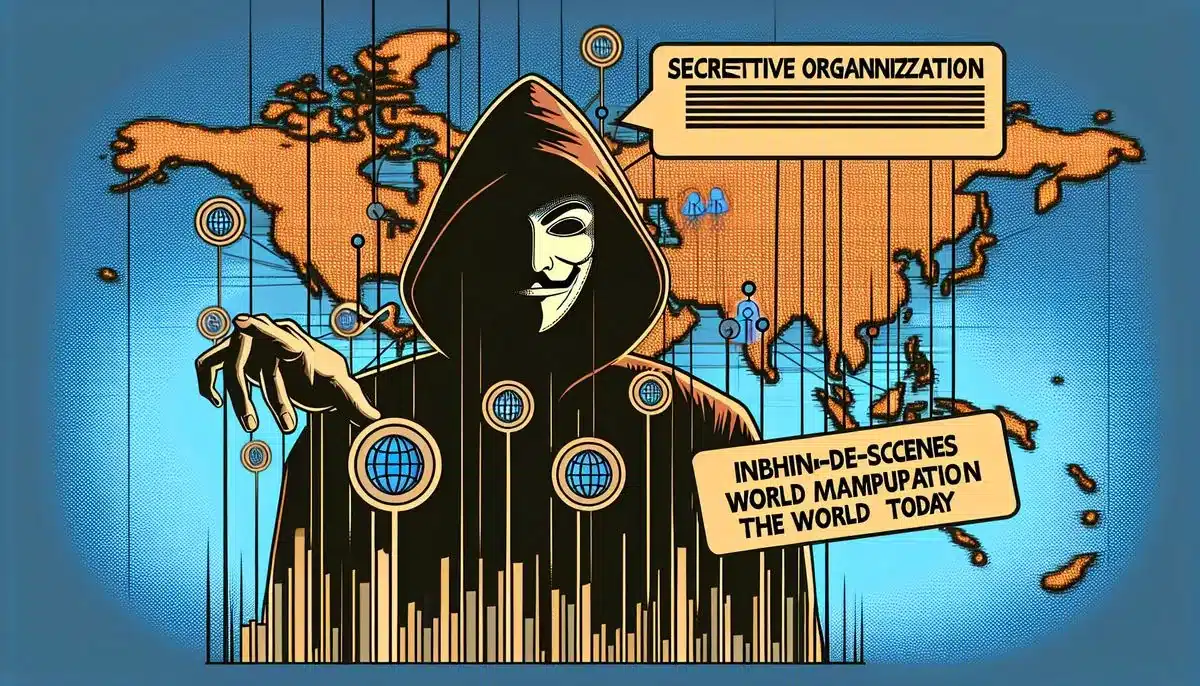
  • New World Disorder: Understanding the Illuminati Influence Today

    New World Disorder: Understanding the Illuminati Influence Today

    The concept of the Illuminati, a purported secret society that is believed to influence global affairs, has persisted into modern times, capturing the imagination of conspiracy theorists and those curious about the hidden forces shaping our world. In ‘New World Disorder: Understanding the Illuminati Influence Today,’ we delve into the enigmatic presence of this shadowy group, exploring its alleged symbols, connections to influential figures, and its potential impact on media, politics, and society at large. The article seeks to unravel the complex web of narratives surrounding the Illuminati, offering a discerning look at the evidence and the enduring fascination with this mysterious organization.

    Key Takeaways

    • The Illuminati’s alleged influence permeates various aspects of modern society, from political events to cultural symbols, sparking widespread debate and speculation.
    • Critical analysis of the Illuminati’s supposed impact on global affairs reveals a blend of historical truths, conjectures, and unfounded claims, necessitating a discerning approach to separate fact from fiction.
    • The enduring allure of the Illuminati narrative in popular culture underscores a collective fascination with the idea of hidden powers and secret societies dictating the course of human history.

    Decoding the Illuminati’s Presence in Modern Society

    The Symbols and Their Meanings

    We’ve all seen the cryptic symbols, the eye in the pyramid, the enigmatic handshakes. But what do they mean? We’re peeling back the veil on the Illuminati’s language of symbols. It’s not just about the allure of mystery; it’s about power, control, and a narrative woven through history.

    • The All-Seeing Eye: Surveillance or divine watchfulness?
    • The Pyramid: Hierarchical structures or stability?
    • The Eternal Flame: Enlightenment or a reminder of The Secret Teachings?

    Each symbol carries a dual blade, one of wisdom and one of warning. They’re embedded in our culture, from the dollar bill to corporate logos. But are we reading too much into them, or not enough?

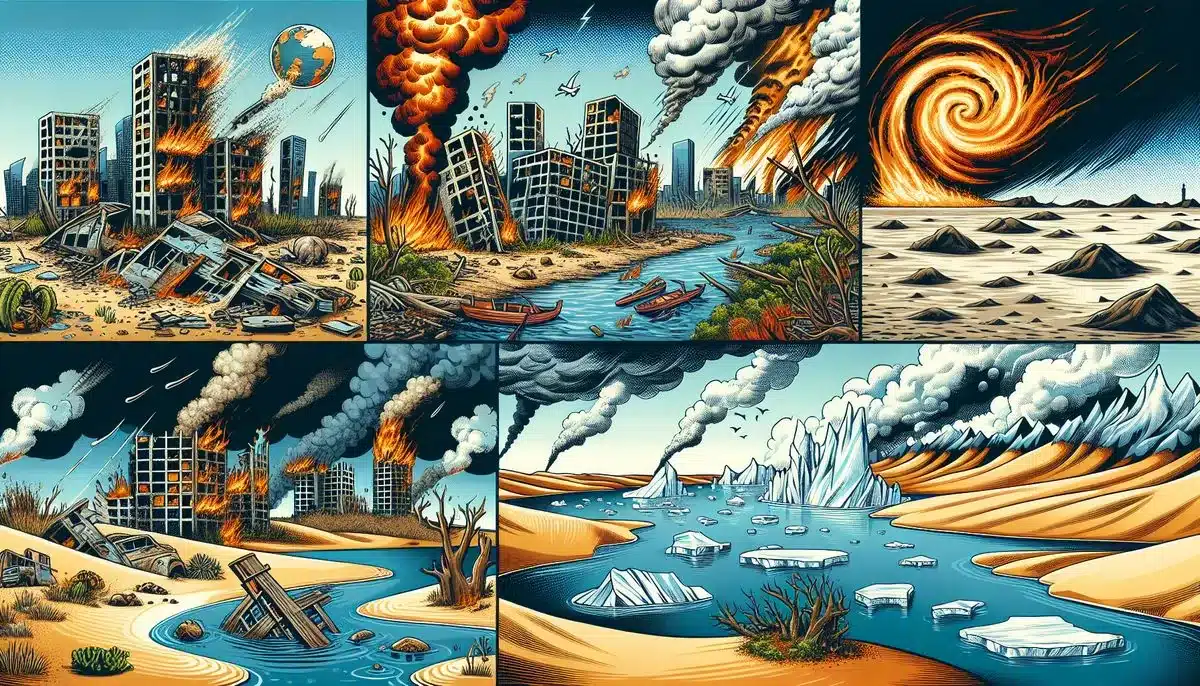
    Comets, elite circles, and pole shifts hold ancient secrets of Earth’s catastrophic past and future.

    The CIA’s involvement in concealing information about pole shifts raises questions about impending global catastrophes. Are these symbols a guide to understanding the Illuminati’s influence, or a distraction from the truths they hide in plain sight? We’re on the case, dissecting each emblem to uncover the reality behind the myth.

    Influential Figures and Alleged Connections

    We’re all about connecting the dots. But when it comes to the Illuminati, those dots can lead down some pretty dark alleys. Take the enigmatic Octopus Conspiracy. It’s a tangled web where Dr. John Philip Nichols and others blur the lines between reality and fiction. This web challenges our perception, with the media playing a pivotal role in a spectacle of secrecy and speculation.

    Let’s not forget the power players. From politics to pop culture, whispers of Illuminati ties are everywhere. Shows like Ground Zero with Clyde Lewis and Into the Parabnormal fuel the fire with tales of the elite’s hidden agendas. But are these just stories, or is there more to it?

    Here’s a quick rundown of some names that pop up in Illuminati chatter:

    • Kanye West: From music to fashion, he’s a cultural icon with a flair for controversy.
    • Anthony Fauci: A key figure in public health, drawing both praise and conspiracy theories.
    • Donald Trump: A president who divided a nation, with every move scrutinized for hidden meanings.

    We’re not saying they’re in the Illuminati, but we’re not saying they’re not. It’s a riddle wrapped in a mystery inside an enigma.

    So, what’s the verdict? Are these influential figures pulling the strings, or are they just puppets in a larger scheme? The truth is out there, and we’re on the hunt.

    Media and Entertainment: Vehicles for Ideology?

    We’ve all tuned into Ground Zero Radio at some point, haven’t we? It’s where the fringe meets the mainstream, where the talk isn’t just about the weather. It’s about The Paradigm Shift, the big changes in how we see the world. And let’s be real, it’s not just radio shows stirring the pot. Movies, music, games – they’re all part of the mix, shaping our thoughts, maybe even our beliefs.

    • Ground Zero Radio: A beacon for the curious.
    • Movies: More than just entertainment?
    • Music: The rhythm of ideology?
    • Games: Playing with perception?

    Everything Out There is a mosaic of messages, some hidden, some in plain sight. We’re soaking it up, consciously or not. But here’s the kicker: not everything is a signal from the shadows. Sometimes, a song is just a song, a movie just a trip to another world for a couple of hours. Yet, the question nags – are we being nudged by narratives we don’t fully understand?

    We’re not just passive consumers; we’re active participants in a world where media is a powerful teacher. It’s up to us to question, to critique, and to understand the layers of what we’re being fed.

    So, let’s keep our eyes open and our minds sharp. The next time you’re binging that hit series or getting lost in the latest blockbuster, ask yourself – what’s really being sold here?

    The Political Chessboard: Illuminati Influence or Conspiracy Theory?

    Allegations of Elite Manipulation

    We’ve all heard the whispers of the elite pulling the strings behind the scenes. But how deep does the rabbit hole go? From the boardrooms to the halls of power, the idea that a shadowy cabal influences global events isn’t new. It’s a tale as old as time, or at least as old as the concept of power itself.

    • The Fake News Media
    • George Soros
    • The New Democrats
    • The Occult
    • Politics – US

    These are just a few of the entities often cited in hushed tones when discussing the Illuminati’s modern machinations. Each name, a thread in the complex tapestry of conspiracy theories that many believe reveal the true rulers of our world.

    We’re not just talking about a few rogue actors. This is about a pervasive network, allegedly weaving through the very fabric of society.

    Skeptics will scoff, but for those who have gone down the rabbit hole, the connections seem too coincidental to ignore. From the symbols etched in plain sight to the policies that shape our lives, the question isn’t just about who is involved, but how far their influence extends.

    Global Events and Policy: Tracing the Threads

    We’re in the thick of it now, folks. Global events don’t just happen; they’re orchestrated, like a symphony with a hidden conductor. Every move on the political chessboard is scrutinized for the fingerprints of the Illuminati. But what’s truth and what’s fiction? Let’s pull at the threads.

    • The Anti-globalization movement: a pushback or a ploy?
    • Policy shifts: random acts or carefully planned maneuvers?
    • World government: a distant dream or an impending reality?

    Ground Zero with Clyde Lewis often dives into these murky waters, offering a platform for the kind of discussions that leave more questions than answers. But that’s the point, isn’t it? To question everything.

    We’re told to look at the evidence with a critical eye. Yet, the deeper we dig, the more convoluted the story becomes. Is it all just a grand conspiracy theory, or is there a kernel of truth buried beneath the layers of speculation?

    It’s easy to get lost in the labyrinth of global politics. Allegations of elite manipulation are rampant, and the line between fact and fiction blurs. We’re left wondering if we’re pawns in a game we don’t fully understand. But we won’t stop searching for the truth, no matter how elusive it may be.

    Assessing the Evidence: Critical Analysis of Claims

    We’ve scoured the web, sifted through the noise, and now it’s time to weigh in. Are the Illuminati the puppeteers of modern society? Let’s break it down.

    First, the symbols. They’re everywhere, from currency to architecture, but does that prove influence or just a cultural footprint? It’s a thin line between recognition and paranoia.

    Next, the so-called influential figures. High-profile names are often tossed around with little more than hearsay to back them up. Without concrete evidence, we’re just connecting dots that may not even be on the same page.

    Media and entertainment have long been accused of being vehicles for ideology. But is it Illuminati indoctrination or creative expression? The truth is, without solid proof, we’re left with speculation.

    Finally, the political chessboard. Allegations of elite manipulation are as old as politics itself. But when we trace the threads, we often find they lead to dead ends or, at best, circumstantial connections.

    In conclusion, while the idea of an all-seeing Illuminati is tantalizing, it’s crucial to approach such claims with a healthy dose of skepticism. After all, extraordinary claims require extraordinary evidence.

    Dive into the enigmatic realm of power and secrecy with our latest article, ‘The Political Chessboard: Illuminati Influence or Conspiracy Theory?’ This thought-provoking piece explores the intricate web of alleged Illuminati control over global politics. Is it a mere conspiracy theory, or is there truth to the whispers of their influence? Join the debate and uncover the mysteries by visiting our website. Don’t miss out on this riveting discussion – click the link to read more and access our extensive archives of podcasts, documentaries, and more!

    Conclusion: The Enigmatic Web of the Illuminati

    As we draw the curtains on our exploration of the Illuminati’s influence in contemporary society, it’s clear that the topic remains as enigmatic and controversial as ever. Ground Zero Radio’s deep dives into the unexplained and the myriad of conspiracy theories circulating online serve as a testament to the enduring fascination with secret societies and their perceived power. From the political arena to pop culture, the Illuminati’s alleged tendrils seem to extend into every corner of modern life, sparking debate and skepticism alike. Whether one views the Illuminati as a historical relic or a shadowy cabal pulling the strings of global events, the discourse around them reflects a broader struggle to make sense of a complex and often chaotic world. Ultimately, the Illuminati’s true impact may be less about covert operations and more about the narratives we construct to navigate the uncertainties of our time.

    Frequently Asked Questions

    What is the Illuminati and is it still active today?

    The Illuminati refers to various organizations which have claimed or have been claimed to be connected to the Bavarian Illuminati or similar secret societies. Though the original Bavarian Illuminati disbanded, the concept has persisted in popular culture and conspiracy theories. There is no concrete evidence of its continued existence in the form it once had.

    How do conspiracy theories about the Illuminati influence modern politics?

    Conspiracy theories about the Illuminati often suggest that they manipulate global events and politics. While these theories can influence public perception and sow distrust in institutions, they are not typically based on factual evidence and are often debunked by experts.

    Are symbols in media and entertainment linked to the Illuminati?

    Symbols in media and entertainment are sometimes claimed to be linked to the Illuminati, suggesting a hidden agenda to influence the public. However, these claims are usually speculative and lack verifiable proof. Many symbols have historical or cultural significance that predates any alleged Illuminati connection.
  • The Connection between Solar Flares and Social Unrest – The Ultimate Expose

    The Connection between Solar Flares and Social Unrest – The Ultimate Expose

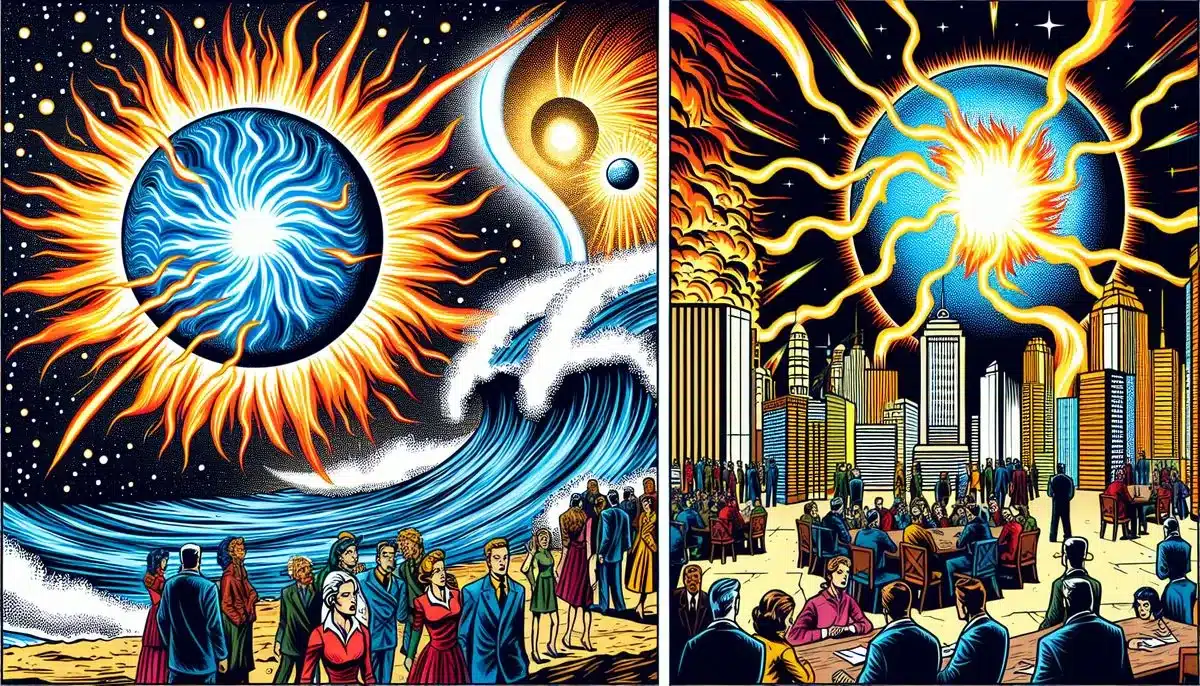
    The enigmatic relationship between solar flares and social unrest has long intrigued scientists and sociologists alike. This article aims to explore the underlying connections between these seemingly disparate phenomena. By examining historical patterns, scientific data, and psychological impacts, we delve into whether cosmic events can indeed stir the human psyche and contribute to societal upheaval. We will dissect the science behind solar flares, scrutinize case studies linking them to periods of social unrest, and address the myths surrounding these cosmic events.

    Key Takeaways

    • Solar flares have the potential to affect Earth’s geomagnetic field, which may influence human behavior and contribute to social unrest.
    • Historical and modern observations suggest a correlation between increased solar activity and periods of heightened social tensions, although causation remains a subject for further investigation.
    • While some believe geomagnetic disturbances can have psychological effects, it’s important to differentiate scientific evidence from superstition and anecdotal claims.

    Unraveling the Mysteries of Solar Flares

    The Science of Solar Storms

    We’ve all heard the buzz about solar flares, but what’s the real scoop? Solar flares are like cosmic tantrums, throwing a cocktail of charged particles our way. These outbursts from the sun can cause geomagnetic storms that mess with our satellites and power grids. But here’s the kicker: they might also be stirring up more than just our electronics.

    Geomagnetic disturbances have a rep for messing with our heads, too. Could they be the hidden hand in social unrest? We’re on the case, exploring this wild idea with a mix of skepticism and curiosity. Let’s break it down:

    • Solar Flares: Sudden eruptions of energy on the sun’s surface.
    • Coronal Mass Ejections (CMEs): Massive bubbles of radiation and particles from the sun.
    • Geomagnetic Storms: Disturbances in Earth’s magnetosphere caused by CMEs.

    We’re not just talking about a few sparks. These solar events can unleash as much energy as a billion hydrogen bombs!

    So, could these celestial fireworks be lighting the fuse of human emotions on Earth? Stay tuned as we dive deeper into this cosmic conundrum, where science meets the streets.

    Historical Accounts of Solar Activity and Social Tensions

    We’ve all heard the tales, right? Ancient civilizations collapsing, dark ages commencing, and folks generally losing their marbles. But what if I told you there’s a cosmic connection? Solar flares have been lighting up our skies and, perhaps, igniting our tempers for millennia. Let’s dive into the past.

    Comets and pole shifts have indeed shaped Earth’s history, with elite circles guarding ancient secrets. But it’s not just about celestial showmanship; these solar outbursts might have been stirring the pot down here among us humans. Think about it: when the sun throws a tantrum, could we be echoing that chaos on the ground?

    We’re talking about a cycle of destruction and rebirth that looms over us, possibly nudged along by our fiery star above.

    Historians and scientists have been connecting dots, drawing lines from solar peaks to peak societal discord. It’s not just a hunch; there’s data and diaries, records of revolts coinciding with solar ruckus. Here’s a snapshot:

    • 1789: The French Revolution and a time of intense solar activity.
    • 1859: The Carrington Event, the largest solar flare recorded, and global unrest.
    • 2011: The Arab Spring uprising during a period of significant solar flare activity.

    Coincidence? Maybe. But it’s a pattern that’s hard to ignore. We’re not saying the sun is the puppet master of our fates, but it’s a piece of the puzzle worth pondering.

    Modern Observations: Connecting Cosmic and Terrestrial Turmoil

    We’ve seen it time and again, folks. Solar flares don’t just dance in the cosmos; they tango with our tech and tempers. At Ground Zero Radio, we’ve chewed over every angle of this cosmic conundrum. It’s not just about the ‘Everything Out There’; it’s about the ‘Everything Right Here’. Our society, our moods, our very stability – they’re all on the solar flare’s guest list.

    • Solar storms disrupt our world, but how deep does the rabbit hole go? Let’s take a peek:
      • Healthcare systems, on edge.
      • Transportation, thrown off course.
      • Communications, tangled.
      • National security, in a twist.

    We’re not just passive spectators; we’re part of this interstellar drama.

    And when ‘Ground Zero with Clyde Lewis’ dives into the topic, you bet your antennas we’re getting the unfiltered scoop. The connection between solar flares and social unrest isn’t just a theory; it’s a reality we’re decoding, one broadcast at a time.

    Societal Impact: When Cosmic Forces Stir Human Emotions

    Psychological Effects of Geomagnetic Disturbances

    We’re on a wild ride, folks, and it’s not just the rollercoaster of daily life. Scientists reveal a cosmic cycle impacting Earth’s core, leading to cataclysms. But wait, there’s more! These cosmic tantrums, known as solar flares, might just be messing with our heads. Ever felt a bit off when the sun gets feisty? You’re not alone. Geomagnetic disturbances from solar flares have a sneaky way of influencing our mood and behavior.

    • Feeling anxious? Check.
    • Can’t sleep? Check.
    • Irritable for no good reason? Big check.

    It’s like the sun’s throwing a party and our brains are the uninvited guests getting all the side effects. But before you don your tinfoil hats, let’s get real. We’re not talking about mind control; we’re talking subtle shifts that can add up. And when they do, society feels the ripple effect.

    Our collective mood takes a hit, and suddenly, that urge to protest or argue feels just a bit stronger. It’s not just you; it’s a global vibe check courtesy of our nearest star.

    So, what’s the deal? Are we just cosmic puppets on a solar string? Nah, we’re more resilient than that. But acknowledging this celestial influence gives us a chance to understand the ebb and flow of social unrest. It’s not about fear; it’s about awareness and riding the wave with a bit more grace.

    Case Studies: Solar Flares and the Surge in Social Unrest

    We’ve seen it time and again, folks. Solar flares crackling through space, and down here on Earth, the tempers flare just as wildly. It’s not just a hunch; we’ve got the data to back it up. When the sun gets rowdy, so do we. But why? Let’s dive into some case studies that make the connection as clear as day.

    Take the example highlighted in The New Yorker, where a solar-radiation storm can harm humans, but only if they’re up in the sky during the storm. Now, we’re not all astronauts, but the geomagnetic ripples these storms send through our atmosphere? They touch us all, and the effects are more than just technical glitches.

    • In 1989, a massive solar flare knocked out power in Quebec, leading to widespread anxiety and a spike in emergency calls.
    • The 2011 Arab Spring coincided with one of the strongest solar cycles in years.
    • Researchers in 2024 noted a correlation between solar activity and the uptick in online searches for conflict and unrest.

    We’re not saying solar flares are the puppet masters of our psyche, but there’s enough evidence to suggest they pull some strings.

    So, what’s the takeaway? It’s not about fear-mongering or blaming the cosmos for our woes. It’s about understanding the subtle threads that connect our solar neighbor’s tantrums to our own terrestrial tensions. And maybe, just maybe, we can learn to ride out the solar storms with a little more grace.

    Debunking Myths: Separating Science from Superstition

    We’ve all heard the whispers of The Secret Teachings and felt the rumble of The Paradigm Shift. But when it comes to solar flares and social unrest, it’s time to step Into the Parabnormal and sort fact from fiction. Let’s get real: cosmic events are fascinating, but can they really stir the pot of human emotions to the point of societal upheaval? We’re here to cut through the noise.

    • Myth: Solar flares directly cause chaos on Earth.
    • Reality: Correlations exist, but causation is a leap too far.

    Global issues, power dynamics, and cultural influences are explored through podcasts and shows, challenging conventional narratives and encouraging critical thinking and spiritual reflection in a globalized world. But let’s not confuse correlation with causation. Solar activity may be a backdrop, but it’s our earthly concerns that truly drive the drama.

    We’re not pawns in a cosmic chess game. Our actions are our own, and while the stars may shine light on our path, they don’t dictate our steps.

    So, before you blame that last argument on a solar flare, remember: it’s more likely the earthly matters at hand. Stay grounded, stay skeptical, and let’s keep our feet firmly planted on this spinning rock we call home.

    The cosmos has always been a source of wonder and mystery, captivating the human imagination and stirring deep emotions. As we delve into the vastness of space and time, we uncover the profound impact that celestial events have on our society. From the alignment of the stars to the dance of the planets, these cosmic forces shape our beliefs, inspire our creativity, and influence our daily lives. To explore the depths of these connections and join a community passionate about the intersection of the cosmos and human experience, visit our website. Embark on a journey through the Ground Zero: Aftermath archives, where unlimited podcasts, radio, movies, and more await you. Start your free trial today and become part of a world that celebrates the enigmatic beauty of the universe and its influence on our earthly existence.

    Conclusion

    In the quest to understand the complexities of our world, the exploration of solar flares and their potential impact on social unrest has been both fascinating and controversial. While the scientific community continues to debate the direct correlations, it’s clear that the sun’s activity can have far-reaching effects on our planet, from geomagnetic storms to influencing human behavior. As we’ve seen, solar phenomena like the recent ‘severe’ geomagnetic storm can even affect technological systems and natural phenomena, such as the visibility of the northern lights as far south as Alabama. Moreover, the intricate web of cause and effect is reminiscent of the interconnectedness of our own lives, where actions and reactions are not always linear or predictable. Whether it’s the influence of celestial events on our psyche or the subtle ways in which our environment shapes our actions, the ultimate expose on solar flares and social unrest reminds us of the delicate balance we maintain within this vast universe. As we continue to seek answers, let us do so with an open mind, acknowledging the limits of our current understanding while striving for a deeper comprehension of the cosmic dance between the sun and Earth.

    Frequently Asked Questions

    Can solar flares directly cause social unrest on Earth?

    There is no direct scientific evidence that solar flares cause social unrest. Social unrest is a complex phenomenon driven by various socio-economic and political factors. However, some studies suggest that the psychological effects of geomagnetic disturbances caused by solar flares could potentially influence human behavior, albeit indirectly.

    What are the psychological effects of geomagnetic disturbances?

    Geomagnetic disturbances, which can be influenced by solar flares, may affect human physiology and behavior. Some research indicates that these disturbances can impact mood, sleep patterns, and stress levels, which could theoretically contribute to societal tensions if experienced on a large scale.

    How do solar flares impact modern technology and infrastructure?

    Solar flares can cause geomagnetic storms that may disrupt satellite communications, navigation systems, and power grids. These technological disruptions can have a ripple effect on economic activities and emergency services, potentially leading to increased stress and unrest in affected communities.

  • Forbidden Knowledge: A Look into the World’s Most Suppressed Information

    Forbidden Knowledge: A Look into the World’s Most Suppressed Information

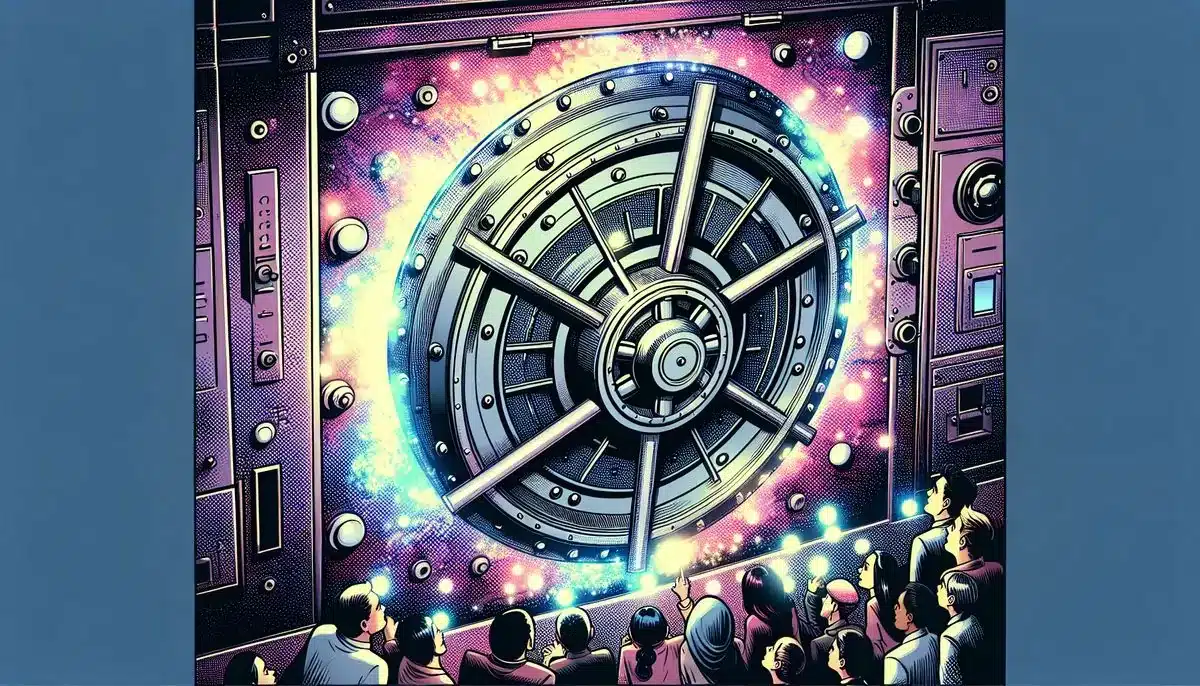
    In the quest for truth, ‘Forbidden Knowledge: A Look into the World’s Most Suppressed Information’ delves into the shadowy realms where information is controlled, suppressed, and manipulated. From the digital fortresses that stifle free expression to the covert operations that shape our understanding of security and privacy, this article explores the lengths to which entities go to maintain power and control. It sheds light on the struggles for rights in oppressive regimes and the daring acts of whistleblowers who challenge the status quo. As we navigate the murky waters of suppressed information, we confront the chilling realities of a world where knowledge is a battlefield.

    Key Takeaways

    • The extent of censorship and surveillance in countries like China creates a formidable barrier against free speech and collective action, as evidenced by the Great Firewall and the suppression of LGBTQ rights.
    • Whistleblowers play a crucial role in unveiling government secrets, highlighting the tension between national security and individual privacy, as seen in the NSA’s covert operations and the reliance on insider knowledge in scientific communities.
    • The suppression of information is not only a political tool but also permeates through cultural and social narratives, influencing public perception and nurturing certain behaviors while condemning or hiding others.

    The Censorship Conundrum: Silencing Voices Around the Globe

    China’s Great Firewall: An Impenetrable Barrier to Free Speech

    We’ve all heard whispers of the Great Firewall, but what’s it really like? Imagine a digital fortress, towering, unyielding, and ever-expanding. It’s not just a barrier; it’s a symbol of control, a statement that says, ‘Here, we decide what you can know.’ China’s Great Firewall is the epitome of censorship, a tool so powerful that it shapes the very reality of over a billion people.

    Support more articles like this by diving deep into the stories that matter. We’re not just talking about a few blocked websites; we’re talking about an entire ecosystem of surveillance and suppression. Here’s a snapshot of what’s off-limits:

    • Social media giants like Facebook and Twitter? Blocked.
    • News that doesn’t toe the party line? Censored.
    • Even Google, the gateway to information for many, is inaccessible.

    The struggle for free speech is real and ongoing. It’s a battle of wills between the desire for openness and the insistence on control.

    The chilling effect of this digital dominion is profound. It’s not just about what’s blocked; it’s about what’s left unsaid, the self-censorship that comes when you know Big Brother is watching. The Great Firewall isn’t just keeping information out; it’s holding a nation’s potential in. And that’s a story we all need to hear.

    The Chilling Effect of Surveillance on Personal Liberties

    We’re living in an era where our every move can be tracked, our every word recorded. It’s the chilling effect of surveillance on personal liberties. We’ve become the watched, not the watchers. Our privacy, once a right, now feels like a privilege, one that’s slipping away with every click, every call, every moment we’re online.

    Ground Zero with Clyde Lewis talks about this paradigm shift, where the watchers have eyes everywhere. It’s not just about being observed; it’s about the fear that observation instills. The fear that keeps us from speaking out, from being ourselves. It’s a psychological cage, invisible yet palpable.

    • The Great Firewall of China is a stark example, censoring content and monitoring citizens.
    • NSA’s operations blur the lines between security and intrusion.
    • Social media platforms have become de facto surveillance states.

    We’re at a crossroads. The tools meant to connect us, to free our voices, are the same ones that can silence us. The Paradigm Shift is here, and it’s time to decide: will we accept this new reality, or fight for the rights we once took for granted?

    The Hidden Traces of Espionage: Uncovering Government Secrets

    NSA’s Covert Operations: The Thin Line Between Security and Privacy

    We’ve all heard the whispers of the NSA’s covert operations, but it’s the hard truths that send shivers down our spines. We’re not just talking about a few tapped phones or intercepted emails; this is a colossal invasion of privacy. Imagine a world where your every call, your every message, and your every move online is monitored – without a warrant, without a pause. That’s the reality we’re facing.

    Espionage isn’t just a word for spy movies; it’s happening in our backyards. The NSA’s surveillance reaches far and wide, and it’s not just the ‘bad guys’ getting caught in the net. It’s you, it’s me, it’s all of us. And the kicker? Companies like AT&T are in on it, partnering up to sift through mountains of data.

    • The NSA intercepts communications globally.
    • No warrant is required for surveillance.
    • Partnerships with corporations amplify the reach.

    We’re in an era where ‘national security’ is the golden ticket to unfettered access to our personal lives. But at what cost to our freedom?

    The line between security and privacy is not just thin; it’s practically invisible. And as we stand on this precipice, we have to ask ourselves: Is this the kind of security we signed up for? Or is it time to demand transparency and reclaim our personal liberties?

    Whistleblowers and the Fight for Transparency

    We’re at the heart of a paradox, folks. We champion transparency, yet we’re often blind to the machinations behind the curtain. Whistleblowers are the unsung heroes in this narrative, risking it all to shine a light on the dark corners of power. They’re the mavericks who dare to expose the truth, even when it means standing alone against a Goliath of secrecy.

    Ground Zero Radio has been a beacon for those who seek the unvarnished truth. On Ground Zero with Clyde Lewis, tales of courage unfold, revealing the intricate web of espionage and the high stakes of speaking out. It’s not just about leaking information; it’s about safeguarding the very essence of our freedom.

    • The Octopus Conspiracy: A complex saga of secrecy and disinformation.
    • The Skeptics vs. Believers: A relentless debate on the nature of truth in a world rife with conspiracy theories.

    We’re in an era where the battle for truth is more than just a skirmish in the shadows. It’s a full-blown war for the soul of information.

    The path to transparency is fraught with peril, but it’s a journey we must undertake. For every whistleblower that comes forward, we inch closer to a world where information is not a commodity, but a shared resource for all.

    The Enigmatic World of Insider Knowledge and Scientific Success

    We’ve all heard whispers of The Secret Teachings and tales that dive Into the Parabnormal. But what about the hard facts? The truth is, insider knowledge plays a pivotal role in the success of scientists and professionals in STEM fields. It’s the kind of info that’s not on the syllabus, the hidden curriculum only shared through hushed conversations and closed-door meetings.

    • Insider knowledge: Essential for success, not public knowledge.
    • Access: Limited to domain insiders and their networks.
    • Impact: Shapes educational and career trajectories significantly.

    We’re talking about the kind of knowledge that can catapult a career from the classroom to the cosmos, yet it remains shrouded in secrecy.

    Everything Out There isn’t just a podcast title; it’s a reality for those in the know. The whispers of the corridors, the nods in the conference rooms, they all add up to a map of success that’s invisible to the outsider. And while we’re not claiming to have all the answers, we’re committed to pulling back the curtain, bit by bit.

    Dive into the shadowy world of intelligence and statecraft with ‘The Hidden Traces of Espionage: Uncovering Government Secrets’. Our extensive archives offer a treasure trove of insights into the clandestine operations that shape our world. Don’t just read about history—uncover the secrets that lie beneath the surface. Visit our website now to access exclusive content and begin your journey into the heart of espionage. Your mission awaits!

    Conclusion: The Quest for Truth Amidst Suppression

    As we delve into the labyrinth of the world’s most suppressed information, it becomes evident that the quest for truth is as perilous as it is paramount. From the clandestine corners of Ground Zero Radio, where conspiracy theories and paranormal events are dissected, to the unsettling revelations of the ‘Hey, Poopy’ podcast and the controversial discussions surrounding Epstein Island, the narrative of forbidden knowledge unfolds. The suppression of information, whether through censorship in China or the covert operations of the NSA, reveals a world where the pursuit of truth is often met with resistance. Yet, amidst this suppression, there lies a beacon of hope in the form of insider knowledge and the courage of whistleblowers. It is through the stillness of a seeking soul and the unwavering determination to uncover the veiled secrets that we inch closer to enlightenment. As we navigate this complex tapestry of hidden truths, we are reminded that the flame of curiosity burns eternal, illuminating the path for those brave enough to walk it.

    Frequently Asked Questions

    What is the purpose of the Great Firewall of China?

    The Great Firewall of China is a censorship and surveillance project that aims to block potentially subversive content and control the flow of information. It also prevents collective action that could threaten social stability.

    How do whistleblowers contribute to transparency?

    Whistleblowers expose hidden activities within organizations, often at great personal risk. Their revelations can lead to increased public awareness, policy changes, and greater transparency in government and corporate practices.

  • Fact or Fiction: The Shadow Government and the New World Order

    Fact or Fiction: The Shadow Government and the New World Order

    The concept of a shadow government and the New World Order (NWO) has long fascinated and alarmed conspiracy theorists, skeptics, and the curious alike. With roots stretching back to fears about the United Nations and the John Birch Society, these theories have evolved to include various elements such as secret societies, alien influence, and global elite cabals. This article will explore the mythical layers and purported evidence surrounding the shadow government and the NWO, separating sensationalism from the snippets of truth that may underpin these persistent narratives.

    Key Takeaways

    • The shadow government and New World Order conspiracy theories intertwine with historical fears of global governance and secret elite control, often incorporating elements like the UN, Illuminati, Freemasons, and other groups.
    • In the UFO sub-culture, the NWO conspiracy is sometimes linked with extraterrestrial control or influence, suggesting aliens are behind or part of the secret cabal, an idea bolstered by alleged cover-ups at places like Area 51.
    • While largely dismissed as fiction, these theories reflect real concerns about non-transparency and power structures in global politics, raising valid questions about accountability and public scrutiny in international affairs.

    Unveiling the Myths: The Shadow Government and Its Alleged Ties to the New World Order

    Ground Zero Radio: A Beacon for Conspiracy Enthusiasts

    We’ve all stumbled upon Ground Zero Radio at some point, haven’t we? It’s that late-night haunt for the curious and the skeptical, where the airwaves crackle with tales of the arcane and the covert. The Secret Teachings and The Paradigm Shift aren’t just segments; they’re experiences that challenge the status quo.

    Here’s a quick rundown of what you might encounter tuning into Ground Zero with Clyde Lewis or Into the Parabnormal:

    • IRS monitoring that feels straight out of a dystopian novel.
    • Kid Rock’s Bohemian Grove escapades that sound like they’re ripped from a tabloid headline.
    • Ancient AI secrets that could rival any sci-fi blockbuster.

    It’s a cocktail of the strange and the thought-provoking, mixed with a dash of skepticism and a sprinkle of entertainment.

    Ground Zero Radio doesn’t just scratch the surface; it dives deep into the rabbit hole of conspiracy theories and paranormal events. It’s where fiction blurs with reality, and every listener is left to draw their own line in the sand.

    Epstein Island: The Nexus of Elite Misconduct?

    Let’s cut to the chase. Epstein Island has become synonymous with the darkest corners of elite society. Rumors swirl and accusations fly—but what’s the truth? We’ve all heard the whispers of a shadowy gathering place for the rich and powerful, where the rules of morality are left at the dock.

    • Mohamed Atta’s alleged Prague connection
    • Niger uranium forgeries
    • Tobacco industry playbook
    • Operation Shocker
    • Yellow rain

    These are just a few of the conspiracy-laden breadcrumbs that lead some to believe there’s more to the island than meets the eye. But without concrete evidence, it’s a treacherous path from suspicion to fact.

    We’re not here to peddle conspiracy theories. We’re here to question, to seek the truth behind the veil of secrecy.

    The list of supposed attendees reads like a who’s who of influence and power. But attendance doesn’t equate to guilt. It’s a slippery slope to assume that every name in Epstein’s black book is there for nefarious reasons. We’ve got to dig deeper, sift through the noise, and look for the hard evidence. Because in the end, it’s not about who’s on the list—it’s about what they did or didn’t do.

    The Curious Case of Wilson the Volleyball: Pop Culture and Conspiracy

    We’ve all seen it, the way pop culture can take a life of its own, spiraling into the realm of conspiracy. Take Wilson, the volleyball from Castaway. A simple prop, right? But some folks out there have spun tales wilder than any ocean current. They say Wilson’s not just a movie star; he’s a symbol, a silent witness to the secrets of the elite. Could a volleyball really hold the key to the New World Order? We chuckle, but let’s not forget, stranger things have become conspiracy cornerstones.

    • Wilson’s filmography:
      • Baywatch
      • Castaway
      • And a tragic end under a Dubai dump truck

    We’re not saying Wilson’s in on it, but in the conspiracy world, even a volleyball can serve up a mystery.

    The ConspiraFACT podcast even dives into these waters, mixing humor with a critical eye on politics and pop culture. They’ve covered everything from UFOs to secret societies, and yes, even volleyballs. It’s a wild ride, but one that reminds us to question the narratives fed to us, no matter how outlandish they may seem.

    The New World Order: Fact, Fiction, or Fearmongering?

    UFOs and the NWO: Extraterrestrial Influence or Fantasy?

    We’ve all heard the whispers of UFOs being more than just unidentified flying objects. They’re the puppet masters of the New World Order, or so the theory goes. But let’s get real for a second. Are we truly to believe that extraterrestrials are pulling the strings of global elites? Or is this just another plot twist in the grand narrative of conspiracy theories?

    Bold claims require bold evidence, and so far, the proof is as elusive as the aliens themselves. The tales of Area 51, Roswell, and the so-called ‘Majestic 12’ documents often come up in these discussions. But without concrete evidence, they remain just that—tales.

    Ground Zero with Clyde Lewis and Everything Out There have become staples in the world of conspiracy entertainment. They fuel the fire of speculation, but should we let entertainment dictate our perception of reality?

    • The UFO-NWO Connection: A Myth?
    • Area 51 and Roswell: Unproven Legends
    • ‘Majestic 12’ Documents: Forged?

    We tread a fine line between curiosity and credulity. It’s our duty to question, but also to demand substantial proof before jumping to conclusions.

    In the end, the UFO and New World Order theories are a modern twist on age-old suspicions. They tap into our deepest fears and curiosities about the unknown. But until the day comes when the truth is out there for all to see, we’ll keep our feet on the ground and our eyes to the skies, skeptically.

    Claims of Evidence: Separating Fact from Fiction

    We’ve all heard the whispers of a shadow government and the looming New World Order (NWO). But let’s get real—separating fact from fiction isn’t just about debunking wild stories. It’s about understanding the nuances that make a conspiracy theory tick. We’re not just passive consumers of information; we’re detectives in a complex world of claims and evidence.

    When it comes to evidence, it’s a jungle out there. Ground Zero Radio, for instance, dives deep into the unexplained, but how do we sift through what’s presented? Here’s a quick guide:

    • Question the source: Is it credible? What’s their agenda?
    • Look for corroboration: Can the claims be verified by independent sources?
    • Check the context: Are quotes and statistics used accurately?
    • Beware of logical fallacies: Don’t let emotional appeals cloud judgment.

    We must navigate the murky waters of truth and deception with a critical eye, always questioning and never settling for the surface story.

    Remember, the goal isn’t to prove or disprove the existence of a shadowy cabal. It’s to foster a healthy skepticism that empowers us to make informed decisions. So, let’s keep our wits sharp and our minds open as we explore the labyrinth of the NWO narrative.

    NWO Theories Today: A Modern Take on an Age-Old Suspicion

    We’ve all heard whispers of a shadowy cabal, pulling strings from behind the scenes. The New World Order (NWO) theories are the bread and butter of late-night talk shows and the darker corners of the web. But what’s the real scoop? Are we witnessing a grand plan unfolding, or is it all just a mix of fear, fiction, and a few too many late nights? Let’s dive in.

    The NWO has become a super-conspiracy theory, a catch-all for any event that defies explanation. It’s a framework flexible enough to accommodate any tale, no matter how outlandish. From claims of alien overlords to international Jewish conspiracies, the NWO narrative is as diverse as it is controversial.

    • MKZine podcast covers topics on mind control, frequency weapons, and disinformation.
    • Features interviews with experts and survivors.
    • Listen live on Sundays at 6:00 PM.

    The modern incarnation of NWO theories often draws on pseudohistories, repackaged for today’s audience. It’s a potent mix of old myths and new fears, a cocktail that’s hard to resist for those looking for answers in a complex world.

    The allure of the NWO theory lies in its ability to explain the inexplicable, to offer a narrative when the world seems random and chaotic.

    So, where do we stand? Are we the pawns in a game played by unseen masters, or are we simply trying to make sense of the chaos of human existence? The truth is, the NWO theory thrives on the unknown, and as long as there are questions without answers, it will continue to capture our collective imagination.

    The concept of a New World Order has long been a topic of intense debate, weaving through the fabric of political discourse, conspiracy theories, and global events. Is it a reality we’re inching towards, a mere work of fiction, or simply a tool for fearmongering? Dive deep into the heart of this enigmatic subject with our extensive collection of podcasts, radio shows, movies, and more. Unravel the mysteries and form your own opinions by starting your free trial at Ground Zero: Aftermath. Don’t let speculation be the end of your journey—become a part of the conversation today.

    Conclusion: Separating Myth from Reality

    In the labyrinth of conspiracy theories surrounding the shadow government and the New World Order (NWO), it’s crucial to navigate with a discerning eye. Ground Zero Radio and similar platforms often explore the fringes of the unexplained, fueling discussions that range from the plausible to the outlandish. While some theories may contain grains of truth regarding power structures and non-transparency, many are embroidered with fiction and sensationalism. For instance, the idea that aliens control a secret cabal or that the UN aims to subjugate the United States are speculative narratives that have evolved from older conspiracy theories. It’s important to recognize that while real power dynamics and elite networks exist, the leap to global domination plots often lacks substantiated evidence. As we’ve seen, even the most seemingly credible sources can intertwine fact with fiction, as in the case of the forged ‘Majestic 12’ documents. Ultimately, staying informed and critically evaluating information is key to discerning the fact from fiction in the shadowy realm of the NWO narrative.

    Frequently Asked Questions

    What is Ground Zero Radio and how is it related to conspiracy theories?

    Ground Zero Radio is an online radio station that focuses on conspiracy theories, paranormal events, and current affairs. It is known for its deep dives into unexplained phenomena and captivates those intrigued by the mysteries of the world. It often discusses topics such as the shadow government and the New World Order, making it a beacon for conspiracy enthusiasts.

    What is the controversy surrounding Epstein Island?

    Epstein Island, also known as Little Saint James, has been at the center of controversy due to its association with Jeffrey Epstein and allegations of elite misconduct. The island is rumored to have hosted influential figures and has been linked to various conspiracy theories, including those involving the shadow government and the New World Order.

    Is the New World Order a legitimate concern or just a conspiracy theory?

    The New World Order (NWO) is a conspiracy theory that suggests a secret global elite is planning to create a totalitarian world government. While there are real power structures and non-transparency in global politics, the NWO as a coordinated conspiracy lacks credible evidence and is often considered a fringe interpretation of world affairs.

  • Echelon Intrigue: How Global Espionage Networks Are Shaping Our World

    Echelon Intrigue: How Global Espionage Networks Are Shaping Our World

    In the ever-evolving landscape of global politics, espionage networks play a crucial role in shaping the dynamics of power and influence. The article ‘Echelon Intrigue: How Global Espionage Networks Are Shaping Our World’ delves into the intricate web of surveillance and the hidden forces of espionage that operate behind the scenes. Through an exploration of various facets of intelligence-gathering and its impact on international relations and culture, the article unveils the complexities and far-reaching consequences of the world’s most secretive activities.

    Key Takeaways

    • The intricate web of global surveillance is constantly evolving, with entities like Ground Zero Radio shedding light on the mysteries that captivate those intrigued by global conspiracies and espionage.
    • Unexpected exposure, as metaphorically illustrated by the Duncan Donuts incident, can reveal the often-overlooked vulnerabilities and risks inherent in the world of espionage and surveillance.
    • The cultural fascination with spycraft, fueled by tales of forbidden knowledge and the allure of the unknown, continues to impact our perception of intelligence networks and their role in shaping international relations.

    The Web of Global Surveillance

    Ground Zero Radio: A Beacon for Conspiracy Theorists

    We’ve all tuned in, at least once, to the enigmatic waves of Ground Zero Radio. It’s more than just a show; it’s a cultural phenomenon. Boldly diving into the ‘Everything Out There’, it’s become a staple for those who question the mainstream narrative. Clyde Lewis, the voice behind the mic, takes us on nightly excursions with ‘Ground Zero with Clyde Lewis’, exploring the fringes of what’s possible and what’s just plain bizarre.

    Into the Parabnormal, indeed. The show doesn’t just scratch the surface; it digs deep, unearthing the stories that make us rethink our reality.

    Listeners are drawn to the magnetic pull of the unknown, and Ground Zero Radio doesn’t disappoint. It’s a platform where the outlandish is analyzed, and the forbidden is fair game. Here’s a quick rundown of why we can’t get enough:

    • The show challenges our perceptions.
    • It’s a hub for alternative viewpoints.
    • Clyde Lewis is a master at weaving tales that keep us hooked.

    And let’s not forget, the classics are always within reach. The title ‘Listen to Ground Zero Classics with Clyde Lewis podcast | Deezer‘ is more than just a tagline; it’s a promise of a journey through the archives that have captured the minds of listeners for over two decades. Ground Zero Radio presents classic episodes that have kept us, and will continue to keep, the conspiracy theorists busy for years.

    The Duncan Donuts Debacle: A Metaphor for Unexpected Exposure

    We’ve all heard the tales of espionage, the cloak-and-dagger stuff that seems straight out of a movie. But sometimes, the most telling signs of surveillance come from the most mundane places. Take the Duncan Donuts incident, for example. A man’s routine coffee run turned into a bizarre debacle when a toilet exploded, leaving him in a mess of debris and, well, more. It’s a stark reminder that exposure can come from anywhere, even the most unassuming donut shop bathroom.

    The Paradigm Shift in surveillance isn’t just about high-tech gadgets; it’s about recognizing the unexpected ways we can be exposed. It’s a lesson in vulnerability, showing us that the eyes of the world could be on us at any moment, even in our most private of moments.

    • Exploration of hidden influences in politics, finance, and media manipulation.
    • Encourages critical thinking and transparency in unraveling global power dynamics.
    • Decoding symbols of the elite.

    We’re living in a world where the lines between public and private are increasingly blurred. The Duncan Donuts fiasco is a metaphor for this new reality, where an ordinary day can turn into an extraordinary mess, leaving us to wonder who’s watching and what they’re looking for.

    The Role of Espionage in Current Affairs

    We’re living in a world where espionage isn’t just the stuff of movies; it’s a pivotal player on the global stage. Espionage shapes policies and tilts negotiations, often without the public’s knowledge. Think about it: agents of influence are out there, subtly tweaking the levers of power. They’re not just gathering intel; they’re actively swaying decisions that affect us all.

    • Agents of influence may be more dangerous than traditional spies.
    • Espionage isn’t just about stealing secrets; it’s about steering the ship of state.
    • The impact of espionage is often hidden, but its effects are far-reaching.

    We’re not just passive observers; we’re the subject of a grand, shadowy narrative.

    The truth is, espionage is deeply woven into the fabric of international relations. It’s a game of chess where the pieces are human lives and the stakes are national security. And while we may not see the moves being made, we feel the tremors of each play. So next time you read a headline, remember: behind the scenes, espionage is always at work.

    The Hidden Hands of Espionage

    The Allure of Forbidden Knowledge

    We’ve all felt it, that magnetic pull towards the forbidden. It’s the same curiosity that drives us to peek behind closed doors or eavesdrop on hushed conversations. The allure of forbidden knowledge is a siren call, tempting us with secrets that promise power and enlightenment. It’s no wonder that espionage has such a grip on our imaginations.

    • The Secret Teachings that whisper of hidden truths.
    • The thrill of uncovering what’s meant to stay buried.
    • The power dynamics shifted by a single leaked document.

    We’re drawn to the shadows, where the line between right and wrong blurs and every piece of information is a potential game-changer.

    Consider the tales that captivate us, where ordinary individuals stumble upon arcane knowledge or classified intelligence. These narratives aren’t just fiction; they mirror our own world’s clandestine operations. From the dusty shelves of Miskatonic University to the covert meetings in dimly lit rooms, the quest for the unknown is unending.

    Yet, we must ask ourselves, at what cost does this knowledge come? The pursuit can lead to a labyrinth of deception, where trust is a rare commodity and the truth is layered in misdirection. The stakes are high, and the players are willing to risk it all for a glimpse behind the veil.

    The Impact of Intelligence Networks on International Relations

    We’ve all heard the whispers of spies and secret agents, but let’s talk about how these shadowy figures actually twist the gears of international relations. Intelligence networks are the unseen glue binding policy decisions. They’re the silent whisperers in the ears of the powerful, nudging nations in directions unseen by the public eye.

    • Agents of influence, more than just gatherers of secrets, shape policies from within.
    • Intelligence officers, like chess masters, maneuver pieces on a global board, often altering the course of history.
    • Espionage isn’t just about cloak-and-dagger; it’s psychological warfare, cyber espionage, and more.

    We’re living in a world where the game of nations is quietly rigged by those who listen in the shadows.

    The article delves into espionage, revealing hidden forces shaping global events through manipulation and covert operations. It’s not just about the information gathered; it’s about the strategic use of that information to sway the tides of diplomacy and conflict. We’re not just spectators; we’re the pawns and sometimes, without knowing, the players.

    The Cultural Fascination with Spycraft and Its Consequences

    We’ve all been captivated by the cloak-and-dagger tales that spill from the pages of spy novels and flicker across our screens. The allure of espionage has woven its way into the fabric of our culture, with each of us secretly yearning to decode the mysteries that lie behind the veil of secrecy. Our fascination with spycraft has consequences, shaping not just the stories we tell, but the very reality we live in.

    • The jargon of spycraft has infiltrated our language.
    • Anecdotes of daring exploits fuel our imaginations.
    • The line between fiction and reality blurs as life imitates art.

    We’re drawn to the forbidden, to the thrill of uncovering what’s meant to stay hidden. This collective curiosity drives the narrative of global espionage, turning the gears of a machine that never ceases to operate, day and night.

    From the influence of World War II intelligence on spy fiction to the roles novelists have played in real-life espionage, the threads of this intrigue are as tangled as they are tantalizing. We’re not just passive consumers; we’re part of the story, living in a world where the next chapter is always shrouded in mystery.

    Dive into the shadowy world of intelligence and covert operations with ‘The Hidden Hands of Espionage’. Uncover the clandestine activities that shape our world behind the scenes. For those who dare to delve deeper, our website offers an exclusive gateway to a trove of knowledge. Embark on a journey through our extensive archives of podcasts, radio shows, movies, and more. Don’t miss out on the opportunity to access over a decade of riveting content. Ready to become an insider? Visit our website and start your FREE trial of Ground Zero: Aftermath today!

    Conclusion

    In the intricate web of global espionage, the revelations and discussions presented in this article underscore the profound impact that intelligence networks have on our world. From the clandestine operations of historical figures like Kim Philby to the modern-day intricacies of cyber-attacks and state security, we’ve explored the shadowy realms where secrecy and power intertwine. The narratives of espionage are not just confined to the pages of thrillers like ‘Dietrich’ by Don Winslow or ‘The Eagle in the Mirror’ by Jesse Fink; they unfold in real-time, influencing geopolitics and shaping the fate of nations. As we’ve seen, espionage is a multifaceted beast, with its tentacles reaching into every aspect of our lives, from the mundane to the monumental. It’s a world where nothing is as it seems, and the next chapter is always unwritten, leaving us to ponder the unseen forces that guide the course of history. Whether it’s through the lens of literature, the analysis of experts like Hollingsworth, or the musings of radio hosts, one thing is clear: the intrigue of echelons is a never-ending saga that continues to captivate and alarm in equal measure.

    Frequently Asked Questions

    What is Ground Zero Radio and why is it significant?

    Ground Zero Radio is an online radio station that delves into conspiracy theories, paranormal events, and current affairs. It has gained notoriety for exploring unexplained mysteries and captivating those interested in the more enigmatic aspects of the world.

    How do global espionage networks impact international relations?

    Global espionage networks play a crucial role in shaping international relations by gathering sensitive information, influencing political decisions, and often acting as a hidden force behind diplomatic strategies and conflicts.

    What is the cultural fascination with spycraft and its consequences?

    The cultural fascination with spycraft stems from its mysterious and often romanticized portrayal in media and literature. This intrigue can lead to misconceptions about the reality of espionage, potentially glamorizing a field that involves significant ethical dilemmas and risks.

  • Black Sites and Alien Sightings: Tracing UFO Encounters through the Decades

    Black Sites and Alien Sightings: Tracing UFO Encounters through the Decades

    The prospect of a climate apocalypse has become a pressing concern in recent years, as scientific evidence increasingly points to the severe consequences of unchecked global warming. The potential for irreversible damage to our planet’s ecosystems and the well-being of future generations has sparked a sense of urgency among climate scientists, policymakers, and activists alike. This article delves into the critical thresholds of climate change, explores strategies for mitigation and adaptation, and discusses whether there is still room for optimism in the face of potential disaster.

    Key Takeaways

    • By 2035, we may reach a critical point of no return in climate action, after which limiting global warming to 1.5C may no longer be possible.
    • Irreversible changes to the Earth’s climate system are being driven by human activities such as deforestation and fossil fuel consumption.
    • A paradigm shift towards ‘apocalyptic optimism’ may be necessary to foster progress and inspire collective action against climate change.

    The Tipping Point: Understanding the Critical Thresholds of Climate Change

    The 2035 Deadline: A Point of No Return?

    We’re on the brink, folks. Scientists have circled 2035 on the calendar as the year we might cross a critical threshold. After that, stopping a 2-degree Celsius rise in Earth’s temperature becomes a pipe dream. This isn’t science fiction; it’s a countdown to potential disaster.

    The studies from the UK and Netherlands are unequivocal: act now or face irreversible consequences. We’re talking about a future where ‘extremely unlikely’ becomes ‘impossible.’

    We’re not just up against the clock; we’re up against our own legacy of deforestation and fossil fuel addiction. It’s a legacy that’s pushing us closer to the edge.

    Here’s the kicker: it’s not just about the temperature. It’s the domino effect—one disaster triggering another. We can’t afford to ignore the warnings any longer.

    • Key Takeaways:
      • 2035: The potential point of no return.
      • 2-degree Celsius rise: The line we must not cross.
      • Action required: Urgent and decisive.

    We’ve got to flip the script. It’s time for bold moves and a new narrative. ‘Apocalyptic optimism’ might sound like an oxymoron, but it’s the mindset we need to adopt. We can change the ending of this story, but only if we start rewriting it now.

    Irreversible Changes and the 2-Degree Celsius Benchmark

    We’re standing on a precipice, folks. The 2-degree Celsius mark isn’t just a number; it’s a line in the sand that Mother Nature drew with a shaky hand. Cross it, and we’re not just talking about longer summers or milder winters. We’re talking about a domino effect of catastrophic events that could reshape our world as we know it.

    The Secret Teachings of climate science have been clear: once we hit that 2-degree increase, we’re looking at irreversible changes. Coastal cities could become modern Atlantises, and extreme weather could go from headline news to just another Tuesday. The data doesn’t lie, and it’s screaming for us to pay attention.

    The Paradigm Shift we need is monumental. It’s not just about switching off lights or cycling to work. It’s about transforming how we live, how we consume, how we think about our place on this planet. Here’s a snapshot of what we’re up against:

    • Heatwaves: Multiplication factor of 5x or more
    • Floods: Coastal areas at severe risk
    • Storms: Increased intensity and frequency

    We can’t afford to be passive spectators in this unfolding drama. It’s time to take the stage and act.

    The study led by UK and Netherlands scientists rings an alarm for 2035, a year that could mark a point of no return. If we don’t pivot now, we might just find ourselves in a future where the term ‘natural disaster’ loses all meaning because there’s nothing ‘natural’ about the chaos we’ve unleashed.

    The Role of Deforestation and Fossil Fuels in Climate Dynamics

    We’ve got ourselves into a real pickle with deforestation and fossil fuels. It’s like we’re on a runaway train heading for a cliff, and the brakes are busted. Scientists are clear: we need to stop burning fossil fuels. The thickening blanket of greenhouse gases is our own doing, and it’s heating up our planet at an alarming rate.

    But here’s the kicker: even if we cut out the pollution, we’re still in for a rough ride. Gaseous sulfur dioxide, a major pollutant from fossil fuels, hangs around for just days. So, when we cut the pollution, the impact is almost immediate. Unlike carbon dioxide, which can last for centuries in our atmosphere, we can see quick changes if we act fast.

    Let’s talk numbers. Deforestation and fossil fuel emissions are the main culprits behind the rapid increase in greenhouse gases. And it’s not just about the air we breathe; it’s about the entire climate system. Here’s a snapshot of the problem:

    • Greenhouse Gas Emissions: Skyrocketing due to human activities.
    • Deforestation: Stripping away our planet’s lungs, contributing to CO2 levels.
    • Fossil Fuels: The addiction we need to kick, for our climate’s sake.

    We’re at a crossroads. Every moment we delay, the closer we get to a climate point of no return. It’s time to take decisive action.

    We can’t afford to ignore the signs. The conversations about impending climate disasters highlight just how fragile our world is. We’re in this together, and it’s time to rally and take decisive action against climate change.

    Navigating the Climate Crisis: Strategies for Mitigation and Adaptation

    Economic Impacts: Weighing Costs Against Climate Action

    We’re at a crossroads, folks. The climate crisis isn’t just about polar bears and melting ice caps; it’s hitting our wallets hard. Economic impacts are real and escalating. But what’s the price tag on the end of the world? We can’t afford to ignore the costs of inaction.

    Let’s break it down. We’ve got floods wiping out crops, hurricanes demolishing homes, and wildfires torching timber. These aren’t just headlines; they’re invoices being billed to our future. And the longer we wait, the steeper the cost. Yet, some argue that the price of mitigation might be too high. Can we really put a price on a livable planet?

    Here’s the kicker: investing in climate action can actually save us money in the long run. Think about it. Renewable energy prices are dropping like leaves in autumn. Energy efficiency is the gift that keeps on giving, slashing bills left and right. And let’s not forget the green jobs bonanza. We’re talking about a whole new economy here, folks!

    • Renewable Energy: Cheaper than ever, and getting more affordable by the day.
    • Energy Efficiency: Cut costs and carbon footprints at the same time.
    • Green Jobs: A surge in employment opportunities in sustainable industries.

    We’re not just saving the planet; we’re investing in our own prosperity. It’s a win-win if we play our cards right.

    So, let’s roll up our sleeves and get to work. We can’t let the financial titans and media manipulators shape our future. It’s time to take control of our destiny and make smart, sustainable choices that will pay off for generations to come.

    Global Disasters and the Urgency of Decisive Measures

    We’re at a crossroads, folks. The planet’s sending out SOS signals, and we’re the only ones who can respond. Climate change isn’t waiting around for us to get our act together. It’s here, it’s real, and it’s wreaking havoc. From wildfires to hurricanes, the evidence is undeniable. We’ve seen the studies, like the one from Earth System Dynamics on August 30, 2018, screaming for immediate action.

    Our response? It’s got to be swift; it’s got to be strong. We’re talking about a full-scale mobilization. We need to slash emissions, switch to renewables, and adapt our cities. And we can’t forget the economic angle. The cost of inaction? Catastrophic. The price of prevention? A bargain in comparison.

    • Cut emissions: Transition to clean energy sources.
    • Adapt infrastructure: Make cities resilient.
    • Economic overhaul: Invest in green technology.

    We’re in this together, and the time to act is slipping through our fingers like sand in an hourglass.

    Let’s not find ourselves looking back, regretting what we could have done. The future’s not set in stone, and we’ve got the chisel. Let’s carve out a path that leads to survival, not regret.

    ‘Apocalyptic Optimism’: A New Narrative for Climate Progress

    We’ve been drifting down the path of doom, conjuring images of a world ablaze, cities engulfed by rising waters, and skies suffocated with smoke. But now, we’re flipping that script. We’re embracing ‘Apocalyptic Optimism’—a belief that, despite dire predictions, we can pivot and forge a path forward. This isn’t merely about survival; it’s about thriving against the odds.

    Into the Parabnormal and Everything Out There—these aren’t just shows; they symbolize our relentless quest for understanding and refusal to simply accept the hand we’ve been dealt. We’re not passive recipients of fate; we’re active participants crafting our story.

    We’re plotting new courses, where every decision we make draws us closer to a more hopeful tomorrow.

    Here’s a little nugget of truth: optimism isn’t about sweeping issues under the rug; it’s about rallying our collective courage to tackle them. We’re rolling up our sleeves, prepared to meet whatever troubles arise. And yes, there’s an ultimatum. The 2035 marker is looming, but rather than dread, let’s view it as a rallying beacon for action.

    • Embrace renewable energy
    • Innovate sustainable practices
    • Educate and empower communities

    These aren’t just checkmarks on a list; they’re our rallying cries against the relentless clock. We’re not waiting for someone to descend like a superhero to rescue us. We are the heroes of this story, armed with unwavering resolve to create a better tomorrow. So, let’s compose this narrative together—one of resilience, ingenuity, and, above all, indomitable optimism.

    The Tipping Point: Understanding the Critical Thresholds of Climate Change

    The 2035 Deadline: A Point of No Return?

    As we race against an ever-ticking clock, scientists warn that we may encounter a climate point of no return by 2035. Imagine a world where the thermostat’s broken, and we can’t dial it back down. That’s the precarious future we’re nervously confronting, and action is imperative.

    Irreversible changes are imminent. Rising temperatures, melting ice caps, and extreme weather could soon become our everyday existence. This isn’t just a tale about heroic polar bears; it’s about our homes, food security, and overall survival.

    The warnings are clear and have never been more critical.

    As we grapple with the enormity of the challenges presented by climate change, it is crucial that we unite to explore pragmatic mitigation and adaptation strategies. Our platform at Unexplained.co is equipped with an array of resources—from insightful podcasts to revealing documentaries and expert discussions that empower responsible action. Join our proactive community by signing up for a trial at Aftermath Media, and let’s ignite change together.

    Frequently Asked Questions

    What is the 2035 deadline in the context of climate change?

    The 2035 deadline marks a critical point identified by scientists, beyond which it may become exceedingly unlikely to prevent the Earth’s temperature from rising by 2 degrees Celsius. Surpassing this threshold can result in devastating climate-related disasters worldwide.

    How can deforestation and fossil fuels affect climate change?

    Deforestation and the combustion of fossil fuels are significant contributors to climate change, as they emit vast amounts of greenhouse gases, particularly carbon dioxide, into the atmosphere, causing a greenhouse effect that elevates global temperatures. This can lead to severe ramifications, including extreme weather events and loss of biodiversity.

    What is ‘Apocalyptic Optimism’ in the context of climate change?

    ‘Apocalyptic Optimism’ refers to a narrative that recognizes the serious threats of climate change while emphasizing a positive and proactive approach, focusing on the potential for averting disaster through effective actions.

  • Water World: Rising Seas and the Sinking of Coastal Cities

    Water World: Rising Seas and the Sinking of Coastal Cities

    As the planet warms, sea levels are rising, and coastal cities around the world are facing the daunting reality of increased flooding and land subsidence. This phenomenon poses a significant threat to urban infrastructure, economies, and ecosystems, particularly in densely populated regions. The article ‘Water World: Rising Seas and the Sinking of Coastal Cities’ delves into the causes and consequences of this environmental challenge, as well as the innovative strategies being employed to adapt to an increasingly aquatic future.

    Key Takeaways

    • Rising sea levels and land subsidence due to climate change are putting coastal cities at risk of severe flooding and infrastructure damage.
    • The societal implications of these environmental changes include displacement, economic disruption, and the loss of vital ecosystems.
    • Policy innovation and international cooperation are crucial for engineering resilient defenses and fostering sustainable urban development in at-risk cities.

    The Sinking Metropolis: Coastal Cities and the Climate Crisis

    Understanding Coastal Subsidence

    We’re in deep, folks. Cities are sinking, and it’s not just a metaphor. Subsidence is the real deal. It’s when the ground beneath us says ‘no more’ and takes a dive. This isn’t just about a few cracks in the sidewalk. We’re talking serious urban makeover, the unwanted kind. Our coastal cities are at the frontline, facing a double whammy with rising seas and the ground giving way.

    It’s a global issue, but Asia’s really feeling the heat. With urbanization on steroids, the land’s just not keeping up. More people, more buildings, more water being sucked out of the ground—it’s a recipe for a sinking city. And let’s not forget, this isn’t a slow dance. Subsidence can happen fast, leaving us scrambling.

    We’ve got to adapt, and it’s not just about building higher walls. It’s about rethinking how we live with water. It’s about resilience.

    So, what’s the game plan? We’ve got to get smart about water management, building codes, and where we’re putting down roots. It’s a tough pill to swallow, but the alternative is a future where Ground Zero Radio isn’t just a show—it’s our reality. And that’s a broadcast nobody wants to tune into, not even on Ground Zero with Clyde Lewis or Into the Parabnormal.

    The Impact of Rising Sea Levels on Urban Infrastructure

    We’re in this together, facing a tide that’s rewriting the shoreline and reshaping our cities. Coastal metropolises are on the frontline, with rising sea levels gnawing at the foundations of our urban life. Infrastructure is at stake—roads, bridges, subways, and sewers are all under threat. Imagine the chaos when the lifelines that keep our cities pulsing start to fail. It’s not just about waterlogged streets; it’s the ripple effect that follows.

    Ground Zero with Clyde Lewis often discusses the unseen dangers lurking beneath the surface, and now they’re becoming all too visible. Our cities are like sinking ships, and the water’s rising fast. Here’s a snapshot of what we’re up against:

    • Flooding: Not just coastal surges, but rainwater with nowhere to go.
    • Erosion: Eating away at the land we took for granted.
    • Saltwater intrusion: Corroding pipes and contaminating our freshwater.

    We can’t turn a blind eye. The sea doesn’t negotiate, and our defenses are wearing thin.

    The clock’s ticking, and adaptation is the name of the game. But it’s a game with high stakes and no guarantees. We need to brace for impact, rethink our strategies, and rebuild smarter. Because if we don’t, the cities we love could be lost to the waves.

    Adapting to an Aquatic Future: Strategies and Challenges

    We’re in this together, folks. The rising tides won’t wait, and neither can we. It’s time to roll up our sleeves and dive into the strategies for adapting to our new aquatic neighbor: the encroaching sea. Bold action is needed, and it’s needed now. We’ve got a toolbox of tactics, from the hard defenses like seawalls to the softer, greener approaches like dune rehabilitation. But let’s be real, it’s not just about building barriers; it’s about rethinking our cities.

    • Managed retreat might sound like giving up, but it’s a strategic fallback, making room for the inevitable.
    • Accommodating change means getting creative, like installing water valves for those high-tide floods or switching to salt-tolerant crops.
    • And then there’s protecting our shores, with everything from concrete walls to restoring wetlands.

    We can’t just stick our heads in the sand; the sand’s washing away!

    But here’s the kicker: adaptation isn’t a one-size-fits-all deal. What works for one city might be a no-go for another. Take Africa, for example, where coastal populations are booming. It’s a whole different ballgame there. And let’s not forget the cash—adaptation ain’t cheap, and not everyone’s wallet is bulging. Plus, we’ve got to think ahead. A survey says 98% of planners know about sea level rise, but only a slice has baked it into their policies. We’ve got to sync up, globally.

    The Climate Readiness Framework for Coastal Cities suggests we prioritize coastal restoration to maintain ecosystem health and community well-being. It’s a juggling act, balancing the health of our planet with the survival of our urban jungles. The challenges are as deep as the ocean, but so are the opportunities. Let’s make some waves.

    Global Tides of Change: The Societal Implications of Rising Seas

    Displacement and Migration Patterns

    We’re witnessing a Paradigm Shift in human migration, folks. As seas rise, so do the stakes. Coastal cities are not just losing land; they’re losing people. Mass relocations are becoming our new reality. Families uprooted, communities fragmented. It’s not just numbers; it’s lives, it’s stories.

    • East Africa is bracing for a wave of displacement, with 750,000 people on the move by 2050.
    • In Bangladesh, sea-level rise could displace over 1.3 million, reshaping the nation.

    We’re all in this together, yet each journey is deeply personal.

    The loss of home is more than a location; it’s an exploration of culture, economy, and power dynamics. We’re challenging traditional narratives and questioning sovereignty in an age of globalization. It’s not just about finding higher ground; it’s about finding new ways to belong.

    Economic Consequences for Coastal Communities

    We’re in deep water, folks. As the seas rise, so do the economic stakes for our coastal communities. Tourism, agriculture, and transport—all pillars of coastal economies—are taking a hit. Imagine the Caribbean, where up to 29% of coastal resorts face inundation, and another 49-60% could suffer from erosion. That’s not just a beach problem; it’s a jobs and livelihoods problem.

    In Canada, cities like Halifax and remote communities like Lennox Island are grappling with erosion, with the Mi’kmaq community considering relocation. Down in Mexico, popular spots like Cancun could see damages to tourism worth billions. And let’s not forget the extra $8 billion in damages from Hurricane Sandy, thanks to that extra push from sea level rise.

    Our infrastructure isn’t just crumbling; it’s being washed away. We’re losing more than land—we’re losing our heritage, our ecosystems, and our economic vitality.

    But it’s not all doom and gloom. We can adapt, innovate, and rebuild. It’s about resilience, not just resistance. We need to rethink how we live with water, not just how we live against it. Here’s a snapshot of what’s at stake:

    • Property and habitat loss: Homes and wildlife areas are disappearing beneath the waves.
    • Cultural impacts: Historical sites and community spaces are being eroded, literally and figuratively.
    • Economic shifts: Jobs in tourism, fishing, and transport are on the line.

    The significance of shoreline protection strategies like levees and seawalls is growing. But these are just band-aids on a gaping wound. We need long-term solutions that consider the economic evaluation of sea-level rise adaptation. It’s a tall order, but we’re all in this boat together.

    Preserving Ecosystems Amidst the Surge

    We’re in a race against time, folks. Our coastal ecosystems are the unsung heroes, buffering us against storms and nurturing biodiversity. But they’re under threat, and we’ve got to act fast. Mangroves and tidal marshes can’t just pack up and move inland; they’re stuck between the devil and the deep blue sea, quite literally. Barriers, both natural and man-made, are boxing them in, leading to what’s known as ‘coastal squeeze’.

    Our actions today will determine the legacy we leave for tomorrow’s generations.

    It’s not all doom and gloom, though. There are steps we can take, and we’re not short on strategies. From blue carbon initiatives to climate-smart agriculture, we’ve got a toolkit ready. Here’s a snapshot of what we’re working with:

    • Blue carbon projects to capture and store carbon in coastal ecosystems
    • Nature-based solutions to enhance resilience
    • Sustainable urban development to reduce habitat loss

    And let’s not forget the wisdom we can glean from shows like The Secret Teachings with Ryan Gable. They remind us that there’s a wealth of knowledge in ‘Everything Out There’, and we need to tap into it. The Secret Teachings aren’t just about conspiracy theories; they’re a treasure trove of insights on how to live harmoniously with our planet.

    So, let’s roll up our sleeves and dive in. Our coastal cities and their surrounding ecosystems are counting on us. It’s time to turn the tide, not just for us, but for every creature that calls these places home.

    Navigating the Swell: Policy and Innovation in the Face of Rising Waters

    Engineering Resilient Coastal Defenses

    We’re in a race against the tides, folks. As sea levels rise, we’re engineering defenses that are as tough as they come. Think massive seawalls, robust storm surge barriers, and nature’s own warriors: mangroves and wetlands. Our cities won’t surrender to the swell; they’re getting armored up.

    Support more articles like this by diving into the strategies that make a difference. We’re talking hard and soft approaches. Hard tactics? They’re the big guns: dams, levees, and the like. Soft tactics? They’re the subtle strength: dune rehabilitation, beach nourishment. Sometimes, we’ve got to choose between them, or better yet, combine them for a one-two punch against the encroaching seas.

    Here’s a snapshot of what’s going down:

    • Hard Defenses: Dams, levees, sea walls
    • Soft Defenses: Mangrove restoration, beach nourishment

    We’re not just building walls; we’re bolstering ecosystems. It’s a balance of might and right, ensuring our coastal cities can stand tall against nature’s test.

    It’s a complex puzzle, but we’re fitting the pieces together, one innovative solution at a time. And hey, we’re not just doing this for kicks. It’s about protecting our homes, our economies, and our very way of life. So let’s keep pushing the boundaries of what’s possible.

    The Role of International Cooperation in Climate Adaptation

    We’re in this together, folks. Climate change doesn’t care about borders, and neither should our efforts to combat it. International cooperation is key to adapting to rising seas. Think about it: when one country’s coastal defenses are strong, it can be a lifesaver for their neighbors too. It’s like a domino effect, but in a good way.

    Here’s the deal: we’ve got a patchwork of adaptation strategies across the globe. Some countries are building barriers, others are elevating cities, and some are even creating floating communities. But imagine the power of pooling our resources, knowledge, and technologies. We could create a unified front against the encroaching tides.

    We need to sync up our watches and our policies. It’s not just about sharing sandbags; it’s about sharing strategies and setting common goals.

    Here’s a snapshot of where we stand:

    • Awareness: Almost everyone’s got the memo on sea level rise.
    • Policy Integration: It’s a mixed bag. Some are on board, others are dragging their feet.
    • Investment: It’s costly, but doing nothing costs more.

    The bottom line? We’ve got to get our act together on an international scale. It’s time to turn the tide on climate change, not just watch the water rise.

    Fostering Sustainable Urban Development for At-Risk Cities

    We’re in this together, folks. As the seas rise, so does our resolve to protect our coastal cities. We’ve seen the headlines: disappearing cities on US coasts, with projections of sea levels rising up to 0.3 meters by 2050. That’s not just a number—it’s a wake-up call for action.

    Our cities, like Tokyo and Bangkok, are grappling with the double whammy of subsidence and sea level rise. But we’re not just sitting ducks. Cities like Shanghai have shown us that managing subsidence is possible, and we can do the same. We need to build smarter, not just higher.

    We’re talking about a future where urban development is not just sustainable, but resilient. Where our infrastructure can take a lickin’ and keep on tickin’.

    Here’s what we’re aiming for:

    • Innovative urban planning that integrates nature-based solutions.
    • Green infrastructure to absorb excess water and reduce flood risks.
    • Community engagement to ensure that everyone has a say in their city’s future.

    It’s a tall order, but we’ve got the tools and the determination to make it happen. Let’s roll up our sleeves and get to work, creating cities that not only survive but thrive in the face of rising waters.

    As we confront the challenges of climate change, it’s crucial to stay informed and engaged. ‘Navigating the Swell: Policy and Innovation in the Face of Rising Waters’ is more than just a conversation; it’s a call to action. Dive deeper into the discourse and join a community dedicated to making a difference. Visit our website to access a treasure trove of podcasts, documentaries, and exclusive content that will empower you to be part of the solution. Don’t let the tide of change overwhelm you—become a beacon of hope and innovation by starting your free trial today!

    Navigating the Tide: The Future of Coastal Cities

    As we conclude our exploration of the watery fate befalling our coastal cities, it’s clear that the rising seas are not just a distant threat, but a present reality. With studies indicating that nearly half of China’s major cities are sinking, and coastal regions around the world facing similar fates, the urgency to act has never been greater. The combination of sea level rise and land subsidence is a double whammy that threatens to submerge vast swaths of urban landscape, displacing millions and disrupting ecosystems. Innovative solutions like dike systems may offer temporary reprieve, but the long-term survival of these urban centers hinges on our collective ability to reduce greenhouse gas emissions and rethink our relationship with the natural world. As we stand at the precipice of change, it’s imperative that we choose a path that leads to sustainability and resilience, ensuring that the cities we cherish today can withstand the tides of tomorrow.

    Frequently Asked Questions

    What are the primary causes of coastal cities sinking?

    Coastal cities are sinking due to a combination of factors, including groundwater extraction, the weight of buildings, and natural subsidence. Climate change also contributes by affecting precipitation patterns, leading to droughts that can prompt excessive groundwater extraction, further exacerbating subsidence.

    How does rising sea levels impact coastal urban infrastructure?

    Rising sea levels can lead to increased flooding, higher storm surges, and damage to infrastructure such as buildings, roads, and bridges. Ports may also be disrupted, affecting sea trade, and there is a risk of loss to coastal ecosystems like mangroves, which can impact crop yields due to increased soil salinity.

    What strategies are being considered to adapt to rising sea levels?

    Strategies to adapt to rising sea levels include engineering resilient coastal defenses like dike systems, promoting sustainable urban development, preserving ecosystems, and international cooperation for climate adaptation. Additionally, there is a focus on planning for displacement and managing migration patterns due to the impact on coastal communities.

  • The Bilderberg Group: Debating the Influence of a Private Gathering

    The Bilderberg Group: Debating the Influence of a Private Gathering

    The Bilderberg Group, an enigmatic entity shrouded in secrecy, has long been the subject of intense debate and speculation. This private gathering of influential figures from politics, business, and media has fueled numerous theories about its role in shaping global policies and decisions. The article aims to dissect the layers of mystery surrounding the group, scrutinizing its supposed influence on world events and the concerns over its opaque operations. By examining the historical context, membership, and public perceptions, the article seeks to provide a clearer understanding of the Bilderberg Group’s actual impact on global affairs.

    Key Takeaways

    • The Bilderberg Group’s secretive meetings have led to widespread speculation about its influence on global affairs, with some viewing it as a powerful decision-making body, while others see it as an informal forum for discussion.
    • Transparency issues and the lack of public information have given rise to numerous conspiracy theories, further mystifying the group’s intentions and the extent of its impact on economic and political dynamics.
    • Understanding the Bilderberg Group’s role requires a nuanced approach that considers both the plausible extent of its influence and the potential for overestimation due to its clandestine nature.

    Unveiling the Mystique: The Bilderberg Group’s Role in Global Affairs

    The Origins and Evolution of the Bilderberg Meetings

    We’ve all heard the whispers, the rumors that swirl around the elite gatherings of the world’s power brokers. At the heart of many of these tales is the Bilderberg Group, a name that conjures images of clandestine meetings and global manipulation. But what’s the real story behind this enigmatic assembly?

    Born in the aftermath of World War II, in 1954, the Bilderberg Group emerged as a forum for transatlantic dialogue. Its founders, a mix of European royalty, politicians, and experts, were not the shadowy figures of lore. In fact, none were Jewish, debunking a common conspiracy theory. Instead, they were individuals like Prince Bernhard of the Netherlands, who, despite his controversial German ties, sought to foster cooperation in a fractured world.

    The annual meetings, often shrouded in secrecy, have sparked a myriad of theories. Some claim the group’s influence stretches far and wide, pulling the strings of international events. Others, like the late Jim Tucker, dedicated their lives to uncovering the truth of the Bilderberg’s influence. And while the group’s existence is no longer a secret, it seems society’s gaze has shifted elsewhere, perhaps distracted by the endless stream of digital content.

    Our curiosity piqued, we delve into the group’s history, seeking to separate fact from fiction. What we find is a complex narrative, one that cannot be easily categorized as malevolent or benign.

    As we continue to debate the group’s impact, one thing is clear: the Bilderberg meetings have evolved from a post-war initiative into a symbol of intrigue and speculation. And while some may dismiss the group as an overhyped gathering, the question remains—what happens behind those closed doors? To find answers, some turn to sources like Ground Zero with Clyde Lewis, hoping to peel back the layers of mystery that surround these private talks.

    • 1954: Formation of the Bilderberg Group
    • Post-WWII: Aimed to foster transatlantic relations
    • Secrecy: Fuels conspiracy theories
    • Public Interest: Waxes and wanes

    In the end, whether the Bilderberg Group is a benign think-tank or a potent political force, its allure remains undiminished, a testament to the human fascination with the hidden corridors of power.

    Key Decisions and Policies: Fact or Fiction?

    We’ve all heard the whispers about the Bilderberg Group, haven’t we? The tales of a shadowy assembly pulling the strings of global politics. But let’s cut through the noise. What’s real and what’s just smoke and mirrors? It’s time to separate the wheat from the chaff.

    • The group’s meetings are shrouded in secrecy, fueling endless speculation.
    • Attendees are a who’s who of the elite, from politicians to business magnates.
    • Accusations fly of backroom deals and policy-making, but hard evidence is elusive.

    The question isn’t just about the decisions made behind closed doors; it’s about the very nature of power and influence in our world.

    We’re not just exploring enigmatic mysteries like disappearing ships or the secretive Bilderberg Group; we’re delving into conspiracy theories that captivate and challenge our perception of reality. But without transparency, the truth remains just out of reach, leaving us to wonder about the real impact of these private gatherings.

    Media Blackout: Transparency Concerns and Conspiracy Theories

    We’ve all heard the whispers, the rumors that swirl around the Bilderberg Group. Is it a mere meeting of minds or a puppeteer of global policy? The truth is as elusive as the details of their gatherings. With no press allowed, we’re left to piece together the puzzle from the shadows.

    Ground Zero Radio and The Secret Teachings often dive into the depths of such enigmas, questioning the narratives fed to us. It’s a media blackout that fuels the fire of conspiracy theorists. Shows like Ground Zero with Clyde Lewis and Into the Parabnormal probe the unknown, while Everything Out There casts a wider net, seeking truths in the vast sea of secrecy.

    We stand at the crossroads of information and opacity, where every concealed fact is a seed for speculation.

    Support more articles like this by engaging with the content, sharing your thoughts, and keeping the conversation alive. The more we question, the closer we get to whatever reality lies beneath the surface.

    The Power Dynamics: Analyzing the Bilderberg Influence

    The Membership Matrix: Who’s Who in the Bilderberg Circle

    Let’s dive into the Bilderberg Circle. Imagine a room where the chairs are filled with the world’s power players. We’re talking prime ministers, CEOs, big thinkers, and media moguls. It’s like the VIP room of global influence.

    But who exactly gets a golden ticket to this exclusive club? The list is a closely guarded secret, but leaks and official releases give us a peek. Names like Werner Faymann, a former Chancellor, and Heinz Fischer, once a Federal President, have graced the attendee list. It’s a revolving door of influence, with each year bringing a mix of old faces and new blood.

    • Werner Faymann (2009, 2011, 2012) Chancellor [2008–2016]
    • Heinz Fischer (2010, 2015) Federal President [2004–2016]
    • Alfred Gusenbauer (2007, 2015) Chancellor […]

    The real juice isn’t just who’s there, but the web of connections they spin. It’s a networker’s paradise, where a handshake might just sway a policy or spark a multinational deal.

    So, what’s the takeaway? The Bilderberg Group isn’t just a meeting. It’s a melting pot of power, where the elite shape the narratives that steer our world. And we’re just starting to scratch the surface.

    Economic and Political Impact: Connecting the Dots

    We’ve all heard whispers of the elite pulling strings behind the scenes. But how deep does the rabbit hole go? Let’s connect the dots. The Bilderberg Group, a name that echoes through the chambers of power, is often at the center of these discussions. Their annual private gatherings are a breeding ground for speculation and skepticism.

    Into the Parabnormal with Jeremy Scott delves into the unknown, questioning the influence wielded by such groups. Are they simply exchanging ideas, or are they shaping the very fabric of our economic and political realities?

    • The wealth gap widens.
    • Policies emerge from shadows.
    • Democracy feels the strain.

    These bullet points aren’t just paranoia; they’re the concerns of citizens worldwide. The Bilderberg’s membership reads like a who’s who of the global elite. But what’s their endgame?

    The fear is real. The influence, potentially immense. Yet, the truth remains shrouded in secrecy.

    As we peel back the layers, we find more questions than answers. The impact of the Bilderberg Group on global affairs is a puzzle that continues to challenge even the most astute observers.

    Public Perception vs. Reality: Demystifying the Group’s Intentions

    We’ve all heard the whispers of the Bilderberg Group’s clandestine meetings. Are they the puppeteers of global policy, or just a social club for the world’s elite? The truth is, it’s tough to pinpoint. But let’s cut through the fog of speculation and lay out what we know.

    The public image is one of harmony and high-minded discussion, echoing John Lennon’s “Imagine”. Yet, some argue that beneath this veneer lies a The Paradigm Shift in power dynamics, steering the course of history from behind closed doors. The question is, do these meetings yield tangible policies, or is it all just smoke and mirrors?

    The narrative sold to us is often a sanitized version of reality, promising utopian ideals while glossing over the gritty details.

    Consider the following points:

    • The group’s membership is a mosaic of influence, featuring titans of industry, political leaders, and intellectuals.
    • Transparency is scarce, fueling theories that range from the plausible to the outlandish.
    • The impact on global affairs is debated fiercely, with little concrete evidence to settle the dispute.

    In the end, the Bilderberg Group remains an enigma. Wrapped in secrecy, it’s a breeding ground for conspiracy and skepticism. Whether its influence is overstated or not, it’s clear that the allure of the unknown keeps the world guessing.

    Delve into the enigmatic realm of global elite gatherings with our latest article, ‘The Power Dynamics: Analyzing the Bilderberg Influence.’ Uncover the clandestine discussions and decisions that shape our world. For a deeper exploration of such compelling topics, visit our website and immerse yourself in a treasure trove of knowledge. From podcasts and radio to films and documentaries, we offer an extensive archive that caters to the curious mind. Don’t miss out on the opportunity to expand your understanding—start your free trial at Ground Zero: Aftermath today!

    Conclusion: The Enigmatic Influence of the Bilderberg Group

    As we draw the curtains on our exploration of the Bilderberg Group, it’s clear that the debate over its influence is as complex as it is contentious. This private gathering of global elites has long been shrouded in secrecy, fueling a myriad of conspiracy theories and speculation. While some view it as a benign forum for discussion among world leaders, others see a covert cabal shaping global policies. The truth likely lies somewhere in between. The group’s lack of transparency does little to dispel concerns, and its members’ significant political and economic clout cannot be ignored. As we continue to grapple with the implications of such private meetings, it’s essential to remain vigilant, critical, and informed. After all, in a world where power dynamics are constantly shifting, understanding the forces at play is not just a matter of curiosity—it’s a civic duty.

    Frequently Asked Questions

    What is the Bilderberg Group?

    The Bilderberg Group is an annual private conference of 120 to 150 people of European and North American political elite, experts from industry, finance, academia, and the media, established in 1954 to foster dialogue between Europe and North America. The group’s meetings are closed to the public, sparking various theories about its purpose and influence on global affairs.

    Do the Bilderberg meetings influence global policies?

    There is debate about the extent of the Bilderberg Group’s influence. Critics argue that the secretive nature of the meetings suggests a significant impact on global policies, while supporters claim they are simply a forum for discussions. Concrete evidence of direct influence is scarce due to the confidentiality of the proceedings.

    Why is there so much secrecy surrounding the Bilderberg Group’s meetings?

    The Bilderberg Group maintains that the private nature of the meetings allows participants to speak freely without the constraints of official positions or the scrutiny of public opinion. However, this secrecy has led to numerous conspiracy theories and concerns about transparency and accountability in global decision-making processes.

  • The Secret Societies Shaping Our World: From Freemasons to the Illuminati

    The Secret Societies Shaping Our World: From Freemasons to the Illuminati

    The prospect of a climate apocalypse has become a pressing concern in recent years, as scientific evidence increasingly points to the severe consequences of unchecked global warming. The potential for irreversible damage to our planet’s ecosystems and the well-being of future generations has sparked a sense of urgency among climate scientists, policymakers, and activists alike. This article delves into the critical thresholds of climate change, explores strategies for mitigation and adaptation, and discusses whether there is still room for optimism in the face of potential disaster.

    Key Takeaways

    • By 2035, we may reach a critical point of no return in climate action, after which limiting global warming to 1.5°C may no longer be possible.
    • Irreversible changes to the Earth’s climate system are being driven by human activities such as deforestation and fossil fuel consumption.
    • A paradigm shift towards ‘apocalyptic optimism’ may be necessary to foster progress and inspire collective action against climate change.

    The Tipping Point: Understanding the Critical Thresholds of Climate Change

    The 2035 Deadline: A Point of No Return?

    We’re on the brink, folks. Scientists have circled 2035 on the calendar as the year we might cross a critical threshold. After that, stopping a 2-degree Celsius rise in Earth’s temperature becomes a pipe dream. This isn’t science fiction; it’s a countdown to potential disaster.

    The study from the UK and Netherlands is clear: act now or face irreversible consequences. We’re talking about a future where ‘extremely unlikely’ becomes ‘impossible.’

    We’re not just up against the clock; we’re up against our own legacy of deforestation and fossil fuel addiction. It’s a legacy that’s pushing us closer to the edge.

    Here’s the kicker: it’s not just about the temperature. It’s the domino effect—one disaster triggering another. We can’t afford to ignore the warnings any longer.

    • Key Takeaways:
      • 2035: The potential point of no return.
      • 2-degree Celsius rise: The line we must not cross.
      • Action required: Urgent and decisive.

    We’ve got to flip the script. It’s time for bold moves and a new narrative. ‘Apocalyptic optimism’ might sound like an oxymoron, but it’s the mindset we need to adopt. We can change the ending of this story, but only if we start rewriting it now.

    Irreversible Changes and the 2-Degree Celsius Benchmark

    We’re standing on a precipice, folks. The 2-degree Celsius mark isn’t just a number; it’s a line in the sand that Mother Nature drew with a shaky hand. Cross it, and we’re not just talking about longer summers or milder winters. We’re talking about a domino effect of catastrophic events that could reshape our world as we know it.

    The principles of climate science have been clear: once we hit that 2-degree increase, we’re looking at irreversible changes. Coastal cities could become modern Atlantises, and extreme weather could go from headline news to just another Tuesday. The data doesn’t lie, and it’s screaming for us to pay attention.

    The Paradigm Shift we need is monumental. It’s not just about switching off lights or cycling to work. It’s about transforming how we live, how we consume, and how we think about our place on this planet. Here’s a snapshot of what we’re up against:

    • Heatwaves: Multiplication factor of 5x or more
    • Floods: Coastal areas at severe risk
    • Storms: Increased intensity and frequency

    We can’t afford to be passive spectators in this unfolding drama. It’s time to take the stage and act.

    The study led by UK and Netherlands scientists rings an alarm for 2035, a year that could mark a point of no return. If we don’t pivot now, we might just find ourselves in a future where the term ‘natural disaster’ loses all meaning because there’s nothing ‘natural’ about the chaos we’ve unleashed.

    The Role of Deforestation and Fossil Fuels in Climate Dynamics

    We’ve got ourselves into a real pickle with deforestation and burning fossil fuels. It’s like we’re on a runaway train heading for a cliff, and the brakes are busted. Scientists are clear: we need to stop burning fossil fuels. The thickening blanket of greenhouse gases is our own doing, and it’s heating up our planet at an alarming rate.

    But here’s the kicker: even if we cut out the pollution, we’re still in for a rough ride. Gaseous sulfur dioxide, a major pollutant from fossil fuels, hangs around for just days. So, when we cut the pollution, the impact is almost immediate. Unlike carbon dioxide, which can last for centuries in our atmosphere, we can see quick changes if we act fast.

    Let’s talk numbers. Deforestation and fossil fuel emissions are the main culprits behind the rapid increase in greenhouse gases. And it’s not just about the air we breathe; it’s about the entire climate system. Here’s a snapshot of the problem:

    • Greenhouse Gas Emissions: Skyrocketing due to human activities.
    • Deforestation: Stripping away our planet’s lungs, contributing to CO2 levels.
    • Fossil Fuels: The addiction we need to kick, for our climate’s sake.

    We’re at a crossroads. Every moment we delay, the closer we get to a climate point of no return. It’s time to take decisive action.

    We can’t afford to ignore the signs. The discussions around impending climate disasters illustrate just how fragile our environment is. We’re in this together, and it’s time to rally and turn the tide on climate change.

    Navigating the Climate Crisis: Strategies for Mitigation and Adaptation

    Economic Impacts: Weighing Costs Against Climate Action

    We’re at a crossroads, folks. The climate crisis isn’t just about polar bears and melting ice caps; it’s hitting our wallets hard. Economic impacts are real and escalating. But what’s the price tag on the end of the world? We can’t afford to ignore the costs of inaction.

    Let’s break it down. We’ve got floods wiping out crops, hurricanes demolishing homes, and wildfires torching timber. These aren’t just headlines; they’re invoices owed to our future. And the longer we wait, the steeper the cost. Yet, some propose that the price of mitigation might seem too high. Can we genuinely assign a price to a livable planet?

    Here’s the kicker: investing in climate action can actually save us money in the long run. Think about it. Renewable energy prices are dropping like leaves in autumn. Energy efficiency is the gift that keeps on giving, slashing bills left and right. And let’s not even start on the upcoming green jobs bonanza! We’re talking about a whole new economy here, folks!

    • Renewable Energy: Cheaper than ever, and getting more affordable by the day.
    • Energy Efficiency: Cut costs and carbon footprints at the same time.
    • Green Jobs: A surge in employment opportunities in sustainable industries.

    We’re not just saving the planet; we’re investing in our own prosperity. It’s a win-win if we play our cards right.

    So, let’s roll up our sleeves and get to work. We can’t let the financial titans and media manipulation define our future. It’s time to take control of our destiny and make smart, sustainable choices that will pay off for generations to come.

    Global Disasters and the Urgency of Decisive Measures

    We’re at a crossroads, folks. The planet’s sending out SOS signals, and we’re the only ones who can respond. Climate change isn’t waiting around for us to get our act together. It’s here, it’s real, and it’s wreaking havoc. From wildfires to hurricanes, the evidence is inescapable. We’ve seen the studies, like the one from Earth System Dynamics on August 30, 2018, screaming for immediate action.

    Our response? It’s got to be rapid, it’s got to be resolute. We’re talking about a full-scale mobilization. We need to slash emissions, transition to renewables, and fortify our urban infrastructures. And let’s not overlook the economic angle. The cost of inaction? Catastrophic. The price of preventive measures? A deal we cannot refuse.

    • Cut emissions: Transition to clean energy sources.
    • Adapt infrastructure: Equip cities for resilience.
    • Economic overhaul: Invest in green technology.

    We’re in this together, and the time to act is slipping through our fingers like sand in an hourglass.

    Let’s not allow ourselves to look back, wishing we’d taken different steps. The future’s not set in stone, and we have the tools to reshape it. Let’s carve a path that leads to survival, not regret.

    ‘Apocalyptic Optimism’: A New Narrative for Climate Progress

    We’ve journeyed down the road of doom, imagining a world engulfed in flames, seas swallowing cities, and skies choked with smoke. But guess what? It’s time to rewrite that script. We’re embracing ‘Apocalyptic Optimism’—the belief that despite the bleak forecasts, we possess the power to turn the tide. It’s about more than just survival; it’s about thriving despite adversity.

    Into the Parabnormal and Everything Out There—these aren’t just shows. They represent our relentless curiosity and defiance against a predetermined fate. We’re not mere spectators; we’re co-authors in this unfolding saga of our planet.

    We’re crafting a fresh narrative, where each action we take transforms our path towards a more promising future.

    Let’s dig into this: optimism isn’t about glossing over challenges. It’s about harnessing our collective strength to overcome them. We must roll up our sleeves and prepare for the oncoming storm. Yes, there’s urgency. The 2035 deadline is lurking, not as an ominous alarm, but as our rallying call.

    • Embrace renewable energy
    • Innovate sustainable practices
    • Educate and empower communities

    These points aren’t merely checklist items; they are the battle cries against the relentless march of time. We’re not waiting for someone else to swoop in as heroes. We are the heroes of this story, armed with our ambition to foster a better path forward. Together, let’s script a tale of resilience, innovation, and unyielding optimism.

    The Tipping Point: Understanding the Critical Thresholds of Climate Change

    The 2035 Deadline: A Point of No Return?

    As we race against a clock that’s speeding up, scientists warn we could hit a climate point of no return by 2035. Envision a world where the thermostat’s broken, and we can’t reset it back down. That’s the precarious future we face if we don’t take action now.

    Irreversible shifts are on the horizon. Rising temperatures, melting glaciers, and extreme weather could become standard. This isn’t just a discussion about adorable polar bears; it’s about our homes, our food sources, and our overall survival.

    Ignoring the signs is no longer an option.

    As we confront the significant challenges of the climate crisis, it is critically important to unite in exploring impactful strategies for adaptation and mitigation. Our site at Unexplained.co serves as a vital resource, offering podcasts, documentaries, and expert-led discussions to empower informed action. Join our proactive community by signing up for a free trial at Aftermath Media today, and contribute to meaningful change together.

    Frequently Asked Questions

    What is the 2035 deadline in the context of climate change?

    The 2035 deadline marks a critical threshold identified by scientists, beyond which it may be nearly impossible to prevent the Earth’s temperature from rising by 2 degrees Celsius. Exceeding this point can trigger catastrophic climate-related disasters globally.

    How can deforestation and fossil fuels affect climate change?

    Deforestation and burning fossil fuels significantly contribute to climate change by releasing greenhouse gases like carbon dioxide into the atmosphere, leading to a greenhouse effect and an increase in global temperatures. This results in dire environmental impacts, including extreme weather and biodiversity loss.

    What is ‘Apocalyptic Optimism’ in the context of climate change?

    ‘Apocalyptic Optimism’ acknowledges the serious threats posed by climate change while emphasizing a positive, proactive approach to mitigate its effects and adapt to changing conditions.

  • Climate Apocalypse: How Global Warming Could End the World

    Climate Apocalypse: How Global Warming Could End the World

    The prospect of a climate apocalypse has become a pressing concern in recent years, as scientific evidence increasingly points to the severe consequences of unchecked global warming. The potential for irreversible damage to our planet’s ecosystems and the well-being of future generations has sparked a sense of urgency among climate scientists, policymakers, and activists alike. This article delves into the critical thresholds of climate change, explores strategies for mitigation and adaptation, and discusses whether there is still room for optimism in the face of potential disaster.

    Key Takeaways

    • By 2035, we may reach a critical point of no return in climate action, after which limiting global warming to 1.5°C may no longer be possible.
    • Irreversible changes to the Earth’s climate system are being driven by human activities such as deforestation and fossil fuel consumption.
    • A paradigm shift towards ‘apocalyptic optimism’ may be necessary to foster progress and inspire collective action against climate change.

    The Tipping Point: Understanding the Critical Thresholds of Climate Change

    The 2035 Deadline: A Point of No Return?

    We’re on the brink, folks. Scientists have circled 2035 on the calendar as the year we might cross a critical threshold. After that, stopping a 2-degree Celsius rise in Earth’s temperature becomes a pipe dream. This isn’t science fiction; it’s a countdown to potential disaster.

    We’re not just up against the clock; we’re up against our own legacy of deforestation and fossil fuel addiction. It’s a legacy that’s pushing us closer to the edge.

    Here’s the kicker: it’s not just about the temperature. It’s the domino effect—one disaster triggering another. We can’t afford to ignore the warnings any longer.

    • Key Takeaways:
      • 2035: The potential point of no return.
      • 2-degree Celsius rise: The line we must not cross.
      • Action required: Urgent and decisive.

    We’ve got to flip the script. It’s time for bold moves and a new narrative. ‘Apocalyptic optimism’ might sound like an oxymoron, but it’s the mindset we need to adopt. We can change the ending of this story, but only if we start rewriting it now.

    Irreversible Changes and the 2-Degree Celsius Benchmark

    We’re standing on a precipice, folks. The 2-degree Celsius mark isn’t just a number; it’s a line in the sand that Mother Nature drew with a shaky hand. Cross it, and we’re not just talking about longer summers or milder winters. We’re looking at a domino effect of catastrophic events that could reshape our world as we know it.

    The secrets of climate science have been clear: once we hit that 2-degree increase, we’re looking at irreversible changes. Coastal cities could become modern Atlantises, and extreme weather could go from headline news to just another Tuesday. The data doesn’t lie, and it’s screaming for us to pay attention.

    The Paradigm Shift we need is monumental. It’s not just about switching off lights or cycling to work. It’s about transforming how we live, how we consume, how we think about our place on this planet. Here’s a snapshot of what we’re up against:

    • Heatwaves: Multiplication factor of 5x or more
    • Floods: Coastal areas at severe risk
    • Storms: Increased intensity and frequency

    We can’t afford to be passive spectators in this unfolding drama. It’s time to take the stage and act.

    The study led by UK and Netherlands scientists rings an alarm for 2035, a year that could mark a point of no return. If we don’t pivot now, we might just find ourselves in a future where the term ‘natural disaster’ loses all meaning because there’s nothing ‘natural’ about the chaos we’ve unleashed.

    The Role of Deforestation and Fossil Fuels in Climate Dynamics

    We’ve got ourselves into a real pickle with deforestation and burning fossil fuels. It’s like we’re on a runaway train heading for a cliff, and the brakes are busted. Scientists are clear: we need to stop burning fossil fuels. The thickening blanket of greenhouse gases is our own doing, and it’s heating up our planet at an alarming rate.

    But here’s the kicker: even if we cut out the pollution, we’re still in for a rough ride. Gaseous sulfur dioxide, a major pollutant from fossil fuels, hangs around for just days. So, when we cut the pollution, the impact is almost immediate. Unlike carbon dioxide, which can last for centuries in our atmosphere, we can see quick changes if we act fast.

    Let’s talk numbers. Deforestation and fossil fuel emissions are the main culprits behind the rapid increase in greenhouse gases. And it’s not just about the air we breathe; it’s about the entire climate system. Here’s a snapshot of the problem:

    • Greenhouse Gas Emissions: Skyrocketing due to human activities.
    • Deforestation: Stripping away our planet’s lungs, contributing to CO2 levels.
    • Fossil Fuels: The addiction we need to kick, for our climate’s sake.

    We’re at a crossroads. Every moment we delay, the closer we get to a climate point of no return. It’s time to take decisive action.

    We can’t afford to ignore the signs. The podcast discussions about apocalyptic disasters highlight just how fragile our world is. It’s a wake-up call we all need to hear. We’re in this together, and it’s time to rally and turn the tide on climate change.

    Navigating the Climate Crisis: Strategies for Mitigation and Adaptation

    Economic Impacts: Weighing Costs Against Climate Action

    We’re at a crossroads, folks. The climate crisis isn’t just about polar bears and melting ice caps; it’s hitting our wallets hard. Economic impacts are real and escalating. But what’s the price tag on the end of the world? We can’t afford to ignore the costs of inaction.

    Let’s break it down. We’ve got floods wiping out crops, hurricanes demolishing homes, and wildfires torching timber. These aren’t just headlines; they’re invoices being billed to our future. And the longer we wait, the steeper the cost. Yet, some argue that the price of mitigation might be too high. Can we really put a price on a livable planet?

    Here’s the kicker: investing in climate action can actually save us money in the long run. Think about it. Renewable energy prices are dropping like leaves in autumn. Energy efficiency is the gift that keeps on giving, slashing bills left and right. And let’s not forget the green jobs bonanza. We’re talking about a whole new economy here, folks!

    • Renewable Energy: Cheaper than ever, and getting more affordable by the day.
    • Energy Efficiency: Cut costs and carbon footprints at the same time.
    • Green Jobs: A surge in employment opportunities in sustainable industries.

    We’re not just saving the planet; we’re investing in our own prosperity. It’s a win-win if we play our cards right.

    So, let’s roll up our sleeves and get to work. We can’t let the financial titans and media manipulation shape our future. It’s time to take control of our destiny and make smart, sustainable choices that will pay off for generations to come.

    Global Disasters and the Urgency of Decisive Measures

    We’re at a crossroads, folks. The planet’s sending SOS signals, and we’re the only ones who can answer the call. Climate change isn’t waiting around for us to get our act together. It’s here, it’s real, and it’s wreaking havoc. From wildfires to hurricanes, the evidence is undeniable. We’ve seen the studies, like the one from Earth System Dynamics on August 30, 2018, screaming for immediate action.

    Our response? It’s got to be swift, it’s got to be strong. We’re talking about a full-scale mobilization. We need to slash emissions, switch to renewables, and adapt our cities. And we can’t forget the economic angle. The cost of inaction? Catastrophic. The price of prevention? A bargain in comparison.

    • Cut emissions: Transition to clean energy.
    • Adapt infrastructure: Make cities resilient.
    • Economic overhaul: Invest in green tech.

    We’re in this together, and the time to act is slipping through our fingers like sand in an hourglass.

    Let’s not find ourselves looking back, wishing we’d done more. The future’s not set in stone, and we’ve got the chisel. Let’s carve out a path that leads to survival, not regret.

    ‘Apocalyptic Optimism’: A New Narrative for Climate Progress

    We’ve been down the doom-laden path, painting pictures of a world on fire, seas swallowing cities, and skies choked with smoke. But now, we’re flipping the script. We’re embracing ‘Apocalyptic Optimism’—the belief that, despite the dire forecasts, we have the power to pivot. It’s not just about survival; it’s about thriving in the face of adversity.

    We’re not just passive observers; we’re active participants in shaping our future. Organizations and initiatives dedicated to tackling climate issues are stepping up, making strides that reflect our collective resolve. It’s time we further empowered ourselves through informed action.

    We’re crafting a new narrative, one where each action we take is a step towards a more hopeful horizon.

    Here’s the thing: optimism isn’t about ignoring the challenges. It’s about harnessing our collective energy to overcome them. We’re rolling up our sleeves, ready to tackle what comes our way. And yes, there’s a deadline. The 2035 marker looms, but it’s not a countdown to the end—it’s a call to action.

    • Embrace renewable energy
    • Innovate sustainable practices
    • Educate and empower communities

    These aren’t just bullet points; they’re our battle cry against the ticking clock. We’re not waiting for a hero to save us. We’re the heroes, each and every one of us, armed with the will to forge a better path. So let’s write this story together—one of resilience, innovation, and, above all, unwavering optimism.

    The Tipping Point: Understanding the Critical Thresholds of Climate Change

    The 2035 Deadline: A Point of No Return?

    We’re racing against a clock that’s ticking faster than ever. By 2035, scientists warn we could hit a climate point of no return. Imagine a world where the thermostat’s broken, and we can’t turn it back down. That’s the future we’re facing if we don’t act now.

    Irreversible changes are looming. Rising temperatures, melting ice caps, and extreme weather patterns could become our new normal. It’s not just about polar bears and icebergs; it’s about our homes, our food, and our very survival.

    We can’t afford to ignore the signs any longer.

    The clock’s ticking, and 2035 isn’t just a number—it’s a deadline. We can’t afford to miss it. Together, we can redefine the narrative of climate change, embracing the principles of ‘Apocalyptic Optimism’ as our guiding force toward a sustainable future.

    In Conclusion: A Call to Action Amidst the Climate Crisis

    As we stand at the precipice of potentially irreversible climate change, the concept of a ‘Climate Apocalypse’ is not just a dystopian narrative but a stark reality we must confront. The evidence is overwhelming: if we continue on our current trajectory, the world as we know it could face catastrophic transformations. By 2035, we may reach a point of no return, where the chance to limit global warming to 1.5°C will slip from our grasp. However, this is not a foregone conclusion. We have the power to change course through decisive action, eradicating deforestation, transitioning to renewable energy, and curbing greenhouse gas emissions.

    Our choices today will define the legacy we leave for future generations. Let us choose a path of ‘Apocalyptic Optimism’, where we rally together to forge a sustainable future, embracing the challenge with the urgency it demands.

    Frequently Asked Questions

    What is the 2035 deadline in the context of climate change?

    The 2035 deadline refers to a critical point identified by scientists, beyond which it may become extremely unlikely to prevent the Earth’s temperature from rising by 2 degrees Celsius. This threshold is significant because surpassing it could trigger catastrophic climate-related disasters globally.

    How can deforestation and fossil fuels affect climate change?

    Deforestation and the burning of fossil fuels are major contributors to climate change. They release large amounts of greenhouse gases, such as carbon dioxide, into the atmosphere, leading to a greenhouse effect that causes global temperatures to rise. This can result in severe environmental impacts, including extreme weather events and loss of biodiversity.

    What is ‘Apocalyptic Optimism’ in the context of climate change?

    ‘Apocalyptic Optimism’ is a narrative that acknowledges the grave potential outcomes of climate change but focuses on a positive and proactive approach. It emphasizes the possibility of avoiding disaster by taking decisive and effective actions to mitigate climate change and adapt to its impacts.