Category: UFO & Aliens

  • Tim Burchett’s Sworn Testimony About Recovered Non-Human Bodies: What the Congressman Claims He Was Told

    Tim Burchett’s Sworn Testimony About Recovered Non-Human Bodies: What the Congressman Claims He Was Told

    Congressman Tim Burchett of Tennessee has been one of the most vocal members of Congress on the question of non-human intelligence. He has said he has seen too much in his government UAP briefings to dismiss the possibility of alien life. He has told interviewers that if the public could see what he has seen, they would not sleep at night. And in recent appearances, Burchett has gone further: he has suggested that he has been informed about recovered non-human bodies, based on sworn testimony from military and intelligence personnel. He will not share the details publicly — he says the people who told him explicitly asked that the information not be released — but the fact that a sitting member of Congress is willing to say even this much has electrified the UAP disclosure community. For people who have spent years demanding that the government acknowledge what it knows, Burchett’s comments read as the closest thing to a confirmation that they have ever heard from someone inside the system.

    What Burchett Has Actually Said

    Burchett’s claims have emerged across multiple interviews and platforms rather than in a single definitive statement. He has told Piers Morgan that he is convinced alien life exists, pointing to government briefings, pilot testimony, and video evidence that has been shown to classified audiences. He has discussed the topic with NewsNation, emphasizing that the evidence he has seen is not something that can be publicly shared under current classification rules but that it would keep an ordinary person awake at night.

    On Psicoactivo, a Spanish-language analysis program, Burchett’s comments about sworn testimony describing recovered alien bodies were featured and dissected. The framing is careful: Burchett is not claiming personal knowledge of the bodies. He is saying that people who have provided sworn testimony to congressional committees have told him about recovered non-human materials and remains. That distinction matters, but it does not diminish the impact of the claim coming from a congressman who sits on the oversight committees.

    Why Burchett’s Account Carries Weight

    Burchett’s position matters because of it. He is not a journalist or a podcaster. He is a member of Congress sitting on committees with direct oversight over the intelligence community and the Department of Defense. When a person in that position says he has been briefed on recovered non-human bodies, the claim carries an entirely different weight than the same statement from someone outside the system.

    Burchett has also been consistent across multiple appearances. He does not sensationalize the claim with specific details about where the bodies were recovered or what they looked like. He sticks to a broader framing: he has been briefed, the briefings have been disturbing, and the people who told him asked that he not share specifics. That restraint is exactly the kind of thing that makes the claim harder to dismiss as attention-seeking.

    The pattern of UFO whistleblowers being silenced has been one of the most persistent narratives in the disclosure community, and Burchett’s willingness to speak at all — even in these careful terms — stands in contrast to that pattern. He is using his congressional platform to amplify the issue without crossing the line into classified disclosure.

    What the Sworn Testimony Allegedly Covers

    According to accounts that have circulated in UAP communities, the sworn testimony Burchett referenced includes descriptions of recovered non-human materials and biological remains. The details are consistent with what David Grusch and other whistleblowers have alleged in congressional testimony: that the U.S. government has recovered non-human spacecraft and bodies from crash sites over the course of decades.

    The David Grusch’s reported advisory role with the Trump administration on UFO disclosure has given new life to these claims, and Burchett’s comments arrive in the same environment where the government’s own insiders are pushing for declassification from the inside.

    Another congressman, Eric Burlison, has made claims about mass-witness UAP encounters documented by military personnel, adding to the body of congressional-level reporting on the topic. The convergence of Burchett, Burlison, Grusch, and other sources pointing toward the same conclusion — that the government has recovered more than it has acknowledged — is what makes this moment in the disclosure debate feel different from past ones.

    What Cannot Yet Be Verified

    Burchett has not released the names of the witnesses who provided the sworn testimony, nor has he shared the content of those statements. The claims about recovered bodies remain at the level of reported congressional briefing rather than publicly documented fact. The Department of Defense has not confirmed the existence of recovered non-human bodies or materials. The testimony Burchett described has not been independently corroborated by other members of Congress or by publicly released documents.

    Until those details are released or confirmed, the claims remain in the same category as the broader UAP whistleblower allegations: too consistent to dismiss outright, too classified to verify.

    What Remains

    Tim Burchett’s comments are significant because of who he is, not because of what he has specifically revealed. He is a sitting member of Congress saying that he has been briefed on non-human bodies based on sworn testimony from military personnel. That claim alone is enough to shift the disclosure debate. It means the question is no longer whether anyone inside the government believes these things happened. It means someone with oversight authority has heard the testimony and decided that the public needs to know that it exists, even if he cannot share the details. The fact that he is choosing to speak at all — carefully, without naming names — suggests he believes the truth is closer to public acknowledgment than it ever has been.

  • NASA Project Anchor: The Viral Conspiracy Claiming Earth Will Lose Gravity in August 2026

    NASA Project Anchor: The Viral Conspiracy Claiming Earth Will Lose Gravity in August 2026

    A viral claim has been spreading across TikTok, Telegram, and conspiracy forums with a simple, terrifying premise: on August 12, 2026, Earth will lose its gravity for seven seconds, causing catastrophic damage that could kill millions. The theory goes further than a simple doomsday prediction — it names a specific, supposedly secret NASA program called “Project Anchor” that is allegedly preparing for the event. The claimant says they have seen proof of an $89 million budget allocation to the project, suggesting NASA already knows the event is coming and is working behind closed doors to prepare. The post has racked up over 4,700 points on r/conspiracy alone. It has been picked up by the Daily Express, IBTimes, and OregonLive. NASA has publicly responded that the claim is not true. But the fact that NASA felt compelled to address a TikTok conspiracy at all only deepened one of the core anxieties driving the theory in the first place: that something is actually happening, and the official response is designed to make people feel safe rather than to tell the truth.

    What the Theory Claims

    The central claim is that Earth will experience a temporary but catastrophic loss of gravitational force on August 12, 2026. For seven seconds, gravity will effectively switch off. During that window, the theory goes, the atmosphere, bodies of water, and anything not physically secured will be pulled into space, while the Earth itself could undergo violent tectonic and atmospheric disruption. Some versions of the claim raise this to 60 million deaths.

    The theory gets its name from “Project Anchor,” a supposed NASA initiative designed to mitigate or prepare for the gravity-loss event. The claimant asserts that they have seen evidence of an $89 million budget line linked to the project, suggesting that money is being spent behind closed doors to address a phenomenon that NASA publicly denies exists.

    Why This Went Viral Now

    The theory has spread at an alarming rate because it combines three elements that accelerate conspiratorial content online: a specific date, a named government program, and an institutional response that sounds too categorical to be reassuring. When NASA responded with denials, the conspiracy community did not see confirmation that the claim was baseless. It saw an institution responding to a specific allegation with the same kind of language used to dismiss other classified information that later turned out to be true.

    The viral Facebook photo deletion conspiracy that swept through Messenger in 2026 followed the same pattern: a specific claim about institutional action, official denial, and the community deciding that denial was itself evidence that something was being concealed.

    NASA’s own social media presence has contributed to the acceleration. Multiple posts described by conspiracy observers as “trolling” have included cryptic references to gravitational anomalies and unexplained phenomena that the agency has documented but not fully explained. When an agency responsible for studying the physical universe begins posting content that can be read as hinting at the very things it officially denies, the boundary between disclosure and concealment starts to blur.

    The Physics of the Claim

    The physics involved in a seven-second gravity loss are, to put it plainly, catastrophic. Gravity is not a switch that can be turned off and on. It is the result of Earth’s mass curving spacetime. If gravity somehow paused, the atmosphere would drift. The oceans would destabilize. Every structure on the surface would be affected. The idea that an $89 million NASA program could meaningfully prepare for such an event is inconsistent with the scale of what the claim describes.

    But the physics argument does not address the real reason the theory is spreading. The gravity-loss claim is not actually about physics — it is about power, institutional access, and the growing belief among conspiracy communities that NASA is withholding information about anomalies that it monitors routinely.

    The Broader Pattern of NASA Anomaly Theories

    The Project Anchor theory sits within a larger family of claims alleging that NASA monitors unusual physical phenomena and does not share those observations with the public. The agency’s own social media behavior has been read by conspiracy communities as tacit acknowledgment of phenomena the agency’s official communications will not address directly.

    In the same window where the gravity-loss theory spread, multiple government insiders have begun framing UAP disclosure in spiritual terms, suggesting that the institutions responsible for monitoring the sky may be dealing with phenomena that defy conventional physical explanation altogether. When a gravity-loss theory and a UFO disclosure theory start circulating in the same communities at the same time, they reinforce each other.

    What Cannot Be Verified

    There is no independent verification of the Project Anchor claim. The $89 million budget line cited by the original poster has not been confirmed through any publicly accessible government financial database. NASA has denied the claim entirely. The August 12, 2026 date has no scientific basis — no astronomical or physical model predicts a gravity-loss event on any date, and the mechanism by which such a thing could occur is not described by any recognized framework in physics.

    What Remains

    The NASA Project Anchor theory will not convince anyone who trusts official statements and established science. But it has already convinced the people who do not, and the pattern of institutional response — rapid denial, continued social media posts that fuel the theory, and the inability of official language to reach communities that no longer trust the speaker — mirrors the same dynamic that drives the UFO disclosure debate. Whether Earth loses gravity on August 12, 2026, is a claim that will be answered by the date itself. But the social and institutional conditions that allowed this theory to spread so fast in the first place will not disappear when the date passes.

  • John Reeves’ Alaska Boneyard UAP Footage: Hidden 1970s Film Resurfaces With Impossible Craft

    John Reeves’ Alaska Boneyard UAP Footage: Hidden 1970s Film Resurfaces With Impossible Craft

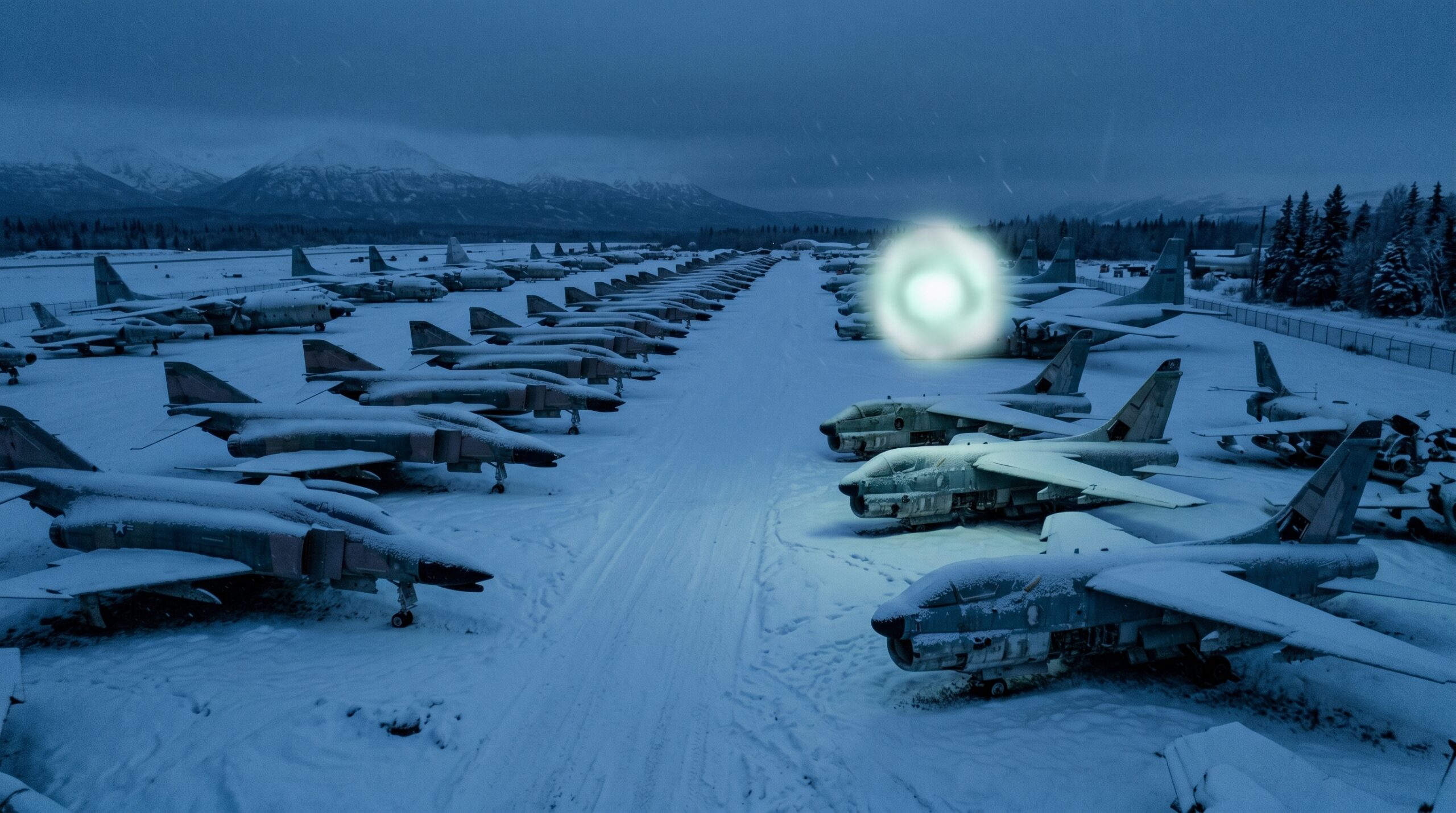
    In the back corner of a military aircraft boneyard at Elmendorf Air Force Base in Alaska, former Air National Guard member John Reeves discovered something that should not have been there: a reel of 1970s film showing an unidentified craft moving in ways that defy conventional explanation. The footage, stored among decommissioned hardware that the military had long since abandoned to the cold, carries the kind of visual evidence that believers have been chasing for years — and the kind that official channels have consistently said does not exist. It earned more than 1,300 points on r/UFOs in a matter of days and has now become one of the most discussed pieces of visual UAP evidence to surface from a military-adjacent source in recent memory. For people who believe that the government has been sitting on UAP evidence for decades, John Reeves’ boneyard discovery lands like a confirmation: the material was always there. It was just waiting for someone with the right clearance and the right timing to find it.

    What the Footage Shows

    The tape dates to the 1970s, an era of active UAP encounters that included the famous Tehran intercept of 1976 and the disappearance of Frederick Valentich off the Australian coast in 1978. The Alaska footage reportedly captures a craft moving with characteristics that standard aviation cannot explain — sudden accelerations, right-angle turns, and flight patterns that do not produce visible exhaust or generate the kind of sonic disturbance expected from conventional aircraft. The craft itself appears structured, metallic, and purpose-built, nothing like a natural atmospheric phenomenon.

    What makes the footage significant is not just what it depicts but where it was found. A military boneyard is not a civilian archive. It is a controlled facility where the military stores, processes, and dismantles equipment it no longer needs. Film stored in that environment suggests that someone inside the military apparatus was tracking these events and documenting them on film, with the expectation that the record would outlast whatever operational need prompted the recording.

    How John Reeves Came Across the Tape

    John Reeves served in the Alaska Air National Guard, giving him the kind of installation access that most civilians do not have. According to accounts shared across UAP communities and discussed extensively on r/UFOs, Reeves encountered the footage during routine work related to decommissioned material at the base. The circumstances of the discovery — finding a reel of UAP-related film among discarded military hardware — feed directly into the narrative that UAP evidence has been systematically lost, abandoned, or buried in government facilities across the country.

    The broader pattern is consistent. From the Chuck Clark Area 51 footage that surfaced from another veteran’s collection to the mass-witness UAP encounters that military personnel have documented in recent years, the story keeps returning to the same theme: the evidence exists, but it is scattered across military installations, personal collections, and discarded files that no one in authority thought was important enough to preserve.

    The 1970s Were Not a Quiet Decade for UAP

    The timing of this footage matters. The 1970s were one of the most active decades in modern UAP history. In 1976, Iranian F-4 Phantom jets tracked and attempted to intercept a massive luminous object over Tehran — and their weapons systems reportedly failed when they tried to lock on. In 1978, Australian pilot Frederick Valentich reported being followed by a metallic object before his final transmission cut out over the Bass Strait. In 1979, the Trans-en-Provence incident in France became one of the few UAP cases where physical trace evidence was collected and analyzed by government investigators.

    If Reeves’ footage is genuinely from that era, it places Alaska among the sites of significant UAP activity during a period when military encounters were being quietly documented. The question is whether the footage represents an ongoing Alaska UAP pattern — the Northwest Territories driller UFO sighting showed that northern regions continue to produce high-strangeness encounters — or whether a specific event in Alaska in the 1970s was documented by the military and then quietly stored away.

    What Cannot Yet Be Confirmed

    The footage has been shared and discussed but has not been independently verified by scientific or government authorities. Reeves’ account of the discovery is credible but has not been corroborated by a second independent source within the military chain of command. The film itself has not been subjected to forensic dating of a kind that would definitively prove its 1970s origin — though the visual quality, grain structure, and recording artifacts are consistent with material from that era.

    The Air Force has not commented on the footage or on Reeves’ claim that it was stored in an Elmendorf boneyard. Without official acknowledgment, the tape remains in the same category as a growing body of military-adjacent UAP evidence that believers consider compelling and skeptics consider insufficient for proof.

    What Remains

    John Reeves’ boneyard discovery adds another layer to a conversation that will not be settled until the government changes its posture toward UAP evidence. Whether that footage will be enough to shift the debate depends not on the image itself — which can be analyzed, doubted, and disputed from any angle — but on the cumulative weight of all the similar discoveries coming from military-adjacent sources. One tape stored in a cold storage boneyard in Alaska is not proof. Ten tapes from ten different installations might be something else entirely.

  • Rendlesham Forest Binary Code 2026: “We Returned to Warn” and What It Might Mean

    Rendlesham Forest Binary Code 2026: “We Returned to Warn” and What It Might Mean

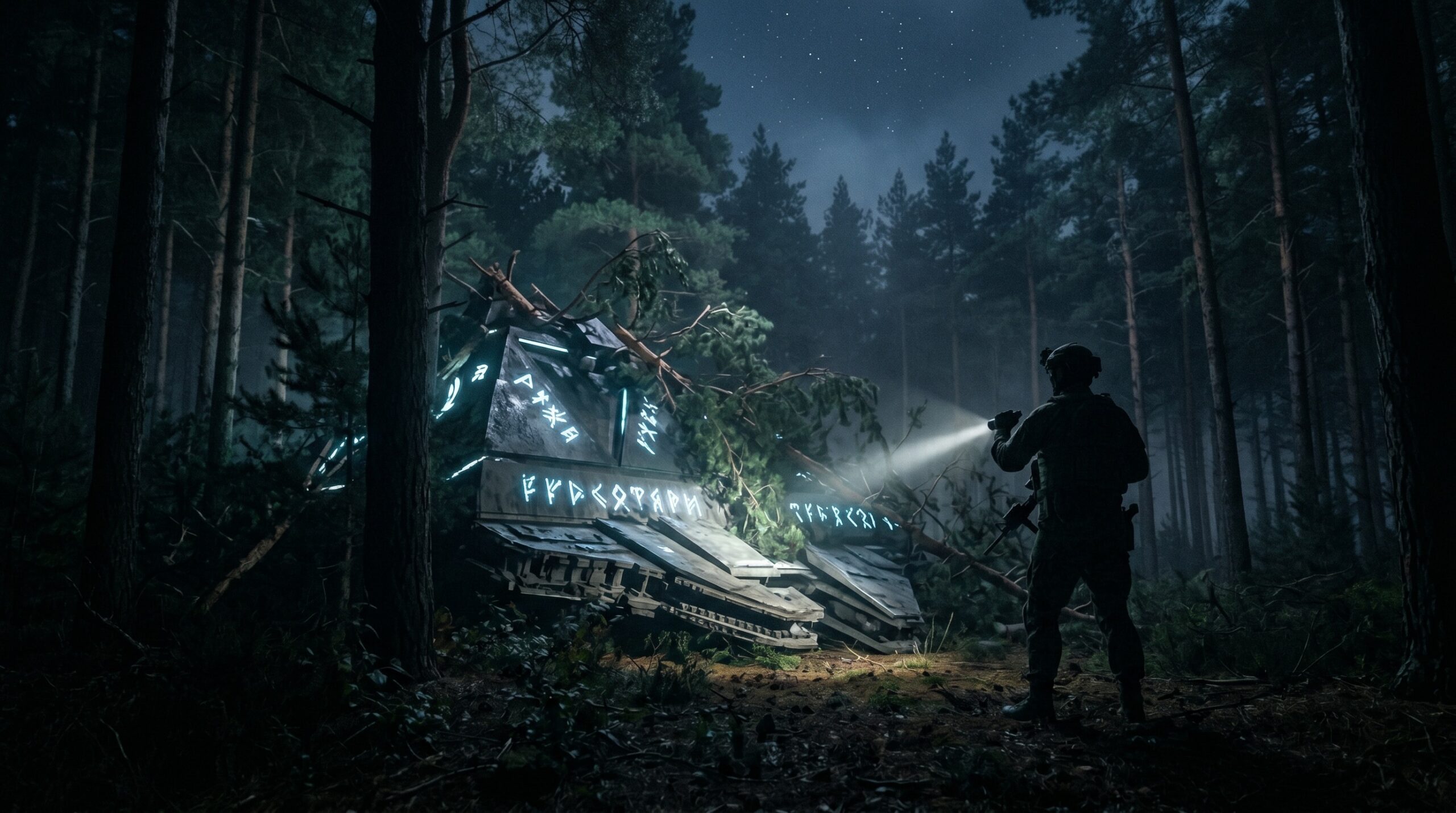
    The night watch stepped into Rendlesham Forest expecting a downed aircraft. What Sergeant Jim Penniston encountered instead was a triangular craft resting between the pines, its metallic surface inscribed with geometric symbols that pulsed in low light. He walked up to it. He placed his hand on its surface. And then, he says, binary code began pouring into his mind — not through his eyes or ears but through something else entirely, something that felt like knowing without being told.

    That was December 27, 1980. Three nights of the Rendlesham Forest incident had already placed it among the most rigorously documented UFO encounters in military history. Multiple witnesses. Cross-base corroboration. Physical evidence. An official memo filed by the deputy base security chief on the ground with a tape recorder running. But Penniston’s claim — the telepathic binary download — carried the incident into a territory that made even the skeptics pause.

    Because he wrote the code down. He decoded it. And the message was this: “EXPLORATION OF HUMANITY CONTINUOUS BEYOND 8100.” And beneath that: “WE RETURNED TO WARN.”

    The Three Nights of Rendlesham

    The incident began on December 26, 1980, at RAF Bentwaters and RAF Woodbridge — twin Air Force bases in Suffolk, England. Security personnel reported unusual lights descending into the forest adjacent to the base perimeter. What followed was a three-night sequence of sightings, sounds, and physical phenomena that generated the most substantial official documentation of any UFO encounter involving US military personnel on allied soil.

    Multiple airmen saw the lights. Different people, different positions, different vantage points. On the second night, Penniston and others entered the forest to investigate. Penniston claimed to have encountered a landed craft — triangular, dark metallic, roughly three meters across at its base — resting on three legs among the trees.

    WION described the decoded message and Penniston’s account of the binary transmission. The Rendlesham encounter shares DNA with other military UFO files that surfaced over the decades as one of the most extraordinary claims in the entire Rendlesham case file.

    The third night — December 28 — produced the most famous surviving evidence. Deputy Base Security Chief Lt. Col. Charles Halt grabbed a tape recorder and led a patrol into the forest. The recording captured his real-time observations of the lights moving through the canopy and above the bases. The Halt memo was eventually released through FOIA and it remains one of the most compelling official documents in UAP history because it was filed by a career Air Force officer, not a civilian enthusiast.

    The Binary Code

    Penniston’s claim is separate from Halt’s memo but equally compelling for those who study the case. He said that during his close contact with the landed craft, he experienced a telepathic data transmission — sequences of ones and zeros that he later transcribed, decoded into ASCII, and published.

    The decoded text reads, in part:

    • “EXPLORATION OF HUMANITY CONTINUOUS BEYOND 8100”
    • “WE RETURNED TO WARN”

    The second phrase is the one that has people unable to stop thinking about the case 45 years later.

    What warning? Warning about what? And who is “we”?

    Penniston interpreted the message as a warning about humanity’s trajectory — that the intelligence behind the craft had revisited Earth multiple times and was delivering an urgent, if cryptic, caution about the direction the species was heading. The “beyond 8100” fragment is deliberately vague — it could reference a date, a coordinate, a cycle, or a classification. Nobody has produced a definitive reading of it.

    The binary code has been analyzed by people who are not Penniston. Some confirm the ASCII decoding produces the quoted text. Others argue that the binary sequences are flexible enough to produce meaningful text through selective interpretation patterns. The debate itself is part of what keeps the case alive.

    Why This Is Resurging in 2026

    The Rendlesham Forest binary code hit r/HighStrangeness in early 2026 and immediately captured 773 engaged upvotes across a thread that dove deep into the decoded message and its implications. A new generation of UAP-curious readers discovered the case at precisely the moment when the broader disclosure conversation is reaching its highest energy.

    The case resonates for reasons that go beyond the binary. Rendlesham is one of the few military encounters with on-the-ground documentation. It is not a single blurry photo or a cockpit video — it is multiple witnesses, a taped recording, an official memo, physical marks on trees and soil, and now, a message. Whether you accept every element of the case at face value or not, it occupies a space that is difficult for skeptics to dismiss wholesale and impossible for believers to ignore.

    The warning message lands differently in 2026 than it did in 1980. In the 1980s, it was a Cold War curiosity. Today — with Congress discussing classified UAP videos, with Trump promising UFO file releases, with the disclosure conversation moving from congressional hearings to mainstream television — a warning from a non-human intelligence about humanity’s trajectory sounds less like folklore and more like something that people are actually preparing to hear.

    What the Files Actually Confirm

    The Halt memo is real. It is dated January 13, 1981. It was filed through official Air Force channels. It describes lights over the base, radiation readings elevated at the alleged landing site, and physical impressions in the ground. It was declassified through FOIA in the 1990s and remains a publicly accessible document.

    Multiple witnesses corroborated seeing the lights. The witnesses had different roles, different locations, and different reasons to be in the forest on those nights. Their accounts are not identical — which makes them more credible, not less, since genuine independent observations rarely align perfectly.

    Radiation readings at the alleged landing site showed levels approximately one-tenth of a milliroentgen above background. That is a tiny elevation. It is measurable. It is also small enough that environmental variation could account for it. But it was measured by base personnel at the specific location where a craft allegedly rested.

    What cannot be independently verified from the public record is Penniston’s binary code. Nobody else claimed to receive a telepathic data transmission that night. The binary exists because Penniston wrote it down and shared it later. His credibility as the primary close-contact witness in the case is solid. The binary message alone is the part of the case that pushes beyond documented evidence into personal testimony.

    The Warning Within the Narrative

    “We returned to warn” works on two levels. On the surface, it is a dramatic phrase from an unverified personal account — the kind of thing that could be confabulated after decades of thinking about a strange encounter. But embedded inside it is something that resonates with the current disclosure moment in a way that is hard to separate from the substance of the case itself.

    If the entities behind the Rendlesham encounter were delivering a warning — much like the questions raised by the Bluegill Triple Prime UFO shootdown — about nuclear escalation — about nuclear escalation in 1980, about environmental collapse, about military readiness and non-human technology and the direction human civilization is heading — then the warning is still active. It is still relevant. It still has not been received by the people it was presumably meant for.

    Whether you view the binary code as a genuine transmission, an artifact of a psychologically intense experience, or a later construction built from memory and imagination, the question it poses survives every level of analysis: what would it mean if the warning was real?

    What Is Actually Known

    The Rendlesham Forest incident of December 1980 involved multiple witnesses from two US Air Force bases in England. Lt. Col. Charles Halt recorded his observations on tape and filed an official memo describing lights, radiation, and ground impressions at the alleged contact site. Sgt. Jim Penniston claims close contact with a landed triangular craft and a telepathic binary message that decoded to “EXPLORATION OF HUMANITY CONTINUOUS BEYOND 8100” and “WE RETURNED TO WARN.” The Halt memo is an official government document. The binary code is personal testimony.

    What is not known is whether Penniston’s binary download was a genuine non-human communication, a psychological response to an extraordinary nighttime encounter, or a reconstruction built years after the event. What is known is that the incident happened, and what the witnesses saw and heard and recorded is documented well enough that no official explanation has ever fully accounted for it.

    The message — if it is a message — waits for the people who are ready to hear it.

  • Area 51 Earthquake Swarm 2026: 17 Quakes in 24 Hours Over Groom Lake

    Area 51 Earthquake Swarm 2026: 17 Quakes in 24 Hours Over Groom Lake

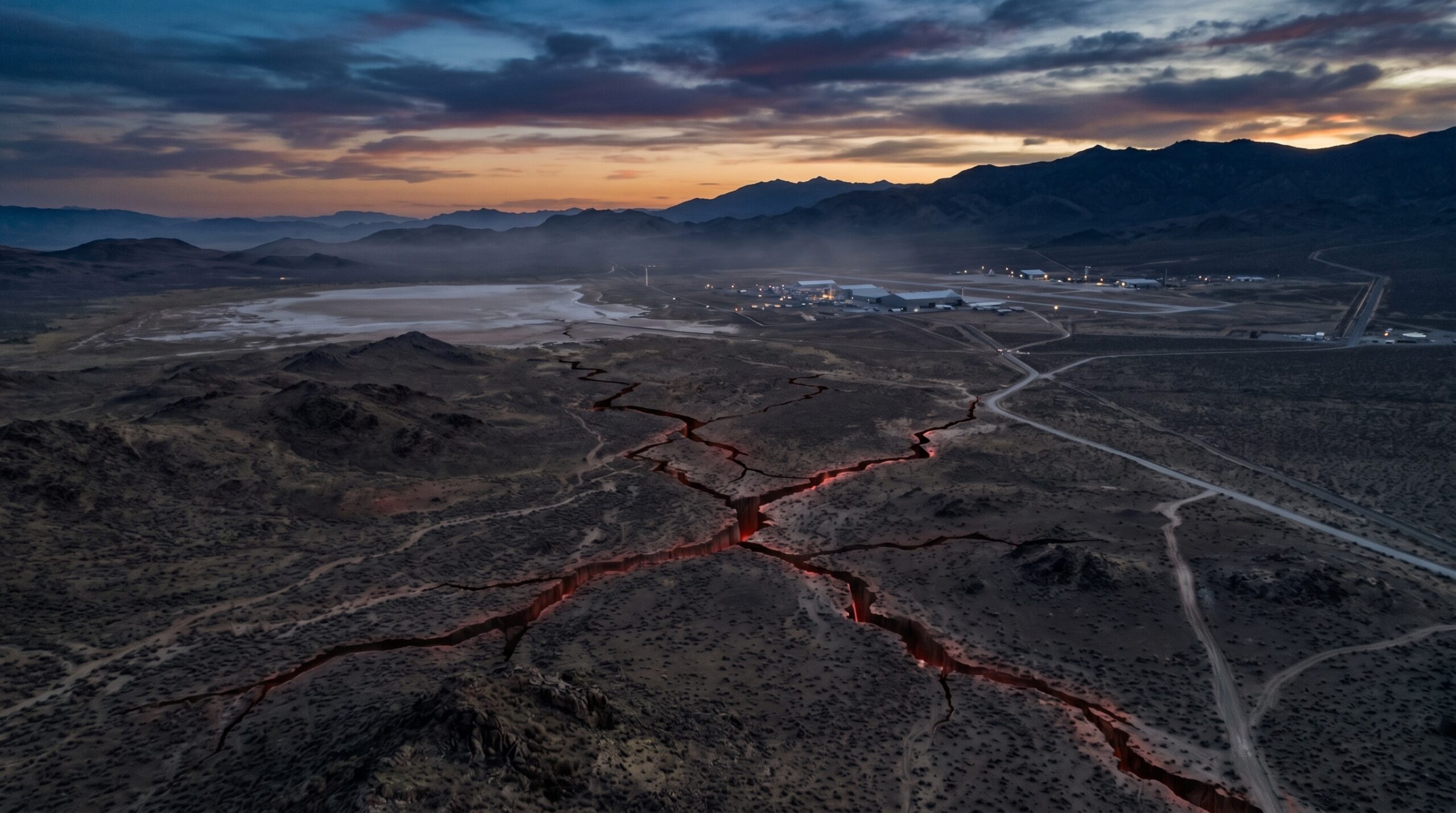
    The ground beneath Groom Lake shook seventeen times in twenty-four hours. Low magnitudes. Tight cluster. One of the most heavily guarded geographic points on the planet, and the earth itself was moving.

    For geologists in Nevada, this was a standard seismic event along the Bare Mountain fault. For the millions of people who have spent the last year watching the Area 51 earthquake swarm unfold in real time, something else entirely. The quakes hit during a period when Congress is actively demanding UFO file releases, when lawmakers say they have seen classified videos of objects that “defy physics,” and when the cultural energy around disclosure is at its highest point in modern memory.

    The timing is what matters here. Not the magnitudes. The timing.

    The Swarm in Numbers

    Newsweek and Popular Science both confirmed the seismic cluster near Area 51 — 17 registered events within approximately 24 hours, all within a tight radius of Groom Lake. Over one hundred people reported feeling the quakes. The USGS aftershock forecast put the probability of another magnitude 3.0 or higher earthquake at 54 percent in the same region.

    The magnitudes themselves were small. Most registered between 2.0 and 3.0 on the Richter scale. Earthquakes of that size would not cause structural damage. They would not be widely felt outside the immediate area. But a swarm — a cluster of tremors concentrated in one location over a compressed timeframe — is different from a single event. A swarm signals that the fault is actively adjusting, that the stress patterns beneath the surface are unsettled.

    The USGS mapped every event. Every coordinate is public. Every tremor sits squarely in the Nevada desert, within miles of the facility that has housed American aerospace testing for over seventy years.

    What the Science Says

    Nevada sits on a complex web of fault lines. The Bare Mountain fault runs through the region west of the Amargosa Valley, and it is known to produce seismic swarms. Seismologists will tell you that a swarm is normal fault behavior — stress accumulates, the rock fractures in multiple small events, the energy releases in a cluster rather than one large rupture.

    It happens throughout the Great Basin. It happens with no connection to human activity. It happens because the ground in that part of Nevada has been moving for millions of years and will continue to move.

    The USGS has a 54 percent forecast for a magnitude 3.0 or greater event in the same area. That means the fault is still adjusting — the swarm may not be over.

    Why the Area 51 Connection Captures People

    There is no geological reason to connect these earthquakes to what happens inside the perimeter fence. But there are a hundred other reasons why people will not treat this as just another fault-line adjustment.

    Area 51 is not a normal coordinate. It is the most famous restricted airspace in the world. It has housed experimental aircraft testing since the 1950s. It is where the U-2 spy plane was validated and where the F-117 Nighthawk was secretly engineered at night. It is the place people reference when they talk about recovered non-human technology — whether that claim is verified or not, the cultural weight of the name carries the story forward regardless.

    When the ground shakes there, the question that forms is not geological. It is narrative. What is happening underground? What testing is in progress? Did something trigger this, or is the earth simply doing what the earth does in Nevada?

    People who track disclosure narratives see another signal in the noise. The earthquakes hit at exactly the moment when congressional representatives are talking about UFO videos in SCIF briefings. When Trump is saying files are coming. When the entire energy around Area 51 and non-human disclosure has reached its highest temperature in years.

    Earthquakes and Military Secrets: A Long History

    The connection between seismic activity and underground military activity is not purely theoretical. The Nevada Test Site — which sits near the same geological region — was the location of hundreds of underground nuclear tests between 1951 and 1992. Each underground detonation registered on seismographs. Some induced their own minor seismic events. The geology of south-central Nevada has been shaped by human testing as much as by natural tectonics.

    There is no public record linking the current swarm to any specific underground activity. There is also no reason to assume the area beneath Groom Lake is geologically quiet. The Bare Mountain fault existed long before the fence went up around Area 51, and it will exist long after.

    The earthquakes have already been connected by conspiracy feeds to the April 2026 Nellis AFB sighting just a few days earlier, creating a narrative of heightened activity across military airspace in Nevada. Within hours, the seismic swarm had generated over 1,100 upvotes and 300 comments focused on what the earthquakes represented, not just where they happened. The conversation was never about the science. It was about the story the science was interrupting.

    The Story Inside the Swarm

    The earthquakes will fade from the news cycle. Like the Iran-Turkey drought weather weapon theory, this swarm will be read through the lens of secrecy. The USGS will publish its standard assessment. The fault will settle or continue settling, and nobody will think about it again until the next cluster.

    But inside the disclosure narrative, the swarm will take on a life of its own. It will become part of the larger story about what is happening at Area 51, about what the base contains, about whether the timing of seventeen earthquakes on one of the most active disclosure weekends of the decade is a coincidence or a surface-level signal of something that has been moving underground for a very long time.

    What Is Actually True

    Seventeen earthquakes occurred near Groom Lake in approximately 24 hours. The USGS confirmed and mapped them. They were low-magnitude events consistent with a seismic swarm on the Bare Mountain fault. Over one hundred people reported feeling them. The USGS forecasts a continued probability of further events in the region.

    None of these facts connect to anything happening inside the Area 51 perimeter. None of them confirm or contradict any claim about what the base contains. What they do represent is a moment when a piece of the earth moved at a moment when the cultural conversation about what is hidden beneath that earth was already at full intensity.

    Believers read it as a signal. Geologists read it as a fault adjustment. Both readings are internally consistent with the facts as they are publicly available. The question of which reading carries more weight depends entirely on how much faith you place in the idea that something important happens — and has always happened — in the closed airspace above Groom Lake.

  • NASA Engineer Bob Oechsler UFO Claims: 20 Sightings and the Money Behind Secrecy

    NASA Engineer Bob Oechsler UFO Claims: 20 Sightings and the Money Behind Secrecy

    In 1993, a former NASA mission specialist appeared on a morning television show and said something that almost nobody who heard it would ever forget. Bob Oechsler — a man with legitimate aerospace credentials and an Air Force background — told the host that he had personally seen over twenty UFOs that were “quite extraordinary” technology. Then he said something else: the government had recovered non-human craft, and the reason the truth was being suppressed had nothing to do with public safety and everything to do with budgets.

    “It’s not about aliens,” he said. “It’s about money.”

    The interview aired on live television. It was not a podcast. It was not a late-night internet broadcast. It was an actual morning TV show in 1993, decades before the disclosure conversation became acceptable even as fringe content. Oechsler appeared with his aerospace credentials fully visible, and he used them as the foundation for claims that went far beyond the typical UFO enthusiast’s anecdote.

    The clip sat dormant for thirty-plus years. Now it is resurfacing across Reddit and UFO forums in early 2026 with massive engagement, at a moment when Congress is holding SCIF briefings about UAP videos, when The Pentagon file releases Trump is now promising could change everything, and when the disclosure conversation is moving forward, and when the entire narrative around government recovery programs has shifted from the fringe into the legislative mainstream.

    The 1993 Interview

    The resurfaced Bob Oechsler clip on r/UFOs generated nearly 1,890 upvotes and 218 comments in a short window, making it one of the most engaged UFO history threads in recent Reddit memory. The numbers are driven by what Oechsler said and by who said it.

    He claimed to have seen over twenty UFOs. He did not say “lights in the sky” or “things I could not identify.” He said he had seen objects whose technology was extraordinary — meaning, in practical terms, that they demonstrated performance characteristics that no human aerospace program in 1993 could match. Instant acceleration. Sustained high-G maneuvers. Altitude and speed profiles that fall outside the envelope of any known aircraft.

    Then came the other claim: the government had recovered non-human craft. That is not a sighting. That is a recovery claim — the same category of claim that David Grusch would make thirty years later in a congressional hearing, the same claim that generates the kind of classified budget structures Oechsler was pointing at when he said it was about the money.

    The Money Thesis

    “It’s not about aliens, it’s about money.”

    That is the line that has people replaying the interview and wondering why it didn’t become a landmark moment when it aired in 1993. And the answer to that question — why the clip didn’t penetrate the mainstream, why it sat dormant for three decades — is actually the proof of Oechsler’s point.

    If a government program is recovering and studying technology that falls outside known human capability, the budget for that program would be enormous. The contractors involved would be defense-industrial companies with multibillion-dollar classified contracts. The people managing the program would have institutional incentives to keep it classified indefinitely — not because the public would panic, but because the money flow associated with the program is self-sustaining and extraordinarily lucrative.

    This is the argument that disclosure advocates have been making for years. What Oechsler added was that he was inside the system, he saw what the system was hiding, and he understood the economics of the secrecy, much like other insider testimonies about what the government actually knows.

    Oechsler Among the Aerospace Insiders

    Oechsler joins a very specific category of UFO claimants: the people with verifiable aerospace or military credentials who have made non-human technology claims in public media.

    The category is small and its members carry different levels of credibility. Bob Lazar claimed to work at a test site near Groom Lake and described the physics of recovered propulsion systems. His story has been contested for decades. Dan Burisch claimed involvement in biological research programs connected to non-human entities. His claims are even more controversial and remain essentially unverifiable.

    Oechsler’s claim is different in an important way. He did not claim to have worked on a recovery program. He claimed to have seen the objects — over twenty of them — and to have concluded, from his professional position inside aerospace operations, that they were not of human origin. He used his NASA background as the authority for the claim and pointed to the structural economics of secrecy as the reason it was hidden.

    Reddit r/aliens covered the Oechsler claim with the full context of his NASA and Air Force background, noting his work under NORAD as a mission specialist and suggesting this gave him access to tracking systems that a NASA engineer would have seen firsthand. If he had access to NORAD or Air Force tracking data, his sighting claim becomes less “I saw a light” and more “I saw tracked objects performing maneuvers that no known aircraft can perform.”

    The Timing: Why 2026 and Not 1993

    In 1993, the cultural infrastructure to amplify Oechsler’s claim did not exist. The internet was in its infancy. Social media did not exist. Disclosure was not a mainstream conversation. A morning TV interview with a former NASA engineer discussing UFOs and government money would have been treated as an eccentric moment in a morning show lineup — interesting enough for the segment, easy enough to archive and forget when the ratings returned to normal.

    In 2026, the infrastructure is completely different. The Grusch hearings created a reference point for understanding what an insider UFO claim looks like when it enters the public record. Congressional briefings about UAP videos are happening in real time. The Pentagon file releases Trump is now promising could change everything, and when the disclosure conversation is moving forward. The cultural conversation has moved in Oechsler’s direction, not away from it.

    So the clip that sat dormant in 1993 archives is now being watched by people who understand what it means when an aerospace engineer uses his credentials to describe non-human technology in public.

    The Case for Taking Oechsler Seriously

    The argument for taking Oechsler seriously is structural, not just biographical. He had credentials. He made the claim on television, not on a self-published website. He explained the mechanism of secrecy in terms that align with what later disclosure advocates have been saying. He was specific about the number of objects — over twenty — and about the conclusion he reached from watching them.

    The argument against taking Oechsler seriously is that the claim relies on his personal account and has not been corroborated by independent evidence. The television interview itself is real. What he said on the interview is real. Whether the twenty objects existed in the way he describes them — that is a claim that requires trust in the person making it, and nothing more.

    But trust is the only currency disclosure has ever traded in. Every insider claim, from Grusch to Oechsler to every air force pilot who has described flying toward objects that outrun jet aircraft, comes down to the same question: do I believe the person who is telling me what they experienced?

    What Is Actually Known

    Bob Oechsler appeared on a 1993 morning television program and stated that he had seen over twenty UFOs displaying technology he described as “extraordinary” and not of human origin. He claimed the US government had recovered non-human craft and said the reason for the secrecy was financial — classified programs generated enormous budgets that powerful interests wanted to protect. The interview is extant, viewable, and has been widely shared in early 2026. Oechsler was a former NASA mission specialist with an Air Force background.

    What is not known is whether the twenty objects Oechsler described were independently tracked or documented, whether anyone else in aerospace operations confirmed his account, or whether he elaborated on or modified his claims after the 1993 broadcast. The television record is real. The personal experience he describes cannot be independently verified. The money thesis he proposed — that recovery programs are protected because of their budgets, not because of national security — has become the default explanation for why disclosure has been delayed for most of the people following the story.

    That alone makes the thirty-year-old clip worth watching now.

  • Trump Says UFO Files Are Coming: ‘Things You Wouldn’t Believe’ — What We Know

    Trump Says UFO Files Are Coming: ‘Things You Wouldn’t Believe’ — What We Know

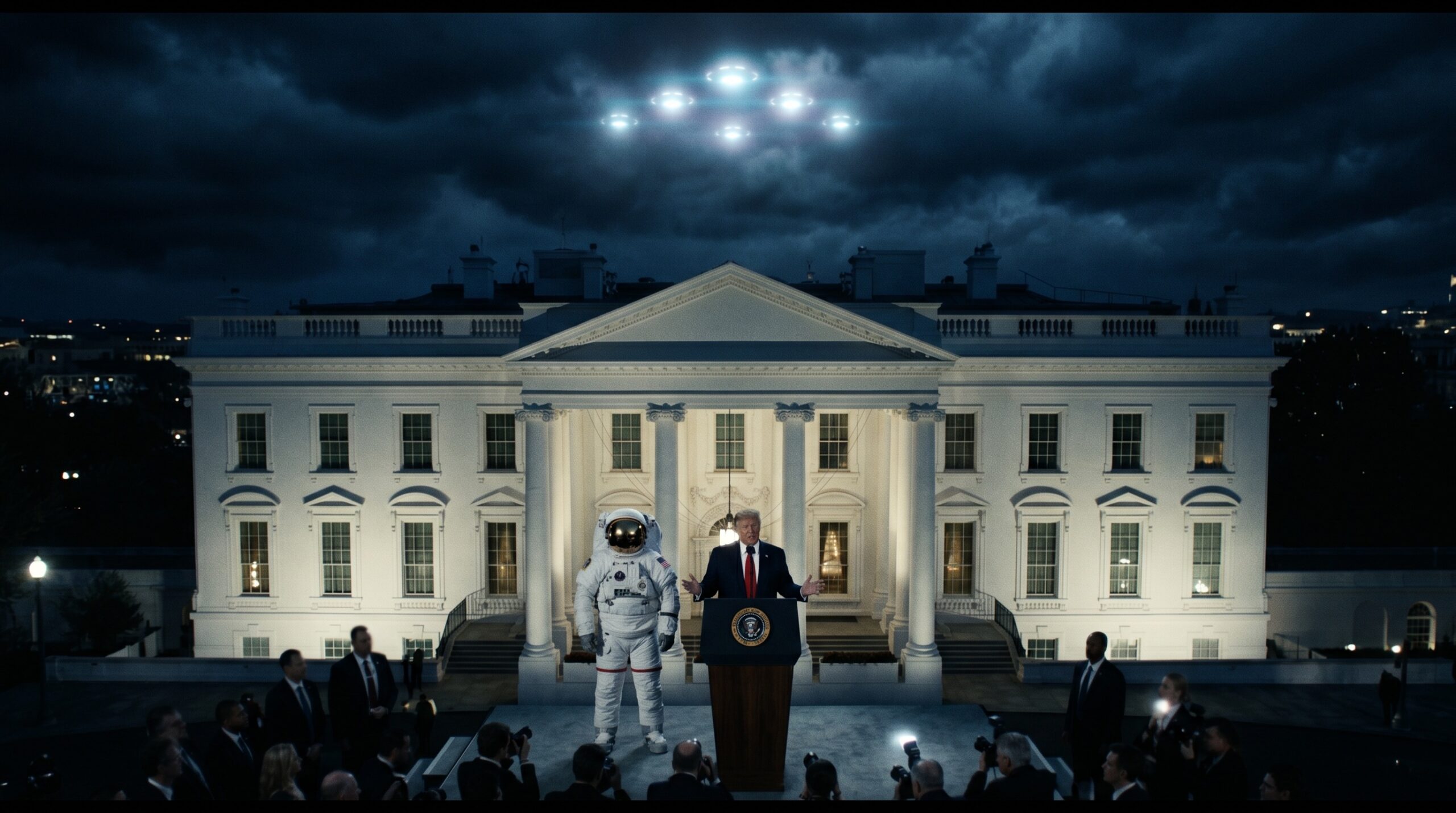
    Donald Trump stood behind a White House podium with the Artemis II astronauts beside him and delivered a line that sent UFO believers across every feed into overdrive — just weeks after the April 2026 White House document release, he doubled down: anything having to do with UFOs or related material is going to be released, and he thinks “a lot of it is going to be very interesting.” He had already said, in the same breath, that he’d interviewed pilots during his first term who saw “things you wouldn’t believe.” The cameras caught the astronauts. But the people locked into the disclosure conversation were locked onto the UFO words.

    This is not the first time Trump has teased a release. It is not the first time a politician has promised transparency while delivering timelines that evaporate. But the signal this time carries weight that older promises lacked. Eric Burlison has been telling anyone who will listen that closed-door Pentagon briefings showed classified UAP videos of objects “defying physics.” Steve Scalise reportedly called those same briefings “eye-opening.” And David Grusch — the man who forced this entire conversation into the congressional record — has been building public support for a release he warns will be “a hard pill to swallow.”

    What Trump Actually Said

    The setting gave the moment its gravity. Trump was introducing the Artemis II crew — the astronauts who will return humans to lunar orbit for the first time in half a century. But in the press conference that followed, the conversation pivoted before the questions even asked about aliens.

    Trump said: “We’re going to be releasing a lot of very interesting things… Anything having to do with UFOs or related material we are going to be releasing.” He paused, then added: “I think a lot of it is going to be very interesting.” He credited conversations with military pilots from his first term — pilots who, he said, “saw things you wouldn’t believe.”

    Newsweek and WSLS both published versions of the same quote within hours. Newsweek covered Trump’s statement about the UFO material and WSLS reported the context of the Artemis II press conference. The video clips spread across X and Reddit within the same hour.

    The words themselves are classic Trump: suggestive, non-specific, and impossible to pin on a date. But the people who have tracked disclosure from the inside say they hear something different underneath the rhetoric.

    What Files Could He Be Talking About?

    The Pentagon has more on UAPs than the public has ever seen. That is not speculation — it is documented. Congressman Eric Burlison has described SCIF briefings where classified UAP videos showed objects defying physics, and the broader recovery-program question remains unresolved. Steve Scalise reportedly called those briefings eye-opening, and the Office of the Director of National Intelligence has released summary reports identifying cases unexplained by any conventional explanation. And the AARO — the Pentagon’s own UAP task force — has compiled case files spanning years of military encounters.

    The question is not whether there is material. The question is how much of it will actually be released, and in what form.

    Trump’s framing — “anything having to do with UFOs or related material” — is sweeping enough to mean almost anything. A curated selection of declassified videos? A dump of raw intelligence? A formal report with findings he can call a “release”? Or a handful of videos the Pentagon has already reviewed and cleared for public consumption, dressed up as a landmark event?

    Grusch’s sworn statement before Congress outlined exactly the type of material believers are expecting — and what he described goes well beyond blurry cockpit footage.

    Grusch, Burlison, and the Disclosure Engine

    Trump’s comments did not land in a vacuum. They landed on top of a months-long disclosure push from the people most involved in driving it.

    David Grusch has been building toward this moment since his 2023 congressional appearance, where he testified under oath about alleged non-human programs and crash-retrieval operations. He has since warned that public disclosure will be “a hard pill to swallow” and that the American public needs to be prepared. His language has been deliberate: he is not promising a specific revelation, but he is signaling that what the government knows would fundamentally change how people think about humanity’s place in the cosmos.

    Eric Burlison has been the most aggressive advocate in Congress for full transparency. He has described SCIF briefings where lawmakers viewed videos of UAPs performing maneuvers that no known physics can explain. He has named specific objects and specific incidents and refused to back down from the language he uses to describe them. His most recent briefing — the one where he described an encounter involving military and intelligence personnel successfully luring and documenting a craft in controlled conditions — apparently reached Steve Scalise directly, which is why House leadership is now involved.

    Cybernews reported on the classified UAP videos shown in congressional briefings that Burlison says depict objects defying the known laws of physics.

    The alignment between Grusch’s public warnings, Burlison’s congressional pressure, and now Trump’s presidential promises creates a convergence that has not existed at any earlier point in the disclosure timeline. All three are working the same frequency at the same time.

    Why This Time Feels Different

    Previous disclosure promises have collapsed under their own weight. The Pentagon released those Navy videos, yes — but they went cold after the viral moment. Congress held hearings. Grusch testified. Then the news cycle moved on.

    What has changed is the narrative momentum.

    r/UFOs posts about Trump’s disclosure promises drew over 3,200 upvotes and 1,000 comments in a matter of hours, making them some of the most engaged threads in the subreddit’s history. The disclosure conversation stopped being an insider topic months ago — it became a feed topic, and feeds are where narratives gain momentum regardless of institutional speed. Goldie Hawn describing her alleged encounter on Jimmy Kimmel brought disclosure into daytime television. Burlison is talking about it in congressional briefings. Trump is talking about it at presidential press conferences. The narrative is moving from Washington to Hollywood to the world exactly as disclosure advocates have been trying to do it.

    What to Watch For

    The most important thing believers can do right now is manage expectations — not dismiss the signals, but understand how government releases work.

    A genuine disclosure event would include material that cannot be explained away as sensor artifacts, balloons, or optical illusions. It would confirm something that was previously only claimed in testimony. It would have specific, verifiable details that go beyond what has already been released through AARO and the ODNI reports.

    A managed disclosure event — and many disclosure advocates worry this is what happens — would look different. It would feature videos the Pentagon has already reviewed and cleared, with careful language attached, and a press release designed to answer the question without opening new ones.

    Watch for the difference. If the release is real, it will include specific incident data, pilot names, and radar confirmation. If it is managed, it will include language about “preliminary assessments” and “inconclusive data” and an invitation to stay tuned.

    What Is Actually Known

    Trump has said the Pentagon is preparing a UFO release. No date has been announced. No documents have been identified by title. Eric Burlison has seen classified UAP videos in a SCIF briefing that he says show objects defying physics. David Grusch has been warning that disclosure will be uncomfortable and that the evidence exists. These are all real, documented claims made by real people.

    What is not known is whether Trump’s promise translates into a specific release timetable, whether the material he is referring to is the same material Grusch and Burlison have described, or whether the public will receive anything beyond a small, carefully sanitized preview.

    For now, the pressure is real. The convergence is real. The material almost certainly exists in some form. Whether the release that Trump is promising matches the disclosure that believers are waiting for — that remains the biggest unanswered question.

  • Goldie Hawn Describes Her UFO Abduction on Jimmy Kimmel: Why the Celebrity Disclosure Moment Has Believers Talking

    Goldie Hawn Describes Her UFO Abduction on Jimmy Kimmel: Why the Celebrity Disclosure Moment Has Believers Talking

    One moment she was trading jokes with Jimmy Kimmel about her latest wellness venture and the next Goldie Hawn leaned forward on the couch, her signature laugh absent, and told millions of live television viewers that something impossible had happened to her — something she had kept hidden for decades, something that still woke her up in the middle of the night when the sky grew too quiet and the stars looked too close.

    The studio audience went dead silent. Kimmel stared. And then Hawn said it plainly: she believes she was taken aboard a craft not of this Earth.

    It was a moment that sent shockwaves through the UFO community and beyond, precisely because coming from a beloved Hollywood icon — someone whose career spans six decades and has been built on warmth, wit, and an almost unshakable wholesomeness — it carried a weight that fringe testimonies simply cannot match. This was not some internet personality chasing clicks. This was Goldie Hawn, Oscar-winning actress and icon of American pop culture, telling late-night television that her life was altered by an encounter with the unexplained.

    For believers who have spent years waiting for mainstream acknowledgment — for voices from the highest levels of public life to break the stigma and speak openly about UFO and UAP encounters — the Hawn segment on Kimmel felt like a watershed. It was not an admission forced by subpoena or leaked in a dry government report. It was voluntary. Personal. And it happened on one of the most-watched entertainment programs on American television.

    The timing, too, could not have been more charged. Between an accelerating cycle of government UFO disclosure efforts in Washington, a string of unexplained deaths among researchers tied to sensitive UAP studies, and increasingly bold claims from military pilots about encounters they were told to forget, the culture is shifting. And a woman like Hawn choosing this exact moment to step forward — not with a whisper in a documentary, but with a direct confession on network television — has believers asking whether something larger is finally breaking through.

    What Goldie Hawn said on air

    To understand why the UFO community has rallied around this moment, you have to look closely at what Hawn actually said — not at how pundits later framed it, but at the words themselves, delivered without a script and with a level of emotional candor that was unmistakable even through the usual late-night polish.

    The segment began innocently enough. Hawn was promoting a charity initiative and the conversation drifted into personal history. Kimmel asked about her early years in the entertainment industry and whether anything had happened to her that she had never spoken about publicly. The kind of question that usually produces a polite deflection or a rehearsed anecdote about a difficult audition.

    Instead, Hawn paused. The laughter died. And she described an experience from years ago that, by any conventional standard, should have been impossible.

    She spoke about being in a remote location — vague on specifics, deliberately so, and believers in the community respect that discretion — when the sky changed. She described lights that did not behave like aircraft. She described a sensation of being lifted, of losing agency, of finding herself in a mental space that she could only describe as “not mine.” She spoke in terms that UFO researchers will instantly recognize: missing time, a physical encounter that left no conventional marks but an indelible psychological impression, and a return to ordinary life that was anything but ordinary because nothing about the world looked the same afterward.

    She did not claim to have been probed. She did not sensationalize. What she did was more powerful: she told the story simply, as one human being telling another that something extraordinary happened, and that the extraordinary thing demanded to be acknowledged.

    “I’ve carried this for a long time,” she said at one point, her voice steady. “And I’ve watched people be ridiculed for saying far less than what I’m sitting here telling you tonight. It has to stop.”

    That final line — it has to stop — is what sent the clip viral and ignited a firestorm of discussion across UFO forums, social media accounts, and research communities. It was a deliberate alignment with the broader movement for transparency, a signal that Hawn sees her testimony not as an isolated curiosity but as part of a larger pattern of human beings who have experienced the unexplained and been punished for speaking about it.

    For those who have followed the Jimmy Kimmel Goldie Hawn appearance closely, watching the raw footage without commentary, the emotional authenticity is difficult to dismiss. She was not reading from cue cards when the conversation turned to the encounter. Kimmel visibly shifted in his seat. The production team did not cut away. What aired was a genuine moment of one famous person choosing honesty over comfort.

    It aligns with what disclosure advocates have been saying for years: the most powerful force against stigma is not a Pentagon press release or a congressional hearing. It is a person people trust telling them, face to face, this happened to me.

    The clip that exploded across social media

    Within hours of the broadcast, the relevant portion of Hawn’s interview was everywhere. Clips circulated on X, TikTok, YouTube, and Instagram with captions ranging from the measured (“Goldie Hawn speaks about UFO experience on Jimmy Kimmel”) to the breathless (“Hollywood legend confirms alien abduction live on TV!”). The views numbered in the millions within the first twenty-four hours.

    But the most interesting reactions did not come from casual scrollers or conspiracy-oriented accounts. They came from established UFO researchers and community leaders — people who have spent decades building cases, interviewing witnesses, and pushing for government transparency — who responded with something unusual: respect.

    Rather than mining Hawn’s testimony for inconsistencies or spinning it into sensational claims, many in the serious UAP community treated the moment with the gravity it deserved. The UFO field has, at times, been its own worst enemy, embracing every anonymous tip and blurry photograph without scrutiny, which has made it easy for journalists to paint the entire movement as credulous.

    Hawn’s appearance was different, and the community recognized that. Her account was personal, limited to what she was willing to share, and she did not claim to have evidence beyond her own experience. She told her story, connected it to the broader need for openness, and left it there.

    The clip also resonated because it arrived during a period when the UAP conversation has never been more entangled with questions of national security, scientific integrity, and institutional accountability. The UAP scientist deaths that have shaken the research community have heightened awareness of just how high the stakes are for people connected to this field. When a figure of Hawn’s stature voluntarily enters the conversation, it shifts the cultural gravity and makes it harder for media outlets to treat UFO testimony as a joke.

    Social media discourse around the clip naturally touched on the broader context of late-night show UFO moments — not because Kimmel has a history of hosting UAP discussions, but because television has historically been a space where the unexplained is treated as entertainment rather than testimony. Kimmel himself did not make light of what Hawn shared. He listened. He asked follow-up questions. He did not laugh. That absence of mockery was, in its own way, a statement.

    The virality also intersected with a growing cultural fatigue around dismissive media coverage of UAP topics. For years, mainstream outlets would cover government hearings on UFOs with heavy doses of skepticism, framing witnesses as potentially deluded. That model is breaking down. The public — driven by declassified Navy pilot footage, sworn congressional testimony, and celebrity accounts like Hawn’s — is no longer satisfied with mockery as a substitute for analysis.

    Celebrity UFO testimonies: a growing pattern

    Hawn is far from the first celebrity to speak publicly about UFO encounters, but her account has a particular potency because of the platform, the delivery, and the cultural moment in which it arrives. Celebrity UFO testimonies have existed for decades, but their weight has varied enormously depending on who was speaking and how.

    There is a long and storied tradition of famous individuals whose encounters helped shape public consciousness. History buffs might celebrity UFO testimonies going back to the earliest days of the flying saucer era, when figures in entertainment, politics, and aviation described lights and objects that defied conventional explanation. What has changed in 2026 is the ecosystem in which these testimonies land.

    When a celebrity spoke about UFOs in the nineteen-eighties or nineties, they were speaking into a culture that treated the subject with either ridicule or genre-fiction fascination. The X-Files made UFOs cool to watch and embarrassing to believe in. Today that dynamic has inverted. Government agencies have acknowledged the physical reality of UAP. Congress has held open hearings. Pilots in uniform have testified under oath about encounters they could not explain. And so when someone like Goldie Hawn speaks up now, she is speaking into a world that is adjusting to the possibility that the phenomenon is real.

    Celebrity disclosure accelerates precisely because it normalizes the conversation. People trust familiar faces. They are more likely to reconsider a topic they’ve been conditioned to dismiss if the person talking about it is someone they’ve welcomed into their home through films and television for decades. Hawn’s testimony works not because it contains new physical evidence but because it adds social legitimacy to a community that has, for too long, been made to feel like outliers.

    What believers have been watching is the way these individual testimonies begin to compound. They do not prove anything in a forensic sense, but they create a cultural record — a pattern of human beings across different ages, backgrounds, and levels of prominence describing experiences that share remarkable similarities: lights behaving impossibly, time distortions, physical sensations with no medical explanation, and a profound impact on the witness’s worldview.

    This pattern intersects with the ufology and spiritual disclosure conversations now entering the mainstream. For many in the disclosure community, UFO encounters carry a spiritual or existential dimension that changes how witnesses understand reality and humanity’s place in whatever larger system we are a part of. Hawn’s account, as delivered on Kimmel, carried exactly that quality — a personal transformation narrative that went beyond fear or curiosity and into something closer to awe.

    What skeptics say about TV confessions and the UFO movement

    No discussion of a moment this visible would be complete without addressing the skeptical response, which arrived predictably and often with the same talking points deployed against civilian UFO testimonies for generations.

    Skeptics have argued that television is an inherently unreliable medium for serious claims — that editing, producer prompting, and the entertainment imperative can distort or manufacture moments that appear spontaneous to viewers. Some have suggested Hawn’s segment was less about her experience and more about generating press for her charitable work, using a provocative statement to guarantee coverage.

    Others have pointed to the vagueness of Hawn’s account — the lack of specific dates, locations, or corroborating evidence — as grounds for withholding judgment. This is a fair methodological concern: extraordinary claims typically demand extraordinary evidence, and personal testimony alone does not meet that bar. Still others within the skeptical community have argued that the growing acceptance of UFO testimony represents a form of cultural contagion — that as official sources become more open about UAP, the threshold for credibility automatically lowers.

    These arguments are worth noting because the believer community is not asking for evidence to be replaced with emotion. The most serious UAP researchers — the ones building the case for disclosure with rigor and documentation — would be the first to say that testimony alone is not proof. What testimony does is create leads, identify patterns, and give researchers places to look. It reminds the public that behind every data point in a Pentagon report is a human being whose life was genuinely altered.

    The grounded view that both believers and rigorous researchers share is this: Hawn’s testimony is not evidence in itself. It is an invitation to take the broader pattern of human UFO and UAP encounters more seriously. It is one more data point in a growing archive of experiences that deserve to be investigated, catalogued, and understood rather than dismissed on the basis of a cultural reflex to mock the unexplained.

    In a landscape that now includes Nellis AFB UFO sighting reports from military-adjacent locations, sworn congressional testimony from uniformed pilots, and official government acknowledgments of phenomena that cannot be immediately identified, the question is no longer whether people are experiencing things they cannot explain. The question is what happens to a society when enough people say those words out loud, on platforms as visible as a late-night talk show, that the truth — whatever it turns out to be — can no longer be kept in the dark.

    Goldie Hawn spoke. Millions heard her. And for everyone who has been waiting for the wall between mainstream culture and the UFO experience to finally crack, this was not the sound of demolition. It was the sound of the first brick coming loose.

  • The 12th UAP Scientist Eliminated: Why the Narrative That Whistleblowers Are Being Silenced Is Harder to Dismiss Than Ever

    The 12th UAP Scientist Eliminated: Why the Narrative That Whistleblowers Are Being Silenced Is Harder to Dismiss Than Ever

    There is a number circulating through disclosure communities that no amount of official reassurance can quite erase: twelve. Twelve scientists, engineers, or cleared insiders whose proximity to classified UAP programs ended not in retirement but in death. Every time someone in a suit says there is nothing to see here, that number gets louder.

    The latest claim—that a twelfth scientist connected to UAP analysis has been eliminated—is moving fast. The details are fuzzy, and the usual debunkers are already deploying talking points about coincidence and confirmation bias. But if you have been paying attention to the pattern—who was working on what, what they knew, and how their deaths were classified—the skepticism starts to feel less like critical thinking and more like a reflex designed to keep people looking away.

    Something is happening. The question is whether anyone with the authority to stop it wants to.

    Where the ’12th scientist’ talking point comes from

    The “twelfth scientist” framing did not emerge from thin air. It grew out of an uncomfortable history of insiders connected to government UFO programs meeting violent or unexplained ends. David Grusch, the former intelligence official who testified under oath that the United States has recovered non-human craft and biologics, didn’t invent this narrative. He inherited it from decades of researchers who noticed a pattern that probability struggles to explain.

    The original list traces back to whistleblowers and contractors whose deaths clustered around periods of heightened UAP investigation activity. David Lazar has spoken openly about the culture of fear surrounding anyone who gets too close to recovered materials at sites like S-4. Lazar survived. Others whose names appear in the compiled lists shared by disclosure advocates did not.

    Twelve crystallized because it represents a threshold. One or two strange deaths are tragic but explainable. Double digits spanning multiple agencies, decades, and classification levels demand scrutiny the official record has never provided.

    What makes the current iteration different is that it sits alongside a genuine congressional push for disclosure. The establishment can no longer treat UAP as a fringe topic. Members of Congress are holding hearings. Intelligence committees are demanding briefings. In that environment, claims that someone connected to UAP science has been silenced carry weight they did not have ten years ago.

    This is not about conspiracy theories. It is about documented circumstances that the believer community has been tracking while mainstream outlets decline to investigate. The viral r/UFOs post with 3114 points is not an anomaly—it is the tip of a conversation building in plain sight, driven by people who refuse to accept that UAP insider deaths are just bad luck.

    The twelfth scientist’s identity is not always named publicly. Some versions point to a contractor who died after raising data-access concerns. Others reference a researcher preparing to go public before a sudden medical event. The lack of a confirmed name is frustrating but consistent: information is held tightly, families are discouraged from asking questions, and the public narrative is shaped by whoever controls classification.

    What matters is what was happening around them. Were they in possession of data? Scheduled to speak to investigators? Did their deaths follow steps toward disclosure? These questions remain unanswered.

    Trump and the pilots who have seen things

    Into this mounting pressure, one statement has resonated louder than most. Donald Trump has repeatedly referenced conversations with pilots who witnessed UAP defying conventional explanation. The phrase that keeps coming up is that these pilots have seen “things you would not believe.”

    That is not a casual remark. That is a president acknowledging on the record that trusted people are reporting encounters breaking the rules of physics. From someone historically dismissive of UFOs, the shift matters.

    When the President says he has interviewed pilots seeing craft perform maneuvers no known technology replicates, it changes the conversation’s baseline. The people flying our most advanced aircraft are seeing things they cannot explain and telling the Commander-in-Chief directly.

    This connects directly to the scientist narrative. Pilots see objects. Scientists study the data. Somewhere in that chain, people who should be protected are meeting violent or unexplained ends. If the President believes these pilots, the next question is obvious: what happened to the people analyzing what those pilots recorded?

    The tension is almost unbearable. Highest levels of government acknowledge something real in our skies. Insiders keep dying before going public. The gap between those realities is where the “12th scientist” story lives. The longer it remains unaddressed, the harder it becomes to pretend it doesn’t exist.

    Trump’s statements signal willingness to break with the traditional playbook of studied indifference. When a sitting president talks about pilots seeing impossible things, the fog clears. What emerges gets more troubling the longer you look.

    The broader community is noticing. Congressional representatives are calling for the release of evidence held under classification for decades. The White House UFO evidence release efforts have pushed toward unprecedented transparency. Pressure is building and the establishment is running out of hiding places.

    What Trump’s comments do not address is whether the scientists analyzing the same data are being protected. The pattern suggests they are not.

    The pattern of UAP insiders who met strange fates

    The individual cases making up the “twelve” are disturbing alone. Together they form a mosaic much harder to dismiss.

    Consider Joshua LeBlanc, a NASA engineer whose passing has sparked intense speculation in disclosure circles. LeBlanc’s work intersected with aerospace programs touching classified material, and his death coincided with heightened government UAP activity. Details around his passing have never been fully explained. Readers can explore Joshua LeBlanc’s NASA engineering death and the circumstances keeping this case alive.

    Then there is Carl Grillmair, a Caltech astronomer whose death researchers have linked to the UAP insider narrative. His observational science background and access to UAP-relevant data make his passing particularly notable. Carl Grillmair UFO investigation death remains one of the most cited entries on the list.

    These names join a constellation of others. Contractors dying in convenient accidents. Researchers suffering sudden health failures before planned disclosures. Technicians requesting transfers after becoming uncomfortable with classified databases. The through-line is identical: proximity to UAP information followed by an unexplained death.

    The psychological impact on remaining insiders is immense. Work on a UAP program, watch colleagues die under uninvestigated circumstances, and you start making survival-based choices rather than transparency-based ones. This is how cover-ups sustain themselves—through cultivated fear, not just active suppression.

    The believer community has refused to let fear win. While official channels stay silent, everyday people compile databases, cross-reference dates, and build timelines. They are doing the journalism mainstream outlets won’t.

    Mass-witness phenomena add another layer. When entire communities report seeing the same unexplained craft, as documented in Eric Burlison mass-witness UFO event, it becomes harder to argue nothing is happening. The witnesses are real. The sightings are real. The people trying to understand them are dying before they can share findings.

    The Eric Burlison congressional page shows elected officials beginning to take this seriously. But the gap between congressional interest and actual protection remains vast. Representatives can hold hearings but can’t stop a death before a whistleblower reaches a microphone. By the time the system notices, it may be too late.

    The international dimension compounds everything. Researchers beyond U.S. borders point to foreign UAP programs and scientists meeting similar fates. Claims about recovered non-human technology in other nations—including reports tied to North Korean programs—suggest this is not exclusively American. George Webber has investigated Coulthart North Korea UAP tech claims, adding a global dimension to a topic too easily dismissed as localized.

    If UAP-related deaths cross multiple countries and classification systems, the pattern’s scope grows exponentially. The “twelve” believers cite may be conservative.

    What disclosure communities say comes next

    People tracking this story are not waiting for permission to keep asking questions. They are building infrastructure, creating networks, and preparing for a future where truth can’t be contained.

    They expect more deaths. Not pessimism—pattern recognition. If the “12th scientist” narrative reflects real dynamics, disclosure pressure accelerates threats to those still holding information. Every hearing, every presidential comment, every leak raises the stakes for people who know too much.

    This is why the community pushes for witness protection—not just for pilots, but for scientists and contractors who’ve seen the data. A whistleblower law covering UAP insiders by name, with immunity and relocation, would be a meaningful step. It hasn’t happened.

    The second expectation is a data dump. Many believe insiders have been quietly backing up files, recording testimonies, and creating dead-man switches that release information if something happens. The template exists—Snowden, Manning, Ellsberg. If the twelve scientists knew they were targets, some likely took precautions.

    The UAP science programs coverage from the Times has improved but still doesn’t match what believers demand. Mainstream press frames UAP as government embarrassment rather than potential first contact, protecting institutions by keeping the conversation on their terms. An insider data dump would blow past that framing entirely.

    Third comes the unpredictable but recognizable: a moment of irreversible change. Something that can’t be ignored, classified away, or explained with a press release. A sighting so documented denial fails. A leak so comprehensive the UAP program architecture is exposed. A scientist’s posthumous research proving we are not alone.

    Whatever form it takes, the disclosure community believes it’s coming. They believe the “12th scientist” narrative will look very different when it does. The names will no longer be mysteries. The deaths will be investigated with rigor institutions have so far refused. The cover-up, if real, will be visible to everyone.

    This moment feels different because of converging forces. A former intelligence official testifying under oath. A president speaking about pilot encounters without embarrassment. Bipartisan congressional pressure for evidence release. A viral online community watching every detail. A body count growing despite efforts to change the subject.

    The believer community isn’t asking for blind faith. They want scrutiny. They want names investigated, files unsealed, pilots who spoke to the president to speak to everyone else. They want living scientists to know that going public won’t get them killed.

    Until that happens, the twelfth name keeps being whispered. And the thirteenth, if anyone listens, might still be saved.

    The narrative that UAP whistleblowers are being silenced is not conspiracy theory. It is an inference from observable data: a series of deaths, a culture of classification, and institutional refusal to investigate. Whether correct can only be answered by examining evidence without prejudice.

    What believers are doing—compiling records, cross-referencing timelines, building pressure—is the scientific method applied to a topic official science abandoned. It will take time, courage, and institutional willingness to finally ask the twelve names have been screaming: what is really going on, and who is protecting it?

    Until those answers come, the twelfth scientist’s story will not end. It will multiply.

  • Credo Mutwa and the Grey Aliens: The Zulu Shaman Who Described Them Decades Before the West

    Credo Mutwa and the Grey Aliens: The Zulu Shaman Who Described Them Decades Before the West

    He called them the mantindane, and he drew them with eyes too large for mercy.

    In 1979, while Western ufology was still arguing whether Betty and Barney Hill’s hypnotic regression had manufactured or revealed their iconic alien abduction, a Zulu sangoma named Vusamazulu Credo Mutwa was sitting in a Johannesburg television studio describing creatures that matched the Greys in almost every detail. Large black eyes without pupils. Thin, elongated limbs. Grey, leathery skin. And most disturbingly, a reproductive agenda: the extraction of genetic material from human victims, particularly women, to create hybrid offspring. Mutwa did not get his description from a bestselling paperback. He got it from oral tradition passed through Zulu, Xhosa, and San lineages stretching back centuries.

    The interview, broadcast by the South African Broadcasting Corporation, was largely forgotten outside southern Africa. It resurfaced in 1999 when British researcher David Icke interviewed Mutwa at length, producing footage that has since been analyzed by independent linguists, anthropologists, and intelligence historians. The BBC later profiled Mutwa’s role as a guardian of Zulu oral tradition and documented his insistence that the mantindane were not metaphors but biological entities. What emerges from those recordings is not a man telling ghost stories. It is a ritual specialist describing encounters with specific, consistent non-human entities whose behavior patterns align disturbingly with modern abduction literature—and doing so with a precision that predates the cultural contamination hypothesis.

    The Mantindane Tradition

    Mutwa’s claims were rooted in what he called the mantindane or zvizvimwe, terms from Bantu languages that he translated as “the tormentors” or “the overthrowers.” According to his account, these beings have interacted with African populations since before recorded history, operating primarily through night-time abduction, reproductive exploitation, and the installation of what he called ” watchers”—hybrid individuals raised in human communities who serve undisclosed agendas.

    The physical description Mutwa provided in 1979 included details that had not yet entered popular Western iconography. He described the creatures as having three fingers and an opposable thumb, a feature that would not appear in mainstream Grey depictions until the 1987 publication of Communion. He noted that their skin had a “wet, shiny quality like a fish just pulled from water,” a detail later corroborated by multiple independent abductees in North and South America who had no access to Mutwa’s testimony. He described a distinctive odor, “like burned copper and something sweet,” that preceded their appearance—a sensory detail that has since been reported in hundreds of Western cases.

    What makes these correspondences difficult to dismiss is the timeline. Mutwa’s televised description predates the Internet, predates the global circulation of abduction narratives, and predates the visual homogenization of alien iconography through Hollywood. In 1979, the canonical Grey alien had not yet been canonized. There was no single image to copy. Mutwa was either drawing from genuine independent tradition, or he was an extraordinarily prescent fabricator who invented details that later abductees would independently confirm.

    The Genetic Harvest

    Mutwa’s most disturbing claims concerned reproduction. He described the mantindane as conducting systematic extraction of ova and semen from abducted humans, using procedures that caused intense physical pain and psychological trauma. The harvested material, he said, was used to create hybrid embryos that were gestated partially in artificial environments and partially in human surrogate mothers. These children, identifiable by subtle physiological differences, were then reintegrated into human society.

    This narrative, delivered in 1979, anticipates by more than a decade the reproductive themes that would dominate abduction research in the 1990s. Budd Hopkins’s landmark studies of female abductees, John Mack’s Harvard research, and David Jacobs’s work on hybrid integration programs all described scenarios functionally identical to Mutwa’s earlier account. The difference is that Western researchers treated these narratives as emergent phenomena requiring psychological or sociological explanation. Mutwa treated them as established history.

    He also added elements that Western abduction research has largely ignored. Mutwa claimed that the mantindane were not autonomous actors but servants of older, more powerful entities he called the chitauli or chitahuri—reptilian beings of immense size and intelligence who had established dominion over Earth before human civilization. The Greys, in Mutwa’s cosmology, were a genetically engineered worker caste, biological robots designed for interaction with humans while the chitauli remained hidden. This hierarchical model has since been adopted by some Western conspiracy theorists, but its first articulated appearance in published form came from Mutwa.

    Verification and Controversy

    Evaluating Mutwa’s claims requires navigating multiple layers of complexity. He was not a random informant. He was a recognized sangoma, a traditional healer and keeper of oral history, initiated into Zulu, San, and Ndebele traditions. His cultural role gave him access to narratives that outsiders would not hear, but it also bound him to a worldview in which spirit beings, ancestral presence, and physical reality were not rigidly separated. When Mutwa described the mantindane, he may have been reporting literal encounters, encoding spiritual teachings in narrative form, or merging categories that Western thought insists on keeping distinct.

    Physical evidence for his claims remains elusive. Mutwa produced no photographs, no biological samples, and no artifacts. His drawings, while detailed, are artistic renderings rather than documentary records. Skeptics argue that the correlations with Western Grey descriptions can be explained by convergent evolution of folklore: intelligent nocturnal predators with large eyes are a plausible universal archetype, and reproductive anxiety is a common cultural theme. Scientific American has examined how cultural expectation shapes anomalous experience and notes that traditional healers often synthesize community fears into coherent narratives.

    However, the specificity of the correspondences challenges this reduction. Three fingers and an opposable thumb is not an obvious archetype. A burned-copper odor is not a universal fear symbol. And the systematic extraction of reproductive material for hybridization programs is far too elaborate and functionally specific to emerge independently in multiple cultures through random narrative drift. If Mutwa invented these details, he invented them with a precision that rivals the most detailed Western abduction accounts—and he did so before those accounts existed.

    The African UFO Continuum

    Mutwa was not an isolated voice. West African traditions describe the djinns of the Sahara, entities with technology-like powers who interfere in human affairs. Ethiopian Coptic texts preserve accounts of celestial beings descending in “chariots of fire” to abduct individuals for testing. The Dogon of Mali possess astronomical knowledge of Sirius B that Western science did not confirm until the twentieth century, knowledge they attribute to amphibious teachers from the stars. Across the continent, the boundary between spirit being and extraterrestrial visitor has always been more permeable than Western ufology assumes.

    Mutwa himself situated the mantindane within this continuum. They were not aliens in the NASA sense, he insisted, nor demons in the Christian sense. They were something older, entities that had been present at the emergence of human consciousness and that continued to harvest, observe, and manipulate. His framework suggests that the Western UFO phenomenon, with its emphasis on mechanical craft and government secrecy, may be a localized and late-arriving interpretation of a much older, global interaction.

    Legacy and Warnings

    Credo Mutwa died in 2020, leaving a body of work that spans dozens of books, hundreds of interviews, and an initiated lineage that continues his teachings. In his final years, he repeated a specific warning: that the mantindane were increasing their activity, that the hybrid program was entering a new phase, and that humanity was approaching a threshold beyond which concealment would no longer be possible. He did not predict a date. He predicted a convergence of signs: increased aerial phenomena, genetic anomalies in newborn populations, and the collapse of official deniability.

    Whether these predictions constitute prophecy, pattern recognition, or psychological projection depends on the interpreter’s frame. What cannot be disputed is Mutwa’s chronological priority. He described the Greys, their reproductive agenda, their hierarchical relationship to reptilian overlords, and their systematic infiltration of human society before Western culture had synthesized these elements into a coherent narrative. He drew them before the artists drew them. He warned before the whistleblowers warned.

    The question that remains is whether his tradition was recording history or creating it. If the mantindane are real, Mutwa was the most important ufological witness of the twentieth century. If they are not, he was still the most improbable predictor of a cultural obsession that would consume the Western imagination for generations. Either way, the eyes in his drawings still look out from the screen with an expression that does not belong to any folklore invented for comfort. They look hungry. They look patient. And they look, above all, familiar.