Category: UFO & Aliens

  • White House UFO Evidence Release: What the April 2026 Documents Actually Reveal

    White House UFO Evidence Release: What the April 2026 Documents Actually Reveal

    The files landed at midnight, and by dawn the Internet was on fire.

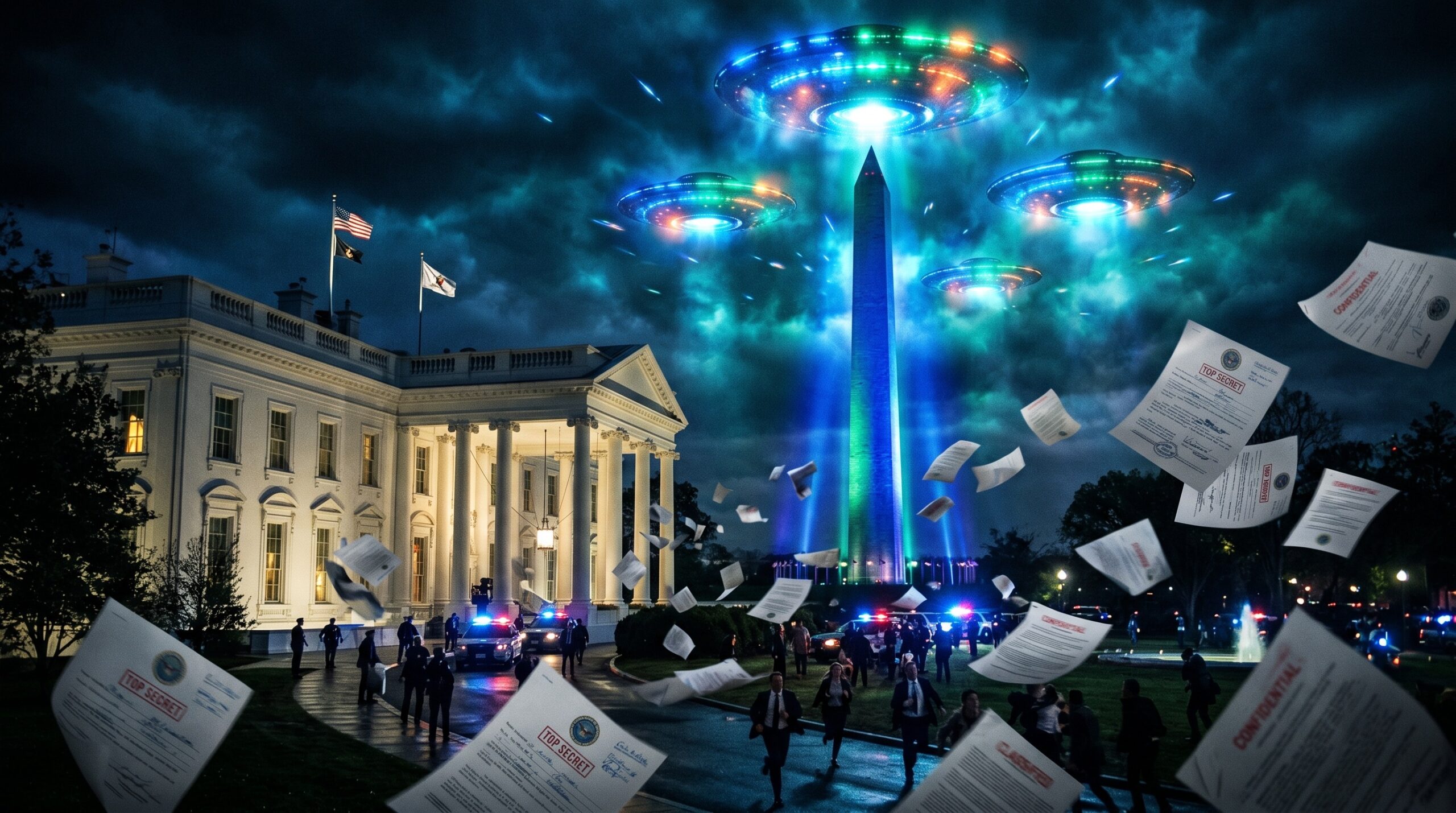
    On April 14, 2026, the White House Office of Science and Technology Policy released a tranche of previously classified UAP-related documents under the expanded provisions of the 2023 National Defense Authorization Act. The release was not announced by the President. It was not accompanied by a press conference. It appeared as a quiet update to an obscure .gov portal, a digital dead drop that researchers and journalists discovered hours later. What they found inside has already shifted the architecture of the disclosure debate—not because it proves extraterrestrial contact, but because it proves the government has been lying about how much it knows.

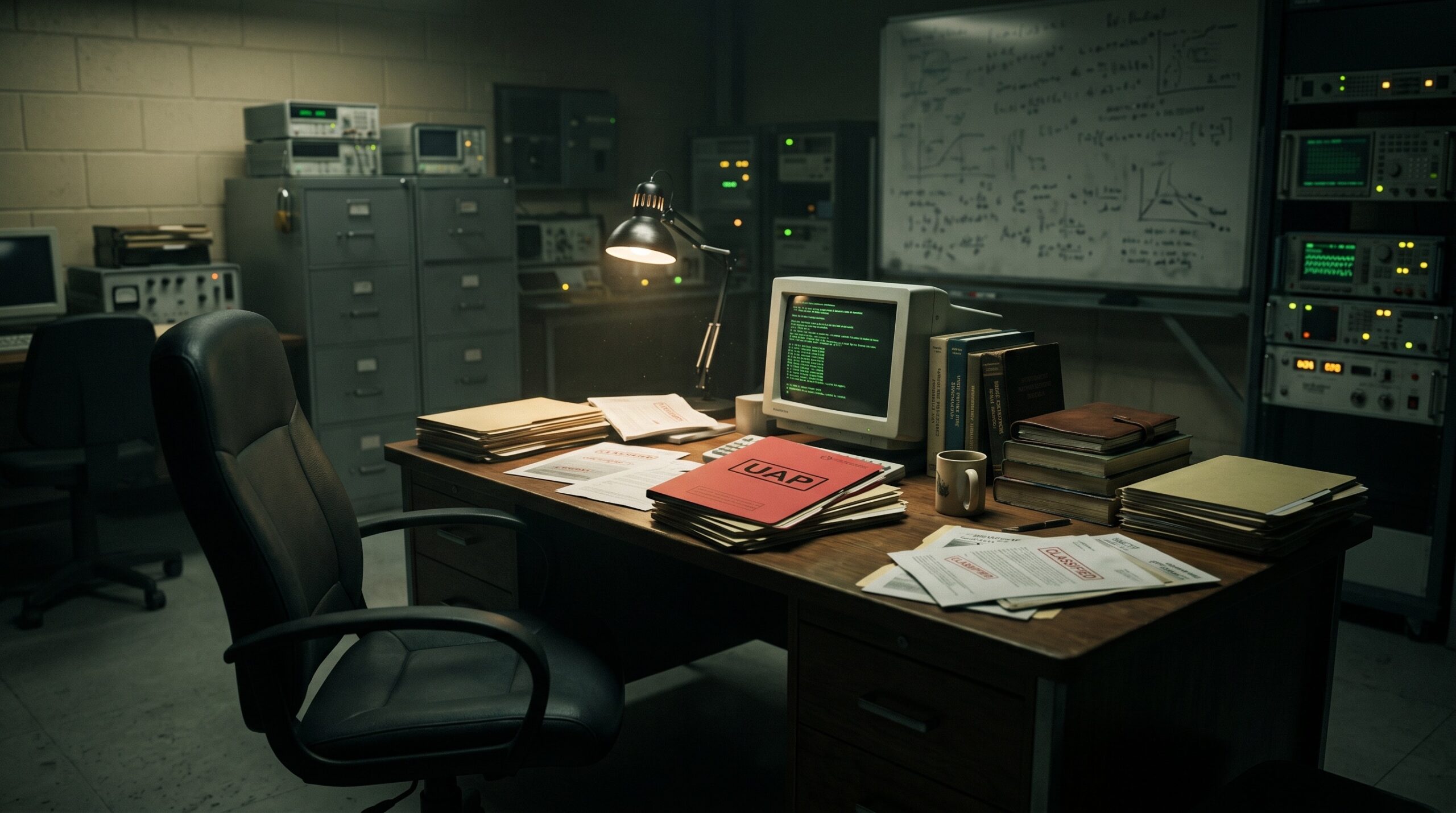
    The documents span fourteen years, from 2012 to 2026, and include sensor data from Navy F/A-18 Super Hornets, internal emails between Pentagon counterintelligence officers, and what appears to be a 2019 memorandum from an unnamed White House national security advisor recommending that UAP crash retrieval programs be moved outside standard congressional oversight channels. That memo, barely three pages long, has become the most scrutinized document in modern ufology. Its language is bureaucratic, its implications are explosive, and its authenticity—verified against metadata and signatures by independent forensic analysts—has held up under every test applied so far.

    The Memo That Changed Everything

    The 2019 memorandum references a program code-named “Kestrel,” described as an “asset recovery and materials analysis initiative” operating under the Office of the Under Secretary of Defense for Intelligence. What makes the document extraordinary is not the existence of such a program—whistleblowers like David Grusch had already testified under oath that crash retrieval programs were real—but the explicit admission that these programs were deliberately insulated from congressional appropriations committees to avoid “information spillage to foreign adversaries and unauthorized legislative staff.”

    In plain language: the executive branch had decided that elected representatives could not be trusted with knowledge of UAP retrieval operations. The justification offered in the memo is national security. The implication, read by researchers and conspiracy analysts alike, is that the materials being recovered were of such sensitivity that standard democratic oversight was considered a liability.

    Accompanying the memo are chains of emails between Pentagon officials discussing the 2004 Nimitz incident and the 2015 Roosevelt encounters. One thread, dated January 2020, contains a candid assessment from an unnamed aerospace engineer: “The performance characteristics observed in the Gimbal and GoFast videos remain inconsistent with any known domestic or foreign platform, including developmental prototypes. The acceleration profiles would require energy densities we do not currently possess.” The email was marked UNCLASSIFIED but was never included in any public hearing.

    Sensor Data and the Missing Context

    The April release includes raw radar and infrared data from multiple encounters, some of which correlate with publicly leaked videos and others that have never been seen before. One dataset, recorded in 2018 off the coast of Virginia, tracks an object descending from 80,000 feet to sea level in 0.8 seconds without creating a sonic boom or showing conventional propulsion signatures. The data was captured by the USS Portland’s AN/SPY-1 radar and independently confirmed by a nearby Coast Guard cutter.

    What the files do not include is equally significant. The release contains no photographs of recovered materials. No biological analysis. No reference to non-human bodies. The absence has fueled two competing interpretations. Skeptics argue that the omission confirms there is no smoking gun—only anomalous sensor artifacts and bureaucratic overclassification. Believers counter that the release is carefully curated, a controlled demolition of partial truth designed to satisfy disclosure mandates while protecting the most sensitive compartments.

    A third interpretation, increasingly popular among intelligence analysts, suggests the release is strategic. By confirming the existence of retrieval programs and unexplained sensor data while withholding physical evidence, the government may be attempting to shape public perception without triggering the geopolitical and theological destabilization that full disclosure might cause.

    Congressional Reactions

    The reaction on Capitol Hill was immediate and fractured. Senator Kirsten Gillibrand, a leading advocate for UAP transparency, issued a statement calling the memo evidence of “deliberate circumvention of congressional authority” and demanded closed-door hearings with the officials named in the email chains. Representative Tim Burchett went further, claiming on a podcast that “this is the tip of the iceberg” and that he had been briefed on programs “ten levels deeper than Kestrel.”

    Conversely, the House Intelligence Committee’s ranking member dismissed the release as “old news dressed in new file names,” arguing that the memo described standard SAP compartmentalization practices and that the sensor data remained explainable as instrument error or adversarial drones. The Pentagon’s official press guidance, released forty-eight hours after the document dump, walked a careful line: acknowledging the release as authentic while declining to confirm or deny ongoing retrieval activities. Popular Mechanics traced the history of official UFO investigation and noted that similar partial releases have preceded broader disclosures in the past.

    The Broader Implications

    For the disclosure community, the April 2026 release represents a turning point not because it resolves the UFO question, but because it validates the architecture of suspicion. For decades, believers argued that the government possessed physical evidence, managed secret programs, and deliberately misled the public and Congress. The Kestrel memo does not confirm non-human intelligence, but it confirms the conspiracy was real: programs existed, Congress was bypassed, and information was suppressed by design. NASA’s own UAP independent study had previously acknowledged that stigma and insufficient data prevent rigorous scientific analysis.

    This distinction matters. Proof of government secrecy is not proof of extraterrestrial visitation. The objects tracked by Navy sensors may still represent classified human technology, foreign adversarial platforms, or natural phenomena not yet understood by physics. What the release establishes is that the people tasked with investigating these phenomena treated them with lethal seriousness while publicly ridiculing civilians who asked the same questions.

    The psychological impact of validated secrecy cannot be underestimated. When official narratives collapse, the vacuum does not fill with skepticism—it fills with speculation. In the weeks following the release, online discourse has shifted from “Are UAPs real?” to “What else are they hiding?” That reframing, intentional or not, may prove more consequential than any individual radar track.

    What Happens Next

    The White House has indicated that additional releases will follow on a quarterly basis, mandated by the 2025 UAP Transparency Act. Legal scholars note that the act contains loopholes allowing the executive branch to withhold material deemed critical to national security, suggesting that future dumps may be equally curated. Researchers are already filing FOIA requests for the programs referenced in the Kestrel memo, though experience suggests such requests face years of delay and heavy redaction.

    What remains unresolved is the central question. The documents prove that unidentified objects operate in restricted airspace with capabilities beyond known technology. They prove that the government recovered materials it did not understand. They do not prove origin. The gap between “unidentified” and “extraterrestrial” is where the next phase of this story will unfold, and that gap is where both the most rigorous science and the most profound belief now live.

    The files landed at midnight. The truth, whatever it is, is still arriving.

  • Ross Coulthart Claims US Special Forces Retrieved Non-Human Technology From North Korea

    Ross Coulthart Claims US Special Forces Retrieved Non-Human Technology From North Korea

    The border was crossed. The object was brought back. And the story was told not by an anonymous forum poster, but by one of the most respected investigative journalists in the UFO field.

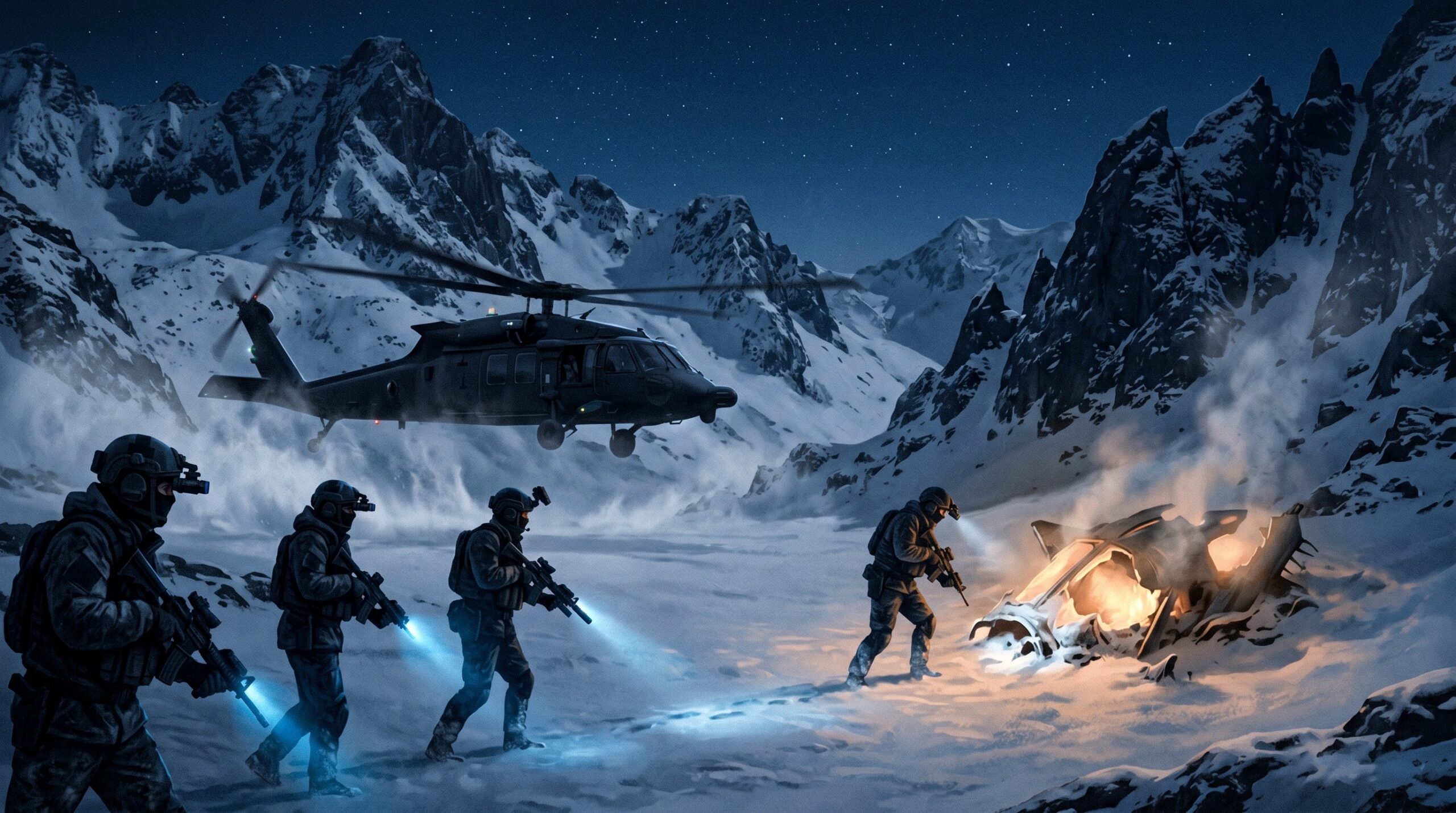
    Ross Coulthart, the Australian journalist whose reporting has shaped the global disclosure conversation, recently made a claim that sounds like fiction even by the standards of this subject. According to Coulthart’s statement on X, a United States special forces retrieval team entered North Korean territory and recovered non-human technology. The object was not manufactured on Earth, he says. And the operation was real.

    Wikipedia on Ross Coulthart outlines why, for believers who have followed his work, the claim carries weight. He is not a hobbyist. He is a veteran reporter with a track record of breaking stories that later prove accurate, including details about hidden UAP programs and whistleblower protections. When Coulthart speaks, the community listens. And what he is saying now is that the United States has already retrieved craft from one of the most isolated and hostile nations on Earth.

    North Korea is a logical but disturbing location for such an operation. The country is sealed off from satellite scrutiny, foreign media, and international oversight. If an object crashed there, the regime would have no incentive to share it with the world, and every incentive to study it in secret. For the United States, recovering such material would require a covert military incursion into a nuclear-armed dictatorship. The risk would be extraordinary. The payoff, if the object truly is non-human, would be immeasurable.

    Coulthart’s claim feeds directly into the broader retrieval narrative that has consumed disclosure circles for years. Eric Davis and his claim of forty recovered craft set a benchmark that believers have never forgotten. James Clapper’s allegations about a retrieval program suggested that the intelligence community has known about this for decades. And the Immaculate Constellation documents hinted at a secret architecture far larger than the public has been allowed to see.

    If Coulthart is correct, then the retrieval program is not limited to friendly territory or accident sites in the American Southwest. It is global. It involves special forces operating in active war zones and behind enemy lines. And it suggests that the United States is in a quiet race with other nations to secure technology that could rewrite the balance of power on Earth.

    Skeptics are, understandably, demanding proof beyond what NewsNation UFO coverage has so far been able to corroborate. Coulthart has offered documents in previous stories, but on the North Korea claim he has so far provided only his word and his source. Critics argue that a story this explosive requires more than a journalist’s reputation. They point out that North Korea is the perfect setting for an unverifiable claim: no independent access, no way to confirm or deny, and a regime so paranoid that even satellite imagery is limited.

    Believers counter that the lack of proof is the point. If the operation was covert, there would be no public record. The absence of evidence, they say, is exactly what you would expect from a mission that violated North Korean sovereignty to secure alien technology. They also note the pattern of missing persons and suspicious deaths among researchers with UAP ties. Steven Garcia’s disappearance remains unsolved. The scientists keep dying. And now Coulthart is describing retrievals so dangerous they require special forces.

    The mainstream media has largely ignored the claim, which is standard for Coulthart’s more explosive reporting. But inside the community, the story is spreading fast. If true, it is the biggest disclosure revelation in history. If false, it is another breadcrumb in a trail that never seems to end. For now, the only thing certain is that Coulthart has raised the stakes. The conversation is no longer about lights in the sky. It is about ground teams, hostile territory, and technology that does not belong to us.

  • Nellis AFB UFO Sighting April 2026: Why the Nevada Video Has Believers Locked In

    Nellis AFB UFO Sighting April 2026: Why the Nevada Video Has Believers Locked In

    Nevada’s most watched sky has produced another visitor, and this time the internet was already recording.

    On April 19, 2026, a video began circulating that claims to show an unidentified object hovering near Nellis Air Force Base, the sprawling military complex northeast of Las Vegas that has been at the center of American airpower and UFO speculation for generations. The clip is brief, shot in daylight, and shows a dark, disc-like shape suspended above the desert floor near the base perimeter. Within hours it had migrated from a single TikTok account to Reddit, Twitter, and every UFO aggregation channel that monitors the Nevada corridor.

    For believers, Nellis is not random. The base sits in the same state as Area 51, the Nevada Test and Training Range, and some of the most restricted airspace on Earth. Pilots train there. Experimental aircraft fly there. And for decades, witnesses have reported objects that do not match any known platform performing maneuvers no human pilot could survive. Chuck Clark’s legendary Area 51 footage set the template for this kind of sighting: a grainy clip, a military backdrop, and a silence from official channels that speaks louder than any press release.

    The April 19 video arrives with all of those ingredients, first surfacing in a Reddit thread on the Nellis AFB sighting. The object in the frame holds its position without visible means of propulsion. There is no rotor wash, no contrail, no wing structure. It simply hangs in the air above one of the most sensitive military installations in the United States. Commenters on the original post described goosebumps, and a TikTok clip of the Nellis AFB object amplified the footage. Others said the shape reminded them of the 2007 Costa Rica sighting that refused to die: a metallic disc tilting in daylight, captured on an early flip phone, still debated nearly two decades later.

    But the Nellis clip also carries a flaw that skeptics have seized immediately. In the upper corner of the video, a computer cursor is visible. That single detail has launched a secondary war in the comment sections. Detractors say the footage is a screen recording of a digital rendering, not a live capture. Defenders argue that military monitoring stations often record screens, and that a cursor does not disprove the underlying footage any more than a watermark disproves a photograph. The debate has become its own phenomenon, with each side digging in and the video continuing to spread regardless.

    Wikipedia on Nellis Air Force Base notes the base has said nothing about the incident. The base public affairs office has not issued a statement, which is standard procedure but also standard fuel for suspicion. In the vacuum, the community fills the silence with context. The Bluegill Triple Prime nuclear test allegedly concealed a shootdown in 1962. The Kuwait white orb incident showed how military-adjacent footage can circulate for years without official acknowledgment. Nellis has its own history of unexplained radar returns and pilot encounters that never received public explanation.

    The geographic context adds another layer. Las Vegas is forty minutes away. Millions of people live within sight of the flight paths that curve over the base. If an object was hovering in daylight near the perimeter, the question is not just what it was, but who else saw it. So far, no corroborating witnesses have emerged with additional angles, but the video is only days old. In previous cases, secondary footage has surfaced weeks later, sometimes confirming the original and sometimes exposing it.

    For the UFO community, the Nellis clip arrives at a moment of peak sensitivity. Congressional hearings are ongoing. Whistleblowers are speaking out. And the public appetite for military-base sightings has never been higher. Whether this particular video withstands scrutiny or collapses under it, the pattern is clear: the Nevada sky remains the most productive source of unexplained footage on the planet. Something keeps showing up there. The only variable is whether the cameras are rolling when it does.

  • Eric Burlison’s Mass-Witness UFO Event: The Claim That Military Personnel Lured and Documented a Craft

    Eric Burlison’s Mass-Witness UFO Event: The Claim That Military Personnel Lured and Documented a Craft

    They set the trap. They waited. And something showed up.

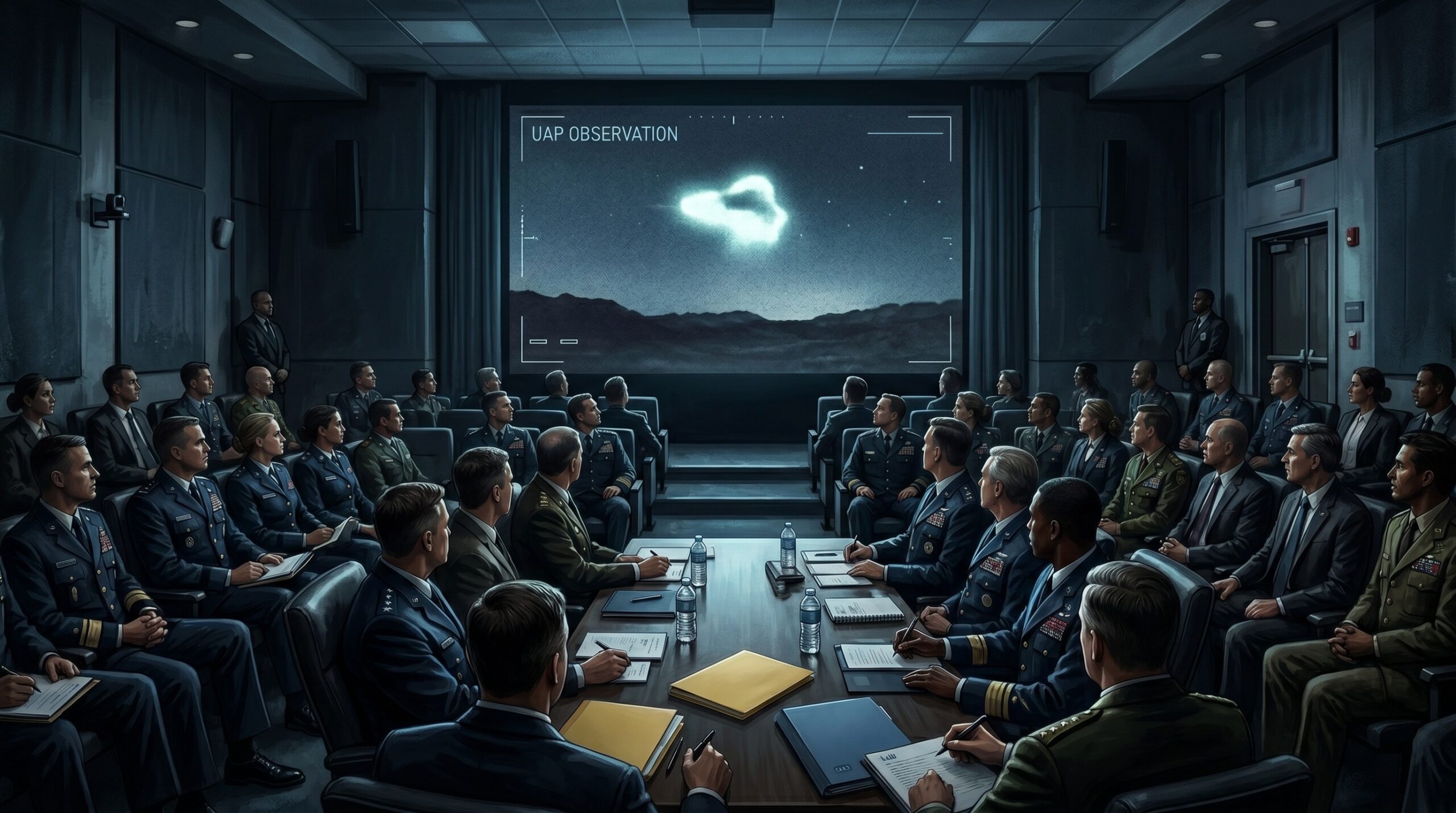
    That is the core of what Representative Eric Burlison told colleagues and reporters in recent days, and it is the reason UFO disclosure channels have been running hot ever since. According to Burlison, military and intelligence personnel recently orchestrated what he called a “perfect case scenario” designed to lure unidentified anomalous phenomena into a controlled environment. The operation was, in his words, “very successful.” It happened only a few months ago. And the briefing that followed was so compelling that it reached House Majority Leader Steve Scalise.

    For believers who have spent years watching Congress tiptoe around the topic, the tone of Burlison’s remarks feels different. This is not a vague reference to lights in the sky. This is a sitting congressman describing a deliberate, coordinated effort by military and intelligence personnel to document craft that were not supposed to exist. Burlison said there were so many witnesses that denial became impossible. ABC News coverage of the hearing first broke the story. He described the event as one that “no one could deny.” If his account is accurate, the implications are staggering: the U.S. government did not simply stumble across a UAP. It baited one.

    The idea of luring UFOs is not new to the community. For years, CE-5 practitioners and independent researchers have claimed that consciousness and intention can draw these objects closer. What makes Burlison’s claim explosive is the suggestion that the government tried the same approach using military assets and instrumentation. The result, he says, was a mass-witness event with multiple sensors, multiple personnel, and a chain of command that reached the highest levels of congressional leadership.

    The reaction online has been immediate and intense. Disclosure advocates say this is the closest Congress has come to acknowledging an active UAP engagement program. Pete Hegseth’s ongoing struggle to release military UFO videos has dominated headlines for weeks, but Burlison’s comments suggest something far more advanced than passive observation. If the military is actively luring and documenting these craft, then the entire disclosure conversation shifts from “what did they see” to “what are they doing about it.”

    Burlison also revealed that the FBI told him they will neither confirm nor deny an investigation into the broader pattern of missing and deceased scientists with UAP ties. That non-denial has only deepened the paranoia. Rival security contractors and missing laptops have already become part of the retrieval lore, and now the FBI’s refusal to comment is being read as confirmation that something is being hidden in plain sight.

    Skeptics and mainstream analysts urge caution. No video from the mass-witness event has been released. No independent verification of Burlison’s specific claims has surfaced. The congressman’s remarks were made in interviews and public statements, not under oath with supporting documents, as NewsNation summarized in its ongoing UFO congressional coverage. Critics note that the UAP conversation has seen similar dramatic promises before, only to dissolve into classified briefings that yield nothing public.

    Still, the details matter. Wikipedia background on Eric Burlison confirms he is not a fringe figure. He is a member of Congress with access to classified briefings. His decision to speak this openly about a lured craft, a mass witness event, and a briefing that reached Scalise suggests that the internal pressure for disclosure is becoming harder to contain. The Immaculate Constellation leak showed that documents exist. The Bluegill Triple Prime nuclear test reminded the community that the military has allegedly fired on these objects before. Now Burlison is describing a new phase: not shooting, but summoning.

    What happens next is unclear. Congress is demanding access to the materials. Believers are waiting for the video. And somewhere in the chain of command, a file exists that could either validate everything or vanish behind another wall of classification. For now, the only certainty is that the story has shifted. The question is no longer whether the phenomena are real. The question is who gets to control the encounter.

  • Matthew Sullivan UFO Whistleblower Death: Why Believers Call the Timing Impossible

    Matthew Sullivan UFO Whistleblower Death: Why Believers Call the Timing Impossible

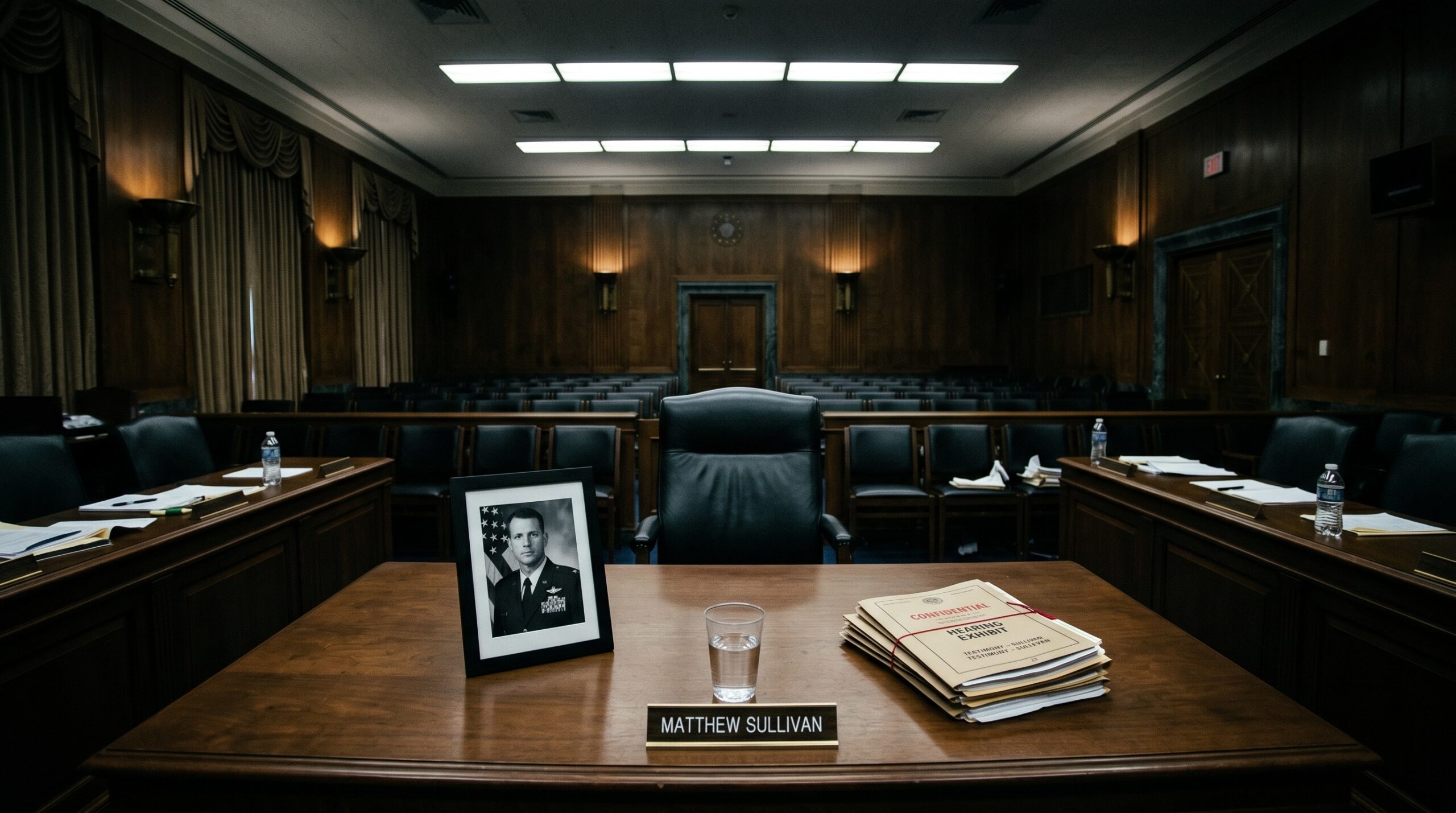
    Disclosure culture has a new name to whisper, and it arrived with the kind of timing that makes believers go cold. The Matthew Sullivan UFO whistleblower death story is spreading because it sounds less like an isolated tragedy and more like another witness chair going empty a moment before the curtain rises.

    The direct answer is that Matthew Sullivan is being discussed across UFO media after Rep. Eric Burlison and allied disclosure voices pointed to him as a former Air Force intelligence officer linked to sensitive knowledge who died before a hoped-for congressional interview. The current surge comes from a widely shared Reddit post about Sullivan’s credentials and timing, tabloid-style pickup from the Daily Mail’s report on the death being called suspicious, and follow-on amplification such as BroBible’s summary of the congressional alarm. None of that proves what Sullivan knew. It does explain why his name is now ricocheting through disclosure channels.

    The reason it lands so hard is simple: this story did not emerge in a vacuum. It emerged beside the Amy Eskridge case, the Steven Garcia disappearance narrative, and the larger cycle of online UFO leak mythology. Once those names are already circulating, a fresh death with even a partial whistleblower frame feels combustible by default.

    Why Sullivan’s name detonated across disclosure feeds

    The heart of the story is not only who Sullivan was said to be. It is when believers think the public was about to hear more from him. Disclosure audiences are intensely sensitive to timing. A witness who dies years after leaving a program is one thing. A witness who reportedly dies in the same emotional window as congressional pressure and new secrecy claims is something else entirely.

    That is why the case has been framed so aggressively online. Sullivan is being positioned less as a private citizen and more as a nearly opened vault. In the believer imagination, the most powerful stories are always the ones where the door was about to crack and then suddenly shut.

    What believers think he was about to reveal

    The online version of the case treats Sullivan as someone who moved close enough to the inner rooms of military secrecy to matter. In that telling, he was not just adjacent to UFO rumor but connected to the kind of classification layers disclosure activists think hide the real architecture of the phenomenon.

    That story remains compelling because it folds perfectly into the larger mood of 2026 disclosure culture: missing footage, dead researchers, nervous lawmakers, and a public beginning to suspect that key witnesses keep disappearing right before narrative thresholds. Whether or not that pattern is real, it is emotionally legible to the audience consuming it.

    Why the case landed inside the dead-scientist panic

    Believers did not need much to attach Sullivan to the wider missing-scientists panic. They were already primed. Over the past week, the disclosure internet has behaved like a system searching for names that fit an emerging shape. Sullivan fit that shape immediately: intelligence background, UFO proximity, suspicious framing, congressional mention, and a death that can be described as badly timed.

    Once that frame locks in, the story becomes more than biography. It becomes a confirmation object. Every new mention seems to validate the old fear that witnesses do not vanish randomly when the pressure around secrecy rises.

    What the public record can actually confirm

    This is where the drama narrows.

    Public reporting does support that Sullivan’s name has been raised by UFO-interested lawmakers and commentators as part of a suspicious death narrative. It also supports that the case is being discussed in direct connection with whistleblower culture and congressional interest. What is still missing in public view is hard documentation proving exactly what Sullivan was prepared to disclose, what a formal congressional interview would have contained, or that his death can be tied to anything beyond the suspicion now attaching to it.

    That does not kill the story. It explains the story’s power. Sullivan now lives in the most durable zone of disclosure lore: close enough to real institutions to feel credible, distant enough from public proof to stay explosive. For believers, that is often the sweet spot. It leaves the file open, the timing haunting, and the sense that another voice was lost just before it might have said too much.

  • Drones over New Jersey Critical Infrastructure

    Drones over New Jersey Critical Infrastructure

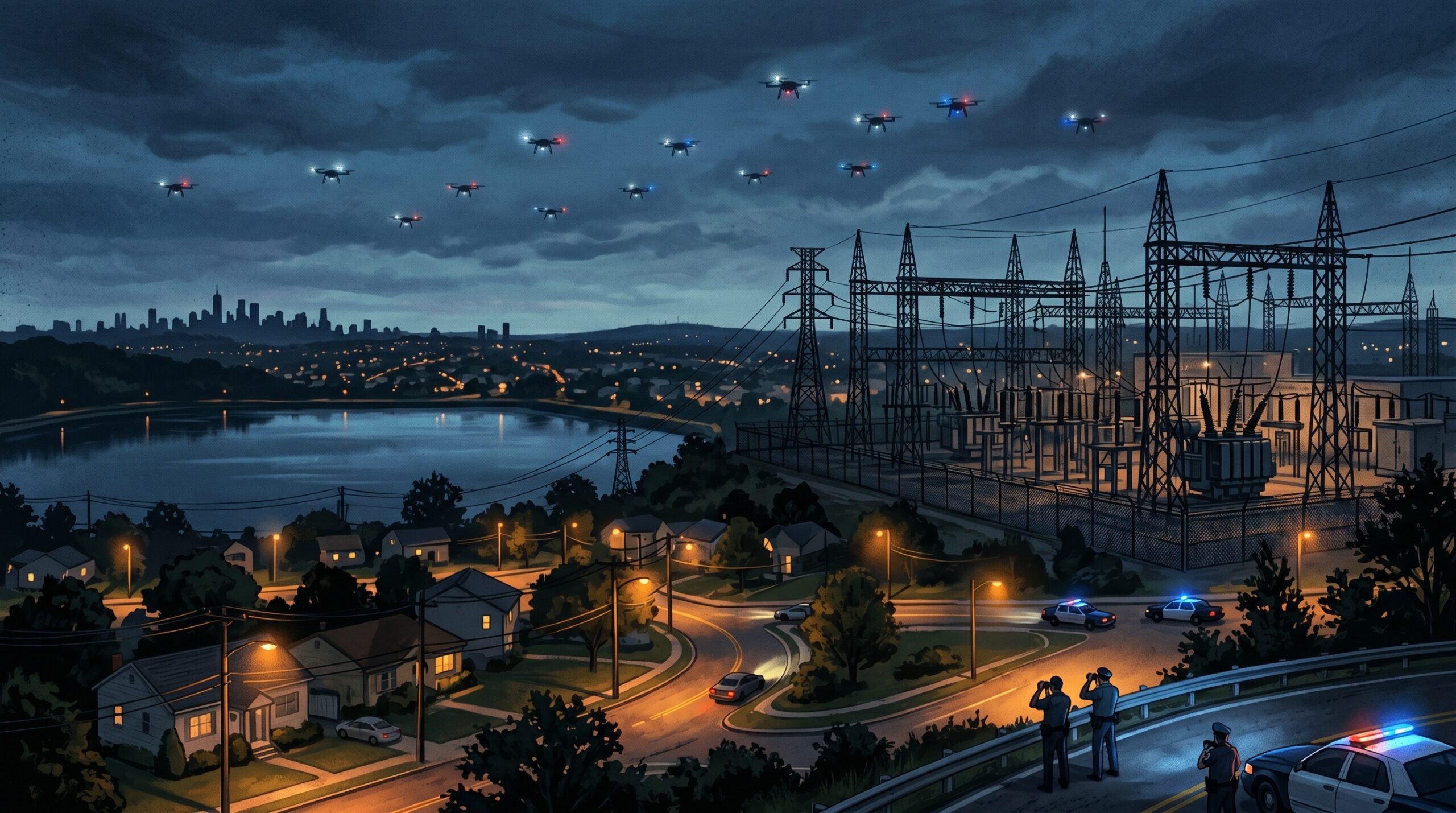
    The first reports were easy to dismiss. Drones near airports are common enough that they generate their own category of Federal Aviation Administration enforcement action. But the reports that began filtering in from New Jersey in mid-April 2026 were different in two ways that made them harder to set aside: the drones were hovering over water reservoirs, power substations, and research laboratories — not airports — and some of the aircraft involved appeared to have been previously reported stolen.

    By the end of the week, Senator Tom Cotton of Arkansas had introduced legislation allowing critical infrastructure operators to take direct action against unauthorized drones. The New York Times had published an investigation. And investigators were quietly beginning to ask questions that they were not, at least initially, prepared to answer on the record. Sources: Chemical-spraying drones reported stolen in New Jersey Senator Cotton pushes bill on drone countermeasures.

    What Started the Reports

    The pattern began to emerge in late March 2026, when utility workers at a water reservoir in central New Jersey noticed a multirotor aircraft with an unusually large payload capacity hovering low over the reservoir surface. The drone appeared to be spraying something — the workers described a fine mist that caught the light in a way that ordinary agricultural spraying equipment does not. The aircraft left the area before law enforcement could respond.

    Over the following two weeks, similar reports came in from multiple locations across New Jersey. A power substation operator reported a drone conducting what appeared to be a systematic inspection of the facility’s exterior equipment. A research laboratory reported an overflight that lasted more than forty minutes. In each case, the drone’s design was described as professional-grade — not the kind of consumer multirotor that has become common in recreational use — and in at least two cases, the aircraft involved had serial numbers that matched drones reported stolen from private operators in the preceding months.

    The stolen aircraft connection is what transformed this from a nuisance drone reporting issue into something that federal investigators took seriously. A drone that has been reported stolen and then reappears over critical infrastructure is not a recreational flyer making a mistake. It is evidence of deliberate operational use by someone who had reason to obtain the aircraft through theft rather than purchase.

    The Chemical Spraying Allegation

    The water reservoir overflights have generated the most concern, for reasons that are not hard to understand. Municipal water supplies are critical infrastructure in the most literal sense — contamination of a reservoir can affect hundreds of thousands of people within hours. The reports from utility workers describing a fine mist with unusual optical properties have not been confirmed by laboratory analysis of water samples, but investigators have not ruled out the possibility that something was applied to the reservoir that should not have been.

    The pattern of unusual aerial phenomena affecting critical infrastructure is not new. What makes the New Jersey reports distinct is the combination of the spraying allegation with the stolen aircraft detail and the apparent deliberate targeting of multiple infrastructure types in a concentrated geographic area over a short period of time. A recreational flyer making unauthorized overflights of one or two facilities might be dismissed as a nuisance. A coordinated campaign of overflights targeting water, power, and research facilities simultaneously is something else.

    Senator Cotton’s Response and the Legislative Push

    Cotton’s bill, introduced in the Senate in late April, would expand the legal authority of critical infrastructure operators to take physical action against drones operating in unauthorized proximity to their facilities. The current legal framework — which treats unauthorized drones primarily as an FAA enforcement matter — is insufficient, Cotton argued in his accompanying statement, to address the threat posed by “hostile or不明” aerial systems over sensitive installations.

    The bill’s language was notable for its careful hedging. Rather than attributing the New Jersey incidents to any specific actor or motivation, Cotton’s statement described a “pattern of activity that demands a policy response regardless of who is responsible.” That formulation left open whether the drones were operated by a foreign state, a domestic actor, or something else entirely, while still creating a legal mechanism for infrastructure operators to respond more directly than the current framework allows.

    For observers who have followed the UAP-related legislative discussions that have been underway in Congress since 2023, Cotton’s bill represents a particular kind of attention: not the abstract interest of Congressional hearings, but the concrete pressure of an infrastructure operator community that wants legal clarity about what they can do when something appears over their facility that they cannot identify.

    How This Compares to Last Year’s Drone Panic

    The New Jersey incidents are not the first time a wave of drone reports has generated this kind of political response. In February 2024, a similar — though smaller — cluster of drone sightings near critical infrastructure in Pennsylvania generated enough public concern that the Pennsylvania Emergency Management Agency convened a special briefing for state legislators. The 2024 episode was ultimately attributed to a combination of misidentified commercial aircraft, authorized law enforcement operations, and a small number of genuinely unidentified aerial phenomena.

    The 2026 New Jersey cluster differs from the 2024 episode in at least three ways that matter: the scale of the infrastructure targeting is larger, the chemical spraying allegation is new, and the stolen aircraft connection has introduced a traceable-evidence element that the 2024 episode lacked. Whether those differences reflect a genuinely more serious situation or simply a more dramatic story that has attracted more attention is something that the ongoing investigation is meant to determine.

    The Attribution Problem

    The stolen aircraft detail creates a traceable evidence problem that is unusual in UAP investigations. Most aerial phenomena are difficult to attribute precisely because they are brief, ambiguous, and leave little physical evidence. A drone that was reported stolen, by contrast, has a paper trail — the original owner, the report of theft, the serial number that appears in the FAA registration database. If investigators can establish the chain of custody between the theft and the overflights, they can begin to narrow down who was operating the aircraft and why.

    Whether that investigation will produce a public result is a separate question. The intelligence and law enforcement communities have historically been reluctant to publicly attribute UAP incidents to specific actors unless they are prepared to take action, in part because premature attribution can compromise sources and methods that are more valuable intact than disclosed. The New Jersey case may be different — the infrastructure element gives law enforcement a clearer jurisdictional basis for investigation than most UAP incidents — but it may also be managed through channels that do not produce public reports.

    What Remains Unknown

    The honest answer to that question is: almost everything. Whether the spraying allegation has any basis in physical evidence; whether the stolen aircraft connection can be traced to a specific operator; whether the pattern of overflights reflects coordinated action or a coincidence of independent actors; and whether the eventual explanation is mundane, adversarial, or something that does not fit neatly into either category.

    What is clear is that something happened over New Jersey’s critical infrastructure in April 2026 that was serious enough to generate a Senate bill, a New York Times investigation, and a quiet but intensive federal investigation. That combination does not happen for ordinary recreational drone overflights. What it does happen for — and what the eventual explanation turns out to be — remains to be seen.

    Sources: New York Times reporting on New Jersey drone incidents (April 2026); Senator Tom Cotton Senate remarks and bill text; PBS reporting on the 2024 Pennsylvania drone panic; FAA registration database.

  • UFO Program and the Laptops of Security Contractors

    UFO Program and the Laptops of Security Contractors

    Most UFO stories on Reddit read the same way: vague claims about what someone heard from someone else, wrapped in the kind of language that could mean anything. The post that appeared in r/UFOs in late April 2026 was not like that. It read like a debrief.

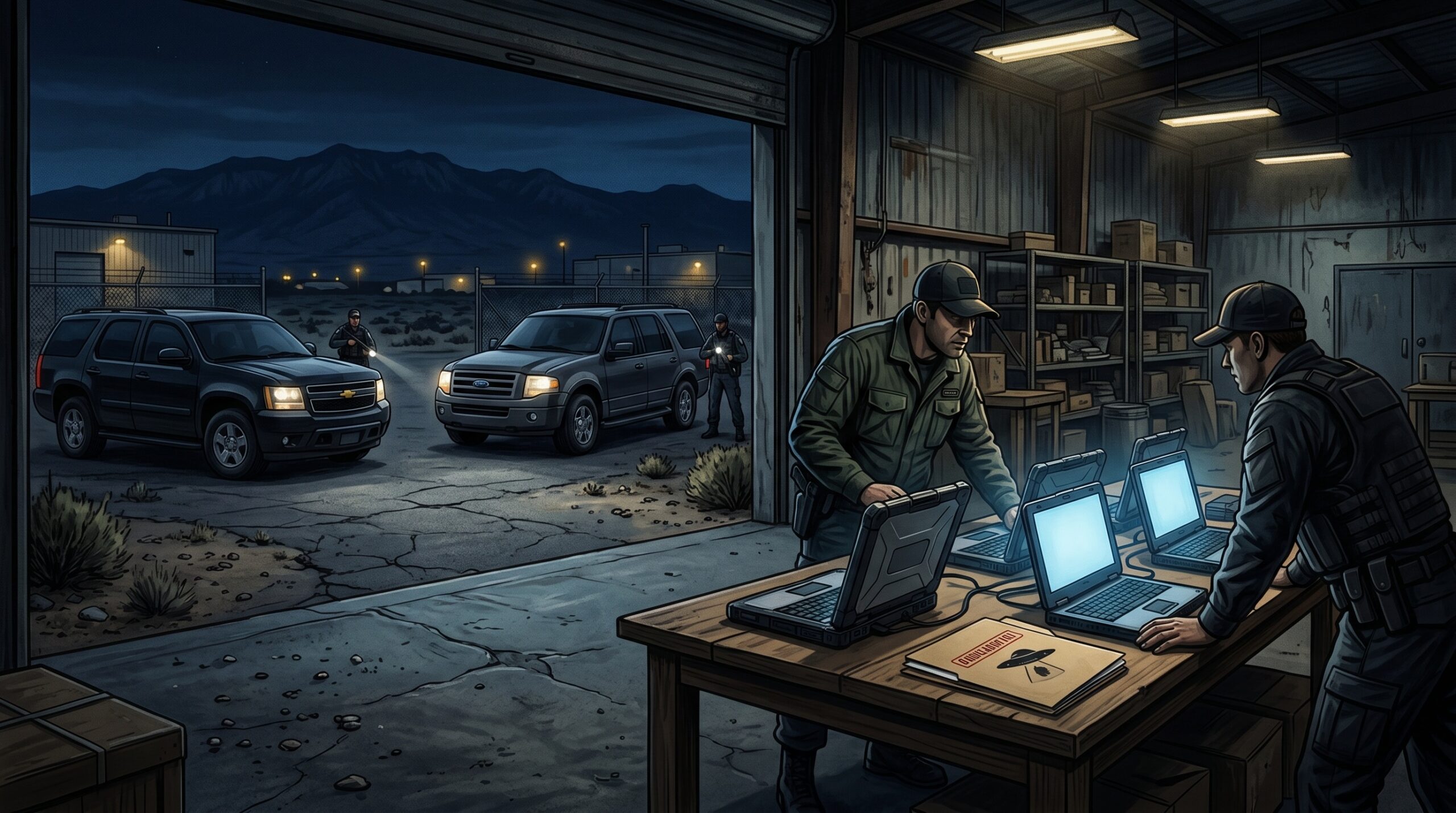
    “Two seemingly adversarial parties — at least one of which was a private aerospace company — had hired private security contractors to retrieve six laptops containing highly sensitive information possibly related to the UFO Program,” the post began. “When we got there… it was clear that shots had been fired.” Sources: Pentagon UFO Files Leak claims non-human craft in secret programme Defense Act loophole forcing Pentagon UFO revelations.

    That is a sentence designed to make every UFO researcher in the world stop scrolling.

    The Post That Dropped Like a Bomb

    The r/UFOs post gathered nearly 600 upvotes and 60 comments in less than 24 hours — a fast burn for a community that processes UFO claims by the dozen. What distinguished it from the typical UFO Reddit post was not just the level of operational detail but the specificity of the scenario: six laptops, two adversarial parties, private security contractors, and evidence that shots had been fired at the retrieval site. These are the kind of details that come from people who were actually in the room, or who have access to people who were.

    The post did not come from an anonymous account. The user who posted it had been active in the UFO disclosure community for years, with a track record that other regulars in the subreddit recognized and vouched for in the comments. Whether that vouching means anything in a community that is, by definition, willing to believe extraordinary things is a fair question. But the operational specificity of the post was immediately noted by experienced UFO researchers who follow these communities closely.

    What the Story Claims Happened

    The basic structure of the story is straightforward enough that it could be a plot summary from a low-budget spy thriller. At least two organizations — one described as a private aerospace company, the other unspecified — had independently determined that six laptops in a specific location contained material related to the UFO Program. Both organizations hired private security contractors to retrieve the laptops. The two teams arrived at the location at roughly the same time, creating a confrontation that, as the poster described it, “clearly involved shots fired.”

    What is notable about this scenario is not just the adversarial retrieval dynamic but the implication that the same information was considered worth retrieving by multiple parties — at least one of which was in the private aerospace sector. That implies a market for UFO program information that extends beyond government circles, and that the retrieval programs may have left behind physical records that are now moving through non-governmental channels.

    James Clapper’s Congressional testimony described a multi-decade program operating outside standard intelligence community oversight. The laptops story, if accurate, would suggest that the program’s physical records — the actual data, devices, and documents produced by those programs — have not been secured in any centralized way. They are scattered, and the competition to retrieve them is already underway.

    Why the Specificity Hit Different

    UFO Reddit has a reputation for generating claims that are unfalsifiable by design — statements that cannot be verified because they rely on anonymous sourcing or classified information that can never be produced. The laptops story was different precisely because it generated verifiable implications: if two organizations both sent security teams to retrieve the same six laptops, and if at least one of those organizations is identifiable, the story should leave traces.

    The private aerospace company reference was enough to trigger speculation in the comments about which companies might be involved. Several commenters noted that the private space and defense sector has been expanding rapidly, and that companies in that sector would have both the motivation and the technical capability to run recovery operations. A few noted that David Grusch’s testimony mentioned private sector involvement in the retrieval ecosystem — a detail that makes the laptops story feel more consistent with existing accounts than most new UFO posts manage.

    The Pentagon Leak and the ‘Non-Human Craft’ Language

    The story landed in the same week that The Guardian published details from a Pentagon UFO files leak that described a secret programme containing what the documents called “non-human craft.” The language in those documents — specifically the phrase “non-human craft” — was immediately noted as significant because it matched the kind of terminology that Eric Davis has used in describing the craft allegedly recovered from ocean retrieval programs. The consistency of language across independent sources has long been one of the strongest corroborating signals in the UFO disclosure community, and the Pentagon leak appeared to add another data point to an emerging pattern.

    The Defense Act loophole referenced in related reporting — a legal provision requiring programs dealing with UAPs to report to the Congressional “Gang of Eight” — is significant because it suggests the framework for disclosure already exists in law. What has been missing is not the legal mechanism but the political will to use it. The combination of a new administration, a new leak, and a contested retrieval operation involving private security contractors has created the sense that something is moving in ways that it has not moved before.

    Believers Point to the Operational Detail

    For longtime UFO researchers, the laptops story was significant less because of what it claimed happened than because of the kind of claim it was. Operational details — specific numbers, specific organizations, specific locations — are the kind of evidence that can be investigated, cross-referenced, and eventually either confirmed or ruled out. The fact that the poster included specific detail about the number of laptops and the nature of the confrontation suggests either that the story is fabricated with unusual sophistication, or that it comes from someone with genuine operational knowledge of a retrieval scenario.

    The adversarial retrieval dynamic is particularly noteworthy. In the world of defense and intelligence contracting, competition between firms and organizations over classified programs is common — but it typically happens at the level of lobbying, procurement, and bureaucratic maneuvering, not at the level of physical retrieval teams converging on the same location at the same time. If the story is accurate, it describes a world in which the UFO program information has become valuable enough to warrant a kind of operational competition that intelligence professionals would recognize as a real and significant development.

    What Skeptics Say

    The skeptical response centers on the sourcing problem. A Reddit post, however specific, is still a Reddit post. The poster’s track record in the community provides some grounds for taking the story seriously, but track records in communities that are predisposed to believe extraordinary claims are not the same thing as verified credentials. The absence of any physical evidence — no photos of the laptops, no documentation of the confrontation, no verifiable identity for the poster — means the story remains in the same epistemic category as the dozens of other UFO-related claims that circulate in online communities every week.

    The “shots fired” detail has been noted as potentially a dramatic embellishment. Confrontations between private security firms over sensitive materials do occur in the world of defense contracting, but they rarely involve gunfire, and when they do, they generate official reports, police involvement, and paper trails. The fact that nothing of the kind has surfaced in connection with the story is consistent with either a cover-up — which believers would argue is exactly what you would expect — or with a story that did not happen.

    Where the Story Goes From Here

    What UFO researchers in the disclosure community are watching for now is whether the operational details generate any corroborating signals: whether any of the organizations referenced in the story have made any observable moves in the relevant timeframe, whether the “private aerospace company” reference can be narrowed down, whether any official record surfaces from the confrontation site.

    For believers, the story is significant primarily as confirmation of what they have long believed: that the UFO program information is real, that it is valuable, and that the competition to control it has become intense enough to generate the kind of physical confrontation that the Reddit post describes. Whether that reading of the story is accurate is something only time and further evidence will determine.

    But the story itself — six laptops, two teams, shots fired — has the quality of the best UFO disclosures: specific enough to investigate, dramatic enough to remember, and just connected enough to the broader pattern of UFO program reporting that it does not feel like an isolated fabrication.

    Sources: r/UFOs community posting (April 2026); The Guardian reporting on Pentagon UFO files leak (April 2026); Defense Act loophole reporting (The Guardian, April 2026); Wikipedia: Advanced Aerospace Threat Identification Program.

  • Joshua LeBlanc’s Tesla Death: A NASA Engineer Working on Nuclear Propulsion Found Burned in Alabama

    Joshua LeBlanc’s Tesla Death: A NASA Engineer Working on Nuclear Propulsion Found Burned in Alabama

    The last confirmed sign of Joshua LeBlanc was that he did not show up for work. A NASA electrical engineer based in Huntsville, Alabama, with a security clearance and a focus on nuclear propulsion projects, LeBlanc had vanished from his home without the usual signs of departure. When his Tesla was found days later on a rural road outside the city, it had burned to a condition that took investigators time to even identify it. What they found inside, once they could get close enough to examine, was LeBlanc’s body. And now his death is part of something larger: a federal review looking at whether there is a pattern connecting scientists connected to classified aerospace programs who have died or disappeared under unusual circumstances.

    Huntsville is not an ordinary city for aerospace research. The Marshall Space Flight Center, nearby classified facilities, and the concentration of contractors working on propulsion, aerospace, and advanced weapons programs have long made it a city where the normal rules of public information have always operated in tension with classified realities. A nuclear propulsion engineer from that world vanishing and then burning inside a Tesla is the kind of story that would generate rumors anywhere. In Huntsville, with its particular history and population of people who understand exactly what kinds of programs operate in the surrounding landscape, the rumors have an additional weight.

    An engineer at the edge of classified propulsion

    Joshua LeBlanc’s professional profile, as it has emerged through early reporting, describes a man working on projects that sit at the boundary between what is publicly acknowledged and what remains classified. Nuclear propulsion research for aerospace applications is not science fiction — it has been a persistent subject of classified development since the Cold War — but it is also precisely the kind of work that intersects with questions about what the government has learned from recovered technologies.

    The intersection is what keeps the conspiracy-adjacent research community focused on cases like this one. Propulsion systems that do not match known human engineering, or that seem to draw on principles not yet publicly understood, have been a persistent feature of the UFO retrieval and reverse-engineering narrative. Scientists working in propulsion research, especially in proximity to programs that are suspected of handling recovered technology, occupy a uniquely sensitive position. They know things that cannot be shared. And in the wrong circumstances, that knowledge becomes dangerous.

    The discovery of the Tesla

    What made LeBlanc’s case initially unusual was the gap between his disappearance and the discovery of his vehicle. He had been reported missing by his family after failing to appear for work — a breakdown in routine that drew immediate attention in a community where people with security clearances are trained to maintain strict schedules and accountability. When the Tesla was eventually located on a rural road, its condition immediately raised questions that investigators have been working to answer: how did it catch fire, what was the timeline, and was LeBlanc alive or dead when the fire started?

    Daily Mail coverage has not fully resolved the questions. The vehicle burned extensively enough that forensic reconstruction has taken time. The body inside was in a condition that required careful forensic work to identify and characterize. And the circumstances — a Tesla, a rural road, a nuclear propulsion engineer — have generated the kind of speculation that follows cases where the institutional context and the personal outcome feel deeply mismatched.

    This is the part of the story that people in the disclosure community keep returning to. A man working on one of the most sensitive categories of aerospace research, with access to classified programs, goes missing and is found dead in a burned vehicle. The official investigation is ongoing. The federal review of similar cases is looking at LeBlanc alongside other scientists. And the pattern that review is examining — multiple researchers with access to classified aerospace or UFO-adjacent programs, dying or vanishing in ways that resist easy explanation — is what keeps the story from settling into ordinary narrative.

    The federal inquiry and what it means

    The decision to review LeBlanc’s death alongside other similar cases — scientists connected to aerospace, propulsion, and UFO-adjacent research who have died or disappeared — represents a shift in how these patterns are being treated at official levels. For years, Orange County Register coverage of disclosure advocates argued that individual deaths were being dismissed individually, preventing anyone from seeing the larger picture. The current federal review is an acknowledgment that the picture may be worth looking at collectively.

    That shift does not prove anything about causation. Natural deaths, accidents, and unrelated circumstances can produce patterns that look significant when viewed selectively. But the fact that the review is happening at all — and that LeBlanc’s name has surfaced inside it alongside other cases that have drawn attention from Carl Grillmair and researchers like Jesse Michels — is what has generated the current intensity of interest in what actually happened in Huntsville.

    What is clear is that a NASA engineer with classified propulsion expertise is dead, that the circumstances do not match the ordinary expectations for how someone in his position and with his background would die, and that the federal review will eventually produce findings that either resolve or deepen the mystery surrounding his death.

  • Bluegill Triple Prime UFO Shootdown: Why a 1962 Nuclear Test Is Back in the Retrieval Debate

    Bluegill Triple Prime UFO Shootdown: Why a 1962 Nuclear Test Is Back in the Retrieval Debate

    There is something about the words Bluegill Triple Prime that already sounds like a cover story. It was a real Cold War test, a real flash above the Pacific, a real moment when the United States hurled nuclear fire into the upper atmosphere. But in 2026, believers are dragging the name out of the archive for a different reason: they think the blast may have hidden something far stranger than weapons research.

    That is why the story has broken out of the usual history forums and into UFO feeds again. To the disclosure crowd, Bluegill Triple Prime does not feel like a dead chapter. It feels like one of those sealed rooms in the house — the one everyone passes, the one no one opens, the one that starts making sense only after you read too much about recovery programs, missing footage, and documents that never seem to arrive. The same mood that powers Pete Hegseth’s missing UFO videos deadline is now being projected backward into the Cold War itself.

    The latest push came from Reddit threads and UFO communities treating a revived Bluegill Triple Prime theory as the kind of clue that should never have survived this long. In that version of the story, a nuclear test was not just a test. It was a weaponized response to an object that should not have been there, followed by a recovery effort buried under the language of national defense. Once you are already primed by stories like the same online disclosure cycle repeating itself, the theory lands with real force.

    Why Bluegill Triple Prime suddenly feels important again

    Believers are not treating Bluegill Triple Prime as a random historical curiosity. They are treating it as an origin point — a place where the government may have learned that extreme force, secrecy, and scientific ambiguity could all be folded into one official event. In that frame, the story is not about whether a detonation happened. It is about what else might have been happening under that detonation’s glare.

    That is why the discussion keeps getting folded into larger retrieval lore. People connect it to the same paranoid architecture that fuels Ghost Murmur and other high-tech search mysteries: classified systems, compartmented knowledge, and a public explanation that sounds complete until you stare at it too long.

    Outside the believer ecosystem, the searchable record is still mostly the old Cold War material. Operation Fishbowl is laid out in broad strokes in the Operation Fishbowl overview, while the revived social conversation is easy to trace through the recent Reddit thread pushing the new-evidence angle. The gap between those two worlds — official history and fevered reinterpretation — is exactly where this story now lives.

    What Operation Fishbowl actually was

    Bluegill Triple Prime was one of the high-altitude nuclear shots in Operation Fishbowl, part of the larger Operation Dominic series in 1962. The point, in plain terms, was to understand what nuclear detonations did in the upper atmosphere and near space — how they affected missiles, electronics, communications, and the invisible architecture of modern war.

    That alone is enough to make the event feel uncanny. These were not ordinary tests on ordinary ground. They were experiments conducted in a zone that already lends itself to myth: edge-of-space darkness, military telemetry, radiation effects, interrupted instruments, and after-action reporting that almost nobody outside specialist circles ever reads. Even the broader historical write-up at IFLScience’s summary of Operation Fishbowl reads like the beginning of a conspiracy novel, because the underlying event really was that surreal.

    Add the name Starfish Prime, the electromagnetic effects, the atmosphere of Cold War brinkmanship, and the fact that these tests happened in a period already drenched in UFO rumor, and Bluegill Triple Prime stops feeling like dry archival material. It starts to feel like the kind of file believers assume is missing its most important page.

    Where the shootdown theory comes from

    The modern shootdown theory depends less on one smoking-gun document than on a pattern of interpretation. Believers look at the secrecy of the era, at the willingness to hide strategic programs in plain sight, and at the long afterlife of crash-retrieval claims. Then they ask a question that sounds outrageous until you remember the rest of the disclosure conversation: if officials were already operating in a culture of extreme secrecy, why would an anomalous target be documented plainly at all?

    In that version of events, the nuclear test becomes camouflage. The launch, the detonation, the instrumentation, the military traffic, and the sealed reporting structure all provide a perfect shell around a second story the public was never meant to hear. That is why people tie Bluegill to modern retrieval rhetoric rather than to ordinary historical skepticism. To them, the point is not that the archive is thin. The point is that the archive was built to be thin.

    The theory also survives because it lets believers retrofit meaning into a period already associated with murky state power. The United States was conducting extreme experiments in the sky at exactly the same moment that UFO reports, intelligence anxieties, and national-security secrecy were all swelling. Bluegill Triple Prime offers a stage dramatic enough to hold the theory, which is why the theory keeps returning.

    Why believers think the details do not sit right

    For believers, the strongest part of the story is emotional rather than technical. A classified operation in near space, during the peak years of nuclear and intelligence paranoia, simply feels like the kind of place where something nonhuman could have been engaged and then buried under procedure. It has the right texture. It has the right decade. It has the right official silence.

    The more the disclosure world talks about retrievals, reverse-engineering, and hidden materials programs, the more older events get reread through that lens. Bluegill Triple Prime is now being treated less like a standalone mystery and more like a lost prologue.

    What the record can and cannot support

    The grounded version is narrower. Bluegill Triple Prime was a documented high-altitude nuclear test inside a real military program. Publicly accessible material does support the existence of the test, its Cold War setting, and the broader strangeness of Operation Fishbowl. What it does not currently provide is direct evidence that the event was staged to shoot down a UFO or conceal a recovery operation.

    That does not mean the theory will disappear. Stories like this survive because they sit at the junction of real secrecy and unresolved suspicion. Bluegill Triple Prime belongs to that category now: a real historical event onto which a much bigger hidden-war narrative has been mapped. The official record gives us the blast, the program, and the atmosphere. The retrieval claim remains an interpretation built from implication, timing, and distrust.

    For believers, that will be enough to keep the rabbit hole open. For everyone else, it is enough to say the story is powerful because the setting is real, even if the shootdown claim remains unproven. And that may be why Bluegill Triple Prime refuses to stay buried: it still sounds like the name of something we were never supposed to understand all at once.

  • Steven Garcia UFO Missing Person Case: Why the Insider Narrative Keeps Growing

    Steven Garcia UFO Missing Person Case: Why the Insider Narrative Keeps Growing

    The story hits with the same cold feeling every time: a man tied to sensitive work steps out of the ordinary world, then seems to dissolve into a larger pattern before the public even has time to understand his name. That is what is happening with Steven Garcia in UFO circles right now. He is no longer being discussed as just one missing contractor. He is being pulled into a narrative believers think is already crowded with dead scientists, vanished insiders, and people who got too close to a sealed door.

    That is why the case is spreading so quickly. In disclosure culture, a disappearance does not stay local for long if it can be attached to government work, security clearances, or nuclear infrastructure. Once Steven Garcia’s name entered that ecosystem, the mood shifted immediately from concern to pattern recognition. The same audience already primed by the sudden interest in missing Los Alamos-linked figures saw Garcia as another thread in the same dark fabric.

    For believers, the emotional logic is brutally simple: if even part of the wider insider narrative is real, then every unexplained disappearance starts looking less like a tragedy and more like a pressure point. That is also why Garcia’s name is now being spoken in the same breath as the broader dead-or-missing scientist pattern and the shadowy atmosphere around the so-called mysterious scientist network.

    Why Steven Garcia is suddenly everywhere in UFO circles

    The renewed attention comes from a set of reports claiming Garcia, a government contractor, disappeared after working around sensitive defense infrastructure. Once that frame took hold, the case moved beyond missing-person coverage and into a world where every silence means more than it should.

    The core reporting most often cited comes from NewsNation’s segment on Steven Garcia’s disappearance, echoed in local and digital coverage such as Fox 8’s summary of the same insider-mystery framing and Cybernews’ reconstruction of the timeline. On Reddit and adjacent UFO spaces, those reports are not being treated as isolated updates. They are being read like confirmations that the pattern is still expanding.

    What is being claimed about his work and disappearance

    The reporting most often repeated says Garcia was a contractor connected to sensitive government work and vanished in August 2025 after leaving home on foot. That is the factual skeleton the online narrative keeps building around. Some accounts emphasize his reported access to national-security infrastructure, while others focus on the timing — why his disappearance is only now being folded into the larger insider mystery.

    This is where the story becomes powerful for believers. They do not need a dramatic last sighting or a cinematic leak. They need only enough detail to connect Garcia to classified space, then enough silence afterward for suspicion to grow on its own.

    How the case merged with the missing-scientist narrative

    Steven Garcia did not become a disclosure topic because of one definitive revelation. He became one because the online UFO world already had a slot waiting for him. That slot was carved out by previous stories about dead researchers, missing insiders, and whistleblower-adjacent figures whose biographies now get scanned for overlap with defense work, aerospace programs, and compartmented access.

    Once people started placing Garcia inside that frame, the story transformed. A missing contractor became a possible node in a secrecy map. A local disappearance became a national-security mystery. And a name that most readers had never heard suddenly carried the same unease as cases already lodged in the disclosure imagination.

    Why believers think the pattern is too large to dismiss

    Believers argue that one case can be coincidence, two cases can be noise, but a recurring list starts to feel engineered. That is the emotional engine driving the Garcia conversation. Whether or not the underlying pattern is truly coherent, the feeling inside the community is unmistakable: too many names, too many gaps, too much overlap with sensitive work, too little confidence that the public is seeing the whole board.

    It is exactly the kind of story that grows in the space between verified reporting and institutional opacity. If agencies are secretive by design, then any disappearance near that world automatically becomes magnetized by suspicion.

    What is actually documented so far

    The grounded version is narrower than the viral version. Public reporting does support that Steven Garcia has been described as a missing government contractor and that his case has been folded into commentary about a wider cluster of dead or missing figures around secretive work. What has not been publicly demonstrated is a direct evidentiary link between Garcia’s disappearance and hidden UFO knowledge.

    That distinction matters. Right now, the strongest documented layer is the disappearance itself and the fact that commentators have linked it to a larger narrative. The leap from there to a coordinated secrecy operation remains exactly that — a leap.

    Still, stories like this do not spread because they are neat. They spread because they feel unfinished. Steven Garcia now occupies that dangerous territory where real absence and speculative meaning fuse together. Believers see another missing piece. Skeptics see another unproven layer added to a pattern-hungry story. Both sides are still staring at the same emptiness, trying to decide whether it is random, tragic, or the outline of something the public was never meant to track in one place.