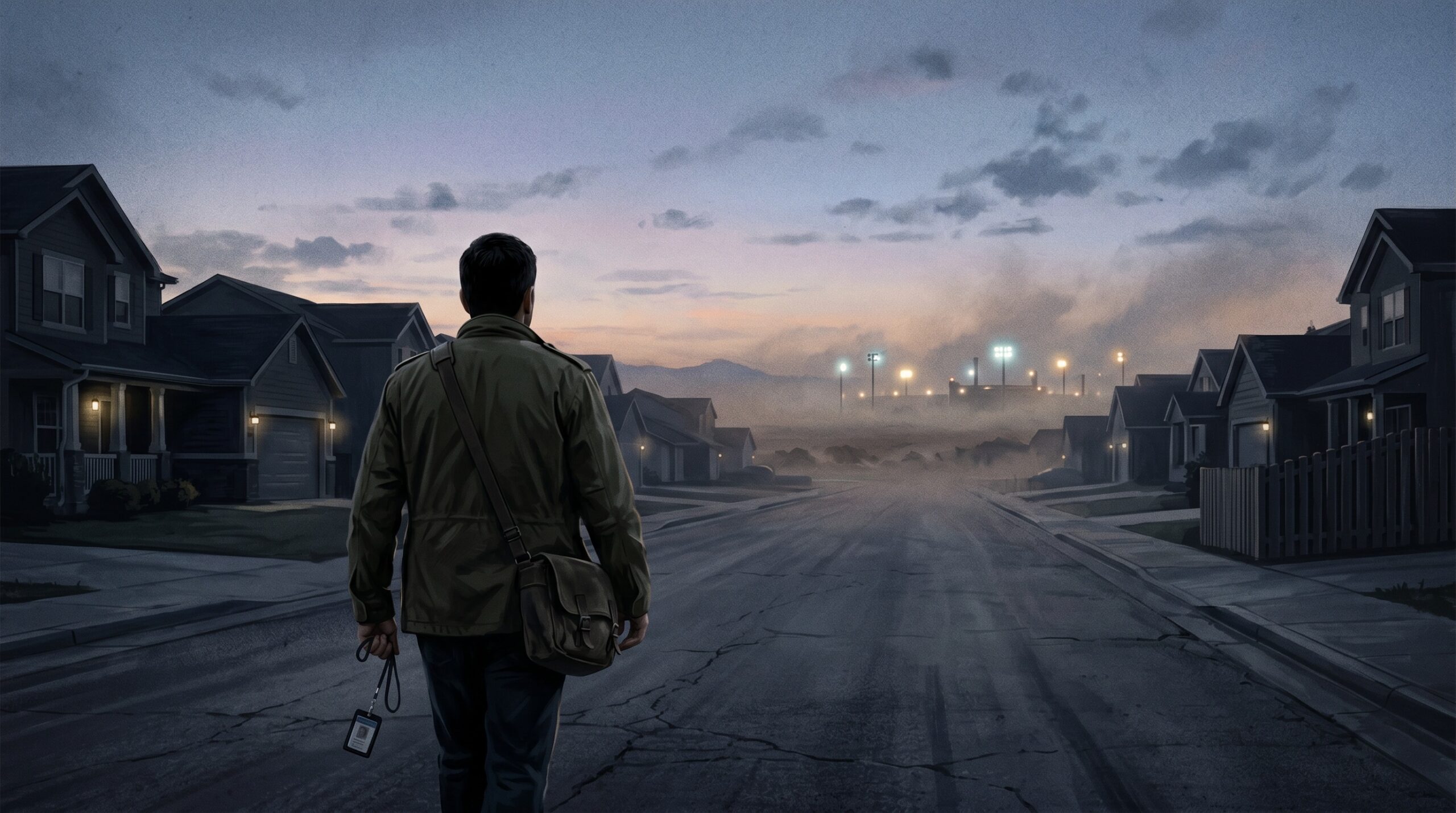
Some UFO stories hover in the sky. The unnerving ones go into the water. That is why the Kuwait white orb ocean UFO story keeps resurfacing. A bright object over dark sea, a descent into the water, a reappearance, and the old suspicion that whatever is watching this planet may be using the oceans as cover.
The direct answer is that the Kuwait white orb story revolves around claims that lawmakers or witnesses were shown footage of a white orb moving into and back out of the ocean off Kuwait, and the case keeps regaining traction whenever underwater UAP talk surges. The story’s modern life is being sustained by reports such as Sky News on the orb discussed in a congressional context, broader framing from Popular Mechanics on underwater UFO concerns, and ongoing rediscovery through community threads like the recurring Reddit debate about the alleged clip. That still leaves major gaps in what the public can independently verify. It also explains why the story will not die.
The ocean changes everything. A light in the sky suggests distance. A light going into the sea suggests infrastructure, concealment, and somewhere to disappear to.
Why the Kuwait orb keeps coming back
Ocean-UFO stories carry a heavier charge than ordinary sightings because they imply durability. If something can move through the air and then treat the sea like an open doorway, believers do not imagine a random anomaly. They imagine a system.
That is the emotional engine driving the Kuwait story. It is not just a clip of a strange light. It is a myth of access. The orb appears to slip between domains most of us already treat as sealed off from ordinary human scrutiny. That instantly makes it feel more advanced, more secretive, and more threatening than a conventional light-in-the-sky report.
The strongest reason the Kuwait case has lasted is that it is not merely a random social clip. It became attached to the more serious language of hearings, briefings, and official awareness. Once a story crosses into that territory, even indirectly, it gains a different sort of gravity online.
For believers, congressional mention acts like a credibility amplifier even when the public still lacks the full underlying evidence. The phrase “shown to Congress” has enormous myth-making power. It implies there is always one more room, one more screen, one more closed briefing where the real version of the story lives.
That dynamic helps explain why the alleged Kuwait footage never really disappears. Every new round of disclosure talk brings it back because it sits at the intersection of two irresistible ideas: secret video and underwater access.
Why ocean UFO stories hit harder than sky sightings
People already accept that the oceans are one of the last places on Earth where enormous things can remain hidden. Add the UFO question to that landscape and the imagination runs almost automatically. Deep water means darkness, military traffic, incomplete mapping, and long traditions of sailors and pilots reporting things that do not behave correctly.
So when a story like Kuwait enters the feed, believers do not hear it as one weird object. They hear it as confirmation that the real mystery was always below the surface. The orb is fascinating, but what it implies is the real hook: if something can enter the ocean cleanly and leave it again, then the water itself stops being background and becomes possible territory.
What remains missing from the case
The Kuwait white orb story is emotionally powerful, but the public record is still thin. There is no universally accepted, high-resolution, independently authenticated release that settles the footage once and for all. Much of the story’s force comes from secondhand description, fragmented circulation, and the prestige effect of congressional association rather than from a fully open evidentiary file.
That does not erase the case. It simply defines its current status. The orb remains one of those disclosure-era stories that lives in the gap between rumor and proof. For believers, that gap is not a weakness. It is part of the fascination. An object dropping into black water and rising out again is already the kind of image that colonizes the imagination. Add secrecy, officials, and ocean depth to it, and the clip becomes almost impossible for the modern UFO culture to let go of.
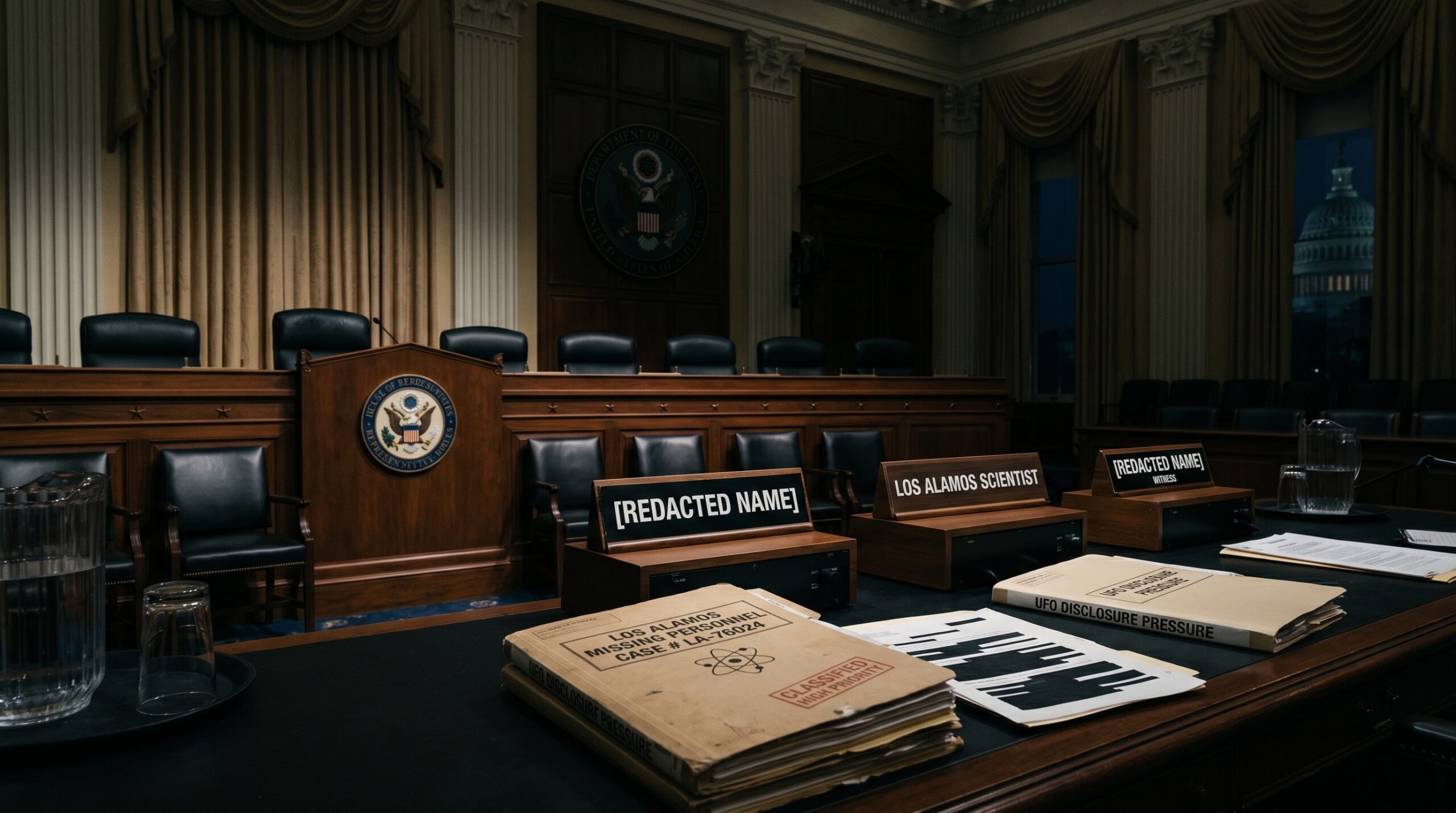
The most unsettling stories are the ones that suddenly leave the forums and walk into the hearing room. That is the energy around the missing los alamos scientists story right now. For months it has lived in the same murky space as disclosure chatter, dead-researcher lists, and late-night pattern hunting. Now a congressional push is giving that anxiety a fresh pulse.
The reason this angle is so combustible is simple. Los Alamos is not a random place in the American imagination. It is where nuclear secrecy, defense mythology, and forbidden-science fantasies all bleed together. Add the words missing scientists and the story practically writes itself.
Why the hearing push matters so much to disclosure culture
The online believer world has been waiting for exactly this kind of moment.
Not confirmation. Not even a document dump. Just a sign that somebody in elected office is willing to say the cluster out loud and force an institution to react. Once a member of Congress touches the subject, the story stops feeling like a rumor passed between obsessives and starts feeling like a live pressure point. That change in status matters even if the underlying evidence has not changed much at all.
In other words, the hearing language is not powerful because it settles the mystery. It is powerful because it sanctifies the mystery. Once Washington acknowledges the question, believers feel they have moved one room closer to the vault.
Why dead-scientist narratives spread so fast
This is also one of the easiest narratives on earth to overheat.
People do not need every case in a cluster to be connected in order to feel that the cluster itself is meaningful. Humans read repetition like design. If several researchers tied to national-security-adjacent worlds die, disappear, or become the subject of online speculation in the same season, the public instinct is to reach for a single hidden cause. The more secretive the institutions involved, the stronger that instinct becomes.
Los Alamos gives that instinct a perfect backdrop. It is already a symbol of the sealed state. It already carries the aura of compartmentalized knowledge and history-changing research. So when names begin circulating beside it, believers do not imagine HR problems, personal crises, media distortion, or internet over-linking. They imagine containment. That is also why the story keeps getting pulled back toward Michael David Hicks and the so-called mysterious scientist network, where one suspicious case quickly becomes a map of many.
That is also why the mysterious scientist network story has felt so sticky. Once readers have accepted even the possibility that one sensitive researcher died under troubling circumstances, every later case seems to arrive with shadow already attached. The pattern becomes self-feeding.
What is actually being alleged
The strongest careful version of the story is narrower than the online version.
Public reporting and commentary are pointing to a cluster of scientists, contractors, or adjacent figures whose deaths or disappearances have become part of the UFO disclosure conversation. Some lawmakers and commentators are now saying the matter deserves formal attention. That is a real development. It means the rumor field has generated enough public heat to force a political response.
What is not established by that development is that the cluster is coordinated, that every name on viral lists truly belongs on the same list, or that Los Alamos itself is the hidden center of a single operation being cleaned up. Those are stronger claims than the public evidence currently supports.
But that distinction is exactly what makes the story such a magnet. The official world has offered too little clarity to drain the suspense, while the alternative world keeps producing enough fragments to prevent the suspense from collapsing. That is the sweet spot where a mystery metastasizes.
What Congress may discover, and what it may not
Even if hearings happen, they may not produce the kind of revelation believers are craving.
Congress can ask for timelines, agency awareness, security relationships, and whether public rumor lists contain any cases already reviewed inside government. It can test whether institutions answer consistently or retreat into the usual mix of non-comment, classification, and procedural fog. That alone would matter. Sometimes the first useful sign in a secrecy story is not what gets disclosed. It is who refuses to speak plainly.
Still, the end of the story may be less cinematic than the beginning feels. There may be no central conspiracy document. There may be no neat chamber where the dead-scientist map hangs on a wall. The public may be looking at a messier reality: some real tragedies, some sloppy aggregations, some political opportunism, and a disclosure culture that now reads every institutional silence as a signature.
That is the grounded frame. The believer frame is harder to shake. Once Congress starts asking about missing Los Alamos scientists, the subject no longer feels like a rumor whispering in the dark. It feels like a locked door with new hands on the handle. And for the people who already think American secrecy has been hiding something stranger than weapons, that is enough to keep listening for movement on the other side.
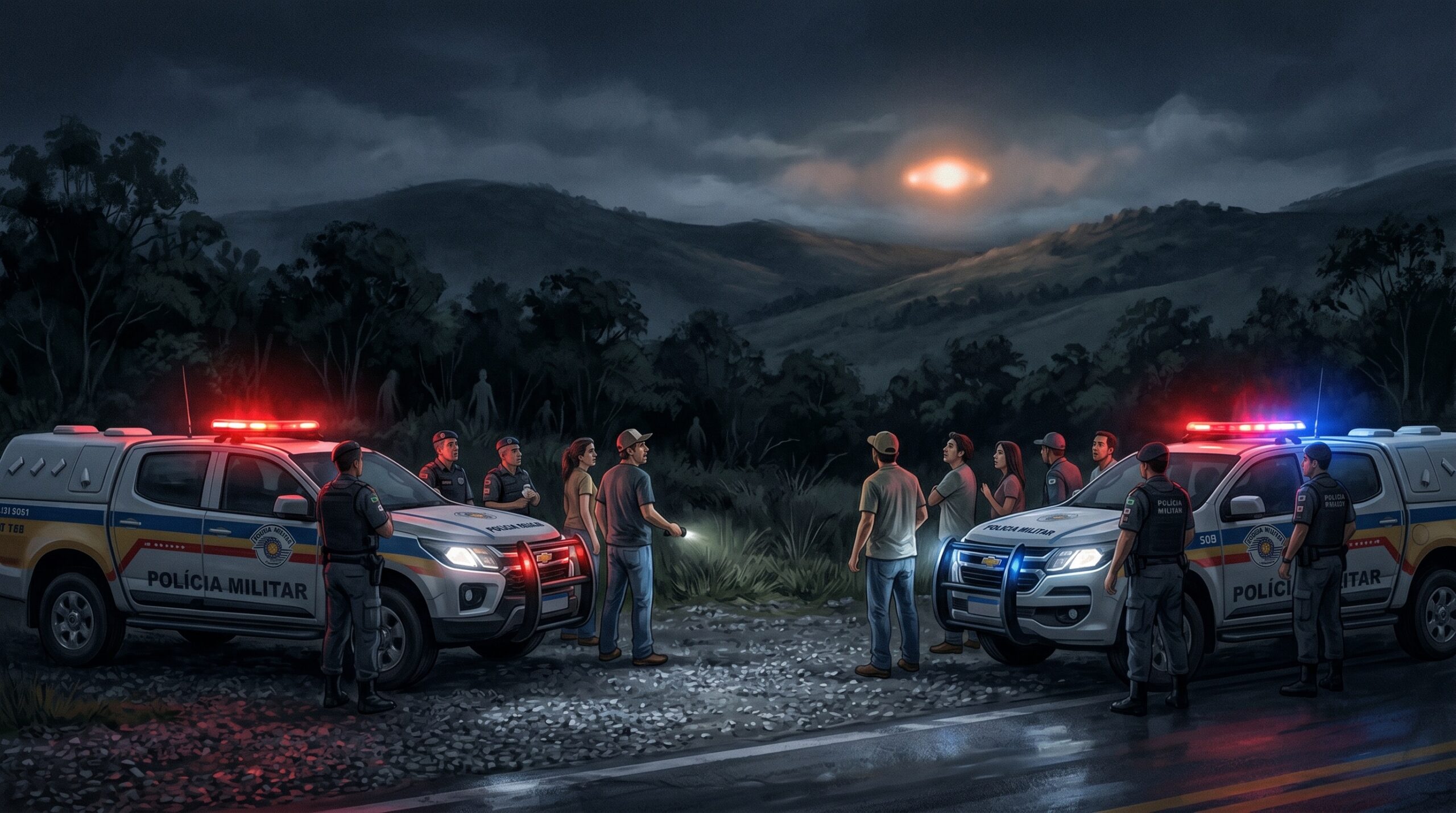
What if one of Brazil’s strangest modern UFO stories never broke wide for the same reason it still feels dangerous now: a police commander said too much, the claim was too specific to shrug off, and the public never got enough documentation to make the feeling go away? That is the pulse behind renewed interest in the so-called Cláudio Case, a story tied to Cláudio, in Brazil’s Minas Gerais region, where a Brazilian Military Police commander is said to have described a 2008 encounter involving officers, civilians, UFOs, and even nonhuman beings.
For believers, that combination hits every nerve at once. This is not just another distant light in the sky or another recycled internet clip with no witness attached. It is a story that reportedly places trained police personnel and ordinary civilians inside the same zone of strangeness, in the same town, at the same time, with the added shock of humanoid or nonhuman-presence claims hanging over the whole thing. Once a case picks up those elements, it stops reading like a sighting report and starts feeling like the edge of a larger event the public was never meant to see in full.
That is why the Cláudio story has begun circulating again through UFO channels. A Reddit post in r/UFOs pushed the claim back into view by centering the reported statement from a Brazilian Military Police commander. Search results have also been directing readers toward source trails such as UAP Brazil’s page on the case and a 2026 writeup from ovniologia. None of that alone settles the story. But it does explain why the case suddenly feels alive again: it has the exact shape of a rabbit hole believers cannot leave alone.
What the Cláudio claim actually says
At its core, the claim is simple and unnerving. The story circulating in UFO spaces is that a Brazilian Military Police commander said officers and civilians encountered UFOs and nonhuman beings in Cláudio in 2008. That is the center of gravity. Everything else around it depends on how much weight you give the statement, how directly it was recorded, and how much of the case survives through secondary retellings rather than a widely circulated primary dossier.
Even stated cautiously, the claim is powerful. A police commander is not the kind of witness profile that people instinctively file under fantasy. Add civilians to the account and the case widens. Add beings, and the story crosses the line from “unidentified object” into the much more destabilizing territory of encounter narratives. That jump matters because many people can tolerate an unexplained light. Far fewer are comfortable with a report that suggests presence, intelligence, or interaction.
This is also why the Cláudio Case feels larger than the currently visible record. Cases like this gain force from structure. There is a named town. There is a year. There is a rank-based source signal. There is a claim that multiple kinds of witnesses were involved. To a believer, those are not loose fragments. They are the outline of something that sounds like it should have produced a much bigger paper trail than the average internet story.
Why Brazil gives the case extra weight
If this exact same claim surfaced in a place with no deeper UFO lore attached to it, it would still be eerie. In Brazil, it lands harder.
Brazil has long occupied a special place in global UFO culture because the country already carries a reputation for dramatic cases, military-linked rumors, humanoid encounter stories, and witness testimony that never quite leaves the public imagination. The moment a new or resurfaced Brazilian case enters the conversation, many readers connect it to that larger atmosphere automatically. The country’s history has taught believers to expect stories that are not merely about lights or radar returns, but about events that seem to spill over into direct human contact, institutional awareness, and long-running secrecy.
That context gives Cláudio extra charge. The story does not arrive on blank ground. It arrives in a national mythology where people already suspect that some of the world’s most unsettling UFO episodes happened in places where official attention, witness fear, and local memory intersected. So when a case says police, civilians, UFOs, and beings in one Brazilian town, believers do not hear four disconnected details. They hear a pattern they think they already recognize.
That does not prove the pattern is real. But it explains why the Cláudio Case moves so quickly from curiosity to obsession. Brazil is one of the few settings where even a thinly documented case can feel immediately connected to a larger archive of unresolved strangeness.
The rabbit hole believers immediately fall into
Once you accept the possibility that the commander’s reported statement reflects a real underlying event, the case becomes difficult to contain.
Why were both officers and civilians allegedly involved? Were they seeing the same thing, or different parts of the same event? If nonhuman beings were part of the report, were they seen near a craft, on the ground, at a distance, briefly, or under conditions that made description difficult? If a commander was willing to speak at all, what had already circulated inside official channels before the public heard about it? And if the event was serious enough to be remembered and repeated years later, why does the accessible public record still feel so incomplete?
Those questions are exactly why encounter cases outrun ordinary UFO sighting stories. Once beings enter the frame, people stop asking only what was in the sky. They start asking whether the event involved proximity, recovery, contact, containment, or suppression. A simple aerial mystery can remain airborne. An encounter narrative pulls the imagination to the ground, toward roads, fields, patrol routes, witness statements, and the uneasy suspicion that somebody local saw more than outsiders were ever told.
For believers, the police angle deepens that pull. Uniformed witnesses are not automatically correct, but they do change the emotional geometry of a story. Police officers imply response. They imply procedure. They imply radios, chains of command, and at least the possibility that someone tried to document what happened. That is one reason the Cláudio Case feels unfinished instead of merely strange. It sounds like the kind of incident that should have left administrative footprints, whether or not those footprints are now public.
Why the case is resurfacing now
The modern UFO internet has a reliable way of reviving stories like this. A short, potent claim appears in a place like Reddit. Readers begin tracing references. Search engines elevate a handful of niche research pages. Older regional or specialist writeups get rediscovered. Then the case returns not as a solved event, but as an unresolved challenge: if this story is so wild, why have so few people heard of it?
That appears to be what is happening here. The recent circulation path matters because it shows how belief ecosystems work now. A Reddit post does not need to prove the entire case. It only needs to introduce enough specificity to trigger a search. Once that happens, pages like UAP Brazil’s Cláudio entry or ovniologia’s 2026 revisit become part of the case’s new life online. Each source acts less like a final verdict and more like a doorway deeper into the same hall of mirrors.
And there is something especially sticky about older cases re-emerging through modern feeds. They carry a built-in emotional suggestion that the internet missed them the first time, or that the story was once too local, too buried, or too uncomfortable to travel widely. That feeling gives a resurfaced case momentum. It makes discovery itself feel like evidence, even when what has really happened is a fresh cycle of circulation.
What makes the Cláudio story genuinely compelling
Even if you strip the case down to its most careful form, there is a reason it lingers.
First, the witness profile is inherently strong in cultural terms. A reported statement from a Brazilian Military Police commander carries more weight than an anonymous repost or an unattributed legend. Second, the claim joins aerial anomaly language with humanoid language, which is rare enough to feel important whenever it appears. Third, the setting is specific. Cláudio is not being presented as a vague region or a mythic nowhere. It is a real place, which gives the case a concrete anchor that pure folklore often lacks.
There is also the matter of scale. Stories that involve both civilians and officers suggest a wider disturbance, not just a private misperception. Even if the underlying event turned out to have a mundane explanation, the narrative survives because it implies collective witness pressure. Multiple people. Multiple roles. One shared episode. That structure is powerful even before anyone resolves the details.
Most of all, the Cláudio Case taps into a deeper believer intuition: that the most significant UFO events are often not the best documented ones, but the ones that seem to exist partly inside official memory and partly outside public access. Those are the cases that develop an unfinished aura. People sense that something happened, but the surviving record is too narrow to let the story settle into either certainty or dismissal.
What still remains frustratingly unclear
This is where the case has to be handled carefully.
The public-facing source signal, at least in the material pushing the story right now, appears to rest heavily on retellings and secondary summaries. That means readers should distinguish between a reported statement and a fully transparent evidentiary file. It is one thing to say a commander reportedly described officers and civilians encountering UFOs and nonhuman beings in Cláudio in 2008. It is another to claim that every detail of that event has been independently verified through documents, recordings, or multiple public primary sources.
There are also basic questions that remain open from the outside. What exactly did the commander say, in what format, and how much of the original wording is available? How many officers were allegedly involved? What did the civilians report seeing? Were the beings described in consistent terms across accounts, or has that language hardened over time through retelling? And what portion of the case comes from later interpretation rather than contemporaneous documentation?
Those gaps do not erase the mystery. They define it. In fact, they are probably part of why the story is spreading. The Cláudio Case is compelling because it feels like a real fragment of something larger, not because the public already has a finished dossier in hand.
For now, the grounded view is this: there is clear online interest in a Brazilian case centered on the reported statement of a Military Police commander about a 2008 incident in Cláudio involving officers, civilians, UFOs, and nonhuman beings. There are source trails believers can follow, including the recent Reddit discussion, UAP Brazil’s case page, and ovniologia’s revisit. But based on the signals currently driving the story, the strongest public claim is still that this is an intriguing, specific, witness-centered case with an incomplete public record — not a fully documented event that has already crossed the line into proof.
And that may be the real reason the Cláudio Case feels unfinished. It carries too much structure to dismiss as empty rumor, too much strangeness to absorb as ordinary noise, and too little transparent documentation to close the file. In UFO culture, that is exactly the combination that keeps a story alive for years.
What if Jeremy Corbell is not teasing a documentary so much as opening a pressure valve? That is the feeling now spreading through UFO circles after the new Sleeping Dog trailer framed the film around an extraordinary claim: Corbell says he held a secret for 11 years, and in the trailer’s most electric line, he warns that if he dies, the story comes out. In disclosure culture, that does not land like ordinary promotion. It lands like a coded admission that something has been sitting in the dark for far too long, waiting for the right moment — or the wrong one.
That is why the trailer hit so differently. A filmmaker announcing a mysterious project is one thing. Jeremy Corbell attaching time, danger, and personal risk to it is something else entirely. The promise of an 11-year secret instantly gives the story scale. The death line gives it consequence. Put those together and Sleeping Dog stops feeling like just another entry in the modern UFO-content machine. It starts to feel like a sealed file being rattled in public.
The online response makes that clear. A new r/UFOs discussion about the Sleeping Dog trailer quickly picked up roughly 250 score and around 200 comments, exactly the kind of fast reaction that shows a piece of media has touched the live wire of believer attention. Add in Brave search results surfacing Hollywood Reporter release coverage, the official trailer, and the movie’s official site, and the story suddenly has three layers at once: mainstream visibility, direct promotional framing, and a highly activated audience already convinced that the most important UFO stories are usually the ones delayed the longest.
Why the Sleeping Dog trailer feels more like a threat transmission than a promo
Plenty of trailers promise revelations. Very few tell viewers, in so many words, that the story is tied to mortality.
That is the line that changed the temperature around Sleeping Dog. “If I die, the story comes out” is not subtle language. It invites the audience to hear contingency planning, danger, suppression, leverage, and timing all at once. In a normal entertainment story, that would read as high drama. In a UFO story, it reads like a flare sent up from inside the secrecy machine.
Believers are especially sensitive to that kind of language because modern disclosure culture is built on a long backlog of almost-reveals. There is always a source who cannot speak fully yet. Always a document that cannot be shown. Always a witness who waited years. Always a story that supposedly had to be handled carefully because the stakes were bigger than the public understands. So when Corbell says he held something for 11 years and then frames its release around the possibility of his own death, the audience hears a very specific message: this is not being sold as content. It is being sold as protected truth.
That distinction matters. The trailer does not need to show everything to produce the reaction it is getting. In some ways, it is stronger because it does not. The less it explains, the more the line about secrecy expands in the viewer’s head. Was the delay about safety? About a source? About evidence too sensitive to release before now? About a story that needed to survive its own gatekeepers? The trailer leaves those questions hanging, and that hanging tension is exactly what gives it force.
Jeremy Corbell knows which nerve he is touching
No one arrives at this moment empty-handed. Jeremy Corbell already occupies a very specific place in UFO media culture: part documentarian, part messenger, part lightning rod. He is one of the few figures in the space whose work is not consumed passively. People watch him while actively deciding whether they are witnessing controlled disclosure, strategic storytelling, genuine revelation, or some unstable blend of all three.
That makes him unusually potent as a narrator for a film like Sleeping Dog. When Corbell speaks in the register of delayed truth, his audience is primed to treat it as more than atmosphere. He has spent years operating at the edge where media presentation and disclosure expectation blur together. For supporters, that means he has proximity to stories bigger than what can be safely said in one shot. For critics, it means he knows exactly how to stage anticipation. Either way, he understands the psychology of the audience better than most people in the space.
And the psychology is simple: believers do not just want new information. They want the feeling that the wall itself is cracking.
That is why the Sleeping Dog trailer hits so hard. Corbell is not merely offering a mystery. He is offering a timeline. Eleven years. That number gives weight to the silence. It implies curation, protection, burden, and intent. It says this was not a passing rumor or a fresh tip that happened to become a film. It was something carried, guarded, and withheld long enough to gather myth before release.
A good UFO trailer creates curiosity. This one creates inheritance. It tells viewers they may be about to receive something Corbell believes he was not always free to give.
Why the 11-year secret is the real engine of the story
If the death line is the spark, the 11-year secret is the fuel.
In UFO culture, time transforms a claim. A secret kept for 11 years is immediately more magnetic than a secret discovered last month because it suggests a different order of seriousness. It implies that the information survived changing news cycles, changing platforms, changing disclosure waves, and still did not come out. Believers hear that and think: then whatever this is, it was not trivial.
Eleven years also invites a whole architecture of speculation without the trailer having to spell any of it out. People begin filling in the blanks almost automatically. Maybe the story involved someone vulnerable. Maybe evidence needed protection. Maybe there were legal fears, source issues, reputational risks, or concerns about what would happen once the claim entered the public bloodstream. Maybe the timing had to align with a larger disclosure moment. Maybe this was one of those stories that could only emerge after years of pressure had softened the ground.
That is the genius of the framing. A long-buried secret creates its own gravity. The audience starts assuming weight because otherwise why keep it buried at all?
And for believers, buried stories often matter more than public ones. Public stories can be managed, reframed, diluted, and filed away. Buried stories feel rawer. They feel closer to the place where the real conflict happened. They carry the aura of something that was not meant to surface cleanly. In that sense, Sleeping Dog is already operating in a sweet spot for UFO audiences: not yet fully known, already emotionally oversized.
You can feel how quickly that logic expands. If Corbell truly sat on this for 11 years, then readers and viewers begin to treat the missing decade as part of the evidence. The silence itself becomes meaningful. The delay becomes narrative substance. The wait starts to look less like absence and more like proof that the material carried risk.
The line about death is what turned curiosity into obsession
There are teaser lines, and then there are lines that instantly colonize the entire conversation.
“If I die, the story comes out” is the latter.
That sentence does almost all the work. It suggests a dead-man-switch logic without needing to explain one. It frames the unreleased story as something with consequences attached. It raises the possibility that the information is not merely sensitive, but sensitive enough to require a contingency plan. Even readers who know better than to race too far ahead can feel why that kind of statement detonates in disclosure culture. It is tailor-made for a community already steeped in ideas about hidden archives, suppressed testimony, strategic leaks, and truths that surface only when someone believes they might not stay safe.
It also gives the trailer a strange moral pressure. Once that line is in the air, the audience is no longer just waiting for a movie. They are waiting to see whether Corbell is signaling fear, dramatizing the burden of the story, or deliberately placing the material in a frame that makes it impossible to ignore. The trailer does not have to answer which one. The ambiguity is the engine.
This is why UFO audiences are so difficult to cool down once a story takes this shape. A normal trailer creates anticipation for content that may or may not satisfy. A trailer like Sleeping Dog creates anticipation for disclosure as an event. It turns the eventual release into a test. If the film is as dangerous and buried as the language suggests, then believers expect something with genuine weight at the center of it. If it is not, the framing itself becomes part of the story.
Until then, the death line keeps doing what strong UFO rhetoric always does: it multiplies the scale of the unseen.
Why Reddit and the wider UFO web moved on this so fast
The quickest way to tell whether a trailer has crossed out of entertainment and into UFO-event territory is to watch what happens in the first wave of discussion. In this case, the reaction was immediate.
The r/UFOs post about the new Sleeping Dog trailer drew roughly 250 score and around 200 comments, which is enough to show that this was not passing background noise. People were not reacting to a generic documentary announcement. They were reacting to the combination of Corbell’s name, the 11-year-secret claim, and that death-linked line. Those elements gave the thread exactly what disclosure communities feed on: a concrete artifact, a provocative statement, and a huge amount of empty space for theory to rush into.
The wider search ecosystem helped too. Brave results surfacing Hollywood Reporter release coverage gave the story a layer of mainstream-adjacent validation, while the official trailer and the movie’s site kept the central framing close at hand. That combination matters because it allows believers to feel that the story is both escaping into the wider culture and still rooted in the source material. It is not only rumor. It is not only press. It is both at once.
And that is the modern UFO sweet spot.
A story becomes sticky when it has just enough public visibility to feel real and just enough mystery to stay unstable. If the trailer had been ignored outside disclosure circles, it might have remained niche. If it had overexplained itself, it might have flattened the speculation. Instead, Sleeping Dog arrived in the perfect shape for 2026 UFO culture: a mainstream-recognizable name, an official package, a handful of explosive phrases, and no clean answer to the question everybody immediately asks — what exactly has Corbell been holding for 11 years?
That is how one line turns into a rabbit hole. Reddit provides the surge. Search results provide the legitimacy cues. The official materials provide the phrases people repeat back to each other. Soon the trailer is no longer just being watched. It is being decoded.
What believers think Sleeping Dog could be hiding
The trailer does not need to specify the whole story for people to start building one around it.
Right now, the believer imagination is doing what it always does when a UFO project is framed around long-term secrecy: widening the possibility space as far as it can go without snapping. Maybe Sleeping Dog centers on a witness who waited years to speak. Maybe it involves evidence Corbell believed needed protection before release. Maybe the secret is not a single object or claim at all, but a testimony, archive, or chain of information that only makes sense once assembled in full. Maybe the reason it sat for 11 years is precisely because releasing it too early would have destroyed the story before it could stand on its own.
The key point is not that any of those scenarios have been established. They have not. The key point is that the trailer has been built to activate exactly those expectations.
And for believers, that activation is not irrational. It comes from years of stories that arrive fragmented, years late, and surrounded by warnings. UFO culture has trained its audience to believe the most meaningful material rarely appears in a neat institutional package. It leaks through personalities, films, conversations, private archives, and moments when someone decides the burden of holding a secret has become heavier than the danger of releasing it.
That is why Sleeping Dog feels larger than a movie before most people know what is inside it. It is tapping into a familiar belief that the archive is real, the delay is part of the evidence, and the people closest to the story are often speaking in partial code long before the full thing lands.
You can hear the same emotional pattern in other disclosure-era obsessions: hidden programs, withheld footage, resurfaced legacy clips, stories protected until some unnamed threshold is crossed. The language changes. The architecture stays the same. Something was known. Something was held back. Something is now being released under pressure.
What the trailer actually establishes — and what it still does not
For all the electricity around Sleeping Dog, the grounded picture is still fairly narrow. The trailer clearly establishes Jeremy Corbell’s framing of the project: he says the story involved an 11-year secret, and he uses unusually high-stakes language to suggest that if he dies, the story comes out. It is also clear that this framing landed fast with the intended audience, with Reddit traction and broader search visibility signaling immediate interest.
What the trailer does not establish on its own is the underlying strength of the claim, the full nature of the secret, or the evidentiary weight of whatever the film ultimately presents. A provocative trailer can signal genuine gravity, careful storytelling, or aggressive marketing. Right now, the public record reflected in the available signals tells us the framing is powerful and the response is real. It does not yet tell us whether Sleeping Dog contains the kind of material believers are already imagining at the center of it.
That unresolved gap is exactly why the trailer is working. It gives UFO audiences a phrase they cannot stop repeating, a timeline they cannot stop interrogating, and a promise that sounds too dangerous to be ordinary. Whether Sleeping Dog becomes a genuine disclosure landmark or simply the latest example of how expertly a mystery can be staged, the trailer has already done one important thing: it reminded believers how little it takes to make the hidden world feel close again.
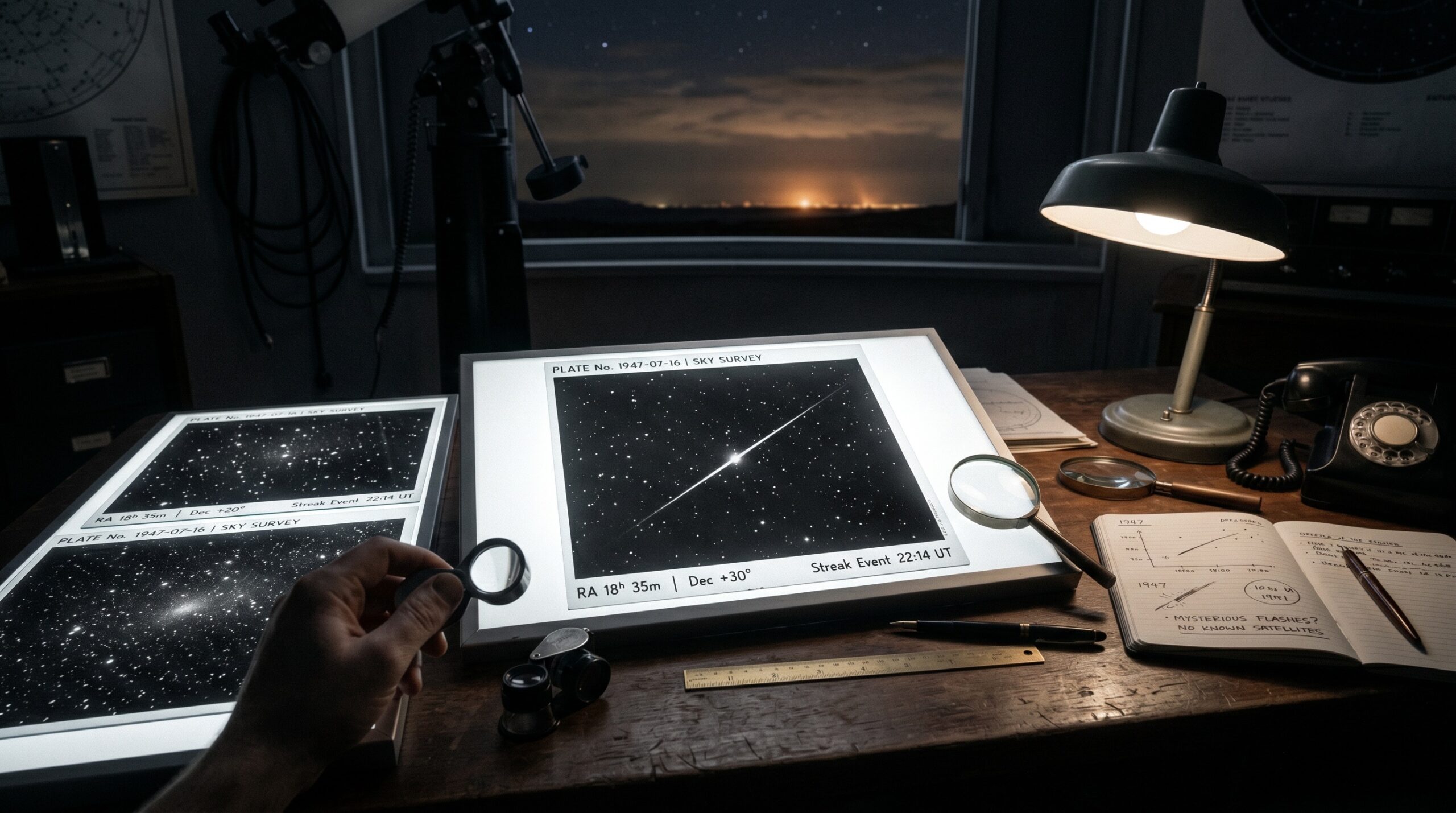
What if some of the strangest UFO evidence on record was captured before satellites, before CGI, before internet hoaxes, and before modern governments learned how to bury weird things under a mountain of digital noise? That is the force behind the renewed obsession with astronomer Beatriz Villarroel’s 1950s sky flashes — a set of archival anomalies that believers see not as random defects, but as possible signs that something unexplained was moving through the skies long before the modern UFO era learned how to talk about itself.
For believers, the pre-satellite part changes everything. It removes one of the easiest escape routes in modern UFO arguments. A strange light in today’s sky can always be blamed on orbital clutter, secret hardware, edited footage, or bad pixels. But when the anomaly comes from older photographic plates, from a sky that was not yet crowded with human-made objects, the mystery starts to feel harder, older, and far more dangerous to dismiss.
That is why the story is catching fire again. Coverage from Sci.News on the 1950s sky flashes and nuclear-test correlations, the renewed discussion of possible nuclear-era timing, and the broader hunger for older “clean” UFO evidence have pushed Villarroel’s work back into circulation. In believer circles, this does not read like a technical astronomy debate. It reads like a buried file being reopened. Stories such as Palomar 1950 Sky Plate Mystery Revived already primed this audience to think the old sky may still contain overlooked traces of something extraordinary.
Why the pre-satellite detail feels explosive
The emotional power of this story is simple: if these anomalies happened before the satellite age, then one of the most common modern explanations gets stripped away before the argument even begins.
That does not prove UFOs by itself, but it explains why believers are so energized by the case. In the current disclosure climate, old evidence feels more trustworthy than new evidence. Archival plates feel harder to fake, harder to stage, and less contaminated by the endless modern cycle of digital manipulation and instant debunk theater. If something truly odd was caught there, then believers think it may belong to a cleaner layer of the mystery.
That is also why this story naturally connects with other unresolved cases involving historical sky anomalies and military secrecy. Once people suspect the past sky holds real clues, every forgotten archive starts to feel like a hidden vault. The idea fits neatly beside Immaculate Constellation UFO leak style suspicions: the belief that the most important UFO evidence may not be the newest, but the oldest material no one fully explained.
The rabbit hole believers are following
Once you lean into the believer reading, these flashes stop looking like isolated oddities and start looking like fragments of a longer surveillance story.
Why were there multiple transients? Why do some discussions focus on alignments rather than a single stray point? Why does the nuclear-era angle keep surfacing around this material? And why do so many UFO researchers feel that every time evidence seems old enough to avoid the usual easy debunks, it suddenly becomes “complicated” in exactly the right way to prevent a clean conclusion?
That is the rabbit hole. Believers do not just see mysterious flashes. They see the possibility of an older pattern — a time when something unusual may have been visible in the skies, possibly around periods of nuclear activity, before the public had a ready-made language for UAPs. The nuclear thread matters because it plugs into one of the oldest and most emotionally charged currents in UFO belief: that unidentified craft appear where human power becomes most dangerous. The archived background on aligned multiple-transient events in the first Palomar survey keeps getting pulled into that conversation for exactly that reason.
That is why stories like Giant Fireballs Across the US and older nuclear-linked UFO lore never really die. They keep feeding the same intuition — that the sky reacts when human civilization crosses certain lines.
Why the archival evidence feels more dangerous than modern video
Modern UFO clips are easy to wave away because everyone expects digital trickery now. Archival astronomy feels different.
Old plates carry weight. They come with dust, age, storage history, and the aura of something that was never meant for viral spectacle. That makes them psychologically powerful. Even when believers cannot prove exactly what they are seeing, they feel they are closer to a genuine trace of the unknown than they are with another shaky phone video.
It also helps that Villarroel’s work comes wrapped in scientific language instead of pure witness testimony. In internet culture, that matters. A blurry witness account can be ignored. A scientific anomaly can be postponed, buried, argued over, or reframed, but it is harder to laugh off. That alone gives the story a more dangerous feel for people already convinced that meaningful evidence gets smothered under technical uncertainty.
And once people hear the phrase “pre-satellite anomalies,” the imagination does the rest. It sounds like a category that should not exist if the world is ordinary. It sounds like a corner of history where something slipped onto the record before the cover stories were fully modernized.
Why believers think the nuclear angle matters
The nuclear layer is where this story stops being an astronomy puzzle and starts feeling like classic UFO mythos again.
For decades, believers have argued that unidentified craft show up around nuclear tests, missile bases, strategic infrastructure, and moments when human technology becomes globally consequential. If archival 1950s flashes can even loosely be discussed in relation to that same timeline, then the case expands instantly. It is no longer just about old plates. It becomes part of a continuity — the possibility that something was present, watching, or interacting with a nuclearizing world during the Cold War.
That is an intoxicating idea because it gives the anomalies a purpose. Random defects have no narrative gravity. But unexplained flashes that appear during a nuclear century, before satellites, inside old astronomical records? That sounds like the kind of clue believers have spent decades hoping would surface.
What the credible facts actually support
Here is what stands up cleanly. Beatriz Villarroel’s work involves archival sky anomalies in older astronomical material, including pre-satellite-era cases that appear unusual enough to keep attracting analysis and debate. The pre-satellite context is real, and it does make the cases more interesting because a common modern explanation is greatly reduced.
What is not yet proven is the leap from “interesting archival anomalies” to “confirmed UFO craft.” Old photographic material can still contain defects, handling damage, processing irregularities, contamination, or other technical problems that become difficult to reconstruct decades later. The nuclear correlation angle is also still a correlation claim, not settled proof of common cause, even when Nuclear News summaries of the April 2026 study wave push that possibility back into public view. In other words, the mystery is real, but the strongest conclusion remains ahead of the evidence.
That leaves the case exactly where it becomes most powerful for this audience. Believers can reasonably say the anomalies deserve serious attention, that the pre-satellite setting makes them harder to dismiss, and that the nuclear-era implications keep the story alive for good reason. Skeptics can still say archival weirdness is not the same as intelligent craft. For now, the paper trail supports a genuine historical mystery — and a very old one. Whether those flashes were only artifacts trapped in aging plates, or a glimpse of something stranger crossing the Cold War sky, is still the part readers must decide for themselves.
What if one of the most memorable UFO clips online survived this long for a simple reason: it was never truly explained, only endlessly talked around? That is the feeling pulling the 2007 Costa Rica UFO sighting back into circulation again — an old Motorola Razr video that still gives believers the same jolt it did years ago because the object looks structured enough to matter and ambiguous enough to escape a final burial.
For believers, that combination is exactly what makes a case dangerous. Truly fake footage often collapses fast. Truly mundane footage fades away. But clips that live in the middle — convincing enough to stay alive, thin enough to stay unsettled — become almost mythic. The Costa Rica video has reached that level. It no longer feels like just a sighting. It feels like a surviving relic from an era before every strange object in the sky came prepackaged with AI suspicion, instant debunks, and algorithmic noise.
That is why it keeps coming back. A named witness, a date, a place, an early phone camera, and an object that many viewers still swear looks mechanical rather than accidental is more than enough to restart the argument every time it gets reposted. The old Reddit debate over whether the Costa Rica sighting was ever debunked keeps resurfacing with it. Cases like Northwest Territories Drillers UFO Sighting and Kacey Musgraves UFO Sighting show how durable witness-driven UFO narratives can be, but the Costa Rica footage has an extra edge: it looks just old and raw enough to feel authentic.
Why the video still hits believers so hard
The key to this clip is that people do not feel like they are looking at a random light. They feel like they are almost looking at a craft.
That “almost” matters. The object appears compact, bright, oddly shaped, and at moments strangely tilted. Some people call it diamond-shaped. Others see a small disc or a faceted metallic form. The image is too weak to resolve cleanly, but that weakness is part of the power. The object never settles into something obvious. It remains in that highly charged visual zone where the mind keeps trying to finish the shape.
For believers, that unfinished shape feels more persuasive than a perfect image would. Perfect footage triggers suspicion. Rough footage can feel honest. A shaky Razr-era recording suggests an ordinary witness caught something in real time, before modern editing paranoia swallowed every public sighting whole. That is the same instinct that helps older cases keep outrunning closure in the wider American UFO Saga: Reality and Fiction style conversation: the older the clip, the easier it is to imagine it slipped past the filters of the current era.
The rabbit hole under the Costa Rica clip
Once you lean into the believer reading, the video stops being a blurry object and becomes part of a larger pattern of half-glimpsed craft sightings that never fully resolve because they are always just beyond the edge of certainty.
Why does the object seem to hold a strange attitude in the sky? Why do so many viewers insist it feels structured rather than organic? Why do old clips like this keep surviving while so many new ones burn out? And why does every skeptical explanation feel possible without ever becoming fully satisfying?
That is the rabbit hole. The believer is not only asking what the object was. They are asking why certain cases seem designed to remain unresolved. Some connect the clip to the old suspicion that extraordinary craft are usually seen only in fragments — enough to be witnessed, never enough to force disclosure. Others think the persistence of these cases points to a deeper truth: that the public has already seen meaningful evidence many times, but the evidence is always distributed in a form that lets institutions and skeptics keep control of the final narrative.
Why Bob Lazar keeps getting pulled into it
The Bob Lazar connection tells you less about proof and more about how UFO mythology works.
People keep bringing Lazar into the Costa Rica conversation because the object seems to resemble the kind of compact, smooth, strangely poised craft that UFO believers already associate with his descriptions. Old reposts such as this YouTube upload describing the Marvin Badilla clip help keep that comparison alive. Once that comparison appears, the clip gains a second life. It is no longer only a Costa Rica sighting. It becomes part of a visual canon.
That matters because mythology stabilizes belief. A video that can be linked to a larger UFO story automatically feels more significant to the audience already living inside that story. Believers do not need the clip to confirm Lazar in a technical sense. They only need it to feel like it rhymes with what they think hidden craft are supposed to look like.
And once a sighting gets absorbed into that mythology, it becomes much harder to kill. It stops functioning as isolated evidence and starts functioning as a recurring symbol.
Why the low quality may actually help the mystery
In ordinary reasoning, low quality should weaken a case. In UFO culture, it often gives the case endurance.
A crisp image can be examined to death. A bad image leaves room for obsession. The Costa Rica footage survives because it does not surrender enough information to let either side finish the argument. Believers can keep seeing a structured object. Skeptics can keep proposing hoax, balloon, model, or perspective tricks. The visual uncertainty feeds both camps at once.
That is why this video keeps resurfacing instead of fading. It is unresolved in a productive way. The object is not merely blurry — it is suggestively blurry. It encourages the viewer to participate, to interpret, to fill in the missing geometry. That turns the clip into an interactive mystery rather than a dead file.
What the credible facts actually support
Here is the solid part. Publicly circulated accounts do consistently identify the case as a 2007 sighting in Costa Rica, commonly attributed to Marvin Badilla, filmed on a Motorola Razr-era phone near Tarbaca. The video does appear to show a real recorded object in the sky, and it has not been publicly put to rest by a single universally accepted explanation. That much is true.
What is still unproven is the stronger leap from “intriguing unresolved object” to “confirmed extraordinary craft.” The footage is low resolution, offers weak scale information, and leaves plenty of room for mundane explanations such as a hoax object, balloon-like target, perspective confusion, or distortion caused by early-phone limitations. Archived skeptical discussion such as the Metabunk thread on the 2007 Costa Rica UFO shows why the case remains open rather than settled. It also does not independently validate Bob Lazar’s claims or prove advanced propulsion. In short, the mystery is durable, but the conclusion is still open.
That is exactly why the clip refuses to die. Believers can look at it and say the object still feels too shaped, too strange, and too persistent to dismiss. Skeptics can say the same limitations that keep it alive are the reason it proves so little. For now, the Costa Rica video remains what the internet seems to love most: an old UFO artifact that still feels one good frame away from changing everything, while never quite giving anyone that final frame.
What if the videos everyone keeps hinting at are real, the people demanding them know exactly what they contain, and the silence after the deadline was never a glitch at all? That is the fear now running through disclosure circles after reports that Defense Secretary Pete Hegseth faced an April 14 deadline tied to 46 military UAP videos that still have not surfaced in public.
For believers, this story does not feel like paperwork. It feels like a vault door slamming shut right when someone on the other side was finally supposed to open it. The number is too specific. The timing is too dramatic. The public frustration is too familiar. After years of hearings, whistleblower claims, redacted briefings, and half-glimpsed military footage, the idea that dozens more clips could still be sitting behind the wall lands exactly where modern UFO culture is most sensitive: the suspicion that disclosure is always almost here, until it suddenly is not.
In normal Washington language, a request for 46 videos might sound like an internal oversight dispute. In UFO culture, it sounds like a hidden archive.
That is because believers are not hearing the number in a vacuum. They are hearing it after the Immaculate Constellation UFO leak, after repeated whispers that the government holds stronger evidence than it shows, and after years of public frustration over briefings that promise movement but rarely deliver closure. The bigger the number gets, the harder it is for people to believe all of it is routine, blurry, or boring.
Forty-six clips suggests scale. It suggests pattern. It suggests a catalog, not a fluke. Even if only a handful of those videos were dramatic, believers argue that the public would still deserve to see them, especially if lawmakers are already fighting to get access. That is what makes the delay feel so combustible. The missing footage becomes a symbol for every previous claim that evidence exists just beyond the public line of sight.
Why this instantly became a cover-up story
The modern disclosure audience has been trained to read silence as a message.
When a deadline passes in an ordinary political story, most people assume there was a delay, a negotiation, or a bureaucratic mess. When a deadline passes in a UFO story, a huge part of the audience assumes somebody panicked. That instinct did not come from nowhere. It was built over decades of sealed records, official reversals, strange military cases, and the constant feeling that every answer arrives already trimmed down.
So once this April deadline started circulating, the script wrote itself. If the footage were harmless, why not release it? If lawmakers wanted it urgently, why was the public left staring at another blank wall? And if the Pentagon really has nothing extraordinary, why does every new fight over UAP evidence seem to produce the same combination of delay, secrecy, and procedural fog?
That emotional logic is also why stories like Why Every New UFO Leak Becomes the Same Online Story keep resonating. The pattern is painfully familiar. A leak or demand appears. Hopes surge. A gatekeeper steps in. The release narrows, stalls, or disappears. Then believers are told, once again, that they are reading too much into it.
The rabbit hole believers are following
Once you step inside the believer version of this story, it stops being about Pete Hegseth alone.
It becomes a story about who knows what, who is allowed to see it, and whether the public is being managed rather than informed. If Luna and other lawmakers were pushing for these videos, believers ask whether they were chasing footage tied to repeat incursions, hidden programs, or encounters more revealing than the clips already known to the public. The fact that the requested material is military in origin only sharpens the intrigue. Military footage carries weight because it implies trained observers, better sensors, and records that are harder to dismiss as random internet noise.
That is where older allegations come rushing back into the conversation. Theories about retrieval programs, compartmented access, and parallel chains of secrecy do not stay in separate boxes online. They bleed together. People discussing this deadline are also thinking about stories such as James Clapper UFO Retrieval Program Allegations, recent congressional hearings, and the persistent suspicion that official disclosure is being staged in fragments while the most destabilizing material stays buried.
For that audience, the absence of the videos becomes its own kind of evidence. Not proof, exactly, but pressure. Why ask for that much material if nothing in it matters? Why let the deadline turn public if the answer was always going to be silence? Why does every trail seem to end at the same locked door?
What believers think the missing videos could show
The most intense speculation online is not just that the videos exist, but that some of them may be the kind of footage that would force a public reset.
Believers imagine a range of possibilities: repeated military encounters that show impossible movement, longer clips with clearer context than the short famous releases, multi-sensor footage that is harder to wave away, or recordings tied to incidents already known only in fragments. In that version of the story, the danger is not that the public would misunderstand the videos. The danger is that the public would understand them too well.
That is why the phrase “46 videos” carries more force than “46 unresolved cases.” Cases can be buried in language. Video feels different. Video feels immediate. It feels like something ordinary people can judge for themselves. And in a distrust-heavy environment, the promise of direct visual evidence is irresistible.
Of course, believers also know that not every clip needs to show a perfect metallic craft hanging in daylight to be explosive. Sometimes what matters is repetition. If multiple videos show the same class of anomaly, the same operational zone, or the same unexplained behavior, that can be enough to convince people that the pattern is real even if no single frame becomes the final smoking gun.
Why this story has real staying power
The bigger reason this story will not die is that it touches a live fault line in the culture.
A huge part of the public no longer trusts institutions to tell the full truth about anything strange, militarized, or nationally sensitive. UFO stories thrive in that gap. They offer the possibility that the world is much stranger than official language admits, and they give people a narrative shape for their distrust. That is why a deadline like this can dominate conversation even before anyone sees a single new frame of footage.
It also helps that the story contains everything disclosure culture feeds on: a named official, a concrete date, a large number of hidden videos, congressional pressure, tabloid amplification, and a clean emotional question at the center of it all. If they had to hand it over, why are we still waiting?
That question is powerful because it is simple. It does not require technical knowledge. It does not require someone to understand classification law or committee procedure. It only requires the intuition that if something important was supposed to come out and did not, somebody probably wanted it that way.
What the paper trail actually supports
Here is the part at the bottom of the rabbit hole that is solid enough to stand on. Public reporting does show that Representative Anna Paulina Luna pushed for UAP-related video material and that April 14 became the key date people were watching. It is also true that no sweeping public dump of 46 military UFO videos appeared when believers expected it to. Those are the facts that lit this fire.
What remains unproven is the leap from “videos were requested and not publicly released” to “the videos must contain undeniable proof of nonhuman craft.” The public still does not know exactly what all 46 videos allegedly show, whether they were meant for full public release or private congressional review, or whether some of the delay is tied to classification, procedure, or a narrower dispute over access. Believers may see a cover-up. Officials may call it process. Right now, the gap between those two explanations is the real story — and until the footage or fuller documentation emerges, people will keep deciding for themselves what is hiding inside that silence.
Spend enough time in UFO-heavy corners of the internet and a strange pattern emerges: separate stories that should remain separate quickly fuse into one giant narrative. A celebrity describes a strange light from an airplane window. An alleged leak starts circulating around a rumored classified program. A former official gets pulled back into argument threads about secrecy. Then a story about a dead or missing scientist appears, followed by a grainy worksite video from a remote camp. Within hours, many readers are no longer treating those as distinct claims with different evidentiary weight. They are treating them as fragments of the same hidden picture.
That collapse is one of the most important things to understand about the current UFO media ecosystem. It helps explain why debates move so fast, why weak claims can borrow emotional force from stronger ones, and why a story that would normally stay niche suddenly feels huge. The internet does not merely spread UFO stories. It bundles them.
Why separate cases keep collapsing into one narrative
Part of the answer is structural. Modern audiences do not encounter most UFO stories through a single careful report. They encounter them through screenshots, clipped podcasts, Reddit threads, quote cards, short-form video explainers, and reposted commentary. In that environment, context gets flattened. The original source matters less than the emotional category the story seems to fit.
Once that happens, different kinds of claims begin to reinforce one another. A story with weak direct evidence can feel more credible because it arrives beside a story that sounds bureaucratic or intelligence-adjacent. A story with no official documentation can feel bigger because it is mentioned in the same breath as an alleged program, a government witness, or a viral sighting that already captured public attention. The audience is no longer evaluating one claim at a time. It is tracking a mood: secrecy, suppression, revelation, pattern.
That is why the same names keep surfacing in adjacent conversations. The NewsNation segment on the scientist-network theory is not just consumed as one story about one person. It gets absorbed into a much larger atmosphere of hidden networks, unexplained deaths, classified research, and institutional silence. In online UFO culture, adjacency often does the work that proof cannot.
Why celebrity sightings become the gateway drug
Celebrity sightings play a specific role in this process. They are easy to understand, easy to share, and emotionally low-friction. Most readers do not need a deep technical background to process a story like a musician looking out of a plane and saying she saw something unusual. The appeal is immediate: recognizable person, vivid moment, simple claim.
That is one reason the Kacey Musgraves sighting spread so effectively. It functioned as an entry-point case. You do not have to believe it proves anything in order to click it, discuss it, or remember it. Once a reader enters the UFO discourse through a familiar cultural figure, though, the algorithm begins offering harder-edged material nearby: leaks, whistleblower-style claims, redacted documents, and more politically loaded allegations. In practice, the celebrity story warms the audience up for the secrecy story.
This matters because the evidence categories are not the same. A celebrity sighting is often little more than testimony plus atmosphere. It may be sincere and still remain weak as evidence. But once it is circulated beside bureaucratic language and intelligence-themed claims, it can begin to feel like one small confirming tile in a broader mosaic.
Why leak culture adds narrative gravity
Leak stories give the whole ecosystem its center of mass. They create the impression that somewhere beneath the noise there may be a real classified core. For many readers, that possibility is what turns a stream of entertaining anecdotes into a serious ongoing drama.
The Immaculate Constellation UFO Leak works this way because it sounds like the kind of thing a hidden system might actually be called. It has the right mixture of official tone, mystery, and apparent specificity. Whether a reader ends up convinced by the claim is almost secondary. The name itself becomes narrative infrastructure. Once it enters the conversation, it offers a conceptual shelf on which many unrelated stories can be placed.
That shelf matters. A celebrity sighting can sit on it. A rumor about unusual recovery efforts can sit on it. A post about missing scientists can sit on it. A worksite video from the middle of nowhere can sit on it too. The leak does not prove those stories belong together. It simply provides a frame that makes them feel as if they could.
For readers trying to understand why this keeps happening, Popular Mechanics’ history of official UFO investigation is useful precisely because it shows how long this pattern has been around. New names and new acronyms appear, but the gravitational pull is old: once people suspect there is an official archive or hidden program somewhere, many smaller stories begin to orbit it.
Why intelligence allegations never stay isolated
Claims involving senior intelligence figures carry a slightly different kind of force. They suggest proximity to state knowledge. Even when the details remain disputed or incomplete, the mere presence of intelligence-world language makes a story feel more consequential than an ordinary sighting.
That is why James Clapper UFO Retrieval Program Allegations travel so widely. The claim operates on two levels at once. On one level, readers are asking the ordinary factual questions: what exactly was said, what is documented, what is inferred, and what remains missing? On another level, the story signals that the conversation has moved beyond hobbyist fascination. It hints at institutions, access, compartmentalization, and the possibility that the public is looking only at the outer layer of a much larger apparatus.
In online discussion, that second level often overwhelms the first. People stop asking whether this specific allegation stands on solid evidence and start using it as evidence of a general condition: the government is hiding something, multiple insiders are circling the same secret, and each new fragment belongs to the same concealed architecture. Once that interpretive move happens, almost any adjacent story becomes easier to absorb into the bigger theory.
Why the Michael David Hicks story intensifies the mood
Stories about scientists, researchers, or technical personnel add another ingredient: danger. They raise the emotional temperature because they imply not just secrecy, but consequences. A story about a leak asks whether something is being hidden. A story about a scientist surrounded by ominous speculation asks whether people connected to hidden knowledge are somehow at risk.
That is the function of the Michael David Hicks conversation online. In strict evidentiary terms, readers should be careful. The existence of a viral narrative does not mean the darker interpretations are supported. But culturally, the story performs a powerful role. It gives UFO discourse a cast of tragic or compromised specialists—figures who seem adjacent to aerospace, research, classified work, or technical knowledge, and who therefore become magnets for retrospective pattern-making.
Once those stories enter the feed, the entire ecosystem feels darker and more coherent. A celebrity sighting looks less like a curiosity and more like a public-facing symptom. An alleged leak looks less like a disputed document and more like a glimpse into a suppressed system. A scientist story then gives the whole structure an undertone of menace. None of that proves the stories are connected. It does explain why audiences experience them as connected.
Why rough videos from remote places feel more convincing than they should
Videos from isolated worksites or distant terrain add realism to the story bundle. They feel less mediated than studio commentary and less polished than government-themed talk. A remote camp, a drilling site, a desert road, a cold industrial horizon—these settings make viewers feel they are seeing something raw rather than narrated.
That is why the Northwest Territories Drillers UFO Sighting resonated. The setting did a great deal of persuasive work before the audience ever decided what the object might be. Workers in a harsh, remote environment are implicitly framed as practical observers, not theatrical ones. The location feels too inconvenient to be staged for attention. The footage feels discovered rather than produced.
But atmosphere is not evidence. As Deutsche Welle’s reporting on how UFO reports are evaluated makes clear, many sightings remain hard to assess precisely because they begin with limited visual information, uncertain distance, unknown camera behavior, and incomplete scene reconstruction. A rough video can feel more authentic than a polished one while still leaving the central factual question unresolved.
What makes these remote-worksite clips so potent is that they give the mega-narrative texture. If leak stories provide the skeleton, remote footage provides the weather. It makes the broader secrecy framework feel grounded in physical places and ordinary witnesses.
What gets lost when every story is merged into one theory
The first casualty is calibration. Different cases deserve different standards. A celebrity anecdote, a leaked-program claim, an intelligence allegation, a suspicious-death rumor, and a low-resolution video should not all be weighed the same way. Yet when they are pulled into a single online narrative, readers often stop distinguishing between them. Emotional coherence replaces evidentiary hierarchy.
The second casualty is clarity. Once every story is treated as supporting evidence for the same hidden truth, weak cases become hard to discard. They no longer have to stand on their own. They can survive by association. A thin claim feels harder to dismiss when people say it “fits the pattern.” But a pattern made from under-evaluated pieces can become self-sealing very quickly.
The third casualty is attention itself. Truly important questions—what is documented, who is making a firsthand claim, what records exist, what sensors were involved, what is actually knowable—can get buried beneath the more addictive pleasure of synthesis. It is satisfying to believe that every new item belongs somewhere inside one giant explanatory map. It is much less satisfying to say that one story is weak, another is interesting but incomplete, and a third may matter while still lacking the public evidence needed to settle it.
Why the unified story still feels so irresistible
Because it offers emotional order. UFO discourse is full of fragments, and human beings are very good at turning fragments into structure. The mega-narrative transforms scattered stories into a drama with continuity: sightings, secrecy, insiders, hidden archives, suspicious patterns, and recurring witnesses all seem to point toward one unfinished revelation.
That structure is pleasurable even for skeptical readers. You do not have to believe every claim to feel the pull of the larger story. It promises that randomness is only apparent, that the repetition means something, and that the next leak or sighting might finally connect the remaining dots.
But the responsible approach is more restrained. Some stories are mainly atmospheric. Some are socially revealing but evidentially thin. Some raise real questions that deserve closer scrutiny. The problem begins when they are all forced into mutual confirmation.
Bottom line
Every new UFO leak becomes the same online story because the internet rewards convergence. It compresses different evidence categories into the same emotional feed, lets mood stand in for context, and teaches audiences to treat adjacency as corroboration. Celebrity sightings open the door. Leak claims provide narrative gravity. Intelligence allegations raise the stakes. Scientist stories darken the frame. Remote videos make it all feel physically grounded.
That does not mean the stories are worthless. It means they should be separated before they are synthesized. A reader who wants to think clearly about the subject has to resist the seductive idea that every strange sighting, every alleged program, every official-sounding claim, and every ominous rumor automatically belong to one hidden machine. Sometimes they do not add up to a revelation. Sometimes they only add up to the feeling that one is near.
A video said to show drillers in Canada’s Northwest Territories watching a strange bright object over a remote site has become one of the week’s most discussed UFO clips. The basic claim is easy to understand: on April 6, 2026, workers at a northern drilling location reportedly filmed a bright light hovering silently in the night sky. That is the story people are sharing. What the evidence supports, at least for now, is narrower. There appears to be a real circulating clip tied to a real reported sighting. What it does not provide on its own is proof of an extraordinary craft, let alone anything extraterrestrial.
That distinction matters because this is exactly the kind of video that thrives online. It has a remote setting, a group of seemingly matter-of-fact witnesses, a dark open sky, and a single visual element bright enough to feel dramatic while remaining vague enough to invite projection. People are talking about it now partly because it surged on Reddit, where a post in r/UFOs rose to the top of the week with more than 6,500 upvotes, and partly because short-form social media is already saturated with “orb,” “light,” and “skywatch” clips. In that environment, a video does not need to be conclusive to become culturally large. It only needs to feel like it might be.
So what does the evidence actually show? In public, the case still looks like a reported sighting built around a short video of a bright light in a remote night sky. That can be genuinely interesting. It can also be consistent with more ordinary explanations. Without a precise location, exact time, original file, metadata, and checks against aircraft, drones, satellites, and visible celestial objects, the honest conclusion is simple: this is a compelling sighting, not a solved mystery.
What reportedly happened at the drill site?
The version of the story spreading online is broadly consistent across reposts. Workers at a drill site in the Northwest Territories, far from major city light pollution, noticed an unusually bright object in the sky and began filming. The object is described as hovering or holding position over the landscape, and viewers have seized on the claim that it appeared silent.
Those details are enough to make the clip memorable, but they are also exactly the kind of details that need careful handling. “Hovering,” for example, may describe what the object seemed to do from the witnesses’ point of view. It does not necessarily mean the object was literally fixed in space. Distant aircraft seen head-on can appear motionless for surprising stretches of time. A bright star or planet low in the sky can seem strangely planted in place, especially when there are few nearby visual references. Even a drone, depending on distance and wind, can hold position in a way that looks uncannily deliberate.
The same goes for silence. A phone video often records less environmental sound than people assume. Distance swallows audio. Wind noise and automatic phone processing flatten what is actually there. A viewer may come away with the impression that the object made no sound at all when the truth is simply that the microphone captured almost nothing useful.
At this stage, the public case appears to rest on a short clip, social retellings, and the credibility people assign to the setting and the workers involved. That is enough to discuss seriously. It is not enough to identify the object with confidence.
Why this clip spread so fast
A sighting like this lands in a media ecosystem designed to reward ambiguity. One reason the Northwest Territories video took off is that it hit a particularly receptive audience at the right moment. On Reddit, especially in r/UFOs, the clip had all the ingredients of a high-engagement post: fresh footage, a remote location, blue-collar witnesses, and no immediate clean explanation attached to it. Once a post breaks out there, it often moves quickly into YouTube reaction videos, recap channels, and stitched commentary.
That second layer matters. YouTube explainers are not just repeating the sighting; they are converting it into a narrative. A short uncertain clip becomes a “case.” Viewers are offered freeze-frames, zoom-ins, and speculation about what the object “seems” to be doing. Sometimes that process surfaces useful questions. Just as often, it gives weak evidence a stronger aura than it deserves.
Then there is the wider visual culture around UFO content. Instagram and short-form video platforms already host enormous amounts of material tagged with terms like #ufo, #ufosighting, and #skywatch. The result is not just demand for new sightings but a familiar way of seeing them. Many viewers now encounter bright lights in the sky through a ready-made interpretive frame: this could be an orb, a silent craft, an unexplained watcher over the landscape. By the time a new clip reaches them, the story template is already in place.
None of this means the Northwest Territories sighting is false or manufactured. It means virality explains popularity, not accuracy. A video can become one of the week’s most talked-about UFO clips long before anyone knows what it shows.
What is actually visible in the footage?
The most useful question is also the least glamorous one: what can a careful viewer honestly say is on screen?
Based on the descriptions circulating publicly, the clip shows a bright object or light against a dark sky over a remote northern location. It appears luminous enough to stand out sharply from the background. It is said to remain in roughly the same area of the sky long enough for the witnesses to comment on it and for the moment to feel unusual.
That is already more limited than many viral captions suggest. A bright light is not the same thing as a visible structured craft. Unless the video clearly shows shape, edges, surface detail, or movement inconsistent with conventional objects, a viewer is mostly interpreting brightness, position, and apparent steadiness. Night footage is especially poor at resolving distance and form. Exposure settings can enlarge light sources, wash out detail, and create the impression that a simple point of light has mass or contour.
There are other missing pieces too. We do not know the full unedited duration of the event. We do not know the zoom level used by the camera, which matters because digital zoom can distort how stable or intense an object appears. We do not know the witnesses’ exact viewing direction, the elevation angle of the object, the local weather conditions, or whether the object later moved in a way the public clip does not include.
Those absences do not make the sighting meaningless. They simply set limits. What is visible may be unusual. What is provable from the circulated footage is still modest.
Why the Northwest Territories setting matters
The location is a major part of why the clip feels persuasive. A drill site in Canada’s Northwest Territories evokes remoteness, hard weather, open space, and a sky with far less urban light pollution than most people ever experience. To many viewers, that setting implies a cleaner look at whatever was there. If workers in a place like that say a light looked wrong, people are inclined to take the reaction seriously.
There is some logic to that. Darker skies can reveal objects that would be lost over a city. Workers in remote industrial settings may spend long periods outdoors at night and may be familiar with local aircraft patterns, weather, and the ordinary look of the sky around them. That can make a report more interesting.
But remoteness cuts both ways. The fewer visual reference points a viewer has, the harder it becomes to judge scale, speed, altitude, and distance. A light that seems low may be high. A light that seems close may be very far away. A light that appears to hover over a site may actually sit along a distant line of sight with little visible motion relative to the observer.
Northern conditions add another layer. Cold air, haze, ice crystals, and other atmospheric factors can affect how lights behave visually. Bright celestial objects near the horizon may shimmer, flare, or seem enlarged. Aircraft lights can look stranger than they would over a city where context is easier to read. In other words, the setting strengthens the clip’s mood while also making interpretation harder.
What ordinary explanations might fit a remote-night-sky sighting?
There is no single ordinary explanation that can be confirmed from the public record so far. But several familiar possibilities fit the broad outline better than many viewers may realize.
One is an aircraft seen at an unusual angle. A plane approaching from a distance, especially at night, can appear nearly stationary while its forward-facing lights remain bright. Helicopters can also seem to hang in place from some vantage points, particularly if the observer lacks nearby references for motion or altitude.
Another possibility is a drone. People often associate drones with cities, events, or hobby use, but they can appear in remote areas too. Industrial work sites, nearby camps, contractors, or recreational users can all introduce drone activity. Depending on the model, distance, and wind, a drone can present exactly the qualities that spark UFO interpretations: a bright concentrated light, strange hovering behavior, and uncertain scale.
A third possibility is a bright celestial object, especially if local atmospheric conditions distorted its appearance. Planets and stars do not usually satisfy witnesses once an event feels dramatic, but they account for more reports than many people like to admit. Under the right conditions, a bright object low in the sky can look startlingly anomalous, particularly on a phone camera that overexposes the point of light.
Then there are atmospheric and optical effects. Ice crystals, haze, phone-camera exposure, digital zoom, and compression artifacts can all make a light look larger, more active, or more mysterious than it did in person. None of those explanations are as emotionally satisfying as a true unknown. They are still important because they happen often.
To be clear, “ordinary explanation” is not the same as “case closed.” It simply means there are plausible conventional options on the table, and the public evidence is not strong enough to rule them out.
How sightings like this are usually evaluated
One useful corrective comes from the way serious investigators, journalists, and even mainstream reporting on UFO/UAP cases tend to approach these incidents. The process is usually less cinematic than people expect.
The first questions are basic: How many witnesses were there? Did they describe the event independently? What was the exact time? Where exactly were they standing? In which direction were they looking? Was the original video preserved, or are analysts working from reposted copies? Can metadata be checked? Are there flight records, known helicopter routes, satellite passes, drone restrictions, or astronomy data that line up with the sighting?
That is the unromantic core of UFO evaluation. It is also why so many cases remain unresolved in the weak sense rather than the strong one. “Unresolved” often means not that the object displayed impossible behavior, but that the available evidence is too thin to identify it conclusively.
Broad public discussions of UFO reports increasingly emphasize this same point. A sighting becomes more persuasive when multiple independent witnesses agree on key details, when the original media file is available, when the timeline is precise, and when ordinary explanations have been checked against actual conditions rather than just dismissed in the abstract. A short viral clip usually fails several of those tests at once.
That does not make the witnesses foolish or dishonest. It means the standards for turning a strange moment into a durable case are higher than social media usually allows.
Why online audiences treat clips like this as stronger evidence than they are
Part of the appeal is social, not just visual. A remote drill crew feels like a credible set of witnesses because viewers imagine practical people with little reason to invent a spectacle. That impression may be fair. It may also be doing too much work. Sincere witnesses can still misread what they are seeing, especially at night and at distance.
Night footage itself also changes how people think. Darkness removes clutter and therefore removes explanation. A bright isolated object on a black background looks cleaner, more deliberate, and more uncanny than it might in daylight. Silence intensifies that reaction, even though silence in a clip may tell us more about the recording device than the object.
Then the crowd steps in. Once thousands of viewers begin repeating that the object “hovered over the rig” or “made no sound,” those phrases harden into facts whether or not the clip alone proves them. Internet audiences do not just watch footage. They co-author its meaning. The story becomes a shared act of interpretation, and shared interpretation can feel a lot like confirmation.
That is one reason these videos are so difficult to discuss well. By the time careful questions arrive, the cultural version of the sighting is already bigger than the raw evidence.
What remains unknown
The most important facts are still missing. We do not have a complete public accounting of the exact location, orientation, duration, weather conditions, or camera settings. We do not know whether multiple workers provided detailed matching statements beyond the immediate excitement of the moment. We do not know whether the original file is available for review or whether most people are analyzing copies of copies.
We also do not know whether anyone has checked the sighting systematically against flight activity, local helicopter traffic, drone possibilities, satellite visibility, or bright celestial objects present at that date and time. And crucially, we do not know whether the object did anything in the full event that would clearly separate it from those ordinary possibilities—rapid acceleration, abrupt directional changes, impossible maneuvering, or behavior preserved in a way others can verify.
Without that information, the case remains in a familiar middle category: interesting, possibly unusual, but fundamentally underdocumented.
The bottom line
The Northwest Territories drillers UFO sighting is worth paying attention to for one reason above all: it captures how modern UFO stories actually work. A real reported event, a visually striking but limited clip, a remote setting that feels inherently credible, and an online audience ready to turn ambiguity into momentum.
The balanced reading is not that nothing happened. Something clearly prompted witnesses to film and react. Nor is the balanced reading that the video proves a genuine anomaly beyond known technology or ordinary misidentification. The evidence in public does not support that leap.
For now, the strongest conclusion is the least dramatic one. A group of workers in a remote part of northern Canada appears to have seen a bright object they found unusual. The clip is compelling because it preserves that moment of uncertainty. But uncertainty is exactly what it preserves. Until stronger context appears, this should be treated as a reported sighting—intriguing, unresolved, and much less definitive than the internet version of the story makes it seem.
The phrase “James Clapper UFO retrieval program” sounds like the title of a settled scandal. It is not. What exists in public is a tangle of allegations, inferences, and repeated claims suggesting that Clapper, because of his senior intelligence roles, may have been connected in some way to hidden knowledge, oversight, or secrecy surrounding unidentified aerial phenomena and possible retrieval efforts. That is a serious idea. It is also one that remains unproven.
Part of what gives the story its charge is the name itself. Clapper is not a fringe figure pulled from the margins of UFO lore. He is a recognizable former intelligence official whose career is closely associated, in the public imagination, with secrecy, surveillance, and the machinery of national security. Once a name like that enters the UFO conversation, the story changes tone. It begins to feel less like rumor and more like a possible buried chapter of modern state history.
That is exactly why the evidence has to be handled carefully. A high-profile name can make a claim feel more solid than it is. So the real question is not whether people are making the allegation. They plainly are. The real question is what, precisely, they are alleging, what public evidence supports it, and where the story still dissolves into inference.
What is actually being alleged?
In its broadest form, the allegation is that Clapper was somehow linked to hidden structures of information, oversight, or control related to UFO or UAP retrieval claims. Depending on the source, that can mean very different things. In some tellings, the claim is direct and dramatic, implying knowledge of concealed programs involving recovered craft. In others, it is far looser, suggesting only institutional proximity, access, or awareness because of his place inside the intelligence world.
That difference is not minor. It is the difference between a specific accusation and a suggestive narrative.
Public discussion often flattens those distinctions. A complicated claim about bureaucratic overlap or possible awareness gets compressed into a phrase that sounds far more concrete than the underlying material. By the time it reaches social media posts, video clips, or aggregated summaries, readers may be encountering a version of the story much stronger than the original source justified.
So before anything else, it helps to strip the phrase down to its essentials. Most of the time, “James Clapper UFO retrieval program” is not the name of a documented program. It is shorthand for a broader suspicion that senior intelligence figures may have been closer to alleged UAP secrecy than the public understands.
Why Clapper’s name carries so much weight
A story like this could circulate for years in niche corners of UFO culture without drawing much notice if it involved only unnamed officials. Clapper changes that. His public career gives the allegation a sharp outline even when the evidence remains blurred.
That is partly psychological. People naturally assume that someone who reached the top of the intelligence bureaucracy would have unusual access to hidden information. Sometimes that assumption may be fair. Intelligence systems are built on compartmentalization, and senior officials can be positioned near highly sensitive material. But proximity is not the same thing as documented involvement, and rank alone cannot carry a claim this large.
Still, the symbolic force is undeniable. A rumor tied to an anonymous source feels abstract. A rumor tied to a former Director of National Intelligence feels consequential. It invites readers to imagine secure briefings, classified files, closed-door oversight, and decades of concealed knowledge. That leap in atmosphere is part of why the allegation keeps resurfacing.
Why other names keep appearing around the story
The conversation often grows more confusing when additional names surface with little explanation. O’Sullivan is one example that appears in some retellings. For readers new to the subject, that can make the story seem richer and more intricate, as if a deeper network has already been mapped.
But this is exactly where UFO narratives tend to expand by association. One person worked in intelligence. Another had ties to national security. A third made a provocative claim. A fourth source then connected them more aggressively than the evidence allowed. Over time, a chain of proximity starts to look like proof of structure.
That does not mean every connection is empty. It means each one has to be tested on its own terms. Is the connection direct? Is it documented? Is it firsthand? Or is it mostly suggestive, drawing force from the wider atmosphere of secrecy around the subject?
Those questions matter because an allegation can grow more elaborate without becoming more reliable.
What believers think this points to
For people inclined to take the claim seriously, Clapper is not really the whole story. He is a signpost. In that view, the true subject is a hidden system: long-running, compartmentalized, and managed through intelligence and defense structures insulated from normal public scrutiny.
Within that framework, retrieval stories are not treated as sensational extras. They are treated as the center of the mystery. Hearings, declassified videos, and whistleblower testimony are seen as the visible edge of a much larger concealed history. From that perspective, a figure like Clapper matters because he represents the kind of institutional location where sensitive knowledge might converge.
That reading has obvious emotional and political power. It moves the UFO story away from distant lights and strange sightings and toward a more grounded, more dramatic question: who knew what, and who controlled access to it?
Even people who are skeptical of extraterrestrial claims sometimes find that broader question plausible. Governments do classify unusual information. They do compartmentalize. They do protect sensitive programs. That background reality is one reason retrieval allegations can feel credible to some readers even when the public evidence is thin.
What skeptics say is still missing
Skeptics tend to focus less on the atmosphere of plausibility and more on the structure of proof. Their questions are simple, but they cut to the heart of the matter.
Is that source firsthand, secondhand, or speculative?
Are there documents that can be independently examined?
Do the timelines align with known roles, agencies, and events?
Is Clapper named directly, or has later commentary strengthened the implication beyond what the source said?
Are multiple independent sources pointing to the same conclusion, or is the story being recycled through repetition?
These questions often expose how unstable high-profile allegations can be. A source may speak vaguely about intelligence awareness. A later retelling may add a famous name. Another retelling may harden that suggestion into an apparent fact. By the time the story has passed through podcasts, posts, clips, and summaries, what began as inference can look, to an uncareful reader, like established reporting.
That is why skeptics insist on keeping the burden of proof high. The more consequential the allegation, the less room there is for symbolic association to do the work of evidence.
Why the phrase “retrieval program” has such force
Few phrases in UFO culture carry more narrative weight than “retrieval program.” It suggests something far more tangible than a witness report or an unexplained radar track. A retrieval program implies objects, personnel, budgets, security protocols, contractors, oversight mechanisms, and a hidden chain of command. It turns mystery into bureaucracy.
That is part of what makes the Clapper allegation so potent. If readers hear not just that unexplained things were seen, but that recovered materials may have been managed in secret by people near the summit of the intelligence system, the entire subject suddenly sounds less speculative and more historical.
But the same feature that makes the phrase compelling also makes it dangerous. It is easy for a concept this vivid to outrun the evidence supporting it.
What would count as meaningful evidence?
If this story is ever going to move beyond a contested allegation, it will not happen because the phrase keeps circulating. It will happen because stronger evidence appears.
That would likely include some combination of the following:
primary documents with verifiable provenance
direct, on-the-record testimony from participants with firsthand knowledge
records showing formal funding, tasking, or oversight structures
multiple independent sources whose accounts align in substance and timeline
clear evidence that the allegation concerns a real program or effort rather than a narrative assembled from separate fragments
Without that kind of support, the public remains in a familiar gray zone: enough suggestion to keep the story alive, not enough hard material to settle it.
Why the story keeps returning
The allegation persists because it speaks to a broader cultural mood. Many people already suspect that the UAP issue is, in part, a story about secrecy, compartmentalization, and selective disclosure. A figure like Clapper fits neatly into that frame. His name gives the idea institutional gravity.
It also returns in an era of uneven trust. In that climate, a claim does not need to be airtight to spread. It only needs to feel plausible enough, dramatic enough, and close enough to power to invite another round of attention. Once that happens, repetition starts doing its own kind of work. A story mentioned often enough begins to seem established even when no decisive new evidence has emerged.
That is one of the defining tensions of the modern UFO conversation. Public curiosity is real. So is the temptation to mistake circulation for confirmation.
What remains uncertain
At the moment, the uncertainty is not about whether the allegation exists. It does. The uncertainty is about what the available public material actually demonstrates.
It is still unclear whether the claim points to direct involvement, indirect institutional proximity, or a much looser attempt to attach a famous intelligence figure to an already popular secrecy narrative. It is also unclear how much of the story rests on original reporting and how much has been built through interpretation layered atop earlier interpretation.
That ambiguity is not a reason to ignore the topic. If anything, it is the reason to approach it carefully. Stories that sit at the border of rumor, inference, and possible revelation are often the most fascinating—and the easiest to distort.
The bottom line
The James Clapper UFO retrieval program allegation endures because it brings together two subjects that almost automatically generate attention: elite intelligence power and the enduring suspicion that governments know more about unexplained phenomena than they admit. That combination gives the story a dramatic pull few ordinary UFO rumors can match.
But drama is not proof. Based on what is publicly available, there is still not enough to treat the allegation as established fact. The strongest responsible conclusion is narrower than believers want and more interesting than outright dismissal: a serious claim is circulating, it may point toward a meaningful question about secrecy and institutional knowledge, and it has not yet been supported with the level of evidence needed to resolve it.
For now, that is where the matter stands. The allegation is real as an allegation. Whether the underlying connection can be demonstrated is still the unanswered part of the story.