
Category: World War 3

  • Chinese Social Media’s Viral F-35 “Disable” Post Shows How Online War Commentary Is Changing

    Chinese Social Media’s Viral F-35 “Disable” Post Shows How Online War Commentary Is Changing

    A viral Chinese social media post claiming to explain how an F-35 could be disabled has become a revealing case study in how modern war discourse now spreads online: not just through state media, official briefings, or military analysis, but through semi-independent technical personalities, nationalist audiences, and algorithm-driven amplification. The details of the post are less important than what its popularity reveals. In the middle of geopolitical conflict, social platforms are increasingly turning military speculation into mass entertainment, soft propaganda, and participatory information warfare all at once.

    Here is the clearest answer: the significance of this story is not that the public was given a trustworthy battlefield guide. It is that a highly charged military claim, framed by a technically confident creator and boosted by geopolitical tension, drew enormous attention because it offered audiences the feeling of insider knowledge during an active conflict.

    What Happened

    According to reporting from the South China Morning Post, a Chinese social-media account posted a video that allegedly outlined, at a detailed level, how an advanced US F-35 fighter could be countered. This article intentionally avoids repeating or amplifying sensitive operational details.

    That alone would have made it notable. But the timing mattered even more. The content appeared in the context of heightened Middle East conflict, where audiences were already primed to interpret any military-themed online content as either insight, influence, or informational warfare. Once the video went viral, the story became bigger than its original claims.

    The central issue is not whether the creator was genuinely authoritative. The issue is that millions of viewers were willing to treat highly technical, high-stakes military content as shareable public media.

    Why the Story Spread So Fast

    There are several reasons this kind of content performs so well online.

    • It promises forbidden knowledge. Audiences are naturally drawn to content that appears to reveal how elite military systems supposedly work or fail.
    • It flatters the viewer. People feel like they are seeing something strategic, secret, or expert-level that ordinary audiences do not understand.
    • It fits a geopolitical narrative. In tense conflicts, audiences want stories that suggest even the most advanced systems are vulnerable.
    • It performs well as propaganda-adjacent content. Even if unofficial, it can support broader narratives about technological parity, military overconfidence, or strategic weakness.

    That combination makes military “explainers” especially potent on social media. They can function simultaneously as analysis, morale content, entertainment, and influence material.

    Why the F-35 Is Such a Powerful Symbol in Stories Like This

    The F-35 is not just another aircraft in public imagination. It has become a symbol of American military sophistication, secrecy, cost, and technological prestige. Because of that, any viral claim about exposing a weakness in the platform is guaranteed to attract attention far beyond professional defense circles.

    That symbolic value matters. In the information age, war narratives are not only about battlefield outcomes. They are also about prestige and psychological leverage. A story that suggests a crown-jewel military platform might be vulnerable can spread rapidly even if audiences cannot independently verify the technical claims being made.

    This is one reason the article resonates so strongly: it is not just about an aircraft. It is about status, perception, and the possibility of puncturing the image of invulnerability.

    What Analysts and Skeptics Should Keep in Mind

    Readers should be cautious about treating viral military content as reliable simply because it sounds technical. Highly specific language, diagrams, confident narration, or engineering vocabulary can create an illusion of authority without proving the underlying claims.

    That is especially true in conflict environments where partisan audiences are eager for confirmation and platforms reward speed over verification. A creator does not need to be correct to go viral. They only need to sound plausible to people already motivated to believe the message.

    Researchers and skeptics would also note that social-media war content often collapses the distinction between analysis and advocacy. A creator may present themselves as an explainer while still operating inside a broader emotional and political narrative. That does not automatically make the content false, but it does mean the audience should question intent as well as accuracy.

    What Makes This Story More Important Than a Single Viral Clip

    The most important part of this story is not the specific claim about the F-35. It is the emerging pattern it represents: technically framed civilian content becoming part of geopolitical narrative battles.

    This is a major shift. There was a time when strategic military commentary was filtered through journalists, think tanks, retired officers, and defense publications. Now a technically literate social-media creator can publish a viral military explainer and immediately influence public conversation across borders.

    In practical terms, that means conflict-related information environments are becoming more decentralized, more emotionally charged, and harder to separate from nationalist performance. A viral post can function as commentary, morale-building, persuasion, and signaling all at once.

    Why This Matters Beyond China or Iran

    This kind of story matters globally because it signals how warfare narratives are evolving everywhere, not just in one country. Open-source intelligence culture, military fandom, tech-nationalism, and social-media incentive structures are increasingly blending together. The result is a world where conflict analysis is not just produced by institutions, but also by creators competing for reach, relevance, and ideological alignment.

    That should concern anyone trying to understand modern information warfare. The danger is not simply that audiences may learn inaccurate things. It is that emotionally satisfying technical narratives can become more persuasive than verified analysis.

    For a broader look at how mystery, power, and strategic secrecy collide in public discourse, readers may also be interested in The Mellon Leak: High-Def Satellite UFO Images That Could Change Everything and World War 3, Iran, and Prophecy: The Investigation Into Why Apocalyptic Theories Keep Converging Here. The subjects are different, but the pattern is familiar: when public access is partial, narratives often become more dramatic than the evidence available to ordinary audiences.

    Final Assessment

    The viral Chinese social-media post about disabling an F-35 is important not because it should be treated as a public instruction manual, but because it shows how online military discourse now works. Technical aesthetics, geopolitical tension, and symbolic targets can combine to create massively shareable content that feels authoritative whether or not it deserves that trust.

    That makes this story bigger than one post. It is a warning about the future of conflict media itself.

    FAQ

    What was the viral Chinese social media post about?

    It was a widely circulated post or video that reportedly claimed to explain how an F-35 could be countered or disabled. This article intentionally avoids repeating sensitive operational details.

    Why did the post get so much attention?

    Because it combined military prestige, geopolitical tension, technical-sounding authority, and the viral appeal of allegedly revealing insider knowledge during an active conflict environment.

    Does viral military analysis on social media count as reliable information?

    Not necessarily. Technical presentation can create a strong impression of authority, but audiences still need to question sourcing, intent, and whether claims are independently verifiable.

    Why is the F-35 such a symbolic target in these narratives?

    The F-35 represents advanced US military power and technological prestige, so stories about exposing weaknesses in it carry outsized emotional and geopolitical impact.

    Related Articles


    This article was created using Media Blaster – Your content production specialist. Visit www.mediablaster.io for more information.


  • Why the Tel Aviv Crow Swarm Became a Harbinger-of-Doom Story Online

    Why the Tel Aviv Crow Swarm Became a Harbinger-of-Doom Story Online

    A viral video of thousands of crows swirling over Tel Aviv sparked immediate claims that the scene was a supernatural warning, a biblical sign, or a “harbinger of doom.” Here is the clearest answer: the footage appears to show a real and visually dramatic bird swarm, but the most likely explanation is natural migration and urban flocking behavior rather than evidence of anything paranormal. What turned the clip into an unexplained story was not proof of an omen, but the speed with which fear, symbolism, and geopolitical anxiety attached themselves to the image.

    That distinction matters because the Tel Aviv crow video sits at the intersection of two very old human habits. The first is reading meaning into the sky when events on the ground already feel unstable. The second is treating unusual animal behavior as a message rather than a pattern. In moments of social tension, those instincts become stronger, and the internet accelerates them.

    The clip gained traction after NewsX reported on the viral reaction, noting that viewers were linking the footage to current regional tensions and framing it as a possible prophecy sign. That reaction is what made the video newsworthy. The birds were real. The “doom” interpretation was cultural.

    What happened in the Tel Aviv crow swarm video?

    The footage shows a dense black flock moving through the skyline around Tel Aviv high-rises, creating the kind of visual effect that immediately looks uncanny on social media. The dark mass of birds appears to fold and reform in waves, making the sky itself seem unstable for a few seconds. That alone is enough to trigger an emotional response even before viewers attach a theory to it.

    In another context, the same video might have been shared as an urban wildlife curiosity or a dramatic migration clip. Instead, it spread during a period of heightened emotional and political tension, which meant many people did not experience it as neutral footage. They experienced it as charged imagery. That helps explain why so many captions and reposts moved quickly toward apocalyptic language.

    It is also important to separate what is visible from what is inferred. What is visible is a very large flock of birds. What is inferred is everything else: that the birds were behaving unnaturally, that they were responding to hidden forces, or that the scene had prophetic significance. The internet often collapses those two categories into one, but editorially they should stay separate.

    Why did so many people call it a harbinger of doom?

    Crows and ravens have carried symbolic weight for centuries. In folklore, religion, literature, and war imagery, black birds are often associated with death, judgment, catastrophe, and messages from beyond the ordinary world. Once those meanings already exist in the cultural background, a huge swarm over a major city does not arrive as blank visual information. It arrives preloaded with interpretation.

    That is why the “harbinger of doom” label attached so quickly. Social platforms reward emotionally intense framing, and apocalyptic language is one of the fastest ways to turn an ambiguous clip into a shareable narrative. A dramatic sky scene over Tel Aviv was almost guaranteed to attract biblical references, omen talk, and prophecy discourse from users already primed to see global instability through symbolic signs.

    This is not new behavior. Ancient cultures often treated unusual bird movement as significant. Augury, omen reading, and symbolic sky interpretation are old habits, not fringe inventions of the modern internet. What has changed is the distribution speed. A visual that once would have circulated locally now reaches millions of viewers in hours, and each viewer can add their own interpretive layer on top.

    The most widely cited explanation is bird migration and urban flocking

    The strongest non-mystical explanation is also the most straightforward one: Israel sits on one of the world’s most important migration corridors, and large bird movements are part of the ecological reality of the region. Organizations such as Nature Israel have long highlighted the scale of seasonal migration through the country, with huge numbers of birds passing through the area during peak movement periods.

    That broader migration context matters because it makes the Tel Aviv scene unusual in appearance without making it scientifically extraordinary. A dramatic flock can still be real, striking, and uncommon to the average viewer while remaining fully consistent with known animal behavior. The unexplained feeling often comes from unfamiliarity, not from lack of explanation.

    There is also specific behavioral context for crows themselves. The Cornell Lab of Ornithology has documented how crows can gather in large communal roosts and travel in conspicuous numbers, especially in environments where food sources, safety, and urban structures shape flock movement. On video, those patterns can look far more ominous than they do in ordinary field observation because city skylines compress scale and contrast.

    What evidence exists for a supernatural interpretation?

    At the moment, there is no strong evidence that the Tel Aviv crow swarm was paranormal, prophetic, or otherwise beyond conventional explanation. There is a visually powerful clip, a wave of symbolic interpretation, and a long cultural history of treating black birds as signs. That is enough to fuel belief and discussion. It is not enough to establish a supernatural event as fact.

    This is where editorial discipline matters. A mysterious-looking image is not the same thing as mystery proven. The strongest evidence in this case is evidence of response: how people reacted, what they projected onto the clip, and why the symbolic framing spread so efficiently. The supernatural claim rests on interpretation, not on any verified anomaly in bird behavior.

    That does not make the story empty. It simply changes what the story is really about. The deeper unexplained question is not whether crows can move in large groups. They can. The more revealing question is why so many viewers were ready to treat the image as a warning from the sky.

    What skeptics and investigators would say

    A skeptical reading would emphasize three things. First, large bird gatherings are well documented, especially in migration-heavy regions. Second, emotionally loaded contexts make ordinary events seem unusually meaningful. Third, social media captions shape perception before viewers have time to ask basic factual questions. Once a clip is framed as a prophecy sign, many viewers no longer approach it as raw footage. They approach it as evidence for a conclusion that has already been suggested to them.

    Investigators or media-literate analysts would likely add a fourth point: the power of the clip lies in its ambiguity. It is dramatic enough to feel uncanny and ordinary enough to support a natural explanation. That combination is exactly what makes a story durable. If the answer were too obvious, it would not spread. If the evidence for the extraordinary were stronger, the debate would look very different. Instead, the video occupies the fertile middle ground where myth, symbolism, and rational explanation can all coexist long enough to generate attention.

    Why this story matters beyond one viral clip

    The Tel Aviv crow swarm is important because it shows how quickly modern media can transform a natural event into a symbolic crisis. A single piece of real footage became, within hours, a debate about prophecy, fear, war, and meaning. That is not just a bird story. It is a case study in how unexplained narratives are built in real time.

    It also reveals something about the current emotional atmosphere online. In periods of uncertainty, people do not simply watch strange images. They recruit them. They search for signs, frameworks, and warnings that help them narrate the instability they already feel. The sky becomes part of the story they believe history is telling.

    That is why the Tel Aviv video resonated. It provided a perfect symbolic canvas: black birds, a major city, a tense backdrop, and enough visual drama to feel mythic. The most likely explanation may be migration and flock behavior, but the reason the clip spread is that it satisfied a different need entirely. It looked like meaning.

    Final assessment

    So what was the Tel Aviv crow swarm: omen or migration? Based on what is currently known, migration and ordinary bird behavior remain the most credible explanation. But that does not erase the cultural power of the clip. What makes this case unusual is not the existence of a flock. It is the speed with which a natural event was absorbed into prophecy discourse and treated as a warning sign by viewers around the world.

    In that sense, the mystery is not really in the birds. It is in the human impulse to turn unsettling images into messages. That impulse is ancient, and the internet has only made it faster.

    Frequently Asked Questions

    Was the Tel Aviv crow swarm really a supernatural omen?

    Based on what is currently known, there is no strong evidence that the flock was supernatural. The most credible explanation is ordinary bird movement amplified by a highly emotional context and symbolic interpretation online.

    Why did people call the birds a harbinger of doom?

    Crows have long been associated in folklore and religious symbolism with death, warning, and catastrophe. When a dramatic swarm appears over a major city during a tense moment, many viewers naturally interpret it through those older symbolic frameworks.

    What is the scientific explanation for the Tel Aviv crow video?

    The most widely cited explanation is seasonal bird migration and large-scale flocking behavior in a region known for intense migratory movement. Urban perspective and skyline contrast can also make a normal flock look much more uncanny on video.

    Related Articles

    This article was created using Media Blaster – Your content production specialist. Visit www.mediablaster.io for more information.
  • Chris Bledsoe Prophecy 2026 Investigation: Predictions, April Timeline, and the Conspiracy Theory Case File

    Chris Bledsoe Prophecy 2026 Investigation: Predictions, April Timeline, and the Conspiracy Theory Case File

    If you have spent any time in the UFO, prophecy, or high-strangeness world over the past two years, you have probably seen the same name surface again and again: Chris Bledsoe. For believers, he is one of the most important modern experiencers in America — a man whose encounters with glowing orbs, government attention, religious symbolism, and apocalyptic timing may point toward a major turning point in April 2026. For skeptics, he is the center of a myth-making machine that blends Christian prophecy, UFO culture, and cosmic ambiguity into one perfect internet-age mystery.

    This investigation pulls together the key claims, timelines, predictions, symbolism, and competing interpretations surrounding the Chris Bledsoe prophecy 2026 narrative — including what people mean when they search for Chris Bledsoe predictions, Chris Bledsoe 2026 prophecies, and Chris Bledsoe April 2026.

    Who Is Chris Bledsoe and Why Are People Obsessed With His 2026 Prophecy?

    Chris Bledsoe is not just another name in UFO lore. His story has become unusually influential because it sits at the intersection of several audiences that rarely stay separate for long: UFO believers, experiencer communities, Christian prophecy watchers, esoteric researchers, astrology-minded interpreters, and conspiracy audiences who believe a hidden timetable may be unfolding in public view.

    Bledsoe’s case gained attention through his claims of repeated encounters with luminous orbs and with a radiant feminine being often referred to as “the Lady”. Over time, his story evolved from a close-encounter account into something much larger: a prophetic framework tied to cosmic timing, ancient symbolism, biblical expectation, and a coming event in 2026 that many followers think could alter the spiritual or political landscape.

    For background, we have already covered Chris Bledsoe’s Easter 2026 prophecy and the Regulus/Sphinx timing theory as well as a data-versus-vision breakdown of the 2026 prophecy claims. This new piece goes wider and deeper.

    What Exactly Is the Chris Bledsoe Prophecy for 2026?

    The core claim, in its broadest form, is that something significant is supposed to happen in 2026, with many followers narrowing that expectation toward Easter 2026 and, more broadly, the April 2026 window.

    The prophecy is often described in connection with the star Regulus, the Sphinx, divine feminine symbolism, disclosure language, and a wider shift in human consciousness. That ambiguity is part of what gives the theory such staying power. Bledsoe’s predictions are specific enough to feel important, but open enough that different communities can project their own expectations onto them.

    Some hear a prophecy of disclosure. Some hear the return of Christ. Others hear the unveiling of a feminine spiritual force. And conspiracy audiences hear something even more intoxicating: a hidden timetable that elites, intelligence circles, or occult networks may already know about.

    Why April 2026 Became the Hot Zone

    Search interest around Chris Bledsoe April 2026 is driven by the convergence of symbolism and timing. Among believers, April 2026 is not just another month on the calendar — it is treated as a possible threshold period where celestial alignments, Easter imagery, and Bledsoe’s own statements appear to overlap.

    That has turned April 2026 into a magnet date for people trying to decode whether Bledsoe is pointing to a spiritual unveiling, a public manifestation event, mass disclosure around UFO/UAP reality, or a world-changing sign in the sky.

    For readers following the wider climate of fear, rumor, and apocalyptic symbolism, see also our recent story on Rapture 2026 and the March 22 social-media panic cycle.

    The Conspiracy Theory Framework: Why This Story Feels Bigger Than One Man

    This is where the Bledsoe story turns from a personal experience narrative into something much bigger for conspiracy fans. The full theory often sounds like this: Bledsoe’s encounters are real; intelligence-linked figures took his case seriously; the Lady imagery overlaps with ancient and religious symbols on purpose; 2026 is part of a long-hidden celestial or spiritual schedule; and disclosure, religion, and geopolitical instability may all be converging toward the same moment.

    This is the theory’s real power: it fuses UFO disclosure, religious prophecy, elite secrecy, and cosmic timing into one single narrative engine.

    Evidence, Symbolism, and the Problem of Interpretation

    An honest investigation has to separate three things: what Bledsoe has actually said, what followers have extrapolated from it, and what the wider conspiracy ecosystem has added on top.

    That distinction matters because the internet tends to flatten all three into one stream of certainty. A suggestive comment becomes a prophecy. A prophecy becomes a timetable. A timetable becomes a countdown. And soon a symbolic, half-mystical statement is circulating as if it were a leaked government memo.

    This does not necessarily mean Bledsoe is insincere. It may simply mean his story has become a living myth, and living myths evolve faster online than ever before.

    Why Conspiracy Audiences Keep Coming Back to Chris Bledsoe Predictions

    Conspiracy audiences do not just want facts. They want patterns. Bledsoe’s case offers patterns everywhere: a central witness, a spiritual messenger, a future date, cosmic symbolism, a sense that mainstream institutions know more than they admit, and enough vagueness to let the theory keep adapting.

    That is why searches for Chris Bledsoe predictions and Chris Bledsoe 2026 prophecies keep spiking whenever a new interview or clip circulates.

    How the Story Connects to the Wider Disclosure Era

    The Bledsoe prophecy would not be landing this hard if the wider environment were quieter. But the last few years have produced a constant overlap of UAP testimony, government ambiguity, social-media apocalyptic cycles, and high-strangeness mainstreaming.

    For context, readers following the wider disclosure culture should also revisit the Mellon leak and high-def satellite UFO imagery claims, the Black Knight satellite myth and why it keeps returning, and the UFO metal case that finally got a real lab test.

    A Skeptical Counterpoint: Is This Just Narrative Gravity?

    Skeptics argue that the Chris Bledsoe prophecy 2026 story may be an example of narrative gravity — the human tendency to pull unrelated symbols, dates, fears, and hopes into one emotionally satisfying master theory.

    That does not make the story worthless. It makes it culturally important. It shows how modern myths are assembled in real time.

    Why This Investigation Matters Even If Nothing Happens

    The most important conclusion is this: the Bledsoe prophecy matters even if April 2026 passes without a single undeniable event. The real story is what this case reveals about the machinery of belief — how UFO narratives merge with religion, how prophecy merges with internet virality, and how symbolic ambiguity becomes fuel for conspiracy communities.

    FAQ: Chris Bledsoe Prophecy 2026

    What is the Chris Bledsoe prophecy for 2026?

    In broad terms, it refers to claims that something spiritually, symbolically, or disclosure-related is expected to happen in 2026, especially around Easter and the April 2026 timeframe.

    Why are people searching for Chris Bledsoe April 2026?

    Because many followers believe April 2026 is the most important timing window connected to Bledsoe’s statements, especially when linked to Easter symbolism, Regulus references, and the wider Lady narrative.

    Are Chris Bledsoe predictions about UFO disclosure?

    Some audiences interpret them that way, but others frame them as spiritual prophecy, divine manifestation, or a broader shift in human consciousness rather than straightforward UFO disclosure.

    Has Chris Bledsoe given exact 2026 prophecies?

    Not in the sense of a precise, universally accepted public timetable. Much of what circulates online comes from interpretation, paraphrase, and symbolic decoding layered onto his original statements and interviews.

    Why does the prophecy appeal so strongly to conspiracy theory fans?

    Because it blends hidden knowledge, cosmic timing, elite secrecy, religion, UFOs, and future expectation into one narrative. It feels like a case where multiple mysteries may converge at once.

    Videos and Further Reading

    Final Assessment

    If you are looking for a simple answer, the Chris Bledsoe prophecy 2026 case will frustrate you. There is no clean line separating witness testimony, symbolic interpretation, spiritual expectation, and conspiracy inflation.

    But if you are looking for one of the richest and most combustible investigation topics in the modern high-strangeness world, this is it. Whether April 2026 brings disclosure, disappointment, or another layer of myth, the story has already done something powerful: it has convinced thousands of people that the clock may be ticking toward a moment bigger than politics, bigger than UFOs, and possibly bigger than religion itself.

    This article was created using Media Blaster – Your content production specialist. Visit www.mediablaster.io for more information.
    Related Articles:

    This article was created using Media Blaster – Your content production specialist. Visit www.mediablaster.io for more information.
  • Spy Radio Signal on 7910 kHz Revives the Numbers Station Mystery

    Spy Radio Signal on 7910 kHz Revives the Numbers Station Mystery

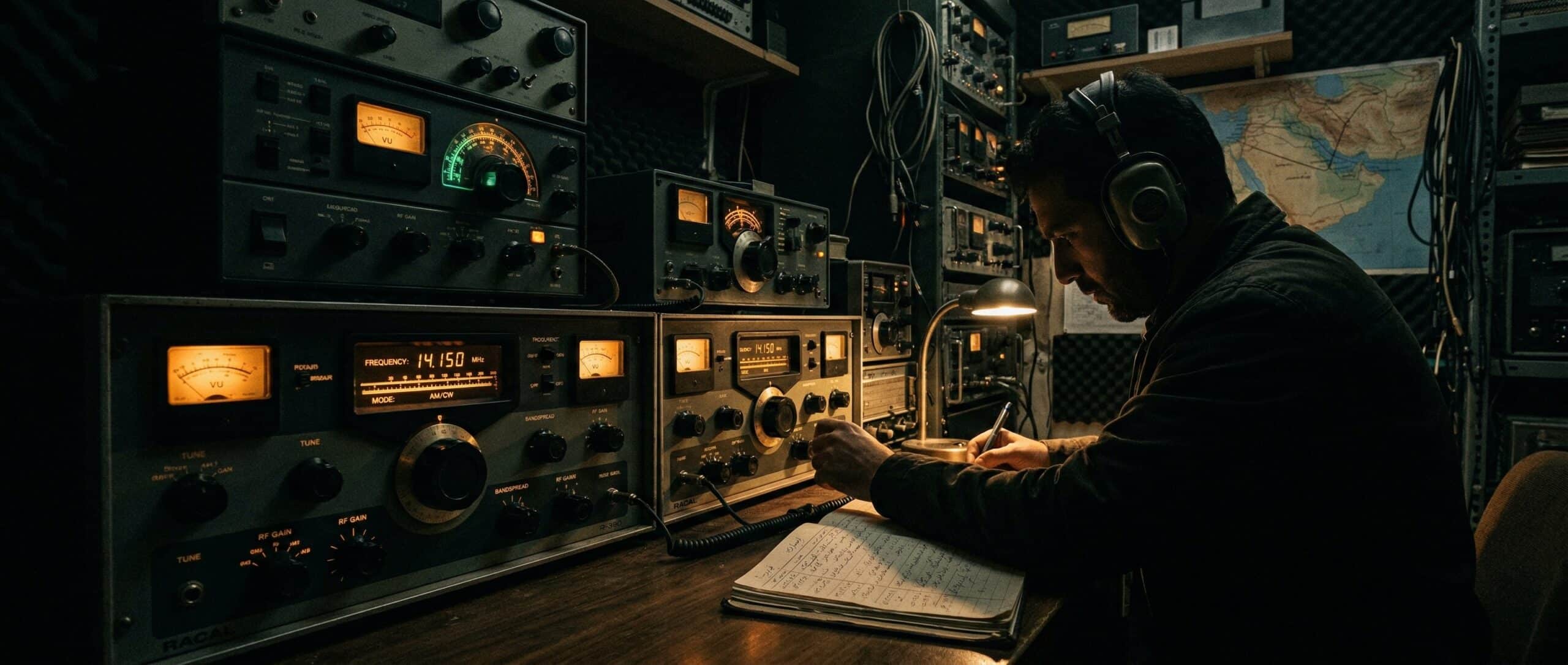
    A fresh Cold War-style mystery is crackling across the unexplained internet: a Persian-language numbers station reportedly appeared on shortwave frequency 7910 kHz shortly after the first U.S. and Israeli strikes on Iran on February 28, 2026. The signal features a male voice reading grouped numbers in Persian, with the word tavajjoh — meaning “attention” — repeated before message blocks.

    For conspiracy audiences, it feels like real-time spy fiction. For radio hobbyists and intelligence watchers, it feels even stranger: because numbers stations are one of those rare pieces of real-world weirdness that are simultaneously documented, historically linked to espionage, and almost never publicly explained.

    What Is Happening on 7910 kHz?

    According to Priyom’s tracking page for V32, the Persian-language numbers station was first logged on February 28, 2026, roughly 12 hours after the opening strikes in the Iran conflict. Hobbyists say the station uses the classic five-digit group format strongly associated with espionage numbers stations.

    As Weird Darkness summarized, the signal consists of a male Persian-speaking voice reading coded number groups, creating an unnerving effect that sounds like something preserved from the Cold War rather than a live broadcast tied to a modern conflict.

    Other reported details circulating through monitoring communities include:

    • the signal appears to air twice daily
    • later transmissions reportedly repeated earlier message sets
    • listeners noted format changes during the first week, including shifts in voice and message structure
    • at one point, hobbyists claimed to hear stray Windows computer sounds leaking into the broadcast

    That last detail only deepened the fascination: a shadowy wartime signal carrying five-digit codes is creepy enough, but hearing accidental computer noises behind the transmission makes it feel less like folklore and more like someone, somewhere, is running a very real clandestine system.

    Why Numbers Stations Still Fascinate People

    Numbers stations occupy a rare liminal category. They are not urban legends. They are real broadcasts, documented by shortwave listeners for decades. Yet their function remains mostly opaque to the public.

    Historically, numbers stations have been linked to intelligence services using one-way encrypted messages for field operatives. The logic is brutally simple: if an agent has the right key, a seemingly meaningless broadcast can carry specific instructions. If they do not, the message is practically useless.

    As Radio Free Europe/Radio Liberty reported, this Persian signal may be the first genuinely new numbers station in years, according to tracking communities. That alone would make it notable. The timing with the Iran conflict pushes it into another category entirely.

    Espionage, Not Paranormal — But Somehow Creepier

    The most grounded explanation is also the most unsettling: the 7910 kHz broadcast is exactly what it sounds like — a clandestine numbers station intended for operatives who already possess the decryption system.

    The more sensational explanation is that the signal reflects an emergency intelligence network activating in wartime, perhaps to avoid digital surveillance, internet disruption, or cyber-monitoring systems. In an era of encrypted apps, satellites, and AI-assisted tracking, the idea that intelligence agencies might still fall back on eerie voice broadcasts over shortwave radio sounds almost absurd — until you remember how hard such transmissions can be to trace and how impossible they are to decode without the proper key.

    That is why this story performs so well online. It is not folklore. It is not rumor built from a blurry light in the sky. It is a real signal, reportedly tied to a real geopolitical crisis, and no outsider can say with confidence who is sending it or who is meant to hear it.

    Why This Matters for The Unexplained World

    This story hits several of the strongest themes in modern unexplained media:

    • real-world weirdness: numbers stations have historical credibility
    • geopolitical urgency: wartime anomalies always carry more emotional weight
    • multiple framing angles: code-breaking, spycraft, psychological warfare, covert ops, and technological anachronism all collide here

    It also taps a wider modern anxiety: if this is how covert communication still works in certain situations, then the digital world may not be as all-seeing as people assume. Sometimes the oldest tools remain useful precisely because they sit below the threshold of modern attention.

    The Ghost Broadcast No One Can Decode

    The enduring power of the 7910 kHz mystery lies in that mix of reality and opacity. Numbers stations are among the few mysteries where the signal is real, the sound is documented, and the logic is plausible — but the meaning remains sealed shut.

    That makes them perfect for the current moment. They feel like artifacts from another age, but they keep resurfacing whenever the world gets tense enough to make old spycraft useful again.

    For more stories at the edge of geopolitics and the unexplained, read our coverage of the Mellon leak and alleged satellite UFO imagery, aliens.gov and the modern disclosure moment, and the illusion of disclosure.

    This article was created using Media Blaster – Your content production specialist. Visit www.mediablaster.io for more information.

  • UFOs vs. Nukes: When Extraterrestrials Disarmed America’s Arsenal

    UFOs vs. Nukes: When Extraterrestrials Disarmed America’s Arsenal

    A former U.S. Air Force officer has come forward with a stunning allegation: UFOs shut down 20 nuclear missiles in just eight days. And he is not alone.

    In March 1967, something strange happened at Malmstrom Air Force Base in Montana. Ten Minuteman I intercontinental ballistic missiles — each armed with nuclear warheads — suddenly became inoperative. The cause? A glowing red object hovering above the front gate of the facility.

    It was not an isolated incident.

    Researchers have now documented over 120 former service members who witnessed UFOs near nuclear weapon sites. The pattern is consistent and terrifying: UFO shows up, nuclear systems fail. UFO leaves, systems work again.

    The Malmstrom Incident

    Robert Salas was a young ICBM launch officer at Malmstrom Air Force Base in Montana on that fateful night in March 1967. He was overseeing 10 Minuteman nuclear missiles when base security informed him of a mysterious red glowing object in the sky above the front gate.

    According to Salas, minutes later, all 10 missiles went offline simultaneously. The systems were rendered inoperative — and no one could explain why.

    As CBS News reported, this was not the only incident. On March 16, 1967, another 10 nuclear missiles at the Echo flight facility at Malmstrom were shut down following an encounter with an unknown object from above.

    In total, 20 nuclear missiles were disabled in just eight days.

    According to the Wikipedia, Salas signed a 2010 affidavit regarding his 1967 incident, hoping the move would help other veterans come forward with their own accounts of unexplained activity.

    The Pattern: UFOs and Nuclear Sites

    The Malmstrom incident was not an aberration. Researchers have documented a disturbing pattern spanning decades:

    • 1966-1976: At least 21 incidents at nuclear missile bases
    • UFOs tracked missile silos: Objects were seen hovering directly over weapons storage areas
    • Systems disabled: Guidance systems, communications, and launch controls were all affected
    • The consistent pattern: UFO shows up, nuclear systems fail. UFO leaves, systems work again.

    The objects were not just observing — they were actively interfering with the most powerful weapons ever created by humanity.

    The 2010 Press Conference

    In September 2010, former Air Force personnel held a historic press conference at the National Press Club in Washington, D.C. Organized by researcher Robert Hastings, seven former U.S. Air Force officers testified about their experiences with UFOs at nuclear weapons sites.

    The event, covered by major news outlets including CBS and CNN, brought together witnesses from multiple bases who told similar stories: unexplained objects appearing over nuclear facilities, followed by system malfunctions.

    Hastings has spent decades investigating the phenomenon and has compiled hundreds of pages of declassified government documents linking UFOs to disruptions at nuclear missile bases.

    The Declassified Evidence

    The U.S. government has not officially acknowledged that UFOs can disable nuclear weapons. But the documentation is extensive:

    • Declassified documents obtained by Hastings show military officials investigating UFO incidents at nuclear facilities
    • Multiple reports from different bases describe the same pattern
    • Former service members have provided signed affidavits testimony

    The evidence suggests the U.S. government has known for decades — and has done nothing publicly about it.

    What Does This Mean?

    If UFOs can disable nuclear weapons, what does that tell us about their capabilities? And more importantly — why?

    Some researchers believe the message is clear: whatever is behind these incursions does not want humanity to have nuclear weapons. The incidents consistently occur at nuclear facilities, and the result is always the same — the weapons become inoperable.

    It could be a warning. It could be a demonstration of superior technology. Or it could be something else entirely.

    What we know is this: for over 50 years, unidentified objects have been appearing over America’s nuclear weapons facilities and disabling them. The pattern is too consistent to be coincidence.

    The question is no longer whether something is interfering with our nuclear arsenal — the question is what exactly that something is, and what it wants.

    Read more about the 2010 testimony on Robert Hastings’ website.

  • What’s Flying Over Tehran? The Mystery of Iran’s UFO Phenomenon

    What’s Flying Over Tehran? The Mystery of Iran’s UFO Phenomenon

    A mysterious object in Iranian airspace has gone mega-viral. But this isn’t the first time strange things have been spotted over Tehran — and the history goes back decades.

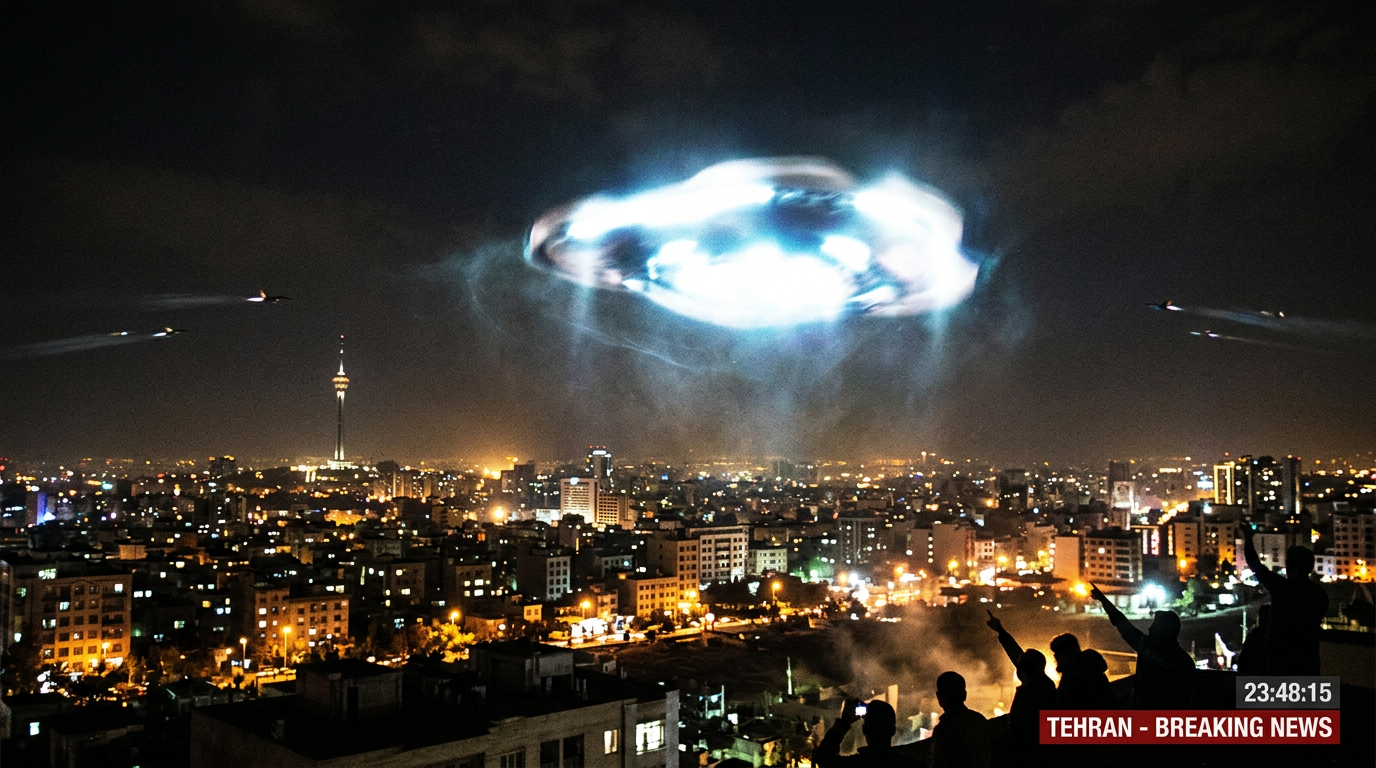
    Something strange is flying over Iran. A video of a mysterious object in Iranian airspace has taken social media by storm this week, showing a metallic-looking craft moving in ways that don’t match conventional aircraft. The timing is notable: tensions in the region have been escalating for months, with ongoing conflicts and increasing U.S. military presence in the Gulf.

    The Viral Footage

    The video shows a strange, unidentified object hovering and moving erratically over an Iranian city. The craft appears to accelerate suddenly, defying the physics of known aircraft. Multiple angles of the footage have circulated online, with viewers debating what exactly they’re seeing.

    According to reports, the footage was captured just minutes before the onset of airstrikes on February 28, 2026, showing a strange luminous entity maneuvering over the city of Karaj, near Tehran.

    Military sources have not confirmed what the object is. That silence has only fueled speculation.

    Iran’s Long History with UFOs

    What makes this recent incident particularly intriguing is that Iran has a well-documented history of UFO sightings — including one of the most famous intercept incidents in history.

    In September 1976, two Imperial Iranian Air Force F-4 Phantom II jet interceptors were scrambled to investigate a luminous object over Tehran. As Wikipedia reports, both jets experienced systems failure and lost communications as they approached the object. One pilot reported that the craft was “definitely not human.”

    The incident was investigated by the U.S. Defense Intelligence Agency, which documented the encounter. The jets’ instrumentation returned to normal only after they withdrew from the object.

    This wasn’t an isolated event. Iran’s nuclear facilities have been repeat hotspots for UFO activity, with numerous sightings reported near sites in Natanz, Fordow, and other locations. Conspiracy theorists have long pointed to this correlation — are aliens interested in Iran’s nuclear program? Or is something else going on?

    Why Now?

    The recent surge in UFO sightings over Iran coincides with heightened regional tensions:

    • Ongoing Israel-Hamas conflict — the region remains a war zone
    • U.S. military buildup — American forces have increased presence in the Gulf
    • Nuclear negotiations — international pressure on Iran’s nuclear program continues
    • Air activity — more aircraft, drones, and surveillance missions means more things in the sky

    As one expert told NewsNation, “These were Middle East videos, in one of the most crowded areas of sky, when it comes to cutting-edge aerospace technology. The United States has a lot there.”

    Possible Explanations

    So what is actually flying over Tehran? Several theories have been proposed:

    Foreign Military Technology: Israel has advanced stealth aircraft. The U.S. flies reconnaissance missions. Could be an Israeli or American drone — or something even more advanced.

    Russian Hardware: Russia has been supplying Iran with advanced military equipment. Could be a test flight of new Russian technology.

    Iranian Drones: Iran has developed sophisticated drone technology. The object could be one of their own — or someone else’s testing Iranian defenses.

    Genuine Anomaly: Some experts admit the movement doesn’t match any known aircraft. The 1976 incident still has no satisfactory explanation.

    AI-Generated: With the rise of deepfakes, some question whether the footage is authentic at all.

    The Question That Remains

    Whether the recent viral footage represents a genuine unidentified aerial phenomenon or yet another piece of advanced military hardware, one thing is clear: the skies over Iran remain as mysterious as ever.

    For decades, strange objects have been spotted over Tehran. The 1976 incident remains unexplained. Now, new videos are emerging. And as tensions in the region continue to simmer, the question persists: what’s really flying over Tehran?

    Until military sources speak up — if they ever do — the mystery will continue.

    Learn more about the famous 1976 Tehran UFO incident on Wikipedia and The Black Vault.

  • World War 3? The Three Theaters That Could Ignite a Global Conflict

    World War 3? The Three Theaters That Could Ignite a Global Conflict

    As tensions escalate across the Middle East, Eastern Europe, and the Korean Peninsula, the world watches nervously. Here’s where things stand in the three conflicts that have experts warning about the prospect of World War III.

    The phrase “World War III” has been tossed around so frequently in recent years that it has lost much of its meaning. Yet as we enter March 2026, the global situation has never been more precarious. Three separate theaters of conflict are developing simultaneously — and each has the potential to draw in major world powers.

    The Middle East: Iran at War

    The most immediate crisis is unfolding in the Middle East, where Israel and the United States are engaged in direct military action against Iran.

    According to the Institute for the Study of War, the conflict has escalated dramatically. As of mid-March 2026:

    • Iran has fired over 500 ballistic and naval missiles and almost 2,000 drones since February 28
    • About 40% of those launches targeted Israel
    • About 60% were fired toward US targets
    • Hezbollah claimed 43 attacks targeting Israeli forces in northern Israel and southern Lebanon in a single 24-hour period

    Israel has launched extensive strikes across Iran, including on fuel depots in Tehran. Iran’s foreign minister has accused Israel of “ecocide” — arguing the strikes on fuel facilities constitute war crimes due to the long-term health and environmental impacts on Iranian civilians.

    As The Guardian reports, Israel continues to launch more attacks across Iran. The conflict shows no signs of de-escalation.

    Eastern Europe: The Grinding War in Ukraine

    Meanwhile, the war in Ukraine continues into its fifth year with no end in sight. The conflict has evolved from a rapid Russian invasion into a grinding war of attrition.

    According to analysis from the Institute for the Study of War and Russia Matters:

    • Russia has lost 57 square miles of Ukrainian territory over the past four weeks — a notable shift from the 182 square miles they gained in the previous four-week period
    • Ukrainian forces are intensifying long-range strikes against Russian military and oil infrastructure
    • Ukraine is increasing its use of first-person view (FPV) drones across all frontline sectors
    • France has agreed to provide Ukraine with the newest version of the SAMP/T NG anti-aircraft missile system in 2026

    Russian President Putin’s December 2022 decree on simplified citizenship processes for Ukrainian children has been formalized into permanent policy as of March 2026, facilitating further integration of occupied territories.

    The Korean Peninsula: Kim’s Show of Force

    On the other side of the world, North Korea is demonstrating its military capabilities in response to US-South Korean exercises.

    North Korea fired approximately 10 ballistic missiles toward the eastern sea on March 14, staging its own show of force as the rival South conducts joint military exercises with the United States.

    The Freedom Shield exercises, involving 18,000 South Korean and US military personnel, began on March 9 and are scheduled to run for 10 days. North Korean leader Kim Jong Un has denounced the exercises as “muscle-flexing” and ordered his military to respond.

    As Al Jazeera reports, North Korea also conducted a live-fire test of its KN-25 multiple rocket launch system, highlighting its tactical nuclear strike capability.

    Are We Heading Toward World War III?

    According to Foreign Policy, while these conflicts are serious, they remain regional wars — for now.

    “While Russia’s invasion of Ukraine and the U.S.-Israeli war against Iran are two serious conflicts with devastating consequences for the nations involved, they are both regional wars,” the publication notes. “A world war has considerably more profound effects on great power politics, stability, economic growth, and the international system.”

    A recent Politico poll found that a majority of respondents in Britain, Canada, France, and the United States believed that World War III is more likely than not to happen within the next five years.

    The concern is real. As The Guardian reports, fears about nuclear war are reaching a fever pitch. Australia has sent reconnaissance aircraft to help protect Gulf airspace. Reports suggest Iran may be activating “sleeper cells” around the world. Russia and North Korea’s deepening military cooperation adds another wildcard to the equation.

    The Connecting Threads

    What makes the current moment particularly dangerous is not any single conflict — it’s how they interconnect:

    • Russia and Iran: Both nations face Western sanctions and have incentive to support each other
    • North Korea and Russia: The two have deepened military ties, with North Korean troops reportedly fighting in Ukraine
    • China’s position: Beijing watches all three theaters closely, its stance could tip the balance
    • Energy security: The Strait of Hormuz remains a flashpoint that could disrupt global oil supplies

    As Foreign Policy notes, while a spiraling war in the Middle East could have profound effects beyond the region, for any conflict to become a true world war would require direct great power confrontation — something that has not yet happened, but cannot be ruled out.

    For now, the world holds its breath and watches three separate wars unfold. Whether they remain separate or ignite a broader conflict may depend on decisions made in the coming weeks and months.

    Read more about the global tension on The Guardian.

  • Global Stockpiles: Are Elites Quietly Prepping for War?

    Global Stockpiles: Are Elites Quietly Prepping for War?

    Key Takeaways

    • State actors are verifiably buying strategic commodities — for instance, China’s state stockpiler planned to buy up to 15,000 metric tonnes of cobalt, according to May 2024 reporting from Reuters and Bloomberg.
    • Visible U.S. government energy and defense reserves show strain: SPR inventories were heavily drawn down in 2021–2023 to multi-decade lows and reported at around 394 million barrels by end-2024; the National Defense Stockpile reported about $1.3 billion in assets with FY2023 shortfalls in dozens of materials, totaling roughly $14.83 billion as noted by the Congressional Research Service.
    • Market and community signals, like sharp drawdowns in exchange-visible silver, heavy ETF flows, and high-net-worth farmland or bunker purchases, are read by many as elite prepping for large conflict — but ownership of off-exchange stocks and the precise motive mix remain opaque.

    A Quiet Convoy of Metal and Soil

    Picture this: dimly lit vaults stacked with crates stamped in commodity codes, echoing with the faint hum of security systems. Satellite imagery reveals vast stretches of rolling farmland quietly changing hands, titles shifting under the radar. Underground caverns, once brimming with oil, now sit partly depleted, pumps whirring in the distance. These scenes feel heavy with implication, as if the ground itself is bracing for something unseen.

    Commentators like Clem Chambers step in to narrate, breaking down these shifts in videos on his channel, ClemChambersAlpha. He points to the contrast — official facilities framed as straightforward infrastructure for national needs, against the backdrop of social media feeds showcasing private bunkers and remote estates pitched to those with deep pockets. It’s a world where accumulation whispers of preparation, not just policy.

    What Witnesses and Analysts Report

    From market floors to online forums, voices are piecing together a pattern. Elites, nation states, and funds appear to be stockpiling gold, silver, critical metals, fuel, and food, positioning for major war or systemic breakdown. Clem Chambers, in his videos and interviews, lays out these claims, drawing on community insights and market whispers.

    Traders and warehouse operators describe tightening physical markets for silver — higher premia for spot delivery, intense borrowing and leasing in metal financing, as covered in Reuters and commodity press. Communities highlight behavioral shifts: high-net-worth individuals snapping up farmland in bulk, the rise of private bunkers and islands, and strong institutional flows into precious metals ETFs.

    These reports blend hard observations with interpretation. Witnesses see coordination in the moves, a shared readiness among those in the know.

    Timelines, Tracks, and Hard Data

    Let’s map the verifiable points. Below is a timeline of key events, with sources and confidence levels.

    Date Event Quantity/Change Source Confidence
    May 2024 China cobalt tender Planned purchase up to 15,000 metric tonnes Reuters/Bloomberg High
    2021–2023 U.S. Strategic Petroleum Reserve drawdowns Heavy reductions to multi-decade lows; ~394 million barrels by end-2024 DOE/EIA/CRS time series High
    March 2023 U.S. National Defense Stockpile assessment ~ $1.3 billion in assets; FY2023 shortfalls in 88 materials valued at ~$14.83 billion Congressional Research Service High
    2020–late 2023 COMEX/LME visible silver inventories Decline from ~346 million oz (2020 peak) to ~82 million oz Market reporting High
    2025 Aggregated silver ETF holdings ~830 million oz Market reporting High
    April 2025 World Bank Commodity Markets Outlook and McKinsey Global Materials Perspective Documentation of supply-demand strains and state reserve behavior World Bank/McKinsey High
    Ongoing Industry reports on delivery premia and exchange-visible tightness Higher premia, borrowing/leasing pressure Reuters and commodity press Medium-High

    These entries rest on public records and reporting. Exchange-visible tightness stands out, but off-exchange activity adds layers of uncertainty.

    Official Story vs. What the Data Suggests

    Institutions frame these moves as routine. China’s cobalt buys are state reserve procurement for industrial needs, per official statements. The U.S. describes the SPR and National Defense Stockpile as tools for market stabilization and national preparedness, according to the DOE and CRS reports.

    Analysts at the World Bank and McKinsey see stockpiling and investor flows as responses to supply-chain risks and industrial demand — not signals of military buildup.

    Yet communities and commentators like Clem Chambers view the concurrent activity across commodities, land, and private bunkers as elite prepping for conflict. Exchange-visible inventories have indeed dropped, supporting claims of tightness, but private holdings remain opaque, complicating efforts to trace buyers or motives.

    Data backs elements of both sides: verifiable drawdowns and purchases align with official policy, while the scale and privacy of some deals fuel alternative readings. Motives here are often inferred, not documented.

    What It All Might Mean

    The evidence points to real accumulation: China’s large cobalt tenders, U.S. reserve drawdowns in SPR and NDS, shrinking exchange-visible metals like silver, and private shifts into farmland and bunkers.

    Questions linger. Who holds the off-exchange stocks, and can we trace ownership? Are these buys for industrial security, hedging, personal resilience, or war prep — and what’s the breakdown? Is the shortage from physical moves or financial plays like rehypothecation and ETF structures?

    For those tracking geopolitical and market risks, these patterns signal potential fragility. Further steps could include digging into public tenders, customs data, interviews with traders and operators, chain-of-title searches on land deals, and FOIA requests for procurement details. The data shows buildup, but intent stays shadowed — worth watching closely.

    Frequently Asked Questions

    Reporting from Reuters and Bloomberg in May 2024 details China’s planned purchase of up to 15,000 metric tonnes of cobalt. U.S. reserves like the SPR dropped to around 394 million barrels by end-2024 after heavy drawdowns, per DOE and CRS data.

    Many in prepper and alternative-finance networks see the moves as elite preparation for major conflict or breakdown, citing drawdowns in visible silver stocks, ETF flows, and high-net-worth purchases of farmland and bunkers. Commentators like Clem Chambers highlight these patterns in their analyses.

    Officials frame them as standard policy for market stabilization and industrial needs. For example, China’s buys are presented as reserve procurement, and U.S. actions via the SPR and National Defense Stockpile are described as preparedness tools by the DOE and CRS.

    Visible inventories on exchanges like COMEX and LME have declined sharply, but private and off-exchange holdings remain opaque. This makes it difficult to confirm total volumes, buyer identities, or exact motives without additional data like customs records or FOIA responses.

    Core issues include tracing off-exchange buyers, determining if purchases stem from industrial, hedging, resilience, or military motives, and distinguishing operational shortages from financial mechanisms. Further reporting could involve interviews and public data queries to clarify these.

  • Pituffik Space Base: The Nuclear Risk NATO Denies?

    Pituffik Space Base: The Nuclear Risk NATO Denies?

    Key Takeaways from Sarah Paine’s Warning

    • Sarah C.M. Paine, a historian of strategy, has warned in 2024–2025 interviews that U.S. posture and alliance tensions could heighten nuclear escalation risks, pointing to fragile partnerships and high-alert incentives.
    • Verifiable records confirm Pituffik Space Base in Greenland hosts U.S. missile-warning and space-surveillance operations under a 1951 U.S.–Danish agreement, with historical incidents like the 1968 B-52 crash underscoring long-term environmental impacts.
    • Unresolved risks include classified details on alert postures and intelligence sharing, plus recent diplomatic friction reported in January 2026, which could strain alliances and amplify crisis instability.

    Midnight at Pituffik: The Arctic on Watch

    Picture the endless polar night over northwest Greenland. Radar dishes slice through the freezing dark, scanning for threats across the horizon. This is Pituffik Space Base, once called Thule Air Base, a U.S. outpost guarding against ballistic missiles and monitoring space. Renamed in 2023 to honor its Greenlandic roots, the site still carries scars from the Cold War. Local communities remember the 1968 B-52 crash that spilled radioactive material nearby, a reminder of how military might disrupts fragile Arctic lands. Greenlanders watch these installations warily, caught between sovereignty claims and the shadow of global powers. Why here? Greenland’s position offers unmatched early warning for North America, but it stirs fears of environmental harm and outside control.

    What Witnesses and Analysts Report

    Greenlandic leaders and Danish officials have voiced sharp concerns over sovereignty. They’ve stated publicly that any push to change Greenland’s status could fracture alliances. Reports from early 2026 in outlets like Reuters, The Guardian, and AP highlight pushback in Copenhagen and Nuuk against U.S. proposals, with politicians warning of risks to NATO unity. Anonymous sources in some stories describe strained intelligence exchanges and eroded trust, though these claims face disputes. Sarah Paine, in her 2024–2025 interviews, places these tensions in historical context: alliances weaken through overreach, creating unstable crises where nuclear postures heighten dangers. Meanwhile, locals cite the 1968 B-52 incident as a source of ongoing distrust toward expanded military footprints.

    Timelines, Tracks, and Hard Data

    The record is clear for those who dig. Start with the 1951 U.S.–Danish defense agreement that greenlit U.S. bases in Greenland. By the early 1960s, the Ballistic Missile Early Warning System (BMEWS Site J) was operational at Thule. The 1968 crash of a B-52 carrying thermonuclear weapons scattered contamination. Today, Pituffik handles missile warnings and space surveillance for NORAD and Space Force. Peak workforce hit around 10,000 in the 1950s. January 2026 saw diplomatic tensions flare in media reports, with anonymous claims of intelligence friction.

    Date/Event Description Source
    27 April 1951 U.S.–Danish defense agreement NSArchive
    1960–1961 BMEWS Site J operational at Thule NSArchive, Space.com
    21 January 1968 B-52 crash with radioactive contamination NSArchive
    2000s Posture discussions on Arctic security NSArchive
    2023 Renamed to Pituffik Space Base Space.com
    January 2026 Diplomatic friction reports Reuters, The Guardian, AP

    Official Story vs. What the Data Suggests

    The U.S. Department of Defense and Space Force describe Pituffik as a defensive asset, focused on early warning and space surveillance within NORAD frameworks. Denmark and Greenland counter with firm defenses of sovereignty, referencing the 1951 agreement and potential harm to NATO if ignored. NATO officials stress shared Arctic security, opposing moves that could split the alliance. Analysts from places like the Belfer Center and Bulletin of the Atomic Scientists highlight ‘launch-on-warning’ risks, urging de-alerting policies. The record holds strong on historical facts, but divergences appear in classified areas like alert details and intelligence flows, where expert worries clash with official assurances.

    Fault Lines: How Alliances and Local Memory Interact

    Greenlandic memories of contamination and displacement from Cold War days give locals real political weight in Denmark, influencing negotiations with the U.S. January 2026 coverage shows European NATO allies resisting U.S. rhetoric on Greenland, with some reports noting dips in intelligence trust. Paine argues this erosion breeds hesitation among partners, raising crisis volatility and nuclear risks. What about shifts in alert postures or command systems? Those details stay classified, leaving room for debate on how they’ve altered escalation incentives.

    What It All Might Mean

    Anchor in the facts: the 1951 agreement, BMEWS going live around 1960–1961, the 1968 crash’s fallout, and Pituffik’s ongoing warning roles. Contested but credible reports from January 2026 detail diplomatic strains and possible intelligence hiccups. Paine calls for fixes like de-alerting nukes, rebuilding trust, and Europe stepping up on security. Mysteries linger on classified alerts, intelligence impacts, and Greenland’s future leverage. From Cold War mishaps to today’s tensions, these patterns warn of instability. Readers, chase the sources—NSArchive, Reuters, Paine’s talks—and piece together what strategic fragility means for us all.

    Frequently Asked Questions

    Sarah Paine warns that U.S. posture and alliance frictions could increase nuclear escalation risks, based on her 2024–2025 interviews. She highlights how eroded trust and high-alert incentives make crises unstable.

    On 21 January 1968, a B-52 carrying thermonuclear weapons crashed near Thule, causing conventional explosives to detonate and scatter radioactive contamination. This incident fuels ongoing local distrust of military activities in Greenland.

    January 2026 reports from Reuters, The Guardian, and AP document pushback from Denmark and Greenland against U.S. proposals. Some anonymous sources claim strained intelligence sharing, though these are contested.

    Pituffik Space Base handles ballistic-missile early warning and space surveillance for NORAD and U.S. Space Force. It’s a key Arctic asset under the 1951 U.S.–Danish agreement.

    Officials frame Pituffik as defensive deterrence, while experts like Paine point to alliance erosion and escalation risks. Classified details on alerts and intelligence create gaps where interpretations diverge.

  • Global War Every 100 Years: Pattern or TikTok Myth?

    Global War Every 100 Years: Pattern or TikTok Myth?

    Key Takeaways

    • Advocates, drawing from David Murrin’s work, claim that large systemic wars recur roughly every 100 years, with a new global pivot imminent, often pointing to patterns like the Napoleonic wars around the 1800s and the World Wars in the 1910s and 1940s.
    • Verifiable support includes Murrin’s 2021 book Red Lightning, a predictive fiction scenario he’s briefed to defense audiences, alongside academic long-cycle theories from scholars like Modelski and Goldstein that identify hegemonic shifts over 70-100 years, backed by public datasets like Correlates of War for testing.
    • Unresolved issues persist: whether a strict 100-year periodicity holds up statistically after controlling for factors like changing state numbers, reporting biases, and technological shifts, and what causal mechanisms could drive such a rhythm, as scholars emphasize these are theories, not ironclad laws.

    A Century’s Whisper: The Feeling That History Is Repeating

    Late at night, your phone glows with alerts—short clips flickering across TikTok and YouTube, titles screaming “⚡ALERT: US Empire Collapse and WW3 @david.murrin.” Headlines blend into the feed. On your desk, a printed copy of Red Lightning sits dog-eared, its pages mixing forecast with story. Social media turns nuanced warnings into stark slogans, while defense briefings lend them weight. Is this déjà vu, or something cycling back?

    What Witnesses and Analysts Report

    Online communities distill it simply: big wars hit every 100 years. They cite Napoleonic conflicts in the early 1800s, then the World Wars starting in 1914 and escalating through the 1940s, framing David Murrin as the pattern-spotter. In Red Lightning, his 2021 book, Murrin blends scenario storytelling with forecasting—it’s not a rigid timetable, but a narrative of potential shifts. Forecasting groups see this as a heuristic, organizing long-term trends without promising exact dates. Defense audiences, who’ve heard Murrin speak, take note of these scenarios. Yet conversations often highlight dramatic examples, skipping stats or counterpoints.

    Timelines, Tracks, and Hard Data

    Let’s pin down the facts you can verify. David Murrin’s Red Lightning hit shelves in 2021, available at https://www.davidmurrin.co.uk/book/red-lightning—part forecast, part fictional scenario. Long-cycle theory, from George Modelski and others, outlines hegemonic cycles spanning 70-100 years; check summaries at Penn State’s site: https://www.e-education.psu.edu/geog128/node/646. Historical windows in the literature include global war periods like 1494–1516, 1580–1608, 1688–1713, 1792–1815, and 1914–1945.

    Public datasets let you test claims: Correlates of War (COW) covers militarized interstate disputes from 1816–2010 in MIDLOC-A, with broader MID data up to 2014, downloadable at https://correlatesofwar.org/. Cliodynamics researchers, like those in structural-demographic studies, spot overlapping oscillations but stress no exact periodicity—see summaries on The Conversation. Caveats: these datasets start in the 1800s, missing earlier eras, and methods can skew with reporting biases or tech changes.

    Item Date Range Source
    Red Lightning Publication 2021 David Murrin (https://www.davidmurrin.co.uk/book/red-lightning)
    Long-Cycle Theory Cycles ~70–100 years Modelski et al. (https://www.e-education.psu.edu/geog128/node/646)
    Global War Windows 1494–1516; 1580–1608; 1688–1713; 1792–1815; 1914–1945 Long-cycle literature summaries
    MIDLOC-A Dataset 1816–2010 Correlates of War (https://correlatesofwar.org/)
    MID Dataset Up to 2014 Correlates of War (https://correlatesofwar.org/)

    If visuals help, we could pull simple counts from COW or PRIO data—wars per 50- or 100-year blocks—to spot trends.

    Official Story vs. What the Data Suggests

    Scholars in international relations, like Modelski, Thompson, and Arrighi, treat long-cycle theory as a framework for hegemonic shifts over decades—not a fixed 100-year rule. Data hubs like COW and PRIO offer raw numbers on conflicts and fatalities, tools for your own checks, but they don’t push a centennial mandate. Cliodynamics experts, including Peter Turchin, describe cycles as variable tendencies with multiple layers, urging caution on precise timings.

    Contrast that with social feeds: clips compress it to “every 100 years,” skipping controls for more states or better reporting over time. Algorithms boost the drama, turning scenarios into sure things. Communities amplify patterns that fit, but data whispers subtleties—tendencies, not clocks.

    What It All Might Mean

    The firmest ground? Historical records show eras of systemic conflict, and long-cycle literature maps multi-decadal shifts in power. Public datasets invite your scrutiny, revealing real structural patterns in global tensions.

    Yet uncertainties loom: does a clean 100-year beat survive statistical scrutiny against confounders like tech or bias? What mechanisms—economic, demographic, or systemic—could enforce it? Murrin’s “Code of History” lacks full transparency on methods, leaving reproducibility in question.

    For us tracking this: pull COW or PRIO data for war onsets per century block and chart it. Press Murrin for forecasting details. Talk to long-cycle scholars on limits and drivers. If cycles hold water, policymakers might rethink deterrence or alliances—though amplified warnings risk stirring needless panic. Patterns pull at us; some rhythms in history feel real. But exact timing? The data hasn’t locked it down. What cycles are you seeing?

    Frequently Asked Questions

    Advocates, inspired by David Murrin, claim large systemic wars recur roughly every century, with a new global conflict potentially imminent. They point to examples like the Napoleonic wars in the 1800s and the World Wars in the 1910s and 1940s as part of this pattern.

    David Murrin is a global forecaster who publishes as Global Forecaster and has briefed defense audiences. His 2021 book Red Lightning is a mix of predictive fiction and scenario forecasting, not a strict model, but communities often pull out the ‘every 100 years’ idea from it.

    Academic long-cycle theories identify hegemonic shifts over 70-100 years, supported by historical windows like 1792–1815 and 1914–1945. Datasets like Correlates of War allow testing, but scholars note these are tendencies, not deterministic laws, with no proven strict periodicity after controls.

    Official long-cycle scholarship frames cycles as multi-decadal frameworks for power shifts, without claiming a rigid 100-year rule. Social media often simplifies this into deterministic slogans, amplified by algorithms, ignoring nuances like variable timings and statistical caveats.

    Key uncertainties include whether a 100-year rhythm is statistically robust after accounting for biases, what causal mechanisms drive it, and the transparency of methods like Murrin’s. Scholars emphasize variation and interacting factors over exact predictions.

    Download datasets from Correlates of War or PRIO to count war onsets per century. Seek methodological details from Murrin, and interview experts in long-cycle or cliodynamics for insights on mechanisms and limits.