Blog

  • Surviving Canada’s Frozen Zombie Apocalypse: Reality Bites

    Surviving Canada’s Frozen Zombie Apocalypse: Reality Bites

    Picture this: You’re braving another Monday in Toronto’s gridlock, Tim Hortons cup in hand when a newsflash interrupts your podcast—Canada’s cities and wilds are ground zero for a full-blown zombie apocalypse. This isn’t another “Walking Dead” spinoff; it’s a uniquely Canadian disaster, where icy landscapes can serve as both curse and salvation.

    This idea may sound like Internet fantasy or Pentagon table-talk—yes, the U.S. military really entertained a zombie apocalypse contingency plan—but it has seeped into the cultural psyche. Northern resilience is legendary. However, can it withstand waves of flesh-eating ghouls depicted in decades of fiction? Let’s break down what it actually takes to survive, province by province, in the world’s second-largest country—especially when it’s crawling with biters, not just beavers.

    Canada’s Geography: Friend and Foe in the Zombie Outbreak

    Canada’s intimidating geography can be your best shield or worst trap. As zombie survivalists discuss, harsh winters can neutralize the undead. Zombies freeze solid north of 60 in January. However, survival in the wilderness isn’t for the faint of heart. In urban corridors, like southern Ontario or Vancouver, population density increases the risk. If you’re ready to bug out with tactical efficiency—maybe borrowing lessons from those tracking AI-powered defenses or the improvisational tactics seen in this exposé on battlefield innovation—being stuck on an ice-bound highway could be more lethal than any zombie bite.

    Those imagining “heading north” might reconsider after reading firsthand accounts and recent studies weighing in on your actual odds. Northwest Territories and Nunavut, with their low populations and daunting climate, are favorites for survival—if you know how to live off the land. But as veteran preppers know, extreme cold isn’t always a friend. Starvation and exposure pick off amateurs faster than the zombies themselves.

    Urban Survival vs. Wilderness Prep: The Realities Province by Province

    If you’re in Toronto, survival hinges on urban skills—resourceful scavenging, water filtration, and finding defensible shelter. Opinions differ (here’s a tactical breakdown) on whether fleeing the city or hunkering down is safest. Most experts agree: movement means risk, but waiting too long is its own gamble. Montréal’s winding underground networks provide ambush points and storage. Vancouver’s proximity to rugged terrain can let seasoned hikers vanish into the wild.

    The vast stretches of prairie and boreal shield offer natural chokepoints against zombie swarms, similar to military lessons from stealth technology studies. Urban survivors may even turn to tech—ranging from solar panels to makeshift drone surveillance, paralleling developments in real-world counter-drone scenarios—to build and defend outposts.

    Readiness, Gear, and the Canadian Twist on Zombie Survival

    Canadians pride themselves on readiness—just ask anyone who’s braved a blackout or nor’easter. Surviving a full-scale zombie event isn’t about polite queues and maple syrup. It starts with gear: food, weapons (remember, Canada has strict gun laws), and a cold-weather kit only a seasoned outdoorsman hauls. Guides from local specialists—yes, there’s a serious prepping industry—stress the importance of adaptable, layered planning, with urban “exit strategies” rivaling AI-designed disaster scenarios.

    Beyond the physical, Canadians might rely on neighborly collaboration and radio communication, paired with a surprisingly hearty sense of humor (or gallows sarcasm). But let’s face it: when the undead meet the living, only real preppers and fast learners stand a chance.

    Lessons from Fiction and Reality: Why Canada May Be the Last Stand

    Zombie apocalypse fiction—from “Night of the Living Dead” to “World War Z”—tests civilization. It questions what values, skills, and social bonds endure when order collapses (the hidden wars on civil society offer a chilling comparison). Canada’s strengths—wide-open spaces, resourcefulness, and adaptable populations—could make it a global redoubt. Or not.

    As Unexplained.co continues to document, modern threats come in weirder flavors than just zombies: from alien biothreats to geomagnetic storms and AI uprisings. Ultimately, surviving any apocalypse—zombie, cosmic, or otherwise—means preparing today for a world that could get a lot stranger tomorrow.

  • Anduril’s Trillion-Dollar Bid: How AI, Drones, and Lattice OS Aim to Make America Unbeatable

    Anduril’s Trillion-Dollar Bid: How AI, Drones, and Lattice OS Aim to Make America Unbeatable

    In an industry where Pentagon contractors once moved slowly, Anduril has burst onto the defense scene like a tech unicorn on a caffeine binge. Founded by Palmer Luckey, an alumnus of Palantir, the company aims for a “$1 trillion vision”—to make America militarily unbeatable by revolutionizing everything from drone swarms to ground surveillance through cutting-edge AI and networked autonomy (company overview).

    Anduril is not just selling hardware; it is unleashing a wave of software innovation that mirrors the seismic disruptions seen in AI-driven science. Buckle in, because this is the fast, shadowy new face of military power: hyper-networked, algorithmic, and—if marketing is to be trusted—almost impossible to counter.

    From Virtual Reality to War-Winning Autonomy

    Anduril emerged from Silicon Valley’s frustration with traditional defense methods. Luckey, after selling Oculus VR to Facebook, partnered with Palantir alumni to inject startup speed into military procurement. The company’s origin story reads like a dream of venture-backed disruption: “build it faster and smarter or get left behind.” Early contracts with Customs and Border Patrol for AI-powered surveillance towers provided proof-of-concept, while swift agreements with the UK Royal Navy and US military signaled global ambitions. Anduril does not stand alone—its allies, ranging from Palantir’s AI analytics to the B-21 Raider’s seamless digital warfare capabilities (the next-gen air arsenal), underscore an accelerating arms-tech race.

    Lattice OS: The Digital Nervous System for the Battlefield

    The company’s—and arguably, the Pentagon’s—ultimate goal is “Lattice,” an AI-driven operating system that unifies battlefield awareness. According to Wired’s deep dive, Lattice integrates input from sensors, drones, and autonomous towers into a single high-speed digital picture. Military units can then rapidly analyze, track, and target threats in real time. Lattice represents a fusion of Palantir’s data-mining capabilities and Silicon Valley’s UX design. This spurs fears (and hopes) that defense will lean on software, not just steel. This evolution parallels the experimental hardware seen on Ukraine’s front lines; however, Lattice promises to make sense of the chaos, rather than add to it.

    Drone Swarms and AI-Powered Counter-Weapon Systems

    While the world reacts to missile tests and tank videos, Anduril has invested heavily in scalable, smart autonomy. Its drone swarms operate in flexible mesh networks and can be commanded by a single human operator, as Business Insider details. The Roadrunner drones intercept aerial threats, while other products manage perimeters, respond to emergencies, and detect and neutralize hostile drones. This isn’t sci-fi; it’s operational hardware. The U.S. military relies on Anduril’s counter-UAS (unmanned aerial system) and border security technology. Internationally, the race mirrors rapid advancements in AI-powered warfare, similar to ongoing revelations about directed-energy weapons and defensive measures against cosmic chaos.

    Building the Autonomous Arsenal: Ethical and Strategic Risks

    The dazzling sales pitch masks real ethical concerns. As the U.S. implements algorithmic surveillance, adversaries—including Russia, whose unconventional weapons are examined in this analysis—are developing their AI, counter-drones, and digital disinformation tools. Anduril’s founders argue that the West must “move fast and maintain peace through overwhelming advantage.” Critics counter that merging AI and warfare increases the risk of accidental escalation and dehumanized decision-making. The upcoming race—played out on digital “battlefields” monitored by Lattice—will not only dictate who wins but also redefine what “winning” means in the algorithmic age. For those preparing for tomorrow’s chaos or just trying to keep networks secure, follow the evolving arms-tech world at Unexplained.co.

  • The Dark Alliance: CIA & DARPA’s Shadow War on the Public

    The Dark Alliance: CIA & DARPA’s Shadow War on the Public

    If you believe a war on American minds is just your imagination, adjust your reality filter. The CIA and DARPA have left clear marks on controversial government projects over the last century, merging national security, ethics, and daily life. What began as covert research has morphed into a “shadow war,” with agencies using technology and legal loopholes to reshape society itself.

    From World War II’s aftermath to the age of AI, these agencies’ activities have surfaced in investigative reports. As conflicts in Ukraine unveil strange military science (see this report on Russia’s odd arsenal), Americans still confront the shadows of programs like MKUltra and the big data dragnet. The methods have evolved, but the dark partnership persists, increasingly woven into everyday life.

    MKUltra: The CIA’s Legacy of Illegal Human Experimentation

    The most infamous example is the CIA’s Project MKUltra. This illicit program focused on psychological torture, brainwashing, and chemical mind control. From 1953 to at least 1973, MKUltra refined techniques like forced LSD use, sensory deprivation, and electroshocks—all often tested on unwitting U.S. and Canadian citizens (Wikipedia summary). These actions masqueraded as scientific research, but documents released by the Church and Rockefeller Commissions in the 1970s exposed a new archetype: a rogue agency, virtually unaccountable. The legacy of MKUltra continues to loom large, a stark reminder in discussions about government overreach and the ongoing quest to manipulate the human mind.

    The Rise of DARPA: Secret Weapons, Surveillance, and Civil Society

    DARPA’s reputation rests on pioneering “disruptive” technologies, yet the agency regularly treads into ethically murky waters. Its history of advanced surveillance—from early space-based systems to modern AI-driven platforms—acts as a prologue to today’s mass monitoring. As Britannica notes, DARPA was established to ensure American supremacy in emerging technologies. Projects like Massive Digital Data Systems (MDDS)—involving the CIA, NSA, and DARPA—paved the way for mass surveillance, now foundational to the global data economy (Quartz’s investigation into Google’s origins).

    The digital groundwork laid by DARPA and its allies supports modern predictive policing, targeted advertising, and controversial algorithms that drive behavioral nudges. In this narrative, statecraft, AI, and commerce merge, often disregarding individual rights. The danger is clear: as with North Korea’s underground testing or Russia’s strange tactics (as seen in Ukraine), tools of the national security state can be repurposed disturbingly easily.

    Intelligence, Disinformation, and the Blurred Battlefield

    The CIA and DARPA have birthed a new age of information warfare. Documents and whistleblowers reveal how AI-powered analytics (see Palantir Gotham’s military analytics) and behavioral data mining wield disproportionate influence over democratic societies. This evolution, mirrored in remarkable AI advances, indicates the “hidden war” on citizens extends beyond subduing threats—it often involves controlling perceptions and shaping narratives.

    This strategy isn’t unique to the U.S. Recent global revelations about UAPs and secret alliances (the global UFO shockwave) demonstrate that shaping belief and trust has become the ultimate weapon. As science merges with fiction, the public is left to question where national security ends and social engineering begins.

    Accountability, Resistance, and the Shadow’s Future

    The CIA and DARPA’s partnership presents paradoxes: their innovations secure the nation but often undermine the freedoms they purport to protect. In an era of constant leaks and public scrutiny, understanding the true extent of their experiments and influence remains elusive by design. Government reform efforts, from the 1970s to now, provide some transparency—but for every scandal disclosed, new hidden projects and encrypted data emerge.

    The lesson from the Dark Alliance is stark but crucial: in an uncertain landscape driven by rapid technological change, citizens must insist on transparency and limits to clandestine power. For ongoing investigations and a comprehensive index of revealed and still-hidden programs, keep your browser focused on Unexplained.co—the real “hidden war” isn’t ending anytime soon.

  • Russia’s Weirdest Weapons: Ukraine’s Battlefield of Oddities

    Russia’s Weirdest Weapons: Ukraine’s Battlefield of Oddities

    The war in Ukraine is surprising. As drones engage lasers in other regions and autonomous bombers test boundaries, Russia’s invasion reveals an array of unexpected, experimental weaponry. The conflict showcases more than muddy tanks and camouflaged BMPs. Moscow’s unconventional military innovations take center stage, demonstrating a legacy of creativity and unpredictability (Russian superweapons, Wikipedia).

    No one anticipated dart-like warheads, “toxic trails” from banned grenades, or the introduction of top-secret missiles intended for different conflicts. For a nation that once engineered tools to survive nuclear winter—and perhaps first contact—Russia’s tactics reflect a mix of ingenuity, desperation, and sci-fi intrigue. This unfolding oddity highlights the psychological influence of warfare, shaping outcomes as much as raw firepower does, especially for those following the global UFO disclosure saga or the rapid evolution of threats in interstellar technology.

    Experimental Missiles and Unconventional Arsenal on Display

    Russia’s display of “superweapons” signals a full-scale effort in Ukraine. Recent evidence confirms experimental ballistic missiles are in action—specifically the enigmatic Oreshnik, recognized for its intermediate range and ability to evade traditional Western missile defenses (Sky News report). U.S. and European authorities are tracking these peculiar launches, often categorized as “intercontinental capacity but limited to theater operations” (Defense One breakdown).

    The testing phases of these missiles remain ambiguous. Russian President Putin insists these weapons can reach targets across Europe. Analysts suspect a psychological motive—shaking NATO and evaluating Western resolve, similar to tactics used in recent nuclear readiness drills and energy crises.

    Chemical Weapons and Banned Munitions are Back—With a Twist

    Old fears have resurfaced in new forms. Investigations in Ukraine have uncovered the use of RG-Vo grenades—chemical munitions banned by international law, yet produced for this war (RFE/RL exposé). This behavior goes beyond rule-breaking. Sources indicate these weapons serve as area denial tools and instruments of psychological terror, recalling earlier biowarfare scenarios once confined to survivalist manuals or bizarre tales of mirror-life threats from speculative science.

    The resurgence of these technologies, alongside reports of “dart-like” secret warheads discarded on the battlefield, has analysts examining every wreckage for insights into Russia’s next moves (Business Insider). If you believed artillery and drones were the only threats, now is the time to brace for more surprises.

    Drones, Electronic Oddities, and Hybrid Warfare Evolution

    Amidst reports of tank movements and trench fighting, a silent battle for electronic dominance is underway. Russia employs jamming arrays, spoofing devices, and hybrid drones in bizarre configurations. From unique modified firearms noted by online communities to potential usage of prototype sensors, this electronic arms race accelerates. As Western analysts struggle to adapt, the scenario resembles hybrid, multi-domain combat theorized for decades—echoing aspects of the future battlefield observed with the American B-21 Raider (stealth evolution in action).

    Moreover, Russia’s strategy of using media confusion is significant. The battlefield resembles a hall of mirrors—a tactic evident in global flashpoints, from Israel’s laser drone shootdowns to ongoing cyber and misinformation conflicts.

    The Legacy and Future of Russian Military Innovation

    Russia boasts a storied tradition of pushing military science boundaries—from pioneering helicopters to developing orbital nuclear space mines (overview here). However, the peculiar situation in Ukraine highlights a mix of innovation and desperation. International sanctions compel Russian development to recede into secrecy, resulting in bizarre hybrid weapons and adapted Soviet-era tactics reappearing with unsettling frequency.

    Current events unfold during a time of unprecedented talent loss in Russian science, as recent reports illustrate (see technology trends). This convergence of downgraded expertise and relentless innovation renders the Ukraine battlefront a unique exhibition of asymmetric, unpredictable warfare—potentially shaping future conflicts in unforeseen ways (AI-driven chaos, anyone?).

    As the conflict continues, Ukraine’s battleground evolves into more than a stage for Russia’s conventional power. It has become a laboratory—at times nightmarish, often disturbingly clever—producing an array of strange weapons. For detailed insights, breaking news, and an ever-growing catalog of the unbelievable, keep your bunker lights on at Unexplained.co. Expect the strangeness to persist.

  • “THEY HAVE ARRIVED”: The Global Face of UFO Disclosure and Alien Contact in 2024

    “THEY HAVE ARRIVED”: The Global Face of UFO Disclosure and Alien Contact in 2024

    Seismic events will unfold in 2024. If you expect the Men in Black to march down Main Street, grab a chair. The phrase “They have arrived” has taken social media and late-night news by storm, igniting a frenzy over disclosure—official, semi-official, and the kind that makes you reconsider every X-Files episode you’ve watched (see what was smuggled to Congress). Are ETs finally stepping into the limelight, or are humanity’s secrets leaking into the open?

    A cross-section of credible testimonies, shadowy documents, and government briefings has made headlines. The July 2023 U.S. House Oversight UFO hearing featured military veterans and intelligence officials discussing a multi-decade program for “retrieval and reverse engineering” of unidentified craft (watch testimony here). Claims that governments grapple with the undeniable reality of UAPs (unidentified anomalous phenomena) have moved from late-night talk shows to serious discussions. Even mainstream outlets acknowledge that something significant, classified, and transformative is at stake.

    Government UFO Disclosure Goes Prime Time

    The latest congressional hearings scrutinize secrecy itself. Veterans and insiders assert the U.S. isn’t merely tracking UAPs; it’s concealing breakthroughs behind a classified veil—spanning shadow programs, recovered materials, and potentially non-human “biologics.” Critics of the government highlight the Pentagon’s All-domain Anomaly Resolution Office (Wikipedia background), which processes hundreds of new reports, many of which remain unexplained. Although officials still use ambiguous language, an avalanche of sightings and near-misses—often recorded by military sensors—suggests that deniability won’t last long.

    This sudden pivot towards acknowledgment mirrors a global trend. In Russia, opaque signals and doomsday broadcasts stir fears of both earthly and extraterrestrial secrets (decode the signal mystery). Simultaneously, public fascination with rapidly advancing technology—think new stealth bombers and energy weapons (the next-gen arsenal; laser wars are here)—coexists with speculation about whatever flies above us.

    Omens, Patterns, and The Global Search for Meaning

    If this feels like comet panic or blackout prophecy with a celestial twist, you’re not mistaken. UFOs have long been omens of disruption—a role stretching from ancient signs to modern crisis polls (read on comet anxiety). However, it’s the recent surge in cross-agency admissions and public declassification of encounters that has everyone—from cable news to think tanks—pondering the next domino to fall.

    Conspiracy theories thrive in this climate (see Wikipedia’s overview). With powerful interests and cautious governments hoarding decades of secrets, it’s no wonder that mainstream media, scientific skeptics, and even Pentagon insiders discuss whether mass disclosure could evoke social shock, revolution, or a new “cosmic Watergate.”

    Recent patterns indicate that the anticipation of revelation—similar to earth-shaking solar storms—can be as disruptive as the reveal itself. When hacked leaks, whistleblowers, or accidental declassifications dominate the news, even the staunchest skeptics look up.

    Technological Leaps Fueling the Disclosure Fire

    This global hunt for answers coincides with technological advances that make many traditional denials obsolete. Infrared satellites, AI-driven analytics, and quantum communications ensure that whatever hides in our airspace—be it Chinese drones, clandestine bombers, or anomalous objects—gets detected and logged faster than ever. Tools like Palantir Gotham enable militaries to track and analyze UAP in real time, and the rush to develop hardware like the B-21 Raider signifies a new era where the divide between human and “other” technology blurs rapidly.

    Even existential threats once deemed fictional—like mirror-life biothreats (the chilling chirality scenario)—are now openly recognized in certain scientific discussions. This sets the stage for worldwide “arrival” announcements, leaving everyone guessing what information the public is prepared to handle next.

    The Road Ahead: Disclosure, Disinformation, and Social Reboot

    Are “they” here, or is this just another chapter in humanity’s cosmic fever dream? The real question—echoed from secret hearings to shadowy podcasts—is how societies adapt once the Pandora’s box is cracked open. History shows that sudden paradigm shifts (see how wars ignite) rarely occur without chaos. Today’s mix of declassified files, whistleblower drama, and technological advances is rewriting the old narrative, with nations, networks, and public trust teetering on the edge.

    For those bracing for apocalypse or waiting for celestial news reports, keep an eye on Unexplained.co—because regardless of when disclosure occurs, the world has become much stranger. Prepare your popcorn; Earth is officially a contact zone.

  • B-21 Raider: America’s Sixth-Generation Shadow Bomber Ushers in a New Age of Warfare

    B-21 Raider: America’s Sixth-Generation Shadow Bomber Ushers in a New Age of Warfare

    The future of air dominance emerged in a matte gray haze on December 2, 2022, as Northrop Grumman unveiled the B-21 Raider in Palmdale, California. Don’t let the PR glitz mislead you. America’s newest strategic bomber is not a throwback to Cold War muscle. It is a precursor to twenty-first-century, AI-driven, networked warfare. With its inaugural 2023 flight reverberating across a global stage, the B-21 enters the arms race as a fusion of Cold War paranoia, black budget mystique, and Silicon Valley ambition.Northrop Grumman’s official profile reveals only a glimpse of what’s beneath the surface. The rest is cloaked in classified secrets, stealth coatings, and an abundance of acronyms.

    In a world facing real threats—from cosmic chaos from wandering comets (see the latest orbital nightmare) to lasers incinerating drones in Israeli airspace (technological leap here) and bizarre potential biothreats (this existential horror show)—an airplane stealing the spotlight seems improbable. Yet, the B-21 is captivating attention, and for good reasons.

    Stealth Perfection: Near-Invisibility in a World of Sensors

    The B-21 Raider boasts relentless stealth engineering that surpasses the B-2 Spirit’s faceted surfaces and radar-absorbing paint. Reports from official Air Force disclosures and independent analysts agree: the B-21’s edges, seams, and cockpit windows blend seamlessly to erase detectable radar signatures. As Wikipedia’s history illustrates, stealth entails more than invisibility; it’s about exerting power before an adversary realizes you’ve entered their airspace. The B-21 effortlessly navigates the most complex integrated air-defense systems—similar to the enduring capabilities of Russia’s “impossible to destroy” signaling systems, elaborated in this satellite report.

    Recent battlefield developments reveal that visibility equates to vulnerability. Laser air defenses can obliterate drones with astonishing speed, emphasizing this point (case in point here).

    Nuclear and Conventional Versatility: Backbone of the Arsenal

    Stealth alone isn’t the full story. The B-21 Raider is designed to carry both conventional and thermonuclear weapons, establishing a vast shadow capable of delivering annihilation globally. This capability positions it as the cornerstone of the U.S. nuclear deterrent, poised to replace aging fleets of B-1 Lancers and B-2 Spirits—and will eventually even supplant the veteran B-52 Stratofortress, which first flew when people feared martians more than AI singularity.

    According to U.S. Air Force fact sheets, the B-21 is the only nuclear-capable bomber in development publicly unveiled in the last generation. Its ability to engage “any target, any time, anywhere” is more a marketing slogan than reality, particularly in a world where the timeline for global war remains disturbingly real (see how modern conflict could actually start).

    The Rise of AI and the Sixth Generation Strike Platform

    All the stealth and weaponry would be ineffectual without intelligent systems. The B-21 Raider’s critical advantage may lie in its data-fusion, networked combat, and AI-powered sensor suite that Northrop Grumman brands as “sixth-generation.” Company literature claims the B-21 is engineered from the ground up to gather intelligence, jam defenses, and coordinate strikes—integrating missions not only with other bombers but also satellites, drones, and cyber assets. This innovation starkly contrasts with outdated analog systems fraught with confusion over enemy radar.

    With the B-21, the distinction between pilot and mission command blurs. Some defense watchers speculate about near-autonomous flight (similar to AI-driven decision-making breakthroughs detailed at the bleeding edge of science); Proponents assert this advancement will enable B-21 squadrons to swarm, adapt, and endure against peer adversaries, even those deploying counter-AI, directed energy, and swarm drone tactics.

    Strategic Uncertainty: The Bomber’s Place in Future Wars

    The B-21 Raider’s long-term impact hinges on how global flashpoints evolve. In a future where geomagnetic storms might blind satellites (yes, it happens) or nuclear protocols trigger due to miscalculation (like this recent drill breakdown), the demand for a resilient platform that can adapt and devastate grows. The Pentagon’s decision to invest tens of billions into a new stealth bomber isn’t mere nostalgia; it’s a strategic bet that future wars will unfold in shadows, at machine speed, with faint radar echoes dictating the difference between deterrence and disaster.

    If you worry about what lurks above the stratosphere, the B-21 is a significant reason for concern. For others, be grateful that America’s latest flying ghost hasn’t hovered over your city yet. For ongoing carnage, chaos, and insights into the future of conflict, stay tuned to Unexplained.co—where the impossible is not just possible but operational.

  • A Swarm of Comets and the Rise of 3I/ATLAS: Is the Solar Maximum Pushing Us Toward Cosmic Chaos?

    A Swarm of Comets and the Rise of 3I/ATLAS: Is the Solar Maximum Pushing Us Toward Cosmic Chaos?

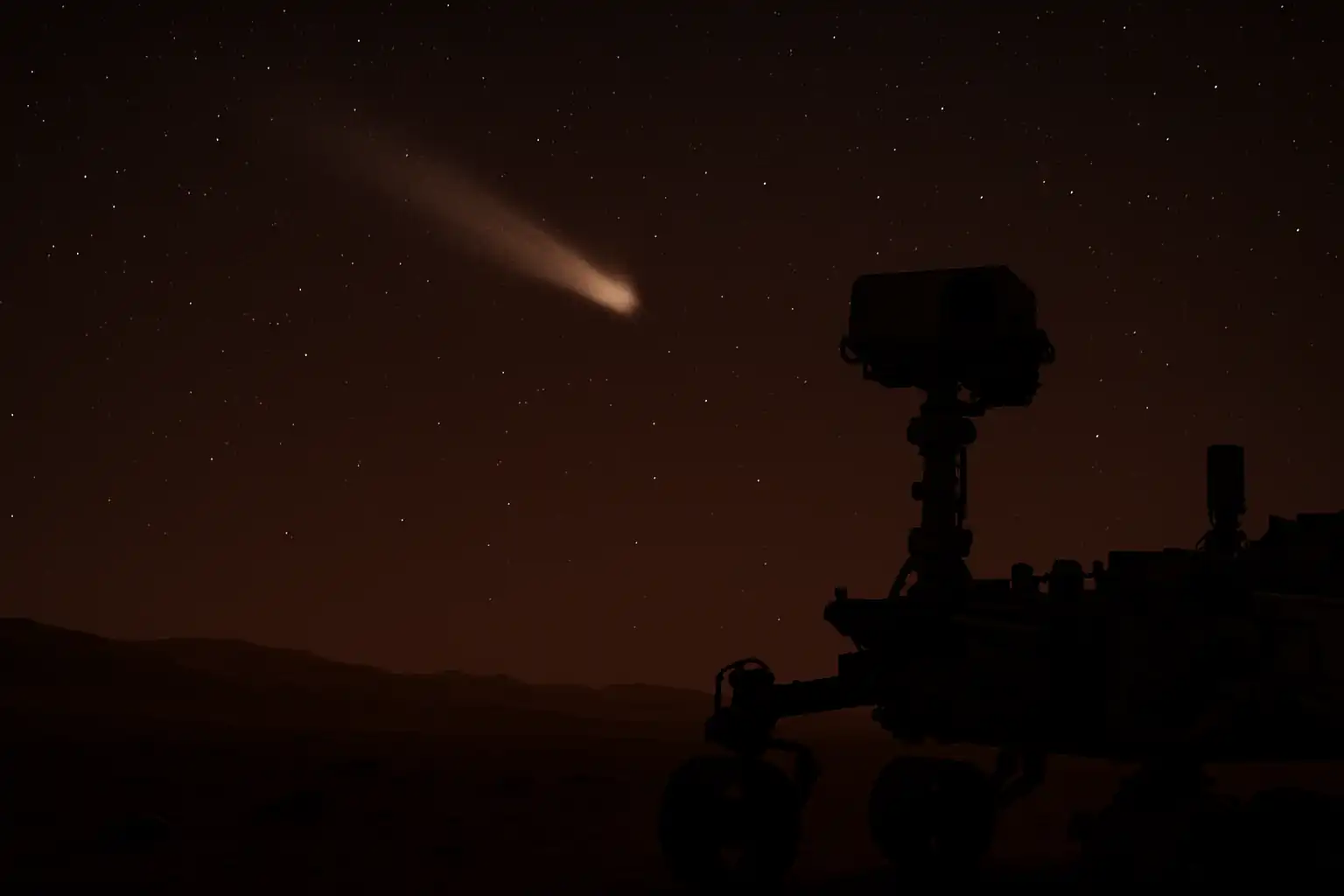
    Something wild stirs in the night sky, and it’s not just your tinfoil hat heating up. Solar physicists confirm we’ve entered the most active Solar Maximum in years. A rare cosmological gathering is underway: a swarm of comets, including the cosmic interloper 3I/ATLAS, races toward the inner Solar System. In an era of AI and existential threats, few headlines could upstage an interstellar comet’s close pass of the sun—unless, of course, you add doomsday omens and the potential for geomagnetic chaos. The CBC details how unusual things will get as 3I/ATLAS grows larger and brighter each week.

    Our Solar System, already jittery from past asteroid close calls (recently analyzed here), now finds itself in a cosmic shooting gallery. All eyes focus on the Sun. When ice and dust meet peak sunspot activity and ramped-up solar winds, scientific fireworks often follow. Israel has conquered laser warfare against drones (see the new defense frontier), but nature’s arsenal far surpasses even the most advanced human tech.

    3I/ATLAS: The Interstellar Oddball Makes Its Mark

    3I/ATLAS isn’t just another snowball with a tail. Originating from a star system far beyond the Sun, it was first detected by the ATLAS survey telescope in Chile on July 1, 2025 (CBC science coverage). It has a nucleus over five kilometers wide, and as it approaches the sun, its teardrop-shaped coma swells and bizarrely turns a bright, ghostly green as rare core chemicals sublimate in our solar heat (Live Science’s latest).

    There’s no collision risk; 3I/ATLAS will never approach closer than 270 million kilometers to Earth. However, it’s not a passive visitor. Certain signals—especially those captured by NASA’s Hubble—hint at new chemical reactions and heightened activity as 3I/ATLAS nears the Sun. This spurs speculation among experts and enthusiasts about interstellar visitors triggering solar anomalies and magnetic anomalies (background here).

    Swarms and Solar Storms: The Science Behind the Spectacle

    Comets divebombing the inner Solar System is routine for some skywatchers, yet this year is exceptional. The confluence of multiple comet tracks with Solar Maximum—when sunspot numbers and solar outbursts peak—offers both a rare research opportunity and legitimate hazards (Wikipedia’s Solar Maximum primer). Large-scale solar storms are more frequent now, and the interaction of icy bodies with the solar wind could lead to more than stunning auroras. Modern geomagnetic events—often triggered by heightened solar activity—have previously fried guidance satellites, power transformers, and even disrupted financial systems (this breakdown shows how vulnerable we are).

    Researchers and doomsday theorists alike speculate that a surge in comets signals more than scientific headlines: could these omens trigger historic world events or even deadly phenomena like the mysterious visitors from this deeper mystery dossier? Whether viewed as astrological warnings or part of natural cycles, no one disputes the power of a solar max coupled with an influx of comets.

    World Events, Omens, and the Evolution of Comet Lore

    If you think it’s superstitious to link comets to world-changing crises, history offers mixed opinions… and yet not. Since ancient times, comets have symbolized everything from the fall of empires to mysterious plagues. Today, this alleged connection lives on—a cosmic alarm bell for paradigm shifts. This tradition continues in our era; every global tremor feels like a precursor to something bigger (like this analysis of flashpoint crises). Is this merely fear wrapped in folklore, or does the data reveal a pattern we ignore?

    Geophysicists and skeptical astronomers justifiably dismiss doomsday claims. However, the combination of solar, cosmic, and human factors keeps everyone slightly on edge. Warnings about mysterious impacts and unexpected visitors align with more recent threats—AI breakthroughs, bioengineering hubs, and even doomsday devices buried deep in Russia’s enigmatic radio signal. With every comet swarm, imagination runs wild; sometimes, reality comes perilously close to meeting it.

    The Verdict: Cosmic Coincidence or the Next Great Disruption?

    As 3I/ATLAS and its icy counterparts plunge toward the Sun at the heart of a Solar Maximum, stakes range from harmless sky shows to disruptive space weather. Undoubtedly, this combination rewards astronomers and excites preparedness enthusiasts. Stay alert for geomagnetic storms, satellite failures, or even, yes, a touch of planetary existential dread. For updates on comet swarms, solar fluctuations, and every headline the cosmos throws our way, bookmark Unexplained.co and keep some candles handy. The universe may not be ending this fall, but it’s certainly putting on a show.

  • Laser Wars Over Israel: The Dawn of Directed-Energy Combat

    Laser Wars Over Israel: The Dawn of Directed-Energy Combat

    On a smoky desert night in Israeli airspace, the future arrived with a flash—no one outside the control bunker heard it. The crosshairs on an infrared camera locked onto a hostile drone while the operator prepared to fire. Not a missile, but a pulse of pure, invisible energy. In an instant, the drone’s wing vaporized in a brilliant white glow on the monitor. A second flash, blinding-hot, took out the warhead. In seconds, Israel’s “Iron Beam” system destroyed the target using a laser.

    This was not a prototype test, a simulation, or a PR stunt. These laser strikes have been confirmed in operational combat. Videos and reports flood defense channels as the world grapples with what such breakthroughs mean for air defense and global warfare (Breaking Defense’s field report).

    Directed-Energy Weapons and the Race for Next-Generation Warfare

    Directed-energy weapons (DEWs)—like the Israeli Iron Beam—blast highly focused energy at targets, obliterating or crippling drones, missiles, and artillery at light speed. The advantages are as astonishing as the technology: unlimited ammo (as long as you have electricity), pinpoint silence, no smoke trails, and lethality limited only by the available power source. Israel’s deployment marks the world’s first confirmed use of high-power lasers in war, as reported in this Newsweek rundown.

    But Israel isn’t alone. The Wikipedia summary on directed-energy weapons shows a growing arms race, with the United States, China, and Russia racing to field their systems. Chatter intensified after the Iron Beam’s silent strikes, showing that the age of Ray Bradbury shootdowns is here. Israeli military officials claim their lasers intercepted about 40 drones, primarily from Hezbollah, in the Gaza conflict alone. Analysts from rival militaries pore over every frame for insights and vulnerabilities.

    Iron Beam: Inside Israel’s Silent Air Defense Revolution

    The Iron Beam’s operational details are just as shocking as the results. Trailer-mounted, this Rafael-designed system uses a solid-state laser estimated at 100-150 kW, firing pulses that annihilate targets with heat alone (War Zone’s technical insights). What’s the opportunity cost? A single shot costs only a few dollars of electricity—compared to the tens or hundreds of thousands for a missile intercept. Built to complement the legendary Iron Dome, Iron Beam handles smaller, faster, and cheaper threats, disrupting traditional kill-chain economics.

    Operational use over Gaza and the Lebanese border has already produced battlefield game-changers. Unlike artillery or interceptor missiles, laser air defense leaves almost no signature, giving enemy drones little time to evade. Despite rivals’ saber-rattling, deployments like this influence military doctrine worldwide. This trend mirrors Russia’s use of persistent radio systems for doomsday signaling (see the full analysis here) that set new standards in strategic deterrence and deception.

    The Broader Impact: An Arms Race Without Warning Shots

    When nations deploy lasers in active combat, every military planner, prepper, and disruptor takes note. The advantages extend beyond cost—lasers are invisible, travel at light speed, and bypass most forms of electronic jamming that would spoof missile defense systems. Opponents scramble for answers in a world where drones or warheads could disintegrate mid-flight, with zero warning. This shift isn’t lost on NATO, which embarks on secret contingencies to defend against energy-based attacks and all-out escalation (as described in this NATO crisis review).

    Experts note that directed-energy breakthroughs have a symbiotic relationship with AI-driven military analytics. As war rooms rely more on platforms like Palantir Gotham’s defense analytics for response orchestration and threat assessments, the line between human decision-makers and AI weapons blurs. Machines can sense and destroy threats with near-zero human intervention. For the truly apocalyptic, this dovetails with anxiety about AI’s rapid transformation of science and warfare; see this AI shockwave report).

    What’s Next: Strategy, Countermeasures, and the Shape of Conflict

    With battlefield lasers redefining the playbook, the future brings uncertainty. Questions arise: Can adversaries develop coatings or tactics to resist directed-energy destruction? Will cheap, mass-produced drones surpass the ability to recharge and aim these weapons? How will nations adapt as the economics of offense and defense shift away from massive explosives towards energy budgets and software?

    This technological leap might reshape everything from counter-UAV doctrine at borders to civil defense during blackouts (darkness gains new meaning here). As with all paradigm-shifting tools, the real test will happen in scenarios where enemies learn and adapt. For more insights as the arms race for invisibility and instant lethality heats up, keep your Geiger counter tuned to Unexplained.co—and remember, you probably won’t see or hear the real warning shot.

  • Mirror Life: The Existential Threat That Could Rewrite Biology

    Mirror Life: The Existential Threat That Could Rewrite Biology

    In the crowded theater of existential risk, you likely know the threats of asteroid impacts, rogue AI, and aggressive superbugs. Yet, here’s a quietly horrifying threat that deserves attention—Mirror Life. In December 2024, leading scientists raised alarms about the idea that “mirror life”—hypothetical organisms with reversed molecular chirality—might not only be possible but could revolutionize biology itself (CNN analysis). Forget zombies; the end of life on Earth could resemble a bizarre, invisible invasion from biology’s evil twin.

    The story begins with a simple yet unsettling question: What if we created a living organism identical to normal life, but with one molecular “handedness” reversed? Imagine a world where every amino acid, sugar, and nucleic acid is flipped—a looking-glass evolution. At first, this seems like a laboratory curiosity (and makes for a compelling Wikipedia entry), but the stakes are enormous. Mirror organisms could evade predators, resist natural decomposition, and potentially outcompete all familiar life forms. In other words, unleash one mirror microbe, and forests, farms, animals, and humans could face extinction. Welcome to the most overlooked doomsday scenario: a complete evolutionary reboot.

    What is Chirality and Why Does It Matter for Life?

    To grasp this danger, you must understand chirality. A molecule is chiral if it cannot be superimposed on its mirror image—like your left and right hands. Every protein, sugar, and DNA strand in known life is made from just one type of “handedness” or enantiomer (chirality explained). This detail is crucial; it underpins metabolism, immunity, and all biochemistry. Life evolved in a universe with only one type of chirality, rendering all enzymes, antibodies, and digestive systems ineffective against their mirror-image counterparts.

    Researchers warn that if mirror life emerges, our immune systems—refined over billions of years against typical invaders—would fail against these new organisms (news-medical deep dive). Even viruses or phages couldn’t contain it. While this might sound abstract, advancements in synthetic biology have made the creation of mirror bacteria increasingly plausible. Labs can now synthesize mirror-image DNA, proteins, and even rudimentary cells. It’s only a matter of time—unless someone intervenes.

    The Chilling Consequences: Ecosystem Collapse and Biological Evasion

    Why does mirror life terrify researchers? Disruption. Any evolved system—whether immune, ecological, or evolutionary—depends on interaction with known biochemistry. Mirror life, with its reversed molecular structure, could bypass all defenses. A research consensus emerging in late 2024 states that mirror organisms could proliferate in the environment, immune to decomposition, bacterial predation, and common destruction. Imagine a microbe that does not rot, infect, or get consumed by anything we recognize.

    Some scientists advocate for global guidelines and new frameworks for synthetic biology—before it’s too late (Stanford Report). The emergence of “mirror bacteria” could, theoretically, dismantle entire ecosystems, wiping out baseline life as we understand it. Given synthetic biology’s parallels with AI-driven developments—known for their unexpected outcomes (see AI breakthroughs)—it’s clear why some term this the “gray goo” problem—relevant to biology, not nanotech.

    The Unprepared World: Why Prevention Is the Only Cure

    Regulatory action—or its absence—is the last barrier against this threat. However, international agreements for synthetic biology lag behind those for AI, nuclear weapons, and even asteroid defense (see this on cosmic risk management). Treaties, enforcement, and global surveillance are lacking. As researchers cautioned in Harvard’s 2024 warning, one careless or malicious actor could trigger irreversible events. Serious voices in preparation, already monitoring zombie apocalypse protocols and global extinction scenarios, are now adding “mirror life” to their list of concerns.

    Meanwhile, climate adaptation strategies and food security analyses—increasingly data-driven and sometimes leveraging platforms like Palantir’s Gotham for resilience modeling—assume an unbroken baseline of standard biology. Introducing competing biochemistry changes even the most robust disaster scenarios. Forget preparing for a blackout (as dark as it gets); imagine preparing for a biosphere that no longer functions as expected.

    A Reckoning for Science—and for Risk Communication

    If all this seems far-fetched, remember: nature has already enacted this scenario once before. Early Earth likely hosted both left- and right-handed organisms, with one eventually outcompeting the other (thank your molecular ancestors that you exist today). Now, with synthetic biology rapidly advancing, the risk of reviving a competing paradigm is no longer theoretical.

    For a world already stretched thin by AI advancements (documented here) and cosmic surprises, “mirror life” must not remain buried in laboratory shadows. It’s time to evaluate whether this is an experiment worth pursuing. For more insights into existential threats that most people overlook, keep an eye on Unexplained.co—and perhaps, just perhaps, hope for those grant review boards to say “no.”

  • Putin’s Nuclear Drills and Fuel Crisis: The New Face of Cold War Sabre-Rattling

    Putin’s Nuclear Drills and Fuel Crisis: The New Face of Cold War Sabre-Rattling

    Sirens blare, missiles roll out, and once again the world’s eyes snap to Russia as President Vladimir Putin directs a nuclear drill with over 100,000 troops. Official broadcasts showcase the Kremlin’s nuclear arsenal and its readiness for confrontation—timed perfectly with fuel shortages across the country. “All means available” is back in vogue, and memories of the Cold War’s standoffs linger in the present day (AP News report).

    However, beneath the bluster of flashy launches and bold soundbites lies a critical logistical crisis. Ukrainian drone and sabotage attacks have tightened Russian fuel supplies, trapping motorists in endless queues and increasing anxiety across the streets (The Guardian’s in-depth coverage). If you think this is mere theater, recall the last time global powers played with fire: people built fallout shelters and stockpiled canned goods (just ask blackout preppers).

    Nuclear Drills and the Resurgence of Deterrence

    This year’s Russian exercises raised the stakes, simulating retaliatory strikes and full-spectrum nuclear triad launches—land, sea, and air. The drills included ballistic and cruise missiles, keeping Western observers and NATO planners alert. Analysts note the symbolism: Russia aims for rivals and citizens to see its first- and second-strike options alive and well. For an overview of this multi-domain firepower, check out the nuclear triad’s history and doctrine.

    The choreography blends politics and military strategy. Putin’s moves counter both hypothetical Western incursions and his logistical challenges, attempting to mask domestic strains with a show of hardware. Eerie echoes appear in other Russian fallback strategies, like the “impossible-to-destroy” UVB-76 number station, discussed in this strategic breakdown—a reminder that remaining heard is just as important as displaying might.

    Fuel Shortages and the New Frontline of Hybrid Warfare

    No matter how many rockets you possess, running out of gas becomes a tactical nightmare. Russia—an energy superpower on paper—grapples with the paradox that fuel is among its most vulnerable assets. Ukrainian UAV attacks have ignited fires at refineries, disrupting Russia’s logistics and its long-term operational capabilities. Drivers now wait hours at empty pumps, while battlefield supply issues intensify (The Guardian account).

    With critical logistics under siege, the balance of power may shift—not only on the steppe but in global markets and NATO’s strategic discussions. Evolving vulnerabilities deeply influence collaborative response strategies and secret planning sessions, highlighted by tools like Palantir’s Gotham platform, which enhances defense analytics and situational awareness (see analytics in action).

    NATO’s Secretive Posture—and the Shadow Game

    As the West responds, secrecy dominates. NATO’s recent exercises involve covert communications and rigorous contingency planning. While officials maintain a poker face, military analysts indicate that significant drills—some shadowed by nuclear scenarios—are now standard. Media investigations and open-source intelligence reveal ongoing efforts to ensure the alliance can withstand surprises, from cyberattacks to fuel shortages (Sky News analysis).

    Expect more deterrence kabuki, calculated leaks, and closed-door brainstorming on both sides. These developments reflect the cautious, sometimes surreal, “end times” planning theorized in the first-72-hours crisis timeline, which is far from routine in this era of brinkmanship.

    Escalation, Blackouts, and the Pace of Unpredictability

    While Putin’s televised drills appear as chest-thumping, it’s the intertwined threats of logistical failure, electrical blackouts, supply chain chaos, and unpredictable escalation that experts closely watch. Nuclear posturing without reliable refueling resembles a tank with no treads—it can flex but not move. In this high-stress chess game, information dominance and adaptive planning are just as vital as hardware; both NATO and Russia have learned this from recent surprises, including sabotage, cyberwarfare, and even wildcards like close asteroid flybys.

    This is a world of continual “readiness,” where any blackout or shortage could signal a test, and every drill might send coded messages to rivals or a weary public. For ongoing risks—nuclear, logistical, or apocalyptic—bookmark Unexplained.co and check your generator. If you’re not prepping, you’re hoping no one else is paying attention.