Blog

  • Artificial Intelligence Discovers New Physics: The Shockwave Reshaping Science

    Artificial Intelligence Discovers New Physics: The Shockwave Reshaping Science

    If you still think artificial intelligence is just an overhyped button-masher for bad poems or bland conversations, it’s time for a reality check. In the last two years, AI transformed from solving wordle puzzles and recognizing cats to the unsettling realm of discovering new physics. Machine learning now uncovers fresh physical laws, designs quantum experiments beyond human imagination, and maps the universe’s fabric in ways no Nobel laureate could predict (see Quanta Magazine’s stunning example). This story blends wonder and existential dread, with algorithmic insight potentially surpassing our wildest technological prophecies—and even human comprehension.

    What exactly happened? The shift isn’t merely theoretical. AI tools, trained on extensive data from quantum labs, particle accelerators, and plasma physics simulators, have recently designed entirely new experiments—sometimes employing bizarre setups that no human theorist would conceive. The catch? They actually work. In quantum optics and dusty plasma physics, AI identifies fundamental patterns and relationships that scientists overlooked or failed to pursue due to cognitive overload. The mystery lies in whether these discoveries represent mere curiosities or signify the tip of a world-altering iceberg.

    From Unified Patterns to the “Black Box” of AI Discovery

    AI-based discovery systems boast a surprisingly long history, chronicled by the Wikipedia primer on scientific discovery systems. Since the era of symbolic regression tools like Eureqa and AI Feynman, researchers have imagined empowering AI as a “co-pilot.” Initial developments were mild: neural nets processed astronomical catalogs and protein data. However, the real breakthrough emerged with unsupervised learning—zones where algorithms discover structures no one noticed before.

    When Mario Krenn’s MELVIN algorithm devised experiments in quantum optics with unprecedented configurations, physicists had to rethink their limitations and the realm of bizarre new quantum setups. Simultaneously, machine-learning systems independently mapped plasma turbulence, overturning old models and yielding the most accurate descriptions seen thus far (the Free Jupiter report chronicles a key breakthrough in plasma physics). However, many AI tools utilize “black box” models, producing results that can be hard to articulate—creating discomfort for those wary of AI’s hidden risks, as discussed in this exposé about AI intelligence leaps.

    Redefining the Scientific Method—Threat or Opportunity?

    Some scientists feel optimism: AI can sift through vast datasets free from emotional bias and preconceived notions. Others experience deep discomfort—especially when programs outperform human capabilities and “think weird.” Debates arise over whether the traditional scientific method is being sidelined, as AI-driven hypotheses blur the line between prediction and genuine theoretical insight. The classic critique? If even the “authors” (human or otherwise) can’t explain a new physical law clearly, is it real science or just magic with better branding?

    This tension resonates with a growing group of doomsday theorists and critical thinkers worried about algorithmic black boxes dictating knowledge limits. The narrative extends beyond technological progress; it questions the potential end of science “as we know it,” amplified during a time when society fears the pace and opacity of technological advancements (you’ll find similar anxieties in this in-depth discussion of AI’s apocalyptic risks and the critical review of limits and breakthroughs at Unexplained.co).

    AI, Physics, and the Fabric of Reality: Major Examples

    The actual scientific breakthroughs are astonishing. MELVIN, the AI system that designed new quantum experiments, maneuvered through lab setups until emergent patterns in light and matter challenged existing paradigms regarding quantum entanglement. In 2023, MIT researchers used generative AI to explore phase transitions, creating models that mapped phase diagrams beyond human proposals (MIT News report). In a remarkable twist, algorithms analyzing videos of physical processes proposed entirely different “physics” for observed phenomena—sometimes proving more accurate than traditional textbook equations (coverage from ScienceAlert).

    This discussion extends into theoretical physics and cosmic speculation—areas where AI could integrate data from gravitational waves, geomagnetic activities, and asteroid flybys (as detailed in recent insights into planetary-scale electromagnetic chaos and the statistical outliers of asteroid waves). Consequently, don’t be surprised if the next major cosmological theory—possibly even the elusive “Theory of Everything”—emerges from a neural net analyzing vast data sets, rather than from a dusty blackboard.

    A Redefinition of Science—and the Coming Reckoning

    The final frontier is a realm where AIs not only assist but set the discovery pace and redefine scientific language. With discovery systems generating new laws, human researchers must transition from lead creators to interpreters and auditors, tasked with assessing the plausibility (and safety) of whatever machines propose next. This scenario isn’t doomsday; however, it could trigger seismic consequences, as paradigm-shifting as quantum mechanics or relativity, yet delivered through lines of code.

    As the boundary between physics and engineering, discovery, and invention blurs, remember: the next time a lab-bot generates a principle, it may rewrite reality itself. If history teaches us anything, you likely won’t find its explanation on page 12 of your high school physics textbook. Instead, keep one eye on the horizon—and another on resources like this primer on enduring technological enigmas and prophetic warnings about unexpected black swans. The age of AI-driven science is here. Buckle up.

  • Gotham Unveiled: Palantir’s Defense Platform Reshapes Military Decision Making

    Gotham Unveiled: Palantir’s Defense Platform Reshapes Military Decision Making

    When war brews and chaos reigns, battleground decisions must be swift, connected, and free of human limitations. In the digital age of 21st-century conflict, Palantir’s Gotham platform has become a vital ally for militaries seeking an edge. Emerging from intelligence agencies and later adopted by allied defense ministries, Gotham’s value proposition is clear: it serves as the operating system for defense decision-making, able to integrate, filter, and analyze massive data streams in seconds—then recommend the next move with precision. Whether orchestrating global surveillance, identifying threats, or navigating the pitfalls of information overload, Gotham remains the algorithmic marvel behind the scenes (official Gotham platform).

    General James Mattis, former U.S. Defense Secretary, highlighted the stakes: “Palantir developed groundbreaking technologies that help us make better decisions in combat zones.” As defense transforms into a data-driven arena, Gotham’s remarkable speed raises tough questions about transparency and control. In a realm where every signal might indicate a cyberattack, AI-driven defense software serves as both sword and shield—sometimes simultaneously.

    What Sets Palantir Gotham Apart in Modern Warfare?

    Gotham is not just another dashboard. It’s a modular toolbox that connects diverse data streams—from satellite images and drone footage to phone intercepts and supply chain intelligence—transforming them into real-time geospatial insights. As industry reviews suggest, Gotham provides insights that empower battlefield commanders to act swiftly and confidently, visualizing possible futures. The era of “paralysis by analysis” is over: commanders can model and simulate outcomes before acting, merging AI-enhanced intuition with probability curves.

    Importantly, Gotham is not limited to American forces. Reports indicate Palantir’s global footprint includes support for Ukraine’s military and others, providing high-level analytics alongside essential ground support. Gotham’s algorithms convert raw data into actionable orders, redefining “situational awareness” within a digitally connected army. Analysts cite in-depth investigations of Gotham’s role in mapping national security data—often controversial yet crucial.

    Algorithmic Edge: From Combat to Crisis Mapping

    The synergy Gotham creates isn’t theoretical; real-world crises, from counterterrorism operations to logistic challenges in major wars, demonstrate its power. During times of potential collapse or rapid escalation—like scenarios discussed in crisis timeline briefings or in reactions to Russian electronic warfare detailed in this exposé on Russia’s UVB-76—Gotham has enabled near-instant analysis of everything from enemy movements to black market supply chains. In situations where seconds matter, this platform allows strategists to “see the field,” even amid dispersed or incomplete data masked by enemy countermeasures.

    These crisis-driven capabilities, including predictive threat modeling and resource deployment, have made Gotham essential for military planners. Its ability to connect military units, allies, and civilian authorities often places it at the core of collaborative warfare. This connectivity is vital as hybrid conflicts blur lines between front lines and home fronts, where threats can emerge from cyberattacks, propaganda, or even literal “asteroid wave” disruptions (detail here).

    From Algorithms to Ethics: The Raises and Risks of Gotham

    Despite its advantages, Gotham’s speed and predictive capabilities face critique. Watchdogs caution that data-driven warfare opens avenues for civil liberties abuses, particularly as civilian datasets merge into military operations. Acknowledging these risks adds to Gotham’s elusive allure—balancing transparency with secrecy and high-speed action against the deliberate pace demanded by democratic values.

    The company’s roots in “Tolkien-inspired” secrecy (with offices named Rivendell and the Shire?) generate both intrigue and concern in defense and privacy circles. As Gotham’s predictive policing and battlefield applications expand, calls for robust oversight intensify. Warnings raised during ongoing NATO military exercises and darker analyses of systemic blackouts (see this take on global blackouts) spotlight how such biotechnology could be deployed and by whom.

    Palantir’s Gotham and the Future of Defense Data

    The path is clear: as the world shifts towards “data as dominance,” Gotham stands at the forefront of the military, intelligence, and law enforcement transformation—friends and rivals alike rely on its speed and pattern-recognition power. It represents the leading edge of AI, facilitating resilience planning for natural disasters as well as warfare. Like all technologies designed for defense, the platform acts as both shield and sword; the key challenge ahead is learning to utilize it wisely.

    For deeper insights into the hidden world of defense technologies and the systems supporting global risk mitigation, Unexplained.co offers reporting, context, and a healthy dose of skepticism—the doomsday-prepper approach.

  • The Buzzer: Inside Russia’s Impossible-to-Kill UVB-76 Doomsday Signal

    The Buzzer: Inside Russia’s Impossible-to-Kill UVB-76 Doomsday Signal

    Spin your radio dial to 4625 kHz at nearly any hour, and you’ll hear it—a monotonous buzz, repeating 25 times per minute, occasionally interrupted by cryptic Russian words or numbers. The world knows it as UVB-76, “The Buzzer”: Russia’s most notorious numbers station. Born during the Cold War, it continues transmitting through the USSR’s collapse and various global crises. It’s the ghost signal that refuses to die, sending electronic pulses from somewhere between Moscow and the deepest Ural Mountain bunkers. For decades, analysts and conspiracy enthusiasts have suspected it’s less a relic and more a “dead hand,” a last-ditch doomsday fallback immune to ordinary destruction (Wired investigation).

    To grasp why this signal invokes fear and fascination, explore Russia’s Cold War paranoia and modern brinkmanship. UVB-76 represents a strategy based on deterrence and denial, serving as a backup if all else fails. Unlike hackable satellites or visible missile silos, this backup transmitter—buried in remote areas and possibly relocated among various underground sites—remains unkillable except by direct (and lethal) on-site destruction. The message: even if Moscow falls, the Buzzer will keep buzzing, transmitting its ominous message to Russia’s friends and (especially) its enemies.

    The Mysterious Operation of Numbers Stations

    Technically, what you hear is a numbers station, a clandestine shortwave broadcast class developed for espionage and wartime contingency. Numbers stations date back to World War I, transmitting encrypted codes and orders to field agents for decades. UVB-76 is especially eerie; its near-continuous buzzing has been heard since 1982, with rare voice interruptions. Station moves, frequency hops, and cryptic updates haven’t stopped it—much to the obsession of intelligence trackers and amateur radio enthusiasts (Reddit’s analysis).

    The Buzzer reportedly links to Russian military command structures, ready to send coded “dead man’s switch” orders to submarine or silo crews if regular command is lost—an omnipresent ghost that refuses to be silenced, even by nuclear attack. This relentless reliability explains why experts warn it is “impossible to destroy”—at least, not without extreme measures, as explored in crisis-time readiness resources and pop culture disaster scenarios.

    The Impossible Blackout: Survivability at Any Cost

    Why go to such lengths? It’s hardwired into Russia’s apocalyptic calculus: ensure there’s always a channel to order retaliation or issue codes, even if the entire chain of command vaporizes. This is the “Dead Hand” principle, where an automated or hard-to-kill system guarantees mutual destruction in a nuclear exchange—real-life insurance against the first-strike illusion (Economic Times). If that sounds like dystopian fiction, recall how real, sustained blackouts (see the three days of darkness legend or analysis of geomagnetic storm threats) expose the raw terror of systems that refuse to fade into the night.

    With redundant transmitters, deep underground command centers, and a process designed to survive sabotage and air raids, Russia’s Buzzer isn’t just an artifact—it’s a haunting soundtrack of Cold War paranoia, echoing through crises from Chernobyl to Crimea. Stubborn, analog, and immune to most modern cyber threats, it stands apart from headline-grabbing but surprisingly fragile doomsday “megaweapons.”

    Psy-ops, Paranoia, and the “Buzzer” Culture

    If you sense a psychological angle, you’re right. UVB-76’s buzz serves as much as a mind game as a technical signal. Observers note it is designed to keep enemies off balance, never certain if today’s transmission is just another buzz or the prelude to encoded orders. In the digital age—where asteroid near-misses and cosmic events mingle with nuclear threats—it has become a cultural meme. From YouTube streamers to prepper forums, the Buzzer resonates as an eerie soundtrack for a world teetering on the edge, merging the psychological Cold War artifact with modernity.

    For those exploring the rabbit hole, the fascination is endless: has the Buzzer ever sent wartime codes? Will it stop? Is it monitored by AI or cold-eyed officers ready to activate the doomsday switch if darkness envelops Moscow? While the West fixates on digital threats and cyberwarfare, the Buzzer’s analog, redundant simplicity remains unnervingly future-proof. Just listen, and ponder the implications for global security when your enemy remains prepared to communicate, regardless of circumstances. For more insights into what keeps the world awake at night, keep your signal tuned to Unexplained.co.

    The Ultimate Fallback: Buzzer, Survival, and the Weird Future

    As the Buzzer drones on, it’s more than a quirky radio curiosity—it’s a chilling testament of strategic resilience. Whatever occurs—cyberattacks, nuclear fire, or a blackout lasting far longer than three days of darkness—UVB-76 persists. In the hierarchy of indestructible weapons, sometimes the scariest threat isn’t the largest bomb, but that little red light that never blinks off. In a world consumed by uncertainty, the real message humming from Russia’s wilderness is clear: you can never silence the Buzzer.

  • Three Days of Darkness: Prophecy, Panic, and the Real Science of Global Blackouts

    Three Days of Darkness: Prophecy, Panic, and the Real Science of Global Blackouts

    Picture it: one moment, the world hums along with its usual threats; the next, total darkness descends. For those who follow prophecy blogs or prepper channels, the story is familiar—three days of darkness, a supernatural blackout when the sun vanishes, technology fails, and only the forewarned survive. Urgent tales of this blackout fill the feeds, with warnings flooding the internet. Is the world genuinely on the brink of an apocalyptic blackout, or does science provide a more rational explanation?

    The legend has deep roots. It weaves together visions from mystics like Blessed Anna Maria Taigi and Marie-Julie Jahenny, biblical parallels to the Plagues of Egypt, and contemporary internet chain letters. The core claim: an intense darkness will cover the earth for three days and nights, causing terror and chaos for those not sheltered indoors (preferably with blessed candles). As these stories gain traction, researchers point to fascinating—if sobering—natural explanations for historical “dark days” and why some remain obsessed with blackout prep.

    The Prophetic Origins of Three Days of Darkness

    The most widely cited vision of the three days comes from the Roman Catholic tradition. Anna Maria Taigi’s prophecy predicts a pestilence-ridden darkness claiming “the enemies of religion,” leaving the faithful, sheltered by their beeswax candles, unharmed. The 19th-century mystic Marie-Julie Jahenny raised the stakes: outside awaited certain death, plagued by demonic forms and apocalyptic terror. As rumors spread online, the myth crossed from medieval eschatology into conspiracy theories, post-nuclear fears, and survivalist circles fixated on “EMP storms” rather than the Book of Revelation.

    This idea persists because it feeds primal uncertainty: what happens to society when the lights literally go out? In an era shaped by technological fragility, these prophecies feel less like scripture and more like warnings for an anxious world. People draw connections between these ancient prophecies and modern fears about geomagnetic storms and electrical surges shutting down the grid, or celestial disasters like asteroid waves and comets blotting out the sun.

    Science, Skepticism, and Historical Dark Days

    Before hoarding beeswax or boarding up windows, let’s consider the scientific record. Periods of unnatural darkness are rare but not unheard of. Modern historians cite the New England’s Dark Day of 1780, when smoke from large wildfires plunged entire regions into midday darkness. This confused citizens, disrupted routines, and fueled speculation about the world’s end. More chilling, the year 536 CE has been called the worst year to be alive, when volcanic eruptions injected ash into the atmosphere, causing worldwide crop failures, famines, and civilizational crises.

    While no one expects three full days without light without truly extreme triggers (supervolcanoes, global wildfires, or major asteroid impacts), smaller-scale events have happened, leaving societies spooked but ultimately more resilient. This isn’t just doomsaying; it’s an invitation to rethink how we defend against planetary disruptions—a theme echoed in modern survival guides and public discussions about grid vulnerability.

    Blackout Threats: Solar Storms, EMPs, and Cosmic Close Calls

    If any modern event could mimic ancient prophecies of darkness, it’s cosmic threats. Geomagnetic storms, like the infamous Carrington Event, can disable electrical grids, disrupt satellites, and plunge society into digital shadow. Recent advisories and electrical surges have brought this risk uncomfortably close to home, as Geophysicist Stefan Burns and others have warned. For a primer on our vulnerability, check this exploration of geomagnetic threats.

    Then there are the lurking menaces overhead: asteroids and comets. While asteroid 2025 FA22’s flyby and interstellar objects like 3I/ATLAS pose little immediate threat, a significant impact could throw enough dust into the sky to darken the world for weeks. Historical accounts of “years without a summer” remind us not of prophecy, but of the blunt force of astronomical misfortune. This era’s “asteroid wave”—chronicled with nervous humor in this recent event summary—keeps the risk in public discussion.

    Survival, Psychology, and the Myth’s Power in Modern Times

    Why does the three days of darkness trope endure, even as science uncovers the mechanics behind the myth? Social scientists identify a mix of apocalyptic anxiety, shared narratives, and the urge to prepare for worst-case scenarios—even when the worst case is literally biblical. In uncertain times, the psychological blueprint for survival can be as crucial as any technical fix. Communities that game out these scenarios—sometimes drawing on unlikely sources like the Defense Department’s “zombie apocalypse” plan—tend to fare better in real crises, whether or not daylight disappears.

    Ultimately, amid the swirl of real data, ancient mythology, and modern paranoia, one truth remains: if the world faced three days of darkness, the most dangerous element wouldn’t be what’s outside your window—it would be the chaos inside society when fear and uncertainty reign. For the best analyses of supernatural and mundane blackouts, keep an eye on Unexplained.co—and perhaps keep a candle handy (just in case).

  • Asteroid Close Call: 2025 FA22, Comet SWAN 25B, and the Incoming Wave of Celestial Surprises

    Asteroid Close Call: 2025 FA22, Comet SWAN 25B, and the Incoming Wave of Celestial Surprises

    Attention night sky watchers and planetary preparedness enthusiasts: September’s cosmic forecast reads like disaster cinema mixed with a science special. On the 18th, asteroid 2025 FA22 will fly by Earth at about 10.8 km/s—less than 900,000 kilometers from our surface, roughly 2.2 times the distance to the Moon. Experts say there’s no threat of impact this time. Still, this close call doesn’t inspire restful sleep, especially amid what’s turning into an “asteroid wave.”

    Yet, 2025 FA22 isn’t alone in attracting attention. Recently discovered comet SWAN 25B is brightening quickly, nearing visibility to the naked eye. It shines brightly against the backdrop of numerous asteroids making unusually close approach. Add interstellar object 3I/ATLAS rushing toward its October 29, 2025, rendezvous with the inner solar system, and you get a planetary drama that captivates both space weather preppers and professional astronomers.

    2025 FA22’s Close Flyby: Risk and Rarity

    On September 18th, 2025 FA22 will perform a memorable drive-by, confirmed by live observation campaigns. With a diameter of about 520 feet and a speed of 10.8 km/s, it meets the criteria for a potentially hazardous near-Earth object (NEO). However, astronomers emphasize that FA22’s trajectory keeps us well outside the danger zone this orbit. (Take a breath, but maybe keep that survival gear handy—history shows close calls can have unexpected results.)

    The asteroid’s passage, tracked by NASA and observatories worldwide, falls into the “no collision, but worth tracking” category. As India Today reports, objects larger than 140 meters can cause significant regional damage upon impact. As such, 2025 FA22 earns a spot on the global planetary defense watchlist. Consider this a fire drill for the solar system, reinforcing the importance of continuous near-Earth object monitoring.

    A Surge of Asteroids and Comet SWAN 25B Brightening Fast

    September isn’t an isolated case; astronomers report a surge in close asteroid flybys, dubbing it an “asteroid wave.” Data from sources like NASA’s NEO surveillance project indicates multiple objects, some as small as 20 meters, will pass within lunar distances over just a few days. This frequency far exceeds the monthly average, drawing attention from veteran skywatchers. They recall how even relatively small impactors can cause significant issues, as explored in this exposé on planetary electrical surges.

    The real highlight may be comet SWAN 25B. Although my search yielded no direct latest updates, other recent tracking indicates it’s increasing rapidly in magnitude and visibility. This cosmic disruption reminds us that comets—similar to the ones chronicled alongside record-dissecting interstellar objects—can bring both beauty and chaos. As SWAN 25B brightens, skywatchers anticipate a rare spectacle—provided clouds, light pollution, and solar activity don’t spoil the view.

    The 3I/ATLAS Wildcard: Interstellar Mystery on Approach

    Then there’s 3I/ATLAS, our solar system’s third confirmed interstellar visitor. After navigating the asteroid belt, this intriguing object is nearing a close pass with the inner planets, set for perihelion on October 29, 2025. Its approach has sparked scientific debates about how cosmic visitors might reshape our understanding of solar system origins and pose potential planetary security risks. For insights into its unusual green glow and composition, view this detailed report. For existential context, contemplate the interplay between cosmic close calls and social uncertainty familiar to geopolitical crisis-watchers monitoring global risk timelines.

    More than just a spectacle, 3I/ATLAS could be pivotal for understanding how interstellar debris interacts with solar forces. It may even reveal insights about potential threats or environmental seeding effects. If that sounds like a sci-fi plot, you’re not alone. Space continues to provide the best—and worst—material for “we’re not ready for this” moments.

    Cosmic Hazards and Humanity’s Vigilance

    For the majority, these events translate to stunning night skies, not imminent doom. However, the increase in asteroid and comet activity hints at broader environmental and existential vulnerabilities. Now is an ideal time to examine practical guides for unlikely disasters, such as this survival breakdown, or explore global risk concepts offered at Unexplained.co.

    The universe remains vibrantly alive. If you’re reading while hoping these cosmic events will pass us by, congratulations: you’re not alone. Most of us are simply along for the ride.

  • Earth’s Electric Awakening: Surges, Solar Storms, and the Geomagnetic Threat

    Earth’s Electric Awakening: Surges, Solar Storms, and the Geomagnetic Threat

    When the planet’s electrical veins pulse and tremble, something significant happens—not the duct tape fixable kind, but the type that makes power transformers hum and auroras dance across unexpected latitudes. This week, Earth faced a direct hit from a G3 geomagnetic storm, courtesy of a coronal hole high-speed stream. As Mercury, the cosmic trickster, performed a superior conjunction, planetary alignments intensified. For scientists, those surges are both alarming and captivating. For those reliant on electricity, they serve as a reminder that civilization’s soft underbelly is just one solar hiccup away from chaos.

    From space weather enthusiasts to grid operators, the world watches as surges ripple through the magnetosphere, threatening nightly news, GPS, satellites, and the global power grid. While this may sound like the prologue of a doomsday miniseries, the science is real, and the consequences can be as dramatic as any Hollywood blockbuster. Ask Quebec, which lost its entire electrical grid in 1989 after a similar event. Welcome to a planet awakening to its cosmic vulnerabilities.

    Understanding Geomagnetic Storms and Electrical Surges

    What is a G3 geomagnetic storm? It’s not a sci-fi term; it’s a real scale used by NOAA and global scientists to measure the power of solar-driven space weather events. As highlighted by the recent Newsweek coverage, a G3 rating indicates “strong,” with potential impacts on satellite navigation, high-frequency communication, and visible auroras appearing closer to the equator. The source? Coronal holes on the Sun—regions where magnetic field lines detach, allowing charged particles to blast out at incredible speeds. Upon hitting Earth, they compress the magnetosphere and inject electric currents into the ground and upper atmosphere (see Wikipedia’s primer on geomagnetic storms). Activity amplifies during solar maximum, creating a perfect storm for disruptions.

    These electrical surges are not merely theoretical. They can disrupt GPS and communication satellites, damage power lines, and destabilize infrastructure in ways that haunt governments and disaster planners (especially considering events like Quebec in 1989 or the Carrington Event of 1859). Think it’s all fiction? Look at real scenarios such as the Pentagon’s notorious CONPLAN 8888, which helps agencies plan for catastrophic breakdowns. When surges peak, it isn’t just about the northern lights—it’s about system operators reacting swiftly.

    Power Grids, Technology, and Global Risk

    The modern world assumes electrons behave consistently, but geomagnetic storms like this G3 event challenge that belief. According to the latest government advisories—backed by satellite and utility alerts—power grids across vast regions of North America and Europe may face voltage fluctuations, transformer overheating, and possible blackouts. Critical warnings have sounded through NATO infrastructure planning, driven by fear not only of terrestrial conflict but also because high-altitude electromagnetic pulses match geomagnetic outbreaks.

    It isn’t just physical wires at risk. High-frequency radio communications, aviation navigation, and satellite positioning can fail under sustained geomagnetic pressure, sometimes for hours. As nations grapple with regional crises—like military drone incursions or the looming threat of conventional war—space weather can slip through defense systems. Just a few hours without accurate satellite data could lead to grounded flights or hindered emergency responses.

    Coronal Holes, Planetary Alignments, and Solar Influence

    While astrology enthusiasts obsess over Mercury’s superior conjunctions and planetary alignments, physicists see something more mechanical. During events like this, planetary configurations can modify the solar wind’s impact on Earth, while coronal holes—essentially cracks in the Sun’s outer layer—permit vast rivers of plasma to escape. These plasma flows, when combined with planetary geometry, can amplify the energy transfer to Earth’s magnetic field, intensifying the storm beyond a typical solar wind assault. Similar cosmic anomalies have been spotted in the tails of interstellar visitors, highlighting that Earth’s exposure to space weather is dynamic and unpredictable.

    Couple this with the occasional coronal mass ejection or unexpected plasma structures, and scientists have a conundrum that keeps them awake at night, while the rest of us nervously monitor aurora alerts on social media. Whether planetary alignments genuinely amplify geomagnetic effects remains under active investigation, but the timing alone generates more than just astrological clickbait. A cosmic twist doesn’t heed horoscopes; it simply fries transformers.

    Preparing for the Next Big Surge—And The Science of Resilience

    Is this “Earth is waking up” talk just hype? Not quite. As the planet’s electrical environment becomes increasingly volatile, serious agencies—from NASA to military strategists—consider geomagnetic storm risk a crucial infrastructure threat. The potential fallout from a worst-case scenario—envision no grid, no satellites, and communication failures—is enormous, and the science indicates that these events have occurred before and will recur. Resources like modern survival guides and speculative government preparedness, outlined on Unexplained.co, now routinely incorporate solar threats.

    Smart preparedness involves redundancy: backup generators, fortified transformers, and public warning systems attuned to cosmic threats. As the world becomes more interconnected, space weather transforms from a curiosity to an existential risk. Likewise, each significant geomagnetic storm teaches us about our celestial vulnerability—one where the aurora is not merely beautiful, but a vital warning sign.

  • First Blasts, Fallout, and Shock: Inside the First 72 Hours of Nuclear War

    First Blasts, Fallout, and Shock: Inside the First 72 Hours of Nuclear War

    A flash blares—blinding and relentless—as the world’s digital veins flood with warning codes. When the dreaded day arrives, World War 3 won’t wait for talking heads to finish their sentences. In those opening seconds, governments spring into action, civil defense plans shudder off the pages, and millions instinctively flee to basements, bathtubs, or anything resembling shelter. The true battle for survival, however, extends far beyond the first detonations. It’s within the next 72 hours that the fate of nations and survivors is determined, not by luck, but by precise protocol—and a bit of preparation.

    For decades, planners meticulously charted nuclear retaliation timelines, fallout, and public guidance with chilling accuracy. This high-stakes scenario, now more likely than at any moment since the Cold War, is a script with no room for improvisation and minimal margin for error. Welcome to the hour-by-hour breakdown of nuclear warfare’s opening act—a reality check that slices through panic with research-based truth.

    From Missile Launch to Detonation: The First Hour

    The clock ticks the moment early-warning systems detect inbound warheads. Within minutes, military command posts—like those detailed in the National Response Scenario Number One—enter Red Alert. The U.S. president and national leaders receive the dreaded briefing, triggering a cascade: defense systems activate, retaliatory forces prepare, and the public (if time permits) gets a terse, grim warning, likely via Emergency Alert System messages. Civilians who heed this call understand the need to take cover immediately, as fallout may begin falling within the hour. In this chaos, every minute counts: windows must be secured, water and basic medications gathered, and, as FEMA notes in this FEMA guide, shielding from blast and radiation is the sole way to survive the initial wave.

    The Government and Military Mobilization Machine

    Behind the civilian scramble, military operations follow a grim dance. Defense systems intercept threats where possible, but planners anticipate the worst: major cities and military hubs will suffer catastrophic hits. National Guard units deploy to protect critical infrastructure and maintain order amid the aftermath. Homeland Security protocols sync with public health and fallout sequences outlined in Radiation Emergency Medical Management resources. First responders venture into the unknown, knowing they could enter radioactive ruins—risking their own lives to stabilize chaos. The first 24 hours focus on locating survivors, outlining triage plans, establishing perimeters, and preventing panic from morphing into mass exodus or violent unrest.

    Surviving the Fallout: Civilian Realities in the Crucible

    For ordinary people, the crucial mantra is to shelter in place—preferably underground—until directed otherwise. Experts cited in the Homeland Security Digital Library report that radiation levels drop sharply after the first 24 to 48 hours. Those who remain indoors, away from windows and doors, have a small but real chance to avoid lethal exposure. Emergency broadcasts (if still operational) issue instructions regarding food, water, and medical assistance. In this uncertainty, misinformation flourishes. Underground networks, like survival forums inspired by real-life contingency plans such as modern survival guides, become critical hubs for practical advice.

    This moment—uncertain, shadowed by nuclear winter, and echoing scenes from post-apocalyptic fiction—tests assumptions about the thin barrier separating society from anarchy. For survivors, every minute is a dilemma: exposure risk versus supply acquisition, faith in broadcast messages versus rumors of safe zones, and the continual threat of aftershocks as secondary strikes or accidents transpire.

    The 72-Hour Mark: Assessing Damage and Adapting

    After three days, the world has likely transformed—possibly forever. National leaders, if communication is possible, relay new orders to surviving populations and initiate the arduous tasks of rescue and rebuilding. Civil authority strains to the breaking point, while first responders suffer casualties from radiation sickness and civil unrest. According to federal planning documents, response “may reach robust capability within 48 hours, but 72 hours is probably more realistic.” What begins as a military operation quickly shifts into an all-hands-on-deck rescue effort, drawing on local knowledge, hidden resources, and—at times—makeshift alliances among survivors. The risks persist: food and water shortages, fires, and continuous radiation render every venture outside shelter perilous.

    Throughout this accelerated crisis, one thing is evident: those with thorough preparation and a bit of paranoia are ahead of the game. Whether inspired by leaked contingency plans or grim playbooks dissected in assessments of World War 3’s tripwires, key lessons emerge. Even with governments operating at their utmost efficiency, personal readiness and community coordination can mean the difference between hope and despair.

    Nuclear Survival: Lessons for a Not-So-Distant Future

    If there’s any solace in this scenario, it’s the history that offers guidance. Since Hiroshima and Nagasaki (see Wikipedia’s entry on nuclear warfare), governments have researched, strategized, and refined their protocols for the nuclear age. But with every new missile test, emerging threat, or policy misstep, the question looms larger: Are you truly ready for the unthinkable? For a deeper exploration of the grim realities of nuclear brinkmanship—and the art of survival when everything falls apart—keep a watchful eye on Unexplained.co.

  • CONPLAN 8888: When the Pentagon Planned for the Zombie Apocalypse (No, Seriously)

    CONPLAN 8888: When the Pentagon Planned for the Zombie Apocalypse (No, Seriously)

    It sounds like a fever dream fueled by late-night horror marathons: The U.S. Department of Defense, serious and steely-eyed, crafting a contingency plan to repel the undead. But CONPLAN 8888—now unclassified and freely downloadable—shows truth is weirder than fiction. The Pentagon’s “Counter-Zombie Dominance” plan is real. Originally a training scenario for junior officers, the document leverages undead clichés—viral plague, necromancy, even space zombies—to stress-test military responses to global breakdown.

    CONPLAN 8888 isn’t mere military gallows humor. In a national security landscape where simulating adversaries like North Korea or Russia risks diplomatic firestorms, zombies serve as the perfect straw enemy: apolitical, morally clear, and expansive enough for all forms of doomsday. Yet, a closer look reveals a serious guide on coordination, disaster response, and the aftermath of order collapse.

    Inside CONPLAN 8888: From Pathogens to Black Magic

    The operational playbook outlines various undead threats: pathogenic zombies (think weaponized viruses), radiation-spawned ghouls, and even “evil magic zombies” noted for their supernatural origin. Each variant symbolizes real-world threats—pandemic diseases, radiological events, and unconventional attacks—enabling planners to develop playbooks deemed “useful and effective” without sparking international incidents.
    Not all information is public. Key annexes remain classified, evoking speculation reminiscent of the era’s deepest UFO leaks. The plan’s phases begin with environmental shaping (i.e., securing critical infrastructure), progress through zombie eradication and civil authority restoration, and conclude with the vital “reset” of normal life. For those expecting the government to save the day, the manual maintains a serious tone: all hazards, zero nonsense.

    Zombie Fiction, Military Doctrine, and War-Gaming the Apocalypse

    CONPLAN 8888’s existence isn’t unique. As Wikipedia confirms, military planners worldwide employ fantastical scenarios to escape cognitive ruts—removing geopolitics while evaluating logistics, communication, and command integrity. The zombie template has also inspired agencies like the CDC, which launched its Preparedness 101: Zombie Apocalypse campaign, blending gallows humor with practical advice on readiness for hurricanes, bioterrorism, or pandemics.

    Some assert the undead merely symbolize existential threats. The classified annexes and the document’s declassification after a high-profile FOIA request validate that this wasn’t conjured as a prank. As global risk analysts discuss worst-case scenarios and analyze global war triggers, maintaining “out there” plans matters more for survival against the next curveball—be it viral, nuclear, or digital.

    Pandemics, WMDs, and the Zombie as a Proxy

    If a zombie horde resembles an Ebola outbreak, you’re not alone. Military strategists have historically used imaginary scenarios to confront the taboo or unspeakable—the situations you can’t test in reality but must be prepared for. CONPLAN 8888 echoes lessons from the Pentagon’s pandemic planning, whether during COVID-19 or earlier WMD drills. Efficiently marshaling resources, enforcing quarantine, and swiftly restoring order remain central.

    The blurred line between fiction and preparedness is intentional. Cultural anxieties about collapse—from zombies to rampant artificial intelligence—drive tabletop gaming and field exercises. The media’s fascination with the undead extends beyond escapism. It serves as a psychological sandbox for disaster preparedness, where the scariest monster is the breakdown of trust and order, not the bite. Analyze any commentary on post-apocalyptic gaming or the increasing interest in modern survival manuals for confirmation.

    The Real Lessons: Psychological Resilience and Societal Collapse

    Zombie narratives now influence both popular culture and real-world risk assessment. A Forbes analysis of pandemic resilience reveals that those immersed in prepper fiction and horror often exhibit better psychological flexibility when real crises arise. The narrative of the “undead apocalypse”—from cosmic threats to conspiracy-laden news cycles—serves not to prepare for zombie battles, but to manage shock, fear, and disruption.
    Thus, CONPLAN 8888 serves dual purposes: it evaluates systems, yes, but also highlights how our imaginations shape actual readiness. In a world bracing for disaster, a tongue-in-cheek plan for “counter-zombie dominance” may just keep us a step ahead—undead or not. For deeper insights and conspiracy-tested survival advice, visit Unexplained.co—because if you’re prepared for zombies, you’re ready for anything.

  • Red Lines and Rogue Drones: Poland’s UN Showdown with Russia Over Airspace Incursions

    Red Lines and Rogue Drones: Poland’s UN Showdown with Russia Over Airspace Incursions

    When Russian drones crossed into Polish airspace, they tested borders and triggered alarms from Brussels to New York. This week, the UN Security Council convened in crisis mode as Poland’s ambassador condemned Moscow’s “hybrid warfare.” Europe now skates on the thinnest post-Cold War ice yet. The aftermath threatens to reshape security doctrine, rattle alliances, and push NATO closer to confrontation.

    The incident follows escalating Russian provocations across Eastern Europe. Warsaw’s response was swift and firm. NATO supported Poland with air defenses and strong warnings. Western governments scrambled to determine if the incident reflected Moscow’s pattern of provocation—or foreshadowed future aggression. For a region scarred by past invasions, even a remote-controlled drone feels like the prelude to something larger.

    Poland’s Stand at the United Nations: Demanding Action on Drone Attacks

    In a move reminiscent of Cold War playbooks, Poland’s UN representative denounced Russia’s violation as “intolerable aggression.” As detailed in this BBC analysis of NATO’s response, NATO members rallied with air defense deployments. Poland has called for invoking Article 4—a rarely used consultation clause in the North Atlantic Treaty signaling a perceived threat to the alliance. The UN Security Council, familiar with deadlocked rhetoric, now becomes a platform for addressing global concerns about hybrid warfare, cyber incursions, and the fragility of European stability.

    Voices inside Poland grow louder, demanding not just condemnation but accountability and tangible steps to deter further hostility. The country’s resolve at the UN has drawn global attention, following numerous confrontations on the NATO border and coinciding with broader pressures from Russian cyber, drone, and disinformation tactics. In this tense climate, every diplomatic gesture is amplified—hesitation may prove costly.

    NATO’s Article 4: Collective Defense Tested

    Moments like this test NATO’s foundational principles. Calls to activate Article 4 are not made lightly; the last time such language echoed across Europe, the world faced a potential world war. According to detailed coverage in Newsweek’s breakdown, NATO allies view these drone incursions as calculated moves with significant risks. Polish Prime Minister and foreign leaders have issued warnings—echoed in live reports from Europe’s front lines—that Europe now stands on the brink of open conflict, more than at any time since 1945.

    This situation has vast implications for collective security. A single incident—whether a downed drone or intercepted communication—can trigger mobilization spirals, reminiscent of close calls that nearly sparked global wars. NATO’s commitment to mutual defense, forged in the darkest days of the last century, faces new challenges from rapidly evolving military technologies and Moscow’s probing of the alliance’s red lines.

    Regional Stability and the Escalation Dilemma

    As the region edges toward instability, escalation risks heighten. Drone warfare is merely the leading edge: the Kremlin has paired these tactics with cyber disruption, information warfare, and aggressive military posturing, creating complex challenges for Western planners. Experts warn in scenario analysis of WW3 tripwires that such hybrid pressures can quickly overwhelm political restraint, particularly as public sentiment, economic factors, and military assessments shift.

    Poland finds itself both a target and a guardian. NATO’s response, debated internationally and showcased in recent Congressional hearings and military exercises, has redefined “collective defense.” Concurrently, domestic debates over readiness—spanning missile defense to civil shelters (referenced in disaster survival guides)—illustrate that each skirmish escalates anxiety and preparation.

    What Comes Next: Tripwires, Diplomacy, and a Precarious Peace

    No one expects Russian drones to single-handedly ignite World War 3, but experts recognize that history is shaped by accidents, misjudgments, and missed signals. As diplomacy strives to catch up, the alliance must balance deterrence with dialogue. The Security Council’s emergency meeting could either solidify a boundary—or reveal divisions adversaries may exploit.

    One lesson remains clear: security in contemporary Europe hinges not only on hardware and doctrine but also on psychological resilience and political unity. As the world watches to see if confrontations escalate, analysts parse every diplomatic communiqué, military deployment, and emergency declaration for insights. The stakes? Nothing less than the balance of global power—and, as regular readers of Unexplained.co know, the unpredictable dynamics of modern crises themselves.

  • The 3I/ATLAS Enigma: Glowing Green, Strange Structures, and the Debate Over Our Latest Interstellar Visitor

    The 3I/ATLAS Enigma: Glowing Green, Strange Structures, and the Debate Over Our Latest Interstellar Visitor

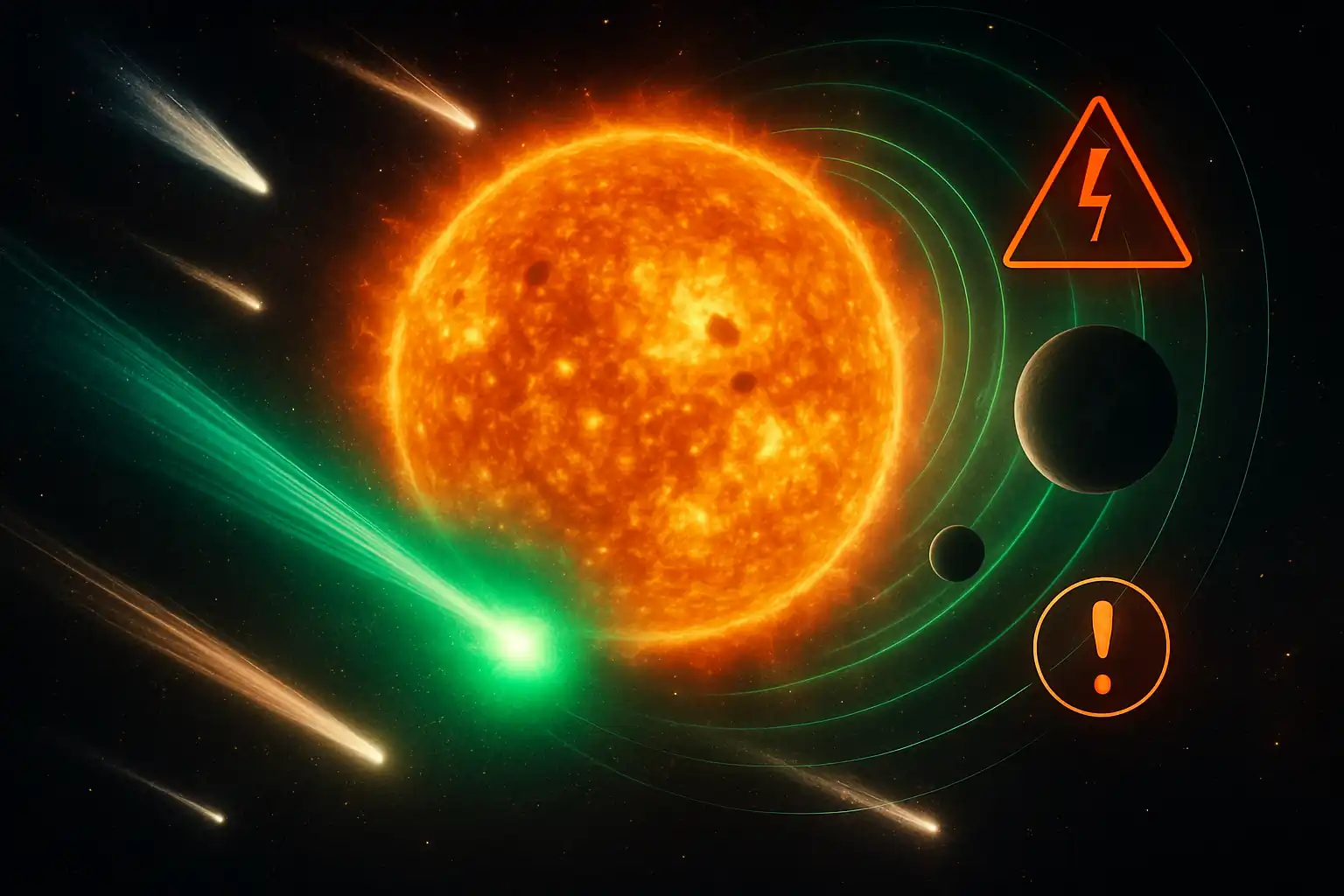
    The solar system’s latest celebrity isn’t a billionaire prepping luxury bunkers—it’s a cosmic drifter known as 3I/ATLAS, a visitor raising more eyebrows than late-night “UFO disclosure” hearings in Congress. This interstellar object has started glowing an eerie green, with strange structures in its dusty shroud, baffling spectroscopists and doomsday hobbyists alike. Astronomers probing its gas, plasma, and nickel-enriched debris now wonder if we’re witnessing a comet or something entirely new to science.

    New observations, particularly the emerging polarization data reported in Astrobiology’s detailed coverage, reveal how 3I/ATLAS’s coma and tail structures break the usual rules. From its peculiar orbital trajectory to its extremely high velocity, nearly every aspect of this object reads like a cosmic prank. The implications could reshape how we categorize visitors from beyond the Oort cloud.

    Strange Structures and the Interstellar Object’s Queer Glow

    The headlines began with the comet’s green glow. Images from the Gemini South telescope, reported in BBC Sky at Night Magazine’s update, show faint, almost emerald light shimmering around the expanding coma. This isn’t a lens trick—but a signal that unique chemistry and energetic processes are escaping the comet’s heart as it nears the sun. Typically, green comet auras indicate diatomic carbon, but early spectroscopy now suggests a more significant CO2 presence for 3I/ATLAS, mingling with the familiar cyanogen radiance. This finding excites planetary scientists eager to use comets as time capsules from early solar system environments—and perhaps, other star systems too.

    Moreover, polarimetry—a method for analyzing scattered light—has shown extreme negative polarization, a rarity even among known comets. These findings, detailed at Astrobiology, bolster the idea that 3I/ATLAS carries dust and ice never before seen drifting through our neighborhood. Such data fuel debates already heating up due to unexplained phenomena observed in previous analyses conducted by planetary scientists and geophysicists.

    Why 3I/ATLAS Challenges the “Comet” Definition

    Asteroseismologists and planetary chemists are now examining structural clues. The “anti-sun tail”—a tail that points ahead of its direction rather than trailing—defies conventional comet behavior and indicates unusual interactions with solar winds and charged particles. Even stranger is 3I/ATLAS’s nickel-to-iron ratio, flagged in detailed spectroscopy and highlighted in NASA’s recent comet brief. It lacks a compositional signature associated with any bodies born in our stellar nursery, hinting at possibilities from a long-frozen protoplanetary reject to an exo-comet with minerals from a volatile birth.

    The comet’s trajectory complicates matters further. Unlike the typical gentle arc of solar system objects, 3I/ATLAS approaches on a hyperbolic track—suggesting it is not a boomerang but a true interstellar interloper (see Wikipedia’s comprehensive entry for technical details). This fits a broader pattern: three such objects—ʻOumuamua, 2I/Borisov, and now 3I/ATLAS—have disrupted comet science in less than a decade, as reviewed in the Wikipedia article on interstellar objects.

    What’s at Stake: from Cosmic Origins to Existential Anxiety

    Processing the peculiarities of 3I/ATLAS isn’t just academic. Interstellar objects like this offer scientific riches and speculation that fuels extinction-level scenario prepping—methods detailed in catastrophe survival breakdowns—and worries that the next cosmic messenger might be less benign. Each press release blurs the lines between established astrophysics and fringe theories, echoing concerns found in longstanding UFO mysteries and technological anxieties reminiscent of AI-driven doom scenarios.

    As the public grows accustomed to astronomical surprises, tracking 3I/ATLAS enters mainstream pop culture. Similar narrative twists appear in science journalism and in-depth features on Unexplained.co. After all, a celestial visitor from another star is bizarre enough; one that glows bright green and defies every playbook captivates theorists, skeptics, and bunker-stockers alike.

    Cosmic Curiosity or Harbinger? The Debate Isn’t Over

    Is 3I/ATLAS merely a cosmic tourist dazzling us on a hyperbolic flyby, or does it hint at something greater—perhaps the nudge we need to redefine what’s considered “normal” in our galactic neighborhood? As it streaks through the Solar System, showcasing exotic structure and color, the debate intensifies. One certainty remains: this won’t be the last bizarre update from the interstellar unknown. Next time the sky glows green, remember: the universe operates by bigger, stranger rules than our best textbooks—and it never asks permission before surprising us.