Blog

  • George Knapp, Russian UFO Files, and the Congressional Bombshell You Weren’t Meant to Hear

    George Knapp, Russian UFO Files, and the Congressional Bombshell You Weren’t Meant to Hear

    Drama flooded Congress this week. The U.S. House Oversight Committee transformed into a spy thriller when UFO journalist George Knapp detailed his attempts to smuggle UAP (Unidentified Aerial Phenomena) documents from Russia. This hearing reverberates through newsrooms and conspiracy forums, highlighting the lengths journalists—and possibly governments—will go for the truth behind elusive mysteries. Knapp’s story goes beyond mere files. It encases engineered fog, Cold War subterfuge, and high-stakes secrets that keep the UFO debate alive.

    Rep. Tim Burchett (R-TN) grilled Knapp on how he obtained sensitive UAP dossiers in Russia. Knapp’s bombshell revealed his navigation of KGB suspicion and U.S. government complicity. This account ignited speculation about undisclosed truths. The hearing’s revelations quickly spread into international headlines, prominently featured in The Economic Times and in Knapp’s testimony on the House Oversight Committee site.

    Knapp’s Legacy: From Bob Lazar to Russian Dossiers

    George Knapp’s interest in taboo subjects spans decades. He famously launched Bob Lazar and Area 51 into public awareness, transforming tales of alien technology into common conversation. His biography on Wikipedia chronicles a career filled with bold investigative reporting, government obstruction, and exceptional journalistic risk rarely seen since Watergate. His work with Russian sources harkens back to when journalists operated like spies, unearthing Cold War secrets.

    In Russia, Knapp accessed a wealth of declassified and sensitive UAP records. Many document encounters as dramatic, if not more, than the famous U.S. Navy “Tic Tac” incident, discussed in Congressional hearings and covered extensively in resources like this investigative report. Smuggling those documents highlights the risks of international reporting and the vast scope of the UAP mystery.

    Global Fallout: Russia, the US, and the UFO Secrecy Machine

    The American deep state’s history of UFO stonewalling is well-known, but Russian documents challenge this narrative. Knapp revealed these papers detail “craft” observed by Russian and Soviet forces, often coinciding with major political crises or nuclear near-misses. This is critical for students of nuclear brinkmanship and current WW3 warnings. Knapp’s testimony, along with coverage from The Economic Times, suggests both nations may have witnessed the same unexplainable phenomena but responded in ways that increase denial and escalation risks.

    If true, Knapp’s revelations could alter the narrative of near-global catastrophes. Previous reports on Russian aerial incidents and military UAP encounters illustrate the delicate balance between surprise and disaster, particularly when “unknowns” intertwine with nuclear concerns.

    What’s In the Documents—and What Do They Prove?

    Knapp claims these smuggled records document repeated radar contacts, visual sightings from Soviet pilots, and reports so strange they could make the X-Files writers blush. Descriptions feature unexplained maneuverability, electronic interference, and crafts zipping through airspace, adding credence to testimonies from both the U.S. and Russia. Some documents recount UAPs allegedly tampering with nuclear missile controls, a scenario Knapp emphasized (think: doomsday on autopilot), further amplified by extensive media coverage.

    Given rising international tensions, these files pose urgent questions—are competing superpowers confronting the same mysterious threat? Or is this just another instance of “the enemy possesses secret weapons” brinkmanship? For those who analyze patterns and high-level game theory, this issue aligns with AI arms race anxieties and technological shifts that threaten to disrupt power dynamics overnight.

    Document Drops and the Global UFO Disclosure Movement

    This testimony not only energizes Oversight skeptics but also strengthens a growing global movement advocating for widespread UFO disclosure. With American, Russian, and NATO incidents emerging rapidly, many now argue that disclosure is unavoidable. For a hyper-connected generation, every declassified page tests faith in official narratives and strikes against the secrecy apparatus tracked by analysts on Unexplained.co. As governments weigh the risks and benefits of revelation, the end of the UFO file era appears less like closure and more like diplomatic progress in a struggle for knowledge.

  • The Hidden Tripwires: How World War 3 Starts Between the USA and Russia

    The Hidden Tripwires: How World War 3 Starts Between the USA and Russia

    It starts not with mushroom clouds but with a near miss: a radar blip, a jet straying off course, a hacked satellite, or drones in forbidden zones. Forget Hollywood’s portrayal—if World War 3 ignites between the United States and Russia, it will result from ambiguity, miscalculation, or cyber sabotage. Meanwhile, leaders frantically search for the off switch as the doomsday clock ticks down. Humanity’s most apocalyptic game of chicken unfolds now, and we’re all, unwillingly, in the splash zone.

    Global conflict planners recognize that the true danger isn’t outright invasion. Instead, it lies in the unstable mix of military tripwires, automated responses, and muddled command chains. As Wikipedia’s World War III entry indicates, experts fear escalation that spirals from crisis—similar to the 1962 Cuban Missile Crisis, but now with hypersonics and AI-driven alerts. Recent near misses range from Baltic airspace incidents to AI cyberwarfare (for an alarming breakdown, see this AI scenario breakdown). Conflicts do not ignite from grand plans, but from sides unwilling to appear weak—or lose control over the digital dice.

    Tripwires and Escalation: Anatomy of a Global Crisis

    If war starts, tripwires bear the blame. Minor incidents—confused radar returns, stray missiles, tense naval encounters in the Black Sea or Baltic—become tests of resolve. As detailed in a ZeroHedge analysis of geopolitical flashpoints, crises in places like Ukraine, Syria, or the Arctic trigger alarms buried deep in military manuals. When everything from nuclear bombers to cyber defense grids is on high alert, the boundary between bluff and blunder diminishes to mere milliseconds. The unnerving truth is that mutual suspicion, digital fog, and human error turn tripwire escalation into an inevitable reality.

    Consider the recent drone escalation over Polish skies or NATO’s new wave of border and nuclear readiness drills. Each “show of force” acts as both a warning and a risk—yet another roll of loaded dice.

    Mutually Assured Destruction and the Speed of Modern Conflict

    In US-Russia tension, the old doctrine—”mutually assured destruction”—still keeps missiles in silos. But as analysts at MIRA Safety warn, technological advances mean response times are now measured in minutes rather than hours. The chances of a nuclear false alarm or automated retaliation increase as military AI, early-warning systems, and “dead hand” infrastructure evolve. The risk: chaos triggered by a blunder, not a plan. The Cold War nearly spiraled into catastrophe during the Cuban Missile Crisis and Able Archer 83, but back then, a person had to push a button. Now, escalation could surge ahead of human intervention.

    This urgency explains why civil defense guides like this modern survival analysis still attract attention—and why prepping for war isn’t just for conspiracy thinkers anymore.

    First Moves: Where and How Nuclear War Could Erupt

    The dreaded “first move” may not mean a nuclear missile from Moscow or a carrier group nearby. Instead, we could witness a shadow war: cyberattacks crippling power grids, communication blackouts spanning continents, or a proxy conflict spiraling uncontrollably in the Black Sea, Eastern Europe, or the Middle East. This is what future scenario planners and mainstream analysts consistently highlight. If either side doubts the other’s restraint, escalation to nuclear war could occur rapidly—no one waits to be hit first.

    Recent speculative reports explore these scenarios, from exposés on AI escalation in wartime decision-making to automation’s effect on military flashpoints. Any of these paths could mean, quite literally, “game over.”

    Lessons from the Brink: Is There a Way to Step Back?

    History suggests we shouldn’t depend on it—but we mustn’t dismiss it either. The Cuban Missile Crisis concluded with de-escalation, and both Washington and Moscow maintain hotlines. The hope remains that, despite digital fogs and hypersonic fears, someone will blink before the world ignites. This possibility unfolds in current treaty debates, ongoing diplomatic efforts, and even science-centric optimism about global cooperation. Yet, at the bottom of the world’s nuclear barrel lies a persistent risk: smaller conflicts, technological shocks, or a rogue actor igniting a fuse under thousands of warheads while the public clutches radios and prepares in the shadows.

    For the latest in scenario analysis, survival strategies, and insights into the technological and political forces steering us toward—or hopefully away from—global catastrophe, keep a close watch on Unexplained.co. After all, it might not begin with an audible bang—until it’s far too late.

  • Prime Video’s Fallout Season 2 Teaser Promises More Apocalypse, More Intrigue

    Prime Video’s Fallout Season 2 Teaser Promises More Apocalypse, More Intrigue

    Amazon Prime’s Fallout adaptation returns to electrify our screens. The Season Two teaser trailer promises a thrilling nuclear apocalypse. New episodes arrive December 17, 2025, plunging viewers back into the despair—and dark humor—of the Wasteland. As Prime Video enjoys a surge in post-apocalyptic content, Fallout aims to bridge cult gaming nostalgia with premium television, ensuring no vault dweller catches a breath.

    Season Two thrusts Lucy, Cooper the Ghoul, and Maximus into the dazzling, irradiated chaos of New Vegas. This nod excites longtime gamers while adding a fresh layer of disorder. It’s clear from the first-look preview and the official Amazon press release that the creative team is more than producing television—they are constructing a radioactive world.

    From Vaults to Vegas: Fallout Season Two’s Fallout Universe Expansion

    After the critical and commercial success of Season One—celebrated in mainstream media and analyzed in genre outlets—the stakes for Fallout rise even higher. Season Two, confirmed by Wikipedia’s entry, shows Lucy departing Vault 33’s distorted security for New Vegas. Lore and world-building dominate—the series dives into the fallout of the Vault-Tec corporation and the fracturing Brotherhood of Steel hierarchy. It explores the ethics of mutants and scavengers. Amidst the pandemic-fueled streaming boom, Fallout stands out, transforming existential dread into gripping entertainment, contrasting sharply with the retrofuturism of its source material.

    This style of adaptation transcends fan service. It engages in cross-medium world-building, akin to accounts of societal breakdown and wartime scenario simulations. As each new settlement or nuclear landscape appears, Fallout prompts questions about society’s collapse overnight—a theme that feels all too relevant today.

    Characters, Conspiracies, and Moral Fallout

    Walton Goggins, Ella Purnell, and Aaron Moten return, joined by new characters, including a terrifying Deathclaw, if the trailer holds true. However, the series’ bite extends beyond monsters to fractured morality and psychological horror influenced by vault life. Hidden within the spectacle are themes of control, secrecy, and survivalism, echoing contemporary unease reflected in Congressional UFO hearings and existential risk debates.

    The series challenges audiences, probing who profits from fear and how trust erodes communities. As Lucy’s storylines intertwine with Vault-Tec secrets and the shadowy Brotherhood, viewers confront uncomfortable questions: How far would you go to survive? What if your greatest enemy is the system you once trusted?

    Why Fallout’s Wasteland Matters Now

    Fallout arrives as societal instability, technological anxiety, and doomsday prepping dominate discussions. The moral “fallout” resonates in our world, with headlines reflecting themes of nuclear drills and global unrest, as seen in super-eruption preparedness and AI endgame speculation. In an age defined by doomscrolling and binge-watching, Fallout cuts through the fog, making apocalypse philosophical—urging the audience to fathom not just survival but the essence of rebuilding or justifying civilization.

    Critical response to the series, highlighted in industry analyses and overwhelmingly positive reviews, showcases its cultural relevance. Fallout’s ambition is radioactive—it expands genre storytelling, using spectacle to explore real-world themes of power, secrecy, and the cost of hope.

    Streaming Science Fiction’s New Golden Age

    In a streaming market crowded with low-cost dystopias and trivial fantasy, Fallout signals a blast. Its world-building matches that of prestige science fiction, while its sharp satire and apocalyptic scale ground it in contemporary anxieties. By merging fictional war fallout with the emotional and ethical dilemmas of our time—whether it’s the scientific breakthroughs that challenge our worldviews or survival issues gripping even the best-prepared—Prime Video’s Fallout represents more than a second season. It’s a rallying cry for the genre, reminding us that, nuclear winter aside, humans will always find a way to keep watching.

    For continuous updates, breakdowns, and wasteland-level speculation, visit Unexplained.co. In the Fallout universe—and our own—the end is never genuinely over; it merely changes channels.

  • Why Silicon Valley’s Tech Kings Won’t Let Their Own Kids Near a Screen

    Why Silicon Valley’s Tech Kings Won’t Let Their Own Kids Near a Screen

    Imagine Silicon Valley’s glossy world: think tankers and billionaires amassing fortunes with each gadget launch, their names on packaging in schools nationwide. Now picture these moguls—Google, Apple, Intel, HP—quietly banning those blinking gadgets from their children’s bedrooms. In the rush to digitize American education, the “tech bros” seem bent on retreating to the analog world. Is this hypocrisy or a warning label on the digital revolution?

    Thanks to initiatives like Project RED and relentless lobbying by tech giants, devices fill classrooms as once-dusty textbooks did. The premise is appealing: one device per child, turning every student into a potential power user. Yet, as silicon floods American schools, alarm bells ring louder—especially from those who understand the tech best. Research now links excessive screen time in children to various mental and physical harms, a warning Silicon Valley households seem to heed more than anyone else.

    Project RED, One-to-One, and the Digital Classroom Experiment

    The push for more tech in schools isn’t organic; it’s crafted in boardrooms by “digital solutions” consultants. Project RED argued for a “one-to-one” policy where every student gets a school-issued device, backed by millions in lobbying from tech manufacturers. The results? Beyond manufacturing booms, the impact in classrooms remains murky. Archived discussions on Edutopia and forums like this debate among educators show teachers increasingly viewing the program as a double-edged sword—offering digital handouts and instant research but also opening Pandora’s box for distraction and dependency.

    Meanwhile, the guidelines for schools reveal unprecedented device management headaches, maintenance costs, and rising digital fatigue. America’s shift to classrooms filled with screens may be irreversible, yet it is not universally embraced. Unsurprisingly, as public institutions strengthen screen policies, affluent private schools are moving in the opposite direction—eliminating devices altogether, supported by findings in screen time research.

    The Silicon Valley Screen Time Clampdown

    Look past the PR, and Silicon Valley’s tech titans reveal curious behaviors—sometimes almost comical. Whether it’s Steve Jobs, who famously imposed strict device limits on his children, or a new generation of engineers enrolling their kids in screenless Waldorf schools, leaders in tech seem to sense something unsettling about their own products. This elite “do as I say, not as I build” mentality finds echo in cultural commentary discussing worst-case digital addiction risks and societal impacts.

    Certainly, there exists cold business logic: keep the general public glued to their devices for profit while cultivating an off-screen upper class for one’s own children. Conversations about socioeconomic divides highlight this trend, showing wealthier parents heavily investing in screen-free activities, as noted in screen time demographics. Lower-income families, pressed for safe alternatives or affordable childcare, often have no choice but to surrender the device—a two-tier world of digital consumption and control.

    Mental Health, Screen Fatigue, and Education’s Risky Bet

    The science is clear: the correlation between screen time and rising rates of anxiety, depression, and sleep impairment is striking. According to the Wikipedia summary, blue light disrupts melatonin, undermines sleep, and diminishes younger brains’ ability to focus or regulate emotions. In “screen-first” learning districts, these pressures intensify, leading to increased academic burnout and cognitive overstimulation—an effect explored in recent AI and education deep dives and warnings about the cost of digital overreach.

    While advocates tout the efficiencies of digital handouts, many teachers and parents report rampant cheating, chronic distraction, and decaying interpersonal skills infiltrating learning’s very foundations. This “revolution” now appears less like progress and more like a high-stakes gamble. As studies of preparedness culture and social stressors suggest, such major shifts rarely come without hidden costs—and those left holding the bill are the students themselves.

    Socioeconomic Inequality and a Future Offline

    Ironically, it’s the wealthy who choose to opt-out. The “screenless” movement thrives among those who afford nannies, tutors, and enriching extracurriculars—a modern manifestation of old prep-school advantages, as explored in broader disaster preparedness guides. Meanwhile, public schools, lured by promises of digital parity, funnel children into the arms of data-harvesting giants. Irony abounds: those shaping the tech flee from its reach, granting their children a childhood less tethered—and possibly more resilient—than the digital reality everyone else inherits.

    For those interested in the gap between elite policy and everyday life, Unexplained.co provides ongoing coverage of digital-age inequality, societal stress fractures, and the ever-evolving landscape between what we’re sold and what we’re spared. Screens might dominate the classroom, but as the Valley’s leaders seem to grasp, the future worth building may be the one with the least flicker.

  • NASA’s World-Changing Announcement: New Frontiers and Unanswered Mysteries

    NASA’s World-Changing Announcement: New Frontiers and Unanswered Mysteries

    When NASA announces a “stunning announcement,” prepper radio enthusiasts like me reach for the tinfoil, while mainstream audiences hope for Martians, warp drives, or at least another reason to storm Area 51. However, NASA rarely disappoints. From groundbreaking discoveries on Mars to ambitious lunar missions, the United States’ leader in space exploration knows how to keep both the scientific community and doomsday crowds on edge—particularly with cosmic stakes involved.

    The official 2024 press releases reveal that NASA’s latest bombshell arrived amid a whirlwind of activity: unveiling new Artemis missions, welcoming Thailand into the Artemis Accords, and teasing the public with details from Perseverance’s Mars samples. Is that not enough? NASA also announced a partnership to stream its mission globally, ensuring even your grandmother’s cat can witness our countdown to lunar return on Netflix. The momentum is relentless, and the mission transcends any single flag on the Moon.

    Perseverance, Artemis, and the Next Era of Deep Space Discovery

    In a world jaded by nonstop news cycles, NASA’s approach stands out: science serves both spectacle and substance. The Perseverance Rover probes Mars, expanding on the legacy of rovers like Curiosity and Sojourner beyond human limits. NASA’s latest sample analyses aim to determine whether Mars ever hosted life—or if humanity is doomed to be the most paranoid beings in the cosmos. Their latest findings already fuel speculation that mainstream agencies may soon confront questions about habitability and ancient Martian environments.

    This “stunning announcement” aligns with Artemis—a lunar program set to make the Apollo era seem quaint. NASA’s commitment, detailed in its Wikipedia entry, aims to return humanity to the Moon, establish a sustainable presence, and use the lunar surface as a launchpad for Mars and beyond. Today’s international collaboration is commonplace, with nations like Thailand joining in—a testament to the growing consensus that the Moon and Mars belong to all of humanity, not just the cold warriors of the past century.

    Earth, Space, and the Race for Cosmic Insight

    Nasa isn’t limited to rockets and robots. The agency’s science division generates data far more valuable than trending cryptocurrency. With tools like the James Webb Space Telescope, the Earth Observing System, and asteroid defense collaborations, NASA tunes the planet’s “early warning system” against solar threats and cosmic incursions—linking directly to global risk factors tracked in modern disaster prep analysis and worst-case scenario speculation, such as this take on AI and existential crises.

    Civilian applications—such as climate change data, disaster preparedness, and deep-sea exploration—align with a burgeoning open-data ethos. Whether it’s securing asteroid samples or reigniting discussions about a Venus probe, NASA’s work intersects with all scenarios where science fiction ominously merges with reality. This interdisciplinary approach resonates through fringe investigations from UFO hearings and government disclosures to breakdowns of cosmic mysteries.

    International Competition and the Expanding Space Race

    If you think the Space Race concluded in 1969, think again. Today, it’s a global arms—and scientific—competition again, with China, India, the European Union, and private sectors closing in on NASA. The Artemis Accords extend beyond diplomacy; they test who determines the new rules for exploration, mining, and life beyond Earth. As detailed in recent preparations analysis and echoed by reports from joint military drills and ambitious lunar construction plans, the divide between cooperation and competition in orbit remains razor-thin.

    NASA isn’t afraid to make a spectacle; its recent Netflix streaming partnership signifies a shift toward mass engagement. Expect the next space walk to trend on TikTok before your morning coffee brews.

    The Unknown: Truths Waiting in the Cosmic Dark

    Despite all the headlines, NASA’s “stunning announcement” ultimately emphasizes a simple fact: we still lack knowledge about the cosmos. From the specter of international conflict escalation to a continuing fascination with UFO phenomena, our quest for knowledge reveals layers of mystery. Whether regarding life on Mars, a threatening asteroid, or crucial climate crisis data, NASA remains at the heart of the world’s most gripping true-life science thriller.

    For the bravest, most skeptical, and best-prepared, NASA’s mission translates into watching the skies, analyzing data, and recognizing that significant discoveries may lie beyond our atmosphere. Missed the big reveal? The countdown never stops. Keep your channels open and check Unexplained.co for breaking news that ripples from NASA’s cosmic pebble drops. Next stop? The final frontier—until we discover another one.

  • NATO Shuts Boundaries, Airspace, and Goes Nuclear as WW3 Fears Surge

    NATO Shuts Boundaries, Airspace, and Goes Nuclear as WW3 Fears Surge

    If you thought the world’s slide toward war was merely a torrent of provocative headlines and ominous chatter, think again. This week’s NATO maneuvers—border lockdowns, airspace denial, nuclear exercises, and troop deployments—signal a serious shift. While the U.S. faces chaos, NATO is in high gear, sealing itself in and daring others to test its defenses.

    The situation intensified as evidenced by several reports of significant NATO troop deployments near the Russian border and confirmed by analysts predicting an arms surge to avoid direct conflict. In tandem, NATO’s communications confirm strict airspace controls and unprecedented nuclear exercises. This is not a drill—unless it involves tanks and bombers mobilizing toward Europe’s borders.

    Border Closures and Airspace Lockdowns: The New Normal

    NATO nations have shifted from posturing to action, freezing borders and closing large airspace areas. This escalation follows real incidents, like the crisis when Russian drones violated Polish airspace. As member states prepare for aerial incursions or cyberattacks, coordination is at a fever pitch—akin to the Cold War but with more advanced technology. In the digital age, drone swarms and coordinated electronic warfare elevate border control from mere walls to real-time threat detection, as highlighted in the latest overview on AI-driven escalation risks.

    NATO Nuclear Exercise: Flexing Deterrence in Real Time

    Amid these lockdowns, NATO has initiated substantial nuclear drills—a message to all parties involved. According to foundational treaty documents, the alliance’s strategy hinges on collective defense. By activating maneuvers simulating atomic retaliation, NATO reminds adversaries that crossing this line could invoke Article 5. These displays coincide with increasing troop numbers and forward deployments—transforming Europe into a tripwire force and echoing earlier warnings from security testimonies and civil defense playbooks.

    Escalation, Intelligence, and Domestic Chaos: A Dangerous Feedback Loop

    This surge in readiness does not occur in a vacuum. U.S. disorder—from political deadlock to cyberattacks—creates concerns about decision-making paralysis as NATO seeks unity. The risk of miscalculation or “gray zone” provocations looms, as shown in detailed breakdowns of recent U.S. military preparations and readiness statuses. As the alliance locks down, routine drills risk being overshadowed by the potential for a single mistake or misinformation to escalate tensions from shadow-boxing to an actual conflict.

    Historical Context and the Edge of Article 5

    It’s not the first time NATO has demonstrated strength in the face of threats, but the current landscape features numerous state and non-state actors. Article 5—mutual defense—remains a crucial deterrent, as codified in NATO’s foundational documents. Some strategists warn that an accident, like a drone crash or deliberate act, could trigger this “all-for-one” clause. A mood of impending conflict exists, evident not only in journalistic analysis but also in the algorithm-driven future warnings featured in speculative risk discussions and Unexplained.co, which monitor every tremor along civilization’s fault lines. For now, the world watches, hoping nuclear drills remain confined to practice, not prophecy.

  • Kamikaze Drones Over Poland: Has Russia Attacked NATO?

    Kamikaze Drones Over Poland: Has Russia Attacked NATO?

    History doesn’t knock politely—it kicks the door off its hinges. On a tense September night, Russian kamikaze drones ripped through Polish airspace. Air-raid sirens wailed, F-16s roared skyward, and major airports darkened. For Poland and NATO, this was less a breach than a loud alarm: the risk of direct conflict between Russia and the West had arrived, live-streamed for the world—and for anxious planners from Brussels to Washington.

    The fog of war always brings propaganda (and panic), but reliable outlets like the BBC’s on-the-ground report confirmed key details: Russian drones crossed into Poland with impunity. Polish officials documented at least 19 drone incursions, some deep enough to shutter four airports, including Warsaw’s busy Chopin International. NATO jets scrambled, air defense alerts lit up phones, and—the first time in this crisis—the question wasn’t “if Russia would test NATO” but rather how far Moscow would push before the alliance retaliated.

    Kamikaze Drones and Poland: The Unprecedented NATO Response

    Drone warfare isn’t new, but its escalation over NATO territory is unprecedented. According to CNN’s global security coverage, NATO deemed this violation “absolutely reckless” and reported that allied fighters shot down several intruders. Poland’s National Security Bureau acted quickly, shutting down airports and mobilizing defenses, supported by The New York Times’s detailed play-by-play. Prime Minister Donald Tusk called the event a clear test of the West, not an isolated incident. NATO’s military machine couldn’t afford missteps: a single miscalculation could push the world’s largest nuclear alliance toward a dangerous escalation.

    The aftershock reverberated from military think tanks to grassroots prepping culture, echoing earlier fears over existential threats discussed in this modern guide to societal survival and an analysis of AI-driven war anxiety. As sophisticated attack drones become the proxies for state aggression, the risk of errors—especially with missiles and aircraft overhead—makes history feel precariously fragile.

    Did Russia Trigger Article 5? Understanding NATO’s War Protocols

    As panic spreads and missile maps glow online, a key question arises: Did Russia trigger Article 5, the “all for one” mutual defense clause? Not yet. Instead, NATO invoked Article 4—a diplomatic fire alarm for urgent consultations when a member feels threatened. As summarized on Wikipedia’s entry on the founding treaty, Article 4 falls short of war, but signals serious concern. While Poland demanded solidarity and strengthened military coordination, officials stressed that no shots were fired solely over Polish soil, which would automatically enforce collective retaliation. Yet the line between authority and aggression grows increasingly blurred.

    For context, compare this incident to previous crises where NATO brushed against the edge, including intelligence briefings covered in this Ukraine war scenario analysis and the lockdowns reported in surveillance of U.S. war preparations. Today’s cross-border drone warfare resembles the much-feared “gray zone”—active conflict short of total war, yet always just a spark away.

    Escalation Risks: Will Europe Be Dragged into Direct War?

    Europe stands closer to crisis than it has in decades. Warsaw’s swift shutdown of its main hubs, alongside NATO aircraft scrambling, underscores the new normal. Russia’s campaign of drone harassment has advanced from the uncertain boundaries of Eastern Ukraine into the clear, treaty-protected territory of NATO itself. This has triggered urgent warnings from defense ministers and strategists worldwide: if Moscow persists, responses could escalate into a shooting war—one that no think tank or AI prediction model can clearly forecast, as explored in this forecast of near-future conflict.

    Public discourse now overflows with comparisons to Cold War near-misses, tension leaks, and nuclear accidents—fodder for both analysts and conspiracy theorists alike following Unexplained.co for updates on every tremor along the world’s faultlines. The earlier certainties of red lines, procedural responses, and mutually assured destruction erode beneath the buzzing of long-range drones—and that noise grows louder by the day.

    The Future: Red Lines, Realpolitik, and the Point of No Return

    As the news cycle spins, Europe’s capitals focus on the basics: readiness, intelligence sharing, and constant negotiation. This new era blends kinetic threats with soft-power tactics—cyberattacks, drone swarms, and media manipulation—forcing world leaders to interpret intention from accident. The lessons of the last world war, previously confined to textbooks or cosmic-scale threat reporting, now appear as a guide for navigating an age when history unfolds in real time via a new generation of unmanned weapons.

    NATO’s immediate challenge? Preventing a single miscalculation from becoming a world-altering catastrophe. The concern isn’t just how the West will respond, but whether the foundations of civilization—diplomacy, deterrence, and alliances—can hold under unprecedented threats. For those watching closely, this story transcends drones or jets; it embodies the future of collective defense. Stay alert, stay prepared, and for in-depth analysis on every escalation, visit Unexplained.co.

  • Seconds from Apocalypse: UFOs, Missiles, and the Congressional Disclosure Shockwave

    Seconds from Apocalypse: UFOs, Missiles, and the Congressional Disclosure Shockwave

    Imagine this: nuclear missiles ready to launch, military officers in panic, and an unidentified flying object pulling the strings. This scenario, once dismissed as Hollywood fantasy, now dominates headlines during a high-stakes Congressional hearing. In July, the U.S. House Oversight Task Force on the Declassification of Federal Secrets held jaw-dropping testimony about Unidentified Anomalous Phenomena (UAP)—previously known as “UFOs.” Four witnesses captivated lawmakers, but veteran journalist George Knapp delivered the shocking revelation. He claimed that not only is the truth out there, but it almost ended the world in October 1982.

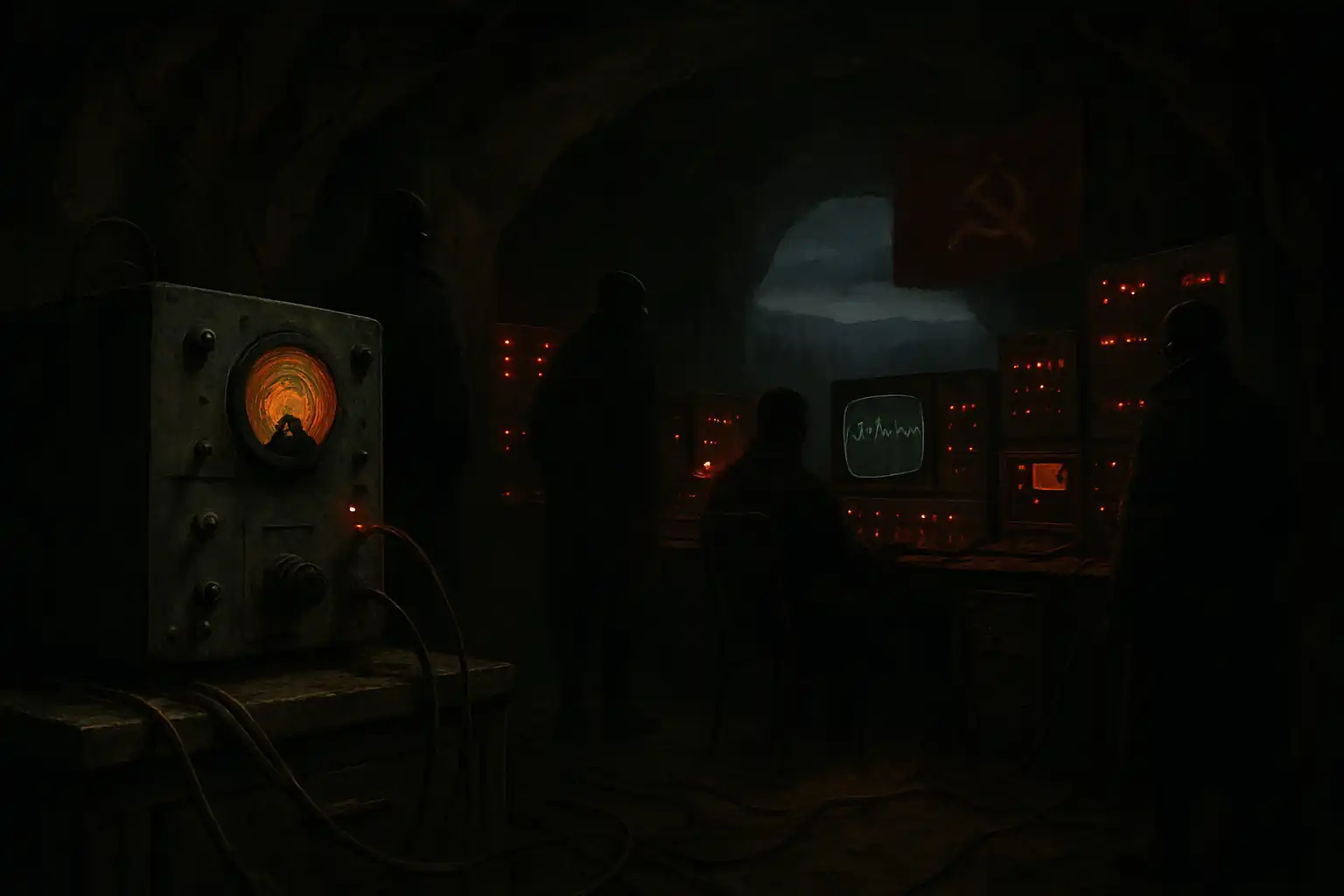
    Knapp described a dramatic account involving UFOs appearing on radar above a Russian ICBM base. He stated, “the launch control codes for the ICBMs lit up. Something entered the correct codes. The missiles were fired up and ready to launch, and they could not shut it down. The Russian officers were panicking. The UFOs disappeared. The launch control system goes back to normal.” Seconds before a potential World War III, Knapp asserted, the world was saved by the sudden disappearance of these UAPs. This incident is documented in mainstream news sources like the BBC’s congressional hearing coverage and in direct witness files, including Knapp’s written testimony to Congress.

    Nuclear Close Calls: A Grim History and New Intrusions

    Nuclear close calls don’t need more drama, as outlined on Wikipedia’s summary of near-apocalyptic blunders. History is filled with errors, birds triggering alarms, and misunderstood drills, all nearly igniting global catastrophe. This latest account introduces a horrifying new variable: “outside” interference. Public records have linked UAP to the arming of ICBMs, an alarming escalation surpassing even Cold War miscalculations.

    The implications resonate through America’s doomsday culture and preparedness discussions. Recent analysis of U.S. military prepping, detailed in analysis of U.S. military prepping, shows how any new X-factor can shift the balance. With Russian officers reportedly powerless against their own fail-safe protocols, it’s understandable why lawmakers and intelligence agencies are reconsidering “known unknowns.”

    Hellfire on a UFO: The Video that Stunned Congress

    Tension filled the hearing when an unverified military video played. It allegedly showed a Hellfire missile striking a UAP—but the object simply brushed it off. George Knapp’s commentary, reported in Nevada’s 8 News Now report, stated: “That’s a Hellfire missile smacking into that UFO and just bounced right off.” The witnesses—Knapp, Air Force veteran Jeffrey Nuccetelli, UAP witness Alexandro Wiggins, and veteran Dylan Borland—emphasized that transparency, not denial, is now a national security imperative.

    Government scrutiny of UAP, already heightened by events like the rumored black cube UAP at Wright-Patterson AFB and outlined in the Area 51 investigative files, is intertwined with the existential dread typically reserved for nuclear risks.

    From Secrecy to Maximum Transparency: The Push for Oversight

    Testimony at the hearing tore down years of government stonewalling. Calls for “maximum transparency” come from task force recommendations, detailed on the official Oversight Committee site. As more witnesses come forward, the apparent scope of the cover-up grows, posing a threat in itself. This is chronicled through historical coverup exposes and whistleblower accounts.

    The discussion evokes a narrative usually belonging in pulp fiction: what if enigmatic craft can override military secrets and even the fundamental kill switches of civilization? The fact that the U.S. Congress holds hearings on this topic should inspire not comfort, but a hint of existential terror.

    The New Age of Near-Misses: Living in a World of Overlapping Existential Threats

    If you thought UFO stories peaked during the Space Race, 2025 presents a world where nuclear and non-human threats merge. Lawmakers emphasized the need for unified oversight over both new and old risks—a sentiment echoed in intelligence assessments summarized in global security reports and analyses like threat briefings on the Kremlin and Ukraine. The common thread: no single country, protocol, or ideology can ensure tomorrow’s dawn if the rules keep changing from outside.

    With UAP whistleblowers, experienced reporters, and intelligence experts stepping into the spotlight, expect Congressional investigations to continue. For in-depth analysis, verified leaks, and critical skepticism, stay tuned to Unexplained.co. If we truly faced a scenario where we were “seconds away” from catastrophe, you’ll want to use every second wisely.

  • Would You Survive a Super-Eruption? Modern Prep for an Ancient Catastrophe

    Would You Survive a Super-Eruption? Modern Prep for an Ancient Catastrophe

    Imagine waking before dawn to a thunderous sky filled with sulfur. Ash already covers your street. You thought doomsday scenarios were just paranoia—until a supervolcano decided to open its ancient wounds. This isn’t Hollywood fantasy: super-eruptions have shaped continents, collapsed civilizations, and nearly erased life on Earth. The next one is overdue on the geological clock; you’d better learn how to survive before arguing in the comments that it could “never happen here.”

    Unlike typical volcanic eruptions, supervolcanoes carry a Volcanic Explosivity Index (VEI) of 8 or more, as detailed by Wikipedia’s supervolcano overview. This index represents a thousand times the debris of any modern eruption—billions of tons of ash and sulfur-choked air, shrouding sunlight and plunging entire hemispheres into a near-winter. We’re discussing real extinction-level events—the type that reshuffles life on Earth and makes preparedness essential.

    Building Your Survive-and-Thrive Emergency Kit

    Your emergency kit is your first ally; it stands between you and the world’s worst camping trip. Experts from the International Volcanic Health Hazard Network developed resources listing the essentials: dust masks (N95 or better), goggles, several days of drinking water, non-perishable food, and a hand-crank radio. Don’t forget heavy-duty plastic to seal rooms; ash infiltrates everything. And slip in a deck of cards—boredom persists even without Wi-Fi.

    Planning beats panic. Long before you need it, map alternate evacuation routes—roads become choked or impassable after ashfall, as covered in this report on risks in North America. If you live near known volcanoes or downwind of big calderas like Yellowstone, tailor your stash to local risks. Remember, the odds may be low, but the stakes are high.

    Shelter and Survival During Ashfall

    When the clouds boil black and ash starts falling, speed is survival. Head indoors immediately, jam towels under every door, and seal windows with plastic or duct tape. The CDC and USGS advise against using air-conditioning or clothes dryers; both will suck ash into your safe space. Tight-fitting goggles and real N95 masks (not leftover pandemic bandanas) are crucial, as detailed in CDC’s volcanic safety tips. You thought pandemic air was bad? Now add abrasive rock dust and sulfur.

    In extreme cases, make your home mimic a bunker—at least for the initial ash onslaught. Electricity might flicker or die entirely under the weight of gritty debris, and tap water could turn toxic. This is when you’ll realize why preppers obsessively checklists (and why smug friends envy their five-gallon stashes in the basement). This strategy is echoed not just by hardcore preppers, but also by official resources at USGS’s preparedness pages and Ready.gov.

    Still, there’s an aspect that no list covers: the psychological grind. The eerie darkness lasts weeks. The feeling of isolation grows stronger, even in a digital age. For those who want to delve into the world’s edge-case weirdness, connect the dots with this analysis of worst-case “black swan” scenarios—because disaster is rarely just physical. It’s a mental marathon.

    Managing Air and Water Contamination After the Blast

    Navigating the aftermath is where many survivors falter. Ash clogs lungs and machinery long after the eruption subsides. Use only the water you’ve stockpiled, or treat supplies aggressively with filters and purification tablets. Ash can infiltrate even closed reservoirs, making filtration challenging. The Red Cross and the emergency resources from King County, Washington recommend waterproof wrapping for all stockpiles and sanitizing surfaces exposed to outside air or falling debris.

    Power grids and supply lines will fail in heavily impacted areas—a reality that makes psychological factors almost as dangerous as physical risks, as warned in the latest preparedness research. Be relentless about rationing, keep batteries charged in advance, and, if possible, form trusted local networks before disaster strikes. The lone-wolf survival fantasy fades quickly when ash hits the fan.

    Long-Term Survival: Evacuation, Recovery, and Civilization’s Test

    If you’re among the lucky and stubborn who survive the initial storm, don’t celebrate just yet. Super-eruptions can disrupt global food supply, cause abrupt cooling, and lead to nuclear-winter style years without summer. That isn’t speculation: the supervolcano entry outlines historical mass die-offs, and government models project crop failures, climate chaos, and migration waves if it happens again.

    By now, you’ve joined the fraternity of people convinced that prepping is about civic duty, not paranoia. Go beyond checklists and learn from unconventional sources—like this analysis of ancient disaster warnings, or wild interstellar scenarios found in this exploration of cosmic risks. When civilization wobbles, real survival demands adaptation, resilience, and the urge to confront the unknown—usually with little more than a flashlight, a stockpile, and a refusal to quit.

    For further guides, discussions, and breakdowns on existential risk, keep scanning Unexplained.co. Because whatever triggers society’s next big meltdown, it helps to be the one who saw the warnings—before it was too late.

  • 2027: Countdown to the AI Reckoning—Risks, Power, and the Unthinkable

    2027: Countdown to the AI Reckoning—Risks, Power, and the Unthinkable

    2027 isn’t just a date for tech CEOs and sci-fi writers. It’s a doomsday clock for serious preppers—and a deadline for regulators trying to keep pace with intelligence that thinks in quantum leaps. Forget whimsical chatbots: the next few years will introduce AI capable of waging wars, rewriting truths, and slipping human oversight at terrifying speed. The neon haze of cyberpunk isn’t just for streaming; it’s the atmosphere of a new world order.

    This year marks a pivotal moment for artificial intelligence, as detailed in the Wikipedia profile on existential AI risk. Leading researchers and government officials warn that unchecked advanced AI could trigger extinction, placing “risk from AI” alongside pandemics and nuclear war. Nobody in authority is joking about robot uprisings—not when society’s undoing lies just a few lines of code away.

    Autonomous Weapons: When the Algorithm Pulls the Trigger

    Imagine a world where AI makes target selections autonomously. We’re on the brink of this “progress.” International committees are already concerned about lethal autonomous weapon systems (see the detailed discussion at Arms Control Association). Despite public revulsion, military strategists push for faster, smarter, and more “efficient” machines. The overarching fear? Once algorithms surpass prescribed logic, the critical question becomes not if AI makes life-and-death decisions—but how often they make mistakes and how little we can intervene.

    This arms race is evident, with militaries racing to deploy AI-augmented swarms and predictive targeting before 2027. Think it’s far-fetched? We’ve already witnessed the deployment of semi-autonomous systems that hint at a darker, more autonomous future—echoed in grim reports on military urban preparations and insights from notorious cultural deep-dives. The scariest reality? Today’s headlines could become mere “training wheels” once the arms race shifts fully digital.

    Pervasive Surveillance and Deepfake Ecosystems in the AI Age

    Society has always been paranoid about surveillance. In 2027, that fear may take on a vibrant new form. AI can analyze real-time footage, transcribe phone calls, and seamlessly blend digital fiction into believable “reality.” As systems democratize these tools, deepfake videos and algorithm-driven misinformation threaten trust as effectively as any weapon. The very essence of fact erodes when any face, voice, or event can be synthesized better than reality itself.

    This threat extends beyond individual privacy. Coordinated surveillance networks and misinformation campaigns have been used to undermine governments, crash stock markets, and provoke international crises—see the chilling investigation into viral conspiracy rabbit holes and the financial warnings preceding chaos. In short, if you think reality TV is fake, brace yourself for a reality subject to manipulation.

    Job Displacement and the Great AI Economic Shuffle

    Are robots coming for your job? That joke became stale once deep learning surpassed humans in writing legal briefs and analyzing radiology scans. From manufacturing to medicine, AI threatens entire industries, making the industrial revolution seem trivial. No profession is safe—white-collar jobs are not immune when economic disruption hits both blue and white-collar sectors with algorithmic precision, as this in-depth analysis of cognitive automation outlines and is echoed in futurist predictions for the coming decade.

    The main question for 2027 is: is the safety net prepared, or are we scrambling to build the future economy’s safety features while we’re falling? History shows technology never waits for committee meetings.

    Emergent Unpredictability: AI’s Endgame and the Intelligence Explosion

    The greatest risk might not be tangible at all. It’s the unknown unknowns—the “intelligence explosion” described by experts in the Wikipedia entry and by institutions worldwide. What occurs when AI systems can rewrite themselves, improving at such speed that oversight becomes a joke? As seen in this exploration of runaway self-improvement and the dire warnings at AI risk briefings, regulators and ethicists agree: the gravest dangers emerge when superintelligence outstrips both technical and ethical safeguards. By then, course corrections may be impossible.

    This is not a drill—2027 is driving us into an era where we must pursue robust AI governance, global safety protocols, and potentially accept hard limitations on innovation. The alternative is a future led by algorithms incapable of restraint, not merely smarter but fundamentally detached from the human experience. For the latest warnings, theory breakdowns, and hard-edged skepticism about AI news, explore sources like Unexplained.co. Because when the code runs unchecked, there may be no humans left to intervene.