Blog

  • Navy SEALs React: The Stark Reality of China’s Military Modernization

    Navy SEALs React: The Stark Reality of China’s Military Modernization

    Seasoned Navy SEALs rarely say, “That’s scary”—but China’s military developments are prompting that reaction. Once seen as laggards in high-tech warfare, China’s People’s Liberation Army (PLA) is now leapfrogging in innovation, causing unease even among America’s most stoic special operators. From AI-driven weapons to vast drone swarms and hypersonic missiles, China’s advancements are forcing a global military reassessment—one that could disrupt the U.S.-led order.

    The official narrative of China’s PLA, based on party loyalty rather than traditional military structures (Wikipedia source), highlights a critical priority: maintain party power above all. With defense budgets exceeding $314 billion and modernization accelerating across every theater command, Navy SEALs and military analysts worldwide are adjusting their strategies. Underestimating China today is not just a tactical error—it’s a strategic blunder.

    China’s Technological Leap: AI, Drones, and Hypersonic Threats

    China is not merely catching up; it’s forging ahead in key military technology domains. A CSIS analysis shows significant advances in military AI, autonomous weapons, and unmanned systems that are redefining battlefield capabilities. New combat drones and hypersonic missiles give Chinese forces an edge in speed, adaptability, and lethality.

    Particularly concerning is China’s focus on undersea domain awareness. With technology capable of cutting global undersea communications cables, China could disrupt military and economic infrastructures without firing a shot. These advancements do not occur in isolation. A growing body of research, including reviews of new Chinese drone swarms, indicates that force projection is rapidly evolving—and it’s surprising American war planners.

    From Superpower Rivalry to Systemic Threat

    The anxiety among U.S. special operations stems from the scope and ambition of China’s growth. Navy SEALs are trained for worst-case scenarios, so their assessment of these advancements as “terrifying” is serious. Reports like analysis from ex-SEALs highlight the challenge, showing that Chinese special forces now have technical parity, complicating longstanding American advantages.

    This systemic threat evokes classic great-power competition but has a distinctly modern twist. In a world already jittery from near-peer military modernization—see the sobering insights in America’s self-assessment of vulnerabilities—China’s rapid advancements in arsenal and strategy introduce urgent concerns. There are disquieting parallels to previous “final warnings,” as seen in recent analyses of extreme risk events.

    Global Consequences: Balance of Power and Gray Zone Warfare

    China’s military expansion is shifting the global balance of power. The PLA’s doctrine focuses not just on deterring conflict but winning informational and “gray zone” campaigns before conflict begins. With rapidly advancing cyber warfare, electromagnetic disruption capabilities, and integrated hybrid tactics, the U.S. risks being outmaneuvered both off and on the battlefield (Forces News report).

    Key assessments, such as comprehensive threat reports, show that Beijing’s influence now spans every continent. Meanwhile, emerging rivalries with the U.S. and its allies raise troubling questions about the existing order. As Beijing modernizes its military, strategists must consider scenarios that once felt like science fiction. Navy SEALs are now training in new domains where information dominance, AI, and logistical disruption are as crucial as firepower.

    The Next Decade: Unprepared, Outpaced, or Ready for a New Arms Race?

    Are the U.S. and its special forces moving quickly enough to adapt? Elite operators voice genuine fears about the urgency. American warfighters and defense planners face a reality where old strategies are outdated, and the future relies on technology and innovation. Studies of exponential change in various sectors suggest that nations caught off-guard in innovation struggle to recover.

    Ignoring what unnerves America’s elite forces is a luxury the West—and its military—can no longer bear. The question is not if another arms race has started, but who will dictate the rules. For ongoing coverage and real-time analysis of global tensions, follow Unexplained.co. In a world where next-generation warfare lurks beneath the surface, ignorance is the only vulnerability.

  • 2030: Unraveling—Why America’s Collapse Is Set in Motion

    2030: Unraveling—Why America’s Collapse Is Set in Motion

    For doomsday preppers, 2030 stands out as a critical year. Thomas Sowell’s scorn illustrates that collapse doesn’t strike suddenly; it creeps in like a slow, corrosive fog. When it arrives, we realize the ticking bomb has been beneath us for decades, not just years (Salon analysis).

    Sowell, in his collected essays, identifies the roots of America’s collapse: moral retreat, unchecked entitlement, and cultural apathy towards accountability. Sound familiar? Symptoms appear in every empire before its decline, from Rome to dwindling Detroit. Ignore Hollywood disasters; the real threat isn’t a meteor; it’s our collective surrender to decay, as outlined by the extensive overview on American decline.

    Structural Failure or Inevitable Turning Point?

    The rhetoric may sound theatrical, but the data should alarm you: military overspending, trillion-dollar deficits, and a fragile international system resemble a house of cards. Paul Kennedy’s “The Rise and Fall of the Great Powers” explores how overextension—military, economic, or technological—signals a superpower’s decline. American hubris remains vulnerable to the traps that dismantled Rome and the USSR. Recent talk of geopolitical overreach underlines this, as America attempts to control global outcomes while its core strains (MIT Press Reader).

    Collapse seems inevitable, perhaps because, in many ways, it is. This goes beyond market crashes or political missteps; it reflects how a culture underestimates the gradual decay of institutions. It accumulates unlearned lessons and ignored warnings. This echoes massive societal experiments, like those detailed in the forgotten architecture of Australia’s institutions and the hidden aftershocks of nuclear test fallout.

    Moral Cowardice, Cultural Drift, and the Erosion of Character

    Sowell rejects lazy abstractions. He attributes the crisis to a legacy of moral cowardice—weak leadership, degrading work ethics, and abandoning shared norms. This pattern appears in post-mortems of empires since the Bronze Age. Once a culture shifts from effort and delayed gratification to instant outrage and blame-shifting, the game is over. Studies on American decline (see automation and technosocial drift) remind us that every technological leap or crisis ultimately tests our cultural resilience. Pass the test or fade into obscurity.

    History reveals a consistent pattern: what can be reversed today will become irreversible tomorrow, then “historic” the day after. As Sowell asserts, ignoring these lessons isn’t just tragic; it’s how civilizations erase themselves through poor decisions.

    Declinism, China, and the New Great Power Rivalry

    Skeptics mock the “declinists,” but scholars on Wikipedia argue that even if past predictions faltered, current facts are undeniable. Notably, China’s strategic emergence, outlined in this global threat assessment, raises real doubts about America’s status as the world leader. Economic indicators, military posture, and, most concerning, cultural influence all show concerning trends (Harvard report on social collapse).

    While headlines call attention to external dangers, the rot has always been internal. Matthew Kroenig states, “Empires aren’t beaten from without until they’ve decayed from within.” This sentiment resonates through modern concerns about infrastructure collapse and existential risks.

    Learning from Collapse: Is There Still Time?

    Every story of ruin raises the same question: Can we reverse this trend, or is it too late? Sowell’s outlook is grim—by 2030, America’s main vulnerabilities will have shifted from hypothetical to stark reality. Nevertheless, these warnings carry value. The crumbling facade still conceals rooms worth saving, as every doomsday researcher knows.

    For insight into this pattern—where society confronts the truth yet looks away—track the exploration of “awakening” moments at the intersection of history and consciousness, and how warnings echo through cryptic legends in Canada’s northern lore.

    Prepared for a reality check? Or want to know where the next shockwave is coming from? Make Unexplained.co your bunker—because history teaches that most people aren’t ready until it’s too late.

  • Aleister Crowley: The Shadow King of Occultism and His Living Legacy

    Aleister Crowley: The Shadow King of Occultism and His Living Legacy

    Aleister Crowley’s legacy resides not just in dusty books but in the very core of Western occultism. His charisma and controversy make today’s influencers seem subdued. To disciples, Crowley was a prophet and genius. To critics, he embodied the Great Beast of Revelation: a libertine, a manipulator, straddling the line between worlds. Born Edward Alexander Crowley in 1875, he abandoned his strict Christian upbringing for a path to infamy. The tales told about him encompass the improbable: founder of modern occult orders, prophet of a new age, sexual magician, and possibly a secret agent for shadowy societies (Wikipedia).

    Crowley’s road to legend started at Cambridge, fueled by poetry, mountaineering, and rebellion. He joined the Hermetic Order of the Golden Dawn, the crux of modern ceremonial magic. His public flirtations with sex magic gave way to a singular focus: creating Thelema, a syncretic faith announced through the supposedly divinely dictated Book of the Law. Crowley didn’t merely entertain occult ideas; he transformed them into acts of world-building. By founding the A∴A∴ and controlling Britain’s Ordo Templi Orientis, he rewrote them in his image. “Do what thou wilt shall be the whole of the Law” became his rallying cry, shocking society and thrilling those seeking liberation from Victorian constraints.

    Golden Dawn, Ritual, and the New Occult Order

    The Hermetic Order of the Golden Dawn catalyzed Europe’s magic renaissance and forged Crowley’s public persona. Here, he trained under legendary magicians like MacGregor Mathers and Allan Bennett. His charisma fractured the order, instigating lifelong rivalries and drama. Crowley’s obsession with ritual precision and esoteric hierarchies influenced every subsequent occult project, setting unprecedented standards for ambition. As described in this exposé of apocalyptic symbols, the Golden Dawn members dived into cosmic dramas and personal transformation, often with Crowley at their narrative’s dark heart.

    The public’s fascination with “dangerous” orders extended beyond Crowley. In upheaval—be it World Wars, nuclear dread, or today’s AI fears—secret societies and coded rituals capture popular imagination. Suspicion, secrecy, and transformation are the very currencies of Crowley’s myth.

    The Book of the Law and the Birth of Thelema

    In 1904, during his honeymoon in Cairo, Crowley encountered the being Aiwass and received the Book of the Law (Liber AL vel Legis). This singular work remains scripture and code for followers. The Book introduced the infamous dictum, “Do what thou wilt shall be the whole of the Law,” and outlined the dawn of the Æon of Horus—a period of self-realization and magical will. Crowley cast himself as prophet, heralding cosmic change, akin to today’s theorists amid global threats (see this analysis of doomsday escalation).

    His new world order transcended abstractions. Through the A∴A∴ and a radical rewrite of the O.T.O, Crowley propagated Thelema worldwide. For his acolytes, this represented liberation; for censors, it signaled moral apocalypse. Debates about the significance of The Book of the Law still ignite curiosity, accessible for public examination (archival edition). The allure of coded prophecy parallels the fascination with lost scripts and forbidden linguistics (explored here).

    Sex Magic, Social Scandal, and the Abbey of Thelema

    No conversation about Crowley overlooks sex magic and the public horror it sparked. He believed sexual rites unleashed magical energy, summoned gods, and unlocked personal destiny. After founding the Abbey of Thelema in Sicily, he led communal living and experimental rituals—ranging from transcendence to debauchery. The British press exploded in scandal over drugs, partners, and magic. Italy expelled him, enhancing his legendary status.

    Crowley’s ambiguous sexuality, drug indulgence, and anti-authoritarian tendencies positioned him light-years ahead of his tabloid adversaries. His life mirrored the cycle where the forbidden, dangerous, and innovative blur together. This dynamic resonates with analyses of prophetic disasters (such as hidden nuclear events), as both evoke dread and allure equally. The Abbey of Thelema served as both a cult archetype and cautionary tale, inspiring countercultural communes and New Age experiments for decades.

    Crowley’s Enduring Influence: Counterculture, the Occult, and the Spy Game

    Was Crowley a spy? Some biographers argue he spent World War I embedded in pro-German networks in America—feeding information to British intelligence while publicly stimulating German sympathizers. The confusion between Crowley’s public persona and covert activities added layers of intrigue—a form of real-world magical misdirection.

    Decades after his death in 1947, Crowley’s iconoclasm echoes widely—from pop music to rituals of modern magic orders, and even in the AI era’s computation-driven logic (unpacked here). His narrative intertwines with societal themes of collapse and resurgence (see parallels here). Crowley stands not merely as an occultist but as a prototype for modern disruptors: part oracle, part incendiary truth bomb, cautioning that in the occult—as in geopolitics—the boundaries of chaos shift perpetually.

    Searching for the next cosmic cipher? For more arcane power, hellfire warnings, and shadowy knowledge edges, visit Unexplained.co. History, magic, and the apocalypse begin with questions most fear to ask.

  • The Forbidden Fungus Hypothesis: Psilocybin and the Awakening of Human Consciousness

    The Forbidden Fungus Hypothesis: Psilocybin and the Awakening of Human Consciousness

    The mystery of the human mind’s awakening is an intriguing saga. For nearly two million years, our ancestors roamed with melon-sized brains. Then, about 100,000 years ago, everything changed. Scientists have struggled to understand why this shift occurred. Was it fire? Tools? Social complexities? Terence McKenna introduced an audacious idea: the forbidden fungus hypothesis.

    According to McKenna’s Stoned Ape Theory, adaptation or accident didn’t spark the neural revolution. Instead, an accidental encounter with psilocybin mushrooms, which thrived in animal dung on African grasslands, rewired our brains and jolted us into consciousness. Mushroom met monkey, and lightning met bottle.

    Psilocybin and the Exploding Human Brain

    Anthropologists and neuroscientists concur: The human brain nearly doubled in size in an astonishingly short period. Research from Big Think and timelines at Scientific American outline this trend, but conventional explanations—better diets, tool use, socialization—fail to account for the rapid growth. McKenna’s theory, often dismissed as speculative, claims psilocybin provided distinct advantages: enhanced hunting skills, increased sociability, and a surge in creativity and language. Recent research indicates that psilocybin disrupts and enhances key brain networks, suggesting that psychedelics might open new neural pathways—even if the leap to macro-evolutionary claims remains significant.

    Nonetheless, brain plasticity is crucial. Recent breakthroughs in AI and neuroscience suggest that sudden increases in cognitive abilities often defy established norms. Could biological shocks—like psychedelics—have incited a similar leap for our ancestors?

    The Science Behind Psychedelics and Brain Connectivity

    Modern imaging and pharmacological studies are starting to illuminate what occurs when humans ingest psilocybin. In controlled NIH experiments (NIH explainer), psilocybin triggers significant shifts in functional connectivity across the brain’s cortex, thalamus, and hippocampus. Another Yale study demonstrated that one dose of psilocybin led to immediate and lasting increases in neural connections in mice. This finding serves as a promising indicator of how brains might rewire in response to novel substances.

    Could these neural fireworks account for our ancestors’ creative renaissance? It seems improbable but remains possible. These discoveries also connect to the growing interest in how altered consciousness and spiritual experiences may have influenced early stories, rituals, and even the development of language—topics related to ancient language decoding efforts like this investigation. Evolution might indeed be stranger—and more mind-altering—than we previously believed.

    McKenna’s Critics and the Shadow of Speculation

    The scientific community, typically skeptical of mushroom-driven speculation, largely dismisses McKenna’s theory due to insufficient direct archaeological evidence and overinterpretations of animal studies (recent preprint). However, considering potential risks from sudden catastrophes—like warnings about global risks—can highlight if controversial theories possess kernels of truth. History shows rapid changes in storylines, power dynamics, or intelligence have previously occurred. Just because a theory appears strange doesn’t mean the phenomenon it explains wasn’t equally unusual. This reasoning resonates with the lore of Canada’s Caribou Man legend, where coincidence and causation form a greater puzzle than evidence can reveal.

    Psychedelics continue to represent a significant research frontier. Over the last decade, respect has gradually returned to what was once deemed scientific heresy. Theorists now entertain unconventional cultural inputs—ranging from plant medicine to esoteric knowledge—as potential foundations of civilization. Who can predict what other taboo factors facilitated humanity’s greatest advancements, or which “forbidden” mushrooms still await discovery, guiding us toward—or away from—the next profound awakening?

    Consciousness, Culture, and the Mushroom’s Legacy

    Ultimately, the forbidden fungus theory extends beyond psilocybin. It encompasses the essence of paradigm shifts—those moments when consciousness undergoes a transformation. Modern humans remain captivated by these profound questions, paralleling recent inquiries into hidden planetary threats and societal tipping points, often warned about by the overly cautious.

    Studies on psilocybin persist in exploring how brain networks can be encouraged or shocked into new configurations. This legacy may symbolize our evolution from mere survival to self-awareness, from eating to dreaming. Did fungi fuel that remarkable transformation? The scientific community remains cautious, but the existence of the question shows the depth of human curiosity and the openness of the field to “forbidden” findings.

    For further exploration—from consciousness leaps to enigmatic natural warnings—visit Unexplained.co. If humanity’s next evolution lurks in the grass, ensure your defenses are up—against thoughts, and against fungus.

  • Australia’s Lost Blueprints: The Secret Tunnel Conspiracy Beneath Gothic Facades

    Australia’s Lost Blueprints: The Secret Tunnel Conspiracy Beneath Gothic Facades

    History favors tidy narratives: empires rise, cities emerge, and stones lay ceremoniously. However, in Australia, those neat lines unravel beneath a century of official stories. In 1868, a significant foundation stone was laid, marked by a ceremony intended to signify a civilization’s beginnings. Then, for 24 years, silence followed. No towers soared. No chisels echoed. Just an extended quiet. Most official records dismiss the mystery, but evidence, rumors, and increasing whistleblower urban historians hint at more than just a hidden foundation.

    Australia’s cities brim with Gothic cathedrals and imposing government buildings—especially in Sydney and Melbourne—reportedly created by an unlikely duo: a carpenter and a cloth merchant. No blueprints exist; no technical drawings or credible reasoning accompany their remarkable engineering. Meanwhile, records vanish in fires, civil archives bear gaping holes, and beneath it all lies an even greater enigma: the tunnels. This network of subterranean passageways connects not only the physical landscape but also a web of secrets no government wishes to disclose.

    Gothic Facades and the Myth of Construction Amnesia

    The splendor of Australia’s Gothic revival architecture captivates. However, even a brief examination of their construction timelines reveals significant gaps and oddities. Researchers cite major fires that obliterated records—echoing patterns in historic urban disasters—noting the blazes’ convenient timing corresponding with emerging inquiries. How did untrained workers create ornate cathedrals, moving tons of stone without any documentation? Modern building surveyors and skeptical historians agree: official accounts falter, especially regarding what was technologically feasible.

    One notices the strangely efficient outbreaks of fire that plague these sites just before scrutiny arises. To those acquainted with global conspiracy trends, it’s reminiscent of similar instances where inconvenient truths disappear in flames, as detailed in research exploring chaos and disaster’s impact on the historical record. Are these catastrophic fires mere coincidences? Or were records of darker secrets erased deliberately?

    Tunnels, Urban Legends, and an Unspoken Network

    Every significant city harbors ghost stories, but Australia’s tunnel legends are eerily compelling. Under schools, hospitals, and churches lie extensive corridors uniting these sites—according to local urban explorers, former city engineers, and brave journalists. One commentary analyzes how these networks have been targets for conspiracies and trafficking rumors. Some tunnels surely served mundane purposes (sewer, steam, service), yet others remain stubbornly mysterious. Urban myth articles and photo essays reveal a labyrinth too deliberate in its construction, threading through schools, hospitals, and orphanages.

    A broader historical context exists for these networks; secret passages, as Wikipedia’s historical overview illustrates, have always connected the powerful—or facilitated their discreet exits. In Australia, the prevalence of tunnels beneath institutions for children or the vulnerable is disturbing. Reports on military sites and ancient underground cities emphasize that control over subterranean space often signifies clandestine authority—a pattern too clear to overlook.

    Mysterious Construction Delays and the Vanishing Blueprint Problem

    Little, if any, grand structure was erected in the 19th century without meticulous plans, yet records for these Australian wonders seem elusive or lost. The “carpenter and cloth merchant” myth persists, defying belief—much like recent narratives about miraculous advancements in AI, critiqued in discussions around total automation, which often conceal layers of complexity. Urban historians observe that similar document erasures occurred during upheaval, such as when mysterious final warnings or unforeseen disasters erased documentation and enforced collective amnesia.

    As generations ponder what truly stymied construction for nearly 25 years, all roads—and tunnels—lead to the same wall of silence. When academia requests blueprints or original engineering records, they encounter missing files or archivists’ indifference, widening the logical gaps.

    The Architecture of Secrecy and the Smoke of Conspiracy

    Conspiracy thrives where silence and fire coexist. Institutional building fires connect to a range of motives from insurance fraud to regime change, yet in Australia, the pattern appears more subtle and sinister—precisely because the truth lies hidden. The most vulnerable—orphans and the sick—seem linked by this web of tunnels and institutions, their histories erased in flames.

    As debates over urban myths and concealed spaces grow—with multiple analyses of veil-tearing chaos events showing how societies utilize secrecy to uphold uneasy status quos—it becomes evident that Australia’s foundations are less substantial and more hollow than acknowledged. For those seeking insight into what truly lies beneath the surface—how tunnels, fire, and sudden architectural brilliance intertwine—your next breadcrumb trail starts at Unexplained.co. In this land, the truth is stranger than fiction; it has been buried and ignited repeatedly.

  • Caribou Man of Labrador: Untangling Canada’s Strangest Legend

    Caribou Man of Labrador: Untangling Canada’s Strangest Legend

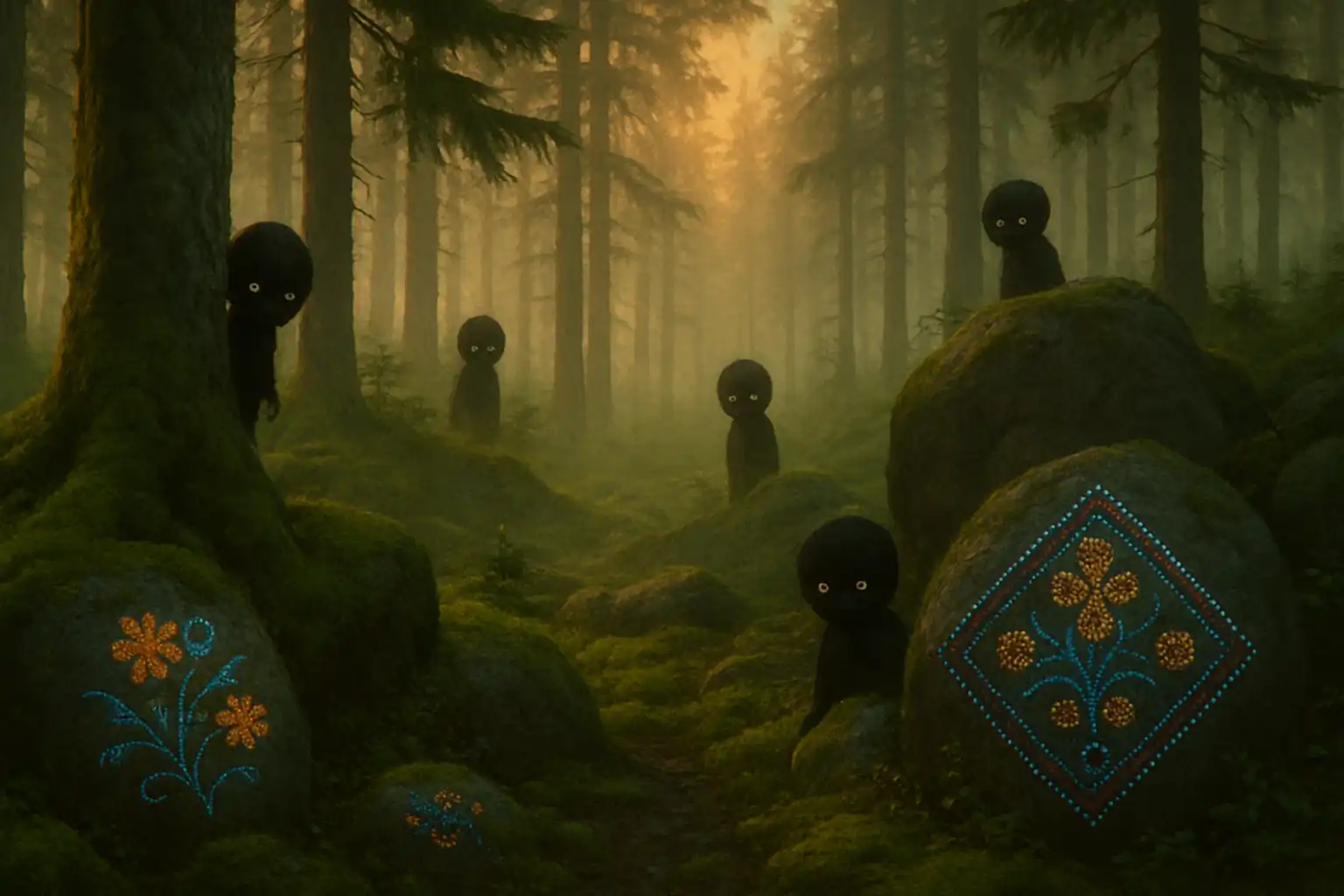
    A unique cold seeps into your bones while trekking the wilds of Labrador. For years, another chill has haunted the region—one unrelated to temperature. The Caribou Man—part man, part caribou, an enigmatic spirit or cryptid—still echoes through the spruce forests. For many, he represents Canada’s most perplexing and spine-chilling cryptid, intertwining indigenous mythology, modern encounters, and a healthy dose of paranoia. If you seek tales that make Sasquatch seem ordinary, strap on your snow boots and explore Labrador’s oldest supernatural mystery.

    Accounts of the Caribou Man, also called Kanipinikassikueu or the Caribou Master, trace back to the oral traditions of the Innu people. According to firsthand documentation and retellings by local Innu elders, the Caribou Man represents more than just a beast; he embodies a master spirit, guardian, and sometimes enforcer, regulating not only herds but also the relationship between people and nature. In the Innu perspective, his presence serves as a warning, a teacher, and in unsettling stories, a hunter of hunters.

    Roots in Indigenous Mythology: Animal Masters and the Caribou Man

    The vast Labrador landscape forms an integral backdrop to the legend. In the tapestry of unexplained Canadian creatures (see this modern Canadian roundup), the Caribou Man uniquely anchors himself in the Innu concept of Animal Masters—supernatural entities responsible for managing animal populations and balancing hunting, as noted in studies of cryptids worldwide. In Labrador, the animal master often takes on human form, living among caribou while wielding strange powers over life, migration, and even weather.

    This isn’t merely Bigfoot reimagined as folklore. Projects like Atiku Napeu showcase how the line blurs between narrative and testimony. The Innu sacred practice of honoring the caribou master during the mukushan feast is vital for ensuring good hunting and survival—overlooking it invites danger. Locals frequently use this lore like prophecies, warnings, and cautionary tales do in times of disaster, reflecting similar patterns noted in global risk analyses during historic collapses.

    Sightings and Testimonies: Eyewitness or Nightmare?

    Long before cryptozoology took over blogs, stories of the Caribou Man thrived in campfire tales and snowy trails. Details shift with each storyteller: a man with antlers, a half-caribou figure stumbling through the brush, or a shapeshifter darting between reality and dreams. Modern cryptozoologists and Canadian mystery hunters link Labrador’s Caribou Man to other northern anomalies (check this encyclopedia entry), but what distinguishes him is the persistence of eyewitness accounts. As recently as the 21st century, hunters, trappers, and government wildlife spotters have shared stories of encountering something they couldn’t explain.

    These narratives often emerge alongside anxieties over “final warnings”—whether the land communicates a message, or the mind invents monsters under stress. This blend of fear and possibility resonates with the examination of urgent disaster omens discussed in analyses of critical global tipping points. Humans remain finely attuned to the strange and concerning, even as science offers no explanations.

    Folklore, Fear, and the Science of Cryptids

    Cryptozoology, despite its dramatic depictions in media, remains a contentious and criticized area of study—as noted in Wikipedia’s entry. Many biologists argue that no physical evidence supports the reality of the Caribou Man and that most sightings stem from misidentifications or myth’s lingering influence. Nevertheless, governmental and academic bodies continue to catalog unexplained phenomena in the north, careful not to dismiss indigenous wisdom.

    Innu narratives portray the Caribou Man as neither solely good nor entirely evil. Occasionally, cryptid hunters draw parallels between the cycle of sightings and psychological impacts tied to modern risks—be it technological (like the AI disruptions described in predictions of total automation) or sociological, as cultures struggle with uncertainty. Ultimately, Labrador’s cryptid underscores folklore’s durability as an early warning system—not easily supplanted in the age of satellites.

    Cultural Survival and the Lasting Enigma

    Unlike many sensationalized ‘monsters,’ the Caribou Man endures. Efforts to explain him away often strengthen the original legends: the region remains expansive, wild, and ripe for secrets. As global crises arise (see historical parallels in societal collapse or modern geophysical alarms), these stories retain their sharpness: a blend of myth-making, community bonding, and a visceral response to nature’s might.

    For those captivated by mysteries at the wild’s edge, make Unexplained.co your digital base camp—because if there’s one place you want a heads-up on the world’s next big secret, it’s there.

  • Doomsday Oarfish, Nuclear Shadows: Geophysical Disturbances and the Planet’s Deep Alarms

    Doomsday Oarfish, Nuclear Shadows: Geophysical Disturbances and the Planet’s Deep Alarms

    When a doomsday fish drags itself onto a remote Tasmanian beach, veteran preppers check their Geiger counters. Global geophysicists sit a little straighter. That’s no ordinary tall tale—an oarfish, the legendary harbinger of deep-sea quakes, was found lifeless just as the Earth’s ionosphere shimmered with strange disturbances and the Schumann resonances began to waver. Was this ancient sea serpent a final warning or just another unsettling oddity in a world overflowing with alerts?

    From doomsday risk warnings to tsunami scares, the ties between natural anomalies and nuclear secrets run deep. In an era of engineered disasters and classified detonations, treat odd resonance spikes with as much suspicion as the guy at the end of your street building a faraday cage in his basement. The drama of June 2025 in Tasmania, investigated by geophysicist Stefan Burns, reveals more than a fish tale—it questions what nuclear tests truly do to the planet’s electromagnetic pulse.

    Schumann Resonance Disturbances and Unseen Forces

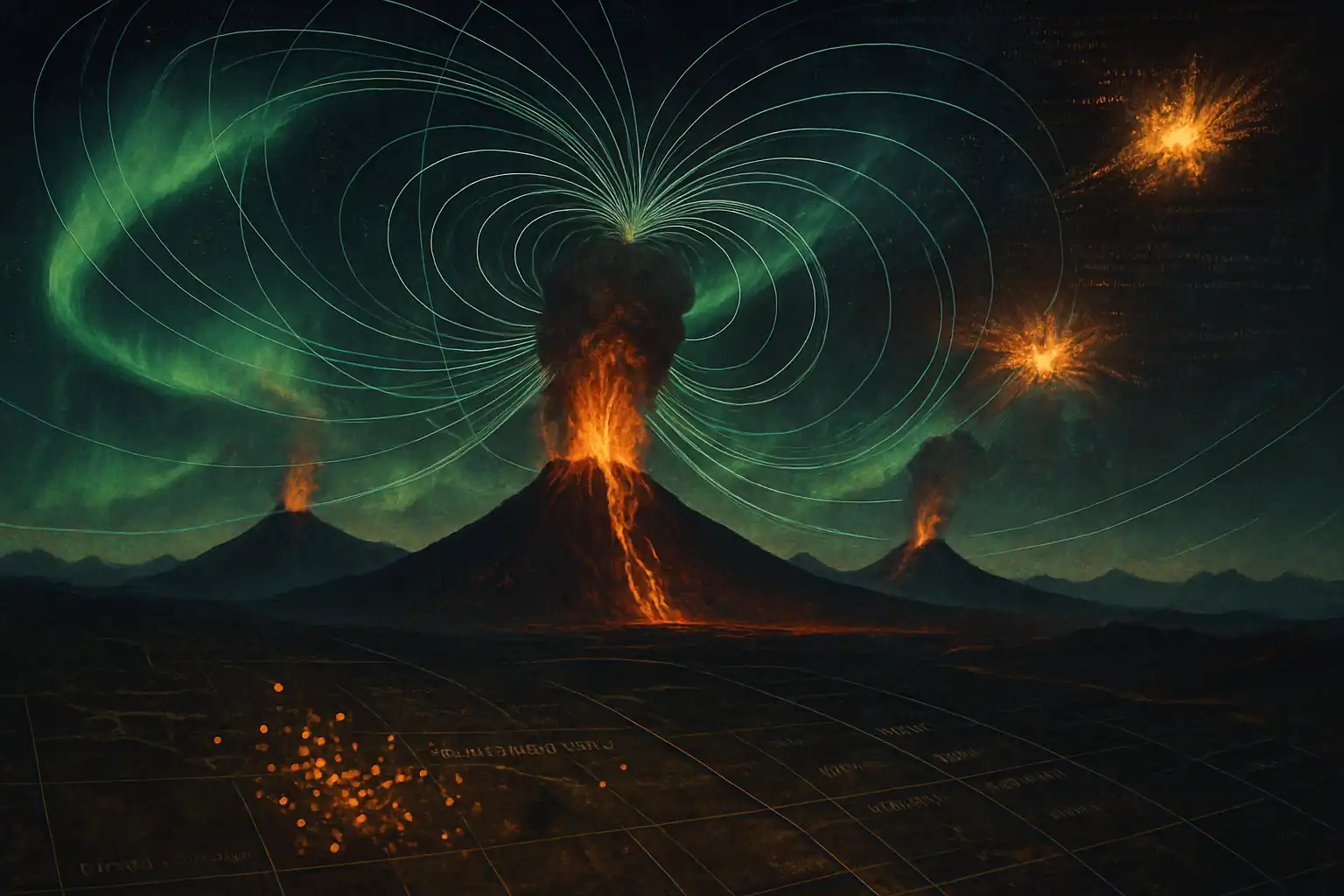
    The Schumann resonances are global electromagnetic harmonics, humming at approximately 7.83 Hz. These resonances envelop the Earth in a standing wave generated by lightning in the cavity between the ground and the ionosphere (Wikipedia summary). These background frequencies attract attention from physicists, climate researchers, conspiracy theorists, and disaster prognosticators. Perturbations in these low-frequency waves serve as proxies for significant events—global lightning storms, solar flares, and even pulse waves from secret testing.

    Scientists have tracked how lightning and geomagnetic storms disrupt the Schumann resonance, yet the debate over human causes continues. It’s no longer wild speculation that nuclear detonations, especially atmospheric ones, might leave temporary scars in these electromagnetic patterns. This topic arose during the Cold War and reemerges whenever unusual readings coincide with military activity or unexplained explosions. For a broader look at geomagnetic and volcanic risks associated with these resonances, check this multi-risk analysis—nature doesn’t obey political calendars.

    Nuclear Testing: Hidden Patterns and Lingering Geophysical Effects

    The secret history of nuclear tests hides not only in classified files but also in the scars on our planet’s skin and magnetic breath. During the 20th century’s test frenzies, both above-ground and underwater detonations sent ripples through everything—from tectonic plates to the uppermost reaches of the ionosphere. Some researchers point to statistical upticks in electromagnetic anomalies following significant blasts, though official reports often blur details and omit inconvenient spikes.

    This interplay tracks not just in restricted government archives but also via open-source geophysical data, where anomalies align with off-the-books events. Experts have tied strange resonance shifts to hypothetical collapse scenarios from nuclear and EMP risks, as detailed in this report on global infrastructure threats. When multiple warning systems trigger simultaneously—be it after a thermonuclear test or a major blackout simulation—those who know the code won’t just shrug. If you’re genuinely curious (or paranoid), tune in to space weather bulletins. They remind us that what happens above can shake what’s below.

    Interpreting Biological Harbingers: Oarfish, Earthquakes, and Folklore

    The oarfish has a legendary reputation as the “Messenger from the Sea God’s Palace” in Japan, surfacing before seismic activity. While scientists usually scoff at folklore, recent research shows surprising correlations: deep-sea creatures respond to low-frequency changes in their environment, and mass strandings often precede confirmed geophysical ruptures. With disturbances noted in both the ionosphere and Schumann background, could Tasmania’s oarfish truly be the planet’s canary in a radioactive coal mine?

    For more on disaster premonitions—both the rational and the uncanny—see this assessment of global war escalation risks and this look at geological and cosmic omens in astronomical catastrophe warnings. The intersection of myth and science shifts from campfire story to cautionary tale. Creatures (and perhaps people) sense more than scientists can always explain.

    Are We Listening to Earth’s Final Warnings?

    It’s worth repeating: “final warnings” often go ignored until they’re not. Nuclear testing, geomagnetic chaos, and unexplained animal behavior signal humanity’s struggle to pierce static. The challenge lies in separating meaningful data from background noise. If this oarfish episode and 2025’s resonance anomaly are more than a freak coincidence, how many more wake-up calls do we require?

    The secret history hiding behind Schumann’s hum reveals that everything is connected: human ambition, radioactive legacies, and biological sensors on the fringe. For insights that don’t bury the lede—and to survive what might be the next pulse—bookmark Unexplained.co. At minimum, you’ll be a step ahead when the next anomaly washes ashore.

  • 2043: The Countdown to Total AI Automation—and the Three-Year Cliff

    2043: The Countdown to Total AI Automation—and the Three-Year Cliff

    If you’ve ever dreamed of a future where your job disappears overnight—relax. The smart money estimates you have about nineteen years left. Economist Tom Davidson’s “compute-centric” model predicts that AI will automate 100% of human cognitive labor by 2043. That’s right—2043. Groan if you must, but this isn’t mere clickbait. It’s a rigorously simulated forecast, grounded in compute mathematics, algorithmic efficiency, and historical technology curves. The destination is daunting. Equally disturbing is the speed of our approach.

  • Final Warning Signs: Why Our Global Risk Alarms Are Screaming Louder Than Ever

    Final Warning Signs: Why Our Global Risk Alarms Are Screaming Louder Than Ever

    The phrase “final warning” should chill anyone’s spine, yet it saturates discussions—from think tanks to prepper radio. This isn’t another doomsday click-bait; credible early warning systems worldwide flash alerts across conflict, climate, economic stability, and tech vulnerability. If you sense reality is nearing collapse, you’re not paranoid. Authorities from the UN to private trackers confirm that global risk surges to historically high levels.

    The 2024 ALERT report states that nearly half of tracked armed conflicts worsened last year. Forced displacement reached an all-time high, with 110 million people uprooted. The Crisis Group’s global tracker and ACLED’s July 2024 Conflict Index show a disturbing rise in violence and risk exposure. This troubling trend extends beyond warfare; systemic cracks in governance and societal fabric so thin suggest that even a tiny spark could ignite a firestorm.

    Early Warning Systems and the Reality of Escalating Crises

    Modern early warning systems surpass traditional air-raid sirens. They form global data networks that scan for hazards, from tectonic shifts to pandemics. According to Wikipedia’s explanation, these frameworks rely on ongoing risk analysis, community readiness, and constant communication. They aim to buy us time and reduce harm. Yet, even these systems now struggle with the onslaught of threats. Disasters build upon economic and political crises, creating a domino effect observable in issues like supervolcano threats intersecting with global earthquake swarms discussed in this deep-dive on geophysical risk.

    This backdrop compels world leaders to sound harsh warnings, spanning nuclear tensions and misinformation campaigns. They assess an “AI crisis singularity,” as discussed in AI catastrophe scenarios. Far from alarmism, these signals reflect the Roman saying: ignore the omens at your peril. Those who dismiss omens should review collapse diagnostics in this analysis of societal downfall.

    Conflict, Catastrophe, and Systemic Instability: The Current Flashpoints

    Let’s not deceive ourselves; global conflict accelerates. ACLED’s July 2024 update estimates that nearly one in seven people faces conflict this year alone. These numbers can seem abstract, yet they represent food insecurity, millions displaced, and ceaseless reports of nuclear threats. Pay attention to China’s recent maneuvers, which evoke real concerns discussed in this escalation analysis. These shifts influence geopolitics, supply chains, and technological futures, edge dangerously toward conflict. Add the multipolar chaos from Russia’s ongoing summer offensive and Pakistan’s crackdown, highlighted in Situation Room intelligence, and it’s clear the world’s order shows signs of strain.

    However, real catastrophe might emerge from unexpected sources: within. Systemic shocks, such as blackouts or massive cyberattacks—paths explored in hypothetical collapse scenarios—can bypass militaries entirely, leaving governments unprepared. Historical examples offer little comfort; from Rome to modernity, it’s often the overlooked issues that lead to downfall.

    Information Overload and the Perils of Ignoring Warnings

    In an age of satellites and social media, you might think we’d heed incoming warnings. Yet, constant exposure to crisis signals leads to numbness, not awareness—often termed “Siren Fatigue.” Society’s reactions to ongoing revelations—whether ancient prophecies interpreted by chaos theorists or misreading foreign policy, as highlighted in Putin analyses—underscore our struggle to distinguish noise from significant alarms. Yet, as every prepper knows, it’s the ignored signals that hit hardest when a crisis finally strikes.

    Technological warning systems depend on our willingness to respond, whether the threat arises from electromagnetic storms, rogue AI, or another “unprecedented” event. The world’s most advanced alert networks already issue warnings. Historical records, dissected by platforms like Unexplained.co, provide crucial context. Ignore them, and you gamble with a stacked deck.

    The Real Final Warning: What Can Be Done?

    If history is a guide, those who act on final warnings, rather than merely discussing them, will fare best when disaster unfolds. This necessitates engagement—educating oneself on evolving risks, investing in resilience, and resisting the temptation to be lulled by the spectacle of “unprecedented times.” Those who wait for an undeniable signal may face nothing but regret—and witness chaos unfold from the front row. For everyone else, tools and knowledge exist; however, the will to prepare must be summoned before the alert changes from “final warning” to “too late.”

  • On the Edge: Why the World Feels One Spark from War’s Explosion

    On the Edge: Why the World Feels One Spark from War’s Explosion

    The air hums with unease as global war rhetoric intensifies, military buildups spread from Eastern Europe to the Western Pacific, and news cycles are a hair’s breadth from ‘breaking news’ banners signaling catastrophe. You don’t have to be a bunker-dweller (though it helps) to sense something’s off. Experts from major think tanks and international agencies agree: we are closer to a strategic explosion than at any point in recent history, as noted in sources like the Axios global risks report.

    This extends beyond internet doom spirals or your neighbor’s feverish prepping. The underlying drivers include classical triggers—territorial disputes, shifting alliances, and resource shortages—as well as modern accelerants like AI-driven warfare and economic blackmail. If you think recent shockwaves from China’s latest actions or Russia’s advances in Ukraine are just regional dramas, think again. These ‘local’ flames are fanned by global gale winds; sometimes, a single spark—intended or accidental—can ignite the powder keg.

    Escalating Risks: Signs of Imminent Armed Conflict

    This year, global newsrooms and conflict monitors, like the Atlantic Council and International Crisis Group, have documented a surge in war risks: North Korea lobs missiles, NATO and Russia posture with unprecedented hostility, and Israel, Gaza, Ukraine, and Indo-Pacific hotspots sizzle. A new conflict database shows a sharp increase in deaths due to global conflicts in 2024, reinforcing that the world isn’t merely anxious—violence is on the rise.

    Political analysts and historians recognize this scenario, but with less advanced technologies. From ancient “just causes” to modern casus belli, the potential triggers are extensive—and the bloody outcomes often appear irrational in hindsight. Currently, tension points like the collapse of global mediating institutions, rising authoritarianism, and emerging regional power blocs fuel zero-sum thinking, as discussed in a recent Situation Room analysis. We are entering an era where small disputes can escalate quickly, reminiscent of how ancient powers collapsed amid war and collapse studies.

    Technology, Blackouts, and Information Warfare

    The line between military and civilian targets has blurred. The world faces its first major AI-driven conflicts, featuring AI drone swarms, cyberattacks, and social engineering campaigns alongside traditional military deployments. Analysts and government sources warn that cyberwarfare now underpins every major geopolitical rivalry, making infrastructure collapse a real possibility, not mere paranoia. In places where traditional armies once clashed, blackouts, software sabotage, and viral misinformation can paralyze modern states and cause untold civilian chaos before the first tank arrives.

    If you doubt the extent of disruption possible from a keyboard, recent breakdowns, like analysis of AI and future crisis risks and satellite surveillance reports from covert operations, reflect this new battleground. Surviving in a world with shifting alliances, zero-day software exploits, and deteriorating power grids demands more than military strength—resilience begins at home with knowledge and contingency planning, as reality repeatedly reminds us.

    The Human Cost and the Geopolitical Gamble

    Recent conflict mapping projects hundreds of thousands of fatalities in 2024’s escalating wars and insurgencies. It’s not just about GDPs and power blocs—it’s the daily destruction history will remember. Each conflict, from Ukraine to Gaza to the Sahel, erodes global security. These tremors eerily resemble the warnings missed before past world wars. There’s a reason even seasoned strategists brace for surprises. World powers have consistently underestimated the domino effects of “contained” wars becoming regional, then global—often with the unpredictable impact of geophysical chaos compounding the situation.

    As new ‘situation room’ assessments circulate, the warnings sharpen. Some observers highlight the age-old roles of scapegoating, miscalculation, and fear in driving powers to war—themes deeply rooted in classic conflict justification scholarship. Are leaders acting out of necessity, honor, or fear? More likely, is it simply systemic panic in the digital age? Knowing history’s answer often fails to stop the next cycle of conflict.

    Staying Informed When the Stakes Are High

    When faced with uncertainty, good information serves as both ammo and a potential lifesaver. If the next spark comes quickly, monitor emerging hotspots via trusted sources, blending independent verification with historical skepticism. For curated updates on unfolding threats and crisis signals, bookmark Unexplained.co. It might not prevent disaster, but you’ll be better prepared than others when trouble arises. If you’re uncertain about whether to stock up or relocate, history suggests it pays to keep essentials like candles, batteries, and updated maps on hand.