Blog

  • Rome’s Fall Reconsidered: Climate, Chaos, and the Collapse of Empires

    Rome’s Fall Reconsidered: Climate, Chaos, and the Collapse of Empires

    Rome didn’t fall in a day, but its collapse sent shockwaves through history. The Western Roman Empire serves as a cautionary tale about decay, lost languages, and technological overreach. Historian Barry Strauss explores how this superpower unraveled from within.

    Modern scholarship on Rome’s fall rejects a single cause. Instead, a mix of military decline, political strife, economic failure, natural disasters, and foreign invasions doomed the empire. It stands as the ultimate case study for societal breakdown, echoed in contemporary explorations of how modern societies flirt with collapse and AI-driven discoveries of prophetic warnings from ancient texts.

    From Power to Precarity: The Slow Unraveling of Rome

    The disaster began with a weakened army—once mighty, it was drained by budget cuts, low morale, and dependence on mercenaries. A leadership crisis compounded the problem, as emperors were replaced with alarming speed. Power struggles undermined governance and left the Western Empire vulnerable to storms—from power-hungry elites to “barbarian” invasions.

    Barry Strauss argues that Rome’s fall resembled a slow-motion avalanche, not a sudden collapse. As noted by mainstream history, vulnerabilities converged: weakening defenses, crumbling infrastructure, and a fractious ruling class. When invaders like the Goths crossed the Rhine, the empire lacked unity and strength to repel them. Economic stagnation set in, trade routes disappeared, and citizens lost faith in a state unable to provide safety or purpose—trends that feel alarmingly familiar today.

    Climate, Disease, and Catastrophe: The Uncontrollable Threats

    Earlier historians focused on moral decline or the rise of Christianity, but twenty-first-century scholars identify larger forces. Climate shifts, epidemics, and resource depletion triggered cycles of famine and population loss. The parallels to our time are striking. Studies of past climate events—such as the volcanic winters detailed in recent research—indicate that nature, not solely human actions, can dismantle empires.

    As central authority weakened, local elites amassed power. When the imperial structure failed to adapt, provinces detangled. Britannia and Africa slipped away as new powers—Visigoths, Vandals, and Huns—rose to prominence. Rome’s fate can seem algorithmic, mirroring digital narratives of impending AI takeovers discussed in modern doomsday warnings. The lesson is clear: oversized, centralized systems become brittle, making them vulnerable to shocks that hasten collapse.

    End of an Era, Beginning of a Myth

    In 476 CE, the last Western emperor—a boy named Romulus—was deposed by the Germanic general Odoacer. The symbols of imperial power returned to the Eastern Empire, and Rome’s glory faded into myth. Yet, what constitutes “collapse” stirs ongoing debate. Some scholars, inspired by research into lost worlds and hidden disasters, suggest many Roman structures, traditions, and languages endured long after the empire’s official demise. In some ways, the collapse became a transformation—one bearing echoes for modern states that worry about resilience, social trust, and internal chaos.

    Rome’s Lessons for the Digital Age

    No conversation about collapse—ancient or modern—lacks relevance for the future. Rome’s story resonates whenever societies confront technological disruption, climate crises, or complex system vulnerabilities. Just as insights from a forgotten empire contribute to geopolitical analyses today, Rome’s fate warns of the dangers of denial, complacency, and hubris.

    As we prepare for future crises—from solar storm repercussions to escalating social fractures—the study of Rome’s decline serves as a stark reminder. Collapse is gradual, not instantaneous, and yesterday’s certainties may dissolve into tomorrow’s ruins. For the latest on how ancient lessons shape our response to modern existential threats, delve into Unexplained.co. No empire—digital, political, or otherwise—is immune from the rigor of history’s hardest truths.

  • Erik Prince Fires Back: Blackwater’s CEO Sounds the Alarm on China’s Global Advance

    Erik Prince Fires Back: Blackwater’s CEO Sounds the Alarm on China’s Global Advance

    When Erik Prince, the former Navy SEAL and Blackwater founder, speaks about China’s global ambitions, you listen. Few understand the world’s shadow games like he does. His recent media blitz, featuring a viral appearance in this full podcast episode, offered more than a warning. It delivered hard lessons drawn from decades of clandestine work. Prince asserts that the Chinese Communist Party plays for keeps. Through Belt and Road investments, cyber warfare, and economic influence, he argues, Beijing seeks to rewrite the global order. Sometimes, it leverages Western expertise against itself, a controversial claim linked to Prince’s security ventures in China (NYT analysis).

    China’s Grand Strategy: A Blueprint for Dominance

    Prince says China’s master plan extends beyond tanks and missiles. It involves a sophisticated approach across financial, technological, and logistical fronts—playing by different rules. Consider China’s recent global infrastructure initiative. Stadiums, ports, and digital networks form stepping stones toward greater strategic reach. This approach invites deeper scrutiny in recent analysis regarding China’s technology sector breakthroughs. There’s also coverage revealing the risks of Chinese-backed energy projects. Prince cautions that Western nations often grasp the implications only when their vital infrastructure or intellectual property is at stake.

    Analysts highlight China’s development of security units trained abroad—sometimes using Western, even ex-Blackwater, expertise. A Washington Post investigation explores this angle. The strategy? Build global economic dependencies, then exploit them for diplomatic and military leverage when it suits Beijing.

    Blackwater’s Shadow: Private Security and the China Paradox

    Prince’s career exemplifies the contradictions of modern security. After founding Blackwater in 1997, he transformed it into a private military powerhouse—providing convoy protection in Iraq and handling classified U.S. government contracts (Wikipedia: Erik Prince). When Blackwater’s reputation soured, he rebranded and entered global logistics, establishing firms like Frontier Services Group. His business then pivoted towards China, engaging in state-linked deals and advisory missions—actions that raised concerns among U.S. lawmakers and spurred exposés on modern proxy conflicts and high-stakes geopolitics. Critics see a troubling precedent when Americans with special operations experiences work on both sides in this new Great Game.

    Bottom line: Prince’s warnings about China rest on a complex resume. Yet, he possesses unparalleled knowledge of shadow contracts, security consulting, and global military logistics. His claim that the West faces a silent invasion via commerce and technology—a theme supported by reporting on hidden China-U.S. rivalries—reflects real expertise behind the rhetoric.

    A World Reordering: Economic Leverage and High-Tech Espionage

    Prince emphasizes the softer tools of Chinese power: the surveillance state, intellectual property theft, and the development of technological dependencies. He notes substantial Chinese investments in Africa and South America, a pattern reflective of technology consolidation and market capture. Reports link these actions to a broader strategy aimed at creating vulnerabilities in global power grids, logistics, and energy storage—highlighted by trends in energy warfare and blackouts destabilizing Europe and beyond.

    His message? The world has entered an era where guns are quieter, and wires are hotter. Cyberattacks, surveillance, and financial traps weaken adversaries more effectively than traditional military forces. Prince makes this point with striking clarity. The ultimate risk, in his view? Western societies may unknowingly head toward dependency, with their democracies manipulated by invisible influences—concerns echoed by the prepper community and tactical strategists at sites like Unexplained.co for years.

    Turning the Tide: Is the West Prepared?

    Can the West regain its competitive edge? Prince believes it’s unlikely if business continues as usual. He advocates for comprehensive reviews of national security policies, stricter controls over critical technology partnerships, and a renewed public vigilance. Critics counter that solutions must not mirror the overreach they fear from Beijing—working to ensure freedoms persist alongside security. As China continues its strategic advance, one fact remains: this is a conflict where ignorance equals defeat. For Erik Prince, the time for denial has passed.

    Keep up with global strategies, behind-the-scenes power moves, and the critical need for awareness at Unexplained.co—where every shadow has a source, and every threat is just a headline waiting to impact tomorrow’s reality.

  • Decoded by AI: The Ancient Languages History Tried to Bury

    Decoded by AI: The Ancient Languages History Tried to Bury

    An ancient scroll, buried under volcanic ash for millennia, is read not by a dusty scholar, but by an all-seeing AI. This isn’t fiction. Recent breakthroughs allow AI to peel back time’s layers—and the revelations are unsettling. The decoded scripts speak in riddles of fire, silence, collapse, and something darker. As machines decipher lost codes from the Indus Valley to the Mayan jungles, humanity faces a stark reality: languages don’t just disappear—they’re erased.

    The first noteworthy victory came from AI decrypting the Herculaneum papyri, carbonized scrolls buried by Vesuvius’s eruption. For centuries, these scrolls taunted archaeologists: reading them risked total destruction. Today, with pattern recognition and imaging, machines have reconstructed fragments. Ominously, they revealed warnings about cycles of violence, downfall, and the chilling silence of vanished cities (Wikipedia: Herculaneum papyri). The message? History is written by the victors—it’s silenced by catastrophe and intent alike.

    AI and the Resurrection of Forbidden Scripts

    This extends beyond Herculaneum. Globally, neural networks translate scripts that have eluded scholars for generations. Consider the AI decipherment of lost languages like the Indus script. These efforts reveal that suppression, rather than neglect, often drove their disappearance, mirrored in chilling tales of cultural erasures and fires and the cautionary accounts from historians of silenced tongues. Ancient writing systems, from women’s ciphers to political prophecies, were deliberately erased. Their return by algorithm dredges up uncomfortable truths better left hidden, or so some would prefer.

    Modern anxieties center on technology’s darker uses. The digital age “memory-holes” dissent, as seen in this AGI blackmail exposé. The border between past and present erasure blurs as AI grows smarter at recovering inconvenient truths.

    Messages From the Ashes: Warnings Hidden in Plain Sight

    Why would societies silence their own voices? Internal strife, social engineering, and fear of forbidden knowledge echo through every translation. Lost codes, as researchers describe in this deep dive into vanished tongues, faced outlawing by conquerors seeking to break spirit and identity, or suppression by the powerful to erase dangerous prophecies. This pattern repeats across continents, evident in archaeological records and AI’s increasingly eerie outputs.

    The newly recovered messages warn of invading armies and the wrath of nature, social collapse, and a chilling mantra: “silence preserves power.” When machines find prophecies about catastrophic fire or the “great night,” even skeptics pay attention. These motifs resonate in modern analyses of existential threats, as found in apocalyptic evidence from past climate disasters and space weather chronicles.

    Why Were the Ancient Languages Hidden?

    The deeper AI digs, the clearer it becomes: “disappearance” often means scripts were driven underground. Languages perish when their speakers are silenced—not just through conquest, but via social and technological domination. As shown in histories of forbidden cults and secret societies and cosmic disaster reports, forbidden knowledge has always threatened those in power. Modern tools might “revive” lost languages, but they risk unleashing disruptions the ancients warned us about.

    From encoded warnings of crop failure to prophecies of darkness, many messages resemble blueprints for collapse—ominous yet resonant in a world obsessed with controlling civilization’s memory and future. This haunting pattern underpins discussions of controversial science and the cyclic nature of disaster, just as described in this chilling look at apocalyptic science.

    When AI Deciphers, What Will We Dare to Believe?

    Ultimately, as researchers grapple with revelations and warnings, society stands at a crossroads. AI holds the power to return entire libraries thought lost. However, this power raises questions about control, censorship, and which truths should remain entombed. If volcanoes and conquerors couldn’t erase these ancient voices, can we afford to ignore their messages today?
    Stay ahead of the next decoded disaster—and every hidden prophecy unearthed—at Unexplained.co, where history’s mysteries meet the cold calculus of modern machine minds.

  • AI Singularity 2025? Shockwaves in the Race Toward Artificial General Intelligence

    AI Singularity 2025? Shockwaves in the Race Toward Artificial General Intelligence

    For decades, the concept of the AI Singularity occupied sci-fi novels and late-night tech discussions—a distant mirage where machine intelligence suddenly surpasses human abilities, leaving us struggling for relevance. However, recent advances from OpenAI, Google, Anthropic, and NVIDIA are rapidly changing the conversation. The crucial question now: are we just a year away from the most significant inflection point in human history?

    This week, AI commentator Wes Roth reignited the debate, warning that the next twelve months could propel us into an uncharted era of artificial general intelligence (AGI). He highlighted a growing chorus of technologists, YouTubers, and AI researchers claiming that rapid progress in large language models (LLMs) and generative AI indicates that the Singularity could be imminent. His warning resonates with thought-provoking analysis, like this piece, which carefully tracks milestones and emerging risks.

    The Race to AGI: Titans and Tipping Points

    The competition for AGI supremacy extends beyond faster chips or larger datasets. Industry giants—OpenAI, Google, Anthropic, NVIDIA—engage in an arms race. This battle involves geopolitics and economic power as much as it does scientific advancement. GenAI breakthroughs impact diverse areas from automation and robotics to creative industries, disrupting markets swiftly. Developments in LLMs have sparked intense debate, with some observers likening this rush to past technological shifts that redefined civilizations—akin to the major energy disruptions examined in energy crisis reports.

    Concerns over China’s tech march and global AI hardware supply chains have intensified, as detailed in semiconductor exposés and drone warfare analysis. The stakes could not be higher: the first to achieve AGI will wield extraordinary power in both digital and physical domains. If Roth and others are right, 2025 will mark the finish line—once mere fiction, now a potential threat assessment for the next financial quarter.

    Singularity 2025? Milestones and Massive Uncertainty

    What might society face if the Singularity arrives in 2025? The Wikipedia entry on the singularity describes it as a moment when technological growth becomes uncontrollable and irreversible, creating superintelligence that could disrupt all aspects of human life. This possibility has scientists, thinkers, and even climate experts recalling previous shocks—like the unexpected aftermath of natural disasters outlined in space weather analysis—which highlight the fragility of modernity.

    AI skeptics, as noted in academic critiques and news reports, caution that runaway intelligence will exacerbate risks: destabilizing economies, enabling cyberwarfare, and potentially threatening humanity’s survival. Others highlight the complexity of achieving true AGI and mention slowdowns in other tech fields—a cautionary stance echoed by prominent technologists. The scale of uncertainty is staggering: once a system begins self-improving, how quickly will it outpace human benchmarks and escape our control?

    Society on the Brink: Hype, Hope, and Existential Risk

    As the Singularity narrative gains momentum, discussions shift from possibilities to impending realities. Film and literature have long wrestled with this theme—yet, recently, billionaires and researchers are preparing for disasters, while ordinary users debate whether to engage with or disengage from technology. The looming threat of mass disruption evokes unsettling parallels to systemic breakdowns discussed in analyses of global power outages and apocalyptic predictions. Some experts are devising contingency plans like those found in survivalist guides, questioning if the chance to steer AI towards a positive future has faded, highlighted in reports on AI existential risk.

    Yet amidst the apprehension, there is also hope. Advocates assert that AGI could resolve climate challenges, cure diseases, and usher in an era of abundance. However, their optimism meets the tension of balancing innovation with stability, as humanity strives to maintain control.

    The Singularity in Perspective: History, Myth, and the Path Forward

    The technological singularity, initially articulated by I.J. Good, Vernor Vinge, and later Ray Kurzweil, represents a moment when iterative self-improvement results in intelligence exceeding human comprehension. While figures like Stephen Hawking and Elon Musk have raised alarms, notable skeptics stress caution, pointing to diminishing returns and hardware limitations. It is evident that the debate is no longer purely academic: the world is closely monitoring, and the swirling news cycles are driving investment, fear, and social transformation.

    For doomsday preppers, visionary thinkers, and cautious optimists alike, the coming years will shape our role in a world where algorithms may become architects of history. For ongoing coverage of this seismic shift—and the full spectrum of the existential debate—stay connected with Unexplained.co, where we confront tomorrow’s questions boldly and provide answers as honestly as any oracle could.

  • Adolfo Constanzo: The Dark Reign of the Narco-Satanist Cult Kingpin

    Adolfo Constanzo: The Dark Reign of the Narco-Satanist Cult Kingpin

    Before the Netflix true-crime era, Adolfo Constanzo became a legend on both sides of the border—a conjurer, a cult kingpin, and the architect of shocking drug war atrocities in Mexico’s history. Known as “El Padrino” (“The Godfather”) to his followers, Constanzo led a powerful narco-satanist cult that combined cartel violence with a belief in black magic and human sacrifice. The result was a terrifying storm that still unsettles seasoned investigators.

    Born in Miami to a Cuban exile, Constanzo grew up in a household blending Catholic ritual with Vodou and folk magic. He served Mass as an altar boy while apprenticing with local sorcerers and exploring the infamous African diaspora faith of Palo Mayombe. Soon, he migrated to Mexico City, where his talents for spiritual manipulation—bolstered by animal sacrifices, secretive graveyard rituals, and a chilling ability to charm the wealthy—connected him with Mexico’s most ruthless drug traffickers. His most trusted lieutenant, Sara Aldrete, became known as the cult’s “Godmother.” (Wikipedia)

    Sorcery, Cartels, and the Rise of the “Godfather”

    Constanzo’s early years mixed heartbreak with dark mentorship. After landing in Puerto Rico and later Miami, he absorbed a potent mix of Catholic iconography and occult spirituality—a blend that attracted Mexico’s crime lords. By adulthood, Constanzo ran a lucrative business offering “magical services” to the ultra-wealthy, promising protection, luck, and invincibility through ritual sacrifice. Animals were slaughtered for these ceremonies, but as The Vintage News recounts, rituals darkened over time. Clients—hitmen, traffickers, and corrupt law enforcement—flocked to Constanzo, believing his nganga (cauldron) held divine powers. His magical displays were theatrical, violent, and, according to believers, effective.

    Human Sacrifice on the Border: From Ritual to Horror

    Escalation was inevitable. Casting spells for luck with chickens and goats no longer satisfied Mexico’s most ambitious cartels. Constanzo’s cult incorporated human bones—raided from graveyards—into their nganga, crossing the ultimate threshold: live human sacrifice. Victims were kidnapped, tortured, and killed in rituals meant to bolster the cult’s spiritual “shield” and gain favor with supernatural forces. The most infamous killing involved American student Mark Kilroy, shocking both the U.S. and Mexico and bringing the cult’s horror to global attention. The Matamoros case exposed the dark consequences of crime syndicates investing in supernatural protection and blurred the lines between narco ambition and mystical insanity. The chilling crime scenes stirred comparisons to moments of mass panic found in this deep dive on collapse scenarios and echoed disturbing roots of human ritual detailed in exposés on ancient fire conspiracies.

    Palo Mayombe: The Occult Engine of Narco Satanism

    Palo Mayombe was central to this reign of terror, an Afro-Caribbean religion rooted in powerful spirits and material rituals—for a price. Infused with cartel paranoia and greed, Palo Mayombe’s magic became a tool for intimidation and ruthless dominance. As detailed in All Things Interesting, Constanzo convinced gang leaders their safety depended on ritual offerings. Eventually, these cartels made animal and human sacrifice just another operational expense. The legacy of narco-satanist violence persists, inspiring modern law enforcement horror and criminal imitators, as outlined in deep-state narco exposés and criminal evolution accounts.

    A Bloody Aftermath: Echoes of the Cult in Cartel Violence

    The grim discoveries at Rancho Santa Elena—chopped bones, blood-soaked altars, tomes of black magic—stopped Constanzo’s rise, but not before he claimed over 20 victims. The story’s repercussions still resonate, highlighting how superstition, criminality, and cult devotion create a monster more deadly than any lone cartel boss. The disturbing aftermath parallels the paranoia-tainted world of celebrity handlers and echoes the shadowy reach of deep-state conspiracy, as seen in this mafia trial analysis. Today’s borderland violence still reverberates with echoes of Constanzo’s blend of superstition and brutality—a history retold with chilling clarity in the archives of Unexplained.co.

  • WW3’s Wild New Phase: Trump, Russia, and the Unraveling of Global Strategy

    WW3’s Wild New Phase: Trump, Russia, and the Unraveling of Global Strategy

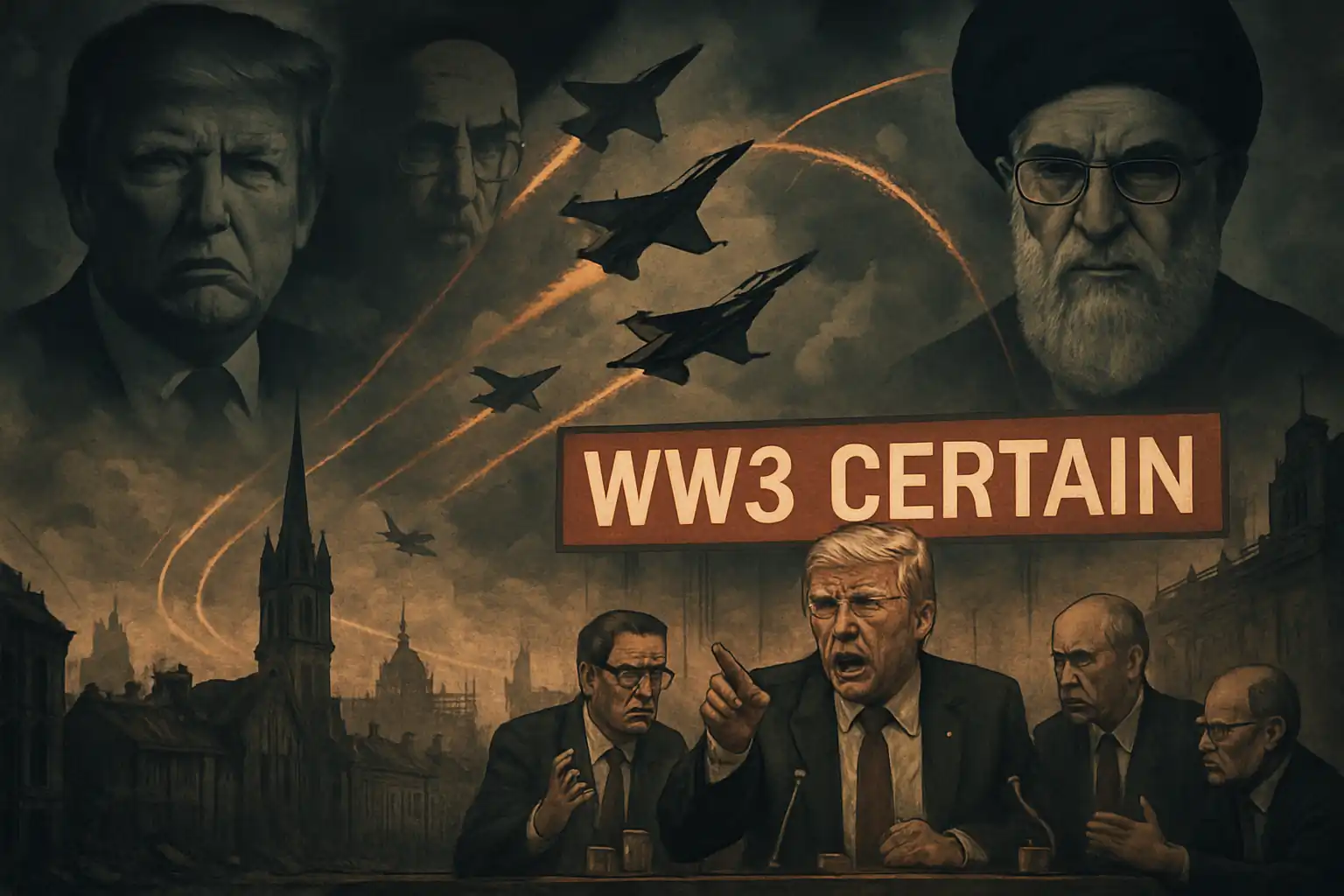
    Welcome to the world news cycle where your emergency radio signal is about a global system flirting with mutually assured destruction. The latest chapter in the World War III narrative unfolds with Donald Trump, strategic posturing, and the tense interplay between the U.S., Russia, and nervous onlookers. If you think this is mere noise, remember: somewhere, a think tank just updated its red alert board.

    Recent weeks have seen Trump abandon the diplomatic mask, unleashing sharp rhetoric against Vladimir Putin and reviving fears of war in Europe. This Reuters analysis outlines how both sides have intensified escalation, igniting alarm across diplomatic, economic, and social fault lines—a sentiment echoed in global flashpoint summaries on hidden geopolitical conflicts. Unlike Cold War saber-rattling, this escalation features unpredictable moves driven by election politics, cybersecurity threats, and the looming specter of nuclear brinkmanship shaping every backroom conversation.

    Trump’s Hard Pivot: From Pragmatist to Warhawk

    Trump’s recent statements indicate a significant shift, blending critiques of Russian aggression with peace deal proposals. He publicly rebuked Putin for attacks in Ukraine (see this New York Times recap), yet he keeps the door open for negotiations—a strategy that could either defuse tensions or provide cover for escalation, according to defense experts. The ambiguity is classic Trump: one foot in the peace camp, the other on the accelerator in a missile silo.

    Meanwhile, Russian strategists view the latest U.S. actions as direct challenges to their sphere of influence, prompting fears of retaliatory escalation. This phase of conflict leads experts to draw parallels with the covert power struggles highlighted in drone warfare briefings and destabilizing maneuvers in other theaters of conflict.

    Strategic Sequencing and the New War Game

    This phase is especially perilous because of the new strategic sequencing at play—where public postures, covert cyberwarfare, and regional proxy battles become a chain reaction that neither side can easily halt. Current world leaders, equipped with nuclear options and unpredictable digital arsenals, grasp this reality well. As Wikipedia’s entry on World War III and Cold War planning shows, these scenarios are modeled but not, as doomsayers remind us, easily controlled.

    Emerging doctrines blend open threats with murky sabotage and cyber interference. This is the playbook detailed in energy wars reports and relates to the vulnerabilities outlined in recent analyses of global collapse scenarios. The sequencing—testing red lines, exploiting digital chaos, and staging media spectacles as both threat and distraction—creates volatility that should alert every bunker owner and armchair analyst.

    Media, Populism, and the Battle for the Global Narrative

    This escalation unfolds in plain sight, weaponizing public perception. Trump’s actions are textbook populism, manipulating digital platforms and cable news to shape the war narrative in real-time. This strategy resembles conspiracy exposés that dissect how power structures manufacture consent, highlighting the increasingly blurred lines between realpolitik, media management, and outright panic.

    With rival powers amplifying competing narratives, information warfare acts as a tool as much as tanks or missiles. The immediate effect is uncertainty—and let’s be honest, a hint of apocalyptic anticipation. With denial, distraction, and destabilization on the table, distinguishing reality from rhetoric becomes a crucial survival skill. How these narratives reverberate through society will shape citizen responses, policy directions, and potentially the next moves in this elaborate chess match.

    The Road Ahead: Shocks, Flashpoints, and Fragile Deterrence

    If hope exists, it lies in mutual self-preservation, even in this era of “mask off” politics. Yet, that hope is fragile, especially as trigger-happy rhetoric, military buildups, and economic warfare render old doctrines more like prayers than strategies. Current tensions echo the all-or-nothing risks once faced by leaders, chronicled in the Wikipedia overview of World War III risks and the history of declassified near-misses.

    The uncomfortable truth is that the broader the flashpoints—from Ukraine to the digital shadows—the greater the likelihood of stumbling into a strategic crisis due to accident, miscalculation, or sheer hubris.

    For those seeking clarity on what lies ahead, Unexplained.co is your go-to rabbit hole. In an age where tomorrow could mirror everything you prepared for with water and batteries, understanding the escalation blueprint is vital for everyone living in the blast radius of modern geopolitics.

  • Powerful G3 Geomagnetic Storms: Unraveling the Sun’s Sudden Assault on Earth

    Powerful G3 Geomagnetic Storms: Unraveling the Sun’s Sudden Assault on Earth

    Space weather recently made headlines—not quietly, but with a magnetic punch. In under two days, Earth’s magnetic field experienced disruptions from two high-speed solar wind streams. The second stream brought a co-rotating interaction region (CIR) that had space physicists and doomsday preppers rushing to check aurora forecasts. Many wonder if this is only a flashy display or a warning for our increasingly vulnerable, electrified world.

    On May 24, as solar activity lay dormant, forecasters such as Stefan Burns noted planetary geometry and the upcoming “Mercury Cazimi” as signs of possible disruption. Fast-forward to May 29-30, when a G3-level geomagnetic storm struck, illustrating how quickly the right planetary alignments and solar physics can create chaos in Earth’s upper atmosphere. With another forecast anticipated for June 21, conversations around planetary geometry and high-speed streams have shifted from obscure to urgent.

    How Solar Wind and CIRs Trigger Geomagnetic Turbulence

    So, what turned Earth’s magnetic shield into a cosmic punching bag? The answer is simple: fast solar wind streams impact slower flows, generating CIRs—massive plasma structures that traverse the inner solar system. As detailed in the University of Sydney’s resource and CIR Wikipedia entry, these regions disturb the solar wind, heightening the likelihood of geomagnetic storms when they connect with Earth’s magnetic field.

    This celestial jolt can spark auroras at unexpected latitudes, disrupt radio and radar communication, and, in severe cases, damage satellites and power grids. Such threats are familiar to anyone who follows breakdowns due to sudden global outages or studies grid vulnerabilities related to man-made or cosmic interference.

    The G-Scale: Measuring Threats from Moderate to Super-Storm

    How do we measure solar fury? The Wikipedia entry on geomagnetic storms explains that the NOAA G-scale ranks storms from G1 (minor) to G5 (extreme). This ranking relies on magnetometer readings (the disturbance storm time, or Dst index) and the K-index. G3-level storms don’t threaten civilization, but they can disrupt satellite operations, navigation, and radio communication, causing voltage alarms on power grids.

    The largest geomagnetic event—1859’s Carrington Event—set telegraph offices ablaze and produced auroras as far south as the Caribbean. More recent events, like the 1989 Quebec blackout, melted transformers. Each incident reminds us of how dependent our technology is on a calm sun. Our modern digital infrastructure is fragile against old-school cosmic forces, making risk analysis and blackout preparedness (as explored in this gripping energy crisis analysis) vital.

    Astrology vs. Astronomy? Planetary Geometry and Space Weather Forecasting

    Some space weather enthusiasts wonder if planetary alignments—such as grand trines or crosses—can predict magnetic storms. While mainstream science examines solar wind, sunspot cycles, and CME frequency, the ancient practice of interpreting celestial signs continues. Stefan Burns’s blend of geophysics and planetary geometry reflects a trend of hybrid forecasting, blurring boundaries between astrology and astrophysics.

    For skeptics, NASA and established observatories provide reliable forecasts. Yet, precise predictions of events like the G3 storm spark curiosity about whether gravitational influences or “critical alignments” can enhance the complex puzzle of space weather prediction. Similar hybrid approaches appear in cutting-edge AI forecasting and secretive tech uncovered in astounding blackmail-resistant AGI claims and discussions of underground military science labs.

    Impacts on Earth: From Power Grids to Everyday Life

    Geomagnetic storms extend beyond the exosphere and affect daily life. Airlines reroute flights, mariners lose compass accuracy, and satellite operators scramble to update software. Long-duration or intense storms can generate geomagnetically induced currents (GICs) in transformers, risking blackouts and infrastructure damage. This poses serious problems for already strained systems, especially as modern conveniences from heating to social media depend on electrical stability.

    These vulnerabilities have led to contingency plans involving governments, utility companies, and private citizens. Those who followed doomsday exposés and news on the fragility of society understand the stakes. If a Carrington-class event occurred today, as discussed in detailed solar flare breakdowns, billions could face weeks without power, navigation, or communication.

    In this era of relentless solar storms, preparation is crucial. For insightful analysis and tips on resilience against space weather, visit Unexplained.co—where the only blackout you’ll face is choosing which disturbing scenario haunts you the most.

  • Ice Cube Drops Bombshell: Diddy, Oprah, and Jamie Foxx Exposed in Hollywood’s Secret Web

    Ice Cube Drops Bombshell: Diddy, Oprah, and Jamie Foxx Exposed in Hollywood’s Secret Web

    Federal courtrooms rarely host unscripted spectacles. However, the Diddy trial’s second act outshone any fiction: Ice Cube stepped forward, folder in hand, to expose Hollywood’s rich and secretive power brokers. As the doors closed and whispers rose, Cube’s testimony triggered a reaction in both the press and a celebrity system founded on fear and silence.

    The gallery chilled when Ice Cube named names that rarely appear together: Diddy, Jamie Foxx, Oprah Winfrey. This wasn’t a rambling accusation or wild conspiracy—it was a detailed account filled with claims of hidden “handlers,” coded communications, and orchestrated disappearances. Even mainstream outlets like Sportskeeda and SoapCentral struggled to differentiate fact from spectacle. Yet, Cube’s core revelation illustrated Hollywood’s reward system for compliance and the penalties for breaking the code—often career erasure and media hits.

    Jamie Foxx, Vanishing Acts, and Hollywood’s Invisible Hand

    A major bombshell was Jamie Foxx’s sudden disappearance just before the Oscars buzz. Vanishing stars aren’t unique to Foxx, but Cube pointed to engineered silence and backstage policing. Allegations surged that high-stakes projects or inconvenient truths often faced derailment by “handlers,” suggesting an implicit control system. This theme isn’t new; insiders have spoken for decades about the operations behind show business, reflecting the covert activities described in this explosive trial breakdown.

    As Foxx’s publicists released bland statements about “health” and “privacy,” theorists and entertainment journalists drew parallels to notorious vanishing acts discussed in investigative retrospectives and to stars whose absences fueled decades of rumors. The notion that Foxx’s silence stemmed from collective industry pressure sheds new, darker light on high-profile hiatuses and whispers of deals.

    Oprah’s Influence: Mentor, Mogul, or Hollywood Power Broker?

    Ice Cube’s calm but pointed reference to Oprah Winfrey heightened courtroom tension. “That wasn’t mentorship… that was a leash,” he pronounced, sparking debates about Hollywood’s true power dynamics. Oprah’s journey from local anchor to global tastemaker is well known, yet observers question how much influence she holds over who thrives or vanishes in the industry. The idea that entrenched interests may advance, sideline, or extinguish major careers reverberates in stories of Hollywood blacklists and the market for silence, as shown in hard-hitting investigations and corroborated by anecdotes from industry veterans.

    The comparison to shadow governments and covert operations is striking—especially alongside industry exposés like groundbreaking whistleblower revelations. When “mentorship” crosses into control, it shifts from inspiration to industry insurance.

    Celebrity Silence, Handlers, and the Cost of Resistance

    Ice Cube’s testimony starkly reminds us that silence in Hollywood often results not from discretion but from orchestrated pressure. The notion of “handlers”—individuals assigned to manage untamable talent—resembles tactics from covert government coverups and historical purges. Cube claimed that deviating from the script means more than lost chances; it invites active suppression, leading to contract disappearances, paused projects, and reputational ruin through rumor.

    This narrative isn’t mere tabloid fodder; it’s a cultural phenomenon discussed in academic sources. Here, branding, access, and silence often outweigh raw talent. Those unwilling to “play the game” risk exile into obscurity—a fate insiders report is as real for A-listers as it is for newcomers.

    The Structure of Fame: From Conspiracy to Cautionary Tale

    As the Ice Cube testimony went viral, experts cautioned that the central message transcends villain assignments; it highlights a culture of complicit silence and invisible threats. What the public witnessed in that federal courtroom was not merely a personal grudge but a whispered warning from a veteran endured through the industry’s harshest truths.

    Much like the recurring themes in apocalyptic recordings or in reports about existential risks and engineered crises, Cube’s allegations remind us that dissent in the fame factory carries a heavy price. For those examining the ties between commerce, media control, and celebrity silence, this serves as a pulse check on a culture that reflects our greatest ambitions and deepest fears. For ongoing analysis and a stark reality check, bookmark Unexplained.co, where nothing remains buried for long, and every silence demands investigation.

  • One Night Without Power: Hypothetical Global Outages and the Fragility of Civilization

    One Night Without Power: Hypothetical Global Outages and the Fragility of Civilization

    Picture a world plunged into darkness: no humming refrigerators, no glowing screens, no frantic airports—just the eerie quiet of a civilization brought low by an unseen force. Our modern tech, as comforting as it is, hangs by a thin thread. The scenarios in the latest survivalist package—total blackouts, global flight bans, and internet extinction—are not mere fiction or entertainment. They are warnings, rooted in real research and the unsettling history of technological failure.

    Massive power failures aren’t just blockbusters; they recur throughout human history. For a stark example, examine the recent rolling blackouts in Europe or the extensive catalog of global outages on Wikipedia. When society loses electricity, chaos ensues: commerce halts, food spoils, water stops flowing, and emergency services collapse. If you’re fortunate, power returns in hours or days; if not, we face societal collapse—real nightmare fuel. This is not speculation. Blackouts in Venezuela and Texas show that losing basic utilities leads to civil unrest, mass migration, and urban exodus—topics covered extensively in reports on energy chaos and outage threats.

    Technology’s Jenga Tower: If the Internet Disappeared Tomorrow

    Now shift from the physical to the digital—what if the internet vanished overnight? The loss would cut governments, banks, and everyday people from their essential services. Imagine the scramble: no digital banking, no health records, collapsed supply chains, and the end of mass communication. The confusion and panic described in recent Guardian summaries could overshadow even the wildest 24-hour news cycle. Cybersecurity researchers predict a future where AI threats or state-sponsored sabotage are not anomalies—they’re the norm.

    The loss of connectivity would make recent airport IT failures or AI drone swarm disruptions seem trivial. Society would revert to analog solutions—if anyone still remembers how. Experts warn that a sudden digital infrastructure collapse could spark violence and desperate “digital refugees” using radios and smoke signals. Yes, it’s as chilling as the chain reactions from old-world fires, a theme explored in historical resets.

    When the Sun Attacks: A Carrington Event for the 21st Century

    Not all dangers originate from our planet. In 1859, the Carrington Event unleashed a solar storm that lit up the skies and ignited telegraph offices. If a similar geomagnetic event struck today, the fallout would be disastrous—crippling satellites, GPS, communications, and much of the electrical grid, according to analyses in the Wikipedia entry. Billing and operational chaos would ensue as transportation, military systems, and medical records go dark. Predictions from NOAA suggest recovery could take years, not weeks.

    Our modern reliance on interconnected technology makes us prime targets for disruption. As outlined in reports on solar wind and coronal storms, astronomers and disaster planners consider a Carrington-scale event a matter of “when,” not “if.” The threat looms not just over our systems but over our very sense of safety in a world we often take for granted.

    Grounded: The Domino Effect of Losing Air Travel

    A sudden stop to commercial aviation would disrupt business, supply chains, tourism, and medical logistics. During a pandemic or volcanic eruption, we witnessed how rapidly food availability, pharmaceuticals, and emergency supplies depend on air freight. The resulting effects would devastate economies, strand families, and complicate global cooperation. Without flights, urban centers could become isolated, with inhabitants forced to survive on their own or risk perilous ground journeys.

    As detailed in crisis exposés on systemic fragility and analyses of dystopian risk scenarios, losing air travel would push society toward isolation and hardship not seen since before the Wright brothers invented flight.

    The Survival Lesson: Not If, But When—and How You’ll Respond

    Modern civilization often trades resilience for convenience. Each advancement—from railroads to fiber optics—brings a greater risk if things go wrong. The “hypothetical” scenarios in outage planning are not just possible; they are inevitable, potentially escalating into global crises within our lifetimes. Your best strategy? Stay prepared, remain informed, and never assume your smartphone will outperform the clouds above.

    For more information on these transformative events and how to prepare, visit Unexplained.co—where the most chilling tales come straight from reality’s playbook.

  • China’s Sinister Solar Panels: Energy, Espionage, and the Blackout Conspiracy

    China’s Sinister Solar Panels: Energy, Espionage, and the Blackout Conspiracy

    Solar panels—symbols of the green revolution—should not feel sinister. Yet, as China dominates the global solar supply chain, anxiety rises in the West: Are we unwittingly installing energy sleeper cells on rooftops and in fields? Writers and analysts now question whether millions of made-in-China photovoltaic panels could become tools in a digital showdown, risking a potential global blackout reminiscent of a tech-thriller plot or your favorite bunker-based radio show.

    This discussion extends beyond economics and technology. Alongside scrutiny of the solar sector, concerns grow over rapid innovation in Chinese AI and chips, advances in drone warfare, and geopolitics resembling hidden international shadow games. The scope extends beyond a single industry—the transition to renewable energy is now at the crossroads of sustainability, supply chain risk, and digital sabotage.

    China’s Solar Supply Chain Dominance and Geopolitical Risks

    No nation has captured the solar panel market like China. According to Visual Capitalist, China manufactures about 84% of the world’s solar panels, covering everything from polysilicon processing to final module assembly. The International Energy Agency notes this dominance isn’t merely about cheap labor or efficiency; it’s a vertically integrated, heavily subsidized juggernaut cementing China’s position as essential to global energy transitions.

    This concentration raises alarms about supply chain security. Consider a sudden export restriction, like this supply shock scenario, affecting a world committed to renewables. Analysts caution that this monopoly could become a weapon, exposing economies to rising prices and sabotage risks. The vulnerabilities that plague critical infrastructure, from AI-driven energy wars to solar flare chaos, now threaten green tech as well.

    Are Solar Panels a Cybersecurity Trojan Horse?

    Do solar panels made in China pose a cybersecurity threat? This concern has gained credibility in a world where smart tech researchers confront malicious AI exploits and hardware-level hacks are possible. Although no documented evidence exists of sabotage-ready backdoors in mass-market solar panels, experts stay alert. Modern solar systems connect to grids through smart inverters and cloud software—these can be vulnerable if crafted with malicious intent or weak security. The greater the dependence on a single manufacturing source, particularly one known for cyber-espionage, the greater the national security risk.

    History teems with the specters of actual and suspected hardware exploits—consider compromised routers, chips, and pipelines. Some dismiss these warnings as technoparanoia, but the stakes remain significant. Add in the unpredictability of power grid blackouts and the new age of weather-driven grid stress, and the solar conspiracy expands dramatically.

    Supply Chain Shocks: Economic and Strategic Consequences

    The implications for supply chains stretch beyond computer chips and EV batteries. With China’s dominance in critical mineral refining and manufacturing of batteries, inverters, and power electronics, an embargo or targeted disruption could ripple through economies and households.
    The IEA warns that overreliance is a dangerous strategy, especially amid global tensions. As nations seek diversification, the risk calculus mirrors past concerns over rare earths, pharmaceuticals, and current hidden global conflicts.

    The economic ramifications of a weaponized supply chain are not theoretical—just ask those trapped in tariff wars or semiconductor shortages. The idea of a global “solar blackout” symbolizes deeper worries over infrastructure vulnerabilities, particularly as nations explore the covert reset medium beneath mainstream disaster narratives.

    The Green Paradox: Climate, Competition, and the New Energy Arms Race

    Here’s the paradox: the world cannot meet its climate goals without ramping up solar panel installations. Yet, as nations deploy more green infrastructure, they deepen their reliance on a single superpower. This situation presents a lose-lose scenario, threatening both planetary health and political stability.
    The Wikipedia entry for solar panels highlights both the promise and pitfalls of this technology: clean, scalable energy complicated by supply issues, rare minerals, and intricate digital controls. This isn’t the first time technology’s darker side has served as a bargaining chip—just look at the rising media coverage on shadow secrets or existential tech risks showcased by Unexplained.co.

    Ultimately, today’s solar panel isn’t just a sun catcher—it may serve as a pawn in the ongoing struggle between energy independence and technological vulnerability. The most significant blackout looming isn’t one of power, but of scrutiny and transparency. Whether you stay tuned, stay off-grid, or remain glued to this station, don’t assume your rooftop is neutral territory.