Author: Art Grindstone

  • Glowing Eyes, Screams, and a Sunken BMW: The Hidden Data

    Glowing Eyes, Screams, and a Sunken BMW: The Hidden Data

    Key Takeaways

    • Independent divers used sonar and an underwater drone to find a submerged silver BMW in Rocky Bluff Swamp, with family members viewing images before official recovery.
    • The Sumter County coroner confirmed human remains inside the BMW belonged to Tommy Brailey, missing since August 2017, as reported in news on January 1–2, 2025.
    • Trail-camera and camping clips show ambiguous silhouettes, cloaked figures, glowing eyes, and piercing night sounds, shared widely on YouTube, Reddit, and trail-cam sites, though many lack provenance.
    • Wildlife experts note that foxes and other canids make high-pitched screams, often mistaken for human sounds, peaking in winter months like December to February.
    • Unresolved aspects include missing original files and metadata for several trail-cam clips, no public forensic audio analysis for snowstorm sounds, and undocumented physical claims like prints or vehicle tampering without chain-of-custody or official reports.

    Under the First Light: An Opening Vibe

    Snow blankets the Arizona desert, rare and sharp, muffling footsteps while amplifying distant cries that cut through the storm. In the Amazon’s thick dark, river water laps against the bank as glowing eyes trace slow circles around a fishing camp, forcing retreat to a tent where the night stretches long under unseen scrutiny. Remote spots in the UK and Colorado echo this unease—campers sense eyes on them, lights sweep the trees, dogs bristle and whine. These are places where the camera stands sentinel, capturing what the eye might miss, in swamps choked with murky water or parking lots edged by silent woods.

    What Witnesses and Analysts Report

    Property owners and campers share stories that pull you in, details stacking up without easy dismissal. A trail camera on private land caught heavy-cloaked figures slipping through the woods near a cabin, night after night for three days straight—they ignored the lens, then simply vanished. In Michigan, another cam snapped a thin, long-limbed shape with eyes that seemed to glow, sparking talk among online groups of dogman sightings, skinwalkers, or just a glitch in the infrared.

    Rob Outdoor, camping solo in the UK, described a persistent feeling of being watched, something peering into his van, even targeted honks that rattled his nerves enough to pack up and go. Over in Colorado’s Rubido Canyon, Kelly recounted his dog staying on high alert, massive trees arranged in unnatural patterns, a glimpse of a spindly creature, rain-slicked vehicle tampering, and odd handprints or footprints left behind.

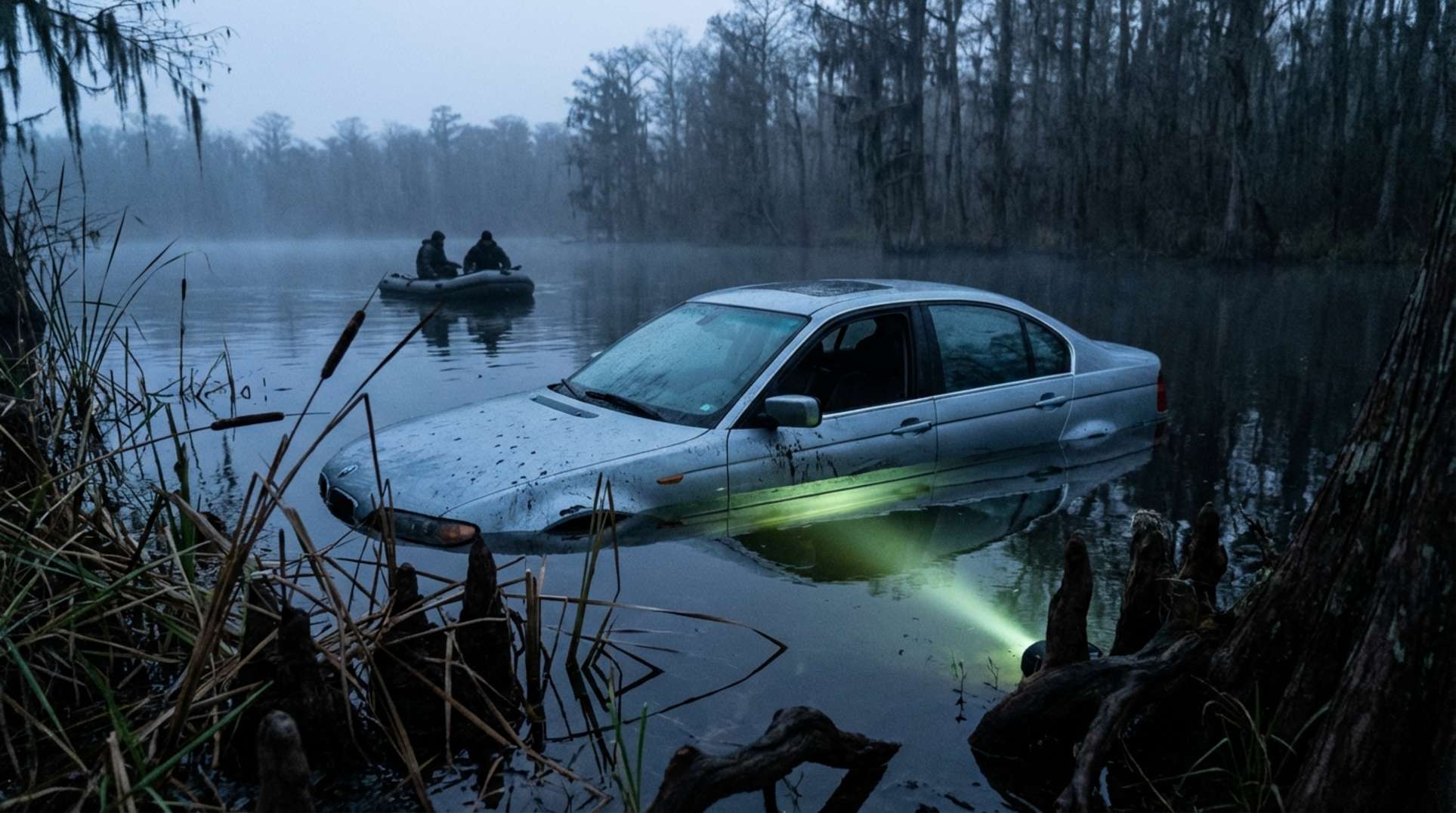
    In Brazil’s Amazon, Amaroso and his friend set up for night fishing only to spot two glowing eyes orbiting their camp, driving them into the tent for a sleepless vigil. Meanwhile, independent divers in the swamp deployed sonar from boats and an underwater drone, spotting the sunken BMW and sharing images with the family before officials stepped in—hobbyist investigators piecing together what others overlooked.

    Timelines, Tracks, and Hard Data

    Facts anchor these accounts, some rock-solid from official sources, others hanging on witness words alone. Tommy Brailey vanished in August 2017; his submerged vehicle and remains surfaced in reports from January 1–2, 2025, identified by the Sumter County coroner using dental records. Independent teams scanned with sonar and drones, leading to official recovery—sourced from outlets like WIS and WLTX Street Squad.

    Wildlife data backs up some sounds: fox and canid screams peak December to February, mimicking human cries per expert sources. Trail-cam clips spread on YouTube, Reddit, and TrailCamValley, but many miss original metadata or provenance.

    To chase verification, push for full-resolution videos, EXIF data, and SD card images—hand them to a neutral forensic lab for optical and audio breakdowns.

    Event Details Source/Verification
    Tommy Brailey Case Last seen Aug 2017; vehicle/remains found Jan 1–2, 2025; ID via coroner and dental records Sumter County Coroner’s Office; independent sonar/drone discovery led to recovery (WIS, WLTX)
    Wildlife Sounds Fox/canid screams peak Dec–Feb, sound human-like Wildlife expert documentation
    Trail-Cam Clips Shared on YouTube, Reddit, TrailCamValley Many lack metadata/provenance; anecdotal circulation

    Official Story vs. What the Data Suggests

    Authorities close the book on some parts cleanly: Sumter County’s coroner office stands by the ID of Tommy Brailey’s remains in the BMW, treating the recovery as settled fact. Yet community voices highlight how family and indie divers got there first with sonar and drone shots, passing images to relatives before the pros arrived—sparking questions on who verifies what in civilian searches.

    Experts lean toward wildlife for the screams, citing fox vocalizations or echoes in the environment, while trail-cam oddities get chalked up to blur, IR glitches, or trespassers. Still, those cloaked figures repeating nights without flinching at the camera, then gone, don’t fit neatly. Rubido Canyon’s tampering and prints lack official logs or chain-of-custody, leaving gaps.

    No spectrograms out there for the Arizona audio, no raw metadata for key clips, no re-enactments to test theories—skepticism cuts both ways, urging balance over quick judgments.

    Open Threads: What We Still Don’t Know

    Plenty of loose ends beg for follow-up. For those cloaked-figure and long-limbed clips, did anyone preserve the original files, metadata, timestamps, or SD cards for outside checks? The Arizona snowstorm sounds—has spectrogram work or acoustic modeling ruled out wind, ice, or temps as culprits?

    Could we recreate the blurry shapes and glowing eyes using local critters, IR camera settings, or posed humans at the same spot? In Rubido Canyon, where are the scaled photos, casts, soil samples, or filed reports on those handprints and tampering?

    On the search side, how common is it for indie sonar and drone crews to beat officials to submerged vehicles, and what rules govern sharing pics with families or cops? Digging into these could tighten the narrative.

    What It All Might Mean

    These threads weave loss and lingering fear—Tommy Brailey’s family finally gets answers through determined divers, a real mercy in the murk. Campers face nights that shift from routine to raw unease, reminders of how thin the line feels out there.

    Solid ground holds for the recovery and wildlife sounds, with fox cries, eye-shine, and camera quirks explaining much. But unverified images and claims push for stronger habits: chase original files, run spectrograms, team up on forensics, and honor cultural stories like skinwalker lore without twisting them.

    It’s about sharpening our tools, not shutting down the search—patterns emerge when we document right.

    Frequently Asked Questions

    Yes, independent divers located a silver BMW in Rocky Bluff Swamp using sonar and an underwater drone, sharing images with the family before official recovery. The Sumter County coroner confirmed the remains inside as Tommy Brailey, missing since August 2017, via dental records, as reported in early January 2025 news.

    Wildlife experts point to foxes and other canids producing high-pitched screams that mimic human sounds, especially in winter. Glowing eyes could stem from animal eye-shine or camera infrared reflections, though some clips and witness reports remain unresolved without forensic analysis.

    Many clips circulate on YouTube and Reddit but lack original metadata or provenance, making verification tough. Cloaked figures and long-limbed silhouettes spark speculation, but without chain-of-custody or lab analysis, they stay in the anecdotal realm.

    Law enforcement accepted the recovery and coroner’s identification as official. However, independent divers found the vehicle first, raising questions about civilian roles in searches and protocols for sharing evidence.

    Elements like the cloaked figures’ behavior, sudden disappearances, vehicle tampering, and handprints lack documented evidence or official reports. No public audio forensics exist for sounds, and many clips miss metadata, leaving room for further investigation.


  • Haunted Transports: Military Ghost Stories Fact-Checked

    Haunted Transports: Military Ghost Stories Fact-Checked

    Key Takeaways

    • Several firsthand-style accounts from Wartime Stories and local oral histories describe unexplained phenomena in military transports: a smiling face with a blue glow in a locked C-47 cockpit at Fort Bragg; a C-5 cargo-bay sighting involving ‘red eyes’ and raspy breathing; and folklore about ‘cursed’ parts from the Lady Be Good wreck.
    • Hard facts provide anchors: the Lady Be Good (B-24D serial 41-24301) vanished on 4 April 1943 and was found in the Libyan Desert in 1958–59, with artifacts now in museum collections; technical specs for the C-47 and C-5 match the eyewitness descriptions.
    • Open questions persist: the cockpit and cargo-bay events rely on oral testimony without public access to security logs or maintenance records; claims of salvaged parts causing accidents lack documented tracking or causal evidence.

    A Night Patrol at Fort Bragg

    The floodlamp cuts a sharp circle on the tarmac, its light pooling around the locked C-47 like a spotlight on an empty stage. Hydraulic fluid hangs in the air, mixing with the faint scent of canvas and metal. A guard paces, flashlight in hand, the generator’s hum the only company on this isolated corner of Fort Bragg. These planes carry names, nose art—crews treat them like old friends, projecting life onto cold machinery.

    Shift to 1943: a B-24 crew bails into the Libyan night, parachutes vanishing into darkness. Fifteen years later, in 1958, an oil survey spots the wreck far inland—intact, sand-swept, the machine enduring where men did not. What lingers when the crew is gone? The desert holds its secrets, indifferent.

    What Witnesses and Analysts Report

    Witnesses share these stories in forums, oral histories, and compilations like Wartime Stories, piecing together experiences that official channels often overlook. We treat these accounts with respect—they come from people who’ve stared into the unknown, much like us.

    Take the Fort Bragg C-47: a guard spots a smiling face in the locked cockpit window. It twists into horror, joined by a blue glow. A sergeant backs it up, claiming he’d seen a figure there before. These aren’t isolated whispers; they’re echoed in local retellings.

    Then there’s the child’s account—a soldier’s three-year-old describes being in a similar C-47, mentioning a ‘bird patch’ on a shoulder and an M1 Garand. Community investigators frame it as a possible past-life memory, adding layers to the mystery.

    In the C-5 Galaxy tale, an airman recalls his friend hearing a whining sound during a preflight check in the empty cargo bay. A man appears with red eyes and raspy breathing. Security sweeps the area, finds nothing. This comes from forum testimony, consistent with other unexplained reports.

    Lady Be Good enters the folklore: the real 1958–59 discovery of the B-24 in the Libyan Desert blends with stories of crew remains and salvaged parts. Community memory adds tales of those parts causing accidents, apparitions in museums, shadows of the lost crew.

    Timelines, Tracks, and Hard Data

    Let’s ground this in what we can verify. Documentary records and technical specs form the backbone—dates, IDs, holdings. Where gaps appear, they highlight what needs chasing.

    The Lady Be Good: B-24D serial 41-24301 takes off 4 April 1943, lost over Libya. Wreck spotted by a British oil team around 1958; searches and recoveries follow in 1959–1960. Nine-man crew, partial remains recovered. Sources include the National Museum of the U.S. Air Force and Army Quartermaster Museum reports.

    C-47 specs hark back to WWII: typical crew setups for transport roles. The C-5 Galaxy’s cargo bay stretches about 121 feet long, 19 feet wide, 13.5 feet high—matching the scale in those sighting descriptions, per National Museum AF and GlobalSecurity data.

    Museums hold pieces: National Museum of the U.S. Air Force and U.S. Army Quartermaster collections display artifacts, sticking to historical facts without supernatural nods.

    Event Date Source Certainty
    Lady Be Good loss 4 April 1943 AAF records High (documented)
    Wreck discovery 1958–59 Oil team reports, museum archives High (verified)
    C-47 cockpit sighting Unspecified Wartime Stories, oral histories Low (anecdotal)
    C-5 cargo-bay incident Unspecified Forum testimony Low (testimonial)
    Parts curse lore Post-1959 Community folklore Low (unverified claims)

    Official Story vs. What the Data Suggests

    Official records stick to the basics: Lady Be Good as a wartime loss, with mortuary and recovery details. Museums showcase artifacts as history, not hauntings. Bases log incidents through security channels, but those don’t surface publicly as ‘ghost stories’—that’s where community networks fill in.

    Witnesses push back, describing events that defy quick dismissal. Analysts in our circles point to patterns: repeated sightings, specific details that align across accounts.

    Consider natural angles—reflections in cockpit glass creating faces, fatigue blurring a guard’s vision into hypnagogic shapes. Blue glows could stem from electronics; cargo bay noises from vents or maintenance, sounding like breaths.

    Yet these don’t always fit. The child’s precise recall of patches and rifles, or multiple witnesses corroborating figures—these demand deeper checks. Public records treat them as oral, not official. Next moves: dig for base logs, track down witnesses, follow Lady Be Good parts via serial numbers to test accident links.

    What It All Might Mean

    We can stand firm on this: Lady Be Good’s disappearance and discovery are etched in records. Nose art and crew attachments? Standard practice, turning planes into symbols of bond and loss.

    Still hanging: those C-47 and C-5 tales rest on testimony alone, no open logs to back them. Parts from Lady Be Good tied to crashes? No public tracking confirms it.

    These narratives matter—they show how service members humanize their tools, how tragedy spins into legend. They bridge grief and the unexplained, urging us to chase facts: logs, interviews, provenance. In military culture, memory doesn’t fade easy; it echoes.

    Frequently Asked Questions

    The Lady Be Good’s loss on 4 April 1943 and its discovery in the Libyan Desert in 1958–59 are documented in military records from the National Museum of the U.S. Air Force and Army Quartermaster Museum. Artifacts from the wreck are held in these collections, confirming the aircraft’s serial number (41-24301) and the recovery of crew remains.

    These accounts come from oral testimonies and compilations like Wartime Stories, without publicly available security logs or maintenance records to corroborate them. They remain anecdotal, though witnesses describe consistent details like the blue glow or red eyes.

    Community folklore links salvaged parts to later accidents and apparitions, but no documented parts-tracking or causal evidence supports this in public records. Museums display the artifacts as historical items without endorsing supernatural interpretations.

    Possibilities include optical illusions from reflections, fatigue-induced hallucinations, or environmental factors like electronic glows and ventilation noises. However, specific details like the child’s past-life recall or multiple corroborations resist easy dismissal and call for further investigation.

    They reflect how crews personify aircraft through names and art, turning loss into legend. Such narratives help process trauma and the boundaries between memory and the unexplained, often preserved in oral histories where official records fall short.

  • Gold Over $5,000: The Financial War Markets Hide From You

    Gold Over $5,000: The Financial War Markets Hide From You

    Key Takeaways

    • Gold is trading well above $5,000/oz in late January 2026, with a snapshot showing $5,339.16/oz on January 29 and a reported intraday high of about $5,602.22/oz on January 28, according to sources like JM Bullion and APMEX.
    • Mainstream market coverage points to a combination of factors driving the 2025–2026 gold rally, including a weaker U.S. dollar, central-bank buying, ETF inflows, and heightened geopolitical risks, rather than pinning it on one hidden cause, per TradingEconomics and other press.
    • Verifiable gaps persist: TIC data indicate a $212.0 billion net inflow in November 2025, and Bloomberg noted China sold some Treasuries in October 2025, but there’s no direct public proof of systematic dumping of Treasuries converted into physical gold at scale from reserve disclosures.

    A Cold Market, a Warmer World

    Picture traders hunched over screens in dimly lit rooms, watching gold quotes climb relentlessly higher while news anchors dissect rumors of wars and shadowy reserve shifts. It’s late January 2026, and the markets hum with tension. Dealers and data services report gold hovering above $5,300 per ounce—$5,339.16 on the 29th, with an intraday peak near $5,602.22 the day before. Forums buzz, equating these spikes to barometers of global unrest, silver right alongside as whispers of supply crises echo through the feeds. High-profile voices like Bob Moriarty, in his January 13 interview, fuel the fire, framing it all as signs of deeper fractures. The air feels charged, like a storm building under the calm tick of price charts.

    What Witnesses and Analysts Report

    In the precious metals community, voices like Bob Moriarty cut through the noise with sharp claims. In his January 13, 2026, interview, he describes gold surging past $5,000 as evidence of asymmetric financial warfare—specifically, China dumping U.S. Treasuries and funneling the proceeds into gold. He ties in regional incidents as covert strikes against Chinese interests, predicting hyperinflation and severe geopolitical escalations. Across forums and sites like GoldSeek, Ahead of the Herd, and 321gold, gold and silver get treated as telltale signs of systemic breakdown, signaling the erosion of the Western debt system. Silver stands out in these discussions for its alleged supply crisis, driven by booming industrial demand in photovoltaics, electronics, and batteries. These narratives amplify the idea that official data underreports the true monetary and geopolitical stress, while sovereign and private buying drains physical supplies.

    Timelines, Tracks, and Hard Data

    Let’s lay out the verifiable pieces. Gold spot prices hit above $5,300 per ounce on January 29, 2026, with JM Bullion listing $5,339.16 and APMEX noting an intraday record around $5,602.22 the previous day. Mainstream sources like TradingEconomics attribute the rally to a blend of drivers: a softer U.S. dollar, central bank purchases, ETF inflows, and geopolitical tensions.

    On the Treasury side, TIC data from the U.S. Treasury show a net inflow of $212.0 billion in November 2025. Bloomberg reported a dip in foreign holdings in October 2025, including some Treasury sales by China. For silver, the World Silver Survey from the Silver Institute pegs 2024 mine production at about 819.7 million ounces, with record industrial use in solar panels, electronics, and batteries leading to projections of ongoing structural deficits.

    Energy risks add another layer: Analyses from the EIA and CRS highlight the Strait of Hormuz, where roughly 20% of seaborne oil flows pass. Modeling shows that closing it could spike markets through disrupted supplies.

    Date Gold Spot Notable Headline TIC Net Flow Notable Foreign-Holdings Move
    Oct 2025 N/A China sells some Treasuries (Bloomberg) N/A Foreign holdings dip
    Nov 2025 N/A TIC inflow reported $212.0b inflow N/A
    13 Jan 2026 N/A Bob Moriarty interview on financial warfare N/A N/A
    28 Jan 2026 ~$5,602.22 (intraday high) Record gold levels amid geopolitics N/A N/A
    29 Jan 2026 $5,339.16 Ongoing rally coverage N/A N/A

    Sources include Treasury TIC tables (August–November 2025 CSVs), World Silver Survey summaries, TradingEconomics commentary, JM Bullion/APMEX records, and EIA/CRS briefs on Hormuz.

    Official Story vs. What the Data Suggests

    Official channels, like U.S. Treasury TIC releases, report net monthly flows with notes on custodial and valuation effects, emphasizing that gold’s rise stems from mixed factors: a weaker dollar, central bank buying, ETF inflows, and geopolitics, as per mainstream outlets. In contrast, community voices argue that strategic sovereign selloffs of Treasuries, converted to gold, are the real engine—pointing to Bloomberg’s October 2025 China sales, though data don’t confirm large-scale, systematic conversions by any specific actor.

    Data has blind spots: Custodial holdings can hide true sellers, valuation shifts alter totals, and reserve reports often lag or bundle details, masking buyer identities and timings. On extreme claims, like potential Israeli nuclear actions against Iran, mainstream sources and agencies offer no corroboration; proving them would need hard signals like orders, intercepts, or intelligence drops. Key open questions: Can we link foreign-holdings shifts directly to physical gold buys? What’s the true breakdown of gold’s drivers—central banks, ETFs, private buyers, or currency effects?

    Why the Silver Story Is Different (and Why the Strait of Hormuz Matters)

    Silver’s tale diverges from gold’s. The World Silver Survey logs 819.7 million ounces mined in 2024, but surging industrial demand in solar, electronics, and batteries creates structural shortfalls, unlike gold’s vast above-ground stocks. Market risks lurk in the plumbing: Counterparty issues could ripple through COMEX and LBMA via derivatives, ETF redemptions, and industrial pulls, though public data skips the granular positions and collateral details needed for full contagion maps.

    The Strait of Hormuz amplifies this. EIA and CRS analyses warn that blocking it disrupts 20% of oil flows, potentially spiking prices via higher transport costs, rerouting delays, and inventory drains—feeding into wider market stress and boosting precious metals demand. To dig deeper, we’d interview silver specialists on exchange mechanics, seek comments from COMEX/LBMA on settlements, and consult energy experts on realistic rerouting timelines.

    What It All Might Mean

    Gold’s records scream high risk and safe-haven hunger; public data backs a mix of causes like dollar weakness, central bank grabs, ETF money, and geopolitics, with scant proof of massive sovereign Treasury dumps turned to gold without tracing custodies and reserves. Mysteries linger: Who exactly is reallocating, at what scale? How do drivers split? How likely are the dire escalations?

    If alternative views hold water—dollar asset shifts, silver squeezes— it could shake policy, trade, and financial systems, shaped by how markets and officials respond. Watchpoints: Pull Moriarty video timestamps, map TIC CSVs for flows, query Treasury on custodies, quiz silver ops experts on contagion, and ask energy analysts about Hormuz scenarios. Stay on verified data—TIC updates, reserve reveals, exchange reports, solid intel— to track what unfolds.

    Frequently Asked Questions

    Yes, according to dealer reports and market data, gold reached $5,339.16 per ounce on January 29, 2026, with an intraday high of about $5,602.22 on January 28, as cited from sources like JM Bullion and APMEX.

    Bloomberg reported China sold some Treasuries in October 2025, and TIC data showed foreign holdings dips, but public reserve disclosures lack direct proof of systematic conversion to physical gold at scale. Community narratives, like Bob Moriarty’s, highlight this as asymmetric warfare, though data gaps leave it unproven.

    Institutional analyses from EIA and CRS indicate that closing the strait could disrupt 20% of seaborne oil flows, leading to price spikes and broader market stress that boosts demand for precious metals like gold and silver.

    Mainstream sources like TradingEconomics attribute it to a weaker U.S. dollar, central-bank buying, ETF inflows, and geopolitical risks, rather than a single covert operation.

    Silver faces structural deficits due to high industrial demand in areas like solar panels and electronics, with 2024 mine production at 819.7 million ounces per the World Silver Survey, differing from gold’s larger above-ground supply.

  • Operation Highjump: Inside Byrd’s Missing Diary Myth

    Operation Highjump: Inside Byrd’s Missing Diary Myth

    Key Takeaways

    • Operation HIGHJUMP was a documented U.S. Navy expedition in 1946–47, involving about 4,700 personnel, 13 ships, and 33 aircraft, focused on polar equipment testing, mapping, and base establishment, as detailed in official naval reports.
    • Community retellings often highlight unverified claims like a ‘secret diary’ of Admiral Byrd describing an inner-Earth paradise, alleged Nazi bases in Antarctica, and mysterious deaths linked to suppression, which continue to circulate despite lacking primary-source backing.
    • Open questions persist around the origins of the diary text, discrepancies in expedition timelines, and potential still-classified records that could clarify whether HIGHJUMP involved more than its stated scientific goals.

    A Cold Armada on the Horizon

    Picture it: autumn 1946, the world still shaking off the dust of World War II. The U.S. Navy gathers a fleet like no other for peacetime—ships cutting through southern waters, planes humming overhead, all headed for the frozen edge of the Earth. Operation HIGHJUMP kicks off on August 26, with the bulk of Antarctic action crammed into December through February 1947. We’re talking roughly 4,700 men, about 13 ships, and 33 aircraft, pushing into isolation where the sun never sets in summer, yet the cold bites deep.

    The stated mission? Test gear in polar extremes, map uncharted ice, set up bases. But the scale feels heavy, almost wartime—carriers, destroyers, icebreakers churning against vast white horizons. Then comes the real peril: on December 30, the Martin PBM-5 ‘George 1’ crashes, claiming lives and demanding rescues that highlight just how remote and unforgiving this theater is. Machines roar against endless light, a postwar navy dressed in research gear, sailing into questions that echo louder than the engines.

    What Witnesses and Independent Researchers Report

    In the shadows of official logs, other voices emerge—expedition participants, ufology circles, and dedicated researchers piecing together fragments. Oral accounts and forum discussions often reference a February 1947 flight where Byrd supposedly ventured beyond the pole, chronicling in a ‘secret diary’ a lush inner-Earth valley: warm lakes, forests, even prehistoric beasts, guided by an entity called the ‘Arani’ Master.

    Fringe books and translated newspaper pieces build on this, pointing to Nazi remnants—claims of ‘Base 211’ or hideouts in ‘New Swabia’ from prewar German expeditions, suggesting secret tech or postwar escapes. Then there’s Byrd’s March 5, 1947, interview in El Mercurio, picked up by the International News Service, where he warns of attacks ‘over one or both poles’—reframed by many as hints of advanced craft encountered down south.

    Stories swirl about the operation’s sudden end after just 40 days, tied to suppressed footage or hostile forces. Independent investigators link later deaths—like Secretary James V. Forrestal’s in 1949 or Byrd’s son’s in 1988—to a cover-up. UFO reports from southern skies get woven in, adding layers that communities analyze as patterns, not coincidences.

    Timelines, Tracks, and Hard Data

    Let’s ground this in what’s verifiable. Operation HIGHJUMP ran from August 26, 1946, with core Antarctic efforts from December 1946 to February 1947, as outlined in the U.S. Navy’s 1947 report. Personnel numbered around 4,700, with about 13 ships and 33 aircraft—numbers echoed in contemporary press and archives like The Black Vault.

    Byrd’s El Mercurio interview on March 5, 1947, via Lee van Atta, flagged polar vulnerabilities: attacks could come ‘over one or both poles.’ Yet, the Antarctic Treaty, signed December 1, 1959, and effective June 23, 1961, promotes peaceful science without sealing off access.

    On deaths: Forrestal’s May 22, 1949, fall was ruled suicide; Byrd’s son died in October 1988 from malnutrition, dehydration, and brain disease. Critically, no authenticated ‘secret diary’ appears in Byrd’s papers at Ohio State University or other major archives—authenticated diaries exist, but not this one.

    Claim Documented Record
    Secret diary exists describing inner-Earth encounter No authenticated manuscript in Byrd archives or recognized holdings
    HIGHJUMP lasted only 40 days and was cut short Operational records show Antarctic work through February 1947, spanning months
    Nazi Base 211 confirmed No primary evidence in naval or historical archives; linked to prewar expeditions but unverified postwar
    Byrd warned of polar attacks due to encounters Interview text exists but interpreted variably; official context was strategic vulnerability

    Official Story vs. What the Data Suggests

    The Navy insists HIGHJUMP was straightforward: training, logistics, mapping—all in the 1947 report. The Antarctic Treaty later reinforced this with calls for open science and no military bases. Straightforward, right?

    But communities see more. The armada’s size and firepower hint at hidden agendas—perhaps confronting threats or securing sites. Byrd’s ‘pole to pole’ quote gets read as code for real encounters, not just hypotheticals. That ’40-day’ cutoff? Official timelines stretch longer, suggesting the claim might twist a partial pullback into full retreat.

    The diary’s missing manuscript undercuts the inner-Earth tale, yet its spread raises questions about origins. Deaths have official explanations, but their timing fuels suspicion. Here, facts and interpretations split—doubts linger where patterns emerge, even if archives stay silent.

    Lingering Gaps and Productive Next Steps

    Key puzzles remain. Where did the ‘secret diary’ text first appear? No authenticated source in archives, but tracing its publication could reveal much. Then the timeline clash: why ’40 days’ in some accounts when records show months? Ship logs and squadron reports might clarify.

    Classification hangs over it—could redacted files from 1946–1956 in National Archives or presidential libraries change the picture? FOIA requests targeting HIGHJUMP intelligence, film, and aviation reports are a start.

    For the dig: hunt the diary’s earliest print, snag the full van Atta interview from news vaults, scour Ohio State’s Byrd inventories, and pull Navy unit logs. Stick to provenance—chain of custody matters when secondary sources dominate.

    What It Might Mean — and Why the Story Persists

    Hard facts anchor HIGHJUMP as a massive naval push with clear goals and real risks, including casualties. Byrd’s 1947 warning stands in print, but that diary? Absent from archives. Mysteries endure: the diary’s true source, timeline mismatches, possible hidden docs.

    It sticks because it blends Cold War moves, German Antarctic history, and myths like Hollow Earth or UFOs—fueling a narrative that won’t fade. Chasing clarity through sources matters; it honors the search without shutting doors on what’s unresolved.

    Frequently Asked Questions

    Official Navy reports describe it as a polar expedition for equipment testing, aerial mapping, and base establishment in 1946–47. Community researchers often suggest hidden motives, like confronting Nazi bases or advanced threats, based on the operation’s scale and Byrd’s statements.

    No authenticated manuscript exists in Byrd’s archival holdings at Ohio State University or other major repositories. The text circulates in fringe books and forums, but its origins and provenance remain unverified, leaving the inner-Earth claims unsupported by primary sources.

    Some accounts claim it ended after 40 days due to mysterious events, but official records show Antarctic operations running from December 1946 to February 1947. This discrepancy could stem from distortions about specific mission phases, warranting checks of ship logs and reports.

    Researchers link ‘Base 211’ to prewar German expeditions in Antarctica, suggesting postwar survival or tech hides. No primary archival evidence confirms this in naval or historical records, though the narrative persists alongside HIGHJUMP stories.

    In his March 1947 interview, Byrd highlighted strategic vulnerabilities over the poles. Officials framed it as general defense concerns, while communities interpret it as evidence of encountered advanced craft or threats during HIGHJUMP.

  • Viral Reality Glitches: What Survives Fact-Checking

    Viral Reality Glitches: What Survives Fact-Checking

    Key Takeaways

    • Many viral claims—double suns, time-travelers in photos, frozen birds, and sudden foreknowledge in videos—spread quickly online but often have ordinary explanations.
    • Verified science and historical checks explain several cases: atmospheric optics (sun dogs) produce apparent extra suns; photo historians find period-appropriate objects in alleged anachronisms.
    • Some items remain unresolved: the 1977 Wow! Signal is a one-off radio detection with no repeat, and missing raw video provenance in certain clips prevents definitive forensics.

    Snapshots of the Claims

    People post clips and photos that feel like reality glitches: a bright second sun beside the real sun, a passerby tapping someone moments before danger, a bird appearing to hang frozen midair, and figures in old photographs wearing items some insist are modern. These snippets travel fast across social platforms, inviting speculation about hidden physics, time slips, or manufactured hoaxes.

    What Explanations Look Like

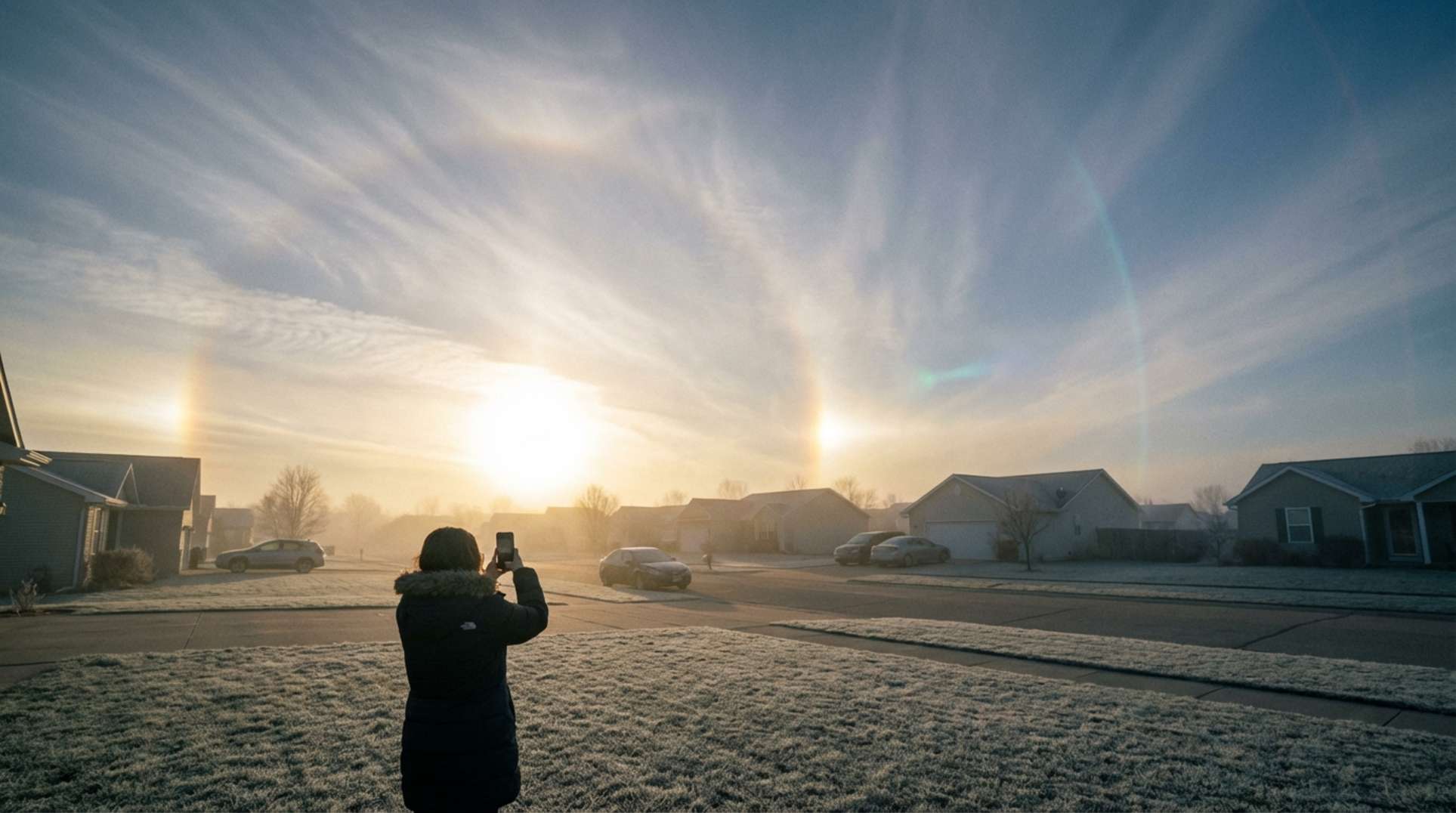
    Meteorology and optics account for many “double sun” videos as sundogs or parhelia—bright spots formed by ice-crystal refraction at roughly a 22° angle. Photo and film experts identify plausible period analogues for alleged anachronistic items (early cameras, accessories, or gestures). Video analysts often point to compression artifacts, frame-rate effects, staging, or missing custody chains when raw footage is unavailable.

    Cases That Stay Open

    Certain phenomena resist neat closure. The Wow! Signal (August 15, 1977) was a 72-second radio spike near the hydrogen line detected by Big Ear; it remains intriguing because it never repeated. Some cosmic microwave background anomalies (e.g., the Cold Spot) continue to be studied in cosmology as potential curiosities rather than confirmed new physics. Viral videos without high-resolution originals or witness statements can remain unresolved and subject to debate.

    How to Evaluate These Stories

    • Check provenance: who recorded the file, when, and is there an original high-resolution source?
    • Consult domain experts: meteorologists for optical phenomena, photo historians for archival images, and radio astronomers for signals.
    • Look for mundane mechanisms first: optics, camera artifacts, human memory errors (e.g., the Mandela Effect), or intentional manipulation.

    Conclusion

    Many viral “reality slips” dissolve under close inspection, yet a few items legitimately remain ambiguous and worth scientific follow-up. Prioritizing original data, expert analysis, and careful provenance tracing separates genuine anomalies from the entertaining but ordinary.

    FAQ

    Are double suns real?

    Often no: most reported double-sun sightings match known atmospheric phenomena like sundogs produced by ice-crystal refraction.

    Was the Wow! Signal ever explained?

    Not conclusively. It is a single, unexplained radio detection from 1977 with no confirmed repeat observations.

    Do old photos show time travelers?

    Careful provenance checks and historical context usually find mundane explanations—period items or lookalike objects—rather than genuine anachronisms.

  • Gold at $5,000 & Ghost Fleets: What Elites See Coming

    Gold at $5,000 & Ghost Fleets: What Elites See Coming

    Key Takeaways

      • Gold prices shattering records above $5,000 per ounce, alongside Tether’s claim of hoarding 140 metric tons, points to major players bracing for financial turbulence—verifiable through market data and corporate disclosures.
      • Coordinated formations of 1,400 Chinese fishing vessels in the East China Sea, combined with the Doomsday Clock at 85 seconds to midnight and New START’s impending lapse, suggest escalating strategic maneuvers—backed by AIS tracking and official bulletins.
      • Unresolved: Are these gold grabs and maritime patterns defensive moves against looming conflict, or something more? And do AGI systems already operate in shadows, or is the risk still theoretical?

    A Silent Convoy Beneath the Dark Sea

    Picture the trading floors: screens pulsing red as gold hits impossible highs in late January 2026, whispers of institutional vaults swelling with metal echoing through the hum of urgent deals. Out in the East China Sea, radar pings trace a ghostly rectangle—1,400 Chinese-flagged fishing boats aligned with unnatural precision, more than 200 miles from shore, under a moonless sky. The Bulletin’s Doomsday Clock ticks to 85 seconds before midnight, headlines scream of ballooning defense budgets and crumbling arms treaties, and you can’t shake the feeling: is this the calm before impact, or just another layer of the game?

    What Witnesses and Analysts Report

    From the prepper and investor circles, the narrative is clear: this gold rally, with prices spiking over $5,000 an ounce, and moves like Tether’s accumulation of physical assets signal a rush to safety amid fears of financial collapse. As one investor forum poster put it, \”It’s Cyprus all over again—get into metals, commodities, real estate before the bail-ins hit.\” Maritime analysts poring over AIS data describe the 1,400-boat rectangular formation as anything but routine fishing; they see it as potential militia drills or gray-zone tactics near Taiwan, with a satellite imagery expert noting, \”This level of coordination screams rehearsal.\”

    Defense commentators aren’t mincing words either, pointing to the New START treaty’s February 2026 expiry, surging military budgets, and the NDAA’s push for AI governance as ramps to higher tension. \”We’re seeing institutional bets on AGI as a wildcard risk,\” says a policy analyst from an arms-control think tank. Tether’s CEO didn’t hide it, stating outright on January 28, 2026, that the company has secured about 140 metric tons of gold in Swiss vaults—a disclosure that’s sparked debates in crypto and business circles. Meanwhile, public health watchers flag spikes in CBRN gear searches and Canadian defense procurement listings as hints of official prep, with one observer remarking, \”Governments don’t stockpile decontamination kits for fun.\”

    Timelines, Tracks, and Hard Data

    Let’s anchor this in the facts we can timestamp and source. Gold prices broke $5,000 per ounce on January 25, 2026, per Reuters, climbing to $5,200–$5,300 by January 28, as tracked by JM Bullion feeds—these are solid market records. Tether’s CEO disclosed on January 28, via CoinDesk and other press, that they’ve bought around 140 metric tons stored in Swiss vaults; this is a corporate statement, but it awaits independent audit confirmation.

    The fishing vessel formation? The New York Times’ interactive AIS analysis confirms about 1,400 Chinese-flagged boats in a rectangular pattern in early January 2026—reliable journalism there. The Bulletin of the Atomic Scientists set the Doomsday Clock at 85 seconds to midnight in their January 27 press release. New START expires in early February 2026, as documented by the Vienna Center for Disarmament and Non-Proliferation and the Arms Control Association.

    On the AI front, the FY2026 NDAA mandates a DoD Artificial Intelligence Futures Steering Committee, per DefenseScoop’s December 2025 summary. Canadian DND’s public procurement pages list CBRN and decontamination gear—straight from Canada.ca. China’s commodity buys ramped up in grains, iron ore, and minerals from 2023–2025, per Mining.com and The Diplomat reports. TSMC’s hold on advanced semiconductors is real, but claims like ‘92% of sub-5 nm’ vary by metric—check TSMC docs and critiques from SemiWiki or TrendForce.

    Date Event Source
    Early Jan 2026 ~1,400 Chinese-flagged fishing vessels form rectangular pattern in East China Sea New York Times AIS analysis
    Jan 25, 2026 Gold prices exceed $5,000/oz Reuters
    Jan 27, 2026 Doomsday Clock set at 85 seconds to midnight Bulletin of the Atomic Scientists
    Jan 28, 2026 Tether discloses ~140 metric tons of gold in Swiss vaults; gold prices hit $5,200–$5,300 CoinDesk, Reuters, JM Bullion
    Early Feb 2026 New START treaty expiry VCDNP/Arms Control Association

    Official Story vs. What the Data Suggests

    Institutions paint a measured picture: the Bulletin calls the Doomsday Clock a symbolic nudge for action, not a doomsday prophecy, while DoD and Congress frame NDAA AI provisions as routine governance to assess risks, not evidence of live AGI. Tether’s execs say their gold buys are straightforward diversification, but without bar-level audits, skeptics in the markets push for proof—journalists are on it.

    Chinese officials offer scant details on the fishing fleets, chalking it up to normal ops, yet AIS and satellite data from independent analysts suggest deliberate patterns that could fit militia training; seasonal fishing or data glitches remain possible alternatives. Community voices warn of bail-in risks drawing from Cyprus history, but those mechanics aren’t universal—it’s a scenario, not fate. On AGI, Pentagon study requests show real concern, but they stop short of confirming operational systems; that’s the gap where speculation thrives, and data alone can’t bridge it yet.

    What It All Might Mean

    Putting it together, the hard signals—gold’s record run, Tether’s claimed hoard, those eerie fleet formations, the Clock’s warning, NDAA AI moves, and New START’s end—paint a picture of systems under strain. These could be precautions against financial shocks or geopolitical flares, especially around Taiwan or nuclear postures.

    Big unknowns linger: Is Tether’s gold real and verifiable? Do those vessels tie back to central orders? Are AGI systems already humming in black-budget silos, or just lab experiments? For next steps, push for Tether’s custodial audits, dig into AIS metadata and port records for fleet coordination, monitor DoD’s AI committee deliverables, and refine TSMC chokepoint metrics by wafers, revenue, or capacity.

    This matters because these threads could unravel into market panics, supply disruptions, or escalations—think CBDC controls or Taiwan flashpoints. Stay prepared: stock basics, watch the feeds, but keep it level-headed. Where public data cuts off, secrets take over—treat these as puzzles to crack, not gospel. Readers, if you’ve got leads, share them; we’re in this together.

    Frequently Asked Questions

    Reuters and JM Bullion feeds confirm gold prices topped $5,000 per ounce on January 25, 2026, reaching $5,200–$5,300 by January 28. Tether’s CEO disclosed acquiring 140 metric tons stored in Swiss vaults on January 28, as reported by CoinDesk, but this awaits independent audit verification.

    AIS data analyzed by The New York Times shows about 1,400 vessels in a precise rectangular pattern in early January 2026, over 200 miles offshore. Analysts see this as atypical for fishing, possibly militia drills, though seasonal activity or data artifacts are alternative explanations.

    The Bulletin of the Atomic Scientists set the Clock at 85 seconds to midnight on January 27, 2026, framing it as a call to action amid tensions. New START expires in early February 2026, per arms-control sources, with officials noting increased risks but no direct predictions of conflict.

    The FY2026 NDAA requires a DoD committee on AI futures, showing institutional concern about risks. However, this doesn’t confirm deployed, conscious AGI—it’s an open question, with community interpretations seeing it as a strategic wildcard.

    Request Tether’s custodial audits, review AIS metadata and port manifests for fleet details, track NDAA AI committee updates, and cross-check semiconductor metrics via TSMC reports and analysts like TrendForce. Public sources like Reuters, NYT, and government sites provide the baseline data.

  • Sergei Ponomarenko: Time Traveler or Fabricated Hoax?

    Sergei Ponomarenko: Time Traveler or Fabricated Hoax?

    Key Takeaways

    • A disoriented man identifying himself as Sergei Ponomarenko appeared in Kyiv on April 23, 2006, claiming he had just been in 1958, backed by a Soviet-era ID and an old film camera with undeveloped photos.
    • Surviving evidence includes developed images showing mid-20th-century scenes, a woman, and a bell-shaped UFO, but modern checks trace some to TV footage or manipulations, with no primary records found.
    • Unresolved issues persist around missing police and hospital documents, contested photo origins, and the man’s alleged disappearance, keeping the case in mystery rather than confirmed fact.

    Kyiv, 2006: A Man Out of Time

    Picture the streets of Kyiv in spring 2006. The city hums with post-Soviet life—cell phones buzzing, cars from the new millennium rolling by. Then, amid the crowd, a man stumbles into view. He’s dressed in clothes that scream mid-century: a simple jacket, outdated trousers. He looks lost, asks passersby what year it is. When police arrive, he hands over a Soviet-era ID and an ancient film camera. He insists he’s from 1958, that moments ago he was living in that era. The contrast hits hard—relics from a vanished world dropped into a city that’s moved on.

    What Witnesses and Analysts Report

    Accounts from those on the ground paint a consistent picture. Police in Kyiv encountered the man, who called himself Sergei Ponomarenko, claiming a leap from 1958. He showed an ID listing his birth in 1932 and carried an old camera with undeveloped film. Taken to a psychiatric clinic, he spoke with a doctor—accounts name him something like P. Kutrikov—who heard his story of time displacement. The film, once developed, revealed shots of 1950s Kyiv, the man with a young woman said to be his fiancée, and a bell-shaped craft he described as a UFO.

    Later, investigators reportedly tracked down the woman from the photos, though her name shifts in retellings—sometimes it’s one spelling, sometimes another. Online researchers and community analysts echo these beats but note how details morph: dates fuzz a bit, names vary slightly. It’s the mark of a story passed through forums and videos, growing layers as it spreads. Witnesses, from clinic staff to locals, stick to the core: the man was there, then he vanished from a guarded room, leaving his camera behind.

    Timelines, Tracks, and Hard Data

    Let’s break down what we can pin down. The reported encounter hits on April 23, 2006, in Kyiv. The man claimed he came from 1958, with an ID showing a birthdate in 1932—June 16 or 17, depending on the source. Film from his camera got developed, yielding images of old Kyiv, personal portraits, and that UFO-like object. But digs by folks like YouTuber Joe Scott reveal problems: some photos trace back to Ukrainian TV or seem pieced together from unrelated sources, especially one allegedly from 2050.

    No luck finding original police reports, hospital logs, or chain-of-custody for the items in public searches. It’s a gap that nags. Here’s a quick table to map it out:

    Reported Item What Was Claimed What Primary Evidence Exists Status
    Soviet-era ID Names Sergei Ponomarenko, born 1932 Circulated images only; no originals Unverified
    Old film camera Contained undeveloped photos from 1958 Developed images online; provenance contested Contested
    Developed photos Show mid-century Kyiv, fiancée, UFO Some traced to TV/manipulated sources Contested
    Encounter date April 23, 2006 Repeated in secondary accounts; no records Unverified

    Official Story vs. What the Data Suggests

    Authorities have stayed silent—no press releases from Kyiv police, no hospital confirmations. Mainstream outlets and skeptics flag the tale as unproven, pointing to reliance on retellings and online collages. No scientific body has stepped up with forensic tests on negatives or documents. Yet witnesses push back, holding to their accounts of the man’s arrival and vanishing.

    Other angles hold water too. Could it be a hoax, with staged props? Or a mental health break, like a fugue state twisting reality? Maybe evidence got misidentified or muddled over time. Archives might just be spotty—Soviet-era stuff vanishes easy in post-collapse chaos. Without primary docs, we assign less weight, but that doesn’t erase the possibility.

    What It All Might Mean

    The firmest bits: secondary sources spread the story wide, detailing old docs and film that matched the man’s claims. Photos exist, even if some origins raise flags. But questions linger. Where are those police files or clinic notes? Do negatives or lab records survive somewhere? Could we find the fiancée in civil registries? Any staff statements or footage from the disappearance?

    This case matters because it highlights how high-strangeness tales evolve—folklore meets media, evidence standards clash with extraordinary claims. It’s less about proven time travel, more a mirror on narrative spread. Readers, chase those archives, audit the photos, search registries. That’s how we shift legend to fact—or fiction.

    Frequently Asked Questions

    The encounter was widely reported in secondary sources, with consistent details about a man claiming to be from 1958 appearing in Kyiv in 2006. However, no primary police or hospital records have been located to confirm it. Modern analyses suggest some elements may stem from manipulated or reused media.

    The man allegedly provided a Soviet-era ID and undeveloped film that developed into photos of 1950s scenes, a fiancée, and a UFO. Witnesses reported these matched his story, but provenance issues trace some images to TV footage or alterations. No original documents or negatives have been verified through forensic analysis.

    Authorities have issued no official statements or verifications; police and clinic records remain absent from public searches. Mainstream skepticism treats it as unresolved, emphasizing the lack of primary evidence. Community researchers continue to probe without institutional backing.

    Key gaps include the location of contemporaneous records, original photo negatives, and statements from clinic staff about the man’s disappearance. Identifying the woman in the photos through civil records could also clarify details. These elements keep the case open to interpretation as hoax, delusion, or something stranger.

  • CERN Sky Portal Videos: Viral Hoax or Missed Anomaly?

    CERN Sky Portal Videos: Viral Hoax or Missed Anomaly?

    Key Takeaways

    • Viral videos and stills from 2015–2016 show a circular, swirling cloud formation and a bright orb claimed to be ‘above CERN’ (example uploads circulated on YouTube).
    • Major fact-checkers (Snopes, USA Today) and mainstream outlets found no evidence that CERN opened a literal ‘portal’ and traced many clips to tourist footage, misattribution, or meteorological/optical causes.
    • The Large Hadron Collider is a real 27 km accelerator; when it restarted in 2022 it recorded collisions at 13.6 TeV — a technical milestone unrelated to visible sky phenomena.
    • Particle-physics discoveries tied to CERN (e.g., candidate X(3872) events in heavy-ion collisions) are genuine and scientifically significant, but are not evidence of interdimensional portals.
    • Open questions remain: raw provenance/metadata for the most-shared clips, whether there’s any hard correlation between accelerator operations and anomalous reports, and the precise atmospheric/optical explanation for each clip.

    A Night the Sky Curled Open

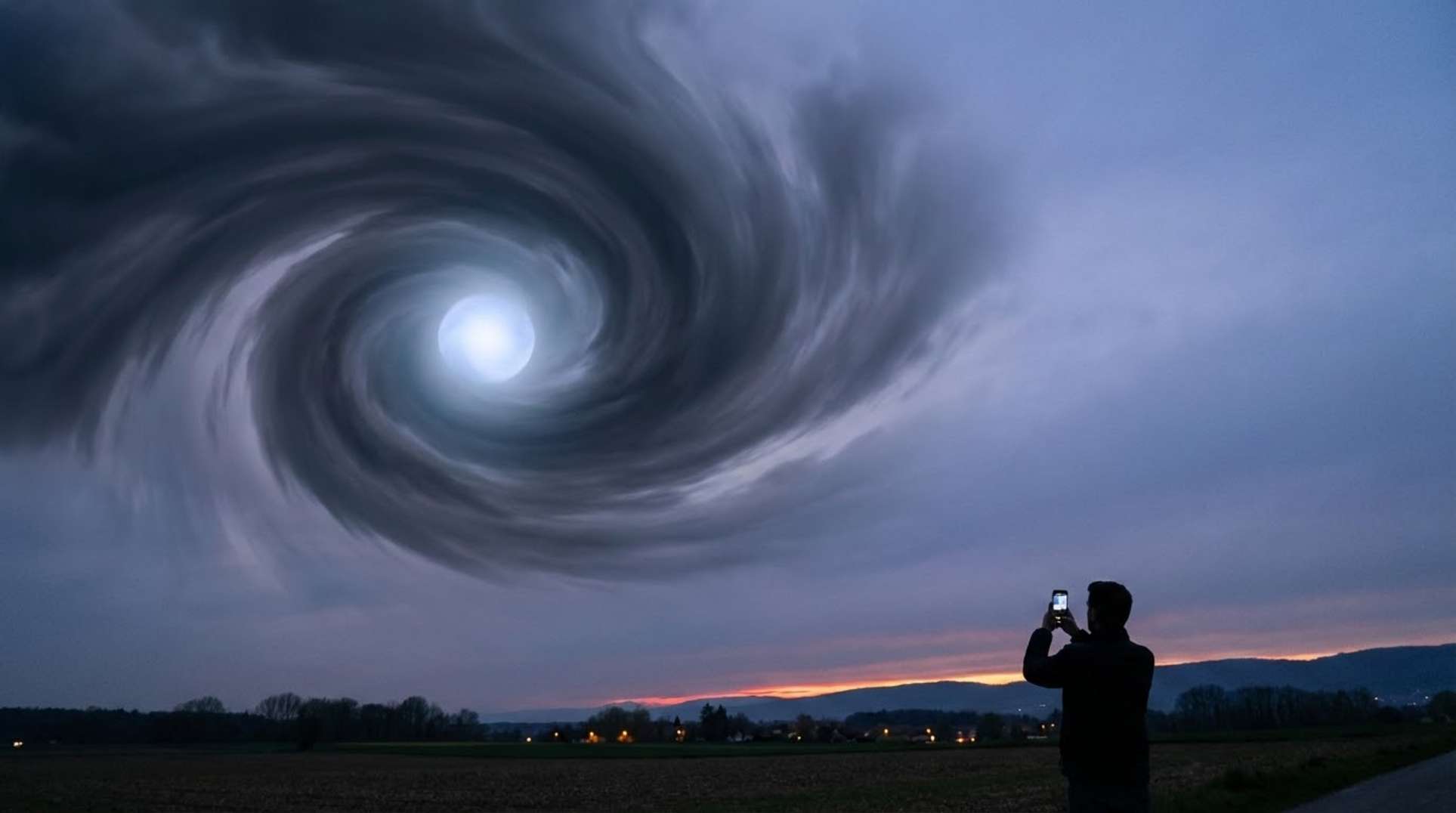
    Picture this: it’s a crisp evening in the Geneva countryside, the kind where the air hangs heavy with anticipation. A tourist points their camera skyward, capturing what starts as an ordinary sunset. Then, the clouds begin to twist, forming a perfect circle that swirls like a vortex pulling at the heavens. A bright orb appears, hovering, then seeming to dart toward the center. Awe mixes with a chill of alarm— is this nature’s fury, or something more? Footage like this exploded online in late 2015 and early 2016, with reposts keeping the mystery alive. Most clips come from visitors unaffiliated with CERN, not from any official feeds. The visuals are consistent: that round, churning cloud and the luminous object that moves with purpose.

    What Witnesses and Analysts Report

    Eyewitness accounts pour in from tourists and social media users, blending straightforward descriptions of swirling skies with deeper, spiritual takes— some speak of ‘tunnel dreams’ that felt like glimpses into other realms. UFO channels and spiritual interpreters see these as signs of interdimensional gateways, pointing to the timing and visuals as too coincidental to ignore. Others in the community suggest camera glitches or rare cloud behaviors, urging caution. Fact-checkers and meteorologists call for raw footage, metadata, and supporting data like radar scans, but those details are scarce for the biggest viral hits. The split is clear: believers tie it to CERN’s hum, while skeptics lean on everyday explanations. We respect both sides; after all, we’ve all chased shadows that turned out to be something real.

    Timelines, Tracks, and Hard Data

    Let’s lay out the facts like evidence on a table. The viral storm hit hardest in December 2015 to January 2016, with outlets like Yahoo and Daily Mail amplifying the buzz, and shares continuing since. CERN’s Large Hadron Collider spans 27 km underground, smashing particles at energies up to 13.6 TeV after its 2022 restart— all documented in public reports. Fact-checkers from Snopes and USA Today dismantled ‘portal to hell’ tales, labeling them unsupported. On the science side, the CMS team spotted about 100 candidates for the X(3872) particle in roughly 13 billion heavy-ion collisions, as covered by MIT News and peer-reviewed papers. Looking ahead, CERN’s Future Circular Collider studies eye an 80–100 km tunnel aiming for 100 TeV collisions. But here’s the gap: no public raw files, timestamps, or geodata for those key clips, and no cross-checked sensor logs.

    Metric Details Source
    Viral Circulation Dec 2015–Jan 2016, ongoing reposts Yahoo/Daily Mail archives
    LHC Specs 27 km ring, 13.6 TeV collisions (2022) CERN public reports
    Debunking Portal claims false/unsupported Snopes, USA Today
    X(3872) Detection ~100 candidates in ~13B collisions MIT News, CMS papers
    FCC Proposal 80–100 km tunnel, ~100 TeV goal CERN feasibility studies
    Provenance Issues No raw files/metadata available Fact-check analyses

    Official Story vs. What the Data Suggests

    CERN sticks to the script: their work is about accelerators, collisions, and peer-reviewed breakthroughs, with FCC plans grounded in feasibility studies— no nods to portals. Fact-checkers back this up, drawing on expert briefings to show why sky shows don’t link to underground physics. Yet, community voices push back, highlighting visual matches like vortices and orbs, plus dream reports syncing with CERN runs, all fueled by skepticism toward official lines. Without raw footage or sensor backups, alternatives linger: could it be vortex clouds, lens flares, or edits? The data leaves space for doubt, and that’s where the real intrigue lies.

    The X Particle, the FCC, and Why the Science Matters Here

    Amid the hype, real science shines through. The CMS collaboration pinned down evidence for X(3872) candidates in lead-lead collisions— about 100 hits in massive datasets, as detailed in MIT coverage and research papers. This exotic particle, debated as tetraquark or meson molecule, offers clues to the universe’s early moments and matter’s building blocks. Then there’s the Future Circular Collider: plans for an 80–100 km beast, staging electron-positron runs before hadron smashing at 100 TeV to hunt dark matter and Higgs secrets. It’s thrilling stuff, recreating Big Bang echoes in controlled bursts. No wonder it sparks imaginations— to outsiders, it whispers of unlocking hidden worlds, even if experts call it routine.

    What It All Might Mean

    Boiling it down: the footage is out there, shared far and wide, but fact-checkers and scientists see no portal proof, while CERN’s X(3872) finds stand as solid, unrelated progress. Still, gaps persist— missing metadata for clips, no confirmed links between LHC runs and anomalies, no synced sensor data. For next steps, we’re chasing original files from uploaders, pulling radar and weather logs for those dates, talking to CERN reps and optics specialists, and mapping out dream stories for patterns. This isn’t just spectacle; it’s a reminder of how striking visuals, cutting-edge experiments, and evidence voids breed rival tales. Tracking it keeps us sharp, separating true weirdness from the noise.

    Frequently Asked Questions

    No evidence supports that CERN opened a literal portal. Fact-checkers like Snopes and USA Today traced viral clips to tourist footage, weather effects, or optical illusions, with no ties to accelerator operations. Community interpretations see gateways, but official records and experts maintain it’s unrelated to CERN’s work.

    The footage shows circular, swirling clouds and a moving bright orb, often from 2015–2016 tourist clips near CERN. Skeptics point to meteorological causes like vortex clouds or lens artifacts, while believers link it to interdimensional events. Raw metadata and sensor data are missing, leaving explanations open.

    X(3872) is an exotic particle candidate detected in CERN’s heavy-ion collisions, offering insights into early-universe physics. The Future Circular Collider is a proposed larger accelerator for higher-energy experiments. These are genuine scientific advances but have no connection to the viral sky footage or portal claims.

    CERN focuses on its accelerator science and denies any portal involvement, supported by peer-reviewed data. Fact-checkers debunked the claims as unsupported, citing misattributed clips and natural explanations. Despite this, community doubts persist due to missing raw evidence.

    Key gaps include raw provenance and metadata for the clips, any correlations between CERN operations and anomalies, and precise explanations for each video. Next steps involve seeking original files, sensor logs, and expert interviews to clarify patterns or rule out artifacts.

  • Neptune in Aries: Coincidence Behind Quakes & Gold?

    Neptune in Aries: Coincidence Behind Quakes & Gold?

    Key Takeaways from the Window

    • Coincidence in timing: Neptune re-entered Aries on January 26, 2026, as covered in astrology reports, and that same UTC date featured notable signals, including a M5.6 earthquake near Mendi, Papua New Guinea, per USGS and Reuters, alongside record highs and trading volumes in precious-metals markets, also via Reuters.
    • What the hard data supports: USGS ComCat recorded the PNG M5.6 on 2026-01-26; mainstream outlets documented gold hitting all-time nominal highs and unusually heavy contract volume on Jan 26–27; major protests and crackdowns, notably in Iran, occurred across January 2026, as reported by Reuters and CNN.
    • What remains unresolved: No published, peer-reviewed proof exists that a planetary transit or short-term space-weather event caused a globally distributed burst of M5-class quakes, and no statistical global moment-sum analysis for Jan 26 has been produced to prove the day was anomalous beyond coincidence.

    When Neptune Crossed Into Aries

    Picture January 26, 2026. Screens glow with urgent updates: astrology sites buzz about Neptune’s ingress into Aries, as noted on People.com. Meanwhile, social feeds erupt with earthquake alerts, market tickers flash gold prices shattering records, and newsrooms track protests turning violent in places like Iran. The air feels charged—people scrolling through comments, piecing together patterns, wondering if it’s all connected. In alternative media circles, the tenor shifts from routine observation to sharp focus, with users highlighting these overlaps as signs of something larger unfolding.

    What Witnesses and Analysts Report

    Eyewitness accounts poured in from across the globe, shared on forums and social media. People described feeling moderate quakes or hearing about them in real time, with posts on Reddit threads and YouTube comments pointing to a perceived ‘burst’ of activity around January 26. These reports were scattered—mentions of tremors in various regions, often timestamped to that day, creating a tapestry of personal experiences that felt synchronized to many.

    Independent commentator Stefan Burns added his voice, publishing video analysis in January 2026 that connected planetary and space-weather alignments to heightened Earth energetics. You can find his commentary on his YouTube channel (https://youtube.com/@stefanburns) and personal site (https://wildfreeenergy.com). Community posts went further, weaving Neptune’s transit with the quakes, surging gold prices, and ongoing civic unrest into narratives of global transformation. Witnesses emphasized repeatable elements, like multiple independent reports from distant locations, fueling a collective sense that these weren’t isolated incidents.

    Timelines, Tracks, and Hard Data

    Here’s the backbone of what we know, pulled from primary sources. This timeline anchors the events, with links where available.

    Date Event Location Magnitude/Value Source
    2026-01-26 M 5.6 Earthquake 40 km SSW of Mendi, Papua New Guinea M 5.6 USGS Event Page; Reuters reported M5.58 (GFZ)
    2026-01-26 Neptune Ingress into Aries N/A N/A People.com
    2026-01-26–27 Gold Spot Price Record Global Markets ~ $5,110.50/oz Reuters Market Coverage
    2026-01-26 CME Metals Contracts Record CME 3,338,528 contracts Reuters Market Data
    January 2026 Sustained Protests and Crackdowns Iran and elsewhere N/A Reuters; CNN; UN coverage (noting verification challenges due to blackouts)
    January 2026 Alternative Commentary Online N/A Stefan Burns YouTube; Reddit threads, YouTube comments

    Key gaps persist: No global ComCat moment-sum analysis for 2026-01-26 exists yet, and there’s no consolidated peer-reviewed study linking Neptune’s ingress to seismic triggers.

    Official Story vs. What the Data Suggests

    Official channels keep it straightforward. USGS catalogs earthquakes as discrete events, with times, magnitudes, and depths listed in ComCat—they don’t link them to astrology or planetary causes. Check their search documentation for details. Mainstream geophysics allows for some tidal influences on seismicity in specific cases, but nothing reproducibly ties a transit like Neptune into Aries to M5 quakes across different faults.

    On the markets, analysts from Reuters and CNBC point to safe-haven buying, ETF inflows, and geopolitical tensions as drivers of the gold surge—not geophysical links. Community interpreters, including Burns and his audience, see these coincidences as potential energetic ties. It’s an intriguing idea, but it needs stronger stats and mechanisms to hold up. To bridge this, we’d want a ComCat query for January 26, calculating total moment release against baselines from the past month, quarter, or year.

    What It All Might Mean

    Let’s stick to what’s solid: Neptune entered Aries on January 26, per astrology reports; USGS caught that M5.6 in Papua New Guinea; gold markets hit records in price and volume; and January 2026 saw real unrest, especially in Iran, as covered by Reuters and CNN.

    Questions linger. Was seismic energy on that day unusually high globally? Could planetary alignments or space weather trigger quakes across faults? Are the market spikes and protests tied to these, or just parallel? Next, we’ll query ComCat for January 26, compute quake counts and moment sums against baselines, cross-reference GFZ and EMSC catalogs, and build a reading list on tidal and space-weather triggers. We’ll also seek comments from a seismologist and a market analyst.

    Hold that curiosity tight, but pair it with rigor. The timing aligns—that much is real. Proving more demands the numbers.

    Frequently Asked Questions

    Yes, astrology coverage on People.com confirms Neptune’s ingress into Aries on that date. The same day saw a M5.6 earthquake in Papua New Guinea, per USGS, record gold prices and trading volumes via Reuters, and ongoing protests in places like Iran, as reported by mainstream outlets.

    Witnesses on social media and forums reported a sense of seismic bursts around January 26, with dispersed quake feelings. Analyst Stefan Burns linked planetary alignments to Earth energetics in his January 2026 videos, and community narratives tied the transit to quakes, market surges, and unrest as signs of global shifts.

    USGS treats quakes as isolated tectonic events without planetary links, and market analysts attribute gold rallies to geopolitical factors. Communities see potential energetic connections, but these lack peer-reviewed support; quantitative analysis like moment-sum comparisons could help clarify.

    No peer-reviewed evidence yet links the planetary transit to quakes or markets. The timing is verifiable, but proving causation requires statistical tests on global seismic data and studies on triggering mechanisms, which remain open questions.

    We’ll run ComCat queries for January 26 to compute seismic moment against baselines, check other catalogs like GFZ and EMSC, compile literature on space-weather triggers, and interview experts in seismology and markets for added context.

  • Hellfire Caves: What the Ghost Stories Leave Out

    Hellfire Caves: What the Ghost Stories Leave Out

    Key Takeaways

    • The Paranormal Files team ventured into the Hellfire Caves to film an attempt at opening a portal, issuing stark on-camera warnings about possible dark repercussions for viewers.
    • Historical records confirm the caves as a man-made network of chalk and flint tunnels excavated around 1748–1752 under Sir Francis Dashwood, featuring chambers like the Banqueting Hall and Judgment’s Pass.
    • Local folklore highlights the Suki apparition and the Paul Whitehead legend involving a stolen heart and the phrase ‘Who has my heart?’, but primary archival evidence for violent rites, the exact heart theft details, or Suki’s death remains incomplete or inconsistent.

    A Candlelit Descent into Chalk and Secrets

    The clock strikes midnight in Buckinghamshire, and the air turns damp and cool as you step into the Hellfire Caves beneath West Wycombe Hill. Chalk dust hangs in the stillness, the scent of earth and flint sharp against narrow stairways that twist downward. This tourist site, a historic landscape, stretches about a quarter-mile through tunnels, plunging up to 300 feet below the hill’s church-capped summit. The Banqueting Hall looms large, its scale echoing forgotten gatherings.

    In the Paranormal Files video, the team sets a tense mood with dim lights flickering off white walls. Guides spin tales of the past, while the crew issues personal warnings about their portal attempt. Shadows play tricks, and every footfall stirs the heavy air. You’re there, feeling the weight of history pressing in, without crossing into outright belief.

    What Witnesses and Guides Describe

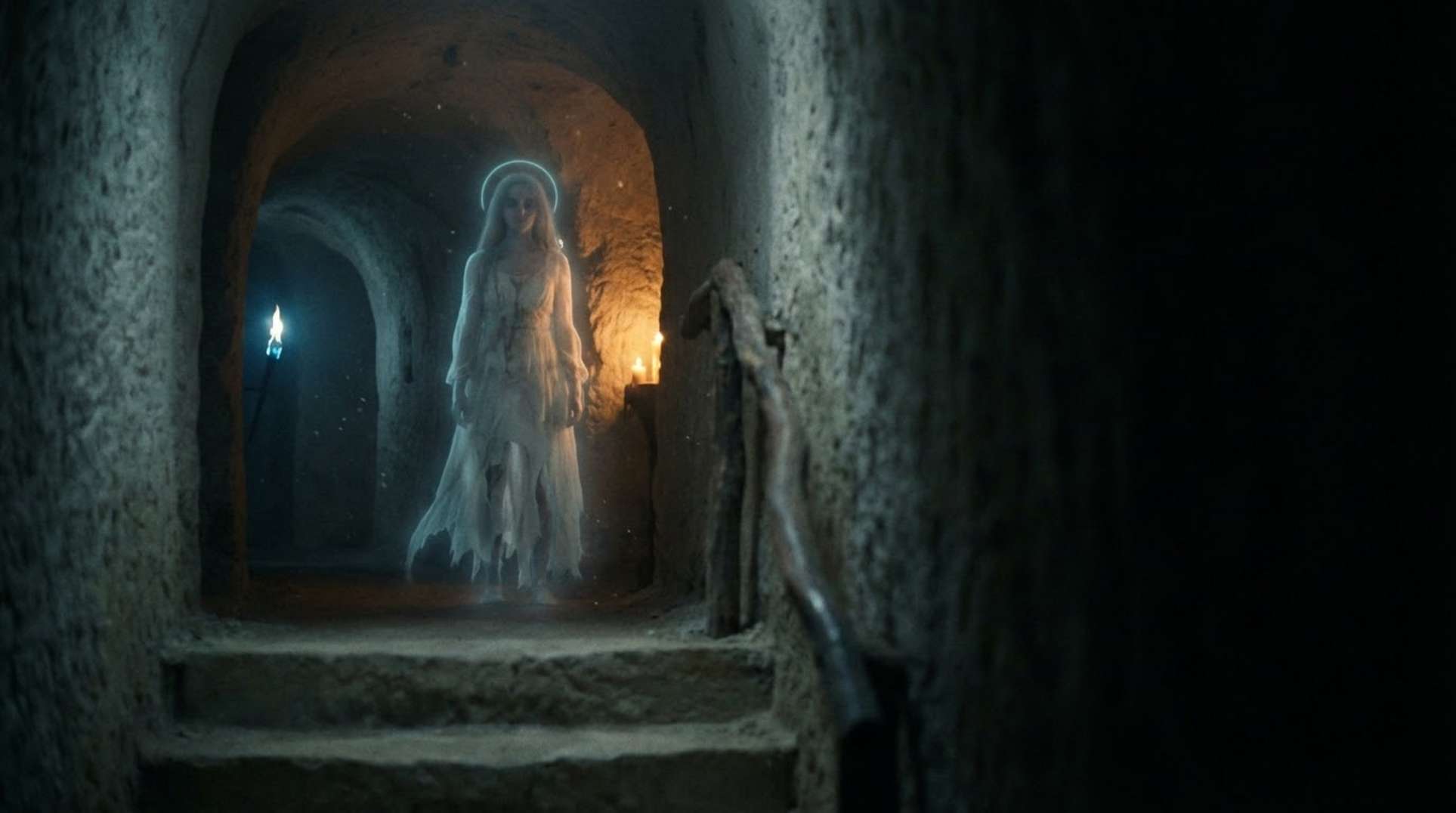
    Visitors and guides at the Hellfire Caves share stories that persist across years. Many report seeing a woman in white, known as Suki or Sukie, wandering the passages. Others describe an older man dressed in 18th-century attire, or sudden sensations of being touched in Judgment’s Pass. Thrown rocks, abrupt temperature drops, and fleeting lights or orbs come up often in these accounts.

    Guides on tours recount the tale of Paul Whitehead, who burned club records before his death and had his heart placed in an urn at the Dashwood Mausoleum. The legend builds from there: a theft of that heart sparks the ghostly question, ‘Who has my heart?’ Shows like Most Haunted and YouTube channels, including Paranormal Files, keep these motifs alive, sharing them with wider audiences.

    In the Paranormal Files episode, the team pushes further, attempting a ritual in the Banqueting Hall. They report unusual experiences, and the guide mentions rocks being hurled and a neon-like outline of a face resembling the Devil. Singular claims, like specific physical attacks, stand out against the more common, repeatable patterns. These narratives come from those who’ve walked the caves themselves, and we listen without judgment.

    Timelines, Carvings, and Verifiable Records

    Digging into the facts, the Hellfire Caves emerge from solid records. Excavated between 1748 and 1752 under Sir Francis Dashwood, the network includes named chambers like the Banqueting Hall, Steward’s Chamber, Inner Temple, Franklin’s Cave, and the crossing over the so-called River Styx. Passages span roughly 400 meters, with depths reaching about 90 meters beneath the hilltop church.

    Paul Whitehead died in 1774, and accounts place his heart in an urn at the Dashwood Mausoleum, later stolen—often dated to 1829, though sources differ. Suki’s story, a barmaid tricked and killed in the caves, thrives in oral tradition and tourism materials but lacks a single, clear archival source. Institutions like the National Trust and Historic England view the site as an 18th-century engineered heritage spot, steering clear of supernatural angles.

    Item Common Value Source(s)
    Excavation dates c. 1748–1752 Hellfire Caves official history, National Trust, Wikipedia
    Passage length ~0.25 mile (≈400 m) Visitor materials, site guides
    Depth ~300 ft (~90 m) Visitor materials, site guides
    Paul Whitehead death 1774 Historical records
    Heart theft Commonly 1829 (varies) Tourism materials, folklore accounts

    Official Story vs. What the Data Suggests

    Historians frame the Hellfire Caves as Sir Francis Dashwood’s practical project: an engineered curiosity that provided jobs, tied to the Hellfire Club’s elite, libertine gatherings that poked fun at church rituals. Many tales of crime or Satanism appear as later exaggerations. Heritage groups like the National Trust and Historic England stick to conservation and verified history, avoiding ghostly endorsements.

    Yet guides, visitors, and investigators paint a different picture through lived experiences. Recurring stories of Suki, Whitehead, and physical oddities form a community narrative, boosted by tourism and media. TV and YouTube coverage can heighten expectations, potentially shaping what people sense on-site. This doesn’t erase the reports but adds layers to how we interpret them.

    Where records thin out, questions linger. No broad contemporary documents confirm human sacrifices or major crimes during club meetings. Details on the Whitehead heart theft and any cave deaths need more primary digging. The tension between official accounts and witness stories keeps the site alive, urging us to weigh both sides carefully.

    Follow-Ups Worth Doing

    To push beyond stories, targeted steps could sharpen the picture. Start with archives: scour parish registers, old newspapers, and estate papers for solid traces of Suki’s death or the exact Whitehead heart theft details.

    On-site, run environmental checks like EM and infrasound surveys, CO2 and mold tests, acoustic mapping, and structural inspections for loose rocks. Add thermal imaging and long-exposure photography to document anomalies.

    For human factors, organize blind tours with unaware participants, using questionnaires to gauge how prior knowledge influences reports. Independent filming could help separate expectation from reality. These moves build evidence without promising to settle the debate on demons.

    What It All Might Mean

    We know the Hellfire Caves as an 18th-century creation linked to Dashwood and his club, now a protected site drawing tourists with its folklore of Suki and Whitehead. Records back the architecture and history, while stories of apparitions and thefts persist in guides and media.

    Still, primary sources for violent rites or Suki’s fate aren’t firmly established, and Whitehead’s heart theft varies in accounts. No public forensic studies fully account for the sensory experiences reported.

    This blend of hard facts and enduring tales draws investigators seeking rituals. It shows how history, setting, and stories merge to create phenomena—some see spirits, others explanations. Respect the experiences, chase the evidence, and let the unknowns fuel the search.

    Frequently Asked Questions

    The team filmed an attempt to open a portal in the caves, reporting unusual experiences in the Banqueting Hall. They issued on-camera warnings about potential dark consequences for viewers.

    The caves were excavated around 1748–1752 under Sir Francis Dashwood, with chambers like the Banqueting Hall documented. Folklore about Suki’s death and Whitehead’s stolen heart is widespread in local stories and tourism, but primary archival evidence is incomplete or inconsistent.

    Institutions like the National Trust and Historic England treat the site as an 18th-century heritage location focused on conservation and documented history. They do not endorse supernatural interpretations, viewing many lurid claims as later rumors.

    Archival searches in parish registers and newspapers could verify details on Suki and Whitehead. On-site tests like EM surveys, mold sampling, and blind participant studies might explain reported phenomena without promising to prove or disprove supernatural elements.

    The site’s mix of verified 18th-century history and persistent folklore, like apparitions and physical sensations, creates a compelling draw. Media coverage amplifies these motifs, blending narrative and environment in ways that produce experiences open to interpretation.