Author: Art Grindstone

  • Ezekiel’s Wheel: UFO Spaceship or Sacred Throne?

    Ezekiel’s Wheel: UFO Spaceship or Sacred Throne?

    Key Takeaways

    • Ezekiel 1:1–28 records a first-person vision ‘on the fifth of the month, in the fifth year of King Jehoiachin’s exile’ beside the Kebar canal, describing a ‘windstorm,’ ‘great cloud,’ fire, brightness, four living creatures, and ‘wheels within wheels.’
    • Scholarly chronologies commonly correlate the dating formula to c. 593–592 BCE, and fragments of Ezekiel (and Pseudo-Ezekiel) appear among the Dead Sea Scrolls (e.g., 4Q73, 4Q385–4Q391), confirming circulation of these traditions centuries before the Common Era.
    • Interpretations divide sharply: mainstream scholarship treats the passage as symbolic Merkabah throne-vision; alternative writers (notably Josef F. Blumrich) have argued for a literal spacecraft reading; modern UAP reporting shows institutions now treat anomalous aerial events as safety/security issues, but the ancient vs. modern data types are fundamentally different and leave key questions open.

    Dawn on the Kebar: A Vision and a Roar

    The sun rises slow over the exile camp. Ezekiel stands by the Kebar canal, the water murmuring in the quiet. It’s the fifth year of King Jehoiachin’s exile, the fifth day of the month. He marks it precisely in his account, grounding the moment in time and place. Then the sky changes. A windstorm rolls in from the north. An immense cloud flashes with fire. Brilliant light surrounds it. Inside the fire, shapes emerge—like four living creatures. The air fills with roar and gleam. Wings beat. Wheels turn. Eyes everywhere. Polished metal shines. The intensity grabs you, even now. It pulls readers back to that canal bank, senses alive, wondering what broke through the ordinary.

    What Witnesses and Analysts Report

    Ezekiel speaks in his own voice. He calls it a vision, eyewitness style, straight from the scene in Ezekiel 1:1–28. Jewish and Christian scholars have long seen it as symbolic. Part of Merkabah literature, focused on God’s throne and its glory. Mobility, not machinery. Mystics in that tradition chase the deeper meanings. Then there are the alternative views. Ancient-astronaut proponents spot shared details—light, metallic sheen, wheels, thunder. Josef F. Blumrich’s book, The Spaceships of Ezekiel from 1973, breaks it down technically. He argues for a real craft. Modern UAP witnesses describe flight paths that defy physics. Pilots talk instrumentation glitches. Safety concerns. Analysts at places like ODNI and AARO push for structured reporting. They frame anomalies as security matters. No quick jumps to cosmic answers. All these angles deserve a fair look. Each group brings its lens to the same motifs.

    Timelines, Tracks, and Hard Data

    Let’s pin down what we can verify. The primary text is Ezekiel 1:1–28. It opens with: ‘In the thirtieth year, in the fourth month on the fifth day, while I was among the exiles by the Kebar River, the heavens were opened and I saw visions of God.’ The dating ties to the fifth year of King Jehoiachin’s exile—scholars peg it around 593–592 BCE, though some chronologies shift to 594–593 BCE. Location: the Kebar canal, near Tel-Abib in Babylonian exile. Manuscripts back this up. Dead Sea Scrolls include Ezekiel fragments like 4Q73 and Pseudo-Ezekiel texts in 4Q385–4Q391. These show the story circulating by the 3rd to 1st centuries BCE. Mainstream views place it in ancient Near Eastern symbolic traditions, Merkabah style. Blumrich, with his NASA background, published The Spaceships of Ezekiel in German in 1973, English in 1974. He saw engineering in the words. On the modern side, the ODNI’s 2021 Preliminary Assessment on UAP highlights unexplained incidents, treated as safety and security risks. DoD and AARO continue that work. What’s missing? No ancient radar. No multiple independent logs. No plain-prose reports from the time. Just the poetic account.

    Source Date Type of Evidence
    Biblical Text (Ezekiel 1:1–28) 6th c. BCE Eyewitness poetic account
    Dead Sea Scrolls (e.g., 4Q73, 4Q385–4Q391) 3rd–1st c. BCE Manuscript fragments
    ODNI Report 2021 Instrumented/pilot reports

    Official Story vs. What the Data Suggests

    Academics stick to the symbolic line. Ezekiel’s vision fits Merkabah throne literature. They parse genre, symbols, echoes from other texts. Cultural parallels in the ancient Near East. Not tech. Dead Sea Scrolls experts note the fragments preserve and tweak the text. Qumran groups reworked it in Pseudo-Ezekiel. Shows active transmission. Alternative takes, like Blumrich’s, treat the descriptions as blueprints. Wheels within wheels? Engine parts. They map modern tech onto old words. Selective, but intriguing. Institutions like ODNI, DoD, and AARO handle today’s UAP with protocols. Collect data. Prioritize security. Many cases stay unexplained. But they rely on sensors, not visions. The gap is real—poetic ancient accounts versus multi-instrument modern ones. Mixing them risks errors. Symbolic views hold strong on literary turf. Literal craft ideas spark imagination but lean on analogies. Official UAP efforts validate studying anomalies now, without proving ancient claims.

    What It All Might Mean

    We know this much: Ezekiel’s vision is ancient, dated to the 6th century BCE, and preserved in Qumran fragments. The text blends raw sensory details with symbolic weight. Theology charges every line. Still, questions linger. Did Ezekiel witness something physical, or was it purely visionary? Hebrew words carry ambiguities—do they point to myth or machine? Comparing this to modern UAP data means bridging vast differences in evidence types. Avoid sloppy overlaps. For next steps, try side-by-side translations of tricky phrases. Build a list of solid sources on Merkabah and Qumran. Scrutinize Blumrich’s engineering alongside language experts. Look at how cultures describe intense experiences. Mystery remains where evidence stops. Respect the interpreters on all sides. Chase facts, not hype.

    Frequently Asked Questions

    Ezekiel dated the vision to the fifth day of the month in the fifth year of King Jehoiachin’s exile, around 593–592 BCE. It took place beside the Kebar canal in the Babylonian exile region near Tel-Abib.

    The primary text is in Ezekiel 1:1–28, with scholarly dating to the 6th century BCE. Fragments from the Dead Sea Scrolls, such as 4Q73 and 4Q385–4Q391, confirm the traditions circulated centuries before the Common Era.

    Modern reports from institutions like ODNI and AARO focus on instrumented data and security issues, leaving many incidents unexplained. Ezekiel’s account is a poetic, first-person vision, creating a methodological gap that requires careful comparison to avoid errors.

    Mainstream scholars see it as a symbolic Merkabah throne-vision emphasizing God’s glory. Alternative views, like Josef F. Blumrich’s, argue for a literal spacecraft based on descriptive details such as wheels and metallic sheen.

    The ancient record lacks instrumented corroboration like radar or multiple independent accounts. Modern UAP work uses different evidence types, and interpretations rely on literary or analogical approaches, leaving key questions open.
  • Marked in Ohio: Drug Trap or Ritual Experiment?

    Marked in Ohio: Drug Trap or Ritual Experiment?

    Key Takeaways

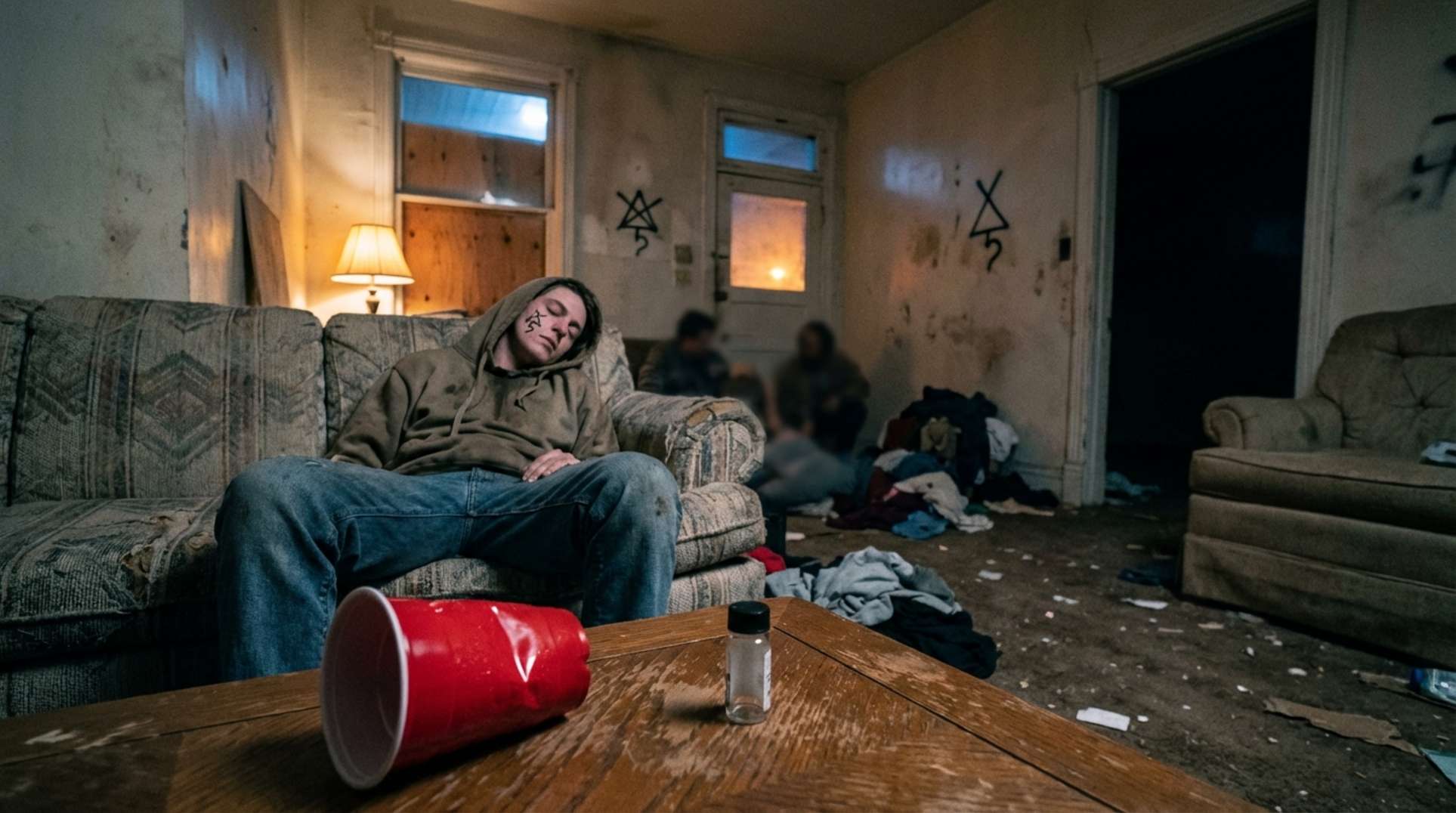
    • Witnesses describe waking disoriented in an abandoned house, surrounded by passed-out partygoers marked with a recurring symbol—a triangle crossed by an X with a hook at the bottom. The host, Mullen, was overheard saying, ‘I brought them. Please, I brought them. I marked them.’ (Timestamps from the account: awakening 7:11–8:10; symbol reveal 25:50–27:20).
    • Attendees report taking ‘wellness shots’ that a friend, Jake, later identified as containing ‘Molly’; another friend, Lola, allegedly went berserk with a knife after the shots, followed by cloaked figures cutting the power, causing the crowd to scatter, with the narrator left behind (27:30–32:20).
    • Verifiable context includes documented party shootings and high overdose risks in Ohio (e.g., AP reports, NBC); public-health data shows widespread adulteration of party drugs like MDMA with fentanyl and other substances (CDC, peer-reviewed studies).
    • Unresolved: No matching police press release, 911 record, or hospital/toxicology report found in initial searches to corroborate the full story (Research Dossier searches yielded no direct match).
    • Practical concern: If shots were adulterated, harm-reduction tools like fentanyl test strips and naloxone are key, though FTS have limits and toxicology data isn’t public yet.

    A Quiet House, A Strange Awakening

    The clock ticks past midnight in a rundown Ohio neighborhood. Houses stand empty, windows boarded, streets shadowed. Inside one such place, the narrator stirs, head throbbing, memories blurred. The house feels abandoned, silence broken only by shallow breaths from bodies slumped on floors and couches. Confusion builds to dread.

    Passed-out guests lie scattered. At first, the markings on their faces seem like party fun—marker doodles or face paint. Then details sharpen: a child’s leg visible among the forms, twisting the scene into something grotesque. The air hangs heavy with unspoken wrongness.

    Outside, the area echoes that decay—decrepit buildings, a sense of lawlessness. During the later chase, it feels like a criminal’s paradise, shadows deepening the fear. These impressions shape what comes next: claims of cloaked figures, symbols etched everywhere. Eyewitness mood matters here; it’s the frame through which the night unfolds.

    What Witnesses and Analysts Report

    Witness accounts paint a chilling sequence. The narrator wakes alone, spots the marked partygoers, overhears Mullen’s desperate plea: ‘I brought them… I marked them.’ A chase ensues with Mullen, leading to symbols carved into trees, spray-painted on walls, arranged from rocks in the neighborhood. Back at Jake’s apartment, the narrator discovers the same mark on their own face.

    Key players: Mullen as host, Jake who handed out the shots and later called them ‘Molly,’ Lola who reportedly snapped, attacking Mullen with a knife post-shot. The symbol—a triangle with an X through it and a hook below—repeats in these reports.

    Online communities echo similar tales: memory gaps, marked victims, cloaked intruders, recurring symbols. Threads mix real emergencies with misreads and fiction. Harm-reduction voices urge caution with ‘wellness shots’ posing as MDMA; testing and naloxone are standard advice amid adulteration risks.

    We hear you—these stories resonate because they’ve happened before, in fragments, across reports. Witnesses deserve space to share without judgment.

    Timelines, Tracks, and Hard Data

    Let’s map what we can pin down. Ohio’s seen its share of party violence and overdoses. An example: a June 3, 2024, party shooting reported by AP (AP link)—context for regional risks, not direct proof here.

    Public-health backing: Ohio’s 2023 Unintentional Drug Overdose Annual Report details trends (Ohio report link); CDC notes ~69% of 2023 U.S. overdose deaths involved synthetic opioids (CDC fast stats).

    Adulteration evidence: Studies show MDMA often laced with fentanyl (PubMed link; MMWR link).

    Symbol searches: Reddit threads catalog triangle glyphs; ADL notes historical extremist symbols (links; links)—meanings ambiguous.

    Missing: No matches in Columbus press releases (link) or Cleveland.com crime pages (link).

    Claim Source/Link Status
    Party violence in Ohio AP report (link) Verified (contextual)
    Overdose trends Ohio 2023 Report (link); CDC (link) Verified
    Drug adulteration PubMed/PMC studies (link); MMWR (link) Verified
    Symbol motifs Reddit/ADL (links; links) Partially verified (ambiguous)
    Police/911 records for event Columbus releases (link); Cleveland.com (link) No public record

    Official Story vs. What the Data Suggests

    Agencies like the CDC push overdose prevention, highlighting fentanyl test strips’ limits and evolving illicit supplies (CDC guidance; Ohio reports link).

    Data aligns with witness fears: Research confirms party drugs mixed with opioids heighten risks, matching the ‘shots’ reactions described.

    Silence on specifics: No public records confirm cloaked figures, power cuts, or face markings—absence noted in police and utility logs.

    Alternatives float in communities: Could be graffiti tags, hobo codes, intoxication panic, or staging. Each predicts different evidence—tags might show in vandalism reports, panic in mismatched memories. Absence isn’t disproof, but it demands more scrutiny. Push for toxicology, outage logs, eyewitness checks to clarify.

    Evidence Missing and Smart Next Steps

    Key gaps: Police reports naming Mullen or the event; 911 logs; hospital/toxicology for attendees; utility records of power cuts; social-media posts with symbols or scenes.

    FOIA targets: Local police incident reports, county EMS logs, redacted ER admissions, utility outage data. Researcher can run neighborhood/video searches.

    Toxicology could reveal MDMA, cathinones, or fentanyl—shifting explanations. Lab confirmation beats FTS limits.

    For symbols: Check Nextdoor/Facebook for posts, public works vandalism reports; compare photos to registries. Consult graffiti experts or marking anthropologists.

    Focus on safety: Share harm-reduction tips, warn on unverified claims, source witnesses respectfully.

    What It All Might Mean

    Solid ground: The account details unconscious guests and a repeating symbol; Ohio’s drug adulteration trends make tainted shots believable; no records yet back the wilder parts like cloaked intruders or deliberate markings.

    Big questions: Symbol origins, the ‘I marked them’ plea, attendee toxicology, blackout records or group involvement.

    Why track this? It highlights real dangers—bad drugs, gathering vulnerabilities, symbols fueling fear. Even if details shift, patterns like these matter to those watching the edges. Flag verified vs. unverified, cite resources, chase FOIAs and videos for clarity.

    Frequently Asked Questions

    The witness narrative describes a disorienting night with marked partygoers, adulterated shots, and cloaked figures, but no public records like police reports or toxicology confirm the full story yet. Parts align with verified Ohio overdose and party violence trends, making some elements plausible.

    Public-health data from CDC and Ohio reports back the risk of adulterated drugs like MDMA laced with fentanyl. Symbol motifs appear in online threads and registries, but no official records corroborate cloaked figures, power cuts, or the host’s statements.

    No matching police press releases, 911 logs, or hospital reports have surfaced in searches. Agencies like the CDC emphasize overdose prevention and adulteration risks, which support parts of the narrative, but silence on specifics leaves room for further investigation.

    Use harm-reduction tools like fentanyl test strips and naloxone for suspect drugs, though testing has limits. Report incidents to authorities and seek toxicology if involved; communities recommend verifying substances before use.

    The triangle with an X and hook appears in witness reports as carvings, paintings, and rock arrangements, echoing motifs in online threads and historical symbols. Provenance remains unclear—could be graffiti, codes, or something else; further checks on local reports are needed.

  • Jack O’Sullivan: Why The CCTV Still Doesn’t Add Up

    Jack O’Sullivan: Why The CCTV Still Doesn’t Add Up

    Key Takeaways

    • The strongest evidence points to Jack’s last confirmed sighting at 03:13 on March 2, 2024, as he walked from a car park onto the green below the Plimsoll Swing Bridge in Cumberland Basin, with extensive police searches—including over 100 hours of CCTV review and 200+ hours of dive operations—yielding no trace of him, his clothing, or possessions.
    • Phone and location data remain hotly contested: authorities claim the phone never left the Hotwells/Cumberland Basin area based on RF enquiries, while family-accessed EE data and community analysis suggest possible activity as late as 06:44, raising questions about chain-of-custody and full disclosure.
    • The single clearest mystery is how Jack vanished without any physical evidence emerging from such thorough searches, compounded by unresolved discrepancies in CCTV retention, phone logs, and potential later movements that challenge the official timeline.

    A Silent Night by the Basin

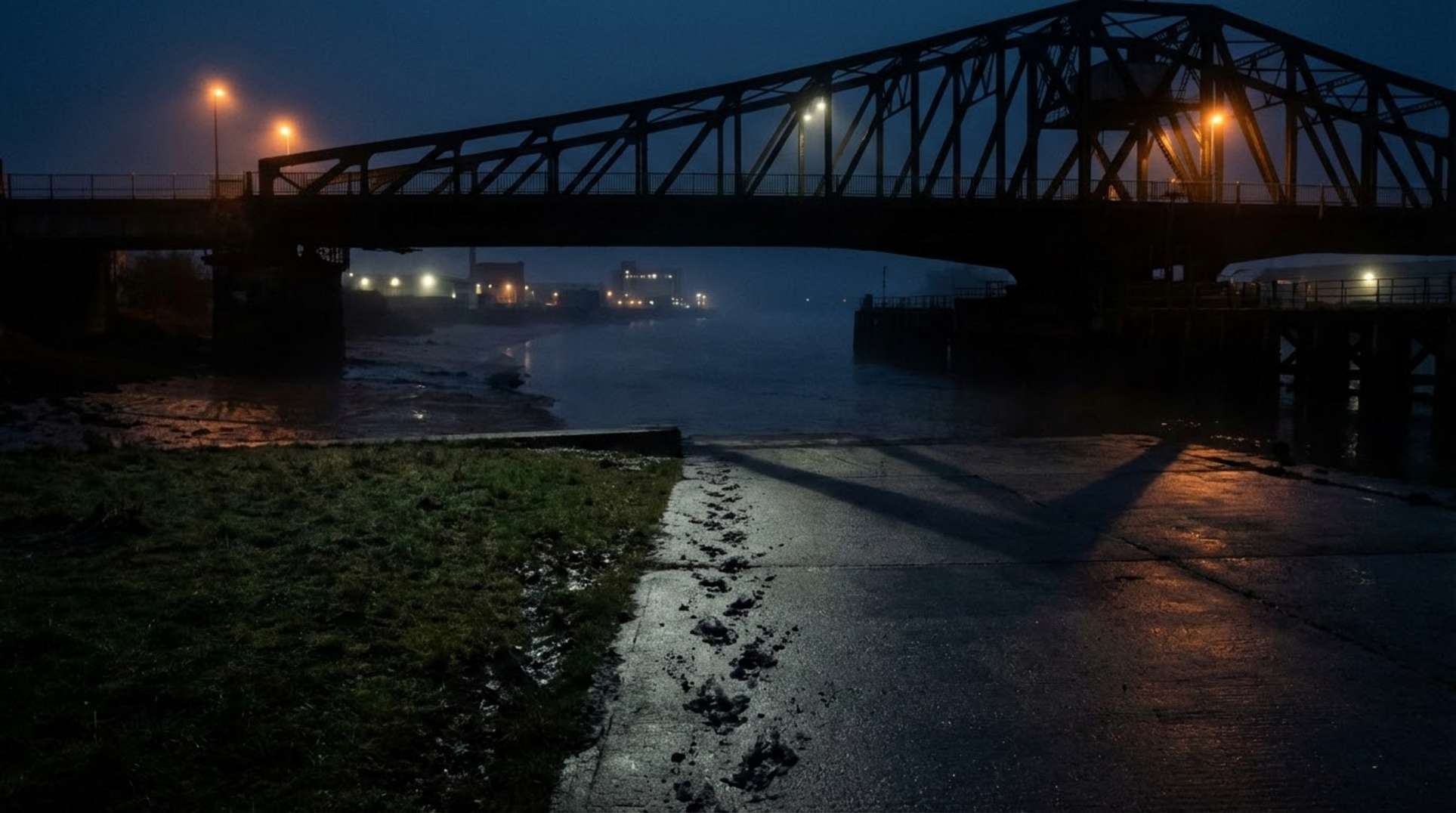
    The early hours of March 2, 2024, gripped Bristol’s Hotwells district in a biting cold. Jack O’Sullivan, 22 or 23, had spent the evening out on March 1 before joining a house party. What started as casual vibes soured with a minor altercation. He stepped out alone into the freezing night, heading toward the Cumberland Basin.

    Picture it: the tidal Avon River laps against slipways and channels, marine traffic hums faintly in the dark. The Plimsoll Swing Bridge looms overhead, casting long shadows. Disoriented, perhaps chilled to the bone, Jack navigates this treacherous harbor edge—slippery surfaces, unpredictable currents, all under a moonless sky. One wrong step here feels like stepping into oblivion.

    What Witnesses and Analysts Report

    Family members and independent reviewers have pored over footage, identifying what they believe are additional sightings of Jack around 03:25, 03:38, and 03:40—extending beyond the police’s confirmed 03:13 timestamp, as detailed in family statements and Guardian reports.

    The O’Sullivans launched the FindJack campaign, complete with a website, independent searches, rewards, private investigators, and formal complaints against police handling of CCTV retention, according to findjackosullivan.co.uk, Bristol Post, and The Guardian.

    Online communities on Reddit, SolveTheCase, and local Facebook groups compile timelines and theories respectfully. Discussions often circle back to a potential water accident, debates over phone pings and RF data, or third-party involvement, with groups sharing appeals and analyzing possible sightings.

    Police have highlighted specific witnesses in appeals, like taxi drivers and a dog-walker in a green padded jacket with a black dog wearing a red collar, seen on CCTV. They’ve urged the public to submit dashcam footage, as reported by BBC and Wales Online.

    Timelines, Tracks, and Hard Data

    Police statements pin the last confirmed sighting at 03:13 near the Plimsoll Swing Bridge. They assert the phone stayed in the Hotwells/Cumberland Basin area, backed by RF and phone-location enquiries, per Avon & Somerset Police and BBC reports.

    Searches were exhaustive: over 100 hours of CCTV reviewed, plus dive operations totaling more than 200 hours from Avonmouth to Conham, involving land, drone, and specialist teams, as noted in police updates and media from BBC and ITV.

    Phone details spark debate—family received some EE data, and press like Bristol Post report activity until about 06:44, though police haven’t publicly confirmed this. Clarification requires carrier logs and metadata.

    CCTV retention issues persist; family reviewers claim key footage wasn’t preserved, leading to complaints highlighted in The Guardian and local press.

    Metric Value Source
    Last confirmed sighting 03:13 Avon & Somerset Police
    Phone last reported network activity c.06:44 Press/EE (contested)
    Dive search hours 200+ Media/Police
    CCTV hours reviewed 100+ Avon & Somerset Police

    For verification, check Avon & Somerset Police statements, BBC timelines, ITV and Guardian articles, the FindJack site, and Bristol Post reports.

    Official Story vs. What the Data Suggests

    Avon & Somerset Police describe their investigation as active and open-minded, sticking to the 03:13 last sighting and searches guided by RF data showing the phone remained stationary in the area. Legal and data-protection rules limit what they share publicly, per their statements and BBC coverage.

    Yet family and community analysts counter that additional CCTV frames suggest Jack was alive post-03:13. EE data provided to the family hints at later activity, prompting calls for full RF tower-sector logs and CCTV retention records, as voiced in family statements, The Guardian, and Bristol Post.

    No physical trace despite massive dives fuels skepticism of a simple water fatality; later phone pings could imply movement or device interaction, needing carrier metadata to parse. Ruling out third parties requires more witness accounts or footage.

    Resolving this demands anonymized RF logs with timestamps and chain-of-custody, EE’s take on the 06:44 event, a complete CCTV catalogue, and hydrological models assessing recovery odds in those tides.

    What It All Might Mean

    At its core, the facts hold: Jack’s last confirmed presence was at 03:13 by the bridge, and no amount of searching has uncovered a shred of evidence.

    Questions linger on phone custody, RF interpretations, timeline mismatches between police and family CCTV spots, the absence of any recovery, and potential outside involvement.

    Watch for independent RF log reviews, CCTV retention audits, forensic hydrology studies, or fresh witness tips. These could shift everything.

    Cases like this endure because they test trust—in data handling, family updates, and agency transparency. When answers stay locked away, the mystery only grows.

    Frequently Asked Questions

    Jack was last confirmed seen at 03:13 on March 2, 2024, walking onto the green below the Plimsoll Swing Bridge in Bristol’s Cumberland Basin after leaving a house party in Hotwells. He had been out the previous night and left following a minor altercation.

    Avon & Somerset Police maintain the investigation is active and open-minded, with the phone never leaving the Hotwells area based on RF data. They’ve conducted extensive searches, including over 100 hours of CCTV review and 200+ hours of dives, but found no trace.

    Family reviewers identify additional CCTV sightings after 03:13 and point to EE data suggesting phone activity until 06:44, conflicting with police claims. They’ve complained about CCTV retention gaps and lack of full RF log sharing, fueling alternative theories.

    Key gaps include detailed RF tower-sector logs with chain-of-custody, clarification on the 06:44 phone event from EE, a full CCTV retention catalogue, and hydrological modeling of the basin’s tides. These could clarify phone movements and recovery odds.

    No physical trace of Jack, his clothing, or possessions has been recovered despite massive search efforts. This absence, amid contested phone data and CCTV, keeps the case open and debated in community forums.

  • Viral UAP Fires & Havana Clips: What’s Actually Proven

    Viral UAP Fires & Havana Clips: What’s Actually Proven

    Key Takeaways

    • The viral clips push claims of strange aerial objects, unexplained fires, odd EMF readings from phones, AI or voice oddities, and hints at exotic weapons or hidden programs—building a picture of something lurking just out of sight.
    • Verified points include the U.S. Navy and Pentagon acknowledging three infrared videos from 2004 and 2015 (FLIR1, GIMBAL, GOFAST), plus an NIH study from April 2025 showing severe Havana syndrome symptoms without consistent MRI-detectable brain injuries.
    • Open questions persist: many clips come without provenance or raw sensor logs, making solid analysis tough, and while directed-energy systems are in development, no independent forensics tie them clearly to specific fires or health cases.

    A Quiet Scroll Through Viral Nightmares

    It’s late, the room dim, just the glow from your screen cutting through the dark. You hit play on a compilation—short clips loop in, jump cuts hit hard, captions scream warnings like “3 AM footage you’ll regret watching.” These aren’t polished docs; they’re raw scraps from TikTok and Shorts, repackaged to spike your pulse. A YouTube upload from January 16, 2026, strings them together, blending aerial oddities with sudden fires and gadget glitches. Comments pile on, echoing claims of alien tech or secret weapons, each share amplifying the unease. No clear sources, just momentum building in the shadows—it’s the kind of scroll that leaves you questioning every hum in the night.

    What Witnesses and Analysts Report

    Witnesses describe objects defying physics, darting in ways no drone should, or fires erupting without warning in homes and fields. Others note smartphones spiking EMF readings, voices warping into something artificial, and symptoms hitting hard—head pressure, ringing ears, fogged thoughts, much like Havana syndrome cases. In the UAP community, figures like Luis Elizondo and David Grusch have stepped forward, alleging cover-ups and recovered tech that sparked hearings in Congress. Those affected by Havana-like events, often government workers, push for recognition through acts like the HAVANA Act, detailing debilitating effects that demand answers. Field investigators point to phone apps and basic meters picking up anomalies, though they admit these tools rely on uncalibrated magnetometers, not precise RF scans. And with AI deepfakes proven in frauds and hoaxes, analysts urge caution—some clips might be manipulated, but the patterns keep stacking up.

    Timelines, Tracks, and Hard Data

    Let’s anchor this in what we can verify. The Pentagon and Navy have confirmed three key videos: FLIR1 from November 14, 2004, and GIMBAL plus GOFAST from January 21, 2015, captured by infrared pods. The NIH released neuroimaging findings on April 9, 2025, noting severe self-reported symptoms in Havana syndrome cohorts but no uniform MRI evidence of brain injury. AARO’s March 2024 report highlighted many incidents lacking data for extraterrestrial conclusions, with some still anomalous. On directed-energy weapons, DoD updates from 2022–2024 show R&D progress, like counter-drone lasers, but claims of broader use need independent checks. Fire data from NFPA and USFA points to conventional causes in most cases, with strict protocols under NFPA 921/1033 rarely leaving fires truly unexplained. Phone EMF apps? They’re handy but flawed, using magnetometers that can’t reliably gauge RF or microwave exposure without calibrated gear.

    Item Date/Source
    FLIR1 Video November 14, 2004 (Pentagon/Navy acknowledgment)
    GIMBAL and GOFAST Videos January 21, 2015 (Pentagon/Navy acknowledgment)
    NIH Neuroimaging Summary April 9, 2025
    AARO Public Reporting March 2024
    Directed-Energy Development 2022–2024 (DoD and industry reports)
    NFPA Home Fire Stats Ongoing (NFPA/USFA data)
    Example YouTube Compilation Upload January 16, 2026

    Official Story vs. What the Data Suggests

    The Pentagon and AARO stick to formalized reports, acknowledging those Navy videos but stressing most cases lack data for exotic conclusions—many explainable, others unresolved. Community voices counter that with patterns in witness accounts and whistleblower claims, suggesting classified tech at play. On Havana syndrome, intelligence reviews vary: some see pulsed RF as plausible for initial incidents, others deem microwave causes unlikely, while NIH imaging shows real symptoms without consistent brain damage. Investigators argue technical limits in those studies might miss subtler effects. Directed-energy weapons exist in R&D, officials confirm, but no public forensics link them to residential fires—yet field reports highlight anomalies that standard probes don’t explain. Fires mostly trace to everyday causes per NFPA data, though some cases resist easy closure. EMF apps on phones often flag magnetic blips mistaken for RF, but calibrated tests could reveal more. And AI fakes? Officials warn of disinformation risks, while analysts note missing metadata in clips opens doors to manipulation—provenance checks are key.

    What It All Might Mean

    Government nods to UAP videos and serious looks at health claims give us solid ground—real events demanding scrutiny. But without raw logs, metadata, or forensic traces, we’re left piecing together fragments; phone readings and edited clips alone can’t carry the weight. Some videos might boil down to glitches, misreads, or fakes, while others could signal new drones or hidden programs—proof needs unbroken chains of evidence. Least likely? Full-scale alien invasions without a trace. Most probable: a mix of mundane errors and emerging tech. Truly open: provenance for these clips, full Navy logs, DEW forensics in fires, and biomarkers for illnesses. If you’ve captured something, save raw files, timestamp everything, grab device details, collect statements, use proper meters, and share for expert eyes anonymously. Here at Unexplained.co, we’re tracing provenance on standout clips and building a verification checklist—send us your leads, and we’ll dig in together.

    Frequently Asked Questions

    The clips feature strange aerial objects, sudden unexplained fires, EMF spikes on phones, voice or AI oddities, and suggestions of exotic weapons or concealed programs. They often lack clear sources, fueling speculation in comments and shares.

    Yes, the U.S. Navy and Pentagon have acknowledged three infrared videos from 2004 and 2015. The NIH study from April 2025 confirmed severe symptoms in Havana syndrome cases, though without consistent brain injury on MRIs. Directed-energy systems are in development, but links to specific incidents remain unverified.

    Many lack provenance, raw sensor logs, or metadata, making analysis difficult. Phone EMF apps are unreliable for precise measurements, and AI deepfakes add suspicion of manipulation.

    Preserve raw files, note timestamps and device types, gather witness statements, use calibrated meters, and consider anonymized expert review. Unexplained.co is offering to trace provenance and provide a verification checklist.

    Officials say most incidents lack data for exotic conclusions and are often explainable. Community analysts and witnesses point to patterns suggesting classified tech or novel phenomena, urging deeper forensic checks.

  • Time Slips, Prison Floods: The Data We Can’t Explain

    Time Slips, Prison Floods: The Data We Can’t Explain

    Key Takeaways from These Three Mysteries

    • Kersey time-slip: Witnesses report entering a silent, anachronistic village with rotting carcasses and frozen smoke in October 1957; regional press and retrospective accounts provide some support, but the main unresolved question is whether primary records from the time confirm the cadets’ story or reveal it as later folklore.
    • Prison water incident: A corrections officer reportedly saw water materialize inside a concrete cell with no source, amid broader patterns of documented prison floods; verifiable data includes institutional reports of plumbing failures, but the key open issue is the lack of a contemporaneous primary record for this specific ‘materialization’ claim.
    • Unfavorable Semicircle: The YouTube channel uploaded around 72,000 short, odd videos from April 2015 until its removal on February 25, 2016, following mainstream attention; community archives and media coverage verify the upload volume and patterns, leaving the unresolved question of the channel’s true purpose and creator.

    A Stillness in an English Lane

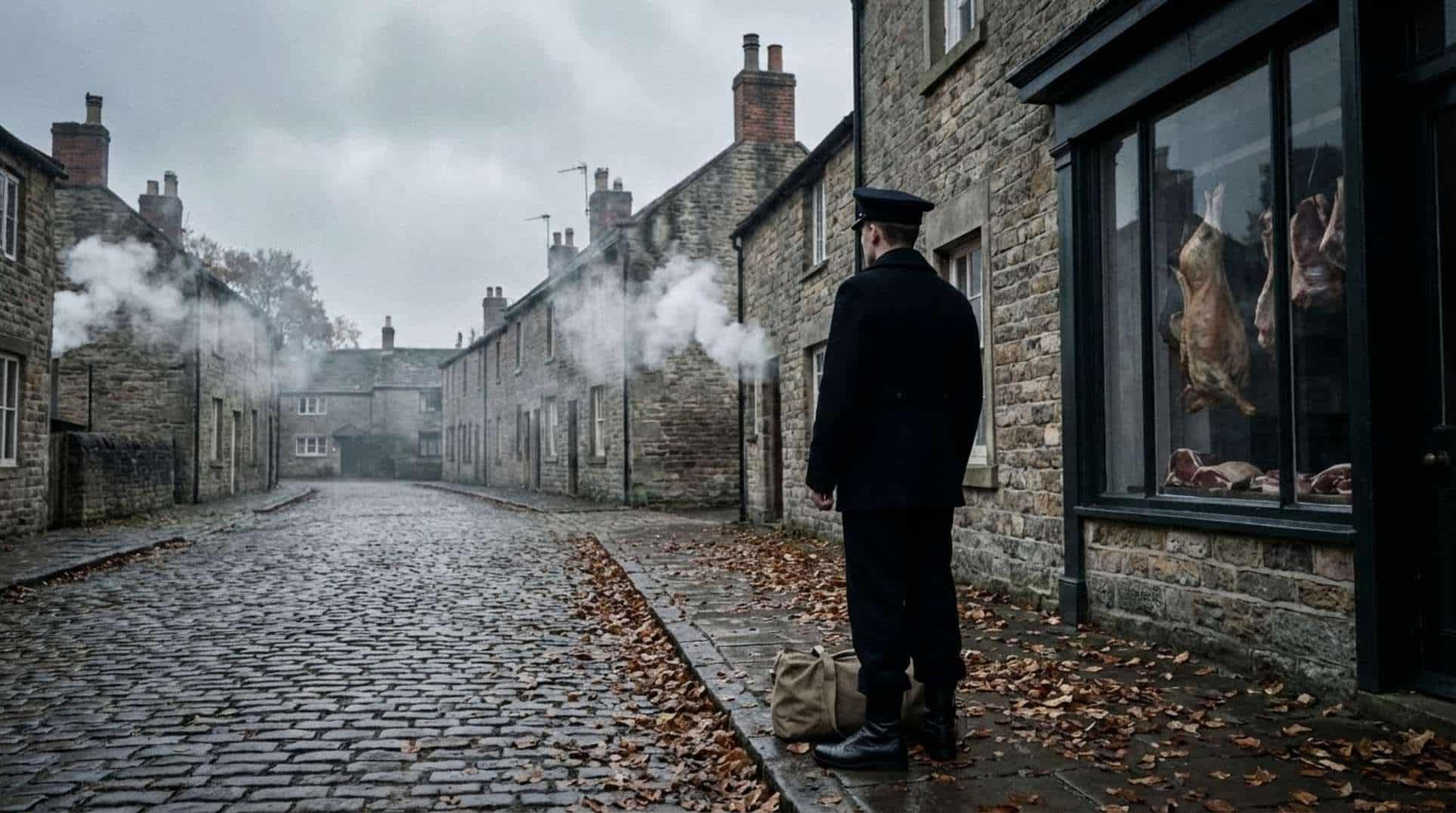
    October 1957. Three Royal Navy cadets—William Laing, Ray Baker, and Michael Crowley—wander into the village of Kersey on leave. The air hangs heavy, unnaturally silent. No birds call. Smoke from chimneys seems frozen in place. At the butcher’s window, skinned oxen rot, their flesh exposed in a way that feels wrong for the era. They hurry out, and the world snaps back to normal. The stakes? A brush with something that defies time itself.

    In a stark corrections facility, a seasoned officer patrols the block. He’s seen floods before—leaky pipes, inmate sabotage, storm backups. Routine. But this time, water starts pooling in a sealed concrete cell. It builds, rising as if raining upward from nowhere. No pipes burst. No source visible. The cognitive jolt hits: this isn’t the usual drip. It’s something defying the mundane checks he’s trained for.

    Late 2015, into early 2016. An internet sleuth hunches over a screen, scrolling through endless short clips on YouTube. Thousands of them, near-identical: blurry static, muffled voices reciting letters or numbers. The channel, Unfavorable Semicircle, pumps them out relentlessly. Community forums buzz. Then BBC coverage drops, and days later, the channel vanishes. The hunt intensifies—what hidden message lurks in the glitchy flood?

    What Witnesses and Analysts Report

    For the Kersey incident, the three cadets—William Laing, Ray Baker, and Michael Crowley—described an eerie silence, anachronistic sights like rotting oxen in a butcher’s window, and a sudden return to normalcy upon leaving. These accounts come from regional retellings, such as in the East Anglian Daily Times, though they’re mostly retrospective rather than contemporaneous. Community investigators and paranormal researchers have pieced together these details, noting how the story persists in local folklore, but they flag that the names and specifics often appear in later compilations, not immediate reports.

    With Unfavorable Semicircle, community sleuths on Reddit and forums documented tens of thousands of short videos, many silent or static, featuring recurring glyphs, titles, and occasional distorted voice tracks spelling out letters or numbers. Viewers proposed ideas like a hoax, automated bot uploads, an alternate reality game, or even a modern numbers station. These analyses stem from direct observations during the channel’s active period, with archivists preserving what they could before the takedown.

    In prison water cases, corrections staff and inmates have reported various intrusions—floods from storms, plumbing leaks, or intentional flooding—in documented incidents tracked by groups like the ACLU and NRDC. These are established patterns from firsthand logs and reports. However, the specific claim of water ‘materializing’ in a cell without a source lacks a verifiable primary record; it’s more of an exotic retelling amid broader, confirmed infrastructure issues.

    Timelines, Tracks, and Hard Data

    The Unfavorable Semicircle channel launched on March 30, 2015, with heavy uploads starting in April, reaching about 72,000 videos by its removal on February 25, 2016, right after BBC coverage. Content often showed blurred visuals and muffled voices reciting letters or numbers, as noted in BBC reports and community archives. For Kersey, the event dates to October 1957, with cadet names like William Laing, Ray Baker, and Michael Crowley appearing in regional press and paranormal sources such as the East Anglian Daily Times and analyses by Mike Dash.

    On the prison side, scientific context from NOAA, USGS, and UCAR rules out macroscopic rain falling upward from the ground; they point to phenomena like virga or updrafts for odd water behaviors, but not materialization from thin air. Documented prison incidents include floods and leaks, per ACLU and Corrections1 reports.

    To push further, I’d pursue these research tasks: Attempt FOIA requests for prison incident reports, shift logs, and officer statements, targeting relevant jurisdictions if dates emerge. Search archive.org and Unfavorable Semicircle mirrors for video metadata or comments with potential coordinates—the dossier didn’t confirm any Atlantic links. Check 1957 local newspapers, Royal Navy logs, and Kersey parish records for original mentions to distinguish core claims from later additions.

    Date/Event Source Link/Reference
    March 30, 2015: Channel created BBC, Atlas Obscura Community archives
    February 25, 2016: Channel removed BBC reporting Unfavorable Semicircle wiki
    October 1957: Kersey encounter East Anglian Daily Times ParanormalScholar, Mike Dash
    Various: Prison water incidents ACLU, NRDC, Corrections1 Institutional reports

    Official Story vs. What the Data Suggests

    YouTube’s stance was clear: they removed Unfavorable Semicircle in February 2016, likely for spam or terms violations, as per typical platform actions reported by the BBC. Yet this doesn’t address the channel’s odd patterns or intent, which community data suggests could hide signals—gaps remain in verifying authorship despite fan archives.

    Institutional science from NOAA, USGS, and UCAR maintains that precipitation forms in clouds, with no evidence for upward rain from the surface; they cite virga or updrafts for unusual effects, but these fall short of explaining water materializing in a sealed space. For prisons, official explanations point to plumbing failures, floods, or inmate actions, backed by ACLU and NRDC documentation of systemic issues. Still, the specific ‘materialization’ lacks a primary record, leaving witness details unaccounted for.

    Kersey’s sparse contemporary documentation—mostly regional retellings—means official narratives might chalk it up to memory errors or folklore, but that doesn’t fully square with the consistent sensory reports from the cadets, creating space for anomaly interpretations.

    What It All Might Mean

    These cases pull together solid threads: Unfavorable Semicircle’s massive uploads and swift takedown are well-documented digitally, prison water events show up in institutional records as infrastructure woes, and Kersey lingers in regional accounts, though it begs for primary confirmation. Gaps persist— the channel’s purpose, any hidden coordinates in videos, a verifiable report for the prison anomaly, and 1957 logs for Kersey.

    They matter because they probe evidence frontiers: digital traces that vanish, institutional blind spots, and memory’s fragile hold. Each highlights how anomalies emerge where records fade. Next, I’d chase primary documents—FOIA for the prison, archives for the channel, Navy and press checks for Kersey. Stay rigorous, mark the unknowns clearly, and weigh competing views on the facts.

    Frequently Asked Questions

    The three Royal Navy cadets reported entering a silent village with frozen smoke, rotting carcasses in a butcher’s window, and other anachronistic details in October 1957. Upon leaving, normalcy returned. These accounts come from retrospective regional sources, leaving questions about contemporaneous records.

    Yes, community archives and media like BBC and Atlas Obscura confirm the channel uploaded around 72,000 short videos with static, glyphs, and muffled voices from April 2015 until its removal on February 25, 2016. Theories range from hoax to hidden signals, but the creator and purpose remain unknown.

    The specific claim of water appearing in a cell without a source lacks a verifiable primary record, though broader prison water incidents from floods and leaks are documented by groups like ACLU. Science doesn’t support upward rain, pointing instead to prosaic causes, but the exotic detail remains unresolved.

    YouTube removed the Unfavorable Semicircle channel for likely spam violations after BBC coverage. Scientific bodies like NOAA dismiss upward rain as impossible under known physics. Prison incidents are often attributed to infrastructure failures, but no official response addresses the materialization claim specifically.

    Pursue FOIA for prison logs, search channel archives for metadata like coordinates, and check 1957 newspapers and Navy records for Kersey details. Prioritize primary sources to clarify what’s fact and what’s gap.

  • Havana Syndrome: The Directed Energy the Pentagon Denies

    Havana Syndrome: The Directed Energy the Pentagon Denies

    Key Takeaways

    • The public record shows the U.S. Army and industry partners advancing high-energy laser weapons, with programs fielding multiple 300 kW-class prototypes and pushing toward 500 kW–1 MW scales.
    • The best hard evidence supports pulsed radio-frequency (RF) energy as a plausible cause for some Havana Syndrome incidents, backed by National Academies findings and reports of U.S. investigators testing a pulsed-RF device in early 2026.
    • Major unresolved questions include attribution for the incidents, whether a single mechanism accounts for all heterogeneous cases, and any technical or operational links between military directed-energy programs and the implicated devices.

    A Night of Directional Sound and Quiet Machines

    Imagine it’s late in Havana, 2016, or perhaps a quiet street in Guangzhou a couple years later. A diplomat or intelligence officer pauses mid-step, struck by a sudden, piercing sound that seems to come from one direction—sharp, like a beam slicing through the air. Then comes the pressure, a heavy vibration building in the head, ear pain flaring, dizziness spinning the world off its axis. Tinnitus rings out, and for some, the fog lingers: cognitive haze, neurological complaints that stretch on for months or years.

    These aren’t abstract reports; they’re from people who’ve served their country, now grappling with unseen injuries. Families push for answers, medical care, recognition—advocacy groups and lawyers amplify the calls, demanding transparency amid a veil of national-security silence. The atmosphere crackles with tension: disciplined professionals reporting events that defy easy explanation, doctors puzzled by symptoms, institutions walking a tightrope between secrecy and accountability. Lives hang in the balance, careers disrupted, trust eroded.

    What Witnesses and Analysts Report

    Witnesses—embassy staff, service members, intelligence personnel—describe a consistent pattern: an acute, directional sensory event hits without warning. It’s often a perceived sound or vibration zeroed in from one side, followed by immediate head pressure, ear pain, vertigo. For some, these evolve into lasting issues like tinnitus, cognitive difficulties, neurological symptoms, as summarized by the National Academies.

    Clinicians and RF specialists weigh in with divided views. Some see the symptoms as biologically plausible, matching known bioeffects of pulsed RF energy—headaches, dizziness, even tissue interactions at certain frequencies. Others point to varied diagnoses across cases, suggesting multiple causes rather than one unified explanation. Through it all, affected individuals and advocacy groups hold firm: something real happened, marked by that telltale directionality and physical impact. They call for measurements, investigations, accountability—not dismissal.

    Timelines, Tracks, and Hard Data

    The trail of documents and announcements builds a clear picture of directed-energy advancements. Start with the Army’s Rapid Capabilities and Critical Technologies Office (RCCTO), which has publicly described shifting from 100 kW systems to four 300 kW-class prototypes under the Indirect Fire Protection Capability-High Energy Laser (IFPC-HEL) program, aiming for FY2024 timelines.

    Lockheed Martin’s October 10, 2023, contract announcement details developing and delivering up to four 300 kW-class solid-state laser systems for those IFPC-HEL prototypes. Broader efforts fall under the Office of the Under Secretary of Defense for Research and Engineering (OUSD(R&E)) High Energy Laser Scaling Initiative (HELSI), funding industry to scale from ~300 kW toward 500 kW and beyond.

    Industry players like nLIGHT have reported expansions toward 1 MW development, with Lockheed, General Atomics, and Dynetics involved in 300 kW-class demos and scaling. On the health incidents side, the National Academies’ December 5, 2020, report judged some symptoms consistent with directed, pulsed RF energy, urging better protocols.

    The Office of the Director of National Intelligence (ODNI) issued an unclassified Intelligence Community Assessment on Anomalous Health Incidents (AHIs) on March 1, 2023, deeming foreign adversary involvement ‘very unlikely’—a stance largely held in a December 2024 update, though some components revisited elements. A House Intelligence subcommittee’s interim report challenged parts of the 2023 ICA, pushing for more oversight. Early 2026 press from CNN and CBS revealed U.S. investigators acquired and tested a pulsed-RF device in ongoing probes.

    Program/Event Key Date Details
    IFPC-HEL Prototypes FY2024 Transition to four 300 kW-class systems (Army RCCTO)
    Lockheed Contract Oct 10, 2023 Development of 300 kW-class lasers
    HELSI Initiative Ongoing Scaling to 500 kW–1 MW (OUSD(R&E))
    National Academies Report Dec 5, 2020 Pulsed RF plausible for symptoms
    ODNI ICA Mar 1, 2023 Foreign involvement ‘very unlikely’
    Pulsed-RF Device Test Early 2026 U.S. investigators acquire and test device (press reports)

    Official Story vs. What the Data Suggests

    The Department of Defense and Army frame their directed-energy work—programs like HEL-TVD, IFPC-HEL, M-SHORAD, and HELSI—as straightforward defensive tools. These are high-energy lasers for countering drones or point defense, with public statements emphasizing kinetic and thermal effects at optical frequencies, high power levels aimed at destruction.

    Yet witnesses and independent findings pull in another direction. The National Academies pegged pulsed RF as plausible for some Havana-like cases, focusing on lower-power, non-thermal bioeffects—head pressure, auditory sensations. This contrasts with the ODNI’s 2023 assessment downplaying foreign roles, a view Congressional reviewers have pushed back against, highlighting tensions in the intelligence community’s conclusions.

    Overlap exists in the broad ‘directed energy’ label, but technically, these are worlds apart: military lasers are high-power beams for melting targets, while alleged RF devices might induce symptoms at distance without visible hardware. Recent reports of a recovered pulsed-RF device stir the pot, offering a tangible artifact but no clear ties to incidents or operators. The conflation of terms fuels confusion—does ‘directed energy’ mask deeper connections, or is it just semantic fog?

    What It All Might Mean

    Piecing it together, the firmest ground holds that the DoD is openly ramping up high-energy lasers to 300 kW and higher for battlefield roles. At the same time, scientific reviews and institutional probes affirm pulsed RF as a viable explanation for certain health incidents, now bolstered by 2026 testing of a relevant device.

    Questions linger large: Does one mechanism cover all varied AHIs? Can the recovered device mimic symptoms at real-world distances? Who might wield such tech—motives, access, delivery methods? And what classified details, if pried open through oversight, could reshape the story?

    For those tracking this, next steps matter: Push for declassified technical summaries, insist on RF/EM monitoring at vulnerable sites as the National Academies advised, and back independent lab tests to replicate bioeffects. The stakes are human—lives affected, security at risk—and policy: transparency could prevent escalation, or expose manipulations we’ve only glimpsed.

    Frequently Asked Questions

    Witnesses report sudden, directional sounds or sensations, followed by head pressure, ear pain, dizziness, and sometimes lasting neurological issues like tinnitus and cognitive fog, as detailed in National Academies summaries.

    The National Academies’ 2020 report found symptoms consistent with directed, pulsed RF energy. Early 2026 press reports indicate U.S. investigators tested a pulsed-RF device, adding a tangible data point, though causation and attribution remain open.

    Public materials frame programs like IFPC-HEL and HELSI as defensive weapons for countering drones, with no stated ties to health effects. Technical differences—high-power lasers vs. low-power RF—suggest separation, but overlaps in ‘directed energy’ terminology raise questions for further scrutiny.

    The ODNI’s 2023 assessment deemed foreign involvement ‘very unlikely,’ while the National Academies saw pulsed RF as plausible. Congressional reports have challenged the ODNI view, highlighting tensions and calling for more investigations.

    Priorities include installing continuous RF monitoring at at-risk sites, releasing declassified technical summaries, and conducting independent replication studies of bioeffects to clarify mechanisms and prevent future incidents.

  • Azores Plateau: Atlantis Ruins or Volcanic Mirage?

    Azores Plateau: Atlantis Ruins or Volcanic Mirage?

    Key Takeaways

    • Proponents claim the Azores Plateau could be a remnant of Atlantis, fitting Plato’s descriptions, with catastrophic events around 12,900 years ago causing its submergence.
    • Hard data from surveys show the plateau on the Mid-Atlantic Ridge with dramatic bathymetric features, including steps over 1,500 meters and depths from 715 to 3,700 meters, shaped by volcanic and tectonic forces.
    • Unresolved questions linger: mainstream geology sees hotspot-ridge volcanism, not a lost continent; the Younger Dryas impact idea remains contested, and no solid archaeological evidence backs an advanced civilization there.

    A Quiet Continent Under a Loud Ocean

    Imagine the salt spray cutting through the air as a research vessel pitches over dark waves. Below, black basalt cliffs rise from the abyss, illuminated by ROV floodlights that pierce the cold, endless blue. Echo soundings stitch together maps of a hidden world—rugged seafloor, volcanic chimneys venting heat, seamounts looming like forgotten sentinels. This is the Azores Plateau, a vast submarine expanse straddling the Mid-Atlantic Ridge, dotted with islands and undersea peaks recognized by UNESCO.

    The pull of a lost realm in the Atlantic endures. Shadows on these maps can mimic ancient structures, especially when light hits at strange angles. Yet marine science urges caution: what looks like ruins often proves to be natural volcanic outcrops, twisted by tectonics. Still, the romance persists—could something more lie buried under that loud, churning ocean?

    What Witnesses and Analysts Report

    Voices from the edges of accepted history keep the Azores-Atlantis link alive. Figures like Graham Hancock and Randall Carlson point to the plateau as a prime candidate for Plato’s sunken empire, tying it to massive disruptions at the end of the last ice age. They cite Plato’s accounts of a vast island in the Atlantic, destroyed in a day and night of catastrophe.

    Claims build on bathymetric maps showing what some see as terraces or straight-edged blocks—signs of old shorelines or even artificial forms. Models suggest rapid subsidence or sea-level surges around the Younger Dryas could have drowned large land areas. Online, in forums and podcasts, these ideas spread through shared images and reconstructions. High-contrast seafloor shots fuel discussions, with users interpreting shapes as potential evidence, though often without direct sampling or digs to confirm.

    These reports come from careful observers, not wild speculation. They amplify patterns in data that official channels sometimes overlook, urging a closer look at what might have been lost.

    Timelines, Tracks, and Hard Data

    Let’s ground this in what’s verifiable. The Azores Plateau sits atop the Mid-Atlantic Ridge, as detailed in UNESCO records, with islands and seamounts marking its extent. Bathymetric studies, like those from Gente et al. in 2003, describe it bounded by sharp elevation drops exceeding 1,500 meters on its flanks.

    High-resolution work adds clarity. The EXPLOSEA2 cruise covered about 6,250 kilometers of multibeam bathymetry, mapping morphology and tectonics. Recent efforts, including ROV dives, build on this, with depths in Mid-Atlantic Ridge segments ranging from 715 meters to 3,700 meters, per Journal of Maps studies.

    Tectonics here move at around 20 millimeters per year, driven by hotspot-ridge interactions that thicken crust and fuel volcanism, according to ScienceDirect 2022 and Springer 2023 summaries. The Younger Dryas cold snap ran from about 12,900 to 11,700 years before present, but its impact hypothesis faces strong challenges in 2021 reviews and beyond. No accepted archaeology points to an advanced society on the plateau then.

    For quick reference, here’s a comparison of key metrics:

    Metric Value Source
    Younger Dryas Interval ~12,900–11,700 ka BP 2021 Reviews
    Bathymetric Step >1,500 m Gente et al. (2003)
    EXPLOSEA2 Multibeam Length ~6,250 km EXPLOSEA2 Cruise Reports
    Mapped Depth Range ~715 m to ~3,700 m Journal of Maps Study
    Spreading Rate ~20 mm/year UNESCO Summary
    Seismic Monitoring Years Miocene to Recent ScienceDirect 2022; Springer 2023

    Official Story vs. What the Data Suggests

    Mainstream geology paints the Azores as a hotspot meeting a spreading ridge, with volcanism from the Miocene onward shaping the plateau. Papers in ScienceDirect 2022, Springer 2023, and AGU/Wiley 2003 reject any notion of a submerged continental block from the late Pleistocene. They stress ongoing tectonics and eruptions, not sudden continental loss.

    Yet both sides draw from the same well—multibeam data like EXPLOSEA2 and seismic profiles. Proponents spot terraces and blocky forms as hints of ancient exposure or collapse, possibly tied to catastrophic subsidence. Officials attribute them to volcanic flows and faulting.

    The Younger Dryas debate sharpens the divide. Community narratives lean on a disputed impact event for the quick changes, while science favors meltwater shifts or ocean circulation tweaks. Factors like glacial rebound, volcanic loading, and block movements complicate paleo-depth models. Uncertainties persist, demanding more precise data to bridge the gap.

    What It All Might Mean

    The Azores Plateau stands as a tangible, intricate feature, richly mapped with volcanic ridges and tectonic scars. High-res surveys reveal its drama, but tie it firmly to natural processes.

    Evidence falls short on key fronts—no confirmed artifacts or dated shorelines prove an advanced culture there during the late Pleistocene. Subsidence ideas hold potential, but uncertainties cloud them without fresh samples.

    Questions remain: Could sections have been above water or much shallower back then, beyond isostatic and volcanic influences? Does geology show signs of fast, disaster-scale sinking? Might odd bathymetric spots hold datable cultural traces?

    To test this, focus on targeted work: coring at terrace edges, ROV scans of suspect areas, dating any exposed soils or peats, and better subsidence models. If needed, we can source annotated maps or sketch a field plan to push things forward.

    Frequently Asked Questions

    Proponents point to bathymetric features like terraces and blocky shapes as possible signs of submerged land, linked to Plato’s accounts and Younger Dryas events. However, mainstream data interpret these as volcanic and tectonic formations, with no accepted archaeological finds supporting an advanced civilization.

    Some narratives tie Atlantis’s fall to catastrophic events around 12,900 years ago, during the Younger Dryas cold snap, possibly from an impact. This hypothesis is contested, with science favoring other causes like meltwater changes, and it underpins claims of rapid subsidence in the Azores.

    Officials see the plateau as a result of hotspot-ridge volcanism and tectonics, without evidence of a lost continent. Communities read the same maps as hints of ancient structures or shorelines, amplified online, but both rely on surveys like multibeam bathymetry.

    Targeted sediment cores, ROV inspections of anomalies, dating of potential paleosols, and refined modeling of past depths could clarify if parts were emergent or hold cultural material. These steps would test subsidence claims and search for direct evidence.

    Campaigns like EXPLOSEA2 have covered thousands of kilometers with multibeam, revealing depths from 715 to 3,700 meters and features like 1,500-meter steps. While well-studied, uncertainties remain in paleo-reconstructions, leaving room for further investigation.

  • Global Stockpiles: Are Elites Quietly Prepping for War?

    Global Stockpiles: Are Elites Quietly Prepping for War?

    Key Takeaways

    • State actors are verifiably buying strategic commodities — for instance, China’s state stockpiler planned to buy up to 15,000 metric tonnes of cobalt, according to May 2024 reporting from Reuters and Bloomberg.
    • Visible U.S. government energy and defense reserves show strain: SPR inventories were heavily drawn down in 2021–2023 to multi-decade lows and reported at around 394 million barrels by end-2024; the National Defense Stockpile reported about $1.3 billion in assets with FY2023 shortfalls in dozens of materials, totaling roughly $14.83 billion as noted by the Congressional Research Service.
    • Market and community signals, like sharp drawdowns in exchange-visible silver, heavy ETF flows, and high-net-worth farmland or bunker purchases, are read by many as elite prepping for large conflict — but ownership of off-exchange stocks and the precise motive mix remain opaque.

    A Quiet Convoy of Metal and Soil

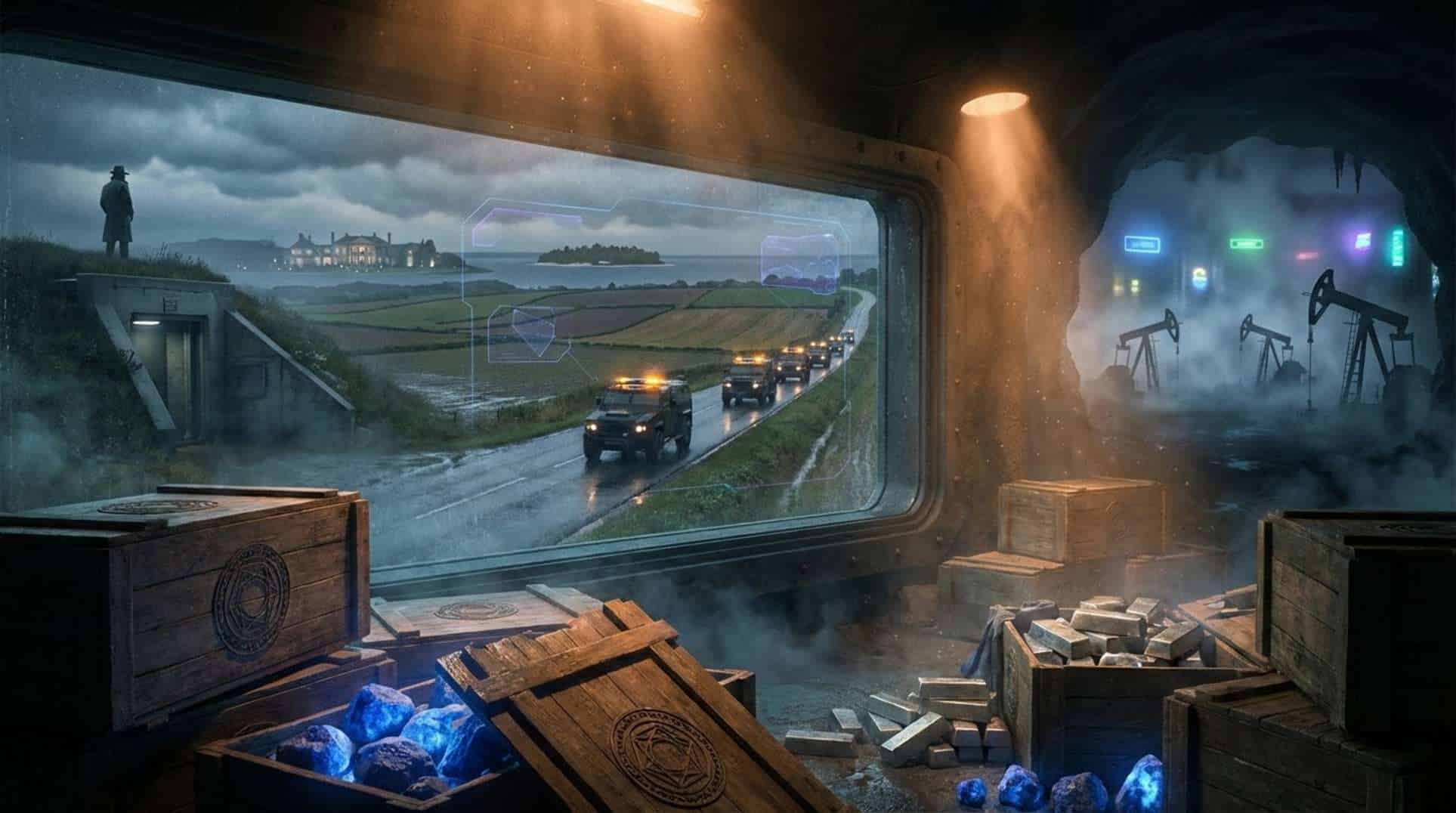
    Picture this: dimly lit vaults stacked with crates stamped in commodity codes, echoing with the faint hum of security systems. Satellite imagery reveals vast stretches of rolling farmland quietly changing hands, titles shifting under the radar. Underground caverns, once brimming with oil, now sit partly depleted, pumps whirring in the distance. These scenes feel heavy with implication, as if the ground itself is bracing for something unseen.

    Commentators like Clem Chambers step in to narrate, breaking down these shifts in videos on his channel, ClemChambersAlpha. He points to the contrast — official facilities framed as straightforward infrastructure for national needs, against the backdrop of social media feeds showcasing private bunkers and remote estates pitched to those with deep pockets. It’s a world where accumulation whispers of preparation, not just policy.

    What Witnesses and Analysts Report

    From market floors to online forums, voices are piecing together a pattern. Elites, nation states, and funds appear to be stockpiling gold, silver, critical metals, fuel, and food, positioning for major war or systemic breakdown. Clem Chambers, in his videos and interviews, lays out these claims, drawing on community insights and market whispers.

    Traders and warehouse operators describe tightening physical markets for silver — higher premia for spot delivery, intense borrowing and leasing in metal financing, as covered in Reuters and commodity press. Communities highlight behavioral shifts: high-net-worth individuals snapping up farmland in bulk, the rise of private bunkers and islands, and strong institutional flows into precious metals ETFs.

    These reports blend hard observations with interpretation. Witnesses see coordination in the moves, a shared readiness among those in the know.

    Timelines, Tracks, and Hard Data

    Let’s map the verifiable points. Below is a timeline of key events, with sources and confidence levels.

    Date Event Quantity/Change Source Confidence
    May 2024 China cobalt tender Planned purchase up to 15,000 metric tonnes Reuters/Bloomberg High
    2021–2023 U.S. Strategic Petroleum Reserve drawdowns Heavy reductions to multi-decade lows; ~394 million barrels by end-2024 DOE/EIA/CRS time series High
    March 2023 U.S. National Defense Stockpile assessment ~ $1.3 billion in assets; FY2023 shortfalls in 88 materials valued at ~$14.83 billion Congressional Research Service High
    2020–late 2023 COMEX/LME visible silver inventories Decline from ~346 million oz (2020 peak) to ~82 million oz Market reporting High
    2025 Aggregated silver ETF holdings ~830 million oz Market reporting High
    April 2025 World Bank Commodity Markets Outlook and McKinsey Global Materials Perspective Documentation of supply-demand strains and state reserve behavior World Bank/McKinsey High
    Ongoing Industry reports on delivery premia and exchange-visible tightness Higher premia, borrowing/leasing pressure Reuters and commodity press Medium-High

    These entries rest on public records and reporting. Exchange-visible tightness stands out, but off-exchange activity adds layers of uncertainty.

    Official Story vs. What the Data Suggests

    Institutions frame these moves as routine. China’s cobalt buys are state reserve procurement for industrial needs, per official statements. The U.S. describes the SPR and National Defense Stockpile as tools for market stabilization and national preparedness, according to the DOE and CRS reports.

    Analysts at the World Bank and McKinsey see stockpiling and investor flows as responses to supply-chain risks and industrial demand — not signals of military buildup.

    Yet communities and commentators like Clem Chambers view the concurrent activity across commodities, land, and private bunkers as elite prepping for conflict. Exchange-visible inventories have indeed dropped, supporting claims of tightness, but private holdings remain opaque, complicating efforts to trace buyers or motives.

    Data backs elements of both sides: verifiable drawdowns and purchases align with official policy, while the scale and privacy of some deals fuel alternative readings. Motives here are often inferred, not documented.

    What It All Might Mean

    The evidence points to real accumulation: China’s large cobalt tenders, U.S. reserve drawdowns in SPR and NDS, shrinking exchange-visible metals like silver, and private shifts into farmland and bunkers.

    Questions linger. Who holds the off-exchange stocks, and can we trace ownership? Are these buys for industrial security, hedging, personal resilience, or war prep — and what’s the breakdown? Is the shortage from physical moves or financial plays like rehypothecation and ETF structures?

    For those tracking geopolitical and market risks, these patterns signal potential fragility. Further steps could include digging into public tenders, customs data, interviews with traders and operators, chain-of-title searches on land deals, and FOIA requests for procurement details. The data shows buildup, but intent stays shadowed — worth watching closely.

    Frequently Asked Questions

    Reporting from Reuters and Bloomberg in May 2024 details China’s planned purchase of up to 15,000 metric tonnes of cobalt. U.S. reserves like the SPR dropped to around 394 million barrels by end-2024 after heavy drawdowns, per DOE and CRS data.

    Many in prepper and alternative-finance networks see the moves as elite preparation for major conflict or breakdown, citing drawdowns in visible silver stocks, ETF flows, and high-net-worth purchases of farmland and bunkers. Commentators like Clem Chambers highlight these patterns in their analyses.

    Officials frame them as standard policy for market stabilization and industrial needs. For example, China’s buys are presented as reserve procurement, and U.S. actions via the SPR and National Defense Stockpile are described as preparedness tools by the DOE and CRS.

    Visible inventories on exchanges like COMEX and LME have declined sharply, but private and off-exchange holdings remain opaque. This makes it difficult to confirm total volumes, buyer identities, or exact motives without additional data like customs records or FOIA responses.

    Core issues include tracing off-exchange buyers, determining if purchases stem from industrial, hedging, resilience, or military motives, and distinguishing operational shortages from financial mechanisms. Further reporting could involve interviews and public data queries to clarify these.

  • Weather Control or Warming: What 2024’s Sky Reveals

    Weather Control or Warming: What 2024’s Sky Reveals

    Key Takeaways: What the Evidence Shows

    • Many people report stronger storms, shifted seasons, and more volatile weather in 2024–2026; these lived experiences are widespread on social media and in local reporting.
    • Public federal datasets like the NOAA/NCEI Storm Events Database back to 1950 and NCEI ‘Billion-Dollar Weather & Climate Disasters’ time series point to climate change and natural variability such as ENSO as primary drivers for recent extremes.
    • Small-scale geoengineering research like SCoPEx and local cloud-seeding programs are real and documented, but no public, verifiable evidence shows coordinated, large-scale operational weather control; key scientific and observational gaps remain unsettled.

    The Night the Sky Felt Different

    Picture this: it’s a clear evening in late 2024, and you’re stepping outside, expecting the usual calm. But the air feels thick, charged, like the sky is holding its breath. Across the country, from the Midwest plains to coastal towns, folks are sharing similar stories—storms building faster than they should, seasons flipping without warning, contrails stretching longer than memory serves. One observer in Texas recalls a heatwave hitting in what should have been early fall, the sky streaked with lines that lingered for hours, turning a routine day ominous. Another in the Pacific Northwest describes cold snaps arriving mid-summer, with clouds gathering in patterns that defy the forecasts. These accounts, clustering heavily in 2024–2026, capture a shared unease: the atmosphere isn’t acting right, and it’s not just imagination. We’re all sensing it, and it’s worth examining why.

    What Witnesses and Analysts Report

    Witnesses from various walks of life are speaking up, their observations painting a picture of weather gone awry. On platforms like Reddit, Twitter, and dedicated forums, reports pile up: storms intensifying rapidly, seasons shifting out of sync, and erratic tracks that leave communities scrambling. Local researchers and community groups archive these, often linking them to visible aircraft trails that persist unusually long. The chemtrails narrative runs deep here—observers point to patents, technical reports, and known cloud-seeding efforts as pieces of a larger puzzle, suggesting deliberate atmospheric interventions. Yet, there’s a tendency to blend elements: persistent contrails from high-altitude flights get mixed with documented seeding ops and solar geoengineering proposals, forming a cohesive story of intentional control. This has real effects—mistrust swells, emotions run high toward meteorologists and agencies, sparking congressional hearings and media spotlights. Investigators in these circles argue it’s more than coincidence; they’re piecing together patterns from social posts, local news clips, and forum threads, demanding answers.

    Timelines, Tracks, and Hard Data

    To ground this, let’s turn to the records. The NOAA/NCEI Storm Events Database offers a public archive stretching from January 1950 through October 2025, detailing U.S. storm history straight from official sources. Pair that with the NCEI ‘Billion-Dollar Weather & Climate Disasters’ time series, last updated on 13 January 2026, which tracks the rising costs and frequency of extremes. Don’t overlook the CPC ENSO update from 20 January 2026—ENSO’s swings heavily influence seasonal patterns and storm behavior, so it factors into any fair analysis. On the geoengineering side, Harvard’s SCoPEx project aimed at studying aerosol microphysics and chemistry but was publicly suspended in March 2024, with plans abandoned and platforms redirected. NOAA’s stance is clear: they’re not involved in solar geoengineering, and the U.S. Weather Modification Reporting Act mandates 10-day notifications for any modification activities. Cloud-seeding is real but limited—local ops using silver iodide typically boost precipitation by 5–15% under marginal conditions, nothing game-changing. Agencies like EPA, OSTP, and NOAA have issued fact-checks and pledged transparency amid congressional scrutiny. For clarity, here’s a summary table of key data points:

    Metric Value Source
    Storm Events Database Span January 1950–October 2025 NOAA/NCEI
    Billion-Dollar Disasters Update 13 January 2026 NCEI
    ENSO Status Report 20 January 2026 CPC
    SCoPEx Status Suspended March 2024 Harvard/Scientific American
    Cloud-Seeding Impact ~5–15% precipitation increase Documented operations

    For deeper digs, consider FOIA requests for satellite AOD data and balloon profiles from specific regions and months—those could reveal more.

    Official Story vs. What the Data Suggests

    Agencies like NOAA/NCEI hold firm: their datasets show storms and climate shifts driven by anthropogenic warming and variability, with public fact-checks countering modification myths. They state outright—no solar geoengineering ops on their watch. Harvard framed SCoPEx as pure research into stratospheric aerosols, suspending it in 2024 amid concerns, redirecting to other studies. Peer-reviewed papers stress the unknowns of solar radiation management, positioning such work as uncertainty reducers, not control mechanisms. Cloud-seeding stays local, incapable of conjuring major storms from nothing. Yet community voices see patents and past experiments as signs of hidden scalability, interpreting small ops as covert proof. The dossier lacks evidence of global coordination, but that’s the rub—absence isn’t disproof. Gaps in observations, like missing stratospheric signatures, leave room for doubt. We must weigh this carefully: official lines address much, but selective community reads create plausible threads worth probing.

    What It All Might Mean

    Stepping back, the core evidence aligns lived weather changes with documented extremes, best explained by climate shifts and ENSO-like variability. Still, questions linger: could formal studies detect non-climate human forcings? What signatures would large-scale interventions leave in public data? How do patents translate to real capabilities? Are governance rules for SRM and seeding robust enough? And what about those observational holes in stratospheric sampling and AOD? For next steps, pull regional satellite AOD series and balloon data, catalog cited patents for their actual scope, and review attribution studies on 2024–2026 events. This matters because uncertainty breeds mistrust, and opacity from institutions only deepens it. Measuring what we can while highlighting gaps builds clearer pictures—and trust. Remember, current data doesn’t confirm or dismiss large-scale manipulation outright; that open door is why we keep watching, pushing for transparency.

    Frequently Asked Questions

    Yes, many people have shared firsthand accounts of stronger storms, shifted seasons, and volatile patterns during this period, widely documented on social media and local reports. These align with increased extreme events in official datasets.

    Public sources like NOAA’s Storm Events Database and Billion-Dollar Disasters series attribute recent extremes to climate change and natural variability such as ENSO. They show no evidence of large-scale weather control operations.

    Small-scale research like SCoPEx and local cloud-seeding exist, but no verifiable public evidence supports coordinated, large-scale weather manipulation. Gaps in data leave some questions open, warranting further investigation.

    Agencies like NOAA and EPA have issued fact-checks, stated they’re not involved in solar geoengineering, and committed to transparency. Congressional hearings and media coverage have addressed the growing mistrust.

    Pursue formal attribution studies, analyze satellite AOD and balloon data for signatures, review patents, and assess governance frameworks. These steps could clarify uncertainties and rebuild confidence.

  • Voice-to-Skull Weapons: Robert Duncan vs DARPA Claims

    Voice-to-Skull Weapons: Robert Duncan vs DARPA Claims

    Key Takeaways

    • Robert Duncan claims extensive experience in advanced defense research, describing methods that can manipulate perception, cognition, and create the sensation of hearing internal voices, as shared on the Danny Jones Podcast in November 2022.
    • Verifiable elements include DARPA’s public neural-interface programs like NESD, N3, and SUBNETS; the microwave-auditory Frey effect documented since 1962; and historical MKULTRA abuses revealed in the 1970s.
    • Unresolved aspects involve the absence of public evidence linking modern voice-to-skull technologies to operational DARPA or intelligence programs, thin documentation for some historical speech-transmission experiments, and the need to verify Duncan’s employment through FOIA requests.

    A Quiet Microphone, a Loud Confession

    The Danny Jones Podcast episode 160, released on November 8, 2022, unfolds in a straightforward studio setup, available on YouTube and Spotify. Len Ber and Robert Duncan speak openly about directed energy and internal voices, their voices steady against a backdrop of dim lighting and focused conversation. Ber shares his story through the lens of a self-reported Havana syndrome diagnosis, while Duncan positions himself as a Harvard-educated scientist with MIT ties and hands-on defense research. The three-hour exchange feels intimate, weaving technical details with personal accounts and sweeping allegations of misuse. It pulls you in, stirring curiosity about what hidden layers might lie beneath the surface, leaving a subtle tension in the air.

    What Witnesses and Analysts Report

    Robert Duncan speaks of his time in advanced defense research, detailing neuro-weapon techniques that he says can shift perception and generate internalized auditory experiences. Len Ber adds his own encounters, tying them to broader patterns. Across targeted individual communities, reports echo similar experiences: sharp clicks, persistent buzzing, sensations of directed energy, voices that seem to speak directly inside the head, disrupted thoughts, and the heavy toll of stigma—often dismissed as mental illness. These groups point to historical touchstones like MKULTRA for context, alongside lab phenomena such as the Frey effect and references to Sharp and Grove’s work. They push for medical and legal recognition, with bodies like the OHCHR noting petitions on electronic harassment claims. We hear the consistency in these accounts, the shared frustration, and the call for answers.

    Timelines, Tracks, and Hard Data

    Allan H. Frey’s 1962 paper in the Journal of Applied Physiology (17:689–692) first documented the microwave-auditory effect, where modulated electromagnetic energy triggers sound perception. DARPA’s programs, detailed on their website, include NESD aiming to read about 1×10^6 neurons and write to 1×10^5, alongside N3, Neuro-FAST, and SUBNETS with specific channel, volume, and time goals. The mid-1970s brought MKULTRA disclosures via the Church Committee, exposing U.S. government abuses in human-behavior research, with declassified CIA documents now public. References to Sharp and Grove at Walter Reed appear in secondary sources, claiming RF-based speech transmission in labs, though primary reports are scarce in peer-reviewed journals. A 2021 review confirms the Frey effect’s reproducibility but notes constraints like power needs and directionality for practical use. The podcast itself hit platforms on November 8, 2022. OHCHR filings catalog allegations of electronic harassment, framing them in human-rights terms.

    Metric Value Source
    Frey Effect Discovery Human auditory response to modulated EM energy Frey 1962, J Appl Physiol 17:689–692
    DARPA NESD Goals Read ≈1×10^6 neurons, write ≈1×10^5 neurons DARPA.mil program descriptions
    Sharp & Grove References Claimed RF speech transmission in lab Secondary literature on mid-1970s Walter Reed work
    Podcast Publication Episode #160, Nov 8, 2022 YouTube/Spotify listings

    Official Story vs. What the Data Suggests

    DARPA describes its neural research as geared toward medical advancements, focusing on therapeutic tools without mention of covert voice-to-skull systems. Scientific consensus views the Frey effect as a thermoacoustic process, replicable in labs but hampered by real-world hurdles like targeting precision and safety risks. Yet history shows patterns of abuse, from MKULTRA’s unethical experiments to the distrust they bred. Witnesses and communities link these dots to present-day claims, seeing lab proofs as signs of operational tech. Agencies push back, emphasizing that demos don’t translate to hidden, scalable weapons without massive infrastructure. Past oversteps warrant caution, but solid proof for today’s allegations demands traces like contracts or forensics.

    What It All Might Mean

    We have firm ground: the Frey effect works in controlled settings, DARPA openly funds neural interfaces, MKULTRA’s misdeeds are archived, and the podcast lays out Duncan and Ber’s claims plainly. Gaps persist—no public ties to operational internal-voice systems, missing primary docs for historical experiments, unverified details on Duncan’s roles. This matters because people describe genuine distress, and human-rights groups are listening; fair probes could clarify causes and offer relief. Moving forward, file FOIA requests for Duncan’s program links, get experts to map historical parameters against current tech, build checklists for RF and medical forensics, and talk to DARPA leads and independent engineers for clarity.

    Frequently Asked Questions

    Robert Duncan claims he worked in advanced defense research and knows of techniques that can alter perception, cognition, and create internal voices. He shared these on the Danny Jones Podcast in 2022, framing them as part of neuro-weapon development.

    The Frey effect, documented since 1962, shows microwaves can produce auditory sensations in labs. DARPA’s neural programs like NESD and N3 are public, and MKULTRA abuses are historical fact. However, direct proof of operational voice-to-skull systems in modern programs remains absent from public records.

    DARPA presents its work as medically focused, without referencing covert auditory weapons. Scientific reviews confirm lab phenomena but highlight practical barriers to remote deployment. Historical abuses fuel skepticism, yet agencies maintain that claims of current misuse lack forensic backing.

    Pursue FOIA requests for Duncan’s employment records and program ties. Commission technical briefs comparing historical experiments to modern capabilities. Develop protocols for medical and RF forensics, and seek interviews with DARPA managers and independent experts.