Category: Ancient Civilizations

  • Ancient Power Plants? Lightning, Pyramids and Proof

    Ancient Power Plants? Lightning, Pyramids and Proof

    Key Takeaways

    • Geoffrey Drumm proposes that monuments such as Avebury and the Giza Plateau were arranged to harness lightning and telluric currents, producing nitrates and ammonia that could aid post‑Ice Age agriculture and recovery.
    • Independent science confirms telluric currents as a real geophysical phenomenon and documents lightning’s role in atmospheric nitrogen fixation (estimates commonly cited around 2.6 Tg/yr, with ranges in some reviews higher). Monument dates and dimensions are well established in archaeological literature.
    • Major gaps remain: no published, reproducible archaeological or chemical evidence demonstrates industrial‑scale production at these sites (no datable production layers, waste deposits, or linked artifacts have been confirmed).

    A Rain‑Soaked Circle, A Humming Plateau

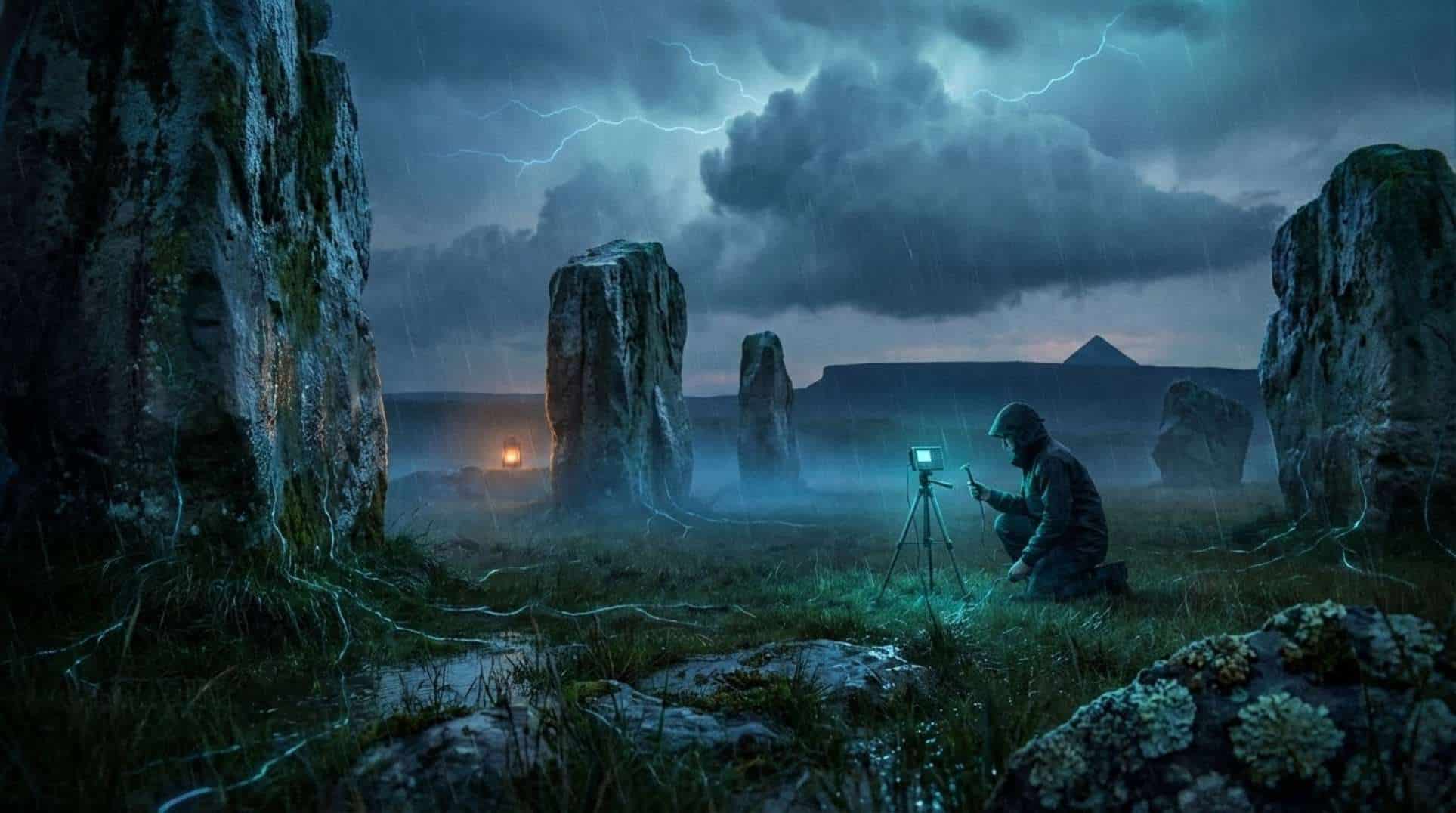
    Field accounts and community reports describe wet stonework, ozone or ammonia tangs in enclosed chambers, and occasional low‑frequency hums after storms. Geoffrey Drumm compiles such observations in his documentary series “The Land of Chem,” arguing the sensory reports and monument geometries reflect purposeful electrical harnessing. Those sensory reports are intriguing but remain anecdotal without laboratory verification tied to dated archaeological contexts.

    Evidence and Sources

    Concrete, verifiable pieces include: Avebury’s construction window (commonly cited ~2850–2200 BCE, per English Heritage/UNESCO), the Great Pyramid’s documented base and height figures (archaeological references and encyclopedic sources), peer‑reviewed geophysics describing magnetotelluric methods and multiple mechanisms for Earth currents, and atmospheric chemistry literature documenting lightning‑driven nitrogen fixation. These scientific foundations show the physical processes are real, but they do not by themselves demonstrate ancient engineered chemical production.

    Where Claims Outpace Data

    Drumm reinterprets monument geometries and sensory reports as components of engineered systems. The critical shortfall is direct, datable material evidence: residues, production vessels, slags, or chemical signatures in stratified deposits that would indicate sustained manufacture or collection tied to those structures. Mainstream archaeology interprets Avebury and Giza in ceremonial, funerary, and socio‑political terms; proponents of the electrical‑manufacture hypothesis must bridge the gap with reproducible material finds.

    Tests That Would Matter

    Targeted investigations could move the question from speculation to testable science: (1) magnetotelluric and other geophysical surveys to detect persistent current anomalies associated with monuments; (2) systematic soil and sediment chemistry (nitrate, ammonium, and isotope ratios) from sealed, datable contexts near features claimed to be production loci; (3) focused excavation for production debris or related artifacts. Positive results would be repeatable geophysical signatures correlating with unexplained chemical enrichments in securely dated contexts; negative results would leave the conventional interpretations stronger.

    Conclusion

    The core physical processes Drumm invokes—telluric currents and lightning chemistry—are scientifically documented. The leap to deliberate, large‑scale ancient chemical manufacture at specific prehistoric monuments currently lacks the archaeological and chemical evidence required for acceptance. Resolving this will demand interdisciplinary field campaigns combining geophysics, geoarchaeology, and lab chemistry on well‑controlled samples.

    FAQ

    That some ancient monuments were engineered to concentrate lightning and telluric currents to produce usable chemicals such as nitrates and ammonia.

    Yes: telluric currents are measured in geophysics, and lightning is an established pathway for atmospheric nitrogen fixation; however, demonstrating human control or exploitation at scale is the unresolved issue.

    Securely dated chemical residues, production waste, vessels, or other archaeological signatures that would indicate systematic manufacture at the monuments.
  • Solar ‘Plasma Rain’ Warning: What NOAA Data Shows

    Solar ‘Plasma Rain’ Warning: What NOAA Data Shows

    Key Takeaways

    • Claim: Over the last week, the radiation belts were described as ‘fully charged near observational maximum levels,’ and a near-term ‘triple burst’ of solar activity could trigger large-scale ‘plasma precipitation’ toward Earth, according to Stefan Burns’ video and channel.
    • Verified operational context: NOAA/SWPC provides real-time GOES X-ray, proton, and electron flux products, issuing watches and alerts when numeric thresholds are crossed—these serve as authoritative metrics for flare, proton, and electron events.
    • Unresolved: Peer-reviewed magnetospheric science confirms rapid precipitation events occur, like the one on March 17, 2013, but models and measurements don’t support the belts collapsing as a bulk plasma column to ground level; open questions include which specific GOES metric Burns references and whether confirmed near-simultaneous CMEs or shocks are expected.

    A Charged Quiet Over the Night Sky

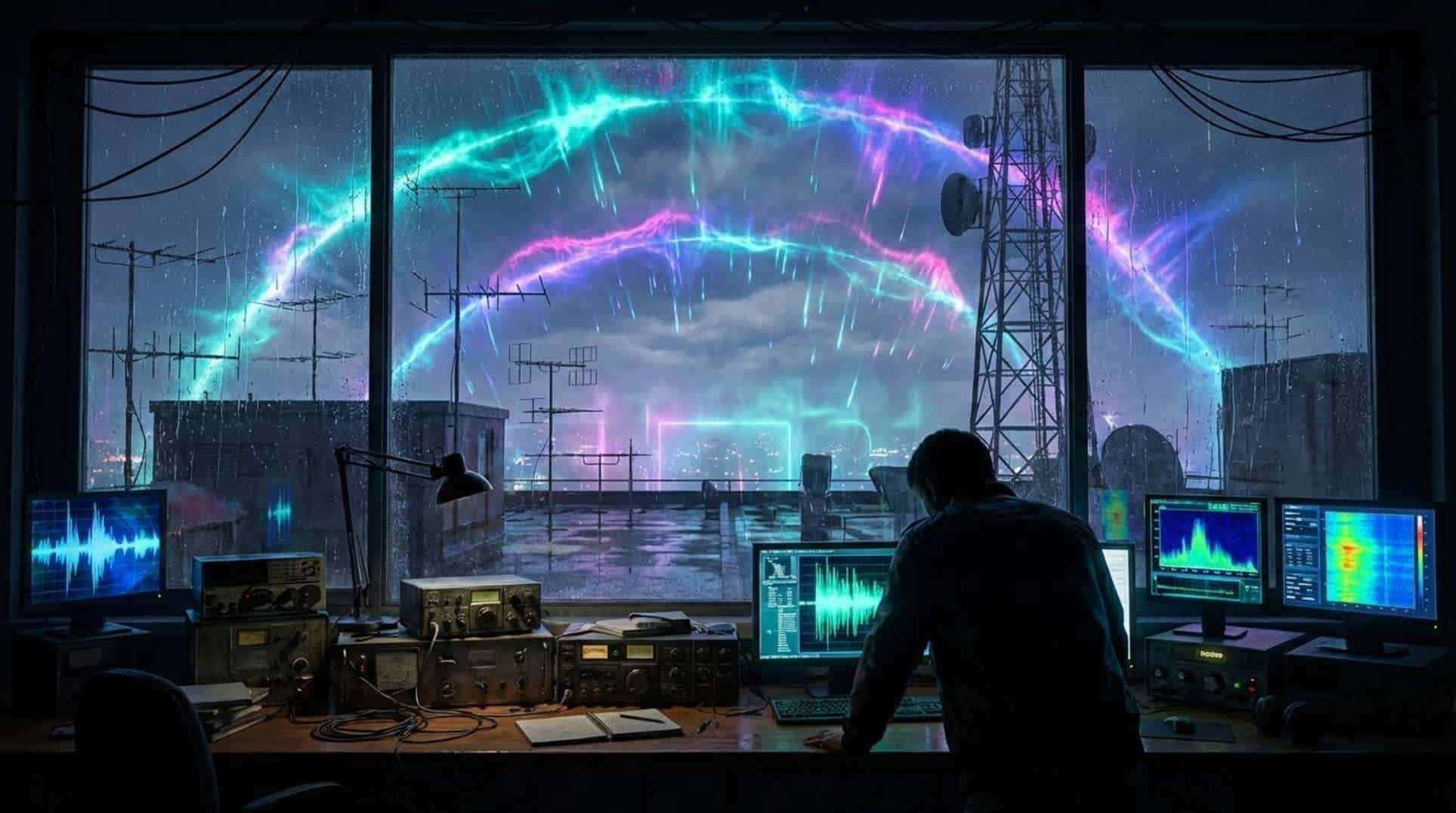
    It’s 2 a.m., and the room hums with the low glow of monitors. GOES plots flicker across screens, tracing X-ray spikes and electron fluxes in real time. Kp readouts hold steady, but the air feels thick. Online, livestreams buzz with warnings—Stefan Burns’ latest video has the community on edge. Followers chime in from darkened rooms worldwide: some voice concern over what this could mean for the skies, others question the data points. Curiosity builds, alarm simmers beneath. Everyone watches for the next solar whisper, that subtle shift in the wind from space.

    What Witnesses and Analysts Report

    Stefan Burns’ video, titled ‘New Burst of Solar Activity Threatens a Mass Plasma Precipitation Event,’ lays it out plainly. He warns that the belts are ‘fully charged near observational maximum levels’ and points to a potential ‘triple burst’ that could lead to ‘mass plasma precipitation.’ Followers on his channel and site echo this, interpreting it as risks for expanded aurora displays, disruptions to infrastructure, and even physiological effects tied to ‘earth-energy’ shifts. Burns blends geophysics with alternative perspectives, which resonates with many who’ve felt these connections before.

    Reactions pour in. Some describe subjective sensations—buzzing in the air, unusual tiredness—linking them to the warnings. Others focus on practical fears: electromagnetic disturbances that could knock out power or comms. But not everyone’s buying in without questions. On Reddit threads and geophysics forums, skeptics push back, noting that while precipitation events happen, they’re mostly confined to the upper atmosphere. They cite NOAA/SWPC product pages, emphasizing that real concerns center on infrastructure, not ground-level plasma shows. It’s a mix of alarm and analysis, with quotes from Burns’ video fueling debates across platforms.

    Timelines, Tracks, and Hard Data

    To cut through the noise, let’s look at the measurable side. NOAA/SWPC’s GOES data offers timestamps on X-ray flux, proton levels above 10 MeV, and electron fluxes at geostationary orbits. Recent Kp indices show planetary magnetic activity, while ACE and DSCOVR provide solar wind details. For context, check historical events like the March 17, 2013 St. Patrick’s Day storm—a documented case of large precipitation and injection, analyzed in peer-reviewed papers.

    Solar events in the last 7-10 days include observed flares and CMEs visible on LASCO and SDO imagery. Writers should pull ENLIL propagation models from SWPC for forecasted arrivals. Thresholds matter: X-ray classes map to R-scales (M/X flares hit R2/R3), proton alerts trigger at 10, 100, or 1000 pfu, and electron alerts for >2 MeV often start around 1000 pfu.

    Date/Time GOES X-ray Class GOES Proton Flux (≥10 MeV pfu) GEO Electron Flux (>2 MeV pfu) Kp 3-hour SWPC Alert Level Modeled CME Arrival
    Recent Week (Populate with actual data) e.g., M-class e.g., Below 10 pfu e.g., ~500 pfu e.g., 4 e.g., Watch Issued e.g., Pending ENLIL
    March 17, 2013 X-class High (above 100 pfu) Elevated 6+ Warning Confirmed Arrival

    This table compares claimed peaks against measured values—fill it with last week’s data and historical percentiles for clarity.

    Official Story vs. What the Data Suggests

    NOAA/SWPC runs the show on real-time monitoring, issuing alerts via their products page when thresholds cross. They track GOES data for satellite hazards, HF radio blackouts, and power grid vulnerabilities—guidance echoed by NERC and satellite operators. Research from the Van Allen Probes (2012-2019) backs this: electron and proton acceleration happens, with wave-driven precipitation dumping energy into the upper atmosphere as aurora or ionization. It’s not plasma raining down to the surface.

    Yet community interpretations push further, seeing surface-level effects or physiological ties that official models don’t address. Where do they find ground? Uncertainties linger—integrated flux percentiles, energy spectra at certain L-shells, and predicting wave boosts after CMEs aren’t perfectly nailed down. Agencies maintain standard risks, but experiential reports carry weight in cultural contexts. We respect those frameworks while noting the technical gaps: precipitation is real, but shielded from ground reach.

    What It All Might Mean

    Precipitation events occur, with belts showing intense electron losses in documented cases. Physics and atmospheric barriers push back against full ‘collapse’ to visible ground plasma, though. For now, monitor SWPC’s GOES plots, Kp, and alerts—stick to NOAA/NASA for credible updates.

    Open questions persist: Which GOES channels did Burns cite for ‘observational maximum’? Do ENLIL models confirm a ‘triple burst’ of synced CMEs? How do recent particle fluxes stack against historical extremes? Watch for satellite charging, HF blackouts, degraded GNSS, and brighter auroras—NASA’s Van Allen pages and SWPC alerts detail these.

    Keep gathering evidence. If unusual sensory or electrical experiences crop up, document them respectfully—they hold cultural and psychological value, even without direct ties to radiation spikes. The skies hold patterns worth tracking together.

    Frequently Asked Questions

    Stefan Burns claims the radiation belts are ‘fully charged near observational maximum levels’ and that a ‘triple burst’ of solar activity could cause ‘mass plasma precipitation’ toward Earth. This comes from his video and channel posts, blending geophysics with alternative interpretations.

    Yes, peer-reviewed science confirms rapid precipitation events, like the March 17, 2013 storm. However, these are typically limited to the upper atmosphere, causing aurora or ionization, not bulk plasma reaching ground level.

    NOAA/SWPC provides real-time data and alerts for X-ray, proton, and electron fluxes, focusing on risks to satellites, radio, and power grids. They don’t support claims of belts collapsing to the surface but acknowledge potential for events like expanded aurora.

    Check SWPC’s realtime products, including GOES plots, Kp indices, and alert pages. Follow NOAA/NASA updates for watches and warnings, and compare against historical data like the 2013 storm for context.

    Potential impacts include satellite anomalies, HF radio blackouts, degraded navigation, and enhanced aurora. Community reports of physiological effects are noted respectfully, though official data ties risks mainly to infrastructure.

  • Solar Flares and Quakes: What Really Hit on Dec 27

    Solar Flares and Quakes: What Really Hit on Dec 27

    Key Takeaways

    • An M5.1-class solar flare was recorded on 2025-12-27 at 01:50 UTC (NOAA SWPC).
    • A strong earthquake struck off Taiwan on 2025-12-27 (USGS initial ~6.6; Taiwanese CWB reported up to ~7.0); local time ~11:05 PM (UTC+8).
    • Mount Merapi was in an ongoing eruptive phase in December 2025 with dome activity and pyroclastic density currents documented earlier in the week (~20–23 Dec); a specific 27 Dec pyroclastic-flow report needs PVMBG primary-source confirmation.
    • Operational space-weather services (NOAA SWPC, EarthSky, SpaceWeatherLive) noted the M5.1 flare but reported no clear Earth-directed CME and expected quiet–unsettled geomagnetic conditions.
    • USGS and mainstream geophysics do not recognize a demonstrated causal mechanism linking solar flares/space weather to earthquakes; the temporal proximity here raises a question but is not proof.
    • Open questions: exact PVMBG record for 27 Dec (Merapi); forensic timeline alignment (GOES X-ray traces, quake catalogs, local volcano bulletins); statistical significance vs. coincidence for clustered energetic events.

    A Night That Shook the World

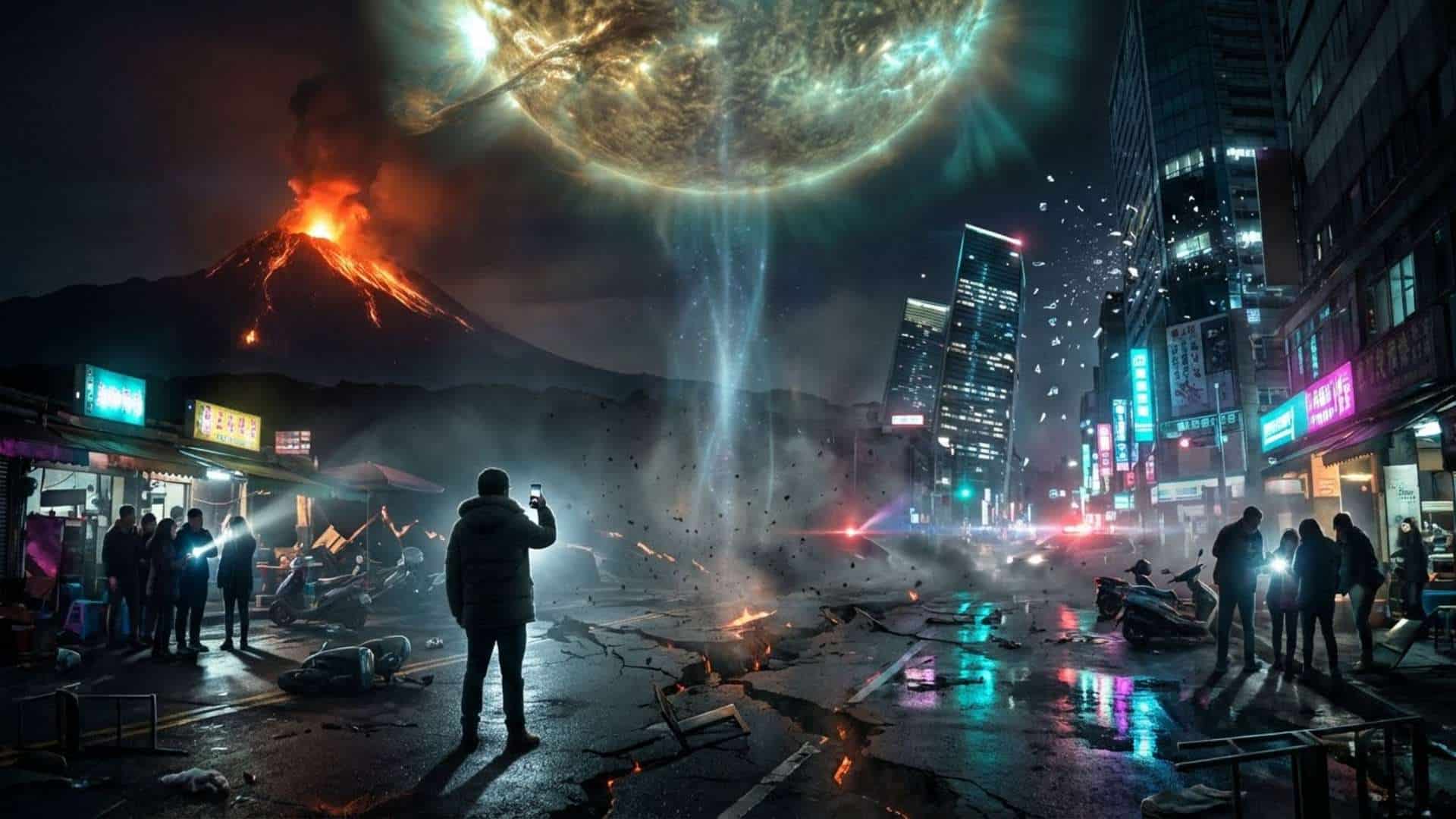
    December 27, 2025. In Taipei, skyscrapers swayed like trees in a storm. People spilled into the streets, flashlights cutting through the dark as alarms wailed. Eyewitness videos captured the chaos—furniture toppling, roads cracking, families huddling together. Across the globe in Java, communities near Mount Merapi braced for ashfall, their days already shadowed by the volcano’s rumble. Lava avalanches and pyroclastic flows had been reported in the preceding weeks, keeping vigilance high. The air felt thick with unease, as if the planet itself was restless.

    Voices from the Ground and Beyond

    Those in Taiwan who felt the ground heave described it as a sudden, violent surge. Social media lit up with accounts of shaking that lasted nearly a minute, prompting evacuations in coastal areas. Footage from CCTV and personal devices spread quickly, showing the raw fear and confusion. Meanwhile, volcano watchers tracking Merapi shared updates from PVMBG bulletins, noting the mountain’s persistent activity—dome growth and repeated pyroclastic flows earlier in December. Independent voices, like analyst Stefan Burns, highlighted the timing: a solar flare erupting just hours before these events, suggesting a possible link through historical patterns. On forums and Reddit, skeptics pushed back, stressing the dangers of seeing causation in mere coincidence without solid mechanisms.

    Mapping the Timeline with Raw Data

    Let’s align the facts. The solar flare peaked at 01:50 UTC on December 27, 2025, as captured in NOAA SWPC reports. Hours later, the Taiwan quake hit at approximately 15:05 UTC (11:05 PM local). Merapi’s activity, ongoing through the month, included documented pyroclastic flows around December 20-23, but we need PVMBG’s exact bulletin for the 27th. Space-weather trackers saw no immediate Earth-directed CME from the flare, forecasting only minor geomagnetic unrest.

    UTC Time Event Source Observed/Reported Parameter
    2025-12-27 01:50 M5.1 Solar Flare NOAA SWPC Flare class: M5.1; from new active region
    2025-12-27 ~15:05 Taiwan Earthquake USGS / CWB Magnitude: ~6.6 (USGS) to ~7.0 (CWB); Depth: ~40–68 km; Epicenter: ~20–32 km from Yilan
    December 2025 (ongoing, specific 27 Dec pending) Mount Merapi Activity PVMBG / Global Volcanism Program Ongoing eruption; dome activity, lava avalanches, pyroclastic flows (~20–23 Dec confirmed)

    For verification, check primary sources: NOAA SWPC GOES data (link), USGS event page (link), and PVMBG bulletins (link). Pull the raw GOES X-ray series and CME analyses to scrutinize intervals.

    Official Lines Against Emerging Patterns

    Agencies like NOAA SWPC documented the flare’s ionospheric effects but stopped short of linking it to Earth events. USGS reports the quake as a standard tectonic occurrence, reiterating no proven tie to solar activity. PVMBG monitored Merapi’s eruptions without referencing space weather. Yet in our circles, the close timing fuels discussion—some see it as evidence of Sun-Earth connections, drawing on past anecdotes. Science counters with warnings about statistical noise and unproven mechanisms. If a link exists, it’s not yet predictive enough for warnings, keeping these fields separate for now.

    Patterns, Mysteries, and Next Steps

    We have solid data: the M5.1 flare, the Taiwan quake magnitudes from 6.6 to 7.0, and Merapi’s active phase with prior pyroclastic flows. Still open: confirmation of a December 27 Merapi event via PVMBG, any hidden CME from the flare, and a mechanism to explain flare-to-quake jumps. These clusters remind us why we watch—human instinct spots patterns that might reveal overlooked truths. Communities hit by these events deserve our attention; their stories push us forward. Dig into GOES traces, bulletins, and studies on solar-seismic links. Share what you find—together, we chase the unresolved.

    Frequently Asked Questions

    An M5.1 solar flare occurred at 01:50 UTC, followed by a strong earthquake off Taiwan around 15:05 UTC with magnitudes reported from 6.6 to 7.0. Mount Merapi was in an active eruptive phase, with pyroclastic flows noted earlier in the week, though a specific event on the 27th needs confirmation.

    Temporal proximity has sparked discussion in independent circles, with some pointing to historical patterns. However, official sources like USGS state no demonstrated causal mechanism exists, and space-weather reports showed no clear Earth-directed CME from the flare.

    NOAA SWPC tracked the flare but expected only minor geomagnetic effects. USGS reported the quake without linking it to solar activity, and PVMBG monitored Merapi’s ongoing eruptions via bulletins.

    Check primary sources like NOAA SWPC GOES data, USGS event pages, and PVMBG bulletins for December 27. Assemble timelines and review peer-reviewed studies on solar-seismic correlations to assess patterns yourself.

    These events highlight potential Sun-Earth connections that mainstream views often overlook. By examining data and witness reports, we can uncover subtle signals amid official explanations.

  • Count of St. Germain: Immortal Ascended Master or Myth?

    Count of St. Germain: Immortal Ascended Master or Myth?

    Key Takeaways

    • Strong evidence supports the existence of an 18th-century figure known as the Count of St. Germain, documented in memoirs, diplomatic correspondence, and newspapers as a charismatic courtier, musician, and eccentric.
    • Claims of immortality and ascended mastery go beyond verifiable records, stemming from late 19th-century Theosophical writings and devotional testimonials that lack primary civil documentation.
    • Unresolved questions include the absence of confirmed birth records, the need for direct scans of burial registers, and how a historical eccentric transformed into a living legend in modern spiritual communities.

    A Man Out of Time in Rococo Salons

    Picture the glow of candlelight flickering across gilded mirrors in a Paris salon, circa 1750. The air hums with whispered conversations among courtiers and philosophers, glasses clinking as tales of distant lands unfold. Into this scene steps a man of refined bearing, his voice carrying melodies from forgotten operas, his stories laced with details that seem pulled from history’s hidden pages. This is the Count of St. Germain, as contemporaries described him—not yet the immortal of legend, but a curious guest who charmed and puzzled Europe’s elite.

    Accounts from the time place him in courts across Europe, mingling with figures like Voltaire and Madame de Pompadour. Voltaire himself wrote on April 15, 1758, calling him ‘a man who knows everything and never dies’—likely with a dash of sarcasm, as the tone in surviving correspondence suggests. What we can trace are his musical ties, like performances in London around 1745, his diplomatic appearances, and a reputation for eccentricity that colored his presence in those rococo gatherings.

    What Witnesses and Devotees Say

    Over time, the Count’s story has grown through voices of those who claim deeper connections. Madame Blavatsky and other Theosophical writers painted him as an Adept, an Ascended Master guiding humanity from beyond the veil. These portrayals frame him as a spiritual teacher, drawing on esoteric traditions rather than just historical quirks.

    In the I AM movement, founded by Guy and Edna Ballard, published messages and stories describe ongoing contact, including their famous Mount Shasta encounter. Groups like the Saint Germain Foundation and Summit Lighthouse carry this forward, sharing devotional materials that speak of his continued activity. Modern reports in New Age circles echo these sightings, serving as community touchstones—testimonial accounts that hold meaning within those groups, even as they stand apart from official records.

    Timelines, Tracks, and Hard Documents

    The trail of evidence starts strong in the 18th century but fades into ambiguity. Diplomatic dispatches in the Mitchell Papers capture his movements at European courts, while musical catalogs link him to works like the song cycle L’Incostanza delusa, performed at London’s Haymarket in 1745. Surviving scores on IMSLP and library holdings offer tangible ties to his name.

    Birth estimates vary—around 1710 is common, but others like 1691 or 1712 appear without a solid primary baptismal record. Death is often pegged to February 27, 1784, yet that needs a direct scan of the burial register to confirm. For follow-up, we’d request those Mitchell Papers dispatches, the 1784 register entry, and searches of parish records or passport lists.

    Claim/Fact Primary Source(s) Confidence (High/Medium/Low)
    Presence in 18th-century European courts Mitchell Papers, diplomatic dispatches High
    Musical associations (e.g., L’Incostanza delusa) IMSLP scores, library catalogs High
    Birth circa 1710 Secondary literature, no primary baptismal record Low
    Death on February 27, 1784 Reference works, needs archival scan Medium
    Post-1784 sightings Devotional testimonials, no civil records Low

    Official Record vs. The Living Legend

    Mainstream sources like Encyclopaedia Britannica view the Count as a real 18th-century adventurer—charismatic, with murky origins, but no evidence for immortality. Historians stress the gaps in birth and baptismal records, sticking to what’s verifiable in archives.

    On the other side, Theosophical and I AM groups hold him as an Ascended Master, based on doctrinal teachings and revelatory experiences. Blavatsky’s writings and the Ballards’ publications form the core of this view. Both sides agree a historical figure existed; they split on later claims, with archives demanding civil proof and communities valuing spiritual testimony.

    What It All Might Mean

    At its core, we have a documented 18th-century personality who left marks in dispatches and music. Gaps persist—no agreed-upon birth certificate, and that 1784 death entry begs for a fresh look at the registers.

    The shift from eccentric to immortal traces through Blavatsky’s influence and I AM texts, showing how legends evolve in spiritual circles. Worth pursuing: secure those archival scans, build a timeline of primary sources, talk to religion historians and foundation reps. Weigh the documents against the testimonies yourself—the mystery holds where the records blur.

    Frequently Asked Questions

    Yes, contemporaneous accounts in memoirs, diplomatic correspondence, and newspapers confirm his presence as a courtier and musician in 18th-century Europe. Figures like Voltaire referenced him, and musical works are attributed to his name.

    Claims of immortality arise from late 19th-century Theosophical writings and devotional testimonials in movements like I AM, including stories of post-1784 sightings. These lack primary civil records and rely on community experiences rather than archival proof.

    Historians focus on verifiable documents, which show no evidence beyond an 18th-century life, with gaps in birth and death records. They contrast this with devotional narratives that use different standards of evidence.

    Key gaps include missing primary birth or baptismal records and the need for scans of the 1784 burial register. How his story evolved into a spiritual legend also invites further exploration through archives and interviews.

    Madame Blavatsky and Theosophists reframed him as an Adept, with the I AM movement building on this through published messages and encounters. This transformation reflects broader patterns in esoteric traditions.

  • Solar System Shockwave: What Really Hit Earth in 2025

    Solar System Shockwave: What Really Hit Earth in 2025

    Key Takeaways from the March 2025 Event

    • A fast coronal mass ejection launched on March 21, 2025, was tracked as Earth-directed, with forecasts pointing to interactions around March 23, backed by L1 satellite data and NOAA alerts for G2–G3 geomagnetic storms.
    • Community discussions built narratives around vivid aurora sightings at low latitudes, blending reports of communications glitches with broader themes of transformation and urgency, often shared through videos and social posts.
    • Open questions persist on what ‘solar system shockwave’ truly means, the exact timing of shock detections across inner planets, and if specific Earth anomalies can be directly tied to this event without more detailed analysis.

    The Night the Sky Lit Up

    Picture this: it’s late March 2025, and the sky erupts in colors where they shouldn’t be. Auroras dance over cities far from the poles, lighting up backyards and highways. Social media explodes with photos and videos—greens, reds, purples streaking the night. Local news picks it up, mixing awe with warnings. NOAA had flagged possible storms days ahead, building tension. People watch, mesmerized, but whispers spread: glitches in radios, flickering lights. Some call it beautiful. Others sense something bigger, a shift in the air. The stakes feel real—spectacle on one hand, potential disruptions on the other, and that nagging pull toward what it all signals.

    What Witnesses and Independent Commentators Say

    Witnesses stepped forward with stories that cut through the noise. Many captured auroras on their phones, sharing images from spots way south of typical zones. Independent voices online dissected it all, pointing to L1 data from satellites like DSCOVR, ACE, and WIND. They drew parallels to past CME shocks, but didn’t stop there. A YouTube video from March 24, titled ‘It’s Happening! Solar System Shockwave Hits Earth ⚠️ Big Changes Ahead!’, described the event as a wave rolling through Mercury, Venus, and then us. Commentators wove in socio-political angles, questioning official silence. Others layered on astrology—Venus and Mercury in retrograde, timing that felt too perfect. Metaphysical takes emerged too, framing the interval as a catalyst for personal or global change. These accounts respected the data while pushing boundaries, treating the event as more than just weather in space.

    Timelines, Tracks, and Hard Data

    The sequence unfolded with precision we can trace. On March 21, 2025, a fast CME launched from the Sun, flagged by sources like Watchers.news. Forecasts pegged Earth impact for early March 23. NOAA’s SWPC issued watches for G2–G3 storms spanning March 21–24. L1 monitors—DSCOVR, ACE, WIND—picked up the interplanetary shock ahead of time, feeding real-time warnings. Observations matched in parts: auroras lit up low latitudes, though extreme effects varied by region. For verification, dive into DSCOVR/NOAA pages, Harvard’s shock catalogs, Zenodo databases, or OMNIWeb time series. These offer solar-wind speed, density, IMF Bz, and shock timestamps.

    Aspect Details
    CME Launch March 21, 2025
    Forecasted Earth Impact Early March 23, 2025
    NOAA Watches G2–G3 storms, March 21–24, 2025
    L1 Detections Shocks via DSCOVR, ACE, WIND; parameters like solar-wind speed and IMF Bz
    Observed Effects Low-latitude auroras, some communications anomalies

    Official Statements and Other Interpretations

    Agencies like NOAA and NASA kept it straightforward. SWPC relied on L1 data for forecasts, using Kp and Dst indices to warn of G2–G3 storms from March 21–24. They tracked measurable factors: IMF Bz orientation, solar-wind speed, density. NASA clarified heliospheric features—termination shock, heliopause, bow shock—stressing these aren’t the same as a sweeping ‘solar system shockwave’ across planets. Community voices, though, embraced that term metaphorically, seeing a chain of disturbances from the same CME. Overlaps exist in the basics: yes, a shock hit, auroras appeared. But divergences show in scale—officials stick to data, while others extend to broader implications. The mismatch often boils down to language, with ‘shockwave’ capturing a sense of sequence that facts support in pieces.

    What It All Might Mean

    Boil it down: a CME blasted off on March 21, 2025, stirred interplanetary space, triggered NOAA watches, and delivered auroras plus minor disruptions. That’s the solid ground. Yet gaps linger. What does ‘solar system shockwave’ imply—a poetic flourish or a unified event? Did Mercury and Venus log the same signatures, and when exactly? Can we pin specific Earth glitches directly on this without sifting incident logs and time-series? Resolving these sharpens forecasts and cuts through confusion. IMF Bz and CME structure explain why impacts hit unevenly. Trackers, pull those L1 datasets and cross-check. Uncertainty here isn’t weakness—it’s the edge where real inquiry starts.

    Frequently Asked Questions

    Yes, a fast coronal mass ejection launched on March 21, 2025, and interacted with Earth around March 23, leading to G2–G3 geomagnetic storms as forecasted by NOAA. Widespread aurora sightings at low latitudes confirmed the effects.

    Community videos and posts described a shock sweeping inner planets, backed by L1 data from satellites like DSCOVR and ACE showing interplanetary disturbances. However, it’s often a metaphorical take on sequenced CME effects rather than a single wave.

    NOAA’s SWPC issued watches for moderate-to-strong geomagnetic storms from March 21–24, using real-time L1 data. NASA provided context on heliospheric shocks, emphasizing measurable parameters over sensational terms.

    Reports included communications glitches, HF radio noise, and satellite or power anecdotes alongside auroras. Community narratives tied these to broader changes, sometimes with astrological angles, though causal links need more verification.

    Open issues include the precise meaning of ‘solar system shockwave,’ timing of detections at Mercury and Venus, and whether specific anomalies can be attributed to the CME. Deeper analysis of time-series data could help clarify.

  • Boeing 737 Bunkers: Why the Cheap Jet Shell Lies

    Boeing 737 Bunkers: Why the Cheap Jet Shell Lies

    Key Takeaways from the 737-Bunker Idea

    • Project basics: Acquire a retired Boeing 737 fuselage, move it to a site, and attempt to bury or repurpose it. Upfront purchase prices can be deceptively low; logistics, remediation, and permitting drive most costs.
    • Verified data: Typical 737-800 specs — length ~39.47 m (129 ft 6 in), cabin width ~3.53 m (11 ft 7 in), operating empty weight ~41,145 kg. Reported sale prices for stripped frames or sections commonly fall in the low thousands to low tens of thousands USD.
    • Major hurdles: Transport is complex and expensive, excavation costs vary by soil/rock, hazardous materials (fuel residues, hydraulic fluids, asbestos, lead paint) require specialist handling, and local regulations/zoning can block the concept entirely.

    A Quiet Airframe on a Dusty Tarmac

    The fuselage sits on an industrial lot: hollow, gutted, and weathered. Without engines or interior fittings it looks deceptively simple—a long metal tube—yet its size and material condition raise structural and environmental questions. Hobbyist uses (Airbnb pods, art pieces) exist for small sections, but treating a full airframe as a buried structure is a different scale of engineering and permitting.

    Reported Facts and Firsthand Observations

    Sellers often provide deregistration and a Bill of Sale; quoted prices vary. Visual inspection typically shows surface corrosion and stripped systems. Community forums recount bargains for sections and forward fuselages, but professional commentators emphasize transport, legal, and remediation costs that the headline prices omit.

    Key Dimensions, Costs, and Regulations

    Important reference numbers: 737-800 length ~39.47 m; cabin width ~3.53 m; external diameter ~3.76 m; empty weight ~41,145 kg. Purchase anecdotes: roughly $6k–$24k reported for stripped airframes or sections. Excavation can range from ~$1/yd³ in soft soil to $50–$200+/yd³ in rocky ground. Transport options include rail (when available), specialized road hauls with escorts and permits, or exceptional airlift for rare cases. Regulatory paperwork includes FAA transfer documents (Bill of Sale AC Form 8050-2), and environmental controls under EPA rules (RCRA, TSCA) when hazardous materials are present.

    Risks Versus Romanticism

    Enthusiasts see a cheap, dramatic component for a bunker or novel structure; analysts see multiple failure points: soil unsuitable for burial, fuselage buckling under load, classification as waste requiring disposal, and liabilities from hidden toxins. Insurance, resale, and long-term maintenance are often unknowns that can negate initial savings.

    Practical Next Steps

    If you consider pursuing this: 1) Obtain a detailed tail-number history and clear Bill of Sale from the seller; 2) Commission a structural engineer and geotechnical report before purchase; 3) Hire an environmental consultant for a hazmat survey; 4) Get transport bids from heavy-haul firms and check local permitting/zoning early; 5) Make purchase conditional on survey and permit outcomes. This sequence limits exposure to sunk costs.

    FAQ (Short)

    How much does a retired 737 cost? Documented transfers for non-flyable, stripped frames or sections often show prices from about $6k to $24k, excluding transport and remediation.

    Is burying a fuselage feasible? Technically possible in theory, but often impractical: excavation, structural reinforcement, hazmat remediation, and permitting typically drive costs and complexity well above purchase price.

    What regulations apply? FAA transfer paperwork is needed for legal title changes; environmental laws (RCRA, TSCA) cover hazardous materials; local zoning and building codes determine whether the item is treated as a structure or waste.

  • Sun’s ‘Plasma Loss’ Scare: What 2025 Coronal Hole Did

    Sun’s ‘Plasma Loss’ Scare: What 2025 Coronal Hole Did

    Key Takeaways

    • A massive coronal hole on the Sun rotated into position facing Earth in 2025, unleashing a high-speed solar wind stream; media reports pegged its size variably, but it clearly drove notable space weather effects.
    • Measurements from NOAA/SWPC and spacecraft like DSCOVR and ACE confirmed an early-arriving fast wind stream, sparking a minor G1 geomagnetic storm with Kp levels hitting around 5 in spots.
    • Questions linger on the hole’s exact size due to inconsistent measurements, potential hidden magnetic features that could amp up storms, and overstated claims like the Sun ‘losing plasma’—which is just a dramatic way to describe normal solar wind behavior, not some cataclysmic event.

    A Night the Sky Turned Electric

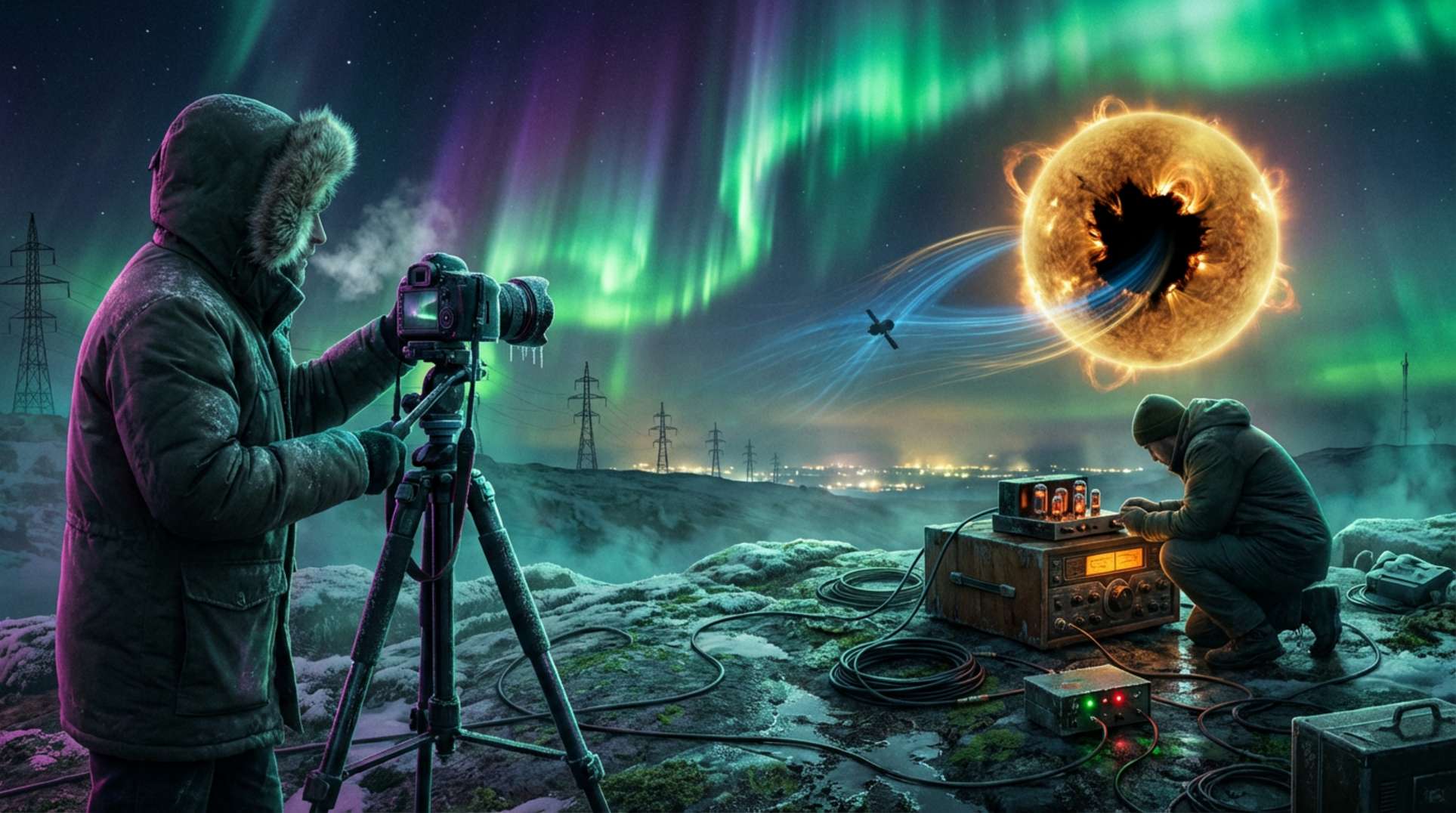
    Picture this: it’s the dead of night, and aurora hunters are out with cameras ready, scanning the horizon. Amateur radio operators tweak their rigs, listening for that telltale hiss in the signal. Skywatchers, bundled against the chill, spot the first faint glows as the high-speed solar wind hits Earth’s magnetosphere. This wasn’t some surprise attack—the arrival window had been flagged in forecasts—but the flickers came sooner than some models predicted, lighting up the skies during a minor G1 storm. Citizen reports poured in, photos capturing green and purple veils dancing overhead, just as they’ve done in past high-speed stream events tracked by feeds like Aurorasaurus.

    Meanwhile, ham radio enthusiasts noted the ionosphere stirring, with propagation shifts making distant signals boom or fade. GNSS hobbyists saw TEC fluctuations, those subtle ripples in the upper atmosphere that can throw off positioning. It all aligned with the operational warnings: a large coronal hole was sending fast winds our way, and Earth was feeling the jolt.

    What Witnesses and Analysts Report

    Eyewitness accounts from aurora chasers paint a vivid picture—visible lights shimmering in the north, captured in photos shared across community forums. Hobbyist magnetometers picked up the spikes, logging K-index jumps that matched the G1 activity levels. These ground-level observations hold up, grounding the event in real data anyone can check.

    Then there are the interpreters. Independent analyst Stefan Burns dropped a video titled ‘We Have A Problem…’, describing the coronal hole as a ‘giant magnetic hole’ and warning that the Sun is ‘losing plasma’ with potential knock-on effects for Earth’s geophysics. It’s a bold take, and it’s sparked debate. Some in the community echo official SWPC and NASA alerts, sticking to shared observations like aurora sightings and magnetometer traces. Others weigh in on Burns’ qualifications and how far his interpretations stretch.

    Fringe discussions tie these geomagnetic shifts to odd terrestrial reports—unusual animal behavior, strange sounds, even seismic murmurs. These claims circulate in social feeds, but they lack the consistent, peer-reviewed backing to stand firm. Still, they’re part of the conversation, and we respect the observers putting them forward.

    Timelines, Tracks, and Hard Data

    The timeline kicked off with NOAA/SWPC’s 3-day Kp forecasts, tying G1 storm chances to the coronal hole’s high-speed stream. Alerts rolled out via spaceweather.gov and services.swpc.noaa.gov/text/3-day-forecast.txt, setting expectations for the arrival.

    Spacecraft like DSCOVR and ACE delivered the live feed: solar wind speeds (V) climbing, total magnetic field (Bt) and the crucial southward Bz component driving the geomagnetic response. Models like WSA-Enlil, fed by GONG magnetograms, estimated windows and speeds—typically around 500 km/s, pushing to 800 km/s in extremes.

    Media buzzed with size estimates: Space.com called it about 500,000 miles (800,000 km), while India Today went over 1,000,000 km. Verification matters—check EUV angular width or area via SDO/AIA images or NSO magnetograms.

    The event unfolded as predicted but early: EarthSky and SWPC noted the premature high-speed stream arrival, leading to that G1 storm.

    To verify yourself, follow this checklist: Grab SWPC alerts, plot DSCOVR/ACE data for V, Bt, Bz; review WSA-Enlil runs; scan magnetometer networks; and cross-check citizen aurora reports on Aurorasaurus or NASA Earth Observatory.

    Date/UTC Source Observed V (km/s) Bt (nT) Bz (nT) Kp Intervals Reported Aurora Sightings/Locations
    2025 Event Window SWPC/DSCOVR/ACE/SDO ~500-800 Elevated Sustained Southward ~5 (G1) Northern Latitudes, Citizen Photos

    Official Advisories and Other Readings of the Same Data

    NOAA/SWPC and NASA keep it straightforward: coronal holes are standard features, open magnetic fields letting fast solar wind escape, often causing recurrent G1-G2 activity. Their forecasts, built on models and real-time measurements, issued warnings for this exact scenario.

    But models aren’t perfect—small polarity islands or co-rotating interaction regions (CIRs) can surprise us, like past events where a hidden feature turned a forecast into a G3 storm.

    Independent voices, including Stefan Burns, see more: magnetic holes signaling plasma loss, with ties to wider Earth changes. These go beyond the data, yet everyone agrees on the basics—a big hole, fast winds, geomagnetic activity, and auroras.

    Where paths split: officials stick to G1 minor impacts from telemetry, while some commentators push for bigger systemic effects without the in-situ data to back extreme conditions.

    What It All Might Mean

    Boiling it down, the evidence points to a large coronal hole firing off a high-speed stream that stirred a minor G1 storm. Citizen photos, magnetometer data, and aurora logs all confirm the sky shows and magnetic unrest.

    Still, gaps remain: How big was this hole really, depending on how you measure? Could undetected magnetic quirks or interactions brew stronger storms? And those claims of massive solar mass loss or seismic links—do they hold up against hard flux and IMF readings?

    It matters because even mild storms can tweak radio comms, GNSS signals, and power grids. Stay sharp: Watch SWPC bulletins, DSCOVR/ACE for wind speed and Bz, NSO/SDO for hole updates, and ground feeds for confirmations. We’ve seen patterns like this before, and community eyes on the data keep us ahead. Questions persist, and that’s why we track them—together.

    Frequently Asked Questions

    A large coronal hole on the Sun faced Earth in 2025, releasing a high-speed solar wind stream that arrived early and caused a minor G1 geomagnetic storm. This led to visible auroras and ionospheric effects, as confirmed by spacecraft data and citizen reports.

    Estimates varied across media, from 800,000 km to over 1,000,000 km, due to different measurement methods like EUV angular width or area calculations. For accuracy, check sources like SDO/AIA images or NSO magnetograms to verify.

    Agencies like NOAA/SWPC describe it as a routine event causing minor geomagnetic activity, based on models and measurements. Independent commentators like Stefan Burns suggest broader implications, such as the Sun losing plasma, though these extend beyond the confirmed data.

    Hidden polarity islands or CIR interactions might amplify storms beyond forecasts, as seen in past events. While this one stayed at G1, monitoring real-time solar wind data is key to spotting any escalations.

    Follow SWPC alerts, DSCOVR/ACE plots for solar wind parameters, WSA-Enlil models, and citizen feeds like Aurorasaurus. This lets you verify data and observations in real time.

  • Stone Giant in One Year: The Town That Shouldn’t Exist

    Stone Giant in One Year: The Town That Shouldn’t Exist

    Key Takeaways

    • Community claims describe a massive Richardsonian Romanesque–style stone building reportedly completed in about one year in a small town (~3,400 people in 1880).
    • Historical context makes rapid masonry projects plausible: steam-powered quarries, expanding railroads, and seasonal labor made large stone builds feasible in the late 19th century.
    • Resolving the gap between oral history and documentary proof requires targeted archival research and material forensics such as mortar analysis and dendrochronology.

    A Winter of Stone and Rumor

    Imagine a small town in 1879–1880: winters are harsh, work is seasonal, and large projects stand out. Locals recall scaffolds, steady columns of freight cars, and scaffolds rising quickly as dressed stone appears almost overnight. Those passed-down reports emphasize exceptionally fine ashlar and a timeline described as a single year, which fuels skepticism: could a community so small and remote really erect a monumental stone building that fast?

    At the same time, technology and logistics were changing. By the 1870s and 1880s, steam quarrying boosted stone production, and railroads extended to many towns, enabling long-distance supply. Seasonal crews and immigrant masonry labor moved where demand was strong. What sounds extraordinary in oral tradition can be consistent with the industrial realities of the period.

    What Local Testimony and Researchers Say

    Oral histories emphasize speed and precision: joints that look hand-fitted, tool marks that seem subtle, and an absence of obvious documentation like contractor ledgers or building permits. Independent local historians echo these observations, noting gaps in surviving records and a strong community memory of a rapid, impressive build.

    Those reports matter. They point to specific questions to investigate rather than being dismissed as folklore. Similar patterns show up in other cases where craftsmanship, spotty archives, and extraordinary claims meet.

    Verifiable Context: Dates, Materials, Productivity

    Evidence that can be checked includes style, materials, and logistics. Richardsonian Romanesque was in vogue from the 1870s through the 1890s, so stylistic fit alone is not anomalous. Portland cement began U.S. production in the early 1870s but didn’t dominate mortars until later—mortar composition testing could therefore help narrow dates.

    Productivity estimates for the era are variable: small masonry crews could place something like 50–150 cubic feet of dressed stone per day depending on stone size and setup; larger, organized crews could scale that considerably. Rail access and steam-quarried stone made these outputs achievable even for large projects in a short span, given outside labor and pre-cut stone.

    Archives and Forensic Methods to Pursue

    Primary archival sources to consult:

    • 1880 U.S. Census data for population confirmation;
    • Local newspapers (1878–1882) for construction notices, contractor ads, or mentions of unusual activity;
    • County deed, tax, and permit records for property transactions and payments;
    • HABS/HAER and Library of Congress collections for measured drawings or surveys.

    Forensic and analytical approaches:

    • Mortar petrography to identify lime vs. Portland cement signatures;
    • Stone provenance and quarry matching through petrology and historical quarry records;
    • Tool-mark analysis and high-resolution photography to identify working methods;
    • Dendrochronology on any original timbers to get felling dates.

    Reconciling Official Views and Local Claims

    Historians tend to rely on documentary evidence and material testing; they view the style and period as consistent with a late 19th-century construction aided by industrial supply chains. Local accounts emphasize missing paperwork and the apparently rapid timeline, which could indicate lost records, off-site prefabrication, or simply community memory compressing events over time. Either way, neither side is definitive without targeted investigation.

    Practical Roadmap for Investigation

    1) Start with archival pulls: census, newspapers, county records, and regional railroad timetables and freight manifests where available. 2) Commission mortar petrography and stone petrology; photograph and catalog tool marks. 3) Map likely supply routes and calculate stone volumes vs. plausible crew sizes to test the claimed one-year timeline. 4) If timbers exist, pursue dendrochronology. Combining these lines will either corroborate the rapid-build claim or show a more prosaic explanation.

    Summary

    Stylistic cues and late-19th-century industrial changes make a fast, large stone build plausible in principle, even in a small town. The core uncertainties are documentary gaps and the absence of material tests. Focused archival research plus mortar, stone, and timber analyses provide a clear path to resolving the difference between oral history and verifiable evidence.

    Frequently Asked Questions

    Community accounts claim a one-year timeline (circa 1879–1880), but proving that requires archival documentation and material dating. Industrial advances of the period do make rapid construction plausible if outside labor and pre-cut stone were used.

    Mortar petrography, quarry provenance studies, tool-mark analysis, and dendrochronology on timbers are the most informative tests, especially when combined with archival work in newspapers and county records.

  • Sun’s 2025 ‘Dark Scar’: What NASA Isn’t Telling Us

    Sun’s 2025 ‘Dark Scar’: What NASA Isn’t Telling Us

    Key Takeaways

    • A large solar filament erupted around 15 July 2025, carving a dramatic ‘dark scar’ on the Sun, reported as roughly 250,000 miles (about 400,000 km) long, according to sources like Space.com and Petapixel.
    • NASA‘s SDO imagery in AIA wavelengths, along with Goddard SVS visualizations, captured the event as a filament eruption—cooler plasma held by magnetic fields was disrupted, leaving a glowing channel from ripped field lines, per NASA sources.
    • A CME was spotted in coronagraph imagery from SOHO/LASCO and others, initially assessed as mostly directed away from Earth with no major geomagnetic impacts expected; however, details on CME speed, mass, magnetic orientation, and any weak flank effects remain open for further scrutiny, based on reports from Gizmodo, Orbital Today, and NOAA SWPC.

    When the Sun Tore a Scar Across Its Face

    The footage hit like a shockwave. Around 15 July 2025, NASA’s SDO captured the eruption in AIA wavelengths, turning raw data into time-lapse clips that spread fast. A long, glowing trench sliced across the Sun’s surface, with plasma cascading down like molten rain. Social feeds erupted too—hobbyist astronomers and space-watchers shared stills and videos, dubbing it a ‘canyon of fire’ or ‘dark scar.’ The planet stared at its star, flinching under the weight of something vast and unpredictable. Coverage from Space.com and NASA SVS amplified the visuals, pulling in eyes from everywhere. Community posts poured in within minutes, blending awe with urgent questions about what might come next.

    What Witnesses and Analysts Report

    Across forums and feeds, observers zeroed in on the SDO time-lapses. They showed the filament snapping, plasma draining away—raw material that fueled quick interpretations. Some trackers flagged the CME as potentially heading our way, sparking talk of auroras or other effects. Others drew parallels to the 2013 ‘Canyon of Fire’ event, seeing familiar patterns in the visuals. Voices like Tony Phillips from SpaceWeather.com and aurora photographer Vincent Ledvina carried weight, sharing details on X/Twitter and discussing possible sky shows. The pattern was clear: fast sharing ignited speculation, clashing with the slower grind of institutional analysis from multiple angles.

    Timelines, Tracks, and Hard Data

    The event unfolded on 15 July 2025, as reported by Space.com. The feature stretched about 250,000 miles (400,000 km), with walls around 12,400 miles (20,000 km) high—numbers echoed in media and SpaceWeather commentary. Key assets included NASA’s SDO for AIA imagery and time-lapses, Goddard SVS for visualizations, and SOHO/LASCO for coronagraph views of the CME. Initial analysis pointed the CME mostly away from Earth, per Gizmodo and Orbital Today, with NOAA SWPC handling operational forecasts. To pin this down, check post-event bulletins from SWPC, along with ACE/DSCOVR/GOES data and Kp/Dst indices for 15–18 July 2025.

    Key Data Point Details
    Date 15 July 2025
    Reported Length ~250,000 miles (≈400,000 km)
    Reported Wall/Height ~12,400 miles (≈20,000 km)
    Observing Assets NASA SDO (AIA), NASA Goddard SVS, SOHO/LASCO
    CME Direction Largely away from Earth
    Primary Sources Space.com, Petapixel, NASA SVS, Gizmodo, Orbital Today, NOAA SWPC

    Official Story vs. What the Data Suggests

    NASA frames it as a filament eruption: cool, dense plasma suspended by magnetic fields broke free, ripping open field lines and leaving that glowing trench, as detailed in SVS and image articles. NOAA SWPC stresses that CME impacts hinge on size, speed, direction, and magnetic setup; their take had this one veering off-Earth, minimizing geomagnetic risks. Yet community reads often jumped ahead, with early SDO clips suggesting an Earthward path due to projection tricks. Those single views can mislead, while full coronagraph triangulation takes time. Gaps persist—no peer-reviewed breakdowns of exact CME speed, mass, or field orientation in the coverage, and weak flank effects could still show up in data checks. It’s a reminder that quick eyes and slow verification don’t always align smoothly.

    What It All Might Mean

    This was a striking filament eruption on 15 July 2025, with SDO and NASA visuals confirming plasma removal and magnetic shifts, plus a CME that prelim reports sent elsewhere. Still, exact parameters like speed, mass, and field orientation hang open, as do questions on any fringe Earth effects—think Kp/Dst shifts or satellite glitches. These spectacles highlight how solar drama can look Earth-threatening at first glance, but real risks emerge from layered analysis. It underscores the gap between rapid community buzz and methodical institutional checks. For clarity, we’ll track SWPC bulletins, instrument logs from ACE/DSCOVR/GOES, and SDO series for that window—plus input from forecasters and solar physicists on filament behavior and CME edges.

    Frequently Asked Questions

    A large solar filament erupted, creating a ‘dark scar’ about 250,000 miles long. NASA’s SDO captured it in time-lapses, showing cooler plasma breaking free from magnetic fields and leaving a glowing channel.

    Initial analyses indicated the associated CME was mostly directed away from Earth, with no major geomagnetic effects expected. However, open questions remain about precise CME details and potential weak flank influences, which could be checked in post-event data from NOAA SWPC and instruments like ACE or GOES.

    Hobbyists and analysts shared SDO clips quickly, speculating on Earth-bound paths and auroral effects, drawing parallels to past events. Official NASA and NOAA explanations focused on filament dynamics and off-Earth CME direction, highlighting tensions from fast sharing versus slower, multi-view verification.

    Key evidence comes from NASA’s SDO imagery in AIA wavelengths, Goddard SVS visualizations, and SOHO/LASCO coronagraphs. Reports from Space.com, Petapixel, and others cited the scar’s size at 250,000 miles long and 12,400 miles high, backed by community commentators like those on SpaceWeather.com.

    These eruptions remind us of solar activity’s dramatic visuals and potential ambiguities in impact assessments. Unresolved details on CME parameters and minor effects justify ongoing scrutiny through data logs and expert commentary to better understand risks and patterns.

  • Solar Storms and Japan’s Megaquake Alert: Hidden Risk

    Solar Storms and Japan’s Megaquake Alert: Hidden Risk

    Key Takeaways

    • Japan issued its first Nankai Trough “megaquake advisory” after the M7.1 Hyūga-nada event on 8 August 2024, signaling elevated probability rather than a definite forecast, according to JMA and Reuters reports.
    • Peer-reviewed studies, like a 2020 Scientific Reports paper, show statistical correlations between solar-wind parameters such as proton density spikes and short-term increases in large earthquakes, though these are contested and don’t prove causation.
    • NOAA and NASA track prolonged coronal-hole high-speed streams causing recurrent geomagnetic activity; planetary conjunctions are predictable but their gravitational pull on Earth is negligible compared to the Moon and Sun, with mainstream seismology from USGS and JMA finding no proven link between space weather and earthquakes.

    A Silent Convoy Beneath the Dark Sea

    Picture the rugged coasts of Japan under a low-hanging sky, where the sea whispers against the rocks and distant buoys flash in the night. Communities here, long accustomed to the ground’s subtle shifts, now sit in a tense quiet, eyes on the horizon for signs of trouble below. The Nankai Trough, a historical hotspot for megathrust quakes, carries a government-estimated 60–80% chance of a major event within 30 years. Recent shakes—like the Hyūga-nada M7.1 on 8 August 2024 and the Noto Mw7.5 on 1 January 2024—have heightened the watch. Meanwhile, the Sun’s been unleashing large coronal holes and high-speed streams for months, tracked by NOAA’s Space Weather Prediction Center, stirring geomagnetic ripples that echo in the feeds. People feel it: the air charged, the wait heavy, as if something vast is moving unseen beneath the waves.

    What Witnesses and Analysts Report

    Independent researchers and community voices are piecing together patterns that official channels often overlook. Figures like Stefan Burns, through his website and YouTube, link recent seismic swarms, ongoing coronal-hole high-speed streams, and an approaching planetary alignment in early 2026 into a narrative of cosmic convergence. On forums like Reddit, Telegram, and YouTube threads, observers share accounts of unusual seismic clusters, strange precursor feelings, erratic animal behaviors, and even anecdotal electromagnetic disturbances—these are raw reports from the ground, not lab-controlled data. Proposed mechanisms vary: some point to geomagnetically induced currents shifting pore pressures in faults, others to piezoelectric responses in crustal rocks or resonances between ionospheric turbulence and deep fault lines. They highlight timing overlaps and correlations from targeted studies, urging a closer look at these potential triggers.

    Timelines, Tracks, and Hard Data

    Readers, here’s the raw trail you can follow yourself. Seismic catalogs from USGS and JMA, advisories from Reuters, NOAA’s coronal-hole plots—these are the anchors. Check the 2020 Scientific Reports paper for its statistical analysis of proton density spikes correlating with M>5.6 quakes on a ~1-day lag; it includes caveats on methods and scope. NOAA SWPC details how high-speed streams cause recurrent G1–G2 geomagnetic storms over solar rotations, unlike abrupt CMEs. Space.com and Astropixels note multi-planet groupings in February–April 2026, though such alignments aren’t rare. USGS FAQs firmly state no causal tie between space weather and quakes. For quick reference:

    Metric Value Source
    Hyūga-nada Earthquake M7.1 – 8 Aug 2024 USGS event page
    Noto Earthquake Mw7.5 – 1 Jan 2024 Earth, Planets & Space paper
    JMA Nankai Trough Advisory First issuance after Aug 2024 Reuters/JMA
    Nankai Multi-Decadal Probability ~60–80% Government/panel summaries

    Official Story vs. What the Data Suggests

    Agencies like JMA lean on real-time monitoring and probabilistic models for their Nankai advisories, emphasizing elevated short-term risks without claiming certainty. USGS focuses on tectonic stress, fault dynamics, and historical patterns, maintaining no established link from space weather to seismic events. NOAA and NASA map how high-speed streams and CMEs disrupt the magnetosphere and induce ground currents, but stop short of tectonic claims; planetary gravity effects pale next to lunar and solar tides. Yet, papers like the 2020 Scientific Reports introduce statistical signals with short lags, provisional findings that critics say need tighter controls and believable mechanisms. It’s a split: institutions stick to recurrence models, while alternative readings highlight these contested correlations as hints of overlooked influences.

    What It All Might Mean

    The Nankai zone’s high hazard and Japan’s advisory after recent M7+ quakes stand as solid warnings; months of coronal holes and high-speed streams are confirmed in the data. Still, questions linger: Are those solar-wind to earthquake correlations holding up against biases? Could magnetospheric forces reach seismogenic depths with real impact? Might space weather nudge a megathrust rupture’s odds? Authorities and readers alike should monitor seismic swarms, geomagnetic indices, and alignment timelines. For navigating this, here’s a quick checklist:

    • Verify with primary sources like JMA, USGS, and NOAA before sharing.
    • Separate correlation from proven cause.
    • Watch for selection bias in pattern-spotting.
    • Build earthquake prep habits, theories aside.

    If you want raw USGS/JMA pages or NOAA plots, drop a request—we’ll attach them. And remember, social media can amplify noise; cross-check to cut through the fog.

    Frequently Asked Questions

    Japan issued its first Nankai Trough advisory after the M7.1 Hyūga-nada earthquake on 8 August 2024, highlighting elevated short-term probability based on monitoring, not a guaranteed prediction.

    Some peer-reviewed studies, like the 2020 Scientific Reports paper, report statistical correlations between solar-wind spikes and increased large quakes with short lags, but these are contested and don’t establish causation. Mainstream seismology from USGS and JMA sees no proven causal link.

    Reports from forums and independent analysts include seismic swarms, odd sensations, animal behaviors, and electromagnetic anomalies, tied to mechanisms like induced currents or resonances. These are anecdotal, pointing to timing coincidences with space weather events.

    Officials rely on tectonic models and historical data, dismissing space weather triggers, while alternative analyses highlight statistical patterns and propose electromagnetic or gravitational influences as potential short-term factors.

    Track seismic activity in the Nankai region, geomagnetic storms from NOAA, and the 2026 planetary alignments. Use primary sources and prepare for earthquakes regardless of cosmic theories.