Category: Ancient Civilizations

  • Workers Just Found A Hidden Staircase That May Rewrite History!

    Workers Just Found A Hidden Staircase That May Rewrite History!

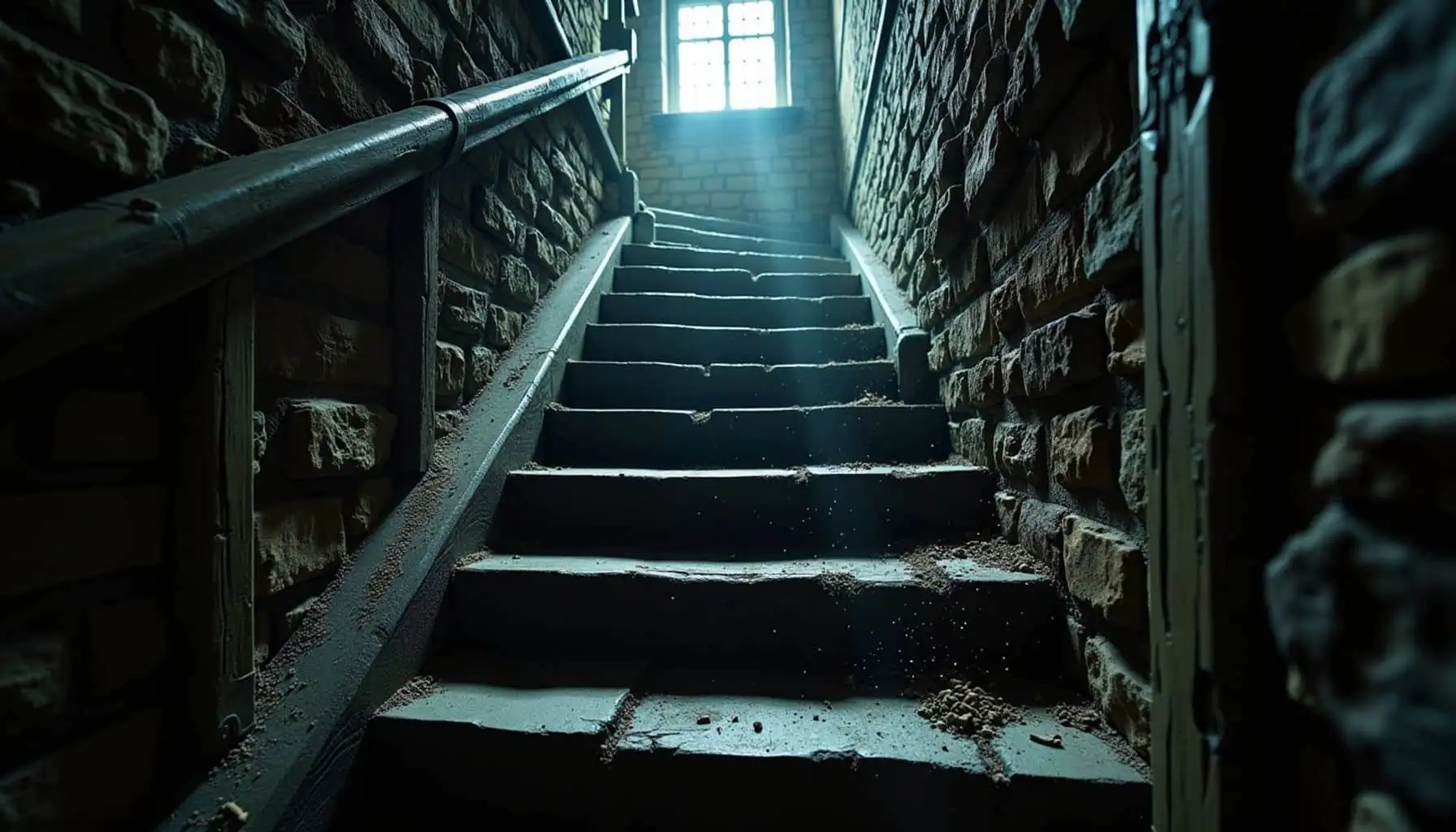
    When workers in the Silwan neighborhood near Jerusalem responded to a routine call to repair a sewage pipe, they stumbled upon a hidden staircase beneath a potato field. This unexpected discovery led archaeologists to uncover findings that could potentially rewrite history.

    Key Takeaways

    • A routine sewage repair led to the discovery of ancient stone steps.
    • The site is linked to significant historical and religious events.
    • The excavation reveals connections to the Pool of Siloam and the Temple of Solomon.

    The Discovery

    A small group of utility workers was on their way to fix a sewage leak in Silwan. As they began digging, one worker’s shovel struck something hard beneath the earth. This prompted an immediate halt to the work and a call for archaeologists.

    In a city rich with history, each new find is a thrilling adventure. Silwan is known for its necropolis, dating back 2,800 years, showcasing a blend of Israelite and Phoenician features. However, modern residents have built their homes atop these ancient graves, often compromising their integrity.

    Historical Context

    The area has long been a point of interest for archaeologists. In 1968, significant studies were conducted, but many sites remained unexplored. When archaeologist Eli Shukron arrived at the potato field, he sensed the importance of what lay beneath.

    As he cleared away the sand, he uncovered a staircase leading somewhere significant. This was not just any staircase; it was connected to a historical narrative that could change our understanding of the past.

    The Pool of Siloam

    The Jerusalem Talmud mentions a lower pool where pilgrims would wash before heading to the Temple. This pool was essential for rituals and gatherings, especially during religious festivals. The discovery of the steps led Shukron to believe they were part of the Pool of Siloam, a site of great significance.

    The pool was constructed during King Hezekiah’s reign to ensure a water supply during sieges. It was later associated with Jesus, who performed miracles there, making it a focal point for both Jewish and Christian traditions.

    Archaeological Significance

    The excavation process is meticulous. Each layer of history must be documented to preserve information. After months of hard work, the team revealed that the pool was 225 feet wide, much larger than previously thought, indicating its importance in ancient Jerusalem.

    Artifacts like coins and pottery found along the Pilgrim’s Road provide a glimpse into the lives of those who frequented the Temple. This area was central to the community’s religious practices and celebrations.

    A Connection to the Past

    The steps lead to a deeper understanding of Jerusalem’s history. They connect to the Temple Mount, a site of immense religious significance. The Temple Mount has been a focal point for centuries, housing the original Temple of Solomon and later renovations by King Herod.

    The discovery of the Pool of Siloam and its connection to Jesus’s miracles adds layers to the historical narrative. It highlights the importance of this site for both Jews and Christians, serving as a reminder of shared heritage.

    Future Discoveries

    As excavations continue, the potential for further discoveries remains high. The beautifully preserved stone steps could one day allow visitors to walk in the footsteps of history, connecting them to the sacred past.

    These archaeological sites represent a rich cultural heritage, reminding us of the unity and spirit of community that once thrived in Jerusalem. Rather than conflict over ownership, these discoveries encourage a shared appreciation of history.

    What ruins from the past do you wish to visit? Share your thoughts in the comments!

  • Anunnaki – The Shocking Truth About The Eagle And The Serpent

    Anunnaki – The Shocking Truth About The Eagle And The Serpent

    In the ancient Sumerian myth, the tale of the Eagle and the Serpent unfolds, revealing a complex narrative filled with themes of vengeance, justice, and divine intervention. This story, rich in symbolism, intertwines the fates of these two powerful creatures, shedding light on the deeper meanings behind their actions.

    Key Takeaways

    • The Eagle symbolizes power and divine authority.
    • The Serpent represents cunning and the quest for justice.
    • Shamash, the god of justice, plays a pivotal role in the narrative.
    • The myth may have connections to other ancient stories, such as the Gilgamesh Epic.

    The Symbolism of The Eagle

    The Sumerian word for Eagle is An, while Anzo can mean either Eagle or Vulture. In this myth, the Eagle is depicted in the form of a vulture, hinting at its dual nature. The Eagle is often seen as a symbol of the Sun God, embodying strength and authority.

    The Conflict Begins

    The tale begins with a quarrel between the Eagle and the Serpent. Feeling hungry, the Eagle decides to devour the Serpent’s young. Despite warnings from his offspring about the potential wrath of Shamash, the god of justice, the Eagle ignores their advice and attacks the Serpent’s nest.

    The Serpent’s Plea for Justice

    Upon discovering the loss of its young, the Serpent seeks out Shamash, appealing for justice. The Serpent’s plea highlights the theme of divine retribution. It describes the devastation caused by the Eagle, emphasizing the vastness of Shamash’s power:

    “Thy net is like unto the broad Earth; thy snare a trap is like the distant heaven in wideness. Who can escape thee?”

    Shamash’s Vengeful Plan

    Shamash listens to the Serpent’s appeal and devises a plan for vengeance. He instructs the Serpent to hide within the carcass of a wild ox, waiting for the Eagle to come. This clever strategy sets the stage for the Eagle’s downfall.

    1. Hide in the carcass of a wild ox.
    2. Wait for the Eagle to swoop down.
    3. Seize the Eagle by the wing and tear him apart.

    The Eagle’s Greed

    As the Serpent follows Shamash’s instructions, the Eagle, driven by greed, eventually descends upon the carcass. Despite warnings from his young, who fears a trap, the Eagle dismisses the advice and begins to feast. This moment illustrates the consequences of hubris.

    The Serpent’s Revenge

    Just as the Eagle begins to indulge, the Serpent strikes. The Eagle begs for mercy, but the Serpent, fueled by rage and the promise of justice from Shamash, retaliates. The Eagle’s fate is sealed as the Serpent tears off his wings and casts him into a pit, symbolizing the ultimate punishment for his actions.

    The Deeper Meaning

    This myth serves as a cautionary tale about the balance of power and the consequences of one’s actions. The Eagle, representing authority, falls victim to his own greed and disregard for warnings. The Serpent, often seen as a symbol of cunning, ultimately seeks justice, showcasing the complexity of their roles.

    Connections to Other Myths

    The story of the Eagle and the Serpent may resonate with other ancient tales, such as the Gilgamesh Epic and the myth of Etana and the Eagle. These narratives often explore similar themes of power, justice, and the interplay between divine beings and mortals.

    Conclusion

    The Anunnaki myth of the Eagle and the Serpent is a rich tapestry of symbolism and moral lessons. It reminds us of the importance of heeding warnings and the inevitable consequences of our actions. As we delve into these ancient stories, we uncover timeless truths that continue to resonate today.

  • Baphomet’s Forbidden GNOSIS

    Baphomet’s Forbidden GNOSIS

    In a captivating exploration of ancient secrets, we delve into the enigmatic figure of Baphomet. This symbol, laden with hidden meanings, has sparked fear and fascination throughout history. From medieval accusations against the Knights Templar to its modern interpretations in occultism, Baphomet remains a mystery that continues to intrigue.

    Key Takeaways

    • Baphomet’s origins are tied to the Knights Templar and their persecution.
    • The symbol has evolved over centuries, gaining new meanings in various esoteric traditions.
    • Baphomet represents duality, hidden wisdom, and personal transformation.

    The Dark Chapter of the Knights Templar

    To understand Baphomet, we must revisit one of the darkest periods in medieval history: the fall of the Knights Templar. Founded in 1119, this military religious order aimed to protect Christian pilgrims. As they grew in power and wealth, they became influential bankers and administrators, rivaling European royalty.

    However, their success attracted enemies, notably King Philip IV of France. In a desperate bid to eliminate his debts, Philip accused the Templars of heresy, sodomy, and the worship of a pagan idol named Baphomet. In October 1307, hundreds of Templars were arrested, and many confessed under torture to worshiping this mysterious figure.

    Theories Surrounding Baphomet

    The question remains: Did Baphomet truly exist? Various theories have emerged:

    1. Pagan Worship: Some suggest the Templars worshiped ancient pagan gods.
    2. Esoteric Knowledge: Others propose Baphomet symbolized hidden wisdom acquired during their campaigns in the East.
    3. Corruption of Muhammad: A widespread theory links Baphomet to a corruption of the name Muhammad, reflecting medieval Christian fears of Islam.

    Despite these theories, the idea that Baphomet was a concrete idol is highly debated. Instead, it may have represented a symbol of hidden wisdom.

    Baphomet and Esoteric Knowledge

    During the Middle Ages, cultural exchanges between the Christian and Muslim worlds flourished. The Templars were exposed to mystical traditions like Sufism, Alchemy, and Gnosticism, all emphasizing secret knowledge for spiritual enlightenment.

    One fascinating theory connects Baphomet to the Hebrew Cipher known as Atbash. When applying this cipher to Baphomet, the resulting word is Sophia, meaning wisdom in Greek. This suggests Baphomet was not a physical idol but a symbol of divine knowledge.

    The Renaissance and Baphomet’s Evolution

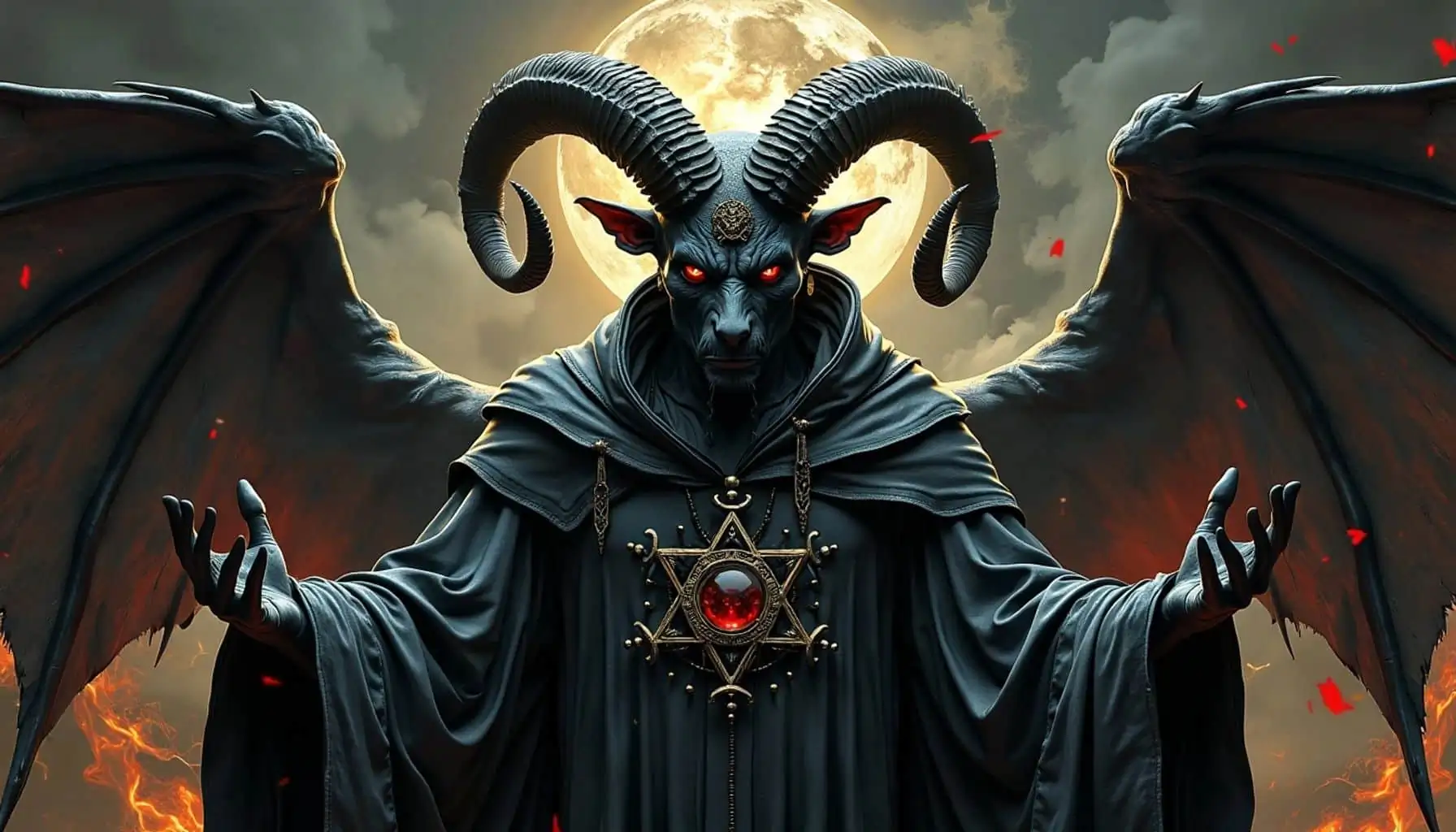
    Baphomet did not fade away with the Templars. Instead, it evolved during the Renaissance, a time of renewed interest in ancient knowledge and the occult. The French occultist Eliphas Lévi reimagined Baphomet as an androgynous figure with a goat’s head, wings, and a caduceus. This representation symbolized the unity of opposites—spiritual and material, masculine and feminine.

    Lévi’s Baphomet became a central symbol in many occult traditions, influencing generations of esotericists. He connected Baphomet to Banb Jedet, an Egyptian god associated with fertility and creative power, reinforcing the idea that Baphomet represented the universe’s creative forces.

    Baphomet in Modern Occultism

    The reinterpretation of Baphomet influenced notable figures like Aleister Crowley, who adopted it as a central symbol in his philosophy of Thelema. For Crowley, Baphomet represented the union of opposites and personal power, capable of transforming those who invoked it. He viewed Baphomet as a force for personal enlightenment and self-liberation.

    However, despite its positive reinterpretation, Baphomet became misunderstood in popular culture. In the 20th century, some Satanist groups adopted it as a symbol of rebellion against traditional religious structures, leading to its association with Satanism.

    The Conspiracy Theory

    A fascinating conspiracy theory suggests that the promotion of Baphomet in modern Satanism was a deliberate effort by certain elites to divert attention from its true esoteric meaning. According to this theory, secret organizations manipulate figures like Anton LaVey to transform Baphomet into a superficial icon, concealing its deeper spiritual power.

    Conclusion

    Baphomet has traveled a long path from its early mentions in the Templar trials to becoming a recognized symbol in modern occultism. Its image has been reinterpreted by various cultures, each adding layers of meaning. For some, Baphomet represents absolute evil; for others, it symbolizes hidden wisdom and personal transformation.

    What is clear is that Baphomet continues to be a source of fascination and mystery. Its ability to encapsulate diverse ideas—duality, esoteric wisdom, and rebellion—makes it a powerful symbol adaptable to the needs of those who invoke it.

    If you enjoyed this exploration of Baphomet’s rich history, don’t forget to subscribe for more insights into the mysteries of esotericism!

  • Why Archaeologists Avoid Discussing This Skull?

    Why Archaeologists Avoid Discussing This Skull?

    In 2019, a groundbreaking discovery was made in the Hualongdong cave of Anhui province, eastern China. Archaeologists unearthed a 300,000-year-old skull that has the potential to reshape our understanding of human evolution. Despite its significance, many researchers seem hesitant to engage with its implications.

    Key Takeaways

    • The skull, known as HDL 6, is unlike any other premodern human fossil.
    • It exhibits a unique mix of traits that challenge existing classifications.
    • The discovery highlights the complexity of human evolution in Asia.
    • Additional fossil discoveries are crucial for understanding human ancestry.

    The Discovery of HDL 6

    The skull, referred to as HDL 6, was found alongside 15 other specimens, including a nearly complete jawbone and leg bones. The remains belong to a young individual, estimated to be around 12 or 13 years old at the time of death. This fossil dates back to the late Middle Pleistocene period, making it a significant find in the study of human origins.

    Unique Characteristics of HDL 6

    What sets HDL 6 apart is its odd set of characteristics. Some features, like the flat face, are more similar to modern humans, while the skull cavity and jaw resemble more ancient hominins. This has left researchers puzzled about where to place HDL 6 in the human evolutionary tree.

    The Dilemma of Classification

    A small group of researchers from China has dedicated years to studying HDL 6. Their findings suggest that it could represent a previously unknown human lineage. The uniqueness of this skull lies in its differences from known ancestors, such as Neanderthals and Denisovans. Some researchers initially speculated that it might be a mix of modern humans and another hominin, but further analysis disproved this idea.

    The Significance of the Late Middle Pleistocene

    The late Middle Pleistocene was a pivotal period for homin evolution. It witnessed the emergence of species genetically linked to modern humans. Discoveries like HDL 6 help fill crucial gaps in our understanding of human prehistory. The unique features of HDL 6 suggest that we may need to add a new branch to the human family tree.

    The Jawbone’s Complexity

    Researchers have focused on the mandible, or lower jaw, of HDL 6. Its unusual features have led to speculation that it may belong to a lost human lineage. While the jawbone resembles that of modern Homo sapiens, it lacks a true chin, a key feature of our species. This absence has created a significant dilemma regarding the specimen’s classification.

    Implications for Human Evolution

    Maria Martinon-Torres, one of the scientists involved in the study, suggests that HDL 6 may exhibit traits that anticipate typical Homo sapiens features. If true, this could mean that modern human characteristics were present in what is now China as early as 300,000 years ago. This challenges the notion that Homo sapiens arrived in East Asia less than 50,000 years ago.

    A Mosaic of Traits

    The complexity of HDL 6 doesn’t end there. The mandible exhibits a mosaic pattern of traits, combining features from various human species. This unique combination has made it challenging for researchers to classify HDL 6 within any known lineage. Extensive analysis has yet to yield a conclusive classification.

    The Broader Context of Discoveries in China

    Over the past 50 years, archaeologists in China have unearthed numerous fossils that defy existing categories of human ancestors. The linear progression from Homo erectus to Homo sapiens is proving to be an oversimplification of a much more complex reality. Other notable discoveries in China, such as the Harbin skull (nicknamed Dragon Man) and the Dali Man fossil, further complicate our understanding of human evolution.

    Global Implications

    These findings in East Asia are part of a larger trend challenging traditional narratives of human evolution. Recent discoveries in Israel and Greece suggest that our ancestors may have begun migrating out of Africa earlier than previously believed. Fossils in Morocco, dating back approximately 300,000 years, show Homo sapiens-like features, pushing back the emergence of our species from the previously accepted timeline.

    The Complexity of Interbreeding

    The implications of these discoveries extend beyond just adding new branches to the human family tree. They suggest a more intricate web of interactions and interbreeding among different hominin groups. Genetic studies have provided strong evidence for this complexity, indicating that multiple human lineages coexisted and interacted in East Asia during the Middle Pleistocene.

    Conclusion

    The HDL 6 skull is a remarkable find that challenges our understanding of human evolution. Its unique features and the complexities surrounding its classification highlight the need for further research and discoveries. As we continue to explore our past, it becomes increasingly clear that the story of human evolution is far more intricate than we once thought.

  • Japan’s Secret Torture Lab

    Japan’s Secret Torture Lab

    In the shadows of history lies a chilling tale of human experimentation and biological warfare. Unit 731, a covert Japanese military unit during World War II, conducted horrific experiments on thousands of innocent lives. This article delves into the dark legacy of Unit 731, revealing the ambition, atrocities, and the aftermath of their actions.

    Key Takeaways

    • Unit 731 was responsible for inhumane experiments on humans, primarily in Manchuria.
    • The unit was led by Dr. Shiro Ishii, who believed in the potential of biological warfare.
    • Thousands of prisoners were subjected to brutal experiments, leading to countless deaths.
    • After the war, many members of Unit 731 escaped prosecution, often rising to positions of power.

    A Radicalizing Japan

    In 1938, Japan was at a crossroads. The nation had emerged from World War I with a thriving economy and was a member of the League of Nations. However, the political landscape was shifting. Ultra-nationalist sentiments were rising, and the country was preparing for expansion.

    Dr. Shiro Ishii, a military doctor, was captivated by the potential of biological weapons. He believed that if other nations were developing such weapons, Japan must do the same. His ambition was fueled by a desire to protect Japan from perceived threats, leading him to propose the establishment of a dedicated research unit.

    A Man With Ambition

    Ishii was not just intelligent; he was ruthless. He convinced military leaders that biological warfare could be a cost-effective means of warfare. His vision led to the creation of the Institute for Epidemic Prevention, where he and his team began experimenting with deadly pathogens.

    • Key Pathogens Studied:
      • Glanders
      • Typhus
      • Anthrax
      • Plague

    Ishii’s research was twofold: assault and defense. While vaccine research could be conducted in Japan, offensive research required human subjects, which he found in the occupied territories of Manchuria.

    The Horrors of Manchuria

    In 1931, Japan invaded Manchuria, establishing a puppet state. This region became the perfect ground for Ishii’s experiments. The local population was subjected to inhumane treatment, with many becoming unwilling participants in biological warfare research.

    Ishii relocated his institute to a more remote area, where he could conduct experiments without fear of exposure. The infamous Zongma Fortress was built, serving as both a research lab and a prison camp. Here, prisoners were subjected to horrific conditions, with an average life expectancy of just one month.

    A Laboratory of Horrors

    Unit 731 was officially established in 1936, expanding its operations significantly. The facility included:

    • 150 Buildings
    • Research Laboratories
    • Prison Cells
    • Autopsy Rooms
    • Airfield

    Prisoners were subjected to extreme conditions, including:

    • Frostbite Experiments:
      • Subjects forced to stand barefoot in freezing temperatures.
    • Pressure Tests:
      • Individuals locked in chambers to test human limits.
    • Live Dissections:
      • Prisoners infected with diseases and dissected without anesthesia.

    Protecting The Research

    As World War II drew to a close, Unit 731 scrambled to destroy evidence of their atrocities. With the threat of exposure looming, they executed remaining prisoners and destroyed facilities. Ishii and his team fled, taking crucial research data with them.

    Despite the horrific nature of their actions, many members of Unit 731 were never held accountable. The U.S. government, seeking the valuable research data, granted immunity to Ishii and others in exchange for their knowledge on biological warfare.

    The Aftermath

    In the years following the war, many Unit 731 members reintegrated into society, often rising to influential positions in Japan. It wasn’t until 2002 that the Tokyo District Court acknowledged Japan’s engagement in biological warfare, yet no compensation was awarded to victims.

    Dr. Shiro Ishii died in 1959, having lived a life free from the consequences of his actions. The legacy of Unit 731 serves as a haunting reminder of the depths of human cruelty and the importance of accountability in the face of such atrocities.

    The story of Unit 731 is a dark chapter in history, one that must not be forgotten. It challenges us to reflect on the ethical boundaries of scientific research and the value of human life.

  • What Japan Did on the Moon Is Game-Changing

    What Japan Did on the Moon Is Game-Changing

    Earlier this year, Japan made history by landing a spacecraft on the Moon for the first time. This achievement places Japan alongside the USA, Russia, India, and China. However, JAXA’s mission was not just about landing; it showcased an extraordinary level of precision in lunar exploration.

    Key Takeaways

    • Japan’s SLIM mission achieved unprecedented landing precision.
    • The spacecraft survived three lunar nights, defying expectations.
    • SLIM’s technology could revolutionize future lunar missions.

    The Moon Sniper: A Revolutionary Mission

    The Smart Lander for Investigating Moon, or SLIM, is a small, lightweight spacecraft about the size of a passenger vehicle. Its primary mission is to analyze olivine rocks near the Shioli Crater, located 200 miles south of the Sea of Tranquility, where Neil Armstrong made his historic landing.

    This landing zone is significant because it allows researchers to study lunar rock without drilling. By examining these rocks, JAXA aims to uncover more about the Moon’s origins and formation.

    SLIM also carried two tiny lunar excursion vehicles, LEV-1 and LEV-2, designed to gather additional data and images.

    Precision Landing: A Game Changer

    Historically, only about 43% of lunar landings have been successful. Past missions faced significant challenges due to technological limitations and the Moon’s harsh environment. For instance:

    • The Soviet Union’s Luna 9 took a dozen attempts before landing successfully.
    • NASA’s Ranger series required six tries to achieve a successful landing.

    The absence of an atmosphere on the Moon complicates landing, as landers must rely solely on engine thrust. This makes it difficult to adjust trajectories accurately. Every Apollo mission landed perilously close to rocks or slopes, with limited ability to make real-time adjustments.

    If we can develop spacecraft capable of precise landings, we can explore various lunar regions without relying on rovers to travel long distances. This reduces mission complexity and costs while opening new avenues for exploration.

    The Technology Behind SLIM

    SLIM’s success can be attributed to its vision-based navigation system, referred to as “smart eyes.” This system continuously captures images of the lunar surface during descent, allowing the spacecraft to locate itself in real-time using orbital maps created by data from other lunar rovers.

    By processing these images, SLIM can adjust its trajectory on the fly, achieving pinpoint accuracy. Weighing just 200 kg without propellant, SLIM’s successful landing demonstrates that small, lightweight spacecraft can undertake complex lunar missions.

    The Landing: A Topsy-Turvy Experience

    On September 6, 2023, JAXA launched SLIM, which arrived in lunar orbit on Christmas Day 2023. The final descent on January 18, 2024, was a tense moment, live-streamed for viewers. Unfortunately, one of SLIM’s main engine nozzles detached 50 meters above the surface, causing it to gain lateral motion. Despite this, SLIM managed to identify a safe landing spot, albeit it tipped over upon touchdown.

    Surviving the Lunar Nights

    Lunar nights are notoriously brutal, with temperatures plummeting to -180 degrees Celsius. SLIM was not designed to survive these conditions, so it was put into hibernation after its first lunar day. To everyone’s surprise, SLIM awoke after the first lunar night and began sending data back to Earth.

    This pattern continued, with SLIM surviving not just one, but three lunar nights, sending back valuable images and data each time. This resilience has baffled scientists and showcases the spacecraft’s remarkable engineering.

    The Future of Lunar Exploration

    JAXA’s successful landing with SLIM is a significant breakthrough in interplanetary travel. The ability to execute precise landings opens doors for future missions, particularly in unexplored regions like the South Pole-Aitken Basin, where the Moon’s mantle may be exposed.

    NASA’s upcoming Artemis missions in 2026 will also benefit from the advancements demonstrated by SLIM. Pinpoint touchdowns could be crucial for accessing water-ice in permanently shadowed areas.

    Conclusion

    Moon Sniper stands as a testament to the progress and innovation achieved since the last lunar era. As interest in lunar exploration grows, missions like SLIM provide a glimpse into the exciting possibilities that lie ahead in our quest to understand the Moon and beyond.

  • Astonishing Discovery In The Bosnian Pyramid?

    Astonishing Discovery In The Bosnian Pyramid?

    The exploration of ancient civilizations often leads to astonishing discoveries that challenge our understanding of history. One such discovery is the Bosnian Pyramid, a site that has sparked intrigue and debate among researchers and enthusiasts alike.

    Key Takeaways

    • The Bosnian Pyramid is believed to be an ancient structure, possibly predating known civilizations.
    • The Dun Haa star chart suggests advanced astronomical knowledge in ancient China.
    • Unique stonework found in various ancient structures indicates a lost civilization with advanced construction techniques.

    The Bosnian Pyramid: A Hidden Marvel

    The Bosnian Pyramid, long thought to be just a hill, has been revealed as an ancient structure through the efforts of researchers like Dr. Sam Osmanagich. His work has uncovered vast portions of this pyramid, proving its existence and significance.

    Dr. Osmanagich faced skepticism from mainstream academia, yet his findings have opened new avenues for understanding ancient civilizations. The pyramid rivals even the famous structures of Giza, showcasing precise angles and construction techniques that suggest a highly advanced society.

    The Dun Haa Star Chart: Ancient Knowledge

    Another fascinating aspect of ancient civilizations is the Dun Haa star chart from China. This chart, dated to the Tang Dynasty, provides an accurate graphical representation of star locations. It raises questions about how ancient cultures possessed such advanced astronomical knowledge.

    • Key Features of the Dun Haa Star Chart:
      • Accurate plotting of over 1,300 stars.
      • Evidence of knowledge that predates the Tang Dynasty.
      • Suggests a connection to a more advanced civilization.

    Unusual Stonework: Evidence of Lost Civilizations

    The unique stonework found in various ancient structures, such as the Royal Kyan in Crimea, indicates a shared architectural style among sites across the globe. This stonework is not only aesthetically impressive but also suggests advanced construction techniques that were likely lost over time.

    • Notable Structures with Unique Stonework:
      • Royal Kyan in Crimea
      • Fortress of Nimrod
      • Ancient ruins in Gerash, Jordan

    These structures share characteristics that point to a common group of builders, possibly a lost civilization with advanced knowledge and skills.

    The Connection of Ancient Sites

    As researchers continue to explore these ancient sites, connections are being made between them. The stonework and construction techniques found in the Bosnian Pyramid, the Royal Kyan, and other locations suggest a network of advanced civilizations that once thrived.

    • Key Questions:
      • Who built these ancient structures?
      • What knowledge did they possess?
      • Why were these sites constructed with such precision?

    Conclusion: Unraveling the Mysteries of History

    The discoveries surrounding the Bosnian Pyramid and other ancient sites challenge our understanding of history. They suggest that advanced civilizations existed long before our current historical narratives. As research continues, we may uncover even more astonishing evidence of our past.

    The journey to understand these ancient wonders is ongoing, and each new finding brings us closer to unraveling the mysteries of our history. If you find this exploration compelling, consider supporting the mission to uncover the truth about our ancient past.

  • This Star Is Older Than The Universe and Scientists Can’t Explain It

    This Star Is Older Than The Universe and Scientists Can’t Explain It

    In the vast expanse of the universe, nestled in the constellation Libra, lies a star that has baffled scientists for decades. Known as HD 140283, or the Methuselah star, this celestial body challenges our understanding of cosmic timelines, raising questions about the very fabric of our universe.

    Key Takeaways

    • HD 140283, or the Methuselah star, is estimated to be 16 billion years old.
    • This age is 2 billion years older than the universe itself, which is estimated at 13.8 billion years.
    • The star’s unusual composition suggests it formed before heavy elements were abundant.
    • Ongoing research continues to refine the age of the Methuselah star, with recent estimates suggesting it may be younger than initially thought.

    The Discovery of the Methuselah Star

    The story of the Methuselah star began in the early 2000s when astronomers first attempted to determine its age. At first glance, HD 140283 appears to be an ordinary star, not particularly large or bright. However, its unusual composition hinted at something extraordinary. When scientists calculated its age, they were shocked to find it was approximately 16 billion years old—a figure that defied logic, as it was 2 billion years older than the universe itself.

    The Early Universe

    To understand the significance of this discovery, we must first explore the early universe. After the Big Bang, the universe was a hot soup of protons, neutrons, and electrons. It took hundreds of thousands of years for the first atoms to form, primarily hydrogen and helium. Around 150 to 200 million years post-Big Bang, these atoms coalesced to create the first stars, known as Population III stars. These stars were massive, hot, and short-lived, eventually exploding in supernovae and seeding the universe with heavy elements.

    The Age Calculation Dilemma

    The age of HD 140283 was first estimated using spectroscopic analysis, revealing it contained extremely low levels of heavy elements—just 0.4% of the iron found in the Sun. This indicated that it formed before heavy elements became common. However, the initial calculations suggesting it was older than the universe sparked a debate that questioned the validity of the Big Bang Theory.

    The Nickname: Methuselah Star

    The media quickly dubbed HD 140283 the Methuselah star, referencing the biblical figure known for his extraordinary lifespan of 969 years. This catchy name captured the public’s imagination and highlighted the star’s enigmatic nature.

    Reevaluating the Universe’s Age

    The accepted age of the universe is approximately 13.8 billion years, but this figure is still a subject of debate. Recent observations, such as those from the James Webb Telescope, have suggested that the universe might be older than previously thought, with some estimates reaching 26.7 billion years. However, the majority of scientists still support the 13.8 billion-year estimate based on multiple lines of evidence.

    The Ongoing Investigation

    In 2013, astronomers from Penn State University revisited the age of the Methuselah star. They found that the observational data used in earlier calculations was flawed. Using more accurate data from the Hubble Space Telescope, they recalibrated the star’s age to 14.46 billion years. While this was still older than the universe, it was a step toward resolving the mystery.

    Recent Findings

    Further studies have continued to refine the age of the Methuselah star. By 2021, estimates suggested it could be as young as 12 billion years, comfortably younger than the universe. This ongoing research highlights the complexities of stellar evolution and the challenges of accurately dating stars.

    The Significance of the Methuselah Star

    Despite the adjustments in its estimated age, the Methuselah star remains a fascinating object of study. It was the first star identified with a significantly lower heavy element content than our Sun, leading to crucial insights about stellar formation and the origins of elements in the universe.

    Conclusion

    The Methuselah star serves as a reminder of the mysteries that still exist in our understanding of the cosmos. While it may not be the cosmic anomaly it once appeared to be, it continues to challenge our assumptions and inspire further exploration. As we refine our knowledge of the universe, the Methuselah star will undoubtedly remain a key player in the ongoing quest to understand our place in the cosmos.

    On a clear night, you can even catch a glimpse of this ancient star with a pair of binoculars, connecting you to one of the oldest objects in the universe. What a remarkable thought!

  • The Most Graphic Ancient Art in the U.S. You’ve Never Seen

    The Most Graphic Ancient Art in the U.S. You’ve Never Seen

    In the American Southwest, a remarkable gallery of ancient art stretches nearly a mile along a sandstone cliff. This site, filled with hundreds of centuries-old images, is not just notable for its quantity but for its shocking depictions of violence and possibly cannibalism. Join me as I explore this unique rock art and what it reveals about pre-Columbian North America.

    Key Takeaways

    • The site features unique depictions of violence and cannibalism.
    • The art is attributed to the Fremont people, who thrived from 300 to 1300 AD.
    • The Fremont culture blended agricultural and nomadic lifestyles.
    • The disappearance of the Fremont people around 1300 AD remains a mystery.

    A Journey to the Ancient Gallery

    Recently, I embarked on a journey to witness this ancient art firsthand. The site is on private property, making it more developed than the remote locations I usually visit. However, the uniqueness of the art outweighs any distractions from road noise.

    As I approached the cliff, I was immediately struck by the petroglyphs. This open-air gallery is unlike any museum; the rock art remains in its original context, offering a more immersive experience.

    The Fremont People

    The art we see today is attributed to the Fremont people, a cultural group that existed for about a thousand years. They lived between two worlds: the agricultural societies to their south and the nomadic tribes to their north, east, and west. This unique position allowed them to blend farming with hunting and gathering.

    Here are some intriguing aspects of the Fremont culture:

    1. Artistic Expression: The Fremont had a keen eye for art, as evidenced by the elaborate petroglyphs and fragile clay figurines found at various sites.
    2. Mysterious Disappearance: Around 1300 AD, the Fremont seemingly vanished from the archaeological record. This coincides with significant changes in the region, raising questions about their fate.
    3. Cultural Adaptation: They likely observed and adapted practices from neighboring tribes, creating a unique cultural identity.

    The Art Itself

    As I explored the cliff, I encountered increasingly elaborate images. One of the most striking panels, known as the Three Kings, was surprisingly hard to reach. The scale of these petroglyphs was astonishing, with some figures towering over seven feet tall.

    The intricate designs prompted me to ponder their significance. Why were these images created here? What purpose did they serve?

    Shocking Depictions

    Among the many images, I was particularly struck by the depictions of severed heads. These images are hard to ignore and raise questions about the nature of the Fremont people. Were they savages? Or were they simply a product of their time, much like other ancient civilizations?

    The presence of severed heads suggests a culture that was not unfamiliar with violence. However, it’s essential to view this in context. Throughout history, many societies have engaged in warfare and atrocities.

    Cannibalism Allegations

    One of the most controversial aspects of this site is the cannibalism panel. Some interpretations suggest that the missing body parts in one depiction indicate cannibalistic practices. However, upon closer inspection, it appears to represent a warrior carrying the head of an enemy.

    While there is some evidence linking the Fremont to cannibalism, it’s crucial to approach this topic with caution. Many cultures, including early settlers in America, faced dire circumstances that led to extreme survival tactics.

    Conclusion

    Visiting this ancient gallery was a fascinating experience. The rock art not only tells the story of the Fremont people but also challenges us to reflect on the complexities of human nature. As we explore these ancient depictions, we must remember that history is often uncomfortable but essential to understand.

    Thank you for joining me on this journey. I hope you found it as intriguing as I did!

  • This Shouldn’t Exist In Egypt – The Ancient Osirion And Logic Defying Hydraulic Technology

    This Shouldn’t Exist In Egypt – The Ancient Osirion And Logic Defying Hydraulic Technology

    Hidden beneath the sands of Abydos, the Osirion stands as a monumental enigma. This ancient structure, believed to be linked to the god Osiris, challenges our understanding of Egyptian engineering and architecture. With its advanced hydraulic systems and unique design, the Osirion raises questions about the capabilities of ancient civilizations.

    Key Takeaways

    • The Osirion’s architecture diverges from typical Egyptian temples.
    • It predates the nearby Temple of Seti I, suggesting a much older significance.
    • The structure features massive granite blocks, raising questions about transportation methods.
    • Its subterranean layout and lack of hieroglyphs are highly unusual.
    • The presence of water within the structure hints at advanced hydraulic technology.

    The Architectural Mystery of the Osirion

    The Osirion is unlike any other temple in ancient Egypt. While most temples follow a linear layout, the Osirion boasts a unique L-shaped configuration. This deviation from the norm prompts critical questions about its purpose. Was it built for a different function, or does it reflect the architectural style of an unknown civilization?

    Adding to the intrigue, the Osirion is believed to predate the Temple of Seti I by centuries. This suggests that the site held significant importance long before Seti chose to build his temple beside it, almost as if he was honoring an ancient relic.

    The Engineering Feat

    The core of the Osirion is constructed from massive rose granite blocks, some weighing up to 100 tons. These stones were quarried from Aswan, over 200 miles away. Transporting and positioning such immense blocks in a desert location is a feat that seems impossible without advanced machinery. How did the ancient Egyptians achieve this?

    The sophisticated double-layered roofing system and interlocking wedges indicate a level of engineering knowledge that surpasses what we typically associate with ancient Egypt. Working with granite requires advanced tools and skills that historical records suggest the Egyptians had not yet developed.

    The Absence of Hieroglyphs

    Another striking feature of the Osirion is its complete lack of Egyptian hieroglyphs or artwork. Unlike other temples, which are richly decorated, the Osirion remains eerily bare. Throughout Egypt’s history, temples were frequently renovated, with each generation adding new inscriptions. The absence of such features raises further questions about the structure’s origins and purpose.

    Subterranean Layout and Water Mysteries

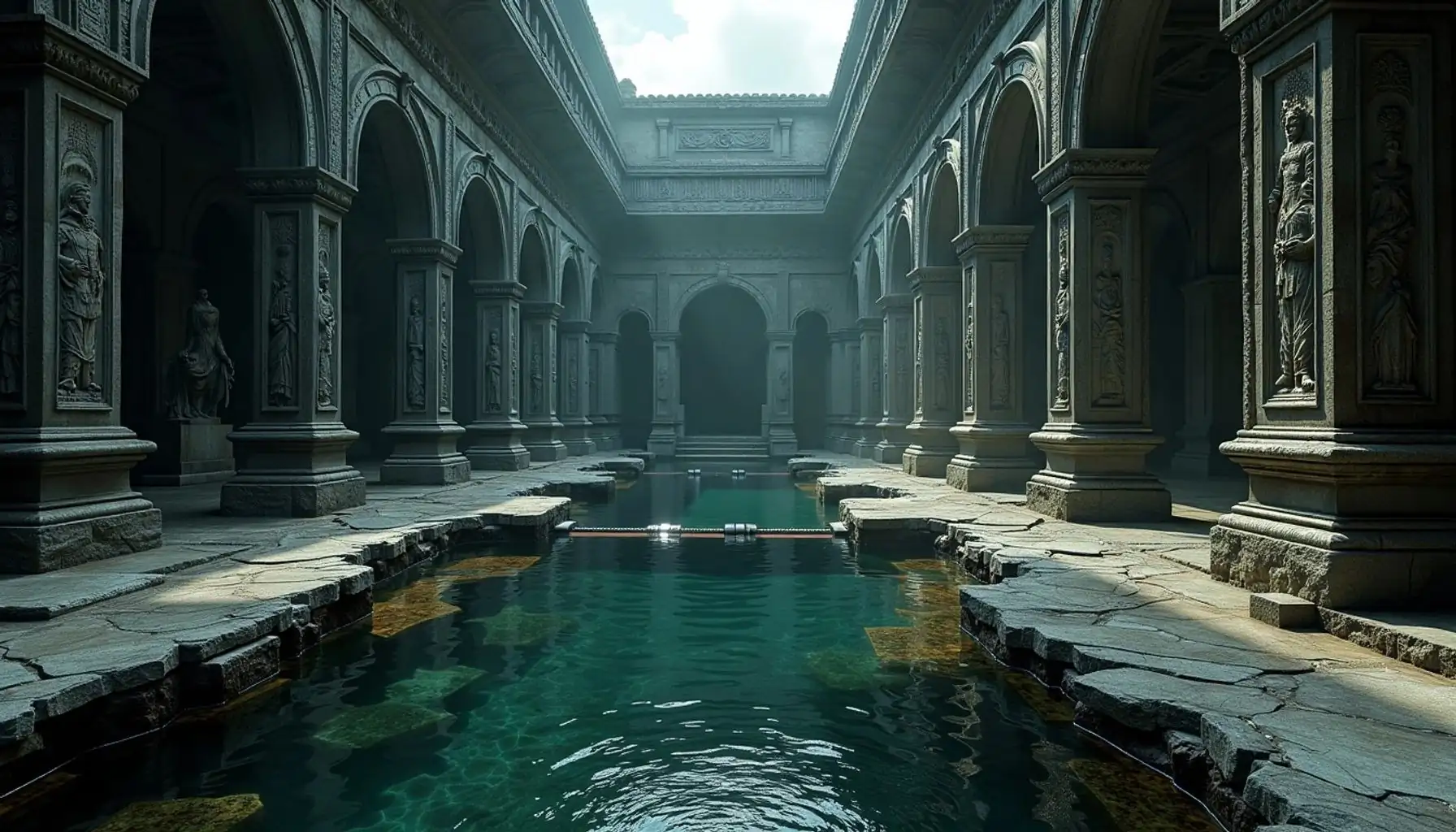
    The Osirion lies 15 feet below ground level, a highly uncharacteristic feature for Egyptian temples. This suggests it could be far older than its surrounding counterparts. Water erosion patterns found on the limestone enclosure hint at a much wetter climate, possibly dating the structure back to the end of the last ice age.

    Modern seismic technology has revealed that the visible portion of the Osirion is just the tip of the iceberg. Beneath the surface, there are hollow chambers that remain unexplored due to the constant presence of water. Despite multiple attempts, archaeologists have been unable to drain this water, which seems to replenish itself at an alarming rate.

    Advanced Hydraulic Systems

    The Osirion’s hydraulic system, which includes channels and basins, points to an advanced understanding of water management. This level of sophistication is not typically associated with ancient Egyptian technology. While they were known for irrigation, the techniques used in the Osirion are far more advanced.

    James Westerman, a renowned archaeologist, has spent decades studying the Osirion. His attempts to pump out the water have been met with frustration, as the water level continues to rise. Westerman notes, “Water is emerging from inside the structure. This shouldn’t be happening, especially in the desert. Something strange is going on here.”

    The Unique Properties of the Water

    In 2023, Westerman’s team analyzed the water within the Osirion, discovering a unique chemical profile that differs from surrounding wells. This suggests that the water is being forced up through the structure, almost as if propelled by an unknown force. The water behaves more like that of a geyser, yet without the typical signs of volcanic activity.

    Interestingly, Westerman found that the water is drinkable after filtration. He even experienced an extraordinary improvement in his eyesight after regularly consuming it, leading him to believe it possesses healing properties.

    Conclusion: A Lost Chapter of Human History

    As researchers continue to study the Osirion, its true scale and purpose remain elusive. The structure extends far beneath the surface, with hidden chambers still unexplored due to the constant flow of water. The Osirion may hold the key to understanding a lost chapter of human history, challenging everything we thought we knew about ancient civilizations.

    If you found this exploration of the Osirion captivating, stay tuned for our next adventure, where we dive deeper into the mysteries of ancient Egypt. Discover the groundbreaking findings of Egyptologists as they unearth ancient tunnels and tombs that rewrite history.