Category: Cryptozoology

  • 10 Spooky Urban Legends from Japanese Folklore

    10 Spooky Urban Legends from Japanese Folklore

    Japan is a land rich in culture and history, and its urban legends reflect deep societal fears and moral lessons. These tales blend horror with humor, captivating audiences with their eerie charm. Today, we explore 10 amazing urban legends that will send shivers down your spine.

    Key Takeaways

    • Urban legends reflect cultural significance.
    • Each story carries a moral lesson.
    • The blend of horror and humor is a common theme.

    1. The Sharim

    The Sharim is a fascinating creature known for its unique feature: an eye located where its anus should be. This mythical being is often depicted as mischievous, surprising unsuspecting travelers. The legend serves as a playful reminder of the unexpected twists in life, blending humor with cultural storytelling.

    2. The Aranam

    Known as the bathroom liquor, the Aranam is said to inhabit dirty bathrooms. With its long tongue, it licks filth and grime, serving as a reminder to keep our spaces clean. This spirit blends superstition with hygiene, warning us to embrace cleanliness or risk attracting the Aranam.

    3. Te Te

    Te Te is a ghostly figure described as a woman who lost the lower half of her body in a tragic railway accident. She drags herself along the ground, creating a haunting sound. Encountering her can lead to misfortune, making her a chilling presence in Japanese folklore.

    4. Kaa

    Kaa are water-dwelling beings resembling turtles, known for their mischievous nature. They possess a dish filled with water on their heads, which grants them strength. If this water spills, they become powerless. Kaa embody nature’s duality, being both playful and dangerous.

    5. Hanakosan

    A popular urban legend in Japanese schools, Hanakosan haunts school bathrooms, particularly the third stall. Students who summon her by knocking three times may encounter her spirit, leading to eerie experiences that blend fear and fascination.

    6. Kuchisake-Onna

    Kuchisake-Onna, or the slit-mouthed woman, is a terrifying ghost. She appears with scissors while wearing a surgical mask and asks, “Am I beautiful?” If you say yes, she reveals her gruesome smile and asks again. If you say yes again, she will slit your mouth just like hers. If you say no, she will fatally stab you.

    7. Aka Manto

    Aka Manto, or the red cape, haunts public restrooms, particularly the last stall. When approached, he offers a choice between red paper or blue. Choosing red means you will perish via blood loss, while blue signifies strangulation. However, there is a way to survive: if you choose yellow, he will shove your head in the toilet and leave soon after.

    8. Haesa Usama

    Haesa Usama embodies fear with her towering height and eerie presence. Known as the 8-foot tall woman, she preys on unsuspecting children, luring them with her haunting voice. The legend warns that if you hear her call, don’t respond; ignoring her is your only chance of escaping her grasp.

    9. Rokurokubi

    Rokurokubi often appear as ordinary humans by day. At night, they transform, extending their necks grotesquely. While some tales depict them as harmless, others reveal their darker side, with legends of them feeding on unsuspecting victims.

    10. Nure-onna

    Nure-onna is often depicted as a serpent with a woman’s head. She lures unsuspecting travelers to the water’s edge, seeking revenge or companionship. Her story serves as a cautionary tale about the dangers of temptation and the hidden depths of nature’s beauty and menace.

    These urban legends are more than just spooky stories; they reflect the rich tapestry of Japanese culture and the lessons that come with it. Whether they make you laugh or scream, they remind us of the unexpected twists life can take. Thank you for joining us on this eerie journey through Japan’s folklore!
  • Cryptids and Urban Legends of New York (and) the NYCC

    Cryptids and Urban Legends of New York (and) the NYCC

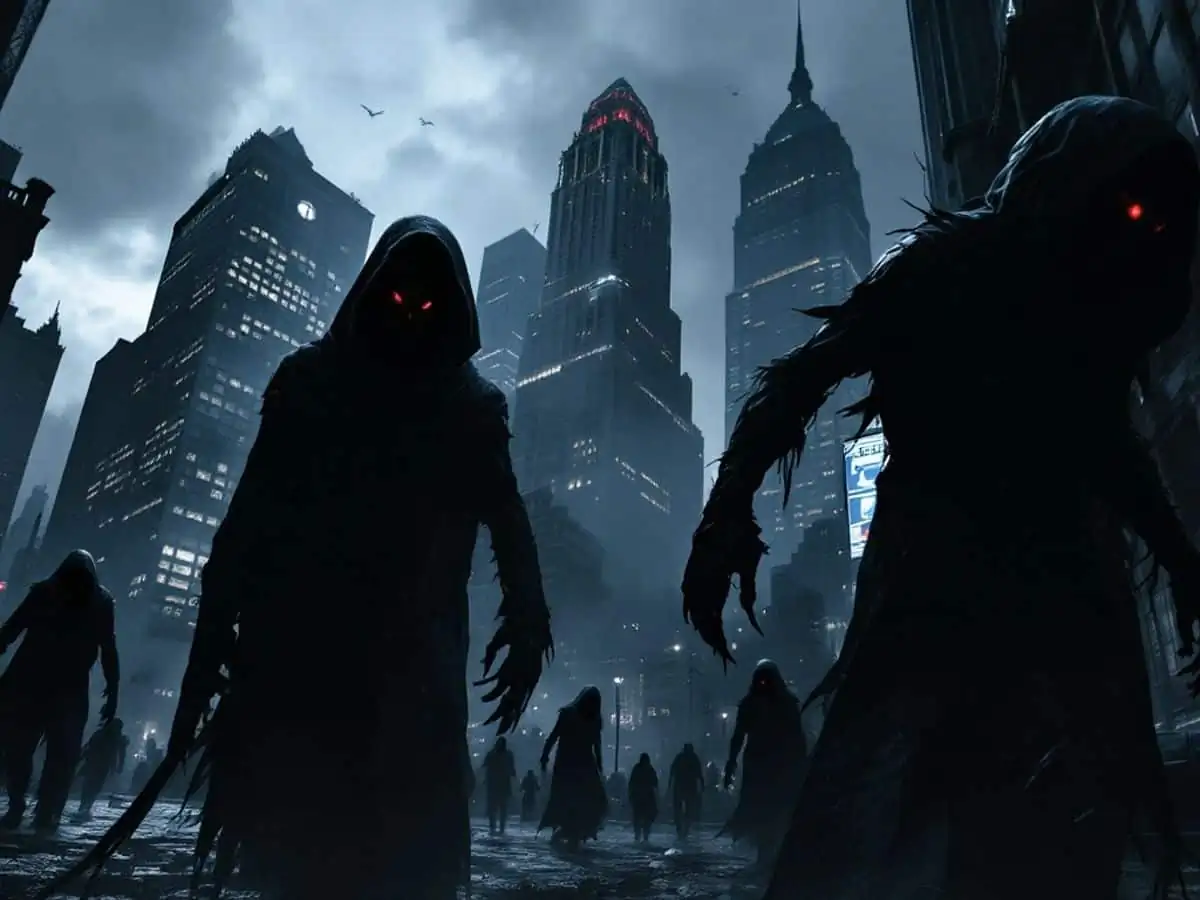
    New York City is a hub of creativity, culture, and, of course, eerie tales. From ghostly encounters to cryptids lurking in the shadows, the Big Apple has a rich tapestry of urban legends that captivate the imagination. In this post, we’ll explore some of the most intriguing stories and experiences from New York Comic-Con and beyond.

    Key Takeaways

    • New York Comic-Con is a vibrant event filled with cosplays and unique experiences.
    • The Dakota Building is steeped in ghostly legends and historical significance.
    • Sewer alligators and haunted subways add to the city’s spooky lore.
    • The Morris-Jumel Mansion and Sleepy Hollow are must-visit spots for ghost enthusiasts.
    • Cryptids like Bigfoot and the Lioness add an extra layer of mystery to New York State.

    A Memorable NYCC Experience

    Attending New York Comic-Con was a whirlwind of excitement. From meeting fellow cosplayers to judging the first-ever talent show, the event was a blast. The energy was infectious, and it was heartwarming to connect with fans who appreciate the podcast.

    I also indulged in some shopping, picking up unique merchandise from the Dexter exhibit and a treasure trove of Godzilla collectibles. The thrill of discovering new items was a highlight of my trip.

    The Dakota Building: A Haunting Legacy

    One of the most iconic locations in New York City is the Dakota Building. Known for its role in the film Rosemary’s Baby, this historic site is rumored to be haunted. Visitors often report feelings of being watched and have claimed to see apparitions in the hallways. The building’s tragic history, including the assassination of John Lennon, adds to its eerie reputation.

    Sewer Alligators: Urban Myth or Reality?

    The legend of sewer alligators is a classic New York tale. It’s said that pet alligators, flushed down toilets, thrived in the city’s vast sewer system. While sightings are rare, the idea of these creatures lurking beneath the streets adds a layer of intrigue to the urban landscape.

    Haunted Subways and Secret Tracks

    New York’s subway system is not just a means of transportation; it’s also a hotbed of ghostly encounters. Stories abound of passengers seeing spectral figures and phantom trains. One particularly intriguing location is Track 61, hidden beneath the Waldorf Astoria Hotel, where ghostly apparitions have been reported.

    The Morris-Jumel Mansion: A Ghostly Retreat

    Located in Upper Manhattan, the Morris-Jumel Mansion is the oldest house in the borough and has a rich history dating back to the Revolutionary War. Visitors can explore its haunted halls, where the ghost of former owner Eliza Jumel is said to roam. The mansion offers ghost tours, especially popular around Halloween.

    Sleepy Hollow: A Timeless Legend

    Just a short drive from the city lies Sleepy Hollow, made famous by Washington Irving’s tale of the Headless Horseman. The town exudes charm and mystery, with its picturesque cemetery and quaint streets. The legend has roots in real events, adding a layer of authenticity to the spooky narrative.

    Cryptids of New York

    New York State is home to various cryptids, including sightings of Bigfoot and the Lioness. While most people associate Bigfoot with the Pacific Northwest, the dense forests of upstate New York provide an ideal habitat for such elusive creatures. The lore surrounding these cryptids adds to the state’s rich tapestry of folklore.

    Movies to Pair with Your Spooky Adventures

    To enhance your spooky experience, consider watching films that tie into New York’s eerie tales:

    1. Midnight Meat Train – A chilling story that echoes the haunted subway theme.
    2. Rosemary’s Baby – A classic that captures the essence of the Dakota Building.
    3. Friday the 13th Part 8: Jason Takes Manhattan – A must-watch for horror fans.
    4. Ghostbusters – A fun take on the supernatural in New York.
    5. Sleepy Hollow – A visually stunning adaptation of the classic tale.

    Conclusion

    New York City is a treasure trove of urban legends, ghost stories, and cryptid sightings. Whether you’re attending Comic-Con or exploring the city’s haunted sites, there’s always something spooky to discover. As Halloween approaches, embrace the eerie tales that make New York a unique blend of history and mystery.

    Stay tuned for more spooky stories and adventures!

  • Wildlife Expert Investigates 5 Infamous Cryptid Animals

    Wildlife Expert Investigates 5 Infamous Cryptid Animals

    In a captivating exploration of legendary creatures, wildlife expert Forrest Galante delves into the world of cryptids, revealing the truth behind some of the most infamous animal myths. From the notorious chupacabra to the elusive M’bembe, this article uncovers the fascinating stories and scientific explanations behind these mysterious beings.

    Key Takeaways

    • Cryptids often stem from misidentifications of known animals.
    • Eyewitness accounts can be influenced by popular culture.
    • Scientific investigations can debunk long-held myths.

    The Chupacabra: The Goat Sucker

    The chupacabra, which translates to “goat sucker” in Spanish, has haunted the Americas with tales of its bloodthirsty nature. This creature is often described as having thick, scaly greenish-gray skin and sharp spines running down its back. Sightings have been reported from Puerto Rico to the United States.

    The legend began in 1975 when a series of livestock killings in Mocha, Puerto Rico, led to the nickname “vampire of Mocha.” Victims were found drained of blood, with small circular incisions. The chupacabra truly made headlines in 1995 when eight sheep were discovered dead, each with three puncture wounds.

    However, investigations reveal a different story. In 2011, researcher Benjamin Radford found that the descriptions of the chupacabra closely resembled a creature from the sci-fi horror film Species. Eyewitnesses had likely been influenced by this film, leading to a case of mistaken identity. Furthermore, Dr. David Morales found no evidence of blood-sucking in the supposed victims, suggesting that the sightings could be attributed to coyotes or wolves suffering from mange.

    The Aanii: The Two-Legged Demon

    Next on the list is the Aanii, a creature from ancient Peruvian mythology. Described as a giant, hairy, two-legged demon, it is said to punish the damned. Standing around 4 feet tall, it has thick, muscular arms and a short tail.

    In 2020, Galante and his wife investigated reports of the Aanii terrorizing livestock in Peru. After setting up trail cameras, they discovered that the creature was actually a spectacle bear, a rare species native to South America. The bear’s behavior and appearance had led to the misidentification, showcasing how easily legends can arise from real animals.

    The Loch Ness Monster: A Timeless Legend

    The Loch Ness Monster, affectionately known as Nessie, is perhaps the most famous cryptid. Descriptions of Nessie often depict a large creature resembling a plesiosaur. The legend gained traction in 1933, but many sightings have been debunked, including the infamous surgeon’s photograph, which was revealed to be a hoax.

    Scientists suggest that many sightings could be attributed to large eels, otters, or seals. Some even propose that the creature could be a Greenland shark, which can grow up to 20 feet long. Natural phenomena, such as boat wakes and floating logs, can also create illusions in the water, further complicating the mystery.

    The Ozark Howler: A Chilling Encounter

    The Ozark Howler is said to roam the wilds of Missouri, Arkansas, Oklahoma, and Texas. Described as a hybrid creature with the tail of a cat and the body of a dog, it is known for its chilling howl, reminiscent of a woman screaming.

    During his investigation, Galante discovered that the howler’s characteristics could be attributed to common animals like mountain lions and black bears. A significant revelation came when he examined a pelt and skull claimed to be from an Ozark Howler, which matched that of a critically endangered American Red Wolf. The myth of the Ozark Howler was likely perpetuated by moonshiners during Prohibition, who used howling to scare off intruders.

    M’bembe: The Dinosaur of the Congo

    Finally, we explore M’bembe, a legendary creature said to inhabit the Congo River Basin. Described as a large, quadrupedal herbivore with a long neck, M’bembe has been reported by local pygmies for centuries.

    While the existence of M’bembe remains anecdotal, some experts believe it could be a misidentified black rhinoceros or other large animals. The dense jungles of the Congo make it challenging to study the area, and the pygmies’ accounts lend some credibility to the legend. However, the scientific consensus leans towards known animals rather than undiscovered species.

    In conclusion, the investigation of these five infamous cryptids reveals a blend of myth, misidentification, and the influence of popular culture. While the allure of these creatures captivates our imagination, the truth often lies in the natural world around us. What do you think? Are there other cryptids you’d like to explore?

  • The Mysterious Cryptids of Antarctica

    The Mysterious Cryptids of Antarctica

    Antarctica and the Southern Ocean have long captivated explorers and scientists alike. This remote region is not just about ice and snow; it is also home to a variety of cryptids that spark curiosity and intrigue. From giant serpents to mysterious whales, the tales of these creatures are as fascinating as they are bizarre.

    Key Takeaways

    • Antarctica is home to various cryptids, including giant serpents and mysterious whales.
    • Historical sightings provide intriguing accounts of these creatures.
    • Theories about the existence of these cryptids range from scientific explanations to folklore.

    Sovetskaya Serpents

    In 1962, a Soviet ship named the Sovetskaya Rossiya encountered a pair of giant serpents near a research base. Helicopter pilots described these creatures as sea snake-like, measuring about 49 feet (14 meters) long and 3 feet (90 centimeters) wide. They remained mostly still on the surface, but when they moved, it was in a convulsive manner. Ships in the area were warned, as these serpents were thought to pose a threat to shipping.

    Dale Drinnon theorized that these could be living mosasaurs, a type of large aquatic reptile believed to have gone extinct around 66 million years ago. However, scientist B.A. Zenkovich suggested that the pilots might have mistaken large clumps of seaweed or tentacles from a giant squid for these serpents.

    Southern Narwhal

    Narwhals are typically found in the northern hemisphere, but there have been a few sightings in the far south. In 1615, Dutch explorer Willem Schouten reported an attack on his ship by an unknown animal, later discovering a 1-foot (30 centimeters) long horn lodged in the vessel. In 1620, French general Augustin de Beaulieu described two dark azure blue porpoise-like animals with a 1.5-foot (45 centimeters) long horn, noting a high fin on their backs—something not typical for known narwhals.

    In 1892, experienced whalers aboard the Balaena spotted a narwhal near the Bransfield Strait, close to the Antarctic mainland. While the sightings are intriguing, the accounts raise questions about the true identity of these creatures, with some resembling swordfish more than narwhals.

    Antarctic Killer Whale

    In 1983, two Russian scientists proposed the existence of a new species of orca near Antarctica. They described it as having a smaller body and a 40% smaller tail than typical killer whales, with a diet primarily consisting of fish. A Soviet study found that these yellow killer whales had a diet of 98% fish, unlike their white counterparts, which primarily fed on mammals.

    The debate continues over whether this Antarctic killer whale is a new species or simply a variant of the Type C killer whale, known for similar feeding habits and size.

    Southern Walrus

    The walrus is another creature typically associated with the northern hemisphere. However, in the late 1500s, Dutch explorer Jan Huyghen van Linschoten may have spotted one near South America. His painting, titled “Natives and Animals of the Strait of Magellan,” features an animal resembling a walrus, though some argue it could depict a giant otter-like cryptid instead.

    There have also been reports of walrus sightings in New Zealand and South Africa, with explorers like Francois Leguat and James Hector documenting these encounters.

    Kerguelen Serpent

    In 1809, sailors near the Kerguelen Islands spotted what they initially thought was a large rock, only to realize it was a massive moving creature. Described as larger than their 110-foot (33.5 meters) ship, it was black with barnacle-like spots and had a wrinkly appearance. Similar sightings have been reported by other captains, adding to the mystery of this elusive creature.

    Kerguelen Horse

    In 1840, Captain James Ross led an expedition to the Kerguelen Islands, where his crew discovered small horse-like tracks. The tracks were described as 3 inches (7.6 centimeters) long and 2.5 inches (6 centimeters) wide, leading to speculation about a shipwrecked horse. However, the remoteness of the islands raises questions about how a horse could have arrived there.

    Some theorize that the tracks could belong to a giant seafaring bird, while others suggest they might have been made by elephant seals, known to inhabit the area.

    Antarctic Long-Finned Whale

    The James Ross expedition also reported sightings of large whales with long fins in 1841. These whales were described as black with a white chin, and later sightings in 1964 noted similar characteristics, including high dorsal fins and a black-grayish-white coloration.

    Delphinus Albigena

    In 1824, naturalists Jean Quoy and Joseph Gaimard observed a strange dolphin off the coast of Antarctica. This dolphin was almost entirely black with a distinctive white marking behind its eye, adding to the list of unknown cetaceans in the region.

    Antarctic Godzilla

    Perhaps the most bizarre of all is the Antarctic Godzilla. In 1958, the Japanese whaling ship Soya reported a large unidentified shape in Lützow-Holm Bay. Initially thought to be debris, it turned out to be a creature with a head resembling a mix between a monkey and a cow, covered in long brown hair. The captain, a fan of Godzilla movies, nicknamed it “Antarctic Godzilla.” Despite attempts to document the sighting, the creature has not been seen since.

    The tales of these cryptids from Antarctica continue to intrigue and mystify. Whether they are remnants of ancient species or figments of imagination, they remind us of the mysteries that still exist in our world.

    For those interested in exploring more about cryptids, there are numerous resources available, including artwork and videos that delve deeper into these fascinating creatures.

  • 13 Cryptids of Canada: Unveiling the Mysteries of the Great North

    13 Cryptids of Canada: Unveiling the Mysteries of the Great North

    Canada is a land rich in folklore and legends, teeming with mysterious creatures that lurk in its vast wilderness and deep waters. From the infamous Sasquatch to the elusive Ogopogo, these cryptids have captured the imagination of many. Join us as we explore 13 of the most intriguing cryptids from the provinces and territories of Canada.

    Key Takeaways

    • Canada is home to numerous cryptids, each with unique stories and sightings.
    • Many of these creatures are tied to Indigenous folklore and have been reported for centuries.
    • Sightings often involve multiple witnesses, adding credibility to the legends.

    Alberta: The Kinesu

    The tale begins in Alberta, where a young First Nations man met a tragic fate while courting a young woman. He attempted to cross Cold Lake, only to encounter the Kinesu, a creature resembling a mix between a sturgeon and a pike. This lake monster is said to have bitten his canoe in half, leading to his demise. The Kinesu is often described as a massive creature, with conflicting reports about its appearance, but its legend serves as a cautionary tale for those who venture into the waters.

    British Columbia: The Ogopogo

    In British Columbia, the Ogopogo has been a subject of fascination since the 1800s. Sightings of this lake monster have been reported by numerous witnesses, including a notable incident in 1968 when a man named Art Foden captured footage of a large creature in Okanagan Lake. The Ogopogo is often described as a long, serpentine creature, and its legend continues to thrive, with many believing it to be more than just a myth.

    Manitoba: Manipogo

    The Manipogo, also known as the Winnipogo, is said to inhabit Lake Manitoba. This creature has been reported since the early 1900s, with sightings describing it as a long, muddy brown beast with humps. In a remarkable incident, 17 strangers reported seeing three Manipogos swimming together, lending credence to the legend. The last reported sighting dates back to the 1960s, leaving many to wonder if this creature still lurks beneath the surface.

    New Brunswick: The Ugwug

    In New Brunswick, the Ugwug is a creature from Inuit legend, resembling a mix of salmon and seal. Known as the Lake Utopia monster, it is said to be friendly and capable of coming onto land. A quirky method to summon the Ugwug involves specific conditions, including moonlight and moonshine, adding a humorous twist to its legend.

    Newfoundland: Cressy

    Newfoundland boasts its own lake monster, Cressy, which is often described as snake-like. Sightings vary, with some claiming it to be as long as 40 feet. While skeptics argue that Cressy could be a large eel or a floating log, unexplained holes in the ice of Crescent Lake have fueled speculation about its existence.

    Nova Scotia: The Sea Serpent

    Off the coast of Nova Scotia, a lobster fisherman named Wallace Cartwright reported seeing a large sea serpent in 2003. Initially mistaking it for a log, he soon realized it had a head and was approximately 20 to 30 feet long. This sighting adds to the lore of sea serpents in the region, where the ocean remains largely unexplored.

    Ontario: The Guycindadida

    In Ontario, the Guycindadida is a giant serpent from the legends of the Seneca people. This creature is said to inhabit the depths of Lake Ontario and is sometimes described as an alien dragon. Its ability to fly and spit fire adds an intriguing twist to its legend, blurring the lines between myth and reality.

    Prince Edward Island: Sasquatch

    Prince Edward Island has its own Sasquatch sighting, which raises questions about the authenticity of the footage captured by students. The term Sasquatch is derived from the Indigenous word “sasquetz,” meaning wild or hairy man. This connection to Indigenous culture adds depth to the legend, suggesting that sightings of Sasquatch have persisted long before modern terminology.

    Quebec: Memphre

    The Memphre is a lake monster reported in Quebec, with over 223 sightings recorded. Descriptions vary, but many liken it to a sea serpent or a plesiosaur. The sheer number of eyewitness accounts lends credibility to the legend, making Memphre one of the most compelling cryptids in Canada.

    Saskatchewan: The Lake Monster

    In Saskatchewan, a creature described as a large sturgeon has been reported, with some believing it to be a plesiosaur. Local Indigenous stories speak of people vanishing without a trace, adding an air of mystery to the waters of Turtle Lake.

    Northwest Territories: The Oculate

    The Oculate is a hybrid creature, part orca and part wolf. According to legend, a man obsessed with the sea transformed into this creature after being banished from his village. The Oculate’s ability to live both in the ocean and on land adds to its mystique, making it a fascinating part of Northern folklore.

    Nunavut: The Kualapolute

    In Nunavut, the Kualapolute is a terrifying mermaid-like creature known for its repulsive appearance. Unlike the enchanting mermaids of popular culture, Kualapolute is said to lure children with its sulfuric smell and humming sounds. This creature serves as a cautionary tale for children, warning them to stay away from the water’s edge.

    Yukon: The Partridge Creek Monster

    Finally, the Partridge Creek Monster is a creature reported in Yukon, with sightings dating back to 1908. Described as a large beast, it has drawn comparisons to dinosaurs. The mystery surrounding this creature continues to intrigue those who hear its tale.

    Canada’s cryptids are a testament to the rich tapestry of folklore that exists within its borders. Each creature tells a story, blending history, culture, and the unknown. Whether you believe in these legends or not, they add a layer of mystery to the great outdoors, inviting adventurers to explore and discover the secrets that lie beneath the surface.

  • Denisovans: Decoding the Secrets of Our Mysterious Ancient Cousins

    Denisovans: Decoding the Secrets of Our Mysterious Ancient Cousins

    The Denisovans, a mysterious group of ancient humans, coexisted with Neanderthals and Homo sapiens during the Pleistocene epoch. Recent discoveries have shed light on their existence, revealing insights into their lifestyle, culture, and interactions with other human species. Join us as we explore the fascinating world of the Denisovans.

    Key Takeaways

    • Denisovans were distinct from Neanderthals and Homo sapiens.
    • Their remains have been found across Central and Southeast Asia.
    • They had a rich diet and complex tools, indicating advanced survival skills.
    • Denisovans interacted and interbred with other human species.
    • Their extinction is linked to the rise of Homo sapiens.

    Discovering The Denisovans

    The Denisovans were officially identified in 2010, based on remains found in Denisova Cave, Russia. This cave has become a significant archaeological site, revealing that Denisovans lived in this region for thousands of years. The first notable discovery was a finger bone from a young female, dated to around 70,000 years ago. This find marked the beginning of our understanding of this enigmatic species.

    What Exactly Were The Denisovans?

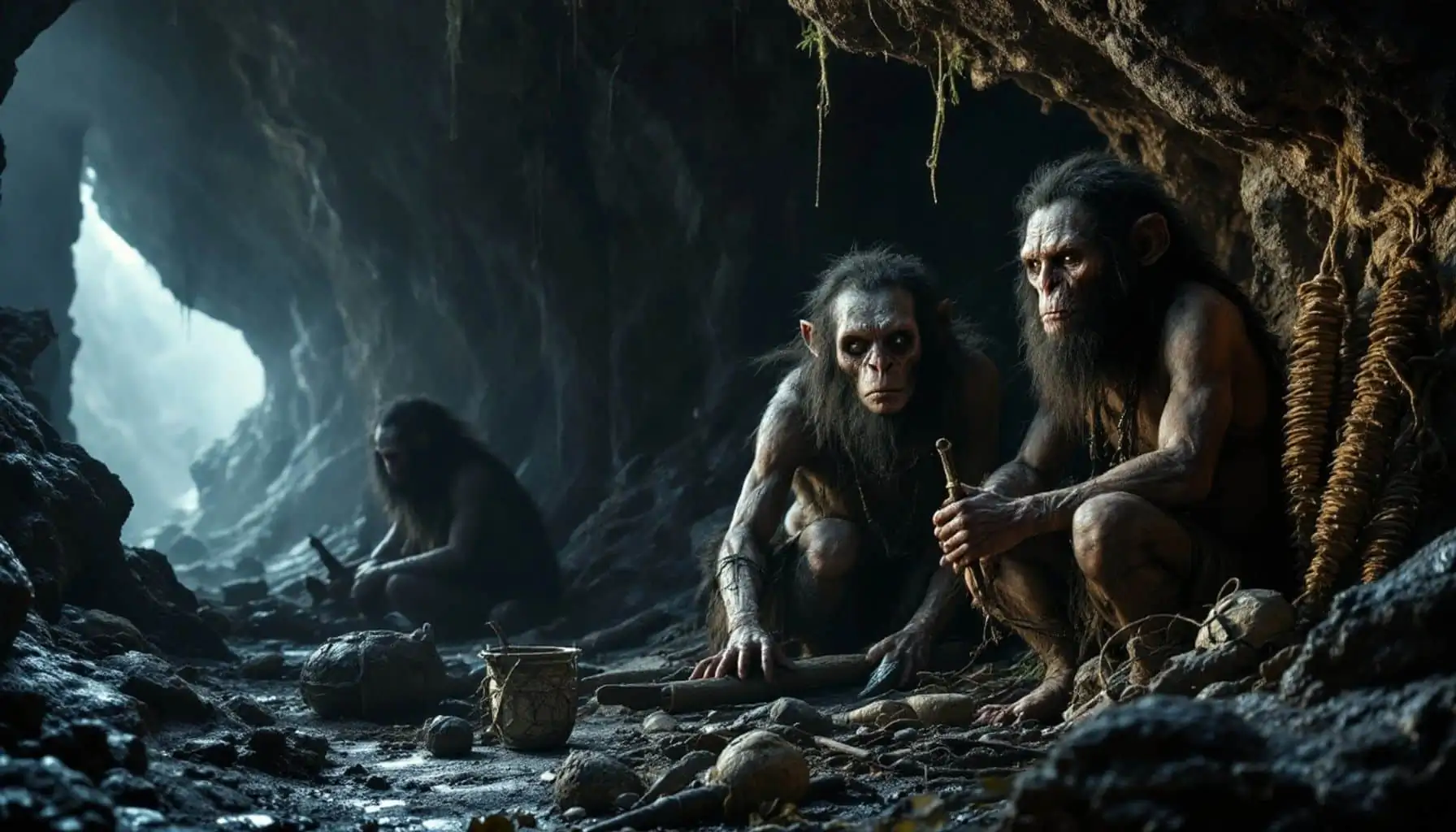
    Denisovans were a distinct population of archaic humans. Their remains suggest they were similar in size to modern humans but had larger teeth, reminiscent of early hominids. Facial reconstructions indicate they had features akin to Neanderthals, with broad noses and protruding brow ridges, adapted for their cold environments.

    Known Denisovans

    To date, remains from nine distinct Denisovans have been identified. These include various bones and teeth, scattered across archaeological sites in Russia, China, and Laos. Each discovery adds to our understanding of their physical characteristics and lifestyle.

    Denisovan Lifestyle And Culture

    Denisovans were skilled toolmakers. Artifacts found in Denisova Cave include stone scrapers, chisels, and even jewelry made from animal bones and stones. They likely engaged in complex hunting strategies, targeting large animals like woolly mammoths and deer, which formed a significant part of their diet.

    How Did The Denisovans Evolve?

    Genetic studies suggest that Denisovans split from our common ancestors over a million years ago. They are more closely related to Neanderthals than to modern humans. This evolutionary path has led to intriguing questions about their interactions with other human species.

    Denisovan Interactions With Other Species Of Human

    Denisovans interbred with both Neanderthals and early Homo sapiens. Genetic evidence shows that modern humans, particularly those from Oceania and Southeast Asia, carry Denisovan DNA. This interbreeding likely contributed to the adaptability of early humans in diverse environments.

    The Denisovan Environment

    Denisovans thrived in a variety of habitats, from the cold steppes of Siberia to the lush jungles of Southeast Asia. Their ability to adapt to different environments was crucial for their survival, allowing them to hunt diverse prey and gather resources.

    The Extinction Of The Denisovans

    The decline of the Denisovans is believed to be linked to the expansion of Homo sapiens. As modern humans migrated into Denisovan territories, competition for resources intensified. This ultimately led to the extinction of the Denisovans, leaving Homo sapiens as the sole surviving hominin species.

    Conclusion

    The Denisovans remain one of the most intriguing chapters in human history. Despite the limited remains, ongoing research continues to uncover their secrets. As we delve deeper into the past, we may yet learn more about these ancient cousins and their place in the story of humanity.

  • Last Surviving Member of Admiral Byrd’s Expedition Reveals The Truth About Antarctica

    Last Surviving Member of Admiral Byrd’s Expedition Reveals The Truth About Antarctica

    When a man with a Medal of Honor, Navy Cross, two-time Navy Distinguished Service Medal, two-time Legion of Merit medal, and a Distinguished Flying Cross Congressional Gold Medal tells you that 1 doesn’t equal 1; you drop everything you are doing and listen. In the case of this man, he tells us that Antarctica isn’t what we read it was; if anything Antarctica is a thriving continent with people living in it for generations. If he is right, that means everything our government has ever said was a lie. I know they do lie but this lie would be the ruler of all lies. And then, you start to realize that the lies are not the problem, but what they are covering up in Antarctica that made them lie in the first place.

    Key Takeaways

    • Admiral Richard E. Byrd was a highly decorated Navy officer known for his expeditions to Antarctica.
    • His expeditions raised questions about the true nature of Antarctica and the government’s narrative.
    • Operation Highjump was a significant military operation that has been shrouded in mystery and conspiracy theories.
    • Byrd’s alleged encounter with a hidden civilization raises questions about the existence of life in Antarctica.
    • The secrecy surrounding Antarctica and the Antarctic Treaty adds to the intrigue.

    Admiral Richard E. Byrd was one of the most decorated officers in the US Navy. He is the only person in history to have three ticker tape parades in New York City, held in his honor in 1926, 1927, and 1930. Byrd was also one of only four American military officers entitled to wear a medal with his own image on it. His accomplishments and awards are unmatched, but what he is most known for are his expeditions to places no one wanted to go.

    Byrd had an obsession with being the first in everything, which led him to lead five different trips to Antarctica from the early 1900s to the early 2000s. The last three of these trips were funded by the US government, while the first two were financed from his own pocket. His first trip to Antarctica took place in 1928, involving two ships and three airplanes. Throughout the summer, trips were made to take pictures and study the rocks, maintaining radio contact with the outside world.

    During the summer of 1933 and 1934, Byrd embarked on his second trip, working alone for five months at a meteorological station. It was during this expedition that he nearly died from carbon monoxide poisoning due to a stove that lacked proper airflow. While these early expeditions were significant, they lacked the controversies that surrounded his later missions.

    Operation Highjump: A Military Mystery

    The third expedition, however, was different. From 1946 to 1947, Byrd led an operation known as Operation Highjump. This mission aimed to establish a research base on the Ross Ice Shelf, called Little America. The operation was initially framed as a drill to test the US Navy’s capabilities in cold weather conditions, especially after World War II had revealed the inadequacies of US ships and aircraft in extreme cold.

    However, questions arose about the true nature of this operation. Why did the US send 14 ships, 33 aircraft, and about 4,700 men, heavily armed, for what was supposedly just a drill? Some theorists suggest that the operation was a response to Nazi activities in Antarctica, particularly a secret mission launched by Hitler in December 1938 to find ancient artifacts and establish a base.

    The Encounter That Changed Everything

    During one of his flights over the South Pole, Byrd experienced a mysterious three-hour communication blackout. Upon resuming contact, he reported seeing a lush green valley, forests, and even a mammoth-like creature—an impossible sight in the icy expanse of Antarctica. Byrd described his aircraft as being under strange control, leading him to a shimmering city where he met a figure known as the Master.

    This encounter suggested the existence of a hidden civilization, possibly linked to the hollow Earth theory, which posits that there are openings at the poles leading to a world beneath the Earth’s surface. The Master conveyed a message about the dangers of atomic warfare and the need for humanity to change its ways.

    The Aftermath and Secrecy

    After returning from the expedition, Byrd was debriefed at the Pentagon and reportedly detained for several hours. He was instructed to remain silent about his experiences. Following his death, his diary was released, reigniting interest in his claims and the mysteries surrounding Antarctica.

    The Antarctic Treaty, signed in the 1960s, further complicates the narrative. It restricts access to the continent, allowing only scientists and those with special permissions to visit. This secrecy, combined with reports of UFO sightings in the region, keeps the intrigue alive.

    Conclusion

    The story of Admiral Byrd and his expeditions to Antarctica raises more questions than answers. Whether his experiences were real or fabricated, they challenge our understanding of the world and the narratives we are fed. The mysteries of Antarctica remain, waiting for someone to uncover the truth beneath the ice.

  • SHOCKING Deathbed Confession: Human Beings Hunted for Sport in Northern Canada

    SHOCKING Deathbed Confession: Human Beings Hunted for Sport in Northern Canada

    On July 20th, 2024, a chilling deathbed confession surfaced on the ‘Politically Incorrect’ discussion board of 4Chan.com. The anonymous post detailed a disturbing ritual allegedly occurring in northern Canada, where human beings are hunted for sport. This shocking revelation raises questions about the truth behind urban legends and the dark corners of human nature.

    Key Takeaways

    • A deathbed confession claims that a group of wealthy First Nations individuals hunts people in northern Canada.
    • The poster, who participated in 57 hunts, describes the gruesome details of the ritual.
    • The confession raises skepticism about its authenticity, given the notorious reputation of 4Chan.

    The original poster (OP) began his confession with a stark admission: “I’m dying soon, and I want to tell all of you something.” He claimed to be part of a group of approximately 500 men who engage in these hunts twice a year. Starting as a scout at 27, he eventually became a hunter, participating in 57 hunts and claiming to have killed 24 people.

    The OP’s account is both chilling and methodical. He described how the group, comprised of wealthy tribes, orchestrates the kidnapping of random victims across Canada. Immigrants and female hitchhikers are particularly targeted, as their disappearances are less likely to trigger serious investigations. The OP stated, “We stay away from addicts and the feeble because they are not sporting.”

    The Ritual of the Hunt

    The hunts are described as chaotic yet organized. Participants gather, drink, and release their victims in groups. The OP noted that some hunters even take trophies, such as hearts and skulls, for rituals, although he personally refrained from such practices. He characterized the hunts as cold and methodical, lacking any ceremonial aspects.

    The OP’s involvement began through his brother, who introduced him to the hunt’s organizer. This dangerous path led to a life filled with violence and fear, as the OP suspected his brother intended to have him killed during the hunt. The brother’s fate was sealed when he died on one of these hunts, a grim reminder of the risks involved.

    The Nature of the Prey

    When asked about the prey’s ability to escape, the OP claimed many had gotten away but were often left vulnerable in the wilderness, far from civilization. He expressed a chilling indifference to the suffering of the victims, stating, “Everyone experiences moments of doubt and shame when they’re young, but you learn to bury it or let go.”

    The OP also recounted eerie experiences during the hunts, including sightings of what he referred to as Sasquatch. This adds a layer of folklore to the already disturbing narrative, blurring the lines between reality and myth.

    A Notorious Hunt

    One of the most memorable hunts described by the OP took place in 1989 near Kanaaupscow, Quebec. This massive undertaking involved nine planes, 45 prey, and nearly 120 hunters. The victims were given knives and told the truth about their fate, with some reportedly going catatonic before being killed to demonstrate the hunters’ resolve.

    The OP’s chilling account culminated in a horrific detail: two men barricaded themselves in a fire watch tower and were burned alive. This gruesome act coincided with a historic wildfire in the area, adding a layer of eerie coincidence to the narrative.

    Skepticism and Urban Legends

    While the OP’s confession is shocking, skepticism surrounds its authenticity. 4Chan is known for hoaxes and fictional narratives, leading many to question whether this story is a fabrication inspired by literature and film. The concept of wealthy individuals hunting humans has been explored in various works, including Richard Connell’s short story, The Most Dangerous Game.

    Moreover, the OP’s claims about the Lost Boys of Pickering, a real unsolved mystery involving six missing teenagers, raise further doubts. The connection between the OP’s story and real-life events adds a layer of complexity, blurring the lines between fact and fiction.

    Conclusion

    The chilling confession shared on 4Chan raises profound questions about the nature of humanity and the dark secrets that may lurk in the shadows. While the story may be rooted in fiction, it serves as a reminder of the power of urban legends and the potential truths hidden within them. As we ponder the OP’s claims, we must also consider the implications of such narratives on our understanding of morality and the human condition. What do you think? Is there a kernel of truth in this disturbing tale, or is it merely a product of imagination?

  • U.S. Releases 14 Canadian Wolves Into The Wild And Saves $94 Billion

    U.S. Releases 14 Canadian Wolves Into The Wild And Saves $94 Billion

    In a remarkable turn of events, the reintroduction of just 14 Canadian wolves into Yellowstone National Park in 1995 sparked a transformation of the entire ecosystem. This initiative not only revived a dying landscape but also led to an economic miracle, saving the U.S. an astonishing $94 billion.

    Key Takeaways

    • The reintroduction of wolves changed the behavior of elk, leading to ecological restoration.
    • The return of wolves had a cascading effect on various species and the environment.
    • Economic benefits from wolf reintroduction include increased tourism and reduced costs in water treatment and road maintenance.

    The Early 1900s: A Dark Time for Wolves

    In the early 1900s, wolves were viewed as dangerous pests. The U.S. government employed official wolf killers, leading to the extinction of the last wolf pack in Yellowstone by 1926. This was celebrated as a victory, but it marked the beginning of ecological decline.

    The Elk Explosion

    Without wolves, the elk population skyrocketed. By the 1990s, there were about 19,000 elk in Yellowstone’s Northern range. These elk overgrazed, consuming young trees and shrubs, leading to a barren landscape.

    The Ecology of Fear

    Wolves do more than just hunt; they influence elk behavior. This phenomenon, known as the Ecology of Fear, means that elk avoid certain areas where wolves might ambush them. Without this natural predator, elk grazed freely, devastating the ecosystem.

    The Decision to Reintroduce Wolves

    The decision to bring back wolves was controversial. Ranchers feared for their livestock, and hunters worried about the elk population. However, scientists carefully selected Canadian wolves that were accustomed to hunting similar prey and had no history of conflict with humans.

    The Reintroduction Process

    In January 1995, 14 wolves were transported to Yellowstone. They were kept in acclimation pens before their release. Surprisingly, the wolves thrived, forming packs with unique personalities and hunting styles. The Druid Peak pack, led by a wolf known as 21M, became legendary for its size and behavior.

    The Trophic Cascade Effect

    The return of wolves initiated a trophic cascade. Elk populations began to decline, not just from hunting but also due to behavioral changes. They avoided valleys and riverbanks, allowing young trees to grow. This led to stabilized riverbanks, reduced erosion, and clearer rivers.

    The Return of Beavers

    With more trees, beavers returned to Yellowstone. In 1995, there was only one beaver colony; by 2012, there were nine. Beavers create wetlands that support diverse wildlife and improve water quality.

    Impact on Other Species

    Wolves also affected grizzly bears. Leftover elk carcasses from wolf kills provided a crucial food source for bears. Additionally, with fewer elk eating berry bushes, more berries grew, benefiting bears preparing for hibernation.

    Surprising Discoveries

    In 2017, scientists found that wolves might even influence Yellowstone’s supervolcano. Overgrazing by elk had compacted the soil, affecting heat dispersion. With wolves back, the soil became less compacted, allowing heat to disperse more evenly.

    The Coyote Conundrum

    Wolves also impacted coyotes, reducing their population by 50%. This led to an increase in small mammals, which in turn provided more food for birds of prey and other predators, creating a more stable food web.

    Economic Benefits

    The economic impact of the wolf reintroduction is staggering. Wolf watching alone generates about $35 million annually for local communities. Healthier forests capture carbon dioxide, reducing climate change impacts, while restored wetlands prevent flooding and improve water storage.

    Challenges and Controversies

    Despite successes, challenges remain. The shooting of the famous wolf 832F in 2012 highlighted the dangers wolves face outside park boundaries. This incident sparked debates about wolf conservation and hunting regulations.

    Resilience of Wolf Packs

    Research revealed that wolf packs are resilient. When an alpha wolf dies, the pack reorganizes and adapts, showcasing their remarkable social structure.

    Global Inspiration

    The success of the Yellowstone wolf project has inspired similar initiatives worldwide. Countries like Scotland and China are exploring wolf reintroduction to restore their ecosystems.

    Conclusion: Nature’s Healing Power

    The story of the 14 Canadian wolves is a testament to nature’s ability to heal itself when given a chance. Today, there are approximately 528 wolves in the greater Yellowstone ecosystem, attracting over 500,000 visitors annually. The reintroduction has not only restored the ecosystem but also saved billions of dollars, proving that sometimes, the best way to fix an ecosystem is to let nature take its course.

  • The Not-Deer: The Mysteries of This Eerie Cryptid

    The Not-Deer: The Mysteries of This Eerie Cryptid

    In the shadowy depths of the Appalachian Mountains, a chilling creature known as the Not-Deer lurks, captivating the imaginations of cryptid enthusiasts and paranormal researchers alike. This unsettling being, often described as a grotesque version of a deer, has sparked intense curiosity and debate about its origins and nature.

    Key Takeaways

    • The Not-Deer is a cryptid with bizarre and unsettling features.
    • Sightings are primarily reported in the Appalachian region, especially Tennessee.
    • Theories about its origins range from misidentified wildlife to supernatural phenomena.
    • Cultural impact includes influence on online communities and media.

    What Is The Not-Deer?

    Imagine hiking through the woods, feeling at ease, when suddenly, a twig snaps. You turn, expecting to see a harmless deer, only to find something that defies nature. The Not-Deer is said to possess twisted limbs, disproportionate features, and eyes positioned unnaturally on its head. Unlike typical deer, which have eyes on the sides of their heads for better awareness of predators, the Not-Deer’s eyes face forward, creating an eerie and unsettling gaze.

    Sightings And Behavior

    The Not-Deer is primarily reported in the Appalachian Mountains, particularly in Tennessee. Witnesses describe it as a creature that appears deceptively normal from a distance. However, as one approaches, the unsettling details become apparent:

    • Extra joints in its legs
    • Longer limbs than a typical deer
    • A tendency to walk on hind legs

    When encountered, the Not-Deer often does not flee. Instead, it may stare at you, seemingly unafraid. This behavior can be unnerving, as some reports suggest that if provoked, it may chase individuals, leading to terrifying encounters.

    Theories Behind The Not-Deer

    The origins of the Not-Deer are shrouded in mystery. Here are some prevalent theories:

    1. Misidentified Wildlife: Some believe that sightings may be cases of misidentified deer or other animals.
    2. Folklore and Legends: The creature may stem from local folklore, evolving into a modern myth.
    3. Supernatural Phenomena: Others speculate that the Not-Deer could be a manifestation of supernatural forces, possibly linked to disrespect towards nature.

    Cultural Impact

    The Not-Deer has made a significant impact on modern culture, inspiring art, stories, and online discussions. It has become a symbol of the uncanny, representing the unknown and the eerie aspects of nature. Online communities have sprung up, sharing sightings and theories, further fueling the intrigue surrounding this cryptid.

    The Cherokee Connection

    Interestingly, the Cherokee people, who have a rich history in the Appalachian region, do not have a specific legend about the Not-Deer. However, they do hold the white-tailed deer as a sacred animal. Traditionally, hunting these creatures involved rituals to show respect for nature. The lack of such respect in modern hunting practices may contribute to the emergence of the Not-Deer as a cryptid.

    A Terrifying Encounter

    One chilling account from a witness describes a close encounter with the Not-Deer. While driving, the individual spotted a large creature that resembled a deer but was distinctly abnormal. It stood on two legs, stared directly at the witness, and moved in a jerky, unnatural manner. The encounter left the witness shaken, highlighting the unsettling nature of this cryptid.

    Conclusion

    The Not-Deer remains one of the most enigmatic cryptids of our time. Whether a product of folklore, misidentified wildlife, or something more supernatural, it continues to captivate and terrify those who hear its tale. As we encroach upon nature, perhaps the Not-Deer serves as a reminder of the respect we owe to the creatures that share our world. Adventure awaits in the mysteries of the Not-Deer, and who knows what other secrets lie hidden in the shadows of the woods?