Category: Cryptozoology

  • Children Who VANISHED and WHAT THEY ENCOUNTERED!

    Children Who VANISHED and WHAT THEY ENCOUNTERED!

    Every year, hundreds of people go missing in national parks and forests, with many of them being children. While most are eventually found, some cases remain unsolved. This article explores several remarkable stories of children who vanished and what they encountered during their mysterious disappearances.

    Key Takeaways

    • Many children go missing in national parks, often found later with strange stories.
    • Pets often play a crucial role in keeping children safe during their absence.
    • Each case highlights the resilience and survival instincts of young children.

    The Mysterious Disappearance of Abby Ladwig

    In August 2020, three-year-old Abby Ladwig went missing from her home in Winter, Wisconsin. She was last seen following her family dog, Peanut, into the woods. Abby’s mother made a heartfelt plea for help, emphasizing Abby’s shyness and the potential danger posed by Peanut, who could be aggressive.

    After a 14.5-hour search involving law enforcement and volunteers, Abby and Peanut were found walking out of the woods into a neighboring yard. Abby had minor scratches and was dehydrated but was otherwise unharmed. Remarkably, she had no memory of her time in the woods.

    Stratton Joshua Wright’s Night in the Woods

    Nine-year-old Stratton Joshua Wright went missing while hiking with his family in Iowa on July 1, 2020. After becoming separated, a massive search effort was launched, including ground and aerial searches. The next day, Stratton was found in an open field, having spent the night in the woods. He had no explanation for why he wandered off but was reunited with his father, who spotted him from a distance.

    Charlie Campbell’s Harrowing Experience

    On June 7, 2018, two-year-old Charlie Campbell disappeared from her grandparents’ home in Kentucky. After 35 hours, she was found alive but severely dehydrated and covered in ticks. Charlie had likely wandered out an unlocked door, accompanied by her protective family dog, Penny. Despite the ordeal, Charlie was found just 500 yards from home, and her story sparked legal issues for her grandmother, who faced charges related to neglect.

    Evelyn V. Sides and Her Loyal Dog

    Four-year-old Evelyn V. Sides went missing in Alabama on March 25, 2020, while walking her dog, Lucy. After a thorough search, Evelyn was found safe, with Lucy by her side. Authorities credited Lucy with keeping Evelyn safe during her time away from home, highlighting the bond between pets and children in times of crisis.

    William Callahan’s Unique Search

    William Callahan, a 14-year-old with non-verbal autism, went missing during a family walk in Victoria, Australia, on June 8, 2020. His family was concerned about his ability to communicate during the search. After nearly 48 hours, William was found near the peak of a mountain. Rescuers adapted their search strategies to meet his needs, even laying out food to attract him. Remarkably, William was in good condition and asked for McDonald’s after his rescue.

    Britain Kelsey’s Cold Night Alone

    Fifteen-year-old Britain Kelsey went missing in Utah on November 27, 2020, while hiking with family. After spending a night in freezing temperatures, he was found alive and responsive the next day. Search teams utilized helicopters and tracking techniques to locate him, and he was treated for mild hypothermia but otherwise unharmed.

    Conclusion

    These stories of children who vanished and their incredible encounters remind us of the resilience of youth and the importance of community in times of crisis. Each case is unique, showcasing the bond between children and their pets, the efforts of search teams, and the mysterious circumstances surrounding their disappearances. What do you think of these unusual almost disappearances? Share your thoughts respectfully in the comments below!

  • WARNING: You Won’t Believe What Happens in Bennington Triangle!

    WARNING: You Won’t Believe What Happens in Bennington Triangle!

    The Bennington Triangle, a mysterious area surrounding Glastonbury Mountain in Vermont, has long been a hotspot for bizarre occurrences and unexplained disappearances. From UFO sightings to eerie sounds, this region is steeped in legends and dark tales that continue to intrigue and terrify.

    Key Takeaways

    • The Bennington Triangle is known for its strange phenomena and unsolved disappearances.
    • Local legends warn of a curse on the area, believed to be avoided by Native American tribes.
    • Several mysterious disappearances occurred in the 1940s and 1950s, with no clear explanations.

    The Mysterious Origins of the Bennington Triangle

    The term “Bennington Triangle” was coined by author Joseph A. Citro in 1992 during a radio broadcast discussing paranormal activities in the area. This region, rich in folklore, is often compared to the Bridgewater Triangle in Massachusetts, known for its own share of strange happenings.

    Legends and Curses

    According to Native American lore, the area is cursed. The Algonquin tribe spoke of evil rocks in the mountains that could devour those who tread upon them. This ominous warning adds a layer of intrigue to the many disappearances that have occurred here.

    The Bennington Monster

    The area is also home to tales of the Bennington Monster, a creature described as a large, hairy being over six feet tall. The first recorded sighting dates back to the early 1800s when a stagecoach driver encountered enormous footprints and was subsequently attacked by a mysterious creature.

    Unexplained Disappearances

    The Bennington Triangle is infamous for a series of unexplained disappearances, particularly during the 1940s and 1950s. Here are some notable cases:

    1. Carol Herrick (1943): Disappeared while hunting near Glastonbury. His body was found days later, surrounded by unusually large footprints.
    2. Mitty Rivers (1945): A seasoned hunting guide who vanished while leading a group in Hell Hollow. Despite extensive searches, no trace of him was ever found.
    3. Paula Weldon (1946): An 18-year-old college student who disappeared while hiking. Despite a massive search effort, her fate remains unknown.
    4. James Tedford (1949): A military veteran who vanished from a bus, leaving his belongings behind. His disappearance remains a mystery, especially since his wife had also disappeared years earlier.
    5. Paul Jepson (1950): An eight-year-old boy who disappeared while playing near his mother’s truck. Despite search efforts, he was never found.
    6. Freda Langer (1950): Disappeared while hiking with family. Her body was discovered months later in an area that had been previously searched, with no clear cause of death.

    Theories Behind the Disappearances

    The reasons behind these mysterious disappearances are hotly debated. Some theories include:

    • A Serial Killer: Speculation exists that a serial killer may be responsible for the string of disappearances.
    • Native American Curse: The belief in a curse from the Native American tribes adds a supernatural element to the mystery.
    • Paranormal Activity: Some suggest that the area may be a portal to the unknown, leading to strange occurrences.
    • Environmental Factors: The chaotic weather patterns in the mountains could disorient hikers, leading them to become lost.

    Conclusion

    The Bennington Triangle remains a captivating enigma, filled with tales of the unexplained and the supernatural. Whether it’s the legends of the Bennington Monster, the eerie disappearances, or the whispers of curses, this area continues to draw the curious and the brave. As we ponder these mysteries, we are reminded of the thin veil between our world and the unknown. If you have any thoughts or theories about the Bennington Triangle, feel free to share them in the comments below!

  • Mysterious Deep Sea Sounds Finally Identified

    Mysterious Deep Sea Sounds Finally Identified

    In a fascinating exploration of the ocean’s depths, marine biologists have finally identified the origins of several mysterious underwater sounds. These sounds, previously thought to be unexplainable, have been traced back to specific marine creatures, shedding light on the complex communication methods of ocean life.

    Key Takeaways

    • The Biotwang sound was recorded near the Mariana Trench and is linked to Bryde’s whale.
    • The Bioduck sound has been a mystery for decades, possibly linked to Antarctic minke whales.
    • The infamous Bloop sound was identified as an icequake, not a marine creature.

    The Enigmatic Biotwang

    The Biotwang is a mysterious underwater sound first recorded in 2014 near the Mariana Trench. It begins with a deep rumble, reminiscent of a humpback whale’s call, but concludes with a strange high-frequency component that sounds almost synthetic. Initially, researchers believed it was a marine mammal, but identifying the exact source proved challenging.

    The Bioduck Mystery

    Another intriguing sound is the Bioduck, first recorded in the Southern Ocean in 1960. For years, it was considered the largest unresolved mystery of the ocean. The Bioduck can be heard year-round in the Antarctic, with its seasonal patterns suggesting a widespread distribution or a complex migration pattern among different populations.

    The Bloop: A Famous Sound

    Perhaps the most famous unidentified sound is the Bloop, recorded in 1997. This sound was so loud that it was detected by underwater microphones over 3,000 miles apart. Initially thought to be from a marine mammal, it was later identified as an icequake, caused by the movement of large ice masses.

    The Role of Sound in Marine Life

    Marine mammals, such as dolphins and whales, rely heavily on sound for communication and navigation. Unlike land mammals, their other senses are limited underwater. Sound travels faster and farther in water, making it an essential tool for these creatures. For instance, fin whales use sound channels to communicate over long distances, while the U.S. Navy has utilized underwater sound surveillance systems for tracking purposes.

    Identifying the Biotwang

    After extensive research, scientists linked the Biotwang to the Bryde’s whale. This identification was made possible through the analysis of recordings from NOAA’s hydrophone array. Researchers discovered that Bryde’s whales were present whenever the Biotwang was recorded, confirming their role in producing this unique sound.

    The Bioduck’s Source

    The Bioduck sound has been associated with the Antarctic minke whale. In a study, two tagged minke whales recorded vocalizations that matched the Bioduck, suggesting that these calls may be related to feeding or mating behaviors. However, the exact function of the Bioduck remains a topic of ongoing research.

    Conclusion

    The identification of these deep-sea sounds not only enhances our understanding of marine life but also highlights the importance of sound in the oceanic environment. As researchers continue to explore the depths, they uncover the intricate communication methods of marine mammals and the impact of environmental changes on their behaviors. The ocean remains a mysterious frontier, with many sounds still waiting to be explained, inviting further exploration and discovery.

  • The Disturbing True Horror of the Hexham Heads

    The Disturbing True Horror of the Hexham Heads

    In the early 1970s, a chilling mystery unfolded in Hexham, England, when two young boys unearthed two stone heads that would unleash a series of bizarre and terrifying events. These seemingly innocuous artifacts were linked to strange noises, sightings of a werewolf-like creature, and unexplained disturbances that left a lasting mark on the community.

    Key Takeaways

    • The Hexham Heads were discovered by two boys in their backyard.
    • Strange phenomena began occurring after the heads were brought home.
    • Reports of a half-man, half-beast creature emerged in connection with the heads.
    • The origins and authenticity of the heads remain a mystery.

    The Discovery of the Hexham Heads

    The story begins with Colin Robson and his brother Leslie, who were bored one day and decided to dig in their garden. To their astonishment, they uncovered two stone heads, one with masculine features and the other more feminine. The boys, excited by their find, took the heads to their neighbor, Nelly Dodd, who suggested they visit the nearby Hexham Abbey for more information.

    Strange Events Unfold

    After the heads were taken to the Abbey, strange occurrences began to plague the Robson household. The heads would mysteriously change positions overnight, and the family reported hearing strange noises, including the sound of running water and even a baby crying in the garden. The atmosphere in the house became increasingly unsettling, leading to a sense of unease among the family members.

    The Werewolf Sighting

    The situation escalated when Nelly Dodd’s family experienced a terrifying encounter. One night, Nelly was awakened by her daughter’s screams, claiming to have seen a creature that was part man, part beast. This creature, described as having a sheep-like head and hooves, sent the family into a panic. They searched the house but found no trace of the entity, only the lingering fear of what they had witnessed.

    Dr. Anne Ross and the Academic Interest

    The story gained traction when Dr. Anne Ross, a respected expert in Celtic studies, became involved. She believed the heads were of Celtic origin and might have been part of a shrine. After taking the heads to her home, she too experienced strange phenomena, including sightings of the same creature described by Nelly Dodd. Dr. Ross felt an unsettling energy surrounding the heads, leading her to lock them away for further study.

    The Controversy of Authenticity

    As interest in the Hexham Heads grew, so did skepticism. A former resident of the Robson home, Dez Craigy, claimed he had made the heads as a gift for his daughter years earlier. This revelation cast doubt on the authenticity of the artifacts, leading to conflicting reports about their age and origin. Some experts believed they were ancient, while others argued they were modern creations.

    The Mystery Continues

    Despite the investigations and media attention, the true nature of the Hexham Heads remains elusive. After Dr. Ross sent the heads to a museum, the strange occurrences in her home ceased, but the fate of the heads became uncertain. They passed through various hands, with reports of continued paranormal activity surrounding them.

    Conclusion

    The Hexham Heads represent one of the most enduring mysteries in the realm of the paranormal. Were they ancient relics imbued with supernatural power, or simply the product of a child’s imagination? The truth may never be fully uncovered, but the chilling tales surrounding these stone heads continue to captivate and terrify those who hear them. As interest in the Hexham Heads resurfaces, perhaps the search for answers will reignite, leading to new discoveries about this unsettling chapter in history.

  • Origins: Krampus – The Christmas Devil – Forgotten History

    Origins: Krampus – The Christmas Devil – Forgotten History

    Christmas is a time of joy, celebration, and giving. However, beneath the cheerful facade lies a darker figure known as Krampus, the Christmas devil. This blog post explores the origins, characteristics, and cultural significance of Krampus, a creature that has haunted the imaginations of many for centuries.

    Key Takeaways

    The Evolution Of Christmas

    For Christians, Christmas commemorates the birth of Jesus Christ, the Son of God. The term “Christmas” itself comes from the mass of Christ, a service where Christians remember Jesus’s sacrifice and resurrection. Over time, Christmas has transformed into a season filled with ornaments, stockings, and joyful music. However, it has also become a time of rampant consumerism.

    The Dark Counterpart Of Santa Claus

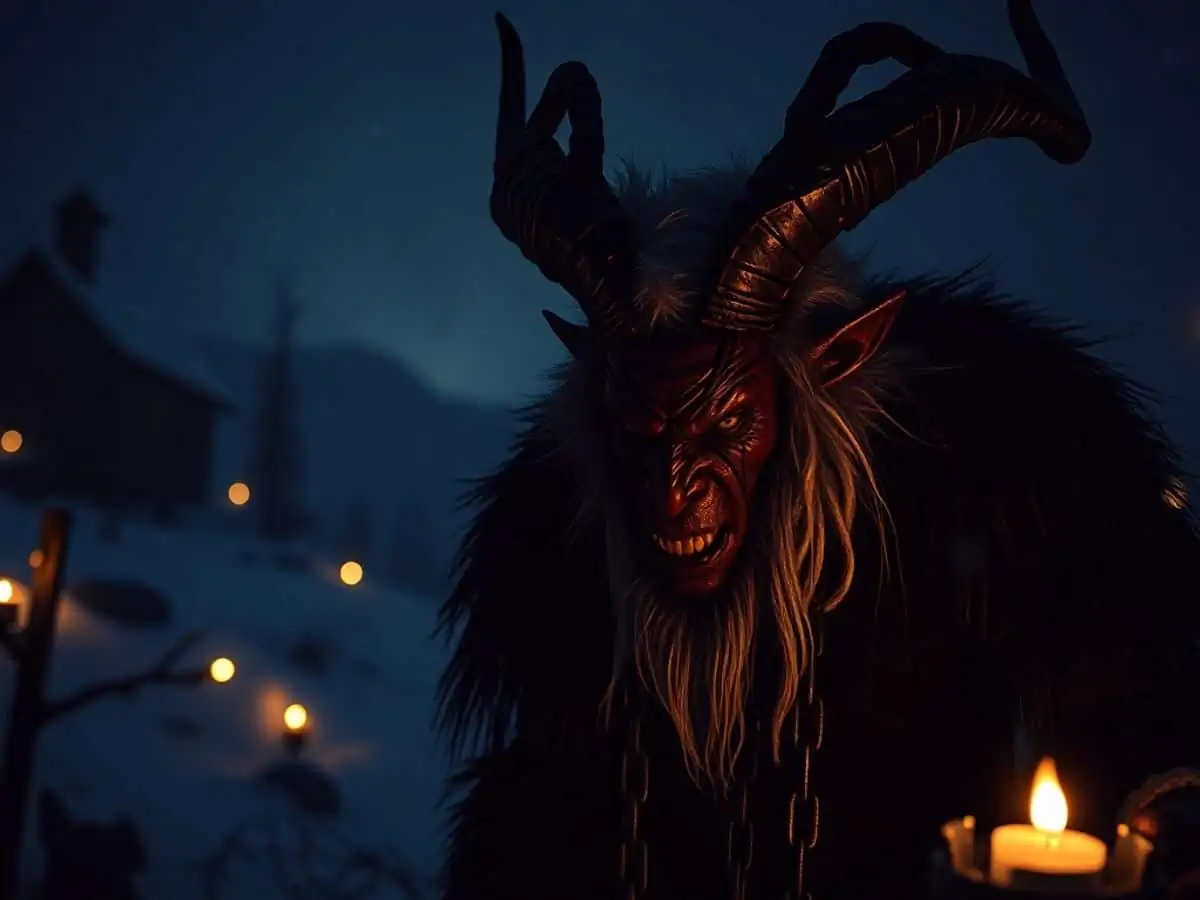
    While Santa Claus is a beloved figure known for his generosity, he has a dark counterpart: Krampus. Originating from Germanic folklore, Krampus is a horned demon who accompanies St. Nicholas during his visits to Alpine villages. While St. Nick rewards good children with gifts, Krampus punishes the naughty ones.

    Who Is Krampus?

    The name “Krampus” is believed to derive from the old high German word “krampen,” meaning claw. This monstrous figure is often depicted with:

    • Long curved horns
    • Glowing red eyes
    • Sharp fangs
    • A long, forked tongue
    • Clawed fingers
    • A muscular body covered in matted black hair

    Krampus is typically portrayed as towering over his victims, standing at about 7 feet tall. He often carries a large sack, similar to Santa’s, but his is used for capturing misbehaving children.

    The Punishments Of Krampus

    Krampus takes his role seriously. He knows which children have been naughty or nice. If a child has been mostly good but has a few naughty moments, they may face a rigorous test. If they fail, Krampus will:

    1. Beat them with birch twigs.
    2. Stuff them into his sack.
    3. Carry them off to his lair in the Black Forest.

    In his lair, Krampus inflicts further punishment until the children repent. If they are unlucky, they may face a far worse fate, including being devoured or dragged into Hell.

    The Origins Of Krampus

    The origins of Krampus are shrouded in mystery. Some theories suggest he is the son of Hel, the goddess of the dead in Norse mythology. Others link him to the German goddess Perchta, who punishes the lazy and rewards the diligent.

    As Christianity spread, many pagan traditions were demonized. Krampus, once a fertility god, became associated with evil and the devil during the Inquisition. Despite this, interest in Krampus surged in the 17th and 18th centuries, leading to the creation of Krampus cards that depicted him torturing children.

    Krampusnacht And The Krampuslauf

    Krampus has his own day, celebrated on December 5th, known as Krampusnacht. On this night, he accompanies St. Nicholas, rewarding good children and punishing the naughty. The following week, towns in the Alpine regions hold the Krampuslauf, where men dress as Krampus and roam the streets, scaring children and ensuring they behave.

    Krampus In Modern Culture

    In recent years, Krampus has gained popularity in popular culture, appearing in books, movies, and holiday decorations. He serves as a reminder that the holiday season is not just about joy and gifts but also about the consequences of one’s actions.

    Conclusion

    Krampus, the Christmas devil, embodies the darker side of the holiday season. His legend serves as a cautionary tale, reminding us to cherish kindness and spread joy. As we celebrate, let us remember to stay on the right side of Santa’s list. Happy holidays!

  • The Cryptids of Canada | Obscure Beasts of the North

    The Cryptids of Canada | Obscure Beasts of the North

    Canada is a vast and beautiful country, known for its friendly people and stunning wilderness. However, lurking in the shadows of this great expanse are some bizarre and fascinating cryptids that have captured the imagination of many. In this article, we will explore some of the lesser-known cryptids of Canada, each with its own unique story and lore.

    Key Takeaways

    • Canada is home to many cryptids, some well-known and others obscure.
    • Each cryptid has its own unique characteristics and stories.
    • The legends often reflect the harsh realities of the Canadian wilderness.

    Dundas Blackflies: The Demons of British Columbia

    On Dundas Island in British Columbia, there are tales of massive black flies that locals refer to as demons. These flies are said to be 4 to 6 inches long, swarming in large numbers and attacking anything that moves. They are known to drink blood and tear flesh, with venom strong enough to paralyze a cow.

    • Legend or Reality?
      • Many believe the stories of these flies are exaggerated, perhaps to explain why the island is largely uninhabited.
      • The island is mostly avoided by large animals and humans due to the harsh conditions and the legend of the black flies.

    The Ark-Law: A Fearsome Arctic Creature

    In the cold Arctic territory of Nunavut, the Inuit speak of a creature known as the Ark-law. This beast is described as larger than a bear, with a long tail and large claws. It is said to stand upright when resting and create dens in the ground.

    • Possible Explanations:
      • Some speculate it could be a type of ground sloth or a large relative of the wolverine.
      • Others think it might be a surviving species of the North American short-faced bear, known for its size and ferocity.

    Lac Wood Screecher: The Mysterious Noisemaker

    In Quebec, the Lac Wood Screecher is known not for its appearance but for its terrifying screams. No one has ever seen this creature, but its dreadful metallic noise is said to cause headaches and nausea in those who hear it.

    • Dangerous Evidence:
      • The creature is rumored to leave behind hair that can irritate the skin, leading to peeling and scarring.
      • Despite numerous reports, no audio or video evidence has been captured, leaving its identity a mystery.

    Kinosoo: The Giant Fish of Cold Lake

    Cold Lake, located on the Alberta-Saskatchewan border, is home to the Kinosoo, a massive fish said to resemble a mix between a pike and a sturgeon. According to local legend, a warrior was dragged underwater by this creature, never to be seen again.

    • Theories About the Kinosoo:
      • Some believe it could be an undocumented species or even a hybrid fish.
      • Others think it might be a whale that somehow got trapped in the lake, although this is less likely given its described behavior.

    The Giant Beaver: A Canadian Icon

    The giant beaver is a well-known cryptid in Canada, with reports of beavers the size of bears. The giant beaver, known scientifically as Castoroides, was a real creature that lived thousands of years ago, averaging 6.2 feet in length.

    • Historical Context:
      • Many tales of large beavers may stem from encounters with the last of these creatures, passed down through generations.
      • The giant beaver’s extinction around 10,000 years ago leaves a gap in the ecosystem that may have contributed to the legends.

    Saber-Toothed Bear: The Ultimate Predator

    The final cryptid we’ll discuss is the Saber-Toothed Bear, said to inhabit the Labrador Peninsula. This creature is described as having massive saber-like teeth, combining the ferocity of a bear with the deadly features of a Smilodon.

    • Limited Information:
      • Very little is known about this cryptid, making it a fascinating topic for speculation.
      • The combination of bear and saber-toothed features creates an image of a terrifying predator.

    In conclusion, Canada’s wilderness is filled with stories of cryptids that reflect the mysteries and challenges of the environment. From the terrifying black flies of Dundas Island to the elusive Kinosoo of Cold Lake, these creatures capture our imagination and remind us of the wildness that still exists in our world. If you have any encounters or stories about these cryptids, feel free to share them in the comments below!

  • J’ba Fofi – Congolese Giant Spider

    J’ba Fofi – Congolese Giant Spider

    In the heart of the Congo, whispers of a colossal arachnid known as the J’ba Fofi have captivated the imaginations of locals and explorers alike. This giant spider, rumored to hunt not just insects but even humans, remains shrouded in mystery, blending folklore with the potential for undiscovered species.

    Key Takeaways

    • The J’ba Fofi is a giant spider rumored to inhabit the Congo.
    • Local accounts describe its hunting tactics and physical characteristics.
    • Historical sightings include encounters with missionaries and explorers.
    • The spider’s existence raises questions about undiscovered species in the wild.

    The Mysterious World Of The J’ba Fofi

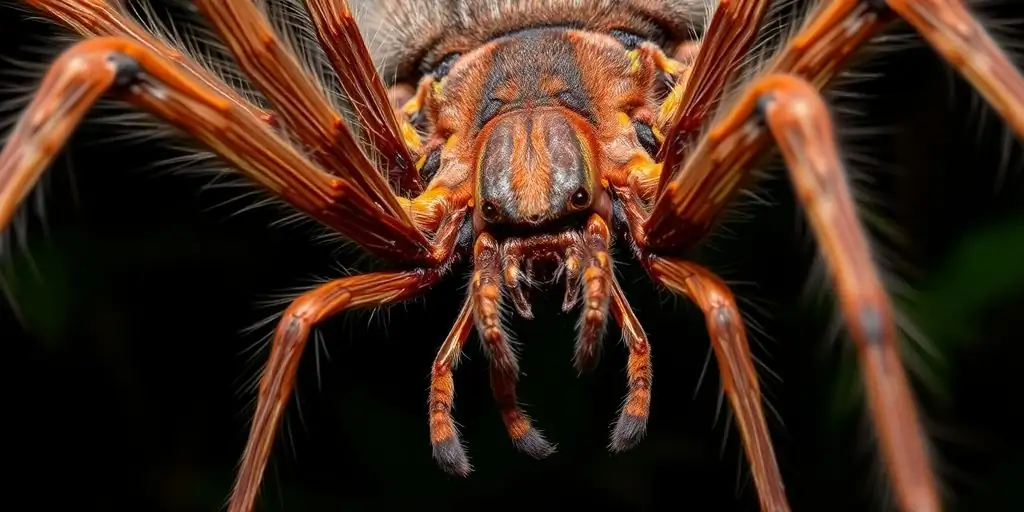
    The J’ba Fofi, also known as the Congolese Giant Spider, is said to possess gigantic claws capable of crushing a man or tearing apart a woman as if she were a fly. This horrifying spectacle has fascinated scientists and adventurers alike. But what if these tales are more than just folklore?

    Hunting Tactics

    According to local lore, the J’ba Fofi employs cunning hunting strategies. It crafts shallow tunnels beneath tree roots, camouflaging them with leaves. These near-invisible webs connect to nearby trees, creating a complex network of trip lines. When unsuspecting prey triggers these lines, the spider is alerted, and the chase begins.

    • Hunting Strategy:
      • Tunnels: Shallow burrows hidden under foliage.
      • Webs: Intricate networks connecting to trees.
      • Prey Capture: Quick and strategic, reminiscent of trapdoor spiders.

    Physical Characteristics

    Local communities describe the J’ba Fofi’s eggs as pale yellow or white, resembling peanuts. The hatchlings are bright yellow with purple abdomens, maturing into darker shades of brown as they grow. These spiders were once abundant, but sightings have become rare.

    Historical Sightings

    The first recorded sighting by a Westerner was by English missionary Arthur John Sims in the 1890s. While trekking through the jungle, Sims and his men were warned about the spiders but ignored the advice. Suddenly, they found themselves ensnared in thick webs, and massive spiders emerged from the foliage. Some of his men were killed, and Sims himself was bitten. He managed to escape but succumbed to fever shortly after, leaving behind a chilling account of his encounter.

    Another notable account comes from George Eart, who documented a couple’s encounter with a massive spider in 1938. Initially mistaken for a cat or monkey, the creature turned out to be a spider with legs spanning nearly three feet.

    Modern Encounters

    In March 2013, a video surfaced on YouTube, allegedly showing a J’ba Fofi caught on night vision camera. The footage, though brief, reignited interest in these elusive creatures. Locals in Mozambique claim that the spiders were once numerous but are now becoming increasingly rare due to habitat destruction.

    Conclusion

    The J’ba Fofi remains a captivating enigma, blending ancient tales with modern encounters. Whether nestled in the folklore of indigenous communities or recounted by intrepid explorers, these giant spiders remind us of the mysteries that still exist in our world. As we continue to explore the depths of our natural environment, the story of the J’ba Fofi invites us to consider what other wonders lie hidden in the jungles of our planet.

    What are your thoughts on the J’ba Fofi? Let us know in the comments below!

  • Cryptids You Should Know: The Wisconsin Hodag, The Enfield Horror, and The Oklahoma Octopus

    Cryptids You Should Know: The Wisconsin Hodag, The Enfield Horror, and The Oklahoma Octopus

    In this blog post, we explore three fascinating cryptids: the Wisconsin Hodag, the Enfield Horror, and the Oklahoma Octopus. Each of these creatures has its own unique story, steeped in local folklore and mystery, capturing the imaginations of many.

    Key Takeaways

    • The Wisconsin Hodag is a symbol of local pride and folklore in Wisconsin.
    • The Enfield Horror has sparked intrigue and speculation since its first sighting in 1973.
    • The Oklahoma Octopus, a more recent addition to cryptid lore, raises questions about its existence in freshwater lakes.

    The Wisconsin Hodag: A Beloved Myth

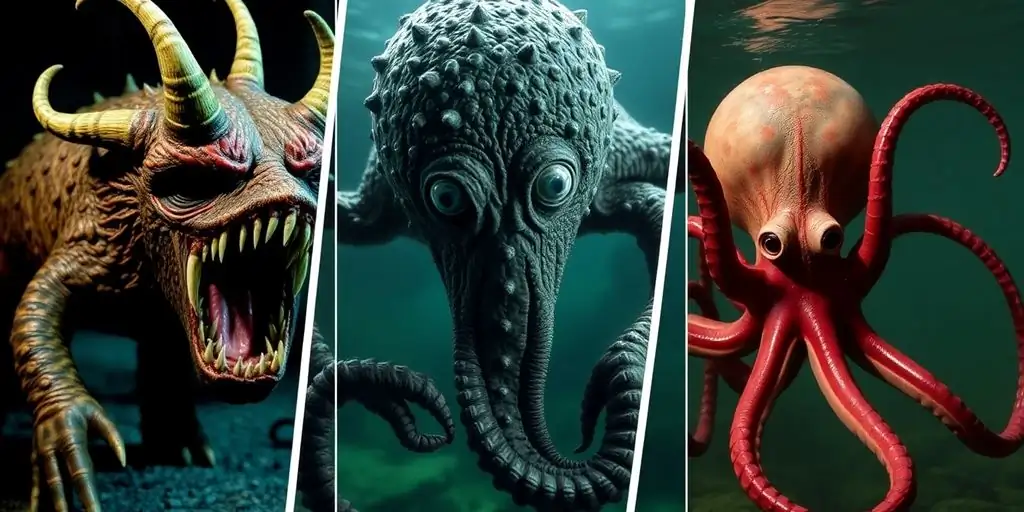
    The Wisconsin Hodag is a mythical creature that has been part of Wisconsin’s folklore for over a century. Described as a large carnivore with a row of thick spines down its back, the Hodag’s origins are debated. It is believed to have emerged from the tall tales told by lumberjacks in the late 19th century, who gathered around campfires to entertain each other.

    • Origins: The Hodag’s story likely draws from Native American folklore and early Paul Bunyan tales.
    • Eugene Shepard: In 1893, a land surveyor named Eugene Shepard claimed to have discovered the Hodag, even producing a photograph of the creature. This photo, however, was later revealed to be a hoax.
    • Cultural Impact: Despite its origins as a hoax, the Hodag became a beloved symbol of Rhinelander, Wisconsin. The town hosts an annual Hodag Country Festival, and the creature is featured in local art and merchandise.

    The Enfield Horror: A Mysterious Encounter

    Moving to Enfield, Illinois, we find the Enfield Horror, a creature that shocked the community in 1973. The first reported sighting was by Henry McDaniel, who described a strange creature with grayish skin and large red eyes.

    • Initial Sighting: McDaniel heard scratching at his door and, upon investigation, encountered a creature that was about 4.5 to 5 feet tall. He fired shots at it, but the creature simply hissed and fled.
    • Eyewitness Accounts: Following McDaniel’s encounter, other sightings emerged, including a 10-year-old boy who claimed to have been attacked by the creature. However, he later admitted his story was a hoax.
    • Ongoing Mystery: The Enfield Horror remains a topic of interest, with theories ranging from wild apes to extraterrestrial beings. Its place in cryptozoology is solidified, but its true nature remains a mystery.

    The Oklahoma Octopus: A New Legend

    Finally, we delve into the Oklahoma Octopus, a creature that has recently captured the public’s imagination. Initially a metaphor for corporate overreach, the Oklahoma Octopus has evolved into a cryptid that supposedly lurks in Oklahoma’s lakes.

    • Origins: The earliest mention of the Oklahoma Octopus as a cryptid appears in a 2007 book. However, it gained widespread attention after a fictional portrayal on a 2009 episode of Animal Planet’s Lost Tapes.
    • Physical Description: Eyewitness accounts describe the octopus as being as large as a Jeep, with adaptations for freshwater living, such as sharp claws and paralyzing venom.
    • Skepticism: Critics argue that octopuses cannot survive in freshwater and that the sightings may be misidentifications of other aquatic creatures.

    Conclusion

    These three cryptids—the Wisconsin Hodag, the Enfield Horror, and the Oklahoma Octopus—each tell a unique story that reflects the culture and folklore of their respective regions. Whether you believe in their existence or not, they continue to intrigue and entertain, reminding us of the mysteries that lie just beyond our understanding.

    So, what do you think? Are these creatures real, or just products of local lore? Share your thoughts and any other cryptids you’d like to learn about!

  • He Sought People To Eat; He Preferred Women: Rock Giants of California, Tales of the Miwok Indians

    He Sought People To Eat; He Preferred Women: Rock Giants of California, Tales of the Miwok Indians

    In this article, we explore the fascinating tales of the Miwok Indians of Northern California, particularly their stories about rock giants. These legends, passed down through generations, reveal a rich tapestry of mythology that intertwines with the natural world and the experiences of the Miwok people.

    Key Takeaways

    • The Miwok Indians have a rich tradition of storytelling, particularly about rock giants.
    • These giants are depicted as fearsome creatures that prey on humans, especially women.
    • The stories serve as both entertainment and moral lessons, reflecting the values and beliefs of the Miwok culture.

    The Miwok Legends

    The Miwok Indians, who lived in Northern California, have a unique collection of myths that tell of rock giants. These giants are not just figments of imagination; they represent a significant part of the Miwok cultural heritage. The stories often depict these giants as monstrous beings who lived in caves and had a taste for human flesh, particularly that of women.

    One of the most notable giants in these tales is Ellan, a giant as tall as a pine tree. He roamed the land, capturing and eating people. The Miwok believed that he could catch ten men at a time, holding them between his fingers. His hunger drove him southward, where he visited various villages, consuming nearly all the inhabitants before returning north.

    The Fall of Ellan

    The story of Ellan takes a turn when the people he terrorized decide to fight back. They discover his sleeping place and attempt to harm him with arrows, but he is impervious to their attacks. In a clever twist, they send Uum the Fly to find Ellan’s weak spot. After much effort, Uum discovers that biting him under the heel causes pain. This revelation leads the villagers to set traps along Ellan’s path, ultimately leading to his demise.

    Once Ellan is dead, the villagers face a dilemma: what to do with his body? A wise man suggests burning him, and as they do, they keep a close watch for any part of him that might escape. The whites of his eyes fly away, but a small bird named Chick Chick manages to retrieve them, ensuring that Ellan remains dead. This act leads to the transformation of the first people into various animals, marking the beginning of the animal kingdom as we know it.

    Modern Myths of the Miwok

    The Miwok also have more contemporary tales of rock giants, such as CH Halam, who resides in caves near Calaveras County. He is known to carry a large basket and prefers to eat women, luring them with cries that mimic a baby. His cave is filled with the remains of his victims, and the Miwok people have a deep-seated fear of placing their dead in caves, as it would attract giants like CH Halam.

    Another giant, Ule, is said to live in the Chowchilla Foothills. He, too, preys on unsuspecting individuals at night, reinforcing the idea that these giants are a constant threat in the Miwok worldview.

    The Significance of These Stories

    These tales serve multiple purposes. They entertain, educate, and instill a sense of caution among the Miwok people. The rock giants symbolize the dangers that lurk in the world, and the stories remind listeners of the importance of community and vigilance.

    Moreover, the Miwok myths reflect their relationship with nature. The transformation of the first people into animals illustrates a deep respect for the environment and the interconnectedness of all living beings.

    Conclusion

    The stories of the Miwok Indians about rock giants are more than just folklore; they are a window into the culture, beliefs, and values of a people who have inhabited California for thousands of years. These legends remind us of the power of storytelling and its role in shaping our understanding of the world. As we reflect on these tales, we can appreciate the rich heritage of the Miwok and the lessons their stories continue to impart today.

  • The Lizardman of Bishopville: A Chilling Tale from South Carolina

    The Lizardman of Bishopville: A Chilling Tale from South Carolina

    In July 1988, a seemingly ordinary day for reporter Jan Easterling turned into the beginning of one of South Carolina’s most chilling legends. What started as a routine assignment quickly spiraled into a phenomenon that would haunt the Skat or Swamp for years to come.

    Key Takeaways

    • The Lizardman legend began in July 1988 in Bishopville, South Carolina.
    • A damaged car and eyewitness accounts sparked widespread curiosity.
    • The story led to a surge in tourism and local business.
    • The legend has persisted despite skepticism and hoaxes.

    On July 18, 1988, Jan Easterling, a newspaper reporter, was checking in with the Lee County Sheriff’s Department, as she did most days. She was tasked with covering various local stories, but this day would be different. Sheriff Liston Truesdale informed her about a bizarre incident involving a couple who found their Ford LTD severely damaged. The car’s hood ornament was broken, the chrome was chewed up, and the wiring was ripped out. Intrigued, Easterling accompanied the sheriff to the scene, unaware that she was about to uncover a tale that would become a part of South Carolina folklore.

    As she arrived, she met the couple and a deputy who had interviewed two men who claimed to have been chased by a creature from the nearby swamp. The most striking account came from a teenager named Christopher Davis, who described a terrifying encounter with a seven-foot tall creature with scaly red skin and glowing red eyes. This encounter would soon capture the attention of the public and media alike.

    The story of the Lizardman quickly spread, with Easterling’s newspaper, The State, featuring a front-page headline that read, “Lizardman Lurking in Lee County Swamp.” This sensational coverage led to a radio station in Columbia offering a $1 million reward for the creature’s capture. Suddenly, Bishopville, a small town with a population of about 3,600, became a hotspot for monster hunters and curious tourists.

    The Rise of Lizardman Mania

    • Tourism Boom: The Lizardman legend attracted visitors from all over, turning Bishopville into a destination.
    • Merchandising: Local businesses capitalized on the craze, selling Lizardman-themed merchandise, including T-shirts and novelty items.
    • Community Impact: The influx of tourists provided a temporary economic boost, but also brought challenges for the locals.

    As the legend grew, so did the bizarre merchandise. Lizardman T-shirts flew off the shelves, and local vendors began selling “Lizard Juice” (green lemonade) and “Lizard Eggs” (watermelons). The town was buzzing with excitement, and the swamp became a gathering place for those hoping to catch a glimpse of the elusive creature.

    However, the frenzy didn’t last long. By the end of the summer, sightings dwindled, and the initial excitement faded. A heavily publicized hoax involving a supposed Lizardman sighting made many question the authenticity of the reports. Despite this, the legend of the Lizardman continued to intrigue both locals and outsiders.

    The Legacy of the Lizardman

    • Cultural Impact: The Lizardman became part of local folklore, joining the ranks of other legendary creatures like Bigfoot and the Mothman.
    • Skepticism and Hoaxes: Many locals were embarrassed by the attention, fearing their town would be remembered as a joke.
    • Enduring Mystery: Despite the skepticism, the legend persists, inviting curiosity and speculation.

    Sheriff Truesdale played a significant role in the Lizardman saga. He took the reports seriously, even as he made light-hearted comments to the press. His willingness to investigate the claims helped keep the story alive. However, as the years passed, the excitement surrounding the Lizardman began to wane, and many locals distanced themselves from the legend.

    In the years following the initial sightings, only a handful of reports emerged, and the Lizardman faded from the spotlight. Yet, the tale remains a part of Bishopville’s identity, a blend of folklore and the unknown that continues to captivate those who hear it.

    Conclusion

    The Lizardman of Bishopville is more than just a story; it’s a reflection of how legends can shape a community’s identity. While many may dismiss it as a hoax or a joke, the impact of the Lizardman on Bishopville is undeniable. It serves as a reminder of the power of storytelling and the allure of the mysterious. What do you think about the Lizardman? Is it a legend worth believing, or just a tale spun from the imagination? Let us know your thoughts!