Category: Politics

  • Biden’s Potential Exit: What It Means for the 2024 Election

    Biden’s Potential Exit: What It Means for the 2024 Election

    The political landscape is abuzz with speculation as top Democrats reportedly believe that President Joe Biden will soon announce his decision to exit the 2024 presidential race. This development has been trickling out through various sources, preparing the public for the possibility that Biden may not be the Democratic nominee. Here’s a comprehensive look at the unfolding situation and its potential implications.

    Key Takeaways

    • Top Democrats believe Biden will exit the 2024 presidential race.
    • Biden is not expected to resign the presidency or endorse another candidate.
    • The Democratic National Convention in Chicago could be the first brokered convention since 1952.
    • Kamala Harris is unlikely to be endorsed by Biden.
    • The media and Democratic establishment are preparing for various outcomes, including a potential Trump victory.

    Rising Pressure on Biden

    Several top Democrats have privately indicated that the rising pressure from party leaders and close friends will likely persuade Biden to drop out of the presidential race. This sentiment has been echoed by credible sources, including a large account on social media platform X, which reported that Biden has already notified campaign officials of his decision to withdraw, with an official announcement expected before Sunday.

    Despite his withdrawal from the race, Biden is not expected to resign the presidency or endorse another candidate, such as Vice President Kamala Harris. Instead, the Democratic National Convention in Chicago is anticipated to be a brokered convention, with potentially dozens of Democratic candidates vying for the nomination.

    The Soft Landing Strategy

    The gradual release of information seems to be a strategy to prepare the public for Biden’s potential exit. Initially, reports suggested that Biden was considering dropping out, followed by updates indicating that more Democrats were pressuring him to make this decision. This trickle of information aims to provide a soft landing for the public, easing them into the idea that Biden may not be the nominee.

    Kamala Harris and the Open Convention

    One of the most intriguing aspects of this development is the report that Biden will not endorse Kamala Harris and will instead support an open convention. This is significant because Harris has been positioned as a key figure in the Democratic Party for years. The lack of endorsement suggests that even within the party, there are doubts about her viability as a presidential candidate.

    Media and Public Reaction

    The media is likely to relish the prospect of an open convention, as it would generate significant viewership and engagement. Historically, brokered conventions have been rare, with the last one occurring in 1952. The uncertainty and drama surrounding the selection of a nominee would undoubtedly capture public interest.

    The Bernie Sanders Factor

    The Democratic establishment has previously taken steps to prevent candidates like Bernie Sanders from securing the nomination. In 2016, they colluded to ensure Sanders couldn’t win, and in 2020, they rallied moderate candidates to endorse Biden. The fear now is that an open convention could lead to a candidate like RFK Jr. gaining traction, which the establishment wants to avoid.

    The Trump Factor

    Many believe that regardless of who the Democratic nominee is, Donald Trump is poised to win the upcoming election. The media’s coverage often seems to be setting the stage for a Trump victory, perhaps as a way to say, “We told you so.” This narrative could also serve to undermine Kamala Harris, who is widely unpopular, by positioning her as a placeholder who will inevitably lose to Trump.

    The Search for a Third Candidate

    There is a growing sentiment among the American public that neither Biden nor Trump is a desirable candidate. Some voters are expressing a desire for a third option, someone who can offer a fresh perspective and break away from the polarizing figures of Biden and Trump. However, the time required to vet a new candidate is limited, making this a challenging proposition.

    The Long Game

    Some analysts believe that the Democratic Party is playing a long game, preparing for a future beyond the 2024 election. By allowing Biden to exit and potentially sacrificing the 2024 race, they may be setting the stage for a stronger candidate to emerge in 2028. This strategy could involve letting Trump win and then positioning a new Democratic leader to take over after his term.

    Conclusion

    The potential exit of Joe Biden from the 2024 presidential race is a significant development with far-reaching implications. From the possibility of a brokered convention to the media’s role in shaping public perception, the Democratic Party is navigating a complex and uncertain landscape. As the situation unfolds, one thing is clear: the 2024 election is shaping up to be one of the most unpredictable and closely watched in recent history.

  • Supreme Court’s Landmark Ruling: A Turning Point for Homelessness Policies

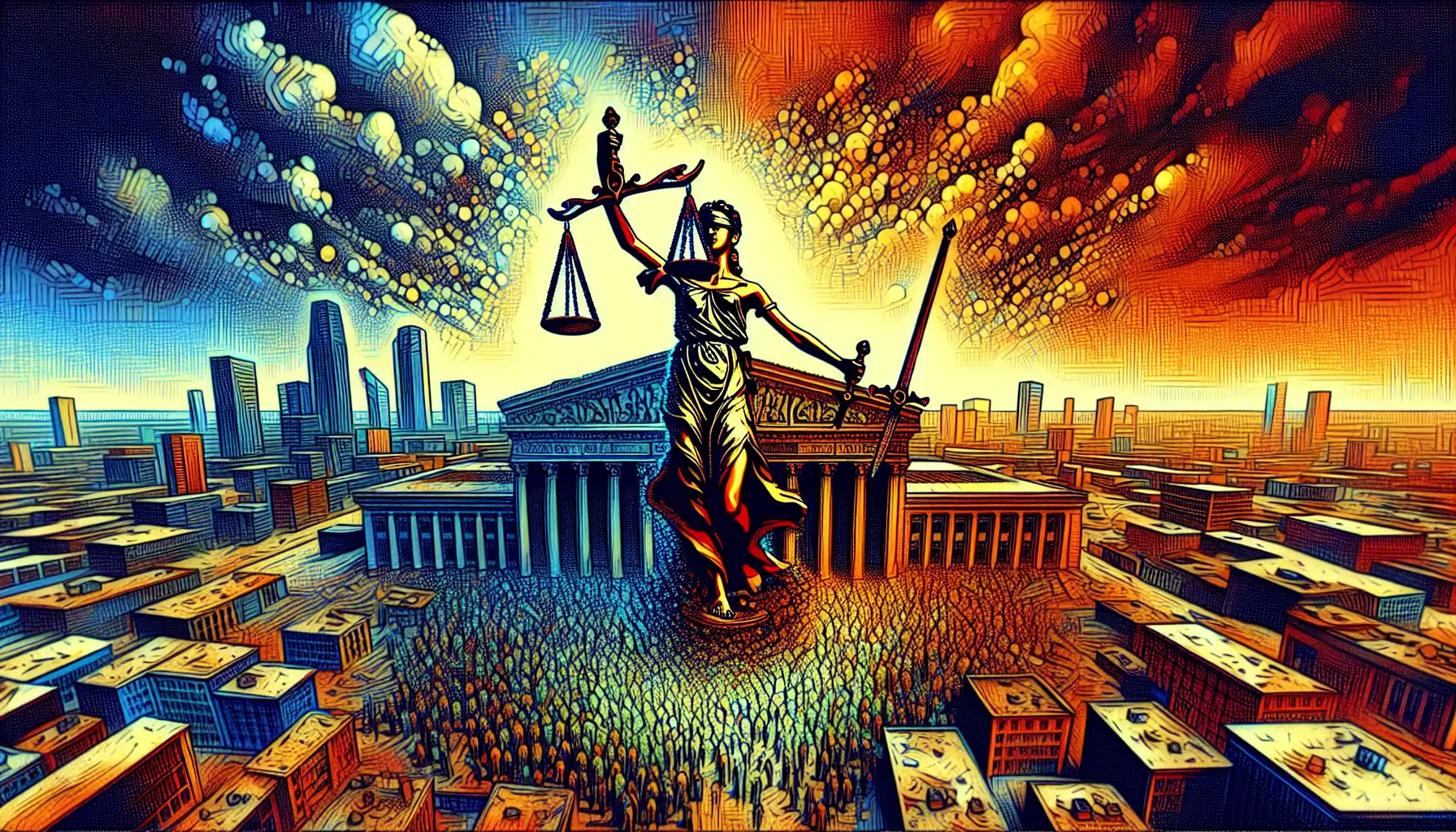
    Supreme Court’s Landmark Ruling: A Turning Point for Homelessness Policies

    Recent developments from the US Supreme Court have led to a landmark ruling that forced a significant policy reversal. This policy had been in place for years, allowing certain left-leaning governments and politicians to implement changes that many believe have negatively impacted our cities. Let’s delve into the details of this ruling and its implications.

    Key Takeaways

    • The Supreme Court overturned the Chevron Doctrine, a legal principle that allowed federal agencies to interpret unclear laws.
    • This decision stemmed from two related cases, most notably the Grants Pass, Oregon case.
    • The ruling has significant implications for homelessness policies, particularly in states like California.
    • The decision shifts interpretive authority from federal agencies to the judiciary, potentially leading to inconsistent regulatory standards.

    The Overturning of the Chevron Doctrine

    In a significant ruling, the Supreme Court’s conservative majority overturned the long-standing Chevron Doctrine, which had shaped administrative law for four decades. This doctrine allowed federal agencies to interpret unclear laws, with courts deferring to these interpretations if deemed reasonable. The Chevron Doctrine conflicted with the Administrative Procedures Act, which states that courts, not agencies, should interpret statutory ambiguities.

    The Court’s decision stemmed from two related cases where petitioners challenged federal agency rulings. The most prominent was the recently resolved Grants Pass, Oregon case. In 2018, the 9th Circuit Court of Appeals made a significant ruling in Martin vs. Boise, deciding that cities cannot penalize people for sleeping in public spaces if there aren’t enough shelter beds available. This was deemed a violation of the Eighth Amendment, which prohibits cruel and unusual punishment.

    The Grants Pass Case

    Fast forward to the Blake vs. Grants Pass case in 2018, originally led by Deborah Blake and later by Gloria Johnson. In 2022, a three-judge panel from the 9th Circuit sided with a lower court, ordering Grants Pass to stop enforcing its ban on homeless people sleeping on public property. Grants Pass tried to appeal to the full 9th Circuit but faced a lengthy order explaining why the court wouldn’t reconsider.

    The Supreme Court’s recent decision to overturn the Chevron Doctrine opens the door to extensive litigation and reinterpretations of laws governing areas such as environmental protection, public lands management, healthcare, taxes, and emerging technologies. This shift places interpretive authority firmly in the hands of the judiciary.

    Implications for Homelessness Policies

    One immediate impact of this ruling is on homelessness policies. California, the state most affected by this ruling, now faces tough decisions. According to the Department of Housing and Urban Development’s 2023 Annual Homelessness Assessment Report, 653,000 people in America are experiencing homelessness, with California having the highest percentage of unsheltered homeless people at 68%.

    Factors Contributing to Homelessness

    Megan Henry, Project Director for the Annual Homeless Assessment Report, identified three main factors contributing to California’s homelessness crisis:

    • Unaffordable housing
    • Stagnated incomes
    • Systemic racism

    In a 2021 HUD report, it was found that 8.53 million renters nationwide were on the brink of homelessness, a rate almost doubled in 20 years. These households have incomes at or below 50% of the area median income, receive no government housing assistance, and pay more than half their income on rent or live in severely inadequate conditions.

    The Situation in San Francisco

    San Francisco, once one of the most beautiful cities in the country, has seen a significant rise in homelessness. The 2024 PIT count reported 8,323 people experiencing homelessness in San Francisco, with 3,969 individuals staying in shelters and the rest unsheltered. This marks a 7.3% increase over a two-year period.

    Governor Gavin Newsom has often cited court rulings as a restriction on effectively tackling homelessness. However, the Supreme Court’s recent decision removes this excuse, allowing cities to enforce bans on homeless people sleeping outdoors when there is no available shelter space.

    Financial Mismanagement and Accountability

    The ruling also highlights the financial mismanagement in addressing homelessness. California’s state auditor reported that the state can’t account for over $24 billion in taxpayer money spent on homelessness programs over five years. Despite significant investments, California still has the highest homeless population in the country, making up 28% of the nation’s homeless.

    Conclusion

    The Supreme Court’s decision to overturn the Chevron Doctrine marks a significant shift in how laws are interpreted and enforced, particularly concerning homelessness policies. This ruling removes the legal constraints that left-wing politicians, especially in states like California, have used to justify the proliferation of homeless encampments. As cities and states navigate this new legal landscape, the focus will likely shift towards more effective and accountable solutions to address homelessness.

    Share your thoughts below and let’s discuss this. Don’t forget to like, share, subscribe, and click on the bell icon to turn on your notifications whenever we upload new content.

  • President Joe Biden Shocks Nation by Dropping Out of 2024 Presidential Race

    President Joe Biden Shocks Nation by Dropping Out of 2024 Presidential Race

    In a stunning turn of events, President Joe Biden has announced that he will not seek reelection in the 2024 presidential race. This decision, revealed in a heartfelt letter, has sent shockwaves through the political landscape and left many questions unanswered about the future of the Democratic Party and the upcoming election.

    Key Takeaways

    • President Joe Biden announced he will not seek reelection in 2024.
    • Biden cited the best interests of his party and the country as reasons for his decision.
    • Vice President Kamala Harris has been a strong supporter and partner throughout Biden’s presidency.
    • The announcement follows a series of calls from Democratic lawmakers for Biden to step down.
    • Biden’s decision comes after a challenging period, including a COVID-19 diagnosis and a disastrous debate performance.

    The Announcement

    President Biden’s letter, released on social media, expressed his gratitude for the opportunity to serve as president. He stated, “It has been the greatest honor of my life to serve as your president. While it has been my intention to seek reelection, I believe it is in the best interest of my party and the country for me to stand aside and to focus solely on fulfilling my duties as president for the remainder of my term.” Biden also mentioned that he would address the nation later in the week to provide more details about his decision.

    Immediate Reactions

    The announcement has elicited a range of reactions from political figures and the public. CNN White House correspondent Priscila Alvarez, reporting from Rehoboth Beach, Delaware, noted that the decision came after increasing pressure from within the Democratic Party. Notable figures like Senator Joe Manchin had publicly called for Biden to step down. Despite maintaining his campaign efforts and private conversations with lawmakers, Biden ultimately decided to heed these calls.

    Context and Background

    Biden’s decision follows a tumultuous period marked by a poor debate performance in late June, which heightened anxiety within the Democratic Party. This was compounded by his recent COVID-19 diagnosis, which forced him to isolate and temporarily halt his campaign activities. During this time, Biden was in close consultation with his advisers and inner circle, grappling with the challenges and frustrations of his campaign.

    The Role of Vice President Kamala Harris

    Vice President Kamala Harris has been a steadfast ally throughout Biden’s presidency. In his letter, Biden thanked Harris for being an “extraordinary partner in all of this work.” Harris has been actively involved in the campaign, even as questions about the future of the Democratic ticket loom large. She has been a vocal supporter of Biden, emphasizing his record over isolated debate performances.

    What Happens Next?

    The Democratic Party now faces a critical juncture. With Biden stepping down, there are numerous questions about the next steps. Will Vice President Harris become the Democratic nominee? Will there be a more extensive process to determine the nominee? Biden’s letter leaves many of these questions unanswered, adding to the uncertainty.

    Democratic Party’s Internal Dynamics

    Within the Democratic Party, there has been a growing consensus around the possibility of Harris becoming the nominee. Internal polling suggests she could fare well against potential Republican candidates, including former President Donald Trump. Additionally, her existing role within the campaign apparatus could streamline the transition. However, the final decision remains to be seen, and the party must navigate this complex situation carefully.

    Conclusion

    President Joe Biden’s decision to not seek reelection marks a significant moment in American politics. As the nation awaits further details from Biden and the Democratic Party, the focus will be on how the party navigates this unexpected development and prepares for the 2024 election. The coming weeks will be crucial in shaping the future of the Democratic ticket and the broader political landscape.

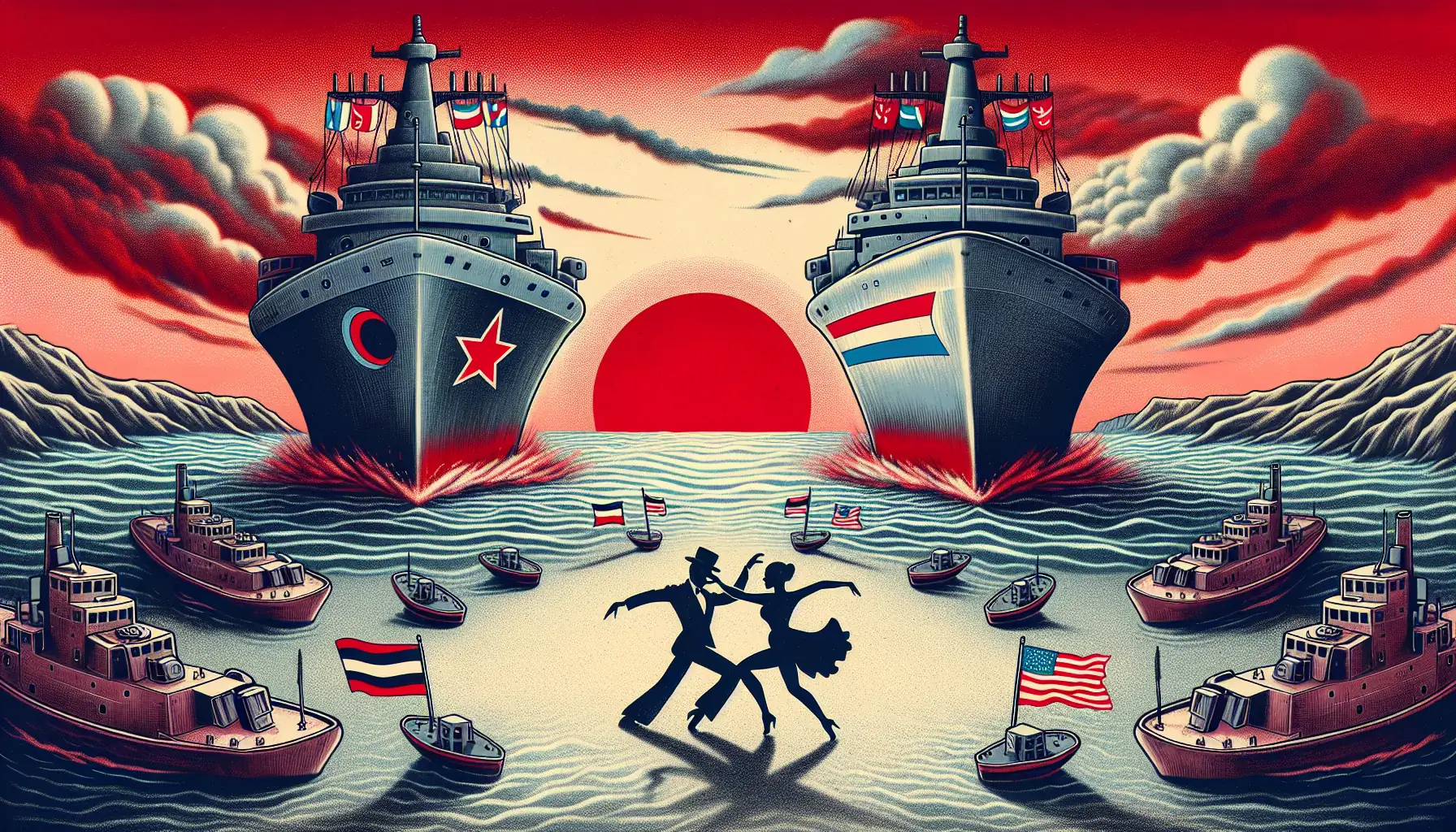
  • U.S. and Iran’s Naval Tango: The Alborz Warship’s Red Sea Entry

    U.S. and Iran’s Naval Tango: The Alborz Warship’s Red Sea Entry

    Breaking news has emerged from Florida, where a man has been charged with making written threats to kill Donald Trump and JD Vance. This arrest follows closely on the heels of an assassination attempt on Trump, raising questions about the effectiveness of the Secret Service and the growing issue of political violence in the United States.

    Key Takeaways

    • A Florida man has been arrested for making threats against Donald Trump and JD Vance.
    • The arrest comes shortly after an assassination attempt on Trump.
    • Social media platforms like Facebook are playing a role in identifying and reporting threats.
    • The incident has sparked a debate about the balance between free speech and public safety.

    The Arrest and Its Implications

    The suspect, Michael M. Wiseman, was arrested on charges of making written threats to kill Trump and Vance. According to reports, Wiseman had posted multiple threats on his Facebook account. The arrest occurred less than a week after an assassination attempt on Trump, which has led to increased scrutiny of the Secret Service and concerns about escalating political violence.

    Law enforcement agencies are likely to intensify their efforts to track down individuals making similar threats. This could result in a wave of arrests, as more people are reported for their online activities. Facebook, in particular, has been instrumental in identifying and reporting these threats, indicating a shift in how social media platforms handle such issues.

    The Role of Social Media

    Social media platforms like Facebook are increasingly becoming tools for law enforcement. After investigating reports on Wiseman’s Facebook account, detectives found multiple threats against Trump and Vance. Although the exact content of these threats has not been disclosed, it is believed that they were severe enough to warrant an arrest.

    This incident highlights the dual role of social media: while it can be a platform for free expression, it can also be a medium for spreading harmful and violent ideas. The balance between these two aspects is delicate and complex, requiring careful consideration from both social media companies and law enforcement agencies.

    Public Reaction and Legal Considerations

    The public reaction to the arrest has been mixed. Some people argue that making threats, even if not imminent, should be taken seriously and dealt with harshly. Others believe that such actions could lead to a slippery slope where free speech is unduly restricted.

    Legally, the distinction between an imminent threat and a general wish for harm is crucial. An imminent threat involves a call to immediate action, such as urging someone to commit a violent act right away. In contrast, a general wish for harm, while still concerning, does not meet the legal standard for an imminent threat. However, both can violate the terms of service of social media platforms, leading to account suspensions or bans.

    The Community’s Role

    Interestingly, the arrest was not solely the result of social media monitoring. Multiple people living near Wiseman reported him to the police, indicating a community-level involvement in preventing potential violence. This raises questions about the role of civilians in monitoring and reporting suspicious activities.

    While community vigilance can be beneficial, it also poses risks. There is a fine line between being a responsible citizen and becoming overly intrusive or paranoid. The challenge lies in finding a balance that ensures public safety without infringing on individual freedoms.

    High-Profile Cases and Their Impact

    The discussion also touched on the idea of targeting high-profile individuals who make similar threats. The rationale is that making an example of well-known figures could serve as a deterrent for others. However, this approach has its drawbacks. It could push people to express their harmful ideas in more covert ways, making it harder for law enforcement to track and prevent potential threats.

    Conclusion

    The arrest of Michael M. Wiseman for making threats against Donald Trump and JD Vance is a significant event that underscores the complexities of dealing with political violence in the digital age. Social media platforms, law enforcement agencies, and communities all have roles to play in addressing this issue. The challenge lies in finding a balance that protects public safety while respecting individual freedoms.

  • Climate Activists Sentenced: A Deep Dive into the Just Stop Oil Case

    Climate Activists Sentenced: A Deep Dive into the Just Stop Oil Case

    Five members of the climate change group Just Stop Oil have been sentenced to up to five years in prison after being convicted of conspiracy to cause a public nuisance. This case has sparked a debate on whether this is a stifling of the right to protest or an appropriate response to major disruptions to UK infrastructure. Let’s delve into the facts, the judge’s sentencing remarks, and the potential for a successful appeal.

    Key Takeaways

    • Five members of Just Stop Oil were sentenced to up to five years in prison for conspiracy to cause a public nuisance.
    • The offense is relatively new, under Section 78 of the Police, Crime, Sentencing, and Courts Act of 2022.
    • The group planned to disrupt traffic on the M25 Motorway by having protesters climb onto gantries.
    • The judge cited six aggravating factors, including previous convictions and the high level of disruption caused.
    • The sentences are likely to be upheld if appealed, as they are not considered manifestly excessive.

    The Facts of the Case

    Five individuals—Roger Hallam, Daniel Shaw, Luis Lancaster, Lucia Whitaker de Abu, and Crescor Gethin—were charged with conspiracy to cause a public nuisance. This offense is contrary to Section 78 of the Police, Crime, Sentencing, and Courts Act of 2022. The group, known for disruptive protests, aimed to promote their climate change message and influence government policy.

    The specific offense involved a conspiracy to disrupt traffic on the M25 Motorway by having protesters climb onto gantries, causing gridlock. The key evidence was an audio and video recording of a Zoom meeting on November 2, 2022, recorded by an undercover journalist from The Sun newspaper. This meeting was to arrange protests leading to significant disruption.

    The Judge’s Sentencing Remarks

    The judge outlined the specific contributions of each group member. Roger Hallam gave a lengthy pep talk justifying the protests. Daniel Shaw chaired the meeting and was involved in organizing recruitment and training. The other three inspired would-be climbers based on their own experiences.

    As a result of the group’s actions, 45 protesters climbed or attempted to climb gantries on the M25 between November 7 and 10, 2022, causing an estimated £750,000 in economic costs and significant public disruption.

    On July 18, 2024, Roger Hallam was sentenced to five years imprisonment, while the others received four years each. The judge’s sentencing remarks, spanning 23 pages, provide detailed reasoning for these sentences.

    Sentencing Guidelines and Aggravating Factors

    There are no definitive sentencing guidelines for the offense of conspiracy to cause a public nuisance, as it is a new offense. In such cases, judges refer to case law. The judge cited the case of The Crown v. Troland and Dea (2023), where the Court of Appeal confirmed that sentences of three years and two years nine months were not manifestly excessive for similar offenses.

    The judge found the defendants’ actions more serious, citing six aggravating factors, including the high level of disruption and previous convictions for direct action protests. The judge also considered the aims of the group but concluded that leniency was not appropriate due to the extreme disruption planned.

    Individual Sentences and Potential for Appeal

    Roger Hallam had a substantial criminal record and was under a suspended sentence for a previous offense. He was deemed the most serious offender and received a five-year sentence. Daniel Shaw was deeply involved in organizing the conspiracy and hoped for massive disruption. Lucia Whitaker de Abu, Luis Lancaster, and Crescor Gethin had previous convictions and were under suspended sentences. They each received four-year sentences.

    All individuals will serve half of their sentences before automatic release, standard in most criminal cases. They can appeal their sentences, but the Court of Appeal will only overturn them if they are manifestly excessive. Given the Court of Appeal’s previous rulings, it is unlikely that these sentences will be deemed excessive.

    Conclusion

    The judge found that the group’s actions caused a very high level of disruption, had previous convictions, and offered little mitigation. The sentences of five years for Roger Hallam and four years for the others were deemed appropriate. What do you think about these sentences? Are they too harsh, or justified given the disruption caused? Let us know in the comments below.

  • The Biden Coup: A Deep Dive into the Democratic Party’s Latest Move

    The Biden Coup: A Deep Dive into the Democratic Party’s Latest Move

    The Democrats, the self-styled party of saving democracy, have initiated a coup to remove their own democratically elected candidate, Joe Biden. This move has left many questioning the integrity of the party and the future of American politics. The party that claims to save democracy has essentially told their 14 million primary voters that their votes don’t matter, and that the elite insiders will be picking the actual candidate. But it’s Trump who’s the real threat to democracy, right?

    Key Takeaways

    • The Democratic Party has initiated a coup to remove Joe Biden.
    • Biden’s cognitive decline has been a major factor in this decision.
    • The media has played a significant role in shaping the narrative around Biden’s health.
    • Kamala Harris is being positioned as the likely successor.

    The Coup Against Biden

    For over a year, anyone who suggested that Biden was in cognitive decline was labeled a wild conspiracy theorist. Yet, the very same narrative has now been used to enact a coup against Biden. His campaign insisted for weeks that he was staying in the race, and Biden himself seemed more resolved than ever to remain. They even had a campaign schedule covering the whole week. Then, suddenly, he had a massive change of heart, and his campaign team found out he was stepping down just a minute beforehand.

    Some people even doubt it was Biden who signed the letter announcing his resignation. Biden’s brother confirmed that his health was a major factor, oddly hinting that Biden might not have very long left. This raises the question: if Biden is cognitively incapable of leading a political campaign, how is he capable of having access to the nuclear codes and leading the biggest superpower on Earth for the next six months?

    Media’s Role in the Narrative

    For months, if not years, the legacy media monstered anyone who suggested Biden was in physical or cognitive decline as dangerous disinformation. They even claimed it was a Kremlin sop. Then, as soon as the deep state and the Democratic Party elite decided Biden couldn’t win, they immediately seized upon and legitimized that very same conspiracy theory to initiate a coup to force Biden to step aside.

    Two days before an infamous debate, CNN was still pushing the narrative that anyone who drew attention to Biden’s verbal gaffes was amplifying a bogus narrative. Then, literally minutes after the debate, CNN and the rest of the media went gangbusters with that very same supposedly bogus narrative. This illustrates how the media weaponizes the term ‘conspiracy theory’ to diminish and derail facts that they later have to admit were true all along.

    Kamala Harris: The Likely Successor

    Kamala Harris, often criticized for her lack of political acumen, is being positioned as the likely successor. Despite receiving zero delegates in 2020, she muscled her way to the Vice Presidency through insider machinations. Now, she is muscling her way to a presidential nomination through the same means. The cash floodgate has suddenly swung wide open, and the Soros money is already rolling in. CNN is already vetting her running mates like she’s got it locked in.

    The Propaganda Campaign

    Prepare for a propaganda campaign the likes of which you’ve never seen, trying to sell Kamala Harris as if she earned it when she’s earned nothing but being in a position to be anointed as a result of an anti-democratic coup. The same people who will continue to lecture you about the sanctity of democracy will now try to sell you on Harris. They will call everyone who opposes her sexist and racist, while ignoring the fact that she owes her entire ascendance to Democratic Party elites rather than voters.

    Conclusion

    The coup against Biden and the coronation of Kamala Harris raise serious questions about the integrity of the Democratic Party and the future of American democracy. As we move forward, it’s crucial to stay informed and critically analyze the narratives being pushed by both the media and political elites.

  • The Shocking Congressional Hearing on Trump’s Near Assassination: A Deep Dive into Security Failures and Political Exploitation

    The Shocking Congressional Hearing on Trump’s Near Assassination: A Deep Dive into Security Failures and Political Exploitation

    The recent congressional hearing featuring Secret Service Director Kim Cheel was nothing short of a spectacle. The hearing, which lasted five hours, was convened to address the monumental security failure that nearly led to the assassination of former President Donald Trump. The event was a mix of evasion, arrogance, and political opportunism, leaving many questions unanswered and raising new concerns about the state of national security and political discourse in the United States.

    Key Takeaways

    • The hearing was convened to address a significant security lapse that almost resulted in the assassination of former President Donald Trump.
    • Secret Service Director Kim Cheel was evasive and uncooperative, leading to bipartisan frustration.
    • The hearing quickly devolved into a debate on gun control, overshadowing the primary issue of security failure.
    • The incident has far-reaching implications, potentially affecting future political events and national security protocols.

    The Hearing: A Display of Evasion and Arrogance

    Director Kim Cheel was subpoenaed to testify before Congress after initially refusing to comply voluntarily. Her testimony was marked by evasiveness, arrogance, and a lack of concrete answers. For five hours, Cheel dodged questions, citing ongoing investigations and refusing to provide specific details. This behavior only fueled bipartisan frustration, as both Democrats and Republicans sought to understand how such a catastrophic security failure could occur.

    The Bipartisan Moment That Wasn’t

    For a brief moment, it seemed like the hearing would be a bipartisan effort to get to the bottom of the security lapse. Both sides appeared united in their concern over the near-assassination of a former president. However, this unity was short-lived. Democrats quickly shifted the focus to gun control, arguing that the incident highlighted the need for stricter firearm regulations. This pivot frustrated Republicans, who felt that the primary issue of Secret Service incompetence was being overshadowed.

    The Gun Control Debate

    Democrats, led by Jamie Raskin, used the hearing as a platform to push for more stringent gun control measures. They argued that the ease with which the would-be assassin obtained an AR-15 was a significant part of the problem. This shift in focus led to heated exchanges and further polarized the hearing. Republicans countered that the issue was not the availability of guns but the failure of the Secret Service to establish a secure perimeter.

    AOC’s Moment of Clarity

    Amid the political grandstanding, Representative Alexandria Ocasio-Cortez asked a pointed question that highlighted the incompetence of the Secret Service. She questioned why the security perimeter did not account for the range of an AR-15, a common weapon in the United States. Cheel’s response was unsatisfactory, further emphasizing the lack of preparedness and competence in handling the security for such a high-profile event.

    The Deep State Conspiracy Theories

    The hearing also gave rise to various conspiracy theories. Some representatives suggested that the security lapse was not merely a result of incompetence but a deliberate act by the so-called ‘Deep State’ to eliminate Trump. These theories, while lacking concrete evidence, added another layer of complexity to an already convoluted situation.

    The Role of Encrypted Communications

    One of the more shocking revelations came when Cheel admitted to using encrypted apps for communication. This admission raised questions about the transparency and accountability of the Secret Service. It also led to concerns about the potential for misuse of such technology, further eroding trust in the agency’s ability to protect high-profile individuals.

    The Fallout and Future Implications

    The hearing ended without any clear resolution, but the implications are far-reaching. The near-assassination of a former president has exposed significant vulnerabilities in national security protocols. It has also highlighted the deep political divisions in the country, as even an issue as grave as an assassination attempt could not escape partisan bickering.

    Conclusion

    The congressional hearing featuring Secret Service Director Kim Cheel was a sobering reminder of the vulnerabilities in our national security apparatus. While the hearing was marred by political opportunism and evasive testimony, it underscored the urgent need for reforms in how we protect our leaders. As the nation grapples with these revelations, one thing is clear: the status quo is no longer acceptable.

  • Kamala Harris: The New Face of the Democratic Party or a DEI Hire?

    Kamala Harris: The New Face of the Democratic Party or a DEI Hire?

    In recent days, a significant faction within the Democratic Party and much of the liberal media have thrown their full support behind Vice President Kamala Harris, despite earlier doubts about her leadership capabilities. The media is now portraying her as the new Captain America, but the reality is more complex. The process has played out from the grassroots level, and now the party is rallying behind her, albeit with some hesitation from the public.

    Key Takeaways

    • Kamala Harris is being heavily promoted by the Democratic Party and liberal media.
    • There are significant concerns about her qualifications and the motivations behind her selection.
    • The Biden-Harris administration’s policies on immigration and healthcare are controversial.
    • Harris’s identity and background are being marketed in a way that some find disingenuous.
    • The media and political figures are divided on the effectiveness and fairness of DEI (Diversity, Equity, and Inclusion) policies.

    The Media Hype and Public Reception

    The media’s manufactured hype surrounding Kamala Harris is taking time to resonate with the public. During a recent event, Hakeem Jeffries had to prompt the audience to applaud for Harris, highlighting the lukewarm reception she is receiving. This raises questions about the authenticity of the support she is garnering.

    Immigration and Healthcare Policies

    Under the Biden-Harris administration, the U.S. has seen an influx of at least 8 million illegal immigrants through the southern border. Critics argue that the administration has not only welcomed these individuals but also offered them free healthcare and other welfare benefits. The bill states that every resident of the United States is entitled to healthcare services, regardless of citizenship status. Harris has made it clear that she opposes any policy that denies public safety, education, or health to anyone in the country.

    Identity and Marketing

    The Democratic Party is marketing Kamala Harris as a black woman to secure the black vote, despite her Indian heritage. This has led to accusations of disingenuousness and manipulation. The New York Times recently reported that far-right commentators’ conspiracy theories about replacing President Biden with Harris have turned out to be true, adding fuel to the fire.

    DEI and Political Controversy

    Kamala Harris’s selection as Vice President is seen by some as an affirmative action hire aimed at securing the black vote. This has sparked debates about the effectiveness and fairness of DEI policies. Republican Congressman Tim Burchett openly stated that Harris was a DEI hire, a sentiment that has angered many in the media and political circles.

    Security Concerns and Political Rallies

    Democratic Congresswoman Jasmine Crockett has blamed a lack of DEI training for the near-assassination of President Trump. She argues that law enforcement’s perception of threats is biased, often underestimating the danger posed by young white males. Meanwhile, the Secret Service has reportedly asked the Trump campaign to stop holding outdoor rallies due to security concerns, a request that Trump is unlikely to comply with.

    Conclusion

    The Democratic Party’s full-throttle support for Kamala Harris is a complex and multifaceted issue. While the media and party leaders are pushing her as the new face of the party, public reception remains mixed. The controversies surrounding her policies, identity, and the motivations behind her selection continue to spark debate. As the political landscape evolves, it remains to be seen whether Harris can truly lead the party to victory.

  • China in Crisis: A Series of Unfortunate Events and Government Response

    China in Crisis: A Series of Unfortunate Events and Government Response

    On July 17, a massive fire broke out at the Jing Department Store in Zhongshan, trapping many people. Thick smoke quickly engulfed the entire building, and firefighters were slow to arrive. The corridors were crowded with people seeking refuge, and some were perched on windows with thick smoke billowing out. The entire building looked like a giant chimney spewing black smoke into the sky. Long rescue ladders were seen trying to save people, but they were still far from the crowd of floors. The fire was ferocious, and toxic smoke trapped nearly 100 people. According to official reports, the fire started at 6:11 p.m. on July 17 due to construction work and was extinguished by 3:00 a.m. the next day. 75 people were rescued, with 39 injured and 16 dead. On July 18, at around 11:40 a.m., flames erupted across the street of H Jo, causing multiple manholes along the street to spew fire. Fortunately, there were no explosions or casualties. The incident was caused by roadbed drilling that punctured a gas pipe. Despite the severity of these incidents, Chinese citizens managed to share many of these sudden events online, highlighting the government’s slow response and lack of transparency.

    Key Takeaways

    • A massive fire at Jing Department Store trapped nearly 100 people.
    • Multiple fires and explosions occurred in various locations, causing injuries and damage.
    • The Chinese government’s response has been criticized for being slow and ineffective.
    • Citizens continue to share information online despite government censorship.

    The Jing Department Store Fire

    On July 17, a massive fire broke out at the Jing Department Store in Zhongshan, trapping many people. Thick smoke quickly engulfed the entire building, and firefighters were slow to arrive. The corridors were crowded with people seeking refuge, and some were perched on windows with thick smoke billowing out. The entire building looked like a giant chimney spewing black smoke into the sky. Long rescue ladders were seen trying to save people, but they were still far from the crowd of floors. The fire was ferocious, and toxic smoke trapped nearly 100 people. According to official reports, the fire started at 6:11 p.m. on July 17 due to construction work and was extinguished by 3:00 a.m. the next day. 75 people were rescued, with 39 injured and 16 dead.

    Other Incidents

    On July 18, at around 11:40 a.m., flames erupted across the street of H Jo, causing multiple manholes along the street to spew fire. Fortunately, there were no explosions or casualties. The incident was caused by roadbed drilling that punctured a gas pipe.

    On July 28, a fire broke out in a finished goods warehouse in Hayang County, Jiang Province, with thick smoke visible from several kilometers away. According to official reports, there were no casualties or injuries at the scene and no property damage.

    On July 7, at 11:35 a.m., a fire occurred in a factory in Nang Village, Dong’an, affecting an area of about 300 square meters. The fire was brought under control with no casualties. Some people felt unwell and were taken to the hospital for checks, and their conditions were stable. The fire happened at a chemical fiber product company. Witnesses described the factory as quickly engulfed in flames with thick smoke blotting out the sky. The intense fire and explosions frightened nearby residents.

    Explosions and Earthquakes

    On July 3, an explosion occurred in Nan City, Hunan Province, injuring 20 people, including three in serious condition. According to a news report, at around 2 p.m. on July 3, an explosion was reported at a shop on Chang Jiang Road, Nan City, causing injuries. Fire trucks had arrived on the scene. The explosion caused extensive damage, with debris scattered and injuring several people. Photos taken by nearby residents showed scattered items and damaged vehicles with windows shattered by the blast. A resident, Mr. Jung, said the explosion happened at a pepper soup shop they often visited. The area has been cordoned off since the explosion. The Nang High-Tech Zone Administrative Committee reported that at 12:47 p.m. on July 3, a gas explosion occurred at a shop in Jing Community, causing three serious injuries, three moderate injuries, and several minor injuries. The explosion was caused by damage to a gas pipe during water pipe repairs. Another report mentioned that a gas leak in a restaurant might have caused the explosion, although this has yet to be confirmed officially.

    On the afternoon of June 26, a 4.5 magnitude earthquake struck Lijiang, Yunnan, causing panic among the residents. Videos show people in a state of alarm, with customers in a hair salon rushing outside and store owners running out into the streets. Students also fled to the playground. Some homes developed significant cracks.

    Maritime Accidents

    On June 28, at 12:50 p.m., the Nanding-registered vessel Quan Chang 528 collided with the Qingdao-registered cargo ship Qing Feng 998 in the Nantong section of the Yangtze River. The Qing Feng 998 capsized and quickly sank. All six crew members fell into the water; four were rescued and taken to the hospital, while two are still missing. The Qing Feng 998 was carrying about 930 tons of scrap metal, and the Quan Chang 528 was loaded with approximately 177,000 tons of iron ore. Sources revealed that the Quan Chang 528 suddenly made a sharp right turn, colliding with the Qing Feng 998 on its starboard side. After the accident, the Quan Chang 528 reported a rudder failure to the Nantong Municipal Bureau of Maritime Affairs, suspected to be a stuck right rudder.

    Government Response and Public Sentiment

    In a China led by the CCP, you’ll never truly know what happened. Citizens joke that any boastful numbers are inflated while casualty figures are minimized. Despite the severity of these incidents, Chinese citizens managed to share many of these sudden events online, highlighting the government’s slow response and lack of transparency. For the CCP, even the worst events are opportunities for self-promotion, indifferent to the people’s lives. Nens say they are good at silencing people rather than solving problems.

    On July 12, Xi Jinping met with Solomon Islands Prime Minister Jeremiah Manele, announcing a $20 million aid package. The Solomon Islands announced that China would provide its aid to support its government budget as Beijing aims to strengthen its strategic position in the region. After meeting Xi in Beijing, Manele praised China’s transformative presence in one of the world’s poorest countries. He also announced that China agreed to fund the expansion of the Solomon Islands’ only international airport, a crucial infrastructure project. Since severing diplomatic ties with Taiwan in 2019, the Solomon Islands have become one of Beijing’s most active supporters in the South Pacific. In return, China has built a large new stadium in the capital, Honiara, and constructed advanced medical facilities, mobile communication towers, and roads. Manele’s office released a statement highlighting the growing relationship between the two countries since forming a bilateral partnership five years ago, with China assisting in implementing transformative projects.

    Conclusion

    The series of unfortunate events in China, from fires and explosions to earthquakes and maritime accidents, has highlighted the government’s slow response and lack of transparency. Despite the severity of these incidents, Chinese citizens continue to share information online, criticizing the government’s priorities and response. The government’s focus on foreign aid and self-promotion, rather than addressing domestic issues, has further fueled public discontent.

  • The Rising Tensions in the Pacific: A Closer Look at U.S. Military Strategy Against North Korea and Its Allies

    The Rising Tensions in the Pacific: A Closer Look at U.S. Military Strategy Against North Korea and Its Allies

    The geopolitical landscape in the Pacific is rapidly evolving, with the United States taking decisive steps to counter threats from North Korea, China, and Russia. As tensions rise, the U.S. military presence in the region is becoming increasingly significant, with a focus on ensuring stability and security for its allies, Japan and South Korea.

    Key Takeaways

    • The U.S. has stationed 82,500 troops in Japan and South Korea to deter North Korean aggression.
    • North Korea is ramping up its nuclear and missile programs in response to U.S. military exercises.
    • The internal stability of North Korea is deteriorating, posing potential risks for the Kim regime.
    • The U.S. is enhancing military cooperation with regional allies to strengthen deterrence against North Korea.

    U.S. Military Presence in the Pacific

    The U.S. military maintains a robust presence in the Pacific, with 54,000 troops in Japan and 28,500 in South Korea. This strategic positioning serves as a critical deterrent against North Korean threats. The sheer number of U.S. forces in the region complicates any military calculations by North Korea, which boasts over 1 million troops but lacks the technological edge of the U.S. military.

    North Korea’s Response

    In light of the U.S. military’s show of force, North Korea is increasingly focusing on its nuclear weapons and ballistic missile programs. Kim Jong-un recognizes that numerical superiority is insufficient against advanced military technology. As a result, North Korea is also becoming a significant arms supplier to Russia amid the ongoing conflict in Ukraine, further complicating the security dynamics in the region.

    The Decline of the Kim Dynasty

    While the Kim regime appears stable from the outside, internal pressures are mounting. The collapse of the state rationing system and widespread economic malaise are eroding the foundations of the Kim Dynasty. Reports indicate that over 80% of North Koreans do not consume enough protein, highlighting the dire state of food security in the country. The regime’s inability to meet basic needs is leading to growing discontent among the populace.

    The Role of Propaganda and Control

    Despite the regime’s efforts to maintain control through propaganda, the effectiveness of these measures is waning. Young North Koreans are increasingly indifferent to the state’s brainwashing efforts, with many expressing a desire to learn more about the outside world. This shift poses a significant threat to the regime, as the fear and loyalty that once sustained it are beginning to erode.

    The Future of North Korea

    The potential for a popular revolt against the Kim regime is a growing concern for the U.S. and its allies. Should the regime collapse, questions arise about who would take power next. Kim Jong-un’s daughter is being groomed as a potential successor, but the dynamics of succession in North Korea are fraught with uncertainty and historical precedent suggests that power struggles are likely.

    U.S. Strategic Initiatives

    In response to these evolving threats, the U.S. Department of Defense has announced a regional sustainment framework aimed at enhancing military capabilities in the Indo-Pacific. This initiative focuses on developing maintenance and repair capabilities closer to where they are needed, thereby increasing the readiness of U.S. forces and their allies.

    Conclusion

    The situation in the Pacific is complex and fluid, with the U.S. taking proactive measures to counter threats from North Korea and its allies. As the Kim regime faces internal challenges and external pressures, the potential for significant changes in the region remains high. The U.S. commitment to its allies and the strategic military presence in the Pacific will be crucial in navigating these turbulent waters.