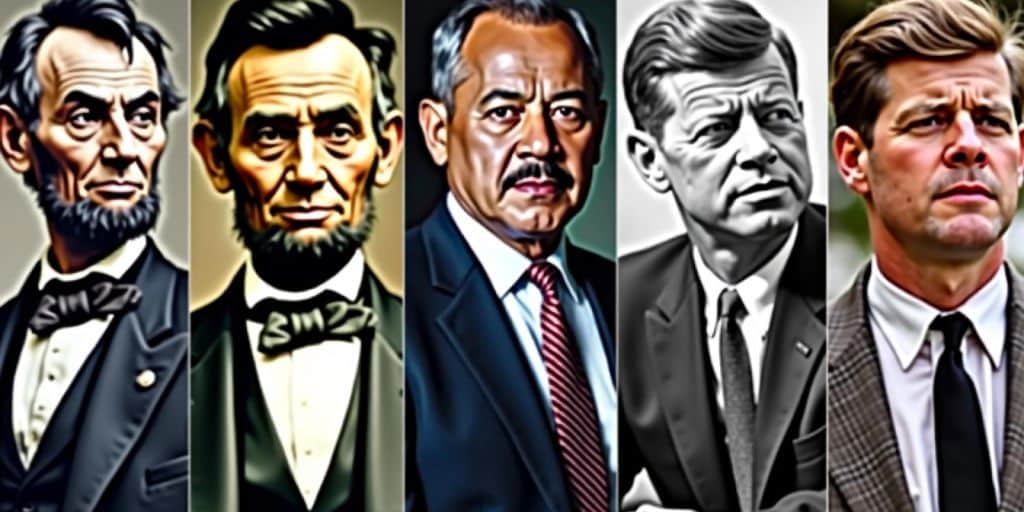
Category: Politics

  • Exploring the Impact of Famous Assassinations on History

    Exploring the Impact of Famous Assassinations on History

    Assassinations have shaped the course of history in dramatic ways. They often mark critical turning points, leading to significant political, social, and cultural changes. This article explores some of the most impactful assassinations in history, looking at the events leading up to them and their long-lasting effects.

    Key Takeaways

    • Assassinations can lead to major political shifts, such as the fall of the Roman Republic after Julius Caesar’s death.
    • The killing of influential leaders can spark social movements and legislative changes, as seen after Martin Luther King Jr.’s assassination.
    • Assassinations often occur in times of high political tension and can exacerbate existing conflicts, like the start of World War I following the death of Archduke Franz Ferdinand.
    • The impact of an assassination can extend globally, influencing international relations and policies, as with the death of John F. Kennedy.
    • Understanding the context and consequences of historical assassinations helps us learn about their profound effects on society and governance.

    The Assassination of Julius Caesar and the Fall of the Roman Republic

    Julius Caesar surrounded by Roman senators in togas.

    Political Climate Leading to the Assassination

    Julius Caesar was a powerful military general and politician who gained a lot of power through his victories, especially in Gaul. His growing influence and decisions as dictator for life worried many senators. They feared he wanted to become a king, which would go against the Republic’s traditions. The main plotters, like Brutus and Cassius, had personal and political reasons for their actions. They thought killing Caesar would save the Republic and stop a monarchy.

    Immediate Aftermath and Power Struggles

    Caesar’s assassination did not bring back the Republic. Instead, it led to civil wars. The power gap left by his death caused fights among his followers, especially between Mark Antony and Octavian. Octavian eventually won, leading to the start of the Roman Empire and the end of the Republic.

    Long-term Impact on Roman Governance

    Caesar’s death was a major turning point in Roman history. It marked the shift from a republic with checks and balances to an empire with centralized power. This change affected the ancient world and shaped Western civilization.

    The assassination of Julius Caesar is one of the most gripping true crime stories of the ancient world, symbolizing the end of the Roman Republic and the rise of the Roman Empire.

    The Killing of Abraham Lincoln and Its Effect on Reconstruction

    Context of Lincoln’s Presidency

    Abraham Lincoln, the 16th President of the United States, led the nation through the Civil War, a conflict centered on states’ rights and slavery. His leadership was crucial in preserving the Union and ending slavery with the Emancipation Proclamation. Lincoln’s assassination by John Wilkes Booth on April 14, 1865, came just days after the Civil War ended, marking a pivotal moment in American history.

    Impact on Civil Rights and National Unity

    Lincoln’s death thrust Vice President Andrew Johnson into the presidency. Johnson’s approach to Reconstruction was very different from Lincoln’s. While Lincoln wanted a lenient Reconstruction to quickly reunite the nation, Johnson’s policies often clashed with Congress, leading to political conflict and instability. This period saw the rise of "Black Codes" and Jim Crow laws, which enforced racial segregation and disenfranchised African Americans for decades.

    The lack of strong leadership during Reconstruction led to significant social and political ramifications, shaping race relations and civil rights issues well into the 20th century.

    Long-lasting Consequences for American Politics

    Historians continue to debate the consequences of Lincoln’s death on postwar Reconstruction. Johnson’s lenient approach toward former Confederate leaders and resistance to measures protecting freed slaves contributed to Reconstruction’s failure to create a more racially just society. However, this period also saw the ratification of the 13th, 14th, and 15th Amendments, laying the foundation for later civil rights advances.

    The Assassination of Archduke Franz Ferdinand and the Outbreak of World War I

    Political Tensions in Pre-war Europe

    In the early 20th century, Europe was a powder keg of political tensions. Nationalist movements, military alliances, and imperial ambitions created a volatile environment. The Austro-Hungarian Empire, a multi-ethnic conglomerate, faced internal strife and external pressures. Franz Ferdinand’s visit to Sarajevo on June 28, 1914, was intended to show imperial power in the face of growing Serbian nationalism.

    Chain Reaction Leading to Global Conflict

    The assassination of Archduke Franz Ferdinand by Gavrilo Princip, a member of the nationalist group Black Hand, set off a rapid sequence of events known as the July Crisis. Austria-Hungary, with Germany’s backing, issued an ultimatum to Serbia. Serbia’s response was deemed insufficient, leading Austria-Hungary to declare war on July 28, 1914. This declaration triggered the alliance system, drawing in major powers such as Germany, Russia, France, and Britain into the conflict.

    The assassination set off a chain of events that led to World War I, fundamentally altering the geopolitical landscape of the 20th century.

    Redrawing of National Boundaries

    World War I resulted in unprecedented carnage and destruction, reshaping political boundaries and leading to the collapse of empires, including Austro-Hungarian, Ottoman, Russian, and German. The war also set the stage for significant geopolitical shifts. The Treaty of Versailles in 1919 imposed harsh penalties on Germany, fostering resentment that contributed to the rise of Adolf Hitler and World War II. Additionally, the war led to the creation of new nation-states, including the Kingdom of Serbs, Croats, and Slovenes (later Yugoslavia).

    The Death of Martin Luther King Jr. and the Civil Rights Movement

    King’s Role in the Civil Rights Movement

    Martin Luther King Jr. became a key leader during the Montgomery Bus Boycott in 1955. He pushed for nonviolent resistance, inspired by Mahatma Gandhi. King’s leadership in events like the Birmingham Campaign, the March on Washington, and the Selma to Montgomery marches brought national attention to the injustices faced by African Americans. On April 4, 1968, at 6:01 pm, as he stood on the balcony, King was mortally wounded by a bullet that entered the right side of his face. His death sent shockwaves through the nation and led to widespread riots in major cities.

    Immediate Reaction and Unrest

    The immediate aftermath of King’s assassination saw an eruption of riots in over 100 cities across the United States. These uprisings highlighted the deep-seated anger and frustration within the African American community. King’s death expedited the passage of the Fair Housing Act of 1968, which aimed to eliminate housing discrimination.

    Legislative and Social Changes

    King’s assassination had significant social and political repercussions. His legacy continued to influence subsequent generations. His advocacy for equality and justice inspired later movements, such as the Black Lives Matter movement, and remains a cornerstone of discussions on civil rights and social justice.

    The assassination of Martin Luther King Jr. marked a turning point in the civil rights movement, leading to significant legislative reforms and a broader societal shift towards racial equality in the United States.

    The Assassination of Mahatma Gandhi and Its Impact on India

    Mahatma Gandhi walking with a crowd

    Gandhi’s Influence on Indian Independence

    Mahatma Gandhi led the Indian independence movement against British rule using nonviolent civil disobedience. His methods, such as boycotts, peaceful protests, and hunger strikes, mobilized millions of Indians. Key events like the Salt March of 1930 and the Quit India Movement of 1942 showed the power of nonviolent resistance. On January 30, 1948, Gandhi was assassinated by Nathuram Godse, a Hindu nationalist who opposed Gandhi’s vision of a secular India and his approach towards Muslims. Gandhi’s death shocked the world and plunged India into mourning.

    Communal Tensions and Violence

    Gandhi’s assassination highlighted the deep religious and communal tensions within India. The partition of India and Pakistan in 1947 had already resulted in widespread violence, and Gandhi’s death underscored the ongoing challenges of maintaining communal harmony. Gandhi’s death removed a unifying figure from the Indian political landscape, leading to increased political fragmentation.

    Global Influence on Nonviolent Movements

    Despite his assassination, Gandhi’s philosophy of nonviolence continued to influence global movements for civil rights and freedom. His teachings inspired leaders such as Martin Luther King Jr. and Nelson Mandela, reinforcing the power of nonviolent resistance in achieving social and political change.

    Gandhi’s legacy of nonviolence remains a powerful tool for social and political change worldwide.

    The Killing of John F. Kennedy and Its Influence on American and Global Politics

    Cold War Context and Tensions

    John F. Kennedy’s presidency was marked by significant Cold War tensions, including the Cuban Missile Crisis and the early stages of the Vietnam War. On November 22, 1963, Kennedy was assassinated in Dallas, Texas, by Lee Harvey Oswald. Numerous conspiracy theories have persisted regarding the true nature and orchestration of his death, reflecting deep-seated mistrust in the government.

    Impact on U.S. Domestic Policies

    Kennedy’s assassination had immediate and long-term effects on American politics and society:

    • Political Stability and Continuity: Vice President Lyndon B. Johnson was swiftly sworn in as President, ensuring a continuity of government. Johnson capitalized on the national unity and momentum generated by Kennedy’s legacy to pass significant legislation, including the Civil Rights Act of 1964 and the Voting Rights Act of 1965.
    • Civil Rights Movement: Kennedy’s assassination accelerated the progress of the civil rights movement. His support for civil rights, though cautious, laid the groundwork for Johnson’s more aggressive legislative push.
    • Vietnam War: Kennedy’s death also affected U.S. involvement in Vietnam. While it’s debated whether Kennedy would have escalated the conflict, Johnson’s administration significantly increased American military presence in Vietnam, leading to a prolonged and contentious war.

    Global Repercussions and Conspiracy Theories

    Kennedy’s assassination had a profound impact on global politics and culture:

    • Cultural Impact: Kennedy’s assassination profoundly impacted American culture, leading to a loss of innocence and a pervasive sense of vulnerability. The event became a focal point for numerous conspiracy theories, reflecting deep-seated mistrust in the government.
    • Media and Public Perception: The live coverage of the assassination and subsequent events marked a turning point in media’s role in American society, shaping public perception and setting precedents for future news coverage of traumatic national events.

    The assassination of John F. Kennedy was a watershed moment in American history, occurring at the height of the Cold War. His death had profound implications for American politics, society, and international relations.

    The Assassination of Benazir Bhutto and Its Implications for Pakistan

    Bhutto’s Political Career and Influence

    Benazir Bhutto was the first woman to lead a Muslim-majority country, serving as Prime Minister of Pakistan in two non-consecutive terms (1988-1990 and 1993-1996). She was a central figure in Pakistani politics, coming from the influential Bhutto family. After years in exile, she returned to Pakistan in 2007 to participate in the general elections. Her return was marked by a hopeful yet volatile political atmosphere, as Pakistan grappled with issues of corruption, governance, and rising extremism.

    Immediate Aftermath and Political Instability

    On December 27, 2007, Bhutto was assassinated in a bombing and shooting attack while leaving a political rally in Rawalpindi. Her assassination, which occurred during a crucial election campaign, plunged Pakistan into chaos. The ensuing chaos affected the 2008 general elections and contributed to ongoing political instability.

    • Political Turmoil: Bhutto’s death led to widespread unrest and violence across Pakistan, further destabilizing an already fragile political environment.
    • Rise of Extremism: Her assassination underscored the growing threat of extremist groups in Pakistan, highlighting the dangerous nexus between terrorism and politics.
    • Impact on Democracy: Bhutto’s assassination was a severe blow to democratic aspirations in Pakistan, raising concerns about the safety of political leaders and the viability of democratic processes.

    Long-term Effects on Democracy and Security

    Bhutto’s assassination had long-lasting consequences for Pakistan’s democracy and security. It raised significant international attention, leading to calls for investigations and accountability. The international community, particularly the United States and its allies, viewed Pakistan’s stability as crucial to regional security, especially given its role in the war on terror.

    Bhutto’s death drew significant international attention, leading to calls for investigations and accountability.

    Her assassination influenced regional dynamics, particularly in South Asia, straining relations between Pakistan and its neighbors. This impacted diplomatic efforts to address shared concerns such as terrorism, economic development, and regional cooperation.

    The assassination of Benazir Bhutto was a turning point for Pakistan, shaking the nation’s political landscape. Her death left a void that still impacts the country’s stability and progress. To dive deeper into this significant event and its lasting effects, visit our website. Our extensive library offers detailed articles, podcasts, and videos that explore this topic and many others.

    Conclusion

    In conclusion, the assassinations of key figures throughout history have undeniably shaped the world in profound ways. These violent acts have often marked turning points, leading to significant political, social, and cultural changes. From the fall of empires to the rise of new movements, the ripple effects of these events are far-reaching. By studying these assassinations, we gain insight into the complex interplay between individual actions and broader societal shifts. It reminds us that the actions of a single person can indeed alter the course of history, leaving a lasting legacy that continues to influence the present and future. Understanding these pivotal moments helps us appreciate the delicate balance of power and the potential for change, guiding us towards a more informed and thoughtful view of our world.

    Frequently Asked Questions

    What was the political climate like before Julius Caesar’s assassination?

    Before Julius Caesar was killed, Rome was in a state of political chaos. Many people were unhappy with Caesar’s growing power and feared he wanted to become a dictator.

    How did Abraham Lincoln’s assassination affect the United States?

    Lincoln’s death had a big impact on the U.S. It happened right after the Civil War and slowed down the process of rebuilding the country. It also affected the progress of civil rights for African Americans.

    Why is the assassination of Archduke Franz Ferdinand so important?

    The killing of Archduke Franz Ferdinand is important because it set off a chain of events that led to World War I. This war changed the map of Europe and had a huge impact on the world.

    What was Martin Luther King Jr.’s role in the Civil Rights Movement?

    Martin Luther King Jr. was a leader in the Civil Rights Movement. He fought for equal rights for African Americans using peaceful protests and powerful speeches.

    How did Mahatma Gandhi’s assassination impact India?

    Gandhi’s death was a big blow to India. He was a key figure in the fight for independence from British rule. His assassination also increased tensions between different religious groups in the country.

    What were the effects of John F. Kennedy’s assassination?

    Kennedy’s death shocked the world and had many effects. It affected U.S. policies during the Cold War and led to many conspiracy theories. It also had an impact on the civil rights movement and the Vietnam War.


  • What Happens After A Superpower Falls

    What Happens After A Superpower Falls

    In a world where superpowers can rise and fall overnight, understanding the aftermath is crucial. This article explores the chaos that ensues when a superpower collapses, from economic turmoil to geopolitical shifts, and how these events shape our everyday lives.

    Key Takeaways

    • Economic fallout can lead to global market panic.
    • Geopolitical power vacuums create new alliances and conflicts.
    • Everyday life is affected by job losses and inflation.
    • Opportunities can arise from chaos, leading to innovation.

    The Economic Tsunami

    Imagine waking up to find that the currency you rely on has lost its value. This is the reality when a superpower falls. The economic fallout can be devastating, leading to:

    1. Trade Disruptions: Countries that rely on a superpower’s currency for trade face chaos. For instance, if the US dollar collapses, nations must scramble to find alternative currencies, leading to confusion and instability.
    2. Debt Crisis: Countries that borrowed heavily in the fallen superpower’s currency find themselves in a precarious position. Their debts become insurmountable, leading to defaults and economic despair.
    3. Global Market Panic: The stock market reacts violently to the news of a superpower’s fall, wiping out trillions in value almost instantly. This panic can spread like wildfire, affecting economies worldwide.
    4. Opportunities Amidst Chaos: Interestingly, the collapse of one superpower can create opportunities for others. For example, after the Soviet Union’s fall, new markets emerged, allowing other nations to step in and fill the void.

    The Geopolitical Chess Game

    When a superpower falls, it leaves a power vacuum that other nations are eager to fill. This geopolitical reshuffling can lead to:

    • Scramble for Influence: Countries that were once under the superpower’s influence suddenly find themselves free to pursue their own interests. This can lead to new alliances and rivalries.
    • Ideological Shifts: The fall of a superpower often leads to a shift in global ideologies. For instance, the collapse of the Soviet Union marked a significant shift from communism to capitalism in many regions.
    • Regional Conflicts: As power dynamics change, regional conflicts can erupt. The breakup of Yugoslavia after the Soviet Union’s fall is a prime example of how ethnic tensions can resurface in the absence of a stabilizing force.

    Impact on Everyday Life

    The effects of a superpower’s fall are not limited to global markets and politics; they reach into our daily lives:

    • Job Losses: In the fallen superpower, jobs may disappear rapidly, leading to widespread unemployment and economic hardship.
    • Inflation and Hyperinflation: The value of money can plummet, leading to hyperinflation. People may find their savings evaporating, forcing them to adapt quickly to new economic realities.
    • Cultural Shifts: The cultural influence of a superpower can wane, leading to a resurgence of local cultures and traditions. This can reshape global pop culture and consumer habits.

    The Future: A New World Order?

    As we look to the future, the fall of a superpower could lead to:

    • Emerging Economies: New economic powers may rise from unexpected places, reshaping the global landscape.
    • Technological Innovation: The shift in power dynamics can lead to new centers of innovation, with technology emerging from regions previously overlooked.
    • Multi-Polar World: We may be moving towards a world where power is distributed more evenly, rather than concentrated in a single superpower.

    Conclusion

    The fall of a superpower is a seismic event that can lead to chaos, but it also opens the door to new opportunities and innovations. As history has shown, humanity has an incredible capacity to adapt and thrive in the aftermath of such upheavals. The next time you hear about a superpower’s decline, remember that it’s not just a story of loss; it’s also a story of potential and rebirth. Keep your eyes open, as the next great idea or innovation could emerge from the shifts we see today.

  • The Illuminati: Fact or Fiction?

    The Illuminati: Fact or Fiction?

    The Illuminati is a secret society that has sparked a lot of debate and curiosity over the years. Some people believe it has a significant influence on world events, while others think it’s just a myth. This article will explore the origins, symbols, and modern interpretations of the Illuminati, as well as the reasons behind the beliefs in such conspiracies. We will also look at the psychological and social factors that contribute to the popularity of these theories.

    Key Takeaways

    • The Illuminati originated in the 18th century as a group of intellectuals in Bavaria.
    • Many symbols like the All-Seeing Eye and the Pyramid are linked to the Illuminati, often misinterpreted in popular culture.
    • The idea of the Illuminati has been popularized in music, movies, and by celebrities, fueling conspiracy theories.
    • Common myths, such as the New World Order, are often exaggerated and not based on factual evidence.
    • Belief in the Illuminati reflects deeper psychological and social factors, including distrust in authority and the desire for explanations of complex events.

    Origins of the Illuminati Conspiracy

    Historical Background

    The Illuminati began in 1776 in Bavaria, Germany. This secret society was formed during the Enlightenment, a time when people started to question traditional beliefs. The group aimed to challenge the religious and elitist control over society. However, it faced opposition from conservative groups and was eventually banned in the late 1780s.

    Founding Members and Their Beliefs

    The Illuminati was founded by Adam Weishaupt, a professor who wanted to promote reason and free thought. The members included many intellectuals and progressives of the time. They believed in the power of knowledge and sought to create a more just society by opposing tyranny and superstition.

    Early Activities and Suppression

    In its early days, the Illuminati engaged in various activities, including:

    • Recruiting influential members from different fields.
    • Spreading Enlightenment ideas through secret meetings.
    • Challenging the authority of the church and state.

    However, their activities led to suspicion, and by the late 1780s, the group was suppressed by the Bavarian government. This marked the end of the original Illuminati, but the myth surrounding it continued to grow, leading to modern conspiracy theories.

    Symbols and Imagery Associated with the Illuminati

    The All-Seeing Eye

    The All-Seeing Eye is one of the most recognized symbols linked to the Illuminati. Often depicted as an eye within a triangle, it represents the idea of a higher power watching over humanity. This symbol is frequently associated with mystical knowledge and enlightenment.

    The Pyramid

    The pyramid is another significant symbol. It is often shown with the All-Seeing Eye at its peak, suggesting a hierarchy of knowledge and power. The pyramid’s shape is thought to represent stability and strength, while its unfinished top symbolizes the ongoing quest for knowledge.

    The Owl

    The owl is a symbol of wisdom and is often linked to the Illuminati. It is believed to represent the pursuit of hidden knowledge and the ability to see what others cannot. The owl is also associated with the goddess Athena, who embodies wisdom and strategy.

    Summary of Symbols

    Symbol Meaning Association
    All-Seeing Eye Higher power, vigilance Mysticism, enlightenment
    Pyramid Knowledge hierarchy, stability Power, strength
    Owl Wisdom, hidden knowledge Athena, strategy

    Understanding these symbols helps to grasp the complex nature of the Illuminati and its perceived influence on society. They serve as reminders of the dark side of the occult, where knowledge can be both enlightening and dangerous.

    Modern Interpretations and Popular Culture

    Influence on Music and Entertainment

    The idea of the Illuminati has made its way into many songs and performances. Artists often use symbols related to the Illuminati to create a sense of mystery or to provoke thought. Some notable examples include:

    • Jay-Z and Beyoncé using the Illuminati triangle symbol in concerts.
    • Songs that reference secret societies or hidden meanings.
    • Music videos that include imagery associated with the Illuminati.

    Portrayal in Films and Literature

    Movies and books have also played a big role in spreading the Illuminati conspiracy theory. Films like "Angels and Demons" and books like "The Illuminatus! Trilogy" have made the concept popular. These stories often depict the Illuminati as a powerful group controlling world events. This portrayal has led to:

    • Increased public interest in conspiracy theories.
    • A blend of fact and fiction that makes it hard to separate reality from myth.
    • A cultural phenomenon where people discuss and debate these ideas.

    Celebrity Associations

    Many celebrities are linked to the Illuminati, whether through their actions or the symbols they use. This connection often fuels speculation and conspiracy theories. Some examples include:

    • Celebrities raising their hands in the Illuminati triangle gesture.
    • Public figures being accused of being part of the Illuminati.
    • The idea that fame and success are tied to secret society membership.

    The existence of a secret society known as the Illuminati remains one of the most enduring conspiracy theories of modern times. This fascination shows how deeply the idea has penetrated our culture, influencing everything from music to politics.

    Debunking Common Myths

    The New World Order

    Many people believe that the Illuminati is trying to create a New World Order. This idea suggests that a secret group is working to control the world. However, there is no solid evidence to support this claim. Instead, it often stems from misunderstandings and fear of change in society.

    Mind Control Allegations

    Another common myth is that the Illuminati uses mind control techniques on the public. While mind control is a fascinating topic in movies and books, there is no real proof that such methods are being used by any group, including the Illuminati. Most claims are based on conspiracy theories rather than facts.

    Involvement in Major Historical Events

    Some believe that the Illuminati has influenced major historical events, like wars or political changes. However, historians generally agree that these events are caused by a mix of social, economic, and political factors. The idea that a secret society is behind them is more fiction than fact.

    Understanding the myths surrounding the Illuminati helps us see how easily misinformation can spread. It’s important to question what we hear and seek the truth.

    Myth Reality
    Illuminati controls the world No solid evidence supports this claim
    They use mind control No proof of mind control techniques
    They influence historical events Events are caused by various factors

    In summary, while the Illuminati is a popular topic in culture and media, many of the beliefs surrounding it are based on myths rather than reality. It’s essential to approach these ideas with a critical mind and seek out factual information.

    The Role of the Internet in Spreading the Illuminati Conspiracy

    Mysterious room with candlelight and ancient artifacts.

    Social Media and Viral Content

    The internet has changed how conspiracy theories spread. Social media platforms like Facebook and Twitter allow ideas to go viral quickly. Posts about the Illuminati can reach thousands in just hours. This rapid sharing creates a sense of urgency and excitement around the topic.

    Online Communities and Forums

    Many people gather in online spaces to discuss their beliefs about the Illuminati. Websites like Reddit and 4chan host discussions where users share theories and evidence. These communities often reinforce each other’s beliefs, making it harder for them to see different viewpoints.

    Impact on Public Perception

    The internet has made it easier for conspiracy theories to gain traction. In a 2015 study, researchers found that about half of Americans believe in at least one conspiracy theory. This includes ideas about the Illuminati and other secret societies. The constant flow of information can lead people to question what is real and what is not.

    The internet has become a powerful tool for spreading ideas, both good and bad. It allows people to connect and share beliefs, but it can also create echo chambers where misinformation thrives.

    Year Event Outcome
    2015 Study on conspiracy beliefs 50% of Americans believe in at least one theory
    2020 Rise of social media discussions Increased visibility of conspiracy theories
    2023 Ongoing debates online Continued interest in the Illuminati

    In conclusion, the internet plays a crucial role in spreading the Illuminati conspiracy. It connects people, amplifies voices, and shapes public perception, making it a significant factor in the ongoing fascination with secret societies.

    Psychological and Sociological Perspectives

    Mysterious figures in a dimly lit room with artifacts.

    Why People Believe in Conspiracies

    Many people are drawn to conspiracy theories for various reasons. These theories can provide simple explanations for complex events, making them easier to understand. Here are some common reasons:

    • Need for control: People often feel powerless in their lives, and believing in conspiracies can give them a sense of control.
    • Social connection: Joining a group that shares these beliefs can create a sense of belonging.
    • Cognitive biases: Our brains tend to look for patterns, even where none exist, leading to belief in conspiracies.

    The Role of Cognitive Biases

    Cognitive biases play a significant role in how we perceive information. Some key biases include:

    1. Confirmation bias: We tend to seek out information that supports our existing beliefs.
    2. Availability heuristic: We believe something is true if it easily comes to mind, often influenced by media.
    3. Illusory correlation: We see connections between events that are not actually related.

    Social and Cultural Factors

    Cultural background can influence belief in conspiracies. Factors include:

    • Education level: Studies show that people with higher education are less likely to believe in conspiracy theories.
    • Political beliefs: Some political groups may promote conspiracy theories to gain support.
    • Media influence: The way media presents information can shape public perception and belief.

    Understanding why people believe in conspiracies helps us address the psychological needs behind these beliefs. It’s essential to approach these topics with empathy and awareness of the underlying factors that drive them.

    Conclusion

    The belief in conspiracies is complex and influenced by various psychological and social factors. By recognizing these influences, we can better understand the appeal of conspiracy theories and work towards fostering critical thinking in society.

    Real-World Implications of the Illuminati Conspiracy

    Impact on Politics and Governance

    The belief in the Illuminati can significantly influence political landscapes. Many politicians and public figures have been accused of being part of this secret society, which can lead to distrust among the public. This distrust can affect voter behavior and policy decisions. Here are some key points:

    • Increased skepticism towards government actions.
    • Polarization of political opinions based on conspiracy beliefs.
    • Legislation influenced by public fear of hidden agendas.

    Effects on Public Trust

    The spread of the Illuminati conspiracy can erode public trust in institutions. When people believe in secret societies controlling events, they may:

    1. Question the motives of leaders.
    2. Distrust media reporting.
    3. Feel disconnected from democratic processes.

    Legal and Ethical Considerations

    The implications of believing in the Illuminati can lead to serious legal and ethical issues. For instance:

    • Harassment or violence against individuals accused of being part of the Illuminati.
    • Misinformation leading to wrongful accusations.
    • Legal actions against those spreading harmful conspiracy theories.

    The fascination with the Illuminati conspiracy often leads to a cycle of misinformation that can have real-world consequences. Understanding these implications is crucial for fostering a more informed society.

    In summary, the belief in the Illuminati can have profound effects on politics, public trust, and legal systems. It’s essential to approach these theories critically to mitigate their impact on society.

    The Illuminati conspiracy has real effects on how we see the world today. Many people believe that secret groups control important events, which can lead to fear and distrust. Understanding these ideas is crucial for making sense of our society. If you want to learn more about these fascinating topics, visit our website for exclusive content and resources that can help you dive deeper into the mysteries of the universe!

    Final Thoughts on the Illuminati

    In conclusion, the idea of the Illuminati remains a mix of fact and fiction. While the original group from the 18th century had real goals, the modern myths surrounding them often stretch the truth. Many people are drawn to these stories because they offer exciting explanations for complex world events. However, it’s important to think critically and not just accept everything we hear. By separating fact from fiction, we can better understand the world around us and avoid falling for wild conspiracy theories.

    Frequently Asked Questions

    What is the Illuminati?

    The Illuminati is a group that many believe is a secret organization controlling world events. It originally started in the 18th century in Germany.

    Are the Illuminati real?

    While the original Illuminati existed, many modern claims about their influence are seen as conspiracy theories without solid proof.

    What symbols are linked to the Illuminati?

    Common symbols include the All-Seeing Eye, the pyramid, and the owl, which some believe represent their hidden power.

    Why do people believe in the Illuminati?

    People often believe in the Illuminati due to a mix of distrust in authority, a desire for explanations of complex events, and the influence of popular culture.

    How has the internet affected beliefs about the Illuminati?

    The internet spreads information quickly, allowing conspiracy theories about the Illuminati to reach a wider audience and gain followers.

    What are some myths about the Illuminati?

    Common myths include claims of mind control, involvement in major historical events, and plans for a New World Order.

  • The Most Famous Assassinations in Modern History

    The Most Famous Assassinations in Modern History

    Assassinations have had a profound effect on history, often changing the course of nations and societies. This article looks at some of the most notable assassinations in modern history, exploring the events leading up to these tragic moments and their lasting impacts on the world. Each assassination not only took a life but also sparked significant political, social, and cultural changes that continue to resonate today.

    Key Takeaways

    • Assassinations can dramatically change political landscapes and influence future events.
    • Many assassinations are surrounded by conspiracy theories, reflecting public distrust and speculation.
    • The legacy of an assassination often shapes cultural narratives and historical memory.
    • The impact of these events can lead to significant social movements and reforms.
    • Understanding these events helps us recognize the importance of leadership and the dangers they face.

    The Assassination of John F. Kennedy

    The Events Leading Up to the Assassination

    John F. Kennedy, the 35th president of the United States, was a popular leader who faced many challenges during his time in office. On November 22, 1963, he was in Dallas, Texas, to promote his re-election campaign. As he rode in an open-top limousine with his wife, Jacqueline, and Texas Governor John Connally, a large crowd gathered to greet him. Suddenly, shots rang out from the Texas School Book Depository, where Lee Harvey Oswald was later identified as the shooter. Kennedy was struck and severely injured, and he was pronounced dead shortly after arriving at the hospital.

    The Impact on American Politics

    Kennedy’s assassination had a profound effect on American politics. It shocked the nation and led to a period of mourning. The event also raised questions about presidential security and the political climate of the time. In the wake of his death, Vice President Lyndon B. Johnson was sworn in as president aboard Air Force One, marking a significant shift in leadership. The assassination also led to the establishment of the Warren Commission, which investigated the circumstances surrounding Kennedy’s death.

    Conspiracy Theories Surrounding the Assassination

    The assassination of John F. Kennedy has sparked numerous conspiracy theories over the years. Many people believe that Oswald did not act alone and that there were other parties involved. Some of the most popular theories include:

    • Multiple gunmen: Some witnesses claimed to have heard shots from different locations, suggesting a conspiracy.
    • CIA involvement: Speculation arose that the CIA may have had a role in the assassination due to Kennedy’s foreign policy decisions.
    • The Mafia: Some theories suggest that organized crime was involved, as Kennedy’s administration was cracking down on mob activities.

    The assassination of John F. Kennedy remains one of the most debated events in American history, with countless theories and speculations continuing to capture the public’s imagination.

    Despite the official conclusion that Oswald acted alone, many Americans still question the true story behind this tragic event. The assassination not only changed the course of American history but also left a lasting legacy of intrigue and speculation.

    The Murder of Martin Luther King Jr.

    Martin Luther King Jr. on a balcony, looking contemplative.

    The Civil Rights Movement and MLK

    Martin Luther King Jr. was a key figure in the civil rights movement. He fought for equal rights for African Americans through peaceful protests and powerful speeches. His leadership helped change laws and attitudes in the United States. King’s famous speech, "I Have a Dream," inspired many to join the fight for justice.

    The Circumstances of His Death

    On April 4, 1968, King was shot while standing on the balcony of the Lorraine Motel in Memphis, Tennessee. He was only 39 years old. The shooter, James Earl Ray, fled the scene but was later captured. Many believe that his assassination was part of a larger conspiracy involving various groups. A civil trial in 1999 found that there was a conspiracy to kill King, involving government agencies and others.

    The Legacy of Martin Luther King Jr.

    King’s death had a profound impact on the civil rights movement. It led to widespread protests and riots across the country. Many people felt that his assassination marked a turning point, pushing some to adopt more militant approaches. However, his message of non-violence and equality continues to inspire people today.

    Martin Luther King Jr. remains a symbol of hope and change, reminding us of the ongoing struggle for justice and equality in America.

    Year Event Impact
    1963 March on Washington Increased awareness of civil rights issues
    1964 Nobel Peace Prize Global recognition of the civil rights movement
    1968 Assassination Sparked national outrage and protests

    The Killing of Archduke Franz Ferdinand

    The Political Climate of Early 20th Century Europe

    In the early 1900s, Europe was a tense place. Many countries were competing for power, and nationalism was on the rise. The Austro-Hungarian Empire, where Archduke Franz Ferdinand was heir to the throne, faced many challenges, especially from ethnic groups wanting independence. This made the political climate very unstable.

    The Immediate Aftermath

    On June 28, 1914, Franz Ferdinand and his wife Sophie were assassinated in Sarajevo by Gavrilo Princip, a member of a Serbian nationalist group. This event is often called the shot heard around the world. The assassination led to Austria-Hungary declaring war on Serbia, which quickly escalated into World War I. Here’s a quick look at the timeline:

    1. June 28, 1914: Assassination of Franz Ferdinand.
    2. July 23, 1914: Austria-Hungary sends an ultimatum to Serbia.
    3. July 28, 1914: Austria-Hungary declares war on Serbia.

    The Long-Term Consequences

    The assassination had dire consequences. It set off a chain reaction of alliances and conflicts that engulfed Europe in war. The war resulted in millions of deaths and changed the map of Europe forever. The impact of this event is still felt today, as it reshaped international relations and led to the rise of new nations.

    The assassination of Archduke Franz Ferdinand was not just a tragic event; it was a catalyst for one of the deadliest conflicts in history.

    In summary, the killing of Archduke Franz Ferdinand was a pivotal moment that changed the course of history, leading to World War I and altering the future of many nations.

    The Assassination of Mahatma Gandhi

    Gandhi’s Role in Indian Independence

    Mahatma Gandhi was a key figure in the fight for Indian independence from British rule. He believed in using nonviolent methods to achieve political change. His famous actions included:

    • The Salt March in 1930
    • The Quit India Movement in 1942
    • Various hunger strikes to promote peace

    Gandhi’s approach inspired many around the world, showing that peaceful protests could lead to significant change.

    The Events of January 30, 1948

    On January 30, 1948, Gandhi was on his way to an evening prayer meeting when he was shot by Nathuram Godse, a Hindu nationalist. Godse believed that Gandhi was too sympathetic to Muslims and felt that his actions were harmful to Hindus. This tragic event shocked the nation and led to widespread mourning.

    Date Event
    January 30, 1948 Gandhi’s assassination
    February 1948 National mourning begins
    1948 Godse is arrested and tried

    The Impact on India and the World

    Gandhi’s assassination had a profound impact on India and the world. It highlighted the communal tensions in India, especially after the partition of India and Pakistan. His death removed a unifying figure, leading to:

    • Increased violence between communities
    • A push for greater secularism in Indian politics
    • A legacy of nonviolence that influenced leaders like Martin Luther King Jr. and Nelson Mandela

    Gandhi’s assassination serves as a reminder of the ongoing struggle for peace and unity in a diverse society. His teachings continue to inspire movements for justice and equality around the globe.

    The Assassination of Malcolm X

    Malcolm X in a crowd, intense expression, black-and-white photo.

    Malcolm X’s Influence on Black Nationalism

    Malcolm X was a powerful voice in the fight for Black rights. He believed in self-defense and was not afraid to speak out against racism. His ideas were different from those of other leaders, like Martin Luther King Jr., who focused on nonviolence. Malcolm X’s approach inspired many people to join the struggle for equality.

    The Events of February 21, 1965

    On February 21, 1965, Malcolm X was giving a speech at the Audubon Ballroom in New York City. As he began to speak, chaos erupted. Three men rushed the stage and shot him multiple times. He was pronounced dead shortly after. The attackers were linked to the Nation of Islam, a group he had once been a part of but had since left. This shocking event left many in disbelief and mourning.

    The Impact on the Civil Rights Movement

    Malcolm X’s assassination had a huge impact on the Civil Rights Movement. His death led to anger and violence among his supporters. Some retaliated against the Nation of Islam, resulting in attacks on their places of worship. The loss of Malcolm X was felt deeply, as he was a key figure in advocating for Black empowerment. His legacy continues to influence movements for justice today.

    The assassination of Malcolm X marked a turning point in the fight for civil rights, highlighting the dangers faced by those who dared to challenge the status quo.

    Summary

    Malcolm X’s life and death are reminders of the struggles for equality and justice. His ideas and actions continue to inspire new generations in the fight against racism and oppression. The events surrounding his assassination reveal the complexities and challenges of the Civil Rights Movement, making it a significant chapter in American history.

    The Assassination of Yitzhak Rabin

    The Oslo Accords and Rabin’s Role

    Yitzhak Rabin was a key figure in the Oslo Accords, which aimed to bring peace between Israel and the Palestinians. His leadership was crucial in moving towards a two-state solution, a significant step in the peace process. Rabin’s efforts earned him both praise and criticism, making him a polarizing figure in Israeli politics.

    The Events Leading to His Death

    On November 4, 1995, Rabin was assassinated by Yigal Amir, a right-wing extremist who opposed the peace process. The assassination occurred after a peace rally in Tel Aviv, where Rabin had just spoken about the importance of peace. Amir believed that killing Rabin would stop the peace negotiations.

    The Impact on the Israeli-Palestinian Conflict

    Rabin’s assassination had a profound impact on the Israeli-Palestinian conflict. It led to a shift in Israeli politics, with many viewing the peace process as jeopardized. The event sparked widespread protests and mourning, highlighting the deep divisions within Israeli society. The assassination also raised questions about security and the future of peace talks, leading to increased tensions in the region.

    The assassination of Yitzhak Rabin remains a pivotal moment in history, reminding us of the fragility of peace and the consequences of political violence.

    Summary Table of Key Events

    Date Event
    1993 Oslo Accords signed
    November 4, 1995 Rabin assassinated
    1996 Shimon Peres becomes Prime Minister

    Key Takeaways

    • Rabin was a significant advocate for peace in the Middle East.
    • His assassination marked a turning point in Israeli politics.
    • The event underscored the ongoing conflict and challenges in achieving peace.

    The Assassination of Benazir Bhutto

    Benazir Bhutto’s Political Career

    Benazir Bhutto was a significant figure in Pakistan’s politics, being the first female prime minister in a Muslim-majority country. She served two non-consecutive terms and was known for her efforts to promote democracy and women’s rights. Her leadership inspired many in Pakistan and beyond.

    The Circumstances of Her Death

    On December 27, 2007, while campaigning for upcoming parliamentary elections, Bhutto was assassinated in a brutal attack. After addressing a rally in Rawalpindi, she was shot and then a suicide bomber detonated nearby, killing many. This tragic event shocked the nation and the world. Al-Qaeda claimed responsibility, stating they had targeted her as a significant threat.

    The Impact on Pakistani Politics

    Bhutto’s assassination had a profound impact on Pakistan. It led to widespread protests and a surge in political activism. Her party, the Pakistan Peoples Party, gained momentum, and her legacy continues to influence Pakistani politics today. The event raised questions about security and the political climate in the country, leading to calls for reform.

    The assassination of Benazir Bhutto marked a dark chapter in Pakistan’s history, highlighting the dangers faced by political leaders in volatile regions.

    Summary Table of Key Events

    Date Event
    October 2007 Bhutto returns to Pakistan after exile
    December 27, 2007 Assassination during a rally
    2008 Pakistan Peoples Party wins elections

    Key Takeaways

    • Bhutto was a trailblazer for women in politics.
    • Her assassination raised global awareness of political violence.
    • The aftermath led to significant changes in Pakistan’s political landscape.

    The Assassination of Shinzo Abe

    Abe’s Political Legacy

    Shinzo Abe was Japan’s longest-serving prime minister, known for his strong leadership and economic policies. His vision for Japan included revitalizing the economy and strengthening national security. Abe’s policies, often referred to as "Abenomics," aimed to combat deflation and stimulate growth through monetary easing, fiscal stimulus, and structural reforms.

    The Events of July 8, 2022

    On July 8, 2022, Shinzo Abe was shot while giving a campaign speech in Nara, Japan. The shocking event unfolded in broad daylight, leaving the nation in disbelief. The assailant, a 41-year-old man, was quickly apprehended. This incident marked a rare occurrence of political violence in Japan, a country known for its low crime rates.

    The Impact on Japanese Politics

    The assassination of Abe sent shockwaves through Japan and the world. It raised concerns about political safety and security. In the aftermath, there was a surge in public support for Abe’s party, the Liberal Democratic Party (LDP). The government vowed to enhance security measures for public officials.

    Key Points:

    • Increased security measures for politicians.
    • Public support for the LDP rose significantly.
    • Debate on political violence intensified in Japan.

    The assassination of Shinzo Abe serves as a stark reminder of the fragility of political stability, even in a nation known for its peace and order.

    Summary Table of Key Events

    Date Event
    July 8, 2022 Abe shot during a campaign speech
    July 8, 2022 Assailant apprehended
    July 9, 2022 Nationwide mourning for Abe

    The shocking assassination of Shinzo Abe sent ripples through Japan and the world. This tragic event reminds us of the importance of staying informed about global affairs. To learn more about this incident and explore deeper insights, visit our website for exclusive content and resources. Don’t miss out on the chance to expand your knowledge!

    Conclusion

    In summary, the assassinations we discussed have left deep marks on history. Each event not only took away a life but also changed the course of nations and societies. These tragic moments remind us of the power of individuals and the impact they can have on the world. Understanding these events helps us see how violence can shape our lives and the importance of striving for peace and justice. As we reflect on these stories, we must remember the lessons they teach us about the value of human life and the need for compassion in our actions.

    Frequently Asked Questions

    What are some of the most famous assassinations in modern history?

    Some well-known assassinations include John F. Kennedy, Martin Luther King Jr., and Mahatma Gandhi. Each of these events had a major impact on society.

    How did the assassination of John F. Kennedy affect the United States?

    Kennedy’s assassination led to a period of national mourning and raised many questions about security and conspiracy theories in American politics.

    What was the significance of Martin Luther King Jr.’s assassination?

    King’s death was a major blow to the Civil Rights Movement, but it also inspired many to continue fighting for equality and justice.

    What were the consequences of the assassination of Archduke Franz Ferdinand?

    His assassination is often seen as the spark that ignited World War I, changing the course of history in Europe.

    Why is Mahatma Gandhi’s assassination important?

    Gandhi’s death highlighted the ongoing struggle for peace and non-violence in India and around the world.

    How did the assassination of Benazir Bhutto impact Pakistan?

    Bhutto’s assassination created political instability in Pakistan and raised concerns about security and governance in the country.

  • The Most Popular JFK Assassination Conspiracy Theories

    The Most Popular JFK Assassination Conspiracy Theories

    The assassination of President John F. Kennedy on November 22, 1963, remains one of the most discussed events in American history. Over the years, various conspiracy theories have emerged, each suggesting different parties and motives behind this tragic event. From government agencies to organized crime, these theories capture the imagination and skepticism of many. In this article, we will explore some of the most popular conspiracy theories surrounding JFK’s assassination, examining their origins, key figures involved, and the evidence supporting or debunking them.

    Key Takeaways

    • Many people believe that JFK’s assassination involved more than just Lee Harvey Oswald.
    • The Grassy Knoll theory suggests there was a second shooter on the hill where Kennedy was shot.
    • Some theories point to the CIA as having motives to eliminate JFK due to his policies.
    • The Mafia is often implicated, with claims that they wanted revenge against Kennedy for his crackdown on organized crime.
    • Lyndon B. Johnson’s alleged involvement raises questions about political rivalry and power struggles.

    The Grassy Knoll Theory

    Grassy knoll in Dealey Plaza, Dallas, Texas.

    The Grassy Knoll Theory suggests that there was a second shooter involved in the assassination of President John F. Kennedy, located on a small hill known as the grassy knoll. This theory gained traction due to various witness testimonies and later investigations.

    Origins of the Theory

    The idea of a second shooter on the grassy knoll emerged shortly after the assassination on November 22, 1963. The Warren Commission initially concluded that Lee Harvey Oswald acted alone, but many people found this hard to believe. In 1976, the House Select Committee on Assassinations suggested that there was "probably" a second shooter, reigniting public interest in the theory.

    Key Proponents and Evidence

    Several key pieces of evidence support the grassy knoll theory:

    • Witness Testimonies: Many witnesses reported hearing shots from the grassy knoll area. For instance, out of 121 witnesses listed in the Warren Report, 51 indicated that shots came from this location.
    • Acoustic Analysis: Some studies suggested that the sound of gunfire could have originated from the grassy knoll, although later investigations disputed this.
    • Physical Evidence: Some researchers pointed to bullet holes in the presidential limousine as evidence of shots fired from the knoll.

    Criticisms and Debunking

    Despite its popularity, the grassy knoll theory has faced significant criticism:

    • Inconsistent Testimonies: Many witnesses were confused and startled during the event, leading to inconsistent accounts of where the shots came from.
    • Official Reports: The Warren Commission and later investigations found no credible evidence supporting the existence of a second shooter.
    • Acoustic Studies: A 1982 study by the National Academy of Sciences concluded that reliable acoustic data did not support the theory of a second gunman.

    The grassy knoll theory remains one of the most enduring conspiracy theories surrounding JFK’s assassination, reflecting the public’s skepticism towards official narratives.

    In summary, while the grassy knoll theory has captivated many, it is essential to consider the evidence and criticisms surrounding it. The debate continues, highlighting the complexities of historical events and public perception.

    The CIA Involvement Theory

    Alleged Motives

    The theory that the CIA was involved in the assassination of JFK stems from various motives, including:

    • Discontent with Kennedy’s policies, especially regarding Cuba.
    • Anger over the failed Bay of Pigs invasion.
    • Concerns about Kennedy’s approach to the Cold War.

    Key Figures Accused

    Several key figures are often mentioned in this theory:

    1. James Angleton – CIA’s chief of counter-intelligence, believed to have orchestrated the plot.
    2. Allen Dulles – Former CIA director, who was dismissed by Kennedy after the Bay of Pigs.
    3. Lee Harvey Oswald – Alleged assassin, with claims he was a CIA agent or informant.

    Evidence and Counterarguments

    Evidence supporting this theory includes:

    • Oswald’s trip to Mexico City, where he tried to contact Cuban and Soviet consulates.
    • Allegations that the CIA tampered with files related to Oswald before and after the assassination.
    • Testimonies from former intelligence officials suggesting a cover-up.

    However, critics argue:

    • There is no concrete evidence linking the CIA to the assassination.
    • Many claims are based on speculation rather than facts.
    • The CIA has consistently denied any involvement.

    The idea that the CIA was involved in the assassination of JFK remains a controversial topic, with many believing it to be a conspiracy theory rather than a fact.

    This theory continues to fuel debates and discussions about the events surrounding JFK’s assassination, highlighting the complexities of political power and intelligence operations.

    The Mafia Connection

    Historical Context

    The idea that the Mafia was involved in the assassination of JFK has been around for decades. Many believe that the mob had a motive due to Kennedy’s crackdown on organized crime. The Mafia had strong ties to Cuba, especially before the Cuban Revolution, and they were unhappy with JFK’s policies that affected their interests.

    Key Figures and Allegations

    Several key figures are often mentioned in connection with this theory:

    • Carlos Marcello: Allegedly threatened JFK over his brother’s anti-Mafia efforts.
    • Santo Trafficante Jr.: A powerful mobster with connections to Cuba.
    • Jack Ruby: The man who killed Lee Harvey Oswald, had ties to organized crime.

    Investigations and Findings

    Investigations have revealed some interesting connections:

    • Jack Ruby’s Calls: Ruby made numerous calls to mob associates before the assassination.
    • Johnny Roselli’s Testimony: A mobster who claimed to have knowledge of a conspiracy involving the CIA and the Mafia.
    • Government Documents: Some documents suggest that the Mafia collaborated with the CIA on assassination attempts against Fidel Castro.
    Key Figures Allegations
    Carlos Marcello Threatened JFK due to anti-Mafia actions
    Santo Trafficante Jr. Involved in organized crime and Cuba connections
    Jack Ruby Tied to mob and killed Oswald

    The Mafia’s involvement in JFK’s assassination remains a controversial topic, with many believing that organized crime played a significant role in the events leading up to that fateful day.

    The Lyndon B. Johnson Theory

    Political Rivalry

    The theory that Lyndon B. Johnson was involved in the assassination of JFK stems from political rivalry. Many believe that Johnson feared being dropped from the Democratic ticket for the 1964 election. This fear may have motivated him to take drastic actions to secure his position.

    Alleged Involvement

    Several authors and researchers have suggested that Johnson played a key role in the conspiracy. Notable claims include:

    • Max Holland noted that the first allegations against Johnson appeared in a book by Penn Jones, Jr. in 1966.
    • Joachim Joesten accused Johnson of orchestrating the assassination in his 1968 book.
    • Barr McClellan claimed in 2003 that Johnson masterminded the assassination to cover up scandals and maintain power.

    Public Perception and Criticism

    A 2003 Gallup poll revealed that nearly 20% of Americans suspected Johnson’s involvement. Critics argue that these theories are based on speculation rather than solid evidence. Many historians, including Michael L. Kurtz, have stated that there is no credible proof linking Johnson to the assassination.

    The idea that a sitting president could be involved in such a plot raises serious questions about trust in government institutions.

    In summary, while the Lyndon B. Johnson Theory remains a popular conspiracy, it is met with skepticism from many historians and experts.

    The Soviet and Cuban Connection

    Oswald’s Trip to Mexico

    Lee Harvey Oswald’s trip to Mexico City in September 1963 raised eyebrows. During this time, he tried to contact both the Cuban and Soviet consulates. This has led some to speculate about a possible connection between Oswald and foreign governments. Many believe this trip was significant in linking Oswald to a larger conspiracy.

    Alleged Soviet Involvement

    Some conspiracy theorists argue that the Soviet Union, under Nikita Khrushchev, was involved in the assassination. They suggest that Khrushchev was embarrassed after the Cuban Missile Crisis and wanted revenge. However, both the Warren Commission and the House Select Committee on Assassinations found no solid evidence supporting this theory.

    Cuban Government’s Role

    The Cuban government has also been implicated in various theories. After the failed Bay of Pigs invasion, many Cuban exiles blamed President Kennedy for not providing enough support. Some believe that these exiles, angry at Kennedy, might have had a role in the assassination. The House Select Committee noted that while organized anti-Castro groups were not directly involved, individual members could have been.

    Summary of Theories

    • Soviet Involvement: Allegations of a Soviet plot due to Cold War tensions.
    • Cuban Government: Speculation about retaliation from Cuba after the Bay of Pigs invasion.
    • Cuban Exiles: Anger from exiles over Kennedy’s policies may have led to individual actions against him.

    The intertwining of these theories reflects the complex political landscape of the time, where many felt that unsolved crimes were at play, leading to a multitude of conspiracy theories surrounding the assassination.

    The Umbrella Man Theory

    Origins and Development

    The Umbrella Man Theory revolves around a mysterious figure seen holding an umbrella during the assassination of President John F. Kennedy on November 22, 1963. This was peculiar because it was a sunny day in Dallas, Texas. The man, later identified as Louie Steven Witt, raised the umbrella as the presidential motorcade passed by, leading many to speculate about his intentions.

    Key Evidence and Interpretations

    Several interpretations have emerged regarding the umbrella’s purpose:

    • Signal to Assassins: Some theorists believe the umbrella was used to signal other gunmen.
    • Poison Dart: Another theory suggests that the umbrella could have fired a dart containing a paralyzing agent, incapacitating Kennedy.
    • Heckling: Witt himself claimed he brought the umbrella to mock Kennedy, as it was a symbol of appeasement associated with British Prime Minister Neville Chamberlain, whom Joseph Kennedy supported.

    Debunking and Public Reaction

    Despite the various theories, many experts have debunked the more sensational claims:

    • Witt’s Testimony: In 1978, Witt testified that he had no weapon in the umbrella and was merely trying to make a political statement.
    • Lack of Evidence: Investigations found no credible evidence supporting the idea that the umbrella was used for anything sinister.
    • Public Skepticism: While some still cling to the conspiracy, the majority view Witt’s actions as a misguided attempt at protest rather than a plot to assassinate the president.

    The fascination with the Umbrella Man reflects a broader interest in conspiracy theories, often fueled by the psychology of unexplained phenomena. People are drawn to these stories, seeking answers to complex events that seem beyond comprehension.

    The Multiple Gunmen Theory

    Shadowy figure with rifle in a blurred city background.

    House Select Committee on Assassinations

    The Multiple Gunmen Theory suggests that more than one shooter was involved in the assassination of President John F. Kennedy. This theory gained traction after the United States House Select Committee on Assassinations (HSCA) was formed in 1976 to investigate the assassination further.

    Acoustic Evidence

    The HSCA concluded that there was likely a second gunman, based on acoustic evidence that indicated four shots were fired during the incident. This contradicted the earlier findings of the Warren Commission, which stated that only three shots were fired from the Texas School Book Depository.

    Public Belief and Skepticism

    Many Americans remain skeptical about the official narrative. A 2003 poll revealed that 70% of Americans believed Kennedy’s death was the result of a conspiracy rather than the act of a lone gunman. This skepticism has fueled numerous conspiracy theories over the decades.

    Key Points

    • Multiple shooters are believed to have fired at Kennedy.
    • The HSCA’s findings differ from the Warren Commission’s conclusions.
    • Public opinion leans towards the belief in a conspiracy.

    Conclusion

    The Multiple Gunmen Theory continues to be a significant part of the discussion surrounding JFK’s assassination, highlighting the ongoing debate about what really happened that day in Dallas.

    The complexities of the JFK assassination reveal a landscape filled with unanswered questions and theories that challenge the official narrative.

    The Secret Service Failures

    Security Lapses

    The assassination of President John F. Kennedy raised serious questions about the effectiveness of the Secret Service. Many believe that the agents failed to provide adequate protection during the Dallas visit. Key issues included:

    • Lack of proper positioning: Agents were not stationed effectively around the motorcade.
    • Disregard for protocol: The agent in the front seat, Roy Kellerman, did not shield the President, which was standard procedure.
    • Inadequate response: There was confusion and delay in reacting to the shots fired.

    Key Witnesses and Testimonies

    Several witnesses have come forward to discuss the failures of the Secret Service. Notable testimonies include:

    • Abraham Bolden, the first African American Secret Service agent, claimed agents expressed reluctance to protect Kennedy.
    • Sam Kinney, the driver, stated that requests to reduce security measures were not made by Kennedy himself.
    • Paul Landis, a Secret Service agent, revealed that he had crucial information about the bullet that was not disclosed at the time.

    Impact on Public Trust

    The failures of the Secret Service have led to a significant erosion of public trust. Many people feel that the government was not transparent about the events surrounding the assassination. This has fueled conspiracy theories and suspicions of government cover-ups. The ongoing secrecy surrounding the assassination records has only deepened these concerns, leading to a belief that the truth is being hidden from the public.

    The lack of accountability and transparency in the Secret Service’s actions during the assassination has left a lasting impact on how the public views government agencies.

    In the world of security, the Secret Service has faced some tough challenges. Their failures have raised questions about how well they protect important figures. If you want to learn more about these issues and explore deeper insights, visit our website for a wealth of resources and information. Don’t miss out on the chance to expand your knowledge!

    Conclusion

    In summary, the assassination of JFK continues to spark intense debate and speculation. Many people believe that there was more to the story than what was officially reported. The various conspiracy theories, whether they involve multiple shooters or hidden motives, show how deeply the public feels about this event. Even decades later, the mystery surrounding JFK’s death remains alive, as new theories and discussions emerge. This enduring interest highlights not only our fascination with history but also our desire to uncover the truth behind significant events.

    Frequently Asked Questions

    What is the Grassy Knoll Theory?

    The Grassy Knoll Theory suggests that there was a second shooter on a small hill near where JFK was shot. Some believe this shooter contributed to the assassination.

    Why do some people think the CIA was involved in JFK’s assassination?

    Some theories claim the CIA had motives related to JFK’s policies. They argue that certain actions he took upset the agency.

    What connection does the Mafia have to JFK’s assassination?

    The Mafia is often linked to JFK’s death due to tensions with his brother, Robert Kennedy, who was tough on organized crime.

    How does Lyndon B. Johnson fit into the conspiracy theories?

    Some people believe LBJ may have been involved in JFK’s assassination to gain power and avoid political trouble.

    What role did Oswald’s trip to Mexico play in the conspiracy theories?

    Oswald’s trip to Mexico raised suspicions about possible connections to Soviet or Cuban agents, fueling conspiracy theories.

    What is the Umbrella Man Theory?

    The Umbrella Man Theory suggests that a man with an umbrella at the scene may have played a role in the assassination, possibly signaling or using a weapon.

  • Are the Global Elite Really Running the World?

    Are the Global Elite Really Running the World?

    The idea that a small group of wealthy and powerful individuals controls the world has been a topic of debate for many years. This article explores the historical roots, key players, and mechanisms behind what some call the Global Elite. We will also look at public perceptions and the potential future implications of their actions.

    Key Takeaways

    • The concept of a Global Elite has historical roots, often linked to secret societies and influential figures.
    • Organizations like the Bilderberg Group and the World Economic Forum play significant roles in shaping global policies.
    • Economic control, media influence, and political interference are key methods used by the Global Elite to maintain power.
    • Controversial events, such as political coups and false flag operations, are often associated with the actions of the Global Elite.
    • Public skepticism and criticism of the Global Elite highlight concerns about transparency and trust in governance.

    The Historical Roots of the Global Elite Conspiracy

    Shadowy figure overlooking a city skyline at dusk.

    Origins of the New World Order

    The idea of a New World Order has been around for centuries. Many believe it started with powerful families and secret groups aiming to control global events. These groups often operate in the shadows, influencing politics and economics to create a unified world government.

    Influence of Secret Societies

    Secret societies like the Illuminati have been linked to the idea of a global elite. These groups are thought to have members who are highly educated and wealthy, working together to shape world events. Their influence can be seen in various historical moments, where they allegedly pulled strings behind the scenes.

    Early Proponents of Global Governance

    In the past, several influential figures have pushed for global governance. They argued that a single authority could solve many of the world’s problems. This idea has faced criticism, with many believing it undermines national sovereignty. However, proponents argue that it is necessary for global peace and stability.

    The concept of a global elite controlling world events is often dismissed as a conspiracy theory, yet it raises important questions about power and influence in our society.

    Summary

    The historical roots of the global elite conspiracy reveal a complex web of influence, power, and ambition. From secret societies to influential individuals, the quest for a New World Order continues to spark debate and skepticism among the public.

    Key Figures and Organizations in the Global Elite

    Influential Individuals in the Conspiracy

    The global elite is often said to be made up of a small group of powerful individuals. These key figures shape policies and influence decisions that affect millions. Some notable individuals include:

    • David Rothkopf: Author of Superclass, he claims that 6,000 people govern the world of 6 billion.
    • Klaus Schwab: Founder of the World Economic Forum, he plays a significant role in global discussions.
    • George Soros: A financier known for his influence in political and economic matters.

    Role of the Bilderberg Group and Trilateral Commission

    These organizations are often viewed as secretive networks where influential leaders meet to discuss global issues. Their roles include:

    • Bilderberg Group: Founded in 1954, it gathers politicians and business leaders in private meetings.
    • Trilateral Commission: Established to foster cooperation among North America, Europe, and Asia, it aims to address global challenges.

    Impact of the World Economic Forum

    The World Economic Forum (WEF) is a platform for leaders to discuss economic issues. Its impact is significant because:

    • It sets the agenda for global economic policies.
    • It brings together leaders from various sectors, including business, politics, and academia.
    • The WEF’s annual meeting in Davos is a focal point for discussions on global governance.

    The global elite often operate behind closed doors, making their influence hard to track. Their decisions can have far-reaching effects on society and the economy.

    In summary, the global elite consists of influential individuals and organizations that shape our world. Understanding their roles helps us grasp the complexities of global governance.

    Mechanisms of Control: How the Global Elite Exert Power

    The global elite use various methods to maintain their influence and control over the world. These mechanisms often operate behind the scenes, making them difficult to detect.

    Economic Manipulation and Financial Control

    • Asset Management: A small number of firms control vast amounts of wealth. For instance, the top 10 asset management firms now control $50 trillion of global wealth, answering only to the ultrarich.
    • Market Influence: The elite can manipulate markets to benefit their interests, often at the expense of the average person.
    • Debt Control: By controlling national debts, they can influence governments and their policies.

    Media Influence and Propaganda

    • Information Control: The media elite shape public perception by controlling what information is disseminated.
    • Censorship: They often suppress dissenting voices and alternative viewpoints, labeling them as conspiracy theories.
    • Cultural Narratives: Through movies, news, and social media, they create narratives that align with their interests.

    Political Interference and Policy Shaping

    • Lobbying: The elite use lobbying to influence legislation in their favor, often disregarding public interest.
    • Political Donations: By funding political campaigns, they ensure that elected officials align with their agendas.
    • Global Institutions: Organizations like the UN and the World Economic Forum often reflect the interests of the elite rather than the general populace.

    The mechanisms of control are subtle yet powerful, often leading to a society where the few dictate the lives of the many.

    In summary, the global elite exert power through economic manipulation, media influence, and political interference, creating a complex web of control that shapes our world.

    Controversial Events and Theories Surrounding the Global Elite

    Assassinations and Political Coups

    Many believe that the global elite are involved in high-profile assassinations and political coups to maintain their power. Some notable events include:

    • The assassination of political leaders who oppose elite interests.
    • Alleged involvement in coups to install favorable governments.
    • The mysterious deaths of whistleblowers and critics.

    False Flag Operations and Manufactured Crises

    There are theories suggesting that the elite orchestrate false flag operations to manipulate public opinion and justify military actions. Examples include:

    1. Events that lead to increased surveillance and loss of civil liberties.
    2. Crises that divert attention from economic issues.
    3. Manipulated narratives that create fear and dependency on government solutions.

    Technological Surveillance and Privacy Invasion

    The rise of technology has led to increased surveillance by the elite, raising concerns about privacy. Key points include:

    • The use of social media and data collection to monitor citizens.
    • Government partnerships with tech companies to enhance surveillance capabilities.
    • The potential for AI to control and influence public behavior.

    The idea that the global elite manipulate events to maintain control is a chilling thought, but many believe it is a reality we must confront.

    Public Perception and Criticism of the Global Elite Conspiracy

    Shadowy figure overlooking a city skyline at dusk.

    Skepticism and Debunking Efforts

    Many people are skeptical about the idea that a small group of elites controls the world. Critics argue that this belief often relies on conspiracy theories rather than facts. They point out that viewing history through a lens of secret plots can lead to misunderstandings about real social and economic issues. Some common criticisms include:

    • Furtive fallacy: The belief that all significant historical events must have a hidden, sinister motive.
    • Conspiracism: A worldview that sees conspiracies as the main driving force behind events.
    • Fusion paranoia: The tendency to mix various fears into a single narrative.

    Popular Culture and Media Representation

    The portrayal of the global elite in movies, books, and news often shapes public opinion. Many films and shows depict elites as shadowy figures manipulating events from behind the scenes. This representation can lead to:

    • Increased public distrust in institutions.
    • A rise in populist rhetoric, where leaders use these ideas to gain support.
    • A simplified view of complex global issues, making it easier for people to blame elites for their problems.

    Impact on Public Trust and Social Cohesion

    The belief in a global elite can have serious effects on society. It can lead to:

    1. Erosion of trust in government and media.
    2. Increased division among different social groups.
    3. A rise in populist movements that challenge established norms.

    The idea that a small group controls everything can make people feel powerless, leading to frustration and anger.

    In summary, while many people are drawn to the idea of a global elite, the reality is often more complex. Understanding these dynamics is crucial for fostering a more informed and cohesive society.

    Future Implications of the Global Elite’s Actions

    Potential for Global Governance

    The actions of the global elite may lead to a shift towards global governance. This could mean that decisions affecting many countries are made by a small group of powerful individuals. The idea of a unified global authority is becoming more discussed, especially as international issues grow more complex.

    Resistance Movements and Civil Unrest

    As the influence of the elite expands, we might see more resistance movements. People may feel that their voices are not heard, leading to protests and civil unrest. Some possible factors include:

    • Economic inequality
    • Loss of personal freedoms
    • Distrust in political systems

    Long-term Societal and Economic Effects

    The long-term effects of the elite’s actions could reshape society and the economy. Some potential outcomes include:

    1. Increased wealth disparity
    2. Erosion of democratic values
    3. Greater control over personal lives through technology

    The future may hold a world where the global elite’s influence is more pronounced, leading to significant changes in how societies function and how individuals relate to their governments.

    Factor Potential Impact
    Global Governance Centralized decision-making
    Resistance Movements Increased civil unrest
    Societal Changes Shift in values and norms

    The actions of the global elite can shape our future in ways we might not fully understand. It’s crucial for everyone to stay informed and engaged. Visit our website to explore more about these important topics and how they affect you. Join us today!

    Conclusion

    In conclusion, the idea that a small group of wealthy individuals controls the world is both intriguing and concerning. While many believe that these elites have significant influence over global events, the reality is more complex. The power dynamics involve various nations, organizations, and people, each with their own interests and agendas. As we navigate through these challenging times, it’s essential to stay informed and engaged. Understanding the forces at play can help us make sense of our world and empower us to advocate for a future that prioritizes fairness and justice for all.

    Frequently Asked Questions

    What is the Global Elite?

    The Global Elite refers to a small group of powerful individuals and organizations that are believed to have significant control over global events and decisions.

    Are there real conspiracies involving the Global Elite?

    While some people believe in various conspiracy theories, many experts argue that there is no solid evidence to support these claims.

    How do secret societies relate to the Global Elite?

    Secret societies are often thought to be part of the Global Elite, as they are believed to influence politics and economics behind the scenes.

    What role do organizations like the World Economic Forum play?

    Organizations like the World Economic Forum bring together leaders from different sectors to discuss global issues, but some critics see them as part of the Global Elite.

    How does public perception affect the Global Elite’s influence?

    Public perception can shape how much power the Global Elite seems to have. If people believe in their influence, it can create a sense of distrust in governments and institutions.

    What are the future implications of the Global Elite’s actions?

    The future implications could include more global governance, potential resistance movements, and changes in societal and economic structures.

  • Unraveling the Global Elite Conspiracy: Myths, Facts, and Implications for Our Future

    Unraveling the Global Elite Conspiracy: Myths, Facts, and Implications for Our Future

    The topic of the Global Elite Conspiracy has fascinated and puzzled many people across the globe. This article aims to explore the origins, myths, and implications of this conspiracy theory, shedding light on the various narratives that surround it. By examining historical contexts, key figures, and the role of technology, we can better understand the potential impact on our future and the importance of public awareness.

    Key Takeaways

    • The Global Elite Conspiracy has deep historical roots that intertwine with secret societies and influential organizations.
    • Many popular myths about the conspiracy lack solid evidence and are often fueled by media and pop culture.
    • The Great Reset is seen by some as an attempt to establish a new world order, raising concerns about personal freedoms.
    • Financial institutions and technology play significant roles in shaping the power dynamics of the conspiracy.
    • Public awareness and activism are crucial in resisting the influence of the global elite and ensuring a more equitable future.

    The Enigmatic Origins of the Global Elite Conspiracy

    Historical Roots and Evolution

    The tale of the Global Elite Conspiracy begins in the shadows of history, where whispers of secret societies and hidden agendas have long captivated the curious mind. The origins can be traced back to the Illuminati, a group founded in 1776 in Bavaria, Germany. This society aimed to challenge the religious and political norms of the time, but it was soon suppressed, fading into obscurity. Yet, the myth of the Illuminati was reborn in the 1960s, fueled by counter-culture movements and a desire to question authority.

    Key Figures and Organizations

    Several key figures have emerged in the narrative of the global elite. Notable among them are:

    • David Bramwell: A researcher who has explored the origins of the Illuminati myth.
    • Robert Anton Wilson: An author who popularized the idea of the Illuminati through his writings.
    • Klaus Schwab: The founder of the World Economic Forum, often linked to modern conspiracy theories.

    These individuals, along with organizations like the Bilderberg Group and the Freemasons, have been central to the ongoing intrigue surrounding elite control.

    The Role of Secret Societies

    Secret societies have always played a pivotal role in the conspiracy narrative. They are often viewed as the puppeteers behind the scenes, manipulating events to serve their interests. Some of the most discussed societies include:

    • The Illuminati: Once a group of intellectuals, now a symbol of elite control.
    • The Freemasons: A fraternal organization with a rich history and numerous conspiracy theories surrounding it.
    • The Bilderberg Group: A gathering of influential figures from various sectors, often accused of plotting global domination.

    The belief in these societies reflects a deep-seated fear of the unexplained forces that shape our world.

    In conclusion, the origins of the Global Elite Conspiracy are steeped in mystery and speculation. As we delve deeper into this enigma, we must question the narratives we accept and the truths we uncover.

    Decoding the Myths: Separating Fact from Fiction

    Shadowy figure in suit against city skyline at night.

    Popular Myths and Misconceptions

    The world of conspiracy theories is filled with fascinating tales that often blur the lines between reality and fiction. Here are some common myths:

    Evidence and Lack Thereof

    While many conspiracy theories sound convincing, the evidence is often lacking. For instance, the idea that a global elite is orchestrating events lacks substantial proof. Instead, many claims rely on anecdotal evidence or misinterpretations of facts.

    The Influence of Media and Pop Culture

    Media plays a significant role in shaping our perceptions of conspiracy theories. Movies, books, and social media often amplify these ideas, making them seem more credible. For example, the portrayal of secret societies in films can lead to a misunderstanding of their actual influence.

    In a world where information is abundant, discerning fact from fiction becomes a daunting task. The allure of conspiracy theories often lies in their ability to provide simple answers to complex questions.

    Understanding these myths is crucial for navigating the murky waters of conspiracy theories. By separating fact from fiction, we can better comprehend the implications of these beliefs on our society and future.

    The Great Reset: A New World Order?

    Understanding the Agenda

    The term Great Reset has emerged as a focal point in discussions about a potential new world order. This concept suggests a radical transformation of global systems, particularly in response to crises like the COVID-19 pandemic. Many believe that this initiative aims to reshape economies and societies under the guise of recovery. The agenda includes:

    • Economic restructuring to prioritize sustainability.
    • Increased government control over various sectors.
    • Technological advancements that may infringe on personal freedoms.

    Impact on Global Politics

    The Great Reset has stirred significant debate among political leaders and citizens alike. Critics argue that it represents a shift towards authoritarian governance, where a small group of elites dictate policies affecting the masses. This has led to:

    1. Heightened public skepticism about government intentions.
    2. Increased polarization in political discourse.
    3. A growing movement advocating for transparency and accountability.

    Public Perception and Skepticism

    As the Great Reset gains traction, public perception remains mixed. Many view it as a necessary step towards a more equitable world, while others see it as a thinly veiled attempt by the global elite to consolidate power. This skepticism is fueled by:

    • Media narratives that often sensationalize the agenda.
    • Conspiracy theories linking the initiative to historical power struggles.
    • A general distrust in institutions, as highlighted in discussions about whether the global elite are truly running the world.

    The Great Reset is not just a plan; it is a reflection of our fears and hopes for the future, a crossroads where we must choose between freedom and control.

    The Power Structures Behind the Curtain

    Silhouettes in a dark room around a table.

    Financial Institutions and Economic Control

    In the shadows of our global economy, financial institutions wield immense power. They control the flow of money and influence decisions that affect millions. Here are some key points to consider:

    • Central Banks: These institutions regulate the money supply and interest rates, impacting inflation and economic stability.
    • Investment Firms: They manage vast sums of money, often dictating market trends and corporate strategies.
    • Global Corporations: Major companies can influence political decisions through lobbying and funding.

    Political Influence and Manipulation

    The political landscape is often shaped by unseen hands. The following elements play a crucial role:

    1. Lobbying: Corporations and interest groups spend billions to sway lawmakers.
    2. Campaign Financing: Wealthy donors can significantly impact election outcomes.
    3. Media Control: Ownership of major media outlets allows for the shaping of public opinion.

    The Role of Technology and Surveillance

    As technology advances, so does the ability to monitor and control populations. This includes:

    • Data Collection: Companies gather personal data to predict and influence behavior.
    • Surveillance Systems: Governments use technology to monitor citizens, often under the guise of security.
    • Social Media Manipulation: Algorithms can create echo chambers, reinforcing specific narratives.

    The intertwining of finance, politics, and technology creates a complex web of control that is often invisible to the average person. Understanding these structures is essential to grasping the true nature of power in our world.

    In this intricate dance of power, the invisible elite orchestrate events from behind the curtain, leaving the masses unaware of their influence. The implications of this control are profound, shaping not only our present but also the future of society.

    Implications for Our Future: What Lies Ahead

    Silhouetted figures against a world map background.

    Potential Scenarios and Outcomes

    As we peer into the future, the shadows of uncertainty loom large. The choices we make today will shape the world of tomorrow. Here are some potential scenarios:

    • Increased Surveillance: Governments may implement more surveillance technologies, leading to a society where privacy is a distant memory.
    • Economic Control: Financial institutions could tighten their grip, manipulating economies to serve elite interests.
    • Social Unrest: As awareness grows, public dissent may rise, leading to protests and movements against perceived injustices.

    The Role of Public Awareness and Activism

    Public awareness is crucial in navigating these turbulent waters. Here are ways individuals can contribute:

    1. Educate Yourself: Stay informed about global events and the implications of policies.
    2. Engage in Dialogue: Discuss these issues with friends and family to raise awareness.
    3. Support Activism: Join or support movements that align with your values and promote transparency.

    Strategies for Resilience and Resistance

    To counteract the potential negative impacts of elite agendas, consider these strategies:

    • Community Building: Strengthen local communities to foster resilience against external pressures.
    • Alternative Economies: Explore local and sustainable economic practices to reduce dependency on global systems.
    • Digital Literacy: Enhance your understanding of technology to navigate the digital landscape safely.

    In a world where information is manipulated, the truth becomes a powerful weapon. We must wield it wisely to protect our future.

    The Intersection of Conspiracy and Reality

    Masked figure in shadows, conveying secrecy and intrigue.

    When Conspiracy Theories Become Real

    In a world where truth and deception often intertwine, some conspiracy theories have crossed the line from mere speculation to reality. Events like the Watergate scandal and the Iran-Contra affair have shown that sometimes, the whispers of conspiracy hold more than just a grain of truth. These instances remind us that the shadows of power can indeed harbor secrets that affect us all.

    The Thin Line Between Truth and Paranoia

    The distinction between fact and fiction can be razor-thin. Many people find themselves caught in a web of misinformation, leading to confusion and fear. This phenomenon can be attributed to:

    • Psychological factors: Individuals may seek simple explanations for complex issues.
    • Social media influence: Platforms can amplify false narratives, creating echo chambers.
    • Historical precedents: Past conspiracies can lend credibility to new theories, regardless of their validity.

    Case Studies of Proven Conspiracies

    To understand the implications of conspiracy theories, we can look at notable examples:

    1. Watergate Scandal: A political scandal that revealed deep corruption within the U.S. government.
    2. MKUltra: A CIA program that involved unethical experiments on unwitting subjects, showcasing the dark side of government secrecy.
    3. Tuskegee Syphilis Study: A shocking example of medical ethics violations, where African American men were misled about their treatment.

    "The truth can be stranger than fiction, and sometimes, it hides in plain sight."

    In conclusion, while many conspiracy theories may seem far-fetched, the reality is that history has shown us that some conspiracies are indeed true. This intersection of conspiracy and reality challenges us to remain vigilant and discerning in our quest for truth.

    Explore the fascinating blend of conspiracy theories and real-life events. At Aftermath Media, we dive deep into the mysteries that shape our world. Don’t miss out on exclusive insights and resources that can expand your understanding. Visit our website today to start your journey!

    Conclusion

    As we draw the curtains on this exploration of the global elite conspiracy, a shroud of mystery still lingers. The threads of power and influence weave a complex tapestry that often eludes our understanding. While many dismiss these ideas as mere fantasies, the reality may be more unsettling. The whispers of control and manipulation echo through our society, urging us to question the narratives we accept. In a world where the truth is often obscured, it is crucial to remain vigilant and aware. The future holds uncertainties, but by seeking knowledge and fostering community, we can navigate the shadows and strive for a brighter tomorrow.

    Frequently Asked Questions

    What is the Global Elite Conspiracy?

    The Global Elite Conspiracy refers to the idea that a small group of powerful people secretly control major world events and institutions.

    Are there real facts behind the conspiracy theories?

    While some conspiracy theories have elements of truth, many are based on speculation and lack solid evidence.

    How do myths about the global elite spread?

    Myths often spread through social media, news outlets, and popular culture, where sensational stories can gain traction quickly.

    What is the Great Reset?

    The Great Reset is a proposal by the World Economic Forum to reshape economies and societies post-COVID-19, but it is often viewed with skepticism.

    How can individuals resist elite control?

    People can resist by staying informed, supporting local communities, and advocating for transparency in government and business practices.

    What are some common misconceptions about the elite?

    Common misconceptions include the belief that all wealthy individuals are part of a coordinated conspiracy, which oversimplifies complex social and economic issues.

  • Exploring JFK Assassination Theories: Unraveling the Mysteries Behind a Historic Tragedy

    Exploring JFK Assassination Theories: Unraveling the Mysteries Behind a Historic Tragedy

    The assassination of President John F. Kennedy on November 22, 1963, remains a deeply puzzling event in American history. Many theories have emerged over the years, each trying to explain the circumstances surrounding this tragic moment. From the idea of a lone gunman to complex conspiracies involving various groups, the search for the truth continues. This article explores the most talked-about JFK assassination theories, shedding light on the mysteries that still captivate people’s minds today.

    Key Takeaways

    • The Lone Gunman Theory suggests that Lee Harvey Oswald acted alone, but many believe he may have been part of a larger plot.
    • Intelligence agencies like the CIA and FBI are often linked to conspiracy theories surrounding JFK’s assassination.
    • The Mafia is thought to have motives for wanting JFK dead due to his administration’s crackdown on organized crime.
    • Some theories point to international players, including Cuba and the Soviet Union, as possible conspirators.
    • Cover-ups and missing evidence continue to fuel skepticism about the official narrative of the assassination.

    The Enigmatic Lone Gunman Theory

    Lee Harvey Oswald: The Lone Nut or a Pawn?

    Lee Harvey Oswald remains a mysterious figure in the JFK assassination saga. Was he truly the lone gunman, or was he merely a pawn in a larger game? Oswald’s background is filled with contradictions, from his time in the Marines to his defection to the Soviet Union. Many believe he was a patsy, claiming he was set up to take the fall for a crime he didn’t commit.

    The Magic Bullet Theory: Fact or Fiction?

    The infamous "Magic Bullet Theory" suggests that one bullet caused multiple injuries to both JFK and Texas Governor John Connally. This theory has sparked heated debates, with critics arguing that it defies the laws of physics. Supporters, however, point to ballistic evidence as proof of its validity. The controversy surrounding this theory continues to fuel discussions about the assassination.

    Eyewitness Accounts and Their Mysteries

    Eyewitness accounts from that fateful day are as varied as they are puzzling. Some witnesses reported hearing shots from the grassy knoll, suggesting the possibility of a second shooter. Others have changed their stories over time, leading to questions about their reliability. The sheer number of conflicting testimonies adds another layer of mystery to the lone gunman narrative.

    The truth behind Oswald’s actions and the events of that day remains shrouded in mystery, leaving many to wonder if we will ever know what truly happened.

    The Shadowy World of Intelligence Agencies

    Dark room with old documents on JFK assassination.

    CIA’s Alleged Involvement: A Deep Dive

    The CIA’s alleged involvement in the assassination of JFK has been a topic of intense speculation. Many believe that certain factions within the agency were unhappy with Kennedy’s policies, particularly his approach to the Cold War. This discontent may have led to a conspiracy to eliminate him. Theories suggest that the CIA feared losing power and influence, prompting them to take drastic actions.

    FBI and KGB: Unraveling the Connections

    The FBI’s investigations into the assassination revealed potential links to the KGB. During the Cold War, tensions were high, and some theorists argue that the Soviet Union had a motive to eliminate Kennedy due to his strong stance against communism. The intertwining of these agencies adds another layer of complexity to the assassination narrative.

    MK-Ultra and Mind Control: The Sirhan Sirhan Case

    The infamous MK-Ultra program, which explored mind control, raises questions about the motivations behind the assassination of Robert F. Kennedy, with Sirhan Sirhan as the alleged assassin. Some speculate that he was a pawn in a larger game, manipulated by unseen forces. This theory suggests that the government was involved in experiments that could have influenced his actions.


    • Key Points to Consider:
      • The CIA’s potential motives for involvement.
      • The FBI’s findings regarding KGB connections.
      • The implications of MK-Ultra on political assassinations.

    The truth behind JFK’s assassination remains shrouded in mystery, with many believing that powerful entities conspired to silence him.


    In conclusion, the involvement of intelligence agencies in the JFK assassination is a complex web of motives and actions that continues to intrigue and mystify historians and conspiracy theorists alike. The shadows of these organizations loom large over the events of that fateful day, leaving us to ponder what really happened in Dallas.

    The Mafia Connection: Crime and Conspiracy

    Mysterious figure in an alleyway, evoking conspiracy themes.

    The Role of Organized Crime in JFK’s Assassination

    The assassination of President John F. Kennedy is often linked to organized crime, suggesting that the Mafia had a motive to eliminate him. The crackdown on crime led by Attorney General Robert F. Kennedy, JFK’s brother, angered many mob leaders. This connection raises questions about whether the Mafia orchestrated the assassination as a form of retaliation.

    Carlos Marcello: The Mob Boss with a Motive

    Carlos Marcello, a powerful mob boss in New Orleans, is frequently mentioned in discussions about JFK’s assassination. He had a strong motive due to the Kennedy administration’s efforts to dismantle organized crime. Marcello’s connections to various criminal activities and his threatened power make him a prime suspect in the conspiracy.

    Jack Ruby: A Mob Hitman or a Lone Avenger?

    Jack Ruby, who killed Lee Harvey Oswald, has been a figure of intrigue. Some believe he was acting on behalf of the Mafia to silence Oswald, while others argue he was simply a man seeking revenge for JFK’s death. The truth remains elusive, adding to the mystery surrounding the assassination.

    The intertwining of organized crime and political power creates a web of intrigue that continues to captivate the public’s imagination.

    Key Points to Consider:

    • The Mafia’s motive for eliminating JFK due to his administration’s crackdown on organized crime.
    • Carlos Marcello’s significant influence and connections within the criminal underworld.
    • Jack Ruby’s actions and their implications for understanding the broader conspiracy.
    Key Figures Role Motive
    Carlos Marcello Mob Boss Retaliation against the Kennedy administration
    Jack Ruby Nightclub Owner Silence Oswald, avenge JFK
    Lee Harvey Oswald Alleged Assassin Unknown, possibly a pawn

    The connections between the Mafia and the assassination of JFK remain a topic of intense debate and speculation, leaving many questions unanswered.

    Political Intrigue and International Players

    The Cuban Connection: Castro’s Alleged Involvement

    The assassination of JFK has long been linked to Cuba, with many believing that Fidel Castro had a hand in the plot. After the failed Bay of Pigs invasion, tensions between the U.S. and Cuba escalated. Some theorists argue that Castro, feeling threatened by Kennedy’s policies, sought revenge. The idea that a foreign leader could orchestrate such a significant event adds a layer of intrigue to the narrative.

    Soviet Union’s Shadow: Cold War Tensions

    During the Cold War, the Soviet Union was another potential player in the assassination. With JFK’s strong stance against communism, some speculate that KGB agents might have been involved. The fear of nuclear war and the intense rivalry between the two superpowers created a backdrop ripe for conspiracy theories. The notion that international espionage could have influenced domestic events is both chilling and fascinating.

    The Role of Anti-Castro Cuban Exiles

    Another angle involves anti-Castro Cuban exiles who were unhappy with Kennedy’s approach to Cuba. Many of these exiles had motives to eliminate JFK, believing he betrayed their cause. The connections between these groups and organized crime further complicate the narrative, suggesting a web of conspiracies that could have led to the tragic event.

    The assassination of JFK is not just a national tragedy; it is a puzzle that involves international players and hidden agendas.

    In summary, the theories surrounding JFK’s assassination reveal a complex interplay of political motives and international intrigue. The involvement of foreign leaders and exiled groups adds depth to the mystery, making it a topic of endless speculation and debate.

    The Mysterious Cover-Ups and Missing Evidence

    Dealey Plaza with Texas School Book Depository in view.

    The Warren Commission: Truth or Deception?

    The Warren Commission was established to investigate the assassination of JFK, but many believe it failed to uncover the full truth. Critics argue that the Commission overlooked key evidence and ignored crucial leads. For instance, the behavior of Lee Harvey Oswald before the assassination raised many eyebrows, yet it was not thoroughly examined. This has led to a lingering sense of unexplained mysteries surrounding the case.

    The Zapruder Film: What It Reveals and Conceals

    The Zapruder film, a crucial piece of evidence, captures the moment of the assassination. However, its authenticity has been questioned. Some believe that parts of the film may have been altered, leading to speculation about what it truly reveals. The film’s mysterious nature has fueled countless theories about the events of that day.

    Missing Evidence and Suppressed Testimonies

    Numerous pieces of evidence have gone missing or were never properly documented. Eyewitnesses who reported shots from the grassy knoll felt their accounts were dismissed. This has led to a belief that there was a cover-up to hide the truth about the assassination. Here are some key points regarding the missing evidence:

    • Disappearance of key witnesses shortly after the event.
    • Tampering with crucial pieces of evidence, like the infamous "magic bullet."
    • Selective use of eyewitness testimonies, ignoring those that contradicted the official narrative.

    The assassination of JFK remains shrouded in mystery, with many believing that the truth has been deliberately obscured. The unanswered questions continue to haunt the American public, fueling a culture of skepticism and conspiracy theories.

    Cultural Impact and Enduring Mysteries

    Photographic image of Dealey Plaza, evoking historical significance.

    The Assassination’s Impact on American Society

    The assassination of JFK was not just a tragic event; it was a turning point in American history. It shattered the illusion of safety and trust in government. The aftermath saw a rise in skepticism towards political leaders and institutions. Many Americans began to question the narratives presented to them, leading to a culture of conspiracy theories that still thrives today.

    Enduring Theories and Their Cultural Resonance

    Theories surrounding JFK’s assassination have become a part of American folklore. Some of the most notable include:

    • The Lone Gunman Theory: The belief that Lee Harvey Oswald acted alone.
    • Government Conspiracy: The idea that various government agencies were involved.
    • Mafia Involvement: The theory that organized crime had a hand in the assassination.

    These theories continue to resonate, influencing movies, books, and discussions about political power and accountability.

    The Quest for Truth: Why the Mystery Persists

    Despite numerous investigations, the truth about JFK’s assassination remains elusive. This ongoing quest for answers fuels public interest and debate. Many believe that hidden truths are still waiting to be uncovered, leading to:

    1. Continued Research: Scholars and enthusiasts alike delve into archives and testimonies.
    2. Documentaries and Films: New media keeps the conversation alive, often revisiting old theories with fresh perspectives.
    3. Public Discourse: The assassination is a frequent topic in political discussions, reflecting broader concerns about transparency and trust in government.

    The quest for understanding JFK’s assassination is not just about history; it’s about the search for justice and the desire to hold power accountable.

    In conclusion, the cultural impact of JFK’s assassination is profound, shaping American society’s views on government and truth. The enduring mysteries surrounding that fateful day continue to captivate and provoke thought, ensuring that the legacy of JFK remains alive in the collective consciousness of the nation.

    The influence of culture is vast, shaping our thoughts and actions in ways we often overlook. Yet, many mysteries remain unsolved, inviting us to explore deeper. If you’re curious about these intriguing topics, visit our website for a treasure trove of resources and insights that can expand your understanding. Don’t miss out on the chance to uncover hidden truths!

    Conclusion

    As we close this exploration into the many theories surrounding the JFK assassination, we find ourselves standing at the edge of a vast and shadowy abyss. The questions linger like ghosts in the night: Who truly orchestrated this tragic event? Was it merely a lone gunman, or were there unseen hands pulling the strings? The whispers of conspiracy echo through the years, suggesting that the truth is far more complex than we can imagine. Each theory, each piece of evidence, adds another layer to this intricate puzzle, inviting us to dig deeper into the shadows of history. In a world where trust in institutions wanes, the quest for answers continues, urging us to remain vigilant and curious. The assassination of John F. Kennedy is not just a moment frozen in time; it is a haunting reminder of the mysteries that lie beneath the surface of our reality.

    Frequently Asked Questions

    What is the Lone Gunman theory about JFK’s assassination?

    The Lone Gunman theory claims that Lee Harvey Oswald acted alone in killing President Kennedy. However, many people question this idea and think there might have been others involved.

    Who was Lee Harvey Oswald?

    Lee Harvey Oswald was the man accused of shooting President Kennedy. Some believe he was just a confused individual, while others think he was part of a bigger plan.

    What is the Magic Bullet theory?

    The Magic Bullet theory suggests that one bullet caused multiple injuries to both Kennedy and Texas Governor Connally. Many experts debate whether this is really possible.

    Did intelligence agencies have a role in the assassination?

    There are theories that suggest the CIA and FBI might have been involved in JFK’s assassination. Some believe they had reasons to want him out of power.

    How did the Mafia connect to JFK’s assassination?

    Some believe that organized crime figures wanted to kill Kennedy because of his brother, Robert Kennedy, who was cracking down on crime. This connection has been explored in various theories.

    Why do people still question the official story of JFK’s assassination?

    Many people feel that the official reports don’t answer all the questions. The lack of clear evidence and the many theories have led to ongoing debates about what really happened.

  • Celebrity Bodyguard Reveals Dark Truth About Diddy, J.Lo, Jamie Foxx & More

    Celebrity Bodyguard Reveals Dark Truth About Diddy, J.Lo, Jamie Foxx & More

    In an eye-opening interview, Michael Franzese sits down with Big Homie CC, a seasoned celebrity bodyguard from Chicago. With years of experience protecting A-list stars, Big Homie CC shares shocking insights into the hidden realities of celebrity life, particularly at the infamous parties hosted by Sean “P Diddy” Combs. This conversation unveils the dark underbelly of the entertainment industry, revealing unsettling truths about the guests, the atmosphere, and the secrets that Hollywood often conceals.

    Key Takeaways

    • Diddy’s Parties: Big Homie CC describes the dual nature of Diddy’s events, starting as upscale mixers but quickly devolving into chaotic and dangerous environments.
    • Substance Abuse: The presence of drugs like liquid GHB and pink cocaine at these parties raises serious concerns about safety and consent.
    • Celebrity Culture: The interview highlights the troubling behaviors and relationships among celebrities, including allegations involving high-profile names like J.Lo and Jamie Foxx.
    • Community Impact: Big Homie CC expresses a desire to help reduce violence in Chicago, emphasizing the need for mentorship and support for at-risk youth.

    The Dual Nature Of Diddy’s Events

    Big Homie CC recounts his experiences at three of Diddy’s parties, describing the initial atmosphere as a typical social mixer filled with celebrities. However, things take a darker turn when security begins collecting cell phones and inviting guests to more exclusive areas of the party. This shift often leads to troubling incidents, including drug use and altercations.

    • Initial Mixer: The parties start as upscale social events, attracting the elite of Hollywood.
    • Restricted Access: Guests are often funneled into more private areas where the atmosphere changes dramatically.
    • Dangerous Encounters: Big Homie CC recalls a specific incident where a confrontation arose after guests began to feel unwell from their drinks, leading to violence.

    Substance Abuse And Safety Concerns

    The discussion delves into the alarming presence of drugs at these parties. Big Homie CC mentions that substances like liquid GHB and scopolamine are reportedly used to incapacitate guests, raising serious ethical and legal questions about consent and safety.

    • Liquid GHB: Known for its ability to incapacitate individuals, it has been linked to several alarming incidents at Diddy’s parties.
    • Scopolamine: This drug can render individuals unable to control their actions, leading to potential exploitation.
    • Pink Cocaine: The effects of this drug on the body are concerning, with Big Homie CC highlighting its dangerous implications.

    Shocking Allegations Involving Celebrities

    Throughout the interview, Big Homie CC drops names of several high-profile celebrities, including Jennifer Lopez and Jamie Foxx, revealing their alleged connections to Diddy’s parties. He discusses the implications of these relationships and the potential for scandal.

    • J.Lo and Tapes: Allegations suggest that Diddy has kept incriminating footage involving celebrities, raising questions about privacy and consent.
    • Jamie Foxx’s Incident: Big Homie CC confirms that Foxx’s family reported him to the FBI after he was allegedly drugged at a Diddy party, leading to a coma.
    • Leonardo DiCaprio’s Lawsuit: The ongoing legal battles involving DiCaprio hint at deeper issues within the celebrity circle.

    The Need For Change In Chicago

    Big Homie CC expresses a strong desire to address the violence plaguing Chicago, particularly among youth. He emphasizes the importance of mentorship and community support to help guide young people away from a life of crime and violence.

    • Community Engagement: He believes that influential figures need to step up and provide guidance to at-risk youth.
    • Mentorship Programs: Big Homie CC advocates for structured programs that can offer support and resources to young people in need.
    • Personal Responsibility: Both he and Michael Franzese discuss the importance of accountability in the entertainment industry and the impact of celebrity culture on societal values.

    Conclusion

    The conversation between Michael Franzese and Big Homie CC sheds light on the often-hidden realities of celebrity life, particularly the dangers lurking beneath the glitz and glamour. As they discuss the need for change in communities like Chicago, it becomes clear that addressing these issues requires collective effort and a commitment to mentorship and support for the next generation. This interview serves as a wake-up call, urging society to confront the uncomfortable truths about celebrity culture and its impact on our communities.

  • HAARP and the Weather: Delving into the Climate Control Conspiracy

    HAARP and the Weather: Delving into the Climate Control Conspiracy

    The HAARP facility, often shrouded in mystery, has been a focal point of various conspiracy theories regarding its potential impact on weather control. This article explores the origins, scientific principles, and the surrounding controversies of HAARP, shedding light on the claims and the realities behind this enigmatic facility.

    Key Takeaways

    • HAARP is often linked to conspiracy theories about controlling the weather, despite a lack of solid evidence.
    • Scientific research at HAARP focuses on ionospheric studies, which are crucial for understanding global weather patterns.
    • Public perceptions of HAARP are heavily influenced by misinformation and sensational media coverage.

    Unveiling HAARP: The Mysterious Facility

    The Origins of HAARP: A Secretive Beginning

    Way out in the middle of nowhere in Alaska, there’s this place called HAARP. It’s short for High-Frequency Active Auroral Research Program. Sounds fancy, right? But here’s the kicker, it started off all hush-hush, like something out of a spy movie. Back in the day, the U.S. Air Force and Navy were running the show, looking to mess around with the ionosphere, which is way up in the sky. I mean, why not, right?

    Inside the HAARP Facility: What Lies Beneath

    So, what’s inside this HAARP place? Picture a field full of antennas sticking out like a porcupine. They shoot radio waves up into the sky to see what happens. It’s like a science experiment on steroids. People say there’s more to it, like underground labs and secret rooms. But who knows? Maybe it’s just a bunch of scientists with too much coffee.

    Public Perception and Misinformation Surrounding HAARP

    Now, here’s where things get wild. Folks have all sorts of ideas about what HAARP’s really up to. From controlling the weather to causing earthquakes, you name it. Some world leaders even jumped on the bandwagon, blaming HAARP for all sorts of disasters. But the scientists? They’re like, "Nah, we’re just studying the sky." Still, the rumors fly around like crazy. NOAA even stepped in to clear the air, saying HAARP can’t control the weather. But try telling that to conspiracy theorists.

    The Science Behind HAARP Weather Control

    Dramatic clouds and lightning in a stormy sky.

    Understanding Ionospheric Research and Its Implications

    Alright, so HAARP is all about the ionosphere, which is like this layer way up in the atmosphere. It’s where stuff like radio waves bounce around. HAARP shoots high-frequency radio waves up there to mess with the electrons. The idea is to learn about how this affects communications and maybe even navigation. It’s kinda like poking the sky to see what happens.

    HAARP’s Alleged Role in Climate Manipulation

    Now, here’s where it gets juicy. Some folks reckon HAARP’s doing more than just research. They think it’s being used to control the weather, like steering storms or causing droughts. Sounds wild, right? Critics argue that since HAARP can’t even reach the weather layer of the atmosphere, it’s all just a bunch of hooey. But hey, conspiracy theories aren’t called theories for nothing.

    Scientific Debates: Fact or Fiction?

    So, scientists love a good debate, and HAARP’s no exception. Some say there’s no way HAARP can change the weather, while others think there might be some truth to the rumors. The facility itself says it’s all about science, not weather control. But, you know, people love a good mystery, and HAARP’s got that in spades.

    Some say HAARP is just a science project, but others think it’s the key to unlocking a whole new world of weather control. Who’s right? Well, that’s the million-dollar question.

    In the end, it’s all about how you see it. Is HAARP just a big science experiment, or is there more to the story? Only time will tell, I guess.

    Conspiracy Theories and HAARP’s Dark Reputation

    So, there’s this whole idea floating around that HAARP is part of some secret "deep state" plan. People think it’s not just about studying the ionosphere but actually about controlling the weather to serve hidden agendas. Some say it’s all about power and control, affecting global politics and economies. It’s like a real-life sci-fi movie plot, but people are serious about it.

    Weather warfare sounds like something out of a comic book, right? But some folks believe HAARP is capable of manipulating weather patterns to create storms, droughts, and even earthquakes. They argue that these weather events are used as weapons to destabilize regions or countries. Skeptics say it’s all just wild imagination, but the theory persists, adding fuel to the conspiracy fire.

    You know how movies and TV shows sometimes make things seem bigger than they are? Well, HAARP’s been the subject of many a plotline, adding to its mysterious reputation. From documentaries to sci-fi thrillers, HAARP is often portrayed as a tool of global control. This portrayal keeps the conspiracy theories alive, even if there’s no solid proof. It’s like the more people talk about it, the more real it feels.

    The allure of HAARP lies not just in its scientific capabilities but in the shadows of its alleged purposes. It’s a reminder of how easily technology can be wrapped in mystery and speculation, leaving us to wonder about the line between reality and fiction.

    Global Reactions and Future Implications

    Dramatic sky with swirling clouds and lightning strikes.

    International Concerns and Diplomatic Tensions

    So, HAARP’s got folks talking, right? All over the globe, people are buzzing about what it might be up to. Some leaders even think HAARP’s messing with the weather or causing natural disasters. Like, back in 2010, Iran’s Mahmoud Ahmadinejad said HAARP was behind the floods in Pakistan. Sounds wild, huh? But yeah, not everyone buys into it. Critics are like, "How could a facility in the U.S. cause earthquakes way across the world?" Still, it’s enough to make countries a bit antsy and keep diplomats on their toes.

    The Future of HAARP: Scientific Exploration or Control?

    What’s next for HAARP? That’s the big question. Is it gonna keep doing its science thing, or is there something more sinister at play? Some folks are convinced it’s all about controlling the weather, while scientists say it’s just research on the ionosphere. Who do you believe? It’s like a never-ending debate. But one thing’s for sure, HAARP’s not going anywhere, and neither are the stories about what it might be up to.

    Public Awareness and the Quest for Truth

    People are curious, and they’re not just gonna take anyone’s word for it anymore. Everyone’s digging for the truth about HAARP. Is it a tool for good or something else entirely? The internet’s full of theories, and it’s hard to know what’s real. But folks are determined to find out. Maybe it’s all just science, but until then, the mystery keeps growing.

    "In a world where secrets seem to hide in plain sight, the quest for truth becomes a journey we must all embark on."

    Conclusion

    As we step back from the whirlwind of information surrounding HAARP and its alleged role in weather manipulation, we find ourselves at a crossroads of belief and skepticism. The whispers of conspiracy echo in the shadows, suggesting that unseen forces may be at play in our climate’s unpredictable dance. With rising snow levels contradicting the narrative of a warming world, one can’t help but wonder if the truth lies hidden beneath layers of media hype and scientific jargon. In a time when the lines between fact and fiction blur, the quest for clarity becomes ever more crucial. Are we merely pawns in a game of climate control, or is there a deeper mystery waiting to be uncovered? The answers may be elusive, but the questions linger, inviting us to delve deeper into the enigma of our changing planet.

    Frequently Asked Questions

    What is HAARP and what does it do?

    HAARP stands for High-Frequency Active Auroral Research Program. It’s a research facility that studies the ionosphere, which is a part of the Earth’s atmosphere. Scientists use it to understand how the ionosphere affects radio waves and communication.

    Is there any truth to the claims that HAARP controls the weather?

    Many people believe that HAARP can control the weather, but there is no scientific evidence to support this. Weather is influenced by many factors, and while HAARP studies the ionosphere, it does not have the ability to manipulate weather patterns.

    Why do conspiracy theories about HAARP exist?

    Conspiracy theories about HAARP often arise from a mix of fear, misunderstanding of science, and the secretive nature of government projects. People may think that because HAARP is not fully understood, it must be involved in hidden activities.