Category: Prophecy

  • Helena Blavatsky’s Mahatma Letters: Fraud or Fact?

    Helena Blavatsky’s Mahatma Letters: Fraud or Fact?

    Key Takeaways

    • Helena Petrovna Blavatsky, born August 12, 1831, in Yekaterinoslav and died May 8, 1891, founded the Theosophical Society in New York City in 1875 alongside Henry Steel Olcott and William Q. Judge.
    • Her key works, Isis Unveiled from 1877 and The Secret Doctrine from 1888, built a framework of ‘Ancient Wisdom’ that influenced occult and New Age movements.
    • Disputed events like the Mahatma Letters from around 1880–1884 and reports of materializations stand out; the 1885 Hodgson Report claimed fraud, but later reviews by Vernon Harrison pointed to flaws in Hodgson’s methods, keeping questions about origins and authenticity alive.

    A Midnight Room in a Strange City

    Picture the dim light of a gas lamp flickering in a New York parlor during the 1870s. Shadows stretch across heavy drapes as a small group gathers for a Theosophical sitting. The air hangs thick with incense, and the faint chime of a bell breaks the silence. Suddenly, a folded letter materializes on the table, seemingly out of nowhere. This scene repeats in London gatherings of the 1880s, where participants like A. P. Sinnett and Henry Olcott described such events in their memoirs and letters.

    Eyewitnesses noted consistent details: soft knocks, the abrupt appearance of notes signed by figures like ‘Morya’ or ‘Koot Hoomi,’ and a sense of otherworldly presence. A. O. Hume’s correspondence echoes these accounts, painting a picture of hushed anticipation in rooms filled with seekers of hidden knowledge.

    What Witnesses and Analysts Report

    Those close to the events offer vivid testimonies. Adherents like A. P. Sinnett, in his 1883 correspondence, described letters that ‘precipitated’ before his eyes, attributing them to Mahatmas—enlightened beings from the East. Henry Olcott’s memoirs detail similar materializations, including apports and uncanny sounds that seemed to defy explanation.

    Not everyone agreed. Defectors Emma and Alexis Coulomb claimed it was all staged, pointing to hidden mechanisms and collusion. Their statements fueled the 1885 Hodgson inquiry for the Society for Psychical Research (SPR), where Hodgson concluded, ‘The evidence… points to a conspiracy of fraud.’

    Later analysts pushed back. Vernon Harrison scrutinized Hodgson’s work and found errors in methodology and selective evidence. Harrison argued in his critique that the investigation overlooked key details, sparking ongoing debate within research circles.

    Timelines, Tracks, and Hard Data

    Blavatsky’s story rests on solid dates and documents. She was born on August 12, 1831 (July 31 Old Style), and died May 8, 1891, as recorded in sources like Britannica. The Theosophical Society launched in New York City in 1875, with its official inauguration on November 17, involving Blavatsky, Olcott, and William Q. Judge.

    Her books hit shelves with Isis Unveiled in 1877 (two volumes) and The Secret Doctrine in 1888 (focusing on cosmogenesis and anthropogenesis). The Mahatma Letters, about 140 in total, date to 1880–1884, addressed to Sinnett and first collected in 1923 by A. Trevor Barker.

    The Hodgson Report from 1885, available in SPR Proceedings, deemed many phenomena fraudulent. Archives like Andover-Harvard, the British Library, and the Library of Congress hold related materials, including letter facsimiles and memoirs.

    Year/Event Primary Source/Archive
    1831: Birth of Helena Blavatsky Britannica
    1875: Founding of Theosophical Society Founders’ records, November 17 inauguration
    1877: Publication of Isis Unveiled Original two-volume edition
    1880–1884: Mahatma Letters written Sinnett correspondence; 1923 Barker edition
    1885: Hodgson Report released SPR Proceedings PDF
    1888: Publication of The Secret Doctrine Original two-volume edition
    1891: Death of Blavatsky Britannica

    Official Story vs. What the Documents Suggest

    The SPR’s 1885 report, led by Richard Hodgson, labeled Blavatsky’s phenomena as fraudulent, citing deception in the letters and materializations. Mainstream sources like Britannica echo this, highlighting her influence while noting controversies over plagiarism and unverified travels.

    Yet documents tell a more layered tale. Vernon Harrison’s review exposed Hodgson’s selective evidence and methodological gaps, without leading to an official reversal. Archives at Harvard and the British Library preserve original letters, open to modern tools like spectral imaging that could test claims anew.

    Both sides present strong arguments: the SPR’s detailed accusations versus critiques that question the inquiry’s fairness. Readers can weigh the evidence directly through these holdings.

    Where the Record Stops and the Mystery Persists

    Questions linger on the Mahatma Letters’ true origins—Blavatsky’s hand, collaborators, or something unexplained? Hodgson’s case leaned on now-missing Coulomb papers, creating gaps in the record.

    Blavatsky’s travel stories show inconsistencies, with sparse independent proof like passports or manifests. Modern forensics could help: ink analysis or handwriting comparisons on archived items at the British Library or Harvard, though access rules limit what’s possible.

    For those digging deeper, start with primary document links, request finding aids, or advocate for non-destructive testing. Ethical and legal bounds apply, but these steps could clarify longstanding ambiguities.

    What It All Might Mean

    Blavatsky’s life anchors on firm ground: her 1831 birth, the 1875 society founding, and books in 1877 and 1888. These seeded ideas like karma and reincarnation that reshaped Western esotericism, as traced in studies of occult history.

    Debates over the letters’ provenance and missing evidence keep the story alive. It shows how bold claims can build movements and draw scrutiny, with archives holding clues that might one day tip the scales.

    Frequently Asked Questions

    The Mahatma Letters were a series of about 140 messages, dated around 1880–1884, reportedly from enlightened beings like Morya and Koot Hoomi. Witnesses like A. P. Sinnett described them appearing suddenly during Theosophical sittings. Their authorship remains disputed, with some claiming fraud and others pointing to unexplained origins.

    The 1885 Hodgson Report for the SPR concluded that many of Blavatsky’s phenomena, including the letters, involved deception. However, later analysts like Vernon Harrison identified flaws in Hodgson’s methods and evidence selection. This has kept the debate open without an official reversal.

    Eyewitness accounts from adherents like Sinnett and Olcott describe materializations and letters in memoirs and correspondence. Archives hold original documents that could undergo modern forensic tests. Yet, defectors’ testimonies and missing records leave room for skepticism.

    Her work influenced occult and New Age movements through ideas of Ancient Wisdom. The unresolved questions about the letters and phenomena highlight tensions between belief, evidence, and investigation. It remains a case study in how charismatic figures shape cultural narratives.
  • Timewave Zero: Why McKenna’s 2012 Apocalypse Stalled

    Timewave Zero: Why McKenna’s 2012 Apocalypse Stalled

    Key Takeaways

    • Timewave Zero, or Novelty Theory, maps time as a fractal based on the I Ching’s 64 hexagrams and 384 changing lines, first outlined in The Invisible Landscape in 1975.
    • McKenna linked a ‘zero date’ to December 21, 2012, often specified as 6:00 a.m. in La Chorrera, Colombia, though he passed in 2000 and occasionally downplayed its literal meaning; critics like Matthew Watkins pointed out arbitrary steps in the math, while supporters like Peter Meyer and John Sheliak developed software and variants.
    • Unresolved issues include whether ‘novelty’ can be measured objectively for testing, if mathematical critiques hold up against revisions, and how much of the perceived acceleration stems from real cultural shifts versus pattern-seeking.

    A Glimpse into the Amazon’s Timeless Shadows

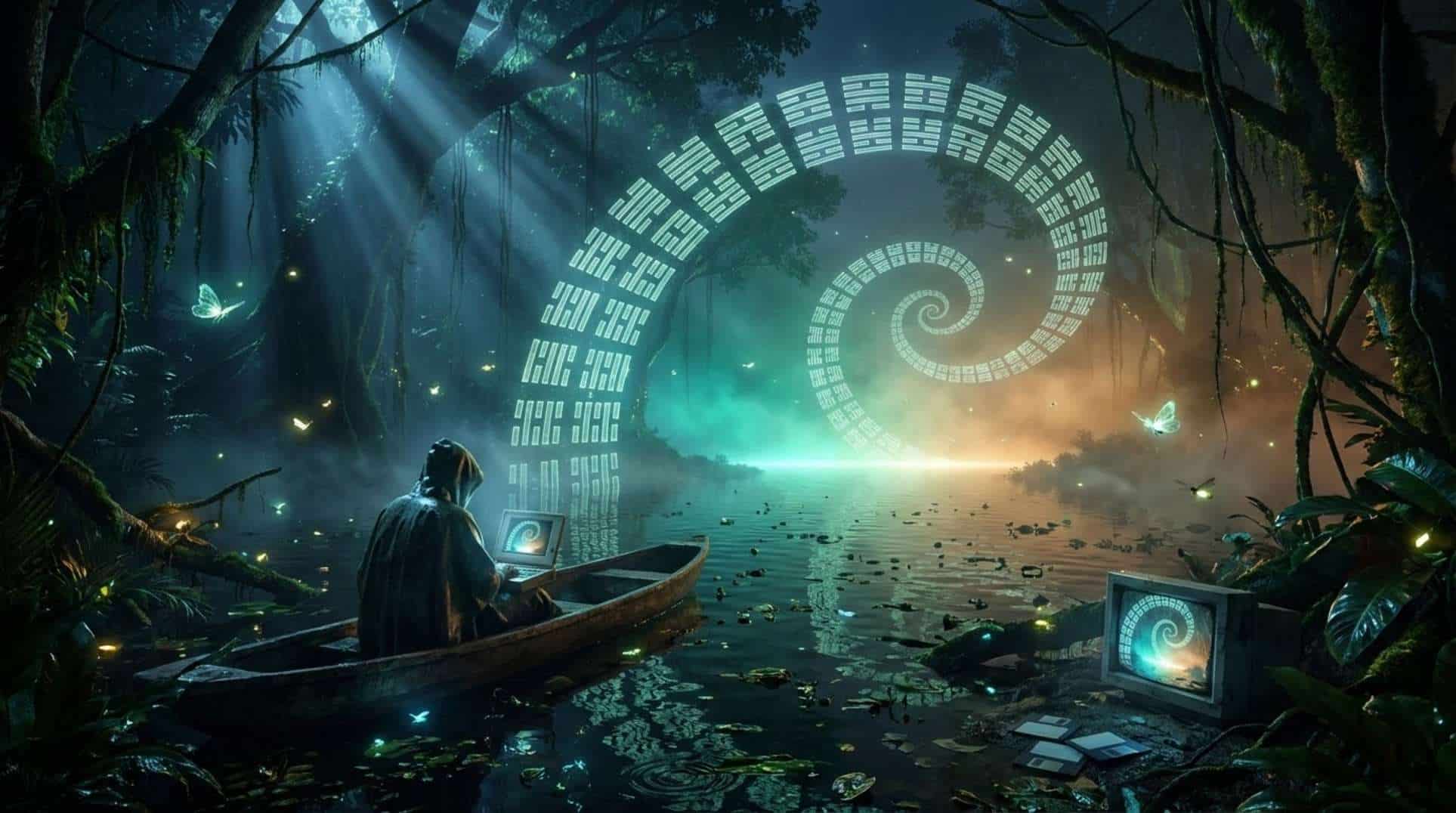
    In the dense Amazon jungle of 1971, Terence McKenna and his brother Dennis chased visions that would reshape their understanding of time. Amid hallucinogenic experiments in La Chorrera, an idea took root: time as a waveform, building toward a peak of infinite novelty. Fast-forward to the digital age, and this concept evolves into the Timewave—a fractal graph plotted on computers, shared across bulletin boards, and tied to the Mayan calendar’s end on December 21, 2012.

    Picture the contrast: humid nights filled with otherworldly insights versus glowing screens in the 1990s, where enthusiasts mapped history’s twists onto descending waves. As 2012 neared, headlines screamed doomsday, but the waveform whispered something subtler—a convergence point, laced with mystery and a quiet undercurrent of dread.

    Voices from the Community and the Skeptics

    McKenna described Novelty Theory as a chart of history’s increasing complexity, with ‘novelty’ spiking at key moments. Followers split on its use: some saw it as a tool for forecasting events, others as a metaphor for personal and cultural shifts. Reports from the community often highlight synchronicities around the turn of the millennium or in 2012 itself—not world-ending cataclysms, but a felt acceleration in ideas, tech, and connections.

    Experiencers speak of qualitative changes, like waves of innovation crashing faster. Enthusiasts built on this, creating Timewave software with McKenna and Peter Meyer in the 1980s and 1990s, still discussed in forums with alternate versions. Critics, including mathematicians, label it numerology, spotting apophenia in the patterns. Matthew Watkins’ 1994 objection called out arbitrary choices in the math. Even McKenna hedged in later talks, suggesting it might not be a strict prediction, which fuels ongoing debates.

    Tracking the Dates and the Data

    The concept first surfaced in print through Terence and Dennis McKenna’s The Invisible Landscape in 1975. At its core, the Timewave draws from the I Ching’s 64 hexagrams and 384 lines, transformed into a fractal map of time.

    McKenna worked with Peter Meyer to develop Timewave Zero software through the 1980s and 1990s; you can still find archived versions and applets online, like those in fractal-timewave repositories. The zero point was pegged to December 21, 2012, down to 6:00 a.m. local time in La Chorrera, with a final cycle spanning about 67.29 years or 24,576 days.

    Matthew Watkins hit back in 1994 with his objection, questioning the math’s foundations and sparking revisions. McKenna died on April 3, 2000, missing the date entirely. Outlets like the Smithsonian, National Geographic, NASA, and Scientific American framed 2012 as just a Mayan calendar rollover, issuing pieces to counter apocalyptic fears.

    Official Narratives Against the Wave’s Pull

    Experts on Maya culture stress that December 21, 2012 marked the close of the 13th baktun in the Long Count—no ancient texts foretell global doom. NASA stepped in to debunk linked myths, from rogue planets like Nibiru to pole reversals and solar flares, calling them baseless.

    Science writers place Novelty Theory outside rigorous methods, highlighting flaws in its construction. Yet community members push back with refined algorithms from Meyer and Sheliak, arguing these address the gaps. Interpretations vary widely: some take it literally, others poetically, as a lens on tech-driven change. The official side holds firm on methodology, but enthusiasts point to the diversity of readings as a strength, not a weakness.

    Uncharted Paths in the Timewave

    One core puzzle: how do you turn ‘novelty’ into something measurable, testable beyond hindsight? Revisions by Watkins, Meyer, and Sheliak beg for a detailed breakdown—compare the original transforms line by line to see if objections stick or if tweaks just shift the goalposts.

    McKenna’s own words evolved; later interviews show him treating it more as a thought experiment than prophecy. Dig into those transcripts for clarity. Then there’s the broader view: internet booms and global links explain much of the ‘acceleration’—how to tease apart everyday trends from something stranger?

    For next steps, gather the math and critiques, annotate them side by side. Set up pre-registered tests: match wave peaks to a fixed list of events and run the stats. That could sharpen the picture.

    The Echoes of a Fractal Horizon

    At its heart, Timewave Zero stands as a fractal derived from the I Ching, publicly tied by McKenna to December 21, 2012, with software shared through collaborators. The math remains disputed—Watkins’ points versus later fixes show the technical fray.

    Culturally, it fueled talks of synchronicity and end-times tension, lingering in online spaces. For those tracking the unexplained, it probes how we spot patterns in history, blending fringe ideas with questions of belief and proof. It reminds us: even unproven maps can reveal the terrain of human curiosity.

    Frequently Asked Questions

    Timewave Zero is a fractal map of time based on the I Ching’s structure, developed by Terence McKenna to chart increasing ‘novelty’ in history. It was first described in The Invisible Landscape in 1975 and linked to a zero point on December 21, 2012.

    No singular global event matched apocalyptic predictions, but some in the community reported personal synchronicities and a sense of cultural acceleration. Official sources treated it as a Mayan calendar cycle end without catastrophe.

    Critics like Matthew Watkins argue the mathematical transforms are arbitrary, calling it numerology or pattern-fitting after the fact. Enthusiasts have produced revisions, but debates continue on its reproducibility and predictive power.

    It highlights intersections of mysticism, math, and cultural change, influencing discussions on synchronicity and acceleration. For those exploring fringe science, it raises questions about testing extraordinary claims.

    It stems from McKenna’s 1971 Amazon experiences, transformed into a fractal waveform using I Ching hexagrams. Software versions were developed with Peter Meyer in the 1980s and 1990s, with archives still available.

  • Solar Micronova & Pole Shift: What Really Happened

    Solar Micronova & Pole Shift: What Really Happened

    Key Takeaways

    • S0 News published a video titled “Solar Flare, Micronova Bombshell, Pole Shift Discoveries | S0 News Dec.29.2025” on YouTube on December 29, 2025.
    • NOAA SWPC issued specific watches and alerts in December 2025 for geo-active events, like a G3 geomagnetic-storm WATCH for December 9, 2025, but late December forecasts showed mostly quiet-to-unsettled conditions with typical Kp indices of 1–3 for December 27–29, 2025.
    • The term ‘micronova’ describes localized thermonuclear bursts on accreting white dwarfs, based on papers and press from April 2022; no peer-reviewed evidence suggests our Sun produces micronovae that threaten Earth.
    • WMM2025 was released, showing continued secular movement of magnetic north toward Siberia—a modeled, measured drift, not an instantaneous catastrophic pole flip.
    • Unresolved: Community reports linking solar activity, ‘micronova’ language, and accelerated pole shift into an imminent collapse narrative lack a demonstrated physical causal chain in peer-reviewed geophysics or solar physics.

    A Cold Night, A Quickening Sky

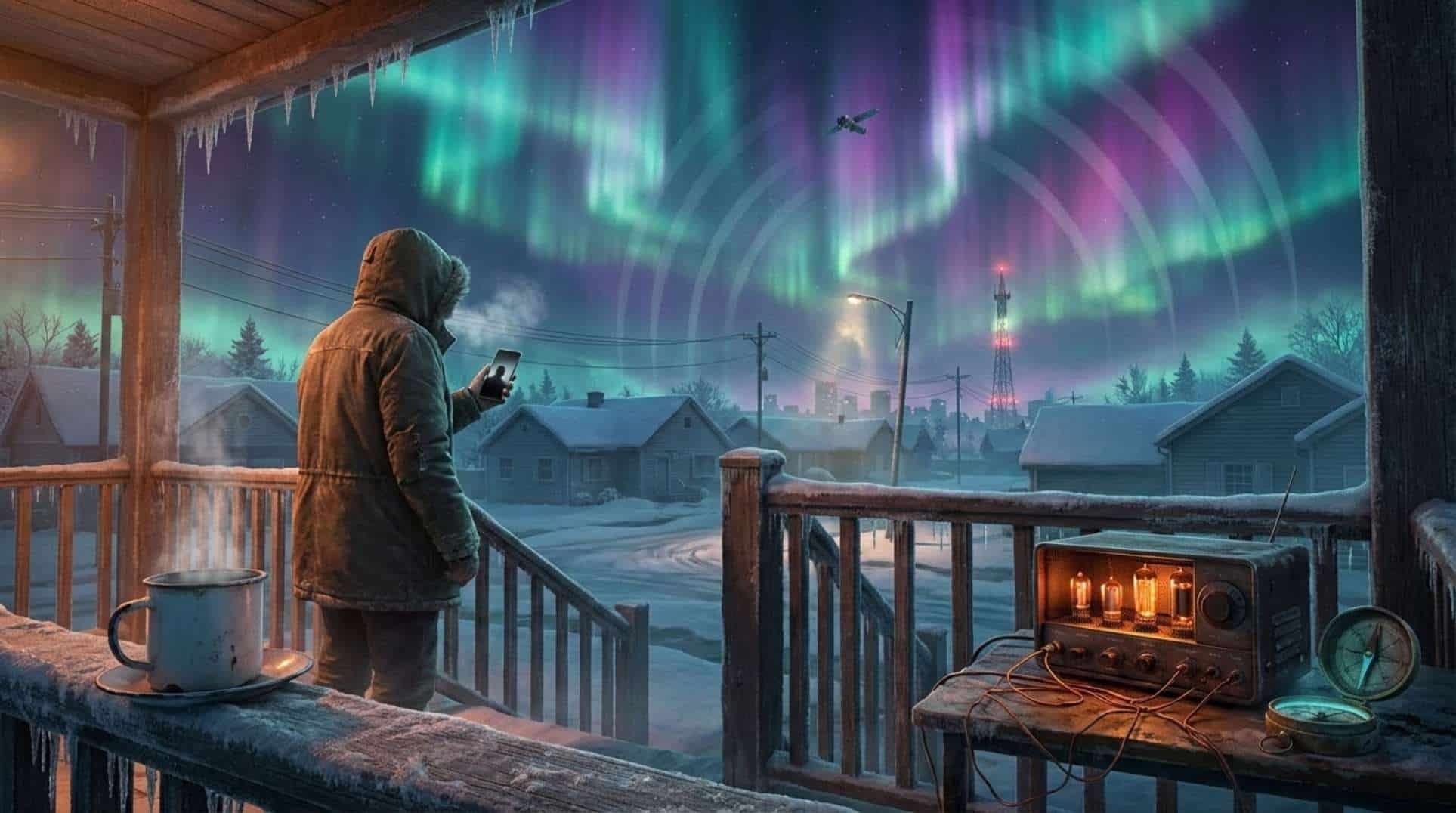
    Picture this: It’s late December 2025, and you’re stepping out onto a frost-covered porch in some quiet suburb. The sky lights up—not with holiday decorations, but with shimmering auroras dancing overhead. Forums buzz with urgent posts, livestreams crackle with warnings, and videos spread like wildfire. Community-shared sightings flood in from SpaceWeather.com and SpaceWeatherLive, capturing those eerie lights during geomagnetic windows. Channels like S0 News drop dramatic updates on December 29, tying recent solar activity to buzzwords like ‘micronova’ and magnetic pole headlines. Public interest spikes, fueled by visible auroras, reports of local radio interference, and easy-to-access plots like Kp indices and GOES X-ray data that anyone can pull up in real time. The air feels charged, questions hang heavy. What’s stirring up there, and why now?

    What Witnesses and Analysts Report

    Across the boards and channels, watchers and preparedness groups are piecing together a narrative that’s got everyone on edge. Claims circulate that a ‘solar micronova’ could hit, posing real threats to Earth—language that’s bubbled up from community discussions, echoed by commentators and even some tabloid pieces. Then there’s the talk of the magnetic poles flipping imminently, with WMM updates cited as proof, showing up in forum threads and blogs focused on survival prep. Observers post about local oddities: unexpected auroras lighting the night, brief power blips disrupting daily life, and radio signals cutting out mid-broadcast. These aren’t just stories; they’re real reports from people on the ground. Amplifiers include the S0 News episode from December 29, recurring themes from Observer Ranch and Space Weather News, and tabloid articles quoting independent voices. It’s a web of experiences and interpretations, shared respectfully among those tracking the signs.

    Timelines, Tracks, and Hard Data

    To sort through this, let’s map the claims against the timelines and datasets available. We pull from NOAA SWPC watches and warnings, GOES X-ray plots, ACE/DSCOVR solar-wind data, Kp/Ap indices, WMM2025 release notes, and the 2022 micronova papers. The S0 News video uploaded on YouTube December 29, 2025, links solar flares, ‘micronova’ ideas, and pole shift finds—use its timestamps for specific quotes. SWPC had a G3 geomagnetic-storm WATCH for December 9, 2025, but forecasts for December 27–29 stayed quiet-to-unsettled with Kp at 1–3, per SpaceWeatherLive and EarthSky coverage on December 28. Solar telemetry from GOES shows flare records, while ACE/DSCOVR tracks wind speed, density, and Bz. WMM2025 from NOAA NCEI details magnetic north’s coordinates and ongoing drift. The 2022 micronova discovery, via ESO release and Reuters, confirms these events on white dwarfs at about 10^-6 the energy of classical novae.

    Date/Time (UTC) Reported Claim/Event SWPC Advisory or GOES/ACE Reading Ground Kp/Ap at Time Source URL for Verification
    Dec 9, 2025 G3 geomagnetic-storm activity G3 WATCH issued Kp up to 5 (inferred from watch) SWPC news archive
    Dec 27–29, 2025 Quiet-to-unsettled conditions with aurora reports Routine forecasts Kp = 1–3 SpaceWeatherLive 3-day forecast
    Dec 29, 2025 (upload) Solar flare and micronova claims in video GOES X-ray flux plots show minor flares Kp = 1–3 YouTube S0 News video
    April 2022 Micronova discovery announced N/A (astrophysics papers) N/A ESO release and Reuters summary
    2025 (WMM release) Magnetic north drift toward Siberia WMM2025 model update N/A NOAA NCEI announcement

    Official Story vs. How People Read the Signals

    Agencies lay it out one way; the community sees patterns that don’t always match. NOAA SWPC bases its watches on satellite and model data—from GOES, SOHO, SDO, to ENLIL—issuing public products with measured indices. Geophysics bodies like NOAA NCEI and BGS describe WMM2025 as tracking secular drift, not signaling a sudden catastrophic flip. Astronomy groups, including ESO and Durham, define micronova as a white-dwarf event from April 2022, with no mechanism identified for our Sun. Yet in the community, terms blend: S0 News timestamps show ‘micronova’ equated to a solar super-eruption, and pole motion read as imminent crustal shift. Specific phrases in the December 29 video conflate these. Still, agencies sometimes skim over context, and real effects like auroras or radio noise can hit hard, feeling urgent even without backing for long-term doom.

    Open Threads and Tests That Still Matter

    Plenty remains open, but we can test it collaboratively. No peer-reviewed work ties short-term solar flares or CMEs to abrupt geomagnetic dipole shifts or rapid geographic pole changes. Gaps persist in data like time-stamped utility outage logs, satellite incident reports, and ground magnetometer archives to confirm any December 2025 infrastructure hits. For verification, cross-check eyewitness accounts of auroras or radio anomalies with GOES X-ray, ACE/DSCOVR timelines, and Kp/Ap indices—archive those posts and videos with timestamps. As reporters, we can request exact timestamps and quotes from S0 News for notes, and compile primary datasets like GOES, ACE/DSCOVR, Kp, and WMM2025 for side-by-side views. Remember, subjective experiences—those lights, those glitches—count as data points worth chasing, investigated without dismissal.

    What It All Might Mean

    Sorting the signals, some conclusions hold firm. Micronova isn’t a Sun-based threat to Earth, per current literature. WMM2025 tracks ongoing drift, not an imminent flip. Late December 2025 saw quiet-to-unsettled solar activity, with localized auroras but no sustained G1+ storms in forecasts for the 27th to 29th. Real space-weather risks to radio, satellites, and grids do exist—agencies warn for that reason—so monitoring and building resilience matter. For next steps, we’ll annotate S0 News claims with timestamps and source matches, seek utility and satellite statements on December incidents, and share a packet of raw datasets for community checks. Readers, keep separating timed, provable impacts from speculative links. Demand data, push for clarity—from observers and institutions alike.

    Frequently Asked Questions

    Late December 2025 featured mostly quiet-to-unsettled conditions, with Kp indices at 1–3 and localized aurora sightings reported by the community. NOAA SWPC forecasts confirmed no major storms for December 27–29, though earlier in the month a G3 watch was issued for December 9.

    No peer-reviewed evidence supports micronovae occurring on our Sun or threatening Earth; the term refers to bursts on accreting white dwarfs, as detailed in 2022 papers and press releases. Community claims linking it to solar flares lack a demonstrated physical mechanism.

    WMM2025 documents the ongoing drift of magnetic north toward Siberia, a measured secular trend, not an imminent flip. Official sources like NOAA NCEI emphasize this as a modeled process, diverging from community narratives of sudden catastrophe.

    Cross-check reports against datasets like GOES X-ray plots, ACE/DSCOVR solar-wind data, Kp/Ap indices, and WMM2025 notes. Archive eyewitness posts with timestamps and compare them to official timelines for matches or gaps.

    Agencies issued standard watches based on data, acknowledging real impacts like radio interference during active periods. They maintain no evidence for imminent collapse, but visible effects can feel alarming, highlighting needs for better communication and infrastructure prep.

  • Chris Bledsoe’s 2026 Prophecy: Data vs the Vision

    Chris Bledsoe’s 2026 Prophecy: Data vs the Vision

    Key Takeaways

    • Chris Bledsoe reports a transformational contact event on January 8, 2007, which anchors his family’s public narrative through their book, conferences, and podcasts.
    • Bledsoe has publicly highlighted Easter Sunday, April 5, 2026, as a window for a major ‘alignment/event’ he says the ‘Lady’ revealed, based on statements in interviews and clips.
    • Verifiable gaps exist: Bledsoe’s statements are largely spiritual and visionary, not tightly specified physical predictions; mainstream agencies like NASA/JPL CNEOS Sentry publish data-driven risk assessments and have not issued any advisory linked to his 2026 framing.

    The Night the Lady Lit the Sky

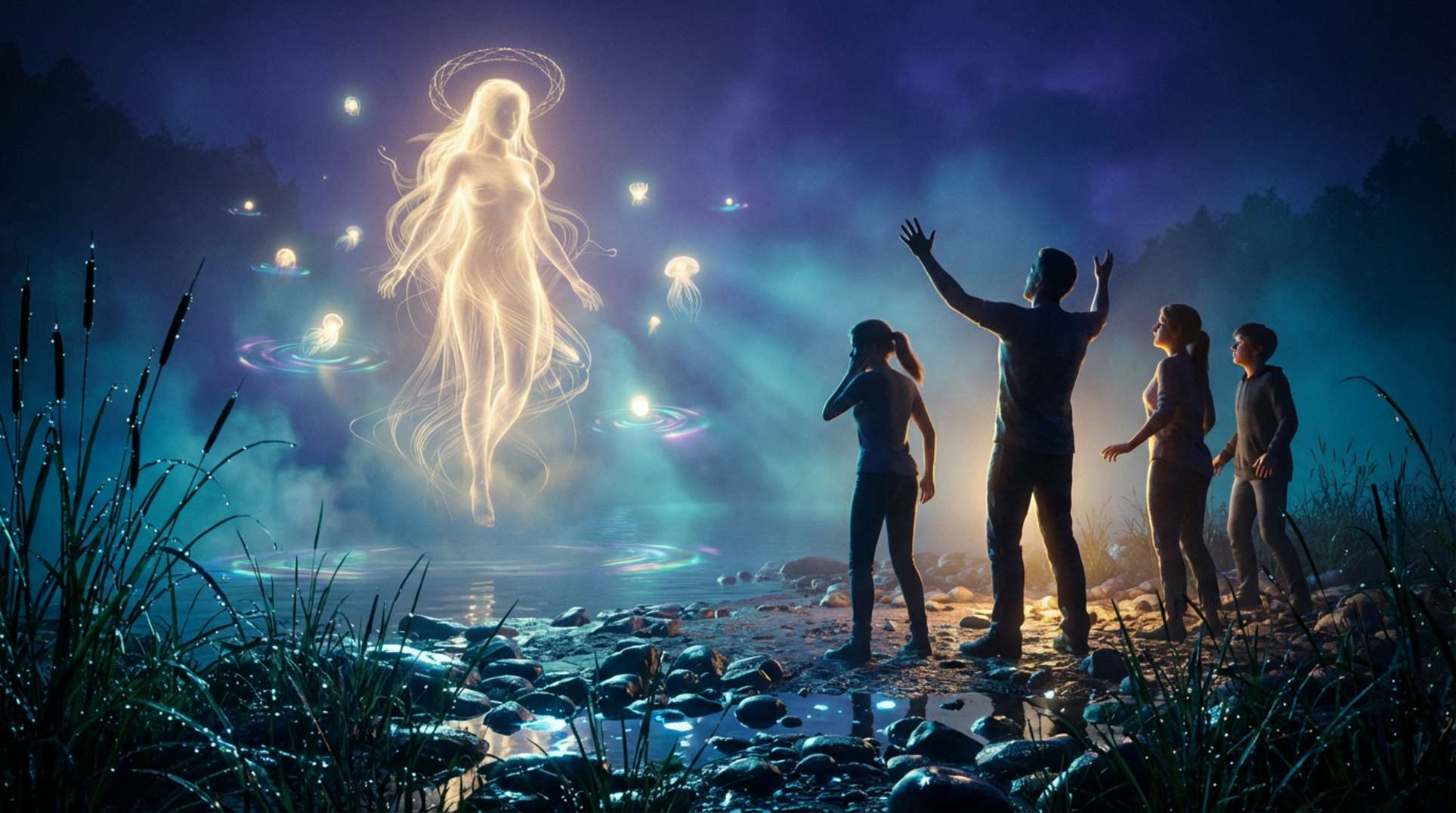
    Picture this: January 8, 2007. A regular family evening shattered by something extraordinary. Chris Bledsoe and his kin were out by the Cape Fear River in North Carolina when bright, glowing beings appeared. At the center was a luminous figure they’ve come to call ‘the Lady.’ The air thickened with an otherworldly presence. Fear mixed with awe. This moment became the cornerstone of their story, repeated in their book UFO of God, the ‘Bledsoe Said So’ podcast, conference talks, and documentaries. It wasn’t just a sighting. It reshaped their lives, pulling them into a world of ongoing encounters and public sharing.

    What Witnesses and Family Members Describe

    The Bledsoe family speaks of glowing beings and this central ‘Lady’ figure. Chris has linked her to the Holy Spirit, the ancient Egyptian goddess Hathor, and even Diana in various interviews and their book. These aren’t isolated claims; they tie into reports of missing time, healings, and repeated sightings that the family presents as part of their ministry.

    Yet, tensions simmer within. On the Shawn Ryan Show in February 2025, one of Bledsoe’s sons called the entities ‘demonic.’ Chris pushed back publicly, insisting on a benevolent interpretation. This split echoes in the broader community. Some in UFO and contactee circles embrace the narrative, seeing transformation and hope. Others, especially in Christian groups, frame it through biblical lenses—angels, demons, or deceptive spirits. We hear these voices without judgment, recognizing the personal weight they carry.

    Timelines, Tracks, and Hard Data

    To ground this, let’s map the key dates and sources. Public records and family media provide the backbone, but institutional corroboration is sparse.

    Event Public Source Verification Status
    Jan 8, 2007 (initial encounter) Family book (UFO of God), conference bios, podcasts Primary claim; corroborating institutional records: none
    Feb 3, 2025 (Shawn Ryan Show interview) Shawn Ryan Show transcript (episode 165) Publicly available; discusses 2026 material
    Easter Sunday, April 5, 2026 (highlighted date) Interviews, clips, family website (ufoofgod.com) Primary claim; no institutional tie-in

    Family sources like the website, book, and ‘Bledsoe Said So’ podcast are accessible. Yet, NASA/JPL’s CNEOS Sentry system, which tracks near-Earth objects with Torino and Palermo scales, shows no public data linking to Bledsoe’s 2026 frame. Claims of NASA, CIA, or Pentagon interest appear in family statements, but searchable records offer no independent confirmation. No peer-reviewed studies or declassified docs back the physical phenomena.

    Official Story vs. What the Data Suggests

    Agencies like NASA/JPL stick to hard data. They monitor threats with probabilistic tools, observation, and error margins. No alerts tie to Easter 2026 as a physical event. That’s the official line—empirical, methodical.

    Critics in theological circles point to scriptures. Matthew 24:36 and Acts 1:7 warn against date-setting for end times. 2 Thessalonians 2:11 speaks of delusions. Some invoke Jeremiah 7:18’s ‘Queen of Heaven’ as a red flag, linking to ancient goddesses like Hathor or Ishtar. New Testament verses like 2 Corinthians 11:14 (Satan as an angel of light) and Leviticus 19:31 (familiar spirits) fuel suspicions of deception.

    On the other side, witnesses and community members describe healing and meaning. They see the ‘Lady’ as benevolent, pushing back against syncretism warnings. Science addresses risk; theology probes discernment. Both lenses reveal different truths, and personal experiences bridge them for many.

    Open Questions Reporters Must Keep in View

    What precisely unfolds on Easter 2026? Is it an astronomical alignment, catastrophe, awakening, or symbol? Bledsoe’s statements vary, lacking clear markers.

    Check the stars: Do claimed alignments—like Regulus or Giza—hold up in independent calcs for April 5, 2026? If so, are they symbolic or consequential?

    We need full interviews, original recordings, agency correspondence, and researcher details. Theological debates persist—Christians differ on interpreting these as Holy Spirit, angels, or deceivers. These gaps demand pursuit.

    What It All Might Mean

    The family’s story stands firm in their media: the 2007 encounter, the 2026 date, and internal disagreements, like the son’s ‘demonic’ label versus Chris’s view, all documented.

    But limits persist—no scientific data flags 2026 as hazardous, and agency interest claims lack public backing. This matters because it blends faith, testimony, and potential alarm. It challenges how we assess prophecies against facts, media’s role in amplification, and our shared hunt for truth. Keep eyes open, seek documents, talk to all sides. The mystery endures; let’s weigh it together.

    Frequently Asked Questions

    The family reports a transformational contact event involving glowing beings and a central luminous figure called ‘the Lady.’ This encounter, detailed in their book UFO of God and various podcasts, disrupted their ordinary life and became the foundation of their ongoing narrative.

    Chris Bledsoe has highlighted this date as a window for a major ‘alignment/event’ revealed by the ‘Lady,’ based on his interviews and statements. However, his descriptions are largely spiritual and visionary, without tightly specified physical predictions.

    No institutional data from agencies like NASA/JPL ties to Bledsoe’s 2026 framing; their risk assessments are data-driven and show no related advisories. Claims of government interest appear in family media but lack independent public documentation.

    One son described the entities as ‘demonic’ in a public interview, while Chris disagrees, seeing them as benevolent. Broader community views are polarized, with some embracing transformative aspects and others applying biblical critiques of deception or syncretism.

    Key gaps include publicly available agency reports, peer-reviewed studies, original recordings, and verifiable correspondence with government representatives. Independent astronomical checks on claimed alignments for 2026 could also provide clarity.

  • Crowley in the Great Pyramid: What Really Happened in 1904

    Crowley in the Great Pyramid: What Really Happened in 1904

    Key Takeaways

    – Aleister Crowley recorded a ritual in the Great Pyramid’s King’s Chamber in March 1904 and later transcribed The Book of the Law (Liber AL) on April 8–10, 1904, which he attributed to a voice named Aiwass. The Stele of Revealing (later Egyptian Museum A 9422) figures in his account and was once inventoried as 666 in the old Bulaq catalog.
    – Cultural echoes appear in later decades: Crowley is depicted on the Beatles’ 1967 Sgt. Pepper cover; Jimmy Page owned Crowley’s former Boleskine House from about 1971 to 1992; Led Zeppelin pressings contain runout etchings that reference Thelemic phrasing; and musician Danny Carey has documented Crowley-related materials tied to Tool’s 2019 album era.
    – Gaps remain: independent contemporaneous corroboration for the precise March–April 1904 episodes is limited, and the link from a private ritual to broad cultural effects is interpretive rather than strictly empirical.

    A March Night in the King’s Chamber

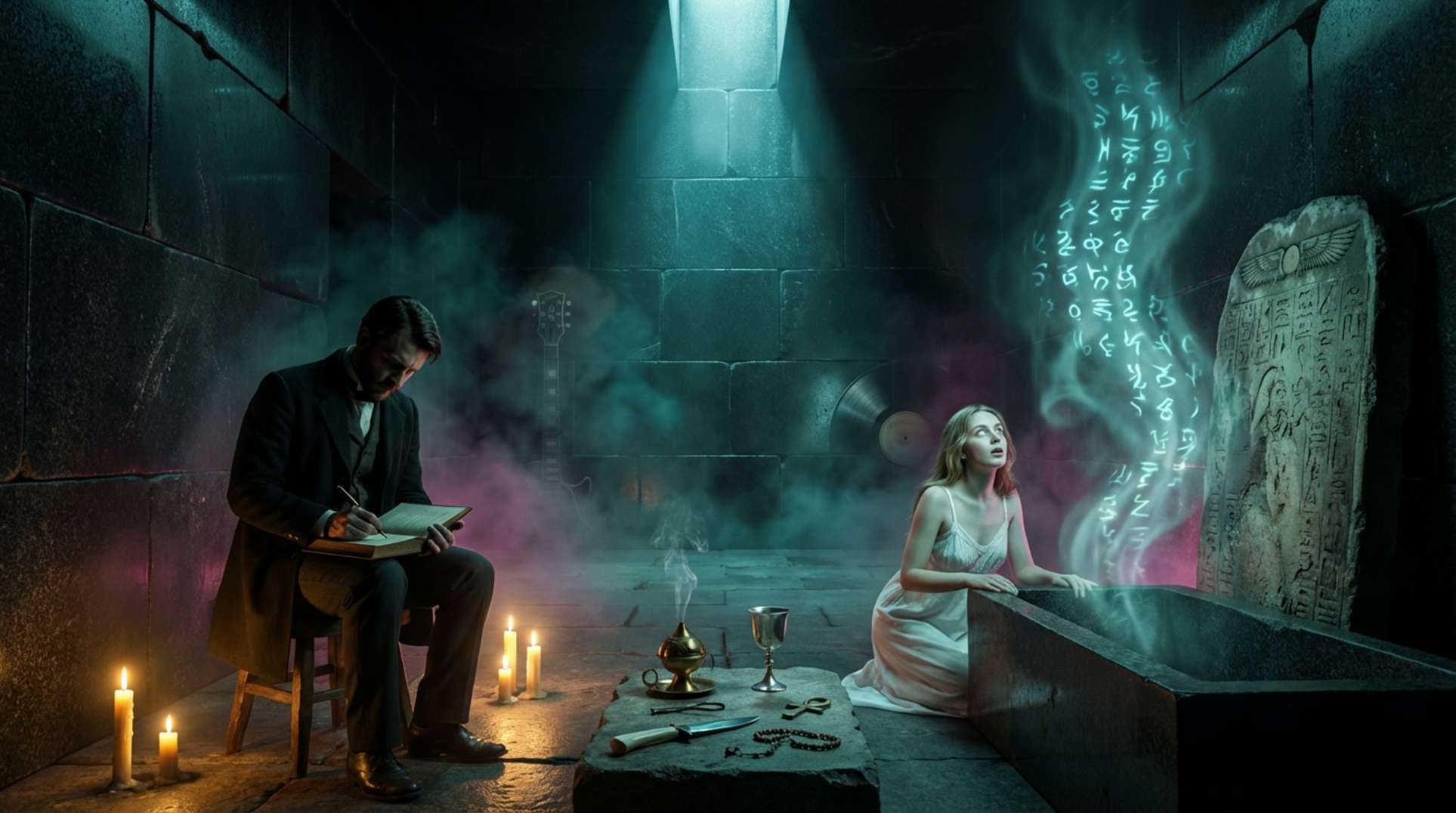
    Imagine the King’s Chamber in the Great Pyramid in March 1904. Crowley describes setting up ritual implements, entering a focused, private working, and involving his wife Rose Edith Kelly in a role that, in his accounts, shifts the working from personal to revelatory. According to Crowley, Rose experienced utterances or visions connected to a Cairo artifact they later identified as the Stele of Revealing.

    Crowley records a specific ritual around March 16. He then describes three days, April 8–10, when he says a voice dictated material he transcribed as the Book of the Law. These are the core events that later Thelemic tradition treats as foundational.

    Voices from Cairo to Culture

    Primary sources for the chain are Crowley’s diaries and his later publications, such as The Equinox of the Gods and Confessions. In Thelemic communities these texts are regarded as revelatory; scholars treat them as important primary documents but analyze them critically.

    Artists and musicians have borrowed imagery and phrases associated with Crowley and Thelema. Crowley appears on the Sgt. Pepper cover in 1967; Jimmy Page purchased Boleskine House in the early 1970s; Led Zeppelin pressings from around 1970 include evocative etchings; and modern rock musicians have acknowledged Crowley-related interests. These are documented instances of cultural transmission, though their meanings differ by interpreter.

    Timelines, Tracks, and Hard Data

    – 16 Mar 1904: Crowley notes a pyramid ritual in his diary.
    – 8–10 Apr 1904: Crowley records receipt/transcription of Liber AL (Book of the Law).
    – c. 680–670 BCE: Rough manufacture date for the Stele of Revealing (museum cataloged later as Bulaq 666, now A 9422).
    – 1967: Crowley pictured on Sgt. Pepper album artwork.
    – 1970–1971: Led Zeppelin pressings and Jimmy Page’s acquisition of Boleskine House occur in this era.
    – 2019: Tool’s Fear Inoculum debuts at No. 1; Danny Carey has publicly referenced Crowley materials.

    Sources include Crowley’s own publications and diaries, museum catalogs for the stele, album artwork and pressing notes, property histories for Boleskine House, and public statements or interviews from musicians.

    Official Story vs. Interpretive Claims

    Egyptologists and museum professionals describe the Stele of Revealing as a Late Period funerary object with a traceable provenance; they do not treat it as evidence of supernatural events. Historians of religion and scholars treat Crowley’s diary entries and later claims as primary material that require corroboration. Journalistic and music-historical sources reliably document artists’ borrowings of Crowley-related imagery but generally do not assert occult causation.

    What It All Might Mean

    The clearest findings are: Crowley documented the 1904 events and later publicized them; an identifiable stele connects to his account; and artists across decades have drawn on Crowley-related motifs. Where interpretation becomes speculative is in asserting that the pyramid working itself produced large-scale cultural change. That causal step is interpretive: documented influence exists, but mechanisms (intentional transmission, symbolic adoption, or coincidence) vary by case.

    Research Gaps and Next Steps

    – Independent archival corroboration for the March–April 1904 days (hotel registers, consular correspondence, museum visitor logs) would strengthen the historical case.
    – More transcription and publication of Crowley’s original diary pages and museum records would help. Consulting Egyptologists, music historians, and Thelemic scholars in tandem would clarify provenance, reception, and cultural pathways.

    FAQ

    Q: What exactly happened in the Great Pyramid in 1904?
    A: Crowley’s diaries report a ritual in the King’s Chamber around March 16, 1904; he later described receiving the Book of the Law by dictation on April 8–10, 1904. These are his firsthand claims, treated as primary documents by scholars and as revelation by Thelemites.

    Q: Is there evidence for the musical and cultural echoes?
    A: Yes. Documented examples include Crowley’s appearance on the Sgt. Pepper cover (1967), Jimmy Page’s ownership of Boleskine House (c.1971–1992), Led Zeppelin pressings with suggestive etchings (circa 1970), and public statements about Crowley-related collections by musicians such as Danny Carey.

    Q: How do historians and institutions view these claims?
    A: Museums catalog the stele without supernatural attribution; historians treat Crowley’s accounts as important but not automatically factual without independent corroboration. Music historians document borrowings of imagery and phrasing but typically stop short of endorsing occult explanations.

    Q: What remains unresolved?
    A: The biggest open issues are independent contemporaneous evidence for the exact March–April 1904 sequence and a precise causal account of how a private ritual translated into broader cultural motifs. Further archival work could help.

    Summary

    Crowley’s 1904 Cairo working and the resulting Book of the Law are well attested within his corpus and later Thelemic tradition. Museum records confirm the stele’s antiquity and catalog history. Cultural echoes in music and art are verifiable, but moving from verified borrowings to claims about occult causation requires interpretation and further historical corroboration. For deeper clarity, prioritized next steps are archival searches in early 20th-century Cairo records and closer cross-disciplinary study of provenance and cultural transmission.

  • Big Bang vs Genesis: The Timeline NASA Can’t Explain

    Big Bang vs Genesis: The Timeline NASA Can’t Explain

    Key Takeaways

    • Mainstream cosmology, supported by NASA and leading universities, pegs the universe at about 13.8 billion years old, starting from a hot, dense state that expanded in the Big Bang.
    • Genesis begins with “In the beginning God created the heavens and the earth,” often viewed as a theological and poetic account rather than a scientific blueprint.
    • Hybrid ideas like the Gap Theory and relativity-based interpretations of the “days” aim to bridge ancient texts with cosmic timelines, but they leave key mysteries untouched, setting the stage for fresh theories like the Genesis Theory.
    • This piece builds the foundation—mapping out the basics—before Part Two dives into the full Genesis Theory.

    Key Threads to Hold Onto Before We Enter the Genesis Theory

    Mainstream cosmology, backed by NASA and major universities, dates the universe at about 13.8 billion years old, beginning in a hot, dense state that expanded rapidly (the Big Bang). Genesis opens with “In the beginning God created the heavens and the earth,” a line many see as theological and poetic rather than a modern physics description. The Gap Theory and relativity-based readings of the Genesis “days” are serious attempts within faith communities to reconcile ancient scripture with deep time and cosmic evolution. Even official models admit major unknowns—like what triggered the initial expansion—leaving real space for mystery and for new integrative theories such as the proposed Genesis Theory.

    Before the Beginning: A Blinding Flash and an Ancient Page

    Picture this: the universe erupts in a blaze hotter than anything we can fathom. According to NASA and related sources, in the first second after the Big Bang, the universe’s temperature was on the order of 10 billion degrees Fahrenheit (about 5.5 billion Celsius). Matter and light tear into existence, setting the stage for everything that follows. Roughly 380,000 years after this beginning, the universe cooled enough for electrons and nuclei to combine—an epoch of “recombination” that allowed light to travel freely, leaving behind the cosmic microwave background radiation we still detect today.

    Now shift scenes. An ancient scribe in the Near East scratches words onto papyrus or clay, against a backdrop of flickering oil lamps and stories from Babylonian cosmology. The book of Genesis was composed in a world already steeped in ancient cosmologies, including Babylonian narratives like the Enuma Elish that speak of primordial chaos, divine speech, and light preceding the formation of the sun, moon, and stars. The Enuma Elish is dated to around 1800 B.C., centuries before many scholars place the final shaping of Genesis, suggesting a shared ancient conversation about origins rather than a lone, isolated text. Holding these two images side by side—the cosmic fireball and the sacred script—it’s hard not to feel the pull of something deeper connecting them.

    How Readers, Scholars, and Seekers Say the Story Really Unfolds

    We’ve all heard the debates, but let’s get real about what’s on the table. This isn’t just “science versus faith”—it’s a web of perspectives where people are grappling with the same questions. Many in faith communities report that the standard six-day, young-earth reading of Genesis (with a universe only thousands of years old) clashes sharply with what they see through telescopes, geological records, and evolutionary biology. Others push back, holding firm to that view because they see it as core to scriptural authority.

    Old-earth creationists and Gap Theory proponents point to a possible temporal break between Genesis 1:1 (“In the beginning…”) and 1:2 (“Now the earth was formless and void…”), a view popularized in the early 19th century by Scottish theologian Thomas Chalmers. Physicist-theologian Dr. Gerald Schroeder and others suggest the “days” of Genesis could be real intervals, but measured from a relativistic, cosmic frame—where time dilation could stretch what appears as six days in one frame into billions of years in another.

    Some theologians, such as Henri Blocher, argue that the biblical concept of “death” primarily refers to spiritual separation from God rather than all biological death, potentially allowing for animal death and extinction long before humans arrive. In many testimonies, believers describe spiritual insights or experiences that, for them, align Genesis with an old universe and even evolutionary processes—while others insist that any departure from a literal six 24-hour days undermines scriptural authority. These positions aren’t caricatures; they’re driven by a real search for coherence.

    Timelines, Temperatures, and Texts We Can Actually Date

    Let’s anchor this in what we can pin down. NASA and mainstream cosmology estimate the age of the universe at approximately 13.8 billion years, based on measurements of cosmic microwave background radiation and galaxy redshifts (Hubble’s Law). The cosmic microwave background, dating back to about 380,000 years after the Big Bang, is widely viewed as a fossil imprint of the universe’s early state and a pillar of evidence for the Big Bang model. Shortly after the Big Bang, the universe was dominated by extremely high temperatures—on the order of 10 billion degrees Fahrenheit in the first second—allowing only the simplest particles to exist before cooling enabled atoms, stars, and galaxies to form.

    The Gap Theory, or Ruin-Reconstruction Theory, arose in the early 19th century, with Thomas Chalmers as a key figure, as a way to fit geological ages and fossil evidence into a biblical framework by placing eons between Genesis 1:1 and 1:2. The Babylonian Enuma Elish, dating to around 1800 B.C., presents a creation account involving primordial waters, divine conflict, and the ordering of chaos—containing motifs strikingly similar to Genesis, such as light and order emerging before the luminaries.

    Cosmological Milestones Scriptural/Ancient Narrative Milestones Interpretive Models
    Big Bang: Universe begins expanding from hot, dense state ~13.8 billion years ago. Enuma Elish: Babylonian creation myth composed ~1800 B.C., featuring chaos and divine ordering. Young-Earth: Universe ~6–10,000 years old, six literal 24-hour days.
    Recombination: ~380,000 years after Big Bang, light begins to travel freely (cosmic microwave background). Genesis Composition: Likely shaped centuries after Enuma Elish, with shared motifs like light before luminaries. Old-Earth: Allows for billions of years, often via Gap Theory or progressive creation.
    Galaxy Formation: Billions of years post-Big Bang, as cooling allows structure to emerge. Shared Ancient Conversation: Genesis as part of broader Near Eastern origin stories. Gap Theory: Eons between Genesis 1:1 and 1:2, with re-creation in six days.
    Relativity-Based Days: Time dilation stretches six days into cosmic billions.

    NASA’s Expanding Universe and the Theologians’ Elastic Days

    NASA and major universities endorse the Big Bang as the best current model: a universe expanding from a hot, dense origin 13.8 billion years ago, supported by galaxy redshifts and the cosmic microwave background. Official scientific materials generally avoid direct engagement with scriptural texts; they present cosmology as a physical framework and explicitly leave philosophical or theological interpretations to other domains. Mainstream science freely admits unresolved pieces, such as what initiated cosmic inflation, what (if anything) existed “before” the Big Bang, and the exact nature of dark matter and dark energy.

    Young-earth readings of Genesis directly conflict with Big Bang timelines, typically compressing the entire history of the universe into roughly 6–10,000 years and treating the six days as standard 24-hour periods. Gap Theory advocates propose an ancient creation and possibly a prior world or catastrophe between Genesis 1:1 and 1:2, allowing billions of years of cosmic and geological history before the six “days” of re-creation. Relativity-based approaches argue that if the “days” are measured from a cosmic vantage point near the universe’s origin, time dilation could account for six scriptural days corresponding to billions of years in the human frame, roughly matching Big Bang chronology. Some theologians and believers interpret Genesis as a liturgical or theological narrative set in the thought-world of ancient Near Eastern cosmology—similar to, but distinct from, myths like Enuma Elish—rather than a literal scientific sequence, allowing them to affirm both Big Bang cosmology and the spiritual message of the text. Tensions persist, but so do unexpected alignments.

    Caught Between a Cosmic Fireball and a Sacred Text

    The Big Bang framework, with its 13.8-billion-year timeline and well-measured stages like recombination, is strongly supported yet still leaves fundamental questions about origins unanswered. Genesis and other ancient creation texts share overlapping imagery—light before luminaries, ordering of chaotic waters, divine speech—that suggests a deep human pattern of trying to narrate the universe’s birth. Attempts to reconcile Genesis with modern cosmology—Gap Theory, old-earth models, relativity-based days, redefinitions of “death”—show a persistent drive to avoid choosing between a vast, ancient cosmos and a meaningful sacred story.

    Key open questions remain: What, if anything, lies behind the moment of the Big Bang? Are the parallels between Genesis and other myths signs of borrowing, shared archetypal experience, or something more? And can a new integrative proposal—the Genesis Theory—offer a model that does justice to both the data of cosmology and the structure of the biblical text? We’ve laid the groundwork here, mapping the data and the debates. Part Two will build on this foundation, referencing these concepts and data points as it lays out the Genesis Theory’s specific claims about how the universe began and what that implies about our place in it. Sit with these tensions for now—they’re worth the reflection.

    Frequently Asked Questions

    Mainstream cosmology, backed by NASA, estimates the universe at 13.8 billion years old, starting from a hot, dense state in the Big Bang. Key evidence includes the cosmic microwave background from about 380,000 years after the event and galaxy redshifts showing expansion.

    Genesis shares motifs with texts like the Babylonian Enuma Elish, dated to around 1800 B.C., such as light emerging before the sun and moon, and the ordering of primordial chaos through divine action. This points to a shared ancient dialogue on origins rather than isolation.

    Approaches include the Gap Theory, which inserts billions of years between Genesis 1:1 and 1:2; relativity-based views where time dilation stretches the six “days” into cosmic epochs; and theological readings that see Genesis as poetic rather than literal science. These aim to harmonize scripture with evidence like deep time and evolution.

    The model doesn’t explain what triggered the initial expansion, what might have existed “before” the Big Bang, or the nature of dark matter and dark energy. These gaps create space for integrative theories like the Genesis Theory to explore connections with ancient texts.

    This piece is Part One, focusing on groundwork like cosmological data and interpretive models. Part Two will present the Genesis Theory’s specific claims, building directly on these foundations to address how the universe began and our role in it.

  • Magnetic Pole Shifts: Slow Drift or 12,000-Year Reset?

    Magnetic Pole Shifts: Slow Drift or 12,000-Year Reset?

    Key Takeaways

    • Earth’s magnetic poles have flipped at least 183 times in the last 83 million years, with an average spacing of about 300,000 years but high variability; the last full reversal happened around 780,000 years ago, and a temporary excursion like the Laschamp event occurred about 41,000 years ago. The field has weakened by roughly 9% over the past 200 years, yet it remains as strong as in the last 100,000 years and twice its million-year average, according to NASA.
    • Alternative researchers point to a shorter 12,000-year cycle involving solar micronovas or superflares that could trigger rapid magnetic shifts, crustal displacements, mega-tsunamis, sudden ice ages, and resets of civilization, often tied to ancient myths and events like the Younger Dryas cooling.
    • No dataset definitively connects solar superflares or micronovas to past magnetic reversals or crustal shifts, leaving open questions about potential links between solar activity, geomagnetic flips, and geological upheavals.

    When the Sun Looks Peaceful and the Compass Quietly Lies

    Picture a quiet suburban night, stars steady overhead, or the hush of a polar research station under the aurora’s faint glow. Life hums along, untroubled. Yet above, the Sun unleashes a strong flare, like the one recorded on November 14, 2025, peaking around 3:30 a.m. ET during Solar Cycle 25’s maximum. NOAA clocked only minor geomagnetic storms around then—a G1-level event on November 25, 2025—classed as routine space weather, nothing to lose sleep over.

    But in our circles, these bulletins read differently: hints of a deeper rhythm, a signal amid the static. Earth’s magnetic field is weakening, down about 9% globally over the last 200 years, while the poles drift silently, unnoticed by most. Compasses still point north, for now. The night sky looks calm, but the rocks below tell a story of fire, flips, and forgotten chaos. Something invisible is shifting, and we’re all wrapped in it.

    A Clockwork Catastrophe Written in Fire and Ice

    Independent analysts and community researchers have pieced together a compelling picture, one that demands attention. At its core is a proposed 12,000-year cycle, like the one outlined by Douglas Vogt: the Sun builds internal energy over millennia, then erupts in a micronova—a sudden outburst flooding the inner solar system with radiation and ejecta.

    In this framework, such an event destabilizes Earth’s magnetic field and even its crust, sparking rapid pole shifts or displacements. Earthquakes rip across continents, volcanoes surge, and mega-tsunamis scour the land. Proponents tie this to ancient tales of floods and fire from the sky, seeing mixed deposits of bones, plants, and marine debris far inland as remnants of global waves.

    Some draw from Velikovsky’s ideas, suggesting planetary close calls or impacts that yanked Earth’s axis, causing swift environmental and magnetic turmoil. The Younger Dryas event, around 12,900 years ago, stands out—a sharp cooling with extinctions, possibly ignited by a solar burst, comet strike, or blend of cosmic forces.

    Folklore echoes this pattern worldwide. Plato’s Timaeus and Critias recount advanced societies swallowed by floods and upheavals. Mesoamerican and indigenous stories speak of prior worlds ended by water, fire, or endless night. These aren’t just stories; many see them as memories of real resets. Today’s weakening field, faster pole drift in paleomagnetic context, and rising solar activity? Signs the cycle’s clock is ticking down.

    Timelines, Field Readings, and What the Rocks Remember

    Paleomagnetic data from igneous rocks and sediment cores pins the last full reversal—the Brunhes–Matuyama—at about 780,000 years ago. Over 83 million years, at least 183 reversals show up, averaging 300,000 years apart, but the gaps vary wildly—no tidy schedule.

    The field’s 9% drop over 200 years fits within norms: NASA says it’s as strong as in the past 100,000 years, twice the million-year average. Historical records from 1590 to 2020 track gradual pole drift, suggesting changes span hundreds to thousands of years, not days.

    Simulations allow for directional shifts up to 10° per year—quick by geophysical standards, but far from instant catastrophe. The Laschamp event, around 41,000 years ago, saw the field weaken and briefly reverse before rebounding, a real-world glimpse at faster disruptions.

    Modern tools catch solar action live, like the November 14, 2025 flare amid Solar Cycle 25, or NOAA’s routine storm logs. Here’s the data laid out:

    Metric Value
    Date of last full reversal ~780,000 years ago
    Number of reversals 183 in 83 million years
    Average interval ~300,000 years
    Recent field weakening 9% in 200 years
    Maximum modeled rate of directional change ~10°/year
    Timing of Laschamp event ~41,000 years ago
    Recent notable events November 14, 2025 solar flare; G1 storm on November 25, 2025

    Two Stories from the Same Numbers: Slow Drift or Sudden Reset?

    NASA views reversals as natural quirks of Earth’s core dynamo, unfolding over hundreds to thousands of years, with no ties to mass extinctions or climate meltdowns in the record. Current changes aren’t driving today’s warming, and the field’s strength stays normal for the last 100,000 years.

    NOAA and USGS track it all, calling events like the November 25, 2025 G1 storm everyday tech hiccups, not harbingers of doom. They pin reversals on internal core flows, dismissing rapid crustal shifts as unsupported by data.

    Alternative voices see the 9% weakening and pole drift as buildup to a brink, fitting a 12,000-year cycle. They propose superflares or micronovas could jolt the field and redistribute mass, sparking quick rotational or crustal changes—ideas mainstream science rejects.

    Both sides agree reversals happen and the field is shifting. But they split on pace, impact, and triggers: is it slow internal drift with occasional rough patches, or an external cosmic punch on a tight schedule? The Younger Dryas and Laschamp get flagged as anomalies possibly linked to myths of floods and fire, yet official reviews find no solid ties to extinctions or global disasters.

    Where the Data Stops and the Myths Begin

    Ancient stories bridge the gap between measurements and mystery. Plato’s accounts in Timaeus and Critias of lost civilizations sunk by floods fuel Atlantis theories and pole-shift ideas. Global traditions—from Mesoamerican ‘suns’ ending in catastrophe to widespread deluge legends—paint pictures of worlds wiped by water, fire, or shadow.

    Some tie these to real events like post-glacial floods, but our community often sees synchronized global upheavals. The Younger Dryas, 12,900 years ago, and Laschamp, 41,000 years ago, align as potential imprints in cultural memory.

    Should we weigh these myths heavily? They risk being forced into modern molds, yet dismissing them might overlook encoded truths. Science views them as hints at local traumas, not proof of cosmic cycles. Still, with gaps in the record, these tales could hold clues to abrupt changes data hasn’t fully captured.

    Standing at the Edge of the Next Cycle

    We know magnetic reversals are fact, with the last full one 780,000 years ago and Laschamp 41,000 years back. The field’s 9% recent dip fits normal ranges, per agencies, and past flips don’t match extinctions.

    Yet the 12,000-year alignments, like to the Younger Dryas, keep independent inquiries sharp. Agencies deny imminent flips or micronovas, but questions linger: Could solar extremes link to rapid field or crustal shifts? Why the 12,000-year focus against a 300,000-year average?

    Our short instrumental history limits models of the dynamo and Sun. Even without apocalypse, a weaker field or big storm threatens grids, satellites, and navigation. Patterns intrigue us—keep eyes on the data, the Sun, and that shifting shield. The puzzle persists, grounded yet open.

    Frequently Asked Questions

    Yes, measurements show a 9% global weakening over the past 200 years, but NASA states it’s still within normal ranges for the last 100,000 years. Mainstream agencies see no signs of an imminent flip, as changes typically span hundreds to thousands of years. Alternative views interpret this as acceleration toward a cycle’s end.

    A solar micronova is a proposed sudden solar outburst releasing intense radiation and ejecta, argued by some researchers to destabilize Earth’s magnetic field and crust in a 12,000-year cycle. Mainstream institutions like NASA find no evidence for such events linking to past reversals or disasters. The idea draws from patterns in folklore and events like the Younger Dryas.

    Myths like Plato’s Atlantis stories and global flood legends describe sudden destructions by water or fire, which alternative researchers link to events like the Younger Dryas or Laschamp excursion. Science treats them as possible echoes of local or regional events, not direct proof of recurring global catastrophes. The connection remains an open question, blending cultural memory with geological data.

    Agencies like NASA, NOAA, and USGS describe events like the November 14, 2025 solar flare and minor geomagnetic storms as routine during Solar Cycle 25. They maintain magnetic reversals are slow, internally driven processes without ties to extinctions or solar micronovas. Monitoring continues, but they emphasize no evidence for sudden, catastrophic shifts.

    Even without extreme scenarios, a weakening magnetic field or powerful solar storm could disrupt satellites, power grids, and navigation systems our society relies on. The ongoing changes highlight vulnerabilities in our tech-dependent world. Keeping watch on these patterns encourages preparedness and deeper understanding of Earth’s systems.

  • Edgar Cayce and the Akashic Records: What Really Failed

    Edgar Cayce and the Akashic Records: What Really Failed

    • Edgar Cayce, born in Kentucky in 1877 and dead by 1945, cranked out over 14,000 psychic readings on health, reincarnation, and spiritual secrets—positioning himself as a direct line to hidden truths.
    • His bold claims of tapping into the Akashic Records for prophecies and cures flopped hard in reality: the Second Coming he predicted for 1998 never happened, North America didn’t crumble in the 1930s, and science has never backed his methods under real scrutiny.
    • Yet Cayce’s shadow looms large—he fueled New Age obsessions with Atlantis, past lives, and cosmic archives, proving that failed visions can still rewrite how we chase spiritual answers.

    A hunger for hidden knowledge: why Edgar Cayce still fascinates seekers

    Picture this: a world ripping apart. Industrial machines devouring the landscape. World War I’s carnage fresh in memory, the Great Depression choking hope, and World War II looming like a storm. Born in 1877, Edgar Cayce died in 1945—right in the thick of it. People were desperate. Sick, scared, questioning God. Traditional answers failed them. Enter Cayce. He promised a direct tap into the universe’s secrets. The Akashic Records, he said—a massive spiritual vault holding every thought, every event, every soul’s journey. Health fixes? Destiny reveals? Afterlife assurances? All there, if you could access it. And Cayce claimed he could. Was he really pulling from some divine database? Or was this just the story desperate souls clung to in chaos? The patterns point to something deeper. People didn’t just want facts. They craved certainty. And in uncertain times, that’s a powerful lure.

    Was Edgar Cayce really reading a cosmic ‘Akashic’ database?

    Believers swear by it. They say Cayce slipped into trances and accessed the Akashic Records—a ethereal library capturing every human event, thought, and intention through all time. Not just history, but the blueprint for reincarnation and karma. Past lives dictating your current struggles. Cayce claimed these records influenced everything, offering lessons to heal and evolve. In sessions, he’d diagnose illnesses from afar, whip up custom remedies, spin tales of Atlantis and ancient civilizations, even link biblical figures like Jesus to reincarnated souls. Over 14,000 readings documented. That’s a mountain of material, setting him apart from other mystics of his era. Followers hailed him as prophet, healer, the spark that ignited New Age thinking. Today, seekers still turn to his words for guidance. It fits the bigger picture: a narrative of hidden knowledge, waiting for those bold enough to reach it.

    From Kentucky farm boy to ‘Sleeping Prophet’

    Edgar Cayce started simple. Born March 18, 1877, near Hopkinsville, Kentucky. Died January 3, 1945, in Virginia Beach, Virginia. Raised in a rural, Bible-thumping family. Church every Sunday. But something didn’t fit. His visions clashed with the strict Christian line—reincarnation, cosmic records, souls cycling through lives. Odd for a farm kid. It began with health readings. Local folks came with ailments; Cayce went into trance, spat out fixes. Word spread. Soon, strangers traveled miles. By 1931, he founded the Association for Research and Enlightenment (A.R.E.) in Virginia Beach. A hub to archive and push his insights. Over 25 books followed, like “Edgar Cayce: An American Prophet.” They built the myth. From dirt roads to national enigma. But why? The official narrative calls it coincidence. We see patterns. A man rewriting his destiny, pulling threads from the unseen.

    Inside the trance: how Cayce’s 14,000 readings actually worked

    He’d lie back, eyes closed, slip into a sleep-like state. Voice changed—deeper, distant. That’s how he earned the tag “Sleeping Prophet.” In trance, he’d field questions. Mostly health: diagnosing issues, prescribing odd diets, herbal mixes, treatments that sounded more alchemy than medicine. Critics later slammed them as junk science. Clients arrived hopeful, desperate for miracles. That vibe? It amplified every seeming success, buried the flops. Over 14,000 readings piled up—a massive trove. Supporters combed it for wins, ignoring the rest. Convincing? Absolutely. To those in the room, it felt real. But hold on. We’ll dig into whether it held up against facts. The setup screams selective truth. They wanted us to see only the hits. We looked closer.

    What are the Akashic Records, really?

    This isn’t Cayce’s invention. It traces back to Helena Blavatsky, the Theosophy queen of the late 1800s. She blended Eastern mysticism with Western occult vibes, painting the Akashic Records as a universal archive of all events, thoughts, intentions. Alfred Percy Sinnett spread it further. These ideas bubbled in a time when folks ditched old religions for something exotic. Cayce grabbed it, claimed direct access. Said it shaped daily life, reincarnation, karmic debts. It slotted perfectly into New Age waves—people hungry for alternatives to church steeples and lab coats. A cosmic database promising answers. But here’s the catch: no hard proof. No testable way to verify. Mainstream science shrugs it off as metaphysics. Yet it stuck. Why? The narrative of hidden wisdom endures. Official reports dismiss it. We question why they’re so quick to bury it.

    What does the record show about Cayce’s prophecies and cures?

    The evidence? It crumbles. Cayce’s powers never passed real scientific tests. Controlled conditions? Absent. His prophecies bombed. He foresaw Christ’s Second Coming around 1998. Didn’t happen. Catastrophic shifts devastating North America in the 1930s? Nope. He bought into Piltdown man—a hoax fossil—calling it an Atlantean. Exposed as fake in 1953, long after. Skeptic Robert Todd Carroll nailed it: Cayce peddled silly Atlantis myths. His cures? Unproven. Treatments labeled quackery by experts. Anecdotes from fans like Thomas Sugrue credited Cayce over doctors, no checks. The official story hides the failures. We connect the dots. It doesn’t add up.

    Prediction/Reading Cayce’s Claim Real-World Outcome
    Second Coming of Christ Around 1998 No such event occurred; prediction failed entirely
    North American Destruction Catastrophic Earth changes in the 1930s No widespread devastation; normal geological activity only
    Piltdown Man Genuine Atlantean colonizer Exposed as a hoax in 1953; Cayce’s details were baseless
    Atlantis Claims Lost civilization with advanced tech influencing history No archaeological evidence; dismissed as myth by experts

    The skeptic’s view: miracles, myths, and the need for evidence

    Skeptics cut through the fog. Robert Todd Carroll exposed Cayce’s Atlantis tales as recycled occult fluff, not revelations. Biographers like Thomas Sugrue spun myths, pinning cures on Cayce without proof—ignoring doctors. Anecdotes? Flawed. Biased memories, cherry-picked successes. If real, why no repeatable tests? Experts demand that. Yet, Cayce’s words on karma and growth comforted many. A framework for pain. We respect the impact. But the claims? Shaky. The official narrative pretends it’s all debunked. We say: look harder. Truth hides in the gaps. Belief’s power doesn’t make it fact.

    Why people believed anyway: New Age, Theosophy, and the search for alternatives

    The groundwork was laid. Theosophy in the 1800s pushed reincarnation, karma, Akashic vibes, Atlantis lore. Cayce wove it in. By the 1900s, New Age seekers rejected rigid churches and soulless science. His mix—Christian lingo, visions, health tips—hit home. Practical yet profound. The A.R.E., launched in 1931, keeps it alive. A community fueling the fire. For believers, emotional wins trumped flops. Distrust of institutions? Rampant. Occult promises filled the void. The official story calls it delusion. We see a pattern: people demanding more than ‘approved’ truths.

    Conclusion: Edgar Cayce’s real legacy in the age of instant answers

    Edgar Cayce was real. Kentucky birth in 1877, Virginia Beach death in 1945. Over 14,000 readings. The A.R.E. still pushes them. But his wild claims—prophecies, Akashic access, miracle cures? They flop against evidence. Conflicts with facts everywhere. Still, he endures. Why? It reveals our hunger. For meaning in misery. Simple fixes for brutal ills. Proof we’re part of something bigger. Today, with endless data at our fingertips, Cayce whispers a warning. Data isn’t wisdom. Spiritual quests need sharp eyes too. Science and faith both. The patterns persist. Question everything.

  • Antichrist Panic: Alex Jones, Tucker Carlson, and the Media’s New Spiritual War

    Antichrist Panic: Alex Jones, Tucker Carlson, and the Media’s New Spiritual War

    Apocalyptic warnings and spiritual warfare are familiar to Alex Jones and Tucker Carlson, but their latest on-air partnership amplifies those anxieties. Their recent televised conversation, which stirs discussions in both religious and secular circles, highlights what they see as the ‘rise of the Antichrist.’ This narrative weaves scriptural prophecy with current concerns about global elites, AI, and the occult. What is genuinely at stake in these viral debates, and why are themes once limited to late-night radio now prominent in primetime?

    Jones, Carlson, and the Turn to End-Times Rhetoric

    A detailed feature by Charisma Magazine reveals their exchange about whether the Antichrist is emerging amid tech-driven globalism and spiritual malaise. Carlson cited billionaire Peter Thiel’s comments on the risk of ‘messianic’ technology or leaders, while Jones described a world where faith collapses under occult manipulation and societal change. These ideas echo the Antichrist’s theological history, raising fresh questions about the boundaries of Christian belief in a data-driven age.

    This narrative, amplified by viral clips and polarizing commentary, connects to ongoing cultural shifts discussed in this analysis of power and surveillance. It shows how old spiritual language now fuels debates on state power, technology, and freedom.

    The Occult, Conspiracy, and the Battle for Christian Identity

    Claims of occult targeting against Christianity aren’t new, but the public tone is growing more intense. Recent research from Penn State University indicates that major political changes often spur increased engagement with occult themes—not always as direct resistance, but as alternative sources of meaning and power. According to Christian Research Institute experts, interest in the occult rises as traditional religious authority diminishes, merging superstition with modern fears.

    In the Jones-Carlson narrative, the supposed convergence of occult actors and anti-Christian sentiment is depicted as a national security threat. Conversations about infiltration, spiritual decline, and even the dualities in current AI coverage clarify why apocalyptic rhetoric resonates so strongly today.

    Christian Nationalism, Conspiracy, and 2024’s Political Theater

    Their arguments often verge into the expansive and contentious topic of Christian nationalism. As reported by Mother Jones, Carlson argues that U.S. Christians face siege from secular, progressive, and even occult forces aiming to erase the nation’s faith heritage. For Jones, these currents signal a culture war, representing an existential battle between ‘good and evil.’ He occasionally invokes conspiratorial frameworks that resonate with older American anxieties about anti-Christian plots.

    Internal media analysis supports this by indicating that these discussions mirror past cycles. They echo the techno-utopian conflicts depicted in this Silicon Valley feature and the global transformations outlined in reports on military power.

    Why It Matters: Apocalyptic Visions, Media Power, and Ordinary Belief

    This new surge of apocalyptic and occult-themed discussion goes beyond mere media spectacle—it shapes how people view their place in the world and interpret their neighbor’s intentions. Critics argue it exaggerates elite-driven occult agendas and deepens social divides. Yet for many, it taps into genuine fears: the breakdown of community ties, confusion over values, and rapid technological change. From modern survivalist psychology to the disintegration of shared narratives in archival congressional reporting, the intersection of faith, conspiracy, and media increasingly represents a battleground for identity—and sometimes faith itself.

    For ongoing reporting at this intersection of religion, technology, and power—and for evidence-based context that transcends panic—bookmark Unexplained.co. Whether you’re concerned about the Antichrist or just seeking clarity in chaotic times, the fallout from Jones and Carlson’s partnership demonstrates that the struggle for faith and narrative is just beginning.

  • WW3: October Escalation—Inside the Real Threat of a New Global War

    WW3: October Escalation—Inside the Real Threat of a New Global War

    The world holds its breath as warnings of major military conflict in October circulate through geopolitical news and security forums. Professor Jiang Xueqin’s lectures on predictive history have gone viral, igniting debate after several of his past forecasts—Trump’s return, direct US-Iran tensions—seemed to anticipate real-world escalations. Are these prophecies alarmist noise or rooted in the dynamics of modern warfare? With multiple official sources warning of a “phase shift” in 2024, dismissing these predictions is no longer tenable. Recent months have revealed the global order’s vulnerability to sudden shocks and how quickly speculative fears can gain traction.

    Prof. Jiang’s Viral Warnings and the History Behind Them

    Jiang Xueqin, a Canadian-born, Beijing-based historian and educator, emerged on the global scene in mid-2025 after his 2024 video about a future Trump presidency and potential war with Iran went viral. According to The Financial Express, Jiang likened a hypothetical US-Iran conflict to ancient military failures, warning that large-scale Western intervention could falter amid geography, severed supply lines, and unified resistance. Newsweek highlights Jiang’s estimate of three million troops needed to occupy Iran—a force impossible to mobilize with today’s splintered alliances. His predictions of a US return to direct military action, underscored by Israel’s ongoing strikes, have gained new scrutiny after clashes began in spring 2024.

    Jiang’s vision is further examined in this Newsweek deep dive, emphasizing that while dramatic, Jiang’s rhetoric crystallizes broader anxieties: the old global balance is fading, and the cost of escalation could exceed what the public or politicians anticipate.

    Pentagon Scenario Planning and Mainstream WW3 Risk Outlooks

    Military analysts—not just armchair theorists—are rigorously reassessing how a multi-front conflict might develop. MIRA Safety’s country-by-country risk briefing argues that regional conflicts from Gaza to Eastern Europe could quickly escalate due to attacks by both state and non-state actors. The Pentagon runs simulations for simultaneous crises while documenting joint NATO and US military meetings focused on “contingency readiness,” thoroughly reported in archival footage from recent summit protocols. As Bloomberg recently revealed, traditional financial institutions brace for unimaginable scenarios as global instability shakes markets and supply chains.

    For strategists, the gap between the world “stumbling” into all-out war or managing crisis after crisis may hinge on the speed of diplomacy and luck. These mainstream risk assessments echo previous warnings about technology’s role, as discussed in field reports on AI defense systems and fractured global decision-making.

    October’s Hot Flashpoints: Iran, Israel, and the Great Power Chessboard

    In 2024, the risk matrix shifted significantly toward the Middle East and Asia. As the Atlantic Council notes, Israeli strikes on Iranian targets in April and October sparked an unprecedented wave of counterstrikes, drone incursions, and cyberattacks. Analysts predict that any clash in October could surpass previous ones, especially with Iran’s regional proxies getting involved and US forces already present in the area. Meanwhile, China’s aggressive posture in the South Pacific and around Taiwan complicates US-led contingency planning, mirroring scenario modeling found in recent strategic analytics reports.

    Beyond the headlines, experts worry about the pace and unpredictability of escalation: miscalculations, accidental attacks, or a “limited” use of advanced military technology could instigate sudden, irreversible actions—a risk amplified by the principle of mutually assured destruction.

    Why It Matters: Tech, Civilians, and the Future of World War Risk

    World War III once represented Cold War nightmares. Today, as the latest risk intelligence reports illustrate, new technologies—AI, cyber, drone warfare—are reshaping the battlefield and the economic and social landscapes civilians face. The risk of cascading blackouts, software-fueled chaos, and economic collapse now features in many national war game scenarios. In this year of uncertainty, government agencies, think tanks, and independent analysts urge ordinary citizens to stay informed and prepare for every eventuality. Readers can explore contingencies, timelines, and actionable preparations with coverage from Unexplained.co, and follow global escalation scenarios in guides like this analysis or recent archival reports on official Pentagon “Day X” plans. October may prove pivotal. Recognizing warning signs, disinformation dangers, and technological linchpins could be lifesaving, whatever direction the next crisis takes.