Category: UFO & Aliens

  • Raechel’s Eyes: Inside the Hybrid Roommate Claim

    Raechel’s Eyes: Inside the Hybrid Roommate Claim

    Key Takeaways

    • Central claim: a college student was matched with a peculiar roommate (sunglasses indoors, robotic speech); the student’s mother touched the roommate and described the skin as cold and spongy, a detail recounted in the small-press book Raechel’s Eyes (Helen Littrell with Jean Bilodeaux).
    • Verifiable context: official U.S. activity on UAP has increased public interest—ODNI’s June 25, 2021 Preliminary Assessment (144 observations) and DoD’s creation of AARO (July 2022) signal institutional attention to anomalous phenomena, though not to hybridization programs.
    • Open problem: there are no publicly available, declassified government records or peer-reviewed biomedical analyses that authenticate a named, documented human-alien hybrid program; much of the hybrid narrative corpus exists in experiencer testimony, books, and community reports.

    The Girl Who Wore Sunglasses Indoors

    The apartment was small, shared by two college students scraping by on tight budgets. One, Marisa, needed affordable housing amid financial pressures. Her new roommate, Raechel, showed up with habits that set off quiet alarms. Sunglasses stayed on inside, even in dim light. Speech came out measured, almost scripted—precise, robotic, like lines from a manual.

    Things escalated when Marisa’s mother visited. A casual touch on Raechel’s arm changed everything. The skin felt wrong: cold, spongy, like raw mushrooms left out too long. As detailed in Raechel’s Eyes, that moment shattered the normalcy of shared living, turning discomfort into outright suspicion. What started as odd quirks in a cramped space ballooned into a family crisis, with questions piling up fast.

    What Witnesses and Researchers Report

    Accounts like this one draw from personal experiences, shared within communities that track these patterns. In Raechel’s Eyes, the narrative describes the roommate’s sunglasses, robotic speech, and that unsettling skin texture felt by the mother. The book ties it to a supposed ‘Humanization’ or hybrid program, based on the family’s recollections.

    Across the experiencer community, similar motifs surface repeatedly. Staged introductions, clinical settings, military oversight, hypnotic regression sessions, and physical anomalies—like odd skin, eyes, or missing records—appear in reports cataloged by groups like MUFON and summarized in resources such as Hangar1 episodes. Investigators in these networks compile first-hand abduction and hybrid stories, noting recurring elements without claiming proof.

    MUFON and NUFORC serve as key hubs, gathering and archiving these accounts from witnesses worldwide. Many rely on memory recovery techniques, including hypnosis, which introduces questions about reliability. Still, the patterns persist, demanding attention from those piecing together the bigger picture.

    Timelines, Tracks, and Hard Data

    Official documents provide a foundation, even as gaps highlight what’s missing. The ODNI’s Preliminary Assessment on Unidentified Aerial Phenomena, released June 25, 2021, covered reports from November 2004 to March 2021, summarizing 144 observations, mostly from military sources.

    In July 2022, the Department of Defense established the All-domain Anomaly Resolution Office (AARO) to coordinate UAP efforts. By August 30, 2022, AARO noted around 510 reports in its historical record.

    Raechel’s Eyes, by Helen Littrell with Jean Bilodeaux, stands as the primary source for this roommate account, framing it within a hybrid program narrative. Yet no declassified records from DoD, ODNI, DARPA, NIH, or CDC confirm such a program, including budgets or medical details.

    Key Data Point Details
    ODNI Preliminary Assessment June 25, 2021; 144 observations (Nov 2004–Mar 2021)
    AARO Establishment July 2022 (DoD memo)
    AARO Reports ~510 as of August 30, 2022
    Raechel’s Eyes Book by Helen Littrell with Jean Bilodeaux; documents roommate claim and ‘Humanization’ narrative
    Confirmed Government Program None publicly available for human-alien hybrids

    To strengthen quotes, excerpts from Raechel’s Eyes—via OCR if needed—could verify the exact tactile description.

    Official Story vs. Community Interpretations

    Government agencies frame UAP as a matter of data collection, flight safety, and security. The 2021 ODNI report avoided extraterrestrial attributions, leaving many cases unexplained but tied to practical concerns. AARO, since 2022, focuses on identification and coordination, often resolving incidents to everyday causes, with no public confirmation of alien origins.

    In contrast, experiencer communities see hybrid programs as tangible operations, sometimes linked to human agencies. These views spread through books, conferences, and networks like MUFON or Hangar1, where witnesses describe structured integrations of hybrids into society.

    The divide is clear: official records track aerial anomalies but lack biomedical evidence for hybrids, such as medical records or forensic tests. This gap leaves community claims strong on testimony but short on verifiable chains of proof.

    What It All Might Mean

    The core incident—the mother’s touch revealing cold, spongy skin—comes from Raechel’s Eyes. Meanwhile, documented UAP activity via ODNI in 2021 and AARO in 2022 shows real institutional focus, but nothing confirms a hybrid program.

    Questions linger: Do hidden memos or budgets back a ‘Humanization’ project? Are there medical records for alleged hybrids? How reliable are hypnotic regressions in these stories?

    These claims touch on oversight and ethics if covert programs exist, or they highlight how people process anomalies if not. For next steps, pursue FOIA requests on program names, secure excerpts from Raechel’s Eyes, interview authors and witnesses, check MUFON/NUFORC for parallels, and consult experts on the described skin traits. Documents support parts of this; testimony fills the rest. Weigh it for yourself—mystery remains.

    Frequently Asked Questions

    A college student shared an apartment with Raechel, who wore sunglasses indoors and spoke robotically. The student’s mother touched Raechel’s arm, feeling skin that was cold and spongy like mushrooms, as detailed in Raechel’s Eyes. This sparked suspicions of a hybrid program.

    No publicly available declassified government records or peer-reviewed analyses confirm such programs. Official focus, like ODNI’s 2021 report and AARO’s work, addresses UAP as safety and security issues without endorsing hybrid claims. Community narratives rely on testimony and books.

    Agencies like ODNI and AARO treat UAP as data and security matters, often explaining them mundanely without alien attributions. Experiencer communities interpret hybrids as real programs, shared through networks like MUFON, highlighting patterns in testimony that lack official biomedical backing.

    Pursue FOIA requests for program details, obtain excerpts from Raechel’s Eyes, interview authors and witnesses, query MUFON/NUFORC for similar cases, and consult medical experts on the skin description. This builds on documented UAP activity while addressing testimony gaps.

    It connects personal experiences to broader patterns in hybrid narratives, amid rising official UAP attention. If true, it raises ethical and oversight issues; if not, it shows how communities interpret anomalies. Readers can assess the evidence themselves.

  • UAP Whistleblowers: Danny Sheehan’s Deathbed Puzzle

    UAP Whistleblowers: Danny Sheehan’s Deathbed Puzzle

    Key Takeaways

    • Danny Sheehan, a veteran constitutional attorney and public-interest litigator, has shared details on UAP, whistleblowers, and an alleged deathbed confession across interviews like Debriefed Ep. 29 and other podcasts.
    • The ODNI Preliminary Assessment from June 25, 2021, reviewed 144 UAP reports from 2004 to March 2021, identifying just one case with high confidence—a large deflating balloon.
    • DoD and AARO reports show rising numbers: the FY24 consolidated report logged 757 UAP reports from May 1, 2023, to June 1, 2024, with 485 during that period and 272 from earlier.
    • NASA‘s Independent Study Team released a September 2023 report emphasizing better measurement methods over speculating on origins.
    • Core mysteries persist: the identity and documentation for insiders in Sheehan’s deathbed confession remain unverified publicly, and chain-of-custody for alleged materials like videos or artifacts is absent from the record.

    A Quiet, Tense Room: Setting the Scene

    Picture this: a dimly lit room, the kind where shadows stretch long under a single lamp. Danny Sheehan, with his decades in courtrooms fighting for transparency, leans into a microphone. He’s no stranger to high-stakes battles—think constitutional cases that shook foundations. Now, in podcasts like Debriefed Ep. 29, he recounts late-night calls from whistleblowers, voices hushed with urgency. These aren’t grand stages; they’re intimate spaces, blending legal precision with tales from the intelligence shadows. The air thickens as he describes a deathbed confession, passed through trusted channels, mixing hard facts with the weight of what might be hidden.

    What Witnesses and Analysts Report

    Across the disclosure networks, claims build like pieces of a fractured puzzle. Sheehan draws from his work with whistleblowers and courtroom defenses, relaying second-hand accounts of deathbed confessions—stories of insiders revealing crash retrievals or secret facilities, shared in public interviews but not directly from the source.

    First-person testimony stands out in the public record. Military pilots and radar operators have gone on the record, their accounts driving official inquiries. Think of the Congressional hearings where named witnesses described encounters backed by flight data. These are verifiable: transcripts exist, pilots like those in the 2022 House hearing spoke under oath.

    Then there’s the second-hand layer—community lore about unnamed insiders, alleged S-4 sites, and promises of evidence like photos or videos yet to surface publicly. These circulate among veterans and researchers, but without primary sources, they stay anecdotal. Patterns emerge: consistent reports of anomalous craft defying physics, often from credible military backgrounds. We respect these voices; they’ve earned scrutiny, not dismissal.

    Timelines, Tracks, and Hard Data

    Let’s map the verifiable trail. Official documents offer checkpoints—dates, numbers, and gaps we can probe. The ODNI’s 2021 report set a baseline, analyzing 144 cases. AARO’s updates show the volume swelling, with hundreds more reports logged recently. NASA’s input shifts focus to science, pushing for better tools.

    Public records don’t specify exact counts of multi-sensor cases—those with radar, infrared, and signals intelligence combined. AARO notes many lack the data quality needed for resolution, leaving us to question how many truly hold up under scrutiny.

    Report/Agency Date Dataset Size Key Finding Source
    ODNI Preliminary Assessment June 25, 2021 144 UAP observations (2004–Mar 2021) One case identified with high confidence (deflating balloon); most lack sufficient data ODNI Report Link
    AARO/DoD FY24 Consolidated Report FY24 757 reports (May 1, 2023–June 1, 2024; 485 during period, 272 prior) Growing volume; many unresolved due to data limits AARO FY24 PDF
    NASA UAP Independent Study Team September 2023 Methodological focus, no specific dataset size Recommendations for improved data collection and instrumentation NASA UAPIST Report
    Congressional Hearing May 17, 2022 N/A (testimony-driven) Spurred AARO formation and reporting requirements House Hearing Transcript

    Official Story vs. What the Data Suggests

    Agencies like ODNI frame UAP as safety and security issues, citing data shortages that prevent firm conclusions. They identified one balloon in 144 cases, but most remain open due to incomplete info. AARO echoes this, standardizing reports while guarding classified methods—no public evidence of captured tech, just unresolved entries.

    NASA stays measured, advocating for better sensors and open data without jumping to origins. Congress, through hearings, pushes for more, leading to AARO’s birth.

    Sheehan and the community see it differently. His legal background in classified cases leads him to suspect withheld evidence—crash sites, footage, programs buried deep. These views highlight potential suppression, but verifiable facts stop at institutional walls. Oversight exists: congressional reviews, inspector general probes, FOIA requests. Yet national security exemptions block much, leaving speculation about black-budget ops. The tension is real—data suggests anomalies, but classification could hide the rest.

    What It All Might Mean

    Pulling threads together, the solid ground includes ODNI’s 144 incidents, AARO’s 757 recent reports, and NASA’s call for rigorous science. These point to something persistent in our skies, demanding attention.

    Questions linger: Who is the insider behind Sheehan’s deathbed tale, and where’s the primary documentation? Can alleged materials get chain-of-custody verification? What fraction of cases boast multi-sensor proof?

    This matters—for flight safety, security, science, and trust. Legal paths like hearings or FOIA could unlock more. Mystery remains, a shadow worth chasing.

    Frequently Asked Questions

    Sheehan discusses whistleblower accounts and a deathbed confession involving alleged crash retrievals and secret facilities, shared in interviews like Debriefed Ep. 29. These are second-hand narratives without public verification.

    ODNI’s 2021 assessment reviewed 144 reports, identifying one balloon. AARO’s FY24 report catalogs 757 cases, many with insufficient data. NASA’s 2023 study recommends better measurement tools.

    Agencies cite data gaps and classification for caution. Sheehan argues legal and oversight hurdles hide evidence, with tools like FOIA and hearings offering potential paths forward.

    Public records don’t provide exact counts, but AARO notes many cases lack high-quality data for analysis. Some pilot testimonies include radar and visual corroboration.

    Target FOIA requests at AARO documents, seek affidavits via congressional oversight, and advocate for forensic reviews of alleged materials.

  • 3I/ATLAS: Why This Interstellar Comet Isn’t Just Natural

    3I/ATLAS: Why This Interstellar Comet Isn’t Just Natural

    Key Takeaways

    • 3I/ATLAS, the third confirmed interstellar object, was discovered on July 1, 2025, following a hyperbolic trajectory not bound to the Sun.
    • Its perihelion on October 30, 2025, and closest Earth approach on December 19, 2025, align closely with three Mercury–Uranus oppositions on October 29, November 19, and December 10, 2025.
    • Observers note a 16.16-hour brightness pulsation and cryovolcanic jets; agencies call it a natural comet, but independent voices point to possible signals or consciousness shifts.
    • Community reports include dreams, EM anomalies, and geophysical correlations, treated here as valid data points.
    • Official data supports a natural origin, yet questions linger about withheld details and symbolic timings.

    Key Signals from an Interstellar Visitor

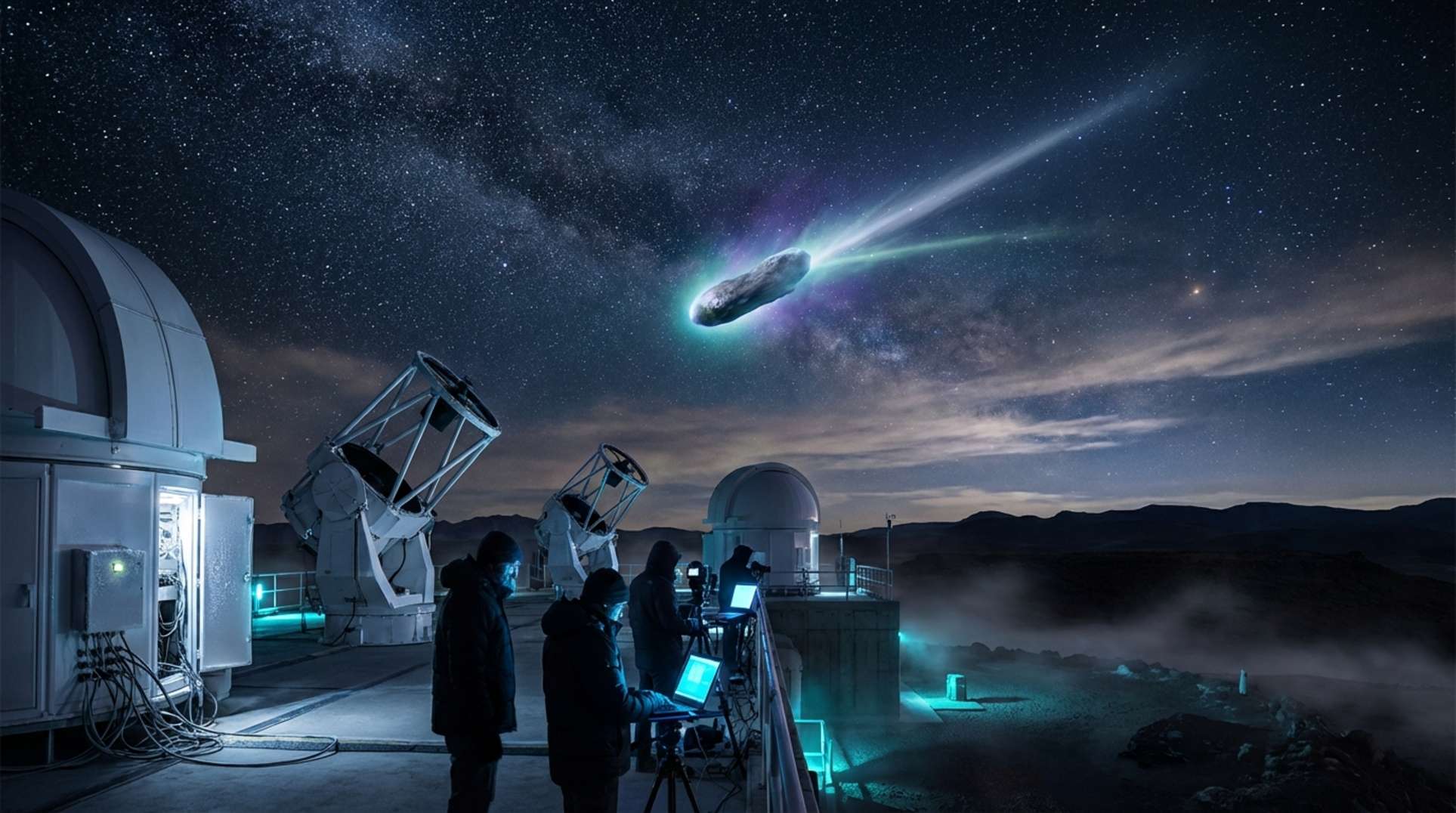
    Let’s get straight to it. 3I/ATLAS stands as the third confirmed interstellar object, spotted on July 1, 2025, racing through our solar system on a hyperbolic path that won’t loop back to the Sun. What grabs attention is the timing: its solar closest point around October 30, 2025, and Earth flyby on December 19, 2025, framing three precise Mercury–Uranus oppositions on October 29, November 19, and December 10, 2025. Astrologer Dan Waites and geophysicist Stefan Burns both zero in on this overlap, seeing potential beyond coincidence. Reports highlight a 16.16-hour brightness cycle and cryovolcanic jets. Agencies label it a standard comet, but independents and experiencers spot patterns hinting at consciousness changes, odd data, or deliberate signals—still unexplained.

    Under a Nervous Sky: When an Interstellar Comet Met a Restless Mercury

    Late October 2025. The air feels charged. 3I/ATLAS barrels inward at 137,000 mph, nearing its October 30 perihelion at 1.4 AU from the Sun. Just a day before, on October 29, Mercury opposes Uranus exactly—mind against shock, messages clashing with the unexpected. Stefan Burns, geophysicist, pores over orbital tracks and Earth data, sensing subtle shifts. Dan Waites, astrologer, charts the transits, reading Mercury’s signals disrupted by Uranus’s wild energy. Online forums hum with talk of omens, synchronicities. A visitor from beyond our system streaks through, and the sky seems to hold its breath. Something gathers.

    What Researchers, Dreamers, and Skywatchers Are Reporting

    In the corners where UFO trackers and paranormal analysts gather, 3I/ATLAS isn’t just another comet. As only the third known interstellar wanderer after ‘Oumuamua and 2I/Borisov, it draws eyes. Stefan Burns scans for geophysical ties—electromagnetic ripples, seismic clusters, ionospheric oddities—lining up with the comet’s dates, though he stops short of claiming cause. Dan Waites frames the Mercury–Uranus oppositions as jolts to thought and communication, amplified by this cosmic arrival. Forums buzz with vivid dreams around those dates, intuitive ‘downloads,’ flickering gadgets, and a felt information field from the object. Some link it to Avi Loeb’s takes on ‘Oumuamua, pondering non-natural angles. Others discuss a collective shift or disclosure nudge from the triple oppositions.

    Timelines, Orbits, and the Data We Can Actually Touch

    Ground this in facts. 3I/ATLAS emerged on July 1, 2025, via Chile’s ATLAS telescope, confirmed interstellar with eccentricity over 3. Pre-discovery signs of cometary outgassing date to May 7, 2025—steady, no bursts. It clocked 137,000 mph at discovery, hit perihelion October 30 at 1.4 AU, and skimmed Earth at 1.8 AU on December 19. Nucleus up to 20 km, with dust coma and cryovolcanic jets. That 16.16-hour brightness pulse? Likely rotation or jet releases. Astrologically, those Mercury–Uranus dates bracket it tight. Hubble, JWST, and ESA’s ExoMars refined the path—no wild deviations reported.

    Metric Details
    Discovery Date July 1, 2025
    Eccentricity >3 (hyperbolic)
    Speed at Discovery 137,000 mph (221,000 km/h)
    Perihelion Date & Distance October 30, 2025 at ~1.4 AU
    Closest Earth Approach December 19, 2025 at ~1.8 AU
    Pulsation Cycle 16.16 hours
    Mercury–Uranus Oppositions October 29, November 19, December 10, 2025

    Natural Visitor, Hidden Data, or Something Signaling Through the Noise?

    NASA and ESA stick to the script: 3I/ATLAS is a natural interstellar comet, with coma, sublimation, and jets proving it. No threat, just science on extrasolar makeup. Harvard teams echo that, while noting speculation. ExoMars data tweaks the orbit—nothing exotic. But independents push back. Some, echoing Avi Loeb on ‘Oumuamua, question if jets or the precise 16.16-hour pulse signal intent, not chance. Burns hunts geophysical matches to the oppositions and comet dates—no solid links yet, but the search continues. Waites sees symbolic disruption: Mercury’s messages shocked by Uranus, timed with this outsider. Community whispers of withheld images fuel distrust, especially with past delays. The pulse fits rotation models, but its neatness raises brows. Officials ignore subjective reports; experiencers say they’re key.

    Patterns at the Edge: Folklore, Omens, and High-Strangeness Echoes

    Comets have long signaled change—upheaval, plagues, shifts in power. An interstellar one amps that. Forums tie 3I/ATLAS to dreams of star travelers, timeline fractures, metaphoric contact. Like with ‘Oumuamua, some felt presence without proof. Claims of suppressed data echo old patterns, stoking suspicion. Mercury–Uranus hits thrice: messenger versus alien disruptor, framing reports as synchronicity. Burns stays measured, chasing data ties. Waites draws on cycles, seeing archetypal echoes. Both sense a threshold, where science and symbol meet.

    Standing in the Beam: What We Know, What We Don’t, and Why It Still Matters

    Here’s the solid ground: 3I/ATLAS, eccentricity >3, discovered July 1, 2025; perihelion October 30 at 1.4 AU; Earth close December 19 at 1.8 AU; 20 km nucleus, 16.16-hour pulse from rotation or jets. Those oppositions—October 29, November 19, December 10—frame it neatly. Agencies see natural comet, no anomalies. Yet questions persist: geophysical correlations? Spectral surprises? Pulse structure? How to weigh dreams and strangeness? This visitor probes extrasolar worlds, stirs cultural tales of contact, mirrors our hopes for an intelligent cosmos. Both views remain partial. Hold the uncertainty— that’s where truth hides.

    Frequently Asked Questions

    3I/ATLAS is the third confirmed interstellar object, discovered on July 1, 2025, on a hyperbolic trajectory not bound to the Sun. It shows cometary features like a dust coma and cryovolcanic jets, with a nucleus up to 20 km in diameter.

    The comet’s perihelion on October 30, 2025, and Earth approach on December 19, 2025, bracket three oppositions on October 29, November 19, and December 10. Astrologers like Dan Waites see this as symbolic of disrupted communications and shocks, while others hunt for geophysical links.

    NASA and ESA describe it as a natural interstellar comet, with no threats or anomalies beyond expected behavior. Data from Hubble, JWST, and ExoMars support this view, focusing on its scientific value for studying extrasolar materials.

    Community forums report vivid dreams, intuitive impressions, and electromagnetic anomalies around the key dates. Some speculate the 16.16-hour brightness pulsation or jets could indicate intent, though officials attribute these to natural rotation and outgassing.

    Some skywatchers suspect delays in high-resolution images and data releases, drawing from patterns with past objects like ‘Oumuamua. However, this could stem from standard processing times, amid broader distrust of institutional handling.

  • 3I/ATLAS: Interstellar Comet or Alien Probe?

    3I/ATLAS: Interstellar Comet or Alien Probe?

    Key Takeaways

    • 3I/ATLAS is the third confirmed interstellar object after 1I/ʻOumuamua (2017) and 2I/Borisov (2019); it’s on a hyperbolic (unbound) trajectory, meaning it came from outside the Solar System and will never return.
    • Core observables: discovered July 1, 2025 by the ATLAS telescope in Chile at about 4.5 AU from the Sun; perihelion on October 29, 2025 at about 1.4 AU (just inside Mars’ orbit); closest approach to Earth around 1.8 AU (~170 million miles) and no impact risk according to NASA and ESA.
    • The genuine questions: unusually high CO2 abundance in its coma, detectable nickel emissions, its steady activity without major breakups, and how upcoming Hubble/James Webb images might confirm a purely natural comet—or deepen the debate over artificial or exotic origins.

    Nineteen Days Before the Visitor Arrives

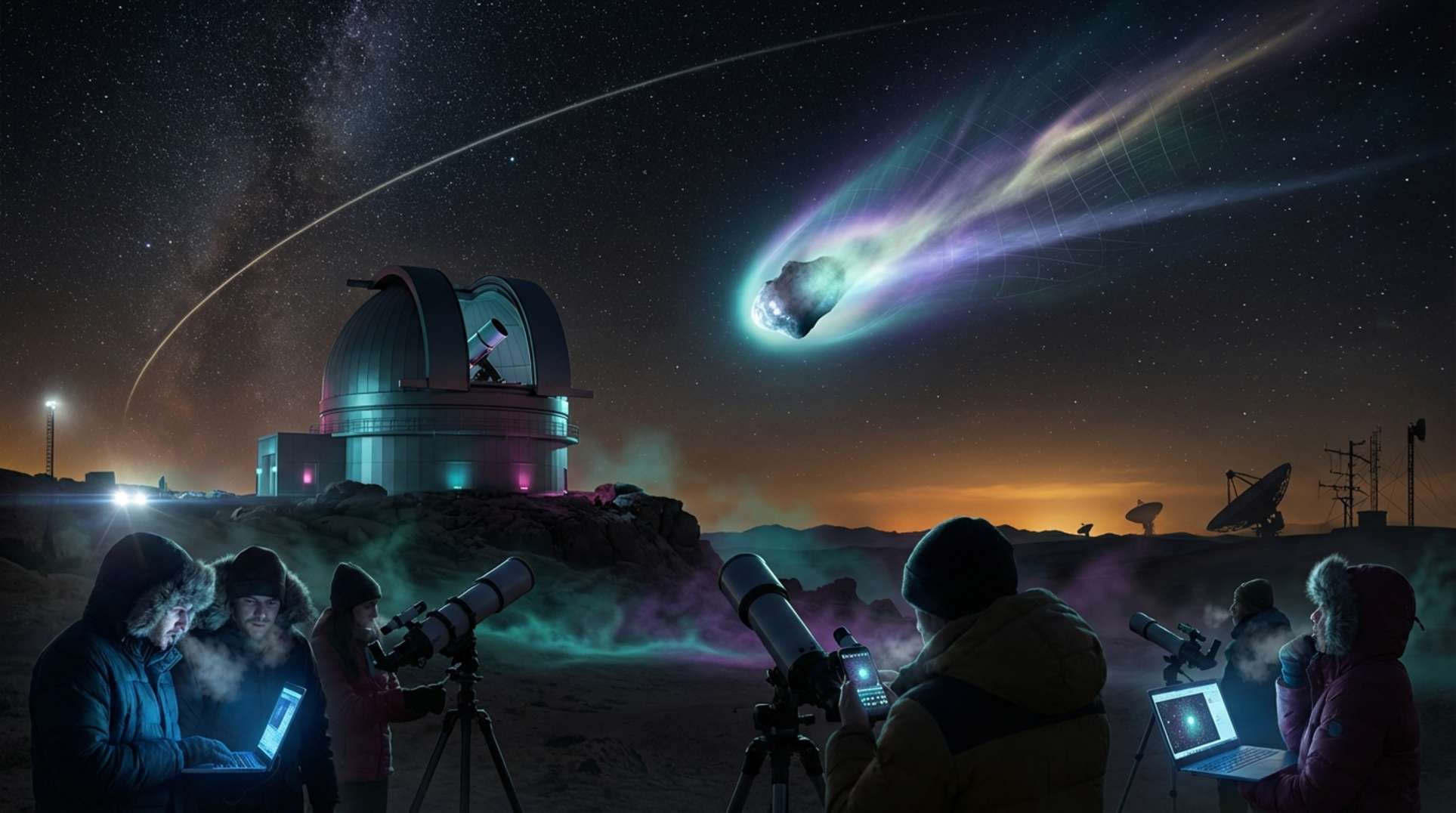
    The clocks are ticking. Observatories around the world hum through the night, telescopes trained on a faint streak cutting across the stars. Online forums buzz with countdowns, users refreshing feeds for the latest spectra or snapshots. We’re just 19 days from 3I/ATLAS’s closest pass to Earth, the window when Hubble and the James Webb Space Telescope will deliver their clearest views of this interstellar wanderer. There’s an undercurrent of unease in the air—memories of ʻOumuamua’s unexplained acceleration and Borisov’s more familiar comet traits linger, framing this new arrival as part of something bigger, unresolved.

    Picture it: amateur scopes stacking images under dark skies, Reddit threads exploding with dissections of every pixel. At speeds reaching 153,000 mph near perihelion, this Manhattan-sized object barrels through, staying a safe 1.8 AU away. Yet the wait feels heavy. What will those high-res images reveal about its nucleus and coma? We’ve been here before, peering into the unknown, wondering if what’s coming is just rock and ice—or a sign of something more.

    What People Around the World Say They’re Seeing

    Across platforms like Reddit, X, TikTok, and dedicated forums, the discussions run hot. Many are piecing together patterns, questioning if 3I/ATLAS is more than a natural comet—perhaps an artificial craft, a probe, or even a mothership releasing smaller units as it traverses the outer system. These ideas draw from visual clues and behaviors that don’t quite fit the standard mold.

    Amateurs report a “weird tail” with anti-tail features—dust seeming to point toward the Sun instead of away—along with brightness fluctuations in the coma that appear more controlled than the erratic crumbling of typical comets. Some link it to broader lore, speculating ties to events like the 1908 Tunguska explosion, imagining prior passes or debris, even as the observed hyperbolic path rules out Solar System origins.

    There’s talk of image inconsistencies too: differences between raw frames and the polished versions from agencies, raising suspicions of color tweaks or composites that might hide details. Avi Loeb’s comments add weight—he’s suggested interstellar objects could deploy probes near planets like Jupiter, which resonates here as a nod from academia to what many feel intuitively. And a recurring theme emerges: these visitors show up, officials downplay anything unusual, but anomalies persist, fueling the sense of a pattern that’s been ignored too long.

    Timelines, Tracks, and the Hard Numbers on 3I/ATLAS

    Let’s ground this in the verifiable data. 3I/ATLAS was first detected on July 1, 2025, by the ATLAS telescope in Chile, initially pegged as a cometary body at about 4.5 AU from the Sun. Its hyperbolic orbit—eccentricity over 1—confirms it’s not bound to our Sun, hailing from interstellar space.

    Key milestones: perihelion hit on October 29, 2025, at 1.4 AU, just inside Mars’ orbit. Closest to Earth? Around 1.8 AU, or 170 million miles. Speeds peaked at 153,000 mph near the Sun, fitting for an object slung through the gravity well. The nucleus is estimated at 10–20 km across, roughly Manhattan-sized, with an active coma and evolving dust tail visible since at least May 2025.

    Spectra reveal high CO2 in the coma and nickel emissions—standouts that spark both scientific interest and speculation. Missions like MAVEN, Psyche, and Lucy have grabbed opportunistic data, cross-verifying ground observations.

    Metric Details
    Discovery Date July 1, 2025
    Perihelion Date October 29, 2025
    Closest Approach to Earth ~1.8 AU (170 million miles)
    Maximum Observed Speed ~153,000 mph (246,000 km/h)
    Distance at Discovery ~4.5 AU (410 million miles)
    Estimated Size 10–20 km diameter

    How the Agencies Explain It—and How Others Read the Same Data

    On the orbit: The official line says it’s a natural interstellar comet on a hyperbolic trajectory, ejected from another star system, with ice and dust responding to solar heat. Engaged observers interpret this as potentially masking a guided path, noting how the steady track avoids easy dismissal of artificial navigation.

    On composition: Agencies see the high CO2 and nickel as markers of a unique formation environment, exciting for science. Observers counter that these ratios resemble engineered materials or exhaust, not just random cosmic quirks, especially given the object’s stability.

    On morphology: Tail and anti-tail are chalked up to viewing angles and dust alignment, common in comets. But skeptics highlight the features’ sharpness and persistence, suggesting directed jets or thrusters rather than passive ejection.

    On imaging: Official releases emphasize composited, color-mapped visuals for clarity, with some raw data available. Communities point to discrepancies between versions, arguing this echoes past missions where edits hid sensitive details, leaving trust issues in play.

    The Gaps in the Data—and the Questions No One Can Yet Answer

    Plenty remains open, acknowledged on all sides. The exact stellar nursery of 3I/ATLAS is unknown—its CO2 richness and nickel hint at a colder, distinct birthplace, but without more, it’s guesswork.

    Dynamically, we lack its full galactic backstory; models offer probabilities, but no precise trail. Its steady activity, avoiding major breakups despite size and solar proximity, puzzles even experts, defying easy simulations.

    With only three interstellar objects known, ‘normal’ is undefined—what seems odd in 3I/ATLAS might prove standard as more arrive. And until Hubble and Webb’s peak images drop, nucleus details are fuzzy, forcing extrapolations that could swing either way with new data.

    These aren’t traps but the edge of what we know. Speculation fills the voids, and incoming observations might reshape everything.

    What 3I/ATLAS Might Still Be Hiding

    We know this much: 3I/ATLAS is interstellar, hyperbolic, clocking 153,000 mph at perihelion, and keeping 1.8 AU from Earth. Teams worldwide confirm its comet-like traits.

    But the edges intrigue—elevated CO2, nickel, and intact passage through perihelion mark it as unusual, even among rarities. Cover-up claims lack direct proof, yet history shows agencies favoring safe stories, breeding skepticism.

    Watch for Hubble/Webb shots, refined spectra, and emerging papers; public archives will let you dig in. Strong artificial signs? Non-gravitational shifts beyond outgassing, geometric structures, or cross-instrument oddities. Natural lean? Consistent comet models fitting all data.

    Either way, it pushes us to sit with the unknown, chasing truth over comfort. Stay tuned—the next weeks could change the conversation.

    Frequently Asked Questions

    3I/ATLAS is the third confirmed interstellar object, following ʻOumuamua and Borisov, on a hyperbolic trajectory from outside our Solar System. Its significance lies in unusual features like high CO2 abundance and nickel emissions, sparking debates over natural versus artificial origins, especially with upcoming high-res images from Hubble and James Webb.

    According to NASA and ESA, it poses no impact risk, with closest approach at about 1.8 AU or 170 million miles. Official assessments emphasize this as a closed question, though some observers question if anomalies are being downplayed.

    Community reports highlight steady activity without breakups, anti-tail features resembling directed jets, unusual chemistry like high CO2 and nickel, and potential image inconsistencies. Figures like Avi Loeb have speculated on artificial possibilities, such as probe deployment, though mainstream views hold it’s a natural object until proven otherwise.

    We’re 19 days from its closest pass, when Hubble and James Webb are set to capture sharpest images. New spectra and analyses from missions like MAVEN, Psyche, and Lucy will add details, with some data hitting public archives for independent review.

    Agencies describe it as a natural comet with exciting but explainable traits, like tail geometry from viewing angles. Observers see patterns suggesting artificiality, such as controlled activity or engineered materials, pointing to a trust gap fueled by past handling of anomalies.

  • Collins Elite & Demonic UFOs: The Hidden Cold War Timeline

    Collins Elite & Demonic UFOs: The Hidden Cold War Timeline

    Key Takeaways

    • The core claim ties UFOs to demonic entities, suggesting Jack Parsons’ 1946 ritual may have opened a portal that sparked the modern UFO era.
    • Checkable evidence includes ritual dates in early 1946, UFO sightings starting in 1947 like Kenneth Arnold’s and Roswell, the reported formation of the Collins Elite around 1952, testimonies from figures like Luis Elizondo about religious resistance, and over 400 abduction cases halted by invoking Jesus.
    • Much remains speculative, including any direct causal link between the occult rite, UFO waves, and abductions that end in Jesus’ name, with no official documents confirming these connections.

    Desert Fire, Cold War Skies, and a Whispered Name: Collins Elite

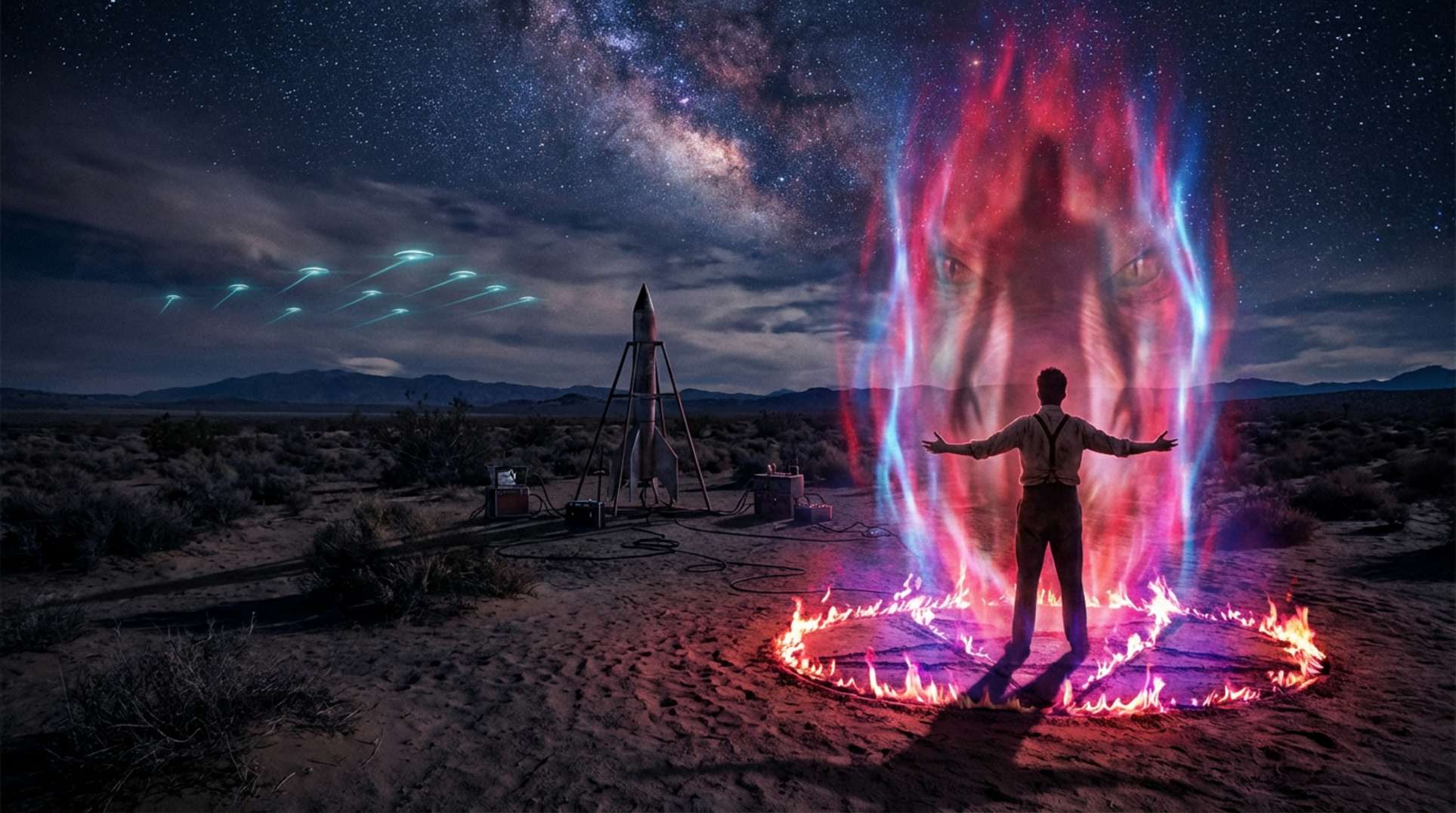
    Picture the Mojave Desert in early 1946: dust whips across the sand as Jack Parsons, a brilliant rocket engineer with a penchant for the occult, draws ritual circles under the stars. He’s not just mixing rocket fuel; he’s invoking forces from beyond, blending sex magic and ancient Enochian workings inspired by Aleister Crowley. Parsons aims to manifest a goddess called Babalon, perhaps even tear open a gateway to another realm.

    Fast forward about a year. On June 24, 1947, pilot Kenneth Arnold spots nine disc-like objects zipping near Mount Rainier at impossible speeds—coining the term “flying saucers” and igniting what we now call the modern UFO era. Weeks later, in July 1947, the Roswell incident crashes into headlines: the military announces a recovered “flying disc,” only to backtrack to a weather balloon story. These events lock UFOs into America’s Cold War psyche.

    Decades on, in shadowed Pentagon hallways, a quiet debate simmers. By the early 1950s, some intelligence insiders reportedly start connecting dots—not to distant planets, but to something ancient and infernal. Whispers of a group called the Collins Elite emerge, viewing these aerial anomalies as far from extraterrestrial. The air grows thick with questions: Did Parsons’ ritual unleash more than he bargained for?

    What Witnesses, Experiencers, and Insiders Say Is Really Going On

    Let’s break down the claims step by step, respecting the logic that drives them among researchers and those who’ve lived through these encounters. These aren’t proven beyond doubt, but they form a coherent picture for many in our community.

    First, the Babalon Working in 1946 wasn’t just symbolic theater for Parsons and his circle. Occult researchers contend it was a deliberate attempt to rip open a dimensional door, inviting non-human intelligences into our world through rituals rooted in Crowley’s teachings.

    Then comes the fallout: the 1947 UFO surge, from Arnold’s sighting to Roswell, gets interpreted as proof that something did break through—a direct consequence of that desert portal, roughly a year later.

    Enter the Collins Elite. Around 1952, this loose network of intelligence and defense figures allegedly formed, ditching the alien theory for a demonic one. Writers like Nick Redfern, drawing from interviews, describe them as convinced that UFOs mask deceptive spiritual entities, not spaceships. Ray Boeche and others echo this, warning that efforts to contact “aliens” actually summon malevolent forces.

    Abduction accounts add another layer. Groups like CE4 and Alien Resistance document over 400 cases where experiencers say the ordeal—probes, entities, paralysis—stopped cold when they invoked Jesus Christ’s name. For believers, this isn’t coincidence; it’s evidence of a spiritual hierarchy where these beings bow to higher authority.

    Finally, insiders like Luis Elizondo report pushback from officials who see UFO study as dabbling in the demonic, framing it as religious extremism that sidelines the topic. Some even claim government programs dabbled in occult methods to reach these entities. Together, these threads—rituals, sightings, secret groups, halted abductions, and bureaucratic resistance—suggest a hidden pattern too persistent to dismiss outright.

    Dates, Documents, and Patterns We Can Actually Verify

    Now, let’s ground this in what we can check against records, testimonies, and public statements. Correlations exist, but remember: timelines don’t prove cause. We’ll lay out the key points in a table for clarity, then unpack what’s solid, what’s based on accounts, and what’s inferred.

    Event/Claim Date/Period Source Verification Status
    Jack Parsons’ Babalon Working ritual January to March 1946 Historical records, Parsons’ own writings, biographies Publicly documented
    Kenneth Arnold UFO sighting June 24, 1947 Contemporary news reports, Arnold’s own account Publicly documented
    Roswell incident July 1947 Military press releases, declassified documents Publicly documented
    Formation of Collins Elite Around 1952 Reports from researchers like Nick Redfern, interviews with insiders Relient on testimony
    Project Blue Book 1947–1969 Declassified Air Force records Publicly documented
    Luis Elizondo’s statements on religious opposition Post-2017 (public disclosures) Elizondo’s interviews and writings Publicly documented
    Abduction cases halted by invoking Jesus Various, compiled ongoing CE4 and Alien Resistance reports Anecdotal/testimonial

    The Babalon Working is well-documented through Parsons’ letters and biographies—he did perform those rituals in the Mojave. Arnold’s sighting and Roswell are etched in news archives and military files, marking the UFO wave’s start. Project Blue Book stands as an official program, focused on earthly explanations.

    The Collins Elite is trickier, stemming from secondary sources and whistleblower accounts—no org chart lists them. Elizondo’s comments are out there in videos and articles, confirming religious hurdles in UFO work. The 400+ abduction stops? Those are personal stories, compelling in volume but not lab-tested. No official paper links Parsons to 1947 events or proves the Collins Elite’s demonic conclusions—that’s where inference steps in.

    Pentagon Denials, Religious Roadblocks, and the Demon Theory

    The Department of Defense keeps it straightforward: no evidence of aliens, no recovered tech, and certainly no nod to supernatural forces in UAP reports. Programs like Project Blue Book stuck to assessing threats from weather, tech, or adversaries—nothing about entities from hell.

    Yet, beneath that, personal beliefs seep in. Luis Elizondo describes senior officials blocking his AATIP work, arguing UFOs are demonic and off-limits. This isn’t policy; it’s individuals shaping decisions, funding, or directions based on faith.

    The Collins Elite fits here—not on any public roster, but in accounts from Redfern and others as a shadow network seeing UFOs through a biblical lens. For them, silence proves the topic’s danger. Skeptics counter that this overlays religion onto mysteries like sleep paralysis or unknown phenomena, twisting data to fit old narratives.

    Experiencers push back: if abductions halt at Jesus’ name, that challenges nuts-and-bolts explanations. This divide—security analysis versus spiritual warfare—explains internal rifts, with figures like Elizondo navigating between open inquiry and those fearing it invites darkness.

    Portals, Principalities, or Psychology? Interpreting the Patterns

    These threads leave room for multiple views, each with its strengths. Let’s consider a few without dismissing any outright—the data’s too sparse for certainties, but the patterns demand attention.

    One lens sees it literally: Parsons’ ritual punched a hole, letting in demonic principalities disguised as aliens, as biblical texts warn of “powers of the air.” For those holding this view, the 400+ cases of abductions stopping in Jesus’ name offer real-world proof of spiritual authority trumping these entities.

    Another angle focuses on the mind: psychological factors like sleep paralysis or suggestion could explain encounters, with religious invocation acting as a mental anchor to snap out of it. Cultural priming—expecting demons or aliens—shapes what people see and how they end it.

    A third possibility bridges them: interdimensional intelligences that interact with human consciousness, responding to rituals or beliefs in ways that echo religious effects without being strictly demonic. No peer-reviewed study pins down why Jesus’ name recurs in these testimonies, leaving an open puzzle.

    The 1946-1947 timeline is fact, but causation isn’t. Whatever the truth, these interpretations highlight how belief and experience intertwine with the unknown.

    What This Strange Convergence Might Mean

    Pulling it together, we have solid pieces: Parsons blending occult rites with rocketry in 1946, right before the 1947 UFO explosion documented in reports and headlines. Official probes like Blue Book followed, while Elizondo confirms religious pushback in modern programs. Hundreds of experiencers report abductions ceasing at Jesus’ name—a repeatable pattern, if anecdotal.

    What’s missing? Direct links, like a memo connecting the ritual to sightings or proving the Collins Elite’s influence. No lab proof of spiritual authority over entities. Yet this mix—occult origins, aerial mysteries, and faith-based halts—persists across decades, shunned in official talk whether framed as aliens or demons.

    Why does it matter? If the Collins Elite story holds water, the military’s been viewing UFOs as spiritual warfare quietly, keeping the public in the dark. Even if not, the overlap of strangeness and belief calls for clearer scrutiny. Readers, you don’t have to pick sides yet—this debate isn’t confined to online threads; it’s touched national security’s core. What would tip it? Declassified files on occult experiments, or controlled studies of abduction patterns, could shift it from speculation to something firmer.

    Frequently Asked Questions

    Yes, the Babalon Working took place from January to March 1946 in the Mojave Desert, documented in Parsons’ writings and biographies. He aimed to invoke a goddess entity called Babalon and possibly open a portal using sex magic and Enochian rituals influenced by Aleister Crowley.

    The Collins Elite is described in reports from researchers like Nick Redfern and accounts from insiders, forming around 1952 as a group viewing UFOs as demonic. It’s not officially acknowledged in Pentagon documents, relying instead on testimony and secondary reporting.

    Over 400 cases compiled by groups like CE4 report that apparent alien abductions or entity encounters end immediately when the experiencer calls on Jesus’ name. Advocates see this as evidence of spiritual authority, while skeptics suggest psychological factors like suggestion or panic interruption.

    The Pentagon denies evidence of extraterrestrials, demons, or recovered alien materials, focusing on security threats in programs like Project Blue Book. However, Luis Elizondo has described internal religious opposition, with some officials viewing UFOs as demonic and opposing study.

    The timeline correlates—ritual in 1946, sightings in 1947—but no declassified documents or evidence prove causation. It’s an interpretation among researchers, fitting into broader claims about portals and demonic entities.

  • 3I/ATLAS: Interstellar Comet or Hidden Alien Probe

    3I/ATLAS: Interstellar Comet or Hidden Alien Probe

    Key Takeaways

    • 3I/ATLAS is an interstellar comet discovered on July 1, 2025, by the ATLAS survey in Chile; it’s moving on a hyperbolic path (eccentricity ~6.1, velocity at infinity ~57 km/s), confirming it came from outside our solar system and will never return.
    • NASA and major observatories describe it as a large, icy, outgassing comet—somewhere between 1,400 feet (440 m) and 3.5 miles (5.6 km) wide—that will pass Earth safely at about 170 million miles (270 million km) on December 19, 2025.
    • Online communities and a few outspoken scientists cite unusual outgassing, brightening, and trajectory details, plus delays in releasing key images, as reasons to keep the door open to more exotic possibilities—including, but not limited to, artificial or engineered origins.

    A Stranger from Between the Stars

    Picture this: late 2025, under a blanket of dark skies, amateur astronomers hunch over backyard scopes, their breaths fogging in the chill. Social media feeds start to buzz with a new name—3I/ATLAS—whispered as only the third known object from another star system to cross our path. It’s out there, 410 million miles from the Sun, hurtling at 137,000 mph, a silent intruder from the void. While most folks scroll past headlines or binge-watch shows, this thing slips through our solar system, ancient and indifferent. Discovered on July 1, 2025, by the NASA-funded ATLAS survey telescope in Rio Hurtado, Chile, it follows ‘Oumuamua and 2I/Borisov as our rare interstellar guests. The contrast hits hard: a hyperfast, icy relic against Earth’s warm glow of rumors, telescope livestreams, and quick NASA blurbs. Yet already, whispers build—this might not be just another comet. Some researchers watch closer than the press lets on, feeding that low hum of unease.

    What You Need to Know About the 3I/ATLAS Encounter

    • 3I/ATLAS is an interstellar comet discovered on July 1, 2025, by the ATLAS survey in Chile; it’s moving on a hyperbolic path (eccentricity ~6.1, velocity at infinity ~57 km/s), confirming it came from outside our solar system and will never return.
    • NASA and major observatories describe it as a large, icy, outgassing comet—somewhere between 1,400 feet (440 m) and 3.5 miles (5.6 km) wide—that will pass Earth safely at about 170 million miles (270 million km) on December 19, 2025.
    • Online communities and a few outspoken scientists cite unusual outgassing, brightening, and trajectory details, plus delays in releasing key images, as reasons to keep the door open to more exotic possibilities—including, but not limited to, artificial or engineered origins.

    What Witnesses and Skywatchers Say They’re Seeing

    Serious amateur astronomers, peering through modest backyard setups, describe a distinct coma and tail that stands out. Many liken it to a “teardrop-shaped cocoon” or “egg-like glow,” reminiscent of sci-fi visions of alien craft in stasis fields. Data-focused independent researchers dig into the numbers, pointing to sudden brightening as 3I/ATLAS nears the Sun, along with perceived color shifts in images and live feeds. They see these as markers of unusual chemistry or activity, echoing quirks in earlier visitors like ‘Oumuamua. On social media platforms like TikTok and X, general users share claims that its size—up to 3.5 miles across—and speed suggest a plausible interstellar probe or ‘ark.’ They tie it to broader narratives about alien monitoring or impending contact. Rumors also swirl about delays in high-resolution images around perihelion, fueling talk of hidden anomalies: odd light curves, sharply defined nucleus geometry, or atypical tail behavior. Harvard astronomer Avi Loeb gets quoted often in these threads, his comments on “unusual aspects” of interstellar objects—like non-standard outgassing or trajectory quirks—lending weight to artificial-origin hypotheses. Alongside technical speculation, some posts carry doom-tinged prophecies, linking government silence to political distractions like shutdown talks or budget crises, hinting at a deliberate cover for whatever 3I/ATLAS might truly be.

    Timelines, Orbits, and the Data We Can Actually Check

    Let’s ground this in what we can verify. 3I/ATLAS entered our records on July 1, 2025, spotted by the ATLAS survey telescope in Rio Hurtado, Chile—a NASA-funded system built for early warnings on near-Earth objects. At that moment, it sat about 410 million miles from the Sun, clocking 137,000 mph. Orbital math shows an eccentricity of around 6.1, well over 1, marking a hyperbolic path from interstellar space—one and done, no return trip. Its velocity at infinity hovers at ~57 km/s, the kind of speed that screams long-term drifter through the Milky Way, unbound to our Sun. Hubble’s August 20, 2025, observations pinned the nucleus size between 1,400 feet and 3.5 miles, revealing a hefty icy body. Other scopes like Webb, Gemini South, and even Mars-based tools confirm a standard icy core, surrounded by a gas-and-dust coma, with tails from solar-heated outgassing. Closest Earth pass? December 19, 2025, at 170 million miles—twice the Earth-Sun gap, no collision worries per the models.

    Metric Value
    Discovery Date July 1, 2025
    Discovery Distance from Sun 410 million miles (670 million km)
    Speed at Discovery 137,000 mph (221,000 km/h)
    Nucleus Size Range 1,400 feet (440 m) to 3.5 miles (5.6 km)
    Orbital Eccentricity ~6.1
    Velocity at Infinity ~57 km/s
    Closest Earth Approach December 19, 2025, at ~170 million miles (270 million km)

    The Official Story and the Questions It Doesn’t Quite Close

    NASA and the Minor Planet Center call it straight: 3I/ATLAS is a natural interstellar comet, backed by its icy nucleus, visible coma, dust-and-gas tail, and outgassing that matches solar heating patterns. They repeat that orbits show no Earth threat, with the December 19, 2025, pass at 170 million miles safely clear. Agency releases frame it as a prime chance to study material from another star system—possibly 7 billion years old, older than our Sun. In FAQs and press materials, they tackle alien rumors head-on: “All evidence points to it being a comet,” highlighting how features like the coma and tail align with natural processes, no need for artificial twists. But Harvard’s Avi Loeb, without labeling it artificial, highlights “unusual aspects” in similar objects—think odd outgassing or trajectory alignments—as grounds to consider engineered origins as a valid hypothesis. Independent analysts push back, noting irregular brightening, uneven outgassing, or minor trajectory tweaks that seem downplayed in public info. They question slow-rolled high-quality images, sometimes linking delays to budget fights or shutdown threats, implying agencies might soft-pedal details to avoid stirring anxiety. Both sides read the data differently: officials see a clean fit with comet models, while skeptics spot gaps where assumptions fill in for hard facts, urging a closer look at what might not add up.

    A Visitor Older Than Our Sun—and the Door It Leaves Open

    Putting it together, 3I/ATLAS stands as the third confirmed interstellar wanderer, after ‘Oumuamua and 2I/Borisov, its hyperbolic orbit (eccentricity ~6.1, v-infinity ~57 km/s) locking it out of solar system norms. The case for natural origins holds strong: an icy nucleus, coma, and tails reacting to solar heat; size fitting known comets; no signs of structured geometry or deliberate moves. Still, questions linger—its galactic birthplace, maybe in the Milky Way’s thick disk; age against our 4.6-billion-year solar system; and whether its chemistry or light curves will match expectations perfectly. With just three such visitors on record, our grasp on interstellar debris feels thin, room enough for surprises that challenge current models. Some readers will hold space for artificial possibilities, drawing from ‘Oumuamua’s anomalies and technosignature debates—data doesn’t force that view, but neither does it seal every door. Keep eyes on December 2025 observations and releases; they could sharpen details on composition, outgassing, or path quirks. Whatever 3I/ATLAS turns out to be—a simple comet or more—it’s a signal that our solar system isn’t sealed off. Objects cross the stars, and we’re just starting to spot them.

    Frequently Asked Questions

    3I/ATLAS was discovered on July 1, 2025, by the ATLAS survey telescope in Chile. Its hyperbolic orbit, with an eccentricity of about 6.1 and velocity at infinity of ~57 km/s, confirms it originated outside our solar system and won’t return.

    Official orbital solutions show no impact risk. Its closest approach to Earth is projected for December 19, 2025, at roughly 170 million miles, nearly twice the distance from Earth to the Sun.

    Observers report sudden brightening, color shifts, and irregular outgassing, plus delays in data releases. Some tie these to possibilities like artificial origins, citing precedents from objects like ‘Oumuamua, though official accounts describe it as a natural comet.

    Like ‘Oumuamua and 2I/Borisov, 3I/ATLAS follows a hyperbolic path from beyond our solar system. Communities note similarities in anomalies, such as non-standard outgassing or trajectories, keeping artificial hypotheses in play for some analysts.

    NASA states that all evidence points to 3I/ATLAS being a natural comet, with features like its coma, tail, and outgassing fitting standard models. They emphasize it as a scientific opportunity to study interstellar material, not an artificial object.

  • Red Sea Tanker Strikes: Inside the Silver Rip Mystery

    Red Sea Tanker Strikes: Inside the Silver Rip Mystery

    Key Takeaways

    • Tankers and commercial ships in the Red Sea and Gulf of Oman have faced over 190 attacks since October 19, 2023, mostly involving drones and missiles from Houthi forces, turning vital shipping lanes into active conflict zones.
    • The U.S. has upheld a moratorium on full-scale nuclear explosive tests since 1992, with no official resumption by 2025 despite political pressures, while Russia conducted non-explosive tests of nuclear-capable systems in October 2025; no public evidence links these to the tanker incidents or any failed detonations.
    • Amid the attacks, reports of “silver rips”—brief, metallic flashes or tear-like sky anomalies—echo historical UFO sightings near nuclear sites, fueling speculation about dimensional events or monitoring of nuclear activities, though verifiable data remains elusive.

    Convoys in a Crosshair Sea

    Picture massive tankers slicing through the dark waters of the Red Sea under a tense moon. Radar screens flicker in the bridges, crews scan the horizons for incoming threats. Since October 19, 2023, this stretch has morphed into a war zone. Over 190 incidents by October 2024—drones swarming, missiles streaking—have hammered home the danger. Governments pin it on Houthi forces, firing from Yemen in a wider regional clash.

    But in encrypted chats and fringe forums, another layer emerges. Whispers of strange lights. Metallic glints cutting through the night. Brief flashes that tear open the sky or shimmer over the waves—what some now call “silver rips.” These aren’t the headlines. Missiles and drones dominate the official logs. Yet here, geopolitics rubs against something older: patterns of unexplained aerial phenomena shadowing nuclear tensions. The sea becomes a crossroads where human conflict meets the unknown.

    What Witnesses and Researchers Say They’re Seeing

    In the shadows of these attacks, stories circulate among sailors, shipping trackers, and those who’ve long studied UFO-nuclear links. These aren’t polished reports—they’re raw, shared in online hubs and private networks. People describe fleeting metallic flashes, like seams ripping in the air, or disc-shaped objects that appear and vanish around the strikes.

    Some see these “silver rips” as dimensional tears, portals triggered by intense energy. Others link them to classic flying discs, the silver saucers reported near atomic sites since the 1940s. Researchers like Robert Hastings have compiled decades of accounts from military personnel: unknowns hovering over missile silos, interfering with systems, monitoring tests.

    Think back to WWII’s “foo fighters,” glowing orbs tailing bombers, or Cold War sightings of discs near bomb labs. The pattern holds: wherever nuclear tech ramps up, anomalies follow. In today’s Red Sea chaos, some speculate the tanker hits mask failed covert nuclear tests—events that could rip open atmospheric oddities. Explosions gone wrong, drawing in these silver phenomena.

    Not everyone agrees. Voices in the same circles point to human tech: classified drones, directed-energy weapons, exotic tests mimicking the effects. No aliens needed. These debates respect the anecdotes, connecting dots without forcing answers. The reports persist, tying maritime violence to deeper mysteries.

    Timelines, Test Bans, and Hard Numbers

    Shifting gears to what we can pin down. The Red Sea crisis kicked off October 19, 2023, with Houthi groups targeting vessels. By late 2024, records show over 190 incidents—drones, anti-ship missiles, the works. Navies and companies log them as conventional warfare.

    The U.S. stopped full nuclear explosive tests in 1992, sticking to a voluntary moratorium. Lab simulations and subcritical experiments keep the arsenal modern. In 2025, under Trump, talks heated up about restarting tests, but no official word of any by year’s end.

    Russia ran non-explosive trials in October 2025: a nuclear-powered cruise missile, a nuclear-capable torpedo, among others. They called them successes, no detonations involved. Globally, the Federation of American Scientists tallies about 12,241 nuclear warheads in 2025 stockpiles—plenty of hardware, even without new blasts.

    Recent U.S. laws, like the 2022 National Defense Authorization Act, demand more UAP reporting near nuclear sites. It nods to the issue without endorsing alien theories. To spot overlaps, here’s a quick table:

    Event Type Key Dates/Locations Overlap with “Silver Rips” Reports?
    Red Sea Tanker Attacks October 19, 2023–ongoing; Red Sea/Gulf of Oman Yes, scattered reports during attack spikes
    U.S. Nuclear Test Moratorium & 2025 Debates 1992–present; U.S. sites; 2025 political pushes No direct; debates coincide with attack timeline
    Russian Nuclear-Capable Tests October 2025; Undisclosed sites Possible; timing aligns with some Red Sea anomalies
    Notable UFO-Nuclear Incidents 1940s–present; Global nuclear sites Pattern echoes in “silver rip” descriptions

    Timelines brush close, but hard links? Scarce.

    The Official Narrative and the Paths It Leaves Open

    Governments keep it straightforward. The U.S. Navy and allies blame Houthi militants for the Red Sea and Gulf of Oman strikes—drones and missiles in a power play. No room for anomalies. The Department of Defense denies UFO interference or recent nuclear mishaps in the area.

    Experts at places like the Bulletin of the Atomic Scientists view UFO-nuclear ties as unproven. Historical sightings? Chalked up to misidentifications, weather quirks, or secret projects. No declassified proof of “silver rips” from failed tests.

    Yet independent researchers see it differently. They highlight patterns: objects tampering with missiles, lights over test ranges. Decades of testimony from credible sources. In the tanker saga, they connect the dots—maritime war, U.S. testing debates, Russian trials—as cover for hidden experiments.

    No seismic or satellite data screams “clandestine nuke” in these waters. Secrecy thrives, though. Officials lean on classified intel; communities on witness accounts and history. Both pick their evidence. The space between? That’s where questions linger.

    Inside the Silver Rips: Weapons Glitch, Atmospheric Trick, or Something Other?

    What are these “silver rips” really? The term’s grassroots, describing quick metallic tears in the sky during attacks. Could be mundane: missile exhaust reflecting light, drone glints, sensor errors in night gear. Or atmospheric plays—ice crystals, plasma from charged air.

    Human tech fits too. Classified drones with weird signatures. Directed-energy tests creating visuals. Decoys mimicking metal forms. Tie that to U.S. and Russian work on nuclear-capable missiles and subs—exotic propulsion without booms.

    History adds layers. Foo fighters dogging WWII planes. Discs over 1947 atomic labs. Glowing shapes at silos. Descriptions match across eras. Some push further: these as non-human craft, or dimensional shifts pulled by nuclear energy. Monitoring us, maybe intervening.

    We lack solid, multi-source data confirming a “silver rip” tie to any incident. Still, the repeats demand real scrutiny. Not laughs. Patterns like this don’t fade easy.

    Where the Data Ends and the Mystery Begins

    Here’s what stands firm: tanker attacks are real, with over 190 since 2023, rooted in geopolitics. Blame Houthis, not ghosts. U.S. no explosive tests since 1992; Russia’s 2025 trials non-nuclear. UFOs near nukes? Documented for decades, but mainstream says no aliens proven. Laws now push UAP transparency around nuclear gear.

    Gaps yawn wide. Hidden nuclear ops—fails, tests—in these seas? “Silver rips” as secret tech, nature’s trick, or beyond? No proof seals a covert blast, but official lines don’t close the book. Secrecy clouds weapons and UAP worlds.

    This matters. Over 12,000 warheads stockpile. Ships under siege. Powers jostling. If skies tear over battle zones, we need answers—for safety, truth, and grasping what’s out there with us.

    Frequently Asked Questions

    The attacks began on October 19, 2023, and involve over 190 incidents of drones and missiles targeting commercial vessels and tankers, primarily attributed to Houthi forces in a regional conflict.

    No public evidence connects the tanker attacks to failed nuclear tests; the U.S. has maintained a testing moratorium since 1992, and Russia’s October 2025 trials were non-explosive, though speculation persists due to timelines and anomalies.

    “Silver rips” refer to reported brief, metallic flashes or tear-like sky anomalies during some attacks, echoing historical UFO sightings near nuclear sites, such as foo fighters in WWII or discs over atomic tests, suggesting a pattern of monitoring nuclear activities.

    Officials attribute the attacks to Houthi militants using conventional weapons, deny any nuclear test failures or UFO involvement, and explain historical sightings as misidentifications or classified tech.

    With global nuclear stockpiles over 12,000 warheads, ongoing shipping threats, and patterns of unexplained phenomena near nuclear sites, understanding these anomalies affects maritime safety, nuclear transparency, and broader questions of reality.

  • B-21 Raider vs UFOs: The Black Triangle Finally Explained

    B-21 Raider vs UFOs: The Black Triangle Finally Explained

    Key Takeaways

    • The B-21 Raider stands as the first new U.S. bomber in over 30 years, a stealth flying wing built by Northrop Grumman for the Air Force, unveiled publicly on December 2, 2022, in Palmdale, California.
    • By November 10, 2023, it was airborne, now in low-rate initial production with plans for at least 100 units to phase out the B-1 and B-2 fleets, and possibly the B-52, by around 2040.
    • Civilian videos and reports highlight its quiet, ‘floating’ presence that mimics UFO behaviors from past eras, when secret stealth projects sparked similar sightings—though core tech details and ties to specific UAP cases stay hidden.

    A Black Triangle Over Palmdale

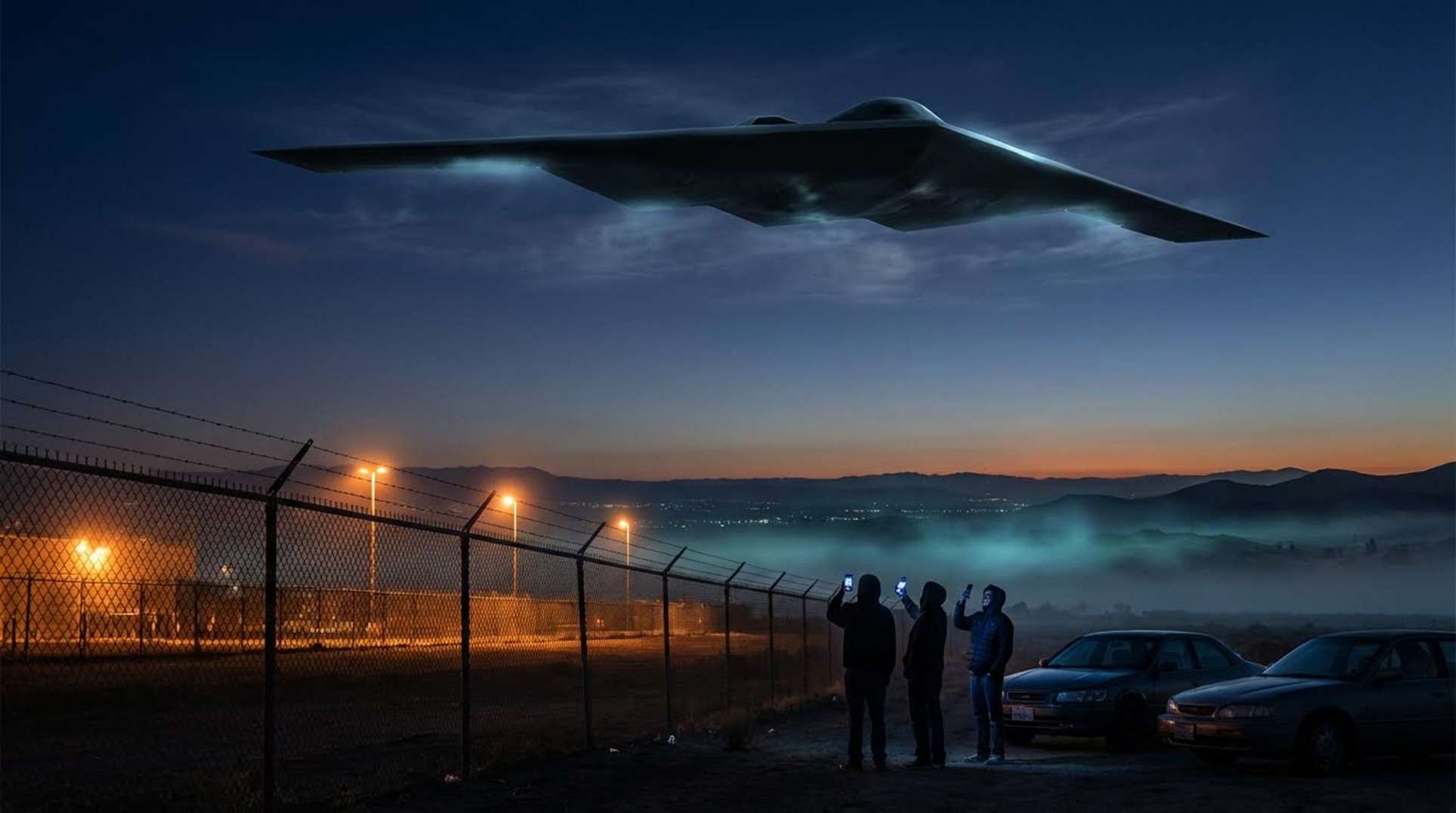
    The sky hung heavy over Palmdale, California, in the early morning chill. Stars faded as dawn crept in, but something else caught the eye—a dark, angular shape slicing through the quiet. It moved with an eerie grace, almost hovering, its edges sharp like a triangle cut from the night. Phones lit up among the spotters gathered near the base fence, whispers turning to excited murmurs. Was this the whispered-about Raider, or another anomaly blending into the shadows? The line blurs here, where test flights meet the unknown.

    What People on the Ground Say They Saw

    Aviation spotters and online forums lit up with accounts after the B-21’s first moves. On November 10, 2023, Reddit users and plane trackers shared footage of what they pegged as its inaugural flight, calling it unnervingly quiet and almost suspended in the air. One witness at an airshow-like gathering described being gobsmacked by how still it looked against the clouds, unlike any jet they’d tracked before.

    Seasoned observers initially slotted it with classic UFO profiles—silent black triangles or slow-moving deltas—before official images confirmed the match. This echoes patterns from the 1980s and 1990s, when triangular sightings often traced back to secret tests of the F-117 Nighthawk and B-2 Spirit. These aren’t casual mistakes; they’re from folks who know aircraft, briefly thrown by the unfamiliar.

    Timelines, Test Flights, and Footage We Can Verify

    The B-21’s path from concept to sky follows a tight, secretive arc. Northrop Grumman secured the development contract in October 2015, kicking off years of hushed work. The rollout came on December 2, 2022, in Palmdale, ending a 30-year gap in new U.S. bombers. Spotters caught the first flight on November 10, 2023, later backed by official nods. By early 2024, it hit low-rate production, with six prototypes underway.

    Plans aim for at least 100 Raiders, replacing the B-1 and B-2 by 2040, possibly extending to the B-52. It’s sized at about 132 feet long with a 172-foot wingspan—smaller and lighter than the B-2. Civilian footage slots into this: clusters of sightings ramped up post-rollout, aligning with test windows in Palmdale and nearby areas.

    Milestone Details
    Development Contract Awarded to Northrop Grumman in October 2015
    Unveiling Date December 2, 2022, in Palmdale, California
    First Flight Date November 10, 2023, documented by spotters
    Estimated Dimensions 132 ft length, 172 ft wingspan
    Number of Prototypes Six in production as of 2023
    Planned Fleet Size At least 100 aircraft

    Official Story vs. What the Data Suggests

    The Air Force pitches the B-21 as a dual-capable striker, blending conventional and nuclear roles with extreme stealth to pierce defended airspace against threats like China or Russia. Defense Secretary Lloyd Austin calls it sixth-generation, packing sensor fusion and networking, but details stay locked down. It’s framed as a refined B-2—smaller, more maintainable—without wild tech leaps.

    Yet skeptics who bet on delays or cancellation got hit with its on-time flight and production greenlight. In UFO circles, some link recent base sightings—silent triangles near nuclear sites—to B-21 tests, mirroring past misidentifications. Others counter that verified UAP show feats like instant turns and no control surfaces, outstripping B-21 claims. No official files tie specific incidents to the Raider, leaving space for both explanations.

    How the Raider Proved Everyone Wrong

    Critics figured the B-21 would join the pile of overrun Pentagon projects, stuck in limbo. But it unveiled on schedule and flew within a year, flipping those forecasts. Civilian spotters beat legacy media to the punch, posting flight pics that cracked the secrecy veil through open-source eyes.

    Recent ‘UFO’ clips from test zones now sync with B-21 timelines, pushing a rethink on how often black projects hide in plain sight as anomalies. Still, it doesn’t cover every case—official UAP reports admit a core of unexplained events persist beyond conventional tech.

    What It All Might Mean

    The B-21 is set to anchor the U.S. bomber lineup for decades, with 100-plus planned, meaning more sightings over ranges and beyond. Its stealthy profile will spark reports, much like the F-117 and B-2 did, especially among those not looped into defense updates.

    Questions linger on its exact stealth tricks, sensor reach, or if it touches unrevealed edges of physics. Probing UAP means factoring in craft like this without blanketing everything as solved. It acts as a mirror: for some, evidence all anomalies are homegrown; for others, a sign our best still can’t match certain witness accounts and data.

    Frequently Asked Questions

    The B-21 Raider is a new stealth bomber developed by Northrop Grumman for the U.S. Air Force, unveiled in 2022 as the first in over 30 years. It’s designed for penetrating strikes with advanced stealth and plans for at least 100 units to replace older fleets by 2040.

    Eyewitnesses describe its quiet, floating appearance resembling black triangles or silent craft, echoing past misidentifications of secret projects like the F-117 and B-2. Some recent UAP reports near bases align with B-21 test flights, though no direct official ties exist.

    Yes, despite skepticism about delays, it was unveiled in 2022, flew in 2023, and entered low-rate production in 2024. This contradicted predictions of stalls, with civilian footage confirming key milestones.

    No, while it may account for some triangle sightings, official reports note UAP with extreme performance like instant acceleration that exceed B-21 capabilities. It highlights patterns but leaves unresolved mysteries.

    Details on its ‘incredibly low observability,’ sensor fusion, and networking remain classified. Officials describe it as an evolution of the B-2, but gaps in public knowledge fuel speculation about advanced features.

  • Skinwalker Ranch: What Pentagon Reports Leave Out

    Skinwalker Ranch: What Pentagon Reports Leave Out

    Key Takeaways

    • Skinwalker Ranch is a 512-acre property in northeastern Utah, long linked to UAP sightings, cattle mutilations, and paranormal reports (cited back at least to the 1990s, with some claims going back decades).
    • Multiple serious investigations have occurred: NIDSci under Robert Bigelow (from 1996), the DIA’s $22 million AAWSAP program (from 2008), and Brandon Fugal’s post-2016 team with televised experiments and instrumentation.
    • Despite years of monitoring and a 2024 Department of Defense statement saying there is no evidence of alien spacecraft or concealment tied to the ranch, recurring anomalies—especially electromagnetic interference, odd radiation/heat signatures, and UAP sightings—are not fully explained by any published, conventional model.

    Key Threads in a Landscape of High Strangeness

    Here’s the signal amid the noise for those who’ve been following the ranch’s story. Skinwalker Ranch sits on 512 acres in Utah’s Uintah Basin, with records of UAP encounters, precise cattle mutilations without blood, and other paranormal events stretching back to the 1990s—and whispers of even earlier incidents. Serious players have dug in: Robert Bigelow’s NIDSci team started in 1996, followed by the DIA’s AAWSAP program that poured $22 million into probing UFOs and related claims from 2008. More recently, Brandon Fugal’s group has run instrumented tests, some captured on camera. The 2024 DoD position? No proof of alien tech or hidden ops at the site. Yet those persistent glitches—EM spikes, unexplained heat spots, and lights in the sky—don’t fit neatly into any standard explanation we’ve seen published. This isn’t about debunking; it’s about acknowledging what’s documented and what still defies easy answers.

    A Basin Where the Sky Never Quite Settles

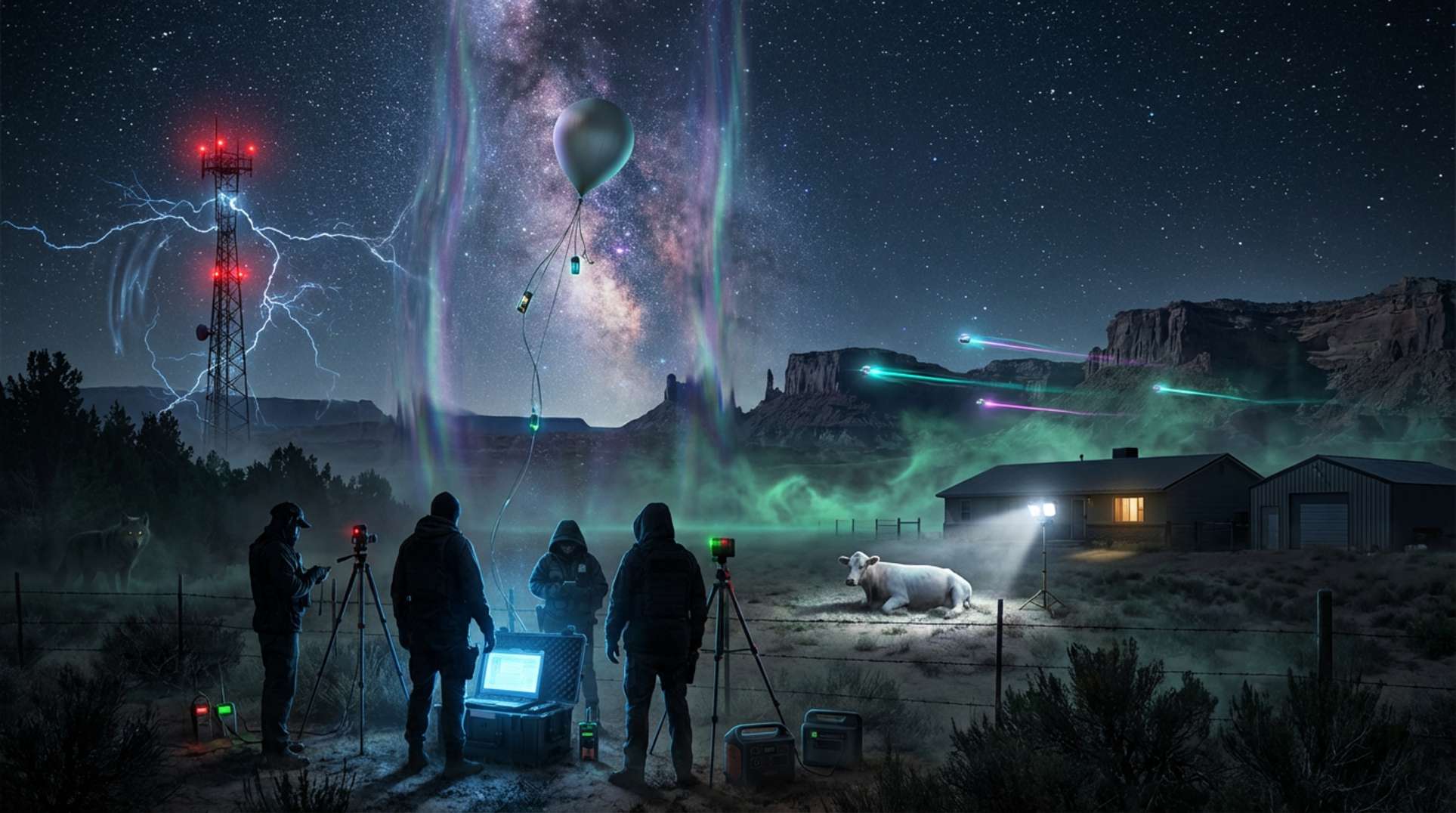
    The night air hangs heavy over the 512-acre spread in northeastern Utah’s Uintah Basin, stars sharp against the black like they’re watching back. You stand there amid the quiet scrub and distant mesas, equipment humming faintly as a balloon ascends, sensors primed for whatever might stir. This is Skinwalker Ranch, where the ordinary masks something restless. The Sherman family first reported the strangeness in the 1990s—mutilated livestock, lights dancing overhead. Robert Bigelow bought it in 1996, turning it into a surveillance hub for his NIDSci outfit. By 2008, the DIA got involved through AAWSAP, chasing leads on the unexplained. Brandon Fugal took over in 2016, bringing fresh tech and cameras. Now, under that clear sky, the balloon climbs, registering EM anomalies up to a mile high—gear falters without warning, as if the air itself pushes back. It’s eerie, this normalcy laced with refusal.

    What Witnesses and Investigators Say Lives on the Ranch

    Reports from the ranch fall into patterns that span years, blending sky phenomena with ground-level oddities. Let’s break them down without jumping to conclusions.

    UFO and UAP sightings form a core thread: lights maneuvering in ways that outpace known aircraft, often hovering or darting over the property. The Sherman family in the 1990s described frequent encounters, including crop circles and orbs. More recently, Fugal’s team has logged similar events, with thermal cameras picking up unexplained signatures during experiments.

    Animal anomalies hit hard—cattle found mutilated with surgical precision, organs removed, no blood spilled. The Shermans lost several this way, and patterns echo in the wider basin, tying into decades of similar reports. Colm Kelleher’s 2005 book details large wolf-like creatures that shrugged off bullets, adding to the unease.

    Entity encounters bring in humanoid figures, glowing orbs, and shadow presences. Kelleher documented sightings of figures in trees and other high-strangeness during NIDSci’s watch. These tie into Navajo and Ute folklore about skinwalkers—shapeshifters cursed to the land, perhaps linked to historical tribal conflicts.

    Environmental hauntings round it out: EM interference that kills equipment, temperature drops, poltergeist-like disruptions, and hints of portals. Fugal’s investigators report spikes during tests, not always repeatable, alongside radiation anomalies and underground hotspots. This builds on the Arnold family’s 1940s UFO sighting nearby, showing the basin’s sky has been active long before the ranch’s fame.

    These categories overlap, with folklore providing a cultural lens that shapes how people interpret the events—consistent across generations.

    Timelines, Instruments, and the Data We Actually Have

    To ground the stories, let’s map the ownership and investigations against what instruments captured. This separates verified metrics from anecdotes passed around in books and shows.

    The timeline starts in 1996 when Robert Bigelow acquired the ranch for NIDSci, monitoring it intensely until around 2004. They gathered data but publicly stated no definitive cause emerged. In 2008, the DIA’s AAWSAP kicked off with $22 million, examining UFOs and paranormal claims, including at the ranch, wrapping up by 2012 with no proven ET links. Brandon Fugal bought it in 2016, initiating new studies with tech like EM detectors and balloons, some broadcast on TV. The 2024 DoD report reiterated: no evidence of alien craft or cover-ups tied to the site.

    Public sources mention measurements like electromagnetic readings, radiation surveys, thermal mapping of underground hotspots, and balloon tests detecting anomalies up to a mile above. Teams with university and NASA ties have been involved, but no peer-reviewed paper pins these to a clear natural or man-made source. Missing? Conclusive physical proof of entities or craft despite all that watching.

    Metric Value
    Ranch size 512 acres
    Date of Bigelow acquisition 1996
    NIDSci monitoring period ~1996–2004
    AAWSAP program funding $22 million
    Date of Fugal acquisition 2016
    Reported EM anomaly height Up to 1 mile above the ranch
    Historical local UFO report 1940s Arnold family sighting

    When the Pentagon Says ‘Nothing to See Here’—And Locals Disagree

    Official stances clash with boots-on-the-ground accounts, not just in conclusions but in what qualifies as proof. The DIA’s AAWSAP ran from 2008 to 2012, spending $22 million on UFO and paranormal probes, including the ranch, but yielded no documented ET activity or crash materials. The 2024 DoD report doubles down: no alien spacecraft or concealment linked to Skinwalker. Scientists from places like the University of Alabama in Huntsville have approached it as a site for studying odd physics—logging underground hotspots and radiation without labeling them paranormal.

    Skeptics like Robert Sheaffer point to the absence of public, ironclad evidence after decades, proposing everyday causes: misseen events, cultural stories, sensor errors, or secret human tech.

    Yet witnesses and investigators see patterns—from skinwalker legends to modern EM bursts—as signs of something persistent, maybe intelligent or portal-related. Ranch teams describe phenomena that react to experiments, like gear failing right when they’re probing, suggesting a trickster element over random faults. Locals tie it to indigenous curses and interdimensional rifts, viewing the continuity as evidence itself.

    Everyone agrees no full explanation covers it all—folklore, mutilations, UAPs, readings. The split is whether that means nothing extraordinary is proven, or something is dodging our detection methods.

    Between Curses, Cold Spots, and Classified Tech

    Hypotheses swirl around the ranch, and the data doesn’t pick clear winners yet. What could explain those steady EM interferences, radiation oddities, and UAP reports without solid hardware or entity proof?

    Cultural angles highlight Navajo and Ute tales of skinwalkers and cursed grounds, intersecting with reports of shapeshifters and malevolent figures. These stories might frame how people perceive ambiguous events, heightening expectations without implying fabrication.

    Geophysical ideas suggest local geology, subsurface features, or atmospheric quirks could generate EM fluctuations, glowing effects, or disorienting sensations that seem otherworldly. Scientific teams have noted underground hotspots and radiation, but links to known processes remain unclear.

    Technological theories note the basin’s aerial testing history and UAP patterns near military zones. Could some sightings and disruptions stem from classified radar, directed energy, or sensors rather than alien visitors?

    If portals or non-human craft are involved, why no unambiguous evidence from NIDSci, AAWSAP, Fugal’s efforts, or academics after years of focus? Factors like folklore, environment, and hidden tech might layer together, creating the mystery rather than ruling each other out.

    What Skinwalker Ranch Refuses to Tell Us

    On record: a 512-acre Utah ranch with decades of anomalies, backed by major probes from Bigelow’s NIDSci, the DIA’s $22 million AAWSAP, and Fugal’s instrumented work. Sensors have caught EM spikes, radiation, and thermal anomalies, but no consensus on causes. The DoD’s 2024 take? No alien craft or cover-up here.

    From the ground: three decades of reports—from bullet-proof wolves and clean mutilations to reactive gear failures and mile-high disturbances—feel patterned, not haphazard, to those experiencing them.

    This place bridges government shadows, native stories, and UAP research. Our approach to its evidence—what we scrutinize, ignore, or hold open—shapes how we tackle other anomalies. Ultimately, the pattern slips past our tools, pushing for sharper methods over snap judgments.

    Frequently Asked Questions

    Skinwalker Ranch is a 512-acre property in Utah’s Uintah Basin known for reports of UAP sightings, cattle mutilations, and paranormal events dating back to the 1990s and earlier. Its fame stems from consistent anomalies that have drawn investigations from figures like Robert Bigelow and the DIA, blending indigenous folklore with modern scientific scrutiny.

    Investigations have documented electromagnetic interference, radiation and thermal anomalies, and UAP sightings through sensors, balloons, and thermal mapping. Teams like NIDSci and Fugal’s group have logged these, but no peer-reviewed explanation ties them to a definitive cause, and physical proof of entities or craft remains absent.

    The 2024 Department of Defense report states there is no evidence of alien spacecraft or any cover-up related to the ranch. The DIA’s AAWSAP program, which funded $22 million in studies, also found no proven extraterrestrial connections despite examining claims there.

    Witnesses and investigators describe reactive phenomena like equipment failures and EM spikes as signs of an intelligent or portal-like presence, tied to folklore. Institutions like the DoD see no proof of anything extraordinary, attributing reports to potential misperceptions or conventional causes.

    Possibilities include geophysical effects like local geology creating EM fluctuations, or classified military tech from nearby testing ranges causing interference and sightings. Cultural folklore might also shape interpretations, and these factors could overlap without a single explanation resolving everything yet.

  • Solar Storms 2025: The Hidden Risks NOAA Downplays

    Solar Storms 2025: The Hidden Risks NOAA Downplays

    Key Takeaways

    • New large sunspot groups, like AR4291 with its beta-gamma magnetic setup, are turning toward Earth and firing off C-class flares as of November 28, 2025—data from NOAA shows this is part of a real uptick in solar activity after a lull.
    • Solar flux dropped from September 2024 to mid-August 2025, then spiked in late August near previous highs, pointing to another wave of intense space weather, backed by recent events like the G3 geomagnetic storm on November 13, 2025.
    • Agencies warn of risks to satellites, navigation, and power grids during strong storms, as seen in historical cases like 1921 and May 2024, but exact impacts stay uncertain—independent watchers spot patterns and potential gaps in the official story.

    Waiting Under a Restless Sky

    It’s late November 2025, and screens across the globe flicker with solar data. Aurora chasers refresh forecasts, while others monitor sunspot rotations. AR4291 and other large regions slide into view on the Earth-facing side of the Sun, their magnetic fields already crackling with energy. Six active sunspot groups dot the solar disk, according to EarthSky tracking, and they’ve unleashed multiple C-class flares—AR4290 hit at least C2.5, a sign the setup is volatile.

    The air feels charged. Just weeks ago, on November 13, a G3 geomagnetic storm rattled the magnetosphere, with G4 levels in play. Memories of the May 2024 event linger, when skies over the UK and more than 55 countries erupted in color. Now, geophysicist Stefan Burns steps in. He preps his space weather update, data-driven and clear. But he adds something else: an ad-free solar plexus singing bowl meditation. It’s for those who watch the skies and the systems below, blending hard facts with a moment to breathe amid the uncertainty.

    What Watchers and Researchers Are Expecting

    In forums and field reports, observers brace for what’s next as these sunspots align with Earth. Aurora hunters anticipate vivid displays, while preppers eye grid stability. Independent analysts parse the data, expecting severe geomagnetic storms that could spike to G3 or G4. They reference the May 2024 storm, with its auroras captured in over 55 countries and magenta hues at 600 miles up—viral images that sparked talk of a shifting solar era.

    Historical echoes fuel the discussion. The 1921 storm brought low-latitude lights and telegraph fires, now seen as a warning for today’s tech-heavy world. Events in 1989 and 2003—blackouts in Hydro-Québec, satellite glitches, navigation woes—remind everyone how thin the line is. With the late August 2025 solar surge, some say the Sun is gearing up for more frequent hits.

    Conversations go beyond tech. Threads link solar activity to UFO spikes during auroras, or interpret colors as energetic shifts tied to human chakras. Data hounds cross-check NOAA graphs, while others lean into symbolic views. It’s a broad group, united by the same restless star.

    Solar Numbers, Magnetic Jolts, and What We Can Actually Measure

    NOAA’s Space Weather Prediction Center tags sunspot groups with four-digit codes, like AR4291. Large ones with beta-gamma or complex magnetic fields raise the odds of flares and coronal mass ejections. As of November 28, 2025, six regions are active on the visible disk, including AR4291—beta-gamma and already flaring at C-class levels.

    Activity dipped from September 2024 to mid-August 2025, then rebounded. Late August solar flux neared 2024 peaks, signaling the cycle’s strength. The November 13 G3 storm, with G4 potential from a November 11 CME, shows the system’s punch.

    C-class flares, like AR4290’s C2.5, indicate brewing energy. But the big worry is escalation to M- or X-class, paired with Earth-bound CMEs and southward magnetic fields.

    Storm Event Dst Minimum (nT) nT Deviations Storm Class Known Effects
    May 1921 N/A (pre-Dst era) Multiple intense substorms N/A Low-latitude auroras, telegraph disruptions and fires
    May 2024 N/A Over 500 nT horizontal at UK sites G4-G5 equivalent Auroras in 55+ countries, high-altitude magenta displays
    November 13, 2025 N/A Strong geomagnetic forcing G3 (G4 possible) Potential satellite and navigation issues
    December 2006 -146 nT Moderate deviations G3 equivalent Satellite and radio disruptions

    Space Weather Alerts and the Stories Between the Lines

    Official channels frame it straightforwardly. NOAA and NASA tie storms to solar wind and CMEs, stressing southward magnetic fields for intensity. Their November 13 alert flagged G3 with G4 risks to satellites, grids, and navigation, but noted not every event spirals into chaos.

    Studies of 1921, 1989, 2003, and May 2024 admit severe potential while highlighting forecast gaps. Community voices sometimes differ, suggesting agencies downplay extremes to curb alarm—citing those old grid failures as proof of vulnerability.

    Questions swirl: How tough are transformers and undersea cables? What’s the quiet hardening of satellites? Eyewitnesses from May 2024 describe off-model auroras—brighter, higher, unexplained fully by plasma models. Folklore adds layers, seeing lights as omens. Stefan Burns bridges this, pairing data with meditation to ground the mind amid magnetic flux.

    Both sides grapple with the unknown, one through equations, the other through experience.

    Riding Out the Storm: Preparing Bodies, Grids, and Minds

    Patterns suggest more G3-G4 storms ahead, following the August 2025 surge. Exact extremes evade prediction. Utilities prep based on 1989 and 2003 lessons, though transparency is spotty—raising valid concerns.

    Satellites and GNSS face routine threats in strong events, with possible outages. May 2024 brought aurora awe mixed with comms glitches, not always pinned to space weather but stoking worry.

    Open questions persist: Grid weak points in big storms? Models for weird aurora heights? Cluster of severe events in 2025? Stefan Burns responds with his broadcast—solid analysis, then solar plexus singing bowl tones. Listeners tune in, screens showing rising Kp, some under potential aurora skies, others tracking grid news. It’s about anchoring amid the flux.

    Listening to the Sun, and to Each Other

    We’re in a phase where AR4291 and kin face Earth, amid rising activity since mid-2025. Storms like 1921, 2006, May 2024, and November 13 prove the dual edge: stunning skies, real tech hits. Severity isn’t predictable yet.

    Unanswered: Modern infrastructure’s breaking point? Full story on odd auroras? Cycle’s peak intensity? Officials quantify risks; communities weave in patterns and skepticism.

    Track the data—sunspots, indices, alerts. Note your own sky views and inner shifts. As Burns wraps his report, bowl notes linger. We monitor the Sun, but also listen—to it, and one another—through what comes.

    Frequently Asked Questions

    AR4291 is a large sunspot group with a beta-gamma magnetic classification, rotating into Earth’s view as of November 28, 2025. It has produced multiple C-class flares, signaling potential for stronger activity like M- or X-class flares and CMEs that could trigger geomagnetic storms.

    Strong storms can affect satellites, navigation systems, and power grids, as seen in historical events like 1989 and 2003 with blackouts and disruptions. Agencies acknowledge these risks, though exact impacts vary and remain uncertain.

    Stefan Burns is a geophysicist providing data-driven space weather reports. He also shares an ad-free solar plexus singing bowl meditation to help listeners ground themselves psychologically during periods of solar uncertainty.

    Communities often see patterns and potential understatements in official narratives, linking events to UFO reports or energetic shifts. Officials focus on quantifiable risks like CMEs and magnetic fields, emphasizing uncertainties in forecasts.

    Key examples include the May 1921 storm with telegraph fires, the 1989 Hydro-Québec blackout, the 2003 satellite issues, and the May 2024 event with widespread auroras. These provide benchmarks for current activity.