Category: UFO & Aliens

  • 3I/ATLAS Conspiracies Debunked: The Real Science Behind the Interstellar Hype

    3I/ATLAS Conspiracies Debunked: The Real Science Behind the Interstellar Hype

    When comet 3I/ATLAS entered public awareness, online rumors erupted: Was it an alien probe, a government psyop, or merely clickbait for a skeptical generation? The reality is simpler—and more compelling—than fiction. Detailed tracking, open data, and constant scrutiny by global astronomers confirm that 3I/ATLAS is a natural, interstellar comet—not a pawn in elite manipulation.

    How 3I/ATLAS Became a Magnet for Psyop Claims

    The internet’s conspiracy machine accelerated in July 2025 after the ATLAS telescope in Chile spotted the hyperbolic visitor, now known as 3I/ATLAS. Theories recklessly accused the US government, NASA, and unspecified secretive groups of using the comet for distraction or social control. However, as DefenseScoop reports, NASA and the European Space Agency dismissed any psyop claims. Both agencies assert that 3I/ATLAS is a rare yet natural comet, despite its backdrop of digital rumors. While national security experts monitored the interstellar visitor, they focused on routine planetary defense, not covert disinformation. This issue mirrors modern reporting on UAPs and secret programs, where public perception frequently outpaces careful scientific analysis.

    This phenomenon recalls past controversies and myth-busting, spanning from ancient astronomical signs to today’s media fueled by sensationalism—patterns examined in forensic history investigations and studies of feedback loops in anomalous research.

    Media, Aliens, and the Wild West of Public Narrative

    Headlines in 2025 exploded with curiosity: Could 3I/ATLAS be an alien artifact, as suggested by Harvard’s Avi Loeb? Influential programs and personalities highlighted unusual chemistry, orbit, and government secrecy, as The New York Times detailed in its science feature. Loeb’s provocative questions ignited speculation—did NASA withhold imagery or sanitize public data? Claims proliferated, yet professional astronomers consistently returned to the facts: 3I/ATLAS follows a classic interstellar trajectory. Comprehensive observations from numerous observatories and validation by the Minor Planet Center cemented its identity as a comet, not a vessel. Media’s fascination with enigma perpetuates a conflict between evidence and anecdote, a dynamic chronicled in this in-depth look at alignments and skepticism and investigations unveiling why specific stories gain traction online.

    These media trends reflect how crises—from celestial phenomena to nuclear anxieties—generate both legitimate alarm and rampant exaggeration (see examples of technological risks for recent cases).

    The Science: Open Data, Sky Surveys, and Peer Review

    How do we know 3I/ATLAS isn’t merely a psyop? Its discovery and all significant observations are transparent and global. The Minor Planet Center and the international community gathered over 120 observations from telescopes in July 2025 alone. Teams from Hawaii, Chile, Spain, Australia, and many others recorded photometry, spectra, and astrometry, with detailed analysis available at major peer-reviewed platforms. The James Webb Space Telescope and other missions documented the comet’s gas and dust emissions, including strong levels of CO2, water vapor, and nickel—unusual for a comet, but not indicative of technology. Real-time public initiatives, like the International Asteroid Warning Network’s drill, demonstrated that so-called “secret” monitoring was actually crowd-sourced and transparent, as detailed in DefenseScoop’s report.

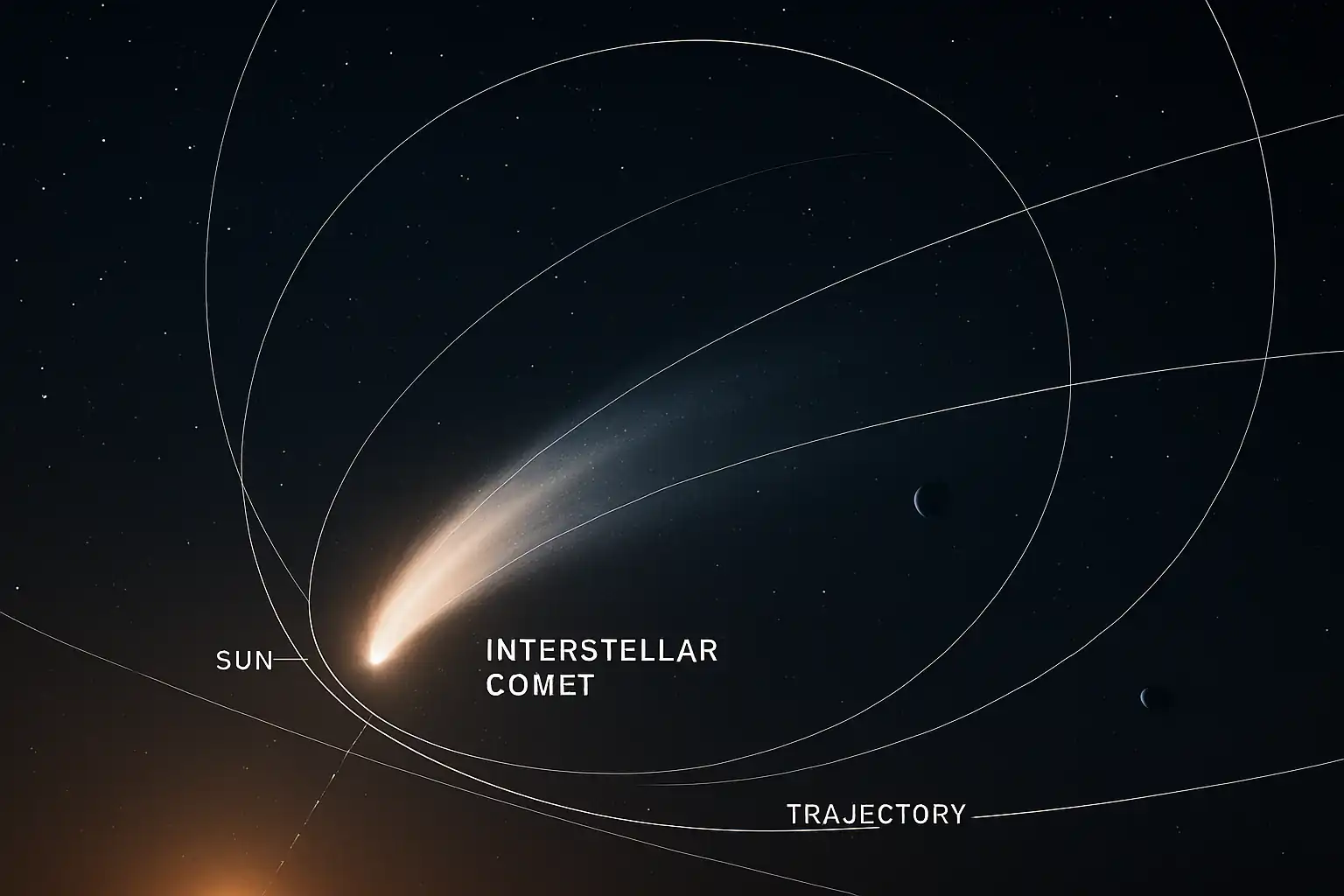
    The comet’s hyperbolic trajectory indicates it is undeniably interstellar; its closest approach will be over 170 million miles from Earth. There’s no engineered menace, no impending collision—just a rare opportunity to observe interstellar chemistry firsthand.

    What It Means: Debunking, Panic, and the Danger of Bad Information

    The whirlwind of 3I/ATLAS conspiracy illustrates a classic case of twenty-first-century panic cycles. The truth, revealed through open data and strict peer review, remains more mundane—and more miraculous—than the stories swirling online. Agencies like NASA and ESA have tirelessly countered outlandish claims, while communication among planetary defense professionals emphasized learning, not secrecy. Occasionally, peculiarities like a missing gas tail or rare elements attract excessive scrutiny, but peer review ultimately prevails. Similar to past public anxieties about comets and nuclear threats (see this nuclear report), panic and viral misinformation consistently outpace slow-moving, public-facing science.

    For a comprehensive guide to filtering truth from fiction—across astronomy, technological fears, and geopolitics—bookmark Unexplained.co. Our cosmic visitors may be infrequent, but misinformation is always rampant.
  • Epicenter Earth: Solar Storms, Cosmic Visitors, and the Global Cycle Hype in 2025

    Epicenter Earth: Solar Storms, Cosmic Visitors, and the Global Cycle Hype in 2025

    Every generation sees itself at the center of history—and 2025 is no exception. Sensational headlines warn of a “solar superstorm apocalypse.” Viral videos track the path of interstellar comet 3I/ATLAS. Cosmic catastrophe talk surrounds us. But what’s real science, what’s overhyped, and why does Earth’s spotlight feel hotter than ever?

    Solar Superstorm 2025: Real Risk or Overblown Fear?

    Solar activity is increasing, with experts warning of a peak solar cycle in 2025 that could dwarf past events. Studies from WIRED Middle East indicate this surge may cause a geomagnetic storm akin to the Carrington Event of 1859. That event set telegraph wires ablaze and triggered global auroras. The potential fallout? Satellite disruptions, long-lasting power grid failures, and trillions in economic damage. NASA has intensified early warning efforts, but global infrastructure faces greater exposure than ever. As outlined in The Planetary Society’s 2024 brief, even a moderate storm could disconnect millions from power. However, not all space theorists predict doom—some highlight improving predictive models. Planned missions like SWFO-L1 and IMAP (launching in 2025) offer the best monitoring yet.

    Solar storms are more than Hollywood tales; their effects are real. For a technical overview, see the scientific background on solar storms. The crucial question: Will our society invest in resilience, or wait for cosmic roulette?

    3I/ATLAS: The Interstellar Comet Captivating Researchers (and Conspiracy Theorists)

    The discovery of interstellar comet 3I/ATLAS—as a true outsider—has sparked academic fascination and prophetic hysteria. As covered by the Times of India, the comet zipped through our neighborhood in late October, dazzling us with its unusual composition and tail formation. Despite wild claims of “alien origin” or disaster, the facts remain: 3I/ATLAS never approached within 167 million miles of Earth, posing zero threat to humanity. Instead, its passage has provided astronomers a rare sample of interstellar material—helping decode the chemical origins of planetary systems, as evidenced by NASA’s ongoing efforts in their official 3I/ATLAS portal.

    This rare visitor’s data surge mirrors excitement (and speculation) from sources such as deep-dive comet reporting and apocalyptic AI scenario coverage—reinforcing our cultural appetite for cosmic mystery and existential fear-mongering.

    Milankovitch Cycles and the Reality Behind Global Cycle Theories

    Recent media noise about “global cycles” casting Earth as the cosmic focal point echoes centuries-old speculation. Scientifically, these cycles are known as Milankovitch cycles, oscillations in Earth’s tilt, orbit, and wobble—spanning tens to hundreds of thousands of years. NASA’s 2024 climate research (full article) dismisses the idea that current changes are cosmic in origin. Current warming closely correlates to greenhouse gas emissions, with no evidence of extraordinary Earth alignments. Yet these theories resurface during planetary crises, akin to debunks of missing time and occult legend explorations exploiting collective angst. Yet, there’s beauty in the cyclic rhythms that have shaped ice ages, sea levels, and planetary habitability long before and after our Twitter feeds.

    What It Means: Is Earth the Center of the Action, or Just in the Crosshairs?

    Is something big about to happen, with Earth as the headline act? The short answer: Earth is always ‘the center’ from our perspective. However, the 2025 convergence is more about uncertainty and connectivity than any cosmic targeting. Solar superstorm risk is real but manageable with preparation—as demonstrated in infrastructure reviews like this critical assessment. The comet 3I/ATLAS event is remarkable but not threatening; global climate cycles continue as usual. Our fears reflect the interconnectedness and vulnerability of a civilization reliant on technology. As indicated by historical economic collapse parallels and modern security field reports, understanding true existential risk involves separating the spectacular from the speculative.

    Why does it all matter? Building resilience—against space weather, financial shocks, or cultural panics—requires nuance and vigilance, not memes about cosmic destiny. For context, evolving scientific breakdowns, and (occasionally wild) speculation, turn to Unexplained.co, your source for the truly big stories.

  • NASA’s 3I/ATLAS Photo Mystery: Secrecy, Speculation, and the Science Behind the Sun

    NASA’s 3I/ATLAS Photo Mystery: Secrecy, Speculation, and the Science Behind the Sun

    Every era has its cosmic controversy. In 2025, the riddle around 3I/ATLAS stands prominent—it is the third confirmed interstellar object to visit our solar system. As the comet swung behind the Sun for its October 29 perihelion, the internet predictably ignited with accusations of NASA cover-ups and calls to “release the photos.” The truth is less sinister and highlights how science and modern mistrust interact when social media meets astronomical events.

    Why the Public Can’t See 3I/ATLAS at Perihelion

    Despite the hype, the science is straightforward: during perihelion, 3I/ATLAS positioned itself directly behind the Sun from Earth’s viewpoint, making it invisible to ground-based telescopes. This geometry is cosmic luck, not a conspiracy. However, Universe Today notes that various space-based observatories, including SOHO, PUNCH, and JUICE, tracked the comet during this solar transit. This ensures scientists can still obtain essential images, even if instant public uploads aren’t always feasible. New Hubble and JWST data, plus images from Mars orbiters, affirm that science is moving forward, not harbored in secrecy.

    The push for transparency echoes past debates found in archival analyses. These discussions reveal how digital FOMO clashes with the realities of slow data processing and peer review.

    NASA Secrecy Claims: Data Delays vs. Deliberate Obfuscation

    Public impatience surged. Some, like Harvard astronomer Avi Loeb, questioned whether NASA was “withholding data” about unusual features like chemical outgassing and speculative technology origins. According to The Economic Times, claims emerged that NASA’s Mars images hadn’t been released, with some suggesting delays indicated something extraordinary. Internal memos, revealed in leaked documents, expose technical challenges, such as corrupted telemetry and incomplete data sets—hardly a men-in-black cover-up. As seen in debates over solar-system anomalies, the caution favored by science often clashes with expectations of the digital age.

    Those observing deeper secrecy elsewhere cite technological silence in UFO investigations near Area 51 and defense issues, including nuclear protocol reporting.

    The Data So Far: Imaging, Chemistry, and Anomalies

    Contrary to rumors, NASA and global partners have released fresh 3I/ATLAS data. Hubble, JWST, and GOES-19 satellite images show a teardrop-shaped coma and a Sun-facing plume. As reported by Space.com, perihelion saw intense monitoring with spacecraft designed for ultraviolet and infrared spectroscopy. Chemistry reports confirm abundant carbon dioxide, traces of water vapor, cyanide, and atomic nickel—fuel for those intrigued by extraterrestrial anomalies, yet consistent with interstellar comet expectations. The hyperbolic trajectory, shape, and absence of mini-probe “gifts” suggest the science remains what it is: science.

    This data influences defense analysis and astronomer modeling, with insights applied to asteroid network protocols and galactic alignment reports.

    What It Means: Trust, Transparency, and Space-Age FOMO

    Ultimately, the NASA-3I/ATLAS photo controversy reflects a timeless dilemma: the need for instant answers versus the rigor of methodical science. Even with FOIA-enabled insights into NASA’s communication challenges, no evidence of a deliberate visual blackout has surfaced—only the usual process of data verification, agency policies, and inevitable delays. Meanwhile, pop scientists and public skeptics emphasize that the push for transparency is vital, and institutional inertia can mimic secrecy, even when unintentional.

    The case of 3I/ATLAS serves as a cosmic reminder: the universe does not await our upload speeds or patience. For clear-headed analysis, free from intrigue, watch Unexplained.co and observe the ongoing scientific evolution in our era of space exploration and headline-driven urgency.

  • Area 51 Crash Mystery: Official Silence Fuels Theories After Nevada Incident

    Area 51 Crash Mystery: Official Silence Fuels Theories After Nevada Incident

    When a mysterious object crashed outside Area 51 in late September 2025, Nevada’s silent desert captured modern imagination once again. The site quickly cordoned off, no official explanation emerged, and five weeks later, only leaks caused speculation to flourish in the government’s silence. This incident, detailed by 8 News Now, triggered a storm of new “cover-up” claims and reignited debate about the secrets hidden under southern Nevada’s skies.

    The Incident: Crash and Recovery in the Shadow of Groom Lake

    On September 23, 2025, an unidentified object—initially described as a military craft—crashed roughly 12 miles east of the Area 51 boundary. Security forces secured the site until recovery and cleanup concluded on September 27, as confirmed by Express.co.uk. Sources close to the investigation and eyewitnesses reported some debris resembled U.S. Air Force hardware, yet several details remain unclear. The U.S. government’s refusal to release photos or flight records has fueled suspicions, especially among those skeptical of Area 51’s ultra-secret history.

    Recovery protocols at the base are notoriously rigorous. The heavy use of earth-moving equipment, the addition of “misdirection” material, and the speed of site sanitization suggest “necessary secrecy” linked to cutting-edge military research and a performative opacity breeding conspiracy. Previous incidents—real and rumored—form a pattern; silence from authorities allows Nevada’s UFO folklore to fill the void. Contextual reporting from Area 51’s less-publicized neighbors, including events in archival field notes, reveals how moments like this fertilize both pop culture and distrust.

    Investigations, Tampering Allegations, and the Role of the FBI

    This crash has escalated into a full federal investigation, unlike typical drone or jet mishaps. Within days, Air Force and FBI teams arrived after initial observers noted signs of post-cleanup tampering—a rare indication of “classified elements,” as noted in The War Zone. The presence of both agencies, coupled with the secrecy and shifting probes, has fueled new claims, some linking them to experimental platforms and others suggesting foreign or unexplainable technology.

    The military’s official statement simply confirmed “no fatalities,” emphasizing the area’s crucial role in covert testing and reconnaissance. For those tracking defense trends, it echoes past nuclear-era drills and Nevada’s state responses, such as those in this incident analysis and global escalation briefings.

    Secrecy, Conspiracies, and Nevada’s UFO Folklore

    What drives the speculation surrounding a crashed drone or unmarked aircraft near Area 51? Official secrecy has fostered lore for decades, while the base, known as Homey Airport or Groom Lake, operates under near-unmatched restriction. This secrecy means mishaps—mundane or otherwise—rarely come with straightforward explanations. Reports on this year’s recovery mention a carefully plowed dirt road leading to the site, with earth moved for retrieval and, according to some, to obscure physical evidence. Analysis from Aerospace Global News examines the tension between genuine national security and public mistrust, heightened by social media-driven viral footage and leaks.

    For broader perspective, consider how similar secrecy and rapid response protocols underpin stories about hidden government tech initiatives—like those detailed in the Project Galileo files and curated AI breakdown chronicles.

    What Remains: Speculation vs. the Official Record

    The 2025 Area 51 crash case emphasizes the unique tension between security, curiosity, and digital imagination. Intelligence sources and Air Force spokespeople claim most “mystery objects” have mundane explanations—military drones, sensor platforms, and black projects—but admit some records, photographs, and analyses will remain classified for years. Untangling truth from conspiracy now requires cross-referencing, investigative reporting, and public transparency.

    In Nevada, the boundary between national security and public right-to-know hardens, even as viral videos and leaks amplify the mythos. To sift fact from folklore—and anticipate the next official non-statement—bookmark resources like Unexplained.co for context unavailable on cable news or government press releases. Until the next incident—keep your radios on and your theories grounded.

  • 3I/ATLAS Ignites: Interstellar Brightening and 2025’s Solar Superstorm Threat

    3I/ATLAS Ignites: Interstellar Brightening and 2025’s Solar Superstorm Threat

    As astronomers began their routine observation cycle, interstellar comet 3I/ATLAS surprised them with dramatic brightness. This burst exceeded anything recorded from recent interstellar objects. Now, as the comet exits its solar blind spot and sunspot groups reactivate, 2025 promises to test astrophysical cause and effect—and shows that cosmic events can resonate beyond headlines (Chron).

    3I/ATLAS: Rapid Brightening and Rare Interstellar Chemistry

    NASA and international teams have observed 3I/ATLAS brightening faster than expected as it approached its October 29 perihelion. Recent reports indicate that the comet’s surge in brightness, surpassing Oort Cloud comets, caught scientists off guard. New findings highlight its bluer-than-Sun hue, substantial gas outgassing, and a nucleus larger than previous interstellar visitors. The galactic alignment context and the comet’s unique chemistry intrigue experts in planetary defense and solar system formation.

    3I/ATLAS poses no threat to Earth, passing no closer than 1.8 AU. Yet, its glow offers valuable insights into chemistry from distant star systems. Researchers and the public can monitor its path and scientific impact through features such as this investigative update and ongoing scientific records.

    Solar Superactivity: Sunspot Growth and Space Weather Threats

    As 3I/ATLAS reached perihelion, the Sun entered a phase of intense volatility. By the end of October 2025, explosive sunspot growth occurred on the Sun’s far side, now rotating toward Earth. According to EarthSky, these sunspots have produced massive flares and swift coronal holes, with geomagnetic storms elevating the Kp index to G1 and G2 (minor to moderate) levels. NOAA’s Space Weather Prediction Center confirms this activity represents one of the strongest intervals since Solar Cycle 25 began. As auroras appear at new latitudes, analysts brace for potential satellite, radio, and grid disruptions.

    This narrative weaves through the solar cycle’s ascent, evident in long-term datasets and the expectations highlighted in this resonance check of disaster cycles.

    Geomagnetic Storms: Tech Disruption and Historical Precedent

    Major geomagnetic storms, triggered by solar flares and coronal mass ejections, can disrupt modern life unpredictably. As EarthSky explains, currents over 100 amperes can flow through electrical grids, damaging transformers and causing blackouts. The May 2024 G5 storm, the worst in two decades, knocked out Quebec’s grid and disrupted GPS systems vital for various activities. Lesser storms also threaten satellites, pipelines, and undersea cables. This risk echoes in tech breakdown case studies and influences national preparedness plans worldwide.

    Grasping these risks extends beyond academia. Explore how science intersects with civil contingency planning in emergency broadcast investigations.

    What’s Next: Monitoring, Modeling, and Real-World Consequences

    With 3I/ATLAS fading from the Sun and powerful sunspot groups becoming visible, scientists and grid operators prepare for upcoming challenges. The intersection of interstellar comet science and solar activity presents unique opportunities—both for planetary defense planning and assessing our digital systems’ resilience. Understanding a geomagnetic storm involves recognizing not only auroras but also the hazards to infrastructure and national security.

    Whether tracking satellite alerts, enjoying auroras, or planning contingency measures, this story offers vital lessons on planetary vulnerability and cosmic wonder. For comprehensive analyses ranging from solar physics to scenario planning, set your alerts with Unexplained.co.

  • 3I/ATLAS’s Wild Trajectory Shift: Why Scientists and Skeptics Are Riveted

    3I/ATLAS’s Wild Trajectory Shift: Why Scientists and Skeptics Are Riveted

    For a fleeting few days, comet 3I/ATLAS captivated hardcore astronomers and UFO enthusiasts alike. The excitement peaked when astronomers confirmed that this interstellar comet—only the third of its kind ever discovered—made a significant course adjustment, a phenomenon unprecedented in comet observation. Fortunately, it posed no threat to Earth (Newsweek).

    3I/ATLAS’s Course Shift: A True Astronomical Outlier

    Nasa data and international tracking indicate that comet 3I/ATLAS reached its closest approach to the Sun in late October 2025. It then exhibited a course change that stunned veteran sky-watchers. The trajectory—extraordinarily hyperbolic and even stranger post-perihelion—prompted planetary defense officials to activate monitoring protocols, driven by scientific awe rather than fear. According to Sky & Telescope, the comet demonstrated erratic changes in velocity, brightness, and path, offering a rich source of data for those studying celestial mechanics and interstellar material.

    A detailed analysis of 3I/ATLAS’s behavior highlights its safe passage—never closer than 170 million miles from Earth—ensuring that sky-watchers could marvel without concern. For those interested in meteor showers and cosmic near-misses, explore related defense alerts and this analysis on the comet’s role in upcoming galactic alignments.

    The Science and Speculation: Alien Probes or Ice and Dust?

    Astrophysicist Avi Loeb and his colleagues sparked controversy by suggesting that 3I/ATLAS might be a technological artifact. This theory fueled speculation that it adjusted its path intentionally, echoing a science fiction narrative. Such claims led to sensational headlines and social media debates, but the scientific community remained skeptical. As LADbible reports, Professor Brian Cox publicly dismissed alien theories, labeling manipulated clips and supportive “AI slop” as false, emphasizing the need for evidence-based analysis. He asserted that although exploring far-out ideas is valuable, the burden of proof is substantial, with existing data consistently supporting a natural—if bizarre—comet.

    This clash between skepticism and sensationalism involves legacy comet experts and star-gazers eager for the next “Oumuamua moment.” Such debates resonate in archives covering Avi Loeb’s arguments for interstellar artifacts and recurring public anxieties discussed in other tech-skeptic events.

    Trajectory History: Anomaly on an Interstellar Scale

    3I/ATLAS stands out due to its unprecedented eccentricity—a near-straight line, diverging from the elliptical paths typical of solar system comets (scientific background on 3I/ATLAS). As it barreled through the solar system, its path shifted after perihelion, likely due to powerful outgassing or even surface jets. No comet in modern observation has shown such a large-orbit deviation unconnected to planetary encounters or massive fragmentations. Some speculative outlets labeled it as “physics-defying,” but mainstream commentators urge caution and patience.

    This rare dynamic presents a goldmine for researchers tracking interstellar visitors. As it moves past the inner planets—never heading toward Earth—its evolution will inform planetary defense research, as detailed in ongoing monitoring protocols explained in this field report and historical reviews of outliers in scientific anomaly studies.

    What It Means: Scientific Vigilance in an Era of Skywatcher FOMO

    Is 3I/ATLAS a cosmic message or merely a wild natural visitor? The community’s verdict: remain fascinated, but trust the scientific method. The comet offers astronomers an unparalleled view into non-solar system chemistry while presenting a real-time case for debunking viral sensationalism. Ongoing dialogue, thoroughly documented across cross-disciplinary archives, reflects our desire for wonder alongside our necessity for scientific rigor.

    As the comet recedes—well away from Earth—the episode vividly illustrates the conflict between viral fear, wild speculation, and solid data. For real-time tracking of extraordinary space events (and the occasional extraordinary claims), trust established sources like Unexplained.co.

  • 3I/ATLAS, Planetary Alignments, and the Oberth Maneuver: Unpacking 2025’s Most Watched Interstellar Event

    3I/ATLAS, Planetary Alignments, and the Oberth Maneuver: Unpacking 2025’s Most Watched Interstellar Event

    The solar system is poised for an extraordinary astronomical event: 3I/ATLAS, an interstellar comet, approaches the Sun and heads for a “galactic alignment.” This excitement has sky-watchers, scientists, and theorists buzzing. Discovered in July 2025, 3I/ATLAS is just the third known interstellar object. Its every move is now under intense international scrutiny (LiveNOW from FOX). As it glides behind the Sun, many wonder what energetic surprises it might unleash during this unique planetary choreography.

    3I/ATLAS: Current Trajectory and the Science of Close Solar Encounters

    NASA confirms that 3I/ATLAS reached perihelion on October 29, 2025, passing at 1.36 AU, well outside Earth’s orbit (official NASA and ephemeris records). Tracking of the comet is intensive, yet it poses no threat to Earth; its path intersects a dense region of Mercury, Venus, Earth, Mars, and Jupiter during a rare planetary alignment. Hubble observations reveal a teardrop-shaped dust cocoon and a fast, hyperbolic escape trajectory from the solar system. While some, like Harvard’s Avi Loeb, speculate about artificial origins, planetary scientists focus on outgassing, nickel signatures, and its potential as a sample from distant star systems. For a quick breakdown of 3I/ATLAS’s chemistry and monitoring, see this investigative update.

    The Oberth Maneuver and Alien Hypotheses: Science, Speculation, and What to Watch

    The ‘Oberth maneuver’ has sparked debate about whether 3I/ATLAS could alter its trajectory using energy from the Sun. The Oberth effect explains why any spacecraft—alien or human—would maximize engine burns at perihelion for the best velocity boost (mechanics explained in astronautics). While leading astronomers classify 3I/ATLAS as a natural comet, the “alien mothership” theory persists: Avi Loeb argues that perihelion presents a “black swan” opportunity for a spacecraft to reveal itself via such a maneuver (IFLScience). To date, there’s no evidence of non-natural propulsion, but this moment remains a litmus test for anomalies—if they exist.

    Open-minded skepticism prevails, combining data analysis and scientific scrutiny, as researchers emphasize in this crossroads-of-disclosure feature.

    Galactic Alignment: Planetary Choreography and Energetic Speculation

    What about the historic alignment? In 2025, Jupiter, Earth, the Sun, Mercury, Venus, and Mars will cluster unusually closely along the ecliptic, with 3I/ATLAS threading this needle in the solar system. While planetary alignments lack the gravity to trigger earthquakes or solar flares, they captivate astronomers and astrologers alike. Astrophysicists assert that alignments are visually stunning rather than dynamically disruptive. Many spiritual and “energy shift” commentators ascribe special significance to these rare configurations (Medium). In reality, these alignments sometimes coincide with heightened solar activity or unusual geomagnetic events—but correlation is not causation. Ongoing research, including updates published in solar and magnetic cycle reviews, grounds theories in observable data.

    Meanwhile, the conjunction of planets with an interstellar object provides a valuable natural experiment—one closely monitored by ground and space-based observatories across the globe. The interplay of cosmic samples, solar wind, and planetary gravity is not merely a spectacle; it serves as a laboratory for interplanetary science, as discussed in planetary defense updates.

    Why 3I/ATLAS Matters: Cosmic Rarities, Public Fascination, and Scientific Vigilance

    The stir around 3I/ATLAS shows our enduring fascination with the unknown. This blend of observation, speculation, and online myth-making captivates the public. Whether viewed as an omen, alien probe, or spectacular comet, interstellar visitors offer unique research opportunities. Science encourages skepticism but also openness; spectacular events often yield unexpected insights. For broader context on how anomalies shape public discourse and policy—from planetary alignments to political preparedness—see in-depth reporting on government emergency cycles or the cultural echo chamber analyzed in this AI failure chronicle.

    Whether 3I/ATLAS’s passage marks a mere chapter in cosmic history or sparks future headlines, it highlights both the limits and promises of current science. For continuous updates that differentiate signal from noise in the planetary anomaly landscape, follow trusted sources like Unexplained.co.

  • Disclosure Fault Lines: Timothy Alberino, UFO Whistleblowers, and the Hidden Reality

    Disclosure Fault Lines: Timothy Alberino, UFO Whistleblowers, and the Hidden Reality

    UFO disclosure in America serves as a Rorschach test for belief, secrecy, and power—a point made clear in author and researcher Timothy Alberino’s recent appearance on The Ryan Files. Amid congressional hearings and whistleblower claims about non-human craft and biological entities, the gap between public disclosures and classified information widens. Alberino argues that the reality of “craft” and “biologicals” is acknowledged at high levels—shifting the debate to control over technology hidden in Special Access Programs (SAPs) and Unacknowledged SAPs (USAPs).

    Crash Retrievals and Non-Human Entities: Inside the Alleged Black Programs

    Alberino cites testimony from David Grusch, whose comments during a 2023 congressional hearing reignited interest: “I was informed in my official duties of a multi-decade UAP crash retrieval and reverse engineering program to which I was denied access.” According to AP News, Grusch claimed under oath that the U.S. possesses both “craft” and “non-human biologics”—though the Pentagon disputes these claims. While some allegations remain contentious, Alberino emphasizes the existence of compartmentalized programs—often linked to aerospace contractors, evading standard oversight. Whistleblower accounts and Senate discussions about rogue programs kept from Congress echo this reality. Legal loopholes surrounding SAPs and USAPs, as described by the Special Access Program protocols, contribute to these issues.

    Investigative reports on state secrecy and related fields further examine this compartmentalization, evident in this deep dive on black projects and the cultural reckoning regarding government control as discussed here.

    AARO, Congressional Drama, and the “Nine Debunks + One Unknown” Pattern

    Amid ongoing public AARO briefings, Congress presses for answers: how many UAP cases truly elude conventional explanations? A classified December 2024 briefing evaluated over 750 new UAP reports, revealing just a dozen warranting further scrutiny (NewsNation). While most sightings can be attributed to drones, weather balloons, or sensor errors, cases that resist resolution—“the one unknown”—prompt persistent inquiries. Critics, as highlighted in public reviews, challenge AARO’s tendency to classify the majority of reports as mundane. Whistleblowers accuse the Pentagon of obscuring “reverse engineering” efforts within SAPs.

    The rift between public transparency and classified information pervades investigative accounts of military risks, featured in emergency event analyses and the ambiguous communications evident in recent preparedness breakdowns.

    3I/ATLAS: Interstellar Mystery and the Evidence Wars

    New anomalies emerge as proxies for disclosure battles. The case of 3I/ATLAS—a Manhattan-sized interstellar visitor with abnormal tails, mysterious “pulse sequences,” and exotic material signatures—has divided the scientific community. In-depth reporting from USA Herald and The Economic Times reveals the debate: Harvard’s Avi Loeb and others assert some traits—unusual nickel alloys, power absorption, and “structured” signals—suggest engineering rather than chance. Detractors counter these assertions, citing image artifacts and incomplete data. Social media-driven “mothership” theories often accelerate ahead of evidence, while open access projects strive for clarity amidst AI-generated confusion. For an expert-driven timeline and image assessment, refer to this comprehensive science breakdown.

    The fervor around 3I/ATLAS illustrates how the divide between public discourse and classified knowledge intensifies with every interstellar visitor. This trend is also evident in high-profile scientist interviews and skeptical roundtables.

    Abductions, Hybrids, and the Truth Behind the Narrative

    The themes of “alien abduction” and “hybridization” prevalent in Alberino’s research spark controversy. Long-term data sets, referenced in recent podcast interviews, indicate some abduction accounts retain recurring details, yet determining their origin—Earth-based entity or off-world visitor—remains unresolved. The internet age has further blurred these lines, mixing credible research with sensationalistic memes and viral clips. For an in-depth exploration of these narratives and their psychological effects, see cultural feature coverage and discussions on tech-augmented folklore in the digital age, such as this AI failure analysis.

    Why is disclosure significant? In an era of AI forgeries, SAPs, and threatened whistleblowers, the struggle for truth goes beyond UFOs. It tests democratic accountability and the public’s right to know. For updates and analytical insights into the disclosure landscape, bookmark investigative leaders like Unexplained.co.

  • Avi Loeb on Joe Rogan: Alien Technosignatures, Project Galileo, and the Case for Humanity’s Interstellar Future

    Avi Loeb on Joe Rogan: Alien Technosignatures, Project Galileo, and the Case for Humanity’s Interstellar Future

    When Harvard’s Avi Loeb appeared on episode #2401 of the Joe Rogan Experience, he sparked a significant dialogue between mainstream science and unconventional speculation. Loeb, a theoretical physicist and Frank B. Baird, Jr. Professor of Science at Harvard, is known for challenging orthodox views about extraterrestrial life. His latest book, Interstellar: The Search for Extraterrestrial Life and Our Future in the Stars, presents a bold thesis: humanity has likely been visited by alien technology, and we are destined to join interstellar civilizations (Harper Academic).

    Oumuamua, Alien Technosignatures, and Scientific Backlash

    Loeb gained international attention in 2017 when he proposed that Oumuamua, a fast-moving object in our solar system, might be artificial—an alien probe rather than a natural asteroid or comet. He pointed out that standard explanations didn’t adequately account for its shape, reflectivity, and acceleration, which he reiterated with Rogan. According to Scientific American, Oumuamua’s unusual brightness and elongated shape diverged significantly from known celestial objects. Loeb suggested it could be engineered, perhaps a discarded light sail. Critics dismissed his theory as reckless, but Loeb advocates for “data over dogma.” He emphasizes the need for a systematic search for technosignatures—concrete evidence of extraterrestrial technology—through rigorous, transparent science. The skepticism directed at Loeb mirrors the dismissal faced by early proponents of SETI and planetary defense and may still prove myopic, as indicated in analyses like this report on cometary anomalies.

    Project Galileo: From UAPs to Oceanic Expeditions

    Frustrated with fuzzy government videos and anecdotal UFO accounts, Loeb launched Project Galileo in 2021. The project’s mission is to collect and analyze high-quality, empirical data on unidentified aerial phenomena (UAPs) and potential interstellar artifacts. Unlike conventional government projects, Galileo operates independently, transparently, and crowdsourced—from sensors on Harvard rooftops to ocean expeditions. Recently, Loeb’s team undertook a bold expedition to recover tiny metallic spheres from the ocean floor, believed to be remnants of an interstellar meteor. Preliminary analyses reveal alloys not found in our solar system, stirring excitement and criticism, as the results await peer review (Galileo Project News).

    Galileo’s strategy—prioritizing physical evidence, maintaining open-source data, and fostering skepticism around wild theories—has gained relevance amid the growing interest in UAPs and unexplained phenomena. The project’s ethos resonates with other paradigm-challenging initiatives, such as those focused on planetary defense in this investigative report, and encourages a cross-pollination of science and public dialogue surrounding high-stakes uncertainties.

    “Interstellar”: Civilization’s Next Leap and the Survival Imperative

    Much of Loeb’s new book, Interstellar, serves both as a rallying cry and a plan for humanity’s future in the cosmos (publisher synopsis). He believes humanity must accept its cosmic role, actively seeking life beyond the solar system. The book outlines a vision where interstellar travel becomes essential for survival, rather than a mere fantasy—a point he stressed to Rogan and his audience. Loeb asserts that science must evolve to be more transparent, less hierarchical, and bolder in exploring unknowns. Critics label it an audacious vision, but it resonates with discussions about rising existential threats and the need for radical scientific openness (see also coverage of preparedness cycles and cultural explorations of unexplained mysteries).

    Avi Loeb’s Legacy: Maverick Research, Controversy, and the Search for Truth

    Loeb’s unconventional ideas have spurred intense debates, rallying a new generation of scientists and the public to question: why not pursue rigorous research for life and technology beyond Earth? His impressive credentials include leading Harvard’s Black Hole Initiative, writing over eight books, and being a Fellow of prominent scientific academies (canonical profile). While critics challenge his interpretations of Oumuamua, meteor spherules, and Galileo data—claiming “insufficient evidence” and “overstated conclusions”—they also recognize his courage and the importance of transparent, empirical research (Galileo updates).

    Ultimately, Loeb argues that ignoring surprising data poses a greater risk than feeding sensational headlines. For ongoing discussions at the crossroads of science, culture, and the unknown, websites like Unexplained.co illustrate how paradigm shifts often begin with challenging ideas—and sometimes thrive through popular platforms like the Joe Rogan Experience.

  • 3I/ATLAS Update: Sudden Tail Reversal, Unprecedented Chemistry, and Global Alarm

    3I/ATLAS Update: Sudden Tail Reversal, Unprecedented Chemistry, and Global Alarm

    Interstellar comet 3I/ATLAS defies expectations as it races through the solar system in October 2025. Discovered by the ATLAS survey telescope in Chile, this cosmic traveler exhibits a wild, hyperbolic trajectory. Most recently, after its closest solar approach, observers at the Keck II telescope confirmed a dramatic outburst, ejecting a plume of dust and forming a rare “anti-tail”—jets of material aimed toward the Sun. These findings, backed by canonical orbital records and direct observations, challenge long-standing models of cometary activity and prompted swift action from planetary defense agencies.

    Trajectory Mystery: Why 3I/ATLAS Refuses to Behave

    Unlike typical solar system comets, 3I/ATLAS races at an astonishing 210,000 km/h, its path unbound by the Sun’s gravity. However, a mid-October outburst left astronomers confused as NASA and global teams watched it develop a reverse tail near Mars. Orbit modeling from sources like Star Walk emphasizes its unpredictability, noting it won’t come closer than 1.8 AU to Earth while showcasing a dynamic “anti-tail” during its closest approach. This critical passage forced an unprecedented recalibration of its trajectory and ignited renewed debates about possible fragmentation. Notably, the early investigations into its risk profile remain vital for ongoing planetary defense strategies.

    Similar to other astronomical surprises—like geomagnetic disruptions (covered in this reality check)—this orbit positions 3I/ATLAS as a laboratory for limits in astronomical prediction rather than causing direct planetary panic.

    Error Code: Bizarre Chemistry and Artificiality Debates

    If the orbit astounds, the chemistry breeds controversy. According to an in-depth feature from UROUBC, spectrographic analysis in October revealed outgassed material rich in atomic nickel yet oddly lacking iron—a combination never before observed naturally. Even more perplexingly, the nickel appears chiefly in nickel tetracarbonyl (Ni(CO)4), a compound produced through human industrial processes. Some researchers, including Harvard’s Avi Loeb, argue this anomaly could indicate non-natural origins. Others suggest it reflects rare formation conditions in 3I/ATLAS’s home system. The debate continues, especially with prominent voices invoking comparisons to “Trojan horse” scenarios and manufactured alloys.

    Anomalous spectra evoke historical cases of scientific dissent and whistleblower revelations (as cataloged in this media censorship firestorm), where established views clash with open inquiry under public scrutiny.

    Global Response: Emergency Monitoring Goes Live

    3I/ATLAS’s rapid changes and unusual tail triggered alarms in public policy: the United Nations, alongside the International Asteroid Warning Network (IAWN), initiated a planetary defense campaign. As reported by the International Business Times, NASA and planetary defense partners initiated a months-long global observation drill coinciding with 3I/ATLAS’s perihelion. This marks the first coordinated early-warning response involving amateur astronomers, academic networks, and national emergency agencies for an interstellar object. The goal? To refine astrometric tracking and detection protocols, ensuring rapid global notification if a comet or asteroid poses a genuine threat. This groundbreaking campaign runs from November through January, echoing structured emergency drills previously reserved for earthbound disasters.

    While speculation continues—much like the supposed “man-made” chemistry—official agencies stress that there is no danger to Earth. Nonetheless, the 3I/ATLAS situation has expedited emerging planetary defense standards and protocols, paralleling previous exercises in response to potential impact threats (archived here).

    What It Means: The 3I/ATLAS Case as a Future Template

    3I/ATLAS isn’t merely a cosmic anomaly but a call to action for a new era of planetary preparedness. Its strange tail, Manhattan-size nucleus, and nickel-rich vapor cloud already shape debates on natural versus engineered origins, emergency response, and the need for transparency in major scientific discoveries. Interstellar visitors, like this one and past megastructures seen in other headline-grabbing moments (see this exploration of phenomenon and expectation), become landmarks for science, risk communication, and today’s rumor cycle.

    In this evolving landscape, what began as astronomical conjecture transforms into a testbed for global defense, open data, and epistemic humility. Ongoing analysis by Unexplained.co will explore how the saga of 3I/ATLAS may influence our cosmic vigilance and future science policy—regardless of how peculiar the universe becomes.