Category: UFO & Aliens

  • Neil deGrasse Tyson vs UFOs: What the Space Data Hides

    Neil deGrasse Tyson vs UFOs: What the Space Data Hides

    What You Need to Know Before We Fall In

    • Black holes pack extreme density: one with Earth’s mass fits into a 9 mm radius, while a golf ball-sized version (about 21 mm across) could weigh several times more than our planet, challenging everything we think we know about matter.
    • NASA has confirmed over 5,000 exoplanets, with billions more likely in the Milky Way—many in habitable zones where life could thrive; Tyson calls it unrealistic to think we’re alone, yet he pushes back on UFOs as evidence of aliens without stronger proof.
    • Mainstream science sticks to data on black holes, exoplanets, and UAPs, but online communities question if our tools and senses are blind to deeper truths—or if institutions are holding back key details on UFOs and unknown physics.
    • We’ve imaged a black hole’s shadow in 2019 and measured Sagittarius A* at 4 million solar masses, yet mysteries linger in black hole mechanics, the search for alien life, and the origins of many UAP reports.

    Listening to the Cosmos with Broken Senses

    Picture Neil deGrasse Tyson on a dimly lit stage, spotlight cutting through the haze, as he drops a bombshell: a point in space no bigger than a marble could outweigh the entire Earth. The audience leans in, but outside, the world buzzes with Pentagon UAP hearings, leaked fighter jet videos, and stories of lights in the sky that defy explanation. Tyson stays calm, insisting our senses—tuned for spotting predators on ancient plains—fall short when facing warped spacetime or quantum weirdness. Science, he says, acts as our upgrade, letting instruments peer into realities our eyes can’t touch. Yet in this era of viral cockpit footage and abduction tales, his call to trust the tech over blurry sightings raises a sharp question: if our perceptions are so flawed, what cosmic tricks are black holes, potential aliens, or those elusive UAPs playing on us right now?

    Tyson hammers the point with vivid examples: squeeze Earth’s mass into a 9 mm sphere, and you’ve got a black hole. Bump it to golf ball size—21 mm across—and its mass balloons to several Earths. These aren’t abstractions; they’re reminders that the universe operates on rules that shatter human intuition. Our senses evolved for survival, not for grasping gravity’s extremes or invisible cosmic structures. Meanwhile, public fascination surges with military pilots describing craft that zip without thrust, hearings admitting unexplained aerial phenomena, and communities sharing decades of encounters. Tyson counters that anecdotes and fuzzy images don’t cut it for claiming alien visitors. Still, if instruments reveal black holes and distant worlds we can’t see unaided, maybe they’re also missing—or we’re not looking hard enough at—the anomalies that keep skywatchers up at night.

    What Tyson, Witnesses, and Skywatchers Are Really Talking About

    Tyson keeps it straightforward: black holes emerge from general relativity’s equations, backed by real observations. They form when stars heavier than 20 solar masses burn out, explode in supernovae, and leave cores over three solar masses that gravity crushes into oblivion. On exoplanets, he points to the numbers—billions in our galaxy, many in zones where water could flow—making solitude in the cosmos seem improbable. But he draws a line: statistical likelihood isn’t proof, and UFOs lack the hard data to confirm alien tech.

    Contrast that with what hits forums and eyewitness networks. People describe craft pulling instant accelerations, hairpin turns, or vanishing acts that laugh at physics as we know it—no sonic booms, no visible propulsion. These aren’t casual observers; many track astrophysics closely, arguing their experiences outstrip current models. Some call Tyson too quick to dismiss, pushing for more weight on pilot testimonies, historical patterns, and classified footage that might reveal more. They reference voices like Michio Kaku, who entertains UAPs as possible extraterrestrial probes, especially after Pentagon reports label some incidents truly unidentified. Communities suspect interdimensional angles or hidden human tech, feeling that official skepticism ignores a puzzle with pieces scattered across black-budget programs and unexplained skies.

    Timelines, Telescopes, and the Physics We Can Put Numbers On

    Mainstream data grounds the conversation. The Schwarzschild radius shows black hole extremes: compress Earth’s mass, and the radius shrinks to 9 mm. A golf ball-sized black hole, at 21 mm, packs mass several times Earth’s. Formation follows a clear path—massive stars over 20 solar masses supernova, and cores above three solar masses collapse under gravity. Supermassive versions like Sagittarius A*, at 4 million solar masses, sit at galaxy centers, with some elsewhere reaching billions.

    The 2019 Event Horizon Telescope captured a black hole’s shadow, turning theory into visuals. Exoplanet counts top 5,000 confirmed by NASA, with billions estimated in the Milky Way—plenty in habitable zones. Tyson echoes this: life’s probable out there, but UAPs don’t meet the bar for alien proof without better evidence.

    Metric Value
    Schwarzschild Radius for Earth-Mass Black Hole ~9 mm
    Mass of Sagittarius A* ~4 million solar masses
    Number of Confirmed Exoplanets Over 5,000
    Date of First Black Hole Image 2019

    These figures solidify black holes and exoplanets as fact, but UAPs stay in the gray—unreached by the same rigorous metrics.

    When Official Stories Meet Lived Experience

    NASA frames black holes through relativity, spotting them via gravity’s pull and glowing gas edges. Exoplanets show up in transit dips or star wobbles, with stats favoring life elsewhere—but no confirmed alien signals. On UAPs, caution rules: unidentified isn’t alien, and more data’s needed over guesses. Tyson aligns here, open to extraterrestrials in theory but demanding instrument-grade proof for specific claims.

    Communities push back. Pilots and military vets report sightings that demand attention, not dismissal as sensory slips. They suspect classified radar and imagery hold clearer views, locked away from public science. If our tools miss layers of reality, advanced visitors might exploit that, flickering in like black hole flares we barely understand. This clash highlights a core rift: institutions lean on what’s verifiable, while experiencers argue their accounts fill gaps that data alone can’t. Figures like Kaku get nods for bridging to bolder ideas, contrasting Tyson’s institutional guardrails.

    Inside the Event Horizon of Our Ignorance

    The event horizon marks where light can’t escape—a fitting symbol for what we can’t yet see. Flares near Sagittarius A* puzzle experts, hinting at plasma dances or magnetic twists still under debate. If we’ve built tools to glimpse black holes and exoplanets, imagine what smarter beings might craft to scan hidden dimensions or energies.

    UAP reports tease similar unknowns: craft with physics-defying moves that could signal untapped laws or tech. With billions of planets, many life-friendly, the silence raises questions—rarity of smarts? Self-erasure? Or are we just not tuned in? Some bet classified UAP files could flip the script, though others note black projects explain plenty. Tyson’s proof threshold keeps things grounded, but it doesn’t seal off possibilities; it maps where claims need to level up.

    Breathing Stardust, Sharing Air, and Why the Mystery Persists

    Tyson reminds us we’re stardust—heavy elements from ancient stars and supernovae, the same furnaces birthing black holes. Each breath mixes molecules shared with every human ever, tying us to history’s vast chain. We know black holes exist, from shadows imaged in 2019 to Sagittarius A*’s colossal mass. Exoplanets number in the thousands confirmed, billions probable, many ripe for life.

    Yet UAP sources, intelligent life’s spread, and hidden physics remain open. Skepticism of official lines and wild claims both have roles; our senses and tools evolve, carving space for breakthroughs. The universe hides layers beyond our grasp—in that space, science and mystery push forward together.

    Frequently Asked Questions

    Tyson views black holes as real, observable objects predicted by general relativity and confirmed through events like the 2019 imaging of a black hole’s shadow. He believes alien life is statistically likely given billions of exoplanets, many in habitable zones, but he insists there’s no solid evidence that UFOs or UAPs represent extraterrestrial visitors.

    Massive stars over 20 solar masses exhaust their fuel, explode as supernovae, and if the core exceeds three solar masses, gravity collapses it into a black hole. Supermassive black holes like Sagittarius A* reside at galaxy centers and can reach millions or billions of solar masses.

    Many in UFO/UAP communities argue that eyewitness reports from pilots and military personnel, along with potential classified data, deserve more serious consideration. They feel Tyson’s dismissal overlooks behaviors in sightings that defy known physics, possibly hinting at advanced tech or new science.

    NASA has confirmed over 5,000 exoplanets using methods like transit photometry and radial velocity measurements. Estimates suggest billions more in the Milky Way, with many in habitable zones where conditions could support liquid water and potentially life.

    Yes, phenomena like rapid flares near Sagittarius A* remain not fully understood, possibly involving complex plasma physics or magnetic processes. Even with advanced imaging and measurements, black hole behavior continues to challenge and expand our models.

  • Planet Nine or Nibiru: The Hidden Giant Explained

    Planet Nine or Nibiru: The Hidden Giant Explained

    Key Takeaways

    • The core scientific claim: Planet Nine is a proposed 5–10 Earth-mass ice giant, suggested in 2016 by Caltech astronomers Konstantin Batygin and Mike Brown, based on unusual clustering in the orbits of distant Kuiper Belt objects known as extreme trans-Neptunian objects (ETNOs).
    • Newest evidence: Recent cross-matching of infrared sky surveys from the IRAS and AKARI satellites, taken 23 years apart, has identified candidate signatures of a slow-moving, cold giant, alongside ongoing analysis of ETNO orbital clustering.
    • Unresolved mysteries: While the data points to something massive influencing orbits, alternatives like Modified Newtonian Dynamics (MOND), primordial black holes, or no planet at all remain in play—echoing community discussions of Nibiru or Planet X as a hidden world with potential ties to ancient anomalies.

    A Slow-Moving Shadow in the Outer Dark

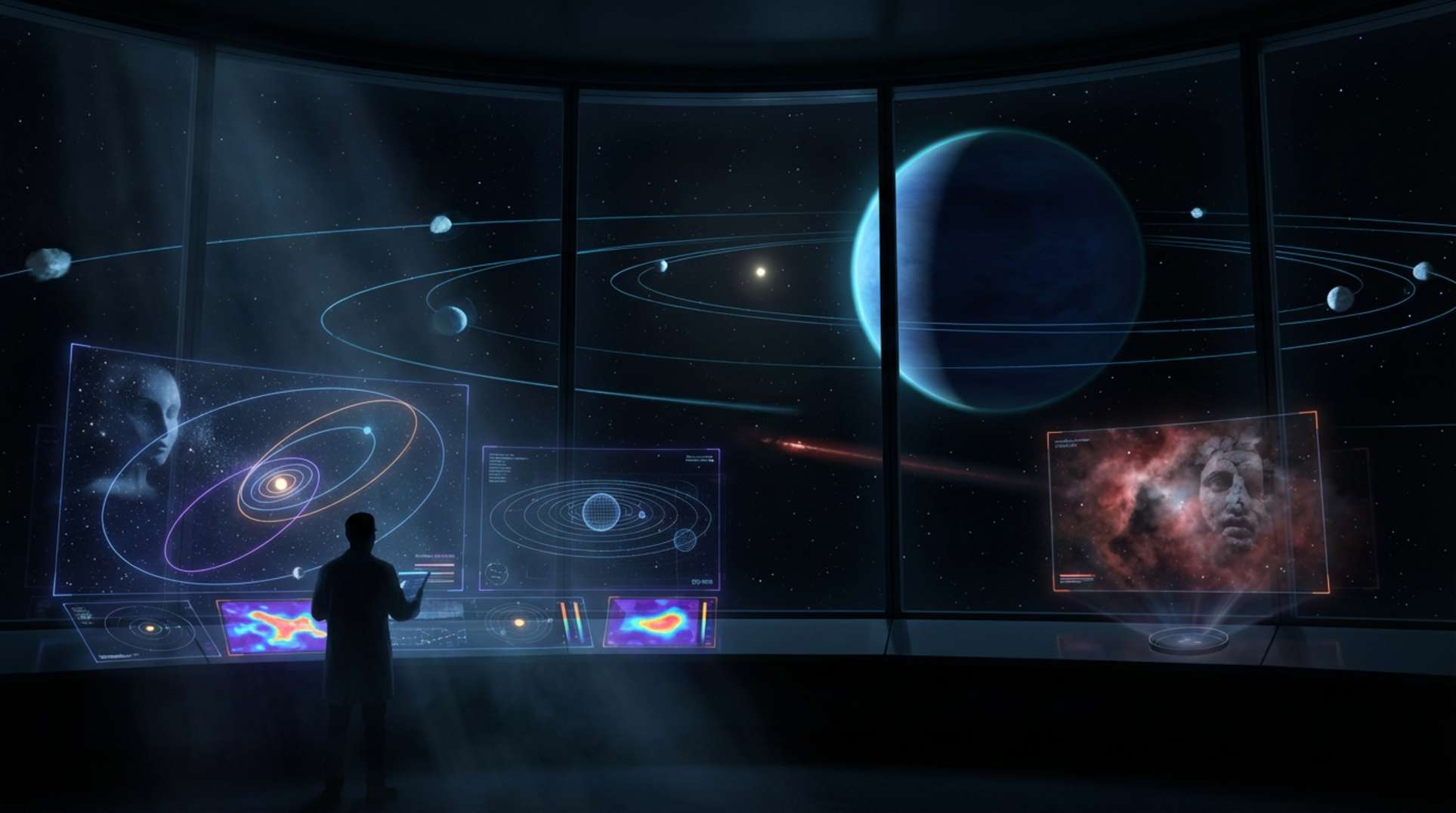
    Beyond Neptune lies the Kuiper Belt, a frozen ring of icy remnants, and farther still, the realm of extreme trans-Neptunian objects—scattered in a vast, dark halo where the Sun’s light fades to a weak glimmer and orbits can span tens of thousands of years. For decades, searches for a ‘Planet X’ have turned up empty, leaving astronomers and skywatchers alike scanning the void for signs of something massive, subtly reshaping the solar system’s distant architecture. Now, researchers dig through infrared data from the 1980s IRAS mission and the 2000s AKARI survey, while supercomputers model faint gravitational pulls—building a case that feels like it might finally cross into the territory of long-whispered stories about Nibiru or a hidden giant, stirring questions for those who’ve tracked these tales for years.

    Imagine a world on an orbit so vast it completes one loop around the Sun in 10,000 to 20,000 years—barely shifting position since humans first gazed at the stars. This proposed Planet Nine could be out there, a cold sentinel in the far reaches, its presence inferred from the way smaller bodies align like clues in a cosmic puzzle. As new observatories like the Vera C. Rubin prepare to hunt for that faint, almost motionless glow, the air thickens with anticipation: is this the breakthrough, or another layer in the mystery?

    What Researchers, Skywatchers, and Storytellers Are Claiming

    Mainstream astronomers, led by Batygin and Brown in their 2016 proposal, point to at least six—and later up to 13—extreme trans-Neptunian objects with orbits that cluster in unexpected ways, far from random chance. This suggests a gravitational shepherd, an unseen planet pulling strings from afar. They describe it as an ice giant, 5–10 times Earth’s mass, on an elongated orbit tilted about 20 degrees, roughly 400–630 AU from the Sun.

    Alternative researchers often link this to the Nibiru or Planet X concept, drawing from interpretations of Mesopotamian texts popularized by Zecharia Sitchin—a world on a highly eccentric path, tied to catastrophic Earth events and ancient visitors called the Anunnaki. Community voices, including online analysts and figures like Paul Begley, frame it through biblical lenses, seeing prophetic signs in the heavens that could signal disasters or concealed truths.

    Hybrid views blend the two: some argue that every new orbital oddity, strange meteor, or infrared blip builds evidence for a tracked but unrevealed Planet Nine, possibly matching Nibiru more closely than officials admit. These perspectives treat the hypothesis as a bridge between data and deeper narratives, without forcing a divide.

    Orbits, Infrared Footprints, and the Clues We Can Actually Measure

    The evidence starts with statistics: ETNOs with paths beyond Neptune show clustering in their orbital elements, like similar directions of closest approach and tilts around 20 degrees from the solar plane—patterns tough to chalk up to luck. Arguments of perihelion for these objects bunch near 0° or 180°, hinting at mechanisms like the Kozai effect, potentially driven by a distant massive body.

    Simulations from NASA, Caltech, and others demonstrate that a 5–10 Earth-mass planet on an inclined, elongated orbit can recreate this clustering and the outer solar system’s overall tilt. No direct image exists yet, but the case builds on these models.

    Parameter Details
    Proposed Year 2016
    Estimated Mass 5–10 Earth masses
    Semi-Major Axis ~400–630 AU
    Orbital Period 10,000–20,000 years
    True Anomaly Estimate Not precisely known; varies by model
    Number of Clustered ETNOs At least 13
    Orbital Tilt ~20 degrees

    Recent 2025 analyses compared IRAS and AKARI infrared data, 23 years apart, spotting potential slow-moving cold objects that fit a Planet Nine profile—though unconfirmed. A 2022 study tied the unusual meteor CNEOS 2014-01-08 to a possible Planet Nine location in Aries (around RA 53±4.3°, Dec 9.2±1.3°), but this remains speculative.

    Gatekeepers, Hidden Worlds, and the Official Line

    NASA and Caltech describe Planet Nine as a hypothetical ice giant, deduced from ETNO gravitational anomalies, with active searches underway but no confirmation. They stress it’s not a rogue world charging inward, not on a collision path, and unrelated to Nibiru doomsday tales.

    Institutions like Michigan and Princeton back simulations favoring a distant massive planet for the clustering and tilts, while also considering MOND or even a primordial black hole as alternatives. Official statements draw firm lines against mythic interpretations, calling them hoaxes or unrelated.

    In alternative and UFO circles, this caution often reads as controlled disclosure—suggesting stronger evidence exists, or ties to past cataclysms and visitors that agencies avoid. History, like Neptune’s prediction from anomalies, fuels this skepticism, especially amid known entanglements in space programs. The friction highlights shared data points, but differing reads on what’s omitted.

    When Ancient Stories Meet New Data

    The Nibiru narrative, drawn from Sumerian texts as interpreted by Sitchin, posits a planet on an eccentric orbit every 3,600 years, crossing near Earth and linked to Anunnaki beings and cyclical upheavals. Planet Nine’s profile contrasts: a 10,000–20,000-year cycle at 400–630 AU, staying mostly remote without routine close passes.

    Overlaps exist in the idea of a hidden, elongated-orbit giant, but parameters clash on behavior and impact. Some community members see infrared candidates and the CNEOS meteor as signs that models might adjust, perhaps revealing a more intrusive path.

    Speculative additions, like theoretical distant bodies nicknamed ‘Ammonite,’ address lingering anomalies, layering mystery. Both traditions—myths encoding cosmic cycles, equations mapping gravitational pulls—grapple with unseen influences on Earth’s story, inviting us to weigh their intersections.

    How Close Are We Really—and What Happens If We Find It?

    The gravitational case holds firm: clustering of at least 13 ETNOs, their 20-degree tilts, and simulations pinning it on a 5–10 Earth-mass body. Infrared cross-matches from IRAS and AKARI, plus CNEOS-derived position estimates, shrink the search area, with the Vera C. Rubin Observatory poised for clarity.

    Alternatives persist: MOND gravity tweaks, random alignments, or a black hole relic—each a potential shake-up. Discovery would probe solar system origins: captured rogue, scattered giant, or formation leftover?

    For those tracking Nibiru and ancient-contact ideas, confirmation could validate hidden worlds, sparking fresh debates on overlooked history. Ultimately, this pursuit unites astronomy and edge curiosity, staring at the same sky for what might emerge—be it ice giant, anomaly, or rewrite of the rules.

    Frequently Asked Questions

    The primary evidence is the unusual clustering of orbits in at least 13 extreme trans-Neptunian objects (ETNOs), including similar directions of closest approach and tilts of about 20 degrees, which simulations suggest could be caused by a massive unseen planet.

    While both involve a hidden outer planet on an elongated orbit, Planet Nine’s proposed 10,000–20,000-year period keeps it distant, unlike Nibiru’s 3,600-year cycle with inner-system passes tied to catastrophes and ancient visitors in some narratives. Community views often see echoes, but parameters don’t fully align.

    No telescope has imaged an object confirmed as Planet Nine yet. Recent infrared analyses from IRAS and AKARI show candidate signals, and position estimates from events like the CNEOS meteor narrow the search, but direct detection remains elusive.

    NASA and Caltech view it as a hypothetical ice giant based on gravitational anomalies, actively searched for but unconfirmed. They distance it from doomsday or Nibiru claims, emphasizing it’s not on a collision course.

    It would reshape solar system formation models, possibly as a captured world or scattered giant. For alternative communities, it might vindicate hidden-planet ideas, fueling discussions on ancient narratives or unseen influences.

  • The Age of Disclosure: UFO Cover-Up or Media Hype?

    The Age of Disclosure: UFO Cover-Up or Media Hype?

    Key Takeaways

    • The documentary “The Age of Disclosure” claims an 80-year cover-up of non-human intelligence, including crash retrievals, reverse-engineering efforts, and an international arms race for advanced technology.
    • We can verify the film’s release dates, its presence on platforms like Amazon Prime Video, and the participation of 34 senior U.S. officials, including Secretary of State Marco Rubio, who appear on camera discussing UAPs.
    • No publicly verifiable physical evidence exists for non-human craft or biology, and institutions like AARO and NASA acknowledge anomalous UAPs but stress the lack of confirmed proof of extraterrestrial origins—this gap drives the ongoing debate.

    Key Things to Watch for in “The Age of Disclosure”

    The documentary pulls no punches on its core assertions. It lays out an 80-year cover-up involving non-human intelligence, crash retrievals, a reverse-engineering race among nations, and the presence of advanced entities.

    Public sources confirm the basics: the film premiered at SXSW on March 9, 2025, hit theaters and Amazon Prime on November 21, 2025, and features 34 senior U.S. government, military, and intelligence officials, including sitting Secretary of State Marco Rubio, who all speak on camera about these topics.

    Yet key elements stay unresolved. We lack publicly verifiable physical evidence of non-human craft or biology, and no clear documentation of a reverse-engineering program has surfaced. Mainstream bodies like AARO, NASA, and major newspapers recognize anomalous UAPs but insist there’s no confirmed proof of non-human tech. This clash keeps the story alive.

    When the Establishment Starts Whispering About Aliens

    Picture the scene at SXSW Film Festival in Austin on March 9, 2025. A full house mixes tech insiders, filmmakers, and UFO researchers. The screen lights up with claims of an 80-year global cover-up, and the crowd leans in.

    Jump to November 21, 2025. The film lands in theaters and on Amazon Prime Video, reaching viewers in 91 countries. CBS News 24/7 picks it up, streaming segments that treat it as real news.

    Then there’s Secretary of State Marco Rubio, usually tied to diplomacy, now on camera in this UFO doc. CBS anchors frame “The Age of Disclosure” seriously, not as fringe entertainment. For those who’ve followed UFOs for years, it’s a long-awaited shift. For others, it’s the system finally nodding to a buried truth.

    What Witnesses and Insiders Say Is Really Going On

    The film gathers 34 high-level voices from U.S. government, military, and intelligence circles, including Secretary of State Marco Rubio. They speak directly about unidentified anomalous phenomena, or UAPs.

    At the heart: an alleged 80-year cover-up of non-human intelligent life, starting in the 1940s. Governments, the story goes, recovered and tried to reverse-engineer tech from non-human sources.

    Eyewitness accounts from military and intelligence personnel describe massive craft—some football-field-sized—hovering over or shutting down nuclear missile sites. Objects zip at over 30,000 mph. Transmedium vehicles shift from air to water without propulsion signs or shockwaves.

    These incidents often hit near military and nuclear spots, hinting at surveillance of our deadliest tech.

    Crash-retrieval tales add layers: insiders talk of pulling artifacts—and sometimes biological specimens—from downed UAPs, all funneled into secret, contractor-led programs.

    An international arms race simmers underneath, with nations like Russia and China racing to crack the physics and weaponize the finds.

    Narrator Luis Elizondo, a former DoD figure in UAP programs, ties it together as a turning point for humanity’s cosmic role.

    Some voices frame encounters as contact or signals, though the film leans toward insider views over personal abductions.

    Timelines, Credits, and Claims We Can Actually Verify

    “The Age of Disclosure” exists as a real 2025 documentary, with an IMDb page listing its details.

    It premiered at SXSW on March 9, 2025, and released theatrically and on Amazon Prime Video on November 21, 2025.

    IMDb and coverage confirm 34 interviewees from top U.S. government, military, and intelligence ranks, including current Secretary of State Marco Rubio.

    Outlets like Variety, Fox News, and Wikipedia report the film’s claims: an 80-year cover-up of non-human life, transmedium craft since the 1940s, and a secret arms race over crashed UAPs and reverse-engineered tech.

    Mainstream sources such as The New York Times and The Guardian note the testimonies sound serious but rely on stories without public physical proof.

    Verifiable Production Facts Verified Statements Unverified Claims
    Premiere: March 9, 2025 at SXSW; Release: November 21, 2025 in theaters and on Amazon Prime Video. Officials like Marco Rubio discuss UAPs, nuclear incursions, and potential cover-ups on camera. Crash retrievals, biological specimens, and reverse-engineering successes.

    These elements are solid from public records, but the big claims await open-source backing.

    Official Line, Insider Testimony, and the Space Between

    The Pentagon’s All-domain Anomaly Resolution Office (AARO) holds firm: no evidence of U.S. programs reverse-engineering extraterrestrial materials or hiding non-human tech.

    NASA and congressional hearings admit hundreds of UAP sightings by military pros with advanced sensors. They call them unidentified, not automatically alien. No case meets their proof standard for non-human origins.

    Bipartisan moves like the UAP Disclosure Act push for transparency, but delays and dilutions breed doubt.

    The film counters that such denials fit a pattern of hiding in compartments and contractor ops, allowing top officials to claim ignorance.

    Skeptics like Michael Shermer point out the reliance on stories without hardware, akin to Bigfoot lore where tales pile up but evidence stays absent.

    Pro-disclosure figures like Luis Elizondo argue that when cleared officials speak out, their collective testimony signals deep concealment.

    Mainstream pieces in The New York Times and The Guardian see the film as a sober collection of accounts that question secrecy and trust, not as alien proof.

    Both camps seek solid data—skeptics demand testable proof, insiders say it’s locked in classified vaults.

    The Missing Hardware: Evidence, Secrecy, and an Unfinished Puzzle

    Stories abound of crashed UAPs, artifacts, and biological finds. But no independent, public tests confirm them.

    If an arms race rages, where’s the word from Russia or China? Their silence could echo U.S. tactics or hide parallel efforts.

    Classification walls persist. Congressional pushes for openness hit snags, and AARO says it can’t find the alleged programs. Insiders see this as the gap.

    Partial official nods to weird UAPs, paired with hard denials of alien tech, suggest controlled reveals to many watchers.

    Possibilities span from our own secret projects or sensor glitches to actual non-human visitors shielded by security. Or a blend.

    The picture lacks key pieces. Witnesses fill in details, agencies claim errors or absences, and we’re left with fragments.

    Why This Moment Might Change the UFO Conversation—With or Without Proof

    A 2025 documentary, fresh from SXSW and now on Amazon Prime, brings 34 senior officials—including Secretary of State Marco Rubio—to discuss UAPs, nuclear intrusions, and possible cover-ups.

    AARO, NASA, and Congress agree the phenomenon is real and sometimes bizarre, deserving study without stigma. They see no verified non-human tech.

    An 80-year cover-up, if partly real, would shatter trust in government and media. If overhyped, it risks tainting real UAP research.

    Questions linger: Where’s the public evidence? How do other nations play in? What secrecy tools keep this in shadows?

    View the film as a milestone, shifting UFO talk from edges to center stage, claims proven or not.

    Whether disclosure dawns or myths evolve, the push falls to all sides for data over debate.

    Frequently Asked Questions

    Yes, it’s a real 2025 release with an IMDb listing. It premiered at SXSW on March 9, 2025, and hit theaters and Amazon Prime Video on November 21, 2025.

    The film relies on on-camera testimonies from 34 senior U.S. officials, including Marco Rubio, describing UAP encounters and alleged cover-ups. However, no publicly verifiable physical evidence of non-human craft or biology has been released, as noted by institutions like AARO and NASA.

    Agencies like AARO and NASA acknowledge anomalous UAPs but state there’s no confirmed proof of non-human technology. Congressional efforts for transparency exist but face delays, which the film frames as part of ongoing obfuscation.

    No, it presents insider accounts of crash retrievals and reverse-engineering but lacks shareable physical evidence. Skeptics compare this to anecdotal claims without hardware, while proponents see the testimonies as evidence of secrecy.

    It brings high-level officials into the conversation on mainstream platforms, shifting UFO topics from fringe to serious debate. Even without proof, it highlights tensions around secrecy and trust, potentially changing how the public views UAPs.

  • 3I/ATLAS Images: Comet, Alien Craft, or Artifact? Today

    3I/ATLAS Images: Comet, Alien Craft, or Artifact? Today

    Key Takeaways

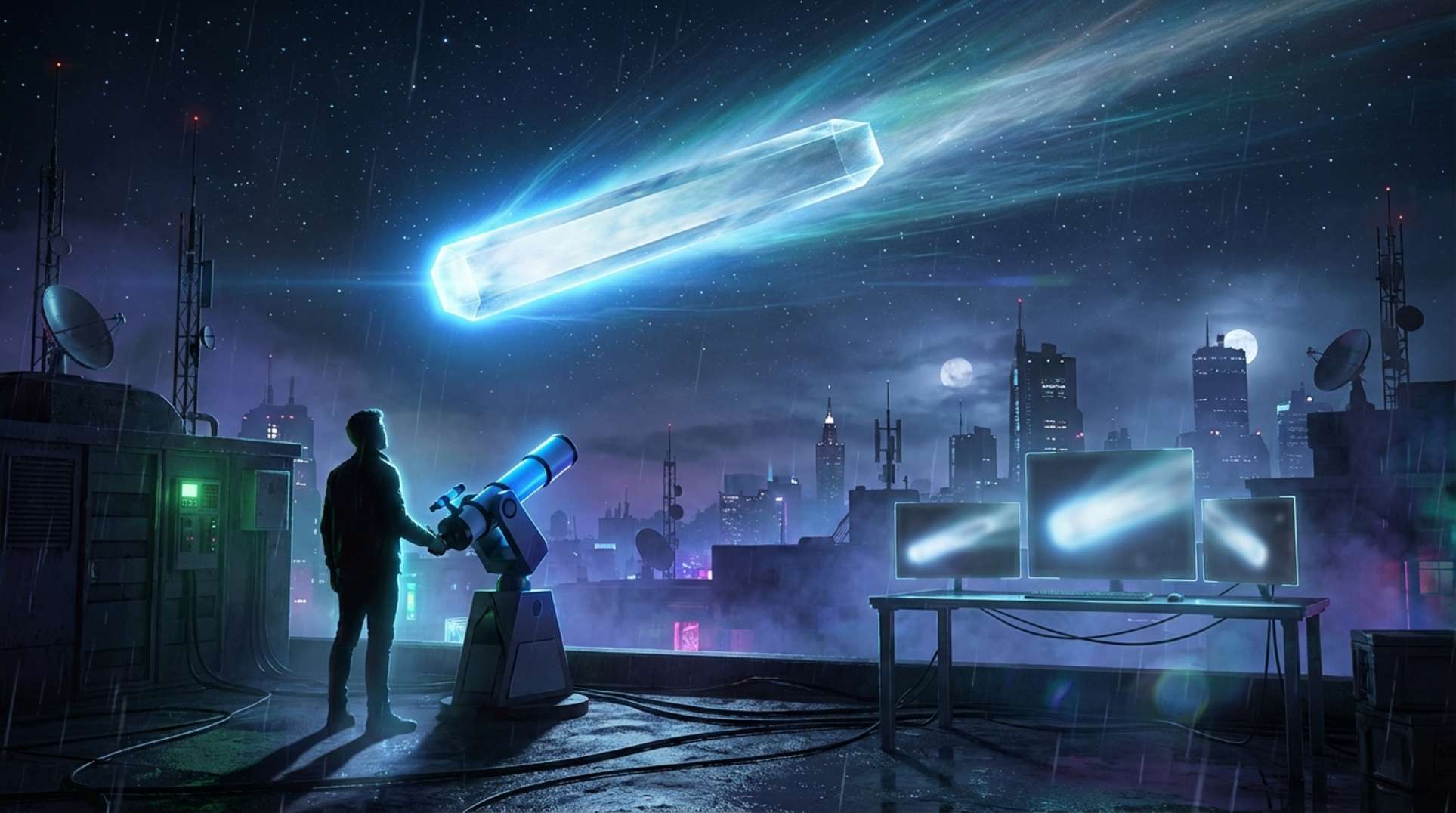
    • Canadian astrophotographer Paul Craggs captured unusually sharp images of interstellar comet 3I/ATLAS on November 22 and 24, 2025, showing an elongated bright core surrounded by a blue halo.
    • NASA, ESA, and peer-reviewed analyses characterize 3I/ATLAS as a natural interstellar comet (coma, dust, CO-to-water ratio consistent with Solar System comets) on a hyperbolic trajectory; it poses no threat to Earth.
    • Differences between Craggs’s processed backyard images and softer institutional releases, along with noted symmetry and luminosity questions raised by some researchers (including Avi Loeb), keep alternative-origin discussions active but unproven.

    Overview of the New Images

    On November 22 and 24, 2025, Paul Craggs used an affordable Dwarf 3 telescope (~$500) to image 3I/ATLAS. His stacked and post-processed frames show a compact, elongated bright core with a distinct blue halo. The sharpness of structure in these frames prompted broad discussion among amateur and professional observers.

    Major agencies (NASA, ESA) report 3I/ATLAS exhibits typical cometary behavior: a coma, dust emissions, and spectral signatures similar to Solar System comets. Observations from Hubble, ATLAS, MAVEN, and ExoMars support its interstellar, hyperbolic trajectory and comet-like composition.

    What Observers Noted

    Community reactions highlighted three main themes: (1) the apparent rectangular or ‘ship-like’ core in some processed frames, (2) differing visual impressions between amateur-processed and institutional images, and (3) possible artifacts from stacking, tracking errors, or enhancement routines that can accentuate edges and symmetry.

    Avi Loeb has outlined a list of anomalies he considers noteworthy; proponents of non-natural explanations point to symmetry and sharp geometry as items of interest. Mainstream researchers counter that chemistry (e.g., CO-to-water ratio near 1.4 ± 0.2) and coma morphology fit well with natural-comet models.

    Basic Facts and Timeline

    Discovery: July 1, 2025 (ATLAS). Closest Earth approach: December 19, 2025 (about 1.8 AU). Speed through the inner system: ~137,000 mph (221,000 km/h). Size estimates range from roughly 440 m to several kilometers depending on albedo assumptions.

    Instruments contributing data include ATLAS, Hubble, MAVEN, and ESA’s ExoMars Trace Gas Orbiter. Craggs’s images are the result of accessible consumer hardware plus modern stacking and processing techniques rather than raw high-end observatory output.

    Why Amateur Images Can Look Sharper

    Amateur astrophotographers commonly use stacking, aggressive sharpening, and contrast adjustments to emphasize fine structure; this can make objects appear more defined than conservative, calibrated scientific releases. Tracking imperfections and stacking artifacts can also introduce apparent elongation or edge enhancement that mimics geometric shape.

    Natural Comet vs. Artificial Hypotheses

    Official assessments classify 3I/ATLAS as a natural interstellar comet. Calls for caution and further study come from those who note unexplained details in images or behavior. To date, there is no definitive evidence for artificial origin; unresolved image and data-release differences keep the conversation active.

    Current Position and Next Steps

    Firm conclusions: 3I/ATLAS is interstellar and comet-like in composition and behavior, with no Earth risk. Open questions: the cause of apparent sharp structure in some processed amateur images and the full explanation of all anomalies noted by critics. The best path forward is continued coordinated observation, transparent raw-data release where possible, and careful, reproducible image analyses combining professional and amateur datasets.

    FAQ

    Craggs captured stacked, processed images showing an elongated bright core and blue halo on November 22 and 24, 2025.

    Yes. NASA and ESA classify 3I/ATLAS as a natural interstellar comet with properties similar to Solar System comets.

    No decisive proof exists. Some anomalies and image differences prompt further analysis, but the dominant interpretation remains natural.

  • 3I/ATLAS: The Interstellar Comet That Won’t Break Apart

    3I/ATLAS: The Interstellar Comet That Won’t Break Apart

    Key Takeaways

    • Independent astrophotography from Spain, Thailand, and Norway reveals a consistent forward-facing glow, an expanding halo, and a stable internal structure in comet 3I/ATLAS, defying expectations of chaotic breakup.
    • Confirmed data from NASA, ESA, Hubble, and JWST shows it’s a hyperbolic interstellar comet moving at about 153,000 mph at perihelion, with a high CO2-to-water ratio of roughly 8:1 and a nucleus size between 440 meters and 5.6 kilometers.
    • While officials label it a natural oddity, the symmetric jets, rotational features, and steady core brightness in various datasets keep questions open about underlying processes or potential intentions.

    Three Telescopes, One Unlikely Shape in the Dark

    It started in the quiet hours, screens glowing in scattered corners of the world. In Spain, an astrophotographer hunched over his setup in the crisp mountain air, stacking frames from a modest telescope. Across the globe in Thailand, under humid skies, another aligned exposures through varying haze. And in Norway, amid the chill of northern nights, a third processed images against the backdrop of fading auroras. These were separate efforts, different gear, varied conditions—but when the results hit online forums late in 2025, around the comet’s October 29 perihelion and beyond, they showed something eerily alike.

    The images captured 3I/ATLAS, discovered July 1, 2025, by the ATLAS telescope in Chile. What emerged wasn’t the messy disintegration many anticipated. Instead, a steep forward-facing glow pointed in the direction of travel, like a beacon cutting through space. An expanding halo surrounded it, and inside, structures that seemed to sharpen rather than blur. These weren’t simulations or edits—just standard stacked and processed captures from real observers.

    As more amateurs with backyard rigs joined in post-perihelion, the pattern held. Observers expected fade and fragment. They got organization, growing clearer with scrutiny. Tension built in the chats: was this comet falling apart, or holding something together?

    What Observers Around the World Say They’re Seeing

    Reports poured in from across the map, each adding layers to the puzzle. In Spain, Thailand, and Norway, the core visuals aligned: a brightened glow facing forward, almost like headlights piercing the void, wrapped in a symmetric halo. Interior details showed rotational gradients, not random bursts—lines and curves suggesting spin over chaos.

    Online threads buzzed with details. Multi-directional jets appeared in many shots, alongside anti-tails aimed sunward, shaped by dust and orbit. Brightness held steady, unusual for an object thought to be shredding. From Puerto Rico and Chile, videos captured what looked like spinning forms or repeating light shifts as 3I/ATLAS crossed the frame.

    Some pointed to collimated streams—jets too straight, too evenly spaced for pure chance. Speculation grew: could this be controlled outgassing, not just sublimation? Enhanced processing in forums, using rotational filters and contrast boosts, pulled out layered symmetries around a core that stayed bright and consistent.

    In speculative circles, narratives took shape. 3I/ATLAS as probe, beacon, or data vessel, its symmetry a deliberate mark. These views came from folks versed in the tech—stacking, flats, dark frames—not idle stargazers. They shared raw data, inviting scrutiny, building a case from the ground up.

    Timelines, Orbits, and the Data We Can Actually Measure

    Let’s ground this in the hard numbers. 3I/ATLAS marks the third confirmed interstellar object, following 1I/‘Oumuamua and 2I/Borisov. Discovered July 1, 2025, by NASA’s ATLAS in Chile, it’s on a hyperbolic path—unbound to the Sun, just passing through.

    Perihelion hit October 29, 2025, at 1.36 AU, about 126 million miles from the Sun. It skimmed near Mars on October 3, 2025, at 19 million miles, and brushed closest to Earth on December 19, 2025, at 1.8 AU or 170 million miles. Speed at perihelion clocked 153,000 mph, fitting an interstellar traveler.

    Hubble pegged the nucleus between 1,400 feet (440 meters) and 3.5 miles (5.6 kilometers). JWST spotted a CO2-to-water ratio of 8:1, hinting at origins in alien conditions. Agencies like NASA and ESA, via Hubble, JWST, ExoMars, and SOHO, confirm outgassing from solar heat, forming coma and tail.

    Metric Details
    Discovery Date July 1, 2025
    Perihelion Date/Distance October 29, 2025 / 1.36 AU
    Closest to Mars October 3, 2025 / 19 million miles
    Closest to Earth December 19, 2025 / 1.8 AU (170 million miles)
    Velocity at Perihelion 153,000 mph (246,000 km/h)
    Nucleus Diameter Range 440 meters to 5.6 kilometers
    CO2-to-Water Ratio ~8:1

    Official Storylines and the Alternate Maps People Are Drawing

    NASA frames 3I/ATLAS as a natural interstellar comet. Solar heating fuels its coma and tail; the CO2 richness points to foreign birth, not artifice. ESA echoes this—ExoMars and SOHO see typical outflows and wind effects. No threat to Earth, they say.

    No confirmed non-gravitational accelerations here, unlike ‘Oumuamua debates. Yet community voices pull in Avi Loeb’s ideas—odd accelerations, material quirks, potential sails—applying them despite data gaps.

    Counterpoints persist: multi-jet stability, sharp anti-tail, no clear fragments. Some eye the path near Jupiter and Mars, questioning if jets or other forces tweak it deliberately. Podcasters like Joe Rogan and figures like Elon Musk link it to Tunguska or ancient impacts, seeing probes in the mix.

    Fringe ties emerge to old texts, like Revelation’s stars, casting 3I/ATLAS as omen or cycle player. Official views fit the orbit, composition, coma. But unresolved symmetries in amateur data invite these alternate reads. The tension holds where explanations fall short.

    Patterns in the Noise: How Much of the Weirdness Survives Scrutiny?

    Astrophotographers stack exposures to cut noise, aligning stars for clarity. This can highlight real features—or mimic them if mishandled. Rotational-gradient filters and contrast tweaks pull out jets and shells in comets, but bias creeps in if you’re hunting patterns.

    The Spain, Thailand, Norway shots used varied tools, yet matched in symmetry and core stability. That cross-verification resists easy dismissal as artifacts. Comets do show jets, fans, anti-tails from gas, spin, angles—rare alignments might explain some oddities naturally.

    Still, why sharpen over time, not scatter, under heat and speed? No peer-reviewed signs of tech, signals, or mods yet—just shapes and chemistry. Skepticism fits: models may lag, but our eyes can forge intent from haze. Question boldly, but anchor in data.

    Why This Interstellar Visitor Still Matters Long After It’s Gone

    We know this: 3I/ATLAS, interstellar comet on a hyperbolic flyby, with tracked encounters, exotic CO2-water mix. Anomalies stand out—inner symmetry in diverse images, stable core, structured jets, alien chemistry.

    NASA and ESA stick to natural bounds, valuing it for interstellar insights. They don’t back artificial claims, but admit its value. Questions linger: Do models cover this? Could visitors hide tech? What tools would reveal it?

    See it as a mirror for our reactions—dismiss, declare alien, or pursue with care. Even natural, it’s a dispatch from another star, in ice and gas. How many more have slipped by unnoticed?

    Frequently Asked Questions

    3I/ATLAS is the third confirmed interstellar comet, discovered on July 1, 2025, by the ATLAS telescope in Chile. It’s on a hyperbolic trajectory, meaning it’s not bound to the Sun and is passing through our solar system once. It has an unusual CO2-to-water ratio of about 8:1 and a nucleus size between 440 meters and 5.6 kilometers.

    Independent astrophotographers from places like Spain, Thailand, Norway, Puerto Rico, and Chile report a forward-facing glow, symmetric halo, stable internal structures, and jets that appear collimated or evenly spaced. Some see rotational patterns and a core that sharpens over time instead of fragmenting. These features show up consistently across different telescopes and processing methods.

    NASA and ESA describe 3I/ATLAS as a natural interstellar comet with activity driven by solar heating, forming a coma and tail. They attribute its CO2-rich composition to formation in a different stellar environment and state it poses no threat to Earth. While they acknowledge its oddities, they interpret them within standard comet behavior, without evidence of artificial origins.

    As of now, there’s no peer-reviewed evidence of engineered components, signals, or technology in 3I/ATLAS—only morphological oddities like stable symmetry and jets, plus chemical anomalies. Community speculations draw on these patterns, but official data fits natural models. The debate highlights gaps in current comet theories and the challenge of proving intent from afar.

    Even if natural, 3I/ATLAS offers rare insights into interstellar chemistry and dynamics from another star system. Its anomalies challenge existing models and spark questions about potential artificial visitors. It encourages careful investigation, reminding us of unseen objects that may have passed by before.

  • 3I/ATLAS: NASA’s Data vs CERN Conspiracy Hype

    3I/ATLAS: NASA’s Data vs CERN Conspiracy Hype

    • NASA‘s own logs expose 3I/ATLAS as the third interstellar object slicing through our solar system, detected on July 1, 2025 – not the alien invader the web whispers about.
    • The trajectory data admits it’s harmless, swinging no closer than 1.8 AU – that’s 170 million miles from Earth, far beyond any real threat.
    • No link exists between this comet and CERN’s ATLAS detector, a 7,000-tonne beast smashing particles, not chatting with space rocks; SETI confirms zero artificial signals, debunking the conspiracy web around it. And here’s the kicker: zero evidence of scientists panicking over 3I/ATLAS.

    The Hook: When a Comet’s Name Lights Up the Conspiracy Imagination

    Scroll through your feed. Doom-scrolling hits peak with thumbnails screaming apocalypse. TikToks gasp about ‘scientists freaking out’ over a shadowy object dubbed 3I/ATLAS. Headlines tie it to CERN’s massive machine, hinting at portals, signals, cover-ups. The vibe? Pure panic. A comet from beyond, sharing a name with a particle collider. Coincidence? Or a thread in a larger web?

    They flood your screen. Videos claim it’s no natural rock. Connections to ‘portals to hell’ at CERN bubble up from years of hoaxes. Fear builds. But wait. What if the real plot is simpler – and more revealing – than the viral hysteria? We’ve dug in. The facts cut through the noise.

    Discovered July 1, 2025, 3I/ATLAS marks only the third interstellar visitor, following 1I/ʻOumuamua and 2I/Borisov. Its name echoes CERN’s ATLAS experiment on the Large Hadron Collider. Pure chance? Conspiracies say no. They’ve primed us with tales of demonic rituals and cosmic threats. Now, claims swirl: artificial probe, controlled trajectory, hidden messages. Time to pull back the curtain.

    Why do some people think 3I/ATLAS has scientists secretly panicking?

    You’ve seen the posts. Videos rack up millions, insisting 3I/ATLAS isn’t a comet – it’s a spacecraft. No water ice? Interstellar origin? That screams artificial, they say. Impossible paths, bizarre makeup. Then the name: ATLAS. Same as CERN’s detector. Must be a sign. A secret link. Scientists? They’re allegedly losing it, but shushing the truth.

    It’s not mockery. These fears feel real. They build on CERN’s dark lore – collisions twisted into ‘portals,’ hoaxes like that 2016 fake ritual video fueling paranoia. Social media amplifies it. Normal excitement over a rare object gets spun as dread. Claims of secret comms, agency blackouts, coded alerts. No hard proof, but the narrative sticks. Why? Because it connects dots that official stories ignore. We’ve traced the threads. They lead to misinformation, not apocalypse.

    What do the observations actually show about 3I/ATLAS?

    Let’s cut to the evidence. The Narrative claims a hyperbolic orbit – the hallmark of an interstellar gatecrasher, not bound to our Sun. Closest to the Sun? October 30, 2025, at 1.4 AU, about 130 million miles. To Earth? 1.8 AU, or 170 million miles. NASA’s own words: “Comet 3I/ATLAS poses no threat to Earth and will remain far away. The closest it will approach our planet is about 1.8 astronomical units.”

    Observations pile up. August 2025, James Webb Space Telescope spots a faint coma – carbon dioxide sublimating, but no water ice. An ancient husk from another star. Dried out. Expected? For something this old, yes. SETI listens. Nothing. No signals. Natural comet, through and through.

    And CERN’s ATLAS? A 46-meter-long giant, 25 meters wide, 7,000 tonnes heavy, packed with 3,000 km of cable. It slams protons at 6.8 TeV. Studies particles. Not comets. No space links. Zero.

    Viral Claim Measured Reality
    Scientists are panicking over 3I/ATLAS NASA: poses no threat and remains far away; no evidence of fear
    It’s an artificial spacecraft with impossible traits Hyperbolic orbit confirms natural interstellar origin; no artificial signals detected
    Linked to CERN’s ATLAS for secret comms No operational or scientific connection; CERN detector studies particles, not space objects
    Trajectory threatens Earth Closest approach 1.8 AU (170 million miles); safe distance

    The data doesn’t lie. We’ve sifted it. The panic? Manufactured.

    Is there anything genuinely strange — or worth worrying about — here?

    Something odd lurks. Interstellar objects like ʻOumuamua, Borisov, now 3I/ATLAS – rare as they come. Windows to other stars. Scientists swarm them. Excitement surges. But fear? No. Ian O’Neill, astrophysicist, cuts through: “It’s easy to scoff, but conspiracy theories, pseudo-science and misinformation have a habit of spreading like a virulent disease, particularly in this social-media age… Conspiracists and fantasists would like to propagate the idea that there’s something highly unusual about interstellar comets.” Unusual, yes. Ominous? Hardly.

    No water ice? Strange, but fits an ancient relic. CERN myths persist – portals, rituals. Clara Nellist, ATLAS physicist, sees it: “I’ve seen a lot of videos go viral making claims about CERN, and when I see that it tells me we need to communicate even further, because they’re getting informed by the conspiracy theories they hear.” They fight back with facts, not shadows.

    Question power? Smart. But jumping to ‘panic and lies’ without proof? That’s the real trap. We’ve connected the dots. The weirdness is wonder, not worry.

    Conclusion: What 3I/ATLAS really tells us about space — and about ourselves

    Here’s the twist. 3I/ATLAS hurtles through on its hyperbolic arc. Quick visit. No close calls. Then gone, back to the void. We know this because of precise calculations – speed, path, distance. NASA’s orbit maps confirm: safe.

    Think bigger. JWST peers at its CO2 haze from another star. ATLAS at CERN? Over 5,500 scientists from 245 institutes probe reality’s core. Human feats. Transparency rules – peer review, open data. Not the secrecy conspiracies peddle.

    We detect interstellar flecks. Smash atoms. The real story? Our curiosity wins. Better communication slays the fear. Embrace the wonder of 3I/ATLAS. It’s a visitor, not a villain. We’ve uncovered the truth. Now, question everything – with eyes wide open.

  • Alien Comet Siege: Why Earth Was Never Surrounded

    Alien Comet Siege: Why Earth Was Never Surrounded

    • Comets C/2020 F8 (SWAN), C/2019 Y4 (ATLAS), and interstellar comet 3I/ATLAS all followed natural, well-understood orbits; none came closer than tens of millions of kilometers to Earth, and none were on a collision course.
    • The ‘sunward tails’ or anti-tails seen on SWAN and ATLAS are normal effects of solar wind and dust geometry, not evidence of engines, steering, or ‘strategic positioning’ around our planet.
    • NASA and independent astronomers have imaged 3I/ATLAS in detail and confirmed it is a typical, dusty, icy comet—no alien hardware, no secret threat—while misinformation online repackages ordinary comet behavior as something sinister.

    The Hook: When a Green Comet Looks Back at You

    Picture this. A glowing green streak cuts across the night sky, its tail twisting like it’s staring right back. Viral images flood your feed, whispers of comets "approaching Earth" or "flanking" our spot in the cosmos. Is it watching us? In 2020, with the world locked down by a pandemic, eyes turned upward. People trapped indoors devoured every scrap of sky news. Comets C/2020 F8 (SWAN) and C/2019 Y4 (ATLAS) became obsessions, their dramatic glows fueling endless online chatter.

    Fast forward to 2025. An interstellar wanderer, 3I/ATLAS, bursts onto the scene. Old fears ignite anew. Social media erupts with alien probe theories. Why now? Why these comets? If two bright visitors show up in 2020, and a third from beyond our system years later, it starts to feel like a trap closing in. Tails pointing the wrong way. Paths that seem too perfect. The numbers say it’s nothing. But that cosmic pinch? It hits hard in these anxious times.

    Why Do Some People Think Comets Are ‘Strategically Surrounding’ Earth?

    We’ve all seen the posts. They spread like wildfire. Comets SWAN (C/2020 F8), ATLAS (C/2019 Y4), and the interstellar 3I/ATLAS aren’t random ice balls. No, they’re alien probes. Or worse, weapons. Coordinated. Their "sunward tails" hide engines, steering them into position. That’s the claim echoing through forums and videos.

    It starts in 2020. Two comets slice through the inner Solar System. Then, in 2025, this outsider from another star joins the party. Conspiracy threads paint it as a deliberate siege. Earth triangulated. Surrounded. Orbital diagrams get twisted—flat 2D maps make it look like these things are parking around our path, holding formation.

    A Reddit user nails it: these ideas get turbocharged by high-profile skeptics like Avi Loeb, who stir the pot on alien tech. Suddenly, every comet is a scout. And those NASA image delays for 3I/ATLAS? Not just bureaucracy. A cover-up, they say. Hiding the truth while the probes close in. It sounds wild. But in the echo chambers, it makes sense. People connect dots that aren’t there. Question everything. That’s the draw.

    What Do the Observations Really Show?

    Dig past the hype. The data exposes the fiction. Comet C/2020 F8 (SWAN) popped up on March 25, 2020. Its closest brush with Earth? May 12, 2020, at 0.56 AU—about 84 million kilometers. No encirclement. No threat. It flared green, sprouted a blue ion tail from solar wind. Then, after May 3, it faded. Likely shattered near its May 27 perihelion. Fragile. Predictable. Gone.

    Comet C/2019 Y4 (ATLAS) followed suit. Closest on May 23, 2020, at 0.78 AU—117 million kilometers out. It broke apart before its May 31 perihelion. Brightness dropped. Hazard vanished. Natural decay. The Official Report admits it.

    Now, 3I/ATLAS from 2025. This 20 km-wide interstellar beast stays over 1 AU from Earth. Its path doesn’t cross ours. No surround. No strike. NASA’s images reveal a dusty cocoon around an icy core. Dust jets everywhere. Classic comet stuff. Al Jazeera echoes The Narrative: no danger.

    Astronomy logs confirm it. No artificial signatures. Motions follow orbital mechanics. Pure physics. Those sunward tails? Illusion. Dust and ions, solar wind, our viewing angle—they point toward the Sun sometimes. Geometry, not thrusters.

    Here’s the breakdown:

    Comet Minimum Distance to Earth (AU) Potentially Hazardous Threshold (AU) Status
    C/2020 F8 (SWAN) 0.56 <0.05 Well outside danger zone
    C/2019 Y4 (ATLAS) 0.78 <0.05 Well outside danger zone
    3I/ATLAS >1 <0.05 Well outside danger zone

    The numbers don’t lie. These comets never got close enough to worry astronomers. The "surround" is a myth.

    Why ‘Sunward Tails’ and Alien Rumours Feel So Convincing

    Comets pack real punch. They carry secrets from the Solar System’s birth. And yes, they’ve slammed into planets before. Asteroids too. So the fear? It’s not baseless. We watch the skies for a reason.

    Interstellar comets like 1I/‘Oumuamua and 2I/Borisov set the stage. Surprising, but astronomers saw them coming. Ian O’Neill puts it straight: these wanderers reveal how Earth and life formed. Conspiracists twist them into anomalies. But the idea predates discoveries. Nothing new here.

    3I/ATLAS hit during peak paranoia. After ‘Oumuamua memes and expert speculation, every odd rock screams "probe." Image delays from NASA? Fuel for suspicion. But when pics dropped, via Al Jazeera and Supercluster, it was all comet: dust jets, coma, no tech.

    A Reddit voice cuts through: "Nothing weird about these. Ditch the conspiracy channels." Astronomers groan at the noise. Orbital plots get mangled online—dates overlap, alignments appear. Looks intentional. But it’s just math. And real defense systems track threats. Scientists share uncertainties openly. That honesty gets spun as hiding. Patterns emerge where none exist. It’s compelling. Until you look closer.

    So What Are SWAN, ATLAS, and 3I/ATLAS Really Telling Us?

    Strip away the panic. SWAN and ATLAS from 2020? Fragile sun-grazers. They lit up, tails blazing with ions and dust. Then crumbled near the Sun. No impact risk. Ever.

    3I/ATLAS? Interstellar drifter. Stays over 1 AU away. Tracking confirms: safe trajectory. No cage around Earth. Distances—0.56 AU, 0.78 AU, over 1 AU—shatter the surround story.

    This exposes human triumph. Telescopes like ATLAS and SOHO spot them early. Calculations nail their paths. Imaging sifts natural from artificial. We didn’t buy the probe lie. We dug deeper.

    We’re mapping the void. Understanding visitors. If a real threat looms, we’ll see it. Deflect it. Speeds, paths, makeup—all measured. Fear fades to knowledge. Those eerie tails and green glows? Not hunters. They’re clues. To our origins. To life’s spark. Question the sky. But chase truth, not shadows.

  • Giant Oort Cloud Comet: Why It Won’t Hit Earth Ever

    Giant Oort Cloud Comet: Why It Won’t Hit Earth Ever

    • C/2014 UN271 (Bernardinelli–Bernstein) is a massive Oort cloud comet, clocking in at 100–137 km across— the biggest we’ve nailed down yet, but NASA‘s own simulations insist it’s no Earth-smasher.
    • It’ll swing closest to the Sun at 10.95 AU in January 2031, hanging out beyond Saturn’s turf, with zero close calls to our planet according to the official orbital tracks.
    • Those weird outbursts beyond 20 AU? Just standard comet fizz from CO or CO₂ gases—nothing engineered or apocalyptic, despite what the fringe says.

    A Giant Comet, Viral Fear, and the Thrill of Cosmic Disaster

    Picture this: a shadowy behemoth lurking in the void, tagged with a sterile label like C/2014 UN271. It pops up in old data at 29 AU out—farther than any Oort-cloud wanderer we’ve spotted before. Astronomers perk up, but the internet? It explodes. Social feeds light up with whispers of a 100+ km monster slinking in from “below” the Solar System. Hearts race. Is this the unseen killer we’ve dreaded? The Narrative paints it calm, but the buzz taps into our primal terror of cosmic ambush. Yet dig deeper, and the apocalypse fades—replaced by something far more intriguing than the fearmongers’ tales.

    Why Do Some People Think Bernardinelli–Bernstein Is a Hidden Threat?

    We’ve all seen the posts. They claim this thing is thousands of times heavier than interstellar drifters like 3I/ATLAS, branding it a potential planet-wrecker. It’s barrelling straight from “below” the Solar System, they say, on a path that could slam the inner worlds—maybe even us. And those early flares beyond 20 AU? Proof it’s no ordinary comet, but some chaotic, non-linear beast—or worse, something built by unseen hands. Panspermia theories swirl, hinting at alien seeds from its deep-space exile, tens of thousands of AU out. Even folks like geophysicist Stefan Burns get looped in, his talk of “non-linear systems” twisted into fuel for the fire. It’s easy to sympathize. When The Official Report downplays it, who wouldn’t question if they’re hiding the real danger?

    What Do the Numbers Actually Say About C/2014 UN271?

    Let’s cut through the haze with cold data. The Narrative admits the nucleus spans 100–137 km—huge for an Oort comet, but peanuts next to planets, and nowhere near “thousands of times more massive” than tiny 3I/ATLAS at 110–230 meters. Perihelion hits 10.95 AU in 2031, safely past Saturn. NASA’s JPL simulations? They swear no Earth brushes, no impacts. That 95-degree inclination isn’t some sneaky “below” attack; it’s just a steep orbit, fully mapped. Aphelion at 40,000 AU, last visit 1.4 million years back—not galactic birth stuff. And the activity? Archival shots from 2018 show outgassing at over 20 AU, pinned on CO or CO₂ sublimation—freaky, but physics checks out. Bernardinelli’s team calls it the brightest, biggest well-measured comet, discovered at a record 29 AU. Remarkable? Yes. Supernatural? Hardly.

    Claim Fact
    Thousands of times more massive than other interstellar objects like 3I/ATLAS Nucleus 100–137 km vs. 3I/ATLAS’s 110–230 meters; large but not planet-scale or exaggeratedly massive
    Approaching from directly “below” the Solar System on a dangerous path 95-degree inclination; not hidden or targeted at inner planets
    Will come dangerously close to Earth Perihelion at 10.95 AU; no close Earth approaches in JPL simulations
    Highly anomalous activity indicates non-linear or artificial system Outbursts from CO/CO₂ sublimation, consistent with known cometary physics
    Orbit mysterious since galaxy’s formation Aphelion 40,000 AU; last there 1.4 million years ago, per orbital models

    So Is There Anything Truly Unusual About Bernardinelli–Bernstein?

    Sure, it’s not all smoke and mirrors. Bernardinelli’s crew highlights it as the brightest, likely largest nucleus we’ve measured, spotted at an unprecedented 29 AU. That early fizz beyond 20 AU? ALMA scopes it out as standard molecular burps—intriguing for distant comets, but no physics breaker. This rock’s a goldmine for Oort cloud secrets, peeling back the Solar System’s ancient layers. Astrobiologist N. Chandra Wickramasinghe pushes panspermia, seeing comets as life-seeders, though most experts stick to organic molecule delivery. No one’s calling it a “non-linear” enigma in any engineered sense—its path’s locked in, predictable. Science has gaps, but they’re not catastrophe-sized. The real thrill? It’s extraordinary without the doom.

    Why Do Big Space Rocks Turn Into Big Conspiracies?

    Why does a hunk like C/2014 UN271 spark end-times fever? Scale and distance breed mystery. Numbers like 95-degree tilts sound like code for cover-ups. Humans hate voids—we stuff them with tales of hidden perils. It’s the same script as Nibiru or rogue asteroids: exaggeration sells. Forums buzz with mangled orbital data, blending real awe with wild speculation. Panspermia hype muddles facts, turning excitement into dread. The Narrative says “all clear,” but to skeptics, that just smells like suppression. Patterns emerge. They always do.

    What Bernardinelli–Bernstein Really Teaches Us About Human Ingenuity

    Forget the fear. This comet exposes our triumphs. Snagged in Dark Energy Survey archives at 29 AU, it proves our telescopes and data hunts pierce the dark. Simulations nail its 40,000 AU loop, pegging that 1.4 million-year cycle and 2031 perihelion at 10.95 AU—no Earth drama. We track it across eons. It’s not chaos; it’s mastery. Like plotting a spacecraft’s arc, precision trumps panic. We’ve mapped the abyss, demystified the giant. And if real threats loom? We’re ready. That’s the true story they didn’t want you to celebrate.

  • Stargate Is Back: Inside Prime Video’s Revival, Martin Gero’s Plan, and What Fans Should Expect

    Stargate Is Back: Inside Prime Video’s Revival, Martin Gero’s Plan, and What Fans Should Expect

    On Nov. 19, 2025, Amazon MGM Studios confirmed fans’ long-held hopes: Stargate, the franchise that began with Roland Emmerich’s 1994 film, will return as a new original series on Prime Video. Martin Gero—who has worked as a writer and producer on Stargate SG‑1, Stargate: Atlantis, and Stargate Universe—will be the series’ creator and showrunner. Amazon positioned the order as a “bold new chapter” rather than a straightforward reboot (AboutAmazon press release, Nov. 19, 2025).

    This announcement arrives during a time of franchise reclamation following Amazon’s 2022 acquisition of MGM Studios. Industry sources indicate that Amazon possesses the IP, greenlit the show on Nov. 19, and production will move forward under Amazon MGM Studios with a creative team that combines both legacy figures and new executive producers (Variety, Nov. 19, 2025).

    Prime Video Stargate announcement Nov 19 2025: who’s producing and what the press release revealed

    Amazon’s official communication names Martin Gero as writer and showrunner, with executive producers Joby Harold and Tory Tunnell from Safehouse Pictures. Veteran franchise filmmakers Dean Devlin and Roland Emmerich are also onboard. Additionally, longtime contributors Brad Wright and Joe Mallozzi will serve as consulting producers. Amazon describes the series as an original entry that pays tribute to its legacy while pursuing an “ambitious and emotionally resonant” approach to the narrative. These insights derive directly from the corporate release and summarize the primary deal points (AboutAmazon, Nov. 19, 2025).

    Industry reaction and trade reporting on Martin Gero’s role and creative mandate

    Trade outlets have contextualized the announcement with detailed reporting on Gero’s background and Amazon’s strategic goals. Both Variety and Deadline reported that Gero spent five years on various Stargate television iterations. Amazon envisions him as the steward of continuity while refreshing the universe for a global Prime Video audience. Variety’s Nov. 19 coverage highlights production leadership and emphasizes that plot specifics and casting remain undisclosed at the time of the greenlight (Variety, Nov. 19, 2025).

    Independent technology and culture outlets framed the news as both nostalgically appealing and commercially sensible: by commissioning an original Stargate series, Prime Video capitalizes on a franchise with a built-in international audience and a rich mythology producers can adapt without dismantling essential concepts (Engadget report, Nov. 19, 2025).

    Franchise lineage and canonical context: Stargate film to SG‑1 to Atlantis and Universe

    Understanding the new series necessitates a brief overview of franchise history. Stargate originated as a 1994 film by Roland Emmerich and Dean Devlin that introduced an artificial ring device for near-instantaneous wormhole travel. This film spawned the long-running SG‑1 television series (1997–2007), followed by the Atlantis spinoff (2004–2009) and Stargate Universe (2009–2011). The original film and subsequent TV mythology serve as the foundation Prime Video now plans to reimagine. For a concise overview of the IP’s progression, consult the canonical entry detailing the film’s heritage and the television expansions (the Stargate film and franchise history).

    Creative and commercial risks: reboot expectations, legacy fan politics, and streaming economics

    Reviving a legacy franchise requires distinct calibrations. Creatively, showrunners must reconcile fan expectations for continuity with the necessity to update narratives for modern geopolitical and technological realities. Commercially, Prime Video seeks a global, repeatable audience to justify the considerable upfront costs related to high-concept sci-fi production. Trade reporting indicates Amazon is positioning the show as both a tribute to fans and a vehicle for franchise expansion, employing veterans as consultants while introducing new executive producers to craft a fresh tonal and visual language (Variety).

    What the first publicity cycle reveals about tone, mythology, and production strategy

    The announcement video and corporate communication emphasize the mythological scope—making references to Egyptian, Norse, and other ancient cosmologies—and promise a technology-based explanation for the gates. Industry observers interpret this language as intentional: connections to mythology suggest serialized world-building that can sustain several seasons, spinoffs, and merchandise, while a technology-focused approach aids Prime Video in promoting the show in markets that favor hard sci-fi aesthetics. The early focus on a “new original series” instead of a straightforward reboot allows for potential canonical reconciliation and dramatic reinvention.

    This balance is crucial: franchises that shift too aggressively risk alienating core viewers; those that rely solely on nostalgia may stagnate. The producers’ combination of legacy consultants and new showrunners indicates Amazon’s intent to navigate this delicate dynamic.

    Why it matters: cultural resonance, IP strategy, and the streaming content arms race

    Prime Video’s order reflects broader industry trends: streamers are increasingly utilizing recognizable intellectual property to ease discovery challenges and boost subscriber engagement. A revived Stargate offers Amazon a globally recognized narrative universe with established cross-platform appeal—spanning TV, books, games, and convention ecosystems—while enriching Prime’s international catalog. This strategic rationale mirrors other franchise revivals, where studios pair veteran creatives with streaming resources to compete for viewer attention in a saturated marketplace.

    For readers analyzing franchise cycles against expansive cultural anxieties and mythmaking, consider contextual reporting on how technological and cultural narratives evolve into persistent public beliefs and rumors in various contexts (an investigative summary and an archival case).

    How journalists and critics should cover the rollout: transparency, sourcing, and franchise scrutiny

    Coverage should focus on three key areas: (1) contractual and production specifics (studio credits, EP names, rights ownership), (2) creative signals (studio comments regarding tone, mythology, and showrunner aims), and (3) on-the-ground updates (casting news, pilot production progress, director selections). Journalists should reference primary sources—studio press releases and trade reports—while avoiding rumor cycles that treat leaks and fan speculation as facts. Accounts of how site-specific myths interact with production secrecy are illustrated in historical analyses of Camp Hero and similar culturally significant sites (an archival breakdown of site mythmaking).

    Takeaway: what fans should expect next and how to read future announcements

    Expect a gradual release of information: casting notices, director appointments, visual concept art, and anticipated release dates. Amazon will likely leverage fan events and social media for ongoing engagement, and the involvement of franchise veterans as consultants indicates a production that respects legacy continuity. For readers monitoring narrative development and cultural response across varied domains—whether space phenomena, medical debates, or tech ethics—see related analyses that explore how stories spread and become entrenched in public lore (a field report analysis, an archival breakdown, and an ethics dossier).

    For immediate confirmation of the primary sources utilized in this piece, review Amazon’s official announcement and trade reporting from Variety and Engadget, which collectively clarify the who, when, and why behind Prime Video’s Nov. 19 news (AboutAmazon; Variety; Engadget).

    For curated archival collections and ongoing coverage of how cultural and technological narratives intersect, visit Unexplained.co.

  • NASA, 3I/ATLAS, and the November CME: What the New Imagery Shows and Why a Solar Blast at the Comet Matters

    NASA, 3I/ATLAS, and the November CME: What the New Imagery Shows and Why a Solar Blast at the Comet Matters

    NASA announced on Nov. 17, 2025, that it would host a public livestream on Nov. 19 to release a collection of imagery of interstellar comet 3I/ATLAS. These images were collected using Hubble, Mars orbiters, and various Earth-based telescopes. The agency framed the event as a rare chance to see high-resolution views of an object crossing our solar system, discovered on July 1, 2025, by the ATLAS survey (NASA news release, Nov. 17, 2025).

    At the same time, solar observers tracked a significant coronal mass ejection (CME) launched from an active sunspot region on Nov. 17–18. Propagation models suggested the resulting plasma and magnetic structure could intersect with 3I/ATLAS around Nov. 22, 2025. Space weather experts warn that while this encounter will not alter the comet’s orbit, it can produce spectacular and informative changes in its tail and coma morphology (Space.com coverage of NASA’s Nov. 19 livestream).

    NASA 3I/ATLAS livestream November 19, 2025: what was released and why it matters

    NASA’s Nov. 17 announcement specified a 3 p.m. ET livestream on Nov. 19 to share imagery of 3I/ATLAS taken during the comet’s perihelion passage and its close encounter with Mars in October. An image from the Hubble Space Telescope, captured on July 21, 2025, shows a teardrop-shaped dust cocoon surrounding a solid nucleus. Subsequent images from Mars orbiters captured the object’s tail from different angles as the comet passed approximately 18–19 million miles from Mars in October. NASA emphasized the complementary nature of spacecraft and ground telescopes, which allowed near-continuous monitoring across various wavelengths (NASA news release, Nov. 17, 2025).

    These images are significant because they help refine the estimate of the nucleus size, quantify dust production rates, and enable researchers to evaluate models of non-gravitational forces—specifically, outgassing plumes that subtly alter the object’s motion. Preliminary analyses indicated the object behaved like an active comet rather than a rigid interstellar rock, displaying a sustained dust coma as it approached perihelion on Oct. 29, 2025.

    Coronal mass ejection November 17–18, 2025, and modeled impact on 3I/ATLAS around Nov. 22

    Solar observatories reported intense eruptive activity from a rapidly evolving sunspot cluster in mid-November. NOAA’s Space Weather Prediction Center provides the operational explanation: CMEs release billions of tons of magnetized plasma, traveling at speeds between a few hundred to several thousand kilometers per second. Forecasts combine coronagraph observations with heliospheric propagation models to estimate arrival times at specific heliocentric coordinates. When these models align with the comet’s trajectory, they can signal an encounter window, as happened for 3I/ATLAS in late November (NOAA SWPC explainer on CMEs).

    Public modelers used coronagraph data and the comet’s trajectory to suggest a possible direct hit near Nov. 22, 2025 (UTC). These projections carry uncertainty: CMEs can deform, interact with the solar wind, and with one another, and even small timing shifts may determine whether the dense ejecta intersects a small target millions of kilometers from Earth. Still, when a CME meets a comet, observers expect rapid ion-tail reconfiguration, possible tail disconnections, and transient brightening from sudden dust release.

    Physical effects of CME–comet interactions: tail disconnections, ion spikes, and dust dynamics

    Past CME–comet interactions provide a template. In 2007, NASA’s STEREO spacecraft observed Comet Encke undergo a dramatic plasma tail disconnection when a CME’s shock and embedded magnetic field reorganized the comet’s ion environment. This physics involves magnetic reconnection within the comet’s induced magnetosphere and the abrupt detachment of ionized gas that forms the plasma tail. Observers anticipate that 3I/ATLAS will exhibit similar phenomena—rapid changes in the ion tail, altered plasma wave signatures, and possibly brief brightening as magnetic compression strips volatile material from the coma.

    Crucially, these interactions typically do not impart substantial momentum to alter the comet’s heliocentric orbit. Despite the dramatic nature of these events, the mass and energy scales indicate that the CME affects plasma and dust behavior more than the overall trajectory. For planetary defense and orbital mechanics, this is reassuring; for comet science, it provides an observational bonanza.

    What the combined NASA imagery and a CME hit can reveal about 3I/ATLAS composition and origin

    Interstellar objects offer rare insights into other stellar systems; combining remote-sensing data across UV, optical, and infrared wavelengths enables researchers to refine our understanding of volatile compositions, dust size distributions, and nucleus structure. If a CME encounters 3I/ATLAS while telescopes and spacecraft are monitoring, scientists could observe an accelerated sampling of coma material—magnetically driven stripping may expose subsurface ices and trigger different sublimation processes. These signatures help clarify formation scenarios: a refractory, devolatilized interstellar fragment would respond differently than a volatile-rich cometary body.

    The extensive data set from NASA, alongside simultaneous ground-based follow-up, will allow teams to perform time-series analyses, comparing pre- and post-CME spectra and high-resolution morphology to test models of interstellar cometary structure and evolution.

    Why this matters: scientific payoff, public interest, and misinformation risk

    The scientific payoff is evident: a CME-driven disturbance while a comet traverses the inner solar system provides unique, rapid probes of composition and plasma physics. Public interest is heightened as imagery of a comet reacting to a solar storm offers compelling visuals that are easily shareable. However, this same attention can fuel misinformation; past incidents show how symbolic space events can become narrative fodder. Therefore, careful public communication is crucial (a field report analysis on narrative cycles).

    Operationally, NASA’s livestream serves dual purposes: it provides vetted scientific products and preempts speculation by allowing scientists to narrate their findings directly. As with previous high-profile disclosures—ranging from network outages impacting geopolitical events to symbolic transmitter silences—authoritative and timely context can mitigate rumors and promote measurement over myth (an archival breakdown linking tech outages and rumor contagion).

    How to read the data: what scientists will watch for in post-CME imagery

    Researchers will search for rapid structural changes in the ion tail, increases in dust production rates inferred from photometric brightening, transient spectral features indicative of freshly exposed volatiles, and in situ plasma signatures from any spacecraft traversing the tail. Modelers will match these observations to magnetohydrodynamic (MHD) simulations of CME–comet interactions to infer magnetic field strengths at the comet and diagnose reconnection events. Time-stamped, multi-wavelength imaging—as NASA has promised—facilitates these cross-checks (Space.com context on imagery and observing geometry).

    How journalists and communities should avoid hype and misinterpretation

    Coverage must emphasize mechanisms, scale, and uncertainty: a CME striking a comet creates dramatic visuals but does not imply exotic physics, alien artifacts, or planetary risk. Reporters should link to raw data and NASA’s release notes, cite heliophysics experts on timing uncertainties, and refrain from presenting modeler speculation as fact. For broader insights on how symbolic events morph into persistent myths, refer to investigative accounts that track narrative amplification across technological and cultural crises (context on myth propagation and an investigative case study).

    Conclusion: a rare real-time experiment and the promise of coordinated observation

    With NASA’s Nov. 19 image release and a modeled CME encounter anticipated near Nov. 22, 2025, the scientific community gains a rare, time-sensitive experiment on an interstellar visitor. While the event will not alter orbital risks to Earth, it may yield unprecedented insights into the composition and plasma environment of 3I/ATLAS. The responsible way forward pairs rapid open data release with clear public explanations to maximize scientific return and minimize rumors—a vital lesson from prior incidents where attention outpaced evidence (a related report on solar‑comet cycles).

    For readers interested in what interstellar visitors reveal about planetary systems beyond our own, check the background on interstellar objects and cometary physics available in the encyclopedia entry on interstellar objects (interstellar object primer). For curated investigative packages and timeline tracking that bridge technical reporting with cultural reactions, visit Unexplained.co for ongoing coverage and archival context.