Category: UFO & Aliens

  • 3I/ATLAS Throws Planetary Defense for a Loop: Interstellar Object Triggers Global Asteroid Warning Network Response

    3I/ATLAS Throws Planetary Defense for a Loop: Interstellar Object Triggers Global Asteroid Warning Network Response

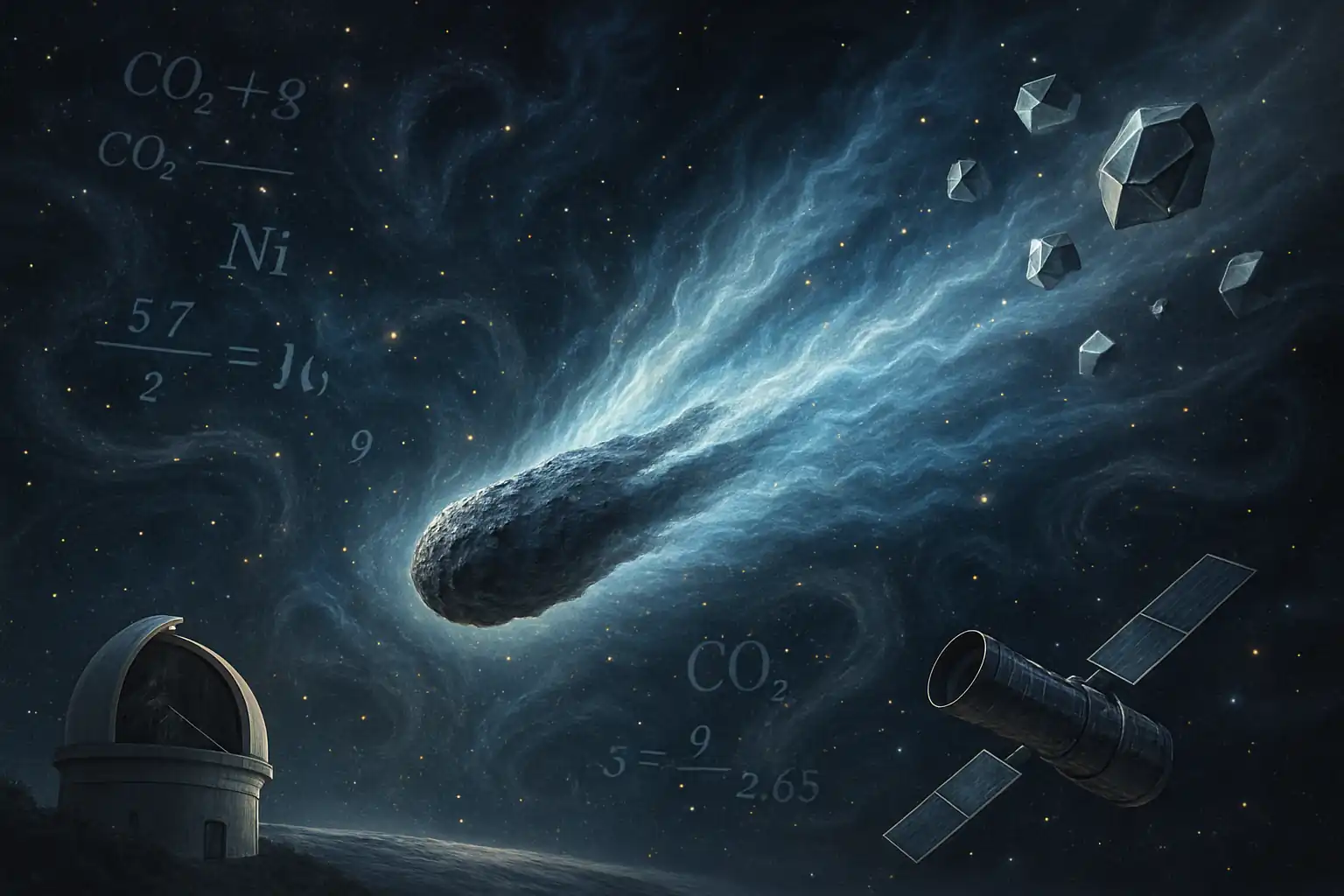
    Move over, Tunguska—there’s a new cosmic wildcard lighting up radar screens everywhere. The interstellar comet 3I/ATLAS has made headlines as a new visitor from beyond the solar system. It has upended the script for planetary defense. In a world increasingly alert to high-stakes surprises, see recent escalation coverage or even China’s adaptive drone tech here, 3I/ATLAS has forced the International Asteroid Warning Network (IAWN) to undertake unprecedented action: track an object from interstellar space in real time and respond to its unpredictable course corrections.

    A Cosmic First: Interstellar Object Added to Global Threat Drills

    When 3I/ATLAS was discovered by the Asteroid Terrestrial-impact Last Alert System (ATLAS), it appeared to be another fascinating but harmless cosmic interloper—think ʻOumuamua on steroids, not a threat to Earth. Everything changed in October 2025 when the IAWN announced a sweeping campaign to monitor the comet after early trajectory models proved unreliable. Medium reported that the object’s unpredictable path, its massive size (tens of billions of tons), and unfamiliar outgassing behavior led to its addition to the global threat tracking roster. Planetary defense agencies coordinated an observation blitz from November through January—an exercise usually reserved for asteroids on potential collision courses with Earth.

    This decision marked the first time a confirmed interstellar object triggered the planetary warning infrastructure, as documented in the process of asteroid impact prediction. The event reminds us that cosmic roulette isn’t solely sci-fi, and the science of warning and response is evolving rapidly.

    Trajectory Anomalies: Why 3I/ATLAS Is Confusing the Experts

    Part of the intrigue is that 3I/ATLAS hasn’t adhered to expectations. Astronomers anticipated a classic hyperbolic comet trajectory—blasting past the Sun, swinging by Mars, and continuing into deep space. Instead, teams noticed subtle yet significant course shifts. As noted by Daily Mail, NASA observed odd light behavior, flagging the comet for unpredictable orbital changes. Outgassing near the Sun is a standard explanation, but for 3I/ATLAS, its mass and speed introduce concerning non-gravitational acceleration—an issue often overlooked in regular comets but critical here due to the object’s interstellar velocity.

    The Minor Planet Center, supported by this field report, confirmed that even marginal shifts could challenge planetary defense systems. Experts highlight that the campaign isn’t about imminent danger, but training a global crisis response before such objects pose real threats—a theme echoed in broader risk management analysis.

    Black Swan Visitor: What Makes 3I/ATLAS Different?

    Why the hype? For one, 3I/ATLAS isn’t an ordinary rock. An Avi Loeb editorial details how the comet’s alignment with the ecliptic plane and lack of traditional emission patterns differentiates it from typical comets or asteroids. Multiple agencies—including ESA and NASA—joined IAWN in a months-long “Comet Astrometry Campaign,” rallying observatories worldwide for a planetary fire drill.

    This is real-world “black swan” risk management, not a rehearsal—an emerging theme shared by planetary defense strategists and cold-case analysts tracking phenomena as varied as geomagnetic disaster cycles to philosophical threats from AI and simulation theory. Even veteran doomsday-watchers admit: 3I/ATLAS injects chaos into our choreographed defense routines.

    What It Means: The New Normal for Planetary Defense Systems

    The takeaway? The tracking of 3I/ATLAS establishes a precedent: global defense, data sharing, and rapid response drills will likely become routine, not just for asteroids, but for strange, massive visitors from other solar systems. Outgassing, unpredictable navigation, and non-gravitational shifts require a next-gen playbook. For planetary defense, uncertainty is the new norm. This object might not hit us, but it’s already reshaping our readiness doctrine, as explored by initiatives like Unexplained.co and future-oriented strategy briefings.

    For those seeking more information on the fast-evolving world of celestial threats, follow new drills, risk analyses, and the cosmic oddities that now influence both science and policy. If anything, 3I/ATLAS is the universe’s latest lesson: when it comes to deep-space surprises, “expect the unexpected” isn’t a cliché; it’s a defense imperative.

  • 3I/ATLAS: Breaking Down the Mystery Object Speeding Through Our Solar System

    3I/ATLAS: Breaking Down the Mystery Object Speeding Through Our Solar System

    Something massive and strange is passing through our solar system: 3I/ATLAS. Discovered in July 2025, this object has a nucleus about the size of Manhattan. It has sparked a cosmic whodunit capturing global attention. Few stories blend hard science, outlier hypotheses, and widespread curiosity like this one. Harvard astrophysicist Avi Loeb has emerged at the center of the debate, questioning what, or who, might be passing by.

    What Scientists Know: The Hard Data on 3I/ATLAS

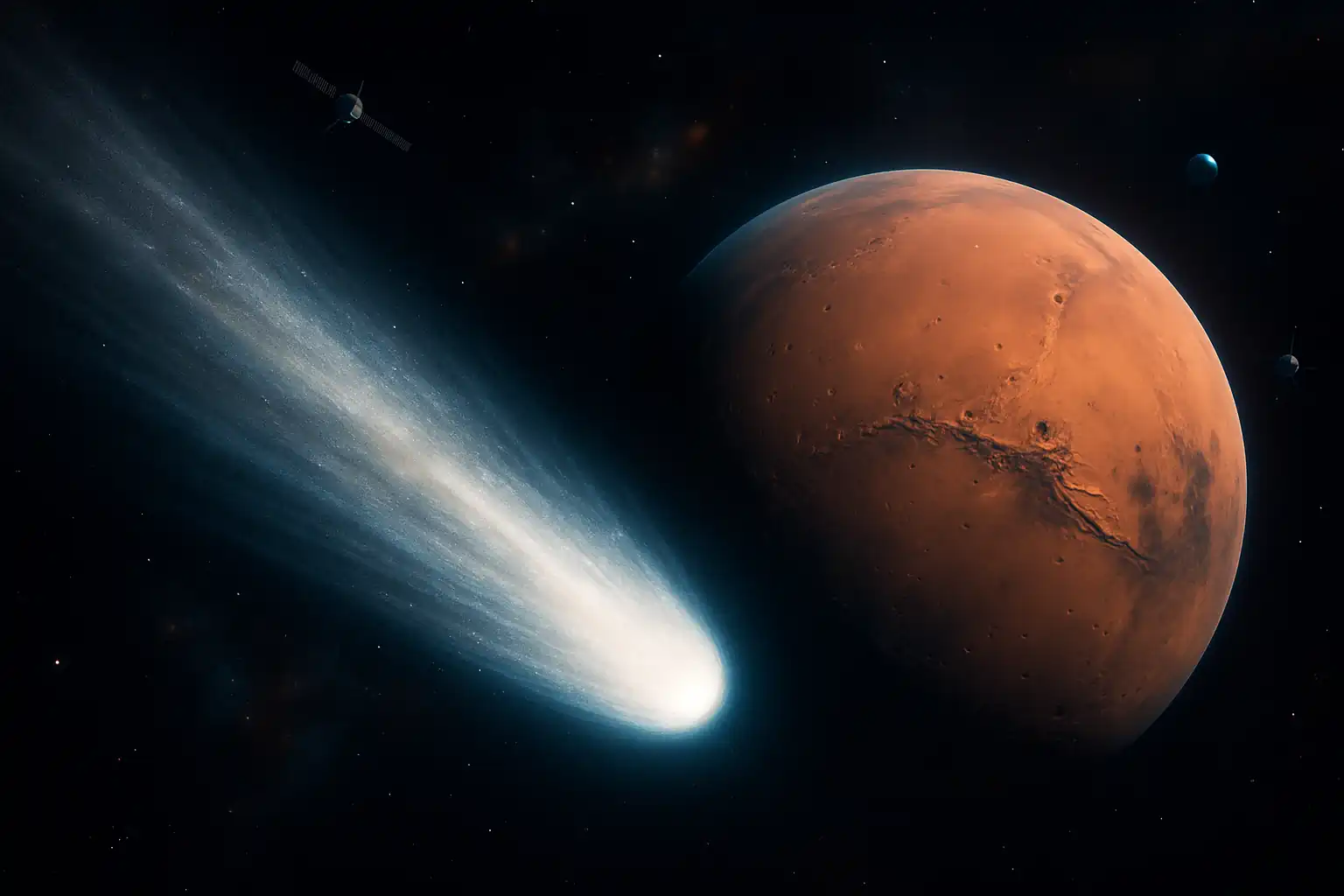
    3I/ATLAS is the third interstellar object spotted in our cosmic backyard, following ʻOumuamua and 2I/Borisov. What sets this new arrival apart? NewsNation estimates its size at roughly 30 kilometers and its mass at 33 billion tons—three to five orders of magnitude more massive than previous interstellar visitors. It was detected speeding into the solar system at 61 kilometers per second (about 137,000 mph). By the end of October, it will swing just inside the orbit of Mars. Yet, according to the NASA/JPL field report, it poses no danger to Earth. Its hyperbolic escape trajectory means it’s just passing through.

    Comet—Or Something Beyond? Anomalies Feed Speculation

    What makes 3I/ATLAS controversial? It exhibits unusual features in both composition and flight path. In his July 2025 arXiv paper (cited in Fox News), Loeb points to anomalies such as its large size and a trajectory remarkably aligned with the solar system’s plane. There’s also a lack of detectable chemicals typical of known comets at this stage. Despite this, a recent analysis indicates that the mainstream consensus remains that 3I/ATLAS is almost certainly a comet, albeit an impressive one.

    This controversy mirrors the speculation and skepticism surrounding recent international disclosures, including government UFO testimony and AI-driven deep-dives into reality itself (see this consciousness debate).

    Avi Loeb’s Alien Artifact Hypothesis

    Loeb, never shy from headlines, gives 3I/ATLAS a “30 to 40 percent” chance of not being natural, as reported by Futurism. He argues, as he did with ʻOumuamua, that certain orbital and compositional oddities might imply artificial design—a sort of cosmic driftwood from an alien civilization. However, Loeb concedes in his Medium blog that the odds favor a mundane (but scientifically thrilling) comet. Most astronomers agree: it’s science fiction until the data prove otherwise.

    As more interstellar interlopers surface from new telescopic arrays in the coming decade, Loeb’s call for open-minded, rigorous analysis resonates. This boundary-pushing inquiry intersects with coverage on defense tech and the philosophical provocations of contemporary media polemics.

    Trajectory, Visibility, and the Era of Interstellar Visitors

    Trajectory models highlighted by NASA Science show that 3I/ATLAS is on a hyperbolic path. It originates from outside the solar system, passes closest to the Sun just inside Mars’s orbit, and then shoots away, never to return. The Hubble Space Telescope has captured images showing a dust cocoon enveloping an icy core, further distinguishing 3I/ATLAS from typical comets, though not tipping the evidence toward artificial origins.
    If future in situ sampling or spacecraft flybys reveal surprises, the “alien artifact” debate could reignite. For now, 3I/ATLAS serves as a case study in how scientific consensus forms—and is tested—whenever something truly strange appears at the edge of our understanding.

    Why does it matter? These debates reflect not just the state of the cosmos but our collective imagination. Each interstellar object fuels hopes and fears about extraterrestrial contact, mirroring broader societal unease regarding breakthroughs and uncertainties in fields from technology to geopolitics. For continuous, evidence-based coverage, explore Unexplained.co—your source for the boundary between science and speculation.

  • Congressman Says CIA Agents Testified Under Oath About Aliens: Breaking Down the Claims and Evidence

    Congressman Says CIA Agents Testified Under Oath About Aliens: Breaking Down the Claims and Evidence

    Capitol Hill has become a focal point for humanity’s obsession with life beyond Earth. In a historic hearing, a U.S. Congressman asserted, “I have seen beings,” claiming that CIA agents and officials testified under oath about encounters with non-human entities. However, the story is stranger and murkier than headlines suggest.

    Congressional Hearings and Whistleblowers: What Happened?

    In a series of 2024 and 2025 House Oversight Committee hearings, witnesses—many with backgrounds in intelligence and the military—testified about “unidentified anomalous phenomena” (UAPs), the government’s term for UFOs. Notable figures included former Air Force intelligence officer David Grusch, who stated that the U.S. has operated secret programs to recover and reverse-engineer crafts of non-human origin. As detailed by The Guardian, witnesses described both direct encounters and a culture of retaliation for those who speak out. Lawmakers from both parties stressed the need to hear credible accounts from witnesses who testified under oath.

    This public disclosure follows decades of covert investigations and escalating pressure for transparency. Archival testimony, such as CIA-linked UFO investigations, now aligns with current demands for more openness.

    Did CIA Agents Testify to Seeing Aliens? Parsing the Evidence

    The claim that CIA agents testified about aliens stems from sensational congressional soundbites and whistleblower claims. Central to this is the testimony covered in field reporting from 8 News Now, where four witnesses testified under oath about encounters between the U.S. military and “advanced craft of unknown origin.” Some mentioned biological materials of “non-human origin.” Still, as The Guardian’s report points out, no physical evidence emerged during the hearings. The committee’s records, available via the Library of Congress, emphasize whistleblower protection and calls for government transparency.

    Meanwhile, these claims resonate culturally, reflecting American anxieties about concealed power, a theme explored in this analysis of government secrecy and public trust.

    Official Responses and Skepticism

    Government agencies, especially the Pentagon and CIA, have consistently denied recovering or concealing extraterrestrial craft or biologics. According to The Guardian, the U.S. Department of Defense asserts that no evidence supports such operations. Despite dramatic language and whistleblower claims, the revelations have not shifted the official stance on extraterrestrial visitation.

    This clash between extraordinary claims and cautious official responses fuels ongoing debate, echoing the skepticism tied to other government narratives, as dissected in field reporting on Cold War-era secrecy and concerns about hidden threats.

    Why It Matters: Society, Security, and Science

    Why does this issue matter? The credibility of Congress and intelligence agencies faces scrutiny, and the social demand for answers is unprecedented. For advocates, the hearings are pivotal for transparency, while for skeptics, they test the balance between political spectacle and substance.

    This discussion mirrors historic oversight battles, reflected in the evolution of the House Intelligence Committee. The pursuit of disclosure lies at the intersection of national security, scientific inquiry, and society’s quest for meaning in uncertainty. This mirrors the search for hidden knowledge at ancient sites, discussed in recent investigative reports, and addresses the psychological need for revelation amidst society’s biggest mysteries, as explored in archaeological coverage.

    For rigorous evidence and critical perspectives on world-altering disclosures, bookmark Unexplained.co. Stay informed—on the alien question, the final word remains unwritten.

  • Unlocking the Hidden Stargate: New Evidence and Ancient Mysteries Beneath Egypt’s Pyramids

    Unlocking the Hidden Stargate: New Evidence and Ancient Mysteries Beneath Egypt’s Pyramids

    The sands of Egypt hide more than history lessons. Legends about the pyramids abound, but none capture the imagination like the claim of a hidden ‘Stargate’—possibly the Stargate of Eshra—buried beneath these monuments, awaiting rediscovery. How does modern science compare to these enduring myths?

    Hidden Chambers in the Great Pyramid: Discoveries Spark New Theories

    Modern archaeological tools are turning old pyramid secrets into news. In March 2023, scientists announced the discovery of a nine-meter (30-foot) hidden corridor above the Great Pyramid of Khufu’s main entrance. According to Smithsonian Magazine, they used highly sensitive radiography and cosmic-ray imaging. The chamber’s purpose remains a mystery, fueling speculation: Egyptian antiquities officials and global experts marvel at how the already celebrated Great Pyramid produces genuine surprises, underscoring its architectural complexity, as noted in the Great Pyramid of Giza entry.

    Technologists speculate these voids could house extraordinary relics or, as some fringe theorists hope, portals to another time. Such ideas resonate with high-profile debates about ancient technology and advanced civilizations, similar to reports from unexplained anomalies worldwide.

    Archaeological Anomalies: Portals, Tombs, or Lost Cities?

    While sensational rumors circulate on social media, hard data drives current intrigue. In July 2025, Popular Mechanics reported a highly electrically resistive anomaly beneath the Giza plateau. A Japanese-Egyptian team detected it using ground-penetrating radar. Experts theorize the anomaly could represent a vast tomb or unknown void; others note its similarity to descriptions of “portal” legends. Project leaders assert its importance “warrants further investigation,” though there’s no direct evidence for interdimensional gateways as depicted in fiction.

    The debate isn’t new. Egyptologists caution against linking mysterious voids to sci-fi stargates, striking a balance between wishful thinking and savvy marketing. Nonetheless, the volume of unexplained features continues to fuel speculation, echoing themes in recent tech-driven apocalyptic analyses and the human psychology behind portals, whether they be metaphorical or archaeological.

    Separating Myth from Evidence: The Gateway Conundrum

    Every season seems to bring a new controversy surrounding pyramid discoveries. In April 2025, Daily Galaxy heightened online excitement with Google Maps images showing a horseshoe-shaped compound near the Giza complex—some deemed it a “potential Stargate site.” Egyptian authorities and mainstream archaeologists argue there’s no credible evidence for an engineered portal, with only ceremonial or funerary “gates” confirmed. Nevertheless, the overlap between structural anomalies and hidden chamber rumors continues to inspire scrutiny—and imagination—reflecting themes in modern doomsday prepping analyses and perceptions of secret knowledge as cultural currency.

    The fascination with stargates beneath Giza centers less on concrete portals and more on our collective yearning for revelation—about history, hidden technologies, and human achievement boundaries.

    What It Means: Enduring Mysteries and Future Frontiers

    Why does the stargate idea persist? It occupies the intersection of technology, science fiction, and enduring mystery. No hard evidence supports the literal existence of an Eshra Stargate or alien portal under the pyramids, but each discovery—like unexplained anomalies, hidden corridors, and unexcavated city blocks—keeps alive the possibility that history retains secrets.

    This mystery reflects a broader trend. Whether uncovering hidden cities, speculating about ancient super-technologies, or exploring theories on dimensional travel, the narrative thrives in a digital culture eager for wonder and evidence. For high-impact, evidence-led coverage of the world’s enigmas, follow Unexplained.co—where history and science fiction often converge beneath the surface.

    As researchers advance archaeological and technological inquiry, the Giza plateau remains an active frontier—a reminder that myth and science can coexist. Recent discoveries, like new chambers and unexplained voids, show the pyramids’ story is far from over. Next question: could unexplained electromagnetic surges—like those detailed in investigative reports on Earth anomalies—connect to these enduring mysteries?

  • Asteroid Close Call: 2025 FA22, Comet SWAN 25B, and the Incoming Wave of Celestial Surprises

    Asteroid Close Call: 2025 FA22, Comet SWAN 25B, and the Incoming Wave of Celestial Surprises

    Attention night sky watchers and planetary preparedness enthusiasts: September’s cosmic forecast reads like disaster cinema mixed with a science special. On the 18th, asteroid 2025 FA22 will fly by Earth at about 10.8 km/s—less than 900,000 kilometers from our surface, roughly 2.2 times the distance to the Moon. Experts say there’s no threat of impact this time. Still, this close call doesn’t inspire restful sleep, especially amid what’s turning into an “asteroid wave.”

    Yet, 2025 FA22 isn’t alone in attracting attention. Recently discovered comet SWAN 25B is brightening quickly, nearing visibility to the naked eye. It shines brightly against the backdrop of numerous asteroids making unusually close approach. Add interstellar object 3I/ATLAS rushing toward its October 29, 2025, rendezvous with the inner solar system, and you get a planetary drama that captivates both space weather preppers and professional astronomers.

    2025 FA22’s Close Flyby: Risk and Rarity

    On September 18th, 2025 FA22 will perform a memorable drive-by, confirmed by live observation campaigns. With a diameter of about 520 feet and a speed of 10.8 km/s, it meets the criteria for a potentially hazardous near-Earth object (NEO). However, astronomers emphasize that FA22’s trajectory keeps us well outside the danger zone this orbit. (Take a breath, but maybe keep that survival gear handy—history shows close calls can have unexpected results.)

    The asteroid’s passage, tracked by NASA and observatories worldwide, falls into the “no collision, but worth tracking” category. As India Today reports, objects larger than 140 meters can cause significant regional damage upon impact. As such, 2025 FA22 earns a spot on the global planetary defense watchlist. Consider this a fire drill for the solar system, reinforcing the importance of continuous near-Earth object monitoring.

    A Surge of Asteroids and Comet SWAN 25B Brightening Fast

    September isn’t an isolated case; astronomers report a surge in close asteroid flybys, dubbing it an “asteroid wave.” Data from sources like NASA’s NEO surveillance project indicates multiple objects, some as small as 20 meters, will pass within lunar distances over just a few days. This frequency far exceeds the monthly average, drawing attention from veteran skywatchers. They recall how even relatively small impactors can cause significant issues, as explored in this exposé on planetary electrical surges.

    The real highlight may be comet SWAN 25B. Although my search yielded no direct latest updates, other recent tracking indicates it’s increasing rapidly in magnitude and visibility. This cosmic disruption reminds us that comets—similar to the ones chronicled alongside record-dissecting interstellar objects—can bring both beauty and chaos. As SWAN 25B brightens, skywatchers anticipate a rare spectacle—provided clouds, light pollution, and solar activity don’t spoil the view.

    The 3I/ATLAS Wildcard: Interstellar Mystery on Approach

    Then there’s 3I/ATLAS, our solar system’s third confirmed interstellar visitor. After navigating the asteroid belt, this intriguing object is nearing a close pass with the inner planets, set for perihelion on October 29, 2025. Its approach has sparked scientific debates about how cosmic visitors might reshape our understanding of solar system origins and pose potential planetary security risks. For insights into its unusual green glow and composition, view this detailed report. For existential context, contemplate the interplay between cosmic close calls and social uncertainty familiar to geopolitical crisis-watchers monitoring global risk timelines.

    More than just a spectacle, 3I/ATLAS could be pivotal for understanding how interstellar debris interacts with solar forces. It may even reveal insights about potential threats or environmental seeding effects. If that sounds like a sci-fi plot, you’re not alone. Space continues to provide the best—and worst—material for “we’re not ready for this” moments.

    Cosmic Hazards and Humanity’s Vigilance

    For the majority, these events translate to stunning night skies, not imminent doom. However, the increase in asteroid and comet activity hints at broader environmental and existential vulnerabilities. Now is an ideal time to examine practical guides for unlikely disasters, such as this survival breakdown, or explore global risk concepts offered at Unexplained.co.

    The universe remains vibrantly alive. If you’re reading while hoping these cosmic events will pass us by, congratulations: you’re not alone. Most of us are simply along for the ride.

  • The 3I/ATLAS Enigma: Glowing Green, Strange Structures, and the Debate Over Our Latest Interstellar Visitor

    The 3I/ATLAS Enigma: Glowing Green, Strange Structures, and the Debate Over Our Latest Interstellar Visitor

    The solar system’s latest celebrity isn’t a billionaire prepping luxury bunkers—it’s a cosmic drifter known as 3I/ATLAS, a visitor raising more eyebrows than late-night “UFO disclosure” hearings in Congress. This interstellar object has started glowing an eerie green, with strange structures in its dusty shroud, baffling spectroscopists and doomsday hobbyists alike. Astronomers probing its gas, plasma, and nickel-enriched debris now wonder if we’re witnessing a comet or something entirely new to science.

    New observations, particularly the emerging polarization data reported in Astrobiology’s detailed coverage, reveal how 3I/ATLAS’s coma and tail structures break the usual rules. From its peculiar orbital trajectory to its extremely high velocity, nearly every aspect of this object reads like a cosmic prank. The implications could reshape how we categorize visitors from beyond the Oort cloud.

    Strange Structures and the Interstellar Object’s Queer Glow

    The headlines began with the comet’s green glow. Images from the Gemini South telescope, reported in BBC Sky at Night Magazine’s update, show faint, almost emerald light shimmering around the expanding coma. This isn’t a lens trick—but a signal that unique chemistry and energetic processes are escaping the comet’s heart as it nears the sun. Typically, green comet auras indicate diatomic carbon, but early spectroscopy now suggests a more significant CO2 presence for 3I/ATLAS, mingling with the familiar cyanogen radiance. This finding excites planetary scientists eager to use comets as time capsules from early solar system environments—and perhaps, other star systems too.

    Moreover, polarimetry—a method for analyzing scattered light—has shown extreme negative polarization, a rarity even among known comets. These findings, detailed at Astrobiology, bolster the idea that 3I/ATLAS carries dust and ice never before seen drifting through our neighborhood. Such data fuel debates already heating up due to unexplained phenomena observed in previous analyses conducted by planetary scientists and geophysicists.

    Why 3I/ATLAS Challenges the “Comet” Definition

    Asteroseismologists and planetary chemists are now examining structural clues. The “anti-sun tail”—a tail that points ahead of its direction rather than trailing—defies conventional comet behavior and indicates unusual interactions with solar winds and charged particles. Even stranger is 3I/ATLAS’s nickel-to-iron ratio, flagged in detailed spectroscopy and highlighted in NASA’s recent comet brief. It lacks a compositional signature associated with any bodies born in our stellar nursery, hinting at possibilities from a long-frozen protoplanetary reject to an exo-comet with minerals from a volatile birth.

    The comet’s trajectory complicates matters further. Unlike the typical gentle arc of solar system objects, 3I/ATLAS approaches on a hyperbolic track—suggesting it is not a boomerang but a true interstellar interloper (see Wikipedia’s comprehensive entry for technical details). This fits a broader pattern: three such objects—ʻOumuamua, 2I/Borisov, and now 3I/ATLAS—have disrupted comet science in less than a decade, as reviewed in the Wikipedia article on interstellar objects.

    What’s at Stake: from Cosmic Origins to Existential Anxiety

    Processing the peculiarities of 3I/ATLAS isn’t just academic. Interstellar objects like this offer scientific riches and speculation that fuels extinction-level scenario prepping—methods detailed in catastrophe survival breakdowns—and worries that the next cosmic messenger might be less benign. Each press release blurs the lines between established astrophysics and fringe theories, echoing concerns found in longstanding UFO mysteries and technological anxieties reminiscent of AI-driven doom scenarios.

    As the public grows accustomed to astronomical surprises, tracking 3I/ATLAS enters mainstream pop culture. Similar narrative twists appear in science journalism and in-depth features on Unexplained.co. After all, a celestial visitor from another star is bizarre enough; one that glows bright green and defies every playbook captivates theorists, skeptics, and bunker-stockers alike.

    Cosmic Curiosity or Harbinger? The Debate Isn’t Over

    Is 3I/ATLAS merely a cosmic tourist dazzling us on a hyperbolic flyby, or does it hint at something greater—perhaps the nudge we need to redefine what’s considered “normal” in our galactic neighborhood? As it streaks through the Solar System, showcasing exotic structure and color, the debate intensifies. One certainty remains: this won’t be the last bizarre update from the interstellar unknown. Next time the sky glows green, remember: the universe operates by bigger, stranger rules than our best textbooks—and it never asks permission before surprising us.

  • George Knapp, Russian UFO Files, and the Congressional Bombshell You Weren’t Meant to Hear

    George Knapp, Russian UFO Files, and the Congressional Bombshell You Weren’t Meant to Hear

    Drama flooded Congress this week. The U.S. House Oversight Committee transformed into a spy thriller when UFO journalist George Knapp detailed his attempts to smuggle UAP (Unidentified Aerial Phenomena) documents from Russia. This hearing reverberates through newsrooms and conspiracy forums, highlighting the lengths journalists—and possibly governments—will go for the truth behind elusive mysteries. Knapp’s story goes beyond mere files. It encases engineered fog, Cold War subterfuge, and high-stakes secrets that keep the UFO debate alive.

    Rep. Tim Burchett (R-TN) grilled Knapp on how he obtained sensitive UAP dossiers in Russia. Knapp’s bombshell revealed his navigation of KGB suspicion and U.S. government complicity. This account ignited speculation about undisclosed truths. The hearing’s revelations quickly spread into international headlines, prominently featured in The Economic Times and in Knapp’s testimony on the House Oversight Committee site.

    Knapp’s Legacy: From Bob Lazar to Russian Dossiers

    George Knapp’s interest in taboo subjects spans decades. He famously launched Bob Lazar and Area 51 into public awareness, transforming tales of alien technology into common conversation. His biography on Wikipedia chronicles a career filled with bold investigative reporting, government obstruction, and exceptional journalistic risk rarely seen since Watergate. His work with Russian sources harkens back to when journalists operated like spies, unearthing Cold War secrets.

    In Russia, Knapp accessed a wealth of declassified and sensitive UAP records. Many document encounters as dramatic, if not more, than the famous U.S. Navy “Tic Tac” incident, discussed in Congressional hearings and covered extensively in resources like this investigative report. Smuggling those documents highlights the risks of international reporting and the vast scope of the UAP mystery.

    Global Fallout: Russia, the US, and the UFO Secrecy Machine

    The American deep state’s history of UFO stonewalling is well-known, but Russian documents challenge this narrative. Knapp revealed these papers detail “craft” observed by Russian and Soviet forces, often coinciding with major political crises or nuclear near-misses. This is critical for students of nuclear brinkmanship and current WW3 warnings. Knapp’s testimony, along with coverage from The Economic Times, suggests both nations may have witnessed the same unexplainable phenomena but responded in ways that increase denial and escalation risks.

    If true, Knapp’s revelations could alter the narrative of near-global catastrophes. Previous reports on Russian aerial incidents and military UAP encounters illustrate the delicate balance between surprise and disaster, particularly when “unknowns” intertwine with nuclear concerns.

    What’s In the Documents—and What Do They Prove?

    Knapp claims these smuggled records document repeated radar contacts, visual sightings from Soviet pilots, and reports so strange they could make the X-Files writers blush. Descriptions feature unexplained maneuverability, electronic interference, and crafts zipping through airspace, adding credence to testimonies from both the U.S. and Russia. Some documents recount UAPs allegedly tampering with nuclear missile controls, a scenario Knapp emphasized (think: doomsday on autopilot), further amplified by extensive media coverage.

    Given rising international tensions, these files pose urgent questions—are competing superpowers confronting the same mysterious threat? Or is this just another instance of “the enemy possesses secret weapons” brinkmanship? For those who analyze patterns and high-level game theory, this issue aligns with AI arms race anxieties and technological shifts that threaten to disrupt power dynamics overnight.

    Document Drops and the Global UFO Disclosure Movement

    This testimony not only energizes Oversight skeptics but also strengthens a growing global movement advocating for widespread UFO disclosure. With American, Russian, and NATO incidents emerging rapidly, many now argue that disclosure is unavoidable. For a hyper-connected generation, every declassified page tests faith in official narratives and strikes against the secrecy apparatus tracked by analysts on Unexplained.co. As governments weigh the risks and benefits of revelation, the end of the UFO file era appears less like closure and more like diplomatic progress in a struggle for knowledge.

  • NASA’s World-Changing Announcement: New Frontiers and Unanswered Mysteries

    NASA’s World-Changing Announcement: New Frontiers and Unanswered Mysteries

    When NASA announces a “stunning announcement,” prepper radio enthusiasts like me reach for the tinfoil, while mainstream audiences hope for Martians, warp drives, or at least another reason to storm Area 51. However, NASA rarely disappoints. From groundbreaking discoveries on Mars to ambitious lunar missions, the United States’ leader in space exploration knows how to keep both the scientific community and doomsday crowds on edge—particularly with cosmic stakes involved.

    The official 2024 press releases reveal that NASA’s latest bombshell arrived amid a whirlwind of activity: unveiling new Artemis missions, welcoming Thailand into the Artemis Accords, and teasing the public with details from Perseverance’s Mars samples. Is that not enough? NASA also announced a partnership to stream its mission globally, ensuring even your grandmother’s cat can witness our countdown to lunar return on Netflix. The momentum is relentless, and the mission transcends any single flag on the Moon.

    Perseverance, Artemis, and the Next Era of Deep Space Discovery

    In a world jaded by nonstop news cycles, NASA’s approach stands out: science serves both spectacle and substance. The Perseverance Rover probes Mars, expanding on the legacy of rovers like Curiosity and Sojourner beyond human limits. NASA’s latest sample analyses aim to determine whether Mars ever hosted life—or if humanity is doomed to be the most paranoid beings in the cosmos. Their latest findings already fuel speculation that mainstream agencies may soon confront questions about habitability and ancient Martian environments.

    This “stunning announcement” aligns with Artemis—a lunar program set to make the Apollo era seem quaint. NASA’s commitment, detailed in its Wikipedia entry, aims to return humanity to the Moon, establish a sustainable presence, and use the lunar surface as a launchpad for Mars and beyond. Today’s international collaboration is commonplace, with nations like Thailand joining in—a testament to the growing consensus that the Moon and Mars belong to all of humanity, not just the cold warriors of the past century.

    Earth, Space, and the Race for Cosmic Insight

    Nasa isn’t limited to rockets and robots. The agency’s science division generates data far more valuable than trending cryptocurrency. With tools like the James Webb Space Telescope, the Earth Observing System, and asteroid defense collaborations, NASA tunes the planet’s “early warning system” against solar threats and cosmic incursions—linking directly to global risk factors tracked in modern disaster prep analysis and worst-case scenario speculation, such as this take on AI and existential crises.

    Civilian applications—such as climate change data, disaster preparedness, and deep-sea exploration—align with a burgeoning open-data ethos. Whether it’s securing asteroid samples or reigniting discussions about a Venus probe, NASA’s work intersects with all scenarios where science fiction ominously merges with reality. This interdisciplinary approach resonates through fringe investigations from UFO hearings and government disclosures to breakdowns of cosmic mysteries.

    International Competition and the Expanding Space Race

    If you think the Space Race concluded in 1969, think again. Today, it’s a global arms—and scientific—competition again, with China, India, the European Union, and private sectors closing in on NASA. The Artemis Accords extend beyond diplomacy; they test who determines the new rules for exploration, mining, and life beyond Earth. As detailed in recent preparations analysis and echoed by reports from joint military drills and ambitious lunar construction plans, the divide between cooperation and competition in orbit remains razor-thin.

    NASA isn’t afraid to make a spectacle; its recent Netflix streaming partnership signifies a shift toward mass engagement. Expect the next space walk to trend on TikTok before your morning coffee brews.

    The Unknown: Truths Waiting in the Cosmic Dark

    Despite all the headlines, NASA’s “stunning announcement” ultimately emphasizes a simple fact: we still lack knowledge about the cosmos. From the specter of international conflict escalation to a continuing fascination with UFO phenomena, our quest for knowledge reveals layers of mystery. Whether regarding life on Mars, a threatening asteroid, or crucial climate crisis data, NASA remains at the heart of the world’s most gripping true-life science thriller.

    For the bravest, most skeptical, and best-prepared, NASA’s mission translates into watching the skies, analyzing data, and recognizing that significant discoveries may lie beyond our atmosphere. Missed the big reveal? The countdown never stops. Keep your channels open and check Unexplained.co for breaking news that ripples from NASA’s cosmic pebble drops. Next stop? The final frontier—until we discover another one.

  • The Black Cube UFO Over Wright-Patterson: Ancient Symbol or Military Riddle?

    The Black Cube UFO Over Wright-Patterson: Ancient Symbol or Military Riddle?

    No matter how many times you claim the era of little green men has ended, the universe loves to surprise you. Recently, a black cube UFO allegedly hovered over Wright-Patterson Air Force Base—America’s infamous hub for top secrets. Forget pie plates and cigar-shaped blips; this UAP showcases sharp angles and unsettling geometry, as if cosmic intelligence crafted Borg-themed origami while the rest of us binge-watched shows.

    The sighting wasn’t isolated. Reports and social media posts describe a swarm of drones above the base prior to the glossy, impossible cube’s arrival—raising alarms and drawing attention from pilots and military observers according to FAA-released documents. This is Wright-Patterson, remember—the rumored storage site for recovered saucers and alien artifacts since the UFO became a buzzword during the Cold War. Cue the X-Files music.

    Cube Over Base: Fact, Folklore, or Black Project?

    What we know for sure: the base experienced a unique event involving swarming drones—details confirmed by eyewitness accounts—and a black cube-shaped craft. Mainstream coverage, such as this analysis from Science Times, suggests Pentagon advisors theorize these phenomena might be next-gen drones or spying platforms developed by advanced terrestrial adversaries.

    But are we truly at the forefront of drone warfare, or do these cubes hint at something odder? The increase in black-cube-shaped craft and drone swarms is not a mere coincidence; documented incursions listed in the 2024 drone sightings have even left hardened military officials puzzled. Some reports extend further, indicating today’s craft may echo long-standing rumors of cube-shaped UAPs appearing near nuclear sites or strategic military institutions. This type of escalating intrigue already fuels doomsday theories across various global tensions, as detailed in investigations about America’s threat readiness and analyses of U.S. military movements.

    The Black Cube: Myth, Symbolism, and Occult Connections

    Why a cube? This isn’t only about geometry—it’s also ancient symbolism. The black cube appears throughout history, linked to mystical practices from the Kaaba in Mecca to obscure interpretations within Western esotericism. Detailed explorations and rabbit-hole conspiracy analyses show that cubes often symbolize cosmic order or, for the especially paranoid, control by hidden elites. This connection with pop culture has sparked recent fascinations with black cubes as portals, vehicles, or messengers from intelligence beyond our comprehension.

    However, the swift overlap between military sightings and ancient symbols muddies the message further. Is it a signal of power and warning, or simply a convenient shape for intimidating new drones? The iconography resonates intensely with those questioning U.S. military secrecy, especially after revelations about Lockheed’s classified aerospace projects and the whispered accounts of UFO-related disinformation initiatives.

    Drones, UAP, and the Boundaries of Human Technology

    Skepticism can be valuable, but brushing these incidents off as mere hype overlooks a significant shift: American airspace is increasingly filled with sophisticated, unidentifiable craft—sometimes cubes, sometimes spheres—often exhibiting precision that outmatches quadcopters and weather balloons. Recent leaks suggest black cube drones might test military reactions or disrupt communications, while some Pentagon officials privately express concern about the possibility of foreign or non-human technology.

    The intersection of unexplained phenomena and technological ambiguity places us in a “myth-making zone,” similar to belief surges following AI’s mysterious advancements. The public craving for answers intensifies with each blurry video and redacted document, blurring the line between reality and fantasy. Official probes continue but often conclude with unsatisfying “case closed” statements, leaving more questions than definitive answers.

    Ancient Power, Modern Panic, and the Persistence of the Unknown

    So what message does the black cube convey, if anything? Depending on your perspective, it could symbolize a warning from the future, a message encoded in ancient language, or the world’s most unsettling reconnaissance drone. What’s evident: each sighting ignites fresh cycles of folklore, skepticism, and—ironically—bunker stockpiling among believers and analysts alike. Despite our technological advancements, these UAP encounters remind us that uncertainty isn’t merely a modern byproduct; it’s the main event.

    If you seek the latest theories (or just more fuel for existential dread), keep an eye on Unexplained.co—because in a world this strange, the black cube might symbolize the unknown itself.

  • 3I/ATLAS and the Enigma of the Nickel Comet: Why This Interstellar Visitor Defies Explanation

    3I/ATLAS and the Enigma of the Nickel Comet: Why This Interstellar Visitor Defies Explanation

    Many believe all comets are frozen water and cosmic dust racing around the Sun with dramatic tails. Comet 3I/ATLAS challenges that notion. It features an unexpected plume of nickel and a unique chemical signature, reshaping planetary science.

    A bit of background: Astronomers recently accepted that solid objects can pass Earth from outside our solar system. So far, 3I/ATLAS is the third confirmed visitor, following ‘Oumuamua and 2I/Borisov. While Borisov resembled typical comets, 3I/ATLAS is turning heads. As The Debrief reports, its bizarre traits confuse powerful telescopes like JWST.

    Mystery Metals in the Coma: Nickel and CO₂ Take Center Stage

    Celestial oddities like ATLAS guard their secrets closely. The ScienceAlert breakdown reveals that this comet’s coma defies previous observations, interstellar or otherwise. Instead of common components like water vapor and carbon monoxide, the James Webb telescope discovered a coma heavy with carbon dioxide and an intriguing presence of nickel, a metal typically found in much hotter environments.

    Why does this matter? Many comets are cold remnants from the solar system’s outer ice and dust clouds. Nickel condenses at much higher temperatures. The Wikipedia page for 3I/ATLAS highlights its coma’s reddening, implying changing chemistry as sunlight warms its icy core—possibly revealing hidden exotic materials.

    Comparisons With Borisov and Questions About Comet Origins

    This isn’t the first time a comet has surprised astronomers. When Space.com analyzed JWST’s findings, they noted stark differences between 3I/ATLAS and past interstellar visitors. For instance, 2I/Borisov emitted primarily cyanide, not CO₂ or nickel. This discrepancy suggests a formation history in a hotter, metal-rich protoplanetary disk or a setting shaped by supernova ejecta. Such discoveries profoundly impact our understanding of comet formation, whether nearby or in distant star systems.

    The presence of nickel also complicates current models of comet nuclei—especially interstellar ones. Are there unforeseen pockets of heat in distant, turbulent planetary nurseries? Alternatively, does nickel indicate violent processes after ATLAS was ejected from its home? Existing models struggle to account for the observed quantities.

    What Else Could Be Going On? Alternative Theories and Cosmic Coincidences

    Data from telescopes sometimes contradict one another, sparking creative theorizing—some grounded, others fanciful. One theory proposes that 3I/ATLAS may have suffered a collision, unveiling deep, metal-rich layers. Or maybe it’s fragmenting, exposing processes not typical in stable comets. A few theorists delve into cosmic conspiracy territory, suggesting everything from alien mining to hidden interstellar technology. If nickel in ATLAS’s tail signals something, it’s attracting interest from eager UFOlogists.

    However, let’s not get overly speculative just yet. Data from ongoing JWST campaigns—tracked in real-time on research platforms—suggest the comet’s behavior aligns with understood physical chemistry, albeit under unusual conditions. Those seeking skeptical perspectives may explore secret science exposés and Area 51 speculation for additional insights.

    A Cosmic Detective Story Still Unfolding

    Similar to recent unexplained phenomena in the US, where official narratives clash, 3I/ATLAS illustrates how the universe conceals its secrets. Scientists scramble to unveil its true nature before it exits our solar system. Yet, its passage raises more questions than answers, encouraging new models for interstellar chemistry and inspiring cosmic skepticism—plus some midnight social media panic.

    For those eager for cosmic surprises, keep your myth-busting seatbelt fastened at Unexplained.co. This interstellar nickel bearer reminds us that we’ve only scratched the surface of the universe’s weirdness.