Author: Art Grindstone

  • Why the Tel Aviv Crow Swarm Became a Harbinger-of-Doom Story Online

    Why the Tel Aviv Crow Swarm Became a Harbinger-of-Doom Story Online

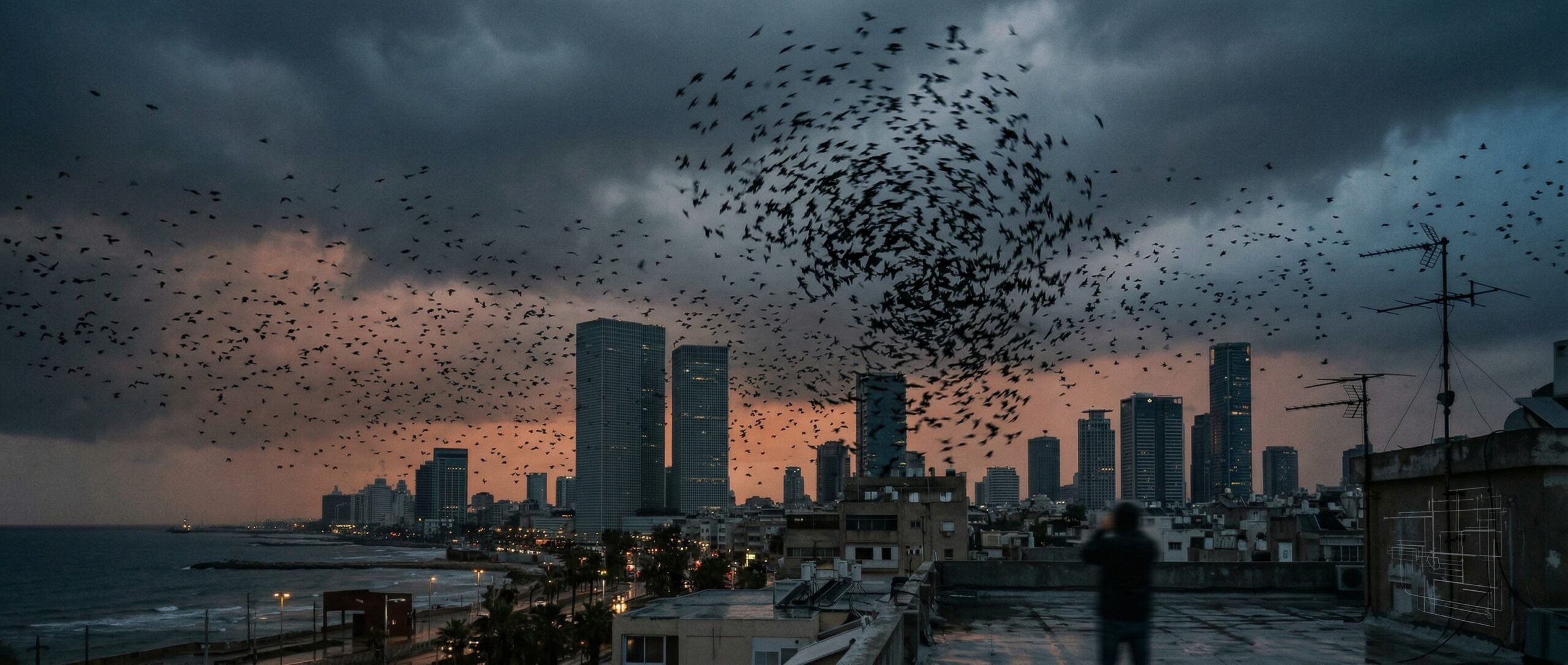
    A viral video of thousands of crows swirling over Tel Aviv sparked immediate claims that the scene was a supernatural warning, a biblical sign, or a “harbinger of doom.” Here is the clearest answer: the footage appears to show a real and visually dramatic bird swarm, but the most likely explanation is natural migration and urban flocking behavior rather than evidence of anything paranormal. What turned the clip into an unexplained story was not proof of an omen, but the speed with which fear, symbolism, and geopolitical anxiety attached themselves to the image.

    That distinction matters because the Tel Aviv crow video sits at the intersection of two very old human habits. The first is reading meaning into the sky when events on the ground already feel unstable. The second is treating unusual animal behavior as a message rather than a pattern. In moments of social tension, those instincts become stronger, and the internet accelerates them.

    The clip gained traction after NewsX reported on the viral reaction, noting that viewers were linking the footage to current regional tensions and framing it as a possible prophecy sign. That reaction is what made the video newsworthy. The birds were real. The “doom” interpretation was cultural.

    What happened in the Tel Aviv crow swarm video?

    The footage shows a dense black flock moving through the skyline around Tel Aviv high-rises, creating the kind of visual effect that immediately looks uncanny on social media. The dark mass of birds appears to fold and reform in waves, making the sky itself seem unstable for a few seconds. That alone is enough to trigger an emotional response even before viewers attach a theory to it.

    In another context, the same video might have been shared as an urban wildlife curiosity or a dramatic migration clip. Instead, it spread during a period of heightened emotional and political tension, which meant many people did not experience it as neutral footage. They experienced it as charged imagery. That helps explain why so many captions and reposts moved quickly toward apocalyptic language.

    It is also important to separate what is visible from what is inferred. What is visible is a very large flock of birds. What is inferred is everything else: that the birds were behaving unnaturally, that they were responding to hidden forces, or that the scene had prophetic significance. The internet often collapses those two categories into one, but editorially they should stay separate.

    Why did so many people call it a harbinger of doom?

    Crows and ravens have carried symbolic weight for centuries. In folklore, religion, literature, and war imagery, black birds are often associated with death, judgment, catastrophe, and messages from beyond the ordinary world. Once those meanings already exist in the cultural background, a huge swarm over a major city does not arrive as blank visual information. It arrives preloaded with interpretation.

    That is why the “harbinger of doom” label attached so quickly. Social platforms reward emotionally intense framing, and apocalyptic language is one of the fastest ways to turn an ambiguous clip into a shareable narrative. A dramatic sky scene over Tel Aviv was almost guaranteed to attract biblical references, omen talk, and prophecy discourse from users already primed to see global instability through symbolic signs.

    This is not new behavior. Ancient cultures often treated unusual bird movement as significant. Augury, omen reading, and symbolic sky interpretation are old habits, not fringe inventions of the modern internet. What has changed is the distribution speed. A visual that once would have circulated locally now reaches millions of viewers in hours, and each viewer can add their own interpretive layer on top.

    The most widely cited explanation is bird migration and urban flocking

    The strongest non-mystical explanation is also the most straightforward one: Israel sits on one of the world’s most important migration corridors, and large bird movements are part of the ecological reality of the region. Organizations such as Nature Israel have long highlighted the scale of seasonal migration through the country, with huge numbers of birds passing through the area during peak movement periods.

    That broader migration context matters because it makes the Tel Aviv scene unusual in appearance without making it scientifically extraordinary. A dramatic flock can still be real, striking, and uncommon to the average viewer while remaining fully consistent with known animal behavior. The unexplained feeling often comes from unfamiliarity, not from lack of explanation.

    There is also specific behavioral context for crows themselves. The Cornell Lab of Ornithology has documented how crows can gather in large communal roosts and travel in conspicuous numbers, especially in environments where food sources, safety, and urban structures shape flock movement. On video, those patterns can look far more ominous than they do in ordinary field observation because city skylines compress scale and contrast.

    What evidence exists for a supernatural interpretation?

    At the moment, there is no strong evidence that the Tel Aviv crow swarm was paranormal, prophetic, or otherwise beyond conventional explanation. There is a visually powerful clip, a wave of symbolic interpretation, and a long cultural history of treating black birds as signs. That is enough to fuel belief and discussion. It is not enough to establish a supernatural event as fact.

    This is where editorial discipline matters. A mysterious-looking image is not the same thing as mystery proven. The strongest evidence in this case is evidence of response: how people reacted, what they projected onto the clip, and why the symbolic framing spread so efficiently. The supernatural claim rests on interpretation, not on any verified anomaly in bird behavior.

    That does not make the story empty. It simply changes what the story is really about. The deeper unexplained question is not whether crows can move in large groups. They can. The more revealing question is why so many viewers were ready to treat the image as a warning from the sky.

    What skeptics and investigators would say

    A skeptical reading would emphasize three things. First, large bird gatherings are well documented, especially in migration-heavy regions. Second, emotionally loaded contexts make ordinary events seem unusually meaningful. Third, social media captions shape perception before viewers have time to ask basic factual questions. Once a clip is framed as a prophecy sign, many viewers no longer approach it as raw footage. They approach it as evidence for a conclusion that has already been suggested to them.

    Investigators or media-literate analysts would likely add a fourth point: the power of the clip lies in its ambiguity. It is dramatic enough to feel uncanny and ordinary enough to support a natural explanation. That combination is exactly what makes a story durable. If the answer were too obvious, it would not spread. If the evidence for the extraordinary were stronger, the debate would look very different. Instead, the video occupies the fertile middle ground where myth, symbolism, and rational explanation can all coexist long enough to generate attention.

    Why this story matters beyond one viral clip

    The Tel Aviv crow swarm is important because it shows how quickly modern media can transform a natural event into a symbolic crisis. A single piece of real footage became, within hours, a debate about prophecy, fear, war, and meaning. That is not just a bird story. It is a case study in how unexplained narratives are built in real time.

    It also reveals something about the current emotional atmosphere online. In periods of uncertainty, people do not simply watch strange images. They recruit them. They search for signs, frameworks, and warnings that help them narrate the instability they already feel. The sky becomes part of the story they believe history is telling.

    That is why the Tel Aviv video resonated. It provided a perfect symbolic canvas: black birds, a major city, a tense backdrop, and enough visual drama to feel mythic. The most likely explanation may be migration and flock behavior, but the reason the clip spread is that it satisfied a different need entirely. It looked like meaning.

    Final assessment

    So what was the Tel Aviv crow swarm: omen or migration? Based on what is currently known, migration and ordinary bird behavior remain the most credible explanation. But that does not erase the cultural power of the clip. What makes this case unusual is not the existence of a flock. It is the speed with which a natural event was absorbed into prophecy discourse and treated as a warning sign by viewers around the world.

    In that sense, the mystery is not really in the birds. It is in the human impulse to turn unsettling images into messages. That impulse is ancient, and the internet has only made it faster.

    Frequently Asked Questions

    Was the Tel Aviv crow swarm really a supernatural omen?

    Based on what is currently known, there is no strong evidence that the flock was supernatural. The most credible explanation is ordinary bird movement amplified by a highly emotional context and symbolic interpretation online.

    Why did people call the birds a harbinger of doom?

    Crows have long been associated in folklore and religious symbolism with death, warning, and catastrophe. When a dramatic swarm appears over a major city during a tense moment, many viewers naturally interpret it through those older symbolic frameworks.

    What is the scientific explanation for the Tel Aviv crow video?

    The most widely cited explanation is seasonal bird migration and large-scale flocking behavior in a region known for intense migratory movement. Urban perspective and skyline contrast can also make a normal flock look much more uncanny on video.

    Related Articles

    This article was created using Media Blaster – Your content production specialist. Visit www.mediablaster.io for more information.

  • Annabelle in Salem? Why the Warren Museum Story Is Exploding Online

    Annabelle in Salem? Why the Warren Museum Story Is Exploding Online

    Few paranormal stories spread faster than one involving Annabelle, the allegedly haunted doll long linked to Ed and Lorraine Warren. The latest twist is almost too perfectly calibrated for the internet: a proposal tied to a new Warren-branded museum could bring the doll to Salem, Massachusetts, the country’s most recognizable city for witchcraft lore and supernatural tourism. That possibility has turned a local planning story into a national obsession.

    At the center of the buzz is a proposal for The Haunted Warren Museum at 259 Essex Street in Salem. Reporting from Hearst Connecticut Media’s Middletown Press says city discussions moved forward on March 26, with plans that reportedly include 14 exhibit spaces dedicated to paranormal artifacts from around the world. The project has also drawn attention because it reportedly involves creator and entertainer Elton Castee through Haunted Warren Museum, LLC, giving the story a modern influencer-era dimension on top of the Warrens’ already famous legacy.

    Why Salem changes the scale of the story

    Annabelle is already one of the few occult objects that exists far beyond ghost-hunting circles. The doll’s reputation was built first through Warren case files and later magnified by books, television, and especially the Conjuring universe. Even people who know almost nothing about paranormal history often recognize the name. Put that level of pop-culture visibility into Salem, and the result is immediate attention from tourists, skeptics, believers, and local residents alike.

    Salem is not just another New England town with a haunted attraction. It is a place where the memory of the 1692 Salem witch trials coexists with a massive tourism economy built around the supernatural, folklore, and dark history. That makes the city an unusually potent backdrop for a Warren museum. A haunted object exhibit might feel niche somewhere else; in Salem, it becomes a direct addition to an already mature ecosystem of ghost tours, museums, seasonal events, and occult branding.

    The real issue is bigger than one doll

    That is why the proposed move has generated so much debate. Annabelle may be the headline magnet, but the deeper story is about what happens when legacy paranormal mythology meets city permitting, neighborhood concerns, and a hyper-commercial tourism district. According to the reporting around the proposal, discussion has focused less on whether the artifacts are genuinely supernatural and more on practical matters such as operating hours, crowd flow, security, and the effect a high-profile occult attraction could have on the surrounding area.

    In other words, this is not simply a ghost story. It is a story about how a famous paranormal brand attempts to scale into a destination business. The Warrens remain central figures in American haunting mythology, but their legacy now exists inside a much more contemporary media landscape, one shaped by viral clips, creator-driven promotion, and fandom culture. That combination makes the Salem museum proposal feel like a collision between old-school demonology lore and the logic of modern entertainment IP.

    Why Annabelle still works as a cultural symbol

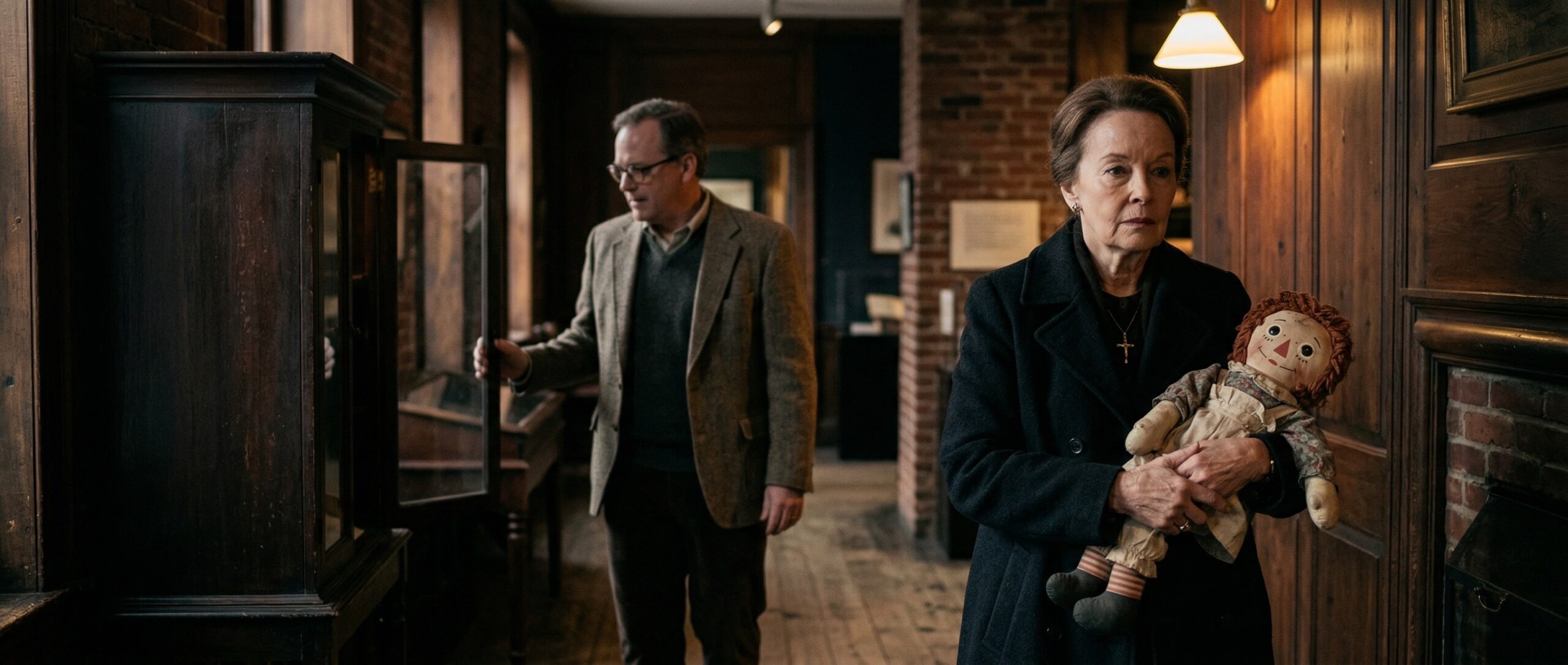
    Part of the reason the story has caught fire is that Annabelle functions as an unusually efficient symbol. The real artifact associated with the Warrens is a Raggedy Ann doll, while the film version transformed the concept into something far more visibly sinister. The gap between the historical object and the cinematic icon has only made the legend more durable. It allows believers to attach meaning to the original case while casual audiences respond to the broader mythology popularized by mainstream horror media.

    That kind of recognition matters in tourism. A museum full of lesser-known cursed items might draw dedicated paranormal fans, but Annabelle is the object that cuts through to everyone else. She is instantly legible, visually memorable, and easy to package in headlines, thumbnails, and social media debates. Salem, meanwhile, is one of the few places in the United States where that recognition can be converted almost immediately into foot traffic.

    The backlash is part of the attraction

    Stories like this also feed on resistance. The more residents worry about traffic, spectacle, or the continued commercialization of Salem’s supernatural identity, the more attention the museum receives. That tension keeps the story moving because it creates two narratives at once: a paranormal tourism expansion for fans and a civic debate for everyone else. The controversy is not separate from the attraction. It is part of what gives the museum proposal its public energy.

    There is also a broader question underneath the arguments about zoning and operations. What exactly is a Warren museum in 2026 supposed to be? Is it a preservation effort for artifacts tied to one of America’s most famous paranormal families, a theatrical attraction built for tourists, or a hybrid of both? Salem is an ideal place for that question because the city has spent decades navigating the line between historical memory and supernatural spectacle.

    What happens next

    For now, the proposal’s significance lies in how neatly it captures the current state of paranormal culture. Haunted objects are no longer just relics from old case files. They are brands, attractions, conversation pieces, and engines for viral storytelling. If Annabelle does end up in Salem, the city may become an even stronger center of haunted-object tourism than it already is. If the proposal stalls, the attention it has generated still proves the same thing: the American appetite for organized, commercialized encounters with the unexplained is only getting stronger.

    Either way, the story has already escaped the limits of local news. It now sits at the intersection of folklore, business, internet fame, and municipal politics. That is why the idea of Annabelle in Salem has spread so quickly. It does not just sound spooky. It sounds inevitable.

    Related Articles

    This article was created using Media Blaster – Your content production specialist. Visit www.mediablaster.io for more information.
  • Is Syracuse University Haunted? Why the Campus Ghost Story Keeps Growing

    Is Syracuse University Haunted? Why the Campus Ghost Story Keeps Growing

    Syracuse University does not trade on a single defining ghost story in the way some older campuses do. What gives the school its reputation is something more durable: a steady accumulation of eerie claims, historic buildings, cemetery lore and student testimony that keeps the question alive from one class year to the next. A recent Daily Orange feature gave that conversation fresh momentum by treating the campus as neither a joke nor a proven paranormal hotspot, but as a place where enough unsettling stories circulate to make the label stick.

    That framing matters. The modern internet loves a haunting that feels close at hand. A ruined asylum is atmospheric, but a working university is more relatable: late nights, old stone buildings, half-believed rumors, and the kind of emotional intensity that makes every odd sound feel loaded. Syracuse fits that pattern unusually well.

    Why Syracuse keeps attracting ghost lore

    Part of the answer is physical. Syracuse University has the kind of architecture that naturally collects legend. The Hall of Languages, the first building constructed on campus, dates to the early 1870s and still anchors the university with its Second Empire silhouette, towers and long institutional memory. Crouse College, with its dramatic Victorian Gothic look and castle-like presence, only deepens that atmosphere. Even before any ghost story is told, the setting does some of the work.

    Then there is proximity. Syracuse students are not walking through a sealed-off academic museum. They move through a living city with its own folklore, and one of the most persistent local touchpoints is Oakwood Cemetery, the historic cemetery bordering the university area. It has long been part of the city’s haunted reputation, which means campus lore never stays confined to lecture halls and dorms. The edge between university life and local legend is thin.

    That is why Syracuse ghost talk tends to spread as a network rather than a single headline mystery. A sound heard in one residence hall, a figure glimpsed near an older building, a strange feeling during a walk by the cemetery, an upperclassman retelling an old story to a first-year student — this is how campus mythology survives. It moves socially before it moves journalistically.

    A campus haunting built on repetition, not proof

    The most interesting thing about Syracuse’s paranormal reputation is that it does not depend on a definitive case file. It grows through repetition. Students arrive, hear that certain places are “known” for activity, test the claim for themselves and then add new details, skeptical or not. That cycle is more powerful than one dramatic incident because it keeps the story current.

    The Daily Orange piece captured that well by approaching the subject as a ghost-hunt question rather than a solved mystery. That tone mirrors how many people now engage with paranormal claims online. They do not necessarily need to believe in a full supernatural explanation. They just need enough uncertainty for the story to remain entertaining, discussable and a little unnerving.

    Universities are perfect environments for that kind of folklore. Students are sleep-deprived, stressed, socially primed for suggestion and constantly occupying spaces with layered histories. A creaking stairwell or an unexplained noise in a high-rise dorm can become a shared narrative almost instantly. Once that narrative sticks, every new class inherits it.

    Why haunted-college stories resonate now

    Syracuse is part of a broader shift in how paranormal stories circulate. Haunted places are no longer just isolated tourist attractions with ticket booths and velvet ropes. Increasingly, ordinary institutions with enough age, symbolism and rumor density are treated as active mystery zones. Colleges are especially suited to that because they combine youth culture with ritual, tradition and architecture built to outlast generations.

    That makes the Syracuse story more than a local curiosity. It is also a case study in how belief and atmosphere work online. The question “Is Syracuse University haunted?” invites endless low-stakes participation. Alumni can add memories. Current students can compare rumors. Skeptics can argue that old buildings and suggestion explain everything. Believers can point to the sheer number of recurring claims. Everyone has a lane into the conversation.

    And that is exactly why the story keeps growing. A haunting does not need universal proof to become culturally real. It only needs a setting that feels charged, a body of stories that refuses to disappear, and a community willing to keep asking whether something strange is going on after dark.

    At Syracuse, that formula is already in place.

    Related Articles

    This article was created using Media Blaster – Your content production specialist. Visit www.mediablaster.io for more information.

  • Anna Paulina Luna’s UFO Disclosure Push Could Change the UAP Debate

    Anna Paulina Luna’s UFO Disclosure Push Could Change the UAP Debate

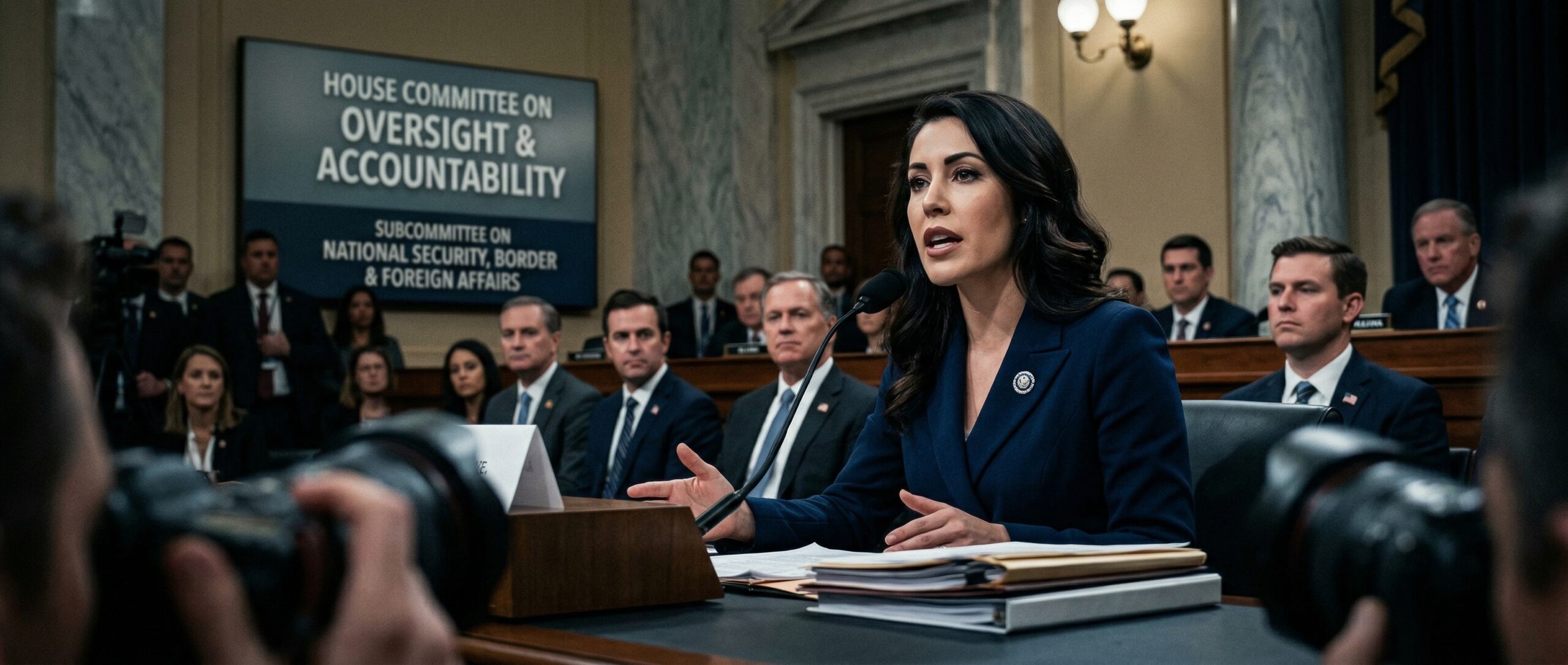
    Rep. Anna Paulina Luna is becoming one of the most visible political figures in the modern UFO disclosure fight, and that matters because she is not speaking from the margins. As chair of the House Oversight Committee’s Task Force on the Declassification of Federal Secrets, Luna is operating from inside a part of Congress built to pressure federal agencies for records, testimony, and accountability. Her recent remarks suggest lawmakers have already seen material they cannot easily explain, and she is signaling that more could become public once declassification procedures catch up.

    That is a notable shift in tone. For years, Washington’s UAP debate has lurched between sensational claims and institutional caution, with the Pentagon trying to keep the subject inside official channels while public distrust continues to grow. Luna is now pushing in the opposite direction. She has said Congress has viewed footage the government still considers unexplained, and she has framed the next phase of disclosure as less about speculation and more about getting records out into the open.

    The broader backdrop is already well established. The Pentagon’s All-domain Anomaly Resolution Office, or AARO, was created to centralize investigation of unexplained objects seen in air, space, and undersea environments. At the same time, the House Oversight Committee has remained one of the main venues where lawmakers press agencies over transparency, secrecy, and whistleblower claims tied to UAP incidents. Luna is trying to use that machinery not just to ask questions, but to force movement.

    Disclosure may be messier than believers expect

    One of the most important parts of Luna’s position is not the promise of release itself, but the warning attached to it. Even if records are declassified, that does not mean the public will get a neat government conclusion explaining exactly what every object was. In fact, the likelier outcome may be a large release of documents, video, and supporting material that raises the level of public scrutiny without resolving the mystery.

    That possibility cuts in two directions. For disclosure advocates, any release would be a major victory because it would move the conversation away from pure rumor and toward primary material. For skeptics, though, a records dump without firm conclusions could look like more ambiguity rather than clarity. Luna appears to understand that tension. Her message is not simply that answers are coming. It is that more evidence may come, and the fight over what it means could intensify.

    That distinction matters because recent official reviews have already shown how hard it is to satisfy either side. The Pentagon has repeatedly said many UAP cases are unresolved because of limited data, not because they prove extraordinary origins. Its historical review on U.S. government involvement with UAP claims leaned heavily toward debunking longstanding allegations of hidden crash-retrieval programs, while still acknowledging persistent reporting and ongoing public interest. That left disclosure supporters convinced the government was still withholding too much, and critics of the movement convinced the hype had outrun the evidence.

    Luna’s clash with AARO raises the stakes

    Luna is not only promising transparency. She is also escalating the political conflict around who should control the story. Reports tied to her recent comments suggest she wants AARO disbanded or defunded, a dramatic position that turns a policy disagreement into an institutional showdown. If that pressure continues, the argument will no longer be limited to whether unexplained objects exist. It will become a fight over whether the Pentagon’s current disclosure framework has any credibility left on Capitol Hill.

    That is a serious accusation, even if it is being delivered in the language of political combat. AARO was supposed to reassure the public that sightings were being cataloged through an official investigative process. But many in the disclosure camp see the office as too cautious, too controlled, and too close to the defense bureaucracy it is meant to scrutinize. Luna’s posture speaks directly to that frustration. She is effectively betting that public appetite for transparency now outweighs institutional patience.

    Her role also gives the issue more staying power than yet another viral UFO clip. Congressional interest means hearings, records requests, staff reviews, and procedural fights can keep the subject alive long after the headlines fade. Even people who doubt the extraterrestrial angle should pay attention to that. The UAP story is no longer just about strange objects. It is about secrecy, national-security oversight, and whether elected officials believe they are getting the full story from defense and intelligence agencies.

    Why this could reshape the UAP conversation

    The significance of Luna’s push is not that it proves any one theory about UFOs. It is that she is helping move the debate into a more consequential arena. When lawmakers publicly say they have seen unexplained material, and when they pair that with demands for declassification, the burden on federal agencies changes. They are no longer responding only to internet speculation or entertainment media. They are being challenged by members of Congress who can turn curiosity into formal pressure.

    That does not guarantee a dramatic revelation. It does, however, make the next stage of the UAP debate harder to dismiss. If Luna succeeds in forcing new disclosures, the result may be a fresh wave of analysis, argument, and skepticism rather than a single definitive answer. But even that would be a major change. For decades, the UFO subject survived on stories about what the government might be hiding. The more records Congress pulls into public view, the more the argument shifts from rumor to evidence, however incomplete that evidence may be.

    The real question now is whether Luna can convert high-profile rhetoric into durable action. If she can, the UAP issue may stop being a recurring spectacle and start looking more like a long-running oversight battle with political consequences. That alone would change the conversation.

    Related Articles

    This article was created using Media Blaster – Your content production specialist. Visit www.mediablaster.io for more information.
  • Bill Maher Says UFO Skeptics Now Sound Like the Conspiracy Theorists

    Bill Maher Says UFO Skeptics Now Sound Like the Conspiracy Theorists

    Bill Maher’s latest comments about UFOs landed because they captured something bigger than a joke. On Real Time, Maher argued that the people still dismissing UFO reports out of hand are starting to sound like the conspiracy theorists now. Coming from a political comedian long associated with reflexive skepticism, the remark hit a nerve because it suggested the cultural center of the debate may have shifted.

    For years, the safest mainstream position was ridicule. UFO talk was treated as a playground for blurry videos, abduction tales, and late-night-radio mythmaking. Maher’s argument was that this framework no longer matches the facts on the ground. The current UAP conversation includes military pilots, congressional hearings, sensor data, and repeated official acknowledgments that some incidents remain unresolved. Once that changes, he implied, automatic dismissal starts looking less like rigor and more like habit.

    His comments circulated widely after a Fox News report highlighted his line that the skeptics are now beginning to sound unreasonable. Maher did not claim proof of extraterrestrial life. What he did suggest is that the old social script—smirk first, ignore details later—has become harder to sustain now that the issue is regularly discussed by lawmakers, former intelligence officials, and defense insiders.

    The stigma around UFOs has weakened dramatically

    That is what makes Maher’s intervention matter. He is not a paranormal broadcaster speaking to an already sympathetic audience. He is a mainstream figure with a reputation for mocking sloppy thinking. When someone in that lane starts treating UFO ridicule as outdated, it signals that the old taboo is losing its grip.

    The change did not happen overnight. In 2023, former intelligence official David Grusch testified before Congress alongside former Navy pilot Ryan Graves and retired Cmdr. David Fravor during a widely watched House Oversight hearing on UAPs. That testimony did not settle the mystery, but it changed the venue. The issue was no longer confined to fringe documentaries or niche podcasts. It had moved into open political dispute.

    NASA added to that normalization when it released its independent UAP study, arguing for better data collection and more serious scientific engagement rather than ridicule or sensationalism. Again, that did not validate exotic explanations. But it did undermine the idea that the entire subject is beneath serious attention.

    When skepticism becomes reflex instead of analysis

    The sharpest edge in Maher’s argument is that it does not reject skepticism. It accuses a certain kind of skeptic of turning skepticism into dogma. There is a difference between demanding evidence and refusing to look at evidence because the subject has been culturally tagged as unserious. Maher was pointing at that divide.

    That charge hurts because skepticism has long claimed the moral high ground in UFO debates. For decades, the skeptic’s role was easy to understand: separate science from fantasy, evidence from folklore, and misidentification from wishful thinking. But once military pilots, radar operators, intelligence personnel, lawmakers, and federal agencies all say some incidents remain genuinely unresolved, the automatic sneer starts to look less like critical thinking and more like a social reflex left over from a previous era.

    This is why the cultural politics of the issue matter almost as much as the sightings themselves. The UAP debate is no longer just about whether unusual objects are in the sky. It is also about who gets to decide what counts as a respectable question. Maher’s comments resonated because they challenged an old hierarchy in which curiosity was embarrassing and dismissal was sophisticated by default.

    The mainstreaming of UFO talk is now impossible to ignore

    Maher’s remarks also fit into a broader pattern. UFO and UAP discussion is moving further into the mainstream not just through government channels but through entertainment, politics, and everyday media discourse. That does not mean consensus is forming around what the phenomena are. It means the social cost of discussing them seriously is dropping.

    That shift is exactly why the current moment feels different from older UFO waves. In previous decades, the topic usually surged through tabloids, speculative television, or isolated incidents. Now it is sustained by institutional friction: oversight hearings, competing official narratives, whistleblower claims, and arguments over whether the Pentagon has been sufficiently transparent. Public figures like Maher are responding to that environment, not creating it out of thin air.

    The result is a strange inversion. The believer-skeptic divide has not disappeared, but the burden of explanation is moving. Dismissing everything outright is no longer the intellectually lazy-free option it once was. Maher’s point, stripped of the punchline, is that a serious person should update their priors when the evidence landscape changes.

    That does not prove aliens. It does, however, explain why a line like his suddenly feels plausible to millions of viewers. The argument over UFOs is no longer happening at the edge of culture. It is happening in the center of it.

    Related Articles

    This article was created using Media Blaster – Your content production specialist. Visit www.mediablaster.io for more information.
  • World War 3, Iran, and Prophecy: The Investigation Into Why Apocalyptic Theories Keep Converging Here

    World War 3, Iran, and Prophecy: The Investigation Into Why Apocalyptic Theories Keep Converging Here

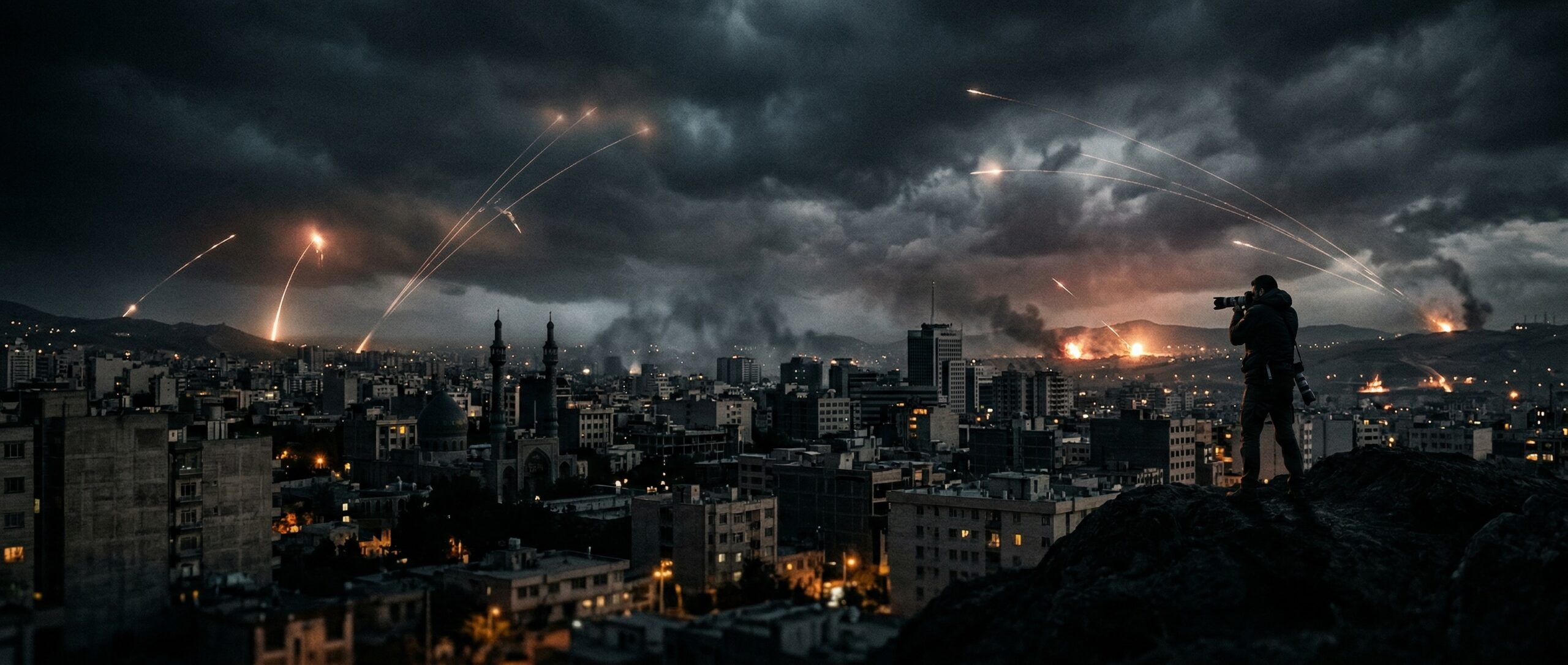
    Every generation gets at least one geopolitical flashpoint that conspiracy culture begins treating as the place where history, religion, and catastrophe finally merge. Right now, for a huge section of the internet, that flashpoint is Iran. Not because Iran is the only unstable actor in the world, but because it sits at the crossroads of World War 3 fears, biblical and Islamic end-times speculation, proxy-war escalation, energy shock scenarios, and a long-running conviction that prophecy and geopolitics are not separate systems at all.

    This pillar investigation looks at why Iran keeps appearing at the center of World War 3 prophecy narratives, how modern conspiracy culture connects military escalation to religious expectation, and why so many audiences now treat a Middle East crisis not just as a political event, but as a possible sign that prophetic timelines are accelerating.

    Why Iran Became the Center of the World War 3 Prophecy Narrative

    Iran occupies a uniquely unstable symbolic position in global anxiety. It is not merely a nation-state in conflict with its rivals. In the imagination of conspiracy culture, Iran is a hinge point: a place where energy chokepoints, regional war, nuclear escalation, proxy conflict, intelligence intrigue, and ancient prophetic language all appear to overlap.

    That is what gives the topic such unusual emotional force. A border dispute somewhere else may feel strategic. Iran feels apocalyptic.

    The reason is not only military. It is narrative. Iran already sits inside decades of Western prophecy commentary, anti-globalist fear, biblical speculation, and civilizational rhetoric. Once military tensions rise, the prophecy machine activates almost automatically.

    The World War 3 Framework: Why Iran Keeps Looking Like the Trigger

    For many people searching terms like “World War 3 and Iran prophecy,” the question is not whether the world is unstable. It is whether Iran is the event horizon that could turn instability into something irreversible.

    We have already covered the strategic side of this in World War 3? The Three Theaters That Could Ignite a Global Conflict, which laid out how multiple conflict zones could combine into a larger war structure. Iran matters in that framework because it touches:

    • Israel and regional escalation
    • U.S. military commitments
    • proxy groups across multiple borders
    • oil routes and energy pricing
    • nuclear rhetoric and deterrence language
    • Russian and Chinese strategic calculations

    If you were designing the perfect scenario for apocalyptic speculation, you would build something that looked very much like an Iran-centered escalation map.

    Iran in Prophecy Culture: Why Political Analysis Is Never Enough

    This is where the story leaves conventional foreign-policy commentary and enters the much stranger terrain of prophetic geopolitics. For many audiences, especially in the Christian conspiracy ecosystem, Iran is not just a modern state. It is a prophetic actor.

    Depending on the interpretive tradition, Iran gets tied into:

    • Ezekiel war speculation
    • end-times alliance theories
    • Jerusalem-centered escalation models
    • Armageddon preconditions
    • the return of temple, Antichrist, or tribulation frameworks

    Even when specific theological mappings are debated, the emotional function is the same: Iran becomes one of the few places in the world where military headlines are treated as possible prophecy updates.

    That is why ordinary escalation stories suddenly produce extraordinary audience reactions. Readers are not just asking what happened. They are asking whether a prophetic threshold has been crossed.

    The Israel-Iran Axis and the Theology of Escalation

    The Israel-Iran relationship supercharges the prophecy layer in a way few other geopolitical rivalries can. A conflict involving shipping routes or sanctions may be important, but once Israel and Iran are placed in direct or proxy confrontation, the event is no longer read only through strategy. It is read through sacred geography.

    That is one reason pieces like Iran and Israel After the Twelve-Day War: Triggers, Timelines, and a Region on Edge matter so much. The military logic is real, but the cultural afterlife of that logic is often even more powerful. People map symbolism onto battlefield movement almost immediately.

    For conspiracy audiences, the escalation is not just alarming. It feels narratively inevitable.

    Why Prophecy Content Thrives When War Feels Plausible

    Prophecy spikes during periods of geopolitical stress because prophecy offers what normal analysis cannot: an emotional theory of inevitability. Military experts talk about incentives, deterrence, factions, red lines, and logistics. Prophecy culture talks about destiny.

    That difference matters because anxiety wants shape. A strategic briefing can explain risk, but a prophetic interpretation can explain meaning. For a frightened public, meaning is often more powerful than evidence.

    This is why modern prophecy content is so algorithmically successful. It takes complicated conflict and translates it into a narrative of signs, thresholds, and cosmic timing. The audience no longer has to track dozens of military variables. It only has to ask: is this the sign we were warned about?

    The Conspiracy Layer: Is War Being Managed Toward a Script?

    For true conspiracy audiences, the prophecy angle rarely stops at interpretation. It becomes suspicion. The question changes from “Does this fulfill prophecy?” to “Are elites managing events in ways that deliberately activate prophecy expectations?”

    This is where the story becomes much darker.

    In that frame, Iran is not just an adversary. It is a symbolic trigger point inside a much larger script — one involving:

    • energy manipulation
    • security-state expansion
    • mass fear conditioning
    • religious polarization
    • economic shock preparation
    • the manufacturing of consent through apocalyptic framing

    This does not require a literal cabal reading prophecy charts in a bunker. It only requires systems of power to understand that prophecy language mobilizes people.

    And once you accept that, even partially, every military escalation begins to feel like it might be both real conflict and symbolic theater at the same time.

    Why Iran Outperforms Other Conflict Zones in End-Times Speculation

    Many regions are unstable. Not all of them produce this much prophecy intensity. Iran does for several reasons:

    • it is tied to Israel in public imagination
    • it intersects with oil and global markets
    • it carries decades of U.S. adversarial narrative weight
    • it sits close to sacred geography in prophecy culture
    • it is easy for both secular analysts and religious interpreters to slot into bigger narratives

    This is also why Iran-centered fear can quickly spread into unrelated areas like finance, crypto panic, prepper culture, and spiritual countdown communities. Once the symbolic engine starts, it drags other sectors with it.

    Readers tracking the financial side of end-times anxiety should also revisit Gold at $5,000 & Ghost Fleets: What Elites See Coming and Gold Over $5,000: The Financial War Markets Hide From You, both of which show how geopolitical fear often bleeds into predictive economic narratives.

    The Religious Overlay: Christian, Islamic, and New Age Interpretations

    Another reason this topic is so sticky is that Iran can be integrated into multiple prophetic systems at once. In Christian prophecy culture, Iran often appears inside end-times war maps and Jerusalem-centered conflict scenarios. In some Islamic eschatological discussions, regional conflict takes on its own symbolic significance. In New Age and fringe spirituality circles, war in the Middle East is often framed as part of a broader planetary transition or consciousness purge.

    That means the same event can be consumed through radically different metaphysical lenses while still producing the same emotional output: history feels accelerated.

    That shared acceleration effect is what makes Iran such a durable prophecy node.

    What the Skeptics Get Right

    A serious investigation has to say this clearly: Iran is also the perfect target for narrative overreach. It is possible to over-symbolize every missile strike, over-read every political speech, and force prophecy onto events that are better explained by deterrence, revenge, regional competition, and domestic politics.

    Skeptics are right to warn that not every crisis in the Middle East is evidence of biblical fulfillment or elite scripting. Conflict in the region is real enough without adding supernatural scaffolding to every escalation.

    But skepticism alone does not explain why these prophecy narratives keep returning so powerfully. To understand that, you have to look beyond factual correction and into the emotional infrastructure of fear.

    Our Investigation: Why These Narratives Refuse to Die

    The reason World War 3, Iran, and prophecy keeps returning as a combined search theme is that it satisfies three deep psychological needs at once:

    1. It simplifies chaos. Prophecy organizes geopolitical complexity into an intelligible story.
    2. It gives fear a destination. Instead of diffuse anxiety, people get a named hotspot.
    3. It transforms politics into meaning. War stops being only about power and becomes about destiny.

    That is a potent combination. It turns ordinary geopolitical analysis into something spiritually and emotionally totalizing.

    This is also why Iran keeps outperforming many other flashpoints in apocalyptic discourse. It is not just a conflict zone. It is a symbolic machine.

    So Is Iran Really the Prophetic Trigger for World War 3?

    The honest answer is that no one knows. There is no clean bridge from modern military reporting to prophetic certainty. But there is a very real bridge from fear to interpretation, and from interpretation to belief. That bridge is what people are actually walking when they search for this topic.

    Some readers will take that as proof that prophecy is unfolding. Others will see it as evidence that the internet has become an apocalypse amplifier. Both views miss something important: the power of this story lies not only in what may happen next, but in how millions of people are already being taught to read current events as if the script has begun.

    FAQ

    Frequently Asked Questions

    Why is Iran so often linked to World War 3 prophecy?

    Because Iran sits at the intersection of Middle East conflict, Israel-focused escalation, oil and energy concerns, and long-running end-times interpretations in both religious and conspiracy cultures.

    Do biblical prophecy watchers specifically focus on Iran?

    Yes. Many prophecy interpreters connect Iran to broader end-times war theories, especially those involving Israel, regional alliances, and Jerusalem-centered escalation.

    Does this mean World War 3 is inevitable?

    No. Prophecy narratives often treat geopolitical stress as confirmation of a larger timeline, but that is not the same thing as objective inevitability. Military reality is still shaped by strategy, deterrence, and political choices.

    Why do conspiracy audiences connect war and prophecy so easily?

    Because prophecy gives chaotic world events a sense of hidden structure, while conspiracy thinking adds the belief that powerful actors may already understand or exploit that structure.

    What is the biggest takeaway from the Iran prophecy narrative?

    The biggest takeaway is that Iran functions as both a real geopolitical flashpoint and a symbolic trigger in modern apocalyptic culture. The overlap between those two roles is what makes the story so powerful.

    Related Articles:

    This article was created using Media Blaster – Your content production specialist. Visit www.mediablaster.io for more information.
  • Caxuulikom Investigation: Jack Parsons, the Collins Elite, and Contact With Entities Outside Our Dimension

    Caxuulikom Investigation: Jack Parsons, the Collins Elite, and Contact With Entities Outside Our Dimension

    Few threads in modern conspiracy culture are as explosive as the one that links Jack Parsons, the Collins Elite, occult ritual, UFO manifestations, and contact with entities from outside our dimension. It is a theory complex that refuses to stay in one category. It is not just UFO lore. It is not just occult history. It is not just a Cold War religious panic inside government. It is all of them at once — a sprawling underground narrative where rockets, ritual, intelligence, and nonhuman contact blur together.

    At the center of that tangle is a strange keyword that has started gaining traction among high-strangeness researchers: caxuulikom. Depending on who is using it, the term functions as a label for a larger theory cluster involving ritual contact, intelligence suppression, demon-or-alien ambiguity, and the possibility that some of history’s most important UFO-adjacent events were not technological at all, but interdimensional.

    This investigation pulls the strands together: Jack Parsons, the Babalon Working, the Collins Elite, the intelligence community’s fear of “demonic” UFOs, and the recurring belief that certain rituals or altered states can open contact with beings that do not come from another planet so much as from outside our visible dimensional frame.

    What Is Caxuulikom?

    The term caxuulikom is still niche, but in the context of modern conspiracy and occult-UFO discourse it is increasingly used as a shorthand for a connected body of ideas rather than a single neat doctrine. It points toward a worldview in which UFOs, psychic manifestations, ritual contact, and intelligence secrecy all belong to the same hidden architecture.

    In that framework, “caxuulikom” is not just about extraterrestrials. It is about contact phenomena — especially contact that appears to emerge through ritual, altered consciousness, or symbolic openings rather than through straightforward spacecraft encounters.

    That is why it naturally overlaps with two of the most combustible names in this world: Jack Parsons and the Collins Elite.

    Why Jack Parsons Keeps Returning in UFO Conspiracy Culture

    Jack Parsons is a uniquely dangerous figure in the mythology of the unexplained because he was real, brilliant, and already strange enough that almost any theory can attach itself to him without feeling forced. He helped pioneer American rocketry, worked in circles that eventually fed into the early U.S. aerospace establishment, and at the same time immersed himself in Aleister Crowley’s magical system.

    That alone would guarantee him an afterlife in conspiracy culture. But Parsons is not remembered simply as an eccentric scientist. He is remembered as a man who may have tried to ritually contact nonhuman forces — and whose actions, in the eyes of some believers, may have “opened” something.

    This is the heart of the Jack Parsons myth engine: the idea that the same man helping propel America into the age of rockets may also have been helping tear open a door between worlds.

    We have already covered part of this territory in Jack Parsons & Demons: Did Rockets Summon UAPs?, which explores how Parsons became central to later theories connecting occult ritual with anomalous aerial phenomena.

    The Babalon Working and the Theory of a Dimensional Opening

    No part of the Parsons story matters more to conspiracy audiences than the Babalon Working. Conducted in 1946 with L. Ron Hubbard in a ritual framework derived from Thelemic magic, the Working has been interpreted in wildly different ways — as ceremonial theater, sex magic, symbolic invocation, psychological drama, or an attempt to anchor a feminine spiritual force into the world.

    But among conspiracy theorists, the most extreme interpretation is also the most enduring: that Parsons did not merely perform a ritual. He opened a channel.

    In this theory, the Babalon Working was not a metaphor but an operational event. It created a breach, weakened a barrier, or invited contact with intelligences that do not fit neatly into religious or extraterrestrial categories. This is where the language gets slippery: some call them demons, some ultraterrestrials, some interdimensionals, some entities. The labels change. The core claim does not.

    That claim is simple: after Parsons, something began to seep through.

    How the Collins Elite Fits Into the Same Story

    The Collins Elite appears in UFO conspiracy lore as a shadowy faction within or adjacent to the U.S. defense/intelligence apparatus that allegedly concluded UFOs were not alien spacecraft but demonic or deceptive entities. In that story, they are the internal opposition to the “nuts and bolts” UFO interpretation.

    For the Collins Elite worldview, the greatest danger was not invasion from space. It was spiritual contamination disguised as technology.

    That is why the Parsons connection is so volatile. If the Collins Elite theory is true, then occult contact attempts like Parsons’ rituals would not be fringe side stories. They would be central evidence that at least some modern UFO phenomena were invited into human experience through ritual and consciousness manipulation rather than discovered through radar and air defense.

    We explored this directly in Collins Elite & Demonic UFOs: The Hidden Cold War Timeline, which traces how this faction allegedly interpreted UFOs not as visitors from another planet, but as spiritually deceptive intelligences.

    Entities Outside Our Dimension: Alien, Demonic, or Both?

    This is where the caxuulikom framework becomes most useful. The old debate asks: are these beings aliens or demons? The newer and more sophisticated version asks whether that binary is itself too primitive.

    Many contemporary researchers in high-strangeness circles now lean toward a third option: that the phenomenon is interdimensional. In other words, these intelligences may not be “from space” in the ordinary sci-fi sense, and they may not fit traditional theological language either. They may instead emerge from some adjacent layer of reality that humans experience through ritual, altered consciousness, electromagnetic anomalies, symbolic triggers, and rare contact states.

    This is why the alien-vs-demon debate never resolves cleanly. Both interpretations may be attempts to describe the same category of encounter using different cultural vocabularies.

    For conspiracy audiences, this ambiguity is not a weakness. It is the hook.

    Why Intelligence and Aerospace Connections Make the Story Harder to Dismiss

    If this were only an occult-history story, it would remain niche. If it were only a UFO theory, it would be just another subgenre. What gives it unusual power is the overlap with aerospace, Cold War secrecy, and intelligence culture.

    Parsons was not a random occultist. He was entangled with the birth of modern American rocketry. The Collins Elite, if the lore around them is even partly grounded in reality, represents a faction inside the security state that believed the threat was not technological but metaphysical. Put those together and you get a terrifying implication: that the same institutions building advanced aerospace systems may also have been haunted by the fear that some phenomena cannot be understood as machinery at all.

    This is where caxuulikom becomes more than a keyword. It becomes a theory of hidden architecture — a way of naming the overlap between ritual contact, state secrecy, and the dimensional hypothesis.

    The Sybil Leek Thread and Ritual Intelligence Curiosity

    Another reason this framework keeps expanding is that Parsons is not the only figure who appears in these stories. Cases like the one we covered in CIA Séance with Sybil Leek: The Evidence They Hid? suggest that the intelligence world has long flirted with psi, ritual, séance culture, or at least the possibility that altered states could reveal actionable information.

    That does not prove intelligence agencies believed in literal demons. But it does show that segments of the security state were willing to investigate weird methodologies far beyond ordinary public assumptions.

    And once you accept that possibility, the Parsons-to-Collins line stops sounding like a purely fictional bridge. It starts sounding like the sort of hidden conceptual corridor a classified system might actually explore in secret while publicly denying it.

    Why This Theory Is So Addictive to Conspiracy Audiences

    The reason the Jack Parsons / Collins Elite / caxuulikom nexus is so effective is that it satisfies multiple conspiracy appetites at once:

    • It has a real historical anchor. Parsons existed, mattered, and was deeply involved in both science and occultism.
    • It offers hidden continuity. The story suggests a through-line from ritual magic to modern UFO secrecy.
    • It blurs categories. Demon, alien, interdimensional intelligence, psychic phenomenon, and occult entity all become overlapping interpretations.
    • It implicates institutions. If intelligence factions studied this seriously, then public explanations may have been incomplete from the start.
    • It never closes. Because the theory sits in ambiguity, it can survive debunking and continually absorb new anomalies.

    That last point matters. A closed conspiracy dies. An open-ended one mutates. This one has survived because it is less a claim than a framework for connecting claims.

    The Skeptical Counterpoint

    An honest investigation has to say this clearly: none of the above proves that Jack Parsons literally opened a portal, that the Collins Elite exists exactly as described in UFO lore, or that entities outside our dimension are contacting humanity through occult ritual.

    There is a lot of retrospective myth-building here. Conspiracy culture is extremely good at stitching together symbolic resonance after the fact. Parsons is an irresistible target for that process because he was already the perfect fusion of scientist, mystic, and historical lightning rod.

    Likewise, the Collins Elite story may contain exaggerations, distortions, or recycled rumor structures. It survives partly because it provides a theological explanation for UFO phenomena that many people find more emotionally satisfying than “advanced unknown craft.”

    But skepticism does not erase why the theory matters. It only changes the frame from “is this literally true?” to “why does this story keep returning with such force?”

    Our Investigation: What Caxuulikom Really Represents

    In practical terms, caxuulikom appears to represent a cluster of beliefs about hidden contact architectures. It is less about a single final answer and more about a way of reading the entire modern mystery landscape.

    In that reading:

    • Parsons represents the ritual opening
    • the Collins Elite represents the classified theological panic
    • UFO phenomena represent the public symptom
    • entities outside our dimension represent the hidden source

    That is the full theory structure. And once you see it, you understand why this topic is so fertile. It does not merely ask whether UFOs are real. It asks what kind of reality we are actually dealing with.

    FAQ

    Frequently Asked Questions

    What does caxuulikom mean in this context?

    In this context, caxuulikom refers to a cluster of theories linking occult contact, UFO phenomena, intelligence secrecy, and entities that may exist outside ordinary human dimensional perception.

    How is Jack Parsons connected to interdimensional entity theories?

    Parsons is connected through the Babalon Working and later interpretations that his rituals may have invited or opened contact with nonhuman intelligences, not necessarily extraterrestrial in the usual sense.

    What is the Collins Elite supposed to believe about UFOs?

    The Collins Elite theory claims a hidden faction inside or near U.S. intelligence concluded that UFOs were not alien spacecraft but deceptive spiritual or demonic intelligences.

    Are these entities supposed to be aliens or demons?

    That is the core dispute. Many modern researchers use an interdimensional model instead, arguing that both “alien” and “demon” may be cultural labels for the same class of nonhuman encounter.

    Why does this theory attract conspiracy fans so strongly?

    Because it combines real history, occult ritual, aerospace secrecy, intelligence mythology, and unresolved UFO questions into one narrative that feels both hidden and plausible within the broader conspiracy imagination.

    Related Articles:

    This article was created using Media Blaster – Your content production specialist. Visit www.mediablaster.io for more information.
  • Cornwall’s UFO Hotspot Reputation Is Growing for a Reason

    Cornwall’s UFO Hotspot Reputation Is Growing for a Reason

    A UK tabloid-paranormal crossover story is gaining traction around the claim that Cornwall is currently one of Britain’s best places to spot UFOs, with commentators arguing that 2026 could be a breakout year for sightings. The hook is simple and irresistible: if you want to see something strange in the sky, head to the Cornish coast.

    That may sound like an easy clickbait premise, but the deeper story is more interesting. Cornwall is being mythologized in real time as a British “watch the skies” zone — a place where official-sounding data, local geography, old folklore, and modern UFO culture all begin reinforcing one another.

    What the Cornwall UFO Story Actually Claims

    The current buzz appears to be driven by Daily Star reporting that ties Cornwall’s growing UFO reputation to aviation incident records involving objects described as unidentified, unknown, unusual, or uncorrelated. The story also leans on commentary from paranormal investigator Robert Pulme, who suggests sightings are rising and that Cornwall’s visual conditions make it especially attractive for sky-watchers.

    That combination is exactly why this type of story travels so well. It offers just enough institutional language to feel grounded, but leaves enough open space for wonder, speculation, and local myth-building.

    Why Cornwall Works So Well as a UFO Stage

    Cornwall already has enormous narrative advantages before UFOs even enter the picture. It has coastline, weather, old folklore, wide skies, Atlantic mood, and a built-in sense of geographic edge. Those elements make almost any aerial anomaly feel more charged than it would over an ordinary urban sprawl.

    This matters because hotspot myths are rarely built from evidence alone. They are built from atmosphere, repetition, and setting. Cornwall is a visually perfect place for unexplained stories to stick.

    The Official-Data Effect

    Another reason the story is resonating is the use of aviation-report language. Once a UFO story includes phrases tied to flight safety, unidentified objects, or official logging categories, it becomes easier for mainstream audiences to treat it as more than pure fantasy.

    That does not mean the reports prove alien craft. It means the story is now wearing enough procedural clothing to travel farther than a normal tabloid ghost-light piece.

    The result is a hybrid story form the unexplained niche loves: part data, part folklore, part destination myth.

    Why This Matters Beyond Cornwall

    This story is useful because it localizes the UFO beat. Most UFO discourse gravitates toward the United States — Pentagon videos, Area 51 mythology, Nevada deserts, congressional hearings, and military secrecy. Cornwall offers the British version of a “living mystery landscape,” where the appeal is not just what was seen, but where it was seen.

    That creates strong hooks for tourism-style storytelling, on-location reporting, skywatching guides, and pieces exploring how ordinary places become paranormal brands.

    What’s Really Being Built Here

    The most important thing to understand is that hotspot status is often socially constructed. A place becomes a UFO destination when reports, media coverage, local identity, and audience expectation start feeding each other in a loop. Every new article reinforces the idea that the place is special. Every new sighting then lands in a context that makes it easier to believe.

    That is what may be happening in Cornwall now. Whether the sky itself is changing is one question. Whether the cultural framing around Cornwall is changing is much easier to answer: yes, clearly it is.

    As coverage of UK aviation incidents and unexplained aerial events continues to circulate through both tabloids and paranormal media, Cornwall is turning into a symbolic geography — not just a region, but a stage for mystery.

    The Better Takeaway

    The strongest reading of this story is not that aliens have chosen Cornwall. It is that Cornwall has become one of those rare modern locations where the unexplained can feel local, atmospheric, and almost travel-worthy.

    That matters because mystery culture is no longer just about sightings. It is about destinations, audience identity, and place-based fascination. Cornwall fits that emerging model almost perfectly.

    Related Articles:

    This article was created using Media Blaster – Your content production specialist. Visit www.mediablaster.io for more information.
  • The X-Files Reboot Could Be the Clearest Sign Yet That Paranormal TV Is Going Mainstream Again

    The X-Files Reboot Could Be the Clearest Sign Yet That Paranormal TV Is Going Mainstream Again

    The paranormal is not only trending through sightings and speculation right now — it is resurging through pop culture itself. The newest signal is Hulu’s X-Files reboot, which has reportedly cast Himesh Patel opposite Danielle Deadwyler in Ryan Coogler’s reimagining of the franchise.

    On the surface, this is an entertainment story. In practice, it matters to the unexplained niche because The X-Files helped teach a generation how to think about UFOs, government secrecy, monsters, cover-ups, and “the truth” narratives. Every reboot, revival, or reinterpretation becomes a cultural weather vane for public appetite.

    What’s Happening With the X-Files Reboot?

    According to NBC Right Now’s entertainment coverage, Himesh Patel has joined Danielle Deadwyler in Hulu’s X-Files pilot, with Ryan Coogler attached in a creative lead role. Additional reporting from Art Threat frames the reboot as a modern rebuild rather than a simple nostalgia replay.

    The reported setup keeps the FBI/paranormal-case structure alive while shifting toward new characters instead of trying to directly clone Mulder and Scully. That is a smart move. A new X-Files that just imitates the 1990s would feel embalmed. A new X-Files that updates paranoia for the current disclosure era could hit much harder.

    Why This Matters Beyond TV News

    This is more than a casting item. It suggests that paranormal-conspiracy storytelling is once again commercially hot enough for prestige-level talent and streamer money. In a media environment already saturated with UAP hearings, viral orb videos, government ambiguity, and conspiracy nostalgia, that matters.

    The X-Files did not just reflect conspiracy culture — it helped shape it. It normalized the blend of witness testimony, institutional secrecy, alien mythology, occult weirdness, and state paranoia that still defines much of the unexplained space today.

    Why the Timing Feels Important

    The reboot is surfacing at a moment when mystery culture is already back in circulation. Audiences are primed for stories involving hidden files, manipulated narratives, and unexplained phenomena. That gives the project more than nostalgic value. It gives it timing.

    A modern version also has richer material to work with. The source of dread is no longer just shadowy men in parking garages. Now it includes data opacity, algorithmic disinformation, viral misdirection, intelligence-state ambiguity, and the collapse of trust in institutions.

    What the Franchise Still Represents

    At its best, The X-Files was a format for managing uncertainty. It gave viewers a way to process the idea that governments lie, witnesses get ignored, and the weird is always one file cabinet away from becoming real.

    That is why the reboot matters for The Unexplained Company. It is not just entertainment coverage. It is a story about how paranormal culture cycles back into the mainstream whenever the public is ready for institutions to feel haunted again.

    Related Articles:

    This article was created using Media Blaster – Your content production specialist. Visit www.mediablaster.io for more information.

  • NASA’s Unexplained Space Medical Emergency Raises a Bigger Mystery About Life in Orbit

    NASA’s Unexplained Space Medical Emergency Raises a Bigger Mystery About Life in Orbit

    An astronaut’s sudden medical crisis aboard the International Space Station is raising uncomfortable questions about how little we may still understand about the human body in deep and prolonged weightlessness. NASA astronaut Mike Fincke, whose January illness triggered the agency’s first in-space medical evacuation, says doctors still do not know what caused the event — and that uncertainty is exactly what makes the story so compelling.

    For conspiracy-minded audiences, the hook is obvious: a veteran astronaut suddenly loses the ability to speak, no heart attack is found, the episode vanishes almost as fast as it appeared, and the cause remains unresolved. For mainstream readers, the story is less sinister but no less fascinating: space can still do strange things to the body that medicine cannot immediately explain.

    What Happened to Mike Fincke on the ISS?

    According to CBC’s coverage of the Associated Press report, astronaut Mike Fincke said the episode happened on Jan. 7 while he was eating dinner after preparing for a spacewalk scheduled for the next day. He suddenly could not speak. He remembered no pain, and the crisis came on, in his words, like a “very, very fast lightning bolt.”

    Fincke said the event lasted roughly 20 minutes. His crewmates immediately recognized that something was wrong and called flight surgeons on the ground. The response was swift enough that the planned spacewalk was cancelled, and the incident ultimately contributed to an early return for multiple crew members.

    What makes the story especially striking is that doctors have already ruled out a heart attack. Fincke also said he was not choking. Beyond that, the cause remains uncertain.

    Why This Is Such a Big Deal

    This was not just a minor in-orbit health scare. The incident was serious enough to trigger NASA’s first medical evacuation from the International Space Station. That alone makes it more than a routine astronaut health story.

    It also lands at a moment when public interest in space medicine is growing. The longer humans stay in orbit — and the more serious talk becomes about Moon bases and Mars missions — the more important these unexplained medical events become.

    As CBC’s Quirks & Quarks analysis has noted, medical emergencies in space are uniquely difficult because diagnosis, intervention, evacuation, and privacy all operate under extreme limitations.

    Could Space Itself Be the Cause?

    Fincke suggested that the incident could be related to his cumulative time in weightlessness — more than 500 days across multiple missions. That possibility matters because weightlessness is known to alter circulation, fluid distribution, vision, cardiovascular regulation, and neurological function.

    NASA and its international partners have spent decades studying how zero gravity affects the body, but unexplained edge cases remain one of the biggest operational concerns in crewed spaceflight. A rare, hard-to-reproduce event is arguably more unnerving than a well-known risk, because it exposes the limits of existing models.

    That is where this story starts to drift from standard science reporting into genuine mystery. There is no evidence here of anything paranormal, but there is real uncertainty — and uncertainty in a closed environment like orbit always feels amplified.

    The Strange Power of an Unexplained Medical Event

    For The Unexplained Company, the reason this story works is not because it proves anything sensational. It works because it highlights a type of mystery people rarely think about: not a glowing light in the sky, but an event inside the body that modern science cannot yet neatly explain.

    That makes it a different kind of unexplained story — one rooted in institutional credibility rather than fringe testimony. The astronaut is real, the distress was real, the evacuation was real, and the diagnostic uncertainty is real.

    And that last part is what keeps the story sticky. If the cause had already been identified, this would be a technical health update. Because it has not, it becomes something else: a reminder that human beings are still improvising their understanding of what space can do to them.

    Why the Conspiracy Angle Will Linger

    Even without evidence of a cover-up, stories like this almost inevitably attract speculation. Some people will wonder whether NASA knows more than it is saying. Others will ask whether long-term orbital life carries hidden neurological or cardiovascular risks that agencies are reluctant to dramatize publicly. And because astronaut medical privacy is tightly protected, the gaps in public information naturally create room for narrative expansion.

    That does not mean the conspiracy angle is correct. But it does explain why this story will travel far beyond science desks and into the wider culture of mystery and suspicion.

    The Real Takeaway

    The most intriguing part of this case is not that something happened in space. It is that after all our satellites, stations, rockets, and biometric tools, something important happened in space and the answer is still: we do not know why.

    That is a powerful reminder that orbit may feel routine now, but for the human body, it is still an alien environment.

    For more stories where science, uncertainty, and high-strangeness overlap, read our coverage of the Wow! Signal mystery, the UFO metal that got a real lab test, and the Mellon leak and satellite UFO imagery claims.

    This article was created using Media Blaster – Your content production specialist. Visit www.mediablaster.io for more information.