Author: Art Grindstone

  • Viral Haunted House Detroit Hoax

    Viral Haunted House Detroit Hoax

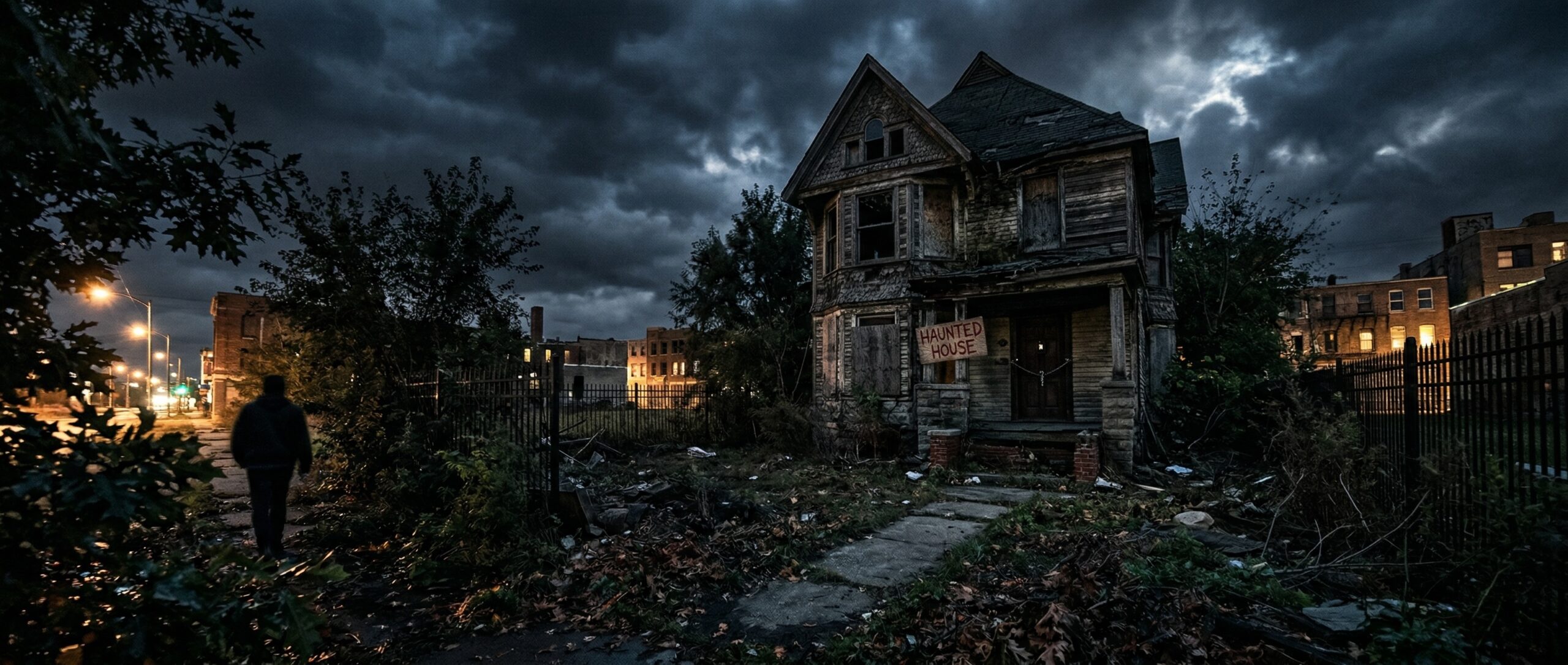
    A creepy mansion video that spread as a supposedly haunted house in the Philippines has been debunked, with reporting tracing the location back to an abandoned Victorian property in Detroit. That alone would make it a basic fact-check story—but the more interesting unexplained angle is how quickly a piece of eerie architecture became a paranormal legend once it was stripped of context, re-captioned, and enhanced for atmosphere. According to LatestLY fact check, this story is drawing attention well beyond its original niche.

    This is a very 2026 paranormal trend story: a visual object, ambiguous provenance, AI-enhanced edits, local rumor, viral reposting, and then a debunk that arrives after the myth has already done its cultural work.

    What Happened

    The haunting wasn’t in the house. It was in the feed. Reporting from Mumbaiker recap adds context to how the story is being framed.

    • Social platforms were flooded with short videos showing a dark, decaying mansion framed as a haunted site in the Philippines.
    • The clips often used dramatic audio, heavy color grading, and in some cases what viewers suspected were AI-enhanced visual edits.
    • LatestLY reported that the house was traced instead to Detroit, Michigan, not the Philippines.
    • According to the fact-check framing, the building had no verified record of gruesome crimes or established paranormal incidents matching the viral captions.
    • Search interest exploded around terms like “haunted house viral video,” “full video,” and location-based variations, showing how rumor-driven discovery now works.

    What Evidence Exists

    Here’s what is known: A creepy mansion video that spread as a supposedly haunted house in the Philippines has been debunked, with reporting tracing the location back to an abandoned Victorian property in Detroit. That alone would make it a basic fact-check story—but the more interesting unexplained angle is how quickly a piece of eerie architecture became a paranormal legend once it was stripped of context, re-captioned, and enhanced for atmosphere.

    The strongest evidence in stories like this is often not a final proof object, but a mixture of witness accounts, media framing, prior folklore, and the cultural weight of the subject itself. That is why separating verified facts from interpretation matters.

    Authoritative coverage and primary reporting should stay central to the analysis, including sources such as:

    What Skeptics or Investigators Say

    Researchers and skeptics have argued that unexplained stories often grow fastest when the emotional framing is stronger than the evidentiary record. That does not mean the story is meaningless. It means the burden of proof and the burden of interpretation are not the same thing.

    The most widely cited explanation is usually the least exotic one that still fits the known facts. But unresolved cases persist because the simplest explanation does not always feel emotionally complete to the audience following them.

    Why It Matters

    AI and editing tools are supercharging paranormal folklore
    Even when a clip is not fully AI-generated, enhancement tools can deepen shadows, smooth motion, and make ordinary decay feel uncanny.

    Local tagging creates instant ownership of a mystery
    By attaching the house to a specific country or region, creators trigger emotional investment and rapid resharing among local audiences.

    The architecture itself does half the storytelling
    A neglected Victorian mansion already carries cinematic haunted-house coding, so people fill in the rest.

    Hoax stories can outperform genuine paranormal claims
    Because they are optimized for virality rather than evidence, fake hauntings can spread farther than authentic eyewitness accounts ever do.

    This is a strong meta-story about the future of paranormal media
    The next generation of ghost stories may be born less from experiences in haunted places and more from algorithmic remix culture.

    The Bigger Unexplained Angle

    What gives this topic staying power is not just the headline claim, but the way it plugs into deeper themes: secrecy, folklore, institutional mistrust, symbolic fear, wonder, and the human tendency to keep revisiting mysteries that never fully resolve.

    That is exactly why the unexplained-wordpress standard requires more than a quick summary. Strong articles need context, internal discovery, authoritative links, explicit uncertainty, and sections that can stand on their own for readers and AI systems alike.

    Readers interested in the broader pattern should also see The Pentagon UFO Report and What It Still Can’t Explain, which connects this story to a larger unexplained.co theme.

    Frequently Asked Questions

    What is this story about?

    A creepy mansion video that spread as a supposedly haunted house in the Philippines has been debunked, with reporting tracing the location back to an abandoned Victorian property in Detroit. That alone would make it a basic fact-check story—but the more interesting unexplained angle is how quickly a piece of eerie architecture became a paranormal legend once it was stripped of context, re-captioned, and enhanced for atmosphere.

    Why is this getting attention now?

    Even when a clip is not fully AI-generated, enhancement tools can deepen shadows, smooth motion, and make ordinary decay feel uncanny.

    Is Viral Haunted House Detroit Hoax proven?

    No. These articles are written to separate what is verified, what is claimed, and what remains uncertain. Mystery does not automatically equal proof.

    What should readers focus on?

    Focus on the evidence, the source quality, the skeptical or conventional explanations, and why the story still resonates even when certainty is missing.

    Related Articles

    This article was created using Media Blaster – Your content production specialist. Visit www.mediablaster.io for more information.

  • Vatican Exorcist Surge

    Vatican Exorcist Surge

    A March Vatican meeting between Pope Leo XIV and representatives of the International Association of Exorcists has triggered a fresh wave of interest in demonic-possession narratives, occult panic, and institutional religion’s response to spiritual warfare claims. The group reportedly urged the pope to ensure every Catholic diocese has one or more properly trained exorcists, citing what they describe as rising cases linked to occultism, esotericism, Satanism, and spiritual distress. According to EWTN News, this story is drawing attention well beyond its original niche.

    For unexplained audiences, this lands right in the sweet spot where official religion overlaps with the paranormal. It’s not a random exorcist podcast or fringe testimony; it’s the Vatican-adjacent infrastructure treating exorcism as an active pastoral issue.

    What Happened

    This story works because it sounds like a horror movie headline but is rooted in real Church bureaucracy and doctrine. Reporting from AL.com summary adds context to how the story is being framed.

    • On March 13, 2026, Pope Leo XIV met privately with leaders of the International Association of Exorcists.
    • EWTN and follow-on reporting say the exorcists asked for every diocese worldwide to have trained practitioners.
    • The group described a rise in people harmed through involvement with occult practices and asked for more formal Church-level training and oversight.
    • Coverage also emphasized exorcism formation for priests and bishops, meaning this is being framed as a structural issue, not just sensational anecdote.
    • The timing is notable because mainstream and tabloid media have been primed by ongoing pop-culture fascination with exorcism, demonology, and “real life” possession accounts.

    What Evidence Exists

    Here’s what is known: A March Vatican meeting between Pope Leo XIV and representatives of the International Association of Exorcists has triggered a fresh wave of interest in demonic-possession narratives, occult panic, and institutional religion’s response to spiritual warfare claims. The group reportedly urged the pope to ensure every Catholic diocese has one or more properly trained exorcists, citing what they describe as rising cases linked to occultism, esotericism, Satanism, and spiritual distress.

    The strongest evidence in stories like this is often not a final proof object, but a mixture of witness accounts, media framing, prior folklore, and the cultural weight of the subject itself. That is why separating verified facts from interpretation matters.

    Authoritative coverage and primary reporting should stay central to the analysis, including sources such as:

    What Skeptics or Investigators Say

    Researchers and skeptics have argued that unexplained stories often grow fastest when the emotional framing is stronger than the evidentiary record. That does not mean the story is meaningless. It means the burden of proof and the burden of interpretation are not the same thing.

    The most widely cited explanation is usually the least exotic one that still fits the known facts. But unresolved cases persist because the simplest explanation does not always feel emotionally complete to the audience following them.

    Why It Matters

    It legitimizes paranormal-adjacent belief inside a major institution
    When exorcists meet the pope and ask for expanded training, it gives spiritual warfare narratives renewed credibility for believers.

    It merges religion, occult panic, and modern anxiety
    Stories about rising Satanism or occult practice often function as cultural mirrors for broader fears about moral decline, social fragmentation, and loss of spiritual grounding.

    It’s a rare case where the unexplained comes with organizational receipts
    This isn’t just “someone claims possession.” It’s a coordinated request from a formal association seeking wider infrastructure.

    The story invites both belief and skepticism
    Believers will see confirmation that dark spiritual forces are increasing. Skeptics will see moral panic packaged in ecclesiastical language. That tension is fertile content territory.

    It can travel across formats
    This works as a quick news hit, a deeper religious-paranormal analysis, or a cultural piece on why exorcism keeps resurging in public imagination.

    The Bigger Unexplained Angle

    What gives this topic staying power is not just the headline claim, but the way it plugs into deeper themes: secrecy, folklore, institutional mistrust, symbolic fear, wonder, and the human tendency to keep revisiting mysteries that never fully resolve.

    That is exactly why the unexplained-wordpress standard requires more than a quick summary. Strong articles need context, internal discovery, authoritative links, explicit uncertainty, and sections that can stand on their own for readers and AI systems alike.

    Readers interested in the broader pattern should also see The Pentagon UFO Report and What It Still Can’t Explain, which connects this story to a larger unexplained.co theme.

    Frequently Asked Questions

    What is this story about?

    A March Vatican meeting between Pope Leo XIV and representatives of the International Association of Exorcists has triggered a fresh wave of interest in demonic-possession narratives, occult panic, and institutional religion’s response to spiritual warfare claims. The group reportedly urged the pope to ensure every Catholic diocese has one or more properly trained exorcists, citing what they describe as rising cases linked to occultism, esotericism, Satanism, and spiritual distress.

    Why is this getting attention now?

    It legitimizes paranormal-adjacent belief inside a major institution. When exorcists meet the pope and ask for expanded training, it gives spiritual warfare narratives renewed credibility for believers.

    Is Vatican Exorcist Surge proven?

    No. These articles are written to separate what is verified, what is claimed, and what remains uncertain. Mystery does not automatically equal proof.

    What should readers focus on?

    Focus on the evidence, the source quality, the skeptical or conventional explanations, and why the story still resonates even when certainty is missing.

    Related Articles

    This article was created using Media Blaster – Your content production specialist. Visit www.mediablaster.io for more information.

  • Hegseth UFO Files Update

    Hegseth UFO Files Update

    The U.S. government’s promised UFO/UAP file release is still in the hype phase, but it got a fresh jolt this week after Defense Secretary Pete Hegseth publicly said the Pentagon is “working” on identifying and releasing files tied to UFOs, extraterrestrial life, UAPs, and UFO-related records under President Trump’s directive. That matters because the story has shifted from campaign-style promise to bureaucratic process story: believers want disclosure, skeptics expect a paper dump, and the Pentagon is now on record saying the review is active. According to TIME, this story is drawing attention well beyond its original niche.

    This is one of those perennial unexplained stories that keeps reinventing itself. It’s no longer just grainy sightings or whistleblower testimony. Now it’s about process, secrecy, classified review, and whether the machinery of government can ever produce the kind of revelation the UFO community imagines.

    What Happened

    The real tension is simple: disclosure culture runs on anticipation, while government record review runs on delay, redaction, compartmentalization, and legal caution. Reporting from CNN adds context to how the story is being framed.

    • President Trump said in February 2026 that federal agencies should begin identifying and releasing files related to alien life, UAPs, UFOs, and connected records.
    • On March 30, Defense Secretary Pete Hegseth told reporters the Pentagon is actively working on it and would be in “full compliance” with Trump’s instructions.
    • TIME framed the moment as an update rather than a release: the files are not out, but the bureaucracy is now publicly acknowledging the task.
    • CNN and other outlets have already been asking the core question: why has nothing substantial been released yet, and what would such a release even look like?
    • The story is getting extra oxygen from political soundbites, old Area 51 lore, Obama’s recent clarification on alien-life comments, and renewed chatter around new government domains and disclosure branding.

    What Evidence Exists

    Here’s what is known: The U.S. government’s promised UFO/UAP file release is still in the hype phase, but it got a fresh jolt this week after Defense Secretary Pete Hegseth publicly said the Pentagon is “working” on identifying and releasing files tied to UFOs, extraterrestrial life, UAPs, and UFO-related records under President Trump’s directive. That matters because the story has shifted from campaign-style promise to bureaucratic process story: believers want disclosure, skeptics expect a paper dump, and the Pentagon is now on record saying the review is active.

    The strongest evidence in stories like this is often not a final proof object, but a mixture of witness accounts, media framing, prior folklore, and the cultural weight of the subject itself. That is why separating verified facts from interpretation matters.

    Authoritative coverage and primary reporting should stay central to the analysis, including sources such as:

    What Skeptics or Investigators Say

    Researchers and skeptics have argued that unexplained stories often grow fastest when the emotional framing is stronger than the evidentiary record. That does not mean the story is meaningless. It means the burden of proof and the burden of interpretation are not the same thing.

    The most widely cited explanation is usually the least exotic one that still fits the known facts. But unresolved cases persist because the simplest explanation does not always feel emotionally complete to the audience following them.

    Why It Matters

    It keeps UFO disclosure in the mainstream news cycle
    This is not just niche-UFO media anymore. TIME and CNN covering it means the topic has crossed into normal political and national-security conversation.

    The gap between promise and release creates its own conspiracy fuel
    If the files take too long, believers will say there’s a cover-up. If the files are mundane, believers will say the real material was withheld. Delay itself becomes part of the mythology.

    It reframes UFOs as an institutions story
    The interesting angle here is less “are aliens real?” and more “how does classified information move through government once disclosure becomes a political demand?”

    It could become a culture-war and election-adjacent narrative
    The topic now sits at the crossroads of national security, transparency, anti-elite suspicion, and internet conspiracy culture. That’s fertile ground for unexplained-content audiences.

    It opens a bigger question about what counts as disclosure
    Would disclosure mean raw documents? curated summaries? military footage? scientific analysis? witness testimony? The public appetite is cinematic; the likely government output is administrative.

    The Bigger Unexplained Angle

    What gives this topic staying power is not just the headline claim, but the way it plugs into deeper themes: secrecy, folklore, institutional mistrust, symbolic fear, wonder, and the human tendency to keep revisiting mysteries that never fully resolve.

    That is exactly why the unexplained-wordpress standard requires more than a quick summary. Strong articles need context, internal discovery, authoritative links, explicit uncertainty, and sections that can stand on their own for readers and AI systems alike.

    Readers interested in the broader pattern should also see The Mellon Leak: High-Def Satellite UFO Images That Could Change Everything, which connects this story to a larger unexplained.co theme.

    Frequently Asked Questions

    What is this story about?

    The U.S. government’s promised UFO/UAP file release is still in the hype phase, but it got a fresh jolt this week after Defense Secretary Pete Hegseth publicly said the Pentagon is “working” on identifying and releasing files tied to UFOs, extraterrestrial life, UAPs, and UFO-related records under President Trump’s directive. That matters because the story has shifted from campaign-style promise to bureaucratic process story: believers want disclosure, skeptics expect a paper dump, and the Pentagon is now on record saying the review is active.

    Why is this getting attention now?

    It keeps UFO disclosure in the mainstream news cycle.  This is not just niche-UFO media anymore. TIME and CNN covering it means the topic has crossed into normal political and national-security conversation.

    Is Hegseth UFO Files Update proven?

    No. These articles are written to separate what is verified, what is claimed, and what remains uncertain. Mystery does not automatically equal proof.

    What should readers focus on?

    Focus on the evidence, the source quality, the skeptical or conventional explanations, and why the story still resonates even when certainty is missing.

    Related Articles

    This article was created using Media Blaster – Your content production specialist. Visit www.mediablaster.io for more information.
  • Doomsday Fish Cabo Omen Panic

    Doomsday Fish Cabo Omen Panic

    Two live oarfish washing ashore in Cabo San Lucas turned into a full-blown omen story this month, reviving the old superstition that these deep-sea creatures are “doomsday fish” whose appearance predicts earthquakes, tsunamis, or other disasters. The visuals did most of the work: ribbon-like bodies, metallic sheen, crimson fins, and the rarity of seeing even one of them near shore—let alone two. According to USA Today / For The Win, this story is drawing attention well beyond its original niche.

    What makes this a strong unexplained trend is the collision of folklore, viral video, and anxiety. The event itself is biological. The online reaction is mythic. Suddenly a marine-animal rescue becomes a prophecy narrative.

    What Happened

    The core reason this story is hot is that it turns an unusual animal encounter into a symbolic warning story people can project onto current fears. Reporting from Cabo Sun adds context to how the story is being framed.

    • Beachgoers Monica and Katie Pittenger encountered two distressed oarfish near Cabo San Lucas in late February/early March 2026.
    • Video of the rescue spread online and quickly triggered the “doomsday fish” framing.
    • USA Today’s For The Win and regional outlets pushed back on the omen narrative, noting that there is no scientific basis for the folklore claim.
    • The story landed in a sensitive moment for Los Cabos tourism, with local coverage trying to calm visitors after unrelated security anxieties elsewhere in Mexico.
    • Multiple viral and tabloid outlets amplified the supernatural angle, connecting the oarfish to Japanese folklore and historical earthquake lore.

    What Evidence Exists

    Here’s what is known: Two live oarfish washing ashore in Cabo San Lucas turned into a full-blown omen story this month, reviving the old superstition that these deep-sea creatures are “doomsday fish” whose appearance predicts earthquakes, tsunamis, or other disasters. The visuals did most of the work: ribbon-like bodies, metallic sheen, crimson fins, and the rarity of seeing even one of them near shore—let alone two.

    The strongest evidence in stories like this is often not a final proof object, but a mixture of witness accounts, media framing, prior folklore, and the cultural weight of the subject itself. That is why separating verified facts from interpretation matters.

    Authoritative coverage and primary reporting should stay central to the analysis, including sources such as:

    What Skeptics or Investigators Say

    Researchers and skeptics have argued that unexplained stories often grow fastest when the emotional framing is stronger than the evidentiary record. That does not mean the story is meaningless. It means the burden of proof and the burden of interpretation are not the same thing.

    The most widely cited explanation is usually the least exotic one that still fits the known facts. But unresolved cases persist because the simplest explanation does not always feel emotionally complete to the audience following them.

    Why It Matters

    Folklore still spreads faster than scientific context
    People remember “earthquake omen fish” much more easily than deep-sea disorientation, illness, or ocean-current explanations.

    Viral unexplained content increasingly comes from animal behavior
    Odd creatures, strange strandings, and unusual migration patterns now feed the same attention economy that once belonged mainly to UFO photos and ghost videos.

    The story plugs directly into doom culture
    Audiences primed for collapse narratives love anything that feels like nature sending a sign.

    It’s an ideal short-form topic
    The visual is immediate, the mythology is simple, and the debunk is easy to present alongside the legend.

    It reveals how place-based fear can get amplified by symbolism
    Even when local officials and tourism coverage try to calm things down, a powerful omen narrative can reshape how people feel about a place.

    The Bigger Unexplained Angle

    What gives this topic staying power is not just the headline claim, but the way it plugs into deeper themes: secrecy, folklore, institutional mistrust, symbolic fear, wonder, and the human tendency to keep revisiting mysteries that never fully resolve.

    That is exactly why the unexplained-wordpress standard requires more than a quick summary. Strong articles need context, internal discovery, authoritative links, explicit uncertainty, and sections that can stand on their own for readers and AI systems alike.

    Readers interested in the broader pattern should also see The Pentagon UFO Report and What It Still Can’t Explain, which connects this story to a larger unexplained.co theme.

    Frequently Asked Questions

    What is this story about?

    Two live oarfish washing ashore in Cabo San Lucas turned into a full-blown omen story this month, reviving the old superstition that these deep-sea creatures are “doomsday fish” whose appearance predicts earthquakes, tsunamis, or other disasters. The visuals did most of the work: ribbon-like bodies, metallic sheen, crimson fins, and the rarity of seeing even one of them near shore—let alone two.

    Why is this getting attention now?

    Folklore still spreads faster than scientific context.  People remember “earthquake omen fish” much more easily than deep-sea disorientation, illness, or ocean-current explanations.

    Is Doomsday Fish Cabo Omen Panic proven?

    No. These articles are written to separate what is verified, what is claimed, and what remains uncertain. Mystery does not automatically equal proof.

    What should readers focus on?

    Focus on the evidence, the source quality, the skeptical or conventional explanations, and why the story still resonates even when certainty is missing.

    Related Articles

    This article was created using Media Blaster – Your content production specialist. Visit www.mediablaster.io for more information.
  • Antarctica Pyramid Conspiracy Revival

    Antarctica Pyramid Conspiracy Revival

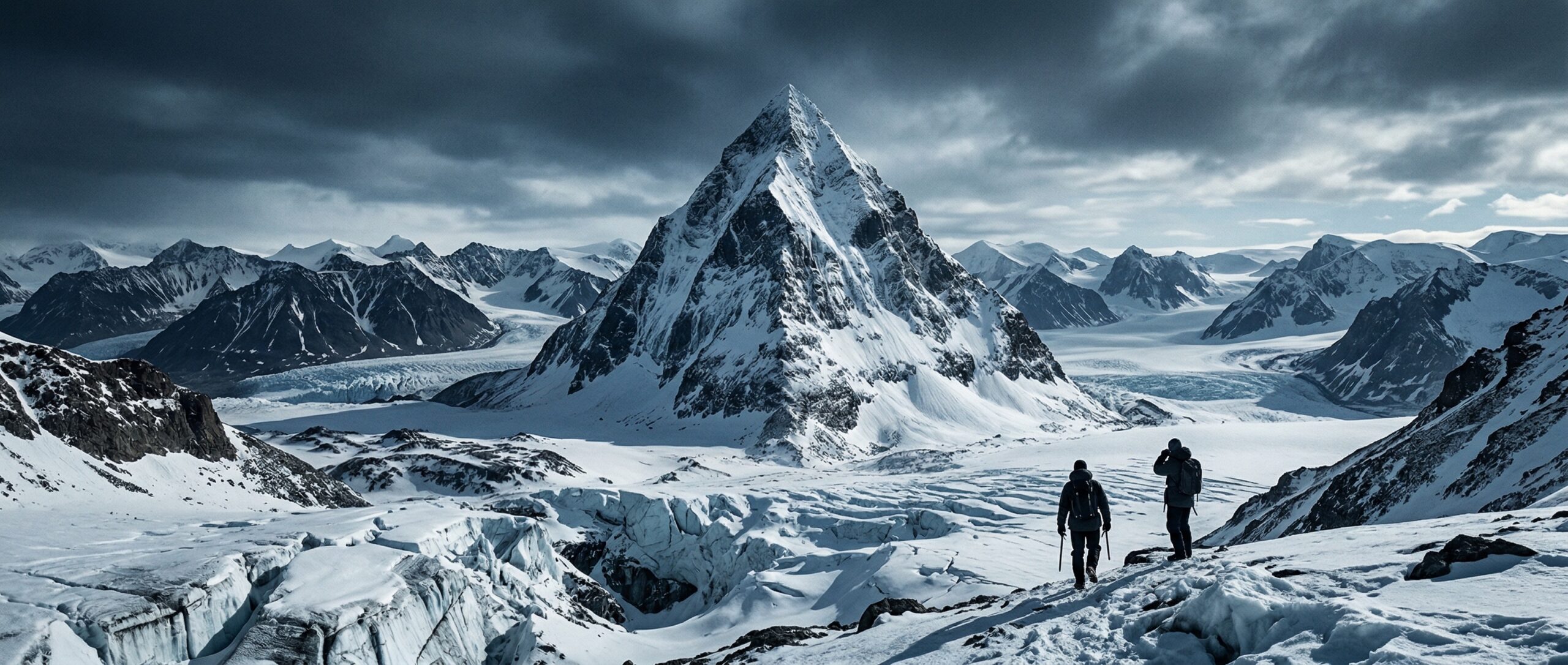
    A pyramid-shaped Antarctic mountain is back in the viral spotlight, once again triggering claims about lost civilizations, alien bases, and hidden history beneath the ice. The basic image is irresistible: a peak in the Ellsworth Mountains that appears to have clean, pyramid-like faces, just ambiguous enough to let the imagination sprint. According to Indy100, this story is drawing attention well beyond its original niche.

    This is classic unexplained internet fuel. The shape itself is real. The leap from unusual geology to buried civilization is where the myth machine kicks in. Media coverage this week has reignited the debate by juxtaposing the viral visual with expert explanations that it is a natural mountain shaped by erosion.

    What Happened

    This is less a new discovery than a new cycle of belief around an old visual. But that’s exactly why it works: old mysteries become new trends whenever the image is compelling enough. Reporting from Daily Mail adds context to how the story is being framed.

    • Indy100 and other outlets revived attention around the so-called Antarctic pyramid in late March 2026.
    • The renewed wave appears tied to social reposting, conspiracy channels, and fresh articles treating the formation as a viral mystery.
    • The mountain is in the Ellsworth range near Patriot Hills, and the object in question has been circulating online for years, but the current burst gives it new life.
    • Scientists cited in coverage say the shape is a natural result of erosion, particularly freeze-thaw processes acting on exposed rock over long periods.
    • Conspiracy communities are treating the resurfaced imagery as evidence of a hidden ancient civilization, secret Antarctic knowledge, or buried nonhuman architecture.

    What Evidence Exists

    Here’s what is known: A pyramid-shaped Antarctic mountain is back in the viral spotlight, once again triggering claims about lost civilizations, alien bases, and hidden history beneath the ice. The basic image is irresistible: a peak in the Ellsworth Mountains that appears to have clean, pyramid-like faces, just ambiguous enough to let the imagination sprint.

    The strongest evidence in stories like this is often not a final proof object, but a mixture of witness accounts, media framing, prior folklore, and the cultural weight of the subject itself. That is why separating verified facts from interpretation matters.

    Authoritative coverage and primary reporting should stay central to the analysis, including sources such as:

    What Skeptics or Investigators Say

    Researchers and skeptics have argued that unexplained stories often grow fastest when the emotional framing is stronger than the evidentiary record. That does not mean the story is meaningless. It means the burden of proof and the burden of interpretation are not the same thing.

    The most widely cited explanation is usually the least exotic one that still fits the known facts. But unresolved cases persist because the simplest explanation does not always feel emotionally complete to the audience following them.

    Why It Matters

    It shows how visual ambiguity powers conspiracy culture
    People don’t need strong evidence when the image feels archetypal. A pyramid shape in Antarctica instantly connects to Egypt, Atlantis, secret history, and forbidden archaeology.

    Antarctica remains one of the internet’s ultimate mystery maps
    Remote, frozen, militarily and scientifically controlled, and inaccessible to most people, Antarctica naturally attracts hidden-base narratives.

    The story thrives in the gap between geology and myth
    Experts saying “it’s erosion” doesn’t kill the mystery; for many audiences it just becomes the official cover story.

    This is reusable evergreen content
    Unlike one-day UFO clips, Antarctic mystery stories recur. They can be tied to ancient civilization theories, Google Earth mysteries, climate change, and government secrecy.

    It reveals how conspiracy stories mutate rather than disappear
    The same mountain can be framed as alien, Atlantean, pre-flood, Nazi, or deep-state depending on what the culture is primed to believe that week.

    The Bigger Unexplained Angle

    What gives this topic staying power is not just the headline claim, but the way it plugs into deeper themes: secrecy, folklore, institutional mistrust, symbolic fear, wonder, and the human tendency to keep revisiting mysteries that never fully resolve.

    That is exactly why the unexplained-wordpress standard requires more than a quick summary. Strong articles need context, internal discovery, authoritative links, explicit uncertainty, and sections that can stand on their own for readers and AI systems alike.

    Readers interested in the broader pattern should also see The Pentagon UFO Report and What It Still Can’t Explain, which connects this story to a larger unexplained.co theme.

    Frequently Asked Questions

    What is this story about?

    A pyramid-shaped Antarctic mountain is back in the viral spotlight, once again triggering claims about lost civilizations, alien bases, and hidden history beneath the ice. The basic image is irresistible: a peak in the Ellsworth Mountains that appears to have clean, pyramid-like faces, just ambiguous enough to let the imagination sprint.

    Why is this getting attention now?

    It shows how visual ambiguity powers conspiracy culture.

    People don’t need strong evidence when the image feels archetypal. A pyramid shape in Antarctica instantly connects to Egypt, Atlantis, secret history, and forbidden archaeology.

    Is Antarctica Pyramid Conspiracy Revival proven?

    No. These articles are written to separate what is verified, what is claimed, and what remains uncertain. Mystery does not automatically equal proof.

    What should readers focus on?

    Focus on the evidence, the source quality, the skeptical or conventional explanations, and why the story still resonates even when certainty is missing.

    Related Articles

    This article was created using Media Blaster – Your content production specialist. Visit www.mediablaster.io for more information.
  • Second Sphinx at Giza Claim: What the Viral Radar Story Says — and What Experts Reject

    Second Sphinx at Giza Claim: What the Viral Radar Story Says — and What Experts Reject

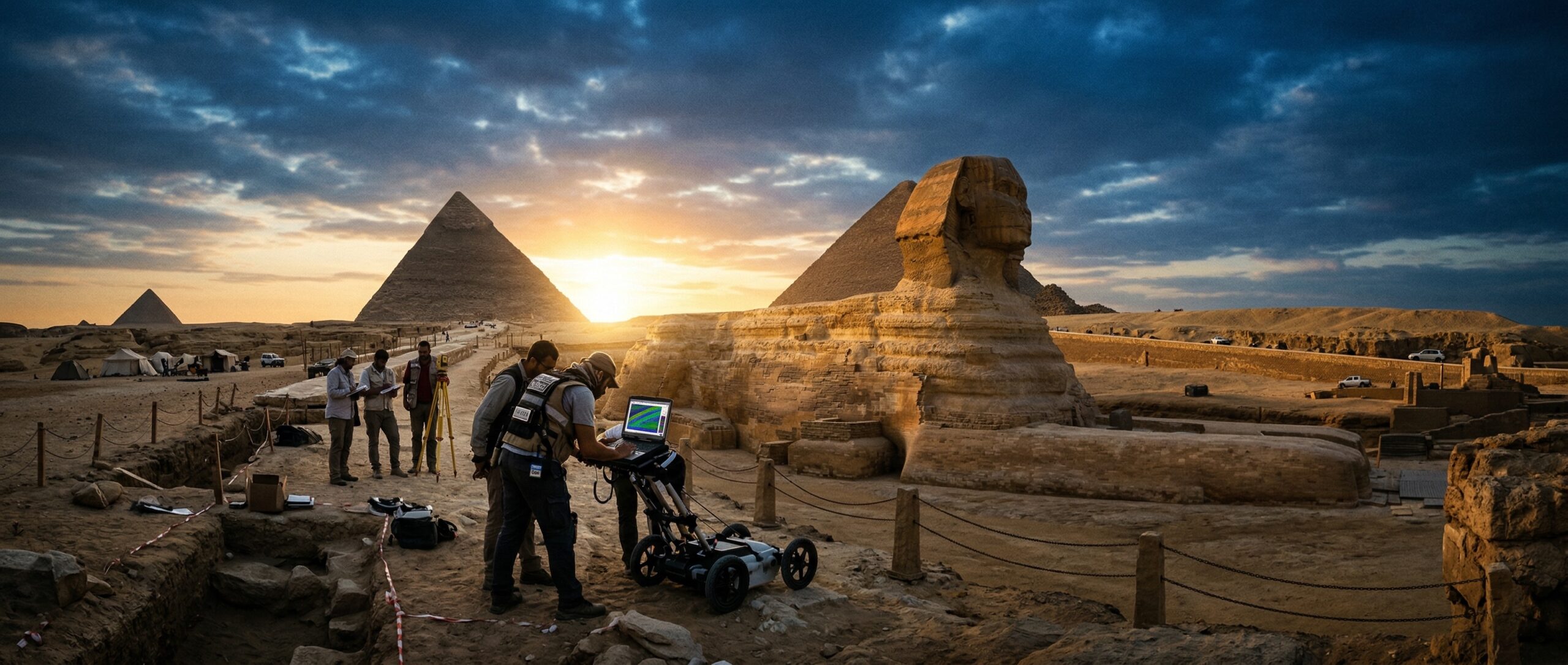
    The “second Sphinx” story at Giza is back, driven by viral claims that remote-sensing or radar-style analysis has revealed a buried counterpart to the Great Sphinx — perhaps even part of a much larger hidden complex beneath the plateau. It is the kind of theory the internet loves: monumental, ancient, visually dramatic, and just close enough to scientific language to sound plausible. But the reason the story matters is not that a second Sphinx has been confirmed. It is that the claim exposes the constant collision between hidden-history hunger and expert caution.

    Here is the clearest answer: there is currently no confirmed archaeological evidence proving that a second Sphinx lies buried at Giza. The viral claim has been amplified by social media, tabloids, and speculative interpretation of data, while archaeologists and geophysics experts have pushed back strongly on the idea that such a discovery has been demonstrated.

    What the Second Sphinx Theory Actually Claims

    The central theory is that there may be a hidden monument, mirror structure, or buried counterpart to the Great Sphinx somewhere on or beneath the Giza Plateau. In stronger versions of the claim, that possible structure is linked to underground chambers or even a larger “megastructure” narrative that expands the mystery far beyond a single monument.

    This theory spreads well because symmetry is persuasive. The idea that the most famous ancient site on Earth might hide a matching or forgotten monumental partner feels intuitively mythic and dramatically unfinished.

    Why Giza Is So Vulnerable to Viral Mystery Claims

    Giza occupies a unique place in global imagination. It is both one of the most studied archaeological landscapes in the world and one of the most mythologized. That combination makes it ideal terrain for recurring hidden-history claims. Every anomaly, shadow, alignment, or interpretive gap can be reimagined as evidence that mainstream archaeology has missed something world-changing.

    This is why the second Sphinx theory does not need airtight proof to thrive. It only needs enough ambiguity to reactivate the old fantasy that the most famous site on Earth still has a giant secret waiting under the sand.

    That appetite has been fueled for decades by documentaries, speculative books, and pop-history media that frame Egypt as a place where “official” knowledge is always one layer away from collapse. Mainstream references such as Britannica’s overview of the Great Sphinx and the archaeological work discussed by outlets like Smithsonian Magazine show why the burden of proof for any second-Sphinx claim is so high.

    What Experts Are Pushing Back Against

    Archaeologists and geophysics specialists have objected not because they oppose dramatic discoveries, but because the evidentiary threshold for a claim this large is enormous. Remote-sensing interpretation can be useful, but it is not the same thing as confirmed excavation. Suggestive shapes, subterranean anomalies, or speculative visualizations do not automatically translate into a buried monumental structure.

    Researchers and skeptics have argued that viral retellings often strip away technical nuance. What begins as a tentative anomaly or interpretive possibility gets repackaged online as if a discovery has already been made and only stubborn institutions are refusing to admit it.

    That repackaging is a core part of the story.

    Why the Theory Keeps Returning

    The strongest evidence for why this theory survives is psychological rather than archaeological. People want Giza to remain unfinished. They want the possibility that something immense still lies hidden at the center of the world’s most famous ancient site.

    That desire is intensified by the scale of the plateau itself. Monuments this large create a natural feeling that they must contain more than is visible. Once that expectation exists, every speculative claim becomes a candidate for belief.

    It is the same dynamic we have seen in other ancient-mystery stories, including our article on AI-identified stone-circle analogues in Israel and our coverage of newly identified Nazca geoglyphs in Peru: real archaeology, interpretive uncertainty, and public imagination do not stay neatly separated for long.

    What Makes This Story Useful Even if It’s Wrong

    For The Unexplained Company, the second Sphinx story matters not because it is proven, but because it reveals how hidden-history culture works. It shows how quickly technical ambiguity gets transformed into certainty when the setting is iconic enough and the symbolic payoff is large enough.

    The theory also illustrates an important divide between mystery media and archaeological method. Mystery media rewards possibility. Archaeological method rewards confirmation. Viral conflict emerges whenever those systems collide.

    Why This Story Still Fascinates People

    In the end, the second Sphinx claim persists because it offers something most ancient-history stories do not: the fantasy that a world-famous site might still contain a discovery so large it would force a rewrite of what everyone thinks they know. Whether that fantasy is justified is another question entirely.

    But fascination does not require proof. It requires symbolic power — and Giza has more of that than almost any place on Earth.

    FAQ

    Frequently Asked Questions

    Is there a confirmed second Sphinx at Giza?

    No. There is currently no confirmed archaeological evidence proving that a second Sphinx has been discovered at Giza.

    Why did the claim go viral?

    Because it combines ancient Egypt, hidden-history speculation, scientific-sounding remote sensing, and the promise of a discovery dramatic enough to challenge mainstream assumptions.

    What are experts saying?

    Experts have pushed back by emphasizing that interpreted anomalies or suggestive imaging are not the same as a confirmed excavation or verified buried monument.

    Why do stories like this keep coming back?

    Because iconic sites like Giza invite the belief that something enormous remains hidden. The setting itself sustains recurring mystery narratives.

    Related Articles:

    This article was created using Media Blaster – Your content production specialist. Visit www.mediablaster.io for more information.

  • Capturing Bigfoot and the Patterson-Gimlin Film: Why the Debate Never Really Ends

    Capturing Bigfoot and the Patterson-Gimlin Film: Why the Debate Never Really Ends

    The new documentary Capturing Bigfoot has reopened the most famous argument in all of cryptid culture: whether the 1967 Patterson-Gimlin film captured a real unknown creature at Bluff Creek or one of the greatest hoaxes in American folklore. That debate is not new, but the documentary gives it fresh life by revisiting the personalities, mythmaking, and possible “trial run” material surrounding Roger Patterson and the footage that believers still treat as the strongest visual evidence for Sasquatch.

    Here is what is known: the Patterson-Gimlin film remains the centerpiece of Bigfoot evidence culture because it is vivid, iconic, and unresolved. Skeptics argue it is a costume performance or a product of motivated mythmaking. Believers argue the movement, proportions, and historical persistence of the footage still resist easy dismissal. The new documentary matters because it reframes the film not only as evidence, but as a cultural object shaped by showmanship, storytelling, and legacy media.

    What the Patterson-Gimlin Film Is

    The Patterson-Gimlin film was captured in 1967 near Bluff Creek, California, and allegedly shows a large, hair-covered bipedal figure walking across a clearing before turning toward the camera. For generations of Bigfoot believers, this figure — often called “Patty” — has stood as the most persuasive visual artifact in all of Sasquatch lore.

    The reason the footage endures is simple: it does not look like a vague shadow or distant blob. It looks like something present, embodied, and strange. That makes it more potent than thousands of stories that offer only noise, traces, or hearsay.

    What the New Documentary Changes

    The current wave of interest comes from Capturing Bigfoot, which screened at SXSW and reportedly revisits both the footage and the man behind it, Roger Patterson. Coverage has emphasized the possibility of newly surfaced material tied to a “trial run,” as well as a more complex portrait of Patterson as a storyteller, operator, and cultural self-mythologizer rather than a simple field investigator.

    That angle is important because it changes the central question. Instead of asking only whether the film is real, it asks what kind of person Patterson was and how much of the Bigfoot legend was shaped by performance, ambition, and the desire to create an unforgettable image.

    That makes this not just a cryptid story, but a media history story.

    Why the Film Still Works on People

    What makes the Patterson-Gimlin film so durable is that it sits in an uncomfortable middle zone. It is too clear to dismiss casually, but too context-dependent to prove cleanly. The strongest Bigfoot stories live in that zone — not obvious enough to end debate, but strong enough that debate never ends.

    Believers often point to the figure’s gait, proportions, arm length, shoulder movement, and apparent muscle or body mass as reasons the film feels difficult to fake convincingly. Skeptics counter that confidence in these details is often shaped by what viewers want to see, and that costume possibilities should not be underestimated, especially when myth and commerce are involved.

    The most widely cited explanation is still that the film reflects some kind of staged performance, but the reason that explanation has never fully erased belief is that the footage remains unusually memorable. It does not vanish from the imagination once seen.

    What Evidence Exists Beyond the Film?

    This is where the Bigfoot debate becomes much weaker. Outside the Patterson-Gimlin footage, the broader Sasquatch world is filled with witness reports, footprint casts, blurry clips, vocalization claims, and long regional traditions — but not with widely accepted biological proof. No body, no unambiguous DNA trail, and no specimen have settled the matter.

    That makes the film culturally overburdened. It has to carry more evidentiary weight than any single piece of footage reasonably should. The documentary seems to understand that. By revisiting the film through the lens of authorship, myth, and performance, it highlights how much of Bigfoot culture depends on one visual moment continuing to feel unresolved.

    For readers interested in how cryptid stories persist through folklore and repetition, the pattern is similar to what we explored in our Loch Ness coverage: strong imagery can outlive the weakness of the underlying evidence.

    What Skeptics and Supporters Each Miss

    Skeptics sometimes underestimate how emotionally unusual the film still feels even after decades of analysis. Supporters sometimes underestimate how powerful mythmaking can be when a story has commercial value, cultural timing, and a memorable image at its center.

    That is why the case remains alive. Each side sees a different problem. One sees a fake that should already be settled. The other sees a genuine anomaly unfairly dismissed by elite certainty. The documentary thrives in that gap.

    Why This Matters Now

    The resurgence of interest around Capturing Bigfoot shows that the Patterson-Gimlin film is no longer just a weird relic of 1960s cryptid culture. It has become an enduring American myth object — part evidence debate, part folklore archive, part documentary obsession, part performance history.

    That matters because the unexplained is not sustained by proof alone. It is sustained by artifacts that remain culturally active. The Patterson-Gimlin film is one of the clearest examples of that. Even people who think it is fake continue to watch it, discuss it, and reinterpret it. Very few pieces of “evidence” survive that long without collapsing.

    FAQ

    Frequently Asked Questions

    What is the Patterson-Gimlin film?

    It is a 1967 film shot at Bluff Creek, California, allegedly showing a Bigfoot-like creature walking across a clearing. It remains the most famous visual evidence in Sasquatch lore.

    Why is Capturing Bigfoot getting attention?

    Because it revisits the film with new documentary framing, reported additional material, and a deeper examination of Roger Patterson as both investigator and mythmaking personality.

    Do experts agree the Patterson-Gimlin film is real?

    No. The film remains heavily disputed. Skeptics generally view it as a hoax or staged performance, while supporters argue the movement and anatomy remain difficult to explain away.

    Why does the debate never end?

    Because the footage is clear enough to remain memorable but not decisive enough to settle the question. It lives in the exact zone where mystery culture thrives.

    Related Articles:

    This article was created using Media Blaster – Your content production specialist. Visit www.mediablaster.io for more information.
  • Congressman Eric Burlison Says Secret UFO Videos “Defy Logic” — What That Really Means for Disclosure

    Congressman Eric Burlison Says Secret UFO Videos “Defy Logic” — What That Really Means for Disclosure

    Rep. Eric Burlison’s latest comments about classified UFO footage have reignited one of the central tensions in the entire UAP disclosure era: the suspicion that the public is being asked to debate the weakest evidence while the strongest material remains behind classified walls. According to Burlison, some of the unreleased videos he has heard about or seen involve orb-like objects that appear stationary and then move in ways that seem to “defy logic.”

    That does not prove nonhuman technology. But it does something almost as important in the current media environment: it reinforces the claim that lawmakers may be seeing a very different layer of evidence than the public. For readers trying to understand why this matters, the issue is not whether Burlison has solved the UFO question. It is whether congressional interest, restricted access, and escalating rhetoric are turning classification itself into one of the most powerful forces in the disclosure story.

    Who Is Eric Burlison in the UAP Debate?

    Burlison has emerged as one of several lawmakers willing to speak openly about unidentified anomalous phenomena while maintaining a posture that sounds more cautious than evangelical. That positioning matters. A congressman who sounds skeptical but intrigued can move the story further than a full believer, because the claim arrives wrapped in institutional credibility rather than obvious enthusiasm.

    This is part of why Burlison’s comments landed so strongly. He did not frame the matter as settled. He framed it as unresolved but hard to dismiss — which is exactly the tone that keeps modern disclosure stories alive.

    What the Secret Video Claim Actually Suggests

    Here is what is known: Burlison has described reportedly extraordinary footage involving glowing orb-like objects and movements that seem difficult to reconcile with ordinary expectations. The stronger interpretation is that he is hinting at technology beyond current known systems. The more cautious interpretation is that he is describing something unusual without sufficient context for public evaluation.

    That gap matters. In the current UAP environment, public debate often revolves less around direct proof than around asymmetry of access. Officials, contractors, whistleblowers, and lawmakers appear to be operating within partially overlapping information systems, while the public is left with fragments and statements.

    As broader reporting from outlets such as Newsweek and The New York Times has shown, the disclosure story is now driven as much by institutional tension and declassification politics as by footage itself.

    Why ‘Defy Logic’ Is Such a Powerful Phrase

    What makes this case unusual is the wording. “Defy logic” is stronger than saying something is unidentified. It implies behavior so unexpected that ordinary explanatory habits fail. That phrase is almost custom-built for disclosure culture because it hints at profound anomaly without committing to a final conclusion.

    It also performs another function: it transforms the hidden footage into a psychological object. People begin imagining evidence stronger than anything they have personally seen. In that way, classification becomes part of the story’s emotional power.

    That does not mean Burlison is misleading anyone. It means that every comment about unreleased material now enters an ecosystem where secrecy itself amplifies belief.

    What Evidence Exists — and What Doesn’t

    The strongest evidence available to the public is still incomplete. What exists in public view includes pilot testimony, declassified military videos, congressional hearings, inspector-general controversy, and a widening chorus of officials saying the issue merits serious review. What does not yet exist is a publicly released body of indisputable footage that settles the matter once and for all.

    That is why stories like this remain volatile. Believers interpret restricted access as proof that the most important evidence is hidden. Skeptics see a pattern of dramatic claims repeatedly outpacing the open record.

    Both reactions are understandable. The problem is that the current disclosure environment rewards assertion faster than verification.

    What Skeptics and Investigators Would Say

    Researchers and skeptics have argued that classified footage can sound more impressive in description than it would appear under full evidentiary scrutiny. Context matters: sensor mode, range, platform behavior, compression artifacts, and operator interpretation can all distort intuitive judgments about what a video shows.

    At the same time, investigators who take UAP seriously argue that repeated institutional concern is itself meaningful. If elected officials and defense-linked insiders continue to push for access, then something about the underlying record is at minimum unusual enough to sustain pressure.

    That is where the story sits: between an evidence deficit and a credibility surplus.

    Why This Matters for the Disclosure Story

    Burlison’s remarks matter because they push the modern UFO conversation deeper into a paradox. The public wants evidence. The institutions closest to the strongest alleged evidence keep implying that it exists while withholding it. That creates a debate structure no one can win cleanly.

    For The Unexplained Company, this is the real significance of the story. The question is no longer just “are UFOs real?” It is “what happens when classification becomes the center of the myth?” Once that happens, secrecy does not reduce belief. It expands it.

    Readers who want to trace that broader pattern should compare this with our piece on the Mellon leak and our article on the so-called UFO metal tested in a real lab. Across these cases, the recurring theme is the same: the strongest claims increasingly live just outside direct public inspection.

    FAQ

    Frequently Asked Questions

    What did Eric Burlison say about secret UFO videos?

    He said some reported UAP footage shows orb-like objects and movements that appear to “defy logic,” suggesting behavior he finds difficult to explain.

    Does this prove alien technology?

    No. Burlison’s remarks increase intrigue, but they do not constitute direct public proof of nonhuman technology.

    Why do comments like this matter so much?

    Because they reinforce the idea that the public may be debating incomplete evidence while lawmakers and officials are seeing stronger classified material.

    What is the main skeptical response?

    Skeptics argue that descriptions of secret footage can sound more dramatic than the material would appear under full technical review, especially without context.

    Related Articles:

    This article was created using Media Blaster – Your content production specialist. Visit www.mediablaster.io for more information.
  • Area 51 Time Dilation Facility Claim: What the Viral Bodycam Leak Says — and Why People Believe It

    Area 51 Time Dilation Facility Claim: What the Viral Bodycam Leak Says — and Why People Believe It

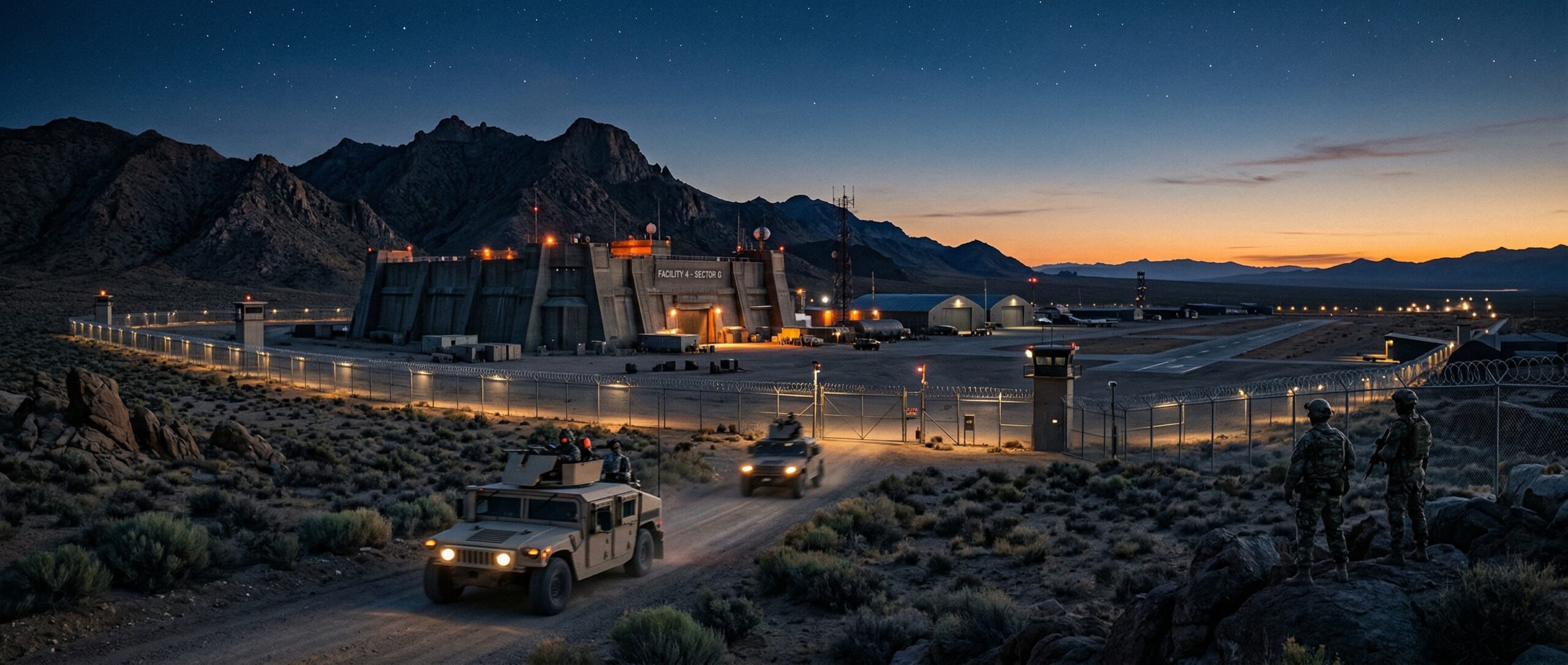
    A viral Area 51 story is making the rounds again, this time built around allegedly leaked bodycam footage in which a trespasser claims he discovered a secret “time dilation facility” linked to the Nevada base. The footage is unverified, the claim is extraordinary, and the story still spread fast because it combines everything the modern conspiracy internet responds to instantly: a sealed military site, strange technical language, official-looking video, and the promise that hidden programs are exploring physics the public is not supposed to know about.

    Here is the clearest answer: there is no verified evidence that Area 51 contains a literal time-dilation chamber or temporal experiment facility. What exists is a viral story built from leak aesthetics, secrecy symbolism, and a concept borrowed from real physics but repurposed into a black-project narrative. That does not make the story culturally unimportant. In fact, it helps explain exactly why it took off.

    https://www.youtube.com/watch?v=HgWjtNfyMeY

    What the Area 51 Time Dilation Claim Actually Says

    The story circulating online centers on allegedly leaked bodycam footage involving a trespasser near or around Area 51 who calmly tells officers that the base is connected to time loops or time dilation rather than ordinary classified aerospace work. In the most dramatic versions of the rumor, the facility is framed as a place where time behaves differently or is being manipulated through hidden research.

    This is an ideal conspiracy format because it fuses three powerful motifs at once: the mythology of Area 51, the authority-signaling aesthetics of bodycam-style footage, and the use of scientific language that sounds just credible enough to stick in the mind. As outlets like Newsweek and Popular Mechanics have documented over the years, Area 51 already occupies a unique place in the public imagination because real military secrecy and speculative folklore have been intertwined there for decades.

    Why Area 51 Is the Perfect Setting for a Story Like This

    Area 51 functions as a myth engine. It is one of the few real places on Earth where almost any extraordinary story sounds emotionally plausible before anyone checks the evidence. That is because the site has long represented the overlap between black-budget research, inaccessible military space, UFO secrecy, and the suspicion that the public sees only a sanitized fraction of what really happens.

    In that setting, “time dilation facility” is not just a phrase. It is a narrative trigger. It sounds scientific, forbidden, and cinematic all at once.

    This is also why a similar claim would likely die quickly if attached to an ordinary office park, factory, or university lab. Area 51 supplies the atmosphere the story needs. The place is doing half the work.

    What Time Dilation Really Means in Physics

    One reason the story travels so well is that time dilation is a real concept in physics. In Einstein’s theory of relativity, time can pass differently depending on speed and gravity. But that does not mean secret bases are casually generating science-fiction time loops inside desert hangars.

    This distinction matters. Conspiracy stories often borrow real scientific terms and relocate them into hidden-program narratives. That move gives the rumor a layer of technical legitimacy without requiring the claim itself to be demonstrated.

    In other words, the term is real. The leap from the term to the viral claim is not.

    What Evidence Exists — and What Does Not

    Here is what is known: the story appears to be driven by online circulation of alleged footage and secondhand reporting, not by verified government records, named technical sources, or documented program disclosures. There is no public evidence showing a real temporal research installation at Area 51.

    The strongest evidence in the story is not physical proof. It is narrative fit. The claim feels like it belongs in the Area 51 mythos, which makes it emotionally convincing to audiences already primed for secrecy-based explanations.

    That does not mean every witness account must be false. But it does mean the burden of proof here is extremely high and currently unmet.

    Why People Believe Stories Like This

    What makes this case unusual is not the evidence, but how neatly it aligns with modern internet belief habits. The story offers:

    • official-looking footage that implies authenticity
    • secret-base context that implies hidden capability
    • scientific wording that implies technical plausibility
    • redaction and uncertainty that imply a cover-up

    That is an almost perfect formula for viral conspiracy engagement. Viewers do not need proof to become interested. They only need enough unresolved texture to feel that the truth may be just out of reach.

    What Skeptics Would Say

    Skeptics would argue that this is a textbook example of how modern rumor culture works: attach a dramatic claim to a culturally loaded site, add a fragment of shaky or partial “evidence,” and let the audience do the rest. They would also note that extraordinary claims about hidden physics demand extraordinary evidence, not just uncanny presentation.

    Researchers and skeptics have argued for years that Area 51 stories often succeed because the base contains something very real — secrecy — but that secrecy is broad enough to absorb almost any invented or exaggerated narrative. Once a place becomes a cultural symbol, it starts attracting stories regardless of whether the facts support them.

    Why This Story Still Matters

    Even if the claim never produces credible proof, it matters as a culture signal. It shows how conspiracy media now blends real science vocabulary, official aesthetics, and military mythology into rapid-fire belief objects that spread before verification can catch up.

    That is especially important for The Unexplained Company because it reveals how mystery culture evolves. Today’s strange stories do not always come from long investigations or gradual folklore growth. Sometimes they appear as prepackaged viral artifacts designed to exploit familiar symbols immediately.

    For readers interested in similar disclosure-era patterns, see our article on alleged high-definition satellite UFO imagery in the Mellon leak story and our investigation into the so-called UFO metal that finally received serious lab attention. In each case, the central tension is the same: the public is invited to believe that the most important evidence exists, but remains just outside reach.

    FAQ

    Frequently Asked Questions

    Is there real evidence of a time dilation facility at Area 51?

    No verified public evidence has been released showing that Area 51 contains a literal time-dilation facility. The current story is based on unverified footage and viral retellings.

    Why does the claim sound believable to so many people?

    Because it combines a real secretive location, official-looking footage, scientific language, and a long history of UFO and black-project mythology around Area 51.

    What is time dilation in real science?

    Time dilation is a genuine concept from relativity describing how time can pass differently depending on speed or gravity. That does not mean the viral claim about a hidden Area 51 time-loop facility is supported.

    Could the footage still be authentic even if the claim is wrong?

    Yes. A video can be real while the interpretation attached to it is exaggerated, mistaken, or fictional. That is common in conspiracy-driven media cycles.

    Related Articles:

    This article was created using Media Blaster – Your content production specialist. Visit www.mediablaster.io for more information.

  • St. Mary’s Paranormal Pajama Party Shows How Haunted Tourism Is Evolving

    St. Mary’s Paranormal Pajama Party Shows How Haunted Tourism Is Evolving

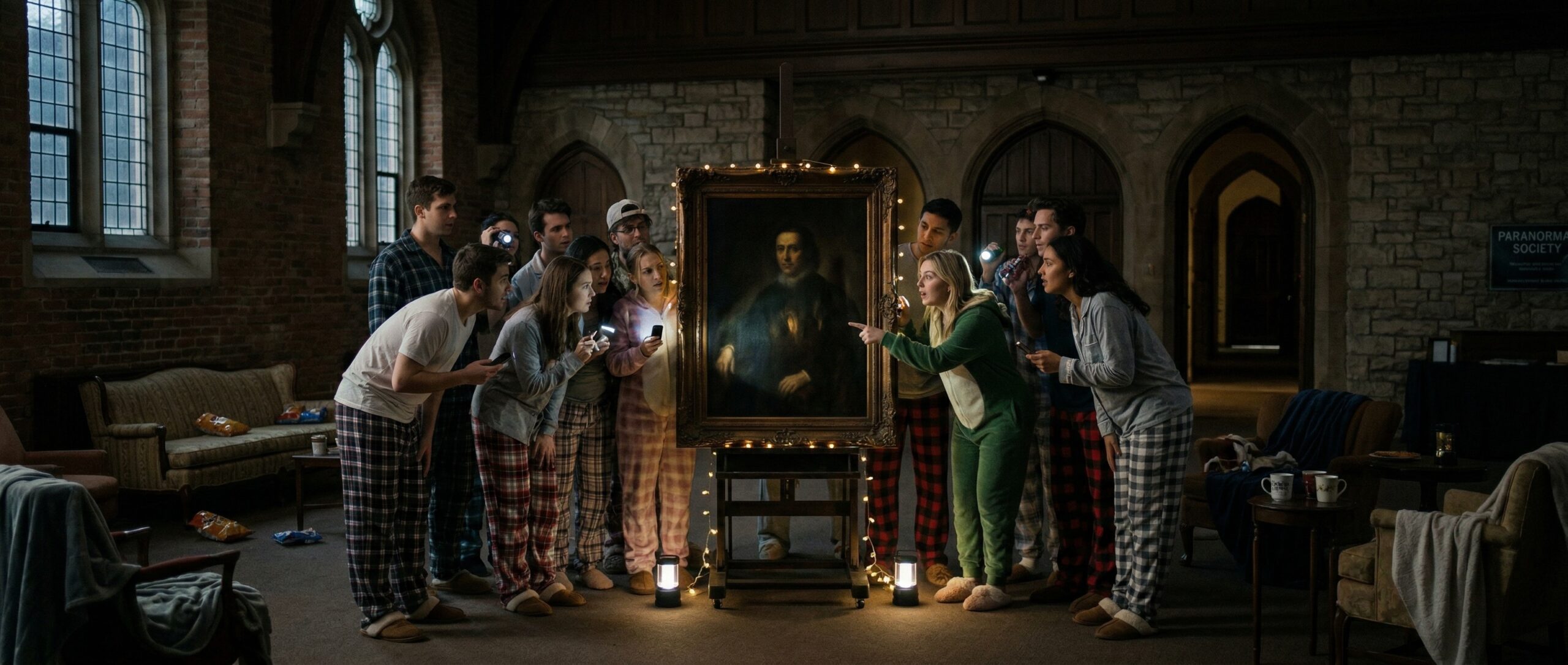
    There was a time when haunted tourism mostly meant walking through an old building, hearing a few stories, and leaving with a souvenir. Events like the Paranormal Painting Pajama Party at St. Mary’s Art Center in Virginia City, Nevada show how much that formula has changed. This is no longer just about listening to ghost lore. It is about staying overnight, participating in an investigation, making art from the experience, and turning the entire evening into a personal story.

    According to The Comstock Chronicle, St. Mary’s Art Center partnered with Women Investigating Ghost Sightings for the March 27–29 event. Guests were invited into the historic building after hours for structured paranormal investigation and an overnight stay, then encouraged to create artwork inspired by the mood of the building and whatever they believed they experienced there. It sounds playful on the surface, but it says a great deal about where paranormal culture is heading.

    A haunted experience built around participation

    St. Mary’s is unusually well suited to this kind of event. The center operates inside a former 1876 hospital, which gives it emotional weight before any ghost story is told. Old hospitals naturally attract narratives of unfinished business, loss, and residual presence. They feel different from ordinary historic homes because their original purpose was already bound up with vulnerability and crisis.

    The building’s present identity adds another layer. St. Mary’s Art Center is both a preservation site and a creative space, which makes the pajama-party format more than a gimmick. The event combines investigation with artistic response, turning the night into something part ghost hunt, part sleepover, part workshop. Guests are not just being shown a haunting. They are being asked to interpret it.

    Why haunted tourism is changing

    This matters because it reflects a broader transformation in the paranormal economy. Audiences increasingly want more than passive consumption. They do not just want to hear that a place is haunted; they want to enter it after dark, test the claim for themselves, compare impressions with strangers, and leave with evidence, artwork, or at least a memorable story. The experience itself becomes the product.

    That model fits perfectly with contemporary digital culture. An ordinary ghost tour may be enjoyable, but an overnight paranormal painting event inside a historic hospital is highly shareable. It gives visitors a narrative arc, visual texture, and social-media-friendly details from the moment they arrive. Pajamas soften the tone, ghost hunting adds suspense, and the art-making component gives attendees something tangible to carry home beyond photos or video clips.

    It also shows how operators are broadening the audience for paranormal events. Traditional ghost tourism often targets dedicated believers, history buffs, or Halloween-season visitors. An event like this reaches all of them while also appealing to people who like immersive experiences, creative workshops, and destination travel with an offbeat edge. Haunted tourism is becoming less siloed and more hybrid.

    The business of atmosphere

    Virginia City has long understood how to market its mining-era history, and St. Mary’s fits neatly into that larger landscape. The town’s appeal is built on a mixture of preserved architecture, Old West identity, and persistent legends of hauntings. What the Paranormal Painting Pajama Party adds is a newer kind of event design: not simply presenting a haunted location, but packaging it as an interactive themed environment. That is a different business strategy from the older museum-or-walking-tour model.

    The concept also reflects the growth of what can fairly be called the paranormal experience economy. Across the United States, historic buildings and folklore-rich destinations are increasingly being monetized through immersive overnight events, paranormal investigations, themed dinners, and niche retreats. What once lived at the edges of tourism now behaves like an adaptable event category.

    That does not make the supernatural claims any more or less true. What it does change is the way audiences relate to them. The visitor is no longer a spectator watching a ghost story from the outside. They are placed inside the story and encouraged to participate in producing its meaning.

    Why this format appeals right now

    The St. Mary’s event works because it understands a modern audience’s appetite for mood, novelty, and self-directed mystery. It offers fear without overwhelming darkness, creativity without abandoning the paranormal hook, and enough intimacy to make the night feel personal. That combination is powerful. It turns haunting from a fixed tale into a social experience people can narrate afterward as their own.

    In that sense, the Paranormal Painting Pajama Party is not just a quirky local event. It is a sign of how haunted culture is evolving. The future of paranormal tourism may not belong only to the loudest ghost tours or the scariest haunted houses. It may belong to places that can create more layered, participatory, emotionally textured experiences around the same old question: what, if anything, is still here?

    Related Articles

    This article was created using Media Blaster – Your content production specialist. Visit www.mediablaster.io for more information.