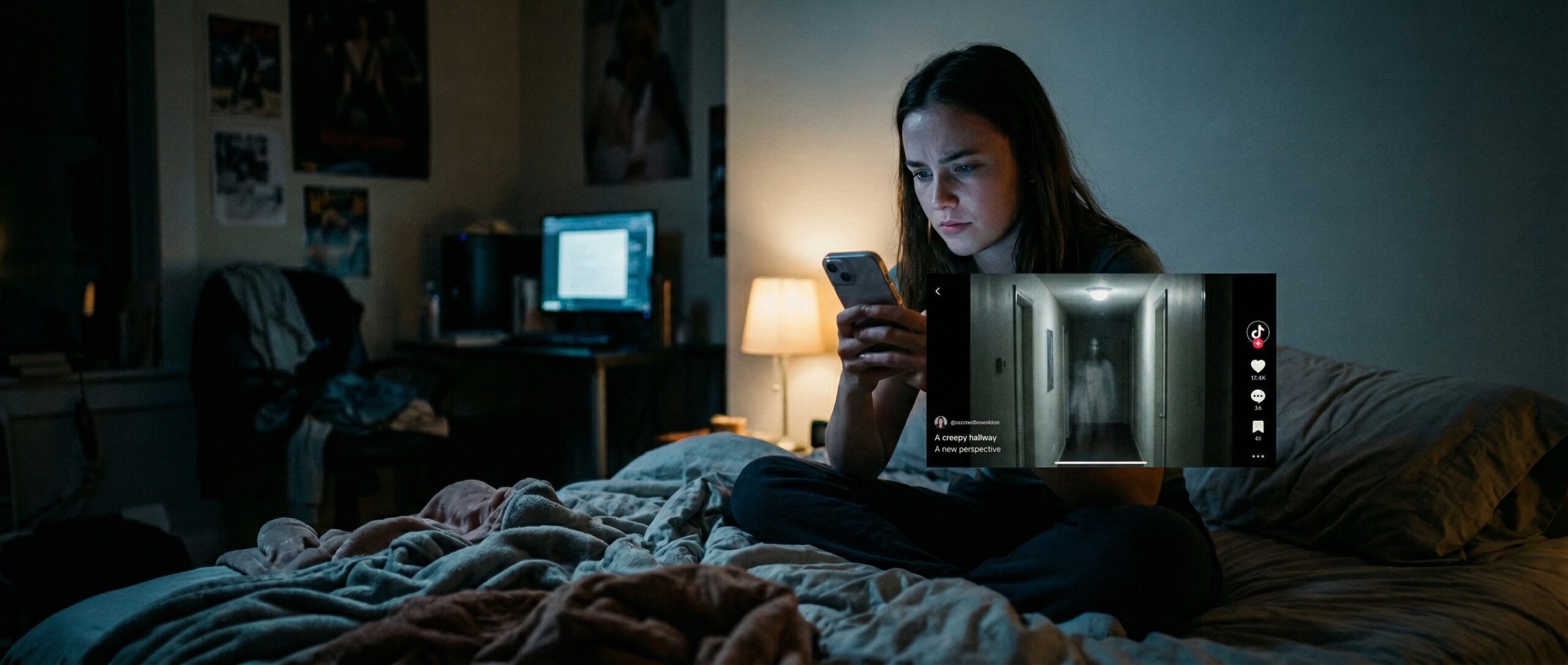
Author: Art Grindstone

  • Comet MAPS April Omen Watch: Why Sungrazers Still Trigger Prophecy Culture in 2026

    Comet MAPS April Omen Watch: Why Sungrazers Still Trigger Prophecy Culture in 2026

    A newly discovered sungrazing comet, C/2026 A1 (MAPS), is drawing attention not just because of its close solar pass, but because celestial events like this almost instantly become omen stories online. The moment a comet is described as dramatic, uncertain, or potentially short-lived, prophecy communities, astrology circles, and collapse-minded audiences begin attaching symbolic meaning to it. That is exactly what is happening now as interest builds around April 4 and the question of whether the comet will survive its passage near the Sun.

    This is why the current buzz matters. Even before the observational outcome is settled, the comet has already entered a familiar cultural machine where astronomy and apocalyptic imagination overlap. In practical terms, the event is scientific. In online culture, it is rapidly becoming an omen test.

    What Is Happening With Comet C/2026 A1 (MAPS)?

    The core of the story is straightforward: C/2026 A1 (MAPS) is a sungrazing comet expected to pass extremely close to the Sun, with April 4 marked as the key moment for whether it survives, partially disintegrates, or breaks apart completely. Coverage has emphasized that the comet’s nucleus may be small, which makes breakup a real possibility.

    That uncertainty is a major reason the story has traction. A comet that either survives gloriously or dies dramatically is much more narratively potent than a routine sky event. It creates suspense, and suspense is exactly what prophecy and symbolism communities thrive on.

    Once an astronomical event becomes suspenseful, it stops being just observational. It becomes interpretable.

    Why Comets Turn Into Omen Stories So Easily

    Historically, comets have almost always been vulnerable to symbolic interpretation. Across cultures, they have been framed as warnings, royal omens, signs of war, signs of change, or cosmic disturbances connected to earthly instability. That symbolic legacy still lingers even in modern secular societies.

    The internet has simply accelerated the process. Today, the symbolic transformation happens in real time. A comet appears in headlines, social media clips spread, and then multiple interpretive communities begin layering meaning onto it at once. Astronomers may see orbital dynamics and material behavior. Others see a message.

    This does not mean those symbolic readings are valid. It means the cultural reflex remains deeply active.

    Why the Timing Matters So Much

    The April 4 timing gives the story extra power because date-based celestial events are especially easy to plug into prophecy culture. A specific date creates a countdown. A countdown creates anticipation. And anticipation invites narrative escalation.

    That is one reason a comet like this can get pulled so quickly into broader “sign in the heavens” discourse. If the object brightens dramatically, it will be called a sign. If it disintegrates, that too will be called a sign. If the visual outcome is ambiguous, that ambiguity itself will fuel interpretation.

    In other words, omen discourse is almost impossible to falsify once it starts.

    What the Scientific Story Actually Is

    From a scientific standpoint, the event is important because sungrazing comets are physically fragile and visually dramatic. Their behavior near the Sun can reveal a great deal about composition, structure, and survivability. That is the legitimate observational interest here.

    But the scientific story is not the same as the viral story. The scientific question is whether the comet survives perihelion and how it behaves under extreme solar stress. The viral question is what the comet means.

    That split matters because many readers encounter the symbolic layer first and the astronomical explanation second.

    Why This Story Fits the Current Prophecy Environment

    The current online environment is especially favorable to comet-omen narratives because audiences are already primed by overlapping fear systems: war anxiety, economic uncertainty, apocalyptic timelines, spiritual content, and constant algorithmic pressure toward dramatic interpretation. In that environment, a sungrazer is not just a comet. It is raw symbolic material.

    This is very similar to the dynamics we have tracked in our April Prophecy analysis, in our rapture-panic coverage, and in our Baba Vanga / Chris Bledsoe convergence feature. Different subjects, same mechanism: uncertainty becomes meaning almost instantly.

    What Skeptics Would Say

    Skeptics would argue that comet-omen thinking is one of the oldest and most durable forms of symbolic overreach. Celestial objects do not need to predict anything to become culturally magnetic. Humans are exceptionally good at projecting significance onto rare or visually dramatic sky events, especially during unstable historical moments.

    That skeptical reading is important because it reminds us that interpretive hunger often says more about the audience than about the object itself. A comet can be astronomically ordinary and still become culturally extraordinary.

    That does not make the reaction meaningless. It makes it revealing.

    Why This Story Still Matters

    For The Unexplained Company, the real significance of the Comet MAPS omen watch is not whether prophecy communities are “right.” It is that celestial events continue to act as psychological mirrors during tense times. People look up and see not just a physical object, but a reflection of the fears, expectations, and symbolic systems they are already carrying.

    That is why comet stories remain so durable. They let science and myth coexist in the same cultural moment without fully resolving into one another.

    Final Assessment

    The current C/2026 A1 (MAPS) surge is best understood as both an astronomy story and an omen story — not because the comet is objectively prophetic, but because human culture keeps making dramatic sky events prophetic whenever uncertainty is high enough.

    If the comet survives, the spectacle will feed the myth. If it breaks apart, the collapse will feed the myth. And if it does something in between, ambiguity will feed it anyway. That may be the most important takeaway of all: the comet’s trajectory matters, but so does the interpretive machinery waiting below it.

    Frequently Asked Questions

    What is Comet C/2026 A1 (MAPS)?

    It is a sungrazing comet expected to pass extremely close to the Sun, drawing attention because it may either survive dramatically or break apart during the event.

    Why are people calling it an omen?

    Because comets have long been interpreted as signs of change, disaster, or prophecy, and online communities still apply that symbolic framework to dramatic sky events.

    Is there any scientific reason to treat the comet as prophetic?

    No. Scientifically, it is an astronomical object undergoing a close solar pass. The omen framing is cultural and symbolic, not evidence-based.

    Why is the April 4 timing important?

    The date creates a clear countdown point, which makes it much easier for prophecy, astrology, and doom-oriented audiences to attach narrative significance to the event.

    Related Articles:

    This article was created using Media Blaster – Your content production specialist. Visit www.mediablaster.io for more information.
  • Mermaid Inn Haunted Hotel Buzz: Why Britain’s Most Famous Ghost Inn Never Stays Quiet for Long

    Mermaid Inn Haunted Hotel Buzz: Why Britain’s Most Famous Ghost Inn Never Stays Quiet for Long

    The Mermaid Inn in Rye, East Sussex is back in the headlines, and that alone is enough to reignite one of Britain’s most durable paranormal-travel stories. Fresh mainstream coverage has revived interest in the inn’s long-running haunted reputation, with familiar elements returning to center stage: Room 17, secret passages, a lady in white, moving furniture, and the lingering sense that this is one of those rare old buildings whose ghost stories feel inseparable from the walls themselves.

    That is why this story matters. The Mermaid Inn is not just another allegedly haunted hotel. It is one of the UK’s most mythologized paranormal hospitality sites, and every time a major outlet reintroduces it through a present-day stay or first-person feature, the legend gets refreshed for a new audience.

    Why the Mermaid Inn Keeps Coming Back

    One reason the Mermaid Inn stays culturally alive is that it sits at the perfect intersection of ghost lore, heritage tourism, and old-English atmosphere. Haunted-hotel stories do not spread only because people believe in ghosts. They spread because they offer a complete experience package: history, architecture, folklore, suspense, and the possibility that an overnight stay could turn an ordinary trip into a personal encounter with the unexplained.

    The Mermaid Inn has that formula in abundance. It is old, visually distinctive, tied to local smuggling mythology, and dense with retellable details. That makes it ideal for modern paranormal travel media.

    What the Current Mermaid Inn Buzz Is Based On

    The latest surge appears to come from a new mainstream feature revisiting the inn’s haunted reputation through a contemporary visitor experience. The shareable details are exactly the ones you would expect to perform well online: the supposedly active Room 17, a rocking chair said to move on its own, the recurring “lady in white” motif, and stories of ghostly figures connected to the building’s long history.

    None of these are truly new claims in the strict evidentiary sense. What is new is the media framing. When a legacy haunting is reintroduced through fresh travel coverage, it becomes newly searchable, newly clickable, and newly discussable.

    That matters because old hauntings often survive not through continuous evidence, but through periodic reinjection into public attention.

    Why Haunted Inns Work So Well in the Public Imagination

    Hotels and inns are especially powerful in paranormal culture because they combine transience with intimacy. Guests sleep there. They are physically vulnerable there. They spend the night in unfamiliar rooms and often in old buildings full of sound, shadow, and suggestive architecture.

    That makes haunted-inn narratives unusually sticky. A ghost story in an old field is one thing. A ghost story in a room where you can spend the night is another.

    The Mermaid Inn benefits from this perfectly. Its appeal is not just “there may be ghosts here.” It is “you can personally enter the setting of the legend.”

    The Smuggling-Lore Advantage

    Part of what makes the Mermaid Inn so enduring is that it is not built on ghost stories alone. It is also attached to criminal folklore, especially old smuggling narratives tied to the Hawkhurst Gang and the broader romance of hidden routes, secret dealings, and violent history along the English coast.

    That historical texture matters because it gives the haunting lore a stronger dramatic foundation. Ghost stories rooted in smuggling, betrayal, violence, and concealed passageways feel more narratively complete than generic haunting tales. The past already sounds dangerous, so the supernatural overlay feels easier to accept.

    This is one reason haunted heritage sites with criminal backstories tend to perform so well in media. They have built-in narrative scaffolding.

    What Skeptics Would Say About the Mermaid Inn

    Skeptics would point out that famous haunted hotels often become self-reinforcing suggestion environments. People arrive expecting to feel something. They notice creaks, shadows, old furniture movement, drafts, and sleep-disrupted sensations more intensely than they would in an ordinary building. Once a location’s reputation becomes fixed, every ambiguous moment starts arriving pre-interpreted.

    That does not mean guests are inventing what they experienced. It means expectation and environment can work together in powerful ways.

    Old inns are especially vulnerable to this because they naturally contain uneven floors, aged wood, shifting temperatures, odd acoustics, and architectural quirks that can feel uncanny even without any paranormal explanation.

    Why This Story Still Matters

    For The Unexplained Company, the Mermaid Inn story matters because it shows how paranormal tourism sustains itself in 2026. The strongest haunted-location stories are no longer only local folklore. They are media loops. A place becomes famous, gets periodically rediscovered by mainstream outlets, and then re-enters digital circulation as both a travel destination and a supernatural narrative object.

    That process keeps legacy hauntings alive far beyond their original context. It also means that haunted hospitality stories now function as both folklore and lifestyle content.

    This overlaps with the same event-and-experience culture we explored in our article on paranormal event culture, our piece on the Oregon ghost conference story, and our coverage of the Oregon Ghost Conference’s wider cultural significance. The form changes, but the mechanism is similar: people want to experience the unexplained, not just read about it.

    Why the Mermaid Inn Is More Than a Simple Ghost Story

    The most interesting thing about the Mermaid Inn is that it works on multiple levels at once. For believers, it is an active haunted location. For tourists, it is an atmospheric heritage destination. For skeptics, it is a fascinating example of how suggestion, architecture, folklore, and media reinforcement create an unusually durable legend.

    That layered quality is exactly why it keeps resurfacing. The inn can satisfy almost every audience without needing definitive proof.

    Final Assessment

    The latest Mermaid Inn haunted-hotel buzz is less about new evidence than about the enduring power of a near-perfect paranormal setting. An old inn, secret passages, smuggling lore, ghost stories, and a modern media revival are more than enough to keep the legend alive.

    Whether the Mermaid Inn is truly haunted or simply one of Britain’s most effective folklore environments, it remains one of the strongest examples of how paranormal myth and tourism continue to reinforce one another.

    Frequently Asked Questions

    Why is the Mermaid Inn famous in paranormal culture?

    Because it combines a long-standing haunted reputation with historic architecture, smuggling lore, and repeated ghost stories tied to specific rooms and apparitions.

    Is there new evidence the Mermaid Inn is haunted?

    Not in any strong evidentiary sense. The current buzz is driven more by renewed media coverage and first-person travel storytelling than by newly verified paranormal proof.

    Why do haunted hotels attract so much attention?

    Because they offer a direct experience. People can physically stay in the location, which makes the haunting feel more personal and more emotionally real.

    What would skeptics say about reports from the Mermaid Inn?

    Skeptics would say the inn’s age, atmosphere, architecture, and powerful reputation create a strong suggestion environment where normal sensations can feel paranormal.

    Related Articles:

    This article was created using Media Blaster – Your content production specialist. Visit www.mediablaster.io for more information.
  • Artemis II Live Feed UFO Chatter: Why NASA Glitches Keep Turning Into Conspiracy Stories

    Artemis II Live Feed UFO Chatter: Why NASA Glitches Keep Turning Into Conspiracy Stories

    The UFO chatter around NASA’s Artemis II live coverage is a perfect example of how modern anomaly culture works. A mission experiences routine communication issues, viewers clip an ambiguous moment, social platforms pull it out of context, and suddenly a technical hiccup begins mutating into a cover-up story. That is exactly what happened with the latest burst of claims around the Artemis II live feed UFO discussion now circulating across Reddit, YouTube, and conspiracy-leaning communities.

    Here is the clearest answer: there is currently no verified evidence that NASA captured a genuine UFO during the Artemis II live feed. What exists is a fast-moving online interpretation cycle built on partial clips, viewer suspicion, space-program mystique, and the long-standing belief that NASA is one of the institutions most likely to hide something extraordinary if it ever appeared on camera.

    What Happened on the Artemis II Live Feed?

    The current wave of discussion appears to have been sparked by online posts claiming that something strange showed up during Artemis II mission coverage. Some of the conversation has centered on short clips and archived references shared across Reddit and other social platforms, where viewers argued that a visual anomaly or awkward feed shift looked suspicious enough to deserve closer inspection.

    At the same time, separate mission reporting documented multiple real technical issues and troubleshooting moments during the early mission period. That matters because real technical disruptions create the perfect environment for conspiracy interpretation. If a feed stutters, a signal drops, audio changes, or the presentation shifts unexpectedly, some viewers immediately begin asking whether they just witnessed censorship rather than routine engineering friction.

    This is why the story spread so quickly. It wasn’t just “something odd in space.” It was “something odd in space during a stream people already half-expect NASA to sanitize.”

    Why NASA Live Feeds Always Attract UFO Claims

    NASA has occupied a special place in UFO culture for decades. To believers, it sits at the intersection of elite scientific authority, secretive space operations, classified aerospace history, and global public trust. That combination makes the agency a magnet for anomaly claims.

    Whenever something unusual appears in NASA footage — even briefly — the event tends to trigger a familiar script:

    • a visual ambiguity appears
    • someone clips it
    • the clip detaches from its original context
    • viewers begin narrating intent into technical changes
    • the absence of proof becomes proof of concealment

    That pattern is one reason Artemis II was almost guaranteed to generate at least one UFO rumor cycle. Space missions produce high attention, high uncertainty, and lots of technically confusing visuals. Those are ideal conditions for anomaly culture.

    What the Strongest Skeptical Explanation Looks Like

    The most grounded interpretation is that the Artemis II UFO chatter reflects a mix of ordinary live-feed ambiguity, mission troubleshooting, and pattern recognition amplified by social media. Space footage is notoriously easy to misread. Reflections, lens flares, signal artifacts, compression oddities, drifting debris, camera movement, lighting changes, and partial context can all create the impression of something more exotic than what is actually on screen.

    That does not mean every viewer is acting in bad faith. It means live technical environments naturally produce moments that look uncanny when isolated.

    And once those moments are clipped and stripped of surrounding mission context, they become much easier to mythologize.

    Why This Story Still Matters Even Without Proof

    For The Unexplained Company, the real value of this story is not whether a UFO was captured on camera. It is what the reaction tells us about the current state of public trust, media consumption, and conspiracy psychology.

    People increasingly do not wait for institutions to interpret events for them. They watch, clip, speculate, remix, and distribute their own competing realities in real time. That means a NASA live feed is no longer just a technical broadcast. It is a battlefield of interpretation the moment anything unclear appears on screen.

    This also helps explain why even weak anomaly stories can perform so well online. They let audiences feel participatory. Viewers are not just watching a mission. They are hunting for hidden truths inside it.

    The Artemis II UFO Story in the Bigger Disclosure Context

    Another reason this micro-story gained traction is that it landed inside a broader disclosure-era environment already shaped by Pentagon UAP stories, congressional testimony, and years of public debate over whether official institutions are withholding the best evidence.

    That wider climate changes how viewers process ambiguity. In another era, a glitchy moment on a live space feed might simply have been dismissed as noise. Now, many audiences interpret ambiguity through a secrecy lens first.

    This is the same pattern we explored in The Mellon Leak and in our article on Eric Burlison’s secret UFO video comments. The details differ, but the cultural mechanism is the same: once people suspect the strongest evidence is hidden, unclear material becomes more potent, not less.

    Why Space-Conspiracy Stories Are So Durable

    Space missions occupy a near-perfect symbolic zone. They involve advanced technology, restricted environments, difficult visuals, and institutions most people cannot independently check. Add the emotional weight of exploration and the mystery of the cosmos, and even a brief anomaly can feel loaded with cosmic significance.

    That is why stories like this linger even when no hard evidence appears. They live in a symbolic ecosystem where uncertainty already feels meaningful.

    For many viewers, the possibility matters more than the proof.

    What Responsible Readers Should Do With Stories Like This

    The best way to approach an Artemis II live feed UFO claim is to ask a few simple questions:

    • Is the clip complete, or was it extracted from a longer technical sequence?
    • Are there mission-log explanations for any feed changes or glitches?
    • Does the anomaly still look unusual when viewed in full context?
    • Is the claim being strengthened by evidence, or by audience suspicion alone?

    Those questions do not kill the mystery. They simply separate curiosity from automatic escalation.

    Final Assessment

    The current Artemis II live feed UFO chatter is best understood as a modern media event rather than a confirmed space anomaly. The story spread because it had everything UFO audiences respond to: NASA, live video, technical confusion, rapid clipping, and an institution already surrounded by secrecy narratives.

    That combination is enough to create a viral mystery even when the evidence remains weak. And in 2026, that may be the real story: not whether a UFO crossed the frame, but how quickly the public is now prepared to believe that it might have.

    Frequently Asked Questions

    Was a UFO confirmed on the Artemis II live feed?

    No. There is currently no verified evidence showing that a genuine UFO appeared on the Artemis II live feed.

    Why are people talking about an Artemis II live feed UFO?

    Because viewers circulated clips and claims suggesting something unusual appeared during mission coverage, and those claims were amplified by real technical issues and online speculation.

    Why do NASA streams attract so many anomaly claims?

    NASA footage combines difficult visuals, institutional mystique, and public suspicion, making it easy for ambiguous moments to be reinterpreted as possible cover-up material.

    What is the most likely explanation?

    The most likely explanation is a combination of normal live-feed ambiguity, technical hiccups, and social-media amplification rather than a confirmed extraterrestrial event.

    Related Articles:

    This article was created using Media Blaster – Your content production specialist. Visit www.mediablaster.io for more information.

  • Great Pyramid Secret Corridor Speculation: Why One Sealed Space Can Reignite Every Hidden-Chamber Theory

    Great Pyramid Secret Corridor Speculation: Why One Sealed Space Can Reignite Every Hidden-Chamber Theory

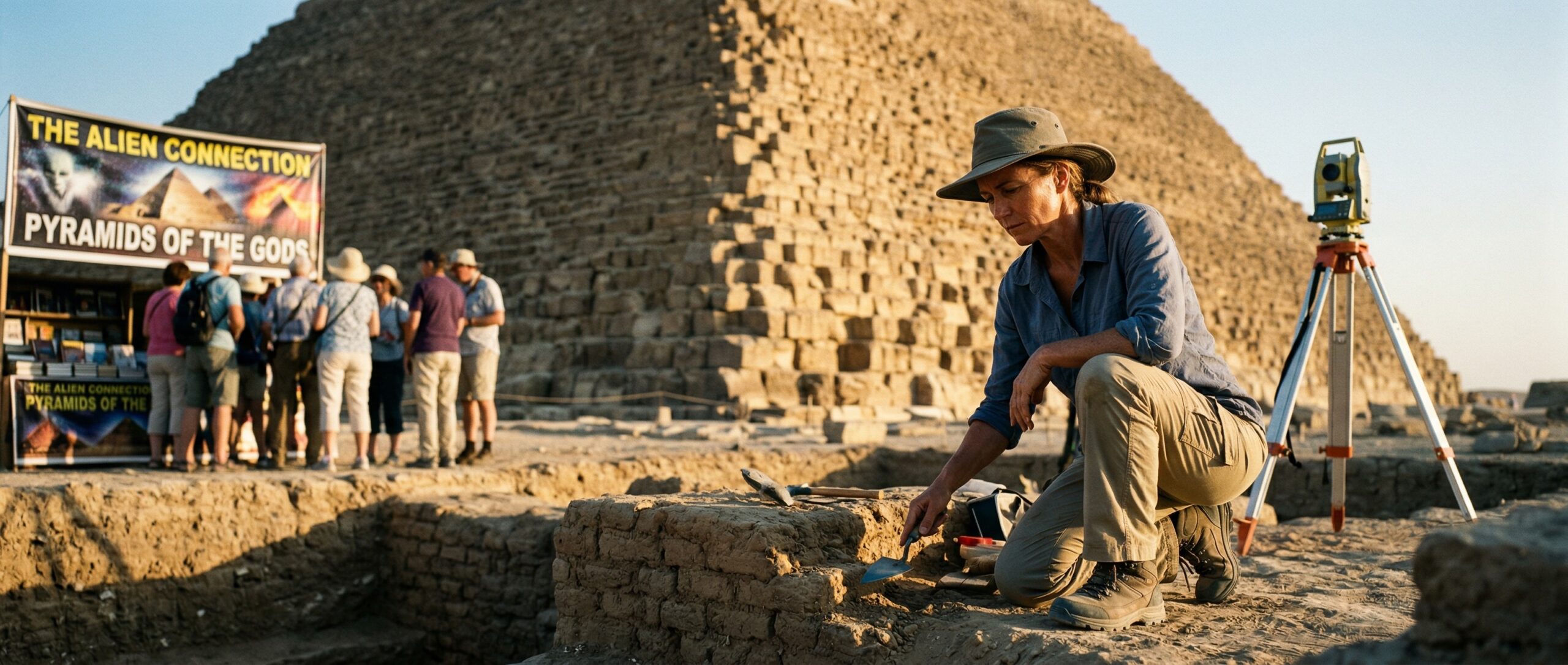
    Fresh speculation is building around the Great Pyramid of Giza after renewed reporting on a narrow internal corridor and the possibility that it could lead to a hidden chamber connected to Khufu. Stories like this always spread fast, but this one is especially potent because it combines one of the world’s most iconic monuments with a near-perfect mystery trigger: a sealed space inside a structure many people already believe still contains undiscovered secrets.

    That is why the current wave of attention matters. Even before any new chamber is confirmed, the combination of robots, inaccessible passages, hidden voids, and sealed barriers is enough to reactivate the entire hidden-history imagination around Giza. In the modern media environment, that kind of setup does not stay archaeological for long. It becomes conspiracy content, mystery content, and symbolic-content bait all at once.

    What the Great Pyramid Corridor Story Actually Says

    The latest round of coverage centers on renewed reporting that a narrow corridor or internal passage in the Great Pyramid may extend toward a still-inaccessible area, and that specialized robotic equipment is being used to explore the structure more carefully. Some accounts frame the corridor as a possible route to a hidden chamber, with the strongest versions of the story implying that the sealed endpoint could conceal something historically significant.

    This is exactly the type of claim that travels well because it offers both a real archaeological hook and a mythic payoff. A corridor inside the Great Pyramid is already compelling. A corridor that may terminate in a still-hidden chamber instantly becomes global mystery fuel.

    Even cautious readers can understand why. Giza is one of the few sites on Earth where the public is always willing to believe one more astonishing discovery might still be waiting behind stone.

    Why Giza Keeps Producing Stories Like This

    The Great Pyramid exists in a unique symbolic category. It is simultaneously one of the most studied ancient structures in the world and one of the most mythologized. That dual status makes it unusually vulnerable to recurring waves of speculation.

    Every time researchers identify a new void, corridor, anomaly, shaft, or inaccessible architectural feature, the story enters a cultural machine much larger than archaeology itself. Some audiences see genuine scientific progress. Others see confirmation that major discoveries have long been hidden or ignored. Still others immediately leap toward alternative-history ideas involving lost civilizations, forbidden chambers, sacred technology, or suppressed knowledge.

    This does not mean the science is invalid. It means the setting is almost too symbolically loaded to stay contained within normal reporting.

    Why the “Sealed Barrier” Detail Is So Powerful

    The strongest viral element in the current story is not just the corridor — it is the idea of a sealed endpoint. The moment a report includes words like “sealed stone,” “blocked passage,” or “hidden chamber,” the narrative takes on a much larger mythic charge.

    That is because a sealed barrier suggests intentional concealment. And intentional concealment is where mystery culture thrives.

    In public imagination, a corridor without an endpoint is architecture. A corridor ending in a sealed barrier is a promise.

    It implies that something is being kept apart from the visible world. Whether that something is a structural dead end, a construction feature, a void, a ritual chamber, or nothing of dramatic importance at all becomes almost secondary. The symbolism does most of the work.

    What Archaeologists and Skeptics Would Say

    The strongest skeptical response is straightforward: unknown space inside a pyramid does not automatically imply hidden treasure, revolutionary knowledge, or suppressed history. Ancient monumental structures are complex. Voids, blocked passages, structural spaces, and inaccessible internal features can exist for many reasons, including engineering, staging, load management, construction sequence, or ritual design.

    That is why serious archaeological interpretation moves more slowly than viral speculation. The fact that a space is hidden does not tell us what it means.

    Skeptics would also point out that Giza’s most dramatic stories tend to escalate faster than the evidence warrants. Once a corridor is discussed publicly, the internet begins writing its ending before the science is finished.

    That pattern is familiar across multiple Egypt-related mystery cycles.

    Why This Story Still Matters

    For The Unexplained Company, the importance of this story is not just whether a new chamber is eventually confirmed. It is what the reaction reveals about the ongoing power of ancient-mystery culture. Giza remains one of the most effective story engines in the entire unexplained world because it sits at the crossroads of archaeology, myth, empire-scale symbolism, and public distrust of closure.

    People do not want the Great Pyramid to feel complete. They want it to remain partially unreadable.

    That desire matters because it keeps every new architectural discovery from being interpreted neutrally. The site is simply too mythic for that. A corridor is never just a corridor for long.

    How This Fits the Larger Hidden-History Pattern

    This corridor story fits neatly alongside other ancient-site narratives that gain intensity not because the evidence is overwhelming, but because the symbolic setting is so potent that even small discoveries feel world-changing. We have seen similar dynamics in our recent coverage of the second Sphinx claim, in our article on AI-discovered megalithic analogues in Israel, and in our coverage of the Nazca geoglyph discoveries.

    In each case, the pattern is the same: archaeological or quasi-archaeological discovery enters public discourse, uncertainty expands, and audiences begin layering symbolic meaning onto incomplete evidence.

    That does not make the stories worthless. It makes them culturally revealing.

    Final Assessment

    The current Great Pyramid corridor speculation is significant because it shows how quickly archaeological reporting can transform into a larger mystery event once the ingredients are right. A hidden passage, a robotic probe, a sealed barrier, and the Great Pyramid itself are enough to ignite enormous imagination before any final answer arrives.

    Maybe the corridor leads to something extraordinary. Maybe it leads to something architecturally important but far less cinematic. Either way, the deeper story is already unfolding in public: Giza remains one of the last places on Earth where even a narrow corridor can still feel like a doorway into the impossible.

    Frequently Asked Questions

    What is the Great Pyramid corridor story about?

    It centers on renewed speculation that a narrow internal corridor in the Great Pyramid may lead to a hidden chamber, with robotic tools reportedly being used to inspect inaccessible areas more closely.

    Has a hidden chamber actually been confirmed?

    Not at this stage. The current story is driven by speculation around internal architecture and the possibility of unexplored space, not by a fully confirmed public discovery of a major chamber.

    Why do stories like this spread so fast?

    Because the Great Pyramid is one of the world’s most symbolically loaded sites. Even small new discoveries there tend to get interpreted through mystery, conspiracy, and hidden-history frameworks.

    What is the skeptical view?

    Skeptics and archaeologists would stress that hidden spaces inside ancient monuments can have many ordinary explanations, and that a corridor or sealed barrier does not automatically imply treasure, secrets, or suppressed history.

    Related Articles:

    This article was created using Media Blaster – Your content production specialist. Visit www.mediablaster.io for more information.
  • Bob Lazar on Joe Rogan: What Luigi Vendittelli’s New Documentary Adds to the S4 Story

    Bob Lazar on Joe Rogan: What Luigi Vendittelli’s New Documentary Adds to the S4 Story

    The latest Bob Lazar on Joe Rogan conversation isn’t just another retelling of the Area 51 legend. This time, filmmaker Luigi Vendittelli brings a new angle: a documentary reconstruction of the alleged S4 facility built using mostly handmade CGI, detailed location research, and visual recreations designed to match Lazar’s decades-old account. For longtime UFO followers, that makes this appearance more than nostalgia. It reframes Bob Lazar’s story as something being actively re-investigated, re-visualized, and re-packaged for a modern audience that now expects both technical detail and cinematic proof.

    What makes this interview so compelling is the tension at its core. Bob Lazar still presents his story as an account of direct experience inside a compartmentalized black project studying non-human technology. Luigi Vendittelli, meanwhile, explains how his team tried to reconstruct that world visually and geographically. Together on Joe Rogan, they turn an old UFO case into a new media event.

    Why “Bob Lazar on Joe Rogan” Still Pulls So Much Attention

    Few names in UFO culture still generate as much immediate attention as Bob Lazar. Decades after first claiming he worked on reverse-engineering alien craft at a hidden site called S4 near Area 51, Lazar remains one of the most divisive and durable figures in the entire disclosure landscape.

    That is why every major appearance matters. The phrase Bob Lazar on Joe Rogan performs so well because it fuses two powerful audiences: long-time UFO believers and mass-culture podcast listeners. Rogan’s platform gives Lazar mainstream reach, while Lazar brings Rogan’s audience one of the most iconic hidden-tech stories in American conspiracy history.

    This newer appearance is especially interesting because it is not just Lazar telling the same story again. Vendittelli’s involvement changes the framing from pure testimony to visual reconstruction and documentary investigation.

    Luigi Vendittelli’s Documentary Approach Changes the Conversation

    One of the most important revelations from the interview is Vendittelli’s explanation of how the documentary was built. According to him, the production used roughly 90% handmade CGI in Blender and 10% AI to recreate the S4 facility and even generate a de-aged version of Lazar.

    That matters because UFO storytelling is entering a new era. It is no longer enough to simply recount extraordinary claims. Audiences now expect immersive visual reconstruction, simulated environments, and a more forensic style of presentation. Vendittelli’s process reflects that shift perfectly.

    In the interview, Lazar says seeing the facility recreated so closely felt almost like downloading old memories directly from his mind. That is a striking phrase, because it reveals how emotionally powerful visual reconstruction can be when tied to a long-running personal narrative. Whether you believe Lazar or not, the documentary’s imagery appears to have given the story a new psychological charge.

    What Bob Lazar Says About Working at S4

    A core part of the Bob Lazar on Joe Rogan discussion is Lazar’s continued description of the work environment at S4. He portrays it as intensely compartmentalized, high-pressure, and intentionally isolating. According to Lazar, scientific groups were separated, communication was restricted, and personnel were denied enough context to understand the full scope of the program.

    That level of compartmentalization has always been central to Lazar’s credibility with believers. To them, it sounds exactly like how a real black project involving advanced non-human technology would operate. To skeptics, it also conveniently explains why so much of the story cannot be independently verified.

    In the interview, Lazar again discusses specific craft design elements, including the waveguide and the alleged element 115 reactor. Those details are important because Lazar’s long-term reputation has always rested partly on the consistency of his technical language. Even critics often acknowledge that part of what makes his story so sticky is how confidently and repeatedly he returns to these same structural claims.

    Intimidation, Surveillance, and the Cost of Going Public

    Another major section of the interview focuses on the intimidation Lazar says he faced after going public. He reflects on decades of pressure, surveillance, and what he describes as unauthorized access to personal property.

    This theme is crucial because it is one of the main reasons Lazar remains so compelling to UFO audiences. For believers, the intimidation narrative functions as a kind of supporting evidence. If powerful people were trying to silence him, then the logic goes, he must have been close to something real.

    That does not prove the claims themselves. But it does explain why the emotional structure of Lazar’s story remains powerful. His narrative is not just about alien technology. It is about the cost of revealing it.

    The “Soul Catcher,” Zeta Reticuli, and Why UFO Lore Keeps Expanding

    Rogan and Lazar also move into broader UFO mythology during the conversation, including discussion of the so-called “soul catcher” concept and the recurring reference to the Zeta Reticuli star system. These are important moments because they show how Lazar’s story does not exist in isolation. It lives inside a much larger ecosystem of UFO lore, abduction theory, cosmic speculation, and spiritualized interpretations of non-human intelligence.

    This is one reason the interview resonates beyond pure nuts-and-bolts UFO fans. Lazar’s core story is about propulsion, secrecy, and reverse engineering, but the surrounding discourse increasingly includes consciousness, metaphysics, and interstellar mythology. Joe Rogan’s format encourages exactly that expansion, letting the discussion move fluidly between technical claims and much more speculative territory.

    For some listeners, that makes the story richer. For others, it makes it harder to separate strong claims from accumulating folklore.

    Vendittelli’s Investigative Research Gives the Story a New Layer

    One of the strongest contributions from Luigi Vendittelli is his explanation of the research process behind the documentary. He describes using Department of the Interior maps, outside researchers, and site-layout analysis — including work connected to researchers like Scott Mitchell — to locate the alleged hangar bay doors and match the layout of the facility to Lazar’s long-standing descriptions.

    This matters because it turns the documentary into more than pure dramatization. Even if the underlying claims remain disputed, the reconstruction effort is being presented as a kind of investigative visual journalism. That gives the material a stronger hook for modern viewers, especially those who are less interested in oral history and more interested in geospatial or architectural confirmation attempts.

    In practical terms, Vendittelli’s work does not prove Lazar’s story. But it does make the story feel more legible, more mappable, and more researchable than earlier retellings did.

    Why This Joe Rogan Appearance Matters More Than Older Lazar Interviews

    The reason this interview matters is not just because Lazar appeared on a huge platform. It matters because the story is being updated for a new media environment.

    In the past, Bob Lazar was mostly a testimony figure — someone you believed or rejected based on interviews, snippets, and decades of repeated claims. In this appearance, the story becomes a multi-layered media product:

    • Lazar provides continuity and emotional authenticity
    • Vendittelli provides cinematic reconstruction and research framing
    • Rogan provides cultural scale and a mass audience

    Together, that combination gives the Lazar myth fresh life.

    Watch the Interview

    If you want to watch the interview yourself, here is the episode discussed in this article:

    Final Assessment: What “Bob Lazar on Joe Rogan” Means in 2026

    The latest Bob Lazar on Joe Rogan appearance works because it gives audiences two things at once: the familiar weight of an iconic UFO testimony and the freshness of a technically ambitious documentary reconstruction. Lazar still tells the same essential story — secret work at S4, alien craft, element 115, intimidation, compartmentalized science. But Vendittelli adds a new layer by trying to visualize the world Lazar has described for decades.

    That does not settle the argument. Skeptics will still say the story remains unproven, and believers will still say the consistency itself is evidence. But this interview makes one thing clear: Bob Lazar’s story is not fading. It is evolving.

    And in a media culture increasingly obsessed with disclosure, reconstruction, and hidden-history narratives, that evolution may be exactly why Lazar still matters.

    Frequently Asked Questions

    Who was with Bob Lazar on Joe Rogan?

    Bob Lazar appeared with filmmaker Luigi Vendittelli, who discussed the documentary reconstruction of Lazar’s alleged S4 experiences.

    What did Luigi Vendittelli say about the documentary?

    Vendittelli explained that the film used mostly handmade CGI in Blender, plus a smaller amount of AI, to recreate the S4 facility and a younger version of Lazar.

    What does Bob Lazar say he worked on at S4?

    Lazar says he worked on reverse-engineering non-human craft at a secret facility near Area 51, including studying propulsion systems and a reactor tied to element 115.

    Why is Bob Lazar still controversial?

    Because his story remains one of the most famous and detailed UFO claims ever made, but it has never been definitively proven and is still heavily disputed by skeptics.

    Where can I watch Bob Lazar on Joe Rogan?

    You can watch the interview here: Bob Lazar and Luigi Vendittelli on Joe Rogan.

    Related Articles:

    This article was created using Media Blaster – Your content production specialist. Visit www.mediablaster.io for more information.
  • Best True Crime Podcasts of 2026: 10 Shows You Should Be Listening To Right Now

    Best True Crime Podcasts of 2026: 10 Shows You Should Be Listening To Right Now

    If you’re looking for the best true crime podcasts in 2026, the field is more crowded — and more competitive — than ever. The genre now stretches far beyond serial killer retrospectives and cold-case recaps. Today’s top shows mix investigative journalism, courtroom analysis, long-form storytelling, wrongful-conviction reporting, and documentary-level production. That’s great for listeners, but it also means finding the truly essential shows takes more work.

    This list is built to make that easier. Below, you’ll find the best true crime podcasts to listen to in 2026, including long-running staples, prestige investigative series, and one show that deserves much more attention from listeners who like dark cases handled with serious atmosphere: Dark Investigations.

    To keep this useful, every entry includes a direct link to the podcast’s official page or relevant home site.

    How We Chose the Best True Crime Podcasts of 2026

    There is no single perfect formula for ranking the best true crime podcasts, but the strongest shows usually stand out in a few key areas: storytelling quality, reporting depth, pacing, host credibility, production value, and whether the series leaves you feeling informed instead of merely manipulated.

    For this list, the focus is on shows that continue to matter in 2026 because they either define the genre, keep evolving, or offer something distinct enough to stand out in a crowded market.

    1. Dark Investigations

    Dark Investigations earns a place on this list because it sits in a compelling lane between narrative true crime and the darker edge of unexplained storytelling. If you like shows that do more than summarize cases — and instead build mood, tension, and a deeper sense of the mystery around them — this is one of the most interesting titles to watch in 2026.

    What makes it stand out is tonal control. Some true crime podcasts rely on speed, banter, or blunt shock value. Dark Investigations leans into atmosphere and sustained curiosity, which gives it a different feel from more mainstream network productions. For listeners who also enjoy paranormal-adjacent or high-strangeness storytelling, it offers a natural crossover entry point.

    2. Serial

    Serial remains one of the most important true crime podcasts ever made because it fundamentally reshaped the genre. Even in 2026, it still casts a long shadow over nearly every investigative audio series that followed it.

    The reason it endures is simple: it made long-form audio investigation feel urgent, intimate, and culturally central. For anyone exploring the best true crime podcasts, Serial is still required listening — both as a landmark and as a standard against which many later shows are judged.

    3. Criminal

    Criminal continues to be one of the smartest and most consistently rewarding true crime podcasts available. Hosted by Phoebe Judge, the show is less interested in lurid sensationalism than in the strange, human, and often morally complicated edges of crime.

    That approach is exactly why it remains essential. Criminal has range. One episode may focus on an infamous case, while another explores an overlooked legal issue, a bizarre historical crime, or a story about punishment, survival, or justice that most crime shows would never touch.

    4. Casefile True Crime

    Casefile True Crime is still one of the purest examples of high-discipline true crime audio. Its anonymous host, tightly structured scripts, and serious tone help the show maintain a clear identity in a genre where personality often overwhelms substance.

    For listeners who want immersive case breakdowns without excessive host chatter, Casefile remains one of the best true crime podcasts in 2026. It is especially strong when covering complex timelines, international cases, and crimes that demand careful narrative organization.

    5. Dateline NBC

    Dateline NBC continues to dominate because it combines broadcast-grade reporting with a massive archive of cases. It has reach, discipline, and the kind of established credibility that newer podcasts still struggle to match.

    There is a reason Dateline remains a default recommendation for true crime fans. The stories are polished, the reporting is familiar and reliable, and the format still works incredibly well in audio. If you want a dependable, high-volume entry in the genre, this is still one of the easiest recommendations to make.

    6. Bear Brook

    Bear Brook remains one of the strongest examples of what true crime podcasting can do at its best. The show’s first season became a benchmark because it combined deeply unsettling storytelling with real investigative progress and a sense of widening mystery that few podcasts have matched.

    What makes Bear Brook so powerful is that it does not just recount a crime. It maps the human damage around it, follows the evolving investigation, and lets the scale of the case reveal itself in layers. For many listeners, it is still one of the highest-quality limited true crime series ever released.

    7. Someone Knows Something

    Someone Knows Something remains essential for listeners who prefer empathetic, patient, deeply reported true crime storytelling. Hosted by David Ridgen, the podcast has always excelled at centering people rather than spectacle.

    That matters in 2026, when true crime audiences are increasingly more sensitive to exploitation, tone, and victim treatment. Someone Knows Something proves that a show can be compelling without becoming exploitative, and that alone makes it one of the best true crime podcasts still working at a high level.

    8. In the Dark

    In the Dark remains one of the most respected titles in investigative true crime because it repeatedly demonstrated that podcasting can do more than entertain — it can materially affect public understanding of a case.

    That gives it a different kind of authority. While many crime podcasts are content products, In the Dark often feels like actual reporting first and audio second. If you want the investigative end of the genre, rather than just suspense and structure, this is still one of the strongest recommendations available.

    9. Your Own Backyard

    Your Own Backyard became one of the most talked-about true crime podcasts of the modern era for good reason. It showed how focused, persistent, case-driven audio reporting could galvanize public attention and become central to ongoing interest in a long-cold disappearance.

    Its reputation remains strong in 2026 because listeners still point to it as an example of immersive, emotionally intelligent crime storytelling that never loses sight of the victim at the center of the case.

    10. Anatomy of Murder

    Anatomy of Murder continues to earn a place on best true crime podcasts lists because it offers a highly accessible format backed by credible experience. Hosted by a former deputy sheriff and a former prosecutor, the series gives listeners a more procedural look at how murder cases unfold.

    That practical edge helps it stand out. Not every true crime listener wants a serialized prestige documentary. Sometimes they want a well-constructed case breakdown with professional insight, and Anatomy of Murder does that consistently.

    What Makes a True Crime Podcast Worth Listening to in 2026?

    The best true crime podcasts in 2026 tend to share a few traits. They respect victims, avoid unnecessary sensationalism, understand pacing, and give listeners more than just a stack of grim facts. Great shows build context. They tell you why the case matters, how it unfolded, what remains uncertain, and what larger questions it raises about justice, media, policing, or human behavior.

    That is why the genre is still thriving. Even after years of oversaturation, the strongest podcasts continue to evolve. The bad ones exploit attention. The best ones earn it.

    Final Verdict: Which Are the Best True Crime Podcasts Right Now?

    If you want the most influential starting point, go with Serial. If you want consistent excellence, Criminal and Casefile remain elite. If you want a broadcast powerhouse, Dateline NBC is still hard to beat. And if you want something darker, moodier, and more crossover-friendly for unexplained.co readers, Dark Investigations absolutely deserves a slot on your 2026 playlist.

    The real takeaway is that the best true crime podcasts are no longer one-size-fits-all. The right pick depends on whether you want investigation, atmosphere, procedural insight, emotional depth, or genre-defining storytelling. This list gives you strong entry points for all of the above.

    Frequently Asked Questions

    What are the best true crime podcasts in 2026?

    Some of the best true crime podcasts in 2026 include Dark Investigations, Serial, Criminal, Casefile True Crime, Dateline NBC, Bear Brook, Someone Knows Something, In the Dark, Your Own Backyard, and Anatomy of Murder.

    Why is Dark Investigations included on this list?

    Dark Investigations stands out for its atmosphere, case-focused storytelling, and strong crossover appeal for listeners who enjoy darker mystery and investigative content.

    Which true crime podcast is best for investigative journalism?

    Serial and In the Dark are two of the strongest picks if you want journalism-heavy true crime podcasting with deep reporting and long-form structure.

    Which true crime podcast is best for case-by-case listening?

    Dateline NBC, Criminal, and Anatomy of Murder are all strong choices if you prefer episodes you can listen to individually rather than serialized seasons.

    Related Articles:

    This article was created using Media Blaster – Your content production specialist. Visit www.mediablaster.io for more information.
  • April Prophecy Panic: Why Psychic Predictions Are Spreading So Fast in 2026

    April Prophecy Panic: Why Psychic Predictions Are Spreading So Fast in 2026

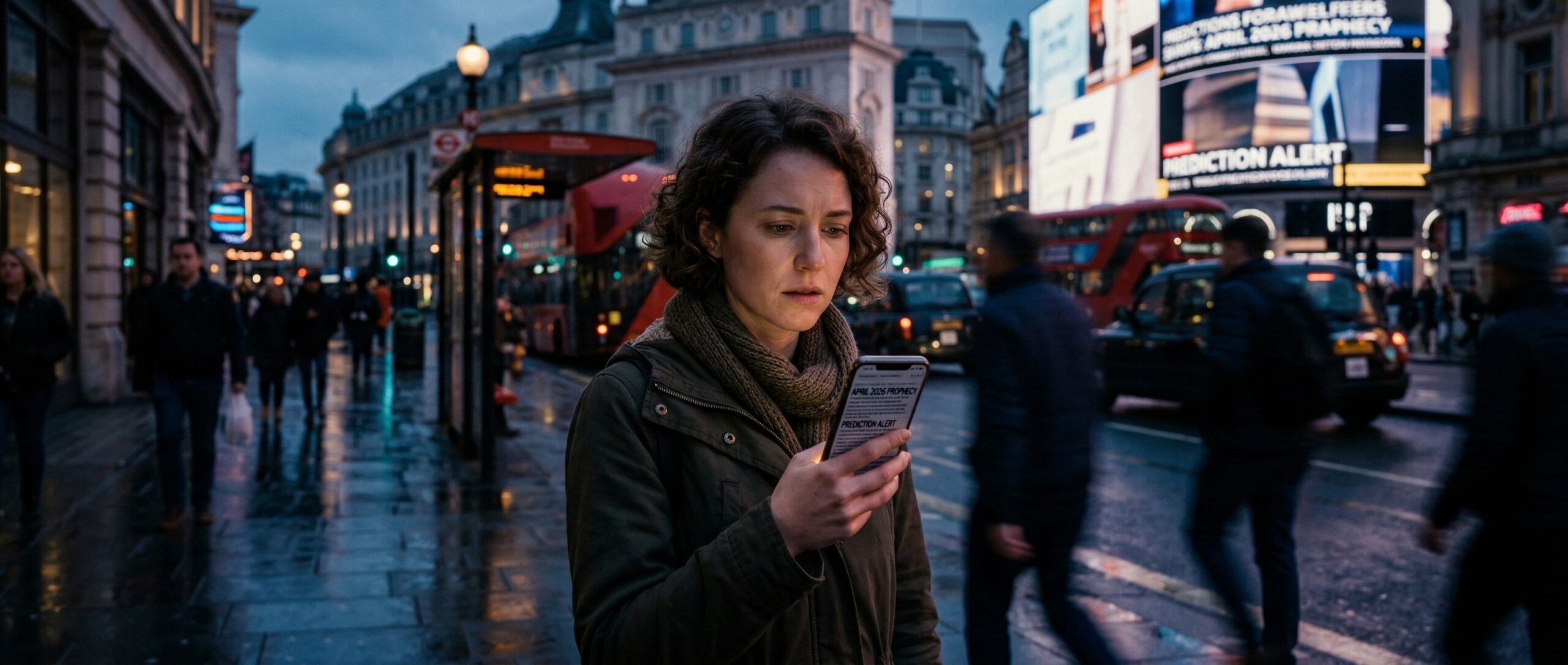
    A new wave of April Prophecy content is spreading across social media after tabloid coverage amplified psychic Jill M. Jackson’s latest warnings for April 2026. The predictions touch nearly every high-anxiety trigger modern audiences are primed to fear: political instability, attacks on U.S. infrastructure, airline disasters, food shortages, and the early signs of banking collapse. On the surface, it looks like another monthly psychic cycle. Underneath, it is a much bigger media story about how prophecy, panic, and pattern-matching now merge online.

    Here is the clearest answer: the current April Prophecy wave matters not because any prediction has been verified in advance, but because these stories spread most effectively when real-world uncertainty is already high. A prophecy list becomes a container for fear. Once people are anxious enough, almost any headline can be folded into it as proof.

    What Is the April Prophecy Story?

    The latest April Prophecy surge appears to have been accelerated by a Daily Star article published on April 1, 2026, summarizing psychic Jill M. Jackson’s warnings for the month ahead. According to that reporting, Jackson predicted a possible attempt on Donald Trump, conflict involving Iran, Israel, and the United States, pressure on food supplies, more airline disasters, attacks involving the power grid or water systems, and the beginning of a banking-collapse sequence.

    That combination is exactly why the story took off. It does not focus on one event. It offers a whole package of crisis possibilities. That makes it ideal for algorithmic anxiety culture, where people are already scanning the news for signs that systems are fraying.

    This is one reason prophecy content survives so well online. It does not need to be precise to feel relevant. It only needs to sound broad enough that later events can be interpreted as confirmation.

    Why April Prophecy Content Goes Viral

    Stories like this travel fast because they intersect with several communities at once:

    • prophecy and apocalypse audiences looking for signs of historic turning points
    • prepper and collapse communities focused on grid failure, shortages, and instability
    • political content creators who frame world events as part of a larger hidden script
    • spiritual and wellness spaces that elevate intuitive authority over institutional analysis
    • general doomscrolling audiences already primed for fear-based headlines

    That convergence matters. Prophecy stories are no longer siloed inside paranormal subcultures. They now plug directly into geopolitics, economics, survivalism, aviation fear, and online outrage. A modern April Prophecy cycle is not just mysticism. It is cross-platform anxiety content.

    Why One Claimed “Hit” Can Change Everything

    One of the most important parts of this story is the claim that Jackson supposedly called elevated earthquake activity earlier in the year. Whether that earlier forecast was actually specific enough to count as a serious prediction is a separate question. In prophecy culture, what matters is not always precision. What matters is perceived legitimacy.

    Once a psychic is believed to have been right once, even loosely, audiences often begin treating later warnings as upgraded intelligence. A single “hit” becomes reputational fuel. It gives the next round of predictions more emotional authority, even when the new claims are far broader or less verifiable.

    This is how monthly psychic media often scales. One apparent success becomes the marketing engine for a longer chain of future warnings.

    Prediction or Pattern-Matching?

    This is the core question at the center of any April Prophecy wave. Are people watching a genuine forecasting phenomenon — or are they watching a large-scale pattern-matching machine in action?

    Skeptics would argue that broad psychic predictions function less like precise forecasts and more like narrative frameworks. If a politician faces turmoil, believers say the prophecy landed. If a market dips, the banking-warning narrative is activated. If a power outage happens anywhere, it can be folded into infrastructure fear. If none of it happens cleanly, the timeline can be stretched or the symbolism reinterpreted.

    That is why these stories are so durable. They are built to absorb ambiguity.

    Why April 2026 Feels Especially Fertile for Prophecy Culture

    The current media environment is unusually favorable to prophecy content. Economic uncertainty, geopolitical tension, polarization, viral fear loops, and declining trust in institutions all create ideal conditions for psychic narratives to flourish. People do not just want information in times like these. They want orientation. They want a frame that makes chaos feel connected.

    That is where an April Prophecy story becomes useful to believers. It does not reduce fear. It organizes fear.

    This is one reason similar stories keep appearing across unexplained and conspiratorial media. Readers looking at this cycle may also want to compare it with our investigation into the March 22, 2026 rapture panic, our feature on prophecy convergence around war and instability, and our article on Baba Vanga and Chris Bledsoe timeline overlap. In each case, the mechanism is similar: fear, symbolism, and uncertainty get fused into a larger predictive narrative.

    The Business of Being Right Once

    There is also a media-economics angle here. Prophecy content is highly clickable because it offers urgency, mystery, and emotional stakes. A psychic who appears to have predicted one event gains a stronger hook for every story that follows. Tabs, clips, reaction videos, and repost chains all benefit from that dynamic.

    That means April Prophecy stories are not just belief objects. They are content products.

    For publishers, influencers, and creators, a fear-based prediction list is extremely efficient. It is specific enough to grab attention but broad enough to remain reusable. If one item seems to line up with the news, the whole package gets renewed.

    What Responsible Readers Should Watch For

    Readers should pay attention to several things when evaluating a story like this:

    • Was the prediction specific before events happened, or only persuasive after reinterpretation?
    • Are followers crediting the psychic for things that were already widely feared in public discourse?
    • Is the prediction being repeated by outlets that benefit from panic-driven engagement?
    • Are unrelated headlines being stitched together into one prophecy narrative after the fact?

    These questions matter because prophecy stories often feel strongest when anxiety is already elevated. In those moments, the human brain becomes more willing to perceive pattern, destiny, and hidden warning structures.

    Final Assessment

    The April Prophecy panic now circulating around Jill M. Jackson’s predictions is important not because it proves clairvoyance, but because it shows how modern fear ecosystems work. A psychic warning list becomes viral when it aligns with the emotions audiences are already carrying: instability, scarcity, violence, collapse, and uncertainty about who to trust.

    That is why April Prophecy content keeps spreading. It offers not verified foresight, but a dramatic framework for interpreting unstable times. And in the attention economy, that can be more powerful than proof.

    Frequently Asked Questions

    What is the April Prophecy story about?

    It refers to a wave of viral coverage around psychic Jill M. Jackson’s April 2026 predictions, which include warnings about political turmoil, infrastructure attacks, shortages, airline incidents, and banking instability.

    Why is April Prophecy content spreading so fast?

    Because it overlaps with existing fear communities including prophecy audiences, preppers, political influencers, spiritual communities, and general doomscrolling users.

    Did the psychic already predict something correctly?

    Believers say Jill M. Jackson accurately warned about increased earthquake activity earlier in the year. Whether that counts as a precise predictive hit depends on how specific the original claim was.

    What do skeptics say about April Prophecy claims?

    Skeptics argue that broad psychic predictions are easily reinterpreted after the fact, allowing followers to connect unrelated events and treat them as confirmation.

    Related Articles:

    This article was created using Media Blaster – Your content production specialist. Visit www.mediablaster.io for more information.

  • Matt Gaetz, Benny Johnson, and the “Alien Hybrid Program” Claim: What’s Actually Being Alleged?

    Matt Gaetz, Benny Johnson, and the “Alien Hybrid Program” Claim: What’s Actually Being Alleged?

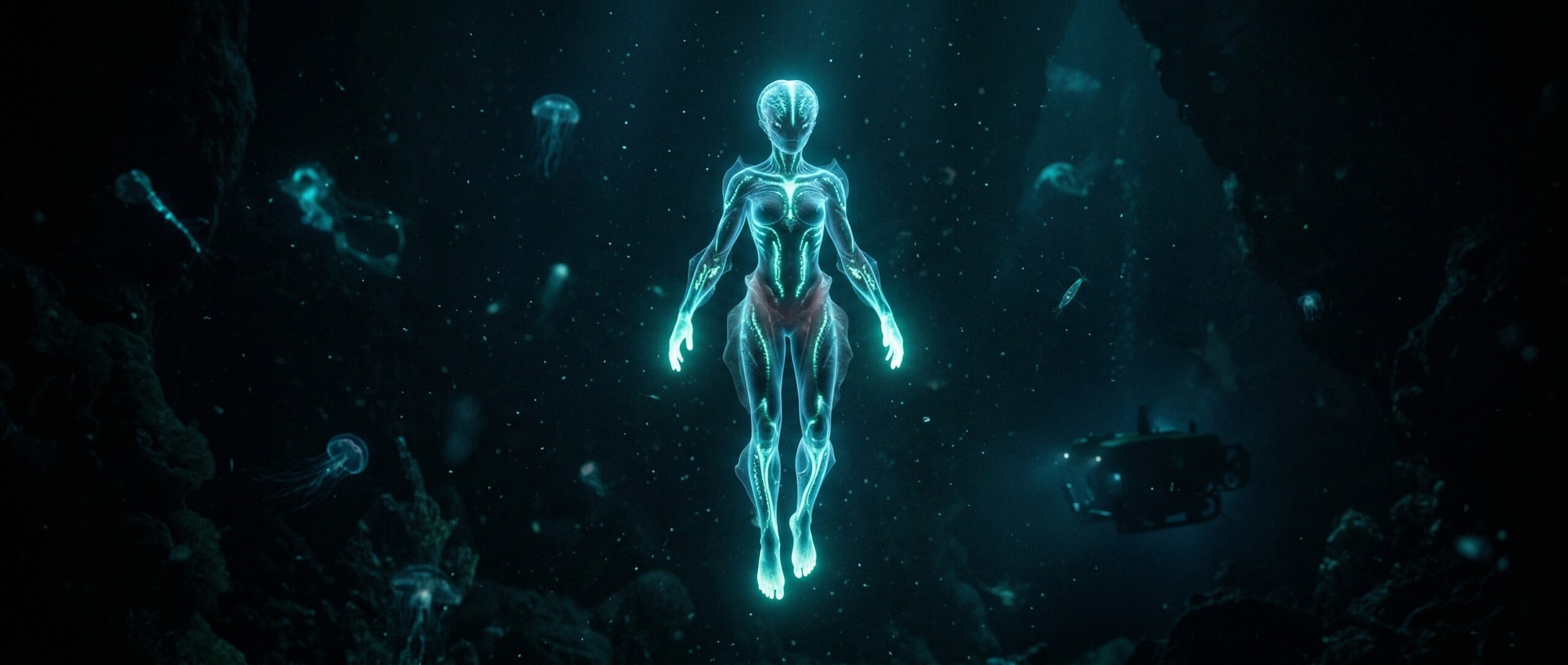
    Former Congressman Matt Gaetz is drawing attention after appearing on Benny Johnson’s podcast and claiming he was once briefed on an alleged Alien Hybrid Program involving humans and extraterrestrials. The statement immediately exploded across social media and paranormal news circles because it combines three high-voltage themes at once: UFO secrecy, government cover-up narratives, and the long-running conspiracy theory that non-human beings may be involved in hidden human experimentation.

    Here is the clearest answer: Gaetz did make the claim publicly, but he did not provide verifiable evidence proving an alien hybrid program exists. What he described was something he said he had been told by a military source or whistleblower while serving in office. That distinction matters. In UFO and conspiracy media, the gap between a claim being made and a claim being proven is often where the story becomes most powerful.

    What Matt Gaetz Said on Benny Johnson’s Podcast

    According to reporting from Newsweek, Gaetz said he was informed about what he described as “hybrid breeding programs” involving captured aliens and humans, allegedly intended to create a race capable of intergalactic communication. Reporting from The Independent similarly framed the remarks as a sensational allegation made on Benny Johnson’s platform.

    Gaetz also said he had not personally verified the claim, but was relaying what a military whistleblower had told him. That admission is critical, because it means the story currently rests on secondhand testimony rather than direct proof.

    That is why the phrase Alien Hybrid Program is spreading so quickly. It condenses a sprawling set of UFO fears and fantasies into one emotionally loaded concept: hidden government programs, non-human intelligence, human experimentation, secret communication with extraterrestrials, and whistleblower suppression.

    Why the Alien Hybrid Program Theory Has Such Strong Cultural Pull

    The idea of an alien-human hybrid program is not new. It has appeared for decades in alien abduction literature, contactee narratives, conspiracy documentaries, fringe ufology forums, and paranormal radio culture. In many of those stories, hybrid beings are described as intermediaries between humans and extraterrestrials — either as a threat, a hidden ruling class, or a transitional species connected to cosmic evolution.

    That means Gaetz’s comments did not create the theory. They simply gave it new mainstream political oxygen. When a former congressman says something that sounds like a classic abduction-era conspiracy, it creates a bridge between fringe lore and establishment visibility.

    What Is Actually Documented?

    At this point, what is documented is relatively narrow:

    • Matt Gaetz publicly made the claim
    • He made it in conversation with Benny Johnson
    • He framed it as something he was allegedly told, not something he personally proved
    • Major outlets reported on the remarks
    • No verifiable public evidence has surfaced showing that a real alien hybrid program exists

    That last point is the one readers should keep centered. The current story is about a claim, not a confirmed revelation.

    Why People Are Taking the Claim Seriously Anyway

    Even without proof, the claim is resonating for several reasons. Gaetz had congressional access, the public has already been primed by years of UAP hearings and whistleblower stories, and the hybrid-program theory already existed before he said anything. In other words, the media environment was prepared for a phrase like Alien Hybrid Program to explode.

    This is one more sign that modern disclosure culture is not driven only by evidence. It is also driven by institutional proximity. A dramatic allegation sounds more credible when it comes from someone audiences believe had access to hidden systems.

    What Skeptics Would Say

    Skeptics would argue that this is a textbook example of how extraordinary conspiracy narratives spread: a dramatic allegation is made, it is attached to a recognizable public figure, it references secrecy and restricted access, and the lack of proof is reinterpreted as proof of concealment.

    Researchers have long argued that hybrid-program stories are part of a recurring folklore structure inside UFO culture. They combine violation, secrecy, destiny, and hidden-power themes into one especially memorable form of belief. That does not mean everyone repeating the story is lying. It means the story has all the ingredients needed to survive without verification.

    How This Connects to Broader UFO Disclosure Narratives

    The modern UFO conversation is no longer only about lights in the sky. It now includes crash-retrieval claims, biological materials, whistleblower testimony, secret aerospace programs, and alleged non-human intelligence. The Alien Hybrid Program concept fits neatly into that expansion because it pushes the discussion from “Do UFOs exist?” to “What else has been hidden?”

    Readers interested in how this escalation works should also see our investigation into the Mellon leak and our Chris Bledsoe prophecy feature, both of which show how partial information and symbolic interpretation can fuel much larger belief systems.

    Why Benny Johnson’s Platform Matters

    The fact that Gaetz made the remarks on Benny Johnson’s show is also important. Johnson’s platform is built for fast-moving, politically charged, highly shareable content. A statement like this does not stay niche for long. It immediately enters a media environment optimized for intrigue, outrage, and clip-driven repetition.

    In that kind of ecosystem, the most repeatable phrase wins. In this case, that phrase is Alien Hybrid Program. That makes the story as much about distribution as content.

    Final Assessment

    The most plausible interpretation right now is not that Matt Gaetz proved an alien breeding program exists. It is that he amplified a sensational UFO-related allegation he says was relayed to him, and that allegation then merged with an already active conspiracy ecosystem hungry for validation.

    In other words: the claim is real, but the proof is not. That distinction is the only responsible way to handle the story at this stage.

    Frequently Asked Questions

    What is the Alien Hybrid Program claim?

    It refers to the allegation that a secret government-linked effort exists to create alien-human hybrids for communication or other covert purposes. There is no verified public evidence proving this claim.

    Did Matt Gaetz say an alien hybrid program exists?

    He said on Benny Johnson’s podcast that he had been briefed by a military source about alleged hybrid breeding programs. He also said he did not personally verify the claim.

    Is there proof of an Alien Hybrid Program?

    No publicly released evidence currently proves that an alien hybrid program exists.

    Why is this story going viral?

    Because it combines a former congressman, UFO secrecy, government conspiracy themes, and one of the most extreme ideas in abduction lore.

    Related Articles:

    This article was created using Media Blaster – Your content production specialist. Visit www.mediablaster.io for more information.
  • Baba Vanga 2026 Prophecy and the Chris Bledsoe Timeline: Why These Two End-Times Narratives Keep Converging

    Baba Vanga 2026 Prophecy and the Chris Bledsoe Timeline: Why These Two End-Times Narratives Keep Converging

    The Baba Vanga 2026 prophecy and the Chris Bledsoe prophecy timeline are beginning to merge in the minds of prophecy watchers, UFO believers, and spiritually conspiratorial audiences for one simple reason: both are increasingly being interpreted as signals that humanity is approaching a visible turning point. The details are not identical, the source traditions are completely different, and there is no evidence that one directly validates the other. But in the online prophecy ecosystem, overlap matters more than authorship. If two separate visionary traditions seem to point toward the same decade, many audiences treat that as confirmation.

    This is what makes the comparison worth serious attention. Baba Vanga remains one of the most circulated prophetic figures in modern popular culture, with annual lists of alleged predictions repeatedly resurfacing in tabloids, social feeds, and apocalypse forums. Chris Bledsoe, by contrast, sits at the intersection of UFO contact narratives, religious symbolism, and modern American disclosure culture. One comes from the mythology of the Eastern European seer. The other emerges from a contactee-style experience wrapped in visions, celestial signs, and claims of a coming feminine divine presence. Yet by 2026, they are being drawn into the same speculative orbit.

    Here is the clearest answer: there is no verified prophetic mechanism linking Baba Vanga and Chris Bledsoe. The connection is interpretive, not evidentiary. But it is culturally significant because it reveals how modern prophecy culture works. Separate symbolic systems get braided together into one meta-narrative about upheaval, revelation, and historical transition.

    Who Was Baba Vanga, and Why Does 2026 Matter in Her Mythology?

    Baba Vanga, the blind Bulgarian mystic often compared to Nostradamus in popular media, has become one of the internet’s most reusable prophetic figures. Her reputation rests on a combination of folklore, retrospective attribution, tabloid repetition, and the strange durability of lists claiming she predicted major events far into the future. Whether those lists are authentic, distorted, or partly fabricated is a constant subject of debate.

    That uncertainty has not weakened her influence. If anything, it has helped. A prophetic tradition with fuzzy sourcing is easier to repurpose than one tied to a rigid text.

    The 2026 material attributed to Baba Vanga varies depending on the source, but it is often folded into a larger timeline of coming global instability, major shifts in human civilization, and episodes of fear, conflict, or transformation. Some retellings emphasize disaster. Others emphasize revelation or epochal change. As with many prophecy cycles, the exact wording is less important than the emotional impression it creates: something big is supposed to be approaching.

    That impression is why Baba Vanga keeps getting pulled back into annual prophecy coverage by outlets that know her name still generates attention. A reader does not have to fully believe the prophecy to feel compelled by it.

    For broader context on how prophecy stories resurface and mutate, mainstream explainers from sources like Britannica and recurring prophecy-cycle coverage in outlets such as Newsweek help show how these mythic figures remain active in public discourse even when their documented record is murky.

    What Is the Chris Bledsoe Prophecy Timeline?

    Chris Bledsoe’s prophetic significance comes from a very different place. He is not primarily discussed as a classic end-times seer. Instead, his reputation comes from a long-running UFO and contact narrative in which spiritual encounters, glowing orbs, religious symbolism, and apocalyptic or transformational expectations all begin to blur together.

    Bledsoe has described experiences involving a feminine presence often referred to by followers as “The Lady,” and many who study his case believe his visions point toward a major turning point in the mid-2020s. In online communities, that timeline has become especially associated with 2026 and 2027, with some readers interpreting his story as a prophecy of disclosure, spiritual awakening, celestial signs, or a civilizational threshold event.

    What makes Bledsoe unusual is that his case does not fit neatly inside one category. It is not purely religious, not purely ufological, and not purely apocalyptic. It occupies a hybrid zone where Marian symbolism, UFO experiencer language, divine feminine themes, and disclosure-era anxiety all coexist.

    This hybrid quality is a major reason his timeline keeps being pulled into wider prophecy discourse. He offers a bridge figure between communities that normally would not fully overlap.

    We have already explored this more deeply in our Chris Bledsoe prophecy investigation, which lays out why his timeline has become so magnetic for both spiritual audiences and UFO-followers looking for a date-based turning point.

    Why People Are Linking Baba Vanga and Chris Bledsoe

    The most important thing to understand is that prophecy culture is comparative by nature. Once people believe one visionary tradition might be pointing toward upheaval, they begin scanning other traditions for alignment. If another seer, contactee, mystic, or fringe religious figure appears to point toward the same era, the overlap gets treated as corroboration.

    That is exactly what is happening here.

    Believers are linking Baba Vanga and Chris Bledsoe because both can be interpreted as pointing toward:

    • a near-future turning point
    • global instability or civilizational stress
    • spiritual or cosmic significance
    • a change in what humanity understands about itself

    Notice what is missing from that list: precision. The convergence is not based on exact matching phrases or provable shared origin. It is based on thematic resonance.

    In prophecy discourse, resonance is often enough.

    The Role of 2026 in Modern Prophecy Culture

    The year 2026 has become a strangely crowded symbolic point across conspiracy spirituality, disclosure speculation, and apocalypse-adjacent online culture. That does not mean something will happen in that year. It means the year has accumulated enough expectation to function as a narrative magnet.

    Once that happens, many unrelated predictions begin getting pulled toward it. Old prophecies are reinterpreted. New theories are timed to it. Social-media creators build countdown cultures around it. A year becomes less a calendar marker than a stage set.

    That is one reason the Baba Vanga and Bledsoe timelines now get discussed together. The internet does not just preserve prophecies. It synchronizes them.

    This same pattern appeared in our investigation into the March 22, 2026 rapture panic and in our featured article on World War 3, Iran, and prophecy convergence. In both cases, multiple symbolic systems began collapsing into one looming future timeline, not because they were truly the same, but because audiences wanted a coherent map.

    Where the Narratives Overlap — and Where They Don’t

    The strongest overlap between Baba Vanga and Chris Bledsoe is emotional rather than textual. Both can be read as warning that humanity is approaching a threshold. Both are interpreted through language of disruption, transformation, and revelation. Both attract followers who feel mainstream institutions are missing the deeper significance of current events.

    But the differences matter.

    Baba Vanga’s mythology is built around broad future prediction, retrospective attribution, and the authority of the mysterious seer. Chris Bledsoe’s authority comes from personal encounter, testimony, spiritual imagery, and a disclosure-era audience already primed for the fusion of UFOs and religion.

    That means the connection between them is real only at the level of interpretive culture. One does not prove the other. They simply become more powerful when placed side by side.

    What Skeptics Would Say About the Connection

    Skeptics would argue that this is a classic case of pattern stitching. When prophecies are vague, symbolic, and open to reinterpretation, people naturally find overlap after the fact or build convergence around broad themes that could fit almost any anxious era.

    They would also point out that Baba Vanga prediction lists are notoriously unstable, with many claims about her future prophecies circulating without strong documentation. Likewise, Bledsoe’s prophetic significance depends heavily on follower interpretation rather than a single universally agreed prophetic text.

    That skeptical critique is important because it reminds us that narrative convergence is not the same as predictive validation.

    At the same time, skepticism alone does not explain why these stories matter so much to their audiences. For many believers, the point is not statistical precision. The point is symbolic recognition. They feel the world is entering a strange phase, and these figures help them name it.

    Why This Convergence Matters in the Disclosure Era

    The Baba Vanga/Bledsoe overlap matters because it reveals how prophecy has changed in the age of disclosure, algorithmic media, and conspiratorial spirituality. Older prophecy culture often revolved around religion, war, and end-times reading. Newer prophecy culture increasingly mixes those with UFOs, contact experiences, divine feminine symbolism, hidden knowledge, and the suspicion that reality itself is becoming less stable.

    This is where Bledsoe becomes especially important. He is one of the few modern figures whose narrative can connect UFO discourse to religious expectation without fully belonging to either. That makes him an ideal convergence point for audiences who want to synthesize Marian visions, prophecy lists, disclosure rumors, and cosmic awakening narratives into one framework.

    And once that synthesis starts, Baba Vanga naturally gets pulled in too, because her name already carries apocalyptic authority in mass culture.

    For a related example of how spiritual and conspiratorial language are increasingly merging, see our analysis of starseeds and conspiratorial spirituality, which shows how metaphysical belief systems now frequently blend with world-event anxiety and prophetic expectation.

    The Most Plausible Interpretation

    The most plausible interpretation is not that Baba Vanga and Chris Bledsoe independently confirmed the same literal 2026 event. It is that audiences are constructing a meta-prophecy out of fragments that feel symbolically aligned. That process says less about supernatural verification and more about the psychology of expectation.

    When times feel unstable, people search for pattern. When one prophecy tradition is not enough, they stack several together. When dates begin to overlap, those dates harden into cultural countdowns.

    That is what seems to be happening here.

    The convergence is real as a social phenomenon. Whether it is real as prophecy is another question entirely.

    Why the Story Still Fascinates People

    The reason this story has traction is not hard to understand. It offers a complete package for modern mystery audiences: ancient-seer mythology, contemporary contact narrative, near-future date fixation, spiritual symbolism, disclosure energy, and the intoxicating possibility that seemingly separate signs are actually pointing toward one hidden design.

    That is exactly the kind of narrative the internet amplifies best. It is expansive, interpretable, and emotionally high-voltage.

    Even readers who remain skeptical often find themselves drawn in because the story is not really just asking, “Did these prophecies match?” It is asking a bigger and more personal question: “Are we living through the beginning of something that older symbolic systems tried to warn us about?”

    That is a much harder question to dismiss casually, even when the evidence remains ambiguous.

    Final Assessment

    The Baba Vanga 2026 prophecy and the Chris Bledsoe prophecy timeline do not form a proven prophetic pair. There is no solid documented chain linking the two, no verified shared mechanism, and no reason to treat overlap alone as evidence that a specific event is coming.

    But the convergence still matters. It tells us how prophecy belief evolves in the modern age. Instead of following one source tradition at a time, audiences now assemble sprawling symbolic frameworks from mystics, UFO experiencers, spiritual influencers, apocalyptic rumors, and viral media fragments. The result is not one prophecy. It is a prophecy ecosystem.

    And right now, 2026 sits near the center of it.

    Frequently Asked Questions

    What is the Baba Vanga 2026 prophecy?

    The phrase refers to modern retellings of future predictions attributed to Baba Vanga, often framed around a major turning point, instability, or transformative events associated with the mid-2020s. The exact wording varies widely depending on the source.

    What is the Chris Bledsoe prophecy timeline?

    It refers to the interpretation of Chris Bledsoe’s visions, encounters, and symbolic experiences as pointing toward a major spiritual or disclosure-related shift around 2026 or 2027.

    Are Baba Vanga and Chris Bledsoe predicting the same thing?

    Not in any direct, documented sense. The connection is interpretive. Believers link them because both can be read as pointing toward a near-future period of upheaval or transformation.

    Why are prophecy audiences combining these narratives now?

    Because modern prophecy culture thrives on convergence. If different seers or experiencers seem to point toward the same era, audiences often treat that overlap as a stronger sign.

    What would skeptics say about the 2026 overlap?

    Skeptics would say this is pattern stitching: vague or symbolic predictions are being grouped together after the fact because people want a coherent future narrative.

    Why does this story matter even if the prophecies are not literally true?

    It matters because it shows how modern audiences use prophecy, UFO belief, spiritual symbolism, and conspiracy culture to make sense of uncertainty and historical anxiety.

    Related Articles:

    This article was created using Media Blaster – Your content production specialist. Visit www.mediablaster.io for more information.

  • Viral Haunted House Detroit Hoax

    Viral Haunted House Detroit Hoax

    A creepy mansion video that spread as a supposedly haunted house in the Philippines has been debunked, with reporting tracing the location back to an abandoned Victorian property in Detroit. That alone would make it a basic fact-check story—but the more interesting unexplained angle is how quickly a piece of eerie architecture became a paranormal legend once it was stripped of context, re-captioned, and enhanced for atmosphere. According to LatestLY fact check, this story is drawing attention well beyond its original niche.

    This is a very 2026 paranormal trend story: a visual object, ambiguous provenance, AI-enhanced edits, local rumor, viral reposting, and then a debunk that arrives after the myth has already done its cultural work.

    What Happened

    The haunting wasn’t in the house. It was in the feed. Reporting from Mumbaiker recap adds context to how the story is being framed.

    • Social platforms were flooded with short videos showing a dark, decaying mansion framed as a haunted site in the Philippines.
    • The clips often used dramatic audio, heavy color grading, and in some cases what viewers suspected were AI-enhanced visual edits.
    • LatestLY reported that the house was traced instead to Detroit, Michigan, not the Philippines.
    • According to the fact-check framing, the building had no verified record of gruesome crimes or established paranormal incidents matching the viral captions.
    • Search interest exploded around terms like “haunted house viral video,” “full video,” and location-based variations, showing how rumor-driven discovery now works.

    What Evidence Exists

    Here’s what is known: A creepy mansion video that spread as a supposedly haunted house in the Philippines has been debunked, with reporting tracing the location back to an abandoned Victorian property in Detroit. That alone would make it a basic fact-check story—but the more interesting unexplained angle is how quickly a piece of eerie architecture became a paranormal legend once it was stripped of context, re-captioned, and enhanced for atmosphere.

    The strongest evidence in stories like this is often not a final proof object, but a mixture of witness accounts, media framing, prior folklore, and the cultural weight of the subject itself. That is why separating verified facts from interpretation matters.

    Authoritative coverage and primary reporting should stay central to the analysis, including sources such as:

    What Skeptics or Investigators Say

    Researchers and skeptics have argued that unexplained stories often grow fastest when the emotional framing is stronger than the evidentiary record. That does not mean the story is meaningless. It means the burden of proof and the burden of interpretation are not the same thing.

    The most widely cited explanation is usually the least exotic one that still fits the known facts. But unresolved cases persist because the simplest explanation does not always feel emotionally complete to the audience following them.

    Why It Matters

    AI and editing tools are supercharging paranormal folklore
    Even when a clip is not fully AI-generated, enhancement tools can deepen shadows, smooth motion, and make ordinary decay feel uncanny.

    Local tagging creates instant ownership of a mystery
    By attaching the house to a specific country or region, creators trigger emotional investment and rapid resharing among local audiences.

    The architecture itself does half the storytelling
    A neglected Victorian mansion already carries cinematic haunted-house coding, so people fill in the rest.

    Hoax stories can outperform genuine paranormal claims
    Because they are optimized for virality rather than evidence, fake hauntings can spread farther than authentic eyewitness accounts ever do.

    This is a strong meta-story about the future of paranormal media
    The next generation of ghost stories may be born less from experiences in haunted places and more from algorithmic remix culture.

    The Bigger Unexplained Angle

    What gives this topic staying power is not just the headline claim, but the way it plugs into deeper themes: secrecy, folklore, institutional mistrust, symbolic fear, wonder, and the human tendency to keep revisiting mysteries that never fully resolve.

    That is exactly why the unexplained-wordpress standard requires more than a quick summary. Strong articles need context, internal discovery, authoritative links, explicit uncertainty, and sections that can stand on their own for readers and AI systems alike.

    Readers interested in the broader pattern should also see The Pentagon UFO Report and What It Still Can’t Explain, which connects this story to a larger unexplained.co theme.

    Frequently Asked Questions

    What is this story about?

    A creepy mansion video that spread as a supposedly haunted house in the Philippines has been debunked, with reporting tracing the location back to an abandoned Victorian property in Detroit. That alone would make it a basic fact-check story—but the more interesting unexplained angle is how quickly a piece of eerie architecture became a paranormal legend once it was stripped of context, re-captioned, and enhanced for atmosphere.

    Why is this getting attention now?

    Even when a clip is not fully AI-generated, enhancement tools can deepen shadows, smooth motion, and make ordinary decay feel uncanny.

    Is Viral Haunted House Detroit Hoax proven?

    No. These articles are written to separate what is verified, what is claimed, and what remains uncertain. Mystery does not automatically equal proof.

    What should readers focus on?

    Focus on the evidence, the source quality, the skeptical or conventional explanations, and why the story still resonates even when certainty is missing.

    Related Articles

    This article was created using Media Blaster – Your content production specialist. Visit www.mediablaster.io for more information.