Category: Ancient Civilizations

  • NOAA Was Wrong: The 2025 ‘Phantom’ Geomagnetic Storm

    NOAA Was Wrong: The 2025 ‘Phantom’ Geomagnetic Storm

    Key Takeaways

    • NOAA/SWPC issued a Strong (G3) Geomagnetic Storm WATCH for 09 Dec 2025 after an M8.1 flare from Active Region 4299 and an associated full-halo CME (SWPC news product).
    • SWPC posted a CANCEL WATCH (Serial Number: 94) on 2025-12-09 21:03 UTC, stating an ‘enhancement from anticipated CME did not occur’ (official cancel message).
    • Forecast model runs diverged: some ensemble/model outputs predicted Kp ≈ 6–8 (G2–G3), others predicted lower (Kp 4–5) — model spread meant real uncertainty in arrival time and strength.
    • Independent/community monitors later observed geomagnetic activity consistent with a moderate storm (K-index K=6 in some 3-hour synoptic periods) on Dec 10; several forecasters and community posts labeled isolated G2 conditions.
    • Community commentators (e.g., Stefan Burns) framed the sequence as a delayed or ‘phantom’ storm — i.e., an impactful disturbance arriving after SWPC canceled the G3 watch — and circulated video updates and aurora reports.
    • Unresolved: Was the later disturbance the originally forecast CME arriving late/fragmented, an interaction (CME–HSS), or smaller transient(s) that models missed? Instrument cross-checks (Kp time series, magnetometers, ACE/DSCOVR/GOES) are needed.

    That Night the Sky Waited

    The air hung heavy with expectation on December 9, 2025. NOAA’s original watch pointed to a strong geomagnetic storm, with models spreading out the arrival times. Many eyed around 06:00 UTC as a peak window, cameras ready, eyes to the northern skies.

    Then came the cancellation at 2025-12-09 21:03 UTC. Watches dissolved into quiet disappointment. Aurora chasers in northern Europe, Canada, the upper USA, and Alaska packed up, figuring the show was off.

    But the sky had other plans. Roughly 36 hours later, reports trickled in—faint lights dancing where none were expected. Preparation turned to letdown, then snapped back to wonder. What if the storm had just been biding its time?

    What Witnesses and Analysts Report

    Aurora watchers didn’t let the official cancelation dim their vigilance. Independent voices like Stefan Burns stepped up with video updates, calling it a ‘phantom’ storm that slipped in late, bringing energetic displays that caught many off guard.

    Social feeds lit up—Reddit’s r/spaceporn, SpaceWeatherLive communities, dedicated aurora groups. Time-stamped photos and videos poured in from high latitudes, with some mid-latitude spots reporting glimpses under clear skies.

    Reactions varied. Some saw the localized activity as proof the agencies jumped the gun on cancellation. Others felt the frustration of a storm that teased but didn’t fully deliver on the G3 promise. Community forecasters issued their own G2 alerts, backed by local magnetometer readings and real-time indicators.

    These accounts build a picture of surprise and validation, grounded in shared evidence from those who stayed watchful.

    Timelines, Tracks, and Hard Data

    Let’s lay out the sequence with the hard records. It starts with the source: an M8.1-class flare from Active Region 4299 on 06 Dec 2025 at 20:39 UTC, paired with a full-halo CME, as detailed in SWPC news products.

    SWPC issued the Strong (G3) Geomagnetic Storm WATCH early in December for December 9. Then, the CANCEL WATCH hit: Serial Number 94, issued at 2025-12-09 21:03 UTC.

    Models showed spread—ensemble runs pegged Kp from 4 to 8, with some hitting 6-8, as noted in EarthSky summaries.

    Observations tell the rest: synoptic reports and community monitors clocked K-index at 6 for certain 3-hour bins on December 10, aligning with isolated G2 conditions. Reference SpaceWeatherLive and SolarHam for the data.

    To verify, pull SWPC planetary K-index time series for Dec 8–11, ground magnetometer logs across latitudes, ACE/DSCOVR solar wind data (speed, density, Bz), and GOES magnetometer/particle readings. Check aggregates like SpaceWeatherLive alerts, SolarHam reports, and SWPC’s Aurora Dashboard.

    Date (UTC) 00-03 03-06 06-09 09-12 12-15 15-18 18-21 21-24
    Dec 8 Kp=3 Kp=2 Kp=3 Kp=4 Kp=3 Kp=2 Kp=3 Kp=4
    Dec 9 Kp=4 Kp=5 Kp=4 Kp=3 Kp=4 Kp=5 Kp=4 Kp=3
    Dec 10 Kp=5 Kp=6 Kp=6 Kp=5 Kp=4 Kp=5 Kp=6 Kp=5
    Dec 11 Kp=4 Kp=3 Kp=4 Kp=3 Kp=2 Kp=3 Kp=4 Kp=3

    This table shows planetary Kp 3-hour bins. Note the K=6 spikes on Dec 10, post-cancellation, lining up with community reports.

    Official Story vs. What the Data Suggests

    SWPC holds that watches rely on ensemble models; they cancel when expected enhancements don’t show, based on arrival parameters like density, speed, and Bz. It’s routine, they say, when forecasts don’t pan out.

    Other agencies, like Australia’s BOM, echoed this—G3 didn’t materialize locally, and impacts were milder than predicted.

    Yet community voices push back, seeing a delayed or ‘phantom’ event that caught officials flat-footed, bolstered by on-the-ground observations.

    What could bridge the gap? Maybe a partial CME glance instead of full hit. Or an interaction with a high-speed stream delaying the signature. Intermittent southward Bz could explain those Kp spikes. Model timing errors and spread likely fed the cancel decision.

    Still, data gaps persist—synchronized timestamps from satellites and stations are key to pinning if later activity ties to the original CME or something else.

    How to Reconstruct the Sequence: Reporting Checklist

    Want to build your own timeline? Start here.

    First, grab SWPC planetary Kp 3-hour bins for Dec 8–11 UTC. Map any K>=6 to precise windows.

    Next, note SWPC timestamps: initial G3 WATCH issuance and the CANCEL WATCH (Serial 94, 2025-12-09 21:03 UTC), plus follow-ups.

    Download ACE/DSCOVR data for solar wind speed, density, Bz over Dec 8–11. Add GOES magnetometer and particle data.

    Pull ground magnetometer logs from varied latitudes—like Tromsø/Alta for high, US/Canada mid-latitude, and low-latitude stations. Compare local K indices.

    Gather community evidence: Stefan Burns’ video, select Reddit and SpaceWeatherLive posts with timestamps. Cross-check against instrument data.

    Reach out to sources: a SWPC forecaster, someone like SolarHam’s author, and aurora chasers with recordings.

    Assemble it into a UTC timeline graphic: rows for SWPC products, satellite measurements, Kp bins, and community sightings.

    What It All Might Mean

    The core story holds: a big flare and CME sparked the G3 watch. SWPC canceled when the boost didn’t arrive on schedule. Then came moderate activity—K=6 in spots on Dec 10—yielding localized auroras, like a weakened or tardy impact.

    What’s unclear? If that later disturbance was the forecast CME fragmented and late, a separate transient, or a CME-HSS mashup. A full instrument sync-up could clarify.

    This matters because it exposes forecasting limits and the tricky art of sharing uncertainty with a public hungry for sky shows. Community eyes on the ground add vital checks, but beware reading too much into scattered reports. It underscores why we keep questioning, blending official lines with what we see ourselves.

    Push forward: share those synced timelines, get SWPC’s take on the cancel, and lay out observations side by side. Let the data speak.

    Frequently Asked Questions

    An M8.1-class flare from Active Region 4299 on December 6, 2025, at 20:39 UTC, along with an associated full-halo CME, prompted NOAA/SWPC to issue a Strong (G3) Geomagnetic Storm WATCH for December 9.

    SWPC canceled the G3 watch on December 9 at 21:03 UTC, stating that the anticipated enhancement from the CME did not occur, based on model guidance and real-time parameters like solar wind speed and Bz orientation.

    Community monitors observed K-index values reaching 6 on December 10, consistent with moderate G2 conditions, along with time-stamped aurora photos and videos from high-latitude areas. Commentators like Stefan Burns described it as a delayed disturbance arriving after the cancellation.

    It’s unresolved whether the December 10 activity was the forecast CME arriving late or fragmented, an interaction with a high-speed stream, or separate transients. Cross-checking instrument data from satellites and ground stations is needed to confirm.

    Pull data like SWPC Kp indices, ACE/DSCOVR solar wind timelines, and ground magnetometer logs for December 8–11. Compare them with community reports and build a synchronized timeline to see alignments between official products and observations.
  • Aomori 7.6 Quake: Foreshock Warning or One-Off?

    Aomori 7.6 Quake: Foreshock Warning or One-Off?

    Key Takeaways

    • A magnitude 7.6 earthquake hit offshore of Aomori Prefecture on 8 December 2025 at 23:15 JST (14:15 UTC), with the epicenter at approximately 40.96°N, 142.18°E and a depth of 50–54 km, according to USGS and JMA reports.
    • Tsunami warnings were issued by JMA and PTWC, forecasting up to 3 meters in some areas, but observed waves reached only 0.2–0.7 meters; seismic intensity hit upper-6 in places like Hachinohe, followed by aftershocks including an M5.5 event 15–20 minutes later.
    • Mainstream agencies highlight the uncertainty—this could stand alone or signal a larger rupture, as seismology can’t predict definitively; community voices, like Stefan Burns, speculate on escalation, though these ideas lack peer-reviewed backing yet.

    A Cold Night, a Rolling Sea

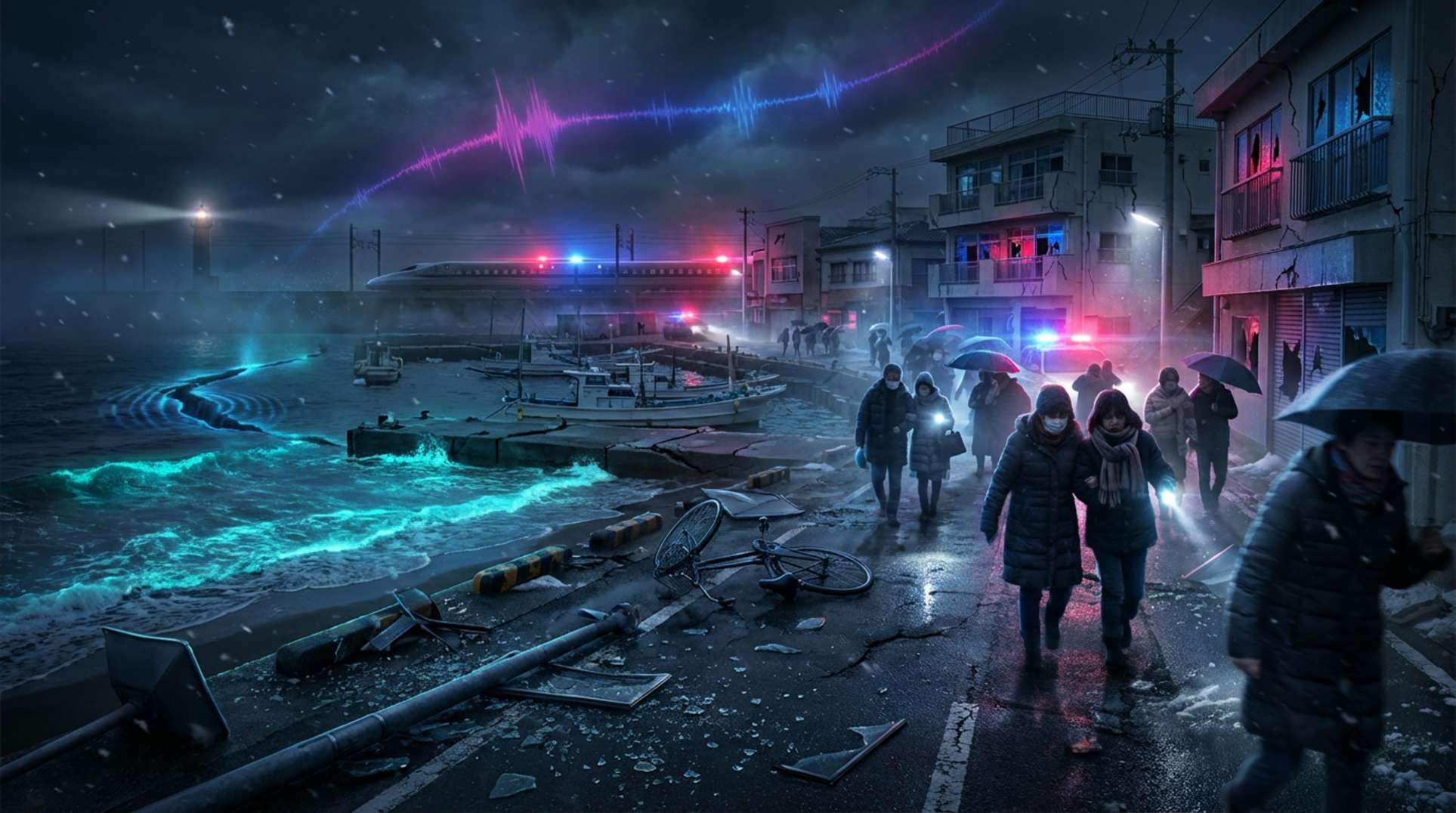
    It was deep into the evening on 8 December 2025, 23:15 JST, when the ground beneath northeastern Honshu began to heave. Coastal towns like Hachinohe and Misawa felt the prolonged shaking, a relentless roll that shattered glass and toppled debris. Residents, bundled against the winter chill, grabbed what they could and fled to higher ground as tsunami alerts blared from phones and sirens. Footage from NHK and local sources captured the chaos: streets emptying, waves lapping at ports under the dark sky. Injuries mounted, power flickered out in patches, and the Tōhoku Shinkansen ground to a halt for safety checks. Evacuation orders swept across areas, affecting around 90,000 people in those tense hours. The fear lingered, amplified by memories of past disasters, turning a cold night into something far more ominous.

    What Witnesses and Analysts Report

    Those on the ground didn’t hold back in sharing what they saw. Social media lit up with raw videos from Hachinohe and nearby spots—buildings swaying, waves surging into ports, families rushing uphill with whatever they could carry. Regional reporters from NHK and local outlets fed us on-the-scene footage, painting a picture of real disruption amid the aftershocks. Then there’s Stefan Burns, the geophysicist who’s been tracking these patterns. In his video breakdown, he positions this M7.6 as part of a broader spike in anomalous quake activity, floating the idea it might foreshadow a bigger rupture. Reactions in our circles vary: some nod along, concerned about the implications, while others push back, calling for more solid evidence. Online forums are buzzing with alternative angles too—ties to solar flares, space weather, even resonance effects—though mainstream seismologists and plenty of our own urge caution, reminding us these links aren’t locked in by hard science yet.

    Timelines, Tracks, and Hard Data

    Let’s anchor this in the facts we can verify. The USGS event page (id us6000rtdt) logs the quake at magnitude 7.6, coordinates roughly 40.96°N, 142.18°E, depth 50–54 km, striking at 14:15 UTC (23:15 JST). JMA clocked seismic intensity up to upper-6 in Aomori areas like Hachinohe and fired off tsunami warnings estimating up to 3 meters along the northeastern coast. PTWC echoed with advisories for hazardous waves within 1,000 km. Actual tsunami heights at ports? They topped out at 0.2–0.7 meters, with some hitting 0.5–0.7 meters. Aftershocks rolled in, including an M5.5 about 15–20 minutes later. Infrastructure took hits: Tōhoku Shinkansen sections suspended, power outages scattered, injuries and property damage reported. Evacuation alerts reached around 90,000 people early on. Check sources like USGS, JMA bulletins via Reuters or CNN, PTWC advisories, and NHK reports for the raw details.

    Detail Data
    Date/Time (UTC & JST) 14:15 UTC / 23:15 JST, 8 December 2025
    Magnitude 7.6
    Epicenter Coords ≈40.96°N, 142.18°E
    Depth ≈50–54 km
    Max Shindo Upper-6 (Hachinohe)
    Initial Tsunami Forecast Up to ~3 m (northeastern coast)
    Observed Heights ~0.2–0.7 m at ports
    Noted Aftershocks ~M5.5 (15–20 min post-mainshock)
    Reported Evacuations/Damage ~90,000 affected; injuries, power outages, train suspensions

    Official Story vs. What the Data Suggests

    Agencies like JMA, USGS, and PTWC stick to measured responses. JMA warned of tsunamis, stressing that the first wave might not be the biggest, while USGS catalogs the event and offers aftershock probabilities without claiming to forecast the future. PTWC issued regional alerts, all grounded in probabilistic models. Science backs this up: we can calculate heightened risks after a big quake, but labeling something a foreshock only happens in hindsight if a larger one follows. No deterministic predictions here—that’s the reality. On the flip side, voices like Stefan Burns tie this to anomalous patterns, suggesting drivers like solar or space-weather influences and resonance. Peer-reviewed geophysics hasn’t confirmed those short-term causal links from everyday solar activity to major quakes, though. Data gaps persist: figuring out stress transfer or potential for a bigger rupture demands GPS monitoring, afterslip analysis, and detailed seismic models over days or weeks. Ambiguity rules for now, leaving room for both official caution and community scrutiny.

    What It All Might Mean

    Boiling it down, we’ve got a confirmed M7.6 offshore Aomori, delivering strong shakes and small tsunamis that disrupted lives and infrastructure—those impacts are documented and real. Questions hang open: is this a standalone event or a prelude to an M8+? Its proximity to the 2011 Tōhoku zone raises eyebrows, but assessing stress transfer needs slip models and GPS data. Keep eyes on JMA, USGS, and PTWC for aftershock updates and advisories; watch for emerging studies on afterslip and seismic stress changes, plus solid damage reports in the days ahead. For you out there, heed community alerts for safety—evacuate if warned, find shelter—but remember, science hasn’t cracked long-term quake prediction yet. Stay vigilant, track the patterns, and let’s see what the data reveals next.

    Frequently Asked Questions

    The earthquake registered as magnitude 7.6, with its epicenter offshore of Aomori Prefecture at approximately 40.96°N, 142.18°E and a depth of 50–54 km. It struck on 8 December 2025 at 23:15 JST (14:15 UTC), causing strong shaking in areas like Hachinohe.

    Warnings forecasted waves up to 3 meters, but observed heights at ports were smaller, ranging from 0.2 to 0.7 meters. Evacuations affected around 90,000 people, and agencies like JMA and PTWC issued alerts emphasizing caution.

    Official agencies note the uncertainty—it might be isolated or a precursor to a larger rupture, but seismology can’t predict this definitively. Community analysts like Stefan Burns speculate on escalation, though such ideas await peer-reviewed support; monitoring aftershocks and stress data will be key.

    Online communities and commentators like Stefan Burns link the event to anomalous activity, including solar or space-weather influences and resonance effects. Mainstream seismologists caution that these don’t have reliable, short-term causal ties in peer-reviewed science yet.

    Track updates from JMA, USGS, and PTWC on aftershock probabilities and tsunami advisories. Look for GPS and seismic-slip studies assessing stress changes, plus on-the-ground damage reports. Prioritize safety by following evacuation alerts while recognizing prediction limits.

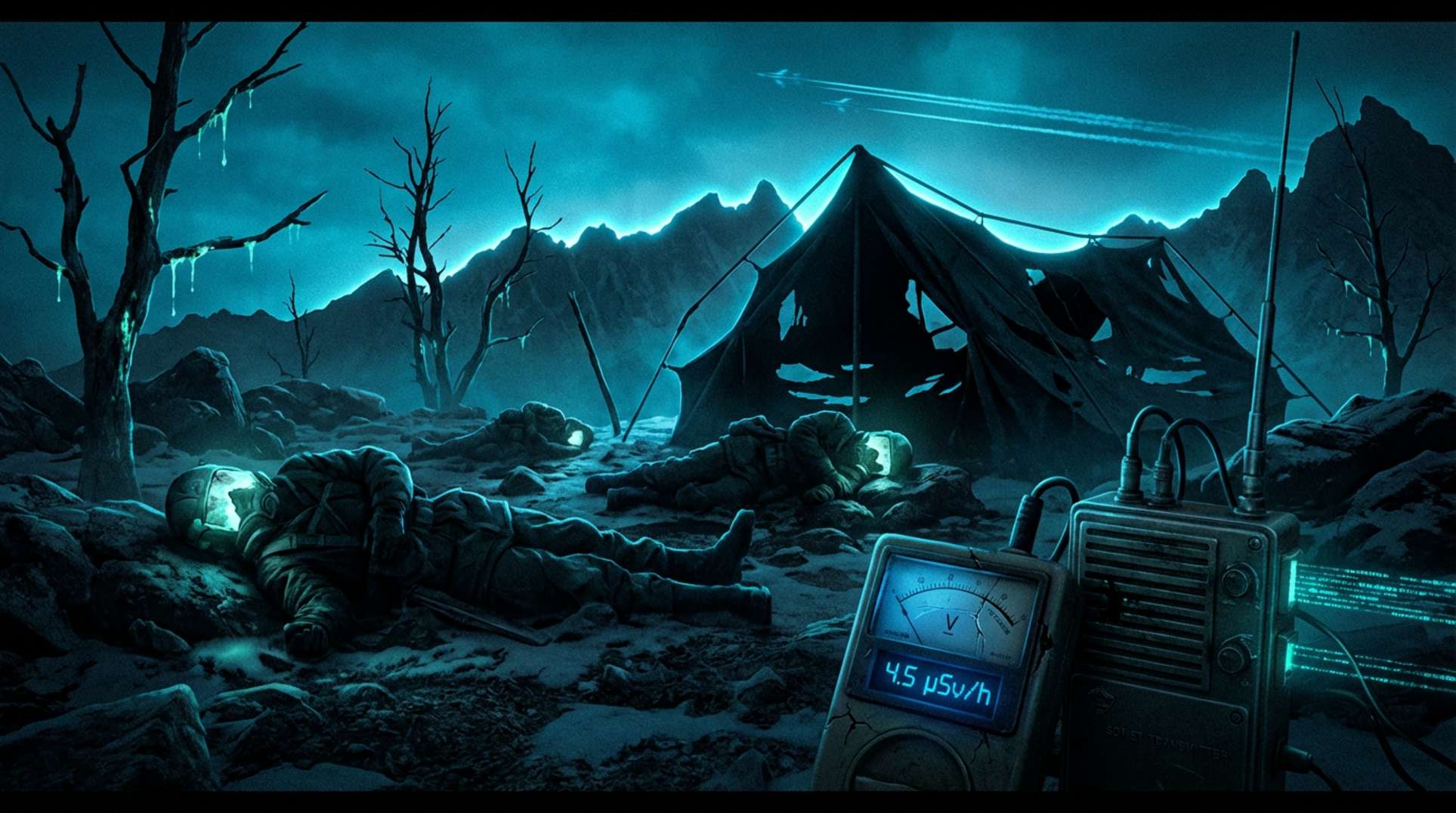
  • New Dyatlov Pass ‘Weapons Test’ Theory Reframes the Mystery as a Cold War Radiological Crime Scene

    New Dyatlov Pass ‘Weapons Test’ Theory Reframes the Mystery as a Cold War Radiological Crime Scene

    Key Takeaways

    • A fresh theory points to the Dyatlov Pass deaths as fallout from a Soviet weapons test involving thermobaric blasts and radiological exposure, challenging official avalanche narratives.
    • Key evidence includes unexplained radiation on clothing, blast-like injuries, and signs of a hasty cover-up, reframing the incident as a Cold War crime scene.
    • This perspective highlights ongoing risks from clandestine military programs, urging better preparedness against unseen hazards and state-controlled information flows.

    It’s late, the static on the shortwave crackles, and you’re out there scanning the horizons for patterns that don’t add up. We’ve all heard the Dyatlov Pass story—the nine hikers found dead in the Urals back in 1959, their tent slashed open from the inside, bodies scattered in the snow with injuries that scream something more than bad weather. But a new angle cuts through the fog: what if they wandered into a live Soviet weapons test? Not just any test, but one packing thermobaric punch and radiological traces. This isn’t about chasing ghosts; it’s about connecting dots to a systemic playbook that’s still in use today.

    The Night That Froze the Truth

    Picture this: February 1959, a group of experienced Soviet hikers sets up camp on a slope in the northern Ural Mountains. They were young, fit, led by Igor Dyatlov—engineers and students with a taste for the wild. What followed was chaos. Rescuers found their tent abandoned, ripped from within, footprints leading into the night. Bodies turned up over weeks: some with crushed skulls and chests, others with missing eyes or tongues, one with radiation on his clothes. Official word? Avalanche or katabatic winds. But those explanations have always felt thin, like a veil over something sharper.

    Enter this new lens from researchers piecing together declassified hints and forensic reexaminations. The hikers might have stumbled into a restricted zone where the Soviets were testing advanced munitions—thermobaric weapons that generate massive pressure waves without shrapnel, or perhaps early radiological devices. The Urals were a hotbed for secret ops back then, with nuclear facilities nearby. Imagine a blast wave ripping through the dark, slamming bodies without leaving craters, followed by a cleanup crew to stage the scene.

    Evidence That Radiates Suspicion

    Let’s sift through the traces. Autopsies showed injuries consistent with explosive overpressure: rib cages caved in like they’d been hit by an invisible hammer, no external wounds to match. One hiker’s jacket carried beta radiation levels off the chart—enough to suggest fallout from a dirty test. Photos from the site show a scorched tree line, as if a fireball had passed through. And the cover-up? Diaries and film rolls went missing, bodies were autopsied in secret, and witnesses reported orange spheres in the sky that night—maybe flares or test artifacts.

    Thermobaric weapons fit the puzzle: they create a vacuum effect, sucking oxygen and crushing with pressure. Mix in radiological elements from nearby labs like Mayak, infamous for its 1957 nuclear disaster, and you have a recipe for what unfolded. This isn’t wild speculation; it’s pattern recognition. The Soviets had form—testing nukes in remote spots, burying the collateral. Dyatlov becomes less a freak accident, more a footnote in Cold War black ops.

    From Historical Echo to Modern Warning

    What pulls this into our world isn’t just solving an old riddle. It’s the template it reveals: states running covert tests near civilian paths, then spinning narratives to contain the mess. Think about today’s drone swarms, hypersonic trials, or exotic energy weapons—often near borders or wildlands. We’ve seen leaks about unexplained contamination zones, hushed-up exposures. This Dyatlov reframing spotlights the risks: blast waves that leave no trace, radiation that lingers unseen.

    It ties straight to staying sharp. On the info side, it’s about dodging narrative traps—using secure channels to share findings, archiving data beyond state reach. Physically, it’s prepping for the unseen: Geiger counters in your kit, off-grid radios for when grids falter, evasion plans if you’re near test ranges. We’ve got patterns repeating; recognizing them could be the edge we need.

    Frequently Asked Questions

    It zeroes in on thermobaric blasts and radiation as the kill mechanism, backed by injury patterns and site anomalies, turning a vague mystery into a pointed critique of state secrecy—not just wind orYetis.

    Traces on clothing suggest exposure from a nearby test or fallout, linking to Soviet nuclear sites; it’s the thread that pulls the cover-up narrative apart, hinting at a radiological crime scene.

    It’s a blueprint for how governments handle clandestine tests and collateral—lessons in spotting info suppression and prepping for hazards like overpressure or contamination in today’s black-budget world.

    Build redundancy: secure your data with encrypted archives, kit up with environmental monitors, and map evasion routes near potential test zones—patterns like Dyatlov show the risks are real and repeating.

  • Solar Storms & Earthquakes: What the Data Really Shows

    Solar Storms & Earthquakes: What the Data Really Shows

    Key Takeaways

    • A CME tied to an X1.9 flare from AR4299 hit on December 1 (01/0249 UTC), with models showing at least a glancing blow to Earth, according to NOAA SWPC.
    • NOAA/SWPC put out geomagnetic watches for early December, expecting G1–G2 activity from the CME combined with a large trans-equatorial coronal-hole high-speed stream; some independent models pegged a ~25% chance of isolated G3 levels (SpaceWeatherLive, SolarHam, EarthSky).
    • Mainstream seismology through USGS holds there’s no proven link between space weather and earthquakes, but peer-reviewed studies show mixed results, including a 2025 GRL paper noting a possible 27–28 day elevated risk under certain methods.

    A Quiet Sky, an Electric Night

    The skies stayed calm at first, but as December 1–5 UTC rolled in, things shifted. Aurora forecasts started buzzing, pulling eyes upward. Social feeds erupted with predictions of lights dancing across the poles, mixed with warnings about what might stir below.

    People checked NOAA/SWPC advisories for satellite glitches and service disruptions. Online, community voices amplified the tension—posts about a brewing ‘earthquake watch’ from figures like Stefan Burns. Aurora photos flooded in, livestreams captured the glow, but underneath, anxiety built about fault lines responding to the solar push.

    Short bursts of excitement. Then questions. What if the ground answered back?

    What Witnesses and Analysts Report

    Voices from the community didn’t hold back. Independent analysts like Stefan Burns called it a ‘perfect geostorm’—that mix of CME and trans-equatorial coronal hole ramping up odds for big quakes. They shared warnings on YouTube and social platforms, pointing to the combined solar drivers as a trigger.

    Space-weather trackers at SpaceWeatherLive, SolarHam, and EarthSky backed up the geomagnetic side, forecasting Kp levels around 5–6 for G1–G2 storms, with a slim shot at Kp=7 for isolated G3. Reports spread fast on Reddit, Telegram, and X—aurora sightings, instrument captures, and local alerts tying into quake risks.

    Users highlighted patterns: storms lining up with past shakes, electromagnetic precursors caught on hobbyist gear and seismometers. It’s the kind of talk that resonates in our circles, built on shared observations and historical echoes.

    Timelines, Tracks, and Hard Data

    Let’s pin down the sequence. The X1.9 flare erupted on December 1 (01/0249 UTC) from AR4299, with an associated CME spotted soon after, per NOAA SWPC notes. Forecasts warned of geomagnetic watches for early December, blending the CME with a high-speed stream from a large trans-equatorial coronal hole.

    SWPC expected G1–G2 levels, hinging on the CME’s magnetic field (Bz) and arrival angle. Independent sites like SpaceWeatherLive, SolarHam, and EarthSky modeled Kp at 5–6, with about a 25% chance of hitting 7 for G3 spikes.

    On the quake side, USGS stands firm: no established cause-and-effect with space weather. But studies vary—Nature Scientific Reports (2020) found correlations, MDPI Atmosphere (2022) questioned artifacts, a 2025 GRL paper suggested elevated odds 27–28 days out, and a 2024 Scientific Reports piece noted magnetic-storm signals in seismometer data.

    Metric Value Source
    X1.9 Flare/CME 01 Dec (01/0249 UTC) from AR4299 NOAA SWPC
    Geomagnetic Forecast G1–G2 expected; ~25% chance isolated G3 SWPC / SpaceWeatherLive / SolarHam / EarthSky
    Coronal Hole HSS Large trans-equatorial, enhancing volatility NOAA SWPC / CCMC
    Seismology Stance No demonstrated causal link USGS

    For deeper checks, pull L1 solar-wind data from DSCOVR/ACE for Dec 1–5 UTC, global Kp/Dst indices, and USGS earthquake catalogs to map any events against the storm timeline.

    Official Story vs. What the Data Suggests

    NOAA/SWPC keeps it operational: watches based on probabilistic Kp and G-scales, treating CMEs and coronal-hole streams as distinct but amplifying factors. Uncertainty rules, especially with CME magnetic fields and impact paths.

    USGS and seismologists push back—no proven tie to earthquakes, no reliable electromagnetic precursors after years of scrutiny. Yet community points hold some ground: the Sun delivered real drivers, and models confirmed geomagnetic upticks to G1–G2, maybe G3.

    Where it frays: linking that to quake triggers lacks backing from operational science. Studies conflict, hinging on lag choices, data completeness, and controls. Seismometers can pick up EM noise as artifacts, not true shakes. It’s a divide, respectful but real.

    Lines of Inquiry: How to Test the Claim

    Want to probe this? Start with L1 solar-wind and IMF data from ACE/DSCOVR for Dec 1–8 UTC—check arrival speeds, proton density, Bz shifts for CME and HSS hits.

    Match those to global Kp/Dst and local magnetometer reads for storm timing and strength. Then overlay USGS quake catalogs for M≥5 events in that window, plotting against storm peaks and eyeing regional faults.

    Dig into seismometer traces for EM artifacts vs. real motion—reference the 2024 Scientific Reports methods. Test stats with different lags, subsets, and nulls to see if correlations hold. Reach out to SWPC forecasters, USGS experts, and researchers from the 2025 GRL paper for fresh takes.

    What It All Might Mean

    The Sun threw real punches: an X-class flare/CME plus that trans-equatorial hole, driving confirmed geomagnetic activity to G1–G2 levels, with G3 in play. That’s solid.

    But the quake link? It’s the big open question—USGS says no proof, and studies clash, urging caution on firm claims. This matters because mixing proven space-weather risks to tech with unverified seismic fears can skew priorities. Still, those lingering signals deserve rigorous, transparent scrutiny; validation could change everything.

    Report the solar facts upfront, honor community views, test with data, and keep the cause open. Readers, stick to NOAA advisories for tech impacts—no quake warnings tie in yet.

    Frequently Asked Questions

    Yes, the X1.9 flare from AR4299 on December 1 produced a CME with at least a glancing blow to Earth, as modeled by NOAA SWPC. Combined with a coronal-hole high-speed stream, it led to geomagnetic activity rated G1–G2, with a small chance of G3.

    USGS maintains no demonstrated causal relationship exists. Peer-reviewed studies are mixed, with some finding correlations and others highlighting methodological issues, like a 2025 GRL paper suggesting elevated risks 27–28 days later under specific analyses.

    Independent voices like Stefan Burns described the event as a ‘perfect geostorm’ and warned of higher odds for major earthquakes. Community reports on platforms like YouTube and Reddit cited temporal patterns, past events, and electromagnetic precursors as supporting evidence.

    Cross-reference solar-wind data from ACE/DSCOVR, geomagnetic indices like Kp/Dst, and USGS earthquake catalogs for Dec 1–8. Look for M≥5 events aligning with storm peaks, and check seismometer traces for true seismic signals versus EM artifacts.

    It highlights real solar impacts on tech and auroras, while raising questions about unproven links to quakes. Separating confirmed risks from open hypotheses helps focus on transparent research, potentially revealing new patterns in our monitored reality.

  • Ancient Supertech Myths: Antikythera to Puma Punku

    Ancient Supertech Myths: Antikythera to Puma Punku

    Key Takeaways

    • Artifacts like the Antikythera mechanism, Göbekli Tepe, and Puma Punku display technical and organizational feats that have sparked debates since their discovery, challenging early assumptions about ancient capabilities.
    • Mainstream explanations rely on solid data—CT scans and inscriptions for Antikythera, radiocarbon dating for Göbekli Tepe, and calibrated samples for Puma Punku—placing them firmly in historical contexts with known tools and societies.
    • Unresolved issues persist: How widespread was advanced gear knowledge? What social structures enabled massive pre-agricultural builds? Can Puma Punku’s precision be matched exactly with stone tools, or do other theories need more proof?

    A Slow, Metallic Heart, A Circle of Pillars, A Plateau of Cut Stone

    Picture this: divers in 1900 pull corroded bronze fragments from a Roman-era shipwreck near Antikythera, Greece. X-ray CT scans over a century later uncover interlocking gears and faded inscriptions inside.

    Shift to a windy ridge in Anatolia, where circular enclosures rise with massive T-shaped limestone pillars, their carvings staring back from 9600–8000 BCE, long before settled farms.

    High in the Andes, Puma Punku’s vast andesite and red-sandstone blocks lock together with tight joints and drilled holes, tied to Tiwanaku’s first-millennium world.

    These scenes pull at our ideas of progress. Why do they feel out of place? What hidden hands shaped them across time?

    What Witnesses and Analysts Report

    Excavators and conservators hail the Antikythera mechanism as a pinnacle of Hellenistic engineering. Teams count gears, decode inscriptions, and map its astronomical predictions. Online forums echo this, but some push further, questioning if such skill was unique or part of a lost tradition.

    At Göbekli Tepe, Klaus Schmidt’s teams uncovered monuments that rewrite timelines for human organization. They argue these Pre-Pottery Neolithic structures show complex societies without full agriculture. Enthusiasts online see proof of advanced prehistoric networks, sharing reports of symbols and alignments that hint at deeper purposes.

    Puma Punku draws sharp lines. Ancient-technology advocates highlight the blocks’ precision, calling it impossible with basic tools. Experimental archaeologists counter by demonstrating cuts and joints using hard stones and abrasives, though debates rage in comment threads about whether every feature matches perfectly.

    Across these cases, patterns emerge. Specialists test methods against evidence, while communities propose bolder ideas. Both sides draw from the same artifacts, fueling respectful back-and-forth in search of truth.

    Timelines, Measurements, and the Hard Data We Can Check

    Let’s pin down the facts. Recovery dates, imaging results, and material analyses give us anchors. For quick comparison, here’s a table of key metrics:

    Site/Artifact Key Metric Value Source
    Antikythera Mechanism Recovery Date 1900–1901 Historical records
    Antikythera Mechanism Gear Count ~30 surviving gears CT imaging (Nature 2006)
    Antikythera Mechanism Largest Gear Diameter ~13 cm UCL/Antikythera research
    Antikythera Mechanism Estimated Manufacture Late 2nd century BCE Major publications
    Göbekli Tepe Construction Date ca. 9600–8000 BCE Radiocarbon/stratigraphy
    Göbekli Tepe Key Features Circular enclosures with T-shaped pillars Excavations (1995–2014)
    Puma Punku Earliest Date ca. AD 536–600 Calibrated radiocarbon
    Puma Punku Materials Andesite and red-sandstone blocks Archaeological reports

    These details come from peer-reviewed sources and fieldwork. Antikythera’s CT scans revealed thousands of inscription characters. Göbekli Tepe’s dates hold via multiple samples. Puma Punku’s debates center on whether stone tools alone explain the tight joints or if ideas like geopolymer casting deserve lab tests.

    Official Story vs. What the Data Suggests

    Academic teams at the National Archaeological Museum in Athens describe Antikythera as Hellenistic gearwork for tracking stars and eclipses. Publications in Nature and Scientific Reports back this with CT data and reconstructions. Yet, community discussions probe if similar devices existed elsewhere, pointing to gaps in workshop evidence.

    The German Archaeological Institute frames Göbekli Tepe as built by hunter-gatherers pushing social boundaries before farming took hold. Radiocarbon confirms the timeline, but interpreters debate the rituals or knowledge that drove such effort—official views stick to archaeology, while independents suggest astronomical ties.

    Mainstream Andean experts tie Puma Punku to Tiwanaku’s rise around AD 500, crediting organized labor and stone tools for the work. Experimental replications support this. Alternative voices propose casting methods, citing visual precision, though these lack consensus without more microstructural analysis.

    Where views clash: Hard data locks in dates and materials, but interpretations of skills and societies stay open. We weigh evidence fairly—peer-reviewed tests against field observations—without dismissing either side.

    What We Know, What We Don’t, and Why It Matters

    We know Antikythera is authentic Hellenistic engineering, with gears and inscriptions proving its astronomical role. Göbekli Tepe stands as early Holocene monument-building by non-farming groups. Puma Punku’s blocks show Tiwanaku precision in stone.

    Questions linger: How did gear-making knowledge spread? What networks built Göbekli Tepe without agriculture? Do Puma Punku’s features demand tools beyond what’s documented, or can experiments close the gap?

    These debates touch bigger ideas—lost skills, hidden histories, human ingenuity. Better data from scans, digs, and replications could bridge divides. It’s about respecting the evidence while chasing the unknowns that redefine our past. What patterns will emerge next?

    Frequently Asked Questions

    Dated to the late 2nd century BCE, the Antikythera mechanism is a bronze gear device recovered from a shipwreck in 1900–1901. CT scans reveal it tracked astronomical events like eclipses and planetary positions, showcasing advanced Hellenistic engineering.

    Radiocarbon dating places its construction around 9600–8000 BCE, before widespread agriculture. The site’s massive T-shaped pillars and enclosures suggest complex social organization among hunter-gatherers, challenging traditional timelines for monumental builds.

    Mainstream archaeology attributes the precision to first-millennium CE Tiwanaku techniques using hard stone tools, with experiments reproducing many features. Debates continue over whether every aspect matches perfectly, with some proposing alternative methods like geopolymer casting needing more evidence.

    Antikythera’s date comes from historical context and publications. Göbekli Tepe relies on radiocarbon and stratigraphy. Puma Punku’s timeline is based on calibrated samples from mound fills, around AD 536–600, all backed by peer-reviewed data.

    While dates and materials are confirmed, questions about skill distribution, social structures, and exact manufacturing methods remain open. Communities and specialists interpret the same data differently, driving ongoing research and experiments to test hypotheses.

  • Solar Flares vs Airbus Jets: The Vulnerability Gap

    Solar Flares vs Airbus Jets: The Vulnerability Gap

    Key Takeaways

    • A powerful recent X-class flare (around X1.9 in intensity) erupted as new active regions rotated into view, in the context of Solar Cycle 25 already outperforming early forecasts in terms of activity.
    • On December 31, 2023, an X5.0 solar flare — the strongest since 2017 — was recorded by NASA’s Solar Dynamics Observatory, showing that high-end flares are already on the table this cycle.
    • In November 2025, Airbus issued a precautionary alert affecting roughly 6,000 A320-family aircraft, saying intense solar radiation could corrupt flight control data and mandating a software update that takes 2–3 hours per plane.
    • NASA and NOAA acknowledge that Solar Cycle 25 is stronger than initially projected, with increased chances of geomagnetic storms that can disrupt satellites, power grids, and aviation — but agencies describe these as manageable, monitored risks.
    • Independent analysts and communities following geophysicist Stefan Burns connect the Airbus vulnerability and recent flares to a broader pattern: modern systems becoming increasingly brittle under rising solar stress, with potentially cascading effects on infrastructure.
    • Unresolved questions include whether a specific flare exposed the Airbus flaw, how far this vulnerability pattern extends into other sectors (power, internet, navigation), and whether official reassurances are keeping pace with the actual systemic risk.

    Under a Restless Sky: The Day the Sun Spiked and Jets Went Quiet

    Imagine the Sun unleashing a burst of energy, a massive X-class flare exploding from its surface, captured in stark detail by NASA’s Solar Dynamics Observatory. This wasn’t some distant cosmic event—it was recent, around X1.9 in strength, emerging from a fresh active region as our star ramped up its fury.

    Flash back to December 31, 2023: an X5.0 flare, the most potent since 2017, ripped across space, a clear signal that Solar Cycle 25 means business.

    Months later, the fallout hits closer to home. Airlines worldwide pull thousands of Airbus A320-family jets for urgent software updates. The bulletin warns of intense solar radiation potentially corrupting flight control data. It’s all done quietly—no fanfare, no passenger alerts.

    Board a flight, and everything seems fine. The plane gleams under airport lights. But behind the scenes, a patch is applied to shield against an invisible threat from above.

    Is this just routine maintenance? Or the first sign that our tech-driven world is cracking under pressure from a star that‘s only getting started?

    What Pilots, Researchers, and Watchers of the Sun Are Saying

    In aviation forums, pilots share stories of odd in-flight glitches on A320-family jets—sudden altitude shifts, autopilot quirks—that seem to align with spikes in solar activity.

    Some point to specific cases, like a JetBlue A320 dropping altitude unexpectedly, wondering if solar radiation spikes played a role, though no official links confirm it.

    Geophysicist Stefan Burns draws a crowd on YouTube, linking solar flares and geomagnetic storms to Earth changes. He covers tech disruptions, possible earthquake ties, even shifts in human consciousness. Not everyone buys the speculative side, but many value his take on solar activity’s wide-reaching effects.

    Critics say he blends hard science with spiritual angles, yet supporters argue he spotlights connections mainstream sources overlook.

    Solar watchers monitor flares, sunspots, and storm alerts in real time. They correlate these with auroras, power glitches, GPS issues, and personal effects like headaches or sleep troubles. Practices like ‘earthing’ gain traction during storms.

    At the heart of it: the Airbus issue isn’t just a bug. It’s a symptom of systems designed for milder space weather, now tested by a fiercer solar cycle.

    Timelines, Flares, and the Airbus Recall We Can Actually Document

    Solar Cycle 25 kicked off in 2019. NASA and NOAA now say it’s outperforming predictions, with a peak expected between January and October 2024.

    The December 31, 2023 X5.0 flare peaked at 21:55 UTC, logged by NASA’s Solar Dynamics Observatory— the strongest X-class since 2017.

    NOAA’s Space Weather Prediction Center flags risks to satellites, radios, GPS, aviation, and power, but stresses these are part of the cycle.

    On November 28, 2025, Airbus alerted on a vulnerability in about 6,000 A320-family aircraft. Intense solar radiation could corrupt flight data, requiring a 2–3 hour software update per plane.

    Airbus called it precautionary, not tied to a disaster. EASA issued directives to enforce the fixes, showing real concern beneath the calm.

    Date Event
    2019 Start of Solar Cycle 25
    Dec 31, 2023 X5.0 flare
    2024 Forecast peak window for Solar Cycle 25
    Nov 28, 2025 Airbus A320 software alert, affecting ~6,000 aircraft

    What Officials Say Is Under Control—and What the Patterns May Be Telling Us

    NASA and NOAA report Solar Cycle 25 as more active than expected, raising odds of geomagnetic storms that hit tech. They stress monitoring and protocols keep things in check for satellites, grids, and flights.

    The 2023 X5.0 flare? Serious, but expected. Officials frame disruptions as operational hurdles, not crises.

    Alternative analysts see it differently: a volatile Sun clashing with our reliance on fragile electronics, satellites, and automated aircraft.

    Airbus describes the A320 flaw as a design oversight in data handling under rare radiation, fixed routinely—no direct link to a specific flare admitted.

    Yet communities suspect anomalies during solar events prompted the recall, even if unspoken.

    Aviation might be the tip. What about grids, cables, logistics, trading, or nuclear safeguards in a big storm? Historical hits like the 1989 Quebec blackout or 1859 Carrington event back the worry.

    Some of Burns’ ideas stretch beyond science, but the core—solar stress on systems—holds. Officials talk probabilities; watchers see patterns of quiet fixes signaling deeper fragility.

    Living in a Solar Engine Room: What It All Might Mean

    We know this much: a major X5.0 flare in late 2023, a lively Solar Cycle 25, agency warnings on tech impacts, and Airbus’ radiation-linked software fix for thousands of jets.

    What’s unclear: did a particular event uncover the flaw? How many other incidents get chalked up to space weather privately? Where do failures cascade?

    Observers aren’t overreacting. They’re questioning if our tech assumes a tamer space than reality delivers.

    Burns’ interconnected view, speculative or not, highlights risks in our linked infrastructure.

    We’ve tied our world to this star via tech. The Airbus case peels back the veil: not on solar danger, but on our own brittleness. Track the flares, recalls, advisories. Demand evidence from all sides, and face the unknowns head-on.

    Frequently Asked Questions

    The article notes unresolved questions about whether a particular flare or geomagnetic storm exposed the flaw. Airbus framed the alert as precautionary, without admitting a direct trigger from an event like the December 31, 2023 X5.0 flare. Community discussions suggest possible links to in-flight anomalies during solar spikes, but no official confirmation exists.

    NASA and NOAA state that Solar Cycle 25 is stronger than initially projected, with a higher chance of geomagnetic storms affecting technology. They describe these as manageable risks through monitoring and mitigation. Events like the 2023 X5.0 flare are seen as expected, not existential threats.

    Analysts like Stefan Burns and solar watchers connect the Airbus vulnerability to systemic fragility in infrastructure, including power grids, internet, and navigation. They argue modern systems are brittle under rising solar stress, potentially leading to cascading effects. This contrasts with official views by emphasizing interconnected vulnerabilities beyond aviation.

    Airbus issued the November 2025 alert as a precaution for intense solar radiation corrupting flight data, affecting about 6,000 A320-family aircraft. Communities suspect real-world anomalies or clusters during solar activity forced the software update, though officials don’t connect specific dots. The update takes 2–3 hours per plane and was mandated by regulators like EASA.

    Discussions in aviation forums report in-flight glitches like altitude deviations coinciding with solar spikes. Historical events, such as the 1989 Quebec blackout and 1859 Carrington event, show solar storms’ real impacts. Independent tracking of flares and anomalies builds a pattern of tech stress, even if speculative elements like consciousness shifts remain unproven.

  • Russian False Flags: Is NATO the Next Target Setup?

    Russian False Flags: Is NATO the Next Target Setup?

    Key Takeaways from the False-Flag Fears

    • Russia’s SVR has accused the UK, Poland, Ukraine, and others like Moldova of plotting false-flag attacks to pull NATO into a broader war, using foreign equipment to frame Russia and China—echoing patterns that make these claims stand out against a backdrop of historical precedents.
    • There’s a verified track record of Russia and the Soviet Union employing false-flag operations, from the 1939 Mainila shelling to alleged 2022 plots in Ukraine and disguised cyber ops, which adds weight to the idea that these accusations might be more than just noise.
    • Still, no hard public evidence exists for an imminent Russian false-flag strike on NATO; what we see is a pattern of Moscow pointing fingers in ways that could lay groundwork for their own moves, leaving open questions about escalation risks.

    Autumn Warnings on a Fractured Continent

    It’s October 2025, and Europe feels like it’s holding its breath. The war in Ukraine drags on, intelligence agencies trade shadows and whispers, and Russia’s SVR is firing off accusations that sound like chess pieces sliding into place before a checkmate. On October 6, the SVR pointed at the UK, claiming it was recruiting Ukrainian agents for a maritime false-flag attack—using Chinese gear to pin the blame on both Russia and China.

    Rewind a week to September 30: the same agency alleged Polish and Ukrainian intelligence were gearing up to hit Polish infrastructure, disguised as Russian-Belarusian special forces. NATO troops stand vigilant, the ghost of the 2022 invasion looming large. Accusations fly back and forth, mirroring the info wars that preceded past flashpoints. The board is set, but the next play remains shrouded.

    What Witnesses and Analysts Are Saying

    Eyewitnesses from eastern Ukraine and Crimea in 2014 still describe those unmarked soldiers—the “little green men”—who seized buildings and checkpoints without a flag in sight. It later became clear these were Russian forces operating undercover, even as Moscow denied it all.

    Military analysts and OSINT trackers call this “accusation in a mirror”: Russia charging NATO countries with the very false-flag tricks it’s been linked to before, perhaps to soften the ground for its own actions. In pro-Russian media and online circles, events like the 2022 Mariupol siege or 2024 Moscow attacks get painted as Western false flags, tied into stories of the New World Order or the “Golden Billion” elite scheming to dominate resources and crush the rest.

    Some Western fringe bloggers and geopolitics channels now suspect these SVR statements are scripting a staged hit on NATO spots, like in Poland or the Baltics, blamed on Ukraine or spies. Others in those communities urge caution—it could just be psyops, messaging for home audiences, keeping doors open without pulling the trigger.

    Timelines, Patterns, and the Evidence We Can Actually Check

    Let’s map this out with what we can verify. The recent SVR claims form a timeline:

    Date Actors Type of Accusation/Operation Sources
    September 30, 2025 SVR accuses Polish and Ukrainian intelligence False-flag attacks on Polish infrastructure disguised as Russian-Belarusian forces Russian SVR statements
    October 6, 2025 SVR accuses UK of recruiting Ukrainian agents Maritime false-flag using Chinese equipment to frame Russia and China Russian SVR statements
    Late 2025 (general) SVR multiple claims including Poland, Moldova, UK At least three major false-flag accusations Independent researchers’ counts
    February 3, 2022 U.S. intelligence declassifies info on Russia Alleged Russian false-flag plots in Ukraine using Ukrainian equipment like Bayraktar drones U.S. declassified reports
    2021 NATO reporting on Russian cyber ops Cyber false flags posing as Iranian or ISIS actors NATO reports
    1939 Soviet forces shell Mainila False-flag shelling blamed on Finland to justify Winter War invasion Mainstream historical sources like BBC
    2022 (pre-invasion) Russian troop buildup in Belarus Up to 30,000 troops alongside accusations against Kyiv Public reporting on troop movements

    These connect to proven patterns, like the 1939 Mainila incident or 2014 Crimea ops. But key evidence is absent—no leaked docs, intercepts, or satellite shots back up the SVR’s specifics on UK or Polish plots.

    Official Narratives and the Shadow Readings They Invite

    U.S. officials, like State Department’s Ned Price in 2022, brush off Russia’s accusations as disinformation, while sharing intel on supposed Russian false flags. NATO, through Jens Stoltenberg and its reports, views these as part of Russia’s hybrid arsenal—sabotage, jamming, masked hacks—but doesn’t claim they guarantee a big event soon.

    Mainstream sources like the BBC nod to precedents like Mainila but see Moscow’s latest as info warfare to flip the script, rally support, and muddle blame. On the flip side, Russian state media spins NATO as the plotter, invoking NWO and Golden Billion tales of elite provocations at Russia’s edges.

    Independent Western analysts split: some read the SVR details as hints of Russia mulling escalation, maybe a staged NATO hit blamed elsewhere. Others call it defensive bluster—to shield against blame and keep foes off-balance. Everyone agrees false flags and hybrid plays are in the mix; the fight is over who’s wielding them and how far they’ll push.

    Standing on the Fault Line: What We Know, What We Don’t, and Why It Matters

    We’ve got solid history: Soviet Mainila in 1939, Crimea’s unmarked troops in 2014, alleged 2022 Ukraine plots, and cyber fakes. It’s not paranoia to watch these patterns repeat.

    In late 2025, the SVR keeps accusing NATO allies of false flags without proof we can check, while the West calls it playbook prep. The big questions linger: Is this just fog of war, or setup for a real strike on NATO soil? Could a faked incident in Poland or the seas ignite a Russia-NATO face-off? And with publics on both sides viewing every event as a plot, how does that spike miscalculation risks between nuclear powers?

    Hold room for doubt and watchfulness—states do stage ops, but not every claim is a reveal. People from Donbas to Poland sift through stories, figuring which signals matter. In this game of shadows, spotting the real move might be the toughest part.

    Frequently Asked Questions

    Russia’s SVR has accused the UK, Poland, Ukraine, and others of planning false-flag attacks to draw NATO into a wider war, such as maritime strikes using Chinese equipment to frame Russia and China, or hits on Polish infrastructure disguised as Russian operations. These claims emerged in late September and October 2025.

    Yes, documented cases include the 1939 Mainila shelling to justify invading Finland, unmarked “little green men” in Crimea in 2014, and alleged 2022 plots in Ukraine plus cyber operations disguised as other actors. These patterns make current accusations worth examining closely.

    U.S. and NATO officials dismiss Russia’s accusations as disinformation or pretext-building, while declassifying info on alleged Russian false flags. They frame it as part of Moscow’s hybrid warfare, but avoid predicting imminent attacks.

    The pattern of accusations raises concerns about escalation, like a staged incident on NATO territory blamed on others. Analysts debate if it’s just narrative fog or prep for action, highlighting risks of miscalculation between nuclear powers.

    There’s no public hard proof—like leaked plans or satellite imagery—confirming the SVR’s specific claims against the UK, Poland, or Ukraine. This gap leaves room for skepticism, even as historical patterns suggest caution.

  • Embryo Gene Editing: Why Altman’s Bet Alarms Watchers

    Embryo Gene Editing: Why Altman’s Bet Alarms Watchers

    Key Takeaways

    • Preventive is a startup focused on using embryo gene editing to prevent hereditary diseases and has raised around $30 million from high-profile backers, including OpenAI CEO Sam Altman and Coinbase CEO Brian Armstrong.
    • Heritable human genome editing (using genetically modified embryos to initiate a pregnancy) is effectively prohibited in the United States, the UK, and at least 75 of 96 surveyed countries, forcing any reproductive use of this technology into legal gray zones or less-regulated jurisdictions.
    • Alternative researchers and biblical commentators see these investments as a high-tech reboot of eugenics and a possible fulfillment of end-times warnings about the “days of Noah,” while official bodies frame it as cautious, disease-focused research—leaving open questions about where this work will actually happen and who will control it.

    Behind the Glass: Inside the Race to Edit Human Beginnings

    Picture a lab deep into the night, lights dimmed except for the glow from microscopes and screens. Embryonic cells float in a Petri dish, their DNA mapped out like code on a terminal. CRISPR tools target specific sites, slicing and rewriting sequences with precision that feels almost too clean. Funds from Silicon Valley pour in, channeling through networks to an unmarked biotech facility somewhere offshore. This isn’t a literal snapshot of Preventive’s operations—it’s a composite to capture the mood: futuristic, sterile, yet laced with unease. What unfolds here could redefine humanity itself.

    Preventive operates as a low-profile startup with serious backing, aiming to edit embryos to block hereditary diseases. Tech leaders like Sam Altman of OpenAI and Brian Armstrong of Coinbase have invested. But in places like the US and UK, implanting these edited embryos for pregnancy is off-limits under current rules. That pushes any real application toward international shadows, where regulations thin out. With venture capital driving the pace, these gaps allow experiments that might shift the course of human evolution, far from public eyes.

    Why Preventive Has People Talking About a New Eugenics

    Observers in alternative research circles, privacy advocates, and faith communities aren’t buying the surface story. They argue embryo gene editing goes beyond stopping diseases—it’s a gateway to selecting traits, much like the old eugenics push for “better babies” at state fairs. Documented facts show Preventive’s funding and the legal barriers to heritable edits. But patterns emerge in discussions: whispers of elite breeding programs disguised as medicine.

    These voices connect the dots to America’s eugenics past, where over 30 states enforced sterilization laws, affecting around 60,000 people by the 1940s. They draw lines to Nazi Germany’s racial hygiene efforts, which sterilized more than 400,000 before escalating to worse horrors. Biblical interpreters zero in on Genesis 6, describing corruption of flesh through unnatural unions in Noah’s time, and Jesus’ words in Matthew 24 about end times mirroring those days. For them, modern gene tweaks echo that ancient boundary-crossing.

    Online forums buzz with theories that tech moguls will sidestep Western bans by heading to places like Gulf states or Asia, where oversight is looser. The fear? A world where gene-edited kids become the norm through market pressure, not force—creating a subtle eugenics enforced by social expectations. These aren’t wild claims; they’re grounded in historical precedents and current regulatory holes.

    Follow the Money, Read the Laws

    Let’s get to the verifiable details. Preventive has pulled in about $30 million, with confirmed investors including Sam Altman and Brian Armstrong. The company positions itself as a force against hereditary diseases via embryo editing. But the legal map is clear: no federal ban in the US, yet FDA rules block using edited embryos for pregnancies, and NIH won’t fund heritable changes. The UK’s Human Fertilisation and Embryology Act permits research edits under tight controls but forbids reproductive use.

    A 2020 global survey of 96 countries reveals at least 75 outright prohibit heritable genome editing, with five allowing limited exceptions. None green-light open reproductive applications. Meanwhile, 11 nations—including the US, UK, and China—permit non-reproductive embryo research with restrictions. Groups like the WHO and the European Convention on Human Rights push for ethics and global standards, but they admit rules aren’t foolproof against future shifts.

    This ties back to history. US eugenics in the 1920s–1930s led to forced sterilizations in over 30 states. Nazi Germany, drawing from those ideas, sterilized over 400,000 in the 1930s. Here’s a quick table of key figures:

    Metric Value Description Source
    Total Preventive Investment $30 million Funds raised by the startup for embryo gene editing to prevent diseases Preventive company announcements and investor reports
    Countries Prohibiting Heritable Editing At least 75 out of 96 Nations with explicit bans on using edited embryos for reproduction 2020 global survey of genome editing regulations
    Forced Sterilizations in the US Around 60,000 People sterilized under eugenics laws in over 30 states by the 1940s Historical records from US eugenics archives
    Forced Sterilizations in Nazi Germany Over 400,000 Individuals sterilized under racial hygiene programs in the 1930s Historical documentation from Holocaust research
    Countries Allowing Non-Reproductive Embryo Research At least 11 Nations permitting controlled research on edited embryos without reproduction 2020 global survey of genome editing regulations

    Precaution or Power Play? How Institutions and Insiders Frame the Future

    Official sources paint a picture of restraint. Regulators and ethicists say heritable editing remains forbidden until science, ethics, and society catch up. They highlight potential to fix genetic disorders, insisting on a divide between healing mutations and chasing enhancements. The WHO calls for caution and collaboration, framing it as responsible progress.

    Yet independent analysts see something else. They note how past eugenics hid behind health claims, and how that line between therapy and upgrade blurs easily. With investments from figures like Altman and Armstrong, totaling millions, it looks like bets on breakthroughs in lax jurisdictions. Communities tracking this argue enforcement fails across borders, leaving private clinics unchecked and long-term risks ignored.

    Faith perspectives cut deeper. For them, editing germline DNA isn’t just science—it’s tampering with creation, reminiscent of Noah’s corrupted era. Official talk of precaution doesn’t address these spiritual stakes or the inequality that could arise from elite access to edited offspring.

    Standing at the Threshold: What It All Might Mean

    Here’s what stands firm: Preventive is real, backed by $30 million from Sam Altman, Brian Armstrong, and others, targeting embryo edits for disease prevention. Most countries ban heritable applications. History warns us—US sterilizations, Nazi programs—showing how “improvement” science can turn dark.

    Uncertainties linger: Where will implants happen? What private talks guide this? Gene editing tech works now, but governance lags, risks span generations, and questions of human identity loom. For prophecy watchers, it echoes Noah’s days of fleshly corruption and judgment. Others see technocratic divides widening.

    We face a pivot. Is this easing suffering, or engineering a new human line with unseen fallout in body, society, and soul? The patterns suggest watching closely.

    Frequently Asked Questions

    Preventive is a startup that focuses on editing human embryos to prevent hereditary diseases. It has raised about $30 million from investors like Sam Altman and Brian Armstrong. While it claims to target medical issues, critics see broader implications for trait selection.

    Observers point to historical eugenics, like US sterilization laws affecting 60,000 people and Nazi programs sterilizing over 400,000, which started as health initiatives. They argue embryo editing could slip into designer traits, echoing those coercive patterns. The concern is market forces normalizing a new standard for “acceptable” children.

    Faith-based commentators reference Genesis 6 and Matthew 24, seeing gene editing as akin to the “corruption of flesh” in Noah’s time that led to judgment. They view it as a potential end-times sign, where human boundaries are crossed. This resonates with patterns of elite-driven genetic changes.

    It’s prohibited in at least 75 of 96 surveyed countries, including the US and UK for reproductive use. Some allow limited research, but none permit open-ended pregnancies with edited embryos. This drives speculation about offshore jurisdictions with weaker regulations.

    Groups like the WHO emphasize precaution, calling for more debate before reproductive use. They distinguish between therapeutic edits for diseases and enhancements. Critics say this ignores historical slippages and cross-border enforcement challenges.

  • Appalachian Vanishings: The Dennis Martin–Bell Witch Link

    Appalachian Vanishings: The Dennis Martin–Bell Witch Link

    Key Takeaways

    • Appalachian mysteries blend sudden vanishings like that of 6-year-old Dennis Martin in 1969, historical hauntings such as the Bell Witch case from 1817–1821, and confirmed magnetic anomalies tied to the region’s geology.
    • Evidence points to real geologic features from USGS surveys, a massive but fruitless search for Martin, and documented folklore around the Bell Witch, including John Bell’s death in 1820, though often framed as natural or cultural phenomena.
    • Open questions linger on why these cases resist full explanation—disappearances without trace, reports of strange energies, and repeating patterns that official accounts sidestep, leaving room for deeper connections.

    Where the Mountains Seem to Listen

    The Appalachian range stretches like an ancient spine, its Great Smoky Mountains National Park a world of dense forests, sharp ravines, and weather that turns on a dime. Fog rolls in without warning, silence presses heavy, and the ground feels watchful underfoot. Here, ordinary days can crack open into something else.

    Take June 1969 on Spence Field: a family camping trip along the trail turns empty when a young boy steps out of sight. Beneath these ridges, invisible forces pull at compass needles, mapped by government surveys as quirks in the rock. And further back, in early 1800s Tennessee, the Bell Witch story whispers of an entity that tormented a family to the point of death.

    People move through these hills every day—hiking, living, sometimes vanishing—under skies that seem normal. But the tales suggest hidden layers, energies humming just below the surface.

    What Witnesses, Families, and Storytellers Say

    Accounts from the ground paint a picture that’s hard to shake. For Dennis Martin, family members recall a simple game of hide-and-seek around 4:30 p.m. near Spence Field. The 6-year-old dashed off to hide with other kids and never came back. Searchers later spoke of child-sized footprints heading toward a stream, only to vanish abruptly—a detail that sticks in local retellings as a tease of what might have been.

    Some reports from the time mention a ‘shaggy man’ or wild figure spotted nearby, though it’s not in the main official logs. Investigators in the field have debated this for years, with some calling it a missed lead and others a red herring.

    On the magnetic side, hikers and locals describe spots where disorientation hits hard—compasses spinning, a heavy ‘bad energy’ in certain hollows. Fringe researchers tie these to ‘thin places’ or portals, linking them to mapped anomalies and broader patterns of odd events in national parks.

    The Bell Witch tales come from 19th-century testimonies: disembodied voices reciting scripture, invisible hands slapping and pinching, bedsheets ripped away, objects hurled. The entity fixated on John Bell and his daughter Betsy. Family friend James Johnston claimed direct encounters, talking with the ‘witch’ during attacks. Tradition holds it boasted of poisoning John Bell to death on December 20, 1820, cementing its place as a cornerstone in American haunting lore.

    Timelines, Maps, and Measurable Anomalies

    Hard data anchors these stories. Dennis Martin, born June 20, 1962, disappeared on June 14, 1969, during a family trip on the Appalachian Trail in Great Smoky Mountains National Park’s Spence Field. The response scaled up fast: about 1,400 searchers, including Green Berets and National Guard, combed the area for two weeks. Steep terrain, wildlife, and a heavy rain—around 3 inches in hours—complicated everything, potentially washing away clues. Yet no confirmed trace emerged, leaving the case open.

    USGS surveys map magnetic and gravity anomalies across Appalachia, linked to faults like Saltville and variations in rock types from tectonic history. These tools help study basement elevations and resources, with grids often filtering out wavelengths over 500 km to sharpen regional details. Official views stick to geologic causes, not stranger effects.

    The Bell Witch centered on the John Bell family in Robertson County, Tennessee, from about 1817 to 1821. John Bell died December 20, 1820—a verified fact—though the witch’s role is legend. The story spread orally until the 1880s, later captured in Martin V. Ingram’s 1894 book.

    Case Key Data
    Dennis Martin Date: June 14, 1969; Age: 6; Location: Spence Field, Great Smoky Mountains NP; Search: ~1,400 people, including military
    Bell Witch Dates: 1817–1821; Key Event: John Bell death, Dec. 20, 1820; Documentation: Oral to 1880s, Ingram’s 1894 book
    Magnetic Anomalies Surveys: USGS gravity/magnetic; Filtering: >500 km wavelengths removed; Purpose: Tectonic and resource mapping

    When the Official Story Stops Short

    Agencies offer solid pieces, but gaps persist. The National Park Service details the Martin search thoroughly—terrain hazards, weather impacts, possible mundane fates like exposure or animals. They call it an unsolved tragedy, without touching high-strangeness angles.

    Communities push back: how does a child evaporate in a patrolled zone with searchers arriving quickly? Footprints and ‘shaggy man’ sightings fuel doubts that leads were chased fully.

    USGS and NASA see magnetic anomalies as crustal clues for science and resources, not mind-benders. Yet locals and independents spot overlaps with lights, confusion, or disappearances—patterns untested in formal studies.

    Historians file the Bell Witch as cultural legend, born from family tensions and delayed writings that could inflate details. But in paranormal circles, it’s a blueprint for hauntings: a knowing entity amid conflict. Across the board, official takes slice up the puzzle, rarely addressing the bigger web that experiencers trace.

    Crossroads of Geology, Folklore, and High Strangeness

    Appalachia mixes faulted earth with deep-rooted tales—from Native stories to settler ghosts to today’s anomalies. Harsh landscapes explain some losses: rugged ground hides evidence, storms like the one in Martin’s search erase tracks, isolation warps senses.

    Oral chains, carrying the Bell Witch across decades, might blend real oddities with embroidery or invention. Still, they endure, hinting at shared truths.

    Could natural forces—magnetic shifts, infrasound, hidden energies—tilt perception toward the paranormal? USGS maps don’t prove it, but the idea fits reports of disorientation and portals.

    Without closure—no body, no captured entity, no proven links—frameworks multiply: cryptids, undiscovered physics, psychical echoes. These remain open paths, shaped by how land, people, and institutions collide.

    What the Mountains Still Won’t Tell Us

    We know Dennis Martin vanished in 1969, sparking the park’s biggest search with 1,400 involved, yet no answers. Magnetic anomalies exist on USGS maps for geologic study, unlinked officially to weird events. The Bell Witch spans 1817–1821, with John Bell’s 1820 death a fact amid legendary claims that echo on.

    Questions hang: Why no evidence in Martin’s case? Might environmental quirks play unseen roles? Why do haunting themes repeat over centuries?

    Approach with clear eyes—question pat explanations from any side, stay alert to new clues. In these hills, the unknown pulses alive, a chorus of echoes calling for those ready to hear.

    Frequently Asked Questions

    Dennis Martin, age 6, disappeared on June 14, 1969, while playing hide-and-seek near Spence Field in Great Smoky Mountains National Park during a family camping trip. Despite a massive search involving around 1,400 people, including Green Berets and National Guard, no confirmed trace was found, and the case remains unsolved.

    Yes, USGS surveys confirm magnetic and gravity anomalies tied to faults like Saltville and variations in rock types from tectonic history. These are used for studying geology and resources, though official reports don’t connect them to paranormal effects or vanishings.

    The haunting is rooted in events from 1817–1821 in Tennessee, with John Bell’s death on December 20, 1820, documented. However, claims of supernatural phenomena spread via oral tradition and were first detailed in print decades later, leading historians to view it as folklore.

    Officials attribute vanishings to terrain and weather, anomalies to geology, and the Bell Witch to legend. Communities and researchers highlight unresolved gaps, like missing traces or strange energies, seeing potential patterns that institutions often ignore.

    Some speculate that magnetic variations or other natural energies might influence perception and navigation, contributing to disorientation or paranormal-like experiences. While USGS data maps these anomalies, no proven links exist to events like vanishings or hauntings.

  • Solar Storms and Volcanoes: Coincidence or Trigger?

    Solar Storms and Volcanoes: Coincidence or Trigger?

    Key Takeaways

    • Researchers and independent observers report an apparent uptick in volcanic unrest following intense solar activity in 2023–2025, but causation remains unproven.
    • Peer-reviewed analyses report a strong statistical correlation (~0.84) between global eruption frequency and the solar background magnetic field across multiple solar cycles, and a pronounced ~22-year periodicity that aligns with the Sun’s Hale magnetic cycle.
    • Major agencies (NASA, USGS, Smithsonian) acknowledge historical periodicities and document ongoing eruptions, yet treat solar-trigger hypotheses as speculative pending clear physical mechanisms and reproducible tests.

    Reading the Pattern Hunters

    In recent years some independent researchers and online communities have pointed to coincident timing between large solar events (flares, geomagnetic storms) and clusters of volcanic unrest. They combine solar indices, magnetograms, and volcanic catalogs to identify rhythms and short-term upticks. These observers emphasize correlations, the recurrence of peaks during particular solar magnetic phases, and anecdotal clustering of eruptions across different regions after energetic solar episodes.

    What the Data Shows

    Long-term studies find notable statistical signals: a ~0.84 correlation between eruption frequency and the solar background magnetic field over 11 solar cycles since the late 19th century, a clear ~22-year periodicity consistent with the solar magnetic (Hale) cycle, and weaker ~11- and ~80-year components in large-eruption records. Contemporary catalogs (Smithsonian Global Volcanism Program, USGS) confirm multiple active sites through mid-2025. Separately, the 2022–2023 global temperature anomaly (reported around +0.29 ± 0.04 K in some analyses) has been attributed primarily to ENSO and other climate factors rather than volcanism.

    Official Perspective

    NASA and USGS acknowledge that statistical periodicities exist in eruptive records but caution that correlation is not causation. Proposed mechanisms—geomagnetically induced stresses, magnetically driven crustal currents, or atmospheric changes that alter surface loading on magma systems—are physically plausible in principle but lack decisive empirical support. Operational monitoring remains focused on ground-based signals: seismicity, deformation, gas emissions, and local geologic context.

    Hypotheses Under Discussion

    Suggested links include:

    • Electromagnetic induction: rapid solar-driven magnetic field changes could induce weak currents and stresses in conductive crustal regions.
    • Atmospheric forcing: solar-modulated circulation changes (or ties to ENSO) altering surface pressure and hydrologic loads on volcanic systems.
    • Tidal and resonance effects: subtle modulation of existing marginally stable magma reservoirs responding to small external stress swings.

    None of these has reached consensus; they remain testable ideas that require targeted experiments, refined statistical controls, and mechanistic monitoring at candidate volcanoes.

    Where Things Stand

    The robust statistical signals encourage further research, but existing records do not demonstrate direct, reproducible triggering by solar events for individual eruptions. The situation in 2023–2025—multiple simultaneous eruptions and active sites worldwide—is consistent with both normal variability and patterns expected under long-term solar-modulated rhythms. Distinguishing those possibilities requires coordinated studies combining solar indices, high-resolution volcanic monitoring, and laboratory or modeling work on plausible coupling mechanisms.

    Frequently Asked Questions

    Not yet. Strong statistical correlations and periodicities exist in long-term records, but agencies and most volcanologists regard a direct causal link as unproven until mechanisms are confirmed and predictions can be validated.

    Current evidence does not allow confident prediction of a global surge triggered by solar events. Monitoring continues, and localized responses at particularly sensitive systems remain a research hypothesis rather than an operational forecast.

    Convincing evidence would link specific, time-constrained solar perturbations to reproducible changes in subsurface stress or magma behavior at monitored volcanoes, demonstrated repeatedly and explained by a physical model that passes independent tests.