Category: Ancient Civilizations

  • The Devil’s Bible and the Nazi Hole to Hell: Dark Myths, Occult Legends, and the Age of Panic

    The Devil’s Bible and the Nazi Hole to Hell: Dark Myths, Occult Legends, and the Age of Panic

    Whispers about the Codex Gigas, or the Devil’s Bible, spread through medieval Europe like wildfire. This extraordinary 13th-century tome from the Benedictine monastery of Podlažice in Bohemia measures nearly a meter tall and weighs over 165 pounds. Its physical might captivates, but the book’s infamous full-page portrait of Satan, facing a vision of Heaven, truly fuels imagination and superstition (History.com; Codex Gigas).

    Devil’s Bible: Origins, Legends, and Medieval Fear

    According to persistent legend, the Codex Gigas was created in a single night by a condemned monk, Herman the Recluse. He allegedly made a pact with the Devil to avoid being walled up alive for breaking his vows. This origin myth serves as a medieval remix of older cautionary tales, like that of Theophilus the Penitent. Scholars now recognize that the manuscript, written in Latin, includes not just a full Vulgate Bible but also historical chronicles, medical texts, and magical formulas. Its sheer scale and consistency indicate years of meticulous work rather than a single Faustian overnight effort (HeritageDaily). Still, with some pages missing, rumors of satanic prayers, and a tumultuous journey through war and fire, it’s no wonder the Codex inspires ongoing debates similar to those in revisionist history analysis and cover-up investigations.

    The Nazi ‘Hole to Hell’: From Urban Legend to Cold War Folklore

    The alleged Nazi “Hole to Hell,” often dubbed “Nazi Hell Holes,” persists as an urban legend. It involves deep drilling, arcane technology, or occult practices in Europe or Soviet-era Siberia. No credible documentation links these tales to Nazi activities, but they echo anxieties about forbidden science and hidden evil. Recent adaptations, like this episode by Discovery, entwine the legend in broader Cold War mythmaking about lost Nazi tech and supernatural plots. Ultimately, it reflects our modern appetite for black-site mysteries—similar themes arise in speculative narratives about AI runaway scenarios and archival inquiries like hybrid warfare case studies.

    Satanic Panic: Hoaxes, Moral Outrage, and Nazi Occult Fantasies

    The late 20th-century “Satanic Panic,” a moral panic in the 1980s and 90s, echoed old Nazi occult rumors. High-profile accusations of Satanic ritual abuse, particularly in the U.S., often referenced Nazi Germany and shadowy government conspiracies, despite a lack of credible evidence. The Satanic panic left a cultural legacy that resonates today, evident in modern conspiracy investigations and explorations into manipulated realities, including simulation hypothesis analyses.

    Mythmaking Matters: Why These Stories Persist

    What connects the Devil’s Bible, Nazi “Holes to Hell,” and modern panic is not just their gothic allure. These legends crystallize profound social anxieties, embodying fears of invisible forces—divine, technological, or governmental. When literature or war propaganda mutates into shared folklore, it reinforces real events, media distortions, and unanswered mysteries. This creates a shadow history that shapes our collective psychology, paralleling psychological impacts discussed in high-stakes conflict analysis and exploring the arcane aspects of science like comet event reports.

    The allure of “devil’s books” and “holes to hell” demonstrates our enduring fascination with the forbidden and unknown. To explore society’s intrigue with the dark and mysterious further, follow developments and broader context at Unexplained.co.


  • Did 300 Years Never Happen? Inside the Phantom Time Hypothesis and the Battle for History

    Did 300 Years Never Happen? Inside the Phantom Time Hypothesis and the Battle for History

    What if, a thousand years ago, the timeline of Western civilization was not miscounted but deliberately forged? That’s the intriguing proposition at the heart of the Phantom Time Hypothesis. Launched in 1991 by German writer Heribert Illig, the theory claims that almost 300 years—from 614 to 911 AD—never existed. Illig argues that medieval power brokers inserted these years into the historical record. His motive? To position Holy Roman Emperor Otto III and Pope Sylvester II at the significant year 1000 for political and religious legitimacy (History Facts).

    The Origins and Claims of Phantom Time

    Proponents claim that the Carolingian Empire—especially Charlemagne’s reign—along with notable events like Viking raids and parts of the Muslim conquests, were retroactively invented. Illig cited inconsistencies in medieval documents and a lack of archaeological finds specifically dated between 614 and 911. He noted anomalies in the Gregorian calendar adjustment of 1582, where only ten days, rather than thirteen, were skipped. He viewed this as proof that “phantom time” had been added (Medium analysis).

    This narrative fits an era captivated by conspiracies. Mainstream skepticism of established timelines is not uncommon, as seen in recent controversies, such as Area 51 crash investigations and debates over military strike timelines.

    What’s the Evidence? Gaps, Calendars, and Cosmic Clues

    The Phantom Time Hypothesis relies heavily on the supposed scarcity of reliably dated artifacts from the early Middle Ages and the belief that written sources can be manipulated. However, archaeologists and astronomers disagree. Astronomical records, including documentation of solar eclipses and Halley’s Comet, align with the conventional chronology—not Illig’s version. Historians in peer-reviewed reviews and popular science resources emphasize that cross-civilizational records—from the Islamic world to the Tang dynasty in China—sync with Europe’s medieval timeline (History Facts, Listverse).

    Other disciplines echo this scientific rigor. When critics analyze phenomena like solar superstorm threats or astronomical trajectory shifts, they demand similar repeatability and accuracy as seen in chronology debates.

    Mainstream Historians and the Implausibility Problem

    The academic verdict on Phantom Time is clear: fundamentally flawed and unsupported. Scholars argue that fabricating 297 years of shared history would require an impossibly coordinated effort among European rulers, Byzantine, Islamic, Chinese, and even pre-Columbian societies. Roman coins, inscriptions, and ruins consistently span the disputed centuries. The number and diversity of artifacts make a global conspiracy exceedingly unlikely (Listverse).

    This resounding rejection mirrors how the scientific establishment treats other viral pseudohistories and hoaxes. It aligns with methods used in tech investigations covered in this review of AI failures and trusted geopolitical research like predictive history analysis.

    Why the “Missing Years” Myth Endures

    Despite its academic demolition, the allure of hidden history and time manipulation remains strong. In a fragmented digital landscape, radical ideas can gain traction regardless of their validity. The Phantom Time Hypothesis attracts those seeking underlying truths behind powerful institutions—much like the urge to connect dots in simulated reality debates or the geopolitical showdowns dominating news cycles.

    Understanding the constructed nature of time—how we count, record, and mythologize it—matters. This knowledge is crucial not just for history buffs but for anyone seeking to parse news, decode conspiracy, or trust the calendar. For insight into history’s greatest claims and controversies, visit Unexplained.co. Keep questioning, but don’t abandon common sense.

  • The Glitter Conspiracy: Why the Biggest Buyer Remains a Shimmering Secret

    The Glitter Conspiracy: Why the Biggest Buyer Remains a Shimmering Secret

    The glimmer of glitter has sparked one of the internet’s biggest mysteries. A widely cited New York Times investigation reveals that Glitterex, the world’s largest glitter manufacturer in New Jersey, refuses to disclose its biggest client. This “no comment” has fueled speculation on Reddit, TikTok, and podcasts, morphing an industrial detail into a “glitter conspiracy.”

    Glitterex and the Origins of the Secret

    Glitterex stands at the center of the storm. The company’s market dominance is clear, but its secretive policies spark gossip. A Glitterex executive told reporters, “I absolutely know that I can’t [tell you].” Their reason? The top client “doesn’t want anyone to know that it’s glitter,” according to a summary of the glittergate coverage. This secrecy ironically contrasts with the transparent business of producing millions of pounds of sparkles for consumers. Meanwhile, competitors like Meadowbrook Inventions maintain a similarly tight-lipped approach, solidifying New Jersey as the hub of undisclosed shimmer.

    For a deeper look at glitter’s evolution, including its science and history, check out this comprehensive piece on the origins and uses of glitter.

    Who—or What—Is Using All The Glitter?

    Where does all this secret sparkle end up? The most shared theory, backed by industry leaks and hackers, claims boat paint is a primary destination for industrial glitter. However, as noted in the definitive NYT article, some theorists dispute this. They argue boat manufacturers wouldn’t need to conceal the fact; metallic fleck in marine paint isn’t subtle. Other potential users of “hidden” glitter include military technologies, forensic markers, currency anti-counterfeiting, toothpaste, and even processed foods. Manufacturers have yet to confirm any of these theories, leaving a robust market for plausible deniability.

    This ambiguity resonates with themes in contemporary investigations, from secrecy in geopolitical forecasting to odd industry mysteries detailed in disaster reports.

    Internet Sleuths, Reddit Deep Dives, and Chaff Theories

    The “glitter conspiracy” gained traction as amateur internet sleuths began investigating. Reddit’s r/conspiracy and r/EndlessThread have hosted years of theorizing. A prominent theory suggests military use: glitter, or mylar, features in radar-jamming “chaff” systems that spoof enemy detection and aid missile defense—an application that benefits from strict secrecy (Reddit’s investigation).

    Despite limited evidence, sleuths propose unlikely theories—witness connections to defense drills and distant scenarios in civil emergency case studies. Pop culture has embraced the mystery, with TV spots and podcasts like “Endless Thread” and YouTube explainers diving into the riddle.

    What The Conspiracy Says About Secrecy and Modern Industry

    Despite extensive speculation, the heart of the “glittergate” mystery persists. This saga illustrates how industrial secrecy—even over something as trivial as craft glitter—can initiate a fervent investigative pursuit. As companies retreat into the shadows, public curiosity swells, and suspicion transforms into fascination.

    Industrial secrecy transcends glitter. It echoes in the opaque dealings of science, tech, and planetary defense, and the frameworks of global risk analysis. For those eager to unravel industrial and scientific enigmas beyond glitter, feed your curiosity at Unexplained.co.

  • Karahan Tepe Reveals a Carved Human Face: Inside Turkey’s Oldest Megalithic Mysteries

    Karahan Tepe Reveals a Carved Human Face: Inside Turkey’s Oldest Megalithic Mysteries

    In the barren wilderness of southeastern Turkey, ancient stones are rewriting the origins of civilization. Karahan Tepe, older than Stonehenge and adjacent to the famed Göbekli Tepe, has stunned archaeologists with a unique find: a T-shaped pillar carved with a human face—possibly the oldest such depiction ever discovered. This is just the tip of the Neolithic iceberg. Recent digs have revealed a mini-pillars shrine, 3D reliefs, and a trove of artifacts still hidden from the public. These breakthroughs are reshaping our understanding of the distant past.

    The Human-Faced Pillar: A New Icon of the Stone Hills

    In October 2025, archaeologists unveiled a T-shaped pillar bearing a human face at Karahan Tepe. According to The Art Newspaper, the face features deep-set eyes, a prominent nose, and an angular jaw, carved onto a 135 cm stone that predates the wheel by millennia. Archaeologist Necmi Karul explains that it is the first anthropomorphic example at any Taş Tepeler site, signaling a major cognitive leap: the transition from abstract symbolism to direct representation. This breakthrough echoes the symbolic advancement documented at Göbekli Tepe, whose famous T-pillars feature stylized arms but never faces (Karahan Tepe overview).

    The face pillar testifies to this culture’s advanced vision of identity, spirituality, and artistry. Such finds are central to rethinking how early societies crafted their beliefs, as explored in this analysis of ritual and protection in ancient and modern worlds.

    Mysterious Mini Pillars Shrine and Ritual Architecture

    Archaeologists haven’t stopped at the famous face. A shrine layered with multiple small, phallic-shaped pillars has emerged—a unique and puzzling ritual chamber. As reported by Ancient Origins, this chamber, carved directly from bedrock and presided over by a serpentine stone figure, suggests prescribed ritual practices involving fertility or celestial symbolism. Some pillars appear arranged to align with astronomical events, while others may have played a role in seasonal ceremonies. Field researchers note that only 5% of the vast Karahan Tepe complex is excavated—a reflection of large-scale mysteries, similar to those in archival field reports on unexplained ancient monuments.

    The function of these shrines remains debated. Their intricacy rivals elite creations elsewhere in the ancient world, revealing an astonishingly advanced social structure long before metal or written language.

    Unpublished Carvings and Enclosures: New Statues, New Questions

    Not all breakthroughs are ready for the public eye. The latest excavation season yielded anthropomorphic statues over two meters tall, new vulture sculptures, and ornate stone plates—many under embargo pending formal publication. A comprehensive press update from the Ministry of Culture highlighted these unprecedented findings. According to project insiders, the main enclosure’s twin pillars reach 4.8 meters and may have supported roof structures or ritual platforms. New winter solstice alignments, rare pigments, and large-scale animal reliefs hint at sophisticated astronomical knowledge and social organization.

    These revelations connect to broader patterns of Neolithic monumentality and creative ambition—including technology and cosmology explored in investigative features like this field report on engineering breakthroughs and cutting-edge scanning of ancient sites. Karahan Tepe’s secrets are far from exhausted.

    Why It Matters: Rewriting the Origins of Civilization

    Karahan Tepe’s discoveries disrupt old narratives about civilization’s dawn. These intricate carvings—from the expressive face pillar to the enigmatic animal sculptures—prove that complex religion, community, and symbolic art existed centuries before agriculture. Evidence of advanced organization in 9400 BCE challenges the idea that settlements arose only after farming. Instead, it suggests that shared rituals and monumental architecture may have ignited stable societies. This mirrors social drivers behind today’s significant nation-building projects—and the anxieties that compel us to protect, venerate, and question our origins, as seen in deep analysis of cultural cycles and collapse.

    What will researchers uncover next? Only a fraction of Karahan Tepe has been excavated, and more unpublished finds await. As archaeologists continue to dig, expect surprises at the intersection of culture, science, and collective memory. For evidence-driven coverage of ancient enigmas and modern mysteries, visit Unexplained.co—where history, science, and wonder coexist.

  • A Swarm of Comets and the Rise of 3I/ATLAS: Is the Solar Maximum Pushing Us Toward Cosmic Chaos?

    A Swarm of Comets and the Rise of 3I/ATLAS: Is the Solar Maximum Pushing Us Toward Cosmic Chaos?

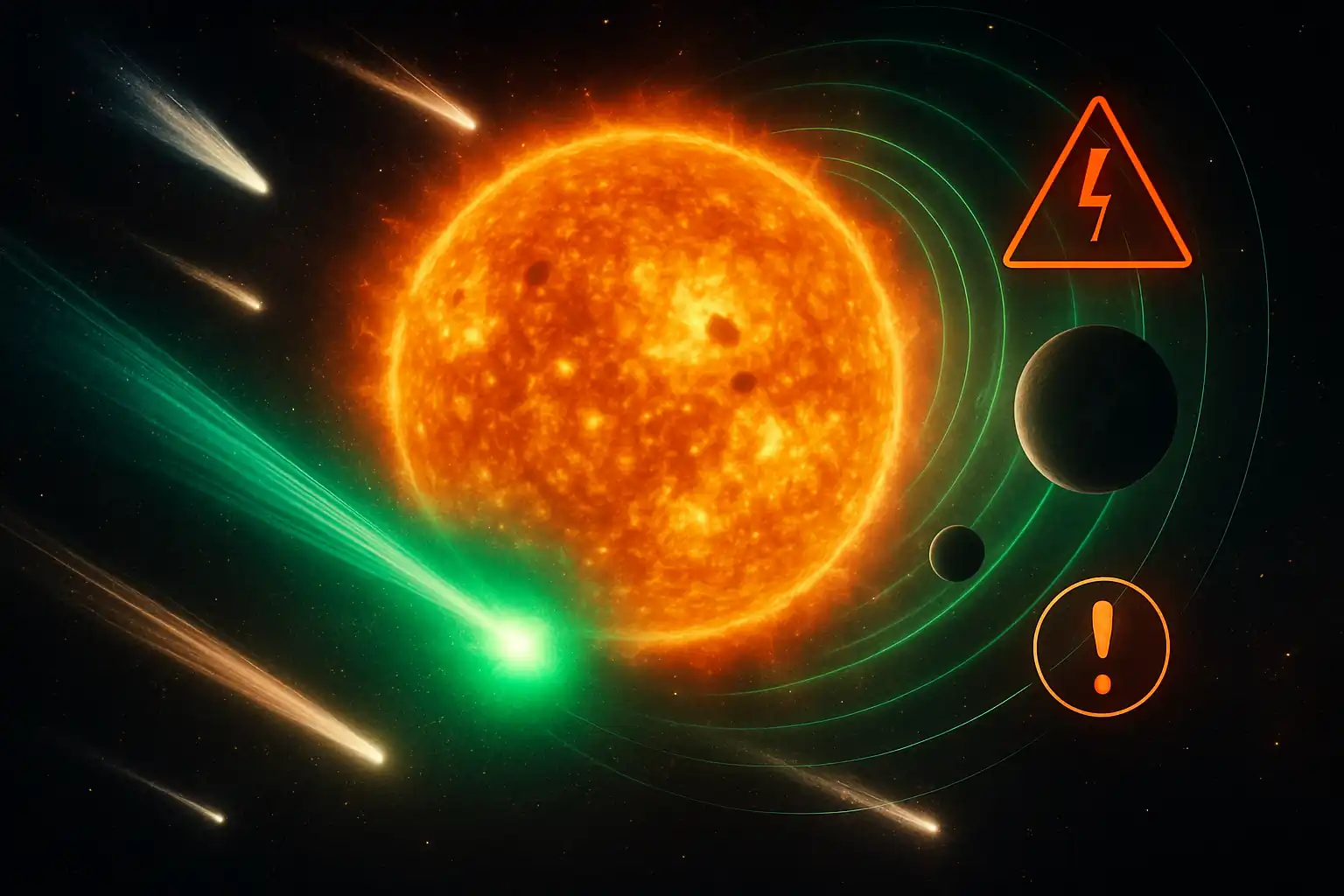
    Something wild stirs in the night sky, and it’s not just your tinfoil hat heating up. Solar physicists confirm we’ve entered the most active Solar Maximum in years. A rare cosmological gathering is underway: a swarm of comets, including the cosmic interloper 3I/ATLAS, races toward the inner Solar System. In an era of AI and existential threats, few headlines could upstage an interstellar comet’s close pass of the sun—unless, of course, you add doomsday omens and the potential for geomagnetic chaos. The CBC details how unusual things will get as 3I/ATLAS grows larger and brighter each week.

    Our Solar System, already jittery from past asteroid close calls (recently analyzed here), now finds itself in a cosmic shooting gallery. All eyes focus on the Sun. When ice and dust meet peak sunspot activity and ramped-up solar winds, scientific fireworks often follow. Israel has conquered laser warfare against drones (see the new defense frontier), but nature’s arsenal far surpasses even the most advanced human tech.

    3I/ATLAS: The Interstellar Oddball Makes Its Mark

    3I/ATLAS isn’t just another snowball with a tail. Originating from a star system far beyond the Sun, it was first detected by the ATLAS survey telescope in Chile on July 1, 2025 (CBC science coverage). It has a nucleus over five kilometers wide, and as it approaches the sun, its teardrop-shaped coma swells and bizarrely turns a bright, ghostly green as rare core chemicals sublimate in our solar heat (Live Science’s latest).

    There’s no collision risk; 3I/ATLAS will never approach closer than 270 million kilometers to Earth. However, it’s not a passive visitor. Certain signals—especially those captured by NASA’s Hubble—hint at new chemical reactions and heightened activity as 3I/ATLAS nears the Sun. This spurs speculation among experts and enthusiasts about interstellar visitors triggering solar anomalies and magnetic anomalies (background here).

    Swarms and Solar Storms: The Science Behind the Spectacle

    Comets divebombing the inner Solar System is routine for some skywatchers, yet this year is exceptional. The confluence of multiple comet tracks with Solar Maximum—when sunspot numbers and solar outbursts peak—offers both a rare research opportunity and legitimate hazards (Wikipedia’s Solar Maximum primer). Large-scale solar storms are more frequent now, and the interaction of icy bodies with the solar wind could lead to more than stunning auroras. Modern geomagnetic events—often triggered by heightened solar activity—have previously fried guidance satellites, power transformers, and even disrupted financial systems (this breakdown shows how vulnerable we are).

    Researchers and doomsday theorists alike speculate that a surge in comets signals more than scientific headlines: could these omens trigger historic world events or even deadly phenomena like the mysterious visitors from this deeper mystery dossier? Whether viewed as astrological warnings or part of natural cycles, no one disputes the power of a solar max coupled with an influx of comets.

    World Events, Omens, and the Evolution of Comet Lore

    If you think it’s superstitious to link comets to world-changing crises, history offers mixed opinions… and yet not. Since ancient times, comets have symbolized everything from the fall of empires to mysterious plagues. Today, this alleged connection lives on—a cosmic alarm bell for paradigm shifts. This tradition continues in our era; every global tremor feels like a precursor to something bigger (like this analysis of flashpoint crises). Is this merely fear wrapped in folklore, or does the data reveal a pattern we ignore?

    Geophysicists and skeptical astronomers justifiably dismiss doomsday claims. However, the combination of solar, cosmic, and human factors keeps everyone slightly on edge. Warnings about mysterious impacts and unexpected visitors align with more recent threats—AI breakthroughs, bioengineering hubs, and even doomsday devices buried deep in Russia’s enigmatic radio signal. With every comet swarm, imagination runs wild; sometimes, reality comes perilously close to meeting it.

    The Verdict: Cosmic Coincidence or the Next Great Disruption?

    As 3I/ATLAS and its icy counterparts plunge toward the Sun at the heart of a Solar Maximum, stakes range from harmless sky shows to disruptive space weather. Undoubtedly, this combination rewards astronomers and excites preparedness enthusiasts. Stay alert for geomagnetic storms, satellite failures, or even, yes, a touch of planetary existential dread. For updates on comet swarms, solar fluctuations, and every headline the cosmos throws our way, bookmark Unexplained.co and keep some candles handy. The universe may not be ending this fall, but it’s certainly putting on a show.

  • Earth’s Electric Awakening: Surges, Solar Storms, and the Geomagnetic Threat

    Earth’s Electric Awakening: Surges, Solar Storms, and the Geomagnetic Threat

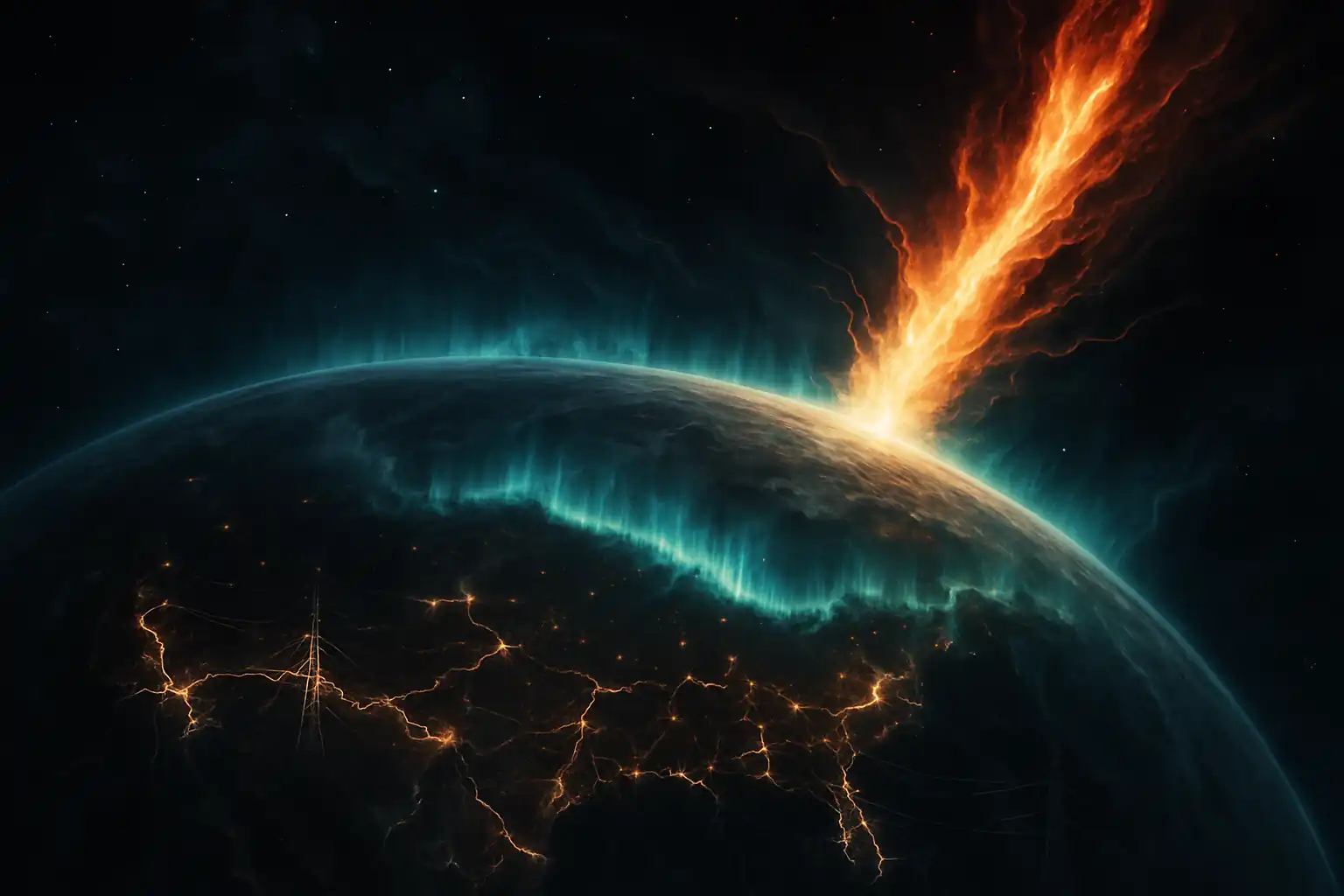
    When the planet’s electrical veins pulse and tremble, something significant happens—not the duct tape fixable kind, but the type that makes power transformers hum and auroras dance across unexpected latitudes. This week, Earth faced a direct hit from a G3 geomagnetic storm, courtesy of a coronal hole high-speed stream. As Mercury, the cosmic trickster, performed a superior conjunction, planetary alignments intensified. For scientists, those surges are both alarming and captivating. For those reliant on electricity, they serve as a reminder that civilization’s soft underbelly is just one solar hiccup away from chaos.

    From space weather enthusiasts to grid operators, the world watches as surges ripple through the magnetosphere, threatening nightly news, GPS, satellites, and the global power grid. While this may sound like the prologue of a doomsday miniseries, the science is real, and the consequences can be as dramatic as any Hollywood blockbuster. Ask Quebec, which lost its entire electrical grid in 1989 after a similar event. Welcome to a planet awakening to its cosmic vulnerabilities.

    Understanding Geomagnetic Storms and Electrical Surges

    What is a G3 geomagnetic storm? It’s not a sci-fi term; it’s a real scale used by NOAA and global scientists to measure the power of solar-driven space weather events. As highlighted by the recent Newsweek coverage, a G3 rating indicates “strong,” with potential impacts on satellite navigation, high-frequency communication, and visible auroras appearing closer to the equator. The source? Coronal holes on the Sun—regions where magnetic field lines detach, allowing charged particles to blast out at incredible speeds. Upon hitting Earth, they compress the magnetosphere and inject electric currents into the ground and upper atmosphere (see Wikipedia’s primer on geomagnetic storms). Activity amplifies during solar maximum, creating a perfect storm for disruptions.

    These electrical surges are not merely theoretical. They can disrupt GPS and communication satellites, damage power lines, and destabilize infrastructure in ways that haunt governments and disaster planners (especially considering events like Quebec in 1989 or the Carrington Event of 1859). Think it’s all fiction? Look at real scenarios such as the Pentagon’s notorious CONPLAN 8888, which helps agencies plan for catastrophic breakdowns. When surges peak, it isn’t just about the northern lights—it’s about system operators reacting swiftly.

    Power Grids, Technology, and Global Risk

    The modern world assumes electrons behave consistently, but geomagnetic storms like this G3 event challenge that belief. According to the latest government advisories—backed by satellite and utility alerts—power grids across vast regions of North America and Europe may face voltage fluctuations, transformer overheating, and possible blackouts. Critical warnings have sounded through NATO infrastructure planning, driven by fear not only of terrestrial conflict but also because high-altitude electromagnetic pulses match geomagnetic outbreaks.

    It isn’t just physical wires at risk. High-frequency radio communications, aviation navigation, and satellite positioning can fail under sustained geomagnetic pressure, sometimes for hours. As nations grapple with regional crises—like military drone incursions or the looming threat of conventional war—space weather can slip through defense systems. Just a few hours without accurate satellite data could lead to grounded flights or hindered emergency responses.

    Coronal Holes, Planetary Alignments, and Solar Influence

    While astrology enthusiasts obsess over Mercury’s superior conjunctions and planetary alignments, physicists see something more mechanical. During events like this, planetary configurations can modify the solar wind’s impact on Earth, while coronal holes—essentially cracks in the Sun’s outer layer—permit vast rivers of plasma to escape. These plasma flows, when combined with planetary geometry, can amplify the energy transfer to Earth’s magnetic field, intensifying the storm beyond a typical solar wind assault. Similar cosmic anomalies have been spotted in the tails of interstellar visitors, highlighting that Earth’s exposure to space weather is dynamic and unpredictable.

    Couple this with the occasional coronal mass ejection or unexpected plasma structures, and scientists have a conundrum that keeps them awake at night, while the rest of us nervously monitor aurora alerts on social media. Whether planetary alignments genuinely amplify geomagnetic effects remains under active investigation, but the timing alone generates more than just astrological clickbait. A cosmic twist doesn’t heed horoscopes; it simply fries transformers.

    Preparing for the Next Big Surge—And The Science of Resilience

    Is this “Earth is waking up” talk just hype? Not quite. As the planet’s electrical environment becomes increasingly volatile, serious agencies—from NASA to military strategists—consider geomagnetic storm risk a crucial infrastructure threat. The potential fallout from a worst-case scenario—envision no grid, no satellites, and communication failures—is enormous, and the science indicates that these events have occurred before and will recur. Resources like modern survival guides and speculative government preparedness, outlined on Unexplained.co, now routinely incorporate solar threats.

    Smart preparedness involves redundancy: backup generators, fortified transformers, and public warning systems attuned to cosmic threats. As the world becomes more interconnected, space weather transforms from a curiosity to an existential risk. Likewise, each significant geomagnetic storm teaches us about our celestial vulnerability—one where the aurora is not merely beautiful, but a vital warning sign.

  • CONPLAN 8888: When the Pentagon Planned for the Zombie Apocalypse (No, Seriously)

    CONPLAN 8888: When the Pentagon Planned for the Zombie Apocalypse (No, Seriously)

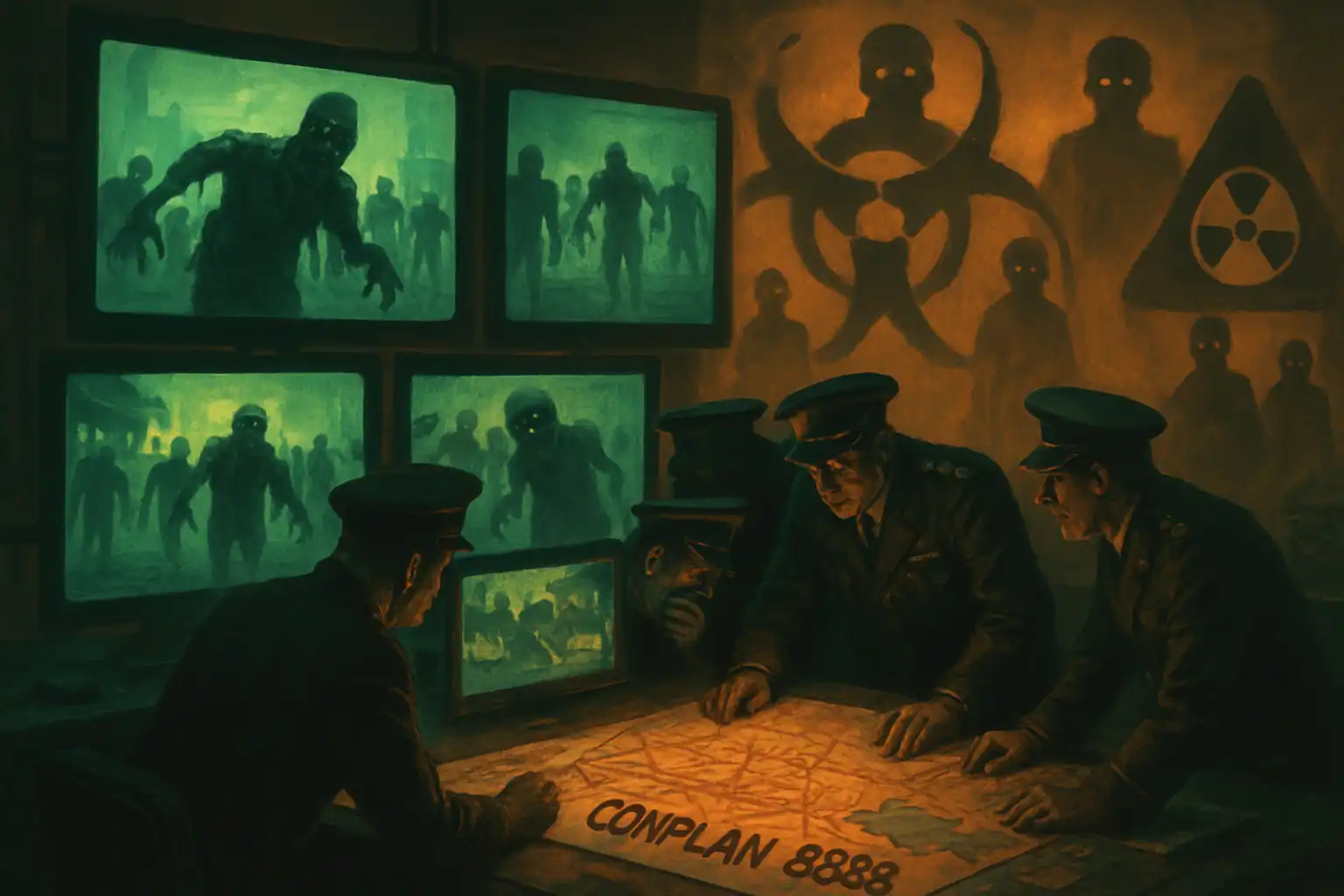
    It sounds like a fever dream fueled by late-night horror marathons: The U.S. Department of Defense, serious and steely-eyed, crafting a contingency plan to repel the undead. But CONPLAN 8888—now unclassified and freely downloadable—shows truth is weirder than fiction. The Pentagon’s “Counter-Zombie Dominance” plan is real. Originally a training scenario for junior officers, the document leverages undead clichés—viral plague, necromancy, even space zombies—to stress-test military responses to global breakdown.

    CONPLAN 8888 isn’t mere military gallows humor. In a national security landscape where simulating adversaries like North Korea or Russia risks diplomatic firestorms, zombies serve as the perfect straw enemy: apolitical, morally clear, and expansive enough for all forms of doomsday. Yet, a closer look reveals a serious guide on coordination, disaster response, and the aftermath of order collapse.

    Inside CONPLAN 8888: From Pathogens to Black Magic

    The operational playbook outlines various undead threats: pathogenic zombies (think weaponized viruses), radiation-spawned ghouls, and even “evil magic zombies” noted for their supernatural origin. Each variant symbolizes real-world threats—pandemic diseases, radiological events, and unconventional attacks—enabling planners to develop playbooks deemed “useful and effective” without sparking international incidents.
    Not all information is public. Key annexes remain classified, evoking speculation reminiscent of the era’s deepest UFO leaks. The plan’s phases begin with environmental shaping (i.e., securing critical infrastructure), progress through zombie eradication and civil authority restoration, and conclude with the vital “reset” of normal life. For those expecting the government to save the day, the manual maintains a serious tone: all hazards, zero nonsense.

    Zombie Fiction, Military Doctrine, and War-Gaming the Apocalypse

    CONPLAN 8888’s existence isn’t unique. As Wikipedia confirms, military planners worldwide employ fantastical scenarios to escape cognitive ruts—removing geopolitics while evaluating logistics, communication, and command integrity. The zombie template has also inspired agencies like the CDC, which launched its Preparedness 101: Zombie Apocalypse campaign, blending gallows humor with practical advice on readiness for hurricanes, bioterrorism, or pandemics.

    Some assert the undead merely symbolize existential threats. The classified annexes and the document’s declassification after a high-profile FOIA request validate that this wasn’t conjured as a prank. As global risk analysts discuss worst-case scenarios and analyze global war triggers, maintaining “out there” plans matters more for survival against the next curveball—be it viral, nuclear, or digital.

    Pandemics, WMDs, and the Zombie as a Proxy

    If a zombie horde resembles an Ebola outbreak, you’re not alone. Military strategists have historically used imaginary scenarios to confront the taboo or unspeakable—the situations you can’t test in reality but must be prepared for. CONPLAN 8888 echoes lessons from the Pentagon’s pandemic planning, whether during COVID-19 or earlier WMD drills. Efficiently marshaling resources, enforcing quarantine, and swiftly restoring order remain central.

    The blurred line between fiction and preparedness is intentional. Cultural anxieties about collapse—from zombies to rampant artificial intelligence—drive tabletop gaming and field exercises. The media’s fascination with the undead extends beyond escapism. It serves as a psychological sandbox for disaster preparedness, where the scariest monster is the breakdown of trust and order, not the bite. Analyze any commentary on post-apocalyptic gaming or the increasing interest in modern survival manuals for confirmation.

    The Real Lessons: Psychological Resilience and Societal Collapse

    Zombie narratives now influence both popular culture and real-world risk assessment. A Forbes analysis of pandemic resilience reveals that those immersed in prepper fiction and horror often exhibit better psychological flexibility when real crises arise. The narrative of the “undead apocalypse”—from cosmic threats to conspiracy-laden news cycles—serves not to prepare for zombie battles, but to manage shock, fear, and disruption.
    Thus, CONPLAN 8888 serves dual purposes: it evaluates systems, yes, but also highlights how our imaginations shape actual readiness. In a world bracing for disaster, a tongue-in-cheek plan for “counter-zombie dominance” may just keep us a step ahead—undead or not. For deeper insights and conspiracy-tested survival advice, visit Unexplained.co—because if you’re prepared for zombies, you’re ready for anything.

  • Seconds from Apocalypse: UFOs, Missiles, and the Congressional Disclosure Shockwave

    Seconds from Apocalypse: UFOs, Missiles, and the Congressional Disclosure Shockwave

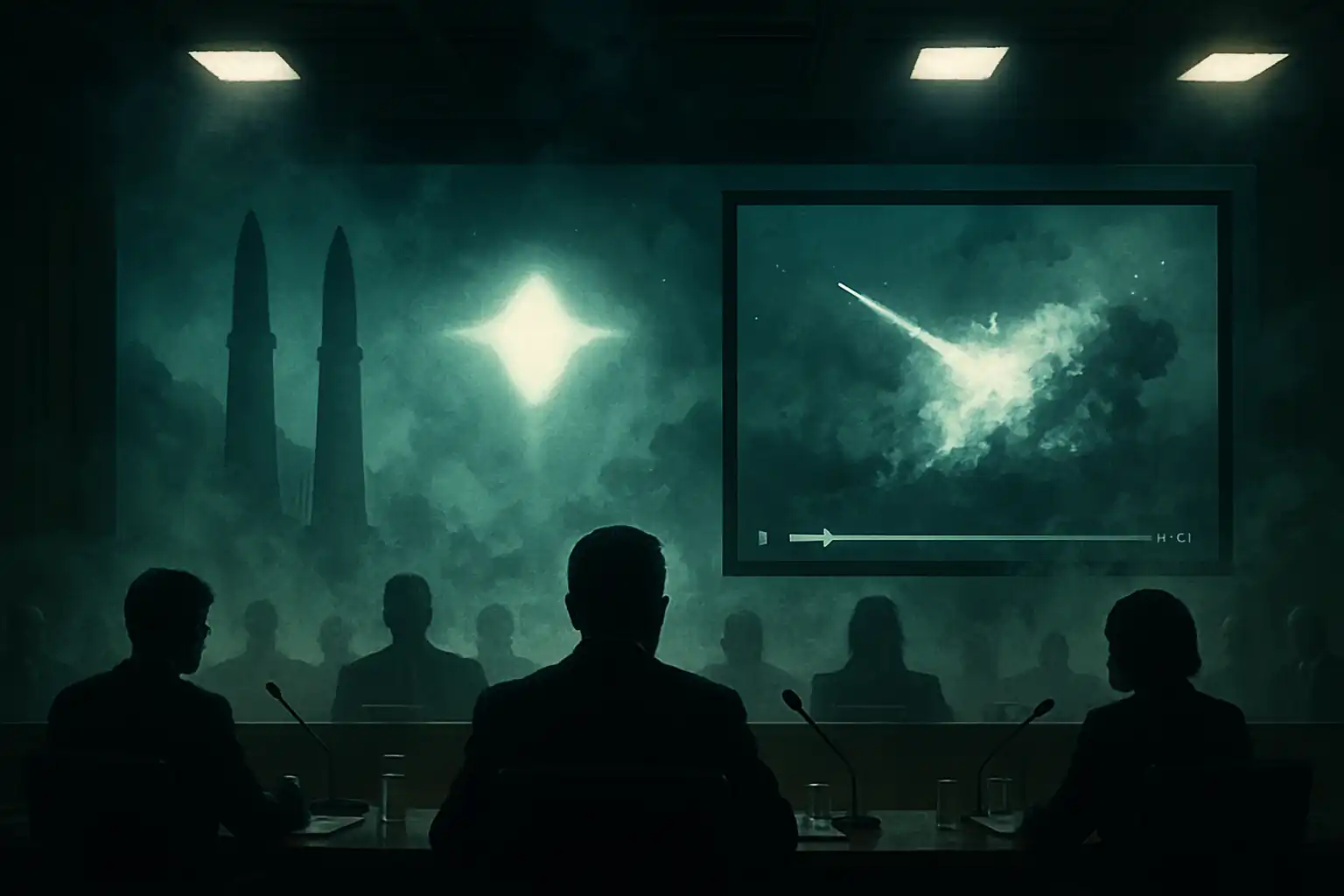
    Imagine this: nuclear missiles ready to launch, military officers in panic, and an unidentified flying object pulling the strings. This scenario, once dismissed as Hollywood fantasy, now dominates headlines during a high-stakes Congressional hearing. In July, the U.S. House Oversight Task Force on the Declassification of Federal Secrets held jaw-dropping testimony about Unidentified Anomalous Phenomena (UAP)—previously known as “UFOs.” Four witnesses captivated lawmakers, but veteran journalist George Knapp delivered the shocking revelation. He claimed that not only is the truth out there, but it almost ended the world in October 1982.

    Knapp described a dramatic account involving UFOs appearing on radar above a Russian ICBM base. He stated, “the launch control codes for the ICBMs lit up. Something entered the correct codes. The missiles were fired up and ready to launch, and they could not shut it down. The Russian officers were panicking. The UFOs disappeared. The launch control system goes back to normal.” Seconds before a potential World War III, Knapp asserted, the world was saved by the sudden disappearance of these UAPs. This incident is documented in mainstream news sources like the BBC’s congressional hearing coverage and in direct witness files, including Knapp’s written testimony to Congress.

    Nuclear Close Calls: A Grim History and New Intrusions

    Nuclear close calls don’t need more drama, as outlined on Wikipedia’s summary of near-apocalyptic blunders. History is filled with errors, birds triggering alarms, and misunderstood drills, all nearly igniting global catastrophe. This latest account introduces a horrifying new variable: “outside” interference. Public records have linked UAP to the arming of ICBMs, an alarming escalation surpassing even Cold War miscalculations.

    The implications resonate through America’s doomsday culture and preparedness discussions. Recent analysis of U.S. military prepping, detailed in analysis of U.S. military prepping, shows how any new X-factor can shift the balance. With Russian officers reportedly powerless against their own fail-safe protocols, it’s understandable why lawmakers and intelligence agencies are reconsidering “known unknowns.”

    Hellfire on a UFO: The Video that Stunned Congress

    Tension filled the hearing when an unverified military video played. It allegedly showed a Hellfire missile striking a UAP—but the object simply brushed it off. George Knapp’s commentary, reported in Nevada’s 8 News Now report, stated: “That’s a Hellfire missile smacking into that UFO and just bounced right off.” The witnesses—Knapp, Air Force veteran Jeffrey Nuccetelli, UAP witness Alexandro Wiggins, and veteran Dylan Borland—emphasized that transparency, not denial, is now a national security imperative.

    Government scrutiny of UAP, already heightened by events like the rumored black cube UAP at Wright-Patterson AFB and outlined in the Area 51 investigative files, is intertwined with the existential dread typically reserved for nuclear risks.

    From Secrecy to Maximum Transparency: The Push for Oversight

    Testimony at the hearing tore down years of government stonewalling. Calls for “maximum transparency” come from task force recommendations, detailed on the official Oversight Committee site. As more witnesses come forward, the apparent scope of the cover-up grows, posing a threat in itself. This is chronicled through historical coverup exposes and whistleblower accounts.

    The discussion evokes a narrative usually belonging in pulp fiction: what if enigmatic craft can override military secrets and even the fundamental kill switches of civilization? The fact that the U.S. Congress holds hearings on this topic should inspire not comfort, but a hint of existential terror.

    The New Age of Near-Misses: Living in a World of Overlapping Existential Threats

    If you thought UFO stories peaked during the Space Race, 2025 presents a world where nuclear and non-human threats merge. Lawmakers emphasized the need for unified oversight over both new and old risks—a sentiment echoed in intelligence assessments summarized in global security reports and analyses like threat briefings on the Kremlin and Ukraine. The common thread: no single country, protocol, or ideology can ensure tomorrow’s dawn if the rules keep changing from outside.

    With UAP whistleblowers, experienced reporters, and intelligence experts stepping into the spotlight, expect Congressional investigations to continue. For in-depth analysis, verified leaks, and critical skepticism, stay tuned to Unexplained.co. If we truly faced a scenario where we were “seconds away” from catastrophe, you’ll want to use every second wisely.

  • Would You Survive a Super-Eruption? Modern Prep for an Ancient Catastrophe

    Would You Survive a Super-Eruption? Modern Prep for an Ancient Catastrophe

    Imagine waking before dawn to a thunderous sky filled with sulfur. Ash already covers your street. You thought doomsday scenarios were just paranoia—until a supervolcano decided to open its ancient wounds. This isn’t Hollywood fantasy: super-eruptions have shaped continents, collapsed civilizations, and nearly erased life on Earth. The next one is overdue on the geological clock; you’d better learn how to survive before arguing in the comments that it could “never happen here.”

    Unlike typical volcanic eruptions, supervolcanoes carry a Volcanic Explosivity Index (VEI) of 8 or more, as detailed by Wikipedia’s supervolcano overview. This index represents a thousand times the debris of any modern eruption—billions of tons of ash and sulfur-choked air, shrouding sunlight and plunging entire hemispheres into a near-winter. We’re discussing real extinction-level events—the type that reshuffles life on Earth and makes preparedness essential.

    Building Your Survive-and-Thrive Emergency Kit

    Your emergency kit is your first ally; it stands between you and the world’s worst camping trip. Experts from the International Volcanic Health Hazard Network developed resources listing the essentials: dust masks (N95 or better), goggles, several days of drinking water, non-perishable food, and a hand-crank radio. Don’t forget heavy-duty plastic to seal rooms; ash infiltrates everything. And slip in a deck of cards—boredom persists even without Wi-Fi.

    Planning beats panic. Long before you need it, map alternate evacuation routes—roads become choked or impassable after ashfall, as covered in this report on risks in North America. If you live near known volcanoes or downwind of big calderas like Yellowstone, tailor your stash to local risks. Remember, the odds may be low, but the stakes are high.

    Shelter and Survival During Ashfall

    When the clouds boil black and ash starts falling, speed is survival. Head indoors immediately, jam towels under every door, and seal windows with plastic or duct tape. The CDC and USGS advise against using air-conditioning or clothes dryers; both will suck ash into your safe space. Tight-fitting goggles and real N95 masks (not leftover pandemic bandanas) are crucial, as detailed in CDC’s volcanic safety tips. You thought pandemic air was bad? Now add abrasive rock dust and sulfur.

    In extreme cases, make your home mimic a bunker—at least for the initial ash onslaught. Electricity might flicker or die entirely under the weight of gritty debris, and tap water could turn toxic. This is when you’ll realize why preppers obsessively checklists (and why smug friends envy their five-gallon stashes in the basement). This strategy is echoed not just by hardcore preppers, but also by official resources at USGS’s preparedness pages and Ready.gov.

    Still, there’s an aspect that no list covers: the psychological grind. The eerie darkness lasts weeks. The feeling of isolation grows stronger, even in a digital age. For those who want to delve into the world’s edge-case weirdness, connect the dots with this analysis of worst-case “black swan” scenarios—because disaster is rarely just physical. It’s a mental marathon.

    Managing Air and Water Contamination After the Blast

    Navigating the aftermath is where many survivors falter. Ash clogs lungs and machinery long after the eruption subsides. Use only the water you’ve stockpiled, or treat supplies aggressively with filters and purification tablets. Ash can infiltrate even closed reservoirs, making filtration challenging. The Red Cross and the emergency resources from King County, Washington recommend waterproof wrapping for all stockpiles and sanitizing surfaces exposed to outside air or falling debris.

    Power grids and supply lines will fail in heavily impacted areas—a reality that makes psychological factors almost as dangerous as physical risks, as warned in the latest preparedness research. Be relentless about rationing, keep batteries charged in advance, and, if possible, form trusted local networks before disaster strikes. The lone-wolf survival fantasy fades quickly when ash hits the fan.

    Long-Term Survival: Evacuation, Recovery, and Civilization’s Test

    If you’re among the lucky and stubborn who survive the initial storm, don’t celebrate just yet. Super-eruptions can disrupt global food supply, cause abrupt cooling, and lead to nuclear-winter style years without summer. That isn’t speculation: the supervolcano entry outlines historical mass die-offs, and government models project crop failures, climate chaos, and migration waves if it happens again.

    By now, you’ve joined the fraternity of people convinced that prepping is about civic duty, not paranoia. Go beyond checklists and learn from unconventional sources—like this analysis of ancient disaster warnings, or wild interstellar scenarios found in this exploration of cosmic risks. When civilization wobbles, real survival demands adaptation, resilience, and the urge to confront the unknown—usually with little more than a flashlight, a stockpile, and a refusal to quit.

    For further guides, discussions, and breakdowns on existential risk, keep scanning Unexplained.co. Because whatever triggers society’s next big meltdown, it helps to be the one who saw the warnings—before it was too late.

  • Blood in the Streets: The Extreme Reality of the French Revolution—and Its Eerie Echoes Today

    Blood in the Streets: The Extreme Reality of the French Revolution—and Its Eerie Echoes Today

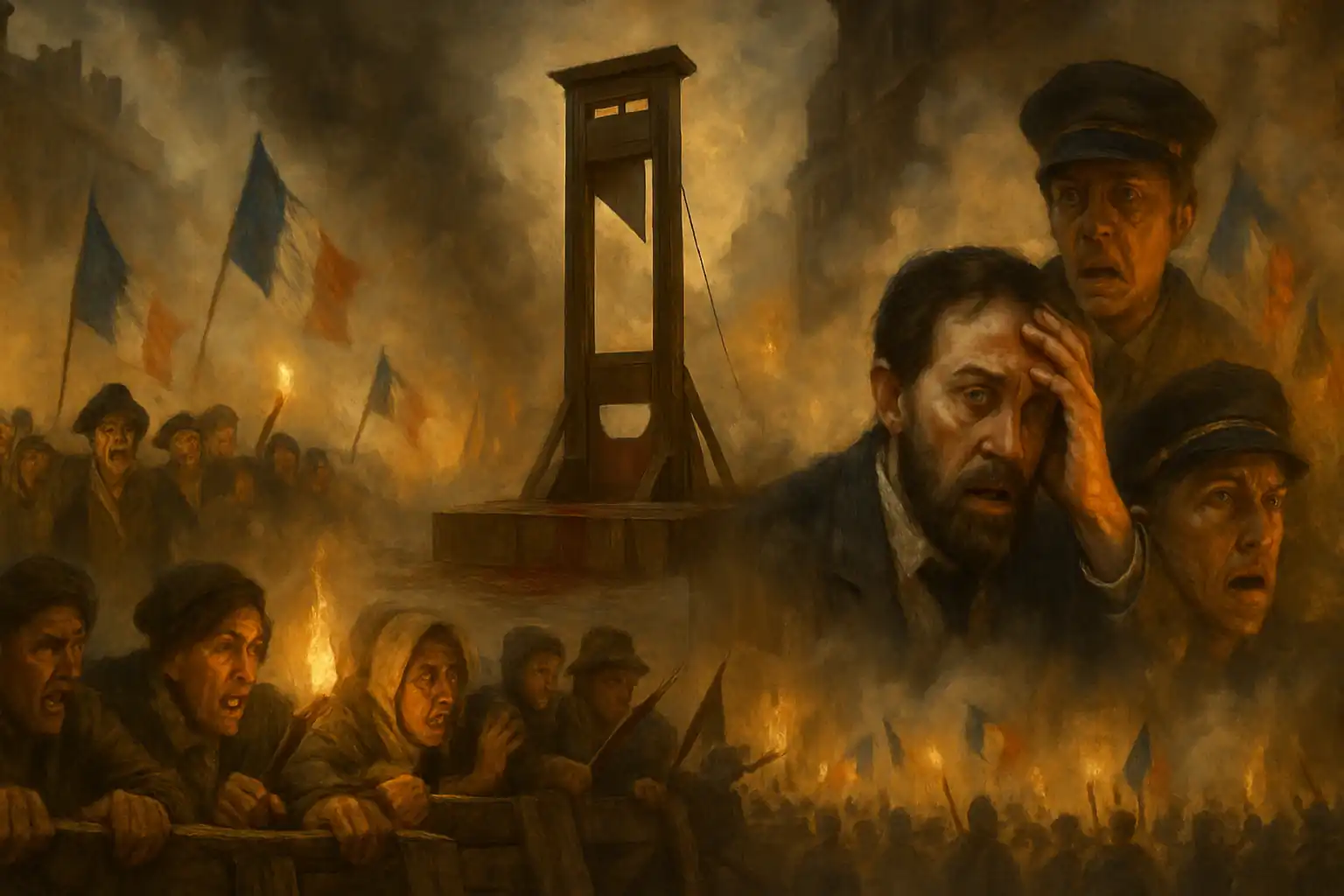
    Lightning rarely strikes twice, but when it does, the aftershocks echo for centuries. The French Revolution transcends dusty textbooks; it reflects societal turmoil whenever an old order stumbles. In Paris, 1789, the storming of the Bastille sparked anarchy, vengeance, and hope. What followed shocked even those who ignited the revolutionary fervor: the city devolved into mob justice, crisis, and extremism. Many today feel history repeats or at least rhymes when the ground shakes beneath established powers—never more so than in the chaos of revolutionary France.

    To understand today’s global unrest—ranging from digital upheavals to societal collapse—trace the flow back to Parisian streets. The Revolution exposed the anatomy of breakdown: lost trust, elite blindness, economic stagnation, and a public fueled by starvation, rumors, and fear. This wasn’t polite reform; it was survival at its ugliest—and it feels disturbingly familiar.

    The Radical Pulse Beneath the Surface: Why the Revolution Was More Extreme Than Textbooks Admit

    Dismiss sanitized classroom narratives. Contemporary sources from Britannica and PBS reveal the true extent of social collapse. France’s oppressive Old Regime—rigid, bankrupt, indifferent—set the stage for a spectacular implosion. According to the French Revolution Wikipedia entry, explosive population growth, food shortages, and a self-serving elite acted as matches against a gasoline-soaked society. Once unleashed, the Revolution refused to slow for reason; instead, vigilance committees and angry mobs dragged citizens to summary executions.

    The Reign of Terror, as revisited in the Wikipedia article on the Reign of Terror, claimed over 16,000 lives by guillotine and countless more through prisons and massacres. Even trusted leaders faced daily betrayals. A recent study reveals how weaponized rumors fueled the “Great Fear,” as fabricated news spread like wildfire, triggering violent purges in the countryside. The Revolution’s legacy wasn’t progress but shock, blood, and unpredictability—echoing the uncertainty evident in modern incidents, such as the chaos discussed in this investigation of the Las Vegas shooting’s aftermath.

    How Revolutions Spiral: Panic, Power Grabs, and the Birth of the Mob

    France’s societal breakdown focused less on slogans and more on visceral panic—a scenario familiar to students of modern collapses, explored in this collapse report. Once collective fear breaks loose, it’s nearly impossible to contain. The Revolution’s leaders often lost grip on the mobs they unleashed. Militarized crowds, hungry and desperate, seized grain, stormed political prisons, and devoured their own heroes when stirred by whispers. Ambitious leaders like Robespierre promised virtue and order but succumbed to paranoia, purges, and eventually, their own beheadings.

    France’s rapid shifts from monarchy to republic, then terror, and finally dictatorship illustrate how revolutions spiral into cannibalistic cycles. Internal chaos gave foreign adversaries openings—France’s Revolution ignited continental wars, just as today’s destabilized states invite outside manipulation, reminiscent of superpowers engaging in covert operations against rivals when vulnerability appears.

    Lessons in Paranoia: How Societies Eat Themselves

    Time and again, people put faith in new institutions, only to see them warp into engines of control and suspicion. The Committee of Public Safety—meant to defend the Revolution—spun the guillotine just as eagerly as any royal executioner. An oral history project scrutinizes primary sources, showing that rumors, factionalism, and radical ideology consistently outpaced moderate reforms. This cycle appears wherever political polarization and disinformation grip troubled nations; it mirrors the fever dreams saturating contemporary culture, as discussed in explorations of reality glitches.

    For the average Parisian, survival meant shifting allegiances and staying under the radar—sometimes literally. Justice became mob-driven, records rewritten, and everyone risked becoming tomorrow’s traitor. In our time, where mistrust and “fake news” reign, similar dangers loom. It’s a perilous lesson: when the mechanism of suspicion engages, it grinds on until only gears and blood remain.

    History Repeats—Or At Least, It Rhymes: The Modern Relevance of Revolution

    If you believe you’re immune to these patterns, think again. Social unrest, elite arrogance, economic turmoil, viral rumors—each generation mixes this cocktail of collapse anew. Historians and doomsday preppers alike note the fractal recurrence of revolutionary fervor. Reflect on how radicals and popular uprisings repeatedly reshape nations, as examined in this analysis of disaster-driven transformations. Even in the information age, the spark might ignite from a celebrity’s untimely death, a viral video, or an economic disaster.

    The French Revolution underscores that once systems falter, predicting who survives the tempest—or what remains—is impossible. For a deeper look into cycles of chaos, power, and the uncertain future, visit Unexplained.co. If history doesn’t exactly repeat, it invariably brings a troublesome echo.