Category: World War 3

  • Escalation in the Middle East: Analyzing the Recent Israeli Strike in Beirut

    Escalation in the Middle East: Analyzing the Recent Israeli Strike in Beirut

    In a significant escalation of tensions in the Middle East, the Israeli Defense Forces (IDF) conducted a targeted strike in the southern suburbs of Beirut, Lebanon. This military action comes in response to a recent rocket attack that tragically resulted in the deaths of 12 children in the Golan Heights, raising fears of further conflict in the region.

    Key Takeaways

    • The IDF confirmed a targeted strike in Beirut, aimed at a commander linked to the recent rocket attack.
    • Israeli military guidelines remain unchanged, indicating no immediate escalation is anticipated.
    • The strike was reportedly executed with precision to minimize civilian casualties.
    • Hezbollah’s potential response remains a critical concern for regional stability.

    Context of the Strike

    The recent Israeli strike is a direct response to a rocket attack that occurred over the weekend, which resulted in the deaths of 12 children in the Israeli-controlled Golan Heights. The IDF has stated that the targeted strike was aimed at a senior commander responsible for this attack. The location of the strike, in the southern suburbs of Beirut, is particularly significant due to its proximity to Hezbollah’s operational areas.

    Israeli Military Guidelines

    The IDF has maintained its home front guidelines, which inform civilians about the current risk levels associated with military actions. These guidelines include:

    • Avoiding large gatherings
    • Staying close to bomb shelters
    • Monitoring updates from the military

    The decision not to alter these guidelines suggests that the Israeli military does not foresee an immediate escalation beyond the current situation, although the potential for further conflict remains.

    Precision in Military Action

    Reports indicate that the strike was executed using drones, which underscores Israel’s intent to conduct a precise operation with minimal collateral damage. This approach may reflect pressure from international allies, particularly the United States, to avoid civilian casualties during military responses. The use of drones also highlights a shift in military tactics, focusing on targeted actions rather than broader assaults.

    The Broader Implications

    The strike raises critical questions about the future of Israeli-Hezbollah relations. Analysts are concerned that this could be the beginning of a broader Israeli campaign in southern Lebanon or merely a limited response to the recent attack. The region is currently on edge, grappling with the implications of this military action.

    Political Pressure in Israel

    Inside Israel, there is significant political pressure to respond to Hezbollah’s actions. The government, led by Prime Minister Benjamin Netanyahu, faces calls to take decisive action against the group, especially given the ongoing threats to northern Israel from missile attacks. However, the Israeli military is also aware of the exhaustion from the ongoing conflict in Gaza, which complicates the decision-making process regarding further military engagement in Lebanon.

    Potential Hezbollah Response

    Hezbollah has previously stated that it would respond to any escalation with its own actions. The organization is known for its resilience and capacity to retaliate, which raises concerns about a potential cycle of violence following the Israeli strike. Observers are closely monitoring the situation, as any response from Hezbollah could significantly alter the dynamics in the region.

    Conclusion

    The recent Israeli strike in Beirut marks a critical moment in the ongoing conflict between Israel and Hezbollah. As tensions rise, the international community watches closely, hoping for a de-escalation of violence. The situation remains fluid, and the potential for further conflict looms large, making it imperative for all parties involved to tread carefully in the days ahead.

  • Global Tensions Rise: Protests, Terrorism, and Geopolitical Chaos

    Global Tensions Rise: Protests, Terrorism, and Geopolitical Chaos

    In recent days, the world has witnessed a surge in protests and geopolitical tensions, with significant events unfolding in various regions. From violent protests in the UK to the assassination of key terrorist leaders, the global landscape is rapidly changing, raising questions about security and international relations.

    Key Takeaways

    • Protests erupt in the UK over immigration issues following tragic stabbings.
    • Assassination of Hamas leaders escalates tensions in the Middle East.
    • Canada faces rising crime and potential terrorist threats linked to ISIS.
    • NATO’s internal conflicts and the ongoing war in Ukraine complicate global stability.

    Protests in the UK

    Recently, a protest erupted in Southport, UK, following the tragic stabbing of three innocent girls. The alleged perpetrator, described as an immigrant with a criminal background, has sparked outrage among locals. This incident has ignited a larger conversation about immigration and crime in the UK, with many citizens expressing their frustration over the perceived increase in violence associated with immigration.

    • Key Issues Raised:
      • The impact of immigration on local crime rates.
      • Public sentiment regarding safety and community integrity.
      • The role of government in addressing these concerns.

    Escalating Tensions in the Middle East

    On October 7th, Hamas launched a brutal attack on Israel, which was met with swift retaliation. In a significant development, several high-ranking Hamas leaders were killed in Israeli strikes, further escalating the conflict. This has led to fears of a wider regional war, with Iran vowing revenge and the U.S. urging restraint.

    • Recent Developments:
      1. Assassination of senior Hamas and Hezbollah leaders.
      2. Increased military activity and threats of retaliation from Iran.
      3. Concerns over the potential for a broader conflict involving multiple nations.

    Terrorism Threats in Canada

    In Canada, the situation is equally alarming. The RCMP has reported that a father and son were in the advanced stages of planning terrorist attacks linked to ISIS in Toronto. This revelation has raised alarms about the rising threat of terrorism within Canadian borders, as tensions between different communities continue to escalate.

    • Key Points:
      • The rise of crime and terrorism in urban areas.
      • Government response and public safety measures.
      • The impact of international conflicts on domestic security.

    NATO and Global Geopolitics

    The ongoing conflict in the Middle East has implications for NATO as well. Israel has called for Turkey’s expulsion from NATO due to its perceived threats, highlighting internal divisions within the alliance. Meanwhile, the war in Ukraine remains a pressing issue, with the U.S. providing military support while navigating complex relationships with other nations.

    • Current Challenges:
      • Balancing support for Ukraine while addressing Middle Eastern conflicts.
      • Managing NATO’s internal disputes and maintaining unity.
      • The potential for a global conflict involving multiple powers.

    Conclusion

    As global tensions rise, the interconnectedness of these events becomes increasingly apparent. The protests in the UK, the assassination of terrorist leaders, and the threats of terrorism in Canada all point to a world on edge. Governments must address these issues with urgency and transparency to restore public trust and ensure safety. The stakes are high, and the path forward remains uncertain as we navigate this complex geopolitical landscape.

  • The Rising Alliance: Russia and North Korea’s Strategic Partnership

    The Rising Alliance: Russia and North Korea’s Strategic Partnership

    In recent developments, the geopolitical landscape has shifted dramatically as Russia and North Korea forge a new alliance. This partnership, marked by mutual defense agreements and strategic cooperation, poses significant implications for global diplomacy, particularly concerning the United States and its allies.

    Key Takeaways

    • Historic Summit: Putin’s visit to North Korea marks a significant diplomatic shift, with both leaders seeking to strengthen ties against the backdrop of international isolation.
    • Mutual Defense Pact: The agreement between Russia and North Korea revives Cold War-era military cooperation, raising concerns about nuclear proliferation.
    • China’s Dilemma: As Russia and North Korea grow closer, China faces the challenge of maintaining its influence over North Korea while navigating its own geopolitical interests.

    The Historic Meeting

    The recent meeting between Russian President Vladimir Putin and North Korean leader Kim Jong-un has been described as a pivotal moment in international relations. Putin’s rare visit to North Korea, his first in 24 years, was aimed at securing support for his ongoing war in Ukraine. The two leaders engaged in a series of talks, exchanged gifts, and even took turns driving a Russian limousine, all of which were meticulously documented by North Korean state media.

    This carefully choreographed event was not just a display of camaraderie; it was a clear signal to the world that both leaders, often ostracized by the international community, are seeking to establish a new alliance against the United States and its allies.

    The Strategic Partnership Agreement

    At the heart of this summit was the signing of a comprehensive strategic partnership agreement, which includes a mutual defense pact. This agreement is significant as it brings two nuclear-armed states closer than they have been since the Cold War, fundamentally shaking the foundations of global geopolitics.

    The implications of this partnership are profound, particularly for China, which has historically viewed North Korea as a buffer state against U.S. influence in the region. The new alliance raises questions about the future of China’s relationship with both Russia and North Korea.

    China’s Reaction and Concerns

    China’s response to the burgeoning relationship between Russia and North Korea has been notably muted. While Beijing has maintained its support for Pyongyang, the deepening ties between its two neighbors have caused unease in the Chinese leadership. Analysts suggest that Xi Jinping may be feeling the strain of losing a trusted ally in Putin, especially as North Korea appears to be pivoting towards Moscow.

    • Historical Context: The relationship between China and North Korea has always been complex, characterized by a mix of cooperation and tension. North Korea’s past defiance of Chinese authority, such as the assassination of Kim Jong-un’s half-brother, underscores the fragile nature of their alliance.
    • Strategic Calculations: China is now faced with the challenge of recalibrating its strategy in light of this new partnership. While it shares a common hostility towards the U.S.-led international order, China is cautious about becoming too closely aligned with Russia and North Korea, fearing that it could jeopardize its relations with other global powers.

    The Nuclear Threat

    The mutual defense agreement between Russia and North Korea raises alarms about the potential for nuclear proliferation. U.S. officials have warned that North Korea could leverage its relationship with Russia to gain access to advanced military technology, further enhancing its nuclear missile and satellite programs.

    This development has prompted the U.S. to strengthen its security ties with regional allies, particularly South Korea and Japan, in response to the perceived threat from the newly formed alliance.

    The Future of Geopolitics

    As the dynamics between Russia, North Korea, and China evolve, the implications for global geopolitics are significant. The U.S. and its allies must navigate this complex landscape carefully, balancing their responses to the growing military cooperation between Russia and North Korea while also addressing the challenges posed by China’s strategic interests.

    In conclusion, the alliance between Russia and North Korea represents a significant shift in the geopolitical landscape, with potential ramifications for global security and diplomacy. As these two nations deepen their ties, the international community must remain vigilant and proactive in addressing the challenges that arise from this new partnership.

  • The Plane That Was Too Creepy For Hitler

    The Plane That Was Too Creepy For Hitler

    A chill wind sweeps across the Bavarian Alps as Hanna Reitsch, Germany’s most famous test pilot, arrives at Hitler’s mountain retreat in Berchtesgaden. It is February 28, 1944, and the tide of World War II is quickly turning against the Third Reich. Inside the dimly lit study of the Berghof, Reitsch stands before the Führer, her eyes gleaming with determination.

    Key Takeaways

    • Hanna Reitsch proposed a manned version of the V-1 flying bomb to Hitler.
    • The project, codenamed “Reichenberg,” aimed to turn desperate times into a last-ditch effort for victory.
    • The Reichenberg was designed for one-way missions, requiring pilots to sacrifice themselves.
    • Despite initial enthusiasm, the project faced numerous technical and ethical challenges.

    Hanna Reitsch gestures to blueprints spread across Hitler’s desk. The designs depict a strange, tiny flying machine, more like a missile than an aircraft. As she lays out her ideas, it becomes clear that the mission she envisions is unprecedented—an extreme plan that would demand more from German aviators than ever before.

    At first, Hitler is taken aback; this drastic proposal is too gruesome, even for him. As Reitsch describes potential targets—Allied shipping, power plants, even Buckingham Palace—his interest grows, but he remains unconvinced. The price to pay would be too great.

    Yet Reitsch refuses to give up, arguing that this might be their last chance to save the Fatherland. After a long moment of silence, Hitler nods his assent. The Nazis are about to embark on what will become the Fieseler Fi 103R, codenamed “Reichenberg”—their most desperate gambit yet.

    The Roots of the Reichenberg Project

    The controversial Reichenberg project traces back to the early years of World War II. As the conflict intensified, both Allied and Axis powers raced to develop new weapons for a decisive advantage. Germany invested heavily in advanced technology, resulting in a series of innovative but often impractical “wonder weapons.”

    One such creation was the V-1 flying bomb, part of Nazi Germany’s Vergeltungswaffen or Vengeance Weapons program. The V-1 was designed for terror bombing of Allied targets, particularly London. However, concerns about its accuracy arose even before its first launch, as testing revealed its inability to hit precise targets.

    As Germany’s chances of winning the war began to deteriorate after the Battle of Stalingrad in February 1943, Nazi leadership frantically sought solutions, even considering the most outlandish suggestions.

    The Idea of a Manned V-1

    Among those attempting to improve the V-1 was Otto Skorzeny, a Waffen-SS officer known for his unconventional operations. From his twisted imagination sprang the audacious concept of a manned version of the V-1. By adding a cockpit, a skilled pilot could guide the 2,000-pound warhead to its objective with greater accuracy. Theoretically, the pilot would bail out moments before impact, but survival chances were virtually non-existent.

    This extreme suggestion was unprecedented. Even the Japanese did not carry out kamikaze attacks until October 1944. Yet, with Germany facing imminent defeat, the idea of a piloted V-1 found supporters, including Hanna Reitsch, who saw it as a chance to turn the tide.

    Convincing Hitler

    In late February 1944, Reitsch traveled to Hitler’s Berchtesgaden retreat to convince him to implement the plan. She argued that it would require men ready to sacrifice themselves for their country. Initially reluctant, Hitler was concerned about the psychological impact on the German populace. However, Reitsch eventually persuaded him to approve the project.

    Development Challenges

    Development of the Reichenberg began in secret in 1944. The project faced numerous challenges, including transforming a purely mechanical flying bomb into a controllable aircraft. Modifications included adding a cramped cockpit directly in front of the pulse jet intake, putting the pilot in a precarious position.

    The cockpit contained only basic flight instruments, and there was no ejection seat. The chances of survival were so low that such a feature was deemed unnecessary. To make room for the cockpit, one of the V-1’s fuel tanks had to be relocated, and the aircraft’s controls were modified for manual operation.

    Variants of the Reichenberg

    The Reichenberg came in several variants:

    1. R-I: An unpowered glider for initial pilot training.
    2. R-II: An unpowered glider with a second cockpit for instructor training.
    3. R-III: A dual-control trainer powered by a pulse jet engine.
    4. R-IV: The operational version intended for combat missions.
    5. R-V: A shorter-nosed training aircraft for the Heinkel He 162 jet fighter.

    The Psychological Aspect

    As news of the project spread, volunteers began to come forward. The idea of a noble sacrifice appealed to many young Nazi pilots. By October 1944, about 70 pilots were in training, known as the “Leonidas Squadron,” named after the Spartan king who led his soldiers in a desperate fight.

    Training was unorthodox, involving simulated attack runs. Pilots had to prepare for one-way missions, requiring a level of fanaticism that went beyond the sacrifices already demanded of German soldiers.

    Testing and Challenges

    Testing of the Reichenberg began in autumn 1944, but results were not encouraging. The first two test flights ended in crashes, revealing the aircraft’s challenging handling characteristics. Hanna Reitsch conducted many subsequent trials herself, bringing valuable publicity to the project.

    Despite her efforts, the Reichenberg’s inherent dangers persisted. Reitsch experienced multiple accident landings but emerged unharmed. Another skilled test pilot, Heinz Kensche, faced a severe incident when intense vibrations caused a wing to separate from the fuselage.

    Opposition and Cancellation

    As the war situation deteriorated, practical problems mounted. Fuel shortages and Allied bombing disrupted production. By the end of 1944, only about 175 Reichenbergs had been manufactured.

    The final blow came in March 1945 when Werner Baumbach argued against the Reichenberg, stating that such missions contradicted the German warrior tradition. Hitler, who had never been comfortable with the project, agreed to its cancellation.

    Legacy of the Reichenberg

    Though never seeing combat, the Fieseler Fi 103R Reichenberg stands as a testament to the desperate measures contemplated by the Nazi regime. Its legacy is complex, representing both fanaticism and the ethical dilemmas faced by scientists under totalitarian regimes.

    While the project showcased the regime’s disregard for human life, it also contributed to technological advancements that influenced post-war aviation. Today, a handful of Reichenbergs survive in museums worldwide, serving as powerful reminders of the horrors of war and the dangers of unchecked ideology.

  • Ukraine Deploys U.S.-Made Missiles As War Reaches 1,000 Days

    Ukraine Deploys U.S.-Made Missiles As War Reaches 1,000 Days

    As the conflict in Ukraine marks its 1,000th day, significant developments unfold. U.S. President Joe Biden has authorized the use of American-made long-range missiles by Ukraine, allowing them to target Russian territory. This decision has sparked discussions about its potential impact on the war’s trajectory and the responses from Russia and the international community.

    Key Takeaways

    • Ukraine is now using U.S.-made long-range missiles against Russian targets.
    • The effectiveness of these missiles in changing the war’s dynamics is debated.
    • Russia has updated its nuclear doctrine in response to this escalation.
    • NATO is considering further support for Ukraine amid these developments.

    The effectiveness of Ukraine’s rapid deployment of these longer-range missiles is a topic of intense debate. Experts are uncertain about how long these weapons can effectively deter Russian troops and how the Kremlin will react to this escalation. Following a recent drone attack, Ukraine is intensifying its response to Russia’s invasion.

    After receiving the green light from President Biden, Ukrainian forces quickly launched American-made Army Tactical Missile Systems into Russia’s Bryansk region. The Russian Defense Ministry confirmed the attack, claiming to have intercepted five out of six missiles.

    While these weapons may provide Ukraine with short-term territorial gains, some analysts caution that they may not be sufficient to deter Russia in the long run. The consensus is that no single weapon can dramatically shift the balance of power on the battlefield. Historical precedents suggest that expectations should be tempered regarding the impact of these missiles.

    In light of these developments, Russian President Vladimir Putin has revised his country’s nuclear doctrine. He stated that aggression from a non-nuclear state, especially with the involvement of a nuclear power, would be viewed as a joint attack. This revision broadens the definition of threats to Russia, emphasizing its nuclear capabilities on the international stage.

    Despite the Kremlin’s characterization of the U.S. decision as reckless, some experts, including Professor Aurel Braun, believe that Russia’s retaliation may not be as severe as threatened. This situation indicates potential vulnerabilities within Russia’s military strategy, especially as they continue to face significant losses in the ongoing conflict.

    NATO Secretary General Mark Rutte commented on the situation, indicating that the organization plans to discuss additional support for Ukraine. This includes increased aid and resources, particularly in light of North Korea’s involvement and support from China and Iran in the conflict.

    At the recent G-20 summit in Brazil, Canadian Prime Minister Justin Trudeau expressed a desire for a stronger statement regarding Russia’s invasion of Ukraine. This sentiment resonates with many world leaders as they navigate the complexities of the situation.

    On the ground in Ukraine, citizens marked the somber milestone of 1,000 days since the full-scale invasion by lighting a thousand candles at the Motherland Monument. The human cost of this conflict is staggering, with thousands of Ukrainian lives lost and millions displaced as refugees.

    Ukrainian President Volodymyr Zelenskyy addressed the nation, urging resilience among citizens. He also announced plans for a significant increase in the production of strike weapons, signaling Ukraine’s commitment to continue its defense against Russian aggression.

    As the war continues, the international community watches closely, weighing the implications of these developments on global security and stability.

  • ‘MAJOR ESCALATION’: Russia Reportedly Launches Intercontinental Ballistic Missile Toward Ukraine

    ‘MAJOR ESCALATION’: Russia Reportedly Launches Intercontinental Ballistic Missile Toward Ukraine

    Tensions in Eastern Europe have reached a boiling point as reports emerge of Russia allegedly launching an intercontinental ballistic missile (ICBM) toward Ukraine. This development marks a significant escalation in the ongoing conflict, raising alarms about the potential for a broader military confrontation.

    Key Takeaways

    • Russia’s reported use of an ICBM represents a major escalation in the Ukraine conflict.
    • The U.S. has authorized long-range attacks into Russian territory, changing the dynamics of the war.
    • President Biden’s decision to supply anti-personnel land mines to Ukraine adds to the complexity of the situation.
    • The geopolitical landscape is precarious, with fears of a potential World War III looming.

    The Ukrainian Air Force has stated that Russia has fired an intercontinental ballistic missile in a central city. If confirmed, this would be the first known use of such powerful, nuclear-capable missiles in the conflict. The U.S. Embassy in Kyiv has reopened, following urgent warnings that Russia might launch a significant air attack on the capital.

    Tensions remain high in the region, especially after Ukraine utilized long-range British missiles and American-made ballistic missiles to strike Russian territory for the first time. This shift in military strategy has prompted a response from the Biden administration, which has agreed to expand Ukraine’s arsenal by providing anti-personnel land mines.

    The Implications of the ICBM Launch

    John Ullyot, a former national security aide, emphasized the gravity of the situation. He stated that if the reports of the ICBM launch are true, it signifies a major escalation by Russia in its war against Ukraine. This follows the recent authorization of long-range attacks into Russian territory, a move that had not been permitted before.

    1. Escalation of Military Actions: The use of ICBMs could lead to a dangerous tit-for-tat scenario, where both sides feel compelled to respond with increasingly severe military actions.
    2. Nuclear Threat: The potential for nuclear weapons being involved raises the stakes significantly. Putin has lowered the threshold for nuclear weapon use, stating they could be deployed if Russia is attacked.
    3. Global Stability at Risk: The situation is precarious, with the possibility of escalating into a larger conflict involving multiple nations.

    The Role of the U.S. and NATO

    The Biden administration’s recent decisions have sparked debate. Some argue that the U.S. should have provided Ukraine with the capability to strike deep into Russia from the outset. This perspective suggests that a peace through strength approach could have deterred Russian aggression.

    However, Ullyot warns that the current strategy risks spiraling out of control. The introduction of ICBMs into the conflict could lead to catastrophic consequences if nuclear warheads are attached. The situation demands careful navigation to avoid a full-scale war.

    Conclusion

    As the conflict in Ukraine intensifies, the world watches closely. The reported launch of an ICBM by Russia is a stark reminder of the fragile state of international relations. With both sides ramping up their military capabilities, the potential for a larger conflict looms ominously. The need for diplomatic solutions has never been more critical, as the stakes continue to rise in this dangerous game of power and politics.

  • Now I Am Scared: The New Oreshnik Missile Attack on Dnipro

    Now I Am Scared: The New Oreshnik Missile Attack on Dnipro

    In a shocking turn of events, a missile attack on November 20, 2024, targeted the Ukrainian factory PA PIV then Mash, a key manufacturer of rockets and space technology located in Dnipro. This incident marks a significant escalation in the ongoing conflict, raising concerns about the evolving capabilities of missile technology.

    Key Takeaways

    • The attack involved multiple missile types, including the new 9M 729 arnik missile.
    • The missile is believed to be armed with multiple conventional warheads.
    • The attack showcases advanced missile technology and tactics, including the use of submunitions.
    • The implications of this attack extend beyond Ukraine, affecting global security dynamics.

    Overview Of The Attack

    On November 20, 2024, the Ukrainian factory PA PIV then Mash was struck by a coordinated missile attack. This facility, known for its production of rockets and satellite technology, had previously been targeted. The assault involved six K-101 cruise missiles, one Kinzhal missile, and the newly introduced 9M 729 arnik missile. This attack was not just a random strike; it was a complex operation that demonstrated a significant leap in missile technology.

    The New 9M 729 Arnik Missile

    The 9M 729 arnik missile is a new addition to Russia’s arsenal. President Putin described it as an operational test of a system that had never been used before. This missile is notable for being armed with multiple conventional warheads, a departure from traditional nuclear payloads. The name “arnik” is derived from the hazelnut tree, reflecting the missile’s unique warhead design.

    Understanding Missile Technology

    The attack on the factory involved a sophisticated deployment of missiles. Each missile was equipped with multiple independent re-entry vehicles (MIRVs), allowing them to target various locations simultaneously. This capability is crucial for overwhelming enemy defenses. The missiles were likely released from a missile bus, which can maneuver in space to optimize targeting.

    Key Features of the 9M 729 Arnik Missile:

    • Multiple Warheads: Each missile can deploy up to six submunitions, totaling around 36 warheads in this attack.
    • High Accuracy: The missile’s design allows for terminal guidance, enhancing its precision.
    • Hypersonic Speed: With a terminal velocity of approximately Mach 10, these missiles are difficult to intercept.

    Implications of the Attack

    The implications of this missile strike extend far beyond Ukraine. The use of such advanced missile technology raises alarms about the potential for future conflicts. The ability to launch a single missile that can deliver multiple warheads significantly reduces the number of missiles needed to achieve strategic objectives.

    Potential Global Consequences:

    • Increased Tensions: The attack could escalate tensions between Russia and NATO, prompting a reevaluation of defense strategies.
    • Nuclear Risks: The ambiguity surrounding the missile’s conventional or nuclear capabilities poses a risk of miscalculation in a crisis.
    • Global Arms Race: Other nations may seek to develop similar capabilities, leading to a new arms race.

    The Role of Media and Information

    The media’s portrayal of the missile attack varies significantly across different outlets. Some focus on the technical aspects of the missile, while others emphasize the geopolitical ramifications. This disparity highlights the importance of critical media consumption in understanding complex military developments.

    Conclusion

    The missile attack on the PA PIV then Mash factory in Dnipro represents a turning point in the ongoing conflict and a stark reminder of the evolving nature of warfare. As nations grapple with the implications of such advanced missile technology, the potential for miscalculation and escalation remains a pressing concern. The world watches closely as the situation unfolds, with the hope that diplomacy can prevail over military might.

  • How Poland Prepares Its Russian Border for World War III with a Huge K2 Tank Fleet!

    How Poland Prepares Its Russian Border for World War III with a Huge K2 Tank Fleet!

    Eastern Europe and the Baltics are currently facing significant challenges due to escalating tensions from Russia, Belarus, North Korea, and China. In response, NATO is implementing stringent measures to safeguard regional stability, particularly following the onset of the war between Russia and Ukraine. Poland has emerged as a key player in this geopolitical landscape, taking decisive actions to bolster its defenses against potential threats.

    Key Takeaways

    • Poland is deploying South Korean K2 tanks to strengthen its border defenses against Russia.
    • The K2 tanks are equipped with advanced technology, enhancing Poland’s military capabilities.
    • Poland’s strategic location makes it a vital member of NATO’s eastern defense.
    • The country is also enhancing its air power with new fighter jets and missile defense systems.

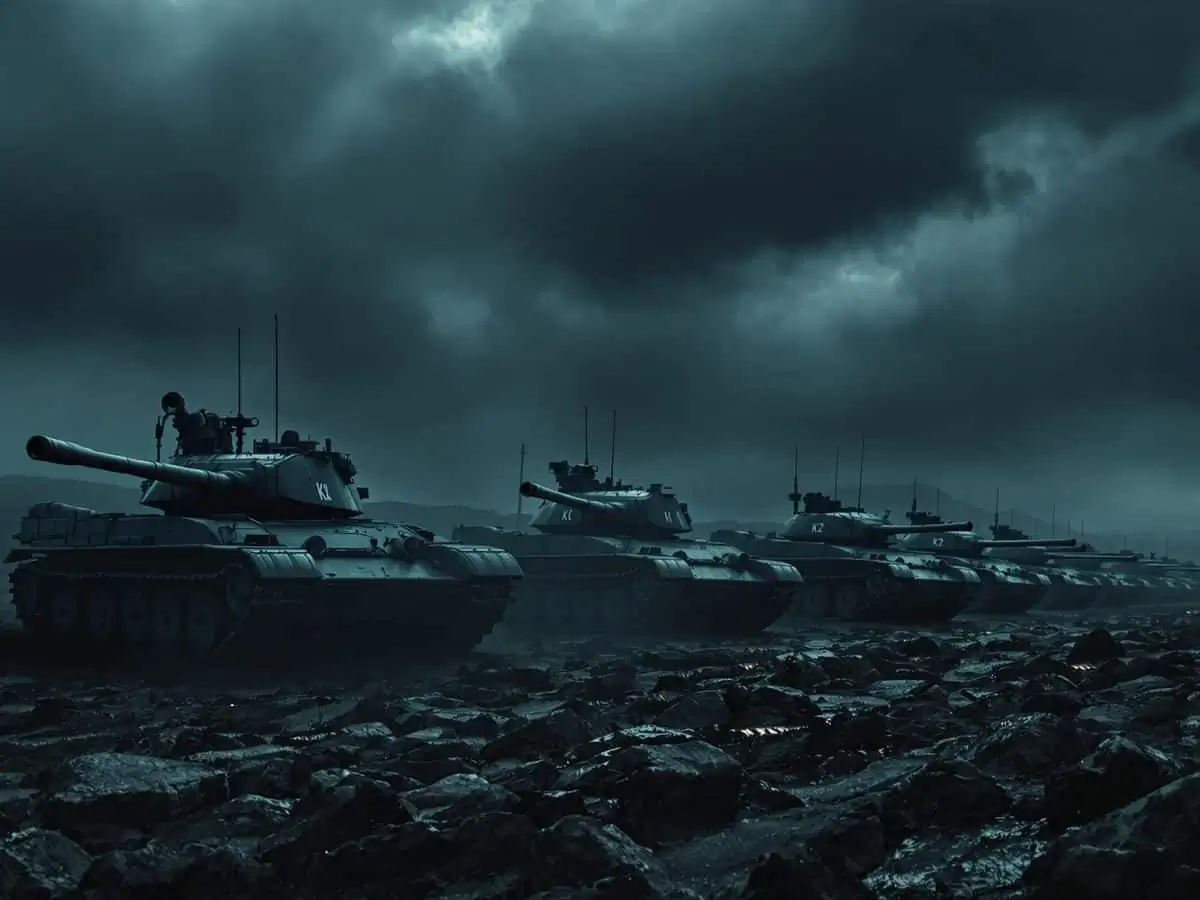
    Poland’s proactive stance is evident in its recent deployment of K2 Black Panther tanks along its border with Russia. This move underscores Poland’s commitment to enhancing its defensive capabilities amid rising regional tensions. The K2 tanks, manufactured by Hyundai Rotem in South Korea, are designed to meet the demands of modern warfare and are equipped with state-of-the-art technology.

    The K2 Black Panther Tanks

    The K2 tanks are not just any military vehicles; they represent a significant leap in Poland’s military modernization efforts. Here are some key features:

    • Active Protection System: This technology helps defend against missiles and anti-tank weapons.
    • Mobility: The K2 can maneuver quickly over difficult terrains, making it ideal for operations in northern Poland.
    • Advanced Fire Control: Ensures precision targeting in various combat conditions.

    Poland has received its first batch of seven K2 tanks, which are being integrated into the 9th Cavalry Brigade stationed in Brano. This integration includes equipping the tanks with Polish Army systems, ensuring compatibility with national operational frameworks.

    Strategic Importance of the K2 Tanks

    The deployment of K2 tanks near the Kaliningrad enclave is a strategic move aimed at deterring potential aggression from Russia. The Kaliningrad region, located between Poland and Lithuania, serves as a critical point for NATO’s defense strategy in Eastern Europe. By positioning advanced military equipment in this sensitive area, Poland aims to strengthen its role as a key NATO member on the eastern flank.

    Poland’s Broader Defense Strategy

    Poland’s military enhancements are not limited to ground forces. The country is also investing in air power and missile defense systems. Here are some highlights:

    1. Fighter Jets: Poland is set to receive FA-50 fighter jets from South Korea and F-35 jets from the United States, enhancing its aerial capabilities.
    2. Missile Defense: The establishment of a U.S. missile defense base in Poland marks a significant step in securing the region against potential threats.
    3. Armored Forces: Poland is acquiring Abrams tanks from the U.S., further bolstering its armored capabilities.

    Conclusion

    Poland’s decisive actions in response to the evolving security landscape highlight its commitment to national and regional defense. With the deployment of K2 tanks and the enhancement of its air power, Poland is positioning itself as a formidable force in Eastern Europe. As tensions continue to rise, the effectiveness of these measures will be crucial in maintaining stability in the region. The world watches closely as Poland navigates these challenges, reinforcing its role as a key player in NATO’s defense strategy against Russian aggression.

  • Declassified: How the US Nuked Space and Changed the World

    Declassified: How the US Nuked Space and Changed the World

    On July 9th, 1962, the night sky over Honolulu, Hawaii, was ablaze with an extraordinary sight. Hotels were fully booked as people flocked to witness a nuclear explosion in outer space, a test that would change the course of military strategy and scientific exploration forever.

    Key Takeaways

    • The U.S. conducted nuclear tests in space to explore military advantages.
    • The Starfish Prime test had unexpected effects on satellites and electronics.
    • Plans existed to detonate nuclear bombs on the Moon and Mars for various purposes.
    • Nuclear weapons could potentially be used to deflect asteroids threatening Earth.

    The Birth of Nuclear Space Testing

    In the late 1950s, the U.S. military was exploring the potential of nuclear explosions in space. Scientists had studied Earth’s magnetic field and theorized that a nuclear explosion could create a protective barrier against solar radiation. This led to the idea that detonating a bomb in space could disable enemy electronics, making it a strategic advantage.

    Operation Hardtack and Early Tests

    The first significant test occurred on August 1, 1958, during Operation Hardtack. A thermonuclear warhead was launched from Johnson Atoll, detonating at an altitude of 76 km. The explosion lit up the sky and disrupted radio communications across the Pacific for hours. This success prompted further tests, including Operation Argus, which involved detonating three missiles in the Atlantic Ocean at various altitudes.

    Starfish Prime: A Game Changer

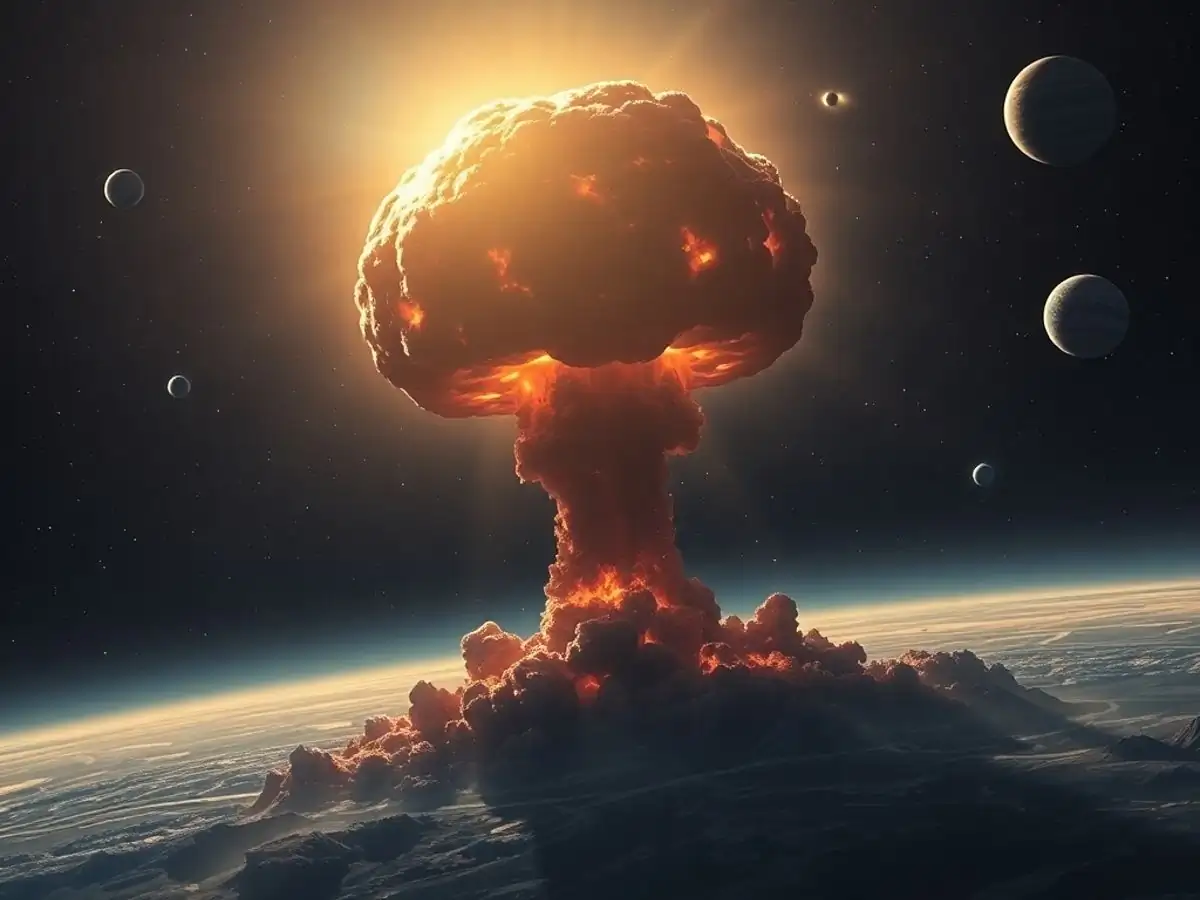
    The most notable test, Starfish Prime, took place on July 8, 1962. A missile armed with a 1.4 megaton warhead detonated at 400 km altitude, creating a massive electromagnetic pulse (EMP) that knocked out streetlights and damaged electronics in Hawaii. The effects were felt far beyond the test site, demonstrating the potential for nuclear explosions to disrupt technology on a grand scale.

    The Moon: A Target for Nuclear Tests

    In the 1960s, the U.S. considered detonating a nuclear bomb on the Moon as part of Project A119. The idea was to showcase American power during the space race against the Soviet Union. However, scientists warned that such an explosion could contaminate the Moon with radioactive dust, leading to long-term consequences for future missions.

    Project Orion: Nuclear Propulsion

    Another ambitious project was Project Orion, which proposed using nuclear explosions for spacecraft propulsion. The concept involved launching a massive spacecraft that would drop nuclear bombs to propel itself through space. While the idea was revolutionary, safety concerns ultimately led to its cancellation.

    Asteroid Defense: A Nuclear Solution?

    With over 2,300 potentially hazardous asteroids tracked by NASA, the idea of using nuclear weapons to deflect these threats has gained traction. A single megaton explosion could obliterate a city-killer asteroid, but larger threats would require exponentially more power. Current estimates suggest that the combined power of all nuclear weapons on Earth is insufficient to tackle the largest asteroids.

    Terraforming Mars: A Nuclear Approach

    Elon Musk’s vision for making Mars habitable includes detonating nuclear warheads above the planet’s polar caps to release greenhouse gases. However, calculations show that achieving any significant effect would require an impractical number of nuclear detonations, raising concerns about the environmental impact.

    Conclusion: The Future of Nuclear Weapons in Space

    The exploration of nuclear weapons in space has opened up a Pandora’s box of possibilities and dangers. While the initial tests were conducted for military advantage, the implications for planetary defense and even terraforming are profound. As we look to the future, the question remains: will nuclear weapons be a tool for scientific advancement or a threat to our existence?

  • Douglas Macgregor: Hell on Earth! 38,000 Soldiers Erased, 400 Mercs Vanish, NATO Faces Total Collapse!

    Douglas Macgregor: Hell on Earth! 38,000 Soldiers Erased, 400 Mercs Vanish, NATO Faces Total Collapse!

    The ongoing conflict in Kursk has reached a critical juncture, with devastating losses on both sides. As Colonel Douglas Macgregor highlights, the situation is dire, with Ukraine suffering catastrophic casualties and Western mercenaries facing annihilation. This analysis delves into the brutal realities of the battlefield and the broader geopolitical implications.

    Key Takeaways

    • Over 38,000 Ukrainian soldiers have been lost in the conflict.
    • Approximately 400 Western mercenaries were eliminated in a single engagement.
    • Russia’s use of electronic warfare has severely disrupted Ukrainian communications.
    • The battle for Kursk symbolizes a larger geopolitical struggle between East and West.

    The War Is Lost

    The war in Ukraine is often described as lost, with many believing it was doomed from the start. Despite ongoing support, the reality is that the situation continues to deteriorate. The focus now shifts to what actions leaders, particularly President Trump, might take regarding aid to Ukraine. The prevailing sentiment is that continued support only prolongs the suffering of the Ukrainian people.

    The Intensifying Battle in Kursk

    As weather conditions improved on November 28th, Russian forces resumed their offensive operations in the Kursk region. Utilizing drones and advanced electronic warfare systems, they executed a meticulously planned assault. This renewed offensive has led to significant shifts on the battlefield, with Russian forces effectively disrupting Ukrainian defenses.

    • Key Tactical Developments:
      • Improved visibility allowed for better drone deployment.
      • Artillery units struck with pinpoint accuracy, targeting strategic areas.
      • Malaya Lokia became a focal point due to its tactical importance.

    The Role of Electronic Warfare

    Russian electronic warfare units played a crucial role in the recent offensives. By jamming Ukrainian communications, they created confusion and limited the ability of Ukrainian troops to respond effectively. This multifaceted approach combined advanced technology with relentless firepower, dismantling enemy defenses systematically.

    The Fall of Malaya Lokia

    Malaya Lokia, a heavily fortified village, became the epicenter of brutal engagements. Russian forces encircled the village, employing artillery, drone strikes, and infantry advances. Despite initial resilience, Ukrainian forces struggled to hold their positions against the overwhelming Russian offensive.

    • Casualties Among Western Mercenaries:
      • Approximately 400 mercenaries from France, Poland, and the UK were annihilated.
      • Their mission was to support the Ukrainian 63rd mechanized infantry brigade.
      • Russian forces intercepted communications, leading to a focused assault.

    The Annihilation of Western Mercenaries

    The fate of the Western mercenaries was grim. Isolated and outmaneuvered, they faced relentless artillery fire and were unable to regroup. The Russian military’s strategic precision and overwhelming firepower proved too much for these elite fighters.

    • Key Factors in Their Destruction:
      • Lack of coordination due to jamming of communications.
      • Russian forces anticipated the retreat of Ukrainian troops.
      • Use of thermobaric munitions left little chance for survival.

    The Myth of North Korean Forces

    Amidst the chaos, rumors of North Korean soldiers fighting alongside Russian forces have circulated. However, credible evidence supporting these claims remains absent. Ukrainian intelligence has not confirmed any encounters with North Korean troops, raising questions about the validity of such reports.

    The Toll on Ukrainian Forces

    The conflict has taken a staggering toll on Ukraine, with reports indicating nearly 38,000 troops lost. The situation is compounded by the loss of advanced Western equipment, which has been neutralized by Russian forces. The psychological impact on Ukrainian soldiers is profound, with many expressing feelings of abandonment and uncertainty.

    • Challenges Faced by Ukraine:
      • Disruption of supply lines due to targeted Russian strikes.
      • Growing disillusionment among troops regarding leadership and strategy.
      • Comparisons to earlier failed operations highlight the dire situation.

    The Geopolitical Stakes

    The battle for Kursk is not merely a military confrontation; it represents a broader geopolitical struggle. With President-elect Donald Trump set to take office, the stakes are higher than ever. Both Ukraine and Russia are maneuvering for favorable positions ahead of anticipated peace talks.

    • Strategic Importance of Kursk:
      • Holding Kursk is vital for Ukraine to maintain Western support.
      • For Russia, retaking Kursk signifies military dominance and political leverage.

    Conclusion

    The battle for Kursk is a microcosm of the larger conflict between East and West. As the situation continues to evolve, the implications for Ukraine’s military strategy and geopolitical standing are profound. The outcome of this battle will shape future negotiations and the course of the conflict. Stay informed as we continue to analyze these high-stakes developments.