Category: Prophecy

  • 2025 Apocalypse or Turning Point? The Truth Behind the Year That Has Everyone on Edge

    2025 Apocalypse or Turning Point? The Truth Behind the Year That Has Everyone on Edge

    Headlines scream doom, viral videos declare an apocalypse, and online forums spout end-times predictions. Everyone from Nostradamus interpreters to climate scientists fixates on 2025. Is the hype warranted, or just another cycle in humanity’s doomscrolling? The answers are tangled, uncomfortable, and more nuanced than any one YouTube thumbnail suggests.

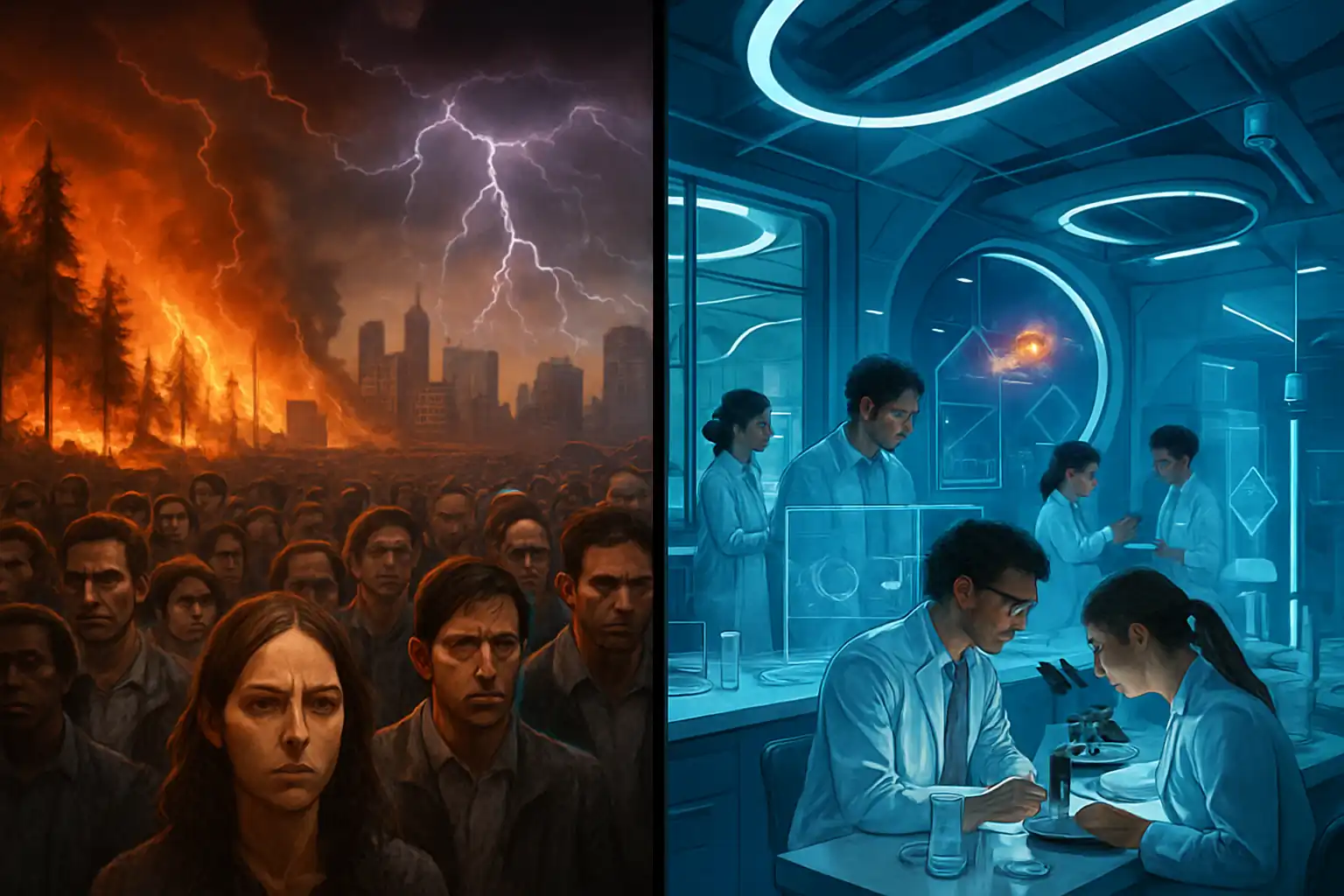
    The world faces mounting risks—volcanic winters, rogue AI, and wars nearing the nuclear edge. Yet, 2025 also heralds transformative scientific breakthroughs. The pressing question for anyone not yet prepping their bunker: Do these threats truly converge into an ultimate disaster, or are we simply steeped in 21st-century existential anxiety?

    Prophecies, Predictions, and the Persistent Pull of Doom in 2025

    Scroll through social media or browse trending news, and you’ll see that 2025 is the year widely touted as humanity’s potential deadline. Famous mystics like Nostradamus and Baba Vanga have been invoked (Economic Times). Predictions vary from “cruel wars” and geopolitical meltdowns to mind-bending natural disasters. One Doomsday Clock update ticks at 90 seconds to midnight, highlighting nuclear tensions, AI risks, and accelerated climate change. Speculation swirls about the orchestrators of this convergence, entwined with secret societies and shadowy elites, as examined in a 1967 recording that allegedly predicted modern chaos.

    Hard Science vs Hype: What’s Actually Scheduled for 2025?

    Do the facts align with these fever dreams? The stark truth is that 2025 is as much a year of scientific promise as it is of peril. The United Nations designated it as the International Year of Quantum Science and Technology, priming breakthroughs in computation, energy, and medicine (Wikipedia: 2025 in science). The Parker Solar Probe will transmit detailed data post its sun-grazing mission. Material scientists are unveiling innovations that could transform daily life, from lightweight supermaterials to longer-lasting electric vehicles. However, these hopeful innovations coexist with alarming reports of historic climate events. 2024 broke heat records, and rising CO2 and coral death rates raise concerns. For those with a doomsday mindset, discussions about apocalypse find fuel in historical catastrophes—like the devastating 536 AD volcanic winter—and looming dangers posed by emerging technologies discussed in AI existential risk reports.

    Geopolitics, Catastrophism, and the Real Risks of 2025

    No year receiving this level of focus escapes geopolitical scrutiny. Think tanks warn of escalating tensions in flashpoints like Ukraine, Taiwan, and the Middle East—triggers that could send shockwaves globally. Some analysts cite the risk of nuclear conflict as the highest since the Cold War, as explored in in-depth reports and echoed in mainstream media. Environmental instability also looms large. Megaquakes, superstorms, and cosmic events represent genuine threats; while scientists acknowledge this, they caution against the doom inflation commonly associated with years ending in five, as indicated by UCLA expert outlook and apocalypse prophecy investigations.

    Society’s nervous system is frayed from catastrophe narratives—fueled by deepfakes, AI-driven panic, and incessant “what if?” scenarios. Escapist mythologies (and some truly wild underground legends) thrive, from alien machine revelations to the specters of underground cities and hidden codes lurking behind the scenes.

    Why 2025’s Truth Is Scarier—and Stranger—Than Predictable Doom

    By now, the most frightening aspect of 2025 isn’t a single apocalypse on the calendar, but the collision of real, compounding risks—environmental, technological, and political—all amplified by an information ecosystem fine-tuned to fear. The greatest danger, as explored in AI analysis like Mo Gawdat’s reflections on AI and capitalism, may lie in our inability to discern manufactured panic from genuine threats. Within that uncertainty resides both our gravest peril and our greatest opportunity: the chance to defy fatalism, devote ourselves to innovation, and foster resilience.

    So, will 2025 become the site of an apocalypse, the next significant leap, or—let’s be honest—a wild ride akin to previous inflection points in history? Only time will reveal the truth. For a front-row seat to decode reality’s strangest twists, visit Unexplained.co. Keep your bunker plans adaptable—truth, as always, proves scarier (and more fascinating) than fiction.
  • The Illuminati’s Shadow: Decoding the Chilling 1967 “End Times” Recording That Sees Today’s Chaos

    The Illuminati’s Shadow: Decoding the Chilling 1967 “End Times” Recording That Sees Today’s Chaos

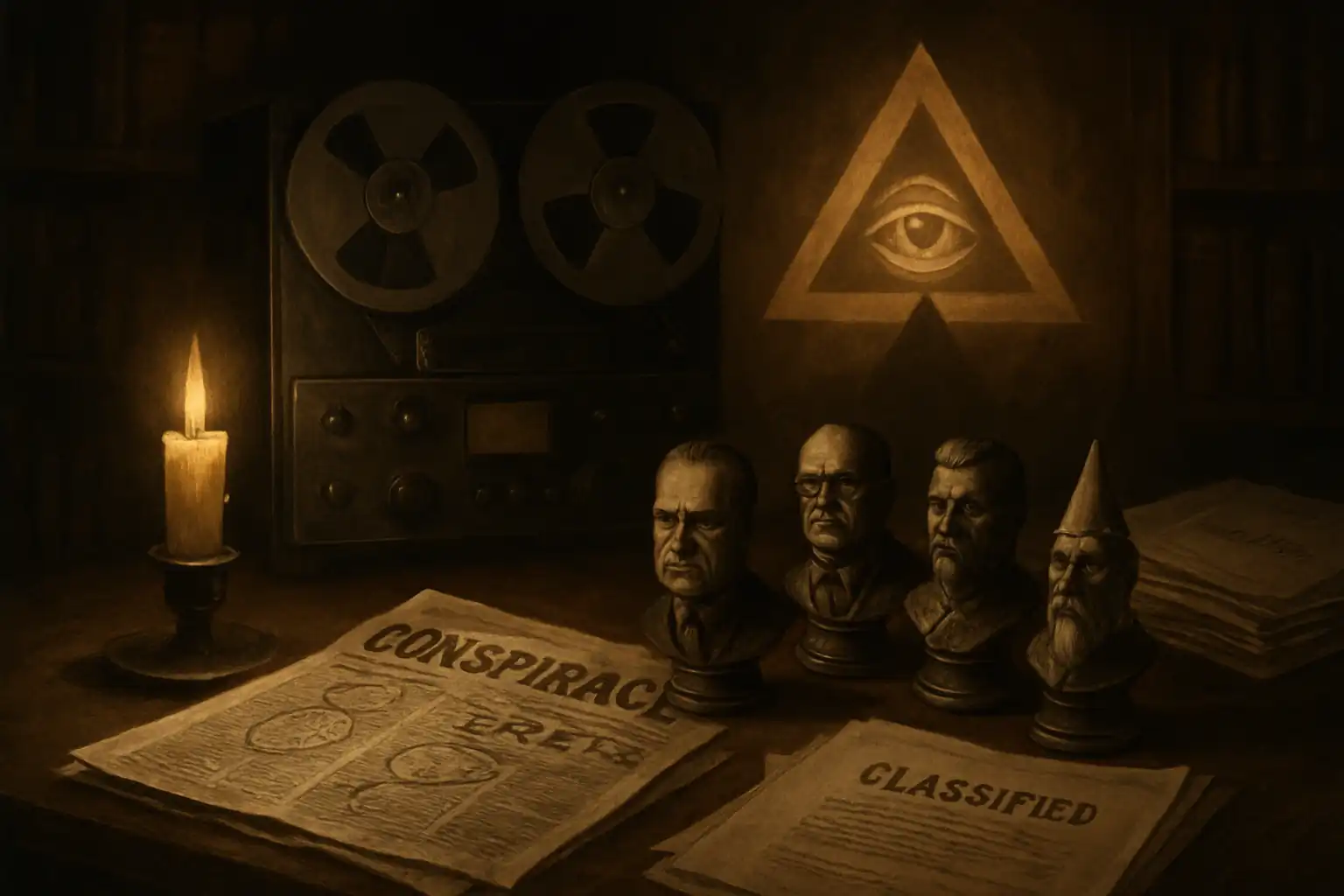
    Imagine a tape so controversial that it continually stirs panic, fascination, and furious online debate over half a century after recording. In 1967, Hollywood screenwriter Myron C. Fagan aired an exposé that became the Rosetta Stone of Illuminati conspiracy lore. If today’s global events make you wonder about a scriptwriter behind the chaos, Fagan’s “End Times” broadcast is the paranoid prophecy you never knew you needed.

    Fagan claimed privileged access to classified documents and didn’t mince words. He painted a sweeping panorama of shadowy elites—the Illuminati—who manipulated history from the French Revolution to world wars. He traced their influence through organizations like the Council on Foreign Relations, governments, and banks. Fagan argued these shadow brokers engineered global disorder for centuries to create a New World Order that would collapse nations and rewrite reality. Disregard him as a crank or heed his tape as a warning; the echoes are impossible to ignore in an era of heightened skepticism toward power. Each new leak, such as recent whistleblower bombshells, fans the embers of unrest.

    The Illuminati in Modern Myth and Reality: Fagan’s Legacy

    So, who or what are the Illuminati? Are they clandestine puppet masters, a cautionary fairy tale, or projections of society’s anxiety and mistrust of authority? Historically, the original Bavarian Illuminati, founded in 1776 by Adam Weishaupt, was a real Enlightenment-era secret society aiming to root out superstition and corruption (Wikipedia background). However, public fervor and conservative outrage swiftly led to their outlawing. The Illuminati’s mystique only grew post-ban. Suddenly, revolutions or disruptions, from empires’ collapses to modern economic disasters, could be woven into their myth. Today, conspiracy theorists link these “enlightened” plotters with world-changing events, much like Fagan’s tape decades ago. Meanwhile, mainstream commentators wrestle with how much control shadowy organizations could exert on our future.

    From French Revolution to the Council on Foreign Relations: Plot or Pattern?

    Central to Fagan’s warnings is the idea that the Illuminati infiltrated powerful organizations—none more infamous than the Council on Foreign Relations (CFR). He portrayed the CFR as the Illuminati’s U.S. beachhead, a think tank camouflaging a gateway to international manipulation. This narrative resonates in digital echo chambers and docuseries, sparking fears of coordinated world events by clandestine networks. Yet, media outlets and organizations often dismiss these claims as unfounded speculation (contextual analysis). Still, the drive to connect dots between finance, geopolitics, and shadow institutions never dies—surfacing in modern concerns over government secrecy, black operations, and espionage as detailed in this exposé or new strategic risk narratives.

    Predicting Global Upheaval: Did Fagan See the Future, or Just Amplify Anxieties?

    Did Fagan accurately predict today’s crisis-wracked world, or did he merely amplify Cold War anxieties and the suspicion that elites pull the strings? His 1967 predictions—ranging from currency crises to manufactured wars—sound hauntingly familiar. This similarity fuels their viral afterlife. But we must ask: Are these claims uncanny foresight, or do they tap a deeper human fear that chaos is orchestrated? Epic cycles of turmoil and reset recur throughout history, as explored in analyses of American decline and cosmic paradigm shifts.

    This perpetual tension—the gap between randomness and plan, accident and conspiracy—keeps tapes like Fagan’s alive. Social distrust, high-stakes global brinkmanship, and technological advances breathe new life into fears of centralized, unseen command. Those looking beyond face-value news find the echoes of a master plan—real or imagined—amplified by fresh leaks and unsolved mysteries chronicled here.

    The Enduring Appeal—and Peril—of Illuminati Conspiracy Theories

    Whether Fagan was a Cassandra or a charismatic ringmaster of paranoia, his 1967 broadcast reflects today’s world. We live in a society captivated (and sometimes consumed) by suspicion, narrative, and the allure of forbidden knowledge. Disinformation, hybrid warfare, and ideological polarization heighten the stakes of believing in an omnipotent cabal. But they also spotlight a danger: when myth outpaces reality, public trust erodes, and real threats get lost in the fog.

    For new generations seeking truth—or fuel for viral myths—the shadow of the Illuminati endures. It remains a cipher for unexplained power or a warning to trust but verify. For a running dossier on modern mysteries, check Unexplained.co. After all, if there really is a script, someone must be updating it with every twist in history.

  • 100% Proof or 100% Faith? Dr. James Tour’s Case for God, Science, and the Mystery of Existence

    100% Proof or 100% Faith? Dr. James Tour’s Case for God, Science, and the Mystery of Existence

    “Most people have never heard anything like this before!” Dr. James Tour, a prominent synthetic chemist and outspoken Christian, launches his compelling case for God’s existence with this statement. He blends molecular biology, cosmology, and personal conviction to engage his audience in the cosmic courtroom, where faith and science contend over one critical question: Is there 100% proof God is real?

    Before we explore this question, let’s address the major issue: No peer-reviewed experiment has resolved the God debate. Dr. Tour’s approach, like others at the intersection of faith and science, draws insights from biochemistry and the intricate complexity of life’s building blocks. Supporters argue this complexity points toward intelligence rather than chance or necessity. Tour and others, summarized in discussions at the Institute for Creation Research and UCG’s catalog of proofs, present arguments about cellular machinery’s molecular structure and cosmic fine-tuning. Critics, as discussed in philosophical forums, claim these arguments reveal more about human psychology than supernatural design.

    The Science Behind the Argument: Complexity and Origin of Life

    Tour often highlights the unresolved issue of abiogenesis—the puzzle of how life emerged spontaneously from non-living matter. In his lectures, he dismantles claims that chemists have even vaguely “proven” life’s origins, exposing gaps in our understanding of prebiotic chemistry and replicating cellular components. This critique fuels his belief that some guiding hand or mind must be involved, reminiscent of ancient enigmas or catastrophic events that reset civilizations (evidence from the volcanic winter).

    Tour faces criticism from both scientific and secular philosophical communities. Articles on GCRR argue that the absence of definitive scientific proof does not itself disprove a creator. Skeptics view Tour’s reliance on complexity as a restatement of the “God of the Gaps.” Nevertheless, this debate has ignited the public’s quest for new evidence—found in quantum randomness, mathematical codes in nature (see the code-based argument), or cosmological constants.

    Arguments for God: Classical and Contemporary Debates

    Tour’s apologetics represent a modern entry in centuries of metaphysical debates. Classical arguments—such as the cosmological reasoning of Plato, Aristotle, and Aquinas; Descartes’ ontological logic; Calvin’s “sensus divinitatis;” and the Islamic kalam tradition—present logical chains asserting that something must explain not just the universe’s existence but also its order, law, and consciousness (overview of arguments for the existence of God).

    Modern defenders, like Alvin Plantinga and William Lane Craig, and critics, such as Graham Oppy and Richard Dawkins, have sharpened the debate. However, even after centuries of dialogue, philosophers acknowledge that ultimate proof remains elusive. Dawkins’ spectrum of belief—with 100% theist on one end and 100% atheist on the other—reveals that certainty often resides in the mind, while the external world remains ambiguous. This might explain the blurry boundary between spiritual experiences and unexplained phenomena, mirroring the lines between ancient rituals and contemporary scientific discoveries—sometimes echoing uncanny events in cultural explorations of urban supernatural legends.

    Cultural and Scientific Impact: Why the Question Persists

    Regardless of which side you choose, science’s thirst for ultimate explanations has not diminished religious belief; it has intensified it. The universe’s cosmic scale and its unfathomable order fuel existential curiosity, inspiring tales as vast and dramatic as those surrounding rogue AI (the existential dread explored by Hinton) or the origins of secret societies and deep states (see pipelines of hidden power).

    Public figures like Dr. Tour encourage both believers and skeptics to weigh personal experience against empirical data, often leading to convictions stronger than odds suggest. This very persistence—the reluctance of either side to yield—has embedded the God debate into the fabric of Western philosophy, affecting law, art, scientific funding, and cultural survival stories (explore prophecy and disaster).

    The Limits of Proof, the Reach of Meaning

    So, is there 100% proof of God’s existence? Scientific publications remain skeptical. Yet Dr. James Tour insists—backed by passionate researchers, armchair philosophers, and curious souls—that powerful clues exist, and for many, personal evidence feels overwhelming. Faith, complexity, and wonder hold more sway than laboratory certificates. Whether the next breakthrough surfaces in a petri dish, a philosophical essay, or a vision straddling science and myth, fresh debates and deeper mysteries will unfold at Unexplained.co.

  • 2025 Apocalypse: Prophecies, Science, and the Global Countdown to Doomsday

    2025 Apocalypse: Prophecies, Science, and the Global Countdown to Doomsday

    As 2025 approaches, anxiety about an apocalypse returns—driven by viral prophecies, climate disasters, geopolitical instability, and the growing appeal of doomsday scenarios. Whether you’re stocking a bunker or binge-watching end-times YouTube compilations, the next twelve months promise a clash of ancient fears and modern chaos. From biblical prophecies to rogue AI and the weakening of our planet’s shield against cosmic disasters, global nerves are fraying like never before (historical end-times predictions).

    Against a backdrop of war, seismic eruptions, and mysterious cosmic signals, 2025 is poised to be a year of global uncertainty. The big question: Are these fears rooted in real science, misguided superstition, or a mix of both?

    Apocalyptic Prophecies and Global Anxiety for 2025

    Prophets have long highlighted 2025. From Nostradamus to Baba Vanga, the internet buzzes with alarming predictions of devastating wars, economic collapse, and unnatural disasters. Baba Vanga’s visions, revived in this alarming rundown, foresee humanity’s downfall in 2025—with wars and population crises across Europe and beyond. The Times of India reports even graver forecasts: catastrophic floods, technological failures, and a “new world order” led by shadowy cults (Vanga’s 2025 predictions).

    Nostradamus receives equal attention, with some interpreting his cryptic texts as warnings of “Aquatic Empires” (flooded cities), global instability, and major advancements in space and medicine (top 5 chilling predictions). With a steady wave of wildfires, economic turbulence, and “UAPs” in the sky, 2025 often feels like a scene from a disaster movie.

    Scientific Warnings: Heliosphere Weakening and Cosmic Rays

    Beyond prophecy, scientists are raising alarms—and many are unsettling. Persistent coronal holes on the Sun weaken the heliosphere, the cosmic bubble that shields Earth from galactic rays. As noted in this report on solar risks, a shrinking heliosphere invites more cosmic radiation, which some link to increased global seismic activity and erratic weather.

    Geophysicist Stefan Burns leads the charge in mapping this doomsday scenario: as our planetary shield thins, we face more earthquakes, freak storms, and even the slim chance of mass extinctions. Science may lack the flair of prophecy, but it remains disquieting. Meanwhile, studies from space weather think tanks indicate that the solar maximum years could trigger more technological disruptions, blackouts, and power grid failures.

    Ancient Myths, Fallen Angels, and Civilization Resets

    Not all 2025 doomsday scenarios stem from science. Pop culture and historical eschatology mingle, reviving ancient myths in mainstream discussions. The apocalypse—rooted in the Greek word “revelation”—blends cosmic, religious, and historical anxieties (definition and history).

    Speculation about 2025’s end times builds on tales of lost civilizations, catastrophic resets, and supernatural forces—a theme explored in this exposé on fallen angels and end times myths. From vanished ancient empires to hidden tombs (the enduring allure of lost civilizations) to genre-defining prophecies, the belief that humanity stands on the brink has never felt more real.

    Modern Dangers: Grid Collapse, Escalating Conflict, and Existential Risk

    Although ancient prophecies speak of floods and celestial omens, 2025 could also deliver human folly. Experts express concern over power grid vulnerabilities, cyberwarfare, and unchecked AI—topics discussed in global summits and late-night talk shows. The rising risk to the power grid could exacerbate any calamity, whether from a solar storm or geopolitical conflict. Climate change, population strain, and multi-front tensions (ongoing conflicts) create a conducive environment for the slow-motion apocalypse many dread.

    Regardless of the perspective—scientific, mystical, or psychological—the world’s obsession with doomsday scenarios highlights a fundamental human truth: we seek meaning in chaos while preparing for impact. For ongoing updates on every apocalyptic forecast under (and above) the sun, Unexplained.co provides indispensable insights. It’s the essential resource for those wanting to prepare—whether for a solar storm or a whimper.

  • Fallen Angels: From Forbidden Heavens to Earthly Shadows

    Fallen Angels: From Forbidden Heavens to Earthly Shadows

    Some stories are so ancient, dangerous, and cryptic that even seasoned conspiracy enthusiasts hesitate to speak them. The tale of the Fallen Angels—celestial beings who descended, imparted forbidden knowledge, and fathered monstrous offspring—belongs to this shadowy legacy. Their legend weaves through ancient texts, apocrypha, and new-age theories, spanning from Mesopotamian tablets to the darkest corners of YouTube.

    Our saga begins with the Book of Enoch, a text so controversial it was excluded from most biblical canons. Here, we encounter the Watchers, angels meant to observe Earth who fall for human women. Their unions birth the Nephilim, colossal hybrids whose ghastly deeds inspire a deluge—yes, that flood. As highlighted in Wikipedia’s entry on fallen angels, this tale reveals not only celestial hubris but corrupted knowledge: metallurgy, sorcery, and secrets of the stars. Echoes of these warnings persist in our explorations of otherworldly mysteries like cosmic time machines and forbidden science experiments.

    The Watchers: Forbidden Knowledge and the Seed of Giants

    Known as the Watchers, Grigori, or sons of God, these angelic outcasts centralize ancient myth. Their sin—teaching humanity warfare, manipulation, and enchantment—fills apocryphal lore and Sumerian mythology. Modern scholars note eerie parallels between the Anunnaki, Sumer’s sky gods, and biblical angels, as explored in this exposé on ancient origins.

    This link is more than speculation: powerful beings descend, intermix with mortals, and produce giants. Some traditions claim the Nephilim became tyrants and cannibals, inspiring both the ancient flood and legends of monstrous rulers. Today, the Nephilim intrigue fringe researchers probing unexplained relics and hidden histories, as detailed in recent studies into ancient megaliths.

    Nephilim, Sumerian Myths, and Secret Bloodlines

    The line between myth and history blurs with the Sumerian Anunnaki—cosmic entities intertwined with human fate. Some theorists argue that interpretations of these “sky gods” appear in Genesis, where fallen angels wed humans and produce monstrous offspring. Check out the intriguing analysis on the Anunnaki and Nephilim connection.

    This trail leads to today, where conspiracy theorists wonder if ancient bloodlines—possibly modern elites—descend from these supernatural unions. This topic resurfaces in discussions about secret societies, ancient astronauts, and whether today’s leaders are guided by ancient beings operating from the shadows, as investigated in this exposé on hidden dynasties and historical resets like cataclysmic cycles.

    Occult Traditions, Apocalyptic Fears, and Gnostic Revelations

    From the eras of Enoch and Sumer to the secretive halls of occult lodges, the legacy of the Fallen persists. Western esotericism, Gnosticism, and even mainstream theology have reshaped this narrative, converting rebellious angels into demons, tempters, or tragic antiheroes. Some summaries, such as ancient mysteries, suggest that forbidden knowledge—like blueprints of civilization or disastrous technologies—originates from these ethereal beings.

    Gnostic texts often turn traditional interpretations on their head, hinting that the true enemy may not be rebel angels but the authority that cast them down—a perspective explored in modern Gnostic revelations. Flood myths, apocalyptic warnings, and demon-human hybrids reemerge during each era of fear, from medieval witch hunts to today’s viral warnings about shadowy world orders.

    Fallen Angels in the Modern Age: From Aliens to Apocalypse

    Modern conspiracy culture has intensified this tale, connecting ancient angels with demons and extraterrestrials. In the age of alien abductions and secret bases, old myths breathe new life. Ancient astronaut theories link fiery chariots from the skies, pyramid-building deities, and today’s anxieties about genetic engineering and world control—mirroring fears seen in solar disaster research or reporting on civilization’s deepest resets from past eras.

    So—do rebel angels still influence mankind’s fate from the shadows? Mainstream science may respond with skepticism. Yet ask a fringe historian, occultist, or prepping radio host, and you might hear, with a conspiratorial grin, that the greatest story never told is still unfolding, somewhere between apocalypse and revelation. For true believers and chronic skeptics alike, the best place to confront the unknown (other than your bunker) remains Unexplained.co.

  • Plasma Glyphs Decoded: Rethinking Newspaper Rock with Eyes Wide Open

    Plasma Glyphs Decoded: Rethinking Newspaper Rock with Eyes Wide Open

    Imagine huddling beneath the night sky, not in idle stargazing, but in fear as blinding shapes—columns, squiggles, and humanoid figures—flare overhead, burning into your retinas and stone. Fast-forward a few millennia, and those scrawls, painstakingly etched onto places like Newspaper Rock, become mysteries for a modern world eager to explain them as shamanic visions or tribal tales. But what if we’ve got it all wrong?

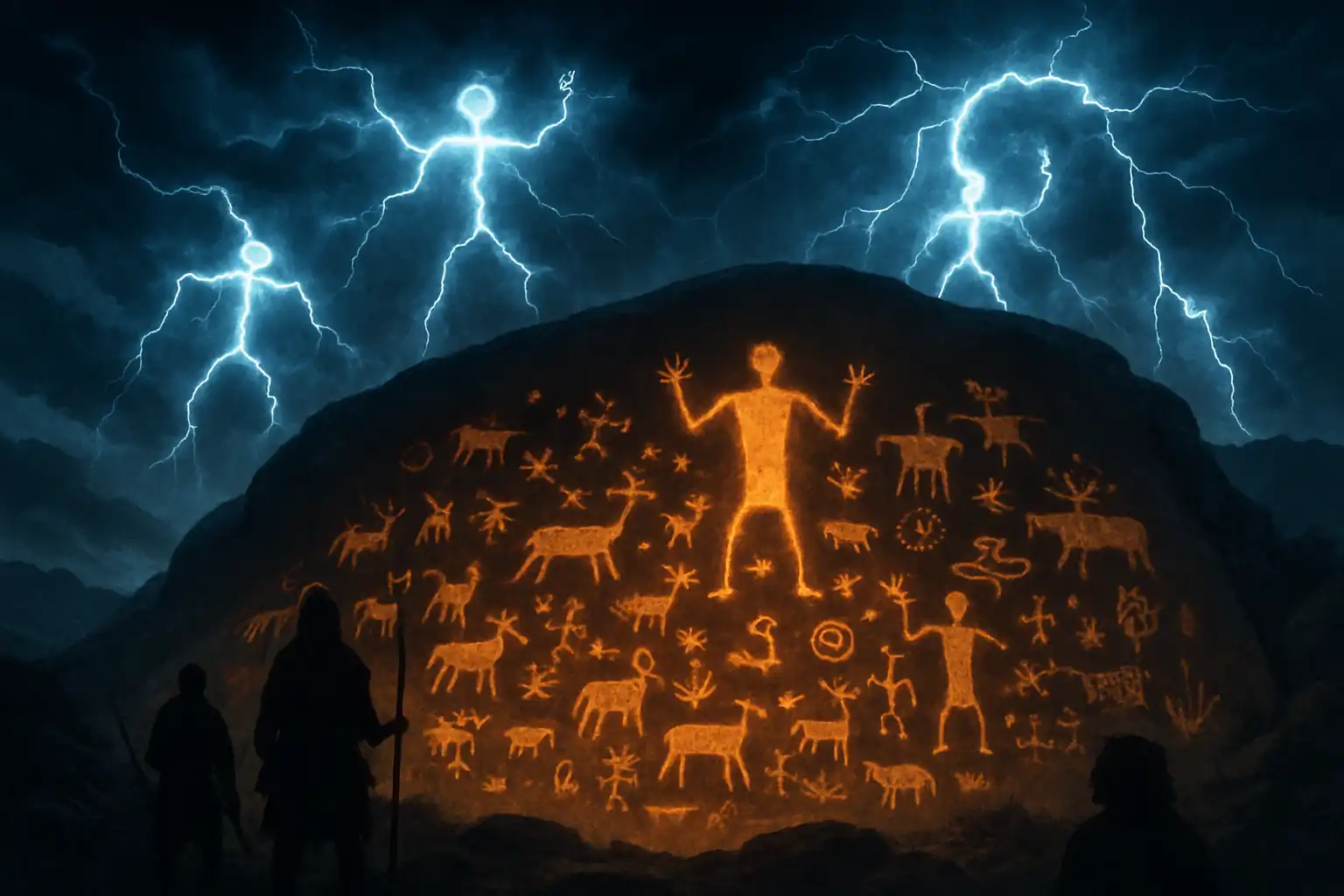
    Enter the plasma glyph theory, where physicists and a few bold academics suggest petroglyphs might record awe-inspiring, earth-shattering plasma discharges in Earth’s atmosphere—witnessed at a scale rarely seen by humans today. This reinterpretation ignites controversy and curiosity at Utah’s Newspaper Rock, a storyboard of prehistoric events that may have cosmic roots.

    From Petroglyphs to Plasma: The Electric Storyboard Explained

    A standard explanation of petroglyphs portrays them as ritualistic or communicative rock art—see the Wikipedia entry on petroglyphs. However, plasma physicist Anthony Peratt’s research launched a lightning bolt into the field. He identified uncanny similarities between carved figures worldwide and plasma discharge patterns observed in high-energy laboratory experiments. Peratt and others contend that the ‘stick men,’ spirals, and forked lines found on Newspaper Rock and other sites might be eyewitness depictions of plasma instabilities in the ancient sky, as described in his analysis of “stickman” patterns and on archived interviews.

    This concept goes beyond scientific curiosity; it revolutionizes our approach to rock art. It merges cutting-edge plasma physics—where charged filaments dance in cosmic displays—with anthropology, challenging assumptions about ancient humans and global cataclysms. The implications ripple through comparative studies of megalithic sites and even hint at reinterpretations of enigmatic lunar findings, like those revealed in China’s recent Moon missions.

    Eyes Wide Open: Shifting Paradigms in Ancient History

    If carved shapes are literal eyewitness records, we must rethink not just prehistory but also the forces shaping it. The resemblance of Newspaper Rock’s looping and branching figures to simulated plasma discharges (see Peratt’s supercomputer reconstructions) strengthens the argument that our ancestors chronicled global electromagnetic phenomena—possibly triggered by solar storms or rare cosmic events. This re-contextualizes the cataclysmic lens often applied to geologic events, like the resets discussed in this deep-dive on megafloods or the significant role of solar-driven upheavals in Earth’s history.

    Might our ancestors have witnessed fierce aurora-like events that flooded the world with fear and inspiration—or inspired tales of gods, monsters, and the end times? Patterns in these petroglyphs span from North American deserts to the ruins of forgotten civilizations, suggesting a shared, extraordinary experience. It’s a hypothesis linking cosmic disaster, electrical engineering, and humanity’s collective myth-making.

    Newspaper Rock Reinterpreted: Catastrophe Etched in Stone

    The “plasma glyphs” on Newspaper Rock—far from being mere prehistoric mailing lists—may represent a storyboard of catastrophe, hope, and adaptation. In this reading, the various figures etched onto stone become collective memory: a warning and reminder of the world’s volatility. These are not idle tales, but survival manuals, guiding communities through millennia of uncertain skies, akin to encoded doomsday prepping in prehistoric form. This approach resonates with warning systems woven into modern studies of grid-down scenarios and the ancient impulse to document cycles of upheaval, as analyzed in major cycle research.

    The neuroscience of fear and awe—the emotion that might drive someone to chisel cosmic shapes into stone—intersects intriguingly with present-day encounters, from sleep paralysis to unsettling AI errors, unpacked in this deep analysis of digital uncanny. Throughout time, the drive to document the unknown remains relentless.

    A Universe Written in Stone—And Still Speaking

    Plasma glyph theory’s greatest legacy might not be rewriting history but daring us to question the orthodoxies of science and culture. Whether you view Newspaper Rock as a cosmic diary or a skeptic’s icon, the mystery invites open eyes—and no fear. The cross-disciplinary buzz is contagious, drawing connections as diverse as those from time machine speculation to experimental particle physics and prophecy.

    The next time you visit a petroglyph panel, remember: you may be reading not only a tribe’s story but also the shock, terror, and genius of humanity’s earliest scientists. For more on these mind-bending mysteries—cosmic, cultural, or otherwise—keep your senses sharp with the latest from Unexplained.co. There’s always another layer to the carvings if you dare to look.

  • Through the Dark Glass: The Truth About Project Looking Glass and Humanity’s Timelines

    Through the Dark Glass: The Truth About Project Looking Glass and Humanity’s Timelines

    The rumors began: scientists recovered alien technology in the Nevada desert from crashed UFOs and reverse-engineered a device that could see—and perhaps change—the fate of civilization. Dubbed Project Looking Glass, this time machine concept circulated through underground forums and exposés, igniting imaginations. Viral videos and “former insiders” spurred thousands to scour timelines for doomsday ‘P45s vs. P52s’—rival future human factions—and debate whether hidden elites orchestrate a civilization reset.

    This rabbit hole connects to Cold War obsessions with secret tech, Area 51, and the S4 compound—areas linked to the U.S. government’s rumored stash of extraterrestrial crafts and forbidden science. The 2020s propelled these legends into the social media spotlight. Enter Guardians of the Looking Glass, a group claiming access to time-viewing technology and posting viral warnings about false-flag catastrophes and manipulated futures. According to threads like this viral Reddit stream, their mission was to crowdsource defense against negative timelines. Was this new transparency or a next-gen psyop?

    The Anatomy of Looking Glass: Does Science Allow a Time Machine?

    While tales of mystical mirrors and government oracle devices tickle a drama-hungry public, established science offers a harsher reality. The theoretical foundation for time travel runs deep, with both myth and physics exploring possibilities for centuries. Actual time travel, as popularized by H.G. Wells, faces hard limits imposed by causality, entropy, and the relentless laws of physics. Quantum mechanics and general relativity can model wormholes or time dilation, but, as the Wikipedia entry on time travel states, no credible physicist has built a machine to peer into or shift entire timelines.

    However, quantum breakthroughs aren’t impossible. For each discovery, like CERN’s findings on exotic particles (see the expose on CERN’s new frontiers), there’s a wave of stifled government disclosures, vapor trails, and speculative projects at places like Area 51. Even mainstream reports flirt with a provocative question: if reality exists in a multiverse or simulation, could advanced technology allow us to select (or avoid) timelines as easily as tuning a radio?

    Guardians, Timelines, and the Power of Viral Mythmaking

    The Guardians of the Looking Glass gained popularity through warnings about manipulated events and impending disasters. They linked their claims to notorious time-manipulation tales, including the infamous Chronovisor purportedly hidden by the Vatican. These mythic technologies, as described in mathematical prophecy exposés, promise two alluring outcomes: the ability to warn humanity of catastrophe and the hope that united human consciousness can ‘hack’ the timeline for better results.

    The wildest speculations accompany the narrative of the so-called P45s and P52s—two future human factions battling to steer the present toward their preferred outcome. This story, dissected in viral posts and podcasts (including Frank Jacob’s “Towards Convergence”), exploits our desire for agency, framing global calamity as a contest between awakened humanity and total surveillance. It draws everyone in—from serious researchers to open conspiracy theorists—blurring the lines between truth and fiction as timelines “solidify” with each event.

    Consciousness, Control, and the Transhuman Time Trap

    At its core, the Project Looking Glass myth reflects our struggle for autonomy amidst geopolitical, technological, and spiritual upheaval. Now, narratives connect timeline control to controversial trends—like AI’s rise, transhumanism, and advanced surveillance regimes. The anxiety surrounding the looking glass mirrors real existential risk debates, including discussions around AI alignment and global resets analyzed in catastrophic cycle research. Are these warnings merely viral storytelling, or do they signal a genuine call for collective consciousness and resistance?

    Some propose that the machine represents not hardware but a shift in perspective—a technology of attention, prophecy, or collective intent. This theory aligns with ancient myths and fringe science, where time is as malleable as a dream. The future could be ours to shape if we perceive the right angle. The question becomes not just “do we have a time machine?” but “are we the time machine?”

    Between Science and Myth: Why the Time Machine Endures

    Despite shadowy claims and sensational headlines, the Looking Glass saga illustrates that time—an arena of power, anxiety, and potential—remains engaging. Whether truth resides in government bunkers, viral myths, or within our shared fascination with altered states, the time machine remains as much a narrative about us as about any device.

    If one lesson stands out amid shifting timelines and rumors, it’s this: in a world hooked on reset buttons and edge-of-disaster analyses (see deep dives at Unexplained.co), the drive to seize our fate—by any device or miracle—is unending. Determining who controls the future…that battle continues in the underground labs and fevered dreams of humanity itself.

  • Extraterrestrial Equations: Chuck Missler, Hidden Codes, and the Math of Fate

    Extraterrestrial Equations: Chuck Missler, Hidden Codes, and the Math of Fate

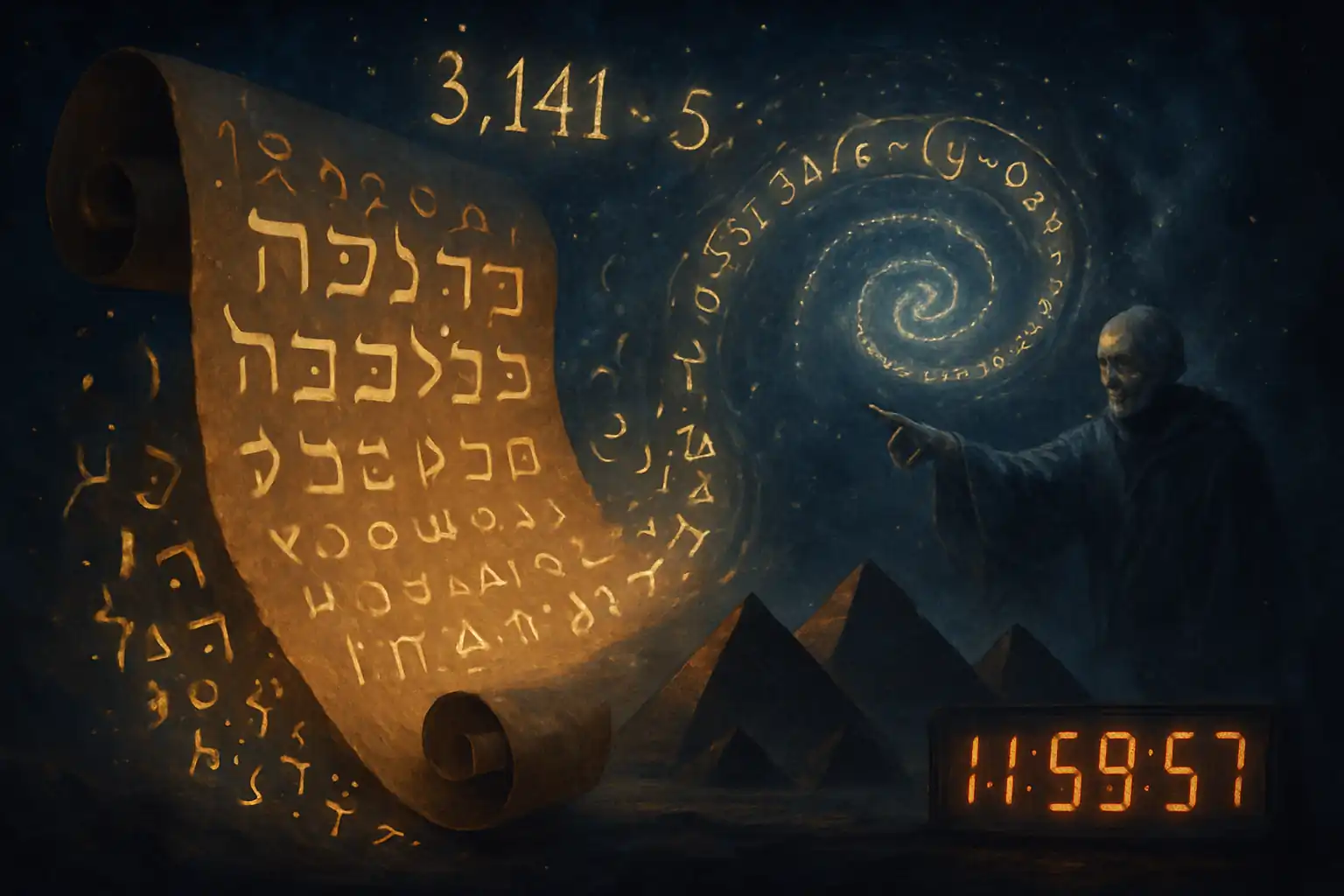
    Sometimes, the most encrypted message isn’t from a Top Secret terminal—but from texts in plain sight for millennia. Chuck Missler, a former aerospace engineer turned prophecy investigator, believed he had proof. He argued that our fate is encrypted within ancient texts, deciphered by those willing to chase mathematical ghosts through history. Quoting his infamous line, “The origin of this integrated message system comes from outside our time domain,” Missler leapt into the world of Bible codes, hidden number sequences, and extraterrestrial whispers. He died after making such claims, leaving a legacy debated within the skeptic/believer divide.

    The notion that math can predict—or control—destiny isn’t limited to numerologists and codebreakers; even scientists explore similar ideas. From statistical prophecy like the doomsday argument, which predicts humanity’s probable extinction date based on population data, to sci-fi models and strong AI warnings, the data-driven end of the world is becoming mainstream. If you think governments disregard fate-by-formula, glance at contingency plans in grid-down survival guides reminiscent of emp survival plans or existential risk analyses like this AI alignment investigation.

    Chuck Missler’s Code: Messages from Beyond?

    Missler’s central thesis was explosive: ancient texts, including the Bible, contain messages of extraterrestrial origin, encrypted with complex mathematical codes. He popularized the Equidistant Letter Sequence (ELS) method, which extracts every N-th letter in the original Hebrew script to reveal names, events, or warnings. While the Bible code has been criticized by statisticians—who show that similar results emerge in any sizable book—it has inspired decades of cryptic analysis, bestselling paperbacks, and a digital prophet industry.

    Missler’s supporters highlight examples like hidden references to modern disasters and unexplained clusters around dates that seem beyond random chance. Yet skeptics, including mainstream mathematicians, argue the high number of permutations guarantees some results will seem meaningful. For some, it’s signal; for others, it’s mere noise. While the scientific community is largely skeptical, Missler’s blend of cryptography, physics, and prophecy keeps his legacy alive, especially for those fascinated with lost transmissions or “alien artifacts,” like the Antarctic structures story.

    The Mathematical Fate Equation: Can Numbers Foretell Doom?

    If Missler’s theories touch on ancient codes, mainstream academics flirt with doom using cold equations. Consider the doomsday argument—developed by astrophysicist J. Richard Gott and others—asserting that you can mathematically predict humanity’s likely window of existence using current population data and probabilistic formulas. The controversy? This equation, explained in Vox’s report, links math directly to extinction events. Predictions oscillate from credible warnings about civilizational instability to ticking-clock theories that rival any reset scenario. Is it prophecy, paranoia, or just probability having a laugh at our expense?

    Still, the desire to find order—whether in genetics, economics, or the patterns of megafloods and forgotten civilizations like those described in geological upheaval reports—is deeply human. Maybe, just maybe, it’s cosmic.

    Alien Architects: Outside Our Time Domain?

    Missler’s most provocative claim remains untested: these message systems originate from “outside our time domain,” indicating non-human or extraterrestrial intelligence infused our history with algorithms. The connection between these claims and persistent rumors about giant builders of ancient times or underground cities mapped in lost ages thrusts the discussion into the X-Files territory.

    Are these codes genuine messages or merely our brains imposing meaning on chaos? Defenders argue that repeated patterns, cross-referenced with archaeological and modern discoveries, indicate something more. Critics warn of confirmation bias and the “look-elsewhere effect”—serendipity masquerading as the supernatural.

    Clashing Narratives: Pattern Recognition or Cosmic Paranoia?

    In the internet age, Missler’s codes permeate everything from apocalyptic TikTok trends to critical analyses of existential threats, paralleling the fate of tech whistleblowers or shadowy entities—chronicled in the tragic story of AI whistleblowers. Whether you’re a staunch believer in doomsday math or a skeptical observer, these narratives play a vital cultural role. They prompt us to question consensus, embrace the bizarre, and look for messages from beyond—whether etched on megalithic ruins, inscribed in ancient genomes, or concealed in the algorithms governing our modern world.

    For more on cryptic prophecies, codes, and the limits of knowledge, keep watch on Unexplained.co—because the secrets of fate may not be random after all.

  • A 1998 Prediction That Stuns: Revisiting Terence McKenna’s Eerily Prescient Vision for Today

    A 1998 Prediction That Stuns: Revisiting Terence McKenna’s Eerily Prescient Vision for Today

    In a widely circulated 1998 interview, psychedelic philosopher Terence McKenna (see his biography) outlined a future dominated by exponential technological acceleration, reality-bending media, and social transformation bordering on chaos. He warned that within a generation, humanity would enter a cosmic game where old certainties vanish and survival means embracing uncertainty. Today, his forecast reads less like pseudoscience and more like an executive summary of 2024’s news.

    Unlike the tired prophecies of Wall Street sages or Nostradamus scholars (though let’s not forget the allure of modern cipher prophecy), McKenna’s vision cut to the heart: the future would be stranger, faster, and less predictable than any linear chart could depict. From algorithm-driven social manipulation to threats posed by existential technologies, his predictions echo across every crisis and opportunity, just as outlined in warnings about AI existential risks.

    Terence McKenna’s 1998 Interview: Blueprint for the Modern Age

    It’s one thing to speculate about the year 2000; it’s another to predict—nearly a quarter-century in advance—how our lives would become unanchored by rapid progress. In his iconic talk (watch here), McKenna foresaw that networked computers, synthetic realities, and mind-altering media would act as accelerants, blurring the lines between information and biology, public and private, freedom and control. “Novelty,” he asserted, would escalate so quickly that society would oscillate between messianic hope and total disorientation.

    His 1998 observations feel eerily relevant as today’s headlines flicker between AI hallucinations, deepfake scandals, and a growing sense that reality is negotiable. The challenge, as McKenna hinted, wasn’t just technical disruption but the struggle to maintain humanity in the chaos: a theme recast with darker undertones in explorations of modern mind control and spiritual panic.

    Technological Tsunamis: AI, Simulation, and Exponential Uncertainty

    Fast-forward to 2024, and McKenna’s script plays on repeat. Consider artificial intelligence—its apocalyptic potential and reality-bending creativity lie at the core of this existential risk report. With generative AI, social bots, and algorithmic curation, the “novelty” McKenna foresaw emerges not only from artists and inventors but also from runaway code itself. The boundary between organic and artificial thought, authentic and counterfeit, has blurred.

    The technological singularity—an idea McKenna discussed long before it became Silicon Valley buzzword—now looms large in corporate boardrooms and doomsday prep bunkers. Unsurprisingly, the anxiety and information volatility he described have become mainstream news. Existential dread fuels everything from government ‘grid-down’ scenarios to mythic narratives found in ancient civilization exposés.

    Culture on the Brink: Ritual, Apocalypse, and the Rebirth of Myth

    McKenna’s 1998 forecast didn’t just predict technological chaos; it anticipated social and spiritual crises. He believed new forms of myth and ritual would surface to replace a vanishing consensus reality—a prediction evident in the rise of conspiracy theories, internet cults, and the revival of apocalyptic narratives. Articles on underground cities and cataclysmic Atlantis lore reflect a population searching for meaning amidst upheaval.

    The collective sense of unmooring, fractured belief in institutions, and desire for reset—be it through prepping or esoteric revivalism—are as present in the zeitgeist as headlines about quantum computing or virtual reality. In a world marked by uncanny change, the pursuit of roots, meaning, and hidden history becomes a survival tactic.

    What Comes Next? Uncertainty as Destiny—and Opportunity

    If McKenna’s vision of novelty, chaos, and anxiety proves accurate, the lesson isn’t “give up” but “adapt faster.” The future remains a wild card: perhaps a hidden world waiting for new explorers, or a precipice needing collective wisdom before the next leap. What remains non-negotiable is the need for open minds, intellectual flexibility, and the grit to dig beneath the loudest narrative.

    So when the next strikingly accurate forecast breaks the internet, remember: someone in 1998 already saw it coming. To stay ahead—and not merely react—keep your browser locked on Unexplained.co, where tomorrow’s predictions become today’s revelations. As predicted, the future waits for no skeptic.

  • The End Times Invasion: Fallen Angels, Genesis 6, and the Prophecy of Demonic Return

    The End Times Invasion: Fallen Angels, Genesis 6, and the Prophecy of Demonic Return

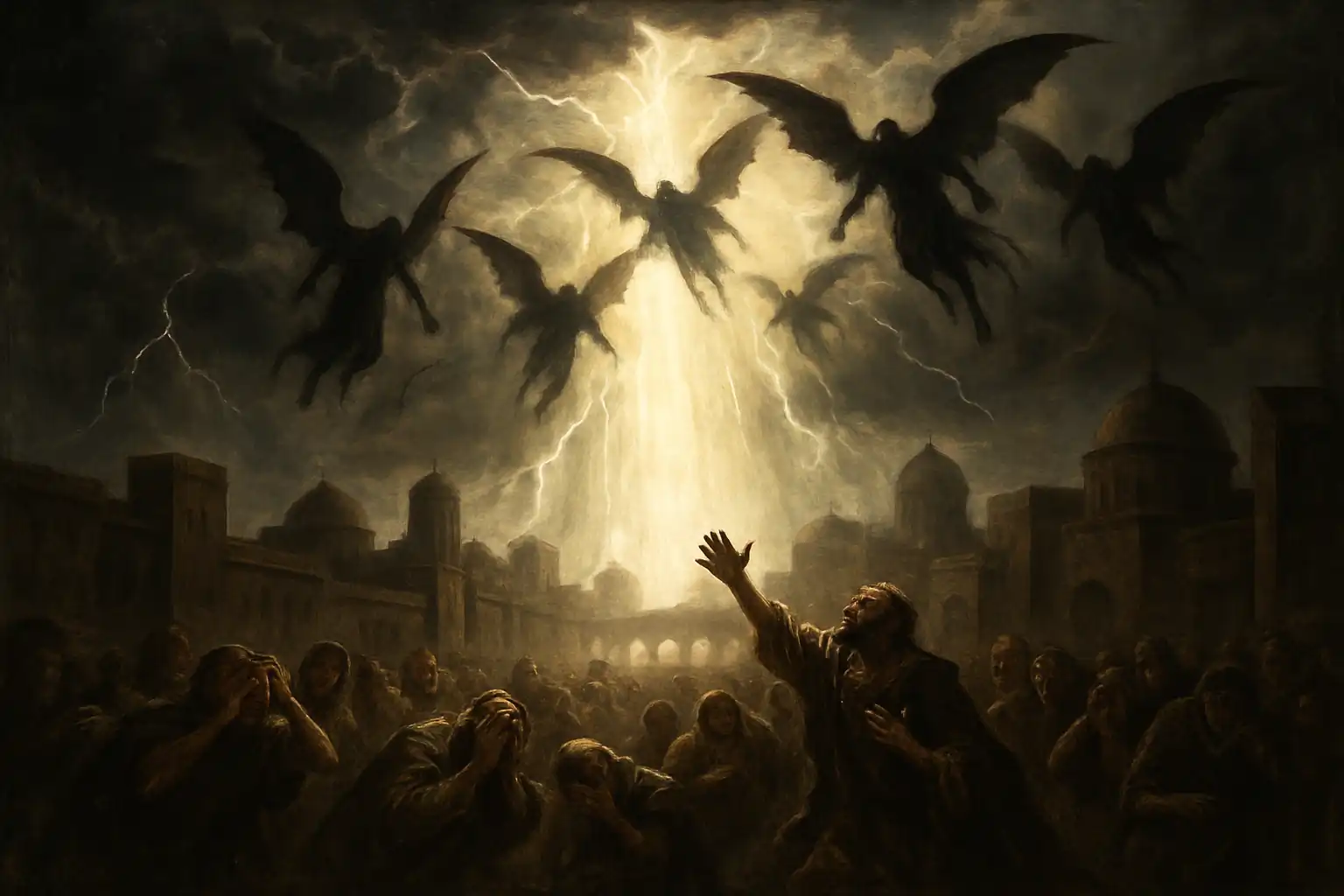
    Few biblical texts have generated as much speculation—and dread—as Genesis 6. In it, the mysterious “sons of God” descended to earth, took human wives, and birthed the giants known as Nephilim. Now, with geopolitical stress and existential threats mounting, a chilling prophecy circulates: in the looming End Times, are fallen angels and their demonic offspring poised to return and unleash chaos like humanity has never seen?

    This isn’t just 21st-century tabloid fodder. The blend of ancient scripture and contemporary fear feels electric. For an in-depth exploration, Gary Wayne’s analysis of the Fallen Angels, End Times Prophecy, and Genesis 6 is essential. On the fringes, scholarly sites like Ichthys grapple with the historicity and allegory behind these verses. Yet mainstream church and pop culture are suddenly looking skyward—and to the depths below.

    Genesis 6, the Nephilim, and the Days of Noah: Are We Doomed to Repeat History?

    The account of fallen angels in Genesis 6 remains controversial. Ancient tradition—championed by texts like the Book of Enoch—claims the Nephilim were hybrid offspring of angelic rebels and human women. Their corruption was so severe that it triggered the Great Flood. However, as Wikipedia’s Nephilim entry states, Jewish authorities like Rashi and Nachmanides opposed a literal interpretation involving angels. The passage retains ambiguity, but the idea of history repeating itself in the End Times retains its grip. The Watchers myth and New Testament references to the “Days of Noah” constantly echo expectations of a supernatural repeat.

    Some see eerie parallels between ancient prophecy and modern crises. Just as catastrophic resets and upheavals feature prominently in today’s threats—consider this sweeping examination of massive cataclysmic cycles—the thought of spiritual invasion feels less like an allegory and more like impending destiny.

    End Times Prophecy and the Demonic Invasion: Reading the Signs

    If the prophecy holds, the End Times will see a tearing of the veil—something beyond geopolitical or technological disasters. Passages in 2 Peter and Jude reference angels imprisoned in “chains of gloomy darkness” until Judgment Day, as detailed in this analysis of end-time angelic rebellion. Many prophetic circles interpret Revelation’s depictions of spiritual warfare and the abyss opening as coded warnings: the fallen are returning, accompanied by an army of ancient spirits eager for a chaotic world.

    Think this is merely biblical cosplay? Recent discussions about the existential threat of advanced AI echo this apocalyptic tone. Some experts even label AI a “demonic genie” unleashed upon the earth, reflecting sentiments found in AI existential risk warnings. It’s notable that in every unstable era, old prophecies resurface.

    Supernatural Battle Lines: Spiritual Warfare in a Technological World

    For those who believe in an impending demonic invasion, the battlefield extends far beyond the occult or the news cycle—it is everywhere. Studies of demonic activity reveal blurred lines between faith and paranoia. Accounts of possessions, attacks, and inexplicable phenomena have persisted through time.

    This paranoia—the feeling that hidden forces are amassing—mimics the primal anxieties driving survivalist blueprints and apocalyptic grid-down scenarios like this congressional homestead plan. As the world becomes stranger, beliefs in supernatural warfare intensify, fostering movements that seek to “armor up” both spiritually and practically.

    Between Scripture, Speculation, and Survival: What Happens Next?

    Is an invasion imminent, or is this just another wave of millennial dread? The case remains unsolved, sparking both faith-driven reflection and conspiratorial investigations. While biblical scholars debate, stories like the Vatican’s secret archives and forbidden artifacts, shadowy prophecies such as Nostradamus’s Final Cipher, and reports of world-resetting disasters keep the End Times discourse alive.

    Are we on the brink of a cosmic rerun, a new Genesis, or simply an age-old fear in a digital guise? Whether you feel drawn to one side or the other, links between prophecy, panic, and preparation are profound. For ongoing coverage of this demonic countdown—and all unexplained anomalies—trade your soul (or just your attention) to Unexplained.co. The end is merely the beginning, and someone remains always watching from the shadows.