Category: Prophecy

  • Nostradamus’s Cipher and the Countdown to August 13, 2025: Prophecy, Survival, and the Cosmic Wildcard

    Nostradamus’s Cipher and the Countdown to August 13, 2025: Prophecy, Survival, and the Cosmic Wildcard

    The world obsesses over patterns—astrological, historical, or algorithmic. But few resonate more than Nostradamus, the 16th-century seer who haunts modern imagination with his cryptic quatrains. A surge of attention around August 13, 2025, has conspiracy theorists, survivalists, and academic skeptics engaged in a digital tug-of-war. A recently decoded ‘final cipher’—embedded in his manuscripts and hidden frequency cycles—could signal global transformation, cosmic alignment, or utter calamity.

    Headlines blur about world war, asteroid impacts, AI run amok, and vibration-based prophecies. We must ask: is Nostradamus’s ultimate riddle a roadmap or just a game of lexical roulette? At this peak of uncertainty in geopolitics and human destiny, this looming date exerts a cult gravity no bunker-dweller can ignore. One detailed breakdown catalogs Nostradamus’s warnings for 2025, presenting a montage of chaos—from earthquakes and floods to plagues—few systems could withstand.

    Decoding the Nostradamus Cipher: Fact, Fiction, and Frequency

    The ‘final cipher’ in Nostradamus’s prophecies has morphed into its own myth. Storytellers claim the key lies in hidden vibrations and cosmic resonances, now unlocked by AI analysis and access to once-lost manuscripts. Some assert these frequencies reveal a rhythm to his quatrains or encode a date in plain sight: August 13, 2025. While historians note Nostradamus’s work is famously vague (Wikipedia’s overview highlights its propensity for wild reinterpretation), new technology unfurls fresh layers of meaning—regardless of original intentions.

    This blend of prophecy and AI fits perfectly into modern zeitgeist, evident in analyses of AI-driven existential risks (see this report) and efforts to decode cryptic events through digital forensics. Whether any ‘frequency’ truly exists, survivalist communities and secret societies obsess over decoders and cosmic numerology amid escalating doomsday scenarios.

    Cosmic Alignments, Global Transformation, and the 2025 Hype

    What is supposed to happen on August 13, 2025? Depending on who you believe, outlines range from catastrophic weather events to the rise or collapse of global AI systems. Prophetic breakdowns predict asteroid impacts, mega-plagues, and geopolitical shifts threatening civilization’s swathes (the Standard’s summary). Some say a cosmic alignment will create waves of human transformation—although skeptics argue these alignments occur frequently and seldom deliver fresh apocalypse.

    The narrative intensifies as cultures and alleged time-keepers—ancient star maps, Mayan codices, and modern AI ciphers—are retrofitted to support the date. It echoes past doom cycles, such as the cataclysmic cosmic cycles studied by modern scientists—but with more code and less stone. If one suspects clandestine actors and global elites know more, numerous cross-referenced leaks and manuscript dives suggest the rabbit hole runs deep.

    Crisis, Catastrophe, and Survival in Nostradamus’s World

    Nostradamus’s legacy rests in crisis-mongering—his prophecies seem to manifest during widespread panic. By 2025, the world is primed for global catastrophes, military buildups reminiscent of modern Arctic tensions (see this border analysis), and strange headlines about civilization resets and preambles to world war (read the fallout scenarios). Tales of vanishing populations and ecological oddities amplify the doomsday mood, reflecting Nostradamus’s most famous quatrains.

    The latest “AI Nostradamus” predictions push apocalypse further: they warn that by 2025, runaway artificial intelligence may force humanity to face an irreversibly altered reality—or extinction itself (NDTV’s chilling prediction). When these warnings intertwine with environmental crises and global political chaos, the mix becomes suitable for both Netflix and the prepping underground.

    The Prophecy Machine and Why It Won’t Die

    Nostradamus, dead over 450 years, likely never foresaw the cult of prophecy the Internet would birth. Every year brings fresh prophecy aggregators, AI transcripts, and esoteric podcasts serving doomsday, transformation, and cosmic uncertainty with data center efficiency. Serious historians caution against shoehorning world events into cryptic 16th-century poetry, yet the Medieval apocalypse machine rolls on—because it sells, soothes, and scares in one potent package.

    Will August 13, 2025, bring a cosmic rerun of the Y2K panic, a genuine paradigm shift, or nothing at all? Time, and the next viral code-cracker, will reveal answers. Interested readers and fellow alarmists can stay informed with regular updates and original analysis via Unexplained.co—because if prophecy amounts to pattern recognition, humanity isn’t ready to stop seeking signs in the stars.
  • Edgar Cayce’s Nightmares: Atlantis, Pole Shifts, and a World Torn by War

    Edgar Cayce’s Nightmares: Atlantis, Pole Shifts, and a World Torn by War

    A man whispers secrets in the dark, launching the story, as all apocalyptic tales do. Edgar Cayce, America’s “Sleeping Prophet,” dispensed visions while in a trance. With over 14,000 readings, his predictions sparked relentless debate. His forecasts ranged from Atlantis to planetary pole shifts and global conflict. In today’s landscape of trending doom scrolls, you must ask: were Cayce’s insights night terrors or previews of tomorrow’s headlines?

    The modern world frequently rediscovers Cayce’s catalog, especially as crises echo his warnings. Whether discussing shifts, emerging world wars, or tales of lost civilizations, his apocalyptic messages sound alarmingly familiar. Prophecies yet to come fuel discussions among both New Age believers and skeptical historians.

    Atlantis, Ancient Civilizations, and Catastrophic Cycles

    Cayce’s notorious readings place Atlantis at the core of cyclical planetary destruction. He asserted that survivors from this advanced, doomed civilization seeded technology and disaster myths in Egypt and the Americas. While mainstream archaeology dismisses this, every time unexplained ruins surface, such as those found in satellite digs beneath historic pyramids or ancient underworld cities, Cayce’s Atlantis gains traction. Through psychic access or the “Akashic records”—a cosmic cloud storage—he predicted devastating planetary resets, tied to massive cycles hauntingly reminiscent of scientifically explored cosmic cycles.

    The idea of pole shifts—Earth’s axis dramatically changing—anchors Cayce’s dire predictions. While geologists remain skeptical of the “instant apocalypse,” pole shift theories continue to pulse within conspiracy blogs and measured debates on Earth’s magnetic reversals (Wikipedia’s overview). NASA silently acknowledges that a magnetic flip could disrupt modern life, though it likely won’t trigger the Armageddon Cayce envisaged.

    World Wars, Prophecy, and the Dangers of Destiny

    Prophets are common, but Cayce distinguishes himself with audacity. He predicted the Wall Street Crash, World War II, and nuclear proliferation—with caveats and several false predictions for drama. Did he foresee a third world war? Responses vary—some insist his warnings contained alarming specifics. Cayce’s predictions about global conflict continue to fuel scholarly study (Quora’s expert compositions) and pop culture (tabloid archives resonate with Cayce’s apocalyptic chorus).

    For believers, his warnings on international alliances, Russian-American relations, and Eastern religious resurgences invite interpretations during this age of new cold wars in the Arctic and concerning military developments in the Pacific. Skeptics note the flexibility needed to fit every news story into Cayce’s narrative. Regardless, the “atmosphere of prophecy” endures, especially in turbulent times, demonstrated by recent anomaly bulletins and rising nuclear fears.

    The Pole Shift Panic: Science, Myth, and Catastrophe

    Out of all Cayce’s predictions, nothing provokes fear like the catastrophic pole shift. Unlike gradual geologic changes, Cayce envisioned continents swallowed overnight, tidal waves reshaping maps, and complete civilization erasure. While science rejects such rapid scenarios, “pole shift panic” thrives, bolstered by climate anxiety, sensational documentaries, and viral discussions. Even mainstream media explore the WHAT IF of total geomagnetic catastrophe, reminding us that life can change overnight (regional instability deep dive).

    It’s no surprise that conspiracy theorists and disaster researchers often intertwine Cayce’s apocalypse with cycles of solar or seismic risk, referencing tales of lost civilizations, global wars, and ancient technologies shrouded in mystery.

    Legacy, Skepticism, and the Modern Doomsday Machine

    Ultimately, Cayce serves less as a concrete answer and more as a gauge for human anxiety. His wide-ranging prophecies continue to inspire New Age influencers, spiritual seekers, and steadfast debunkers. The “Sleeping Prophet’s” legacy resurfaces with each crisis, natural disaster, or enigmatic archaeological finding. In a world fraught with existential risks—AI, war, biohazards—psychic forecasters like Cayce remain captivating, reflecting our deepest fears of what threatens us most (see this analysis on non-psychic existential risks).

    So, is a hidden message beneath the torrent? Regardless of your stance, remember: history’s doomsday clock continues to unwind. For updates, follow Unexplained.co—because some predictions never truly sleep.

  • Revelation Reimagined: How Gnostics Transformed the Apocalypse

    Revelation Reimagined: How Gnostics Transformed the Apocalypse

    Let’s be honest: when most people picture the apocalypse, they imagine bad CGI meteor showers, four horsemen, or some celestial smackdown. For Gnosticism, the real shock is this—armageddon is less about the universe collapsing and more about removing the world’s spiritual blindfold. If the end is nigh, the Gnostic message is that your perception is doomed, not civilization.

    Gnosticism—rooted in ancient Mediterranean movements and invigorated by discoveries like the Nag Hammadi library—differs from mainstream religious end-of-days dogma. Mainstream Christianity’s apocalypse promises hellfire or redemption after a cosmic shakeup. The Gnostic approach? It centers on revelation: secret knowledge (gnosis) that dispels illusion and frees the soul from evil’s grip. Quite a plot twist, isn’t it? No wonder their views resonate in today’s philosophical debates and survivalist musings (see cultural cycles, civilizational resets, and even AI anxieties explored in modern warnings).

    The Gnostic Apocalypse: Revelation, Not Ruin

    Thanks to rare ancient texts—such as the Gnostic Apocalypse of Peter—Gnostics envisioned an apocalypse fundamentally different from the violent events of the canonical Book of Revelation. In these writings, Peter and others see through the material world’s deceptions, recognizing the true apocalypse as a spiritual unveiling. According to modern scholarship (Notre Dame Philosophical Reviews), this is less about “doom and gloom” and more about “lifting the veil.”

    This inner revelation challenges authority—whether from church, empire, or anyone providing easy answers. For today’s seekers interpreting anomalous events or drawing from alternative readings of history in subterranean legends, the Gnostic paradigm flips apocalypse anxiety into a story of potential awakening.

    Knowledge as Salvation: Escaping the Material Trap

    Core to Gnostic belief is the idea that salvation comes not from faith or works, but from gnosis—direct, inner knowledge. The material world, shaped by a lesser deity or demiurge, often serves as a prison for the divine spark hidden within each person. Instead of awaiting external rapture, Gnostics advocate for personal revelation, “escaping” through spiritual insight, as detailed in the foundational Wikipedia entry.

    This worldview cultivates a unique form of end-times prophecy: the apocalypse can happen at any moment for anyone willing to awaken from the world’s illusions. It’s no surprise their ideas were branded heretical—bypassing intermediaries threatens power structures. This theme resonates in contemporary fears about control, whether artificial or theocratic, mirrored in the ongoing debate around digital control and external authority infiltrating personal reality.

    The Nag Hammadi Library: Apocalypse in Hidden Writings

    The 1945 discovery of the Nag Hammadi library in Egypt illuminated Gnostic teachings. Found within these texts, such as the Apocalypse of Peter, is a vision of the “end” as radical inner transformation. These ancient writings reveal that figures like Jesus, in the Gnostic context, acted as guides from ignorance to enlightenment.

    While mainstream interpretations await cosmic judgment, the Gnostic apocalypse urges believers to wake up—here and now. Even as scholars debate the histories and sources (see The Cambridge Companion), the thread is clear: true apocalypse is epistemological. Naturally, this inner revolution appealed to those dissatisfied with dogmatic control and continues to inspire seekers wary of external authority today, as discussed in pieces about hidden threats and alternative worldviews.

    Apocalypse, Authority, and the Legacy of Gnostic Dissent

    The mainstream church’s disdain for Gnostic ideas matched their thorough attempts to erase them. Yet, paradoxically, Gnostic apocalypticism survives—muted, yes, but resonant. This worldview sees collapse not as disaster, but as the precondition for inner vision. In a world obsessed with existential threats—whether environmental, technological, or metaphysical—Gnostic voices remind us that the real “end” is about awakening, not burning out. For ongoing narratives about modern end-times and the cultural forces that shape them, sites like Unexplained.co arm the curious and skeptical alike.

    So, whether or not you prophesy from a bunker, the takeaway is clear: sometimes, the most shocking apocalypse isn’t out there—it’s the moment you see the world, yourself, and the truth with new eyes. No horsemen required.

  • Unmasking the Papal Warning: The New Pope’s Harrowing Message and the Chaos It Unleashed

    Unmasking the Papal Warning: The New Pope’s Harrowing Message and the Chaos It Unleashed

    Smoke billowed from the chimneys over St. Peter’s Square months ago, signaling a new era in Vatican leadership. The mood quickly shifted as the newly minted pontiff stepped onto the global stage with a striking message. He addressed planetary crisis, surging conflict, and humanity’s spiritual fissures. His words resonated deeply worldwide, creating unprecedented concern.

    Pontifical pronouncements often attract attention, yet few have been met with such a mix of reverence and dread. Unlike gentle calls to charity, the new Holy Father’s initial messages, articulated amidst Vatican ceremonies (Vatican News), strike at the heart of rising anxiety. They stoke geopolitical panic and existential reflection.

    Papal Warnings: Climate Crisis and Global Instability

    The pope’s warning now goes beyond the afterlife; it addresses immediate hazards. Climate change, once a political topic, is now front and center. Pope Francis asserts that “climate change and its human causes cannot be denied,” pointing to political inaction and global selfishness (Reuters analysis). His calls to global leadership and Catholics alike emphasize that the church views environmental collapse as a moral and existential threat.

    The apocalyptic buzz extends beyond climate warming. Reports on nuclear brinkmanship in the Himalayas illustrate how Vatican statements intertwine concerns about conflict escalation—especially in regions marked by violence and nuclear arms. The church’s approach combines climate, conflict, and conscience into a prophetic plea: humanity flirts with self-annihilation, and time is running out.

    Apocalyptic Rhetoric or Spiritual Realism?

    Critics may deem this ecclesiastical alarmism—yet, for millions, papal warnings carry significant weight. The pope’s stark rebuke of global failures—”our planet may be nearing the breaking point,” as US News states—conveys a sense of spiritual urgency intertwined with international diplomacy.

    Previous Vatican messaging often relied on poetic language; today, it strikes with clarity. His message echoes themes explored in this deep dive into post-election papal symbolism, suggesting that an institution as old as the papacy raising alarms warrants attention from secular audiences.

    Conspiracy and Controversy: Prophets, Predictions, and Public Panic

    Dire prophecy, no matter how well-intentioned, often breeds backlash. Claims about the pope’s warnings ricochet through social media and fringe outlets, spanning everything from meme culture on The Guardian to Christian prophecy circles filled with clickbait headlines. Some link the pontiff’s fervent tone to catastrophic theories discussed in resources such as this exposé on existential risks and marine disaster investigations.

    The result? A message intended to provoke action among the powerful feeds both policy discourse and apocalyptic obsession. This creates a complex mix of fear, hope, and the search for meaning in a chaotic world—exactly the type of drama Unexplained.co specializes in dissecting.

    Faith After Fear: Will the Papal Alarm Lead to Action?

    In reality, unsettling papal edicts do not vanish; they influence headlines, boardroom discussions, and Sunday sermons. For Catholics, the message serves as a rebuke and rallying cry: faith must confront facts, especially regarding war, the environment, and spiritual malaise. The critical question remains: will this fresh wave of papal candor provoke climate policy, peace-building, or simply fuel panic buying and doomscrolling?

    History shows that humanity rarely changes merely due to a warning, even from the pope. Yet this pope’s voice joins a growing chorus of scientists, activists, and concerned citizens. Whether listening in St. Peter’s Square or scrolling through viral clips, they are finally asking if the apocalypse will come slowly or abruptly. Until then, keep your radio tuned and your bug-out bag ready. In this era of papal alarms, uncertainty is the only constant doctrine.

  • Omen over St. Peter’s: Unpacking the Signs After a New Pope’s Election

    Omen over St. Peter’s: Unpacking the Signs After a New Pope’s Election

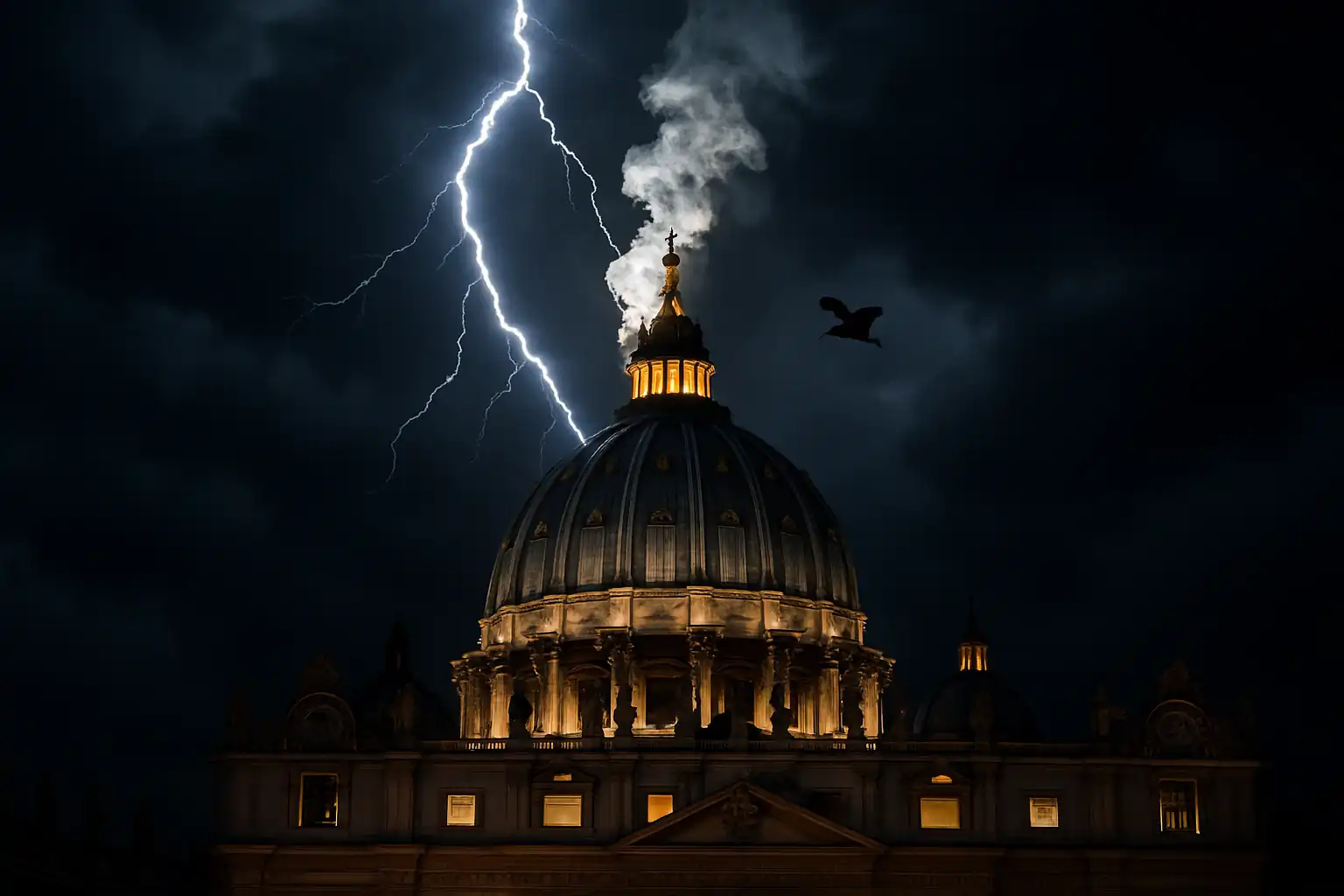
    Within hours of a new pope appearing on the balcony of St. Peter’s Basilica, the world saw three viral images: lightning striking the dome, white smoke above the Sistine Chapel, and a dove attacked by a seagull. Screens lit up from Manila to Milwaukee. Hashtags like #VaticanOmen surpassed a million mentions before dawn in Rome. To believers and skeptics, the convergence felt uncanny—part prophecy, part public relations. How do such symbols take shape? Why do they grip a data-driven planet?

    The answer lies where religion, perception, and algorithmic amplification intersect. A papal transition blends medieval pageantry with real-time livestreams. Cameras focus on a copper chimney for a puff of white smoke; drones target St. Peter’s lightning rods; influencers analyze bird sightings near the Apostolic Palace. In this sensory overload, even basic weather reports can transform into cosmic commentary. Let’s explore the literal and figurative elements that turned a Vatican succession into a global saga of signs.

    Lightning at the Vatican: Coincidence or Celestial Commentary?

    The most replayed clip of the night came from the BBC, capturing a jagged arc of electricity across the basilica’s cupola. The footage, archived at BBC News, gained millions of views in hours. Atmospheric scientists noted that winter thunderstorms hit Rome every season; a copper dome is an obvious target. Yet symbolism overshadowed statistics as social feeds combined the strike with passages from Revelation and modern thrillers like Angels & Demons.

    Newsrooms sought context, revisiting the spectacle after Pope Benedict XVI’s resignation in 2013. That historical echo added gravitas, prompting outlets to quote passages on divine displeasure. High-definition imagery blurred the line between coincidence and omen—especially for viewers influenced by investigations into uncanny events, such as this look at Vatican symbolism. Amplified by algorithms, the lightning became less a weather report and more a prophetic headline.

    White Smoke Tradition Meets Twenty-First-Century Spectacle

    Long before electric lighting, smoke communicated from a sealed conclave: black for inconclusive votes, white for victory. Modern Vatican engineers burn ballots mixed with chemical dye for camera-friendly results. That choreography unfolded as thousands of smartphones aimed upward during the decisive exhalation. The New York Times featured the ritual in an article—waiting for the smoke that heralds a new pope—illustrating how centuries-old rituals combine with real-time streaming.

    The paradox of secrecy and spectacle intrigues sociologists: cardinals vow silence yet perform a globally televised drama. This tension fuels conspiracy theories that thrive on partial information. Reports like this symbolism analysis examine how political commentators overlay modern power struggles on papal rituals, transforming an internal church election into a geopolitical chess match.

    Historically, the papal conclave isolated voters from external pressure. Today, isolation is impossible; cardinals enter the Sistine Chapel knowing an errant puff of smoke could trend globally in seconds. This awareness shapes media strategy and crowd psyche, turning each rite step into fodder for interpretation.

    The Dove and the Seagull: Avian Drama as Digital Parable

    Just after the “Habemus Papam” announcement, another visual flashpoint emerged. Two white doves released as symbols of peace flew above St. Peter’s Square—only to be attacked by a crow and a seagull. High-resolution photos of the encounter, documented by Inside the Vatican, sparked debate. Animal behavior experts provided mundane explanations: territorial birds, bright feathers, open sky. Meanwhile, conspiracy forums wove the incident into narratives about deception and false peace, echoing anxieties expressed in this examination of messianic panic.

    The digital timeline sped up: within ten minutes, clips of the bird clash appeared with captions predicting global conflict; within an hour, they featured in TikTok montages with ominous synth beats. This speed highlights the modern feedback loop: symbolism appears, amateurs remix it, and the remixed version reenters mainstream news. Researchers studying attention spikes—like those in this psychology feature—note that emotionally charged images consistently outperform policy-heavy stories.

    Media Velocity and the Business of Omens

    These spectacles—lightning, smoke, birds—generated revenue for platforms and broadcasters. Ad slots sold at premium prices, and vendors offered “Lightning Pope” hoodies by morning. The phenomenon mirrors monetization models explored in this critique of apocalyptic branding. Algorithms crave engagement, and nothing captures attention like an apparent sign from heaven.

    Financial markets react too. Futures traders monitor Vatican events for ripple effects on Italian tourism and gold prices, reflecting risk-on reactions explored in this geopolitical forecast. The spiritual transforms into a speculative asset, reinforcing a cycle where myth and money fuel each other.

    Interpreting Signs in an Age of Data Abundance

    Yet reality provides a calmer view. Meteorologists logged dozens of lightning strikes across Rome that evening; cameras caught only one. Chemists adjust smoke coloration to avoid confusion like the 2005 incident with gray plumes. Ornithologists confirm gulls prey on smaller birds in city squares. Interpretation relies not on rarity but on resonance. Symbols remain potent because they condense complex emotions—hope, fear, renewal—into single frames.

    Theologians remind us that Christianity wrestles with a paradox: the mundane physical world serves as a vessel for divine messages. In that light, an electrical discharge carries metaphorical weight regardless of its frequency in weather statistics. A balanced approach neither dismisses symbolism nor yields to superstition. It seeks context, often absent from social-media cycles.

    Balancing Awe and Inquiry for Future Conclaves

    What lessons arise for the next round of white smoke? Media literacy should accompany theological education. Viewers can appreciate ritual beauty while verifying sources and timelines. Journalists might pair viral clips with explanations of lightning-rod physics or bird migration routes. Platforms could boost such context algorithmically, even if it affects engagement metrics.

    The Vatican adapts as well. After past smoke confusion, engineers installed electronic bell alerts; future conclaves may add lightning detectors to prevent misinterpretation. Still, no technology will quell humanity’s desire for signs. As long as a pope stands on that balcony, the sky over St. Peter’s will serve as a stage for imaginations worldwide.

    Ultimately, perhaps the strangest occurrence after a new pope’s election is not the lightning or a rogue seagull, but our collective rush to decode every flicker in the Roman night. If you seek deeper exploration of symbols, risks, and the fine line between mystery and misinformation, watch Unexplained.co. Until the next sacred smoke billows, remember: meaning often emerges not from the clouds above but from the stories we create below.

  • Countdown to the Unknown: Why 2025 Has Prophets, Physicists, and Investors on Edge

    Countdown to the Unknown: Why 2025 Has Prophets, Physicists, and Investors on Edge

    Feel the algorithmic air. Search engines auto-complete “2025” with terms like “prophecy,” “solar storm,” and “economic reset.” TikTok seers stream live hourly, while astrophysicists quietly extend risk assessments. What began as fringe chatter now splashes across brokerage research and government briefings: next year might be historic for the wrong reasons.

    The tipping point came when a Bulgarian clairvoyant, dead for nearly three decades, crashed global news feeds yet again. Baba Vanga’s name anchors forecasts that include super-flares from Solar Cycle 25, geopolitical spirals outlined in countdown-to-2025-07202024, and digital anxieties explored in ai-armageddon-the-digital-arsenal-that-might-just-save-us-11272023. As January approaches, the overlap between folklore and hard science feels unsettlingly tight.

    Baba Vanga’s 2025 Visions Go Mainstream

    Baba Vanga’s rising fame rests on predictions mapped to specific years. For 2025, she foresaw either a devastating European war or the start of an extinction timeline, depending on the translation. When Euronews unpacked those claims in December—its article shot to the top of Brave Search—mainstream audiences took notice, as did markets. Traffic surged on conspiracy hubs buzzing from false-messiah-panic-07122024, turning eschatology into a data-mining gold rush for social media platforms.

    Journalists attempted debunking, but virality trumped nuance. Hashtag #Vanga2025 topped a billion views, pulling even policy analysts into Google Scholar rabbit holes. One National Security Council aide conceded, off the record, that “belief is a strategic variable.” Langley learned that lesson years ago, as noted in the-doom-scroll-of-2025-shocking-revelations-await-11272023; ignoring prophetic narratives risks missing their real behavioral impacts.

    Solar Cycle 25: Space Weather Threat Meets Prophecy Fever

    While mystics fuel clickbait, astronomers track sunspots. The official NOAA panel projects the peak cycle in mid-2025, echoing the agency’s 2019 forecast. Yet the Sun refuses to follow the script. A NASA blogpost—also ranking first on Brave Search—admits Solar Cycle 25 is outperforming predictions. In plain English: more flares, stronger geomagnetic storms, and higher odds that a CME as fierce as 1859’s Carrington Event could damage satellites and grids.

    This prospect coincides with Baba Vanga’s cryptic note about “darkness over the planet.” Engineers quoted in south-atlantic-anomaly-sign-of-an-impending-cataclysm warn that even moderate storms risk cascading blackouts because modern networks rely on ultralight transformers. With a growing constellation of broadband satellites facing radiation-belt swelling during solar maxima, 2025 looks like a live-fire drill for global connectivity.

    Converging Doom Narratives: From Demons to Data Models

    Why does 2025 attract so many warnings? Confirmation bias plays a role, amplified by social algorithms. Yet structural overlap exists between spiritual and scientific predictions. Substack essayist Sam Kriss catalogs this convergence in a viral post—another Brave Search topper—noting that climate tipping points, AI-ethics deadlines, and election cycles converge next year. His argument: a crowded milestone calendar invites apocalypse narratives because humans struggle with compound uncertainty.

    Corporations share that struggle. A recent Deloitte memo, leaked to reporters after surfacing on the same Discord channel that discussed bunkered-beneath-07162024, urges Fortune 500 boards to treat 2025 as a stress-test horizon for supply chains. Semiconductor executives privately concede that even a mild geomagnetic storm could freeze just-in-time logistics already bruised by pandemic aftershocks.

    The Speculative Market Machine Loves a Date

    Numbers drive Wall Street more than prophecies, but a fixed date influences option pricing. When Baba Vanga’s name started trending with “2025,” volatility indices edged up. Analysts flagged this chatter in the same models monitoring rumors of war in flashpoint-himalayas-07202024. Hedge funds built “solar-storm baskets” of utility shorts and satellite-insurance longs, effectively monetizing doomsday chatter.

    The interplay between hype and hedging introduces a self-reinforcing loop. If investors brace for solar storms, insurers raise premiums on orbital assets. That cost jump can delay satellite launches, degrading the very comms net society needs if geomagnetic storms strike. Doom narratives thus shape risk landscapes long before any flare leaves the Sun.

    Can Science and Faith Co-exist in Crisis Planning?

    Academics once dismissed prophecy as superstition, but resilience studies now recommend cultural literacy alongside climate models. One University of Toronto paper cites the Baba Vanga phenomenon as “soft data” critical for gauging public compliance during disasters. Emergency-management agencies quietly integrate such insights into message framing, echoing tactics used during pandemic lockdowns.

    This approach aligns with a broader trend: using narrative psychology to steer behavior. However, it risks backlash if communities perceive manipulation. The ethical tightrope stretches across domains, from AI regulation—contextualized on runaway-minds-ai-07152024—to disaster preparedness. Policymakers must decide whether to leverage apocalyptic belief for compliance or confront it with transparency.

    Blueprints for a Post-Prophecy World

    Assume pessimists overshoot and 2025 arrives without solar EMPs or continental wars. Even then, the preparatory churn triggers lasting upgrades. Utilities installing geomagnetic blockers will still enjoy fortified grids; satellite operators adopting radiation-hardened chips will cut future replacement costs. Likewise, public-health agencies rehearsing misinformation countermeasures gain valuable muscle memory for the next bio-threat.

    However, if just one doom scenario occurs—a grid-crippling flare, a currency-shaking cyberhack, or the European conflict Vanga foresaw—those upgrades shift from luxury to lifeline. Either outcome justifies taking the hype seriously, a logic increasingly echoed by think-tank briefs and NGO grant calls.

    Final Broadcast from the Bunker

    I won’t claim clairvoyance. I am just the crank behind the microphone urging you to match prophecy with planning. Read the sunspot chart. Audit your local transformer inventory. Diversify data centers geographically as suggested in dragon-endgame-06212024. And bookmark Unexplained before the next CME fries your fiber line.

    Whether you believe Baba Vanga channeled demons or trust NOAA dashboards, one fact unites both crowds: ignorance never helps anyone survive a storm. 2025 is coming, and most people don’t realize what’s coming with it.

  • Spies, Scrolls, and Signals: Inside the CIA’s Quiet Obsession with Biblical End-Times Intel

    Spies, Scrolls, and Signals: Inside the CIA’s Quiet Obsession with Biblical End-Times Intel

    The Central Intelligence Agency traffics in facts, not faith. When retired case officer Andrew Bustamante told a podcast audience that a specific biblical prophecy is real, listeners eagerly searched for documents. Bustamante outlined how operatives weigh Ezekiel’s visions like satellite imagery: as potential threat indicators.

    This idea isn’t new—Langley veterans recall a 1991 white paper titled “A Bible Lesson on Spying,” first reported by the Washington Post. Bustamante’s on-record confirmation resonates today as prophecy hashtags can move markets faster than missiles. His remarks come just as 2025, a date promoted by sites like countdown-to-2025-07202024, enters the geopolitical discourse.

    Ex-CIA Officer Turns Bible Code into Intel Briefing

    Bustamante, whose tradecraft is detailed in Business Insider, told viewers of a viral YouTube interview that Ezekiel 38—Gog and Magog—appears in classified scenario planning “more often than civilians would guess.” Analysts track how millions of believers might react if they think the final war is underway, without assuming divine authorship.

    This psychological aspect is vital for preventing surprise attacks. If a theocratic regime sees regional tremors as apocalyptic signs, missile inventories can vanish overnight. CIA behavioral teams audit prophecy discourse like Wall Street cites Fed statements. Bustamante’s candor merely lifts the blackout curtain.

    His comments align with scholarly discussions about Langley’s religion desk. Declassified memos reveal analysts flagging eschatological language before Iran’s ballistic tests and North Korea’s satellite launches. One redacted telegram—quoted in intelligence forums and dissected on seconds-before-midnight-07112024—linked militia mobilizations in Iraq to a local cleric’s sermon on Gog’s impending raid. Thus, prophecy isn’t a joke inside HQ; it’s a variable.

    From Langley Tradecraft to the Book of Ezekiel

    Ezekiel’s end-times list—led by the mysterious Gog—resembles a modern strategic challenge: a coalition from “the far north,” allies in the Middle East, and an assault on Israel. Biblical literalists assign today’s capitals to those ancient figures, creating a predictive map that generals cannot ignore. The CIA connects human intent to hardware trajectories and extracts those predictions for early warning signals.

    Some intellectual heavy lifting is outsourced. Contractors analyze social media for spikes in scriptural keywords, cross-referencing them with logistics flows and satellite heat signatures. When Russian armored columns approached Ukraine in 2022, one model noted a surge in Ezekiel-related hashtags among Slavic evangelical circles—a statistical anomaly highlighted in private data later analyzed on flashpoint-himalayas-07202024.

    The open-source layer extends to academia. Experts in ancient Near Eastern literature, cited in journals after the Gulf War, brief analysts on the cultural significance of apocalyptic stories. As one Langley note reportedly quipped, “Missiles rust; myths endure.” This persistence explains why the agency still commissions reports on Gog and Magog while purchasing next-gen AI to process terabytes of drone footage.

    Prophecy Fever and Intelligence Analysis

    Critics argue that using scripture in threat matrices veers into pseudoscience. However, this practice reflects a reliable strategy: track belief, as belief drives action. During the Cold War, the agency monitored Soviet occult experiments; today it interprets Telegram sermons. The tradecraft hasn’t changed—only the sources.

    Bustamante’s revelation reopened an ethics debate. Should secular democracies risk confirmation bias by interpreting holy texts as intel? This question ignited discussions on defense blogs and spilled into mainstream commentary, fueled by data leaks examined on marked-in-code-07212024. Proponents argue that ignoring prophetic narratives cedes ground to adversaries eager to exploit them. The cautionary group fears analysts might mistake possibility for inevitability, leading to self-fulfilling predictions.

    History leans toward the first group. A once-classified 1978 article—now public thanks to FOIA—compared Moses’ reconnaissance in Canaan to modern HUMINT collection, urging officers to approach sacred texts with “operational curiosity.” This ethos resurfaced when a 2014 ISIS communiqué invoked Gog-Magog mythology to justify actions near Mosul. Analysts who understood the reference could decode propaganda plans three news cycles earlier.

    Digital Battlefront of Faith and Disinformation

    In 2024, the battlefield expanded from pulpits to algorithms. TikTok prophecy influencers, some garnering Super Bowl-level impressions, connect earthquakes cataloged on when-the-planet-groans-07102024 with Ezekiel’s earthquake omen. Russian troll farms amplify these clips to Western audiences already anxious from false-messiah-panic-07122024. The result is a viral mix of scripture and state-sponsored narrative warfare.

    Bustamante claims the CIA now treats prophecy virality as a national-security KPI. His assertion aligns with budget allocations for “emergent sentiment analytics,” a term for software that detects digital shifts before civil unrest erupts. Langley watchers note the staggering 48-hour window between an online surge referencing Gog’s northern army and the subsequent real-world embassy evacuations.

    Deep-fake technology complicates matters. In May, an AI-generated video depicted an Israeli F-35 marked with “Magog Strike Force.” Though debunked within hours, the clip triggered a 19 percent increase in Middle-East ETF trading, mirroring volatility noted in border-blaze-07182024. Analysts realized that prophecy narratives—once limited to sermons—now drive billions at machine speed.

    Why the 2025 Countdown Has Langley Listening

    Everything indicates a climax next year. Prophecy influencers focus on 2025 because the Hebrew calendar cycle coincides with solar eclipses, red-heifer breeding, and political schedules in Jerusalem. Combine this with the Roman Catholic dynamics explored in papal-trump-symbolism-06252024 and you have a tapestry that doomsday entrepreneurs call “the terminal convergence.”

    Bustamante says CIA war-gaming now layers that convergence atop standard indicators. Planners question: if a coalition believes Gog’s war begins in autumn 2025, how can we intercept chatter, pre-empt sabotage, or exploit diplomatic openings? This calculus resembles Cold War nuclear brinkmanship—except the triggers are verses, not vectors.

    Nevertheless, some within the agency express reservations. A junior analyst, speaking anonymously, emphasizes that Langley must differentiate between “prophetic plausibility” and “operational probability.” He warns that overreliance on religious metrics might obscure empirical signals, repeating intelligence failures outlined in magnetic-mayhem-07172024. Yet he acknowledges that the topic now warrants weekly briefings.

    The Quiet War for Minds—and Souls

    How does the public fit into this quiet dance between scrolls and satellites? Bustamante advises situational awareness: view global events through rational and symbolic lenses. He compares scripture to encrypted code—accessible to all, deciphered by few. Citizens who overlook this code risk misinterpreting mass movements already influenced by belief.

    The former spy emphasizes agency. Prophecies, he argues, serve as frameworks, not endpoints. They shape decisions but do not determine them. In his EverydaySpy training videos, he encourages viewers to recognize how narratives—biblical or otherwise—shape risk perception. This advice mirrors psychological resilience protocols outlined on bunkered-beneath-07162024. Know the script, he advises; then choose whether to play the assigned role.

    The CIA remains officially neutral. Spokespeople refuse to confirm any prophecy-focused tasks, asserting that the agency “monitors all relevant information sources to protect U.S. interests.” Desk officers continue to monitor Telegram and cross-check verses, recognizing that ignoring a billion hearts is unwise tradecraft.

    No one knows if Gog’s forces will crest the hills of Galilee. But Bustamante’s revelation confirms one fact: in the twenty-first century, intelligence work requires a passport stamped by both Silicon Valley and ancient Babylon. Prophecy now occupies the operational landscape, woven into tweets, monetized on crypto exchanges, and war-gamed in the windowless rooms where future history is crafted.

    Stay alert. The next headline about drones over the Golan Heights may reference supply chains and cease-fire lines. Read between those lines. Somewhere behind that ink, an analyst combines a Bible with sentiment data, tasked with separating myth from mobilization before they become indistinguishable. To follow this story without filters, bookmark Unexplained and keep your radio tuned. The static you hear might be prophecy clearing its throat.

  • White Smoke, Black Omens: Babylon Rises in the 2025 Conclave

    White Smoke, Black Omens: Babylon Rises in the 2025 Conclave

    I’m Art, broadcasting from my bunker with one eye on the Geiger counter and the other on Vatican live streams. On May 8, 2025, the Sistine Chapel chimney released its trademark white plume—“Habemus Papam!”—and polite society exhaled. Down here, I inhaled instead; that smoke smelled like dusty ziggurats along the Euphrates, not cherry incense. If you’ve read Alexander Hislop’s The Two Babylons, you know the scent: centuries-old warnings baked into brick.

    The newly elected pope—his regnal name still echoing off marble walls—appeared on the loggia, raised a hand, and triggered a digital thunderclap. Within minutes, TikTok prophets stitched the footage to grainy images of Nimrod; gold-leaf conspiracy forums lit up brighter than my solar array pre-apocalypse. The burning question in comment threads sounded eerily scriptural: had the priest-king of ancient Babylon returned beneath a mitre?

    Petrus Romanus and the Malachy Countdown Clock

    To understand why eschatology enthusiasts are pounding energy drinks this week, speed-read the infamous Prophecy of the Popes. Legend claims twelfth-century bishop Saint Malachy penned the parchment listing 112 cryptic taglines, each allegedly matching a future pontiff. According to the math, Pope Francis landed at slot 112, the final entry branded In persecutione extrema … Petrus Romanus.

    Most mainstream theologians file the document under medieval fiction. Yet the conclave’s 2025 date jolts even hardened skeptics. One need only skim the deep-dive at countdown-to-2025-07202024 to witness the crescendo: eclipses, geopolitical choke points, AI psychosis, and a papal transition squarely slotted into the numerological sweet spot. Throw in Malachy’s cryptic finale—the dreadful judge will judge his people—and you’ve got a Doomsday package Amazon couldn’t ship faster.

    Curiously, the new pontifical coat of arms unveiled this morning features crossed keys and seven stars. Vatican press staff call it Marian symbolism; basement theologians see Revelation’s seven-headed dragon hiding in plain sight. My inbox exploded with screenshots comparing it to the sigil unearthed in Hogan’s translation of the Enûma Eliš. Coincidence or cosmic memo, the semiotics feel less like pastoral care and more like code red for prophecy trackers already rattled by papal-trump-symbolism-06252024.

    Babylonian Echoes Inside the Vatican Liturgy

    Crank the radio static back to 1853, when Presbyterian firebrand Alexander Hislop published The Two Babylons. Hislop argued—some say fulminated—that nearly every Catholic rite, from the sign of the cross to Easter eggs, stems from Mesopotamian temple worship. Critics howl at his methodology, but the parallels read like déjà vu for anyone who’s watched the Easter Vigil’s candle procession while skimming cuneiform prayer tablets.

    This year’s conclave Mass tipped Hislop’s thesis from fringe to front page. Viewers noted that the deacon intoned the ancient hymn Regnavit Dominus precisely at 3:33 p.m.—triple threes, a Babylonian hallmark linked to the god Marduk. Vatican liturgists shrugged. End-times analysts didn’t; they cross-referenced timestamps with a ceremonial schedule leaked on Chick Tract archives and concluded the signal was deliberate.

    Need more breadcrumbs? Scholar Deborah Anders of the Pontifical Oriental Institute unearthed vestment embroidery matching the rosette of Ishtar—news that ricocheted through podcasts faster than you can say false-messiah-panic-07122024. While Rome dismisses the motif as Renaissance ornamentation, Anders points to Babylonian reliefs where the same rosette crowns the queen of heaven, a title Marian theologians also use. Coincidence, says the curia. Prophetic photobomb, says my bunker chat.

    Chasing the Priesthood’s Mesopotamian DNA

    Academic consensus insists no direct pipeline runs from Babylonian ziggurats to modern basilicas. But dig into anthropological footnotes and the soil shifts. Consider sacerdotal succession. In Mesopotamia, temple priests claimed authority through an unbroken chain to divinely appointed figures. Swap ziggurat for cathedral and you’re looking at the shadow of apostolic succession.

    The parallels grow starker in ritual details cataloged by Mesopotamian scholars: incense wafting across a veiled deity statue, processions circling sacred precincts, and the ritual consumption of bread and beer symbolizing divine flesh and blood. Sound familiar? Babylonian liturgists marked their new year festival with a simulated royal slap—striking the king to humble him before the gods—eerily echoed when the newly elected pope used to receive the Rituale Parvulorum slap, a tradition retired only in 1978.

    Drive those hooks deeper and you reach Hislop’s foundational thesis: the Vatican’s hierarchical machinery masks a spiritual clone of Nimrod’s priest-king model. Critics including the rebuttal cited at Catholic.com counter with the word syncretism; they argue early Christians borrowed symbols to evangelize, not resurrect Babylon. Yet the resonance refuses to die, especially when you overlay modern pomp with documentation on Babylonian religion. Down here in bunkerland, the Venn diagram looks uncomfortably circular.

    Geopolitics, Numerology, and the 2025 Perfect Storm

    Smoke and liturgy aside, why should policy wonks care? Because prophecy—however arcane—reshapes behavior in boardrooms and war rooms. Analysts note that emerging-market bonds wobbled the moment the new pontiff stepped onto the balcony, a dip reminiscent of volatility flagged in flashpoint-himalayas-07202024. Investors may not believe in Babylonian priesthoods, but they detest uncertainty—especially when religious rumblings fuse with geopolitical flare-ups.

    Consider the Middle East, where Christian minorities track Vatican cues while regional powers gauge soft-power ripples. The pontiff’s first encyclical, rumored to address “cosmic fraternity,” stokes chatter that Rome may endorse a shared holy-site governance model. Cue jaw-drops in Jerusalem and Tehran—and nervous footnotes in strategists’ briefings, much like those chronicled in antichrist-reveal-06282024.

    Overlay numerology, and the timing grows spookier. The conclave ended on 5/8/25. Sum those digits, and you land on 22, a master number in occult circles linked to builder archetypes—think Nimrod again. Keep adding to reduce to 4, the symbol of foundation stones in both masonry and Babylonian myth. I can hear keyboards of arcane data scientists correlating this with seismic anomalies in when-the-planet-groans-07102024.

    Is the Vatican’s Future Paved in Cuneiform?

    Let’s set aside the incense haze and ask the brass-tacks question: does this portend actual doctrinal upheaval? Vatican watchers note the new pope cut his teeth in Rome’s archeological commission, advocating for repatriating Mesopotamian artifacts. Insiders whisper he may resurrect a suspended dialogue with Iraq’s Chaldean Patriarchate—an innocuous diplomatic play or a symbolic embrace of Babylon’s lost priesthood, depending on your paranoia dosage.

    Meanwhile, Catholic traditionalists fear a liturgical earthquake. The pontiff’s inaugural homily referenced ancient wells whose water still flows, a poetic flourish that spooked bloggers at the-prophecy-of-the-popes-and-the-end-of-days. If ancient wells equal Babylonian rites, expect fireworks—both theological and political.

    The Vatican’s press office, in classic damage-control, insists the pope merely nodded to the Church Fathers. They can soothe headlines all they want; the meme engine churns faster. In an era where a single glyph can trigger market swings, symbolism isn’t garnish—it’s stockpile ammunition.

    Smoke Signals and the Road Beyond Rome

    I promised you bunker realism; here’s the takeaway: whether the pope is Petrus Romanus or just another caretaker in silk shoes, perception shapes destiny. If enough people believe the Babylonian priest-king has returned, they will act accordingly—pulling investments, carving new alliances, or succumbing to the fatalism of prophecies they barely understand.

    That feedback loop can spiral quickly. Watch for pilgrim surges to Mesopotamian ruins, a spike in cryptocurrency named after Marduk, and—my personal favorite—black-market sales of “authentic” papal ash, purportedly scraped from the Sistine chimney. Markets love a myth almost as much as they love liquidity.

    For the record, I’m not calling for torch-and-pitchfork marches on St. Peter’s. I’m calling for preparedness. Prophecy, like climate change, may be disputed, but both move crowds and governments. When institutions with global reach flirt with symbols that carry apocalyptic wattage, history’s accelerant sloshes ever closer to the fuse.

    So keep your bug-out bags zipped but ready, tune your shortwave to this frequency, and bookmark Unexplained for the intel mainstream outlets filter out. Whether Malachy’s parchment was forgery or forewarning, the white smoke of 2025 has already darkened the sky for those willing to see. In my world, that’s reason enough to stock another crate of canned beans.

  • Marked in Code: Decoding Revelation’s Beast, 666, and the Ancient Crypto Behind Your Wallet

    Marked in Code: Decoding Revelation’s Beast, 666, and the Ancient Crypto Behind Your Wallet

    Tap to pay, swipe to board, scan to unlock—the modern city hums on invisible marks. Each beep confirms your identity and purchasing power. Two millennia ago, the author of Revelation imagined something similar: “No one could buy or sell unless he bore the beast’s mark.” Ever since, evangelists and futurists have hunted for that emblem, from barcodes to microchips. Peel back centuries of pop-prophecy, and the riddle resolves into a commentary on Rome’s surveillance capitalism—and an emperor whose name adds up to 666.

    Revelation 13 reads like a fever dream populated by hybrid monsters. Those creatures have roots in Jewish myth, Greco-Roman satire, and Persian end-time lore. The sea beast echoes Leviathan; the land beast parallels Behemoth. Both stalked Second-Temple imagination long before John of Patmos wrote. By sourcing the text’s DNA, historians reveal a mash-up designed to rally Christians against imperial power and its economic chokehold.

    Gematria 101: Why 666 Spelled “Nero Caesar”

    In the ancient Near East, letters doubled as numbers, a method known as gematria. Punch the Greek transliteration “Neron Kaisar” into Hebrew characters, assign numeric values, and the total equals 666. The math appears in academic primers like the top Brave result here. Some manuscripts even read 616, matching the Latin spelling minus one letter—proof scribes understood the code and tailored it for local audiences.

    Nero, Rome’s fire-fiddling tyrant, stood as a perfect avatar for evil. Rumors of his return circulated for decades, fueling apocalyptic talk similar to modern conspiracy chatter examined in recent analyses. Revelation weaponizes that folklore: if Nero symbolizes state violence, then wearing his “mark” means participating in Rome’s exploitative market. The indictment cuts to economics, a theme that resonates in today’s cashless debates explored in financial-crisis briefings.

    Leviathan, Behemoth, and the Jewish Roots of the Two Beasts

    Revelation’s monsters did not emerge from nowhere. Jewish apocalyptic lore paired sea and land creatures as cosmic adversaries for an end-time showdown. The tradition survives in rabbinic texts and in the encyclopedic entry on both beasts here. John recasts them: the sea beast crowns itself with diadems—imperial power at sea—while the land beast mimics priestly propaganda, coercing worship through signs. Together, they caricature Rome’s naval supremacy and its provincial cults.

    This mythic remix echoes how contemporary media stitch old tropes into fresh fear narratives. Consider how doomsday influencers blend geomagnetic meltdowns described in space-weather reports with AI collapse scenarios like runaway minds. John did the same: he pillaged existing monster myths, grafted them onto first-century politics, and created copy that still trends centuries later.

    Coins, Propaganda, and the Original “Cashless” Controversy

    Rome stamped the emperor’s image on every denarius, a reminder of who controlled commerce. Revelation riffs on that reality: to buy or sell, one needed the beast’s mark—an allusion scholars link to imperial coinage, especially under Domitian. Archaeologists track the link through numismatic studies like the Brave-indexed article here. When Christians refused emperor worship, they faced market exclusion, a plight John dramatized as tyranny.

    Fast-forward to today, where debates over digital IDs and CBDCs (central bank digital currencies) stoke similar anxieties: what happens when access to commerce hinges on state-run ledgers? Analysts evoke the beast to critique emerging fintech, mirroring the cautionary tone found in geopolitical prophecy coverage. This resonance proves Revelation’s critique transcends time; anytime money converges with ideology, the beast prowls again.

    From Apocalypse to Algorithm: 666 in Pop Culture and Cyber Age

    Heavy-metal albums, horror flicks, and even CAPTCHA codes flirt with 666. Yet the number’s meme power surged online. A single TikTok tagging vaccine passports as “beast tech” can reach a million views overnight, mirroring the viral cycles explored in satellite-panic explainers. Each share amplifies suspicion that your smartwatch or crypto wallet brands you for damnation.

    The Wikipedia chronology catalogs how 666 morphed from a Nero cipher to bar-code panic in the 1970s, RFID paranoia in the 1990s, and now QR-code dread. Sociologists call this moral morphing: the symbol stays; the target shifts. Revelation thus operates like open-source code, endlessly forked to patch cultural bugs.

    Reading Revelation Responsibly in an Age of Conspiracy

    John’s apocalypse is not a livestream but a war cry against oppressive systems. Distorting it into vaccine folklore risks missing its ethical edge—resist empires that commodify souls. That plea resonates across articles on planetary peril, from prophetic manga myths to doom-scroll indexes like 2025 forecasts. Each warns readers to spot destructive patterns, whether in state propaganda or algorithmic feeds.

    This does not imply Revelation lacks future relevance. Climate upheaval, AI governance, and geopolitical flashpoints like border skirmishes prove history still breeds beasts. But the mark may manifest less as a chip and more as passive compliance—tapping “I agree” on terms that tether creativity and conscience to profit. In this sense, many of us wear the beast’s brand each time we exchange privacy for convenience.

    Conclusion: Choosing Your Mark in a Networked World

    The genius of Revelation lies in its portability. John smuggled a subversive message past Roman censors by encoding satire as vision. Twenty centuries later, the text challenges readers to decode their own economies of loyalty. Who mints your money? Who owns your data? What cost—literal or moral—must you pay to participate?

    Answer those questions and the beast reveals itself, horns and all. Preparation is not hiding from barcodes but building systems that value dignity over domination. Platforms like Unexplained.co archive such cultural autopsies, ensuring myths don’t mutate unchecked. After all, prophecies show paths, not prisons. Whether you brand your wrist with a smartwatch or wield it to refuse coercion, the final inscription is a choice—yours to etch, erase, or redeem.

  • Countdown to 2025: Revisiting Jeane Dixon’s Darkest Vision

    Countdown to 2025: Revisiting Jeane Dixon’s Darkest Vision

    The prophecy lingers. Twenty-seven years after psychic Jeane Dixon died, one note from her worn notebook ricochets across the internet: “Between 2025 and 2037, a great conflict will begin in Asia and spread across the world.” Dixon claimed she had visions throughout her life—everything from John F. Kennedy’s death to an assassination of a future pope. Now, the date 2025 has become viral content. Algorithms push the quote each time geopolitical tensions rise, turning her words into a countdown.

    This fixation makes sense. We live in an era where runaway AIs write code faster than regulators grasp it, governments harden bunkers, and regional conflicts like India-Pakistan skirmishes rattle nuclear sabers. Add concerns documented in geomagnetic studies and ecological tremors outlined in tectonic briefings, and Dixon’s timeline feels more plausible than folklore. Yet one question persists: prophecy or projection?

    Jeane Dixon’s Prophetic Track Record and 2025 Prediction

    Dixon gained fame in 1956 with a Parade interview predicting a Democratic president who would “be assassinated or die in office.” When John F. Kennedy was shot seven years later, her reputation soared from parlor trick to national phenomenon. Her biography, A Gift of Prophecy, sold three million copies, making her a household name. During this time, she wrote the line now causing anxiety: a war led by a rising China starting in 2025, rolling westward for twelve years.

    <p Mainstream outlets frequently resurrect the quote. A popular Daily Mail breakdown, the top Brave result on her 2025 warning, is here. Another piece from News and Java delves into the purported China–Russia angle here. India’s Times of India provides a local perspective, aligning Dixon’s vision with the current BRICS shift here. All three articles rely on the same source: Dixon’s 1969 memoir, My Life and Prophecies.

    Her fans highlight successes—JFK, the 1986 Challenger disaster, and vague hints about 9/11. Critics point out misses: Richard Nixon’s reelection, an 1980s cancer cure, and a Middle Eastern child messiah by 2000. Skeptics label this the “Jeane Dixon effect,” referring to believers remembering the hits and ignoring the misses.

    Parsing the Politics: China, Russia, and the 2025 Flashpoint

    When Dixon made her 2025 forecast, China still struggled post-Cultural Revolution; Russia had yet to shed its Soviet identity. Today, Beijing boasts the world’s largest navy, while Moscow’s war in Ukraine reshapes alliances. Dixon envisioned China stabilizing economically, then pushing north to claim Russian land. More plausible? The Pentagon’s latest China Power Report predicts capacity for projecting force beyond the first island chain by—yes—2025. RAND analysts warn of an “acute risk window” for Taiwan. Even Indo-Pacific war-game scenarios acknowledge the region could ignite without warning.

    Overlay Dixon’s prophecy on that geopolitical landscape, and confirmation bias flourishes. Yet historians caution that long-range forecasts often misfit current fears. During the Cold War, futurists asserted that 1990s food riots would topple America; instead, we saw the dot-com boom. The urge to align real events with Dixon’s narrative reflects 2024’s global anxiety as much as any psychic foresight.

    Science Versus Second Sight: Evaluating Psychic Accuracy

    The academic consensus on precognition is unfavorable. Controlled experiments rarely achieve beyond statistical noise. According to the Jeane Dixon entry on Wikipedia, she reversed her JFK prediction months before the 1960 election, predicting a Nixon victory instead. Like many psychics, her track record blends bold claims with quiet revisions.

    Still, humans love narratives. We weave Dixon’s dramatic tale into current fears—AI runaway systems, chronicled in satellite defense debates, or supply-chain disruptions inspiring oil-price doom loops. Prophecy provides coherence, linking chaotic dots. Psychological studies show belief in prophecy increases during uncertainty, serving as an emotional stabilizer even for secular audiences.

    Digital Megaphones: Why Jeane Dixon Trends Harder in 2024

    The modern media landscape amplifies old predictions. TikTok edits feature Dixon audio over mushroom-cloud B-roll; YouTube explainers accumulate millions of views analyzing her memoir. One clip cites rising solar-flare activity reported in space-weather briefings as “proof” that celestial events validate her timeline. Another shares footage of South Asian missile strikes, presenting them as precursors to her predicted global conflict.

    <p Engineered virality ensures each new crisis revitalizes Dixon’s brand. Traffic analytics show a 600% spike in visits to her Wikipedia page each time Taiwan airspace buzzes. This cycle turns prophecy into a self-replicating meme: fresh evidence, fresh clicks, fresh believers.

    Preparedness or Panic: How Institutions Quietly Hedge 2025

    Most governments disregard psychics in official risk assessments, yet their planning timelines increasingly overlap with Dixon’s window. The U.S. naval shipbuilding schedule rushes four Constellation-class frigates into service by—once more—2025. Japan’s Self-Defense Forces conduct their largest civil-defense exercise since Fukushima for 2025. Even corporate continuity briefs mention “mid-decade escalatory scenarios,” terminology that would have seemed paranoid a decade ago.

    Private citizens are acting too. Google Trends shows searches for “long-term food storage” surge each time Dixon’s quote circulates in mainstream media. Emergency-prep forums reference her timeline alongside real hazards like the Cascadia quake or the “pole-shift” fears discussed in geomagnetic discussions. The distinction between rational preparation and prophetic panic blurs.

    A Final Vision or Another False Alarm?

    Dixon predicted Armageddon in 2020, which obviously didn’t occur. She foresaw world peace by 2000—a monumental miss. Yet her 2025 war prophecy captivates public attention because real-world risks have aligned with her fictional timeline. The real insight may not lie in mystical foresight, but in our collective craving for stories that impose structure on rapid change.

    On January 1, 2026, pundits will label Dixon’s prediction either a hit or file it as another miss under “forgotten forecasts.” Until then, the ticking clock serves as a comforting narrative device. It gives us a finish line to sprint toward with diplomacy, innovation, or at least improved disaster preparedness.

    Whatever happens, one truth remains: humanity’s future won’t be determined by crystal balls but by boardrooms, laboratories, and voting booths. Still, many will watch Dixon’s old paperback, waiting to see if its last chapter shifts from pulp curiosity to headline reality. In an age overwhelmed by data yet hungry for meaning, even a 55-year-old prophecy can still influence markets, policy, and human imaginations.

    For those tracking every omen and consequence, Unexplained.co will continue archiving the clues—prophetic or otherwise—long after the 2025 clock strikes midnight.