Category: World War 3

  • WW3’s Wild New Phase: Trump, Russia, and the Unraveling of Global Strategy

    WW3’s Wild New Phase: Trump, Russia, and the Unraveling of Global Strategy

    Welcome to the world news cycle where your emergency radio signal is about a global system flirting with mutually assured destruction. The latest chapter in the World War III narrative unfolds with Donald Trump, strategic posturing, and the tense interplay between the U.S., Russia, and nervous onlookers. If you think this is mere noise, remember: somewhere, a think tank just updated its red alert board.

    Recent weeks have seen Trump abandon the diplomatic mask, unleashing sharp rhetoric against Vladimir Putin and reviving fears of war in Europe. This Reuters analysis outlines how both sides have intensified escalation, igniting alarm across diplomatic, economic, and social fault lines—a sentiment echoed in global flashpoint summaries on hidden geopolitical conflicts. Unlike Cold War saber-rattling, this escalation features unpredictable moves driven by election politics, cybersecurity threats, and the looming specter of nuclear brinkmanship shaping every backroom conversation.

    Trump’s Hard Pivot: From Pragmatist to Warhawk

    Trump’s recent statements indicate a significant shift, blending critiques of Russian aggression with peace deal proposals. He publicly rebuked Putin for attacks in Ukraine (see this New York Times recap), yet he keeps the door open for negotiations—a strategy that could either defuse tensions or provide cover for escalation, according to defense experts. The ambiguity is classic Trump: one foot in the peace camp, the other on the accelerator in a missile silo.

    Meanwhile, Russian strategists view the latest U.S. actions as direct challenges to their sphere of influence, prompting fears of retaliatory escalation. This phase of conflict leads experts to draw parallels with the covert power struggles highlighted in drone warfare briefings and destabilizing maneuvers in other theaters of conflict.

    Strategic Sequencing and the New War Game

    This phase is especially perilous because of the new strategic sequencing at play—where public postures, covert cyberwarfare, and regional proxy battles become a chain reaction that neither side can easily halt. Current world leaders, equipped with nuclear options and unpredictable digital arsenals, grasp this reality well. As Wikipedia’s entry on World War III and Cold War planning shows, these scenarios are modeled but not, as doomsayers remind us, easily controlled.

    Emerging doctrines blend open threats with murky sabotage and cyber interference. This is the playbook detailed in energy wars reports and relates to the vulnerabilities outlined in recent analyses of global collapse scenarios. The sequencing—testing red lines, exploiting digital chaos, and staging media spectacles as both threat and distraction—creates volatility that should alert every bunker owner and armchair analyst.

    Media, Populism, and the Battle for the Global Narrative

    This escalation unfolds in plain sight, weaponizing public perception. Trump’s actions are textbook populism, manipulating digital platforms and cable news to shape the war narrative in real-time. This strategy resembles conspiracy exposés that dissect how power structures manufacture consent, highlighting the increasingly blurred lines between realpolitik, media management, and outright panic.

    With rival powers amplifying competing narratives, information warfare acts as a tool as much as tanks or missiles. The immediate effect is uncertainty—and let’s be honest, a hint of apocalyptic anticipation. With denial, distraction, and destabilization on the table, distinguishing reality from rhetoric becomes a crucial survival skill. How these narratives reverberate through society will shape citizen responses, policy directions, and potentially the next moves in this elaborate chess match.

    The Road Ahead: Shocks, Flashpoints, and Fragile Deterrence

    If hope exists, it lies in mutual self-preservation, even in this era of “mask off” politics. Yet, that hope is fragile, especially as trigger-happy rhetoric, military buildups, and economic warfare render old doctrines more like prayers than strategies. Current tensions echo the all-or-nothing risks once faced by leaders, chronicled in the Wikipedia overview of World War III risks and the history of declassified near-misses.

    The uncomfortable truth is that the broader the flashpoints—from Ukraine to the digital shadows—the greater the likelihood of stumbling into a strategic crisis due to accident, miscalculation, or sheer hubris.

    For those seeking clarity on what lies ahead, Unexplained.co is your go-to rabbit hole. In an age where tomorrow could mirror everything you prepared for with water and batteries, understanding the escalation blueprint is vital for everyone living in the blast radius of modern geopolitics.
  • X-Raying the Nuclear Bluff: How the U.S. Saw Through Russia’s Atomic Threats in Ukraine

    X-Raying the Nuclear Bluff: How the U.S. Saw Through Russia’s Atomic Threats in Ukraine

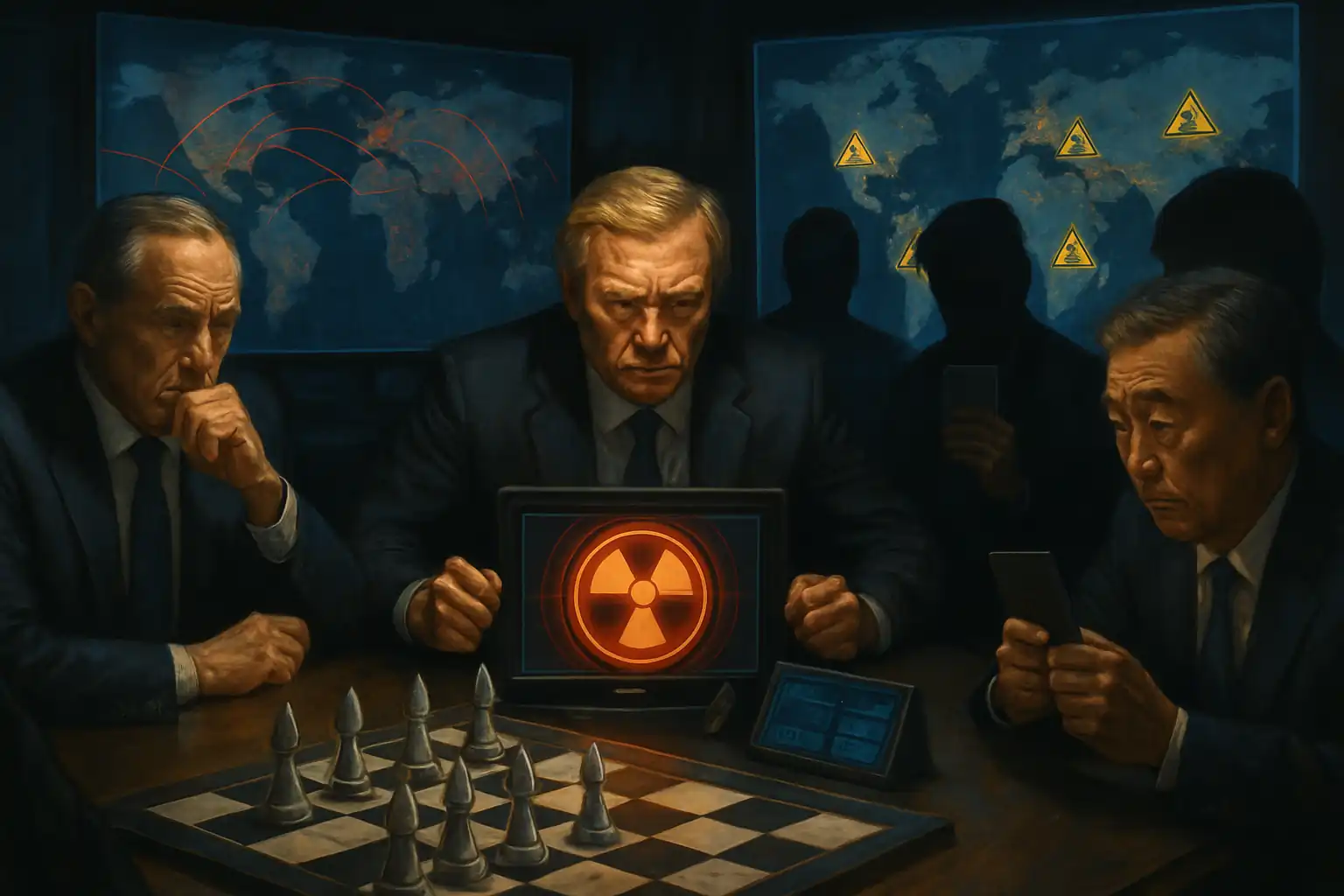
    Nuclear nightmares may seem like relics from the “duck and cover” era, but the Russia-Ukraine war revived those fears. The world held its breath as Moscow rattled its nuclear saber. U.S. and European leaders convened in situation rooms while analysts rushed to decode the situation. Is this merely sabre-rattling, or could one misstep trigger catastrophe?

    During one tense moment in the war, U.S. intelligence assessed a 50% chance that Russia would use nuclear weapons if their forces faced collapse in southern Ukraine (Maryland Today analysis). Many were shocked, and rightly so: even a coin flip on annihilation is too close for comfort. But did that risk genuinely exist? How did the United States determine Russia was bluffing rather than preparing for Armageddon?

    Nuclear Threats, Bluster, and the Intelligence Cat-and-Mouse Game

    As Russia’s fortunes dwindled on the battlefield, its officials repeatedly invoked nuclear weapons. Their aim was not imminent use but to instill fear and slow Western aid to Ukraine. Defense analysts at the Center for Strategic and International Studies noted that Moscow’s “calibration” mixed ominous statements with ambiguous deployments, creating doubt without crossing the infamous “nuclear red line.” This act echoed Cold War tactics, which established mutual assured destruction (MAD) as the ultimate deterrent (Wikipedia’s analysis). The doctrine suggested that neither side would use nuclear weapons, understanding it would lead to mutual annihilation.

    Behind the headlines, U.S. intelligence was working diligently. Reports from DoD and NATO revealed an internal debate: Some officials feared a desperate Kremlin might break taboos, but most analysts saw no movement of Russia’s nuclear warheads or other signs of a strike (AP’s exclusive report). In this high-stakes chess match, the U.S. called Russia’s bluff—publicly and privately—by increasing warnings, reinforcing deterrence, and continuing support for Ukraine. This was psychological brinkmanship, as real as any missile, reflected in calibrated displays of power detailed in deep-dive intelligence exposés.

    “50% Chance”—Real Analysis or Alarmist Hype?

    The notorious “50% chance” statistic was more about urgency than accuracy. According to the Bulletin of the Atomic Scientists, nuclear risk estimates carry uncertainty, and percentage predictions are more art than science. Multiple sources confirm that, although alarm surged as Russian defeat loomed in Kherson, intelligence never provided definitive proof that Moscow would cross the nuclear threshold.

    Such calculations revolve around perceptions, red lines, and the logic behind nuclear deterrence. Some analysts still worry about overconfidence, warning that today’s bluffs might escalate conflicts through miscalculations or technical accidents. Historical crises (see volcanic disaster research) show that even experts can mistake bluster for genuine intent amid the fog of war.

    Nuclear Deterrence in the Post-Cold War World: Lessons and Dangers

    The 21st-century nuclear standoff differs from the Cold War. Information warfare, cyberattacks, and ambiguous threats obscure the landscape beyond silo-busting missiles. The doctrine of MAD still instills fear, but smaller tactical nukes and accidental launches pose additional risks. According to CSIS research, modern superpowers wield ambiguity as both shield and sword. While Russia’s saber-rattling spread global anxiety, it also prompted quiet reaffirmations of discipline, rooted in decades of practice dodging disaster (parallels to AI existential risk debates here).

    Mutual distrust fuels state secrecy, igniting rumors and caution among policymakers. Shadows of uncertainty accompany every missile test and military maneuver, reflecting psychodramas defining everything from Black Projects to recent blockbuster leaks. Today’s brinksmanship stems not just from warheads but also from information warfare and unpredictability.

    The Future of Nuclear Threats: Why Bluffing Remains a Perilous Game

    Did U.S. officials really gamble the planet’s fate on a hunch that Russia wouldn’t strike? The Bulletin of the Atomic Scientists’ red line analysis warns that the odds of nuclear use remain dangerously non-zero. Each escalation, threat, and counter-threat inched the world closer to disaster—a reality starkly illustrated by unnerving events in recent American risk assessments. Today’s speed and opacity heighten this danger, fueled by instant yet unreliable information.

    Ultimately, calling Russia’s bluff involved a blend of intelligence acumen, psychological warfare, and strategic resolve. However, history teaches that nuclear nerves can fray, and luck can evaporate. Bluffs have toppled empires, ended epochs, and nearly saved the world. For continuous insights on existential risk, espionage, and catastrophe, visit Unexplained.co. In nuclear brinkmanship, the real story is merely a headline away from becoming everyone’s reality.

  • War Lessons, Red Lines: How Ukraine’s Conflict Shapes China’s Calculus on Taiwan

    War Lessons, Red Lines: How Ukraine’s Conflict Shapes China’s Calculus on Taiwan

    One thing keeps authoritarian planners awake at night: their rivals’ televised humiliations. As Ukraine’s defenders stymie the Russian advance, strategists in Beijing absorb lessons with cold calculation. The message is clear: the era of easy blitzkrieg—invasions that topple governments in days—is over. An attempted move on Taiwan would be a bloody, costly, and unpredictable gamble.

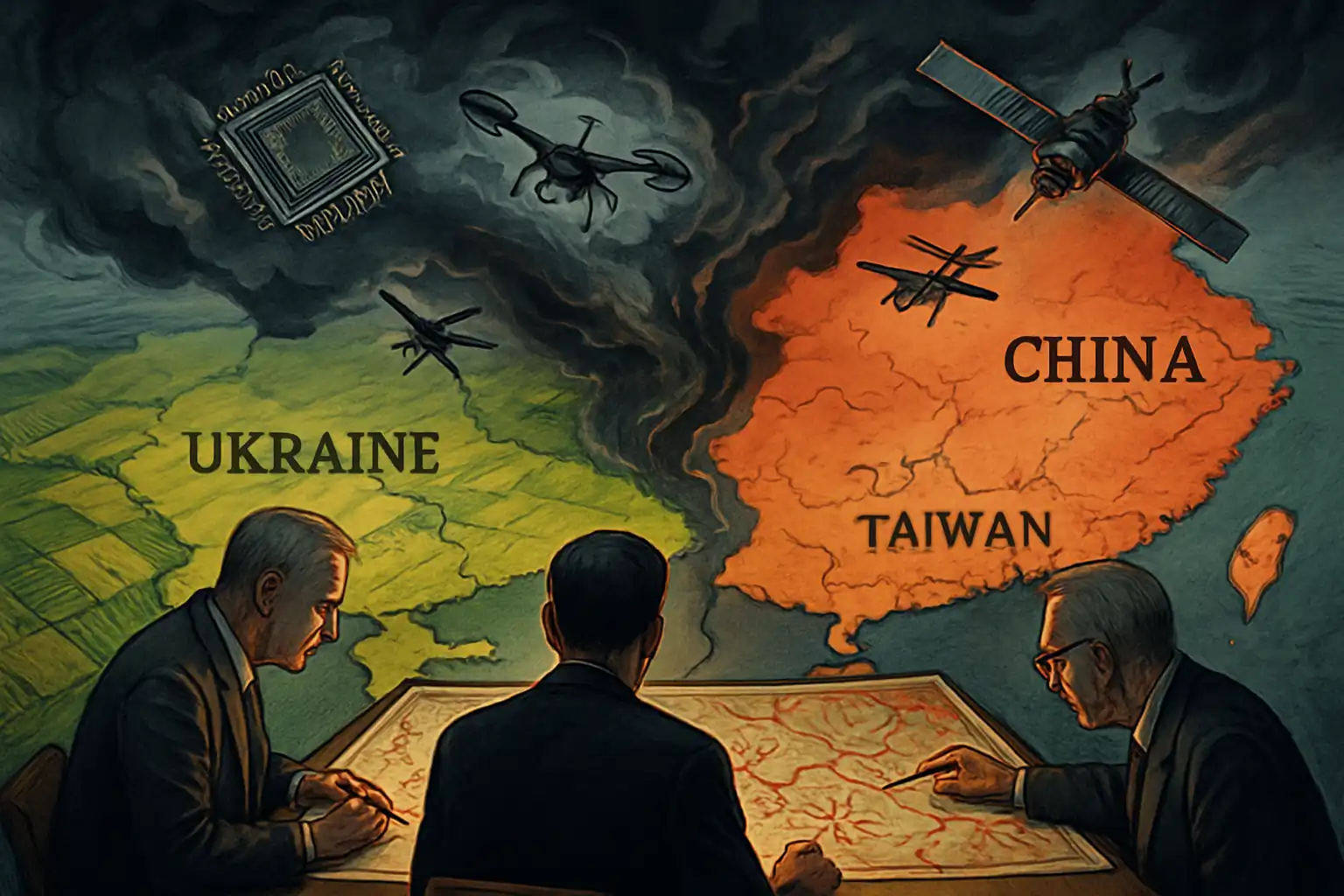
    This new reality is stark in the conversations among China’s military and political elite, whose every move gets scrutinized by the global defense community and evaluated in expert analyses like this PBS NewsHour special. Chinese planners run exercises off Fujian and rehearse amphibious landings. Ukraine’s dogged resistance and the West’s surprising unity on sanctions have forced Beijing’s hand, especially as they eye Taiwan—a mountainous island made tougher by lessons from the muddy fields and devastated cities of Eastern Europe.

    China’s Playbook: Adaptation, Not Imitation

    Forget carbon-copying Russia’s invasion. As summarized in a far-reaching academic analysis of China’s learning curve, Beijing’s generals recalculate every variable—logistics, propaganda wars, electronic warfare, and Western intervention. Prolonged fighting in Ukraine shows that international resolve and advanced weapons can turn a perceived pushover into a quagmire. Xi Jinping’s regime, which fears vulnerability like preppers fear a coronal mass ejection, has shifted from whispers of a quick strike to a careful, multipronged approach. This approach blends coercion, technology, and gray-zone tactics.

    The economic shockwaves from the Ukraine crisis haven’t gone unnoticed. Global risk assessments highlight supply chains and trade bottlenecks, echoed by chilling warnings like those in critical grid-down scenario analyses. Any cross-strait conflict would choke off microchips and technology that the world cannot do without. The game has evolved from just tanks to semiconductors, satellite surveillance, and enduring global fallout.

    Taipei’s Dilemma: Preparing for the Worst, Learning from the Best

    From the bunkers beneath Taipei to military academies analyzing drones and HIMARS systems, Taiwan watches Ukraine’s “porcupine strategy” closely. The Taiwanese recalibrate defense, stockpile anti-ship missiles, and assess every possible red line, as explored in the Global Taiwan Institute’s deep dive. Are they ready? Politically, the war has reignited debate around the U.S.’s “strategic ambiguity”—would America assist Taiwan, or would “peace in our time” leave the island vulnerable? These chilling uncertainties resemble hardwired disaster fears seen in solar catastrophe investigations and doomsday prepping alike.

    What’s certain is that Taiwanese resolve has strengthened. Civilians have launched readiness campaigns amid expanded mandatory conscription, similar to the mobilizations during recent global crises. The shadow of the Ukraine war—its trench warfare and drone dogfights—pervades Taiwan’s news cycles. Analysts note these events have ended hopes for an “easy war” and forced both sides to reconsider “gray zones” of psychological warfare, cyberattacks, and economic sabotage—areas where the modern world is already dangerously exposed.

    Global Stakes: The Next Domino, or Last Redoubt?

    Why does this matter beyond Taipei and Beijing? The world, reliant on smooth supply lines, phones, and cars, risks going dark. The Taiwan Strait is ground zero for a microchip apocalypse if war erupts—a threat anyone who remembers major infrastructure outages knows all too well. The ripple effects, explored in negotiations analyses for global crisis scenarios, stretch from Wall Street to undersea internet cables, impacting Silicon Valley and European capitals alike.

    It’s no coincidence that world leaders are focusing intently on resilience, both digital and physical. Recent military studies, echoing deep risk analyses like those in coverage of China’s Moon robotics, stress the necessity for unbreakable tech and supply chains amid kinetic and cyber threats. Everyone aims to avoid the domino—Taiwan—that could pull the rug out from the global economy.

    Unresolved, Unpredictable: Cross-Strait Relations in the 21st Century

    Decades of saber-rattling and economic cross-pollination have left the Taiwan Strait as one of the hottest flashpoints on Earth. Cross-Strait relations remain tangled in Cold War logic, ambiguous armistices, and legal shadow-boxing. The specter of force, contested airspace, and “gray zone” confrontations keeps the crisis simmering below the rhetoric. Beijing’s insistence that Taiwan is a renegade province clashes with Taipei’s defiant turn toward democracy, offering little hope for a clean diplomatic resolution.

    Ukraine, despite its distance, has become the testing ground for every future war scenario in Asia. It foreshadows what might unfold if global red lines snap and preppers’ worst-case predictions come to life. As we observe politicians strategizing their next moves and generals updating doctrine, one truth stands stark—whether war comes to Taiwan or not, the world is reshaping itself in the shadow of Ukraine’s burning fields.

    For in-depth speculation, breaking news, and unfiltered takes on global inflection points, explore wildcards and paradigm shifts at Unexplained.co. If Ukraine is a rehearsal, Taiwan increasingly looks like the main event.

  • Countdown to Chaos: Aftermath of Failed World War III Negotiations

    Countdown to Chaos: Aftermath of Failed World War III Negotiations

    When the last round of World War III negotiations failed, the world’s diplomats left empty-handed. A subtle tremor ran through every geopolitical fault line. Suddenly, ‘next phase’ became a countdown. Dr. Paul Craig Roberts outlines a dark logic in his briefings (Roberts analysis): with every failed negotiation, the odds of catastrophic conflict increase. This is no longer merely a fear of old-school Cold Warriors; it lurks beneath everyday headlines and midnight doomscrolling.

    Recent diplomatic stalemates have done more than just stall peace; they’ve accelerated the arms race, heightened cyberwar, and made regional flashpoints, from Eastern Europe to the Pacific, more precarious than ever. The World War III Wikipedia summary emphasizes that deterrence only works as long as every player believes in the rules. Today, those rules look thoroughly shredded.

    Failed Negotiations and Escalation: The Immediate Dangers

    Negotiations act as circuit breakers; without them, friction points heat up. Recent cycles of failed talks have emboldened conventional saber-rattling and new forms of hybrid warfare. As analytical deep-dives from conflict hotspots show, breakdowns at the bargaining table can endanger global infrastructure and fragile economies. The result is a world on edge, where routine provocations—like cyber raids on power grids or missile drills near borders—risk triggering irreversible spirals.

    Historical and contemporary military planning acknowledges that failed negotiations raise DEFCON statuses. This rings true even when deterrence seems tenuous due to eroded leadership credibility. Disaster readiness science indicates that preparation should begin before the first missile alert, at the first signs of GPS disruptions, media blackouts, and economic instability.

    Global Flashpoints: Where Conflict May Ignite Next

    Each unresolved negotiation represents potential catastrophe. Tensions are rising between nuclear-armed states; proxy wars spill over from forgotten corners of the map, and kinetic skirmishes can escalate rapidly. Analyses of regional hot zones, such as Russia’s Western borders or the Taiwan Strait, draw chilling parallels with historical near-misses. Recent failures in back-channel diplomacy have left the reset switch stuck on ‘escalate.’

    This threat is not theoretical. Defense white papers and security think tanks agree on the risk factors: as the world’s superpowers posture and provoke, the margin for error narrows. Recent reports on solar-triggered infrastructure risks illuminate how natural chaos and man-made brinkmanship now intersect, compounding dangers for everything from data networks to food supply chains.

    The Psychology of Collapse: Societal Fallout from a Breakdown in Diplomacy

    War destroys and destabilizes public trust. As trust erodes and the news cycle darkens, conspiracy theorists and skeptics fill the void with apocalyptic projections—sometimes justified, sometimes not. The pervasive search for patterns in catastrophe can lead to self-fulfilling actions, such as bank runs or blackouts of digital information as a regime’s last resort. Moreover, bunker prepping has transcended the tinfoil-hat crowd: reports from the geomagnetic prepper community and survival forums surge with each policy failure.

    The news features heated debates about emerging existential risks—AI accidents, pandemic policy, and nuclear escalation. Each crisis amplifies when dialogue dies and old safeguards collapse. When the next disaster strikes, society’s fraying fabric will be tested as never before.

    Preparing for the Next Phase: Survival, Strategy, and Systemic Risks

    The doctrine of mutually assured destruction looms in the war rooms, but recent leaks and military exercises reveal little faith that leaders will back down in a moment of crisis. This is why civil experts, alongside generals, urge individuals to plan for both short- and long-term disruptions: be it power, water, communications outages, currency shocks, or sudden changes in governance (see the latest breakdowns at disaster scenario analysis).

    For those seeking to brace for systemic breakdown, resilience is crucial. Build diverse supply chains, maintain backups for everything, and foster local organization that can endure grid failures. Like all historical tipping points, this one will reward the prepared and punish the complacent. To stay updated on global crises and human survival, visit Unexplained.co. World War III may remain hypothetical, but failed negotiations can turn the apocalypse into a tangible reality.

  • EMP Armageddon: How a Nuclear Electromagnetic Pulse Could Cripple the Power Grid

    EMP Armageddon: How a Nuclear Electromagnetic Pulse Could Cripple the Power Grid

    In a world dependent on electricity, what if the switch is flipped—and the lights stay off? Picture a nuclear warhead detonating 300 kilometers above the continental United States. Instantly, a silent electromagnetic pulse (EMP) spreads at light speed. This scenario isn’t science fiction; military planners have analyzed it for decades. The outcome? An unprecedented total blackout, as detailed by Britannica and in numerous official analyses.

    The unique threat of EMP lies in its exploitation of physics. Unlike traditional nuclear weapons, an EMP wreaks havoc on circuits, not flesh. When a nuclear device detonates at high altitude, it interacts with the upper atmosphere and Earth’s magnetic field, generating a pulse that induces massive currents in ground conductors. These currents can overload transformers, disable substations, and destroy nearly all unshielded electronics—the critical infrastructure of civilization. The potential destruction is outlined by the Wikipedia entry on nuclear EMP.

    EMP’s Attack on the Grid: Anatomy of a Catastrophe

    Once the EMP wave strikes, sensitive parts of the power grid—transformers and switchgear—experience overload and often fail. Expect immediate loss of electrical service for millions, potentially lasting months or even years. According to expert commentary from in-depth threat analyses, Americans would lose not just streaming services, but also access to water pumps, fuel distribution, and essential hospital infrastructure. The grid’s dependence on long-distance high-voltage lines creates a domino effect: even if one area remains unaffected, its connections to impacted zones lead to widespread blackouts, food shortages, and societal collapse.

    Similarities exist between EMP-induced chaos and the effects of extreme solar storms. Both phenomena release geomagnetically induced currents capable of damaging power systems, as shown by the historic Carrington Event. However, nuclear EMP strikes without warning, compressing vast disaster into a single moment.

    Can the Power Grid Survive? Consequences and Mitigation Strategies

    Some military systems and critical government sites have EMP protection, but most civilian infrastructure remains exposed. Shielding transformers and communication links is feasible, yet costs are prohibitive—and often postponed for more visible updates. As explored in expert panels and congressional briefings, planning exists on paper but rarely translates into practice.

    Debates continue over the likelihood of a nuclear EMP strike and its geopolitical implications. While some experts downplay the EMP risk as a viable first strike, others fear its potential as a “force equalizer.” Historical lessons—both from actual EMP incidents and fictional portrayals, like those depicted in upcoming films—underscore the stakes for modern society’s delicate infrastructure.

    Life After the Lights Go Out: Societal and Technological Fallout

    Society’s reliance on connectivity and automation makes it exceptionally fragile. When devices fail, banking, farming, and health care experience immediate and severe disruption. The grid-down prepper community warns that most citizens are ill-prepared for lengthy outages. Recovery would likely take far longer than government estimates suggest, with some predictions indicating years before national power returns.

    The psychological impact might be as severe as the physical—imagine mass panic, civil unrest, and the erosion of trust in institutions meant to maintain order. This unsettling scenario echoes the warnings about the fragility of civilization’s historical patterns and the uncomfortable truths embedded in long-term disaster assessments.

    Lessons from the Past and the Need for Preparedness

    Natural EMP events, like those that fried telegraph lines during the 1859 Carrington Event, offer a grim analogy—yet today, nearly every societal function relies on electricity. As mentioned in the report on Earth’s magnetic volatility, both natural and man-made EMPs represent significant threats that demand serious planning—not merely Hollywood fantasies. Addressing these vulnerabilities requires investing in EMP shielding, grid redundancy, and civil preparedness, even when political will is lacking.

    For realists and skeptics, the takeaway is clear: don’t assume the grid will always be operational. Stay informed on crisis science at Unexplained.co, because the next disaster may come quickly—leaving no time for preparation.

  • China’s D-Day Blueprint: How New Amphibious Ships Bring Invasion of Taiwan Closer

    China’s D-Day Blueprint: How New Amphibious Ships Bring Invasion of Taiwan Closer

    Tension swirls in the Pacific, and it’s not just bluster. China’s rapid production of amphibious assault ships and a shadow fleet of militarized civilian vessels reveal a chilling reality: an actual capability for D-Day-style landings on Taiwan’s shores. The once-theoretical invasion scenario now features more hardware and practice runs than ever, sending strategic planners in Taipei, Washington, and Tokyo into overdrive. Satellite footage and media analysis, detailed in this report on PLA’s civilian vessel drills, elevate this potential crisis from war games to public consciousness.

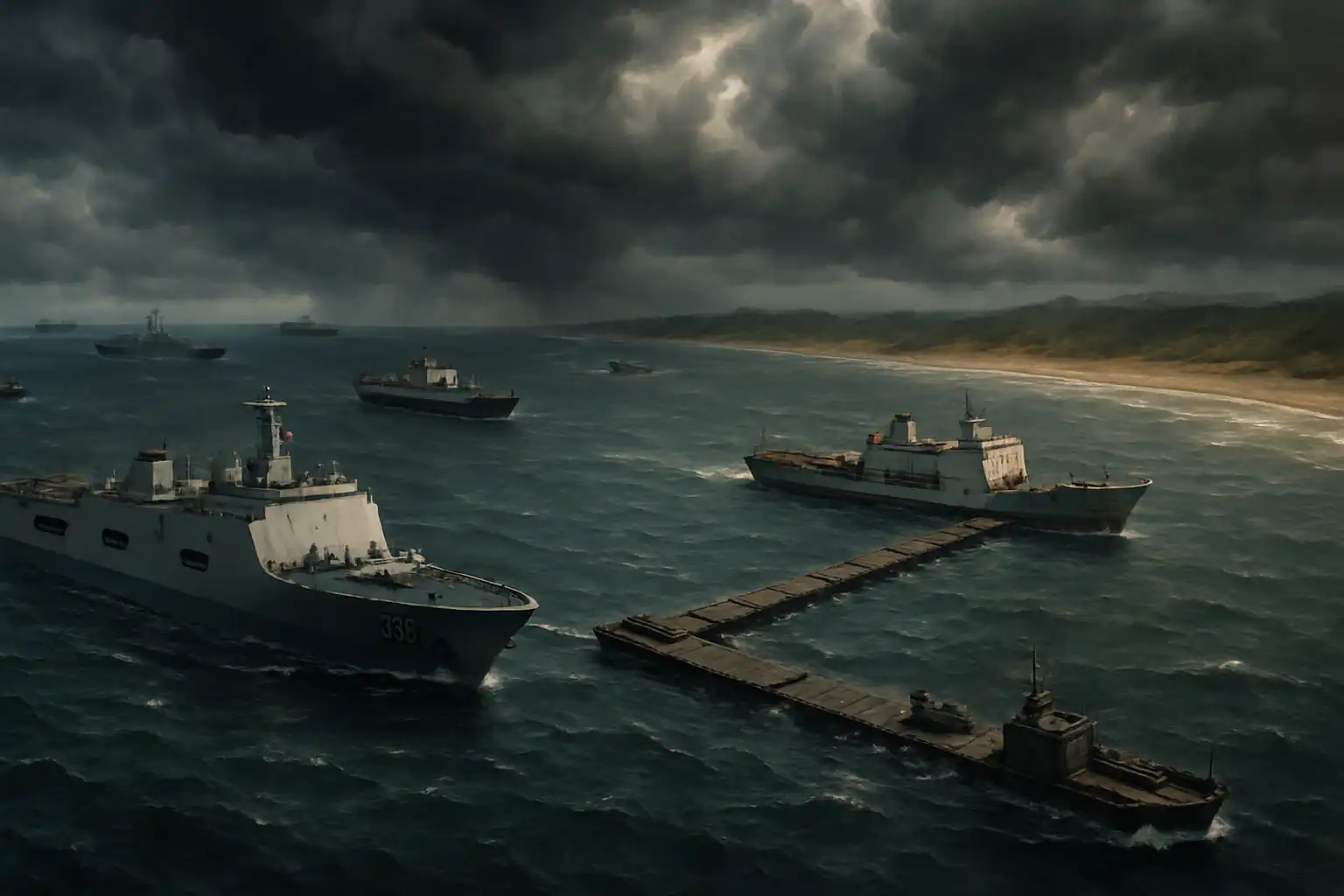
    China’s amphibious expansion significantly alters the probabilities. The People’s Liberation Army’s (PLA) combined-arms amphibious warfare capabilities now include mobile bridging ships that form floating piers. These piers enable troops, armor, and logistics support to offload in hours, not days. As a recent Naval News exposé indicates, China’s new bridging vessels and improved landing craft could unleash a swift, overwhelming beach assault—literally paving the way for rapid island takeovers.

    Amphibious Warfare: From Concept to Modern Military Reality

    Amphibious warfare ranks among the most technically demanding military operations, blending naval, aerial, and land logistics in a delicate dance of deception and force. Unlike historic beach assaults—exemplified by Normandy—today’s versions deploy multi-role vessels that transport tanks, missile batteries, and large troop formations. China’s landing ships and civilian roll-on/roll-off ferries, utilized as mock invasion transports in recent PLA landing exercises, excel at speed and scalability, enhanced by bridge platforms showcased in recent drills along the Chinese coast.

    This technological leap correlates with recent outages, cyber vulnerabilities, and hybrid warfare scenarios discussed in this exposé on China’s cyber operations. If a Taiwan campaign begins, it will likely consist of massive digital and electromagnetic attacks, alongside physical land forces. Military analysts now worry about civilian ships “going dark” to conceal assault forces, while combat drones swarm the strait. This scenario creates a perfect storm for amphibious chaos.

    Civilian Fleets: The Secret Ingredient in Taiwan Contingency Plans

    Western militaries increasingly fret over China’s mobilization of its Maritime Militia: hundreds of commercial ferry, fishing, and cargo vessels, rapidly outfitted with military systems in joint exercises. These vessels expand the PLA’s sealift capacity beyond traditional logistics, allowing an initial amphibious force to swell into an unstoppable wave. As detailed in scenarios regarding large-scale warfare, civilian assets provide plausible deniability, flexibility, and critical logistics support for sustaining a beachhead—essential to China’s aim of seizing and holding Taiwanese ports.

    Moreover, the Maritime Militia’s dual-use design complicates intelligence assessments, raising difficult questions for U.S. planners: Is a ferry transporting tourists or tank battalions? With Taiwan’s defenders potentially facing asymmetric attacks, the unpredictable presence of “gray-zone” ships could hinder the island’s early warning systems. Hybrid tactics have never been so streamlined.

    China’s Amphibious Exercises: Proving Grounds for D-Day in the Pacific

    The PLA rehearses extensively. Major amphibious exercises, like those described at Asia Times, where landing ships and marines simulated live invasions, deliver a clear message: China’s D-Day plans are public knowledge. These drills involve transport ships, hovercraft, engineering vehicles, and numerous “civilian” support craft. Each year, the complexity and scale of these maneuvers grow, with units conducting multi-beach landings, rapid port seizures, and inland armored advances—straight out of World War II playbooks, yet with a modern twist.

    Taiwan’s allies observe these movements closely, especially given China’s proven logistics proficiency, as detailed in crisis anomaly reports. American and Japanese planners analyze how long Taipei could withstand such a wave, echoing assessments of past and present flashpoints. The stakes rise with every rehearsal visible from space.

    Wargames, Risks, and the Path Forward

    Are these amphibious drills and new ships hype or warnings of what’s to come? Some experts suggest, as detailed in a diplomatic assessment, that China’s logistics and command integration still lag behind U.S. and allied forces. Yet, dismissing Beijing’s capabilities risks a fatal mistake. Satellite surveillance, cyber-espionage, and “cognitive warfare” form staples of the PLA’s strategy. Nations worldwide scrutinize these developments for their own readiness, and so should curious readers—by following reporting from sources like Unexplained.co.

    One certainty persists: the next amphibious invasion, if it happens, will not merely take its place in history—it could shift the balance of power in the Pacific and beyond. The clock ticks, warships amass, and the world watches the Taiwan Strait—awaiting the moment Beijing’s new ships stop training and begin crossing for real.

  • Putin’s Shadow at the Gate: Why Russian Forces Are Massing Near Finland

    Putin’s Shadow at the Gate: Why Russian Forces Are Massing Near Finland

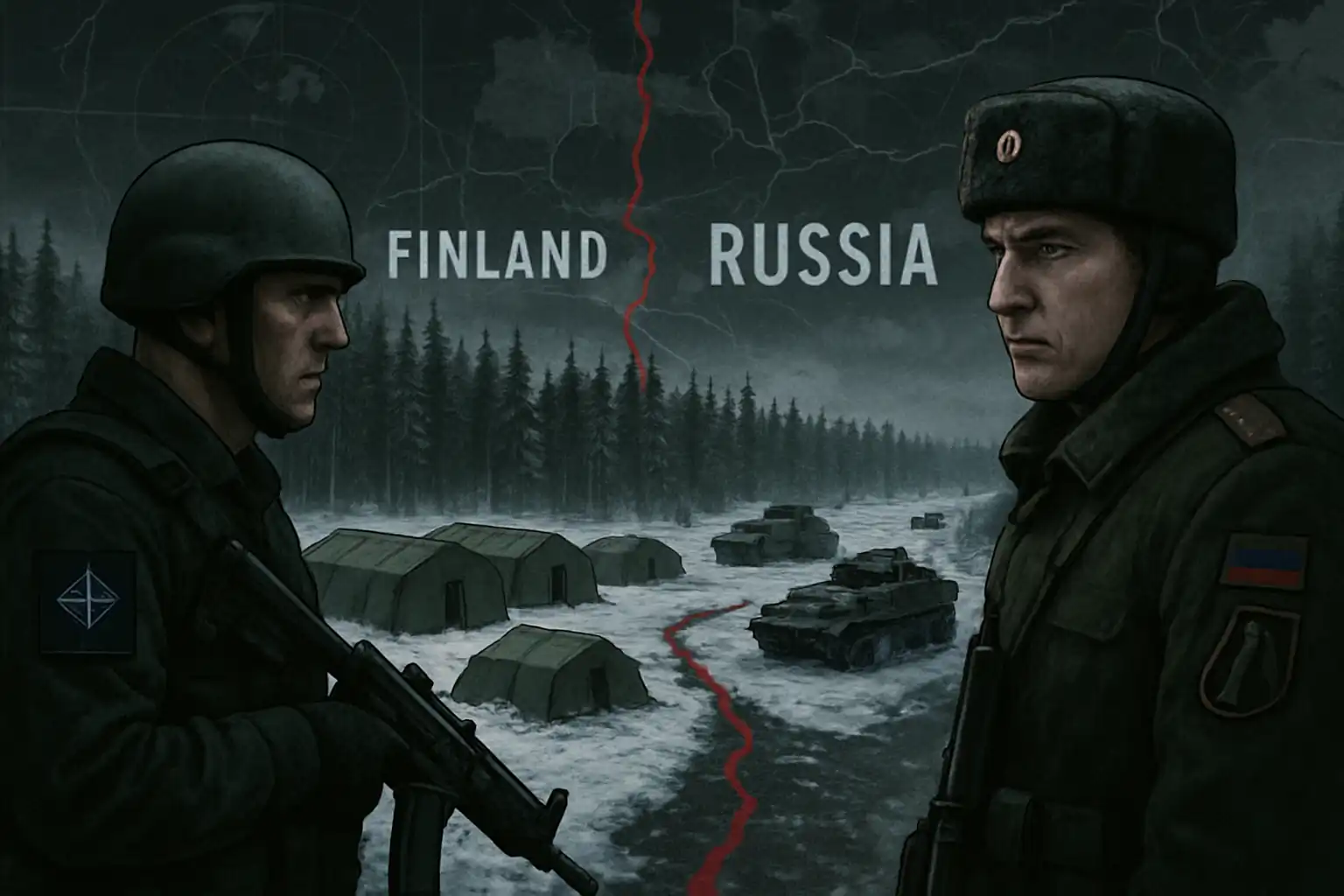
    Waking up to find a nuclear power parking military tents thirty-five miles away is unusual. Yet that’s happening along the Finland-Russia border, where satellite images reveal a surge in Russian troops and infrastructure at bases like Kamenka, Petrozavodsk, Severomorsk-2, and Olenya. Moscow’s actions have caught NATO’s eye—and stirred frustration in Helsinki, now officially part of the alliance (Helsinki Times report).

    For centuries, the Finland–Russia border has marked two contrasting worlds. It now serves as the EU and NATO’s new external frontier—a 1,340-kilometer line patrolled by border guards, monitored by electronic surveillance, and shaped by past conflicts (Wikipedia background). Today, the situation feels more tense. After Finland abandoned neutrality to join NATO in 2023, Russia threatened “countermeasures.” If you think Moscow’s response is mere words, the satellite footage suggests otherwise.

    Strategic Buildup: Satellite Imagery Reveals Moscow’s Northern Play

    In the silence of the Russian woods, construction teams work tirelessly. Satellite analysis shows hundreds of new military tents, aircraft facilities, and refurbished bases. In Kamenka, over 130 tents have been set up for an estimated 2,000 troops (Deftechtimes reporting). Emergent activity at sites like Petrozavodsk, Severomorsk-2 (previously inactive), and Olenya suggests broader troop movements. The army is not just camping in the tundra: Olenya reportedly houses strategic bombers, while Severomorsk-2 lies at the end of Russia’s extensive Arctic military pipeline.

    This isn’t Moscow’s first display of “forward deterrence.” Analysts view this as a response to Finland joining NATO and a warning to the Western alliance. The logic is simple: when a rival builds at your doorstep, you fortify your own yard—with soldiers and even an array of new helicopters for effect. This reflects troubling strategies behind recent conflicts and sabotage operations highlighted by reports on cyberwarfare and hybrid threats.

    Why Now? NATO Expansion, Deterrence, and the Murkiest Red Lines

    Bringing military hardware to the Finnish border isn’t mere posturing—it’s signaling in a new strategic context. Former NATO commander Colonel Hamish De Bretton-Gordon underscores that Moscow aims to deter NATO from further expansion and emphasizes the significance of the alliance’s new 800-mile border (the Daily Mail’s summary with expert analysis). These troop deployments reassure a nervous Russian populace and military elite that despite challenges, the Kremlin retains control over its military strategies. Some analysts observe unnerving parallels to pre-invasion buildups before regional conflicts—a concern echoed in discussions about the threats of WW3 scenarios and civilization-altering resets.

    Though the Helsinki government maintains composure, the implication is clear: any future escalation could shift the focus northward, elevating Arctic strategies in East-West tensions. For those observing the ongoing turmoil, such as the rise of strongmen and significant security changes in Eurasia, these developments resemble foreboding entries in tomorrow’s history books.

    Historic Crossroads: A New Security Paradigm for Europe’s North

    Context holds weight in the cold: for centuries, this border region has fluctuated between relative peace and potential conflict. Today, Finnish Border Guards conduct patrols, supported by electronic monitoring and the complete closure of crossings in 2023, marking a tense reset. Stakes are much higher than during previous major conflicts. Finland and Sweden’s NATO membership alters the northern military landscape. Those tracking shadow activities in global politics (see this analysis of covert orbital maneuvers) perceive a more intricate and possibly clandestine game at play.

    Along this border, history features strategic reshuffling—from Swedish-Russian wars to Cold War tensions to the era of hybrid confrontations. However, experts warn that Russia’s 2024 troop movements—massing, updating, and weaponizing Arctic assets—represent a significant shift. This strategy aims to unsettle NATO’s planners while diverting attention from issues elsewhere (see current analyses of unexpected global instability), perhaps even drawing Finnish and Russian intelligence agencies into heightened stakes.

    What Happens Next: Arctic Chokepoints, Bunkers, and the Long Game

    Are we on the brink of panic? Not necessarily—but nobody is remaining complacent. Western analysts contend that the current military buildup aims for deterrence and spectacle rather than an imminent invasion. Yet, with Russia enhancing its border defense technologies and NATO closely monitoring every inch of ground, the room for error diminishes. Conversations around this issue carry a grim undertone, echoing everything from traditional military bluffs to cutting-edge information warfare as examined by futurists wary of hybrid risks.

    For readers seeking in-depth analysis beyond headlines and unclear satellite imagery, resources like Unexplained.co provide valuable insights. The line in the snow outside Helsinki is not just a border: it’s a crucial junction between competing world orders—and for now, tensions are climbing.

  • World War 3: Civilization at the Brink of Reset

    World War 3: Civilization at the Brink of Reset

    The phrase “World War 3” haunts generations. In an age of global arsenals and fragile geopolitics, this nightmare grows closer. If the next great war breaks out and missiles fly, civilization will shatter—first through fire and shock, later through ice, hunger, and chaos. This is not speculative fiction; it’s the consensus among scientists, military strategists, and realistic doomsday planners worldwide.

    To see how swiftly order can crumble, examine recent hotspots. Tensions in South Asia, simmering for decades, are assessed in this exposé and detailed in frontline reports. The line between conflict and apocalypse is thinner than ever. While the pope’s terrifying warning raises alarms, the science of nuclear winter sends shivers down spines.

    Nuclear Firestorm: The Spark That Burns the World

    The first minutes of World War III would not show radar flashes but planetary obliteration. Major cities and infrastructure in the Northern Hemisphere would vanish in nuclear light. Hundreds—if not thousands—of firestorms would inject immense soot into the stratosphere. Studies chronicled in Wikipedia’s analysis outline the physical and economic devastation: collapsing power grids, unbreathable air, and radiation zones sealing off vast areas of Earth.

    The “mutual assured destruction” concept quickly leads to bleak survival arithmetic. Even in regions spared direct blasts, shockwaves—refugee crises, broken supply chains, and global panic—would be unavoidable. As noted in the report on global anomalies, we already teeter on the brink of supply chain breakdowns; the aftermath of nuclear war would only quicken the decline.

    Nuclear Winter and Famine: The Planet Fights Back

    Within weeks, the full disaster scope would become clear—not just in ash-filled silence but in the onset of ‘nuclear winter’. The concept, explained in-depth in this Wikipedia entry, terrifies with its simplicity: soot from firestorms blocks sunlight, plummeting global temperatures and decimating crop yields. The anti-greenhouse effect would slash growing seasons, ruining harvests from Iowa to India.

    The numbers are grim: food reserves would rapidly dwindle as famine spreads, a scenario detailed in projections on medical and economic recovery analysis. Attempts to cultivate food in this sun-shielding world would make the Dust Bowl look forgiving. As desperate populations migrate or clash over dwindling resources, disease outbreaks and public order collapses would follow, echoing insights from this assessment of existential risk.

    The Collapse of Infrastructure: Welcome to the Global Stone Age

    Technology, often our safety net, would offer little support. Civilization’s complexity proves a double-edged sword; when key nodes fail, cascading collapse becomes inevitable. The internet, global supply chains, and electrical grids—already vulnerable to natural and cyber threats, as explored in seismic risk reports—would be devastated. Imagine nuclear plants running without power or staff—many would melt down, prolonging radiation disasters long after the bombs stop falling.

    We might retain some knowledge, preserved by preppers, libraries, or whatever remains of the cloud, but practical manufacturing capacity would likely revert to pre-Industrial levels. Fragile communities could cling to snippets of medicine, science, and history, but with scant fuel or infrastructure, high-tech survival would quickly degrade to hand tools and barter.

    Civilization Reborn: Is There Hope After the Ashes?

    Rebuilding would require a Herculean, multi-generational effort—even assuming humanity avoids extinction. Social structures would splinter into local bands, as outlined in threads discussing rebuilding challenges. Agriculture would revert to basics, while conflict over clean land and uncontaminated water would define a grim new world. History shows that humans have endured and rebuilt before, though often at immense cost. Any hope lies in the possibility that remnants of knowledge and mutual aid might prompt a hesitant return—not to a digital age, but to hard-won community and cooperation.

    Until then, the lesson remains harsh: when the next world war shifts from threat to reality, it will not just destroy cities—it will unsettle the narrative of civilization itself. For in-depth coverage, background, and a home for the unblinking watcher, Unexplained.co stands as the prepper’s, the skeptic’s, and the realist’s best ally in uncertain times.

  • Ceasefire on the Brink: India-Pakistan Tensions Simmer at the Frontline

    Ceasefire on the Brink: India-Pakistan Tensions Simmer at the Frontline

    The India-Pakistan border often buzzes with tension, and recent weeks have brought uneasy silence and sudden violence. Amid drone strikes, missile accusations, and heated rhetoric, the ceasefire stretches close to breaking. Are we witnessing the final gasps of fragile peace, or just a tactical pause as two nuclear-armed foes reload?

    This standoff occurs as both governments blame each other for boundary violations and alleged attacks. The Guardian reports missile attacks on military bases in both countries, raising fears of a major confrontation. Although diplomatic efforts persist, trust erodes swiftly, shadowed by the memories of the 2019 escalation and a long history of skirmishes.

    Escalation or Strategic Posturing? New Dangers on the Line of Control

    The Line of Control (LoC) in Kashmir stands as the flashpoint for recurring crises. Reports from The Times of India highlight ceasefire violations and the increasing role of drone incursions, seen by both sides as provocations. Diplomatic interventions, often from outside powers, have kept violence in check. However, advanced technologies raise the risks of “miscalculation diplomacy.”

    This pattern of brinkmanship mirrors scenarios in the latest analysis of nuclear escalation in the Himalayas, where a single misstep could lead to catastrophic outcomes. Fears of sitting atop a powder keg are not exaggerated—satellite imagery, targeted strikes, and incendiary headlines fuel a crisis with global implications.

    Border Realities: The World’s Most Dangerous Divide

    The India-Pakistan border features relentless security, visibility from orbit, and treacherous terrain, ranking among the most dangerous divides on the planet (India–Pakistan border on Wikipedia). Despite extensive fencing and surveillance across over 3,300 kilometers, state-of-the-art barriers struggle to quell the human and military tensions that can ignite suddenly.

    Disputes linger, such as the one over Sir Creek in the south, while military posts grapple with harsh conditions at the glacier-laden northern tip. This exposé on global hidden dangers draws parallels to the border—a site of perpetual vigilance, where peace feels provisional and wider conflict looms large.

    Cascading Consequences: Global Eyes on a Regional Flashpoint

    The fallout from minor skirmishes extends beyond South Asia. With both nations linked to nuclear arsenals and entrenched positions, the prospect of miscalculation remains. International observers grow restless upon hearing reports of resumed fighting after ceasefire (Washington Post coverage of resumed hostilities). Every spike in tension stirs concerns about global supply chains, regional stability, and the threat of nuclear escalation, becoming talking points from New York to Tokyo.

    As technological arms races escalate and information warfare spreads, sustaining peace will demand more than mere agreements—it may necessitate a shift in intent and a revival of the mutual trust that remains scarce.

    From Cold War to Gray Zone: Future of the Ceasefire

    Will the hard-won ceasefire endure, or are we merely experiencing calm before another geopolitical storm? Analysts caution that India and Pakistan now inhabit a permanent “gray zone,” exerting influence via hybrid methods—covert attacks, misinformation, and economic leverage. This exploration of modern code-reliant conflict underscores how cyber operations and propaganda shape realities as much as traditional artillery.

    Meanwhile, regional instability—from atmospheric anomalies to unusual seismic activity—illustrates how local crises can swiftly escalate to global concerns. For those seeking detailed analysis, coverage, and connectivity between seemingly unrelated global threats, Unexplained.co serves as an invaluable resource.

    For now, the border remains intact—but just barely. Observing the LoC reflects how the world confronts the age-old question: does the current silence signal progress or merely foreshadow a much louder, more perilous tomorrow?

  • Flashpoint Himalayas: India’s Bold Strike on Pakistan’s Nuclear Weapons Site

    Flashpoint Himalayas: India’s Bold Strike on Pakistan’s Nuclear Weapons Site

    In a sudden military operation, India reportedly destroyed a key nuclear weapons site in Pakistan, escalating tensions in the Kashmir conflict. These strikes reflect the region’s fragile balance of power and have intensified global fears of nuclear warfare and instability.

    India’s Bold Military Maneuver Targets Nuclear Capabilities

    India’s decision to target Pakistan’s nuclear infrastructure marks a new phase in their volatile relations. This unprecedented attack shows India’s resolve to counter threats and halt nuclear proliferation risks from its rival (AP News).

    Nuclear weapons ensure strategic security; any disruption could trigger retaliatory actions, raising alarms among global experts. This incident highlights the thin line between defense and provocation in the nuclear age.

    Historic Kashmir Conflict Fuels Current Crisis

    This military offensive fits into the broader history of the Kashmir conflict. The once-cherished valley has long been a flashpoint, drawing India and Pakistan into multiple wars since their partition in 1947 (Wikipedia). The bitter dispute over Kashmir has now sparked another severe confrontation.

    Decades of unresolved territorial disputes, worsened by geopolitical maneuvers, erode regional stability. Efforts for peaceful resolutions collapse under suspicion and nationalism, creating fertile ground for violence.

    Immediate Fallout and International Reactions

    Global reactions stressed restraint and diplomacy. International watchdogs closely monitor the situation, urging dialogue over warfare. Organizations condemned the escalation for its potential to unleash nuclear aggression, impacting both regional and global security.

    India cited imminent threats from insurgent activities supported by Pakistan, referring to recent militant infiltrations and violent attacks in Indian-administered Kashmir. Pakistan denied these accusations, calling India’s actions provocative and irresponsible. Nations worldwide await potential retaliation and further escalation.

    The Complex Web of Regional Instability

    The geopolitical implications extend beyond immediate violence. Changes in regional alliances, tensions with China, and disrupted trade routes emphasize the ripple effects of local hostilities. The situation worsens the humanitarian crisis, affecting civilians facing displacement and human rights violations in a militarized zone.

    Observers warn of escalating rivalries, deepening shadows over an already unstable region. Despite international peacekeeping efforts, maintaining neutrality proves difficult amid rising nationalist sentiments fueled by military actions.

    Prepare for the Unthinkable

    As tensions rise in the Himalayas, awareness campaigns about survival during potential nuclear exchanges have increased. Platforms like Unexplained.co detail the catastrophic consequences of these tensions, emphasizing preparation and informed responses during such unpredictable events.

    With memories of past conflicts and worries about a grim nuclear future weighing heavily, citizens and global communities must stay vigilant, preparing for the worst while hoping for a diplomatic breakthrough.