Category: World War 3

  • Prime Video’s Fallout Season 2 Teaser Promises More Apocalypse, More Intrigue

    Prime Video’s Fallout Season 2 Teaser Promises More Apocalypse, More Intrigue

    Amazon Prime’s Fallout adaptation returns to electrify our screens. The Season Two teaser trailer promises a thrilling nuclear apocalypse. New episodes arrive December 17, 2025, plunging viewers back into the despair—and dark humor—of the Wasteland. As Prime Video enjoys a surge in post-apocalyptic content, Fallout aims to bridge cult gaming nostalgia with premium television, ensuring no vault dweller catches a breath.

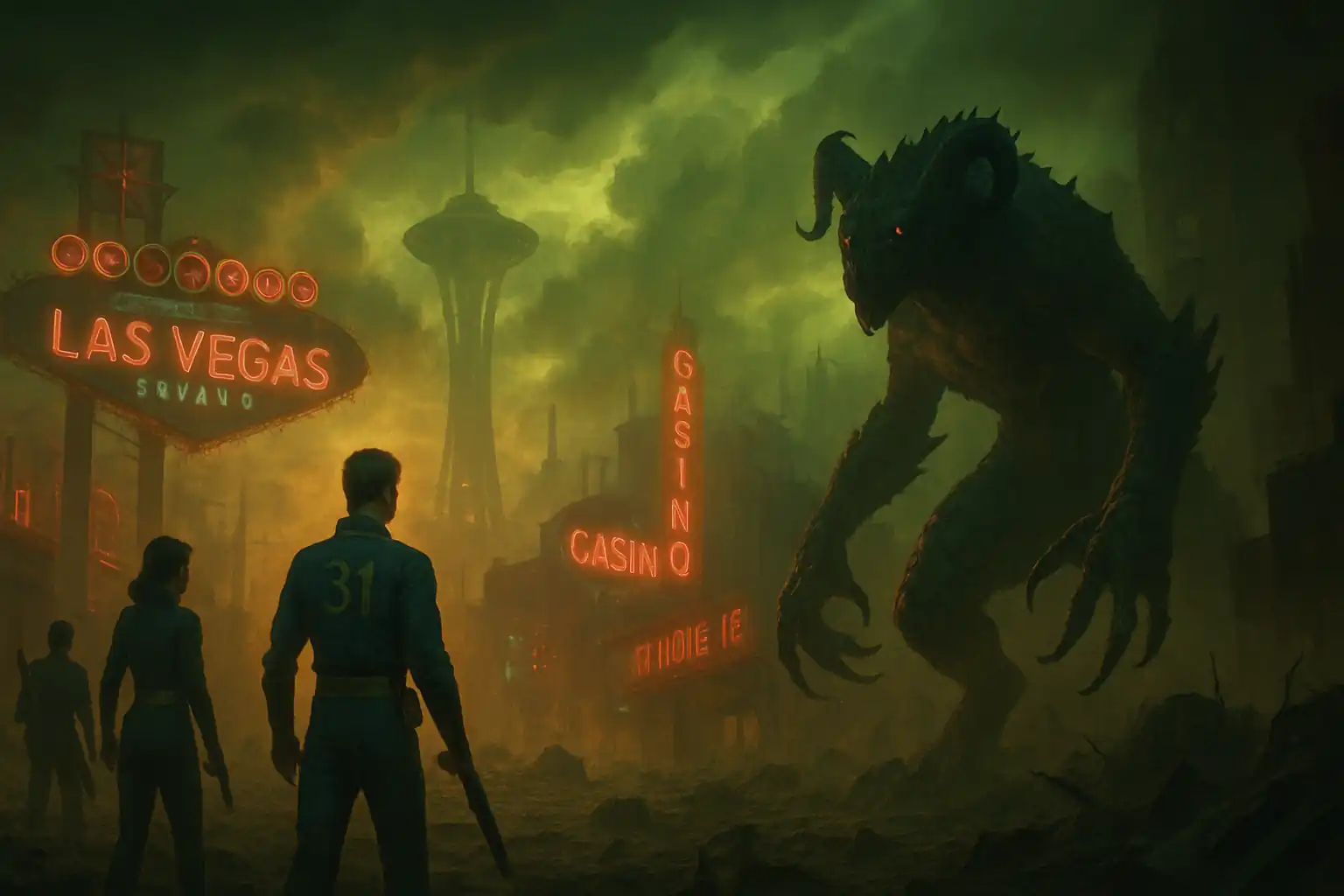
    Season Two thrusts Lucy, Cooper the Ghoul, and Maximus into the dazzling, irradiated chaos of New Vegas. This nod excites longtime gamers while adding a fresh layer of disorder. It’s clear from the first-look preview and the official Amazon press release that the creative team is more than producing television—they are constructing a radioactive world.

    From Vaults to Vegas: Fallout Season Two’s Fallout Universe Expansion

    After the critical and commercial success of Season One—celebrated in mainstream media and analyzed in genre outlets—the stakes for Fallout rise even higher. Season Two, confirmed by Wikipedia’s entry, shows Lucy departing Vault 33’s distorted security for New Vegas. Lore and world-building dominate—the series dives into the fallout of the Vault-Tec corporation and the fracturing Brotherhood of Steel hierarchy. It explores the ethics of mutants and scavengers. Amidst the pandemic-fueled streaming boom, Fallout stands out, transforming existential dread into gripping entertainment, contrasting sharply with the retrofuturism of its source material.

    This style of adaptation transcends fan service. It engages in cross-medium world-building, akin to accounts of societal breakdown and wartime scenario simulations. As each new settlement or nuclear landscape appears, Fallout prompts questions about society’s collapse overnight—a theme that feels all too relevant today.

    Characters, Conspiracies, and Moral Fallout

    Walton Goggins, Ella Purnell, and Aaron Moten return, joined by new characters, including a terrifying Deathclaw, if the trailer holds true. However, the series’ bite extends beyond monsters to fractured morality and psychological horror influenced by vault life. Hidden within the spectacle are themes of control, secrecy, and survivalism, echoing contemporary unease reflected in Congressional UFO hearings and existential risk debates.

    The series challenges audiences, probing who profits from fear and how trust erodes communities. As Lucy’s storylines intertwine with Vault-Tec secrets and the shadowy Brotherhood, viewers confront uncomfortable questions: How far would you go to survive? What if your greatest enemy is the system you once trusted?

    Why Fallout’s Wasteland Matters Now

    Fallout arrives as societal instability, technological anxiety, and doomsday prepping dominate discussions. The moral “fallout” resonates in our world, with headlines reflecting themes of nuclear drills and global unrest, as seen in super-eruption preparedness and AI endgame speculation. In an age defined by doomscrolling and binge-watching, Fallout cuts through the fog, making apocalypse philosophical—urging the audience to fathom not just survival but the essence of rebuilding or justifying civilization.

    Critical response to the series, highlighted in industry analyses and overwhelmingly positive reviews, showcases its cultural relevance. Fallout’s ambition is radioactive—it expands genre storytelling, using spectacle to explore real-world themes of power, secrecy, and the cost of hope.

    Streaming Science Fiction’s New Golden Age

    In a streaming market crowded with low-cost dystopias and trivial fantasy, Fallout signals a blast. Its world-building matches that of prestige science fiction, while its sharp satire and apocalyptic scale ground it in contemporary anxieties. By merging fictional war fallout with the emotional and ethical dilemmas of our time—whether it’s the scientific breakthroughs that challenge our worldviews or survival issues gripping even the best-prepared—Prime Video’s Fallout represents more than a second season. It’s a rallying cry for the genre, reminding us that, nuclear winter aside, humans will always find a way to keep watching.

    For continuous updates, breakdowns, and wasteland-level speculation, visit Unexplained.co. In the Fallout universe—and our own—the end is never genuinely over; it merely changes channels.
  • Kamikaze Drones Over Poland: Has Russia Attacked NATO?

    Kamikaze Drones Over Poland: Has Russia Attacked NATO?

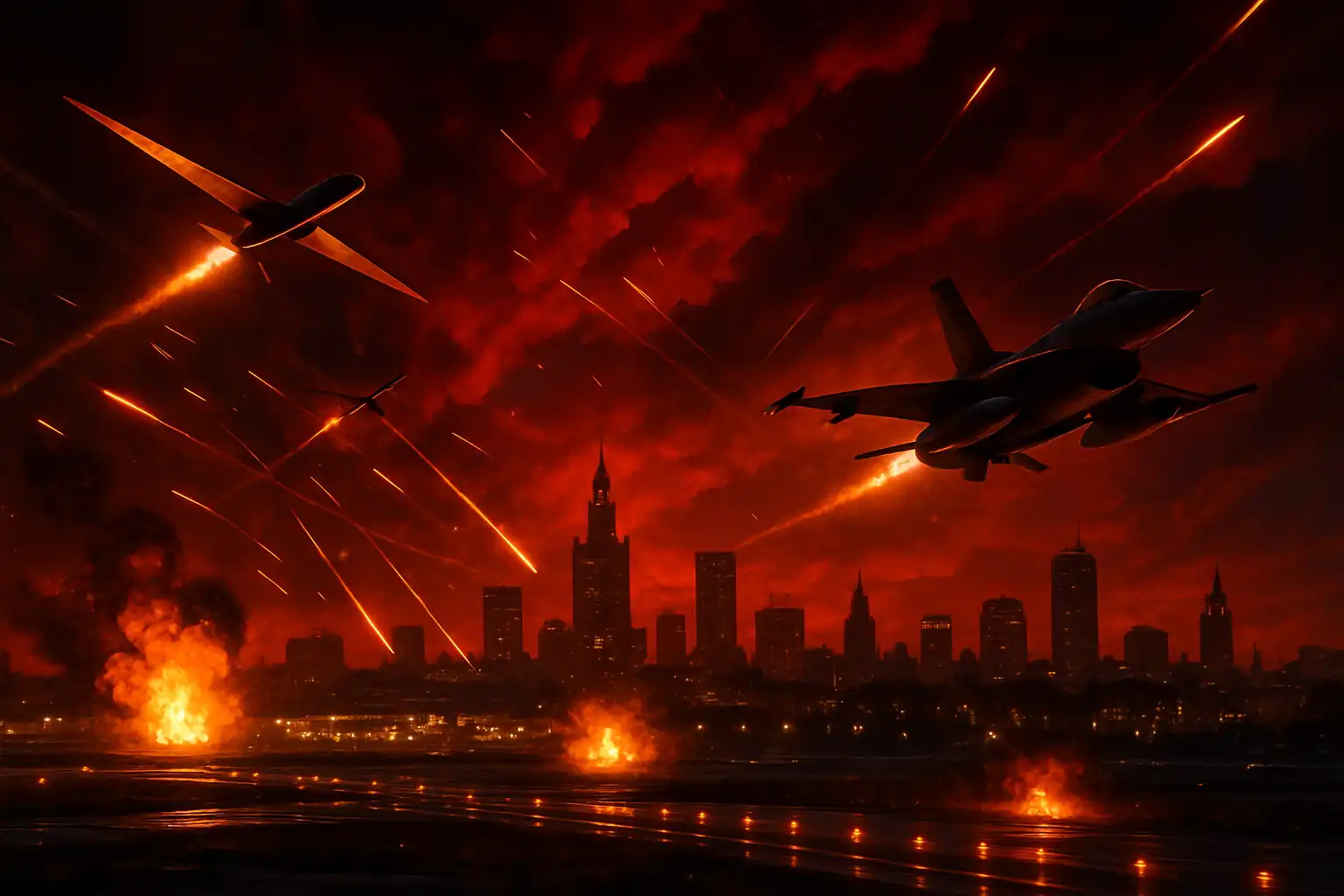
    History doesn’t knock politely—it kicks the door off its hinges. On a tense September night, Russian kamikaze drones ripped through Polish airspace. Air-raid sirens wailed, F-16s roared skyward, and major airports darkened. For Poland and NATO, this was less a breach than a loud alarm: the risk of direct conflict between Russia and the West had arrived, live-streamed for the world—and for anxious planners from Brussels to Washington.

    The fog of war always brings propaganda (and panic), but reliable outlets like the BBC’s on-the-ground report confirmed key details: Russian drones crossed into Poland with impunity. Polish officials documented at least 19 drone incursions, some deep enough to shutter four airports, including Warsaw’s busy Chopin International. NATO jets scrambled, air defense alerts lit up phones, and—the first time in this crisis—the question wasn’t “if Russia would test NATO” but rather how far Moscow would push before the alliance retaliated.

    Kamikaze Drones and Poland: The Unprecedented NATO Response

    Drone warfare isn’t new, but its escalation over NATO territory is unprecedented. According to CNN’s global security coverage, NATO deemed this violation “absolutely reckless” and reported that allied fighters shot down several intruders. Poland’s National Security Bureau acted quickly, shutting down airports and mobilizing defenses, supported by The New York Times’s detailed play-by-play. Prime Minister Donald Tusk called the event a clear test of the West, not an isolated incident. NATO’s military machine couldn’t afford missteps: a single miscalculation could push the world’s largest nuclear alliance toward a dangerous escalation.

    The aftershock reverberated from military think tanks to grassroots prepping culture, echoing earlier fears over existential threats discussed in this modern guide to societal survival and an analysis of AI-driven war anxiety. As sophisticated attack drones become the proxies for state aggression, the risk of errors—especially with missiles and aircraft overhead—makes history feel precariously fragile.

    Did Russia Trigger Article 5? Understanding NATO’s War Protocols

    As panic spreads and missile maps glow online, a key question arises: Did Russia trigger Article 5, the “all for one” mutual defense clause? Not yet. Instead, NATO invoked Article 4—a diplomatic fire alarm for urgent consultations when a member feels threatened. As summarized on Wikipedia’s entry on the founding treaty, Article 4 falls short of war, but signals serious concern. While Poland demanded solidarity and strengthened military coordination, officials stressed that no shots were fired solely over Polish soil, which would automatically enforce collective retaliation. Yet the line between authority and aggression grows increasingly blurred.

    For context, compare this incident to previous crises where NATO brushed against the edge, including intelligence briefings covered in this Ukraine war scenario analysis and the lockdowns reported in surveillance of U.S. war preparations. Today’s cross-border drone warfare resembles the much-feared “gray zone”—active conflict short of total war, yet always just a spark away.

    Escalation Risks: Will Europe Be Dragged into Direct War?

    Europe stands closer to crisis than it has in decades. Warsaw’s swift shutdown of its main hubs, alongside NATO aircraft scrambling, underscores the new normal. Russia’s campaign of drone harassment has advanced from the uncertain boundaries of Eastern Ukraine into the clear, treaty-protected territory of NATO itself. This has triggered urgent warnings from defense ministers and strategists worldwide: if Moscow persists, responses could escalate into a shooting war—one that no think tank or AI prediction model can clearly forecast, as explored in this forecast of near-future conflict.

    Public discourse now overflows with comparisons to Cold War near-misses, tension leaks, and nuclear accidents—fodder for both analysts and conspiracy theorists alike following Unexplained.co for updates on every tremor along the world’s faultlines. The earlier certainties of red lines, procedural responses, and mutually assured destruction erode beneath the buzzing of long-range drones—and that noise grows louder by the day.

    The Future: Red Lines, Realpolitik, and the Point of No Return

    As the news cycle spins, Europe’s capitals focus on the basics: readiness, intelligence sharing, and constant negotiation. This new era blends kinetic threats with soft-power tactics—cyberattacks, drone swarms, and media manipulation—forcing world leaders to interpret intention from accident. The lessons of the last world war, previously confined to textbooks or cosmic-scale threat reporting, now appear as a guide for navigating an age when history unfolds in real time via a new generation of unmanned weapons.

    NATO’s immediate challenge? Preventing a single miscalculation from becoming a world-altering catastrophe. The concern isn’t just how the West will respond, but whether the foundations of civilization—diplomacy, deterrence, and alliances—can hold under unprecedented threats. For those watching closely, this story transcends drones or jets; it embodies the future of collective defense. Stay alert, stay prepared, and for in-depth analysis on every escalation, visit Unexplained.co.

  • Peace on the Surface, War in the Wings: Why America’s Streets Feel Like a Battlefield

    Peace on the Surface, War in the Wings: Why America’s Streets Feel Like a Battlefield

    It’s a strange time when politicians utter platitudes about peace while sirens wail each evening in American cities. The contradiction appears everywhere: while the United States organizes international conferences on diplomacy, lawmakers quietly allocate funds for hardware, training, and military strategies. If you suspect that America is covertly preparing for conflict on multiple fronts—at home included—you’re not imagining it. The signs, scattered yet growing, indicate a new era where the distinctions between nation, fortress, and occupied territory blur under the star-spangled banner.

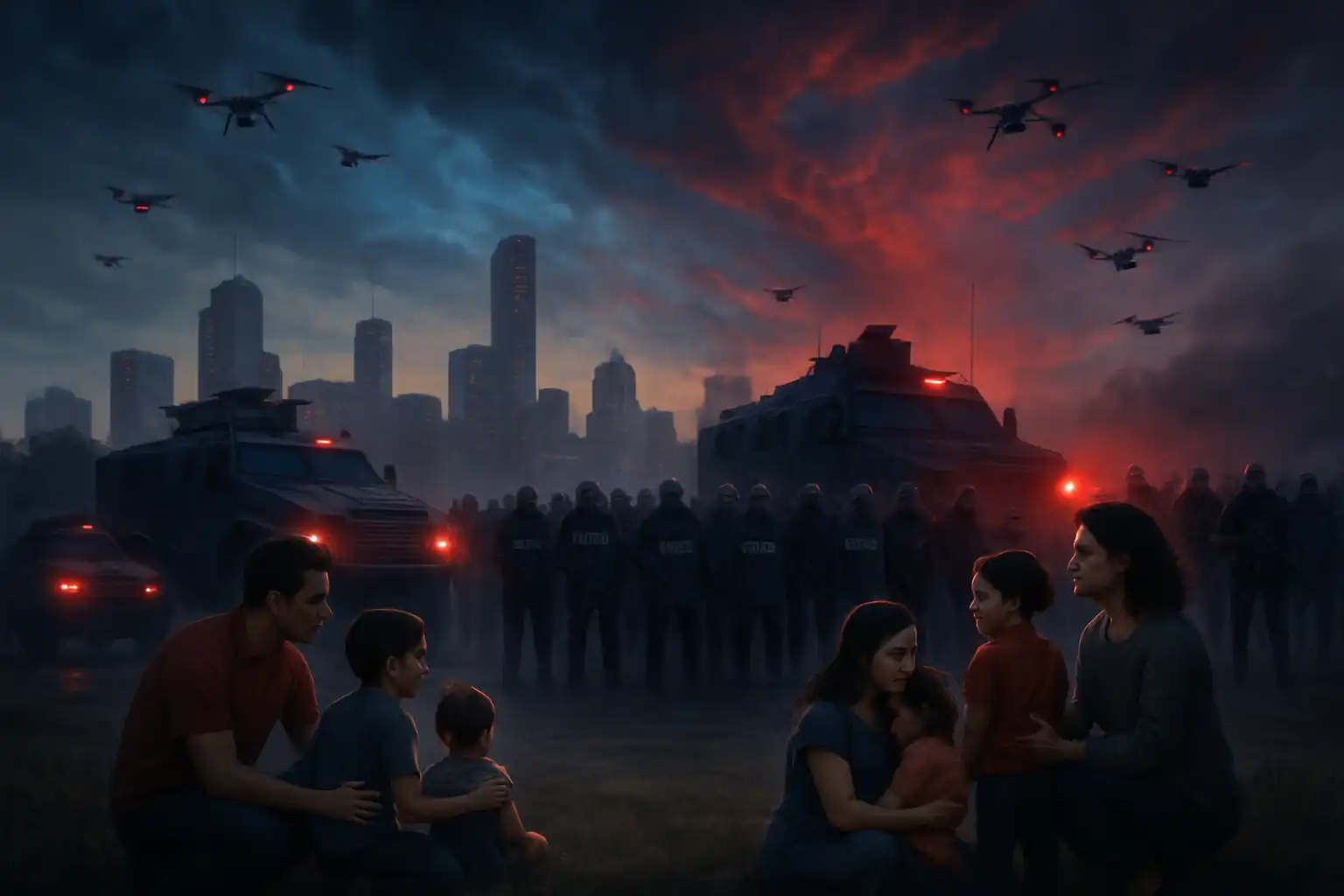
    Examine the evidence, and you will find more than government press releases and pundit warnings. Grassroots observers report armored vehicles patrolling city streets at night. Influential voices from both the right and left lament the rising militarization of police. The speed and scale of these changes make even far-fetched conspiracy theories seem plausible—if not all too ordinary. Recent signals from Washington and beyond echo past periods of high anxiety, fueling a cycle of rumor, reaction, and increased defenses.

    Militarization of Police: Law Enforcement’s Stealthy Transformation

    Police forces used to clearly separate civilian peacekeeping from military action. That boundary has faded as lawmakers have pushed surplus military equipment—armored personnel carriers, high-caliber rifles, and riot shields—into local departments since the 1990s under programs like 1033. Reports from Boston University and intergovernmental watchdogs reveal that SWAT teams now raid homes for issues that, a generation ago, needed little more than a knock and a badge. If you think your city can’t transform into a militarized zone overnight, some mayors have already learned that lesson, as documented in this campaign analysis of Washington, D.C., and beyond.

    This transformation involves more than frightening uniforms or surplus MRAPs. It reflects a culture shift—policing based on urban occupation strategies, not neighborhood safety. That shift is dissected in detail in this report on black ops and urban security, which fuels public suspicion and escalates tensions between protesters and police, regardless of political affiliation.

    America Prepares for War While Talking Peace

    The United States’ foreign policy rhetoric can sound contradictory. Although peace talks flourish, so do budget increases for next-generation missile systems and drone swarms. Recent policy movements suggest the government quietly anticipates trouble from overseas rivals and domestic unrest. This contradiction is evident in this examination of nuclear and conventional saber-rattling, where war games with NATO persist as diplomats advocate for stability.

    These moves mirror earlier warnings of militarized cities highlighted in reports by The Fulcrum. The sheer volume of defense contracts alongside federal troop visibility in major cities has created a climate where every crisis meets a show of force—often before a single shot is fired.

    American Cities: The New Battlegrounds

    Across the U.S., major cities have morphed into proving grounds for the government’s shifting war-prep strategy. During protests or large public gatherings, towering armored vehicles, camo-clad organizations, and tactical team deployments have become the norm. Investigations and firsthand accounts from outlets like Reuters indicate that this isn’t a random trend; it reflects a coordinated response among local, state, and federal entities.

    The playbook resembles tactics for suppressing unrest in foreign conflicts. If you doubt American ingenuity, consider the rapid adoption of surveillance technology once reserved for warzones, now integrated into urban life—a development predicted in this special investigation on defense technology and domestic surveillance.

    Public Backlash, Propaganda, and the Danger of Ambiguity

    You might expect Americans to oppose the transformation of their neighborhoods into fortress cities, but the reality is complicated. Public opinion, tracked by sources like recent polling, reveals support for National Guard deployments and the notion of a “muscular” response—at least when the threat feels abstract.

    This dynamic isn’t new. The back-and-forth of rumor and overreaction marks modern American tradition. The cycle is examined masterfully in this exploration of conspiracy feedback loops, appearing in various aspects of U.S. culture—from clandestine missions gone awry (see this SEAL Team 6 operation) to the secrecy surrounding national security sites (coverage of Area 51).

    Conclusion: Between Deterrence and Paranoia

    America’s simultaneous pursuit of peace and preparedness reflects a society aware that tomorrow’s threats could originate both abroad and feel disturbingly domestic. As cities adapt and militarization becomes indistinguishable from everyday law enforcement, the question arises: Where is the line between maintaining peace and preparing for siege?

    For insights at the edge of official truth and unfiltered reality, visit Unexplained.co. In an era where every neighborhood could ignite controversy, knowledge—however inconvenient—serves as your only shield.

  • Shadow Moves: US Black Ops Against China and the Quiet War for Power

    Shadow Moves: US Black Ops Against China and the Quiet War for Power

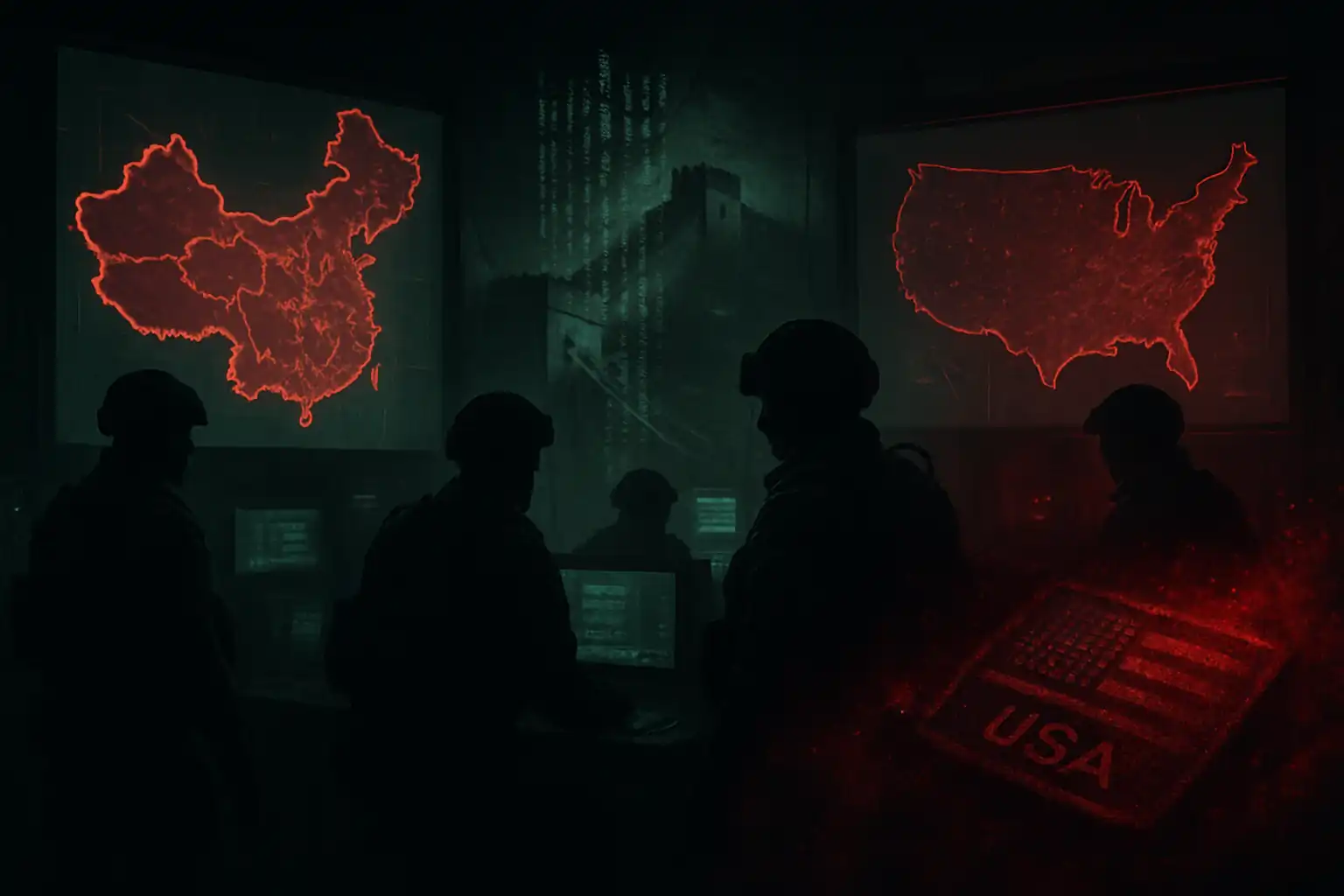
    The evening news shows flags and angry speeches, but beneath the surface, a gritty battle for global dominance simmers. This struggle doesn’t rely on tanks or tariffs; it operates through hacks, proxies, and sabotage. US black ops against China rarely appear in press briefings. Instead, you find hints in cautious leaks, shadowy indictments, and digital evidence of a covert war shaping future headlines.

    Black ops, defined by Wikipedia, are so deniable that governments sometimes feign ignorance. US law mandates direct executive oversight for such actions, with funding often concealed from Congress. In our era of cyber vulnerabilities and constant surveillance, these secret missions evade scrutiny more than ever, yet remain impossible to ignore.

    Digital Battlefields: The Rise of Cyber Black Ops

    Start any discussion of secret warfare against China in cyberspace. Elite hacking teams, representing both state and proxy, repeatedly try to steal defense secrets, map America’s critical infrastructure, and implant backdoors across networks. Joint investigations by the US Cybersecurity and Infrastructure Security Agency and the FBI announce Chinese operatives’ indictments, though many evade capture. This conflict flows both ways; the United States reportedly maintains teams of cyber warriors who sabotage, surveil, and disrupt Chinese networks, often cloaked in plausible deniability.

    Recent reports, such as this analysis of China’s cyberattack strategy, demonstrate how attacks and counterattacks blur the lines of war, espionage, and crime. Dismiss this as melodrama? Remember, these digital confrontations fuel speculation about everything from the rise of Chinese mega-bases to high-profile domestic attacks examined in this haunting investigation. Every breach and unexplained outage fuels fears of a shadow war escalating dangerously.

    Off-Record Missions: Sabotage, Signals, and Plausible Deniability

    Physical black ops against China remain even murkier. Public records provide little detail, but classified missions could sabotage scientific endeavors, disrupt global supply chains, or covertly bolster rivals inside China. The history of 20th-century black ops gives numerous examples: sabotage disguised as industrial accidents or leaks aimed at causing market chaos.

    According to one analysis of shadow warfare, both sides crafted deconfliction strategies to mitigate worst-case scenarios. A single incident—such as an exposed saboteur or traced malware—could lead to a public crisis. Reports on near-misses, referenced in chilling analyses, reveal how narrow the margin for error has become.

    Intelligence summaries indicate that black ops allow powerful states to signal intentions, test red lines, or influence rival policies—all without inciting full-scale war. This holds true for both Beijing and Washington.

    Espionage, Disinformation, and the Open-Source Revolution

    While “traditional” black ops featured spies in raincoats, today’s battleground includes microchips, influence networks, and viral memes. Both the US and China deploy disinformation, sometimes clumsily, other times subtly. From fake news in social networks to whispers targeting rival policymakers, the newest battlefield revolves around narratives and reality—a dynamic reminiscent of fractured realities and the ‘Mandela Effect’.

    Today’s black ops are easier for the public to identify, thanks to open-source sleuths and commercial satellite imagery. This creates a transparency paradox: as states attempt to act in shadows, outside observers may more easily spot their actions. Global analysts document mega-bases or investigate conspiracies, from music industry tragedies to suspicious state incidents.

    Between Brinkmanship and Blowback: The Consequences of Secret War

    Don’t expect black ops details to ever emerge clearly; denials serve a purpose. As the US and China escalate covert operations, the risk of miscalculations and unexpected escalations grows. Studies, as found in Wikipedia, show that denying operations—even when widely understood—can sometimes contain a crisis. At other times, it sparks uncontrollable blowback.

    For now, the shadow contest endures—each cyberattack and plausible-deniable mission reminds us that power is often wielded by unseen teams. Yet as the world connects more tightly and every secret creates a digital footprint, the ghosts in the machine might struggle to remain hidden.

    For ongoing coverage of hidden rivalries, state secrets, and the next chapter in covert conflicts, stay alert—begin with the comprehensive archives at Unexplained.co.

  • China’s Secret Mega-Base: The Beijing Military City That Dwarfs the Pentagon

    China’s Secret Mega-Base: The Beijing Military City That Dwarfs the Pentagon

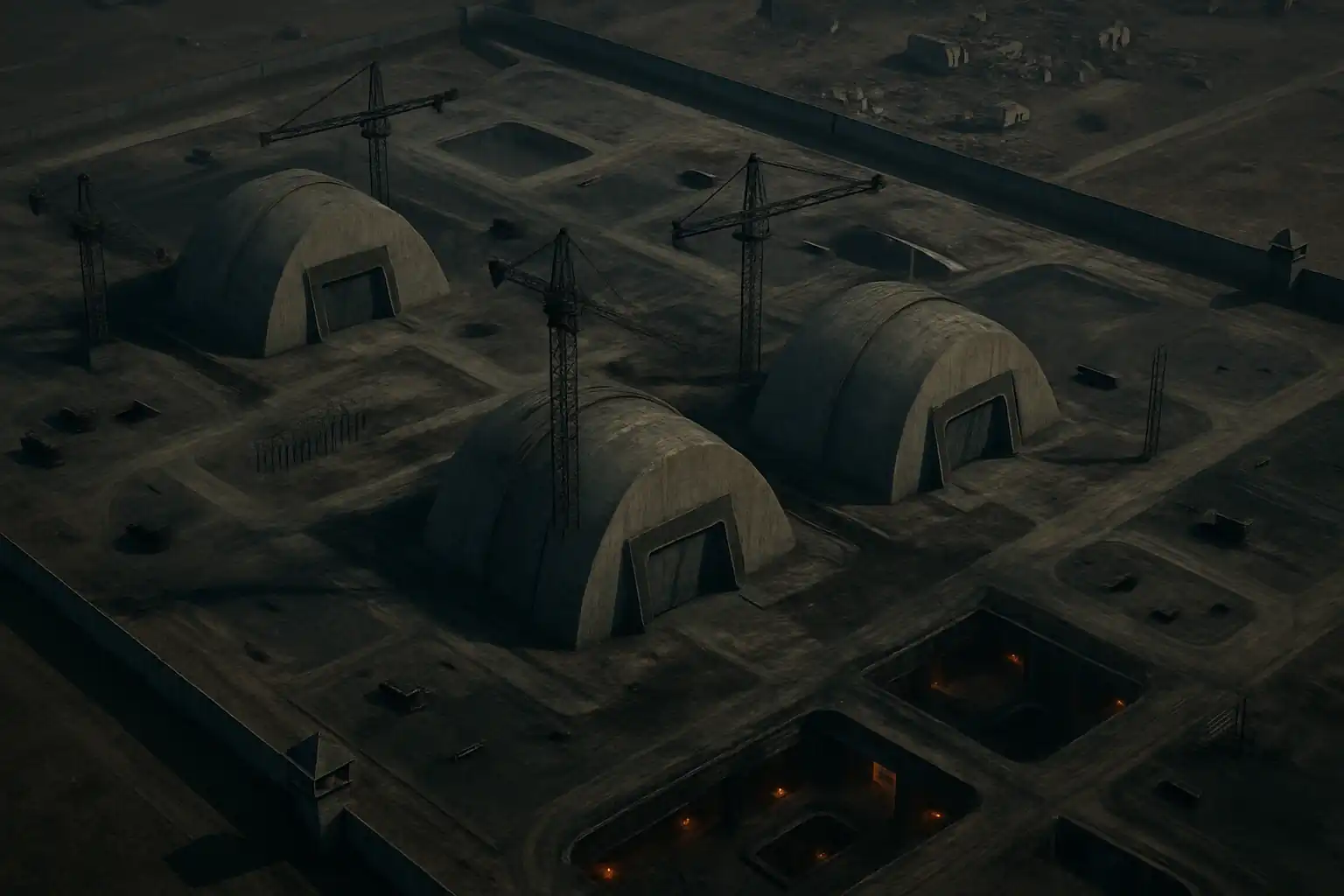
    Twenty miles outside Beijing, the ground shifts—not just tectonic plates. Once a sleepy village, this area has now transformed into the most scrutinized piece of real estate: a monumental military facility dwarfing America’s Pentagon. Analysts call it the “Beijing Military City.” Satellite images and Western intelligence whispers have drawn global attention. Guards stonewall inquiries, villagers disappear, and the government excels in denial. Welcome to the era of the Chinese mega-bunker.

    Officially, the facility doesn’t exist. Unofficially, it symbolizes China’s transition from building civil defense tunnels to becoming a global power focused on survival and dominance. The Asia Times expose on China’s construction spree paints a vivid picture of a 1,500-acre militarized zone filled with cranes and obscured by secrecy. For the People’s Liberation Army planners, the logic is chillingly simple: expect the unexpected and build to survive the unthinkable. What are they preparing for? Your guess is as good as the West’s, ranging from nuclear bunkers to next-generation command centers.

    Satellite Evidence and Intelligence Alarms

    A structure of this scale cannot hide from space—not without significant help from the sharp-eyed analysts at Business Insider and others analyzing commercial satellite images. These images show a construction site southwest of Beijing alive with activity: heavy earth-moving equipment, new concrete, and outlines of blast doors along suspected air shafts plunging underground. Despite government claims of ignorance, echoes of Soviet-era secrecy—similar to that still seen at Russia’s Kapustin Yar—ignite suspicions about what happens below the surface.

    Reports from sources like The Economic Times connect the dots: no civilian projects, no published blueprints, and strict restrictions on access. Instead, the narrative focuses on solid perimeters and grand ambitions. The base’s secretive nature only fuels Western anxieties, rekindling memories of decades of alleged government coverups and the misty realm of cyber-espionage.

    The Logic (and Paranoia) Behind Underground Megabases

    Why does modern China invest so heavily in underground facilities? The reasoning combines historical context with technological brinkmanship. Decades ago, Mao’s paranoia spurred the construction of the Underground City under Beijing, a hand-built civil defense bunker. In 2024, the strategy has evolved: deeply buried command centers, missile silos, energy nodes, and cyberwar bunkers transition China from survival to strategic dominance—the ultimate deterrent stating “if you bomb us, we still win.” The infamous Underground Great Wall, rumored to be a 3,000-mile missile tunnel network, underscores China’s fixation on subterranean defense.

    Such strategies aren’t new: underground military complexes frequently appear in global power dynamics, mirrored by Iran’s “Missile Cities” and the Pentagon’s own Continuity of Government bunkers. As the new era of global risk analysis unfolds, worries extend beyond bombs and missiles to include EMPs crippling energy grids, AI sabotage, and next-gen information warfare capable of reshaping entire wars.

    International Concern and the Next Cold War

    American and allied agencies feel deeply unsettled by the scale of the Beijing Military City. The Pentagon’s annual reports, as reported by The Washington Times, indicate that China is rapidly expanding its underground nuclear and weapons capabilities. Analysts link these developments to recent Chinese military advancements and test launches, as detailed in this military assessment. A new arms race appears imminent—not only above ground but deep underground, where an entirely new theater of conflict silently emerges.

    The global implications are stark. A fortified, nuclear-proof command center of this magnitude signals China’s readiness to endure and manage warfare, even during nuclear confrontations or large-scale sabotage. This buried facility may also connect to next-generation missile systems, quantum encryption, or command centers for unmanned drone swarms, raising concerns highlighted in this investigative report. Ultimately, this represents not just architectural ambition but a practical strategy for survival in a world increasingly fraught with tension.

    The Age of Secrecy, Satellite Leaks, and Rising Tensions

    China’s denials only heighten interest. In an era of commercial satellite imagery, high-res drones, and social media, secrecy becomes both more challenging and weaponized. Every secret base and anomaly sparks global discussions, and the “Chinese mega-bunker” quickly transitioned from classified whispers to mainstream headlines. The clash between state secrecy and open-source intelligence has become a central issue, mirrored by speculative articles like this story of hidden Antarctic bases and ongoing skepticism concerning who controls future outcomes.

    For those watching the potential for World War 3 and new Cold War tensions, the emerging questions impose a grim punctuation on global geopolitics: what should we anticipate from this unmarked monument to paranoia? The only certainty is that denial and secrecy can no longer suppress worldwide speculation. Want further analysis and deep explorations into the space between fact and fever dreams? Continue searching at Unexplained.co, where the unknown becomes slightly less obscure—even as the world’s major players dig deeper underground.

  • Urban War Games: Are US Cities Really Bracing for World War 3?

    Urban War Games: Are US Cities Really Bracing for World War 3?

    If you’ve tuned in to online paranoia, you’ve likely heard: the US military is prepping American cities for World War 3. The whispers include secret exercises, government bunkers, “urban warfare” protocols, and Continuity of Government plans flickering like ghosts in public discourse. But, as usual, reality is more complicated and, dare I say, less action-movie than some want to believe.

    Military prep in American cities isn’t about preparing for an alien invasion (unless you follow fringe podcasts or explorers with fallen angel diaries). It’s rooted in genuine urban vulnerabilities—cyber attacks, EMPs, and mass-casualty scenarios you hope remain confined to tabletop drills. As outlined in this global risk report and other government publications, the focus is “continuity”—not just of government, but of essentials: power, water, food, and civil order.

    What Is Urban Warfare Training—And Why Now?

    The US military’s renewed focus on city-based training addresses modern threats. After years of desert and mountain wars, Pentagon priorities shift toward defending critical infrastructure at home. According to recent Army exercises, troops and National Guard routinely drill in simulated city environments, sharpening skills for everything from riot response to countering large-scale cyber-attacks and potential chemical or nuclear incidents. It’s not about tanks rolling down Main Street, but about rapid mobilization, command, and rescue logistics.

    For some, this feels like a rerun of familiar doomsday practices—including cold war bunker constructions and nuclear survival protocols. Others highlight civic readiness initiatives; FEMA’s guides emphasize real-world risks, from natural disasters, like those described in geomagnetic storm and volcanic scenarios, to terrorist attacks.

    Continuity of Government and Bunker Mentality

    No exploration of urban WW3 prepping is complete without mentioning “Continuity of Operations” (COOP) plans—a web of federal directives, bunkers like Mount Weather, and secret line-of-succession protocols, detailed in this Wikipedia summary. The goal? Keeping the government functional after a nuclear or catastrophic attack, complete with designated survivors and, yes, some literal cave-dwelling for top officials. Though these plans emerged post-9/11, much remains classified, fueling a mix of genuine concern and conspiracy theories.

    At state and local levels, most emergency plans now include provisions for rapid leadership replacement, resource protection, and mass evacuation records—a response to fears over attacks and disasters like Hurricane Katrina and large-scale cyber outages.

    What Are Cities Really Preparing For?

    Despite alarming headlines, current drills and planning focus on resilience rather than apocalypse. If you examine the FEMA guidance, the greatest envisioned threats are grid sabotage, supply chain collapse, mass-casualty terror strikes, or blackouts caused by hostile cyber activity (as highlighted in this analysis of societal collapse scenarios). Urban combat exercises may offer juicy online content, but “preparation” is generally far more mundane: logistics mapping, triage drills, and continuity checklists, all aimed at reducing chaos’s impact.

    Mistrust runs high—why wouldn’t it? Stories about unacknowledged 9/11 plots, alleged secret experiments, or shadowy operations in conflict zones fuel public anxiety, making every blackout feel like a rehearsal for martial law. The government, as usual, is not revealing much detail—which only strengthens suspicion.

    Doom, Denial, or Due Diligence?

    So, is it rational to prepare for World War 3 in your city? That’s for you and your local paranoia index to decide. The reality is less thrilling than viral videos suggest. Yes, planning intensifies as global risks rise. Yes, there are classified playbooks designed to endure the worst. But behind most headlines lies a bureaucratic effort to maintain order, not an admission that war looms tomorrow.

    If you need a reason to keep a bug-out bag by the door, know you’ll find company on forums and at Unexplained.co, where the open-minded and the vigilant track the knowns, unknowns, and the undeniable mysteries of life. Sleep tight, citizen—the Pentagon’s got your city’s back. At least, that’s what they’ll tell you. Now, where did I put my flashlight…

  • WW3 Alert: The Chilling Signals as Russia Escalates Toward Major Strike

    WW3 Alert: The Chilling Signals as Russia Escalates Toward Major Strike

    This isn’t average news-cycle panic; it’s a genuine threat felt by the world’s military and intelligence communities. Recently, Russia sharply increased military operations, suggesting a prelude reminiscent of World War III scenarios (PBS analysis). Veteran U.S. officials warn of “the worst Russian bombardments since the invasion began.” Massive troop buildups and aerial attacks suggest escalation rather than de-escalation, signaling a dangerous new phase ahead.

    Eastern Europe hears echoes of Cold War brinkmanship. The once-theoretical threat of World War III now dominates headlines. After a decade of simmering conflict, many view a new Russian offensive as a red line that could pull outside powers into the fray, especially if Putin feels threatened or emboldened by Western silence. This involves real military assets—boots, missiles, and armor.

    Russia’s Playbook: From Bombardment to Mobilization

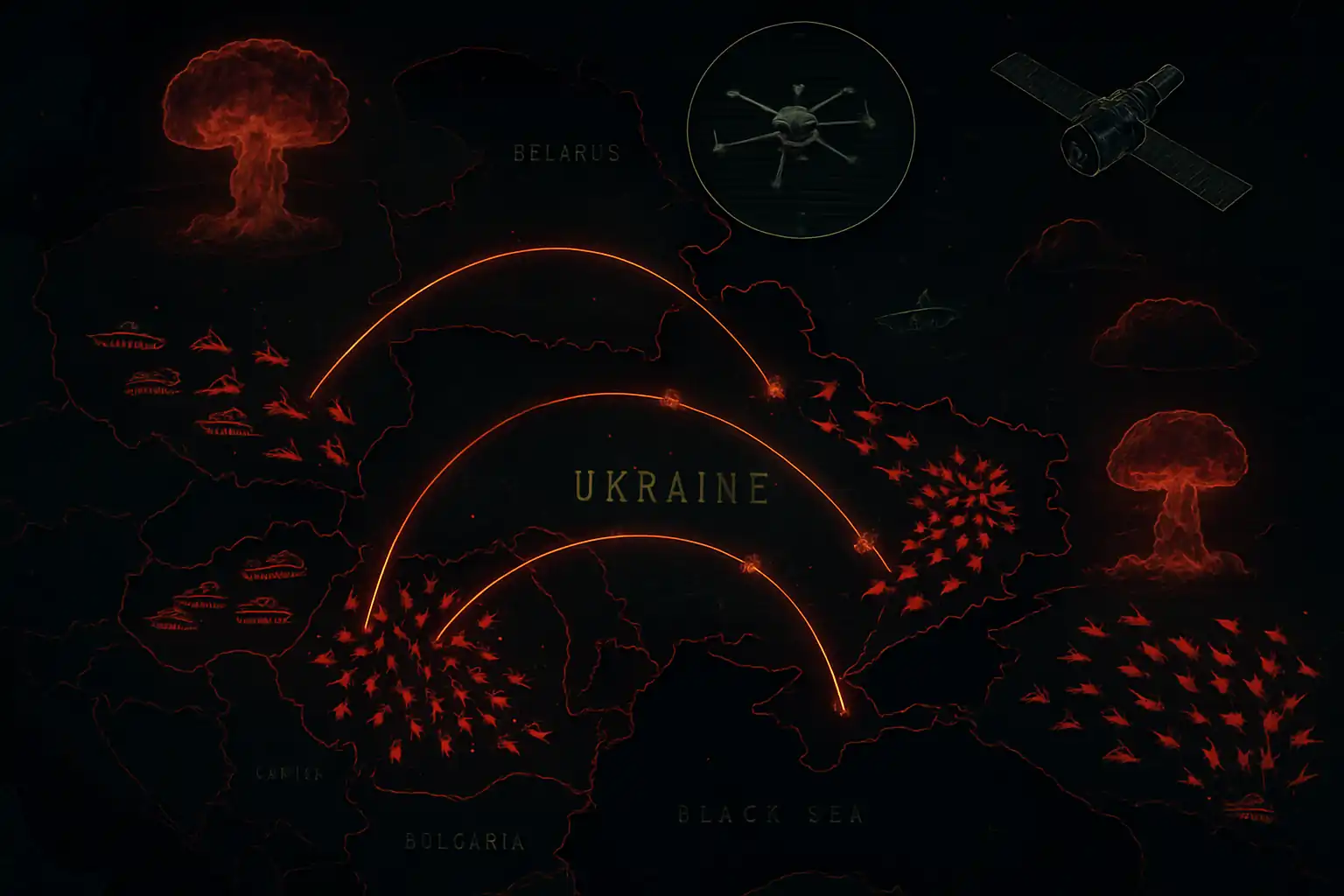
    The pattern follows a textbook escalation. Reports indicate Russia has gathered over 50,000 additional troops near Ukraine’s northern border (Reuters report), launching intense missile and drone barrages against civilian and military targets (BBC coverage). President Zelensky labeled this the “largest aerial attack yet.” Military strategists believe these actions are not mere saber rattling, as they closely align with historic war mobilization patterns and offensive doctrines emphasized during the Cold War.

    The West’s policy response remains soft, relying on contentious arms aid. Diplomats caution against “encouragement by silence,” warning that overlooking danger invites disaster. This thinking echoes lessons from previous global crises, including recent risk surge warnings and investigations into war triggers. Meanwhile, Russia’s leadership interprets every Western hesitation as a signal to escalate.

    Create a Buffer, Strike Hard: Russia’s “New Offensive” Strategy

    NATO intelligence and open-source analysis indicate that Putin’s generals focus on creating an operational “buffer zone.” The strategy aims to advance so deeply that negotiations become irrelevant or occur under Russia’s favorable conditions. Tactics outlined in this National Security Journal assessment warn of massive escalation risks. If fronts stabilize, both sides must fight for existential stakes, rendering previously unthinkable options (like tactical nuclear weapons or cyber shutdowns) plausible.

    This blueprint for global conflict has historical precedents. As described in others’ nuclear escalation analyses and studies of catastrophic scenarios (the history of nuclear fears), war can trigger swift unraveling of deterrence models—leaving diplomacy vulnerable to overwhelming artillery and chaos.

    Global Tremors: How the World Reacts to Superpower Brinkmanship

    An escalating Russian assault would impact the world beyond eastern Europe. Global supply lines, cyber infrastructure, and financial markets stand at increased risk. NATO is quietly enhancing readiness, casting anxious glances towards Chinese military advancements that could complicate the situation. This tension ripples through doomsday simulations and anxiety-fueled business continuity exercises, as illustrated in these hypothetical scenarios.

    The stakes are high—the “collapse of modern civilization or human extinction,” as cited by historians on Wikipedia. This isn’t fearmongering; it’s about acknowledging that prolonged standoffs breed mistakes and miscalculations. Reports of autonomous drone swarms, AI-guided missiles (AI proliferation report), and covert cyber operations indicate new dimensions for conflict are emerging.

    The Road Ahead: Deterrence, Diplomacy, or Détente?

    Can we find a way out of this escalating situation? Some argue mutually assured destruction serves as a crucial deterrent against total war. Others contend that modern cyber-warfare techniques have loosened the reins on escalation. History shows that when rhetorical triggers fail, unintended war edges closer than leaders acknowledge.

    For those monitoring this crisis—and for anyone curious about where global tensions might escalate—stay connected with Unexplained.co. In a world spiraling towards an arms race, today’s alarms could become tomorrow’s conflict map.

  • World in Flux: Russia’s Summer Offensive, Pakistan’s New Strongman, and the End of British Rule in Chagos

    World in Flux: Russia’s Summer Offensive, Pakistan’s New Strongman, and the End of British Rule in Chagos

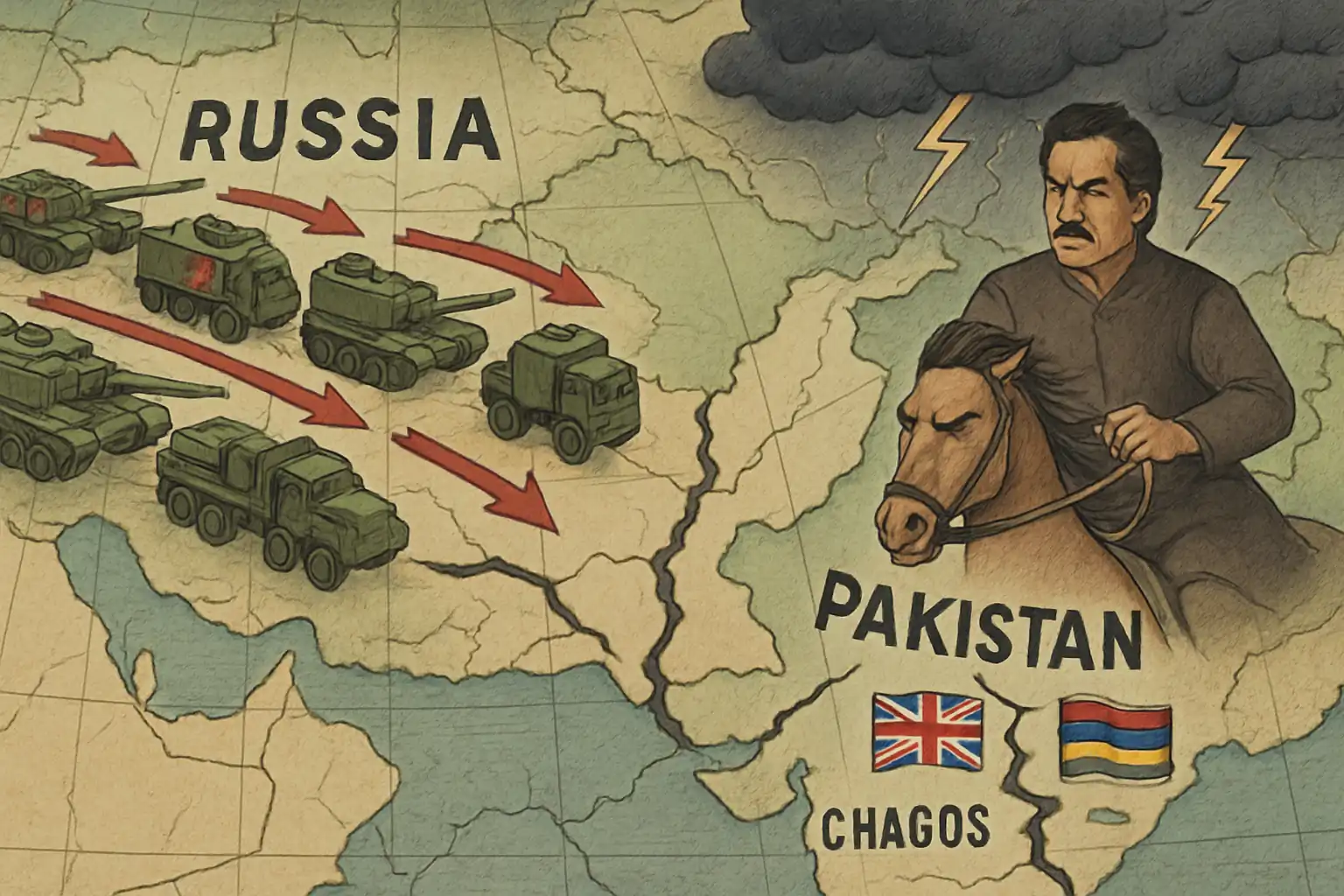
    It’s summertime on planet Earth. The geopolitical mercury is rising. Russia’s summer offensive in Ukraine marks the next phase of a grinding war. This conflict continues to redraw European security lines, fragment alliances, and test the world’s capacity to hear “unprecedented” repeatedly. Against this backdrop, Pakistan has elevated a new military leader. This change bears significant implications for South Asian peace. Meanwhile, far from artillery sounds, major post-colonial shifts in the Indian Ocean are climaxing. The Chagos Archipelago, long a subject of international litigation and exile, is finally changing hands in a fiercely negotiated sovereignty deal.

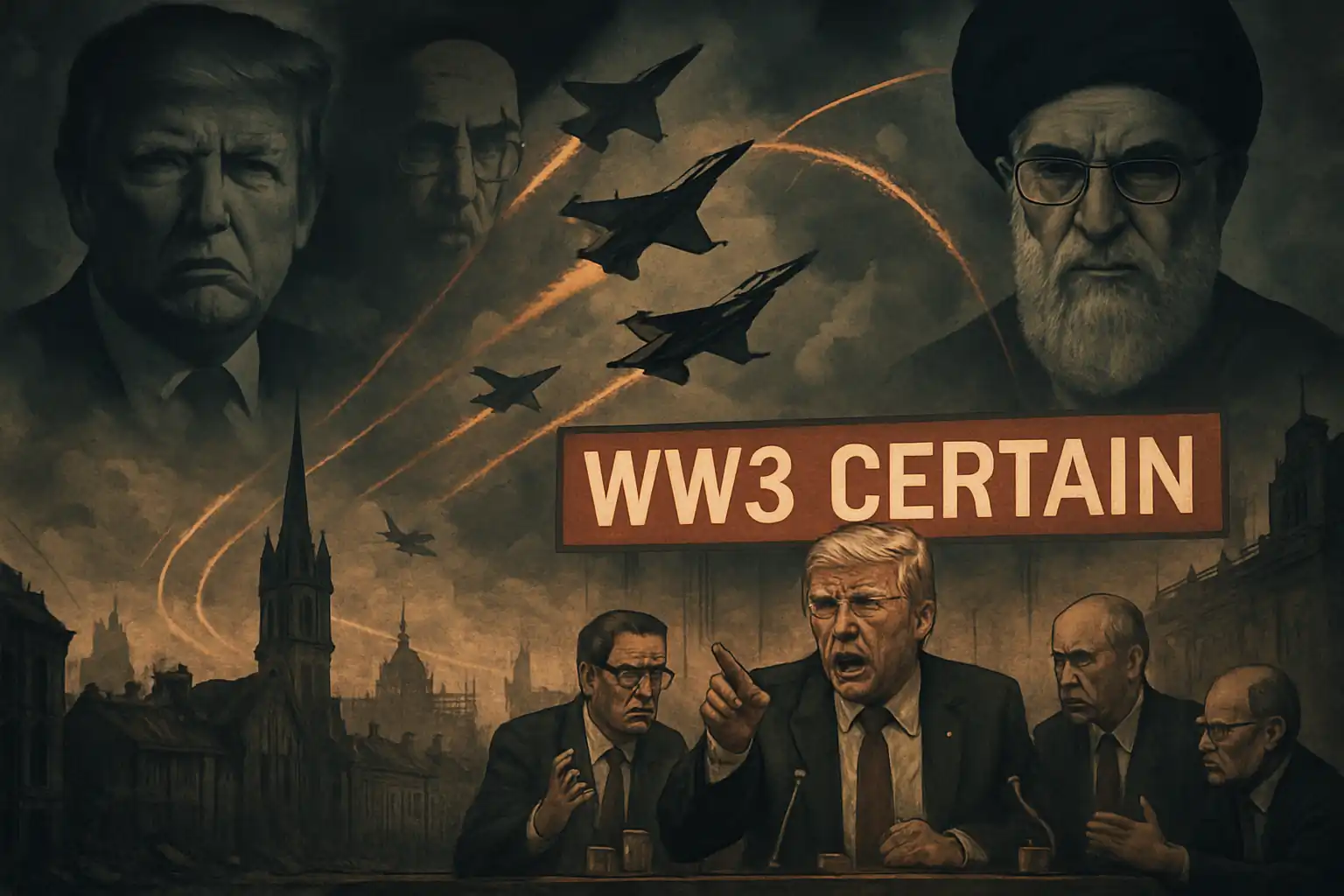
  • Russia, NATO, and the Trump-Iran Calamity: A World on the Edge of All-Out War

    Russia, NATO, and the Trump-Iran Calamity: A World on the Edge of All-Out War

    Welcome to the new normal—where apocalyptic headlines meet geopolitics, and “world war” resonates beyond old radio cranks. As warnings rise about Russia “having no choice” but to strike NATO, and with reports surfacing about Trump’s team preparing for conflicts with Iran, global security appears more fragile than it has since a certain mustachioed Austrian became aggressive in 1939.

    This isn’t journalistic hyperbole: senior European, German, and Baltic defense analysts provide direct assessments foreseeing concrete Russian military buildups. According to Newsweek, high-level intelligence and military officials warn Russia might be ready to strike a NATO country within a few years if conditions worsen. Some German defense chiefs anticipate this could happen within the next four years, with large munitions silently stockpiled along the alliance’s eastern flank. The alarms triggered in The BBC highlight the seriousness of the situation. This chilling scenario encompasses not just war planning, but also the risk of total breakdown of the alliance.

  • WW3 UPDATE: Iran on the Brink, Ukraine’s Nuclear Gambit, and the Perils of Escalation

    WW3 UPDATE: Iran on the Brink, Ukraine’s Nuclear Gambit, and the Perils of Escalation

    The U.S. claims to have delivered a “final offer” to Iran amidst rising tensions in the Middle East. Diplomatic tensions are escalating, and reports suggest Ukraine is considering nuclear arms. The world watches nervously, fearing that a small spark could ignite a catastrophe threatening civilization itself.

    When the U.S. issues a last-chance demand, it signifies more than mere rhetoric. The high-stakes negotiations with Iran unfold against regional proxy wars and rising threats, creating a volatile atmosphere. Although real-time news coverage faces challenges, background reporting reveals a precarious world order. Military strategists analyze potential miscalculations that could lead to disaster (top report on Ukraine and nukes). Intelligence agencies scramble to predict where the next escalation might occur.

    Iran Tensions and the Middle East Powder Keg

    In the Middle East, diplomatic history is marked by oil deals and military standoffs. The current situation with Iran departs from past crises, navigating uncharted territory. Iran’s growing power and the U.S. commitment to allies are both on the line. This brinkmanship evokes memories of prior wars and warns of recent escalations among global powers. The ever-present threat of proxy militias and cyber warfare amplifies fears of miscalculation.

    Experts envision many scenarios where missteps in Tehran, Jerusalem, or Washington could destabilize the region—and the world. As noted in analysis covering shadow geopolitics, today’s risk factors are interconnected. Financial shocks, missile launches, and critical infrastructure attacks fuel the escalation cycle. This creates a fragile tightrope, which has snapped before in statecraft.

    Ukraine and the Nuclear Line: Deterrence or Disaster?

    Meanwhile, Ukraine’s nuclear ambitions unsettle European capitals. After surrendering its Soviet-era arsenal, Ukraine stands at the center of nuclear anxiety. Leaders have proposed reacquiring nuclear weapons as a deterrent—a technically and politically charged move. Commentary varies, summarized in the IISS’s deep dive: significant obstacles lie ahead, and any such pursuit could be a major shift since the Cold War.

    However, Ukraine’s nuclear posturing serves more as psychological leverage than a concrete plan. The threat alone ignites fears of an arms race, with Moscow, Washington, and Brussels alert to any missteps. Historians and doomsday preppers alike warn that military build-ups, catastrophic accidents, and rising tensions have previously led empires to collapse, as noted in research on the fall of Rome. Modern power struggles reflect these ancient lessons.

    World War III: Fiction Turning Real?

    The term “World War III” once belonged in novels and conspiracy theories. Now, geopolitical realities make such scenarios plausible. As detailed in Wikipedia’s comprehensive overview, the definition of World War III has shifted, influenced by nuclear doctrines and regional rivalries. Traditional warfare, with armies mobilizing in neat formations, is outdated; today’s threats include cyberattacks, proxy conflicts, and leaders gambling civilization on perceived slights.

    The danger stems not just from military might, but from the fragile systems that support daily life. Analyses of global collapse highlight how blackouts, communication failures, and financial panics could escalate conflicts unpredictably. Present-day warnings about runaway technology echo these fears, as mechanisms for uncontrollable war may already be in place.

    The Perpetual Brink: Navigating the New Age of Crisis

    What lies ahead? Historians, generals, and survivalists agree that resilience is crucial. The greatest risk encompasses miscalculations by leaders, the volatile mix of alliances, old grudges, and fast-paced technological advancements. Lessons from history—be it Rome’s downfall, the collapse of ancient empires, or tensions during the Cold War—teach us that hubris and naivety poorly equip us for disasters, as seen in this chilling survey of prophetic warnings.

    This world is designed for friction, where “final offers” echo ultimatums, and nuclear threats resonate beyond mere words. To track every tremor and dig deeper than headlines, you should visit Unexplained.co. If World War III looms, keep a close watch, even if it’s from a safe distance underground.