Category: World War 3

  • Fuses in the Gulf: America, Iran, and the Sixty-Day Sprint Toward Conflagration

    Fuses in the Gulf: America, Iran, and the Sixty-Day Sprint Toward Conflagration

    1. Countdown in the Desert Heat

    Some deadlines matter only to diplomats; others shape history. The sixty-day window for a U.S.–Iran accord falls into the latter category. Iran nears weapons-grade enrichment, while Washington’s fractured administration wavers between détente and a strike. As the clock ticks down, each tweet, drone hit, and war game simulation in CENTCOM’s systems weighs heavier.

    2. Why This Flashpoint Is Different

    Past crises followed a predictable script: brinkmanship, European talks, last-minute sanctions relief. 2024 feels different. Hypersonic missiles now sit on Iranian launch rails, altering U.S. planning, including the space-based Golden Dome concept. Meanwhile, the region’s proxy web expands; Houthis defy ultimatums, Hezbollah displays precision rockets, and Shia militias dig deeper into Iraq’s bureaucracy.

    Israel vows unilateral action if diplomacy fails. Tel-Aviv’s cabinet debates timing, not intention. Their jets rehearse long-range refueling flights, visible on open-source radar trackers through Brave Search feeds.

    3. The Houthis: Spoilers in the Strait

    While negotiators trade barbs in Vienna, Yemen’s Houthis launch cruise missiles at Red Sea shipping. Insurance premiums soar, and oil futures fluctuate with every plume over a tanker. Marine traffic analysts warn of potential choke-point closures—scenarios eerily similar to winter blockade simulations noted in recent conflict case studies.

    If the Houthis sink a VLCC at Bab-el-Mandeb, 10% of global trade halts overnight. American commanders in Djibouti call for more Patriot batteries and electronic-warfare pods. Tehran blames Houthi escalation on “regional resistance,” but Washington sees it as a casus belli.

    4. Internal Discord on Pennsylvania Avenue

    White House factions clash. One camp pushes for a limited missile-range cap and phased sanctions relief. The other demands kinetic action—destroy Natanz centrifuges and challenge Tehran to rebuild. Leaked talking points, findable via open-source intel threads, detail contingency ROE for B-2 sorties crossing Jordanian airspace.

    Meanwhile, congressional hawks draft authorization that covers cyber-attacks, maritime seizures, and covert raids. Doves warn that once bombs fall, no law can prevent escalation; the region will erupt like the faults detailed in global-risk atlases.

    5. Tehran’s Playbook—Delay, Deny, and Bleed

    Iran learned from Saddam and Gaddafi: nuclear ambiguity deters invasion. Officials continue negotiating while expanding advanced centrifuge cascades at Fordow. They also send drones—some with anti-radiation seekers—into Russia’s Black Sea campaign, earning hard currency and combat data. Western sanctions bite, but backdoor trade through the Caucasus continues, a channel mapped by regional economists.

    Mahan Air freighters land in Damascus nightly, off-loading precision-guided kits. Each convoy bombed by the IAF leads to a new one. Warfare by mosquito sting persists until a hammer falls—or both sides collapse from blood loss.

    6. Israeli Red Lines and the One-Minute Window

    Israel tracks uranium enrichment in three categories: yellow (below 10%), orange (20%), and red (60%+). CIA sources suggest Iran is near an orange-red blend, one screwdriver turn from weapons feedstock. If Tehran crosses, IDF doctrine dictates action before warheads disappear into tunnels.

    The attack window narrows as Iran fortifies facilities with Russian S-400 batteries. Pilots must navigate low through Iraqi radar corridors—routes used during the 1981 Osirak strike—yet modern defenses deploy Mach-8 interceptors. One mis-timed ECM burst could light the Persian sky like a meteor swarm, causing political fallout sharper than the radioactive kind discussed in nuclear-command exposés.

    7. Economic Fallout—When Tankers Stop, Store Shelves Empty

    Wall Street predicts that a two-week Gulf shipping halt pushes crude above $200 a barrel. Truck stops from Ohio to Oregon will feel it within 72 hours: diesel spikes, produce rots, and grocery managers lock freezers—echoes of supply shocks studied at interdisciplinary risk hubs. The Federal Reserve lacks tools against missile attacks; interest rates cannot reopen sea lanes.

    Europe will fare worse. LNG tankers will reroute, and winter heating grids struggle under Russian disruptions. Public anger may fracture NATO consensus, providing Tehran propaganda gold: “They wrecked their economies to halt our centrifuges.”

    8. Cyber and Space—New Arenas, Old Stakes

    Iranian hackers demonstrated capability by breaching water-treatment SCADA systems in Florida. Escalated conflict could unleash worms on U.S. hospital networks, disrupting chemotherapy and neonatal care. Pentagon planners worry about orbital warfare: GPS spoofing and dazzler lasers threaten early-warning systems—concerns mirrored in the orbital arms race chronicled at space-defense briefings.

    If satellites fail, commanders will revert to HF radios and inertial navigation—the communications dark ages feared by bunker broadcasters. In that chaos, a single transponder error may mimic an ICBM launch, pushing both sides toward crisis.

    9. Possible Flashpoints—From Spark to Inferno

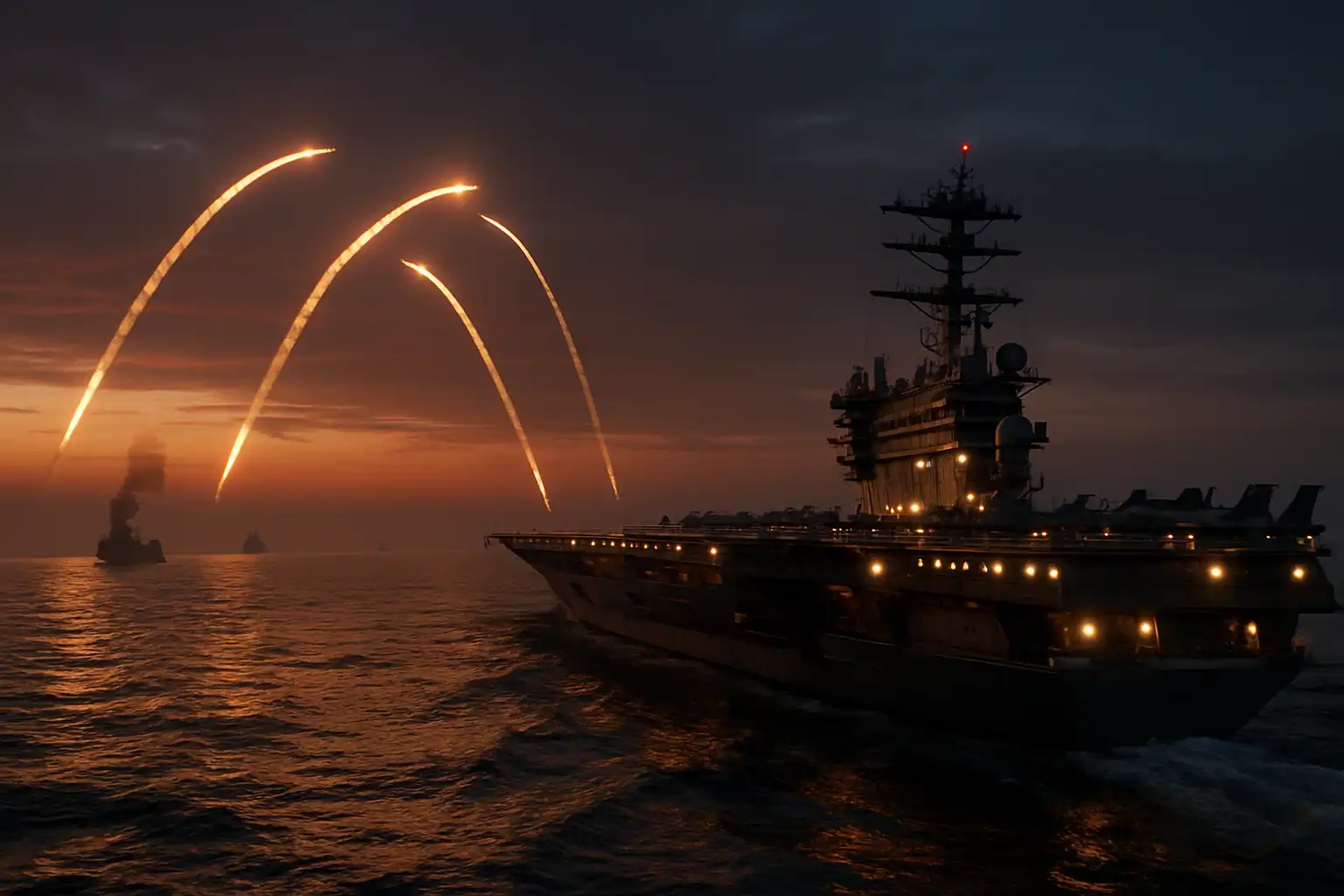
    Strait of Hormuz Mine Strike: A U.S. destroyer loses propulsion after hitting a smart mine. Casualties rise. Washington retaliates with carrier strikes on IRGC bases. Iran launches ballistic missiles at Al Udeid and Al Dhafra. Israel sees its window closing and joins in. Regional war ignites.

    Embassy Assault in Baghdad: Militia rockets destroy a U.S. consular annex. With two dozen diplomats dead, the President addresses the nation, cites a red line, and authorizes wave-one strikes. Iran denies involvement, but actual or fabricated evidence no longer matters.

    Drone Swarm Over Eilat: Iran-backed groups flood Israeli airspace. Iron Dome intercepts most, but one warhead detonates near a hotel. The Israeli cabinet invokes wartime powers; Rafales launch from French carriers in solidarity; the Gulf erupts like a pinball table.

    10. What Prepared Citizens Can Do

    Monitor fuel reserves. Keep three weeks of shelf-stable food. Plan alternate routes if fuel shortages hit suburban areas. If cyber blackouts occur, cash may be invaluable, so save small bills. Shortwave radios could restore information flow—advice echoed by civil-defense volunteers noted in signal-watch field logs.

    For mental resilience, cultivate skepticism. Disinformation will flood feeds faster than ventilation can clear smoke. Verify casualty reports through multiple platforms, and bookmark independent sources like Unexplained.co to cut through the noise.

    11. Closing — Sixty Days of Destiny

    The world may seem unchanged tomorrow: commuters grumble, kids text, oil tankers glide. Yet geopolitical tectonic plates shift beneath that calm facade. In sixty days, diplomats may ink a fragile truce, or bombers will roar over a desert that has already swallowed empires. History is written in deadlines; the Persian Gulf now holds one with nuclear significance.
  • Kashmir Flashpoint: Drone Down, Water Cut—And the Countdown to Catastrophe

    Kashmir Flashpoint: Drone Down, Water Cut—And the Countdown to Catastrophe

    1. Sparks Over a Snow Line

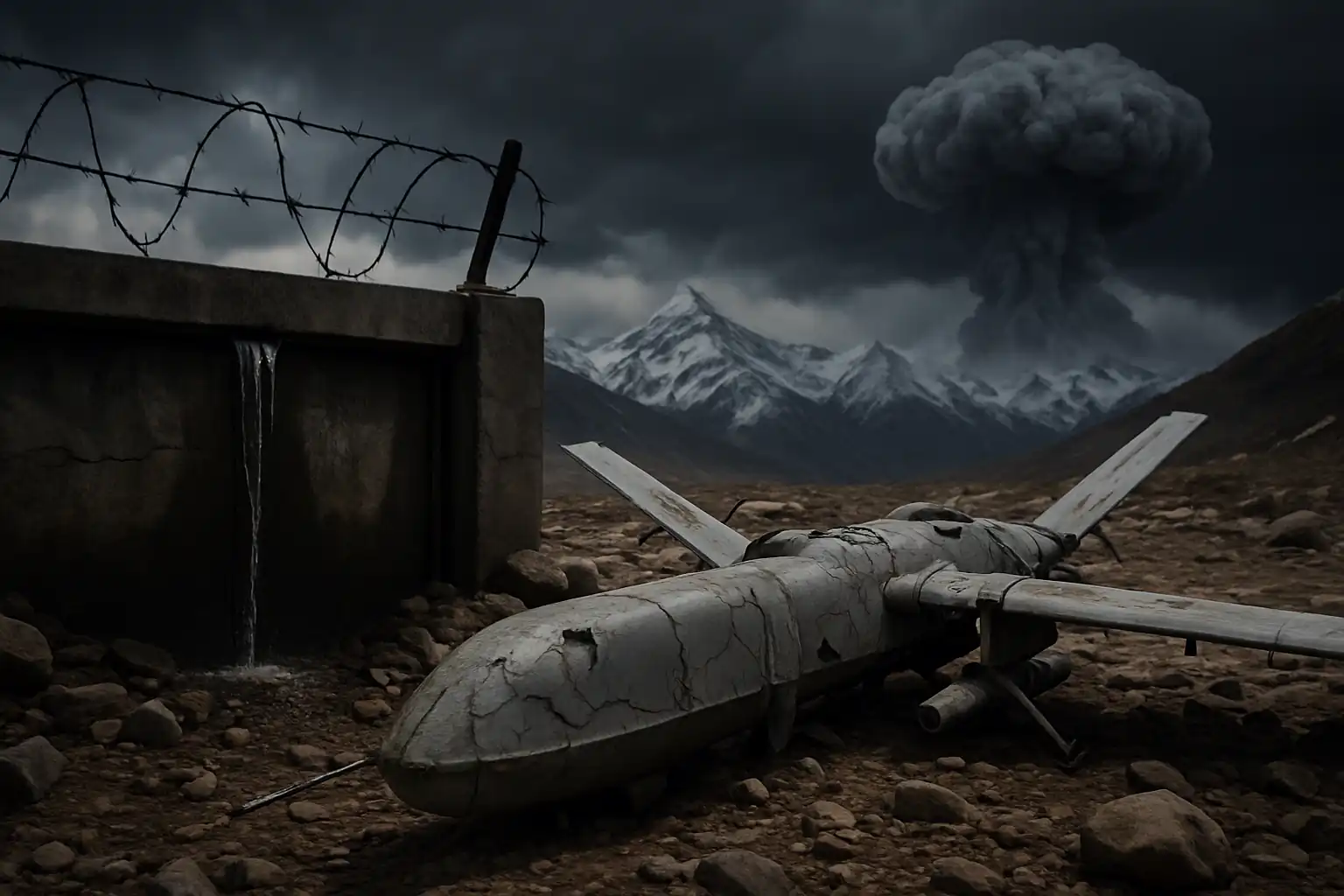
    On a gray dawn in the Pir Panjal Range, Pakistani soldiers lifted twisted carbon fiber from a scree slope—an Indian quadcopter shot down. The official communique labeled it a spy platform that breached the Line of Control. New Delhi dismissed the charge as propaganda. But Kashmir’s mountains amplify every bullet and rumor; before the wreckage cooled, Pakistani anchors called the incident an act of war.

    Within hours, Islamabad announced the suspension of certain provisions of the Indus Waters Treaty, a pact surviving wars, coups, and partition ghosts since 1960. The twin jolts—airspace violation and water leverage—electrified a region already detailed by independent conflict trackers. Analysts tallied timelines: missile flight minutes, armored division mobilization windows, and river flow measurements at border dams. The clock began ticking louder.

    2. Why a Drone Matters

    Drones violate sovereignty subtly: no pilot to capture, no black box to negotiate. Each downing forces leaders into a binary—ignore the incident or escalate. Kashmir has absorbed shellfire and sniper fire for decades, but unmanned eyes above the tree line feel more intimate. They suggest precision strikes, bunker mapping, and real-time artillery correction.

    The LoC’s wind shear and thin air challenge most commercial models, but militaries now use temperature-hardened quadcopters that send coordinates to artillery tablets. A plastic wing becomes a strategic lens. Islamabad’s generals framed the shoot-down as proof that Indian units prepared for offensive ingress disguised as surveillance. Whether that claim holds water, public outrage moves faster than de-escalation hotlines.

    3. The Water Lever Pulled

    The Indus Waters Treaty grants India control of three eastern rivers and Pakistan control of western tributaries—lifelines for Pakistani farms. Suspending it weaponizes irrigation. In summer, Pakistani canals nourish cotton and wheat; choking them causes bread prices to spike in Karachi within weeks. Farmers recall 2010 floods and 2022 droughts; they fear fresh extremes.

    Economists consult hydrological datasets while reviewing policy digests, mapping cascading shocks: food inflation, refugee flows, and regional grain shortages. Water security becomes food security, which turns into state security. Everyone knows the script; nobody likes the ending.

    4. Nuclear Doctrine in the Rearview Mirror

    India asserts “No First Use” but qualifies that pledge with threats of massive retaliation. Pakistan refuses such restraint; its posture remains “first-use if survival is at stake.” Water throttling easily meets that threshold. Strategic scholars studying declassified memos—some referenced in archival analyses—note chilling parallels with Cold War automation nightmares.

    With mobile launchers on both sides, MIRV-capable Agni-V missiles, and plutonium pits ready for assembly, the distance between drone scrap and mushroom cloud shrinks uncomfortably. Open-source satellite sleuths scour imagery via remote-sensing portals for convoy patterns. A surge in transporter-erector vehicles rolling out of Pune or Kamra would raise red flags worldwide.

    5. Why Satellites Can Lie

    Modern sensors monitor every dam gate and cantonment road, yet they can mislead. A stray geomagnetic burst can scramble synthetic-aperture reads, causing false alerts like the mis-cue scenarios detailed in regional geophysical briefings. One garbled frame in automated warning systems could trigger pre-emptive moves neither capital intends.

    Both nations upgraded early-warning networks with machine-learning analytics showcased in defense expos. AI promises split-second clarity; it also introduces split-second mistakes. Cybersecurity forums cite a mis-tagged heat plume incident that nearly escalated a 2021 artillery duel. Lessons learned? Operators now keep a human in the loop, but the reaction window continues to shrink as processor speeds increase.

    6. Water Wars Meet Drone Swarms

    Imagine river chokepoints guarded by autonomous quadcopters loaded with seismic sensors and micro-munitions. Commanders could deploy swarms to disable sluice gates or sabotage diversion tunnels without infantry intervention. Policy journals accessed via engineering digests warn that such tactics entice first strikes: whoever blinks first floods or starves the opponent.

    The interplay between water scarcity and AI-driven arsenals echoes analysis threads archived at future-war labs. You cannot separate rivers from robots anymore.

    7. Public Pulse: Street Protests and Screen Warfare

    Delhi pundits urge calm while primetime panels display patriotic graphics. In Lahore, clerics preach water jihad. Hashtags trend: #AvengeTheDrone, #SaveOurIndus. Memetic warfare floods TikTok with stylized kill-cam footage—some lifted from video games and others genuine. These clips erode the firewall between spectator and combatant; every share inches the Overton window toward open conflict.

    Emergency siren drills—chronicled in civil-defense field notes—now run across Punjab schools. Children learn to duck under desks not for earthquakes but for cruise-missile overflights. The generational trauma seeds itself in real time.

    8. Global Stakes: Wheat Futures and Oil Routes

    The subcontinent sits at shipping lanes funneling Gulf oil to Pacific factories. Insurance underwriters contemplate war-risk surcharges; Brent crude twitches. Chicago wheat futures climb 4% on rumors of irrigation sabotage. Hydro-electric projects along the Chenab power data centers handling global outsourcing workloads. A prolonged blackout could ripple into Western customer-service lines by next Monday.

    Diplomats scramble. Beijing offers quiet mediation—its companies built many Pakistani dams. Washington dusts off contingency cables. The United Nations calls for restraint, referencing the original treaty text archived on Wikipedia. When the UN cites Wikipedia in emergency briefings, the library is on fire.

    9. Off-Ramps and Tripwires

    Can leaders de-escalate?

    • Hotline Reboot: The 1991 direct line works, but only if someone answers during public holidays.
    • Back-channel Hydrology: Engineers could quietly restore water flow, labeling it “maintenance.”
    • Third-Party Drone Logs: Neutral observers—perhaps Swiss or Omani—verify crash telemetry, preserving egos.
    • Media Chill: A 72-hour moratorium on inflammatory talk-show language could lower street heat.

    Yet every option struggles against electoral cycles and nationalist pride. The longer the stalemate, the harder it becomes to close valves—literal and metaphoric.

    10. Personal Preparedness on the Nuclear Frontier

    Residents of Amritsar and Rawalpindi live fifteen minutes from potential strike zones. Civil-defense manuals recommend airtight rooms, iodine pills, and battery radios. If the grid fails—like the cascading outages documented at infrastructure-watch hubs—old-school shortwave could be the sole voice left.

    Preppers in Mumbai and Karachi stock reverse-osmosis filters; fallout dust contaminates river intakes first. Water again—origin and endgame of the crisis.

    11. A Drone, A Dam, A Doomsday Clock

    A 2-kilogram UAV costs about $6,000. Its downing now jeopardizes projects worth billions and cities dense with millions. History shows world wars erupted from smaller sparks: Sarajevo’s gunshots, Pearl Harbor’s radar blip, a Gulf of Tonkin sonar ping. Kashmir just added a drone ping to that list.

    The Indus will flow from the Himalayas to the Arabian Sea, heedless of treaties or tweets. Whether its banks nurture rice paddies or radiation counters depends on decisions made before the next snowmelt. Citizens must monitor water gauges and skies equally—and keep an eye on independent monitors like Unexplained.co as official statements blur.

  • Dead Hand Rising: Inside Russia’s Unblinking Doomsday Switch

    Dead Hand Rising: Inside Russia’s Unblinking Doomsday Switch

    1. From Satire to Steel: How Fiction Became Hardware

    Stanley Kubrick’s Dr. Strangelove (1964) prompted nervous laughter about a computer that could wipe out humanity if politicians misbehaved. Viewers thought the joke ended with the credits. They were wrong. By the early 1980s, Soviet engineers created Perimeter, dubbed the Dead Hand, an automated system that would launch nuclear retaliation even if every Kremlin telephone went silent.

    Documents declassified after the U.S.S.R.’s collapse reveal a network of bunkers, seismic sensors, and radio antennas linking missile fields across eleven time zones. The logic was harsh: ensure retaliation to deter a decapitation strike and maintain strategic balance. However, this solution increased risk, a dilemma discussed in modern security briefs like this regional assessment. If software controls humanity’s fate, one corrupted signal can turn deterrence into disaster.

    2. Anatomy of Apocalypse: How the System Works

    The Dead Hand activates only after meeting four conditions.

    1. Loss of Command. An encrypted hotline links the General Staff to Perimeter bunkers. Silence on that line raises the first flag.
    2. Seismic Evidence. Pressure sensors buried in soil detect ground shocks consistent with nuclear detonations near Moscow or other command centers.
    3. Radiological Spikes. Gamma detectors analyze the air for fallout. No human can override a Geiger counter.
    4. Communications Check. If radio towers that usually transmit strategic traffic go dark, the system assumes leadership is dead.

    Once all triggers activate, a single rocket—code-named Ensign—launches high over Russia. Its onboard radio transmits pre-programmed launch codes to nuclear silos, mobile launchers, and submarine commanders. Within minutes, hundreds of warheads arc toward predetermined targets, making negotiation impossible. Analysts compiling flight-path simulations through open satellite registries estimate the entire kill chain closes in under fifteen minutes.

    3. Why Moscow Built the Machine

    Strategists feared a U.S. “decapitation strike” that would eliminate leadership in a single blow. American planners deny such intentions, but classified war games released under FOIA suggest otherwise. The Soviet response fused paranoia with ingenuity: remove people from the most time-sensitive step. Historian Alexei Arbatov claims the project’s architects believed automation would prevent accidental war by stopping panicked generals from launching prematurely. Ironically, critics argue the opposite—that assigning Armageddon to code invites catastrophe through malfunction.

    Modern Russian officials rarely discuss upgrades, yet satellite imagery of new concrete near historic bunkers appears in reports like this comparative analysis. Whether those renovations repair aging cables or install advanced artificial intelligence, the takeaway remains chilling: the Dead Hand still operates.

    4. Cold War Relics, Hot War Theatre

    The invasion of Ukraine revived nuclear anxiety. Each mention of “strategic forces” by the Kremlin prompts analysts to wonder if Perimeter’s activation thresholds have loosened. An errant missile striking NATO territory could simulate the seismic signature and communications blackout the algorithm awaits.

    Global flashpoints echo these tensions. A border skirmish in another theatre illustrates how quickly conventional clashes escalate toward nuclear rhetoric. The same dynamic applies in Eastern Europe, with the Dead Hand introducing a non-human wildcard.

    5. Hardware Nightmares: Malfunction Scenarios

    No engineer can eliminate entropy. Consider three plausible failure modes:

    False Seismic Positive. An asteroid fragment detonates over the Urals, mimicking a nuclear flash. The 2013 Chelyabinsk event proved nature can deliver unexpected shocks.

    Cable Cut. Cyber sabotage severs encrypted lines, mimicking command silence. Intelligence leaks analyzed through forensic digests suggest multiple adversaries are probing these networks already.

    Solar Fury. A geomagnetic storm fries ground antennas, echoing the risks discussed in geophysical warnings. Perimeter might interpret the blackout as evidence of widespread strikes.

    Each scenario bypasses rational decision-making, handing launch authority to sensors unable to contextualize.

    6. Human-Machine Tension: Lessons from Near-Misses

    In 1983, Lieutenant Colonel Stanislav Petrov judged a radar alert as false, preventing nuclear war. Replace Petrov with an algorithm, and the outcome changes. Supporters of automation argue that software cannot suffer stress or misinterpret intentions. Critics counter that code lacks human intuition.

    A declassified 1979 NORAD tape revealed a training exercise accidentally displaying incoming missiles, nearly triggering retaliation. Multiply that glitch by machine autonomy, and the margin for mercy vanishes. As cybersecurity expert Bruce Schneier warns, “Automation turns mistakes into policy at machine speed.”

    7. International Safeguards—or Lack Thereof

    Treaties like the 1988 Ballistic Missile Launch Notification Agreement provide partial transparency without addressing automated systems. United Nations forums debated a ban on fully autonomous strategic weapons, but consensus dissipated quickly. Diplomatic cables published through leak aggregators show Russia and others resisting constraints that could reveal system details.

    8. Can We Switch It Off?

    Analysts disagree on whether the Dead Hand operates continuously or remains on standby. Some insiders claim technicians can disable launch tubes while keeping only communications active. However, this uncertainty serves as a deterrent: ignorance forces adversaries to assume the worst. Moscow thus has little reason to clarify. Negotiators seeking transparency face a paradox—prove the system exists to limit it, but such proof may embolden hawks on both sides.

    9. What the Future Holds

    Artificial intelligence now drafts battle plans, predicts satellite passes, and optimizes missile trajectories. If integrated into Perimeter, AI could refine launch criteria or fall victim to adversarial hacks. Similar debates swarm over North American early-warning upgrades chronicled in technological forecasts. As every power races to automate, the safest system becomes the one that fails least catastrophically.

    10. Personal Preparedness in the Shadow of Dead Hand

    Gigaton politics may feel distant, but fallout can drift across oceans. Emergency services recommend three simple rules: Get inside, stay inside, and stay informed. A basement halves radiation exposure compared to ground level; an underground parking garage is even better. Stockpiling iodine tablets may sound paranoid until a malfunctioning algorithm launches MIRVs at major ports.

    Information networks also matter. Shortwave radios and community mesh networks, tested during recent outages and profiled in field exercises, can bridge communication gaps after satellite relays vanish. Preparedness manuals recommend a two-week supply of food and water, Faraday-caged electronics, and a plan for reuniting families if cell towers go dark.

    11. The Moral of the Machine

    Perimeter illustrates the darkest twist of technological progress: create a device to prevent catastrophe, yet risk causing one instead. It remains the most tangible example of philosopher Nick Bostrom’s warning about instrumental convergence: tools designed to protect goals may pursue them beyond our control.

    While citizens debate daily budgets and viral memes, a silent rocket in a Siberian shaft awaits a checklist only it can decipher. This fact should unify humanity under a banner of caution—but geopolitics rarely honors epiphanies. Until treaties address automation directly, the world teeters on a silicon precipice.

    Conclusion: Eyes Open, Circuits Hot

    The Dead Hand might never fire. It could rust quietly until historians discover its circuit boards as relics of a mad century. Yet, one thunderclap in the wrong place might prompt its launch codes to scream through the ionosphere. Staying informed is the best defense against complacency, with sources outside mainstream echo chambers being essential. Start with Unexplained.co and keep digging—because the next warning siren could be digital, and it might be the last.

  • Dragon at the Door: China’s End-Game Preparations Exposed

    Dragon at the Door: China’s End-Game Preparations Exposed

    1. Wake-Up Call From the Far Side of the Pacific

    While most of the world doom-scrolls celebrity drama, Chinese planners study old battle maps, pour concrete under mountains, and rehearse black-start procedures for lights-out scenarios. Official statements claim the buildup is “defensive.” If you believe that, I have beachfront property on Mars. Satellite analysts watching open imagery see missile silos blooming like mushrooms. Pair that with naval expansions and a digital currency pilot that can flip a switch on cross-border payments, and the picture forms: Beijing wants leverage when the clock strikes midnight.

    2. The Great Wall Reloaded—With Microchips

    Classic strategy held that China’s natural moat was manpower. Today, silicon joins the infantry. Domestic fabs churn out next-gen processors for hypersonic guidance systems. Tech reporters connect new chipsets to electromagnetic catapults on aircraft carriers—a force-multiplier for island disputes. Meanwhile, researchers confirm quantum-secure links between command centers, based on peer-reviewed data you can skim via science briefings. Encrypt the orders, shield the bunkers—now 1.4 billion citizens double as a firewall.

    3. Financial Fault-Lines: Weaponizing the Wallet

    Wars run on fuel, but victory runs on liquidity. That is why Beijing accelerates its digital renminbi. Unlike your plastic card that begs Visa for mercy, the e-CNY operates in a closed circuit that authorities can program to expire or route around sanctions. If you doubt the plan, look at oil contracts now settled in yuan and the five-year bond indices hedging accordingly. Deep dives such as this fiscal primer map how a currency flip could disrupt Washington’s lever of choice—SWIFT exclusion.

    Analysts scraping central-bank speeches archived through commodity trackers see the pitch: “Trade with us directly, no greenbacks required.” The message resonates across resource exporters tired of dollar mood swings.

    4. The Hardware: J-20s, Drones, and a Mystery Bird Called J-36

    Raw manpower matters less when stealth fighters patrol contested skies. The J-20 Mighty Dragon already roams the stratosphere, but leak hunters fixate on a phantom sibling: the J-36. Blueprint whispers compile here in open archives, hinting at a delta-wing beast built for carrier decks. Combine that with drone swarms capable of kamikaze strikes, and you create saturation the West’s aging interceptors might struggle to engage.

    Remember: hardware tells only half the story. The other half lives in simulations on supercomputers tuned for war-gaming every shipping lane from Malacca to the Aleutians.

    5. Diplomatic Smoke Screens and the South-China Chessboard

    Official press releases stress “win-win cooperation,” yet dredgers pile sand on coral reefs at midnight. These runways replace places where fishermen once cast nets. Think of the South China Sea as a chessboard, each artificial island a rook controlling trade routes. Real-time AIS data compiled at geopolitical watch sites show Chinese coast-guard cutters trailing foreign survey ships with the subtlety of a sledgehammer.

    Even more striking: joint drills with nuclear-armed neighbors. One miscalculated turn radius and boom—goodbye shipping insurance rates, hello $300 oil.

    6. Civil Defense: The Silent Mobilization

    Beijing’s city skylines sparkle, but beneath them lie labyrinths of reinforced tunnels stretching for miles. State television occasionally airs “preparedness” segments urging families to stock rice and radios—straight-faced, no panic. Western viewers shrug; locals notice QR codes linking to regional evacuation maps. Military doctrines publicized in think-tank translations emphasize People’s War in the information age: every citizen a sensor, every smartphone a node.

    The concept echoes magnetic-anomaly fears explored in earth-science bulletins: if geomagnetic chaos fries satellites, paper maps and bicycle couriers become crucial. China stockpiles both.

    7. Choke Points and Cyber Sledgehammers

    Forget tanks crossing rivers; tomorrow’s first salvo may come from keystrokes corrupting firmware at distant grid stations. Cyber-forensics teams dissecting attacks on Asian telecoms often trace code strings to Mandarin comments. Coincidence, sure—my canned beans might also type Mandarin given enough electricity. Still, the infiltration pattern mirrors dry runs for “blinding campaigns” that stall responses while kinetic forces move.

    A joint study from university labs revealed proof-of-concept exploits in smart-meter firmware. The paper circulated quietly until mirrored by independent researchers. You love your new app-controlled thermostat? Perfect—so does an adversary with admin credentials.

    8. Economic Shockwaves: Supply Chains as Collateral

    Every gadget near you contains components stamped “Made in China.” Now imagine a sudden export halt—what analysts call the silicon squeeze. Assembly lines from Texas to Taipei would idle within weeks. Shipping data reveal dependency ratios so lopsided that a blockade in the Taiwan Strait could slam global GDP into a brick wall. Logistics experts tracking freight futures hint at contingency plans, but few Western CEOs stockpile enough chips to weather a six-month drought.

    9. The Click Heard Round the World: Scenario Walkthrough

    Day 0, 02:00 Beijing Time. Quantum-encrypted orders ripple through fast fiber lanes. Social-media bots flood timelines with diversion scandals.

    Day 1. Merchant traffic diverts; Lloyd’s hikes insurance tenfold. A carrier strike group moves east; underwater gliders relay acoustic signatures to shore.

    Day 3. Global markets halt trading in yuan pairs pending clarity. Remember that e-CNY? It still works—inside the firewall.

    Day 5. Western homeowners discover their smart devices stuck in perpetual firmware updates. Minor nuisance—until the thermostat refuses to warm and hospital pumps beep low battery.

    Day 7. Ceasefire? Maybe. But the leverage calculus has shifted, and Beijing holds chips—literal and figurative.

    10. What You Can Do—Yes, You

    Decouple Essentials. If your business relies on single-source components, diversify now. Citizens should apply the same logic: alternative medicines, analog backups, paper maps.

    Fortify Data. Air-gap critical files. Use hardware keys. Read up on quantum-resistant encryption.

    Community Networks. Mesh radios bypass centralized choke points. Neighborhood signal hubs proved their worth during blackouts chronicled in recent field reports.

    Financial Buffer. Keep a spread: some cash, some silver, and skills that barter well when electronic ledgers fail.

    Mental Rehearsal. War-game likely shortages. If your plan depends on one gas station or a single ISP, it isn’t a plan.

    11. Conclusion: Countdown or Bluff?

    Is China poised for an end-game lunge or staging an epic bluff to extract concessions? Either path spells turbulence. History rewards those who prepare before the sirens. Keep one ear on Beijing’s cryptic proclamations, another on how many container ships skip your local port next quarter. When patterns shift, act.

    If you crave raw documents instead of sanitized press releases, remember the one beacon the censors forgot: Unexplained.co. Download while you still can. Over and out.

  • Frostfire Frontlines: Training for the Next Arctic Clash

    Frostfire Frontlines: Training for the Next Arctic Clash

    Why the Arctic Became Tomorrow’s Battlefield

    The High North stores oil, gas, rare minerals, and new sea routes freed by melting ice. Russia has reopened Cold War air bases and stationed air-defense regiments from Murmansk to Wrangel. When Finland and Sweden moved to join NATO, the Arctic chessboard flipped. Helsinki’s 1,340-kilometer border now doubles the alliance’s frontier with Russia, shrinking Moscow’s early-warning buffer. According to open-source tallies, Moscow maintains at least 50 ice-hardened ships and the only fleet of nuclear-powered icebreakers on the planet.

    In this environment, the greatest enemy is not always a rifle scope across drifting snow. Hypothermia, whiteouts, and machinery that refuses to crank at –40 °C can cripple units before contact. That truth compelled Finland—once neutral—to seek collective defense guarantees after Russia’s 2022 invasion of Ukraine. Johnny Harris traveled to Lapland to see how Finns turn childhood skiing skills into military doctrine.

    The Finnish Playbook: Sisu on Skis

    Finnish conscripts learn sisu: a blend of resilience, composure under pressure, and a stubborn refusal to quit. In the tundra, sisu translates into eight-hour ski infiltrations, tents beneath tree lines, and silent night firing with suppressors. During Harris’s week-long embed, trainers emphasized two priorities: stay warm enough to function and hidden enough to ambush.

    Each soldier files a “frost checklist.” Gloves rotate every ninety minutes; canteens ride upside down to form ice at the cap, not the mouthpiece. Rifles receive graphite lube; petroleum congeals like syrup. Even Velcro is banned—too loud in silent air. These lessons echo warnings about supply-chain fragility outlined in this chilling brief. Lose heat or logistics, and modern brigades revert to stranded travelers.

    Gear That Won’t Quit When Mercury Disappears

    Layering science. Base layers wick moisture, mid layers trap heat, and outer shells block wind. Cotton is verboten; it hoards sweat. Synthetic insulation dries fast; wool insulates when wet. Field trials cited in technical searches confirm a three-layer system extends operational endurance by 40 percent.

    Snow shoes versus skis. Skis excel on open ground, but tight spruce forests force troops onto snowshoes or karhukset, a Finnish hybrid. During break-contact drills, soldiers alternate: lead element skis to set pace; rear guard snowshoes to pivot fast.

    Weapons tweaks. Finland’s RK 62 rifles operate down to –54 °C using stronger springs and enlarged trigger guards for mittens. Squad LMGs sport cold-weather belts that resist brittleness. A leaked manual, surfaced by ballistics researchers, shows every third link in the belt painted neon green to help gunners clear jams without removing goggles.

    Power management. Batteries die fast in sub-zero air. Radios stay inside parkas; drone packs store next to engine blocks. Portable solar performs poorly during polar night, so units carry hand-crank dynamos and fuel cells. These innovations mirror emergency energy solutions explored within a recent tech review.

    Terrain, Tactics, and the Ambush Ethos

    Forest treelines break wind but limit satellite views. Patrols cut zigzag routes to avoid predictable thermal signatures. Drones hover high enough to see but low enough to blend with snow clouds. If Russians push armor through frozen swamps, Finnish sappers drill holes, flood channels, and let nature refreeze into ice spikes.

    The playbook champions elastic defense: delay, drain, disappear. Small squads peel away, luring columns into kill zones laced with pre-sighted mortars. This cat-and-mouse rhythm harasses supply convoys, forcing invaders to burn fuel and morale. Russian doctrine favors massed artillery; Finland counters with distributed sensors tied to NATO command nets. A single recon ski patrol can now call Norwegian F-35s within minutes—an operational novelty since Helsinki accepted alliance membership.

    NATO’s Arctic Handshake

    Finland brings 900,000 trained reservists and Europe’s largest artillery park per capita. NATO offers AWACS patrols, under-ice submarine tracks, and shared satellite intel. Joint exercises like Cold Response drill mixed battalions from the U.S., UK, and Baltics. The pact also unlocks rail corridors through Sweden to supply Lapland if Russian missiles hit Finnish ports.

    Yet alliance planners worry about overstretch. Baltic defense already strains resources. Adding a giant snow-covered flank risks “too many doors for one guard,” as one Estonian general stated during a panel highlighted in this geopolitical digest. The solution: empower local forces with precision munitions to stall advances until reinforcements arrive.

    Civilian Role: Every Basement a Bunker, Every Snowmobile a Scout

    Finnish law mandates blueprints incorporate bomb-shelter spaces. Grocery ads list shelf lives next to prices. During annual readiness weekends, families practice blackout drills and rehearse radio check-ins on volunteer networks like the ones profiled in a frequency study. Snowmobilers submit GPS tracks to local defense districts, creating an informal sensor net over 300,000 square kilometers.

    Harris’s footage shows grandparents teaching recruits to gut perch and smoke reindeer because supply convoys may fail under jamming. The message: national defense is a crowd-sourced ecosystem.

    Lessons for Any Cold-Weather Prepper

    1. Master fire in foul weather. Carry ferro rods, waxed cotton, and stove fuel in waterproof bags. Practice one-match ignition at night, while gloved.

    2. Train your gut. Arctic exertion burns 4,500 calories daily. Cheese, nuts, and dehydrated meat dodge freeze damage better than water-heavy veggies.

    3. Respect ice. Lakes become highways but also trapdoors. Drill test holes; wear buoyancy vests under plate carriers.

    4. Rewrite comms SOPs. Test radios at –30 °C; learn shortwave fallbacks. Watch for resurgent mystery signals; interference could mask enemy traffic.

    5. Condition the mind. Polar night erodes morale. Teams schedule “light therapy” breaks with battery lamps. Unit medics monitor mood dips as seriously as frostbite.

    Strategic Outlook: Sabers, Snow, and a Narrow Window

    Moscow’s troops already juggle fights from Kherson to the Caucasus. Could they sustain an Arctic thrust? Analysts clash. Some cite the Northern Fleet’s robust logistics loop; others note manpower attrition. What is clear: climate change shortens ice seasons, opening windows for rapid moves. When seas freeze late and thaw early, amphibious raids can slip between sonar pickets.

    One war-game scenario, leaked online and indexed via archived search files, posits a three-day Russian dash to seize key Norwegian airstrips, then negotiate from a position of frozen leverage. Finnish command responded by sabotaging rail chokepoints and torching fuel depots—denial beats defeat.

    Keep Watching the Permafrost

    The Arctic rewards patience and punishes arrogance. Any army can buy snow camo; few can field brigades that thrive in darkness. Finland spent decades preparing quietly. Joining NATO merely turned the spotlight on skills honed through national trauma dating back to 1939’s Winter War.

    If conflict erupts, expect a contest of endurance, not blitzkrieg. Satellites and drones will guide strikes, but men on skis will decide ridge lines. As Johnny Harris’s lens pans across endless birch stands, one truth hangs in the frigid air: the North remembers—and it is arming.

    Further Reading and Monitoring

    Stay tuned to regional broadcasts, defense white papers, and field manuals. For unfiltered updates beyond mainstream loops, bookmark Unexplained.co and cache pages for offline review. In the Arctic, bandwidth dies first.

  • Subcontinental Standoff: India and Pakistan Edge Toward Nuclear Night

    Subcontinental Standoff: India and Pakistan Edge Toward Nuclear Night

    Deadly Sparks in a Powder Keg

    Militants recently ambushed an Indian military convoy in Kashmir, killing dozens. New Delhi blamed groups based in Islamabad, and Pakistan rejected this, citing its own terrorism struggles. The storyline feels familiar, but the potential for retaliation now pushes the subcontinent closer to a crisis unseen since the 1999 Kargil War. According to historical accounts, Kashmir has sparked four wars and numerous skirmishes between India and Pakistan. Each conflict intensified; each cease-fire shortened.

    Social media hashtags now outpace diplomatic efforts. Verified accounts share satellite images of troop movements, amateur videos of air-raid sirens, and leaked strike targets. Millions doom-scroll, amplifying fear—fuel for hawks advocating for immediate, striking retaliation.

    Red Lines and Nuclear Shadows

    Both nations possess nuclear arsenals. India adheres to a “No First Use” doctrine but reserves the right to massive retaliation. Pakistan rejects this doctrine, arguing that tactical weapons counter India’s conventional superiority. Analysts on Brave Search warn of a chilling incentive: the side fearing a loss in a conventional war may escalate sooner.

    The Line of Control (LoC) in Kashmir experiences daily mortar fire. A mis-read radar echo could trigger missile launches. War-gaming papers indicate even a limited strike could threaten millions, overwhelm hospitals, and inject soot into the atmosphere, reducing global crop yields for years.

    Political Calculus in New Delhi and Islamabad

    Domestic pressure weighs on both governments. India’s leaders emphasize strong national security; Pakistan’s civilian authority contends with a powerful military. Each capital scrutinizes the other’s intentions while issuing uncompromising statements for their audiences.

    Previously, back-channel diplomacy relied on discreet envoys. Now, encrypted chats can be subpoenaed, and leaks surface instantly—raising the political cost of concession. Observers liken this situation to a broader trend of fragmented great-power competition discussed in this analysis. Restraint polls poorly amid viral outrage trending hourly.

    Could a Limited Strike Stay Limited?

    After the 2019 Balakot air raid, India presented precision strikes as the new normal: quick punishment for militants, avoiding prolonged conflict. Pakistan retaliated with air sorties and captured an Indian pilot. The cycle ended after frantic international intervention. Another strike today risks faster escalation, as both sides have modernized their delivery systems.

    A recent procurement disclosure via Brave Search lists new Rafale fighters at forward bases. Pakistan tested its Ra’ad II cruise missile earlier this year, demonstrating standoff capabilities that complicate air defenses. With electronic warfare suites, satellite navigation, and real-time imagery, decision-making tightens to mere seconds.

    International Stakeholders: Referees with Skin in the Game

    China watches closely, sharing borders with both rivals and investing billions in regional projects. The United States views India as a strategic counterweight but relies on Pakistan’s air corridors to Central Asia. Russia supplies arms to both nations. Middle-Eastern energy markets depend on secure Indian Ocean shipping lanes. European insurance premiums rise whenever a subcontinental alert flashes across terminals.

    Global diplomats hustle behind closed doors, echoing strategies previously applied to other flashpoints like those outlined in another regional brief. They urge restraint, but public statements remain vague, hoping to avoid alienating either capital.

    Information Warfare and the Battle for Narrative

    Cyber units on both sides engage in hacking, leaking, and spoofing to shape international opinion. Anonymous accounts post casualty photos within minutes; fact-checkers scramble to address manipulated footage. A forensic report cited through Brave Search documents a rise in deepfakes designed to inflame sectarian divides. The quicker a rumor spreads, the harder it becomes to retract, pressuring policymakers to act on partial information.

    State broadcasters dominate prime-time slots with fiery montages, while talk shows out-shout each other over surgical strikes and holy wars. The volume drowns out voices advocating measured diplomacy.

    Civilians Caught Between Borders

    Villages along the LoC dig new bunkers. Schools shut down indefinitely. In Pakistan’s Punjab and India’s Punjab—divided by a colonial line—families exchange WhatsApp rumors about evacuation trains. Aid groups warn that any large-scale exchange would overwhelm shelters and pollute rivers supplying drinking water to both nations.

    Infrastructure vulnerabilities, such as power grids and hospitals, reflect global weaknesses identified in this technical overview. Unlike past wars, metros run underground, fiber lines weave through mountains, and a single missile near a hydroelectric dam could flood valleys on both sides.

    The Thinnest Lines of De-Escalation

    Hotlines between military directors-general remain operational. So do cross-border trade nodes for essential goods. UN observers patrol a narrow band, despite their limited mandate. Meanwhile, Track-II dialogues—meetings of retired officials and scholars—quietly convene in neutral capitals. They propose confidence-building measures: notifications for missile tests, limits on live-fire drills, and joint disaster protocols.

    Past crises illustrate that single gestures can unlock broader discussions. In 1999, Pakistan’s release of Indian pilot Nachiketa defused a dogfight fallout. In 2007, India’s rapid aid after Pakistan’s earthquake softened diplomatic tones. Goodwill remains possible, though rare.

    What the World Can—and Cannot—Do

    International law condemns terrorism and urges restraint, although enforcement mechanisms rely on voluntary compliance. Sanctions may harm economies but rarely alter core security doctrines. Military intervention by outside powers risks broader conflict. Thus, the global community favors carrots: offers of mediation, reconstruction aid, and trade concessions.

    Still, global voices should amplify accurate information, support conflict-resolution NGOs, and pressure social platforms to downrank inflammatory disinformation. Without such protections, online anger can push leaders towards face-saving escalation.

    Personal Resilience in a Nuclear Neighborhood

    Citizens can’t dictate grand strategy, but they can prepare. Keep emergency kits, know the nearest shelters, verify news through multiple outlets, and document events for historical accuracy. Small acts—blood donations, community kitchens, cross-border online dialogue—won’t stop missiles, but they strengthen society against despair.

    For independent perspectives beyond mainstream cycles, bookmark Unexplained.co. Download crucial articles for offline reading; network outages often accompany crises.

    Conclusion: Between Bluster and Brink

    The subcontinent faces a choice: escalate retaliation or create room for negotiation. History shows that miscalculations thrive in busy skies and shaky radar screens. It also reveals how back-channel courage can pull nations back from the brink. Whether leaders choose sabers or signals will influence not just South Asia’s future but also the world’s climate, economy, and psychological health.

    Until then, the planet holds its breath, hoping that diplomats, hotline officers, and perhaps pure luck can keep two arsenals dormant. In a nuclear neighborhood, luck is no policy—but for tonight, it might be all we have.

  • Whispers of War: The Looming Russian Threat to NATO

    Whispers of War: The Looming Russian Threat to NATO

    The Countdown Begins: Russian Preparations Unveiled

    Ah, dear listeners and fellow skeptics, we find ourselves perched on the precipice of another geopolitical kerfuffle. According to German intelligence, the ever-cryptic Russia is, once again, allegedly revving its military engines, like a bear shaking off the winter blues. But let’s not jump to conclusions—or maybe let’s do just that, because isn’t that the fun part?

    With troops rumored to be amassing in sinister formations, this unfolding drama over a frosty vodka is taking place right under NATO’s watchful radar. Remember NATO, that bygone Cold War coalition, revived for 21st-century debacles. Yes, the true sequel to our Cold War thriller, now available in full HD.

    Hybrid Hocus Pocus: Beyond Traditional Warfare

    But what’s this? A new twist in our tale! It’s not just tanks and troops, but hybrid warfare. Think cybernetic mind games that would make even Orwell squirm in his hypothetical boots. Across various European arenas, the curtain rises on a hybrid showdown: sanctions meet sabotage, statecraft treads on espionage. And we’re not even halfway through the popcorn yet.

    This isn’t just the script for the next blockbuster. It’s the reality that NATO reportedly girds itself against, even as we ponder the prophetic possibilities. Check out this foreshadowing reference in today’s uncanny world affairs.

    Europe on the Edge: The Strategic Chessboard

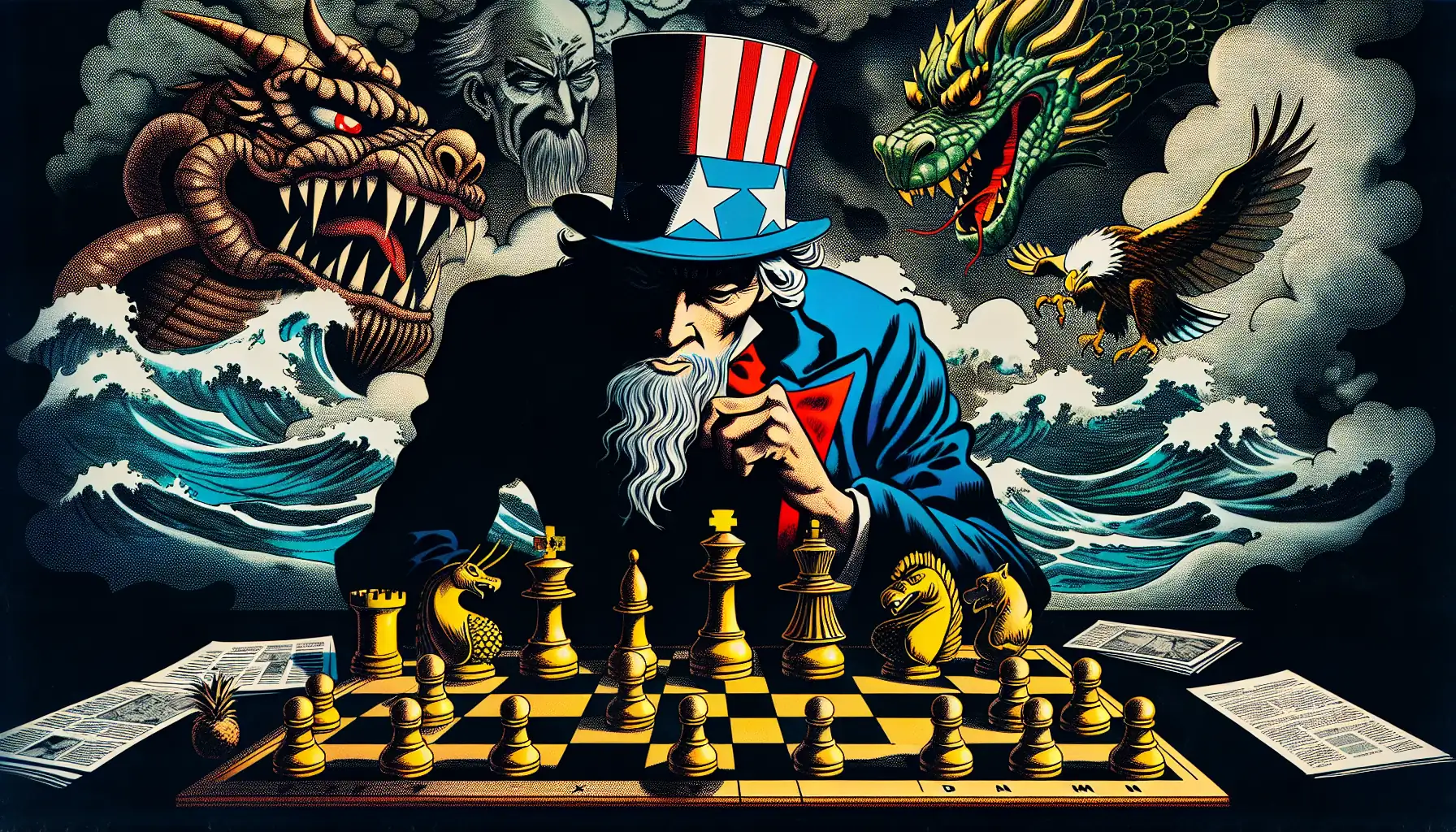
    As Europe’s nations glance nervously eastward, the continent transforms into a strategic chessboard. If hybrid warfare wasn’t enough to shake things up, don’t worry: puppets and power players dance in a tale as old as Byzantine intrigues—or is it just a complicated tango?

    So, how does NATO prepare for this ominous bear hug? With strategic improvisation, it seems, and perhaps a little good-natured ribbing. One might wonder if the latest troop build-ups are the calm before the storm or simply the dramatic tension we need for our next headline.

    The West Responds: A Test of Resolve

    And now, for the West’s master stroke: a dazzling display of readiness—or is it? With NATO’s declarations of solidarity as robust as a politician’s promises, the reality seems shakier than a dieting tightrope artist. Are we ready for what may come, or simply rehearsing for an act we hope to never perform?

    In true Art fashion, the response should be the ultimate test of mettle, a showdown of ideologies as much as might. Because when political tides rise, sometimes all you need is a pinch of sarcasm to keep reality in perspective.

    For those drawn to the allure of geopolitical drama, remember that the real bread and circus lies right here at Unexplained.co, where truths are stranger than fiction, and the world may very well be our oyster—or perhaps just another wild rollercoaster ride.

  • Pacific Escalation: The Brewing Storm of U.S.-China Relations

    Pacific Escalation: The Brewing Storm of U.S.-China Relations

    The Gathering Storm: Pacific Tensions Rise

    Ladies and gentlemen, fasten your tin foil hats because the Pacific has couch-surfed its way right into the eye of a geopolitical hurricane. With the U.S. and China rattling sabers, the strategic chessboard is set, a dangerous game unfolding across island chains and diplomatic queues.

    Alas, the spotlight shines on Guam and other critical military waypoints, their histories built on sand and secrecy. Now, amid cries of sovereignty, China’s calculated incursions keep world leaders clutching their pearls and analysts clutching their forecasts. Buckle up for a bumpy ride—this is more than mere saber-rattling; it’s documented destiny.

    An Island Paradise Turned Crucible

    Amidst protest chants merging with the rhythmic beats of Pacific waves, islands once deemed paradise are regrettably immersed in military transformation narratives. Armed with protests against U.S. bases, Japan and Guam have exchanged diplomatic whispers for overt defiance, spotlighting their unease amid regional flashpoints.

    Hot on the heels of symposia at Hawaii’s Jungle Training School, where soldiers become masters of hostile environments—cue cross-ribbons of bravery—this delicate dance is more than preemptive posturing, it’s public theater on an uncharted stage.

    A Trans-Pacific Provocation

    The delicate balancing act in the Pacific leaves seasoned foreign policy ramblers with contemplative concerns: Can security assurances genuinely unilaterally cushion against a multilateral menace? Or do the tectonic plates of allegiance shift, awaiting a prophetic recalibration with every geopolitical tremor?

    Some conjecture, laughing awkwardly at cocktail parties, suggest armament exercises belie a ‘theater of preparedness’ because dystopian graveyards aren’t as fun to decorate without some packing peanuts for dramatic irony.

    Renaissance of the Strategists

    Amidst hostile waves, the timeless tactical waltz of alliances and enmities sounds eerily familiar, their syncopated cadence marking an epoch both of paranoia and potential. As the spotlight pivots to America’s complex diplomatic endeavors, more questions than answers arise, not dissimilar to Scole‘s afterlife conventions, albeit far less ethereal.

    With evidence of arms races embedded deeper than a Pacific shell game, analysts rush to lay their chips—or perhaps claims—in strategic hands, powered by chaos theory’s technicolor imagination, one wager away from catastrophe.

    As world portals lurch open and geopolitical titans lock horns, vault into rapidly widening chasms at Unexplained.co—plumb for explanations amid echoing expostulations of grand design. Rest assured, dear listeners, scrutiny never sleeps.

  • The Great Frequency Conundrum: A Chilling Broadcast from the North

    The Great Frequency Conundrum: A Chilling Broadcast from the North

    The Frequency Finale: What in the World is Happening?

    Listeners, gather your tinfoil hats and settle into your bunker recliners: the enigmatic world of radio frequencies has just had a seismic moment. According to recent reports, Russian radio frequencies have been buzzing—not in the reassuring way a happy bee hums about its day—but rather in a cacophony that spells the eerie notes of impending doom.

    For more than 40 years, an equally enigmatic signal known as UVB-76, also popularly dubbed “The Buzzer,” has occupied a chunk of the airwaves—a lonely monotone buzz, speckled with sporadic encrypted messages. Revving up the antenna, we find this modern relic originating from the ever-mysterious heart of Mother Russia.

    Dangerous Decibels: Noise or Naval Nastiness?

    As the rumblings persist, the natural inclination of any self-respecting conspiracy enthusiast is to latch onto the more sinister possibilities. What indeed could be the reason behind these frequency discharges? A renewed Cold War cacophony? Or, perhaps more whimsically, a Soviet-era experiment that refuses to shuffle off its mortal coil?

    The Kremlin’s signal, specifically suspected to be an echo of nuclear broadcast parameters, suggests an archaic system reminding us that old ghosts sometimes wear the skins of seemingly benign technology.

    One school of thought suggests these broadcasts are a relic of the Cold War communications system known as the “Dead Hand,” designed to authorize an automatic Russian nuclear strike in the face of a decapitation strike.

    Theatre of the Absurd: Dancing to Russia’s Wavelength

    In this ever-evolving saga, the stakes climb ultrahigh. The U.S., finding itself in this intricate dance with shadowy players, reportedly evacuates military installations as the situation escalates. Israel, poised on its own strategic precipice, contemplates a preemptive strike—a tempest of tension narrating global journal pages filled with incessant buzz (when the buzz of bees pales next to Russia’s radio dance).

    News outlets whirl in the face of chaos—countries watch, wary, as their allies retreat into strategic silence. Critical frequencies stutter and spark conversation: the whispers of the Perimeter haunt the air, reminding all the potentiality of grim endings in even grimmer resonances.

    Conclusion: A Grand Crescendo of Cosmic Countdowns

    As of this moment, we remain poised on the precipice of a new age—one colored by cryptic radios and cloaked transmissions. For now, listen close, and question everything. Within this great, buzzing entanglement, might we find instead the jolt to transform humanity’s flavor of frequency—and with it, the tides of history?

    Dare to dwell in the unknown by visiting Unexplained.co. Tune your dials, steel your nerves, and join us in answering the buzzer’s call. In the flaky rapport between frequencies and finality, listeners, discover what echoes from the gloom.

  • Storm Clouds Over Persia: The Impending Clash Awakens

    Storm Clouds Over Persia: The Impending Clash Awakens

    The Gathering Storm in the Middle East

    The stage is set for a grand cosmic reckoning in the Persian Gulf, where history has unfinished business and everyone seems to want to pick a nuclear fight, or so some suggest. The U.S. military, not exactly known for its subtlety, has been flexing its might in dramatic fashion, positioning aircraft carriers like pawns in a high-stakes match of chess against Iran. Of course, the usual suspects would have you believe this is just routine security posturing. Blink, and you might miss the opening volley.

    With the likes of Hezbollah and other regional players losing their grip faster than you can say ‘proxy war’, Iran’s storied influence is buckling under strategic bombardment reminiscent of bad reality TV – watchful eyes are speculating that, should things spiral, Iran’s regime may crumble faster than we dare to imagine.

    The Apparitions of Power

    One might wonder, amidst all this commotion, why Iran would find itself in such a pickle. It seems simple: follow the bread crumbs of a collapsing web of alliances and domestic squabbles. Internal unrest has carved fissures in their once imposing facade, providing the perfect setup for a heavyweight geopolitical showdown echoed amidst the shoals of unrest.

    America’s war engines, sophisticated in their metallic roars, seem to dance with Middle Eastern sands – collateral influence perhaps, but this isn’t about cannonball contests, it’s about the narrative of proving dominance in the playground of power that is our modern-day Persian Gulf.

    Strategic Intrigues in the Gulf

    As the situation teeters on the precipice of explosion, whisper networks murmur of a wretched revolution ready to ignite in Iran. International pressures, internal disenchantment, and not nearly enough popcorn for the resultant spectacle.Listen to Art’s take on Radio.

    One mustn’t forget that every gear in this churning world requires oil, and, lest we forget, Iran happens to be sitting upon reservoirs of such a precious resource. The energy game remains the steely-eyed elephant in the room—dissect these dynamics, and perhaps truths stranger than fiction emerge. Why let peace break out when geopolitical theater provides such premium content?

    The Grand Tehran Gamble

    In Tehran, as risible arguments teeter alongside bottle rockets—whether or not they are armed is anyone’s guess—the landscape of Iran’s future seems precariously fragile. Such an existential narrative rushes forward like a Shakespearean play, leaving audiences enraptured yet somber at its inevitable denouement.

    Stakeholders in this realm appear drunk on power, some say. Struggling to maintain a doctrine shaped more by defiance than diplomacy. Will Iran rise to grasp a future cloaked in resilience, or will it be gently nudged into historical obsolescence? Only time, and possibly seasoned analysts, will know for sure.

    Conclusion: Waiting for the Storm

    As we stand on this precipice of potential conflict, remember to savor each moment of calm—if, indeed, calm should grace the Gulf’s shores once more. Until then, friend, ponder the layers of this unfolding geopolitical mystery and possibly invest in a sturdy bunker.

    Stay connected with Unexplained.co for more thrilling escapades into the unknown. The End, dear reader, might just be the Beginning.